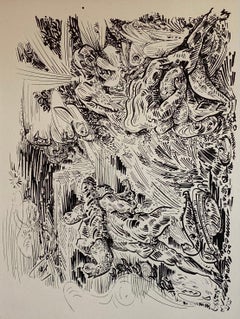
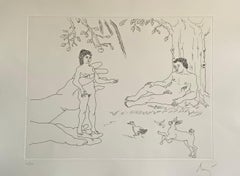
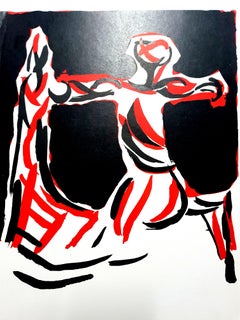
Surrealist Figurative Prints

SURREALIST STYLE

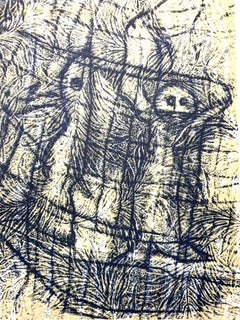
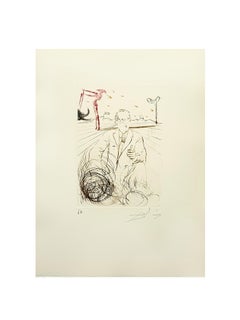
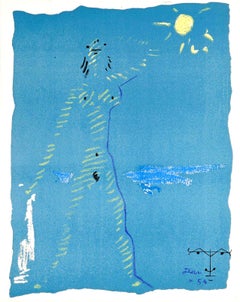
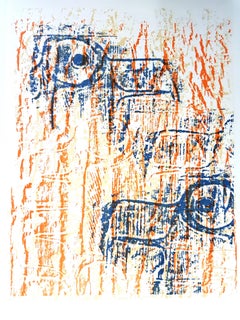
In the wake of World War I’s ravaging of Europe, artists delved into the unconscious mind to confront and grapple with this reality. Poet and critic André Breton, a leader of the Surrealist movement who authored the 1924 Surrealist Manifesto, called this approach “a violent reaction against the impoverishment and sterility of thought processes that resulted from centuries of rationalism.” Surrealist art emerged in the 1920s with dreamlike and uncanny imagery guided by a variety of techniques such as automatic drawing, which can be likened to a stream of consciousness, to channel psychological experiences.

Although Surrealism was a groundbreaking approach for European art, its practitioners were inspired by Indigenous art and ancient mysticism for reenvisioning how sculptures, paintings, prints, performance art and more could respond to the unsettled world around them.

Surrealist artists were also informed by the Dada movement, which originated in 1916 Zurich and embraced absurdity over the logic that had propelled modernity into violence. Some of the Surrealists had witnessed this firsthand, such as Max Ernst, who served in the trenches during World War I, and Salvador Dalí, whose otherworldly paintings and other work responded to the dawning civil war in Spain.

Other key artists associated with the revolutionary art and literary movement included Man Ray, Joan Miró, René Magritte, Yves Tanguy, Frida Kahlo and Meret Oppenheim, all of whom had a distinct perspective on reimagining reality and freeing the unconscious mind from the conventions and restrictions of rational thought. Pablo Picasso showed some of his works in “La Peinture Surréaliste” — the first collective exhibition of Surrealist painting — which opened at Paris’s Galerie Pierre in November of 1925. (Although Magritte is best known as one of the visual Surrealist movement’s most talented practitioners, his famous 1943 painting, The Fifth Season, can be interpreted as a formal break from Surrealism.)

The outbreak of World War II led many in the movement to flee Europe for the Americas, further spreading Surrealism abroad. Generations of modern and contemporary artists were subsequently influenced by the richly symbolic and unearthly imagery of Surrealism, from Joseph Cornell to Arshile Gorky.

Find a collection of original Surrealist paintings, sculptures, prints and multiples and more art on 1stDibs.

to
827
1,396
525
516
163
67
Overall Width
to
Overall Height
to
15,581
7,937
2,428
2,252
1,054
997
725
673
416
324
112
93
39
356
347
78
67
66
14
16
2,391
247
1
2
19
28
38
268
801
736
161
35
14
2,037
541
78
1,693
1,149
993
628
462
449
409
225
121
81
75
60
59
59
53
49
44
39
36
34
1,178
839
341
181
130
297
1,030
1,246
1,190
Style: Surrealist
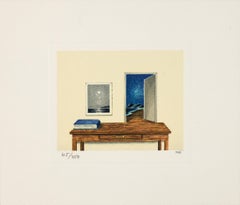
Night Table
Located in Greenwich, CT
Night Table is a lithograph on paper with an image size of 3 x 3.75 inches, initialed 'FMB' lower right and annotated lower left, framed in a contemporary silver and dark gray frame....
Category

20th Century Surrealist Figurative Prints

Materials

Paper, Lithograph

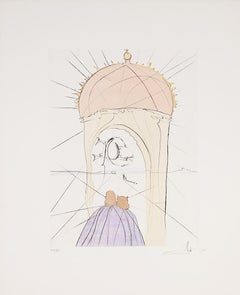
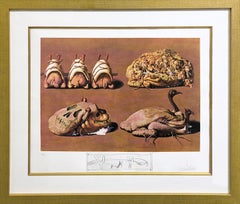
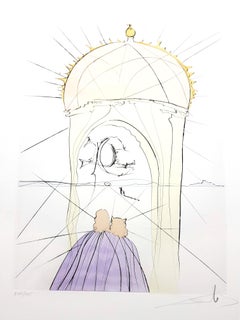
The Museum of Genius and Fancy (Plate L), 1974
Located in Greenwich, CT
The Museum of Genius and Fancy – signed ‘Dalí’ lower right and numbered A 11/195 lower left, from the edition of 462 (there were also 35 'A' Roman, 195 'F' Arabic, and 35 'F' Roman, plus 2 additional suites on japon). Framed in an ornate gold-tone moulding. Cataloging: Micheler-Löpsinger 676; Field 74-8 Plate L Dalí’s series of colored etchings After Fifty Years of Surrealism reflects on the artist’s long...
Category

20th Century Surrealist Figurative Prints

Materials

Etching, Stencil

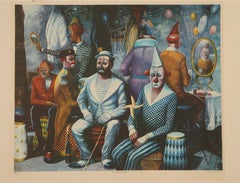
In Between Acts, Surrealist Lithograph by George Russin
Located in Long Island City, NY
In Between Acts George Russin, American (1910–2010) Date: circa 1979 Lithograph, signed and numbered in pencil Edition of 250 Size: 22 x 29 in. (55.88 x 73.66 cm)
Category

1970s Surrealist Figurative Prints

Materials

Lithograph

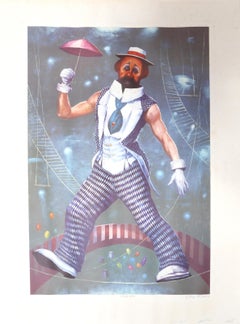
High Wire, Surrealist Lithograph by George Russin
Located in Long Island City, NY
High Wire George Russin, American (1910–2010) Date: circa 1980 Lithograph, signed in pencil Image Size: 23 x 15.5 inches Size: 29 x 21 in. (73.66 x 53.34 cm)
Category

1980s Surrealist Figurative Prints

Materials

Lithograph

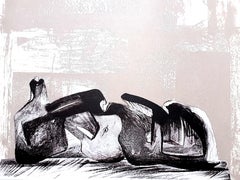
Henry Moore - Original Lithograph
Located in Collonge Bellerive, Geneve, CH
Henry Moore - Original Lithograph 1977 Dimensions: 32 x 24 cm From the art review XXe siècle Unsigned and unumbered as issued
Category

1970s Surrealist Figurative Prints

Materials

Lithograph

Les Caprices Pinces Princiers (Frank Hunter Authenticated)
Located in Aventura, FL
From Les Diners De Gala. Photo lithograph with a separate original engraving titled Spoon on Crutches. Hand signed by Salvador Dali. Hand numbered 170/395. Frame size approx 29 x ...
Category

1970s Surrealist Figurative Prints

Materials

Paper, Engraving, Lithograph

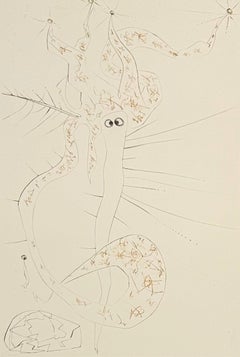
Mad Tristan, from Tristan and Iseult
Located in Washington, DC
Artist: Salvador Dali Title: Mad Tristan Portfolio: Tristan and Iseult Medium: Color engraving Year: 1970 Edition: XII/XXV Frame Size: 25 1/4" x 20 3/4" Sheet Size: 17 3/4" x 12 3/4"...
Category

1970s Surrealist Figurative Prints

Materials

Engraving

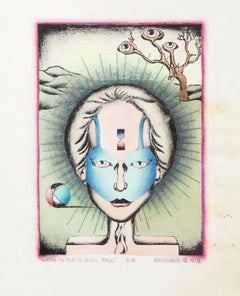
Earth Is But A Small Ball, Surrealist Etching by Douglas C. Backhaus
Located in Long Island City, NY
Douglas C. Backhaus - Earth Is But A Small Ball, Year: 1978, Medium: Hand colored Etching, signed, dated, titled and numbered in pencil, Edition: 2/8, Image Size: 7 x 5 inches, Size:...
Category

1970s Surrealist Figurative Prints

Materials

Etching

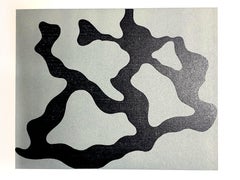
Jean Arp - Original Etching
Located in Collonge Bellerive, Geneve, CH
Jean Arp - Original Etching 1954 Dimensions: 32 x 24 cm From the art review XXe siècle Unsigned and unumbered as issued
Category

1950s Surrealist Figurative Prints

Materials

Etching

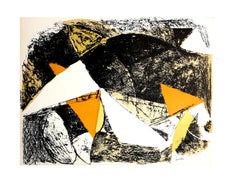
Marino Marini - Horse and Rider - Original Lithograph
Located in Collonge Bellerive, Geneve, CH
Marino Marini - Horse and Rider - Original Lithograph 1963 Dimensions: 32 x 24 cm From the art review XXe siècle Unsigned and unumbered as issued
Category

1960s Surrealist Figurative Prints

Materials

Lithograph

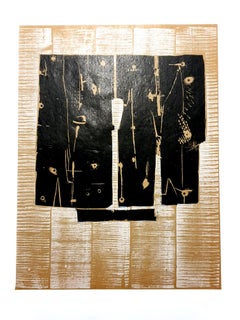
Pietro Consagra - Composition - Original Etching
Located in Collonge Bellerive, Geneve, CH
Pietro Consagra - Composition - Original Etching 1959 Dimensions: 32 x 24 cm From the art review XXe siècle Unsigned and unumbered as issued
Category

1950s Surrealist Figurative Prints

Materials

Etching

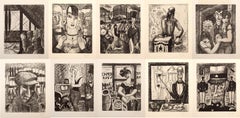
Vers un Monde Volage, Surrealist Suit of 10 Etchings by Marcel Gromaire
Located in Long Island City, NY
Marcel Gromaire, French (1892 - 1971) - Vers un Monde Volage, Year: 1926, Medium: Suit of 10 Etchings on Arches, each signed in pencil, Edition: 270, Image Size: 6.75 x 5.5 inches,...
Category

1920s Surrealist Figurative Prints

Materials

Etching

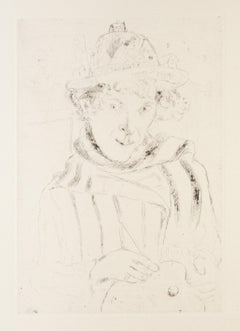
Self Portrait with Decorated Hat, Surrealist Etching by Marc Chagall
Located in Long Island City, NY
Marc Chagall, Russian (1887 - 1985) - Self Portrait with Decorated Hat, Year: 1928, Medium: Etching on Wove Paper, Edition: 560, Image Size: 8 x 5.75 inches, Size: 19 x 13 in. (48....
Category

1920s Surrealist Figurative Prints

Materials

Etching

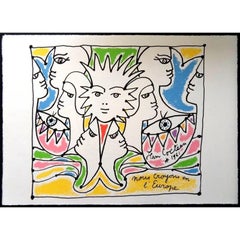
Jean Cocteau (after) - Europe s Colors - Lithograph
Located in Collonge Bellerive, Geneve, CH
Lithograph after a drawing by Jean Cocteau Title: Profil Signed in the plate Dimensions: 33 x 46 cm Edition: 600 Luxury print edition from the portfolio of Sciaky 1961
Category

1960s Surrealist Figurative Prints

Materials

Lithograph

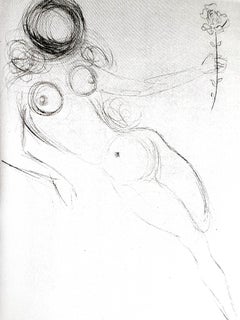
Salvador Dali - Nude with Flower - Original Etching on Silk
Located in Collonge Bellerive, Geneve, CH
Salvador Dali - Nude with Flower - from "Les Amours de Cassandre" Original Etching From the suite on Silk made for editions 9 to 34 Dimensions: 38,5 ...
Category

1960s Surrealist Figurative Prints

Materials

Etching

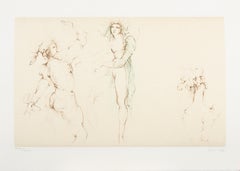
Gesture (B)
Located in Columbia, MO
Leonor Fini was born in Argentina in 1907 but travelled and lived in Europe with her mother from a young age. By 1931, she was in Paris, in the full swing of the Surrealist movement....
Category

Mid-20th Century Surrealist Figurative Prints

Materials

Etching

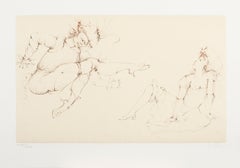
Duet (B)
Located in Columbia, MO
Leonor Fini was born in Argentina in 1907 but travelled and lived in Europe with her mother from a young age. By 1931, she was in Paris, in the full swing of the Surrealist movement....
Category

Mid-20th Century Surrealist Figurative Prints

Materials

Etching

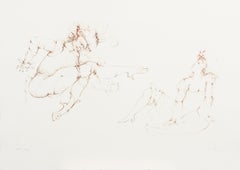
Duet (A)
Located in Columbia, MO
Leonor Fini was born in Argentina in 1907 but travelled and lived in Europe with her mother from a young age. By 1931, she was in Paris, in the full swing of the Surrealist movement....
Category

Mid-20th Century Surrealist Figurative Prints

Materials

Etching

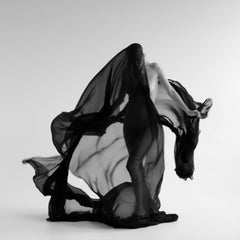
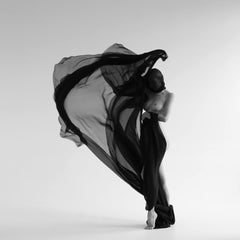
"Aerial 3" Black White Photography 31" x 31" in Edition of 7 by Olha Stepanian
Located in Culver City, CA
"Aerial 3" Black White Photography 31" x 31" in Edition of 7 by Olha Stepanian Printed on Epson Professional Paper Signed and numbered by the artist Not framed. Ships in a t...
Category

21st Century and Contemporary Surrealist Figurative Prints

Materials

Photographic Paper

HENRY IV
Located in Aventura, FL
Hand signed and numbered by the artist. From the Shakespeare II suite. Color etching on B.F.K Rives paper. Image size: 6.75 x 4.75 inches; paper size: 17.75 x 12.5 inches. Published ...
Category

1970s Surrealist Figurative Prints

Materials

Etching, Paper

HENRY IV
HENRY IV
$3,000 Sale Price
25% Off
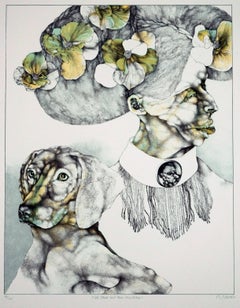
The Lady with the Dog / - Like the master, so the dog -
Located in Berlin, DE
Reiner Schwarz (*1940 Hirschberg), The Lady with the Dog, 1971. Lithograph, 33 cm x 26 (image), 59 cm x 42 cm (sheet size), signed in pencil at lower right "R.[ein] Schwarz", dated "...
Category

1960s Surrealist Figurative Prints

Materials

Paper

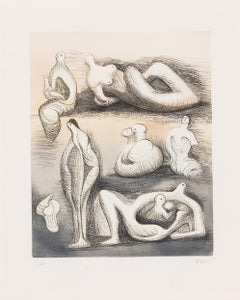
HENRY MOORE Seven Sculpture Ideas I ETCHING AQUATINT ROULETTE 10 COLORS 1982
Located in Rancho Santa Fe, CA
Henry Moore Seven Sculpture Ideas I (Cramer 589) Etching, aquatint and roulette in 10 colors, 1982, on Arches, signed in pencil. 39/50 From the numbered edition of 50. Published by ...
Category

1980s Surrealist Figurative Prints

Materials

Archival Paper, Etching, Aquatint

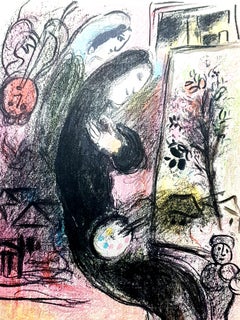
Marc Chagall - Inspiration - Original Lithograph from "Chagall Lithographe" v. 2
Located in Collonge Bellerive, Geneve, CH
Marc Chagall Original Lithograph from Chagall Lithographe 1957-1962. VOLUME II. 1963 Dimensions: 32 x 24 cm From the unsigned edition of 10000 copies without margins Reference: Mourlot 398 Condition : Excellent Marc Chagall (born in 1887) Marc Chagall was born in Belarus in 1887 and developed an early interest in art. After studying painting, in 1907 he left Russia for Paris, where he lived in an artist colony on the city’s outskirts. Fusing his own personal, dreamlike imagery with hints of the fauvism and cubism popular in France at the time, Chagall created his most lasting work—including I and the Village (1911)—some of which would be featured in the Salon des Indépendants exhibitions. After returning to Vitebsk for a visit in 1914, the outbreak of WWI trapped Chagall in Russia. He returned to France in 1923 but was forced to flee the country and Nazi persecution during WWII. Finding asylum in the U.S., Chagall became involved in set and costume design before returning to France in 1948. In his later years, he experimented with new art forms and was commissioned to produce numerous large-scale works. Chagall died in St.-Paul-de-Vence in 1985. The Village Marc Chagall was born in a small Hassidic community on the outskirts of Vitebsk, Belarus, on July 7, 1887. His father was a fishmonger, and his mother ran a small sundries shop in the village. As a child, Chagall attended the Jewish elementary school, where he studied Hebrew and the Bible, before later attending the Russian public school. He began to learn the fundamentals of drawing during this time, but perhaps more importantly, he absorbed the world around him, storing away the imagery and themes that would feature largely in most of his later work. At age 19 Chagall enrolled at a private, all-Jewish art school and began his formal education in painting, studying briefly with portrait artist Yehuda Pen. However, he left the school after several months, moving to St. Petersburg in 1907 to study at the Imperial Society for the Protection of Fine Arts. The following year, he enrolled at the Svanseva School, studying with set designer Léon Bakst, whose work had been featured in Sergei Diaghilev's Ballets Russes. This early experience would prove important to Chagall’s later career as well. Despite this formal instruction, and the widespread popularity of realism in Russia at the time, Chagall was already establishing his own personal style, which featured a more dreamlike unreality and the people, places and imagery that were close to his heart. Some examples from this period are his Window Vitebsk (1908) and My Fianceé with Black Gloves (1909), which pictured Bella Rosenfeld, to whom he had recently become engaged. The Beehive Despite his romance with Bella, in 1911 an allowance from Russian parliament member and art patron Maxim Binaver enabled Chagall to move to Paris, France. After settling briefly in the Montparnasse neighborhood, Chagall moved further afield to an artist colony known as La Ruche (“The Beehive”), where he began to work side by side with abstract painters such as Amedeo Modigliani and Fernand Léger as well as the avant-garde poet Guillaume Apollinaire. At their urging, and under the influence of the wildly popular fauvism and cubism, Chagall lightened his palette and pushed his style ever further from reality. I and the Village (1911) and Homage to Apollinaire (1912) are among his early Parisian works, widely considered to be his most successful and representative period. Though his work stood stylistically apart from his cubist contemporaries, from 1912 to 1914 Chagall exhibited several paintings at the annual Salon des Indépendants exhibition, where works by the likes of Juan Gris, Marcel Duchamp and Robert Delaunay were causing a stir in the Paris art world. Chagall’s popularity began to spread beyond La Ruche, and in May 1914 he traveled to Berlin to help organize his first solo exhibition, at Der Sturm Gallery. Chagall remained in the city until the highly acclaimed show opened that June. He then returned to Vitebsk, unaware of the fateful events to come. War, Peace and Revolution In August 1914 the outbreak of World War I precluded Chagall’s plans to return to Paris. The conflict did little to stem the flow of his creative output, however, instead merely giving him direct access to the childhood scenes so essential to his work, as seen in paintings such as Jew in Green (1914) and Over Vitebsk (1914). His paintings from this period also occasionally featured images of the war’s impact on the region, as with Wounded Soldier (1914) and Marching (1915). But despite the hardships of life during wartime, this would also prove to be a joyful period for Chagall. In July 1915 he married Bella, and she gave birth to a daughter, Ida, the following year. Their appearance in works such as Birthday (1915), Bella and Ida by the Window (1917) and several of his “Lovers” paintings give a glimpse of the island of domestic bliss that was Chagall’s amidst the chaos. To avoid military service and stay with his new family, Chagall took a position as a clerk in the Ministry of War Economy in St. Petersburg. While there he began work on his autobiography and also immersed himself in the local art scene, befriending novelist Boris Pasternak, among others. He also exhibited his work in the city and soon gained considerable recognition. That notoriety would prove important in the aftermath of the 1917 Russian Revolution when he was appointed as the Commissar of Fine Arts in Vitebsk. In his new post, Chagall undertook various projects in the region, including the 1919 founding of the Academy of the Arts. Despite these endeavors, differences among his colleagues eventually disillusioned Chagall. In 1920 he relinquished his position and moved his family to Moscow, the post-revolution capital of Russia. In Moscow, Chagall was soon commissioned to create sets and costumes for various productions at the Moscow State Yiddish Theater...
Category

1960s Surrealist Figurative Prints

Materials

Lithograph

Salvador Dali - Head of Veal - Original Etching
Located in Collonge Bellerive, Geneve, CH
Salvador Dali - Head of Veal - Original Etching Embossed signature From the edition of 731 Dimensions: 38,5 x 28,5 cm 1969 References : Field 69-1 / Michler & Lopsinger 305
Category

1960s Surrealist Figurative Prints

Materials

Etching

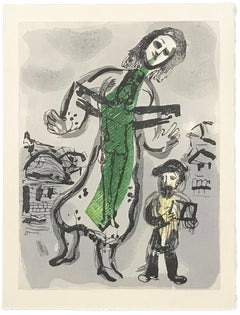
OU EST LE JOUR ("LES POEMES")
Located in Aventura, FL
In 1968 several of Chagall's poems were published in the album "Les Poemes" (The Poems). He also illustrated this album, featuring a series of 24 woodcuts. Unsigned. From the edi...
Category

1960s Surrealist Figurative Prints

Materials

Paper, Woodcut

“Bait and Tackle 1” (FRAMED) Photography 24 x 36 in Edition of 1/7 by Brian Ziff
Located in Culver City, CA
“Bait and Tackle 1” (FRAMED) Photography 24 x 36 in Edition of 1/7 by Brian Ziff Giclee (Archival Ink) Print on Canson Platine Fibre Rag American Dreams - From "Park Drive" series ...
Category

21st Century and Contemporary Surrealist Figurative Prints

Materials

Archival Ink, Rag Paper, Giclée

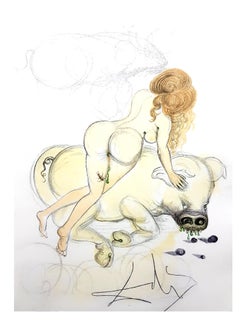
Salvador Dali - Girl and Pig - Original Etching
Located in Collonge Bellerive, Geneve, CH
Salvador Dali - Girl and Pig - Original Etching Dimensions: 38 x 28 cm Edition: 390 1967 On Rives Vellum Signed in the plate References : Field 67-4 (p. 3...
Category

1960s Surrealist Figurative Prints

Materials

Etching

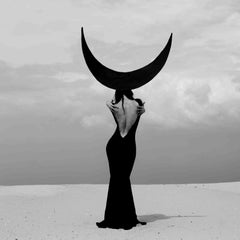
"Moon Birth" Black White Photography 31" x 31" in Ed. 4/7 by Olha Stepanian
Located in Culver City, CA
"Moon Birth" Black White Photography 31" x 31" in Ed. 4/7 by Olha Stepanian Printed on Epson Professional Paper Signed and numbered by the artist Not framed. Ships in a tube...
Category

21st Century and Contemporary Surrealist Figurative Prints

Materials

Photographic Paper

“What a Drag” Photography 24" x 36" inch Edition 1/7 by Brian Ziff
Located in Culver City, CA
“What a Drag” Photography 24" x 36" inch Edition 1/7 by Brian Ziff Giclee (Archival Ink) Print on Canson Platine Fibre Rag American Dreams - From "Park Drive" series The notion ...
Category

21st Century and Contemporary Surrealist Figurative Prints

Materials

Archival Ink, Rag Paper, Giclée

French Abstract Surrealist Lithograph Andre Masson Mourlot Paris Limited Edition
Located in Surfside, FL
This is from the suite by Jean Paul Sartre and Andre Masson, Limited edition of 175. published by Fernand Mourlot, 1961. The portfolio is numbered #29/175 and hand signed by Andre Ma...
Category

20th Century Surrealist Figurative Prints

Materials

Lithograph

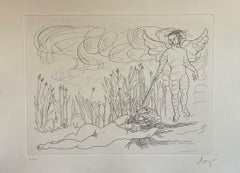
Italian Surrealist Aquatint Etching Enrico Baj Pop Art Nude Mod Cherubs Angels
Located in Surfside, FL
Enrico Baj (1924-2003) Italian, limited edition print. Hand signed and numbered in pencil from limited edition of 100 Aquatint etching Image size: cm 39.5 x 29.5, sheet cm 53 x 39 ...
Category

20th Century Surrealist Figurative Prints

Materials

Etching, Aquatint

"Aerial 2" Black White Photography 24" x 24" in Ed. of 15 by Olha Stepanian
Located in Culver City, CA
"Aerial 2" Black White Photography 24" x 24" in Ed. of 15 by Olha Stepanian Printed on Epson Professional Paper Signed and numbered by the artist Not framed. Ships in a tube...
Category

21st Century and Contemporary Surrealist Figurative Prints

Materials

Photographic Paper

Italian Surrealist Aquatint Etching Enrico Baj Pop Art Nude Mod Cherubs Angels
Located in Surfside, FL
Enrico Baj (1924-2003) Italian, limited edition print. Hand signed and numbered in pencil from limited edition of 100 Aquatint etching Image size: cm 39.5 x 29.5, sheet cm 53 x 39 ...
Category

20th Century Surrealist Figurative Prints

Materials

Etching, Aquatint

Jean Arp (after) - Composition - Pochoir
Located in Collonge Bellerive, Geneve, CH
Jean Arp (after) - Composition - Pochoir 1958 Dimensions: 32 x 24 cm From the art revue XXe siècle Unsigned and unumbered as issued
Category

1930s Surrealist Figurative Prints

Materials

Stencil

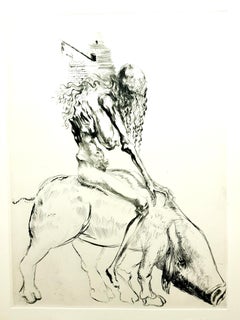
Salvador Dali - Baubo (Woman Riding a Sow), from Faust - Original Etching
Located in Collonge Bellerive, Geneve, CH
Salvador Dali - Baubo (Woman Riding a Sow), from Faust Embossed signature (from the standard book edition of 731) Dimensions: 38,5 x 28,5 cm 1969 References : Field 69-1 B / Michler ...
Category

1960s Surrealist Figurative Prints

Materials

Etching

Jean Arp - Original Lithograph
Located in Collonge Bellerive, Geneve, CH
Jean Arp - Original Lithograph 1962 Dimensions: 32 x 24 cm From the art review XXe siècle Unsigned and unumbered as issued
Category

1960s Surrealist Figurative Prints

Materials

Lithograph

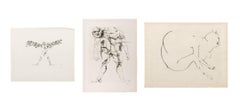
Surrealist Figural Etchings, 3
Located in Astoria, NY
Leonard Baskin (American, 1922-2000), Three Surrealist Figural Compositions, Etching on Wove Paper, each marked edition "A.P" lower left and signed in pencil lower right, comprising:...
Category

1960s Surrealist Figurative Prints

Materials

Paper, Etching

Salvador Dali - Venus, Mars and Cupidon - Handsigned Etching
Located in Collonge Bellerive, Geneve, CH
Salvador Dali - Venus, Mars and Cupidon - Handsigned Etching Title: Venus, Mars and Cupidon Dimensions: 76 X 56 cm From the Homage to Dürer Numbered: EA, Epreuve d'Artiste Rives ...
Category

1970s Surrealist Figurative Prints

Materials

Etching

AUTUMN
Located in Aventura, FL
Hand signed and numbered by the artist. First edition engraving with color. Edition 97/150. Sheet size: 14 x 12.25 inches. Image size 10.43 x 7.95 inches. Custom framed as pictured...
Category

1970s Surrealist Figurative Prints

Materials

Paper, Engraving

AUTUMN
AUTUMN
$5,250 Sale Price
25% Off
“Inside Out 1” Black White Photography 24" x 36" in Ed. of 7 by Brian Ziff
Located in Culver City, CA
“Inside Out 1” Black White Photography 24" x 36" in Ed. of 7 by Brian Ziff Giclee (Archival Ink) Print on Canson Platine Fibre Rag From "Park Drive" series Brian Ziff is a ...
Category

21st Century and Contemporary Surrealist Figurative Prints

Materials

Archival Ink, Rag Paper, Giclée

after Jean Arp - Moustaches et Squelette - Pochoir
Located in Collonge Bellerive, Geneve, CH
after Jean Arp Moustaches et Squelette Executed in 1957 after the original artwork by the studios from Daniel Jacomet in Paris, France Pochoir Dimensions: 32 x 24 cm From the art re...
Category

1950s Surrealist Figurative Prints

Materials

Stencil, Paper

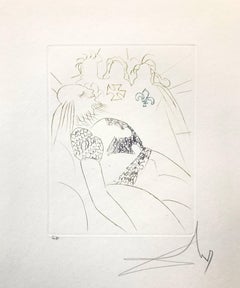
Salvador Dali - The Arrival of Iseult - Original Etching
Located in Collonge Bellerive, Geneve, CH
Salvador Dali - The Arrival of Iseult - Original Etching Dimensions: 45 x 33 cm Edition: 125 1970 Signed in pencil. On Arches Vellum References : Field 70-10 (p. 60-61)
Category

1970s Surrealist Figurative Prints

Materials

Etching

Max Ernst - Abstract Birds - Original Lithograph
Located in Collonge Bellerive, Geneve, CH
Max Ernst - Birds - Original Lithograph Birds, 1962 Dimensions: 32 x 24 cm From the art review XXe siècle Unsigned and unumbered as issued
Category

1960s Surrealist Figurative Prints

Materials

Lithograph

Salvador Dali - The Knights of King Arthur
Located in Collonge Bellerive, Geneve, CH
Salvador Dali - The Knights of King Arthur - Original Etching Dimensions: 45 x 33 cm Edition: 125 1970 Signed in pencil. On Arches Vellum References : Fiel...
Category

1970s Surrealist Figurative Prints

Materials

Etching

Salvador Dali - The Giant Beliagog
Located in Collonge Bellerive, Geneve, CH
Salvador Dali - The Giant Beliagog - Original Etching Dimensions: 45 x 33 cm Edition: 125 1970 Signed in pencil. On Arches Vellum References : Field 70-10 (p. 60-61)
Category

1970s Surrealist Figurative Prints

Materials

Etching

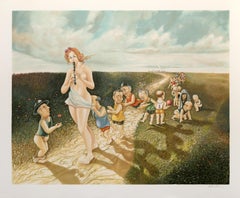
The Pied Piper from Hamelin, Surrealist Screenprint by Israel Rubinstein
Located in Long Island City, NY
The Pied Piper from Hamlin, Israel Rubinstein, Israeli (1944) Date: 1980 Screenprint, signed and numbered in pencil Edition of 250 Size: 32 in. x 37 in. (81...
Category

1980s Surrealist Figurative Prints

Materials

Screen

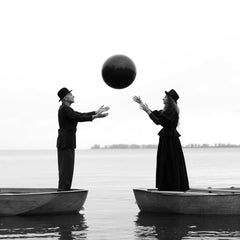
"Black Moon" Black White Photography 24" x 24" in Ed. 2/15 by Olha Stepanian
Located in Culver City, CA
"Black Moon" Black White Photography 24" x 24" in Ed. 2/15 by Olha Stepanian Printed on Epson Professional Paper Signed and numbered by the artis...
Category

21st Century and Contemporary Surrealist Figurative Prints

Materials

Photographic Paper

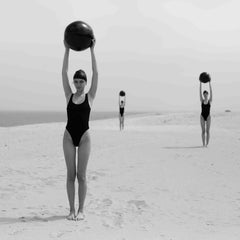
"Geometry 1" Black White Photography 24" x 24" in Ed. of 15 by Olha Stepanian
Located in Culver City, CA
"Geometry 1" Black White Photography 24" x 24" in Ed. of 15 by Olha Stepanian Printed on Epson Professional Paper Signed and numbered by the artist Not framed. Ships in a tu...
Category

21st Century and Contemporary Surrealist Figurative Prints

Materials

Photographic Paper

Salvador Dali - The Museum of Genius - Original Signed Engraving
Located in Collonge Bellerive, Geneve, CH
Salvador Dali - The Museum of Genius and Whim - Original Signed Engraving Handsigned in pencil and Numbered Edition: F195/195 - Printer: Atelier Rigal. - Paper: Rives vellum ; each ...
Category

1970s Surrealist Figurative Prints

Materials

Etching

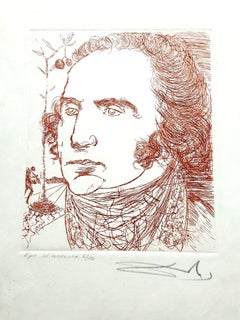
Salvador Dali - George Washington - Original Handsigned Etching
Located in Collonge Bellerive, Geneve, CH
Salvador Dali - George Washington - Original Handsigned Etching Dimensions: 38 x 28 cm 1967 Signed in pencil EA in Sanguine Jean Schneider, Basel References : Field 67-3
Category

1960s Surrealist Figurative Prints

Materials

Etching

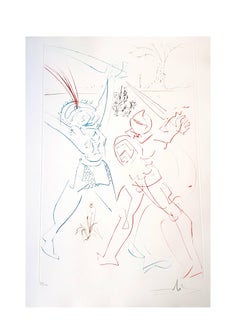
Salvador Dali - The Tournament of Galore - Original Handsigned Etching
Located in Collonge Bellerive, Geneve, CH
Salvador Dali - Original Handsigned Etching From La Quête du Graal Dimensions: 45 x 33 cm Handsigned Edition: 38/100 From the rare additional suite of 100 aside from the edition of ...
Category

1970s Surrealist Figurative Prints

Materials

Etching

Salvador Dali - Enrico Fermi - Original Handsigned Engraving
Located in Collonge Bellerive, Geneve, CH
Salvador Dali - Enrico Fermi - Original Handsigned Engraving Dimensions: 17.5 x 12.5 cm 1970 Signed in pencil EA Jean Schneider, Basel References : Field 70-5
Category

1960s Surrealist Figurative Prints

Materials

Engraving

Salvador Dali - Eye Watches
Located in Collonge Bellerive, Geneve, CH
Salvador Dali - Eye Watches - Original Etching Dimensions: 38 x 28 cm Edition: 390 1967 On Rives Vellum References : Field 67-4 (p. 32-33) / Michler & Lopsinger 174 to 187.
Category

1960s Surrealist Figurative Prints

Materials

Etching

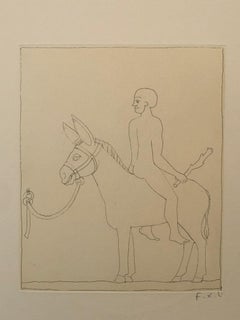
Francois-Xavier Lalanne - Donkey (Âne bâté), 2002
Located in Saint Ouen, FR
Francois-Xavier Lalanne (1927-2008) Donkey (Âne bâté), 2002 Techniques : etching on paper Hand signed in pencil by François Xavier Lalanne, in perfect condition Dimensions of the...
Category

Early 2000s Surrealist Figurative Prints

Materials

Paper

Max Ernst - Composition - Original Lithograph
Located in Collonge Bellerive, Geneve, CH
Max Ernst - Composition - Original Lithograph 1958 Dimensions: 32 x 24 cm XXe siècle Unsigned and unnumbered, as issued Max Ernst was born in Bruhl, a place near Cologne, in Germany. He was raised in a strict Catholic family, and both of his parents were disciplinarians who were dedicated to training their children into God-fearing and talented individuals. Although his father was deaf, Ernst learned so much from him, particularly when it comes to painting. In fact, much of his early years were lived under the inspiration of his father who was also a teacher. He was the one who introduced painting to Ernst at an early age. In 1914, Ernst attended the University of Bonn where he studied philosophy. However, he eventually dropped out of school because he was more interested in the arts. He claimed that his primary sources of interest included anything that had something to do with painting. Moreover, he became fascinated with psychology, among other subjects in school. Primarily, Ernst's love for painting was the main reason why he became deeply interested with this craft and decided to pursue it later on in his life. During his early years, he became familiar with the works of some of the greatest artists of all time including Claude Monet, Paul Cezanne and Vincent van Gogh. He was also drawn to themes such as fantasy and dream imagery, which were among the common subjects of the works of Giorgio de Chirico. During World War I, Ernst was forced to join the German Army, and he became a part of the artillery division that exposed him greatly to the drama of warfare. A soldier in the War, Ernst emerged deeply traumatized and highly critical of western culture. These charged sentiments directly fed into his vision of the modern world as irrational, an idea that became the basis of his artwork. Ernst's artistic vision, along with his humor and verve come through strongly in his Dada and Surrealists works; Ernst was a pioneer of both movements. It was Ernst's memories of the war and his childhood that helps him create absurd, yet interesting scenes in his artworks. Soon, he took his passion for the arts seriously when he returned to Germany after the war. With Jean Arp, a poet and artist, Ernst formed a group for artists in Cologne. He also developed a close relationship with fellow artists in Paris who propagated Avant-Garde artworks. In 1919, Ernst started creating some of his first collages, where he made use of various materials including illustrated catalogs and some manuals that produced a somewhat futuristic image. His unique masterpieces allowed Ernst to create his very own world of dreams and fantasy, which eventually helped heal his personal issues and trauma. In addition to painting and creating collages, Ernst also edited some journals. He also made a few sculptures that were rather queer in appearance. In 1920s, influenced by the writings of psychologist Sigmund Freud, the literary, intellectual, and artistic movement called Surrealism sought a revolution against the constraints of the rational mind; and by extension, they saw the rules of a society as oppressive. Surrealism also embraces a Marxist ideology that demands an orthodox approach to history as a product of the material interaction of collective interests, and many renown Surrealism artists later on became 20th century Counterculture symbols such as Marxist Che Guevara. In 1922 Ernst moved to Paris, where the surrealists were gathering around Andre Breton. In 1923 Ernst finished Men Shall Know Nothing of This, known as the first Surrealist painting. Ernst was one of the first artists who apply The Interpretation of Dreams by Freud to investigate his deep psyche in order to explore the source of his own creativity. While turning inwards unto himself, Ernst was also tapping into the universal unconscious with its common dream imagery. Despite his strange styles, Ernst gained quite a reputation that earned him some followers throughout his life. He even helped shape the trend of American art during the mid-century, thanks to his brilliant and extraordinary ideas that were unlike those of other artists during his time. Ernst also became friends with Peggy Guggenheim, which inspired him to develop close ties with the abstract expressionists. When Ernst lived in Sedona, he became deeply fascinated with the Southwest Native American navajo art. In fact, the technique used in this artwork inspired him and paved the way for him to create paintings that depicted this style. Thus, Ernst became a main figure of this art technique, including the rituals and spiritual traditions included in this form of art. Pollock, aside from the other younger generations of abstract expressionists, was also inspired by sand painting of the Southwest...
Category

1960s Surrealist Figurative Prints

Materials

Lithograph

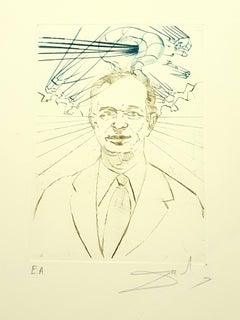
Salvador Dali - Jonas Salk - Original Handsigned Engraving
Located in Collonge Bellerive, Geneve, CH
Salvador Dali - Jonas Salk - Original Handsigned Engraving Dimensions: 17.5 x 12.5 cm 1970 Signed in pencil EA Jean Schneider, Basel References : Field 70-5
Category

1960s Surrealist Figurative Prints

Materials

Engraving

Jean Cocteau - Under the Fire Coat - Original Lithograph
Located in Collonge Bellerive, Geneve, CH
Jean Cocteau - Under the Fire Coat - Original Lithograph Signed "Jean" in the plate and dated 1954 in the plate. Joseph Forêt Editions Dimensions: 41 x 33 cm...
Category

1950s Surrealist Figurative Prints

Materials

Lithograph

Max Ernst - Birds - Original Lithograph
Located in Collonge Bellerive, Geneve, CH
Max Ernst - Birds - Original Lithograph Birds, 1964 (BNF, 63) Dimensions: 32 x 24 cm Revue Art de France ax Ernst was born in Bruhl, a place near Cologne, in Germany. He was raised in a strict Catholic family, and both of his parents were disciplinarians who were dedicated to training their children into God-fearing and talented individuals. Although his father was deaf, Ernst learned so much from him, particularly when it comes to painting. In fact, much of his early years were lived under the inspiration of his father who was also a teacher. He was the one who introduced painting to Ernst at an early age. In 1914, Ernst attended the University of Bonn where he studied philosophy. However, he eventually dropped out of school because he was more interested in the arts. He claimed that his primary sources of interest included anything that had something to do with painting. Moreover, he became fascinated with psychology, among other subjects in school. Primarily, Ernst's love for painting was the main reason why he became deeply interested with this craft and decided to pursue it later on in his life. During his early years, he became familiar with the works of some of the greatest artists of all time including Claude Monet, Paul Cezanne and Vincent van Gogh. He was also drawn to themes such as fantasy and dream imagery, which were among the common subjects of the works of Giorgio de Chirico. During World War I, Ernst was forced to join the German Army, and he became a part of the artillery division that exposed him greatly to the drama of warfare. A soldier in the War, Ernst emerged deeply traumatized and highly critical of western culture. These charged sentiments directly fed into his vision of the modern world as irrational, an idea that became the basis of his artwork. Ernst's artistic vision, along with his humor and verve come through strongly in his Dada and Surrealists works; Ernst was a pioneer of both movements. It was Ernst's memories of the war and his childhood that helps him create absurd, yet interesting scenes in his artworks. Soon, he took his passion for the arts seriously when he returned to Germany after the war. With Jean Arp, a poet and artist, Ernst formed a group for artists in Cologne. He also developed a close relationship with fellow artists in Paris who propagated Avant-Garde artworks. In 1919, Ernst started creating some of his first collages, where he made use of various materials including illustrated catalogs and some manuals that produced a somewhat futuristic image. His unique masterpieces allowed Ernst to create his very own world of dreams and fantasy, which eventually helped heal his personal issues and trauma. In addition to painting and creating collages, Ernst also edited some journals. He also made a few sculptures that were rather queer in appearance. In 1920s, influenced by the writings of psychologist Sigmund Freud, the literary, intellectual, and artistic movement called Surrealism sought a revolution against the constraints of the rational mind; and by extension, they saw the rules of a society as oppressive. Surrealism also embraces a Marxist ideology that demands an orthodox approach to history as a product of the material interaction of collective interests, and many renown Surrealism artists later on became 20th century Counterculture symbols such as Marxist Che Guevara. In 1922 Ernst moved to Paris, where the surrealists were gathering around Andre Breton. In 1923 Ernst finished Men Shall Know Nothing of This, known as the first Surrealist painting. Ernst was one of the first artists who apply The Interpretation of Dreams by Freud to investigate his deep psyche in order to explore the source of his own creativity. While turning inwards unto himself, Ernst was also tapping into the universal unconscious with its common dream imagery. Despite his strange styles, Ernst gained quite a reputation that earned him some followers throughout his life. He even helped shape the trend of American art during the mid-century, thanks to his brilliant and extraordinary ideas that were unlike those of other artists during his time. Ernst also became friends with Peggy Guggenheim, which inspired him to develop close ties with the abstract expressionists. When Ernst lived in Sedona, he became deeply fascinated with the Southwest Native American navajo art. In fact, the technique used in this artwork inspired him and paved the way for him to create paintings that depicted this style. Thus, Ernst became a main figure of this art technique, including the rituals and spiritual traditions included in this form of art. Pollock, aside from the other younger generations of abstract expressionists, was also inspired by sand painting of the Southwest...
Category

1960s Surrealist Figurative Prints

Materials

Lithograph

Salvador Dali - Nude Riding - Original Etching on Silk
Located in Collonge Bellerive, Geneve, CH
Salvador Dali - Nude Ridding - from "Les Amours de Cassandre" Original Etching From the suite on Silk made for editions 9 to 34 Dimensions: 38,...
Category

1960s Surrealist Figurative Prints

Materials

Etching

Marino Marini - Knight - Original Lithograph
Located in Collonge Bellerive, Geneve, CH
Marino Marini - Knight - Original Lithograph 1967 Dimensions: 32 x 24 cm From the art review XXe siècle Unsigned and unumbered as issued
Category

1960s Surrealist Figurative Prints

Materials

Lithograph

Surrealist figurative prints for sale on 1stDibs.

Find a wide variety of authentic Surrealist figurative prints available for sale on 1stDibs. Works in this style were very popular during the 21st Century and Contemporary, but contemporary artists have continued to produce works inspired by this movement. If you’re looking to add figurative prints created in this style to introduce contrast in an otherwise neutral space in your home, the works available on 1stDibs include elements of blue, orange, red, yellow and other colors. Many Pop art paintings were created by popular artists on 1stDibs, including Salvador Dalí, Marc Chagall, (after) René Magritte, and Rafał Olbiński. Frequently made by artists working with Lithograph, and Etching and other materials, all of these pieces for sale are unique and have attracted attention over the years. Not every interior allows for large Surrealist figurative prints, so small editions measuring 2.5 inches across are also available. Prices for figurative prints made by famous or emerging artists can differ depending on medium, time period and other attributes. On 1stDibs, the price for these items starts at $48 and tops out at $1,450,000, while the average work sells for $941.

Recently Viewed

View All