Baby Figurative Prints
to
1,309
2,446
732
599
200
101
Overall Width
to
Overall Height
to
1,567
576
252
230
224
173
121
47
39
31
23
3
2
1
106
83
70
66
54
384
515
2,755
441
33
115
296
185
166
264
277
485
275
150
317
2,613
1,344
117
26,662
14,600
10,432
8,969
7,624
6,949
4,511
4,095
2,355
2,024
1,911
1,863
1,691
1,466
1,456
1,451
1,446
1,283
1,224
1,154
1,411
1,336
550
394
275
312
1,937
1,821
1,611
Art Subject: Baby
Surrealist "Babies DJ" Portrait inspired in Old Masters. Giclée Print
Located in Segovia, ES
Babies DJ.
Funny and touching image composed by Spanish artist Pablo de Pinini as a reinterpretation of past masterpieces, in which contemporary or futuristic elements burst in in u...
Category
2010s Surrealist Figurative Prints
Materials
Canvas, Giclée


$2,090 Sale Price
20% Off
"Play, " Figurative Etching Nude with Children signed by Kenneth Hayes Miller
Located in Milwaukee, WI
"Play" is an original etching by Kenneth Hayes Miller. The artist signed the piece in pencil and in the plate. This piece features a nude figure with two smaller doll-like figures.
...
Category
1920s American Modern Figurative Prints
Materials
Etching

Winter Games - Woodcut after Mizuno Toshikata - Mid-20th Century
Located in Roma, IT
Winter Games is a Woodcut print realized in the 20th Century after Mizuno Toshikata (1866-1908)
Good conditions.
The artwork is depicted through soft lines in a well-balanced co...
Category
Mid-20th Century Modern Figurative Prints
Materials
Woodcut
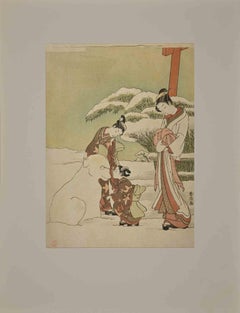
Lovers - Thétis and Pelée - Original etching handsigned and numbered
Located in Paris, IDF
Pierre-Yves Tremois
Thésis and Pelée
Original etching, 1970
Handsigned by the artist
Numbered / XXIV copies (total edition of 90 + XXIV)
Size 57 x 45 cm (c. 22,4 x 17,7 in)
Very goo...
Category
1970s Surrealist Figurative Prints
Materials
Etching
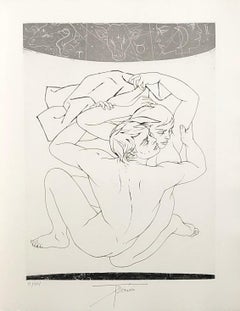
Constantin Terechkovitch, Tunisian Horseman, 1972
Located in Southampton, NY
This exquisite lithograph by Constantin Terechkovitch (1902–1978), titled Cavalier tunisien (Tunisian Horseman), originates from the 1972 edition published by Editions A. C. Mazo et ...
Category
1970s Modern Figurative Prints
Materials
Lithograph
$716 Sale Price
20% Off
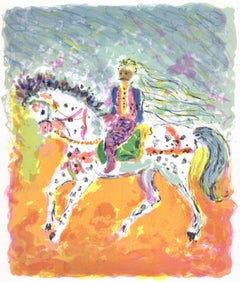
TOD, FRAU, UND KIND (DEATH, WOMAN, AND CHILD
Located in Portland, ME
Kollwitz, Kathe. TOD, FRAU UND KIND (DEATH, WOMAN AND CHILD). Knesebeck 108, Klipstein 113. Etching, drypoint, sandpaper, and soft-ground with the imprint of Ziegler's transfer paper...
Category
1910s Figurative Prints
Materials
Drypoint, Etching
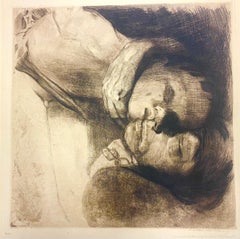
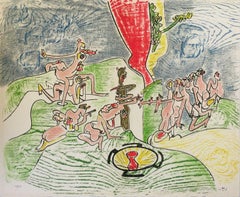
OR DUR OR AISON
Located in Aventura, FL
Hand signed and numbered by the artist. Artwork is in excellent condition. Additional images are available upon request. Certificate of Authenticity is included. Edition of 175. All...
Category
1970s Contemporary Figurative Prints
Materials
Lithograph, Paper
$1,050 Sale Price
25% Off
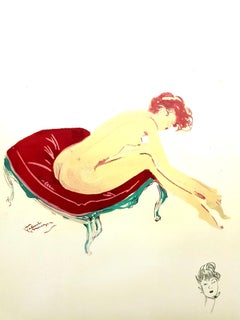
Domergue - Elegance - Original Signed Lithograph
Located in Collonge Bellerive, Geneve, CH
Original Lithograph by Jean-Gabriel Domergue
Title: Elegance
Signed in the plate
Dimensions: 40 x 31 cm
1956
Edition of 197
This artwork is part of the famous portfolio "La Parisienne"
Category
1950s Impressionist Portrait Prints
Materials
Lithograph
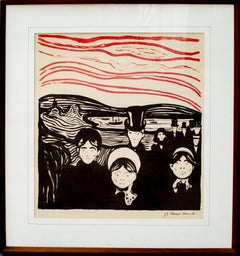
After Edvard Munch, "Anxiety" poster print
By Edvard Munch
Located in New York, NY
After Edvard Munch (1863-1944)
Angst, originally executed in 1896; this reproduction likely 21st century
Publisher unknown
Digital print (?)
Sight: 22 1/2 x 20 1/8 in.
Framed: 31 1/2...
Category
21st Century and Contemporary Modern Figurative Prints
Materials
C Print
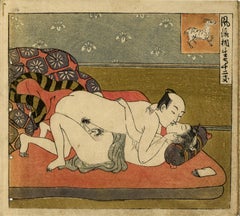
Shunga: Twelve Signs of the Zodiac - Goat
Located in Fairlawn, OH
Shunga: Twelve Signs of the Zodiac - Goat
Color woodcut with gauffrage (embossing)
Unsigned (as usual)
Format: Shikishiban
Publisher: Privately produced
Unusually well preserved with the fugitive blue still intact
Image size: 5-1/8 x 5-3/4"
Sheet size: 5 3/8 x 6 1/4"
From Wikipedia, the free encyclopedia
In this Japanese name, the surname is Isoda.
Isoda Koryūsai (礒田 湖龍斎, 1735–1790) was a Japanese ukiyo-e print designer and painter active from 1769 to 1790.
Life and career
Koryūsai was born in 1735 and worked as a samurai in the service of the Tsuchiya clan. He became a masterless rōnin after the death of the head of the clan and moved to Edo (modern Tokyo) where he settled near Ryōgoku Bridge in the Yagenbori area. He became a print designer there under the art name Haruhiro in 1769, at first making samurai-themed designs. The ukiyo-e print master Harunobu died in 1770, and about that time Koryūsai began making prints in a similar style of life in the pleasure districts.
Koryūsai was a prolific designer of individual prints and print series,[1] most of which appeared between 1769 and 1881.
In 1782, Koryūsai applied for and received the Buddhist honour hokkyō ("Bridge of the Law") from the imperial court and thereafter used the title as part of his signature. His output slowed from this time, though he continued to design prints until his death in 1790.
Works
Koryūsai created a total of 2,500 known designs, or an average of four a week. According to art historian Allen Hockley, "Koryūsai may ... have been the most productive artist of the eighteenth century".
The series Models for Fashion: New Designs as Fresh Young Leaves (Hinagata wakana no hatsumoyō, 1776–1781) ran for 140 prints, the longest known ukiyo-e print series of beauties. He designed at least 350 hashira-e pillar prints, numerous kachō-e bird-and-flower prints, a great number of shunga erotic prints, and others. Ninety of his nikuhitsu-ga paintings are known, making him one of the most productive painters of the period.
Legacy
Despite Koryūsai's productivity and popularity—both in his time and amongst later collectors—his work has attracted little scholarship. The first ukiyo-e histories written in the West in the 19th century elevated certain artists as exemplars; Koryūsai's work came to be seen as too indebted to Harunobu, who died in 1770, and inferior to that of Kiyonaga, whose peak period came in the 1880s. An example is Woldemar von Seidlitz's Geschichte des japanischen Farbenholzschnittes ("History of Japanese colour prints", 1897), the most popular of the early ukiyo-e histories, which paints Koryūsai as a successor to Harunobu and a rival of Kiyonaga in the 1770s who slipped into mediocrity and imitation of his rival by the end of the decade.[5] Interest lay mainly in the details of Koryūsai's life—a samurai who received court honours was unusual in the proletarian world of ukiyo-e. In 2021, contemporary woodblock printmaker David Bull...
Category
1770s Other Art Style Figurative Prints
Materials
Woodcut
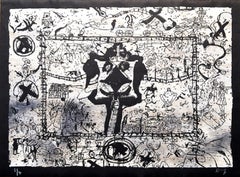
Sergio Hernández,
Corral I
, 2011, Woodcut, 29.5x41.3 in, Black
White
Located in Miami, FL
Sergio Hernández (Mexico, 1957)
'Untitled', 2011
woodcut on paper
29.1 x 41 in. (73.7 x 104.1 cm.)
Edition of 10
ID: HER-185
Hand-signed by author
Category
2010s Contemporary Prints and Multiples
Materials
Paper, Woodcut
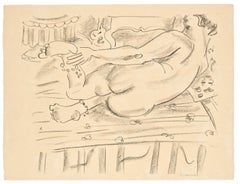
Nu couché de dos
Located in London, GB
Henri Matisse
Nu couché de dos
1929
Lithograph on Arches Velin paper, Edition of 50
Paper size: 50.5 x 66 cms (20 x 26 ins)
Image size: 46 x 56 cms (18 x 22 ins)
HM16567
Category
1920s Modern Figurative Prints
Materials
Lithograph
$15,000 Sale Price
25% Off
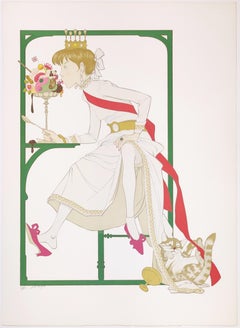
PRINCESS ELODIE AND THE ICE CREAM
Located in Aventura, FL
Hand signed & numbered by the artist. From the edition of 325. Artwork is in excellent condition. Certificate of Authenticity included. All reasonable offers will be considered.
Pl...
Category
1980s Art Nouveau Portrait Prints
Materials
Paper, Lithograph
$375 Sale Price
50% Off
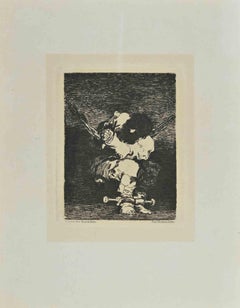
Tan Bárbara la Seguridad Como el Delito - Etching after Francisco Goya - 1881
Located in Roma, IT
Tan bárbara la seguridad como el delito (The custody is as barbarous as the crime) is a black and White Etching after Francisco Goya, published in 1881-1886 .
Good Conditions.
Edit...
Category
1880s Modern Figurative Prints
Materials
Etching
WISH I MAY...
By Colleen Ross
Located in Aventura, FL
Hand signed and numbered by the artist. Serigraph on paper. Sheet size 40 x 27.5 inches. Image size 36.5 x 24 inches. Edition of 150.
Artwork is in excellent condition. Certifi...
Category
Late 20th Century Contemporary Portrait Prints
Materials
Paper, Screen
$650 Sale Price
50% Off
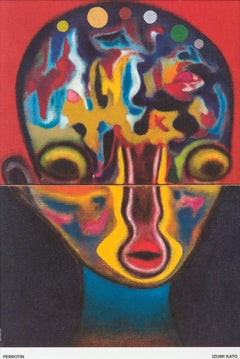
Untitled Offset Lithograph (2020) by Izumi Kato (framed)
By Izumi Kato
Located in Hong Kong, HK
Untitled . Offset Lithograph by Izumi Kato
Printed in 2020 for the Exhibition at Perrotin Gallery Paris
Sheet size: 58.5 × 39 cm (Framed 63 x 43 cm)
Category
2010s Tribal Figurative Prints
Materials
Lithograph, Offset
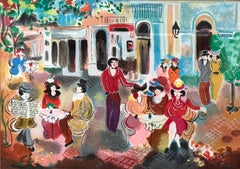
“La Balesta”
By Zule Moskowitz
Located in Southampton, NY
Original colored lithograph by the Argentina born artist Zule Moskowitz. Signed “Zule” bottom right. Condition is excellent. Circa 2000. Gallery label verso. Under glass. Beautifull...
Category
Early 2000s Contemporary Figurative Prints
Materials
Archival Paper, Lithograph
$600 Sale Price
20% Off
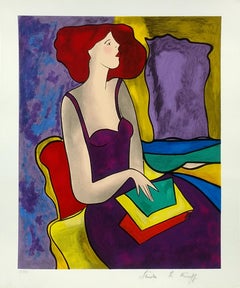
PETIT SONNET
Located in Aventura, FL
Serigraph in colors on paper. Hand signed and numbered by Linda Le Kinff. From the edition of 350. Sheet size 18.5 x 15 inches. Image size 16 x 12.5 inches.
Artwork is in exc...
Category
1990s Contemporary Portrait Prints
Materials
Paper, Screen
$600 Sale Price
40% Off
French Contemporary Art by Claudine Loquen - Aliénor D
Aquitaine En Croisade
Located in Paris, IDF
Claudine Loquen is a French artist born in 1965 who lives and works in Sassetot-le-Mauconduit, France.
Like Colette with the literature, the artist makes the apology of painting wi...
Category
2010s Contemporary Figurative Prints
Materials
Handmade Paper, Etching
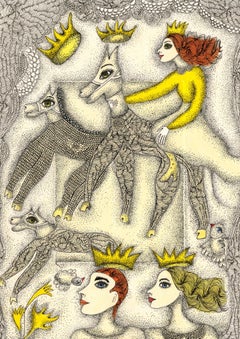
La Gourmandise - Etching by James Ensor - 1904
By James Ensor
Located in Roma, IT
Gluttony (La Gourmandise) is an original etching on the Japanese paper, realized by James Ensor in 1904, signed and dated with the second signature and title on the reverse, 2nd stat...
Category
Early 1900s Surrealist Figurative Prints
Materials
Etching

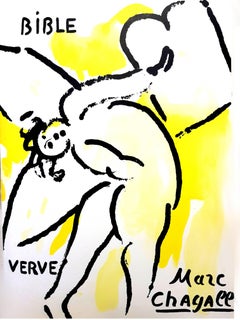
Marc Chagall - The Bible - Original Lithograph
By Marc Chagall
Located in Collonge Bellerive, Geneve, CH
Marc Chagall, Original Lithograph depicting an instant of the Bible.
Technique: Original lithograph in colours
Year: 1956
Sizes: 35,5 x 26 cm / 14" x 10.2" (...
Category
1950s Modern Figurative Prints
Materials
Lithograph
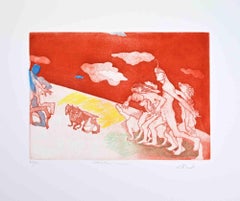
Swimmers - Etching by Sandro Chia - 1990s
By Sandro Chia
Located in Roma, IT
Etching hand colored.
Hand signed and numbered.
Edition of 100.
Excellent condition.
Category
1990s Contemporary Figurative Prints
Materials
Etching
$178 Sale Price
50% Off
Raoul Dufy - Adam and Eve in Modernity - Original Etching
By Raoul Dufy
Located in Collonge Bellerive, Geneve, CH
Raoul Dufy - Haussmann Architecture - Original Etching
Dimensions: 13 x 10".
Edition of 200
1940
Edition Les Bibliophiles du Palais, Paris
Raoul Dufy
Born in 1877, the French painte...
Category
1940s Modern Portrait Prints
Materials
Etching

Mythological Scene - Etching attr. to Richard Egert - Early 20th Century
Located in Roma, IT
Linocut attributed to Richard Egert and realized in the early 20th Century.
With pencil annotations. Hand signed.
Good condition.
Category
Early 20th Century Modern Figurative Prints
Materials
Etching
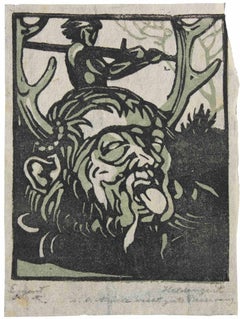
Johann Weinmann: 18th Century Engravings of an aloe in a decorative pot.
Located in Richmond, GB
Hand-coloured mezzotint engravings of decorative urns with aloes and cacti from: ""Phytanthoza Iconographia"", c1739, presented in hand- made, parcel-gilt, ebonised and decalcomania...
Category
18th Century Figurative Drawings and Watercolors
Materials
Watercolor, Mezzotint

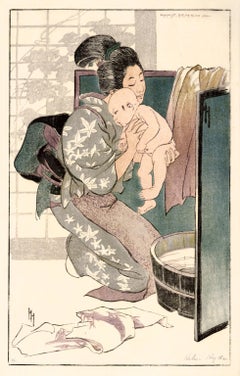
The Bath
— Meji Era Cross-Cultural Woman Artist
By Helen Hyde
Located in Myrtle Beach, SC
Helen Hyde, 'The Bath', color woodblock print, edition not stated, 1905, Mason & Mason 59. Signed in pencil in the image, lower right. Numbered '96' in pencil in the image, lower left. The artist's monogram in the block, lower left, and 'Copyright, 1905, by Helen Hyde.' upper right. A superb impression with fresh colors on tissue-thin cream Japanese paper; the full sheet with margins (7/16 to 1 5/8 inches), in excellent condition. Matted to museum standards, unframed.
Image size 16 1⁄4 x 10 1⁄8 in. (413 x 260 mm); sheet size: 19 1⁄4 x 11 1⁄8 in. (489 x 283 mm).
Literature and Exhibition: Back cover illustration of the catalog of the artist’s prints, 'Helen Hyde', Smithsonian Institution Press, 1990; 'The International Block Print Renaissance, Then And Now, Block Prints In Wichita, Kansas, A Centennial Celebration — 1922-2022', Barbara J. Thompson, Wichita Art Museum, 2022 (back cover).
Impressions of this work are held in the following collections: Achenbach Foundation for Graphic Arts, Art Institute of Chicago, Fine Arts Museums of San Francisco (De Young), Harvard Art Museums, Library of Congress, Metropolitan Museum of Art, New York Public Library, Smithsonian American Art Museum, Terra Foundation for American Art, University of Oregon Museum of Art.
ABOUT THE ARTIST
Helen Hyde (1868-1919) was a pioneer American artist best known for advancing Japanese woodblock printmaking in the United States and for bridging Western and Japanese artistic traditions. Hyde was born in Lima, New York, but after her father died in 1872, her family relocated to Oakland, California, where she spent much of her youth.
Hyde pursued formal art education in the United States and Europe. She enrolled in the San Francisco School of Design, where she took classes from the Impressionist painter Emil Carlsen; two years later, she transferred to the Art Students League in New York, studying there with Kenyon Cox. Eager to expand her artistic repertoire, Hyde traveled to Europe, studying under Franz Skarbina in Berlin and Raphael Collin in Paris. While in Paris, she first encountered Japanese ukiyo-e prints, sparking a lifelong fascination with Japanese aesthetics. After ten years of study, Hyde returned to San Francisco, where she continued to paint and began to exhibit her work.
Hyde learned to etch from her friend Josephine Hyde in about 1885. Her first plates, which she etched herself but had professionally printed, represented children. On sketching expeditions, she sought out quaint subjects for her etchings and watercolors. In 1897, Hyde made her first color etchings—inked á la poupée (applying different ink colors to a single printing plate)—which became the basis for her early reputation. She also enjoyed success as a book illustrator, and her images sometimes depicted the children of Chinatown.
After her mother died in 1899, Hyde sailed to Japan, accompanied by her friend Josephine, where she would reside, with only brief interruptions, until 1914. For over three years, she studied classical Japanese ink painting with the ninth and last master of the great Kano school of painters, Kano Tomonobu. She also studied with Emil Orlik, an Austrian artist working in Tokyo. Orlik sought to renew the old ukiyo-e tradition in what became the shin hanga “new woodcut prints” art movement. She immersed herself in the study of traditional Japanese printmaking techniques, apprenticing with master printer Kanō Tomonobu. Hyde adopted Japanese tools, materials, and techniques, choosing to employ the traditional Japanese system of using craftsmen to cut the multiple blocks and execute the exacting color printing of the images she created. Her lyrical works often depicted scenes of family domesticity, particularly focusing on women and children, rendered in delicate lines and muted colors.
Through her distinctive fusion of East and West, Hyde’s contributions to Western printmaking were groundbreaking. At a time when few Western women ventured to Japan, she mastered its artistic traditions and emerged as a significant figure in the international art scene.
Suffering from poor health, she returned to the United States in 1914, moving to Chicago. Having found restored health and new inspiration during an extended trip to Mexico in 1911, Hyde continued to seek out warmer climates and new subject matter. During the winter of 1916, Hyde was a houseguest at Chicora Wood, the Georgetown, South Carolina, plantation illustrated by Alice Ravenel Huger Smith in Elizabeth Allston Pringle’s 1914 book A Woman Rice Planter. The Lowcountry was a revelation for Hyde. She temporarily put aside her woodcuts and began creating sketches and intaglio etchings of Southern genre scenes and African Americans at work. During her stay, Hyde encouraged Smith’s burgeoning interest in Japanese printmaking and later helped facilitate an exhibition of Smith’s prints at the Art Institute of Chicago.
During World War I, Hyde designed posters for the Red Cross and produced color prints extolling the virtues of home-front diligence.
In ill health, Hyde traveled to be near her sister in Pasadena a few weeks before her death on May 13, 1919. She was buried in the family plot near Oakland, California.
Throughout her career, Hyde enjoyed substantial support from galleries and collectors in the States and in London. She exhibited works at the St. Louis Exposition in 1897, the Pan-American Exhibition in Buffalo in 1901, the Tokyo Exhibition for Native Art (where she won first prize for an ink drawing) in 1901, the Alaska-Yukon-Pacific Exhibition in Seattle in 1909 (received a gold medal for a print), the Newark Museum in 1913, a solo show at the Chicago Art Institute in 1916, and a memorial exhibition in 1920, Detroit Institute of Arts, Color Woodcut Exhibition in 1919, New York Public Library, American Woodblock Prints...
Category
Early 1900s Showa Figurative Prints
Materials
Woodcut
Spray it with Love Hand Painted Print by Madderdoit (kids art, street art)
Located in New York, NY
Edition version – roof grey background with a fluorescent pink heart on paper
Surface – 200gsm cold pressed paper
Edition – 12
Size – 9.5 x 12.5 inches
Description- 6-color stenc...
Category
2010s Street Art Figurative Prints
Materials
Spray Paint
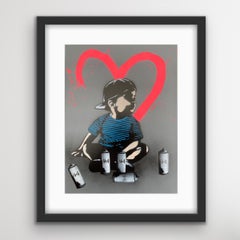
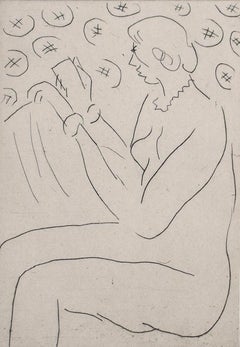
Figure Reading - Etching - Fauvism - French Art
Located in London, GB
HENRI MATISSE 1869-1954
(Emile Benoît)
Le Cateau-Cambrésis 1869-1954 Nice (French)
Title: Figure Reading Figure lisant, 1929
Technique: Original Hand Signed and Numbered Etching o...
Category
1920s Fauvist Figurative Prints
Materials
Etching
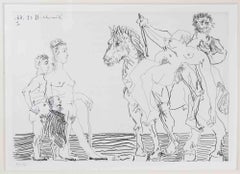
Le Cocu Magnifique - Etching by Pablo Picasso - 1968
Located in Roma, IT
Le Cocu Magnifique is an original Contemporary artwork realized by Pablo Picasso in 1968.
Original Etching Specimen on BFK Rives.
Edition of 180 prints. Numbered in pencil on the ...
Category
1960s Cubist Figurative Prints
Materials
Etching
Untiled Faces
Located in Santa Monica, CA
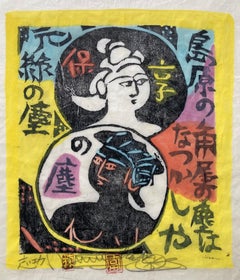
SHIKO MUNAKATA (1903 – 1975)
UNTITLED FACES ca 1960. -- Color woodcut on thin Japan paper. Signed in pencil. with Chops, printed image 15 x 12 ¾”, Sheet 19 7/8 x 15 7/8” $1,...
Category
1960s Modern Figurative Prints
Materials
Woodcut, Color
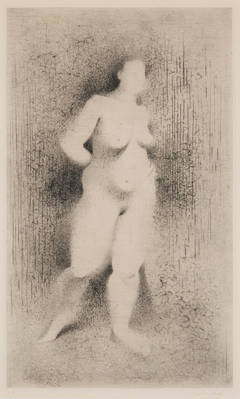
Nude
By Earl Stroh
Located in Dallas, TX
Signed "Earl W Stroh" at lower right.
This is an Artist Proof.
The price includes a period wormy chestnut frame with gold leaf.
The outer frame...
Category
1950s Modern Nude Prints
Materials
Etching
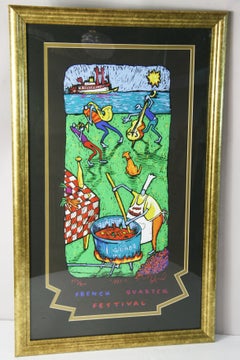
French Quarter New Orleans Festival 1995
Located in Douglas Manor, NY
6089 French quarter New Orleans serigraph # 753/900 signed.
Category
1990s Figurative Prints
Materials
Ink
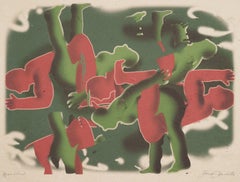
Intertwined Figures - Complementary tension -
Located in Berlin, DE
Johanna Obermüller (*1938 Timișoara), Intertwined Figures, around 1985. Pigment print on Japanese paper, 25 cm x 33.5 cm (image), 29.8 cm x 42.5 cm (sheet dimensions), signed “Johann...
Category
1980s Contemporary Figurative Prints
Materials
Paper
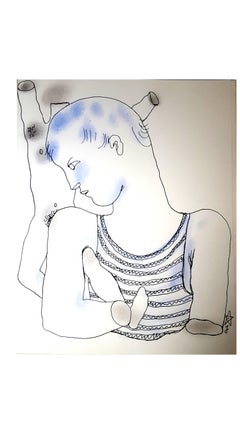
Jean Cocteau - White Book - Original Handcolored Lithograph
By Jean Cocteau
Located in Collonge Bellerive, Geneve, CH
Jean Cocteau
White Book - Autobiography about Cocteau's discovery of his homosexuality. The book was first published anonymously and created a scandal.
Original Handcolored Lithograp...
Category
1930s Modern Nude Prints
Materials
Lithograph
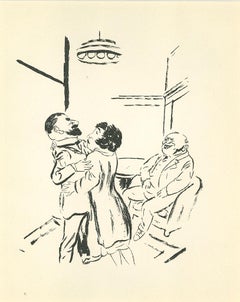
Forgiveness - Lithograph and Offset by George Grosz - 1925
By George Grosz
Located in Roma, IT
Forgiveness is an offset and lithograph print, realized by George Grosz.
The artwork is from the suite of illustrations realized by Grosz for the book "Kobes".
1st edition printed ...
Category
1920s Expressionist Figurative Prints
Materials
Lithograph, Offset
$231 Sale Price
35% Off
Apocalypse - Lithograph by Charles Lapicque - 1974
Located in Roma, IT
Apocalypse is an original artwork realized by Charles Lapicque in 1974.
Colored lithograph. Not signed. as issued.
Excellent condition. Printed by Mourlot , France.
This lithograph w...
Category
1970s Contemporary Figurative Prints
Materials
Lithograph

$178 Sale Price
50% Off
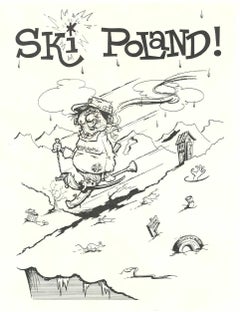
Original Ski Poland satirizing ski culture 1960s ski poster
Located in Spokane, WA
Ski Poland! Circa 1960s. Artist: Irv Isaacson. Poster satirizing ski culture in Poland showing an unkept ski instructor skiing down a pass with a toilet plunger and nails throug...
Category
1960s Pop Art Figurative Prints
Materials
Lithograph
$220 Sale Price
20% Off
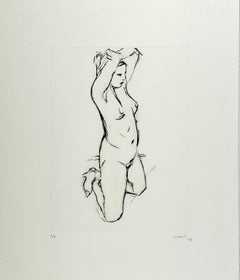
"Study of nude woman" 2007 Original Signed Engraving Drypoint Mexican Artist
Located in Miami, FL
Javier Areán (Mexico, 1969)
"Mujer desnuda (estudio)" (Study of nude woman), 2007
dry point on paper Fabriano 300 g.
16 x 13.6 in. (40.5 x 34.5 cm.)
Edition of 20
ID: ARA-101
Category
Early 2000s Contemporary Nude Prints
Materials
Drypoint, Ink
Clemens Briels - Empresta - 2011 - Serigraph on Canvas - HC - Figurative Print
Located in Sint-Truiden, BE
Serigraph with collage on canvas.
5/6 Hors Commerce.
Clemens Briels grew up in a large family. He wanted to become an artist from an early age. In 1965 he started a course at the Aca...
Category
2010s Street Art Figurative Prints
Materials
Canvas
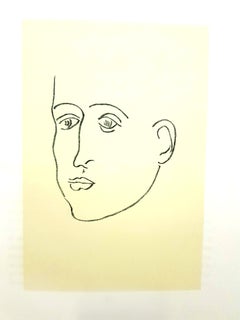
Original Lithograph - Henri Matisse - Apollinaire
Located in Collonge Bellerive, Geneve, CH
Original Lithograph - Henri Matisse - Apollinaire
Artist : Henri MATISSE
13 x 10 inches
Edition: 151/330
References : Duthuit-Matisse Catalogue raisonné 31
MATISSE'S BIOGRAPHY
YOUTH AND EARLY EDUCATION
Henri Emile Benoît Matisse was born in a tiny, tumbledown weaver's cottage on the rue du Chêne Arnaud in the textile town of Le Cateau-Cambrésis at eight o'clock in the evening on the last night of the year, 31 December 1869 (Le Cateau-Cambrésis is in the extreme north of France near the Belgian border). The house had two rooms, a beaten earth floor and a leaky roof. Matisse said long afterwards that rain fell through a hole above the bed in which he was born. Matisse’s ancestors had lived in the area for centuries before the convulsive social and industrial upheavals of the nineteenth century. Matisse grew up in a world that was still detaching itself from a way of life in some ways unchanged since Roman times. The coming of the railway had put Bohain on the industrial map, but people still traveled everywhere on foot or horseback.
Matisse’s father, Émile Hippolyte Matisse, was a grain merchant whose family were weavers. His mother, Anna Heloise Gerard, was a daughter of a long line of well-to-do tanners. Warmhearted, outgoing, capable and energetic, she was small and sturdily built with the fashionable figure of the period: full breasts and hips, narrow waist, neat ankles and elegant small feet. She had fair skin, broad cheekbones and a wide smile. "My mother had a face with generous features," said her son Henri, who always spoke of her with particular tenderness of the sensitivity. Throughout the forty years of her marriage, she provided unwavering, rocklike support to her husband and her sons. Matisse later said: "My mother loved everything I did." He grew up in nearby Bohain-en-Vermandois, an industrial textile center, until the age of ten, when his father sent him to St. Quentin for lycée.
Anna Heloise worked hard. She ran the section of her husband's shop that sold housepaints, making up the customers' orders and advising on color schemes. The colors evidently left a lasting impression on Henri. The artist himself later said he got his color sense from his mother, who was herself an accomplished painter on porcelain, a fashionable art form at the time. Henri was the couple’s first son.
The young Matisse was an awkward youth who seemed ill-adapted to the rigors of the North; in particular, he hated the gelid winters. He was a pensive child and by his own account he was a dreamy, frail and not outstandingly bright. In later life he never lost his feeling for his native soil, for seeds and growing things he had encountered in his youth. The fancy pigeons he kept in Nice more than half a century after he left home recalled the weavers' pigeon-lofts tucked away behind even the humblest house in Bohain.
Matisse's childhood memories were of a stern upbringing. "Be quick!" "Look out!" "Run along!" "Get cracking!" were the refrains that rang in his ears as a boy. In later years when survival itself depended on habits of thrift and self-denial, the artist prided himself on being a man of the North. When Matisse in turn had children of his own to bring up, he chided himself for any lapse in discipline or open display of tenderness as weakness on his part.
In 1887 he went to Paris to study law, working as a court administrator in Le Cateau-Cambrésis after gaining his qualification. Although he considered law as tedious, he nonetheless passed the bar in 1888 with distinction and began his practice begrudgingly. Once Matisse finished school, his father, a much more practical man, arranged for his son to obtain a clerking position at a law office.
PAINTING: BEGINNINGS
Matisse’s discovery of his true profession came about in an unusual manner. Following an attack of appendicitis, he began to paint in 1889, when his mother had brought him art supplies during the period of convalescence. He said later, “From the moment I held the box of colors in my hands, I knew this was my life. I threw myself into it like a beast that plunges towards the thing it loves.” Matisse’s mother was the first to advise her son not to adhere to the “rules” of art, but rather listen to his own emotions. Matisse was so committed to his art that he later extended a warning to his fiancée, Amélie Parayre, whom he later married: “I love you dearly, mademoiselle; but I shall always love painting more.” Matisse had discovered "a kind of paradise" as he later described it. His drastic change of profession deeply disappointed his father.
Two years later in 1891 Matisse returned to Paris to study art at the Académie Julian and became a student of William-Adolphe Bouguereau. After a discouraging year at the Académie Julian, he left in disgust at the overly perfectionist style of teaching there. Afterwards he trained with Gustave Moreau, an artist who nurtured more progressive leanings. In both studios, as was usual, students drew endless figure studies from life. From Bouguereau, he learned the fundamental lessons of classical painting. His one art-schooled technical standby, almost a fetish, was the plumb line. No matter how odd the angles in any Matisse, the verticals are usually dead true. Moreau was a painter who despised the "art du salon", so Matisse was destined, in a certain sense, to remain an "outcast" of the art world. He initially failed his drawing exam for admission to the École des Beaux-Arts, but persisted and was finally accepted.
Matisse began painting still-lives and landscapes in the traditional Flemish style, at which he achieved reasonable proficiency. Most of his early works employ a dark palette and tend to be gloomy. Chardin was one of Matisse's most admired painters having made four the French still-life master paintings in the Louvre. Although he executed numerous copies after the old masters he also studied contemporary art. His first experimentations earned him a reputation as the rebellious member of his studio classes.
In 1896, Matisse was elected as an associate member of the Société Nationale, which meant that each year he could show paintings at the Salon de la Société without having to submit them for review. In the same year he exhibited 5 paintings in the salon of the Société Nationale des Beaux-Arts, and the state bought two of his paintings. This was the first and almost only recognition he received in his native country during his lifetime. In 1897 and 1898, he visited the painter John Peter Russell on the island Belle Île off the coast of Brittany. Russell introduced him to Impressionism and to the work of Van Gogh who had been a good friend of Russell but was completely unknown at the time. Matisse's style changed completely, and he would later say "Russell was my teacher, and Russell explained color theory to me." Matisse also observed Russell's and other artists' stable marriages. This probably influenced him to find in Amélie Noellie Parayre, his future wife, his anchor.
The Dinner Table (1897) was Matisse’s first masterpiece, and he had spent the entire winter working on the oeuvre. Though the Salon displayed the piece, they hung the work in a poor location, disgusted by what they considered its radical, Impressionist aspects.
Caroline Joblaud was Matisse's early lover for four years during his initial struggles to affirm his artistic direction and professional career. Caroline (also called Camille) gave Matisse his first daughter Marguerite in 1894, who after Matisse's marriage to Amélie Noellie Parayre was warmly accepted contrary to conventional hostility such arrangements provoked. Caroline posed various times for the artist’s compositions while Marguerite served many times as a model for Matisse throughout his life.
MARRIAGE WITH AMÉLIE NOELLIE PARAYRE
The Matisses of Bohain and the Parayres of Beauzelle had outwardly nothing in common, and there was no reason why Matisse and Amélie should ever have met. But in October 1897 Matisse went to a wedding in Paris and happened to sit next to her at the uproarious banquet that followed. There had been no banal flirtation between them, even when the wine flowed, each recognized the other as true metal, and when they got up from the table she held out her hand to Henri Matisse in a way that he never forgot. Matisse at that time was not yet the professorial figure of legend. He was known as a prankster, as a ribald and anti-clerical songster, and as someone who had once broken up a café concert performance just for the hell of it. Amélie's relatives operated at that time within a social, intellectual, and political context of which Matisse had had no previous experience. They stood for free thinking, for the separation of church and state, and for the secularization of the French educational system. Her family, better off that that of Matisse, provided the support he needed for the budding artist. When Matisse married Amélie in January 1898, they had been introduced only three months after.
Amélie's Aunt Noélie and two of her brothers ran a successful women's shop called the Grande Maison des Modes. Before her marriage, Amélie had shown a gift for designing, making, and modeling hats for a fashionable clientele. In June 1899, she found a partner and opened a shop of her own on the rue de Châteaudun. This allowed Henri and herself to live, with Marguerite, in a tiny two-room apartment on the same street. Madame Matisse, fervently loyal, would play a fundamental role in the life and career of the artist for more than 40 years. Marguerite was to become her father's lifetime mainstay
In 1902 disaster struck. Amélie’s parents were disgraced and financially ruined in a spectacular scandal of national scope, as the unsuspecting employees of a woman whose financial empire was based on fraud. Thanks to his early years in a lawyer's office, Matisse was able to busy himself to great effect in the organization of his father-in-law's defense. When all about him lost their heads, burst into tears, and felt more than sorry for themselves, Henri Matisse dealt with their problems one by one. The ordeal had taken its toll, in more than one way. His doctors ordered Matisse to go to Bohain and take two months' complete rest. Amélie had lost both her hat shop and the apartment on the rue de Châteaudun. For the first time, Henri, Amélie and the three children were united in Bohain, having nowhere else to go.
Hillary Spurling, one of Matisse’s biographers, asserts that Amélie’s memories of that public disgrace nurtured a “suspicion of the outside world” that would always mark the Matisse family. The Matisse family formed a kind of hermetic unit which revolved around the artist’s work and profession. They fitted their activities according his breaks and work sessions. Silence was essential. Even during the years when Matisse lived mostly alone in Nice, an annual ritual of unpacking, stretching, framing and hanging ended with the whole family settling down to respond to the paintings. The conference might last several days. Then the dealers were admitted.
Matisse and his wife had had two sons, Jean (born 1899) and Pierre (born 1900). He was not always in peace with his family. He wrote that their views were not always in accord “which disturbs me considerably in my work, for which I require the most complete calm and from those how surround me, a serenity that I cannot find here. I intend to move to a village a few league away.” Pierre, his brother, Jean, and Marguerite remained close to their father through every vicissitude, and Matisse, in his last invalid years, was devoted to his several grandchildren.
In 1899, at a time when his paintings displayed rebellious talent but not much clear direction, Matisse began attending classes in clay modeling and sculpture. Assigned to copy one of the sculptural masterpieces in the Louvre, he selected Jaguar Devouring a Hare a violently precise work by Antoine-Louis Barye. Later, whenever his paintings seemed stuck, he turned to sculpture to organize his thoughts and sensations.
Influenced by the works of the post-Impressionists Paul Cézanne, Gauguin, Van Gogh and Paul Signac, and also by Japanese art, Matisse made color a crucial element of his paintings. Matisse said, "In modern art, it is indubitably to Cézanne that I owe the most." By studying Cézanne’s fragmented planes -- which stretched the idea of the still life to a forced contemplation of color surfaces themselves -- Matisse was able to reconstruct his own philosophy of the still life.
Many of his paintings from 1899 to 1905 make use of a pointillist technique adopted from Signac. In 1898, he went to London to study the paintings of J. M. W. Turner and then went on a trip to Corsica.
After years in poverty, Matisse went through his "dark period" (1902-03), moved briefly to naturalism, went back to a dark palette and told friends in 1903 that he had lost all desire to paint and had almost decided to give up.
Fortunately, Matisse was able to earn some money painting a frieze for the World Fair at the Grand Palais in Paris. He also traveled extensively in the early 1900s when tourism was still a new idea. Brought on by railroad, steamships, and other forms of transportation that appeared during the industrial revolution, travel became a popular pursuit. As a cultured tourist, he developed his art with regular doses of travel.
FAUVISM
Matisse's career can be divided into several periods that changed stylistically, but his underlying aim always remained the same: to discover "the essential character of things" and to produce an art "of balance, purity, and serenity," as he himself put it. The changing studio environments seemed always to have had a significant effect on the style of his work.
In these first years of struggle Matisse set his revolutionary artistic agenda. He disregarded perspective, abolished shadows, repudiating the academic distinction between line and color. He was attempting to overturn a way of seeing evolved and accepted by the Western world for centuries by substituting a conscious subjectivity in the place of the traditional illusion of objectivity .
Matisse hit his stride in the avant-garde art world in the first years of the new decade. He explored the modern art scene through frequent visits to galleries such as Durand-Ruel and Vollard, where he was exposed to work by Paul Cézanne, Paul Gauguin, and Vincent van Gogh.
Matisse’s first solo exhibition took place in 1904, without much success. In 16 May 1905 he arrived in the charming Catalan port of Collioure, in the south of France. He soon invited the painter André Derain (1880-1954), 11 years his junior, to join him. By 1905, Matisse was considered spearhead the Fauve movement in France, characterized by its spontaneity and roughness of execution as well as use of raw color straight from the palette to the canvas. Matisse combined pointillist color and Cézanne’s way of structuring pictorial space stroke by stroke to develop Fauvism - a way less of seeing the world than of feeling it with one’s eyes. When the Fauve summer drew to an end, Derain left Collioure with 30 paintings, 20 drawings and some 50 sketches, never to return, while Matisse departed some days later bringing back to Paris 15 finished paintings, 40 aquarelles, over 100 drawings. He returned Collioure in the summers of 1906, 1907, 1911 and 1914. The lure of the sun would prove always to have powers of restoration to the artist throughout his life particularly after periods of great emotional exertion.
When Fauvist works were first exhibited Salon d'Automne in Paris they created a scandal. Eyewitness accounts tell of laughter emanating from room VII where they were displayed. Gertrud Stein, one of Matisse's most important future supporters, reported that people scratched at the canvases in derision. "A pot of paint has been flung in the face of the public" was the reaction by the critic Camille Mauclair. Louis Vauxcelles described the work with the historic phrase "Donatello au milieu des fauves!" (Donatello among the wild beasts), referring to a Renaissance-type sculpture that shared the room with them. His comment was printed on 17 October 1905 in Gil Blas, a daily newspaper, and passed into popular usage. Derain himself later called the Fauves' color "sticks of dynamite." The painting that was singled out for attacks was Matisse's Woman with a Hat, a portrait of Madame Matisse. This picture was bought be was bought by Gertrude and Leo Stein, a fact which had a very positive effect on Matisse who was suffering demoralization from the bad reception of his work.
Matisse continued his experiments in Collioure, visible in the painting The Open Window and the View of Collioure , also a characteristic work of Fauvism in its raw color and disregard for details. Both of these works of the landscape in the French Mediterranean present a distinct development towards the spontaneous and uninhibited style.
Other than André Derain, Georges Braque, Raoul Dufy and Maurice Vlaminck were also members of the Fauve movement. However, Matisse’s intimate friends among artists were mostly easygoing minor painters, such as Albert Marquet. Matisse’s temperamental aloneness made him prey to vertiginous depressions. He later recalled a breakdown that he underwent in Spain, in 1910: “My bed shook, and from my throat came a little high-pitched cry that I could not stop.”
From the onset of is career women were from one of the cardinal motifs of the artist's production. His Joy of Life (1906) draws us into the world of hallucinatory vividness composed of nymphs set in an idyllic open fields dressed in pure color and sensual outline. Two women lounge in the sunlight while two more chat on the edge of the forest. One crouches to pick some flowers while her companion weaves a chain of them into her hair. A couple embraces each other while another group engages in a lively round-dance in the distance. In this way, Joy of Life depicts woodland nymphs engaging in a celebration of their life, their womanhood, and their sexuality.
Due to the recurrent incidence of nude women and intensely sensual interpretation many observers have assumed that as a man Matisse must have been a hedonist. On the contrary, historic examination demonstrates that in reality, he was rather a self-abnegating Northerner who lived only to work, and did so in chronic anguish, recurrent panic, and amid periodic breakdowns. While Picasso recompensed himself, as he went along, with gratifications of intellectual and erotic play Matisse did not. In an age of ideologies, Matisse dodged all ideas except perhaps one: that art is life by other means.
Matisse’s uninhibited celebration of women is often believed to have initiated from Cézanne’s painting Three Bathers (1882) (which he had acquired for himself along with a Van Gogh and a Gauguin). However, Matisse depicts women as nurturing, welcoming, and unlike the forbidding, massive clay-like presence of those of Paul Cézanne.
FAME
The decline of the Fauvist movement, after 1906, did nothing to deter the rise of Matisse. From 1906 -1917 he lived in Paris and established his home, studio, and school at Hôtel Biron. Among his neighbors is sculptor Auguste Rodin, writer Jean Cocteau, and dancer Isadora Duncan. Many of his finest works were created in this period, when he was an active part of the great gathering of artistic talent in Montparnasse, even though he did not quite fit in with his conservative appearance and strict bourgeois work habits. In fact, the aim of Matisse’s art was something less than revolutionary. In 1908, in a famous statement drawn from “Notes of a Painter,” Matisse declared as his ideal an art “for every mental worker, for the businessman as well as the man of letters, for example, a soothing, calming influence on the mind, something like a good armchair which provides relaxation from physical fatigue.”
Matisse's personal habits were incredibly regular. On a typical day rose early and worked all morning with a second work session after lunch, followed by violin practice, a simple supper (vegetable soup, two hard-boiled eggs, salad and a glass of wine) and an early bedtime.
In 1906, he created a series of 12 lithographs, all variations on the theme of a seated nude. He chose to share his graphic work with the public almost immediately. The lithographs were exhibited at the Druet Gallery in Paris the same year that they were produced, and the woodcuts were shown at the Salon des Independants in the spring of 1907.
In 1907 Appolinaire, commenting about Matisse in an article published in La Falange, said, "We are not here in the presence of an extravagant or an extremist undertaking: Matisse's art is eminently reasonable." Notwithstanding newly-won fame, Matisse's work continued to encounter vehement criticism and it was difficult for him to provide for his family. His controversial 1907 painting Blue Nude was burned in effigy at the Armory Show in Chicago in 1913. Contrary to the fate of the Impressionists, Matisse and other Fauves were able to exhibit in art galleries. In 1908 Paul Cassirer, the German art dealer and editor who played a significant role in the promotion of the work the French Impressionists and Post-Impressionists, staged an exhibit of Matisse’s works in Berlin. In the same year the American photographer Alfred Stieglitz in New York organized him one-man show in his tiny Manhattan gallery called 291 which effectively introduced Matisse the powerful American art market.
In the first decade of his notoriety as the leader of the Fauves, Matisse was more admired by foreigners than by the French. It was, after all, the Russians and the Americans who acquired significant collections of his early work almost as quickly as it was created. The great Matisses we see in the Paris museums today were mostly acquired after the artist's death in lieu of death duties. It took the French a good deal longer to understand Matisse's greatness-longer, certainly, than the international cadre of aspiring talents that flocked to his classes when he was still one of the most controversial figures in the Paris avant-garde.
In the summer of 1907, Matisse and his wife went on a long trip to italy "for work and Pleasure," visiting Venice and Padua, where they admired Giotto's frescos. In Florence the were the guests of the Steins in their villa in Fiesole. From this base matisse visited Arezzo, to study Piero della Francesca, and Siena, attracted by the early Sienese painters, especially, Duccio.
PICASSO, GERTRUDE STEIN AND THE CONE SISTERS
During the first decade of the 20th century Americans in Paris Gertrude Stein, her brothers Leo Stein, Michael Stein and Michael's wife Sarah took keen interest in Matisse's art. In addition, Gertrude Stein's two friends from Baltimore. Clarabel and Etta Cone, became major patrons of Matisse and Picasso, collecting hundreds of their works.The Cone Sisters acquired their first Matisse in 1906 and, during the next four decades, went on to form one of the world's great collections of his art. The Cone Collection not only contains major works from every phase of Matisse's long career but reflects the sisters' special interest in his Nice period, when a new complexity of form and psychology entered the ever intense surface allure of his paintings.
In April of 1906 during a gathering at the house of the legendary Gertrude Stein, Matisse was introduced to Pablo Picasso who was 11 years younger. Picasso and Matisse were poles apart aesthetically and their life styles were no less so. Matisse was markedly taller and more polished than the stocky, cocky Catalan, was then ruler of the turbulent Paris avant-garde art scene. The two were said to have always been looking over their shoulders at each other. It is well-known that after their rivalry grew, sides were taken. Picasso later said: "No one has ever looked at Matisse's paintings more carefully than I; and no one has looked at mine more carefully than he."
One key difference between their pictorial concepts was that Matisse drew and painted from nature, while Picasso was much more inclined to work from imagination. The subjects painted most frequently by both artists were women and still lives, with Matisse more likely to place his figures in fully realized interiors.
Gertrude Stein, who loved stirring things up, wrote, "the feeling between the Picassoites and the Matisse-ites became bitter." Although Matisse dryly noted that "our disputes were always friendly," it should be pointed out that Picasso and his friends threw suction-cupped darts at Matisse's 1906 Portrait of Marguerite (which Picasso had obtained in a trade for his own Pitcher, Bowl and Lemon, from 1907). While the rift between the two artists eventually healed, the one between their supporters remained.
ACADEMIE MATISSE IN PARIS & SERGEI SHCHUKIN
In 1909, with the Matisse family lived in a former convent on the Boulevard des Invalides, in Paris, where the artist conducted a painting school. His immense notoriety, which had been confirmed in 1905-06 by Joy of Life, a work which seemed to trash every possible norm of pictorial order and painterly finesse.His friends organized and financed the Académie Matisse in Paris, a private and non-commercial school in which Matisse instructed young artists. It operated from 1911 until 1917. Hans Purrmann and Sarah Stein were several of his most loyal students.
Although it lasted for only three years (1908-11), and yet, during its brief existence the Académie Matisse became one of the principal crossroads of modern painting for a number of gifted European and American artists.
Given the reputation Matisse had acquired as the"wild man" of modernist color, it must have come as a shock to some of his early students that the program of instruction he offered was remarkably conservative. As Jean Heiberg, the first Norwegian to enroll in the Académie, later wrote in a memoir: "The school had, at Matisse's suggestion, acquired a copy of two antique sculptures from the Louvre, Mars and an archaic sculpture, which he often used to demonstrate. Every now and then he got completely rid of the life model and we only drew from the plaster casts, and his critiques then were no less profitable."
Among Matisse’s students was Olga Meerson, a Russian Jew who had studied with Wassily Kandinsky in Munich and, already possessed of an elegant style, sought to remake herself under Matisse’s tutelage. Amélie suspected the worst. Perhaps a combination of Amélie’s jealousy and Meerson’s neediness caused a Matisse to end the connection, with bad feeling all around. Meerson moved to Munich, where she married the musician Heinz Pringsheim, a brother-in-law of Thomas Mann. Never having fulfilled her promise as a painter, she committed suicide in Berlin, in 1929. One of Matisse's biographers, with access to much of the artist's correspondence, contends that the artist, after his marriage, rarely, if ever, had sex with models, despite his apparent feelings for many.
Two Russian art collectors stood out at the beginning of the 20th century: the cloth merchant Sergei Shchukin (1854–1936) and the textile manufacturer Ivan Morozov (1871–1921). Both acquired modern French art, developed a sensibility for spotting new trends, and publicized them in Russia.
In this period, Matisse had initiated his fecund association with the Russian textile magnate and visionary collector, Sergei Shchukin. The artist created one of his major works La Danse specially for Shchukin as part of a two painting commission. Inspired by a circular dance-- perhaps a sardana - performed by fishermen at Collioure, this painting embodies the clash between the sacred and reality. Human hands link together, but they form a divine spirit. Moreover, Matisse all but abandoned perspective The work ’s flatness emphasizes the idea, colors, and material, a notion that made Matisse a model for Modernists. The other painting commissioned was Music, 1909.
Shchukin was considered by some almost as a co-producer of some of the artist’s greatest works and was strongly commuted to the French painter’s work. Concerning the violent attacks on his friend, the Russian wrote to the artist: “The public is against you, but the future is yours.” By 1914 Shchukin’s house in Moscow contained thirty-seven Matisses. “He always picked the best,” the artist said.
During the political revolution Lenin expropriated Shchukin collection in person but allowed Shchukin to remain, in servants’ quarters, as caretaker and guide. He died in Paris, in 1936. The collection is now in the Hermitage and Pushkin Museums
From about 1911 to 1915, Matisse struggled with the ideas of Cubism, an experiment he felt he was "not participating in" because it did not "speak to [his] deeply sensory nature."
MOROCCO
Like many avant-garde artists in Paris, Matisse was receptive to a broad range of influences. He is one of the first painters to take an interest in various forms of “primitive” art. His art was profoundly influenced by Easter art as well.
Matisse first flirted with the idea of visiting Morocco after a trip to the Moorish part of Spain in the winter of 1910. This taste of the Moors incited a flame of hope that there would be greater inspiration to paint in Morocco. Furthermore, well aware of the exotic subjects in Morocco that had engendered a wealth of inspiration for the famous French painter Delacroix when he visited the country over eighty years before, Matisse felt Morocco would stimulate his painting genius in ways Europe could not. He strove for neither the picturesque nor the pornographic.
In Morocco, Matisse seems to have had difficulties finding models who would pose for him, particularly women because of the law of the veil. Only Jewesses and prostitutes were exempt. Luckily, Matisse to have found the prostitute Zorah for the purpose although he did not paint her as a prostitute. Instead, in his first picture of her, Zorah en Jaune, sexual themes are most conspicuously absent from the canvas. As a prostitute used to exposing and flaunting her body, Zorah could have easily been painted nude or with less clothing to show herself off, but instead Matisse chooses to keep her clothed and posed with prudence. Unlike the primitive, nude Western women in the Fauve Joy of Life. Moroccan Zorah is clothed with respect and detail to her finer characteristics. He is developing his ability to paint with awareness of the non-sexual qualities of his subject, a movement away from Fauve women.
Many of Matisse's Moroccan paintings are covered only in the thinnest washes of pigment, as if he wanted the texture of the unpainted canvas to show through so that it would add rawness to the browns and grays.
Matisse's odalisques have been described as "elaborate fictions" in which the artist re-created the image of the Islamic harem using French models posed in his Nice apartment. The fabrics, screens, carpets, furnishings and costuming recalled the exoticism of the "Orient" and provided a theme for Matisse's preoccupation with the figure and elaborate patterns of exotic fabrics.
Although Matisse's interest in textiles are evident in his compositions made during his 1906 trip to Morocco, it didn't begin as a typical European attraction to the exotic. It was already present to him as a descendent of generations of weavers, who was raised among weavers in Bohain-en-Vermandois, which in the 1880's and 90's was a center of production of fancy silks for the Parisian fashion houses. Like virtually all his northern compatriots, he had an inborn appreciation of their texture and design. He understood the properties of weight and hang, he knew how to use pins and paper patterns, and he was supremely confident with scissors.
Matisse was known to be an avid collector of fabrics, from his days as a poor art student in Paris to the latter years of his life, when his Nice studio overflowed with Persian carpets, delicate Arab embroideries, richly hued African wall hangings, and any number of colorful cushions, curtains, costumes, patterned screens, and backcloths. Textiles soon became the springboard for his radical experiments with perspective and an art based on decorative patterning and pure harmonies of color and line. When he moved house, he also moved his fabrics, describing them as "my working library." He added to the collection all his life, from markets in Algeria, Morocco and Tahiti to the end-of-season sales of Parisian haute couture.
The revitalizing spirit of Morocco would live on in the artist's imagination until the cutouts of the artist's last years.
AFTER PARIS
Matisse continued to evolve in unexpected directions even though never became an abstract painter (though some of his most adventurous works, such as the View of Notre Dame of 1914 or the Yellow Curtain of 1916 come close). His motifs were always recognizable, and the tension between the subject and the formal aspects of the painting was a central concept of his artistic ideal.
Matisse moved to Nice in 1917 to distance himself from wartime activity, where bright, warm colors showed him "simpler venues which won’t stifle the spirit." His spirit became loyal to the "silver clarity of light" in Nice, and he returned to Paris only for a few months each summer. The years 1917–30 are known as his early Nice period, when his principal subject remained the female figure or an odalisque dressed in oriental costume or in various stages of undress, depicted as standing, seated, or reclining in a luxurious, exotic interior of Matisse's own creation. These paintings are infused with southern light, bright colors, and a profusion of decorative patterns. They emanate the atmosphere suggestive of a harem.
In 1929, Matisse temporarily suspended easel painting and traveled to America to sit on the jury of the 29th Carnegie International and, in 1930, spent some time in Tahiti and New York as well as Baltimore, Maryland and Merion, Pennsylvania.He was especially thrilled with New York. An important collector of modern art, and owner of the largest Matisse holdings in America, Dr. Albert Barnes of Merion, commissioned the artist to paint a large mural for the two-story picture gallery of his mansion. Matisse chose the subject of the dance, a theme that had preoccupied him since his early Fauve masterpiece Joy of Life.
Americans were prominent among Matisse's patrons throughout his career, beginning with the Steins (Leo Stein bought Joy of Life right out of the Salon in 1906) and including the Cone sisters of Baltimore and the notoriously cantankerous Barnes. The foundational Matisse monograph was written during his lifetime by another American, Alfred Barr. Also important in promoting Matisse's presence before the transatlantic public was the Manhattan gallery founded in 1931 by the artist's son, Pierre, who remained a prominent figure in the New York art world for almost six decades. In addition to his father, he represented Balthus, Calder, Dubuffet, Giacometti, Miro, Tanguy and others, many of them also friends.
Throughout his long and productive career, Matisse periodically refreshed his creative energies by turning from painting to drawing, sculpture and other forms of artistic expression. In his lifetime he also produced 12 illustrated books which were known as “livre d’artiste” (artist’s book), a specific type of illustrated book that became common in France around the turn of the century. These books were deluxe, limited editions, meant to be collected and admired as works of art, as well as, read. This process began when Swiss publisher Albert Skira first approached the modern master in 1930 to illustrate the work, Poesies, by 19th century French symbolist poet Stéphane Mallarmé . Matisse responded to Skira’s invitation with great enthusiasm and that summer, devoted most of his attention to the commission while he was residing in Paris. The result was a collection of 29 beautiful etchings, of which the Museum will display 16. The subject matter, like the poems themselves, varies considerably, although many of the images reflect the artist’s vacation to the South Pacific. Matisse’s etchings of Mallarmé’s poems are considered among his greatest works in the print medium. In 1941, again for Skira, Matisse began one of his most complicated and successful printmaking projects, Florilege des Amours de Ronsard, illustrating the love poems of 16th century French Renaissance poet Pierre de Ronsard. Ronsard’s subject and strong imagery lent themselves gracefully to Matisse’s favored themes of fruits, flowers, the female form and portraits. The artist selected the poems himself and translated the work from Renaissance French to contemporary French for the publication of the anthology
DIVORCE & LATE FAMILY RELATIONSHIPS
For all his long-lasting friendships with other artists, famous and obscure, Matisse's days and nights were absorbed by solitary labor. Playing the violin seemed a more intimate consolation for decades of critical abuse than the affections of his wife and children.
Although their marriage was still somewhat fragile, the Matisses had decided to stay on in Nice when their lease expired at Place Charles-Félix in the summer of 1938.
Matisse and his wife were separated in 1939 after 41 years when Amélie tried to dismiss the coolly efficient young Lydia Delectorskaya, an orphan refugee from Siberia, who had been hired as Amélie’s companion. However, the Matisses’ marriage ran afoul not of any romantic rival but for the artist’s wish to stand on his own. The first climax came years before in 1913, when Amélie sat more than a hundred times for the Portrait of Madame Matisse. A friend’s diary reported at the time. “Crazy! weeping! By night he recites the Lord’s Prayer! By day he quarrels with his wife!” The portrait, which was the last work to enter Shchukin’s collection, caused Matisse “palpitations, high blood pressure and a constant drumming in his ears.” Such frenzy was not rare when Matisse had difficulty with a painting. He referred to the painting years later in a letter to her as “the one that made you cry, but in which you look so pretty.” Amélie ceded routine leadership of the family to Marguerite. The 1913 portrait was his last painting of her.
Matisse and his wife met the last time to discuss details of their legal separation, in July 1939. One of its key provisions was that everything would be divided equally between the couple.
The meeting took place in Paris at the Gare St. Lazare and lasted thirty minutes, during which Amélie Matisse kept up a flow of small talk while her husband."My wife never looked at me, but I didn't take my eyes off her...," Matisse wrote on the night of that final encounter: "I couldn't get a word out.... I remained as if carved out of wood, swearing never to be caught that way again." "I'm going to try to isolate myself as if I were still absent,'' Matisse announced on his first return to Paris since the official separation from his wife, 'rarely leaving his apartment except for visits to the cinema (his first color film, starring Danny Kaye, was a revelation).''
After her dismissal, Delectorskaya shot herself in the chest with a pistol, remarkably with only a slight effect. Soon after the artist and his wife were legally separated Delectorskaya was back. She arrived with a bouquet of white daisies and blue cornflowers from her Aunt’s garden on July 15th, St Henry’s Day. Their working collaboration was to last right up to Matisse’s death in 1954. Her will throughout was indomitable; she typed, kept records and meticulous accounts and paid the household bills. She also organized Matisse’s correspondence and coordinated his business affairs with an iron grip as well as being his studio assistant and muse. And when called upon, even scoured the countryside on her bike for provisions during the war. Matisse claimed that his entire household came to a standstill in her absence which, in the light of what Lydia accomplished is anything, if not an understatement.
In the face of the family’s icy resentment, the Russian said of Matisse, “He knew how to take possession of people and make them feel they were indispensable. That was how it was for me, and that was how it had been for Mme. Matisse.”
Life with Matisse must have been taxing but it had been Amélie’s chosen vocation, through years of their studio-centered homes. Her central role in the artist's life was security, which Shchukin’s patronage provided, along with a sizable house in Issy-les-Moulineaux, where the family moved in 1909. However, in this period Matisse was increasingly absent. In 1930, his travels took him to the United States, where he was thrilled by New York, and to Tahiti.
Matisse found that Tahiti was "both superb and boring . . . There the weather is beautiful at sunrise and it does not change until night. Such immutable happiness is tiring." He dived off the reefs and never forgot the colors of the madrepores and the absinthe-green water; these appear in cut-outs like Polynesia, 1946, or The Bird and the Shark, 1947, as images of a spectacular and, on the whole, beneficent nature.
In September of 1940 he employed a temporary stand-in for his regular night nurse...
Category
1930s Modern Portrait Prints
Materials
Linocut
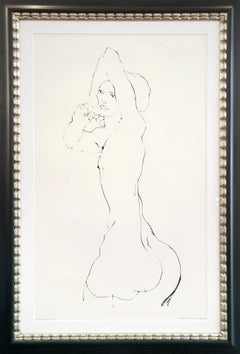
RÜCKSEITE AKTSTUDIE
By Egon Schiele
Located in New York, NY
(After) Egon Schiele
Marked on the bottom:
EGON SCHIELE, RÜCKSEITE AKTSTUDIE, 1912
PUBLISHED BY MULTIPLA s.r.I., PARMA, ITALY, 1988
© BY SIAE, 1988
Label on Reverse specifies no. ...
Category
Late 20th Century Expressionist Figurative Prints
Materials
Paper, Screen
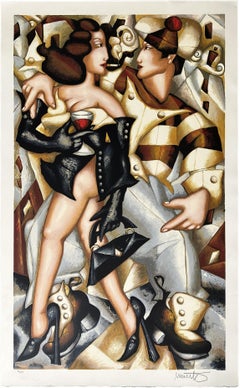
Amsterdam Signed Limited Edition Lithograph Large
By Ernesto
Located in Rochester Hills, MI
Artist Name: Ernesto Amsterdam
Title: Capturing the Essence of Amsterdam:
Medium Type: Lithograph on Arches Archival Pape
Size-Width Size-Height: 46½'' x 28¾'' inches
Signed Edit...
Category
1990s Post-Modern Figurative Prints
Materials
Lithograph
The Queen
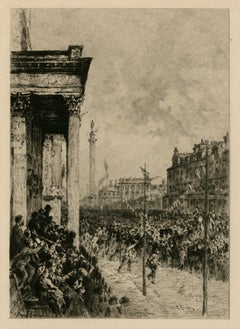
s Entrance into Edinburgh
Located in Middletown, NY
Etching by Brunet-Debaines, Alfred (after William Ewart Lockhart)
Paris: A. Durand, 1878.
Etching on watermarked Van Gelder Portfolio cream laid paper,10 1/4 x 7 1/4 inches (260 x ...
Category
Mid-19th Century English School Landscape Prints
Materials
Laid Paper, Etching
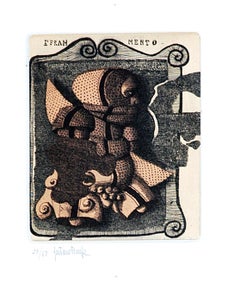
Fragment - Etching by Gaetano Pompa - 1980s
Located in Roma, IT
Hand Signed. Edition of 60.
Excellent condition.
Category
1980s Contemporary Figurative Prints
Materials
Etching
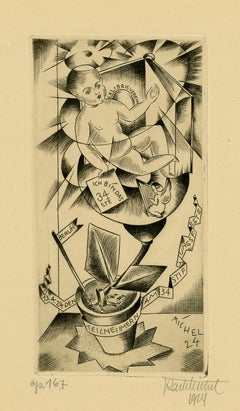
Ex Libris Verein
— 1920s German Expressionism
By Karl Michel
Located in Myrtle Beach, SC
Karl Michel, 'Ex Libris Verein' (New Year's Ex Libris Club Announcement), etching, 1924. Signed, dated, and numbered 'op. 167' in pencil. Signed and dated in...
Category
1920s Expressionist Figurative Prints
Materials
Etching
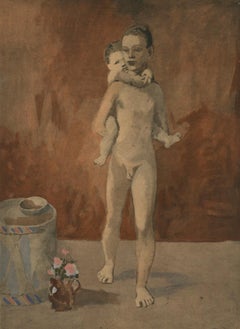
Pablo Picasso, The Child with the Doll, from Chroniques du Jour, 1930 (after)
Located in Southampton, NY
This exquisite lithograph and pochoir after Pablo Picasso (1881–1973), titled L’Enfant a l’ange (The Child with the Doll), from the album, Pablo Picasso, 1930, originates from the 1930 edition published by Editions des Chroniques du Jour, Paris, and printed by L'Atelier Desjobert, Paris, 1930. L’Enfant a l’ange (The Child with the Angel) exemplifies Picasso’s exploration of mythological and spiritual imagery during the early 1930s—a period in which he synthesized the formal innovations of Cubism with the poetic lyricism of his neoclassical and Surrealist phases. Through the delicate layering of lithographic line and pochoir color, the work evokes both innocence and transcendence, merging classical grace with modern expressiveness in a composition that feels simultaneously intimate and monumental.
Executed as a lithograph and pochoir on velin paper, this work measures 11.38 x 9.09 inches. Unsigned and unnumbered as issued. The edition exemplifies the refined craftsmanship of Editions des Chroniques du Jour and the technical excellence of L'Atelier Desjobert, one of the premier Parisian workshops specializing in pochoir and fine art lithography.
Artwork Details:
Artist: After Pablo Picasso (1881–1973)
Title: L’Enfant a l’ange (The Child with the Doll), from the album, Pablo Picasso, 1930
Medium: Lithograph and pochoir on velin paper
Dimensions: 11.38 x 9.09 inches (28.9 x 23.1 cm)
Inscription: Unsigned and unnumbered as issued
Date: 1930
Publisher: Editions des Chroniques du Jour, Paris
Printer: L'Atelier Desjobert, Paris
Catalogue raisonne references: Cramer, Patrick. Pablo Picasso, The Illustrated Books: Catalogue Raisonne. Patrick Cramer, 1983, illustration 18; Bloch, Georges. Pablo Picasso: Catalogue of the Printed Graphic Work 1904–1967. Kornfeld & Klipstein, 1968, illustration 98; Reusse, Gerhard. Pablo Picasso: The Illustrated Books, Catalogue Raisonne. Verlag Gerd Hatje, 1983, illustration 31
Condition: Well preserved, consistent with age and medium
Provenance: From the album, Pablo Picasso, published by Editions des Chroniques du Jour, Paris, and printed by L'Atelier Desjobert, Paris, 1930
Notes:
Excerpted from the album, This volume has been printed in MCC numbered examples, of which DL (LI to DC) constitute the edition in French and DCL (DCI to MCCL). The edition in English has been printed on behalf of E. Weyhe, 794 Lexington Avenue, New York (DCI to MC) and of A. Zwemmer, 78 Charing Cross Road, London, W. C.2. (MCI to MCCL). There have also been printed L examples on Arches paper with a lithograph by Picasso (I to L) distributed between the two editions, and some press examples.
About the Publication:
The album Pablo Picasso, published in 1930 by Editions des Chroniques du Jour, Paris, under the direction of Christian Zervos, stands among the earliest major printed tributes to the artist’s emerging international acclaim. Conceived as part of the publisher’s broader initiative to document and celebrate the modernist vanguard, the volume presented a series of lithographs and pochoirs interpreting Picasso’s drawings, watercolors, and gouaches from the preceding decade. Executed at the esteemed Atelier Desjobert, the edition combined the lithographic precision of line with the pochoir method’s hand-applied color, producing images of exceptional tonal depth and fidelity. Issued in both French and English, with distribution in Paris, New York, and London through E. Weyhe and A. Zwemmer, the album was limited to MCC copies, including a special suite of L examples on Arches paper containing an original lithograph by Picasso. The publication represented a vital collaboration between artist, publisher, and printer—uniting the intellectual rigor of Zervos’s art criticism with the material beauty of fine French printmaking. Today, Pablo Picasso, 1930 is recognized as a landmark in 20th-century art publishing, reflecting both the refinement of interwar Parisian craftsmanship and the international reach of Picasso’s genius.
About the Artist:
Pablo Picasso (1881–1973) was a Spanish painter, sculptor, printmaker, and ceramicist whose extraordinary vision revolutionized modern art and defined the visual language of the 20th century. A child prodigy from Malaga, Spain, Picasso's career spanned more than seven decades and encompassed an astonishing range of styles and innovations—from the melancholic Blue and romantic Rose periods to his pioneering invention of Cubism with Georges Braque, which shattered conventional notions of perspective and form. Influenced by the bold expressiveness of El Greco, the structure of Cezanne, and the vitality of African and Iberian sculpture, Picasso became a central figure of the Paris avant-garde, working in creative dialogue with contemporaries such as Henri Matisse, Alexander Calder, Alberto Giacometti, Salvador Dali, Joan Miro, Wassily Kandinsky, Marcel Duchamp, and Man Ray. His insatiable experimentation extended across painting, drawing, printmaking, ceramics, and sculpture, forever expanding the boundaries of artistic expression. A master of reinvention, Picasso profoundly shaped generations of artists who followed—from Andy Warhol, Roy Lichtenstein, David Hockney, and Jean-Michel Basquiat to Jeff Koons and Banksy—cementing his status as a timeless cultural icon whose works remain among the most sought after worldwide. His landmark painting Les Femmes d'Alger (Version O) achieved a record-breaking sale of 179,365,000 USD at Christie's, New York, on May 11, 2015, affirming Picasso's enduring legacy as one of the most influential and valuable artists in history.
Pablo Picasso L’Enfant a l’ange (The Child with the Doll), Picasso 1930, Picasso Desjobert, Picasso pochoir...
Category
1930s Modern Figurative Prints
Materials
Lithograph, Stencil
$2,396 Sale Price
20% Off
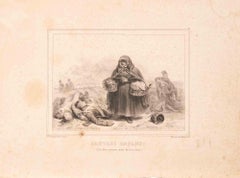
Pauvres Enfants!! - Lithograph by Auguste Raffet - 1830s
Located in Roma, IT
Lithograph on wove paper, realized between 1830s and 840s.
Signed in the plate.
Pronounced foxing across sheet, heavier toward the edges; scattered water stains and one dark spot a...
Category
1830s Modern Figurative Prints
Materials
Lithograph
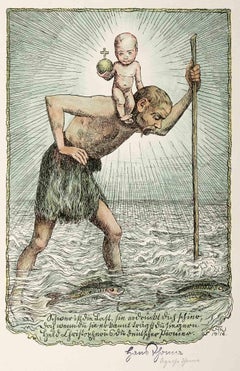
Christophorus II - Lithograph by Hans Thoma - 1916
By Hans Thoma 1
Located in Roma, IT
Lithograph realized by Hans Thoma in 1916 on light yellow paper.
Date and monogrammed in the plate.
Hand signed lower right.
Very good condition.
Category
1910s Symbolist Figurative Prints
Materials
Lithograph
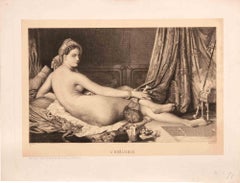
L
Odalisque - Etching by Pierre Guillaume Metzmacher - Mid-19th Century
Located in Roma, IT
Etching realized by Pierre Guillaume Metzmacher in the mid-19th Century after Ingres.
Not signed, as issued.
Published by Marchant, édit. Alliance des Arts, 140, rue de Rivoli (Par...
Category
Mid-19th Century Modern Figurative Prints
Materials
Etching
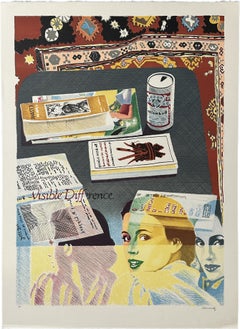
Visible Difference Signed Limited Edition Lithograph
Located in Rochester Hills, MI
Howard Kanovitz
American, 1929–2009
1980
Visible Difference
Lithograph
Paper Size 33 × 24 in (82.6 × 61 cm)
Marked pp Printers Proof
Howard Kanovitz was a pioneering painter in the...
Category
1980s Figurative Prints
Materials
Lithograph
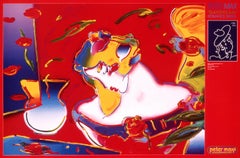
Max, Day Dream: Romance Series, Hand Signed, Official Edition, Peter Max (after)
By Peter Max
Located in Fairfield, CT
Title: Day Dream: Romance Series
Year: 2000
Medium: Offset lithograph in colors on gloss archival paper
Size: 24 x 36 inches
Inscription: Hand signed by Peter Max in ink and unnumber...
Category
Early 2000s Pop Art Figurative Prints
Materials
Offset
$432 Sale Price
20% Off
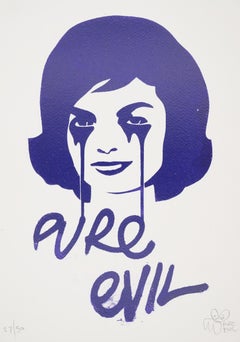
John F. K.
s Nightmare / - Congealed into an icon -
By Pure Evil
Located in Berlin, DE
Charles Uzzell-Edwards aka 'Pure Evil' (*1968), John F. K.'s Nightmare, c. 2010. Color serigraph, 35.4 x 25 cm, signed in pencil lower right with artist's name and artist's signet, i...
Category
2010s Pop Art Figurative Prints
Materials
Paper
$275 Sale Price
20% Off
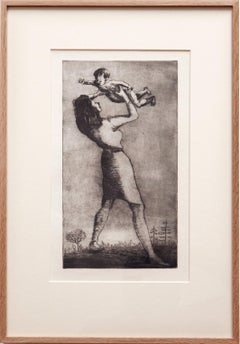
Mother and Child
Located in London, GB
A beautiful and touching original Peter László Péri etching, 1940s. A beaming mother of gigantic proportions holds her child above her head. At her f...
Category
1940s Modern Figurative Prints
Materials
Paper, Etching
"Night" Copper Plate Heliogravure
Located in Palm Beach, FL
2018 marks the centenary anniversary of Ferdinand Hodler’s death. In that 100 years time, the art world’s esteem of this important artist has proved fickle. It has shifted from extolling his artistic merits during his lifetime to showing something of a feigned disdain- more reflective of the world political order than a true change of heart for Hodler’s work. After years of Hodler being all but a footnote in the annals of art history and generally ignored, finally, the pendulum has righted itself once again. Recent retrospective exhibitions in Europe and the United States have indicated not only a joyful rediscovery of Hodler’s art but a firm conviction that his work and world view hold particular relevance today. DAS WERK FERDINAND HODLERS is not only a collection of printed work reflecting the best of all of his painted work created up to 1914 just before the outbreak of World War I, the portfolio itself is an encapsulation of Hodler’s ethos, Parallelisme.
Hodler developed his philosophy of Parallelisme as a unifying approach to art which strips away detail in search of harmony. By means of abstraction, symmetry and repetition, Hodler sought ways to depict Nature’s essence and her fundamental, universal order. He believed these universal laws governing the natural, observable world extend to the spiritual realm. Symbolist in nature with Romantic undertones, his works are equally portraits of these universal concepts and feelings governing all life as they are a visual portrait in the formal sense. Whether his subject is a solitary tree, a moment in battle, mortal fear, despair, the awe inspired by a vast mountain range, a tender moment or even the collective conviction in a belief, Hodler unveils this guiding principle of Parallelisme.
Several aspects of Hodler’s portfolio reinforce his tenets of Parallelisme. The Table of Contents clearly preferences a harmonious design over detail. The two columns, consisting of twenty lines each, list the images by order of appearance using their German titles. The abbreviated titles are somewhat cryptic in that they obscure the identities of the sitters. Like the image Hodler presents, they are distillations of the sitter without any extraneous details. This shortening was also done in an effort to maintain a harmonious symmetry of the Table of Contents, themselves, and keep titles to a one-line limit. The twenty-fourth title: “Bildnis des Schweizerischen Gesandten C.” was so long, even with abbreviation, that it required two lines; so, for the sake of maintaining symmetry, the fortieth title: “Bauernmadchen” was omitted from the list. This explains why the images are not numbered. Hodler’s reasoning is not purely esoteric. Symmetry and pattern reach beyond mere formal design principles. Finding sameness and imposing it over disorder goes to the root of Hodler’s identity and his art. A Swiss native, Hodler was bi-lingual and spoke German and French. Each printed image, even number forty, have titles in both of Hodler’s languages. Certainly, there was a market for Hodler’s work among francophones and this inclusion may have been a polite gesture to that end; however, this is the only place in the portfolio which includes French. With German titles at the lower left of each image, Hodler’s name at bottom center and corresponding French titles at the lower right of each image, there is a harmony and symmetry woven into all aspects of the portfolio. This holds true for the page design, as it applies to each printed image and as it describes the Swiss artist himself. Seen in this light, Hodler’s portfolio of printed work is the epitome of Hodler’s Parallelisme. DAS WERK FERDINAND HODLERS is also one of the most significant documents to best tell the story of how Hodler, from Switzerland, became caught between political cross-hairs and how the changing tides of nations directly impacted the artist during his lifetime as well as the accessibility of his art for generations to come.
The Munich-based publisher of the portfolio, R. Piper & Co., Verlag, plays a crucial role in this story. Publishing on a wide range of subjects from philosophy and world religion to music, literature and the visual arts; the publisher’s breadth of inquiry within any one genre was equal in scope. Their marketing strategy to publish multiple works on Hodler offers great insight as to what a hot commodity Hodler was at that time. R.Piper & Co.’s Almanach, which they published in 1914 in commemoration of their first ten years in business, clearly illustrates the rapid succession- strategically calculated for achieving the deepest and broadest impact - in which they released three works on Hodler to hit the market by the close of 1914. DAS WERK FERDINAND HODLERS was their premier publication. It preceded C.A. Loosli’s Die Zeichnungen Ferdinand Hodlers, a print portfolio after 50 drawings by Hodler which was released in Autumn of 1914 at the mid-level price-point of 75-150 Marks; and a third less expensive collection of prints after original works by Hodler, which had not been included in either of the first two portfolios, was released at the end of that year entitled Ferdinand Hodler by Dr. Ewald Bender.
The title and timing of DAS WERK FERDINAND HODLERS' debut leaves little doubt as to the connection it has with another avant-garde portfolio of art prints, Das Werk Gustav Klimts, released in 5 installments from 1908 -1914 by Galerie Miethke in Vienna. Hodler, himself, was involved in Klimt’s ground-breaking project. As the owner of Klimt’s 1901 painting, “Judith with the Head of Holifernes” which appears as the ninth collotype print in the second installment of Das Werk Gustav Klimts, Hodler was obliged to grant access of the painting to the art printers in Vienna for them to create the collotype sometime before 1908. Hodler had been previously invited in 1904 to take part in what would be the last exhibition of the Vienna Secession before Klimt and others associated with Galerie Miethke broke away. In an interview that same year, Hodler indicated that he respected and was impressed by Klimt. Hodler’s esteem for Klimt went beyond the art itself; he emulated Klimt’s method aimed at increasing his market reach and appeal to a wider audience by creating a print portfolio of his painted work. By 1914, Hodler and his publisher had the benefit of hindsight to learn from Klimt’s Das Werk publication.
Responding to the sluggish sales of Klimt’s expensive endeavor, Hodler’s publisher devised the same diversified 1-2-3 strategy for selling Hodler’s Das Werk portfolio as they did with regards to all three works on Hodler they published that year. For their premium tier of DAS WERKS FERDINAND HODLERS, R. Piper & Co. issued an exclusive Museum quality edition of 15 examples on which Hodler signed each page. At a cost of 600 Marks, this was generally on par with Klimt’s asking price of 600 Kronen for his Das Werk portfolio. A middle-tiered Preferred edition of 30, costing somewhat less and with Hodler’s signature only on the Title Page, was also available. The General edition, targeting the largest audience with its much more affordable price of 150 Marks, is distinguishable by its smaller size.
Rather than use the subscription format Miethke had chosen for Klimt’s portfolios which proved to have had its challenges, R. Piper & Co. employed a different strategy. In addition to instantly gratifying the buyer with all 40 of the prints comprising DAS WERK FERDINAND HODLERS and the choice among three price points, they advertised in German journals a fourth possibility of ordering single prints from them directly. These printed images are easily discernible from the three complete folio editions. The paper size of the single purchased images is of the larger format like the Museum and Preferred editions, measuring 65 h x 50 w cm; however, the paper itself is the same copper print paper used in the General edition and then mounted on poster board. The publishing house positioned itself to be a direct retailer of Hodler’s art. They astutely recognized the potential for profitability and the importance, therefore, of having proprietary control over his graphic works.
R. Piper & Co. owned the exclusive printing rights to Hodler’s best work found in their three publications dating from 1914. That same year, a competing publication out of Weimar entitled Ferdinand Hodler: Ein Deutungsversuch von Hans Muhlestein appeared. Its author, a young scholar, expressed his frustration with the limited availability of printable work by Hodler. In his Author’s Note on page 19, dated Easter, 1914, Muhlestein confirms that the publisher of Hodler’s three works from that same year owned the exclusive reproductive rights to Hodler’s printed original work. He goes further to explain that even after offering to pay to use certain of those images in his book, the publisher refused. Clearly, a lot of jockeying for position in what was perceived as a hot market was occurring in 1914.
Instead, their timing couldn’t have been more ill-fated, and what began with such high hopes suddenly found a much different market amid a hostile climate. The onset of WWI directly impacted sales. Many, including Ferdinand Hodler, publicly protested the September invasion by Germany of France in which the Reims Cathedral, re-built in the 13th century, was shelled, destroying priceless stained glass and statuary and burning off the iron roof and badly damaging its wooden interior. Thomas Gaehtgens, Director of the Getty Research Institute describes how the bombing of Reims Cathedral triggered blindingly powerful and deeply-felt ultra-nationalistic responses: “The event profoundly shocked French intellectuals, who for the most part had an intense admiration for German literature, music and art. By relying on press accounts and abstracting from the visual propagandistic content, they were unable to interpret the siege of Reims without turning away from German culture in disgust. Similarly, the German intelligentsia and bourgeoisie were also shocked to find themselves described as vandals and barbarians. Ninety-three writers, scientists, university professors, and artists signed a protest, directed against the French insults, that defended the actions of the German army.”
In similar fashion, a flurry of open letters published in German newspapers and journals as well as telegrams and postcards sent directly to Hodler following his outcry in support of Reims reflected the collectively critical reaction to Hodler’s position. Loosli documents that among the list of telegrams Hodler received was one from none other than his publisher in Germany, R.Piper & Co. Allegiances were questioned. The market for Hodler in Germany immediately softened. Matters worsened for the publisher beyond the German backlash to Hodler and his loss of appeal in the home market; with the war in full swing until 1918, there was little chance a German publisher would have much interest coming from outside of Germany and Austria. Following the war and Hodler’s death in 1918, the economy in Germany continued to spiral out and just 5 years later, hyper-inflation had rendered its currency worthless vis-a-vis its value in the pre-war years. Like the economy, Hodler’s reputation was slow to find currency in these difficult times. Even many French art fans had turned sour on Hodler as they considered his long-standing relationship in German and Austrian art circles. Thus, the portfolio’s rarity in Hodler’s lifetime and, consequently, the availability of these printed images from DAS WERK FERDINAND HODLERS since his death has been scarce.
In many ways, Hodler and his portfolios were casualties of war. Thwarted from their intended purpose of reaching a wide audience and show-casing Parallelisme, Hodler’s unique approach to art, this important, undated work has been both elusive and shrouded in mystery. Perhaps DAS WERK FERDINAND HODLERS was left undated as a means of affirming the timelessness of Hodler’s art. Digging back into the past, Hodler’s contemporaries, like R. Piper, C.A. Loosli and Hans Muhlestein, indeed provide the keys to unequivocally clarify what has largely been mired in obscurity. Just after Hodler’s death, the May, 1918 issue of the Burlington Review ran a small column which opined hope for better access to R.Piper & Co.’s DAS WERK FERDINAND HODLERS; 100 years later, it is finally possible. Hodler’s voice rings out through these printed works. Once more, his modern approach to depicting portraits, landscapes and grand scale scenes of Swiss history speak to us of what is universal. Engaging with any one of these images is the chance to connect to Hodler’s vision and his world view- weltanschauung in German, vision du monde in French- however one expresses these concepts through language, its message embedded in his work is the same: “We differ from one another, but we are like each other even more. What unifies us is greater and more powerful than what divides us.” Today, Hodler’s art couldn’t be more timely.
FERDINAND HODLER (SWISS, 1853-1918) explored Parallelisme through figurative poses evocative of music, dance and ritual. His images of sex, night, desertion and death as well as his many landscapes exploring the universal longing for harmony with Nature are unique and important works embodying a Symbolist paradigm. Truly a Modern Master, Hodler’s influence can be felt in the work of Gustav Klimt and Kolomon Moser...
Category
1910s Symbolist Figurative Prints
Materials
Paper
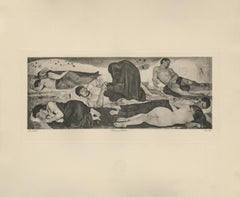
Fernand Leger, Plate 47, from Circus, 1950
Located in Southampton, NY
This exquisite lithograph by Fernand Leger (1881–1955), titled Planche 47 (Plate 47), from the album Cirque, Lithographies Originales (Circus, Original Lithographs), originates from ...
Category
1950s Modern Landscape Prints
Materials
Lithograph
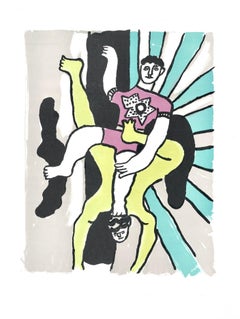
$1,996 Sale Price
20% Off
Sensus Victoria - Etching - 16th Century
Located in Roma, IT
Etching on paper realized by an unknown italian master in the early 16th century after Battista Franco.
Not signed.
Full margins, very good condition.
Category
16th Century Modern Figurative Prints
Materials
Etching
Paul Klee, Child’s Head, from Verve, Revue Artistique, 1939
By Paul Klee
Located in Southampton, NY
This exquisite lithograph by Paul Klee (1879–1940), titled Tete d’enfant (Child’s Head), from Verve, Revue Artistique et Litteraire, Vol. II, No. 5–6, originates from the 1939 issue ...
Category
1930s Modern Figurative Prints
Materials
Lithograph
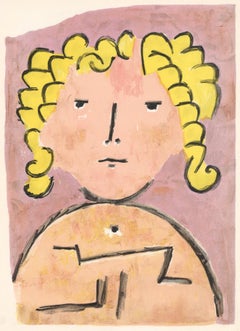
$716 Sale Price
20% Off
Composition, Propos d
un intoxiqué, Léonard Tsugouharu Foujita (藤田 嗣治)
Located in Southampton, NY
Lithograph, stencil on vélin paper. Paper size: 11.42 x 9.05 inches. Inscription: signed in the plate and unnumbered, as issued. Notes: from the folio, Propos d'un intoxiqué, Aquarel...
Category
1920s Modern Figurative Prints
Materials
Lithograph, Stencil
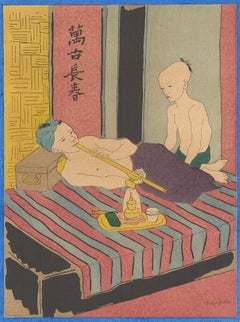
Tarots, Modern Screenprint by Biagio Civale
Located in Long Island City, NY
Biagio Civale, Italian/American (1936 - ) - Tarots, Medium: Screenprint, Signed and Numbered in Pencil, Edition: 45/75, Size: 27 x 19.5 in. (68.58 x 49.53 cm)
Category
1980s Modern Figurative Prints
Materials
Screen
The Enchanted Pool
Located in Middletown, NY
Etching with drypoint printed in sepia ink on cream laid paper bearing an indiscernible watermark with linked spheres. 10 1/4 x 13 1/8 inches (260 x 332 mm), unevenly trimmed yet ful...
Category
Early 20th Century English School Figurative Prints
Materials
Etching, Laid Paper, Drypoint
Recently Viewed
View AllMore Ways To Browse
Enrique Martinez Celaya
Eric Aho
Eritrea Art
Ernest Chateignon
Erotic Art Animal
Eugene Chigot
Eugene Devaud De Madelin
Eugene Jardin
Faith Sheppard
Fearless Girl
Felix Armand
Florida Everglades Painting
Ford Gran Torino
Frances Baker
Francesco Tironi
Fred Parks
Frederick Johnston
Fredericus Jacobus Van Rossum Du Chattel