Bride Figurative Prints
to
1,000
4,304
1,317
884
294
139
Overall Width
to
Overall Height
to
2,724
946
627
592
155
152
127
83
44
34
17
6
5
318
131
77
72
67
947
1,568
4,019
442
86
157
302
243
209
366
603
770
279
131
780
4,741
2,048
143
26,721
14,647
10,466
8,978
7,645
6,976
4,525
4,101
2,357
2,026
1,919
1,867
1,699
1,469
1,462
1,459
1,457
1,279
1,221
1,161
2,849
2,484
766
489
420
481
4,044
3,633
1,945
Art Subject: Bride
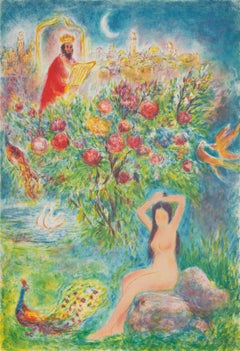
Garden of Eden, Modern Lithograph by Ira Moskowitz
Located in Long Island City, NY
Ira Moskowitz, Polish/American (1912 - 2001) - Garden of Eden, Year: 1972, Medium: Lithograph, signed and numbered in pencil, Edition: 300, Size: 29.5 x 21 in. (74.93 x 53.34 cm)...
Category
1970s Modern Figurative Prints
Materials
Lithograph
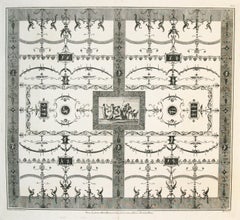
Presso Ludivico Mirri Mercante d’Quadri incontro al Palazzo Bernini a Roma
Located in Paonia, CO
Presse Ludovico Mirri Mercante d’Quadri incontro al Palazzo Bernini a Roma is from a series of original engravings published by Lodovico Mirri in the late 18th century and engraved ...
Category
Late 18th Century Nude Prints
Materials
Engraving
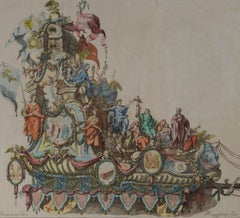
After Jacob Herreyns the Elder (1643-1732) - 18thC Engraving, Maria Triumphant
Located in Corsham, GB
A richly detailed engraving after the original design by Jacob Herreyns the Elder, showing an elaborate pageant for Maria Theresa Walburga Amalia Christina (Maria Theresia (1717–17...
Category
18th Century Figurative Prints
Materials
Engraving

$383 Sale Price
20% Off
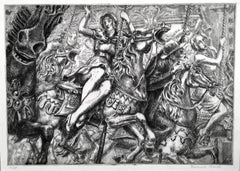
Merry-Go-Round, 1930
Located in New York, NY
Reginald Marsh (1898-1954), Merry-Go-Round, etching, 1930, signed in pencil lower right and numbered "24" lower left. In very good condition, with margins (cut irregularly,...
Category
1930s American Realist Figurative Prints
Materials
Etching
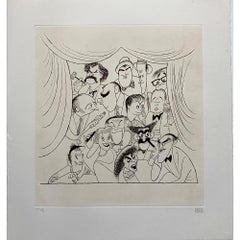
"Laughing Matters" Comedy Legends-Marx Bros, Laurel, Hardy, Burns, Allen, Twain
Located in New York, NY
"Laughing Matters" Comedy Legends-Marx Bros, Laurel, Hardy, Burns, Allen, Twain
Al Hirschfeld (1903-2003)
Laughing Matters
Lithograph on heavy paper, 1987
Signed lower right, numbe...
Category
1980s Contemporary Figurative Prints
Materials
Paper, Lithograph
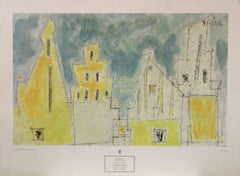
"Gothic Gables" New York Graphic Society 1966, Printed in Switzerland
Located in Chesterfield, MI
"Gothic Gables" Poster/Print by LYONEL FEININGER (American-German, 1871-1956). The print measures approximately 20 x 27 inches and is unframed. Published by New York Graphic Society 1966. Printed in Switzerland...
Category
1960s Figurative Prints
Materials
Lithograph
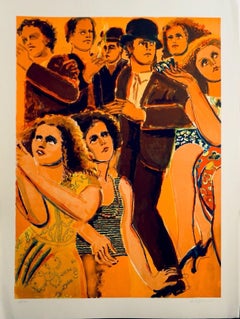
Street Scene 4
Located in Hollywood, FL
Artist: Lester Johnson
Title: Street Scene 4
Medium: Lithograph
Signed: Hand Signed
Edition: Edition of 175
Measurements: 29" x 21"
Year: 1978
Note: This piece is sold UNFRAMED
Con...
Category
1970s Contemporary Figurative Prints
Materials
Lithograph
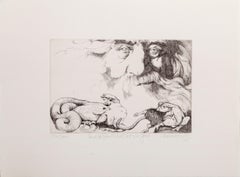
And He Saw That it Was Good, Folk Art Etching by Charles Bragg
Located in Long Island City, NY
Charles Bragg, American (1931 - 2017) - And He Saw That it Was Good, Year: circa 1970, Medium: Etching, signed, numbered, and titled in pencil, Edition: 300, Image Size: 6 x 9 inch...
Category
1970s Folk Art Figurative Prints
Materials
Etching
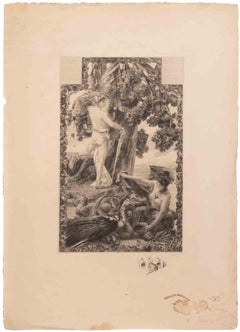
Untitled (Mythological Scene) - Etching by Eugene Decisy - 1899
Located in Roma, IT
Etching and drypoint on laid paper.
Signed in the plate lower right, with remarque proofs below; annotated on verso with artist details and date.
Early impression, before the lette...
Category
1890s Modern Figurative Prints
Materials
Etching, Drypoint
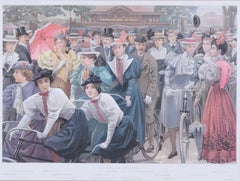
Au Bois De Boulogne (illustrating the congregation of French nobility outside
Located in Fairlawn, OH
Au Bois De Boulogne (illustrating the congregation of French nobility outside the Chalets du Cycle
Chromolithograph, 1897
Signed in the plate lower right corner
From the Special Supp...
Category
1890s Art Nouveau Figurative Prints
Materials
Lithograph
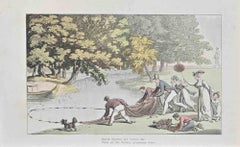
Rural Sports are Better - Etching by Thomas Rowlandson - 1817
Located in Roma, IT
Etching and aquatint realized by Thomas Rowlandson in 1817. Plate from "The Dance of Life" by William Combe.
Very good condition.
Thomas Rowlandson (1757-1827) was an english artis...
Category
Mid-19th Century Modern Figurative Prints
Materials
Etching
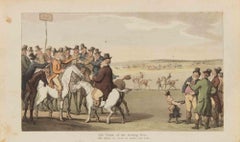
The Victim of the Betting Post - Etching by Thomas Rowlandson - 1817
Located in Roma, IT
Etching and aquatint realized by Thomas Rowlandson in 1817. Plate from "The Dance of Life" by William Combe.
Very good condition.
Thomas Rowlandson (1757-1827) was an english artis...
Category
Mid-19th Century Modern Figurative Prints
Materials
Etching
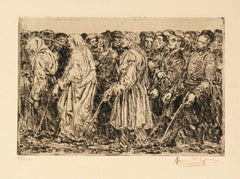
Les Aveugles ( The Blind )
Located in Paonia, CO
Henri DeGroux (1866-1930) was a Belgian Symbolist painter, sculptor and lithographer. He was known for his allegorical, religious and historical subject matter. He became an inspired...
Category
1910s Symbolist Figurative Prints
Materials
Lithograph
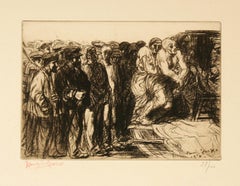
Ambulkance
Located in Paonia, CO
Henri DeGroux (1866-1930) was a Belgian Symbolist painter, sculptor and lithographer. He was known for his allegorical, religious and historical subject matter. He became an inspired...
Category
1910s Symbolist Figurative Prints
Materials
Lithograph
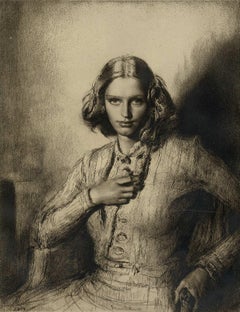
OPHELIA (the artist
s mistress / second wife) - In Celebration of Pride Month
Located in New Orleans, LA
This elegant etching titled the gilded youth is of the second wife of the artist The edition is 75 and is referenced as Fletcher #80.
Gerald Brockhurst is best known for his portr...
Category
1940s American Modern Portrait Prints
Materials
Etching
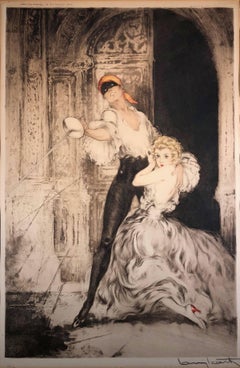
Don Juan
By Louis Icart
Located in Missouri, MO
Aquating Engraving
Image Size: approx. 20 1/4 x 13 3/8
Framed Size: 28 x 20.5 inches
Pencil Signed Lower Right
Louis Justin Laurent Icart was born in Toulouse in 1890 and died in Paris in 1950. He lived in New York City in the 1920s, where he became known for his Art-Deco color etchings of glamourous women.
He was first son of Jean and Elisabeth Icart and was officially named Louis Justin Laurent Icart. The use of his initials L.I. would be sufficient in this household. Therefore, from the moment of his birth he was dubbed 'Helli'. The Icart family lived modestly in a small brick home on rue Traversière-de-la-balance, in the culturally rich Southern French city of Toulouse, which was the home of many prominent writers and artists, the most famous being Henri de Toulouse-Lautrec.
Icart entered the l'Ecole Superieure de Commerce de Toulouse in order to continue his studies for a career in business, particularly banking (his father's profession). However, he soon discovered the play writings of Victor Hugo (1802-1885), which were to change the course of his life. Icart borrowed whatever books he could find by Hugo at the Toulouse library, devouring the tales, rich in both romantic imagery and the dilemmas of the human condition. It was through Icart's love of the theater that he developed a taste for all the arts, though the urge to paint was not as yet as strong for him as the urge to act.
It was not until his move to Paris in 1907 that Icart would concentrate on painting, drawing and the production of countless beautiful etchings, which have served (more than the other mediums) to indelibly preserve his name in twentieth century art history.
Art Deco, a term coined at the 1925 Paris Exposition des Arts Decoratifs, had taken its grip on the Paris of the 1920s. By the late 1920s Icart, working for both publications and major fashion and design studios, had become very successful, both artistically and financially. His etchings reached their height of brilliance in this era of Art Deco, and Icart had become the symbol of the epoch. Yet, although Icart has created for us a picture of Paris and New York life in the 1920s and 1930s, he worked in his own style, derived principally from the study of eighteenth-century French masters such as Jean Antoine Watteau, François Boucher and Jean Honoré Fragonard.
In Icart's drawings, one sees the Impressionists Degas...
Category
1920s Art Deco Figurative Prints
Materials
Engraving, Aquatint
$2,800 Sale Price
20% Off
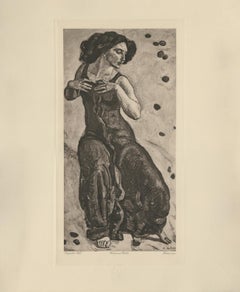
"Exuberant Woman" Copper Plate Heliogravure
Located in Palm Beach, FL
2018 marks the centenary anniversary of Ferdinand Hodler’s death. In that 100 years time, the art world’s esteem of this important artist has proved fickle. It has shifted from extolling his artistic merits during his lifetime to showing something of a feigned disdain- more reflective of the world political order than a true change of heart for Hodler’s work. After years of Hodler being all but a footnote in the annals of art history and generally ignored, finally, the pendulum has righted itself once again. Recent retrospective exhibitions in Europe and the United States have indicated not only a joyful rediscovery of Hodler’s art but a firm conviction that his work and world view hold particular relevance today. DAS WERK FERDINAND HODLERS is not only a collection of printed work reflecting the best of all of his painted work created up to 1914 just before the outbreak of World War I, the portfolio itself is an encapsulation of Hodler’s ethos, Parallelisme.
Hodler developed his philosophy of Parallelisme as a unifying approach to art which strips away detail in search of harmony. By means of abstraction, symmetry and repetition, Hodler sought ways to depict Nature’s essence and her fundamental, universal order. He believed these universal laws governing the natural, observable world extend to the spiritual realm. Symbolist in nature with Romantic undertones, his works are equally portraits of these universal concepts and feelings governing all life as they are a visual portrait in the formal sense. Whether his subject is a solitary tree, a moment in battle, mortal fear, despair, the awe inspired by a vast mountain range, a tender moment or even the collective conviction in a belief, Hodler unveils this guiding principle of Parallelisme.
Several aspects of Hodler’s portfolio reinforce his tenets of Parallelisme. The Table of Contents clearly preferences a harmonious design over detail. The two columns, consisting of twenty lines each, list the images by order of appearance using their German titles. The abbreviated titles are somewhat cryptic in that they obscure the identities of the sitters. Like the image Hodler presents, they are distillations of the sitter without any extraneous details. This shortening was also done in an effort to maintain a harmonious symmetry of the Table of Contents, themselves, and keep titles to a one-line limit. The twenty-fourth title: “Bildnis des Schweizerischen Gesandten C.” was so long, even with abbreviation, that it required two lines; so, for the sake of maintaining symmetry, the fortieth title: “Bauernmadchen” was omitted from the list. This explains why the images are not numbered. Hodler’s reasoning is not purely esoteric. Symmetry and pattern reach beyond mere formal design principles. Finding sameness and imposing it over disorder goes to the root of Hodler’s identity and his art. A Swiss native, Hodler was bi-lingual and spoke German and French. Each printed image, even number forty, have titles in both of Hodler’s languages. Certainly, there was a market for Hodler’s work among francophones and this inclusion may have been a polite gesture to that end; however, this is the only place in the portfolio which includes French. With German titles at the lower left of each image, Hodler’s name at bottom center and corresponding French titles at the lower right of each image, there is a harmony and symmetry woven into all aspects of the portfolio. This holds true for the page design, as it applies to each printed image and as it describes the Swiss artist himself. Seen in this light, Hodler’s portfolio of printed work is the epitome of Hodler’s Parallelisme. DAS WERK FERDINAND HODLERS is also one of the most significant documents to best tell the story of how Hodler, from Switzerland, became caught between political cross-hairs and how the changing tides of nations directly impacted the artist during his lifetime as well as the accessibility of his art for generations to come.
The Munich-based publisher of the portfolio, R. Piper & Co., Verlag, plays a crucial role in this story. Publishing on a wide range of subjects from philosophy and world religion to music, literature and the visual arts; the publisher’s breadth of inquiry within any one genre was equal in scope. Their marketing strategy to publish multiple works on Hodler offers great insight as to what a hot commodity Hodler was at that time. R.Piper & Co.’s Almanach, which they published in 1914 in commemoration of their first ten years in business, clearly illustrates the rapid succession- strategically calculated for achieving the deepest and broadest impact - in which they released three works on Hodler to hit the market by the close of 1914. DAS WERK FERDINAND HODLERS was their premier publication. It preceded C.A. Loosli’s Die Zeichnungen Ferdinand Hodlers, a print portfolio after 50 drawings by Hodler which was released in Autumn of 1914 at the mid-level price-point of 75-150 Marks; and a third less expensive collection of prints after original works by Hodler, which had not been included in either of the first two portfolios, was released at the end of that year entitled Ferdinand Hodler by Dr. Ewald Bender.
The title and timing of DAS WERK FERDINAND HODLERS' debut leaves little doubt as to the connection it has with another avant-garde portfolio of art prints, Das Werk Gustav Klimts, released in 5 installments from 1908 -1914 by Galerie Miethke in Vienna. Hodler, himself, was involved in Klimt’s ground-breaking project. As the owner of Klimt’s 1901 painting, “Judith with the Head of Holifernes” which appears as the ninth collotype print in the second installment of Das Werk Gustav Klimts, Hodler was obliged to grant access of the painting to the art printers in Vienna for them to create the collotype sometime before 1908. Hodler had been previously invited in 1904 to take part in what would be the last exhibition of the Vienna Secession before Klimt and others associated with Galerie Miethke broke away. In an interview that same year, Hodler indicated that he respected and was impressed by Klimt. Hodler’s esteem for Klimt went beyond the art itself; he emulated Klimt’s method aimed at increasing his market reach and appeal to a wider audience by creating a print portfolio of his painted work. By 1914, Hodler and his publisher had the benefit of hindsight to learn from Klimt’s Das Werk publication.
Responding to the sluggish sales of Klimt’s expensive endeavor, Hodler’s publisher devised the same diversified 1-2-3 strategy for selling Hodler’s Das Werk portfolio as they did with regards to all three works on Hodler they published that year. For their premium tier of DAS WERKS FERDINAND HODLERS, R. Piper & Co. issued an exclusive Museum quality edition of 15 examples on which Hodler signed each page. At a cost of 600 Marks, this was generally on par with Klimt’s asking price of 600 Kronen for his Das Werk portfolio. A middle-tiered Preferred edition of 30, costing somewhat less and with Hodler’s signature only on the Title Page, was also available. The General edition, targeting the largest audience with its much more affordable price of 150 Marks, is distinguishable by its smaller size.
Rather than use the subscription format Miethke had chosen for Klimt’s portfolios which proved to have had its challenges, R. Piper & Co. employed a different strategy. In addition to instantly gratifying the buyer with all 40 of the prints comprising DAS WERK FERDINAND HODLERS and the choice among three price points, they advertised in German journals a fourth possibility of ordering single prints from them directly. These printed images are easily discernible from the three complete folio editions. The paper size of the single purchased images is of the larger format like the Museum and Preferred editions, measuring 65 h x 50 w cm; however, the paper itself is the same copper print paper used in the General edition and then mounted on poster board. The publishing house positioned itself to be a direct retailer of Hodler’s art. They astutely recognized the potential for profitability and the importance, therefore, of having proprietary control over his graphic works.
R. Piper & Co. owned the exclusive printing rights to Hodler’s best work found in their three publications dating from 1914. That same year, a competing publication out of Weimar entitled Ferdinand Hodler: Ein Deutungsversuch von Hans...
Category
1910s Symbolist Figurative Prints
Materials
Paper
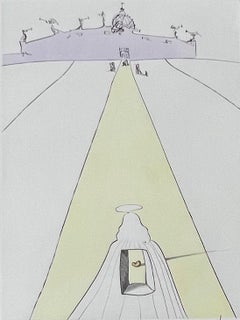
Salvador Dalí, "Dieu, le temps, l
espace, et le Pape", etching, signed
Located in Chatsworth, CA
Salvador Dalí
"Dieu, le temps, l'espace, et le Pape" (God, time, space, and the Pope) from After 50 Years of Surrealism
Original etching with hand coloring, hand signed in pencil
19...
Category
1970s Modern Figurative Prints
Materials
Etching
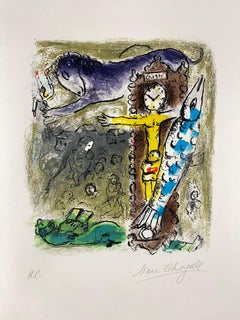
Le Christ a l
Horloge, Paris (Christ in the Clock)
By Marc Chagall
Located in Missouri, MO
Marc Chagall
"Le Christ a l'Horloge, Paris" (Christ in the Clock) 1957 (M. 196)
Color Lithograph on Arches Wove Paper
Signed in Pencil "Marc Chagall" Lower Right
Initialed "H.C." (Hors Commerce) Lower Left, aside from numbered edition of 90
*Floated in Gold Frame with Linen Matting, UV Plexiglass
Sheet Size: 18 3/4 x 14 3/4 inches (47.5 cm x 38 cm)
Image Size: 9 3/4 x 8 1/2 inches
Framed Size: 28.5 x 24.25 inches
Marc Chagall was a man of keen intelligence, a shrewd observer of the contemporary scene, with a great sympathy for human suffering. He was born on July 7, 1887 in Vitebsk, Russia; his original name was Moishe Shagal (Segal), but when he became a foremost member of the Ecole de Paris, he adopted French citizenship and the French spelling of his name. Vitebsk was a good-sized Russian town of over 60,000, not a shtetl. His father supported a wife and eight children as a worker in a herring-pickling plant.
Sheltered by the Jewish commandment against graven images, the young Chagall never saw so much as a drawing until, one day, he watched a schoolmate copying a magazine illustration. He was ridiculed for his astonishment, but he began copying and improvising from magazines. Both Chagall's parents reluctantly agreed to let him study with Yehuda Pen, a Jewish artist in Vitebsk. Later, in 1906, they allowed their son to study in St. Petersburg, where he was exposed to Russian Iconography and folk art. At that time, Jews could leave the Pale only for business and employment and were required to carry a permit. Chagall, who was in St. Petersburg without a permit, was imprisoned briefly.
His first wife, Bella Rosenfeld, was a product of a rich cultivated and intellectual group of Jews in Vitebsk. Chagall was made commissar for the arts for the area, charged with directing its cultural life and establishing an art school. Russian folklore, peasant life and landscapes persisted in his work all his life. In 1910 a rich patron, a lawyer named Vinaver, staked him to a crucial trip to Paris, where young artists were revolutionizing art. He also sent him a handsome allowance of 125 francs (in those days about $24) each month. Chagall rejected cubism, fauvism and futurism, but remained in Paris. He found a studio near Montparnasse in a famous twelve-sided wooden structure divided into wedge-shaped rooms. Chaim Soutine, a fellow Russian Jew, and Modigliani lived on the same floor. To Chagall's astonishment, he found himself heralded as one of the fathers of surrealism. In 1923, a delegation of Max Ernst, Paul Eluard and Gala (later Salvador Dali's wife) actually knelt before Chagall, begging him to join their ranks. He refused.
To understand Chagall's work, it is necessary to know that he was born a Hasidic Jew, heir to mysticism and a world of the spirit, steeped in Jewish lore and reared in the Yiddish language. The Hasidim had a special feeling for animals, which they tried not to overburden. In the mysterious world of Kabbala and fantastic ancient legends of Chagall's youth, the imaginary was as important as the real. His extraordinary use of color also grew out of his dream world; he did not use color realistically, but for emotional effect and to serve the needs of his design. Most of his favorite themes, though superficially light and trivial, mask dark and somber thoughts. The circus he views as a mirror of life; the crucifixion as a tragic theme, used as a parallel to the historic Jewish condition, but he is perhaps best known for the rapturous lovers he painted all his life. His love of music is a theme that runs through his paintings.
After a brief period in Berlin, Chagall, Bella and their young daughter, Ida, moved to Paris and in 1937 they assumed French citizenship. When France fell, Chagall accepted an invitation from the Museum of Modern Art to immigrate to the United States. He was arrested and imprisoned in Marseilles for a short time, but was still able to immigrate with his family. The Nazi onslaught caught Chagall in Vichy, France, preoccupied with his work. He was loath to leave; his friend Varian Fry rescued him from a police roundup of Jews in Marseille, and packed him, his family and 3500 lbs. of his art works on board a transatlantic ship. The day before he arrived in New York City, June 23, 1941, the Nazis attacked Russia. The United States provided a wartime haven and a climate of liberty for Chagall. In America he spent the war years designing large backdrops for the Ballet.
Bella died suddenly in the United States of a viral infection in September 1944 while summering in upstate New York. He rushed her to a hospital in the Adirondacks, where, hampered by his fragmentary English, they were turned away with the excuse that the hour was too late. The next day she died.
He waited for three years after the war before returning to France. With him went a slender married English girl, Virginia Haggard MacNeil; Chagall fell in love with her and they had a son, David. After seven years she ran off with an indigent photographer. It was an immense blow to Chagall's ego, but soon after, he met Valentine Brodsky, a Russian divorcee designing millinery in London (he called her Fava). She cared for him during the days of his immense fame and glory. They returned to France, to a home and studio in rustic Vence. Chagall loved the country and every day walked through the orchards, terraces, etc. before he went to work.
Chagall died on March 28, 1985 in the south of France. His heirs negotiated an arrangement with the French state allowing them to pay most of their inheritance taxes in works of art. The heirs owed about $30 million to the French government; roughly $23 million of that amount was deemed payable in artworks. Chagall's daughter, Ida and his widow approved the arrangement.
Written and submitted by Jean Ershler Schatz, artist and researcher from Laguna Woods, California.
Sources:
Hannah Grad Goodman in Homage to Chagall in Hadassah Magazine, June 1985
Jack Kroll in Newsweek, April 8, 1985
Andrea Jolles in National Jewish Monthly Magazine, May 1985
Michael Gibson...
Category
1950s Modern Figurative Prints
Materials
Lithograph
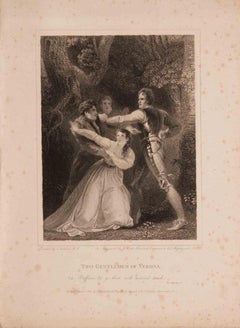
Two Gentleman of Verona - Etching by James Heath - 1803
Located in Roma, IT
Etching on wove paper.
Engraved by James Heath, Historical Engraver to His Majesty, published by J.
J. Boydell, London, March 1, 1803.
This fine 19th-century engraving by Jam...
Category
Early 1800s Modern Figurative Prints
Materials
Etching
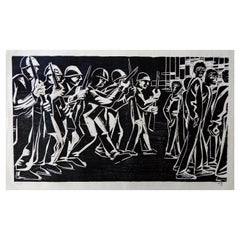
Herman Volz Original Woodcut, Social Unrest of the 1960
s, Disbursing the Riot
Located in Phoenix, AZ
An original woodcut print depicting the social unrest of the 1960s by Herman Roderick Volz.
Pencil signed by the artist lower right. Image measures 14" x 24," sheet measures 18 1/2"...
Category
Mid-20th Century Figurative Prints
Materials
Paper
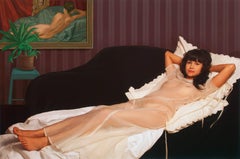
Ode to Goya
s Maya
Located in New Orleans, LA
16 x 24 inches - Edition 2 of 5 with 2 APs
framing is an additional $420.
Photography and acting are kindred spirits in the new series by e2 (Elizabeth Kleinveld and Epaul Julien)....
Category
21st Century and Contemporary Contemporary Figurative Photography
Materials
Archival Pigment
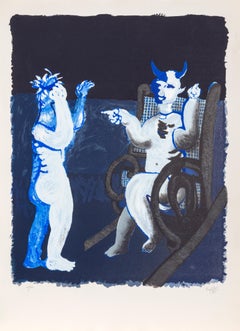
Diablo, Surrealist Screenprint by Juan Garcia Ripolles
Located in Long Island City, NY
Artist: Juan Garcia Ripolles
Title: Diablo
Date: 1981
Medium: Screenprint, signed and numbered in pencil
Edition: 45
Paper Size: 33.5 x 27.5 inches
Category
1980s Modern Figurative Prints
Materials
Screen
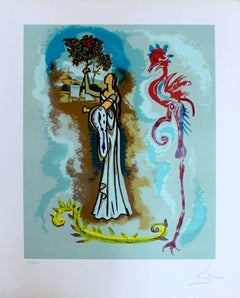
Ivanhoe - Rowena
Located in Miami, FL
TECHNICAL INFORMATION:
Salvador Dali
Ivanhoe - Rowena
1978
Lithograph
29 1/2 x 21 1/2 in.
Edition of 250
Pencil signed and numbered; certified authentic by Frank Hunter of the Sal...
Category
1970s Surrealist Figurative Prints
Materials
Lithograph
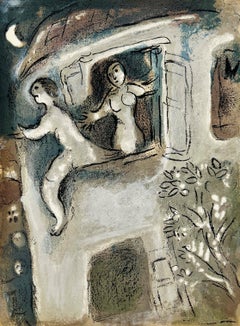
David saved by Michal
By Marc Chagall
Located in OPOLE, PL
Marc Chagall (1887-1985) - David saved by Michal
Lithograph from 1960.
Dimensions of work: 35 x 26 cm
Publisher: Tériade, Paris.
The work is in Excellent condition.
Fast and se...
Category
20th Century Modern Figurative Prints
Materials
Lithograph
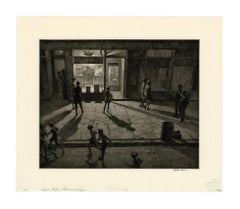
Spring Night Greenwich Village
By Martin Lewis
Located in New York, NY
Spring Night, Greenwich Village--1930, Drypoint and Sand Ground.McCarron 85, only state. Edition 92. Signed in pencil. Signed in the plate, lower rig...
Category
1930s Figurative Prints
Materials
Drypoint
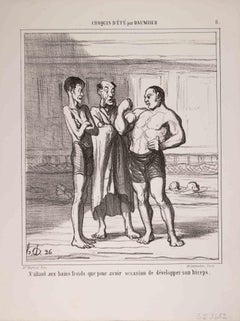
N
Allant aux Bains Froids... - Lithograph by Honoré Daumier - 1858
Located in Roma, IT
Plate n. 8 from the suites of caricatures on political themes topic “ Croquis d’Été ”.
Realized by Honoré Daumier (France, 1808-1879), printed by Destouches, and published by the ...
Category
1850s Modern Figurative Prints
Materials
Lithograph
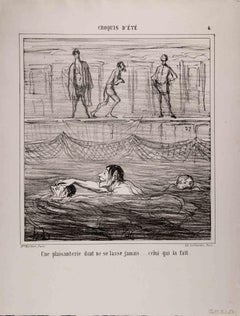
$461 Sale Price
30% Off
Une Plaisanterie dont ne se lasse Jamais.. - Lithograph by Honoré Daumier - 1858
Located in Roma, IT
Plate n. 4 from the suites of caricatures on political themes topic “Croquis d’Été ”.
Realized by Honoré Daumier (France, 1808-1879), printed by Destouches, and published by the M...
Category
1850s Modern Figurative Prints
Materials
Lithograph
Fishing, American Realist Lithograph by Allan Mardon
Located in Long Island City, NY
Allan Mardon, Canadian (1931 - ) - Fishing, Year: circa 1979, Medium: Lithograph, Signed in Pencil, Edition: AP, Size: 24 in. x 33 in. (60.96 cm x 83.82 cm)
Category
1970s American Realist Figurative Prints
Materials
Lithograph
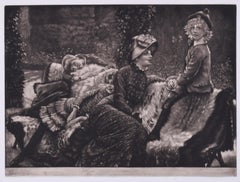
Le banc de jardin (The Garden Bench)
Located in Fairlawn, OH
Le banc de jardin (The Garden Bench)
Mezzotint and engraving on cream chine collé laid down on ivory wove paper, 1883
Signed in the plate (see photo)
Condition: Brilliant impression...
Category
1880s Impressionist Figurative Prints
Materials
Mezzotint
Courtesans, Etching by Leonor Fini
By Leonor Fini
Located in Long Island City, NY
Leonor Fini, Argentine/French (1918–1996)
Date: Circa 1970
Color Etching, signed and numbered in pencil
Edition of 59/280
Image Size: 17 x 14.5 inches
Size: 29.5 in. x 21 in. (74.93 ...
Category
1970s Surrealist Figurative Prints
Materials
Etching
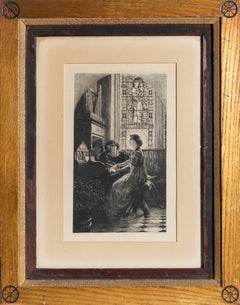
Harmony, Framed Vintage Etching by Frank Dicksee
Located in Long Island City, NY
This is an etched rendition of a painting by Frank Dicksee. Harmony is one of the most well-known pictures by Dicksee, depicting a young man staring adoringly into the eyes of a girl...
Category
1870s Figurative Prints
Materials
Etching
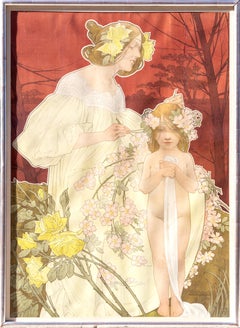
Palais de la Femme, Art Nouveau Lithograph by Georges Henri Privat-Livemont
Located in Long Island City, NY
Vintage poster by Henri Privat-Livemont created for the Exposition Universelle (the 1900 Paris Exposition) before the lettering was added on the upper portion of the image.
Palais d...
Category
Early 1900s Art Nouveau Figurative Prints
Materials
Lithograph
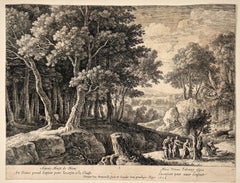
The Birth of Adonis; Plate 1 from The Story of Adonis
Located in Middletown, NY
Etching with engraving on thin laid paper with an early and large unidentified heraldic watermark with a windmill, and the collector's stamp of Count F. J. von Enzenberg (1802-1879),...
Category
Early 17th Century Old Masters Landscape Prints
Materials
Laid Paper, Engraving, Etching
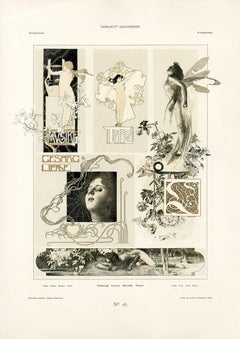
Gerlach
s Allegorien Plate #20: "Song, Love, Music, Dance" Lithograph
Located in Palm Beach, FL
Koloman Moser
(1868 –1918), AUSTRIAN
Instead of applying his flair and art education solely to painting, Koloman Moser embodied the idea of Gesamt Kunstwerk (all-embracing art w...
Category
1890s Vienna Secession Figurative Prints
Materials
Lithograph
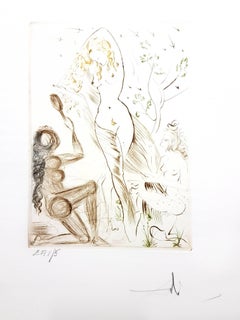
Decameron - Portfolio of 10 Original Signed Engravings by Salvador Dali
Located in Collonge Bellerive, Geneve, CH
Portfolio of 10 Original Signed Engravings by Salvador Dali
Title: Decameron
Signed in Pencil by Salvador Dali
Dimensions: 45 x 32 cm
Edition EA 1/5
1972
References : Field 72-8 (p. ...
Category
1970s Surrealist Figurative Prints
Materials
Engraving
Leonor Fini, rare lithograph on Arches paper, circa 1980
By Leonor Fini
Located in Saint Ouen, FR
Rare print handsigned by surrealist artist Leonor Fini, inscreasingly esteemed with the movement of rediscovering art by women. This rare original lithograph is an artist proof in ve...
Category
Mid-20th Century Surrealist Figurative Prints
Materials
Paper
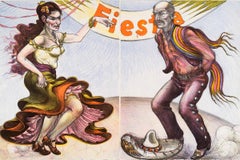
Fiesta by Luis Jimenez (Diptych) Stone Lithograph
By Luis Jiménez
Located in Phoenix, AZ
Artist: Luis Jimenez, American (1940 - 2006)
Title: Fiesta (Diptych)
Year: 1986
Medium: Two Lithographs on Arches, signed and numbered in pencil
Edition: 76
Size: 34 x 24 in. (86.36 ...
Category
1980s Contemporary Figurative Prints
Materials
Lithograph
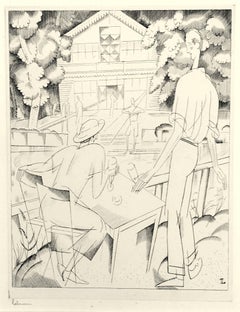
Sur la Marne
Located in New York, NY
Jean-Emile Laboureur (1877-1943), Sur la Marne, engraving, 1924, signed in pencil lower right [with the initial lower right in the plate]. Reference: S. Laboureur 277, third state (o...
Category
1920s Cubist Figurative Prints
Materials
Engraving
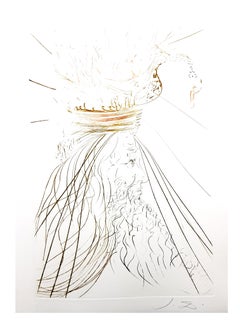
Salvador Dali - King Marc
Located in Collonge Bellerive, Geneve, CH
Salvador Dali - King Marc - Original Etching
Dimensions: 45 x 33 cm
Edition: 125
1970
Signed in pencil.
On Arches Vellum
References : Field 70-10 (p. 60-61)
Category
1970s Surrealist Nude Prints
Materials
Etching
L
ACTEUR . . . . - On voit bien qu
il fait chaud . . . . . . . trois spectateurs
Located in Fairlawn, OH
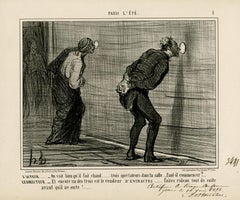
L'ACTEUR . . . . - On voit bien qu'il fait chaud . . . . . . . trois spectateurs dans la salle ..... faut-il commencer ? . . . .
LE DIRECTEUR .- Et encore un des trois est le vendeu...
Category
1850s Romantic Figurative Prints
Materials
Lithograph
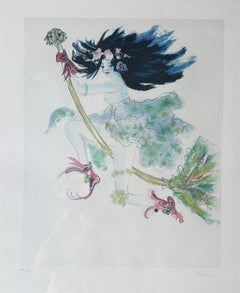
Sorcière Bleue Blue Witch Color lithograph on Arches paper
By Leonor Fini
Located in Sitges, Barcelona
Artist: Leonor Fini (Buenos Aires, 1907 – Paris, 1996)
Title: Sorcière Bleue (Blue Witch)
Date: ca. 1970–1972
Technique: Color lithograph on Arches paper
Edition: E.A. 4/35 (Épreuve ...
Category
1970s Surrealist Figurative Prints
Materials
Lithograph
$1,437 Sale Price
25% Off
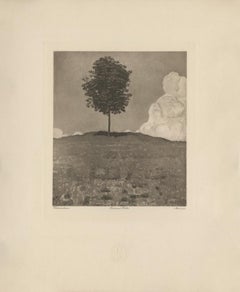
"Chestnut Tree" Copper Plate Heliogravure
Located in Palm Beach, FL
2018 marks the centenary anniversary of Ferdinand Hodler’s death. In that 100 years time, the art world’s esteem of this important artist has proved fickle. It has shifted from extolling his artistic merits during his lifetime to showing something of a feigned disdain- more reflective of the world political order than a true change of heart for Hodler’s work. After years of Hodler being all but a footnote in the annals of art history and generally ignored, finally, the pendulum has righted itself once again. Recent retrospective exhibitions in Europe and the United States have indicated not only a joyful rediscovery of Hodler’s art but a firm conviction that his work and world view hold particular relevance today. DAS WERK FERDINAND HODLERS is not only a collection of printed work reflecting the best of all of his painted work created up to 1914 just before the outbreak of World War I, the portfolio itself is an encapsulation of Hodler’s ethos, Parallelisme.
Hodler developed his philosophy of Parallelisme as a unifying approach to art which strips away detail in search of harmony. By means of abstraction, symmetry and repetition, Hodler sought ways to depict Nature’s essence and her fundamental, universal order. He believed these universal laws governing the natural, observable world extend to the spiritual realm. Symbolist in nature with Romantic undertones, his works are equally portraits of these universal concepts and feelings governing all life as they are a visual portrait in the formal sense. Whether his subject is a solitary tree, a moment in battle, mortal fear, despair, the awe inspired by a vast mountain range, a tender moment or even the collective conviction in a belief, Hodler unveils this guiding principle of Parallelisme.
Several aspects of Hodler’s portfolio reinforce his tenets of Parallelisme. The Table of Contents clearly preferences a harmonious design over detail. The two columns, consisting of twenty lines each, list the images by order of appearance using their German titles. The abbreviated titles are somewhat cryptic in that they obscure the identities of the sitters. Like the image Hodler presents, they are distillations of the sitter without any extraneous details. This shortening was also done in an effort to maintain a harmonious symmetry of the Table of Contents, themselves, and keep titles to a one-line limit. The twenty-fourth title: “Bildnis des Schweizerischen Gesandten C.” was so long, even with abbreviation, that it required two lines; so, for the sake of maintaining symmetry, the fortieth title: “Bauernmadchen” was omitted from the list. This explains why the images are not numbered. Hodler’s reasoning is not purely esoteric. Symmetry and pattern reach beyond mere formal design principles. Finding sameness and imposing it over disorder goes to the root of Hodler’s identity and his art. A Swiss native, Hodler was bi-lingual and spoke German and French. Each printed image, even number forty, have titles in both of Hodler’s languages. Certainly, there was a market for Hodler’s work among francophones and this inclusion may have been a polite gesture to that end; however, this is the only place in the portfolio which includes French. With German titles at the lower left of each image, Hodler’s name at bottom center and corresponding French titles at the lower right of each image, there is a harmony and symmetry woven into all aspects of the portfolio. This holds true for the page design, as it applies to each printed image and as it describes the Swiss artist himself. Seen in this light, Hodler’s portfolio of printed work is the epitome of Hodler’s Parallelisme. DAS WERK FERDINAND HODLERS is also one of the most significant documents to best tell the story of how Hodler, from Switzerland, became caught between political cross-hairs and how the changing tides of nations directly impacted the artist during his lifetime as well as the accessibility of his art for generations to come.
The Munich-based publisher of the portfolio, R. Piper & Co., Verlag, plays a crucial role in this story. Publishing on a wide range of subjects from philosophy and world religion to music, literature and the visual arts; the publisher’s breadth of inquiry within any one genre was equal in scope. Their marketing strategy to publish multiple works on Hodler offers great insight as to what a hot commodity Hodler was at that time. R.Piper & Co.’s Almanach, which they published in 1914 in commemoration of their first ten years in business, clearly illustrates the rapid succession- strategically calculated for achieving the deepest and broadest impact - in which they released three works on Hodler to hit the market by the close of 1914. DAS WERK FERDINAND HODLERS was their premier publication. It preceded C.A. Loosli’s Die Zeichnungen Ferdinand Hodlers, a print portfolio after 50 drawings by Hodler which was released in Autumn of 1914 at the mid-level price-point of 75-150 Marks; and a third less expensive collection of prints after original works by Hodler, which had not been included in either of the first two portfolios, was released at the end of that year entitled Ferdinand Hodler by Dr. Ewald Bender.
The title and timing of DAS WERK FERDINAND HODLERS' debut leaves little doubt as to the connection it has with another avant-garde portfolio of art prints, Das Werk Gustav Klimts, released in 5 installments from 1908 -1914 by Galerie Miethke in Vienna. Hodler, himself, was involved in Klimt’s ground-breaking project. As the owner of Klimt’s 1901 painting, “Judith with the Head of Holifernes” which appears as the ninth collotype print in the second installment of Das Werk Gustav Klimts, Hodler was obliged to grant access of the painting to the art printers in Vienna for them to create the collotype sometime before 1908. Hodler had been previously invited in 1904 to take part in what would be the last exhibition of the Vienna Secession before Klimt and others associated with Galerie Miethke broke away. In an interview that same year, Hodler indicated that he respected and was impressed by Klimt. Hodler’s esteem for Klimt went beyond the art itself; he emulated Klimt’s method aimed at increasing his market reach and appeal to a wider audience by creating a print portfolio of his painted work. By 1914, Hodler and his publisher had the benefit of hindsight to learn from Klimt’s Das Werk publication.
Responding to the sluggish sales of Klimt’s expensive endeavor, Hodler’s publisher devised the same diversified 1-2-3 strategy for selling Hodler’s Das Werk portfolio as they did with regards to all three works on Hodler they published that year. For their premium tier of DAS WERKS FERDINAND HODLERS, R. Piper & Co. issued an exclusive Museum quality edition of 15 examples on which Hodler signed each page. At a cost of 600 Marks, this was generally on par with Klimt’s asking price of 600 Kronen for his Das Werk portfolio. A middle-tiered Preferred edition of 30, costing somewhat less and with Hodler’s signature only on the Title Page, was also available. The General edition, targeting the largest audience with its much more affordable price of 150 Marks, is distinguishable by its smaller size.
Rather than use the subscription format Miethke had chosen for Klimt’s portfolios which proved to have had its challenges, R. Piper & Co. employed a different strategy. In addition to instantly gratifying the buyer with all 40 of the prints comprising DAS WERK FERDINAND HODLERS and the choice among three price points, they advertised in German journals a fourth possibility of ordering single prints from them directly. These printed images are easily discernible from the three complete folio editions. The paper size of the single purchased images is of the larger format like the Museum and Preferred editions, measuring 65 h x 50 w cm; however, the paper itself is the same copper print paper used in the General edition and then mounted on poster board. The publishing house positioned itself to be a direct retailer of Hodler’s art. They astutely recognized the potential for profitability and the importance, therefore, of having proprietary control over his graphic works.
R. Piper & Co. owned the exclusive printing rights to Hodler’s best work found in their three publications dating from 1914. That same year, a competing publication out of Weimar entitled Ferdinand Hodler: Ein Deutungsversuch von Hans...
Category
1910s Symbolist Figurative Prints
Materials
Paper
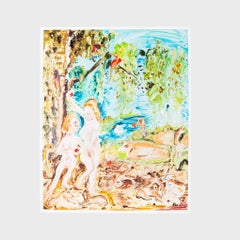
Adam and Eve
Located in Bristol, GB
Archival pigment Giclée on Hahnemühle Archival Fine Art paper
Edition 37 of 150
Signed, dated and numbered on the front
Mint, as issued
Issued with Limited Edition Certificate from ...
Category
21st Century and Contemporary Contemporary Figurative Prints
Materials
Giclée, Archival Pigment
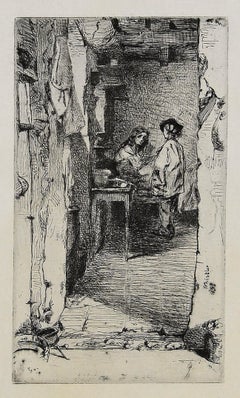
The Rag Gatherers - Original Etching by J.A. Whistler - 1858
Located in Roma, IT
Signed and dated on plate.
An early state on the 5 issued, with very fresh impression and marked contrasts,
Includes passepartout (cm. 53x37).
The American artist James Abbott McNei...
Category
1850s Post-Impressionist Figurative Prints
Materials
Etching
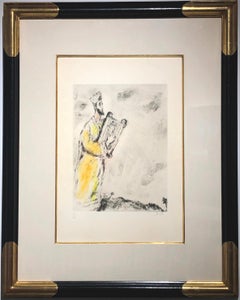
Marc Chagall "Song of the Bow"
By Marc Chagall
Located in Los Angeles, CA
MARC CHAGALL ( 1887- 1985 )
“ Song of the Bow”
1958
from ‘The Bible’
Original Etching with hand-coloring in watercolor. Signed with initials and numbered ##/100 in pencil, published...
Category
Mid-20th Century Figurative Prints
Materials
Watercolor, Etching
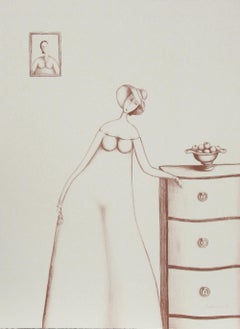
Woman with Apples (Sepia), Lithograph by Branko Bahunek
Located in Long Island City, NY
Woman with Apples (Sepia)
Branko Bahunek, Croatian (1935)
Lithograph, Signed in Pencil
Edition of 50
Size: 28.5 in. x 21 in. (72.39 cm x 53.34 cm)
Category
1990s Figurative Prints
Materials
Lithograph
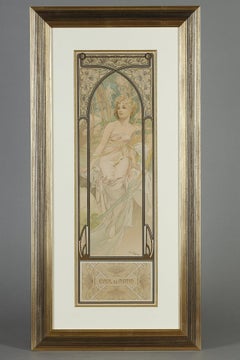
Morning Awakening
Located in PARIS, FR
Morning Awakening
by Alfons MUCHA (1860-1939)
"Morning Awakening"
from the series "The Times of the Day"
Variant 1
Original lithograph
Signed "Mucha" and dated "99" for 1899, at t...
Category
Late 19th Century Art Nouveau Figurative Prints
Materials
Lithograph
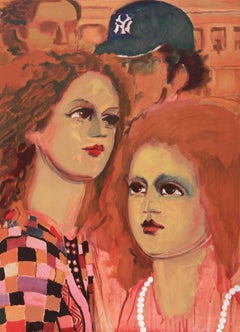
City Graces (New York Yankees), Pop Art Lithograph by Lester Johnson
Located in Long Island City, NY
This Lester Johnson print incorporates elements of New York City in both the bustling, energetic atmosphere and the related paraphernalia. Relying on th...
Category
1980s Pop Art Figurative Prints
Materials
Lithograph
$800 Sale Price
20% Off
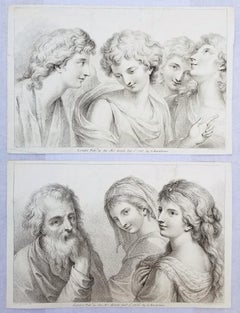
Set of Two Engravings after Cipriani "Four Muses"
"Father and Two Daughters"
Located in Saint Augustine, FL
Artist: Francesco Bartolozzi (Italian, 1727-1815)
Title: "Four Muses" & "Father and Two Daughters"
Portfolio: Rudiments of Drawing
*Issued unsigned, though both are signed by Bartolo...
Category
1780s Old Masters Figurative Prints
Materials
Engraving, Etching
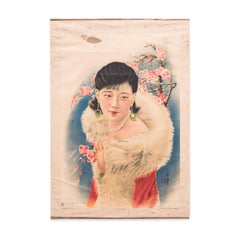
Vintage Chinese Advertisement Poster, c. 1930
Located in Chicago, IL
This poster from the 1930s melds the meticulous detail of traditional Chinese painting with the craft of color lithography—and a side of risque. The poster features a young woman dressed in a fur-trimmed coat with Western accessories...
Category
Early 20th Century Art Deco Figurative Prints
Materials
Paper, Ink
Erotic Scene - Etching ad Drypoint by A. Doré -1950s
Located in Roma, IT
Erotic Scene is a fun and pleasant drypoint realized by the French painter, illustrator, and writer Amandine Doré around the mid-20th century.
The state...
Category
1950s Modern Figurative Prints
Materials
Drypoint, Etching

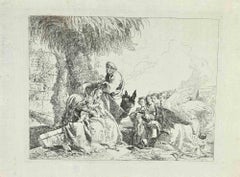
Rest on the Flight into Egypt - Etching by Giambattista Tiepolo - 1750
Located in Roma, IT
This etching on laid paper is the 13th plate of the series of 27 entitled Idee pittoresche sopra la fugga in Egitto di Giesù, Maria e Gioseppe executed by Giambattista Tiepolo and pu...
Category
1780s Old Masters Figurative Prints
Materials
Etching
"Eurhythmie" Copper Plate Heliogravure
Located in Palm Beach, FL
2018 marks the centenary anniversary of Ferdinand Hodler’s death. In that 100 years time, the art world’s esteem of this important artist has proved fickle. It has shifted from extolling his artistic merits during his lifetime to showing something of a feigned disdain- more reflective of the world political order than a true change of heart for Hodler’s work. After years of Hodler being all but a footnote in the annals of art history and generally ignored, finally, the pendulum has righted itself once again. Recent retrospective exhibitions in Europe and the United States have indicated not only a joyful rediscovery of Hodler’s art but a firm conviction that his work and world view hold particular relevance today. DAS WERK FERDINAND HODLERS is not only a collection of printed work reflecting the best of all of his painted work created up to 1914 just before the outbreak of World War I, the portfolio itself is an encapsulation of Hodler’s ethos, Parallelisme.
Hodler developed his philosophy of Parallelisme as a unifying approach to art which strips away detail in search of harmony. By means of abstraction, symmetry and repetition, Hodler sought ways to depict Nature’s essence and her fundamental, universal order. He believed these universal laws governing the natural, observable world extend to the spiritual realm. Symbolist in nature with Romantic undertones, his works are equally portraits of these universal concepts and feelings governing all life as they are a visual portrait in the formal sense. Whether his subject is a solitary tree, a moment in battle, mortal fear, despair, the awe inspired by a vast mountain range, a tender moment or even the collective conviction in a belief, Hodler unveils this guiding principle of Parallelisme.
Several aspects of Hodler’s portfolio reinforce his tenets of Parallelisme. The Table of Contents clearly preferences a harmonious design over detail. The two columns, consisting of twenty lines each, list the images by order of appearance using their German titles. The abbreviated titles are somewhat cryptic in that they obscure the identities of the sitters. Like the image Hodler presents, they are distillations of the sitter without any extraneous details. This shortening was also done in an effort to maintain a harmonious symmetry of the Table of Contents, themselves, and keep titles to a one-line limit. The twenty-fourth title: “Bildnis des Schweizerischen Gesandten C.” was so long, even with abbreviation, that it required two lines; so, for the sake of maintaining symmetry, the fortieth title: “Bauernmadchen” was omitted from the list. This explains why the images are not numbered. Hodler’s reasoning is not purely esoteric. Symmetry and pattern reach beyond mere formal design principles. Finding sameness and imposing it over disorder goes to the root of Hodler’s identity and his art. A Swiss native, Hodler was bi-lingual and spoke German and French. Each printed image, even number forty, have titles in both of Hodler’s languages. Certainly, there was a market for Hodler’s work among francophones and this inclusion may have been a polite gesture to that end; however, this is the only place in the portfolio which includes French. With German titles at the lower left of each image, Hodler’s name at bottom center and corresponding French titles at the lower right of each image, there is a harmony and symmetry woven into all aspects of the portfolio. This holds true for the page design, as it applies to each printed image and as it describes the Swiss artist himself. Seen in this light, Hodler’s portfolio of printed work is the epitome of Hodler’s Parallelisme. DAS WERK FERDINAND HODLERS is also one of the most significant documents to best tell the story of how Hodler, from Switzerland, became caught between political cross-hairs and how the changing tides of nations directly impacted the artist during his lifetime as well as the accessibility of his art for generations to come.
The Munich-based publisher of the portfolio, R. Piper & Co., Verlag, plays a crucial role in this story. Publishing on a wide range of subjects from philosophy and world religion to music, literature and the visual arts; the publisher’s breadth of inquiry within any one genre was equal in scope. Their marketing strategy to publish multiple works on Hodler offers great insight as to what a hot commodity Hodler was at that time. R.Piper & Co.’s Almanach, which they published in 1914 in commemoration of their first ten years in business, clearly illustrates the rapid succession- strategically calculated for achieving the deepest and broadest impact - in which they released three works on Hodler to hit the market by the close of 1914. DAS WERK FERDINAND HODLERS was their premier publication. It preceded C.A. Loosli’s Die Zeichnungen Ferdinand Hodlers, a print portfolio after 50 drawings by Hodler which was released in Autumn of 1914 at the mid-level price-point of 75-150 Marks; and a third less expensive collection of prints after original works by Hodler, which had not been included in either of the first two portfolios, was released at the end of that year entitled Ferdinand Hodler by Dr. Ewald Bender.
The title and timing of DAS WERK FERDINAND HODLERS' debut leaves little doubt as to the connection it has with another avant-garde portfolio of art prints, Das Werk Gustav Klimts, released in 5 installments from 1908 -1914 by Galerie Miethke in Vienna. Hodler, himself, was involved in Klimt’s ground-breaking project. As the owner of Klimt’s 1901 painting, “Judith with the Head of Holifernes” which appears as the ninth collotype print in the second installment of Das Werk Gustav Klimts, Hodler was obliged to grant access of the painting to the art printers in Vienna for them to create the collotype sometime before 1908. Hodler had been previously invited in 1904 to take part in what would be the last exhibition of the Vienna Secession before Klimt and others associated with Galerie Miethke broke away. In an interview that same year, Hodler indicated that he respected and was impressed by Klimt. Hodler’s esteem for Klimt went beyond the art itself; he emulated Klimt’s method aimed at increasing his market reach and appeal to a wider audience by creating a print portfolio of his painted work. By 1914, Hodler and his publisher had the benefit of hindsight to learn from Klimt’s Das Werk publication.
Responding to the sluggish sales of Klimt’s expensive endeavor, Hodler’s publisher devised the same diversified 1-2-3 strategy for selling Hodler’s Das Werk portfolio as they did with regards to all three works on Hodler they published that year. For their premium tier of DAS WERKS FERDINAND HODLERS, R. Piper & Co. issued an exclusive Museum quality edition of 15 examples on which Hodler signed each page. At a cost of 600 Marks, this was generally on par with Klimt’s asking price of 600 Kronen for his Das Werk portfolio. A middle-tiered Preferred edition of 30, costing somewhat less and with Hodler’s signature only on the Title Page, was also available. The General edition, targeting the largest audience with its much more affordable price of 150 Marks, is distinguishable by its smaller size.
Rather than use the subscription format Miethke had chosen for Klimt’s portfolios which proved to have had its challenges, R. Piper & Co. employed a different strategy. In addition to instantly gratifying the buyer with all 40 of the prints comprising DAS WERK FERDINAND HODLERS and the choice among three price points, they advertised in German journals a fourth possibility of ordering single prints from them directly. These printed images are easily discernible from the three complete folio editions. The paper size of the single purchased images is of the larger format like the Museum and Preferred editions, measuring 65 h x 50 w cm; however, the paper itself is the same copper print paper used in the General edition and then mounted on poster board. The publishing house positioned itself to be a direct retailer of Hodler’s art. They astutely recognized the potential for profitability and the importance, therefore, of having proprietary control over his graphic works.
R. Piper & Co. owned the exclusive printing rights to Hodler’s best work found in their three publications dating from 1914. That same year, a competing publication out of Weimar entitled Ferdinand Hodler: Ein Deutungsversuch von Hans Muhlestein appeared. Its author, a young scholar, expressed his frustration with the limited availability of printable work by Hodler. In his Author’s Note on page 19, dated Easter, 1914, Muhlestein confirms that the publisher of Hodler’s three works from that same year owned the exclusive reproductive rights to Hodler’s printed original work. He goes further to explain that even after offering to pay to use certain of those images in his book, the publisher refused. Clearly, a lot of jockeying for position in what was perceived as a hot market was occurring in 1914.
Instead, their timing couldn’t have been more ill-fated, and what began with such high hopes suddenly found a much different market amid a hostile climate. The onset of WWI directly impacted sales. Many, including Ferdinand Hodler, publicly protested the September invasion by Germany of France in which the Reims Cathedral, re-built in the 13th century, was shelled, destroying priceless stained glass and statuary and burning off the iron roof and badly damaging its wooden interior. Thomas Gaehtgens, Director of the Getty Research Institute describes how the bombing of Reims Cathedral triggered blindingly powerful and deeply-felt ultra-nationalistic responses: “The event profoundly shocked French intellectuals, who for the most part had an intense admiration for German literature, music and art. By relying on press accounts and abstracting from the visual propagandistic content, they were unable to interpret the siege of Reims without turning away from German culture in disgust. Similarly, the German intelligentsia and bourgeoisie were also shocked to find themselves described as vandals and barbarians. Ninety-three writers, scientists, university professors, and artists signed a protest, directed against the French insults, that defended the actions of the German army.”
In similar fashion, a flurry of open letters published in German newspapers and journals as well as telegrams and postcards sent directly to Hodler following his outcry in support of Reims reflected the collectively critical reaction to Hodler’s position. Loosli documents that among the list of telegrams Hodler received was one from none other than his publisher in Germany, R.Piper & Co. Allegiances were questioned. The market for Hodler in Germany immediately softened. Matters worsened for the publisher beyond the German backlash to Hodler and his loss of appeal in the home market; with the war in full swing until 1918, there was little chance a German publisher would have much interest coming from outside of Germany and Austria. Following the war and Hodler’s death in 1918, the economy in Germany continued to spiral out and just 5 years later, hyper-inflation had rendered its currency worthless vis-a-vis its value in the pre-war years. Like the economy, Hodler’s reputation was slow to find currency in these difficult times. Even many French art fans had turned sour on Hodler as they considered his long-standing relationship in German and Austrian art circles. Thus, the portfolio’s rarity in Hodler’s lifetime and, consequently, the availability of these printed images from DAS WERK FERDINAND HODLERS since his death has been scarce.
In many ways, Hodler and his portfolios were casualties of war. Thwarted from their intended purpose of reaching a wide audience and show-casing Parallelisme, Hodler’s unique approach to art, this important, undated work has been both elusive and shrouded in mystery. Perhaps DAS WERK FERDINAND HODLERS was left undated as a means of affirming the timelessness of Hodler’s art. Digging back into the past, Hodler’s contemporaries, like R. Piper, C.A. Loosli and Hans Muhlestein, indeed provide the keys to unequivocally clarify what has largely been mired in obscurity. Just after Hodler’s death, the May, 1918 issue of the Burlington Review ran a small column which opined hope for better access to R.Piper & Co.’s DAS WERK FERDINAND HODLERS; 100 years later, it is finally possible. Hodler’s voice rings out through these printed works. Once more, his modern approach to depicting portraits, landscapes and grand scale scenes of Swiss history speak to us of what is universal. Engaging with any one of these images is the chance to connect to Hodler’s vision and his world view- weltanschauung in German, vision du monde in French- however one expresses these concepts through language, its message embedded in his work is the same: “We differ from one another, but we are like each other even more. What unifies us is greater and more powerful than what divides us.” Today, Hodler’s art couldn’t be more timely.
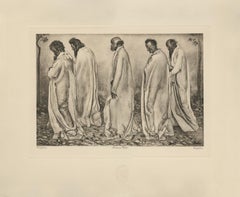
FERDINAND HODLER (SWISS, 1853-1918) explored Parallelisme through figurative poses evocative of music, dance and ritual. His images of sex, night, desertion and death as well as his many landscapes exploring the universal longing for harmony with Nature are unique and important works embodying a Symbolist paradigm. Truly a Modern Master, Hodler’s influence can be felt in the work of Gustav Klimt and Kolomon Moser...
Category
1910s Symbolist Figurative Prints
Materials
Paper
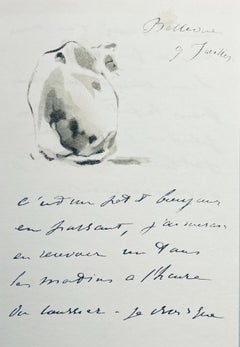
Manet, Composition, Édouard Manet, Letters with Aquarelles (after)
Located in Southampton, NY
Lithograph and stencil on vélin Foreign Affairs paper mounted on Foreign Affairs museum board, as issued . Unsigned and unnumbered, as issued. Good Condition. Notes: From the folio, Édouard Manet, Letters with Aquarelles, 1944. Published by Pantheon Books, New York; rendered and printed by Raymond and...
Category
1940s Impressionist Figurative Prints
Materials
Lithograph
$716 Sale Price
20% Off
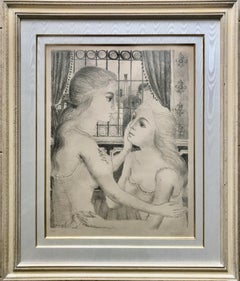
The Secret
By Paul Delvaux
Located in Lake Worth Beach, FL
The Secret 1966
Lithograph on wove paper with watermark arches 20in x 25in (64cm x 50cm), paper size 29inx22in and (39inx33in) framed under glass. Pencil signed and numbered, edition 34/75. Ref. no. 4, in: Cahier Paul Delvaux, no. 1, printed by Mourlot, published by Galerie Bateau Lavoir, Paris.
Paul Delvaux, (born September 23, 1897, Antheit, Liège, Belgium—died July 20, 1994, Veurne), Belgian Surrealist painter and printmaker whose canvases typically portray transfixed nudes and skeletons in mysterious settings.
From 1920 to 1924 Delvaux studied architecture and painting at the Académie des Beaux-Arts in Brussels. His early work was influenced by Post-Impressionism and Expressionism, but after discovering the work of Salvador Dalí, Giorgio de Chirico, and his fellow Belgian René Magritte, Delvaux converted to a Surrealist style in the mid-1930s. He traveled through Italy before World War II, and the Classical architecture he encountered there developed into recurring motifs in his work. During that trip he was also greatly influenced by early 16th-century Italian Mannerist...
Category
1960s Surrealist Figurative Prints
Materials
Lithograph
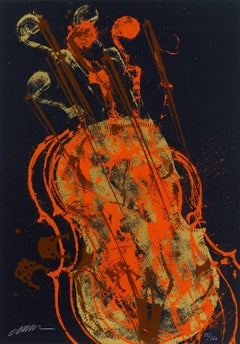
Melody for Strings 1
Located in Malmo, SE
Publisher GKM.
Unframed.
Edition of 120 ex.
Signed and numbered.
Free shipment worldwide.
Arman explores reality. He strives to transform and sublimate artefacts into works of art. ...
Category
1990s Contemporary Figurative Prints
Materials
Screen
In Coronato (The Crowning), Screenprint by Carlo Maria Mariani
Located in Long Island City, NY
Artist: Carlo Maria Mariani, Italian (1931 - )
Title: In Coronato (The Crowning)
Year: 1999
Medium: Screenprint, signed, dated, and numbered in pencil
Edition: 108
Image Size: 25 x...
Category
1990s Modern Figurative Prints
Materials
Screen
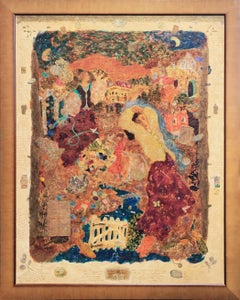
CRADLE SONG
Located in Aventura, FL
Embellished serigraph on linen canvas. Hand signed, titled and numbered by the artist. From the edition of 85. Artwork size 55 x 42 inches. Custom framed as pictured. Frame siz...
Category
Late 20th Century Contemporary Portrait Prints
Materials
Screen, Canvas, Linen
$3,000 Sale Price
40% Off
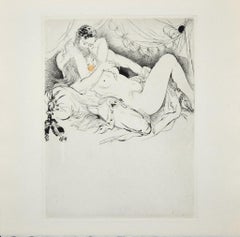
Sexual Encounter - Etching ad Drypoint by A. Doré - Late 1900
Located in Roma, IT
Sexual Encounter is a beautiful drypoint made by the French painter, illustrator, and writer Amandine Doré in the second half of the 20th century. The st...
Category
Late 20th Century Modern Figurative Prints
Materials
Drypoint, Etching
Still Thinking About These?
All Recently ViewedMore Ways To Browse
Erotic Art Animal
Eugene Chigot
Eugene Devaud De Madelin
Eugene Jardin
Faith Sheppard
Fearless Girl
Felix Armand
Florida Everglades Painting
Ford Gran Torino
Frances Baker
Francesco Tironi
Fred Parks
Frederick Johnston
Fredericus Jacobus Van Rossum Du Chattel
French Court Scene Paintings
French Rabbit Painting
Gabriel Zendel
Gary Denmark