Want more images or videos?
Request additional images or videos from the seller
1 of 2

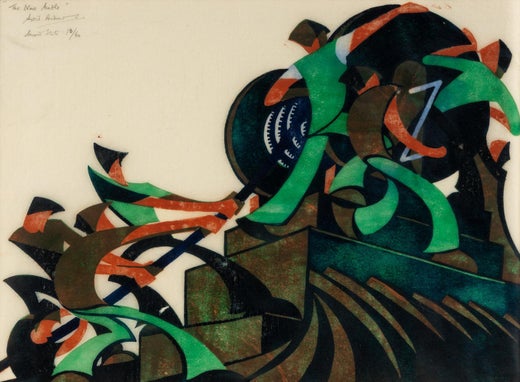
Sybil Andrews
Flower Girls — British Vorticism

1934

On Hold
$28,000
On Hold
£21,465.55
On Hold
€24,562.63
On Hold
CA$39,570.31
On Hold
A$43,011.36
On Hold
CHF 23,024.67
On Hold
MX$519,907.64
On Hold
NOK 290,155.75
On Hold
SEK 267,598.95
On Hold
DKK 183,443.59

About the Item

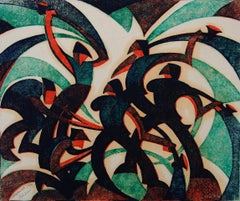
Sybil Andrews, 'Flower Girls', color linocut, 1934; edition 60, White 28. Signed, titled, numbered '8/60' in pencil, in the image, lower left. White 28. A brilliant, early impression, on Japanese mulberry, with margins (1/4 to 1 1/8 inches), in very good condition. The top sheet edge deckled, the other three sides trimmed to, or beyond the outside marginal areas of color. From 4 blocks, printed in: 1) chrome yellow, 2) spectrum red, 3) permanent blue, 4) Chinese blue. Matted to museum standards, unframed. Image size 9 7/16 x 8 9/16 inches (240 x 217 mm); sheet size 10 1/4 x 10 1/8 inches (260 x 257 mm). Exhibited: London, 1936 (Redfern), no. 64. Illustrated in Linocuts of the Machine Age by Stephen Coppel, National Gallery of Australia, 1995. Impressions of this work are held in the collections of the British Museum, Glenbow Museum (Calgary, Alberta), and the Metropolitan Museum of Art. ABOUT THE ARTIST Sybil Andrews (1898-1992) was born in Bury St Edmunds, West Suffolk, England. Unable to afford art school tuition after high school and given the shortage of young men at home during the First World War, in 1916, she was apprenticed as a welder, working in the Bristol Welding Company's airplane factory, where she helped in the development of the first all-metal airplane. During this period, she took an art correspondence course and, after the war, returned to Bury St Edmunds, where she was employed as an art teacher at Portland House School. She then attended the Heatherley School of Fine Art in London from 1922 to 1924. In 1918, Andrews met the architect/artist Cyril Power, who became her mentor and working partner. Andrews and Power moved to London in 1922, and three years later, the pair became staff members of the Grosvenor School of Modern Art. Power was appointed as one of the founding lecturers, while Andrews became the school's first secretary. Both Power and Andrews were swept up in Britain's linocut craze of the 1920s and 1930s under the tutelage of Claude Flight, instructor and champion of linocutting at the Grosvenor School. Flight, a proponent of the relatively new medium, believed that linocuts were most appropriate for expressing the modern age in which they lived—the medium facilitated ease of execution, free from the confines of the traditional labor-intensive woodcuts based on Japanese methods. Flight's most important technical innovation in linocut printmaking was eliminating the key block (linear outline), resulting in bold compositions composed purely of areas of color. Adopting Flight's process, Andrews used ordinary household linoleum, gouges made from umbrella ribs, and a simple wooden spoon to burnish the paper during printing. She employed three to five blocks (one per color) and standard printing inks applied with a roller to create her dynamic compositions. Andrews' contemporaries, fellow students of Claude Flight, include Swiss artist Lill Tschudi and Australian artists Dorrit Black, Ethel Spowers, and Eveline Syme. The Grosvenor School style integrated elements of cubism, futurism, and vorticism to portray the dynamism, vibrancy, and movement inherent to the modernizing society of their time, which came to be known as the 'Machine Age.' Between 1930 and 1938, Andrews and Power shared a studio in Hammersmith, where they pursued their co-creative collaboration, sharing inspiration and exploring printmaking techniques with a focus on the linocut medium. The two produced a series of sports posters, including posters promoting tennis at Wimbledon and the Epsom Derby for London Transport, under the joint signature of "Andrew Power." Andrews regularly displayed her work at the 'Exhibitions of British Linocuts,' an annual exhibition organized by Claude Flight at the Redfern Gallery in London from 1929 to 1937. Flight arranged for these exhibitions to tour Britain and travel to countries as far away as the United States, China, and Australia. With the beginning of the Second World War, Andrews returned to work as a welder, this time for the British Power Company, constructing warships. There she met Walter Morgan, whom she married in 1943. Seven wartime depictions of ships by Andrews are in the collection of the Royal Air Force Museum London. In 1947, Andrews and Morgan moved to Canada and settled in Campbell River, British Columbia. Seeking a new life together after the trials of two world wars, they moved to a small cottage in the logging community on Vancouver Island, where they made ends meet building and repairing boats. By the mid-1940s, the works of the Grosvenor School artists had gone out of fashion, and for almost four decades, the linocuts of Andrews and her contemporaries remained virtually forgotten. It was not until the 1970s that interest in the movement's groundbreaking innovations reemerged to become among the most acclaimed and sought-after 20th-century modernist printmaking, with Andrews' work now considered particularly desirable. Rediscovered by the art world, Andrews spent the rest of her life working, painting, and teaching. Interest in Andrews' work was further enhanced in late 2019 when the Dulwich Picture Gallery in London hosted an exhibition of the Grosvenor School's works from June to September. Approximately a month after it closed, a one-person exhibition of her works opened at the Glenbow Museum in Canada. The Glenbow Museum in Canada holds a collection of over 1000 examples of Andrews' work, including the main body of her color linocuts, original linoleum blocks, oil paintings and watercolors, drawings, drypoint etchings, sketchbooks, and personal papers. Sybil Andrews was elected to the Society of Canadian Painters, Etchers, and Engravers in 1951 when her linocut 'Indian Dance' was selected as the annual presentation print. In 1975, while working as a teacher and focusing on her practice, she completed one of her major works, 'The Banner of St Edmund,' a hand embroidery in silks on linen that was first conceived, designed, and begun in 1930. This banner now hangs in St Edmundsbury Cathedral, Bury St Edmunds, the town of her birth. In 2015, the Art Gallery of Greater Victoria, Canada, held an exhibition titled 'A Study in Contrast: Sybil Andrews and Gwenda Morgan,' which compared and contrasted the fellow Grosvenor School artists. In 2017, her work was included in the exhibition 'The Ornament of a House: Fifty Years of Collecting at the Burnaby Art Gallery.' A complete chronology of Andrews' extensive exhibition history is available in the 2015 publication 'Sybil Andrews Linocuts, Complete Catalogue.' Andrews' celebrated work is represented in major museums in the United States, Canada, and Great Britain, including the Art Gallery of Greater Victoria (British Columbia), Art Gallery of Ontario, Art Institute of Chicago, The British Museum (London), The Clark Art Institute, Art Institute of Chicago, Auckland Art Gallery (New Zealand), Baltimore Art Museum, Cleveland Museum of Art, Detroit Institute of Arts, Glenbow Museum (Calgary), Harvard Art Museums, Metropolitan Museum of Art (New York), Minneapolis Institute of Art, The Museum of Fine Arts, Boston, The Museum of Modern Art, The National Gallery of Canada (Ottawa), Princeton University Art Museum, Rhode Island School of Design, Smithsonian Institution, and the Victoria and Albert Museum (London).
  • Creator:
    Sybil Andrews (1898 - 1992, British)
  • Creation Year:
    1934
  • Dimensions:
    Height: 9.44 in (23.98 cm)Width: 8.57 in (21.77 cm)
  • Medium:
  • Movement Style:
  • Period:
  • Condition:
  • Gallery Location:
    Myrtle Beach, SC
  • Reference Number:
    Seller: 1035621stDibs: LU532313513802

More From This Seller

View All
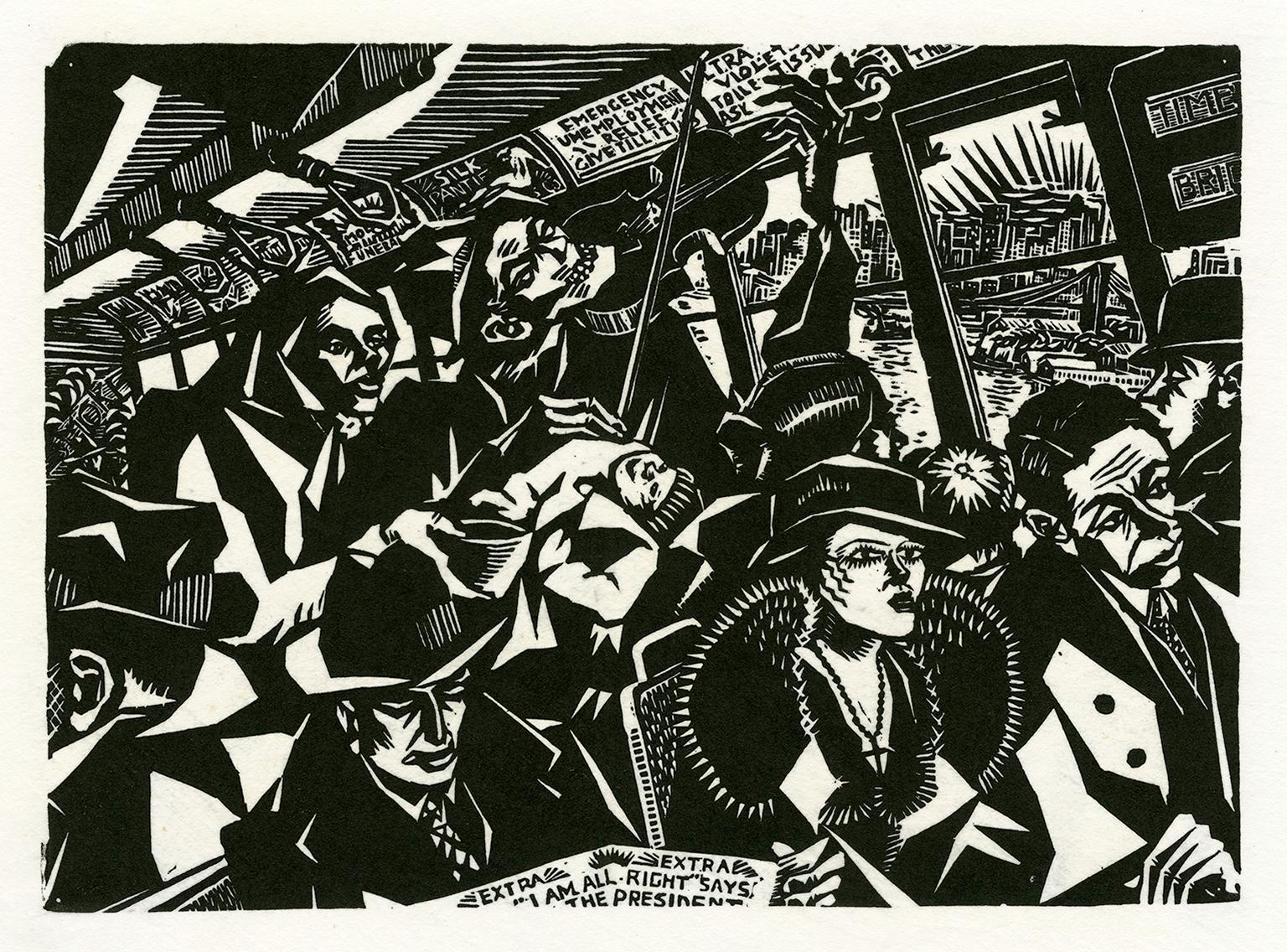
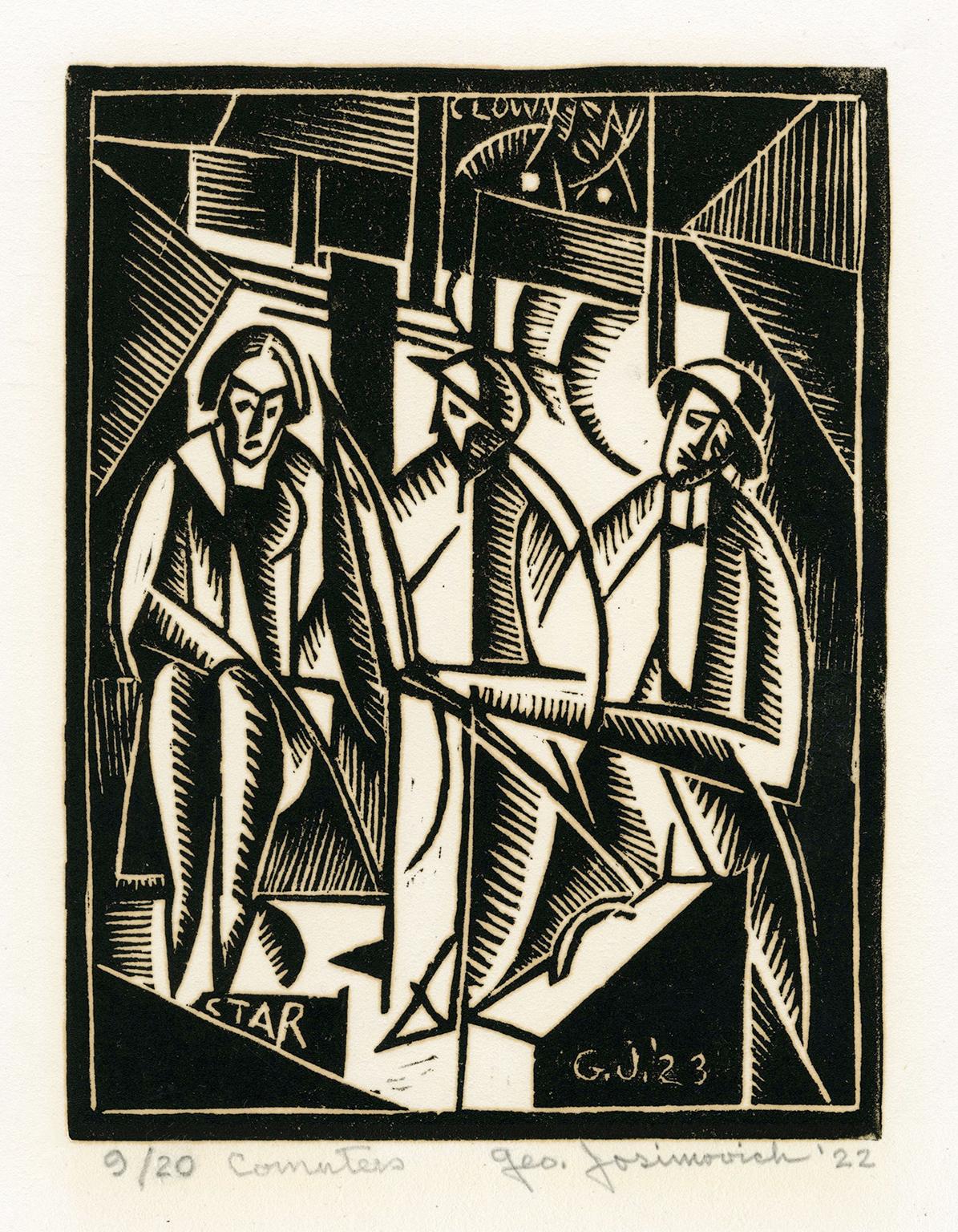
Commuters — Early 20th-Century Modernism
By George Josimovich
Located in Myrtle Beach, SC
George Josimovich, 'Commuters', linocut, 1922-23, edition 20. Signed, dated '22, titled, and annotated '9/20' in pencil. Initialed in the block 'G.J....
Category

1920s American Modern Figurative Prints

Materials

Linocut

Modern Music — WPA Modernism, New York City El
Located in Myrtle Beach, SC
Albert Potter, 'Modern Music' also Twilight Melodies', linocut, c. 1935, from the posthumous edition of 20, printed in 1977, authorized by the artist’s widow. Estate authenticated in...
Category

1930s American Modern Figurative Prints

Materials

Linocut

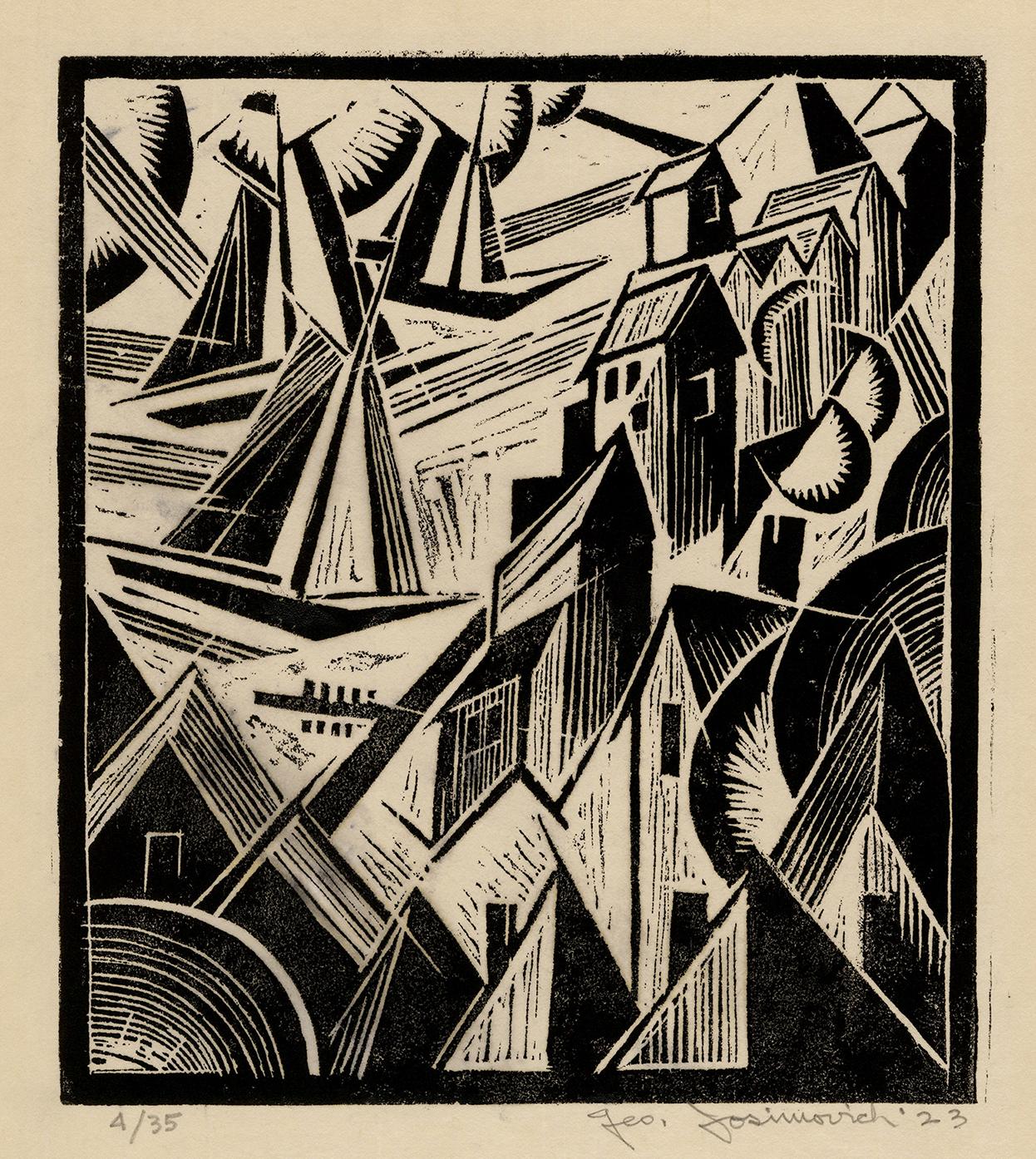
Harbor with Sailboats — Early 20th-Century Modernism
By George Josimovich
Located in Myrtle Beach, SC
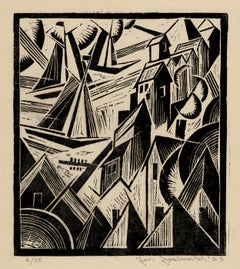
George Josimovich, Untitled (Harbor with Sailboats) ', linocut, 1923, edition 35. Signed, dated, and annotated '4/35' in pencil. Initialed 'G J' in ...
Category

1920s American Modern Figurative Prints

Materials

Linocut

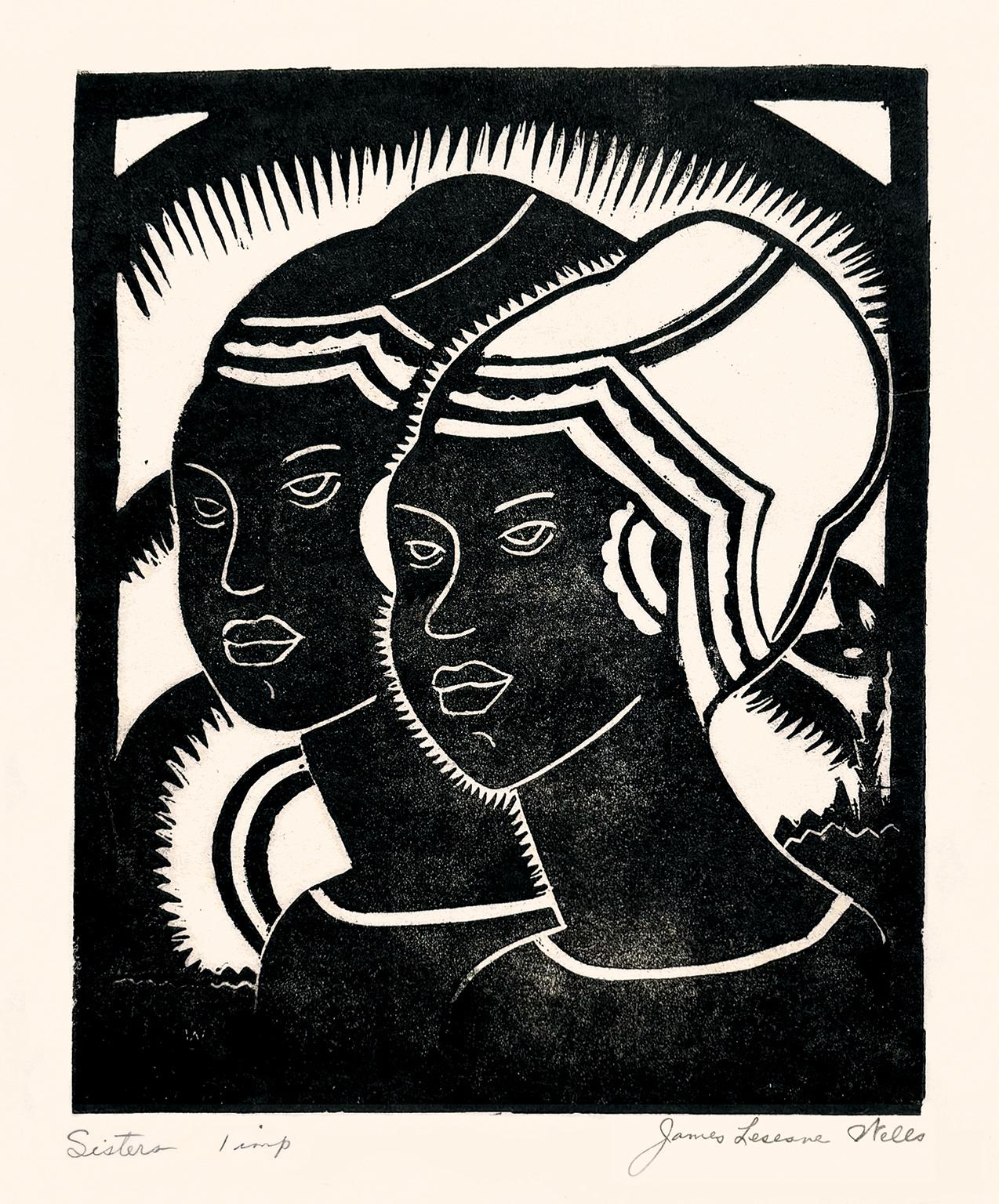
Sisters — Renowned Black American, Harlem Renaissance Artist
Located in Myrtle Beach, SC
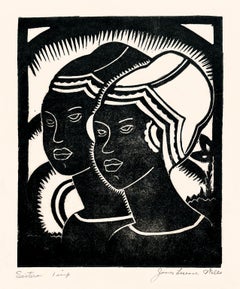
James Lesesne Wells, 'Sisters', linocut, edition not stated but small, 1928. Signed, titled, and annotated 'imp' in pencil. A fine impression on off-white wove Japan paper, with wide margins (1 7/8 to 3 3/4 inches), in excellent condition. Printed by the artist. Very scarce. Matted to museum standards, unframed. Image size 8 3/16 x 6 3/4 inches (208 x 171 mm); sheet size 13 1/2 x 10 3/4 inches (343 x 273 mm). Exhibition and Literature: 'Narratives of African American Art and Identity: The David C. Driskell Collection,' The Art Gallery at the University of Maryland, extensive touring exhibition, 1998-2000. Collections: Pennsylvania Academy of the Fine Arts, Smithsonian Institution (Anacostia Community Museum). ABOUT THE ARTIST “Wells is more than an artist with a deep concern for his fellow man. He carries many of his themes a step further into an apocalyptic world, a world of revelation and shifting lights. … He works on large blocks in a bold free style. … His work has a vigor, therefore, that is not often used in the medium today.” —Jacob Kainen (painter, critic, and collector) from Richard J. Powell’s 1986 essay Phoenix Ascending: The Art of James Lesesne Wells. James Lesesne Wells was an American painter, printmaker, educator, and pioneering figure of the Harlem Renaissance, whose work established a vital connection between African heritage, modernist form, and African American cultural identity. Known for his innovative use of linoleum and woodblock printing, Wells played a key role in shaping 20th-century African American art and inspired countless students throughout his lengthy career as a teacher at Howard University. Born in Atlanta, Georgia, Wells' early exposure to the arts came through church and community, where African American cultural traditions were central. He pursued formal artistic training at Lincoln University in Pennsylvania (earning a B.A. in 1924), followed by studies at the Pennsylvania Academy of the Fine Arts and the Barnes Foundation, where he encountered European modernists as well as traditional African sculpture, which profoundly influenced his style. Wells moved to New York in the late 1920s, swiftly immersing himself in the lively artistic and intellectual scene of Harlem. There, he became associated with artists, writers, and thinkers of the Harlem Renaissance, contributing to the growth of Black cultural identity. Considered a mentor to many famed artists of the Harlem Renaissance, Wells served as director of a summer art workshop in Harlem where his assistants included Charles Alston, Jacob Lawrence, and Palmer Hayden...
Category

1920s American Modern Figurative Prints

Materials

Linocut

Eyes for the Night — Mid-Century American Surrealism
By Benton Murdoch Spruance
Located in Myrtle Beach, SC
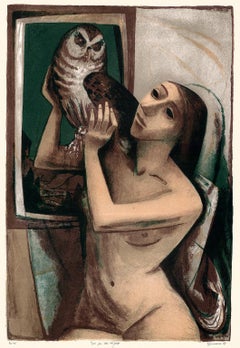
Benton Spruance, 'Eyes for the Night', color lithograph, 1948, edition 35, Fine and Looney 261. Signed, dated, and titled, and annotated 'Ed 35' in pencil. A fine impression with fresh colors, on cream wove paper; the full sheet with margins (1 to 1 3/8 inches), in excellent condition. Printed by master lithographer Theodore Cuno. Archivally matted to museum standards, unframed. Image size 19 x 13 inches; sheet size 21 1/8 x 15 1/4 inches. Selected by the artist for his retrospective exhibition 'Benton Spruance: Lithographs...
Category

1940s American Modern Figurative Prints

Materials

Lithograph

Girl with Hands to Face — Mid-century Modernism
By Benton Murdoch Spruance
Located in Myrtle Beach, SC
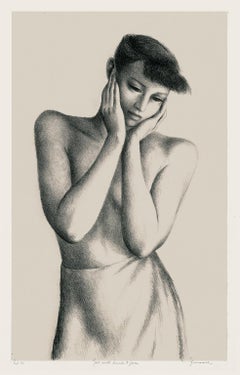
Benton Spruance, 'Girl with Hands to Face', two-color lithograph, 1940, edition 30, Fine and Looney 180. Signed, titled, and annotated 'Ed. 30' in pencil. A superb impression, on cr...
Category

1940s American Modern Figurative Prints

Materials

Lithograph

You May Also Like

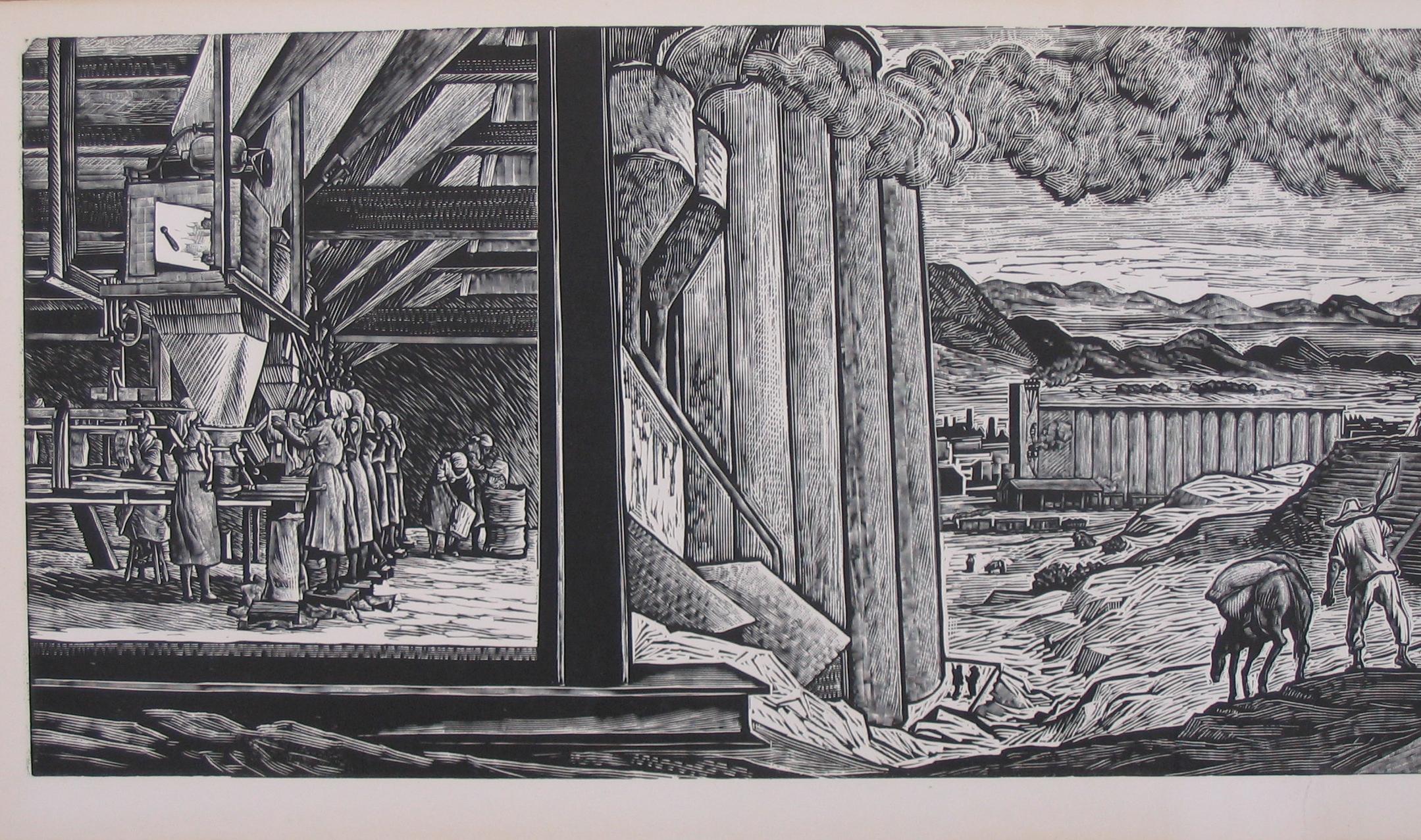
THE MAKING OF TORTILLAS - Mural Size 47 1/2 inches Long
By Leopoldo Méndez
Located in Santa Monica, CA
LEOPOLDO MENDEZ (1902 – 1969) THE MAKING OF TORTILLAS 1954 Linocut. Edition unknown. This example signed in pencil and dated 1957. 14” x 47 3/8” ...
Category

1950s Modern Figurative Prints

Materials

Linocut

ISRAEL (1951 Mexican Homage Poster)
By Fanny Rabel
Located in Santa Monica, CA
FANNY RABEL (1922 – 2008) and ALBERTO BELTRAN (B. 1923 ISRAEL - 2 Conferencias por Vocente Lombardo 1951 (P.134) Linocut in 3...
Category

1950s Modern Figurative Prints

Materials

Linocut

SLEDGEHAMMERS
By Sybil Andrews
Located in Portland, ME
Andrews, Sybil (English/Canadian, 1898-1992), C. SA26. "SLEDGEHAMMERS", Color Linocut, 1933, ed. 60 plus 4 trial proofs, Ref. C. SA 26, 10-1/4 x 12-1/2, signed, titled and numbered 6...
Category

1930s Modern Figurative Prints

Materials

Linocut

"Rest, " Farmer leaning on Work Tool Linoleum Cut signed by Schomer Lichtner
By Schomer Lichtner
Located in Milwaukee, WI
"Rest" is an original linoleum print by Schomer Lichtner, signed in the lower right hand corner. It features a man in the act of resting on a stick in the middle of work. Image: 5.6...
Category

1930s American Modern Figurative Prints

Materials

Linocut

"Swimmers, " Seascape Linoleum Cut by Clarice George Logan
By Clarice George Logan
Located in Milwaukee, WI
"Swimmers" is an original linoleum print by Clarice George Logan. It features five figures enjoying a swim, jumping off from a small boat. Image: 4.94" x 6" Framed: 13.87" x 14.87" Clarice George Logan was born in Mayville, New York in 1909 but moved to Wisconsin in 1921. She attended the Milwaukee State Teachers College from 1927 to 1931 where she studied with Robert von Neumann...
Category

1930s American Modern Figurative Prints

Materials

Linocut

"Meditation, " Figure Farm Tool Linoleum Cut signed by Schomer Lichtner
By Schomer Lichtner
Located in Milwaukee, WI
"Meditation" is an original linoleum print by Schomer Lichtner, signed in the lower right hand corner. It features a man in the middle of a project, in quiet meditation. Image: 6" x 8" Framed: 14.5" x 14.37" Lichtner and his wife, Ruth Grotenrath (1912-1988), are celebrated as Milwaukee’s first couple of painting and are regarded as major Wisconsin artists. Lichtner’s impressive production, perseverance, longevity, and positive approach to his life and art made him and his work distinctive and much loved by his many admirers. His work is currently represented in collections at the Milwaukee Art Museum, the John Michael Kohler Art Center, the West Bend Museum, and in the collections of many individuals. Books on the lives and art work of both Lichtner and Grotenrath are in progress and it is anticipated that they will be published next year. Recipient of the 2006 Wisconsin Visual Artist Lifetime Achievement Award The late Milwaukee artists, Schomer Lichtner and Ruth Grotenrath, created original silkscreen prints as a part of their Christmas celebration starting in the 1940's. The subjects and colors varied from year to year but they laboriously printed these little gems themselves. Ruth Grotenrath, 1912-1988, and her husband, Schomer Lichtner, (1905-2006), are celebrated as Milwaukee’s first couple of painting and are regarded as major Wisconsin artists. From the outset, Lichtner and Grotenrath were determined to become full-time artists. Ruth Grotenrath and Schomer Lichtner began their careers by creating numerous murals for the WPA (Work Projects Administration), primarily post offices. A wonderful example can be seen in the Sheboygan, Wisconsin post office. Even during the Great Depression they worked producing Post Office murals under the Treasury Department's Section of Fine Arts (SFA). According to James Auer, former Milwaukee Journal Sentinel art critic, "As art and economic trends evolved, the couple’s palettes brightened and warmed. Both fell under the spell of the Mexican social realists, notably Diego Rivera, and modernists such as Matisse and Dufy. The couple’s perspective changed further after they became friends with philosopher Alan Watts...
Category

1930s American Modern Figurative Prints

Materials

Linocut