Items Similar to British Post Office Greetings Telegrams (1935-1978), after various artists

Want more images or videos?
Request additional images or videos from the seller
1 of 10
UnknownBritish Post Office Greetings Telegrams (1935-1978), after various artists1935-1978
1935-1978
$14,803.11
£10,800
€12,632.59
CA$20,484.81
A$21,988.52
CHF 11,707.76
MX$260,429.41
NOK 147,954.13
SEK 135,123.39
DKK 94,371.17
About the Item
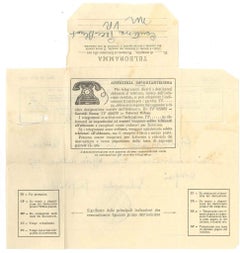
British Post Office Greetings Telegrams (1935-1978), after various artists
photolithograph
dimensions, including frames:
33 x Telegram 9 ¾ x 11 ⅞ in. (24.8 x 30.1 cm.)
31 x Telegram 10 ½ x 12 in. (26.8 x 30.5 cm.)
12 x Telegram 11 ½ x 18 in. (29.2 x 45.7 cm.) and similar
12 x Telegram 9 x 11 ½ in. (22.9 x 29.2 cm.)
1 x Telegram 11 ¾ x 12 ¾ in. (29.8 x 32.4 cm.)
1 x Telegram 9 x 10 ⅜ in. (22.9 x 26.3 cm.)
1 x Telegram 8 x 10 ½ in. (20.3 x 26.7 cm.)
A set of ninety-one (91)
The historical equivalent of a text or WhatsApp message, the first telegram was sent in code in 1844 from Washington to Baltimore by Samuel Morse, asking “What hath God wrought?” By 1870 (the year that the British General Post Office nationalised the service), more than 3,000,000 telegrams were being sent annually, of which one of the shortest ever was from Oscar Wilde, who, enquiring as to sales for his new book, sent a solitary “?” to his publisher. The response was “!”.
To harness new commercial appeal, the Greetings Telegram was introduced in 1935. Costing three pence more than a standard telegram, the initiative was a great success, and nearly 25,000 were sent out in the first week.
In 1943, during the Second World War, production of the Greetings Telegram was halted due to paper rationing and exigencies. Upon its reintroduction in 1950, demand was on a steep decline due to the increasing popularity of the telephone, and also the negative association that the telegram had acquired through informing families that their loved ones had been killed or were missing in action. The final British Greetings Telegram was produced in 1978, and the overall service came to an end in the United Kingdom in 1982.
As the present collection illustrates, Greetings Telegrams were extremely popular for celebrating special events: from newborn babies to weddings; from Christmas and coronations to Valentine’s day. Indeed, more than 50,000 of Rex Whistler’s Valentine’s design of 1936 were dispatched. The Greetings Telegram was a great way for artists to increase their profile and reach an incredibly broad audience, combining - in a very Warholian manner - mass production, consumerism and art. The artists featured in this collection include Edward Ardizzone, Rex Whistler and John Strickland Goodall. However, the first Greetings Telegram was designed by Mrs Calkin James, a Post Office employee.
PLEASE NOTE THAT ONLY A SMALL SELECTION OF THE GREETINGS TELEGRAMS HAVE BEEN ILLUSTRATED.
For a comprehensive listing of the artists, complete illustrations, and further information about the Telegrams, please view my online catalogue.
- Creation Year:1935-1978
- Dimensions:Height: 11 in (27.94 cm)Width: 18 in (45.72 cm)
- Medium:
- Movement Style:
- Period:
- Condition:
- Gallery Location:London, GB
- Reference Number:1stDibs: LU80612354153
About the Seller
5.0
Vetted Professional Seller
Every seller passes strict standards for authenticity and reliability
Established in 2016
1stDibs seller since 2017
31 sales on 1stDibs
- ShippingRetrieving quote...Shipping from: London, United Kingdom
- Return Policy
More From This Seller
View AllA young beauty
By George Lawrence Bulleid
Located in London, GB
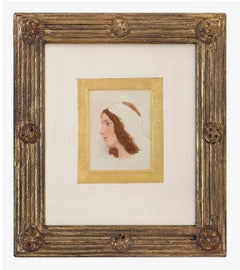
George Lawrence Bulleid (1858-1933)
A young beauty
pencil and watercolour
3 ⅛ x 2 ⅜ in. (7.9 x 6 cm.)
frame 9 ⅜ x 8 ¼ in. (23.9 x 20.9 cm.)
Category
Late 19th Century Naturalistic Figurative Drawings and Watercolors
Materials
Watercolor
Venus
By Richard Westall
Located in London, GB
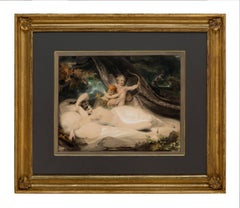
Richard Westall, R.A. (1765-1836)
Venus
signed and dated ‘R. Westall 1794’ (lower right)
pencil and watercolour, with white heightening
image 11 ⅞ x 15 ¼ in. (30.2 x 38.7 cm.)
frame 22 ⅛ x 26 in. (56.3 x 66.1 cm.)
Provenance:
Private Collection, UK.
Venus (1794) was produced during a highly creative and defining period of Richard Westall’s career and artistic development, when from 1790-95 the ambitious young artist was sharing a house at 57 Greek Street, Soho, with his friend Sir Thomas Lawrence, the future President of the Royal Academy.
Whilst lodging together, Lawrence became an Associate of the Royal Academy in 1791, Westall the following year, and both were elected full-members in 1794 – the year Lawrence was appointed Painter-in-Ordinary to His Majesty King George III. Westall was to become Queen Victoria’s first Drawing Master, before her ascension to the throne.
It was in this very year, 1794 - as the two young artists became Royal Academicians - that the present watercolour was executed, and it is exciting to speculate that Lawrence would have examined and given his thoughts on the work.
Highly comparable to The Wallace Collection’s Nymph and cupids (c.1793, cat. P757), acquired by Francis Seymour-Conway (1777-1842), 3rd Marquess of Hertford, (who hung it in his bedroom), the mid-1790s saw Westall exhibiting and returning to similar subject-matter on a number of occasions. Two works with titles that could be applied to the present picture were exhibited at the Royal Academy, in 1794 (no. 341 Nymph and Cupids) and 1795 (no. 620, A Wood–nymph and Cupids). However, a print after the watercolour, engraved by F. Screen, entitles the piece Venus.
Westall is regarded as a great virtuoso watercolourist, and Venus is evidence of the young artist’s mastery of the medium. Indeed, it is unusual to find a watercolour of comparable age so well preserved, and retaining such vibrancy - the superb condition providing an insight into his exceptional brushwork and use of colour.
Venus languishes luxuriously on her woodland bed, the trunk of a tree resembling a curtain, while three winged putti play beside her, seeming to gesture to someone in the woods. Cupid draws back his bow and aims an arrow of love, perhaps about to pierce the heart of a hunting nobleman, or unsuspecting woodcutter. The striking contrast between the almost luminescent nymph, with the deep, rich, luxuriant forest, gives the glade an alluring sense of mystery – perhaps an allusion to the mysteries of the heart, a pre-occupation with Romanticism, central to the emerging thought of the time. Westall can be classified as one of the great Romantic artists, and even painted Lord Byron’s portrait...
Category
1790s Romantic Figurative Drawings and Watercolors
Materials
Watercolor, Pencil
$25,357
Artists and their muses
Located in London, GB
Playboy School, 20th Century
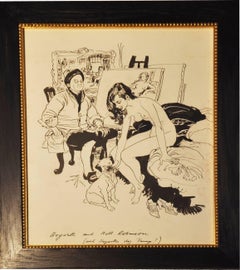
Artists and their muses: Titian and Violante; Sir Peter Lely and Nell Gwyn; Francois Boucher and Louise O’Murphy; Hogarth, Nell...
Category
1980s Romantic Figurative Drawings and Watercolors
Materials
Ink, Watercolor, Pencil
$5,756
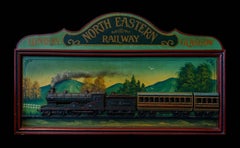
A London to Glasgow North-Eastern Railway sign, 20th Century
Located in London, GB
A London to Glasgow North-Eastern Railway sign, 20th Century
Painted wood, with modelled train
21 ⅜ x 36 ¼ in. (54.3 x 92.1 cm.)
Category
Late 20th Century Mixed Media
Materials
Wood, Oil
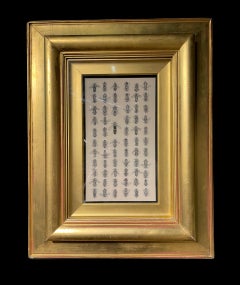
Bee columns, in a water-gilded frame, circa 1870
By Tom Rooth
Located in London, GB
This work was created by Tom Rooth in the Cambrian Mountains of Wales.
Production process:
Tom makes the ceramic panel, which then dries for a month. After this, he carves it down, and then it goes into the kiln for a 48 hour cycle firing.
Tom then draws onto the panel, with underglaze pencils, and then glazes the artwork which goes into the kiln once more, for another 48 hour firing cycle. It is then ready for the frame. Tom has an expert knowledge of frames - his parents were framers and restorers, and he worked at Christie's as Senior Picture Specialist and Director for 14 years.
Tom's works are unique, highly decorative, highly original, and will compliment any interior, whether traditional or contemporary. Tom has exhibited at The Treasure House...
Category
2010s Realist Mixed Media
Materials
Ceramic, Glaze, Pencil
The Ocean Depths - Mid 20th Century Animal Painting by Steven Spurrier
By Steven Spurrier
Located in London, GB
Steven Spurrier, R.A. (1878-1961)
The ocean depths
signed ‘STEVEN SPURRIER’ (lower right)
oil on canvas
canvas 24 x 36 in. (60.9 x 91.4 cm.)
frame 30 ...
Category
Mid-20th Century Naturalistic Animal Paintings
Materials
Canvas, Oil

You May Also Like
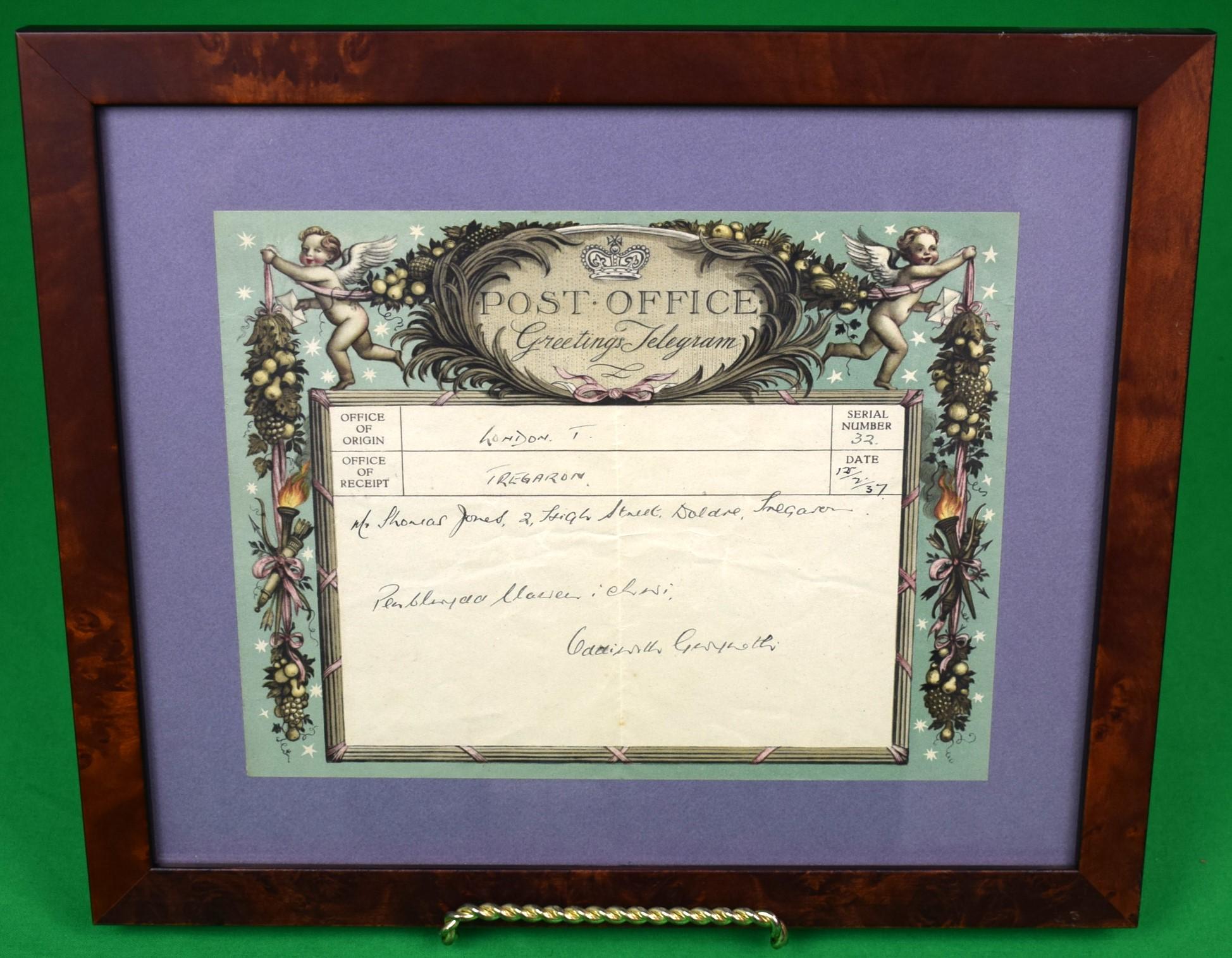
Rex Whistler Designed "Post Office c1937 Greetings Telegram"
Located in Bristol, CT
Image Sz: 6 3/8"H x 8 1/2"W
Frame Sz: 10 1/4"H x 12 1/4"W
w/ envelope laid-in on verso
St. Valentine's Day greetings telegram, issued by the GPO 12 February 1937. Colour half-tone and letterpress, designed by Rex Whistler...
Category
20th Century Prints and Multiples
Materials
Color
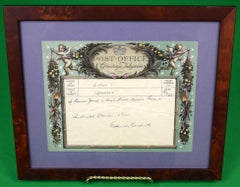
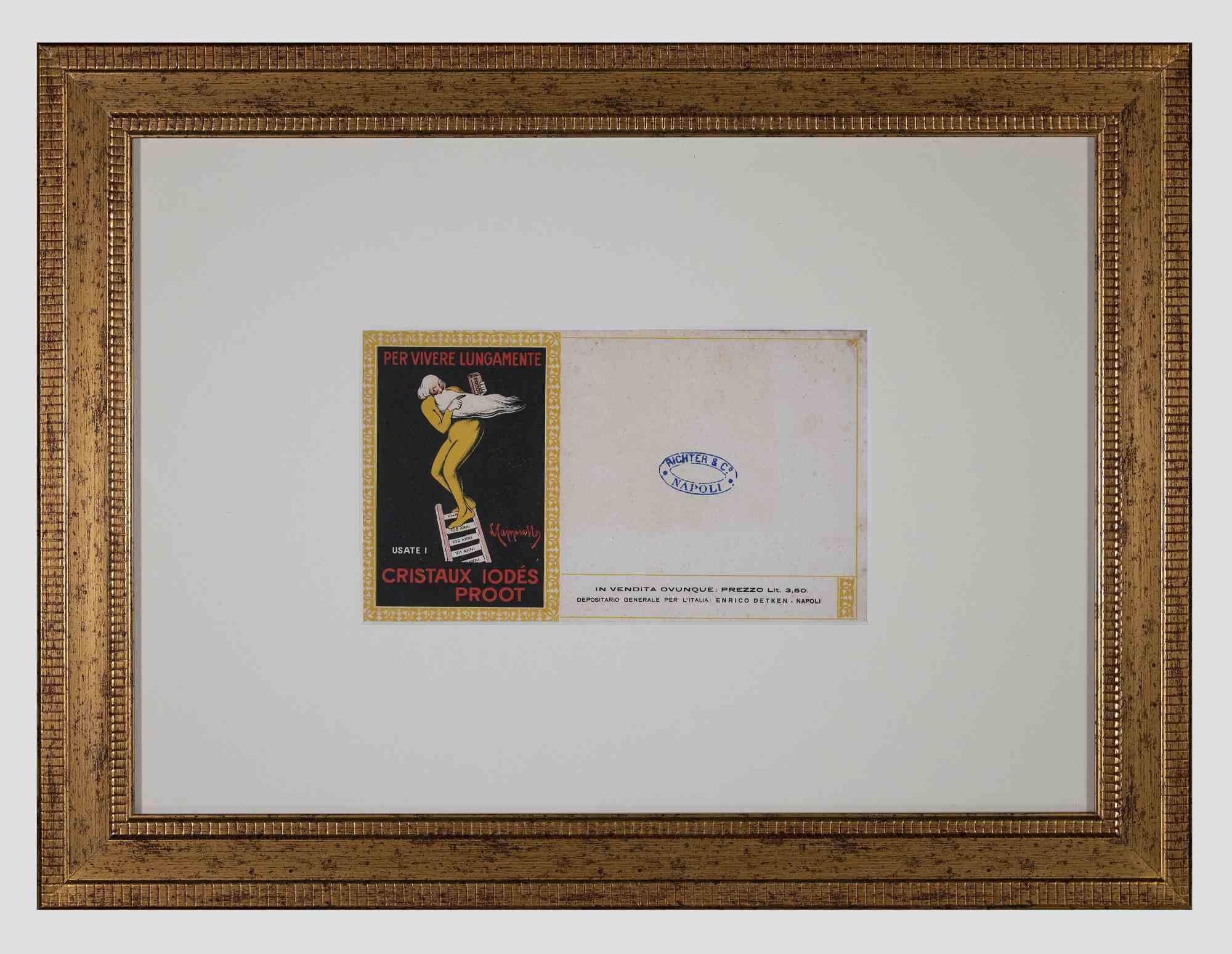
To Live Long - Advertising Print - Half of 20th Century
Located in Roma, IT
To live long - Advertising Print is an original artwork realized in the half of 20th Century.
A vintage mixed colored lithograph on which the adver...
Category
Mid-20th Century Modern Figurative Prints
Materials
Lithograph

Original Vintage General Post Office Poster Foreign Letter Postage Rate GPO
Located in London, GB
Original vintage advertising poster for the GPO General Post Office - 4d Minimum Foreign Letter Postage Rate - featuring a stylised image of a postman wearing a hat with the 4 and D ...
Category
Vintage 1950s British Posters
Materials
Paper

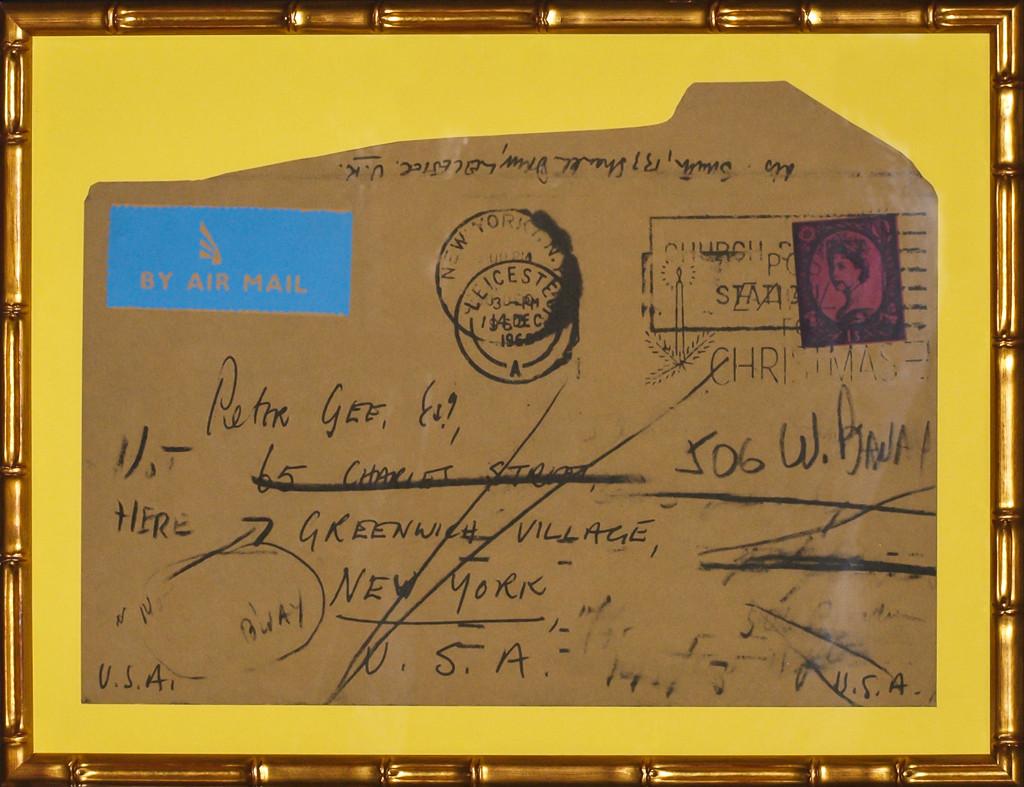
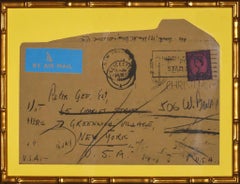
Peter Gee c1963 Postmarked Envelope
By Peter Gee
Located in Bristol, CT
Original Peter Gee (1932-2005) British envelope postmarked Dec 14, 1963
Envelope Sz: 11 3/4"H x 16 1/4"W
Frame Sz: 15"H x 20"W
w/ gilt bamboo frame
Peter Gee (1932–2005) was a British-born artist and developer who spent most of his life living and working in New York City. He was active in the pop art movement of the 60s.
Biography:
Gee was born on July 23, 1932 in Leicestershire, England. He was interested in drawing as a child and worked as a graphic designer for the British army when he joined at the age of 18. By the end of the 50s, he had exhibited at the Denise Rene Gallery in Paris, where he lived briefly, and the Axiom Gallery in London. He came to the US in 1962.
Throughout the 60s, Gee experienced a high degree of success as a pop artist in Manhattan. His work from this era has been collected by The Museum of Modern Art in both New York City and Kyoto, The Smithsonian and the Library of Congress in Washington DC, and The Victoria and Albert Museum in London. Gee exhibited with Andy Warhol and Robert Indiana for the "Word and Image" show in 1968 at the Museum of Modern Art. During this time, he was also teaching classes at the New School, the School of Visual Arts, and the Harvard Architectural School.
Gee formed his close friendship with fashion designer Betsy Johnson...
Category
1960s Other Art Style More Art
Materials
Paper
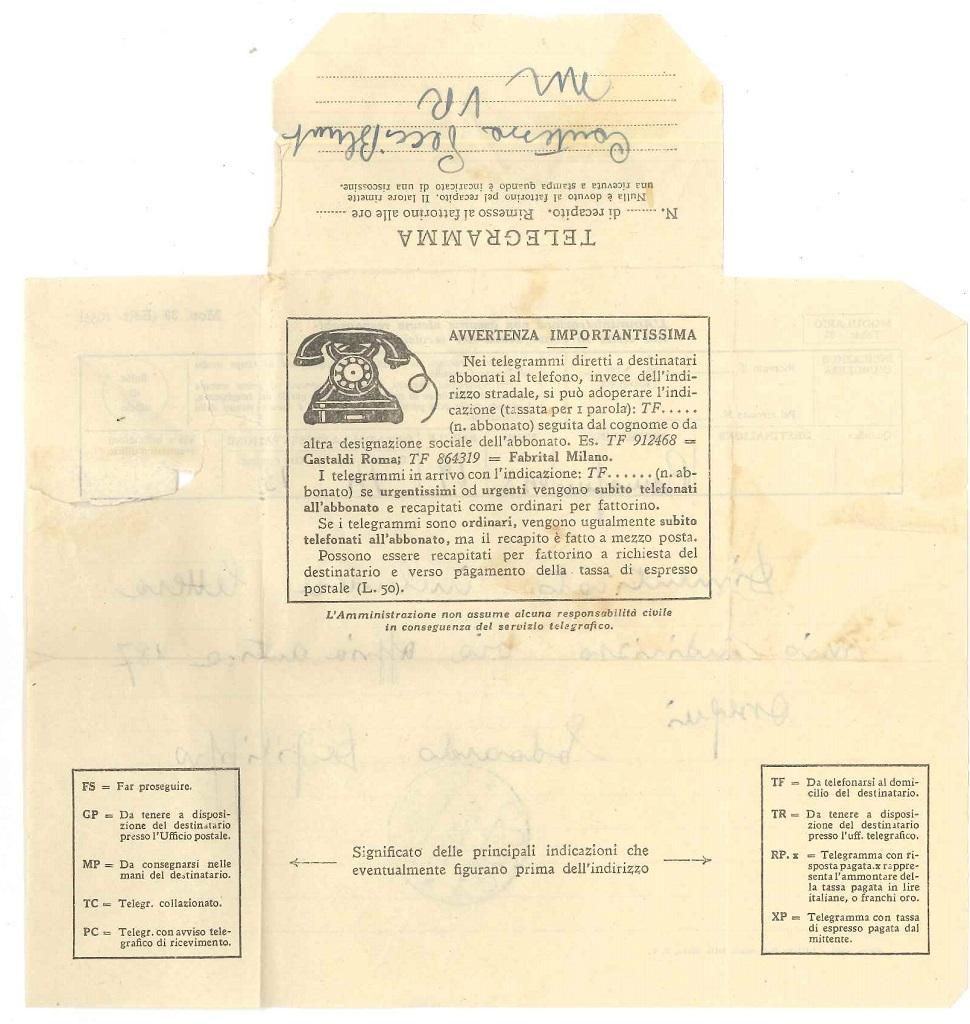
Telegram by Eduardo De Filippo - 1950s
Located in Roma, IT
Telegram by Eduardo De Filippo (1900-1984), Italian playwright, director, actor and poet addressed to the Countess Anna -Laetitia Pecci-Blunt.
One-page.
V...
Category
1950s More Art
Materials
Paper, Ink
Vintage Postcards - Lithograph by Enrico Passero - 19th Century
Located in Roma, IT
Vintage postcards is an old master artwork realized by Enrico Passero.
Black and white lithograph.
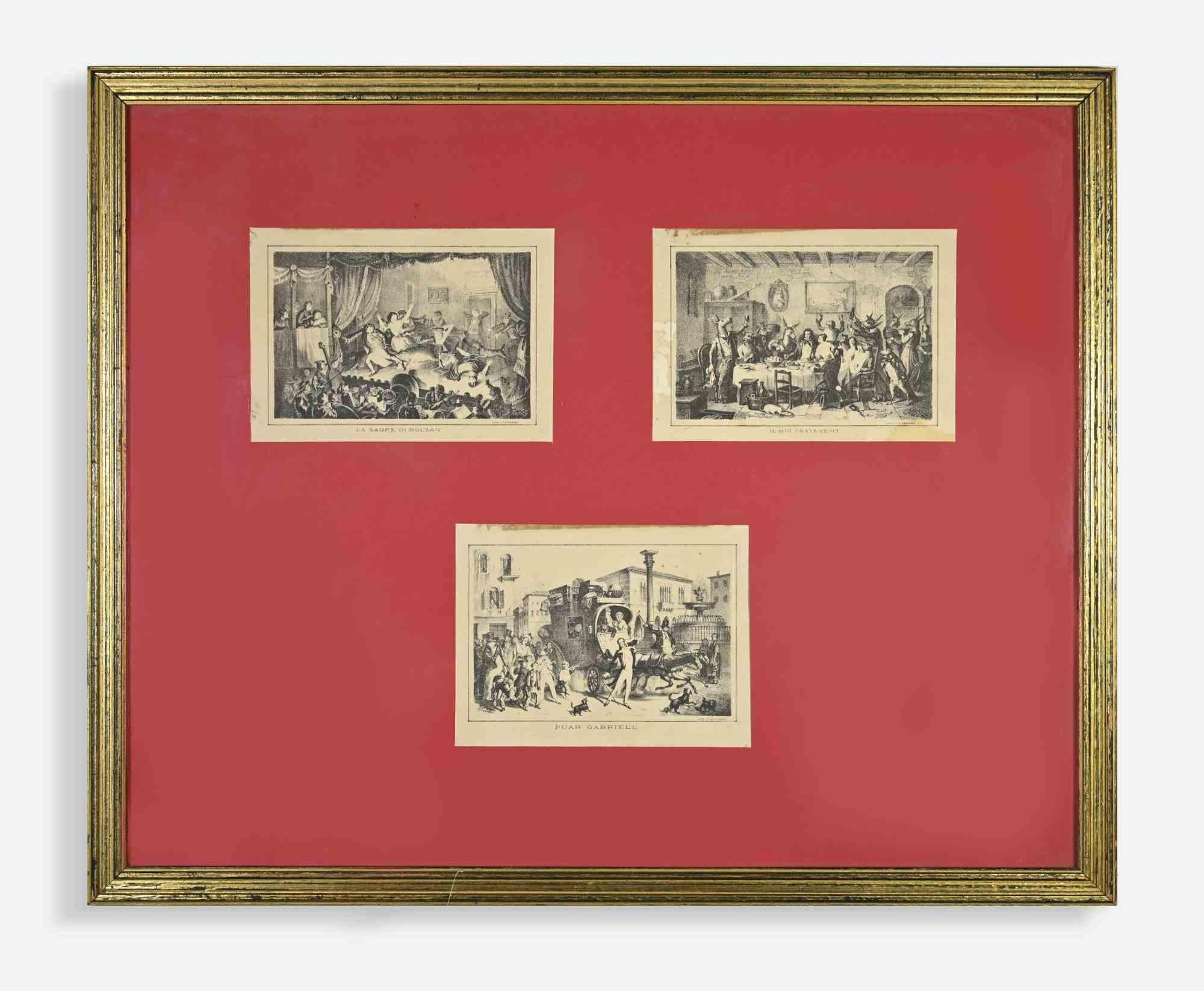
The artwork consists of three lithographs from Società Filologica Friulana realiz...
Category
19th Century Modern Figurative Prints
Materials
Lithograph
More Ways To Browse
Pablo Picasso Serie
Pablo Picasso Serigraph
Pamela Bianco
Paolo Toschi
Paris Street Scene Lithograph
Paul Stewart
Pe Felix
Peter Mats
Peter Max 1971
Peter Max 1973
Picasso Ecuyere
Picasso Farol
Picasso Lithograph Bathers
Picasso Lithograph Couple
Picasso Marlborough
Picasso Pencil Signed
Picasso Plates Signed
Picasso Series 156