Items Similar to Japanese print on paper, fragment of a screen, Summer and Autumn Flowers Tawara
Video Loading
Want more images or videos?
Request additional images or videos from the seller
1 of 25
UnknownJapanese print on paper, fragment of a screen, Summer and Autumn Flowers Tawara1990
1990
$886.89
£657.10
€740
CA$1,223.02
A$1,294.85
CHF 700.74
MX$15,475.89
NOK 8,734.62
SEK 7,987.50
DKK 5,637.39
About the Item
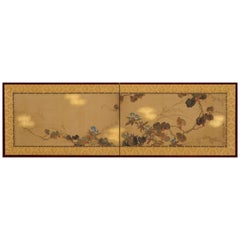
Fantástica impresión sobre papel de un fragmento del biombo “Flores de verano y otoño”, obra original de Tawaraya Sōtatsu, siglo XVII, fundador de la escuela Rimpa. La pieza corresponde a la parte izquierda de la composición y se centra en la representación de un variado repertorio vegetal dispuesto sobre un fondo dorado.
En la obra destacan las espigas de trigo, mazorcas de maíz acompañadas de flores rojizas que pueden ser amapolas, lirios y otras tantas flores no identificadas, hojas de ruibarbo de pantano y kerria. El conjunto del biombo completo transmite una progresión temporal: desde especies asociadas a la primavera, como el ruibarbo de pantano o la kerria, hasta la plenitud veraniega, con trigo y maíz, integrados con flores asociadas al período otoñal.
El biombo original al que pertenece este fragmento se conserva hoy en la colección del Museo Nacional de Arte Asiático de la Smithsonian Institution.
La importancia del biombo en el periodo Edo
En el período Edo (1603–1868), en un contexto de paz y aislamiento cultural, los biombos adquirieron un papel central en la vida cotidiana y ceremonial. Más allá de su función práctica como divisores de espacios, eran símbolos de prestigio social ya que eran encargados por cortesanos, samuráis y comerciantes acaudalados. Su elaboración, a partir de madera, seda o papel, y la incorporación de fondos dorados, reforzaban su carácter suntuario.
Sobre Tawaraya Sōtatsu y la escuela Rimpa
Activo en Kioto aproximadamente entre 1600 y 1640, Sōtatsu fundó un taller especializado en pintura decorativa y objetos de lujo. Inició su carrera con trabajos en abanicos y papelería artística, y pronto alcanzó prestigio colaborando con el calígrafo Hon’ami Kōetsu. Entre sus encargos más destacados figura la decoración del templo Yōgen-in (1621), donde realizó notables puertas pintadas. Hacia 1630 adquirió un alto rango como sacerdote budista. Supo reinterpretar las tradiciones pictóricas japonesas con un lenguaje ornamental donde la naturaleza, los fondos dorados y las composiciones asimétricas se convirtieron en elementos identitarios. Su influencia se prolongó durante todo el período Edo y definió la estética Rimpa.
La escuela Rimpa, de la cual Sōtatsu es fundador junto con Hon’ami Kōetsu, fue la principal responsable de consolidar un nuevo lenguaje visual. El tarashikomi es una técnica distintiva de la escuela que se basa en aplicar pigmentos húmedos superpuestos para generar bordes difuminados y sutiles gradaciones tonales. Este método dotaba a los biombos de un aspecto vibrante y luminoso que se convirtió en el estilo representativo de la escuela
Technical information
Support technique: Print on paper
Title of the work: “Summer and Autumn Flowers”
Period: 1990s
Country of origin: Japan
Good condition commensurate with age and use
Overall dimensions: 101 x 79 x 3.5 cm
Dimensions without frame: 75 x 54 cm
About the Seller
No Reviews Yet
Vetted Professional Seller
Every seller passes strict standards for authenticity and reliability
1stDibs seller since 2025
- ShippingRetrieving quote...Shipping from: Valladolid, Spain
- Return Policy
More From This Seller
View AllHasegawa School Edo Folding Screen with Horses Byobu Horses Japan
Located in Valladolid, ES
One of a kind and incredible six-panel Hasegawa school folding screen, featuring horses, is an exceptional piece.
"Scene with Wild Horses" (Kōgen Bashu-zu in Japanese) is in the styl...
Category
1850s Edo Animal Drawings and Watercolors
Materials
Paper
Qing Dynasty Chinese painted mirror / glass painting “Traditional Scene”
Located in Valladolid, ES
One of a kind Chinese painted mirror, or mirror with reverse painting, originally from the Qing Dynasty, around the end of the 19th century. It depicts various traditional scenes fo...
Category
1870s Qing Figurative Paintings
Materials
Glass
$1,428 Sale Price
29% Off
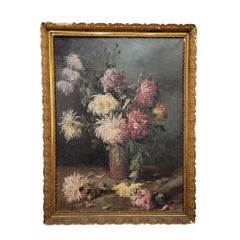
Painting Napoleon III Autumn Flowers by Marthe Danard Puig France
Located in Valladolid, ES
Stunning still life titled “Fleurs d’automne” (“Autumn Flowers”) by French artist Marthe Danard Puig. In the center, a slender, cylindrical vase filled with chrysanthemums, most of t...
Category
Early 1900s Still-life Paintings
Materials
Canvas
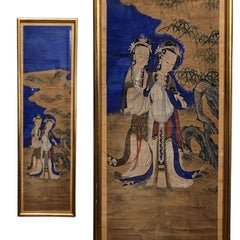
Qing Dynasty Blue White and Black Gouache Scroll Geishas
Located in Valladolid, ES
Amazing and Exquisite vertical Chinese scroll, 18th century Qing Dynasty, blue, white, and brown, "Geisha Pair" (Gouache on paper, hanging vertically, possibly a vertical scroll, fra...
Category
1780s Baroque Portrait Drawings and Watercolors
Materials
Paper
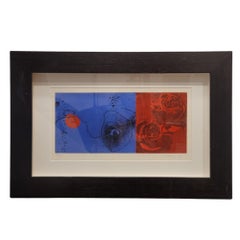
Vintage Korean red and blue etching print by Deok Sung Kang, numbered 75 of 75
Located in Valladolid, ES
Vintage Korean red and blue etching print by Deok Sung Kang, numbered 75 / 75
Gorgeous Etching, with aquatint and color matrix, by South Korean artist Deok Sung Kang, created around ...
Category
1990s Modern Abstract Prints
Materials
Paper
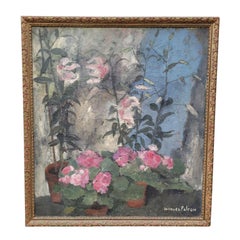
Vintage oil on canvas, pink autumn flowers, Jacques Falcou, France
Located in Valladolid, ES
Amazing work by the French painter Jacques Falcou, depicting three pots of colorful pink flowers which, despite the lack of detail, appear to be geraniums. They stand out for their ...
Category
1950s Art Deco Still-life Paintings
Materials
Canvas
You May Also Like
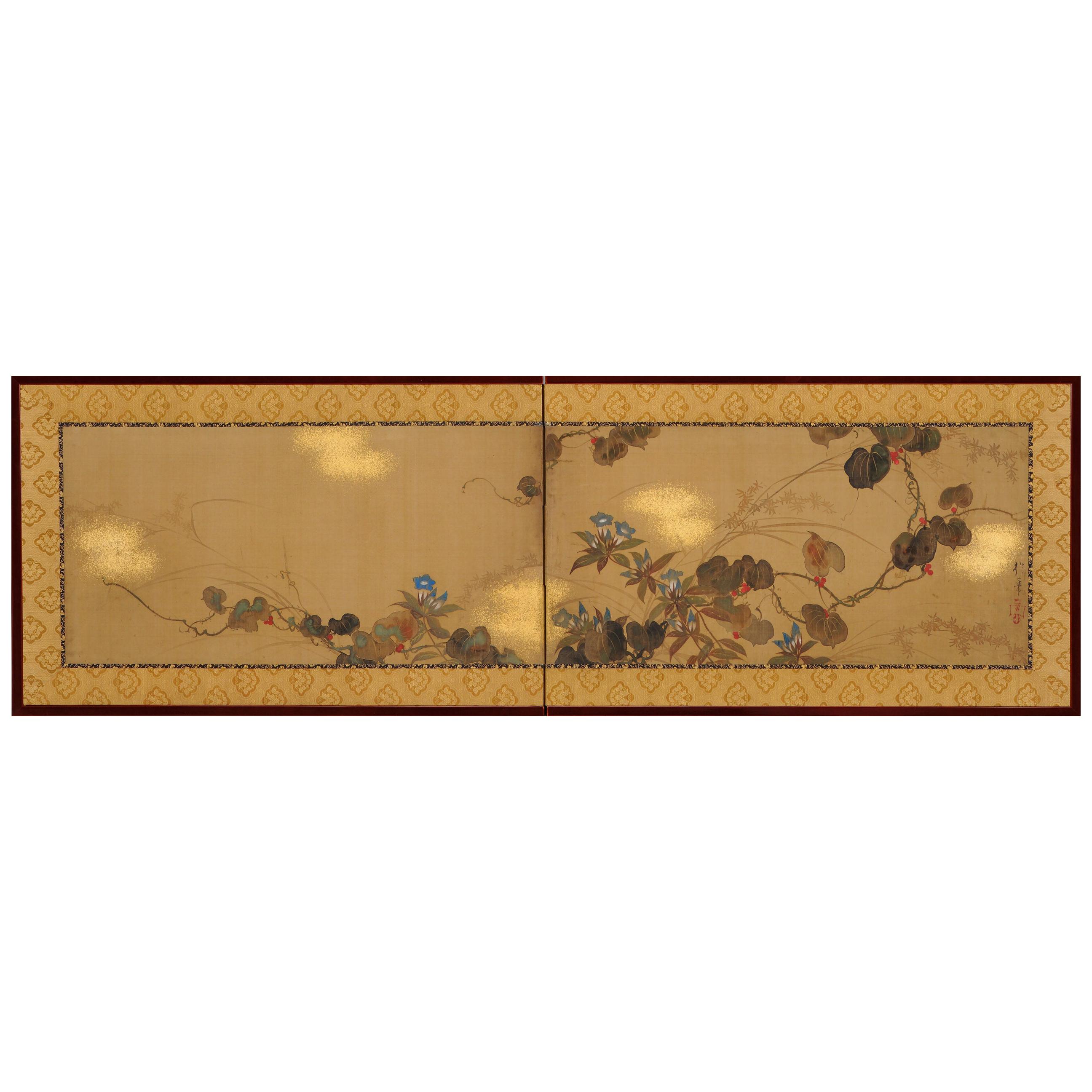
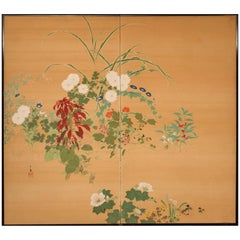
Japanese Two-Panel Screen, Summer Flowers on Silk
Located in Hudson, NY
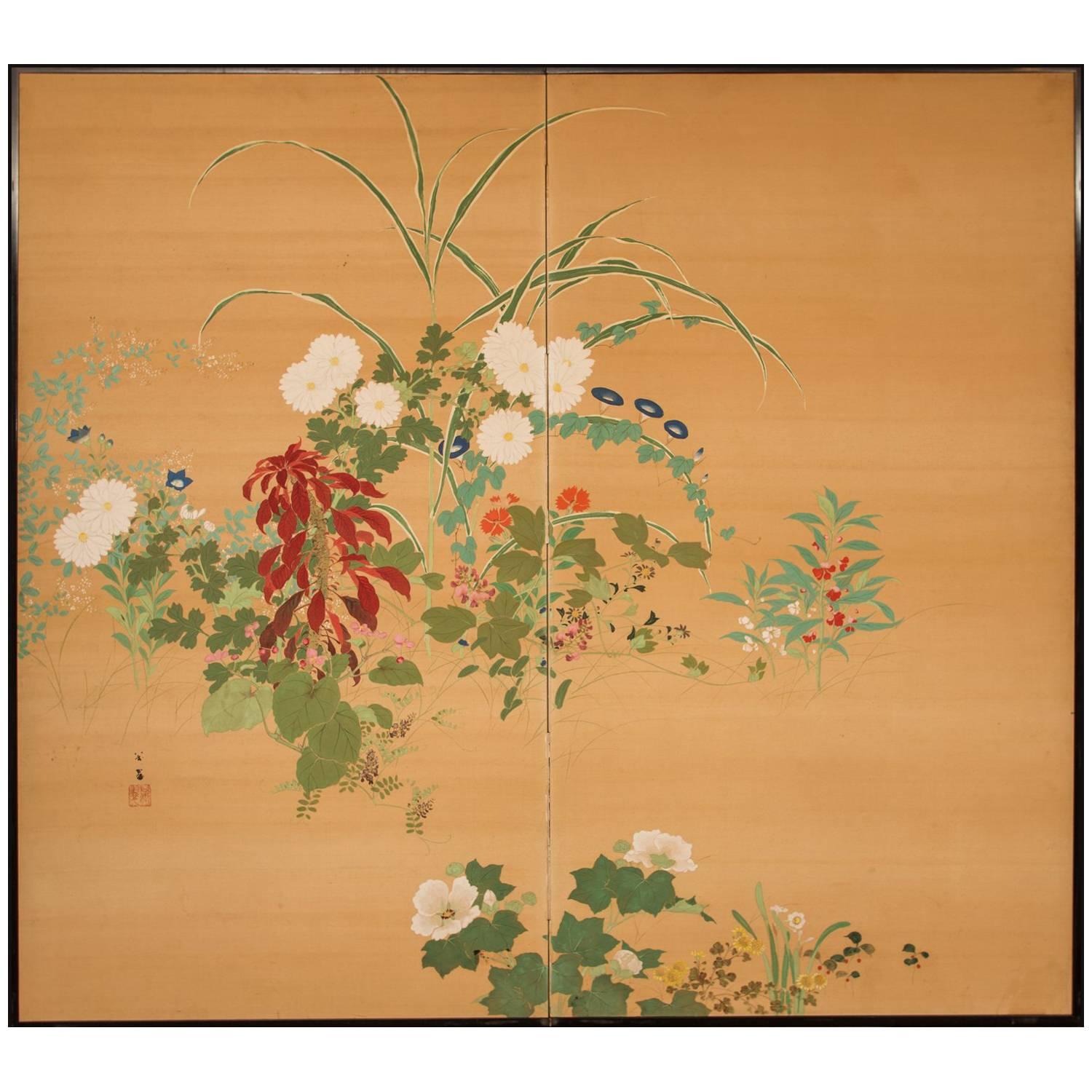
Rimpa painting of flowers including morning glories, hollyhocks, sweet peas, nadeshiko, and daisies. Signature and seal read: Bisui
Category
Antique Late 19th Century Japanese Meiji Paintings and Screens
Materials
Silk, Wood
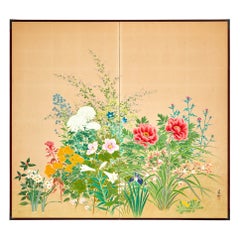
Japanese Two Panel Screen: Seasonal Flowers
Located in Hudson, NY
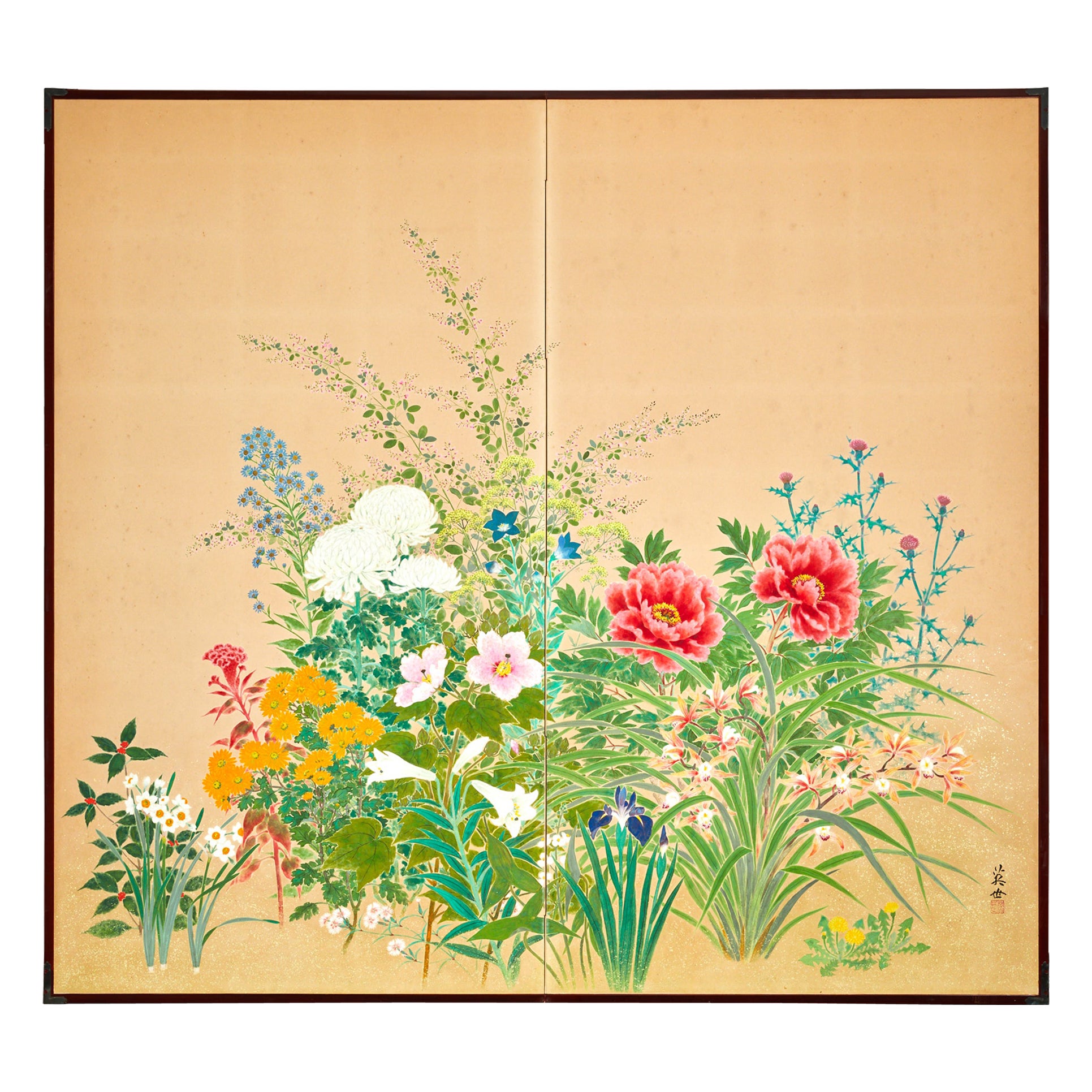
Peonies, irises, lillies, paperwhites, cockscombs, thistle and other various seasonal flowers in mineral pigmnets on mulberry paper. Oxblood lacquer trim with beautiful bronze mount...
Category
Early 20th Century Japanese Paintings and Screens
Materials
Bronze
Framed Japanese Painting on Silk, Flowers In Basket , Japan, Showa Period C.1930
Located in London, GB
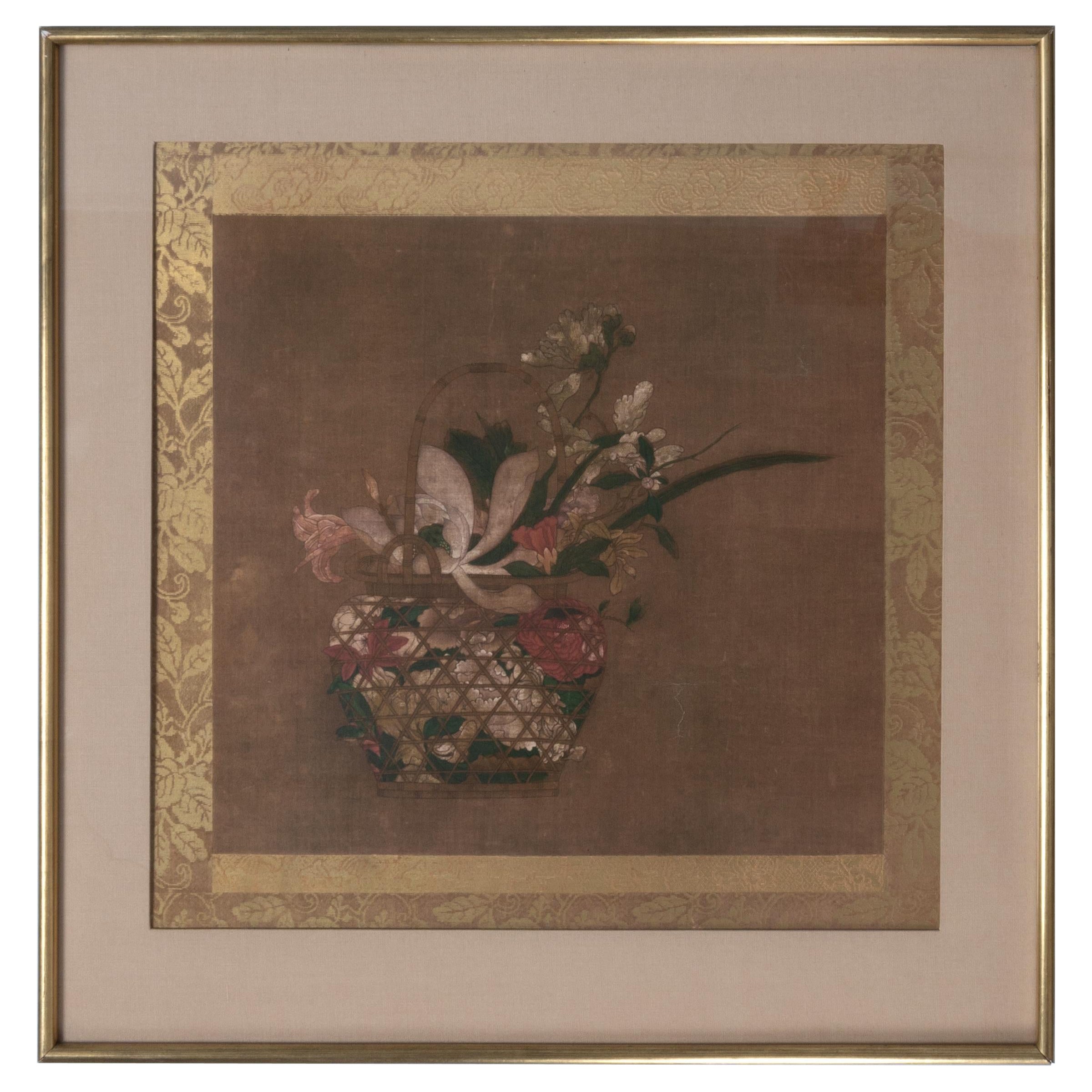
Framed Japanese Painting on Silk, Flowers In Basket ,
Japan, Showa Period C.1930
Present in excellent condition commensurate of age
Category
Early 20th Century Japanese Showa Paintings and Screens
Materials
Silk
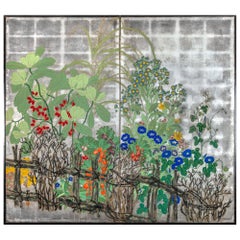
Japanese Two Panel Screen Summer Flowers on Silver
Located in Hudson, NY
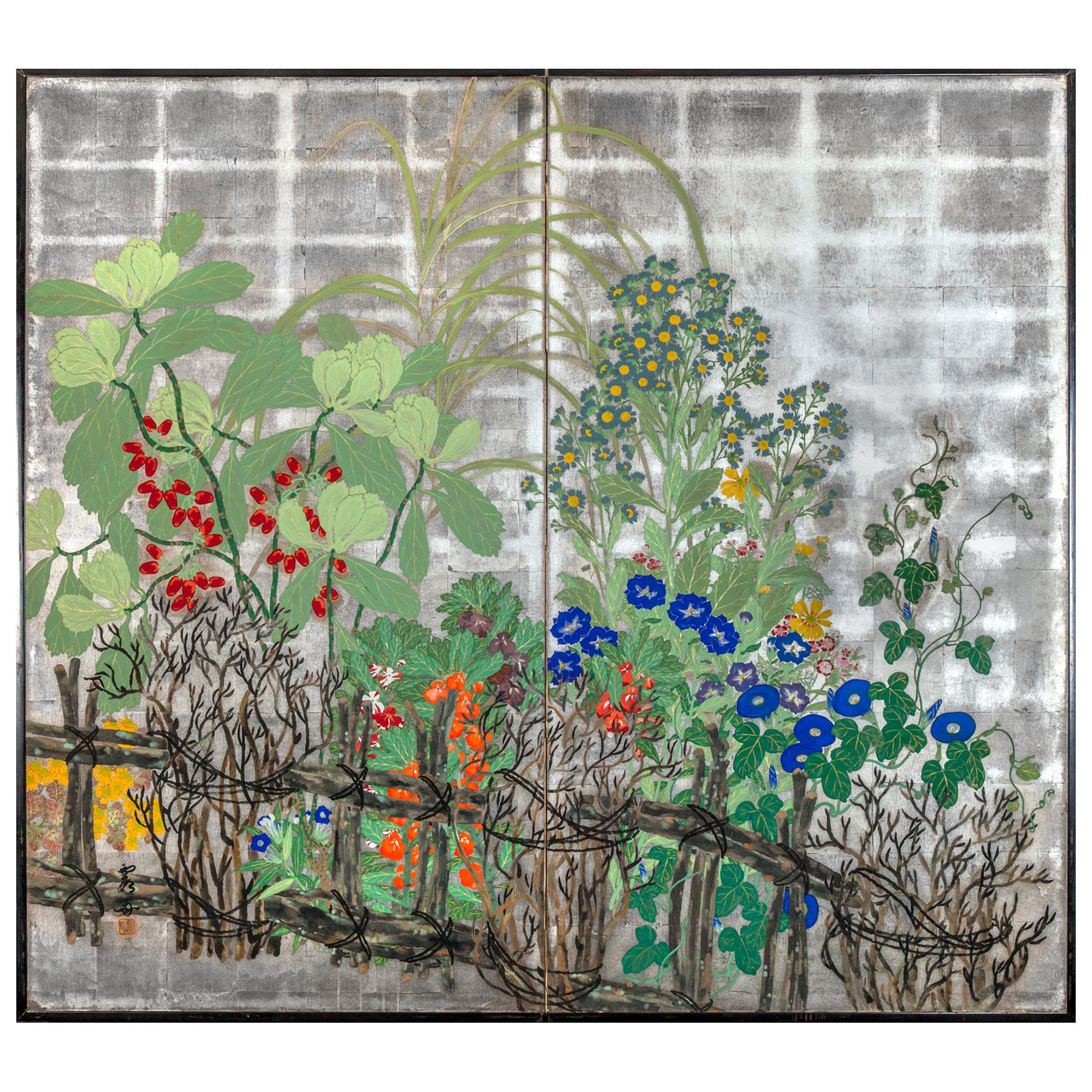
Japanese two panel screen: Summer flowers on silver. Meiji period painting (1868 - 1912) of Summer flowers including morning glories and daisies against a garden fence. Signature and...
Category
Antique Early 1900s Japanese Meiji Paintings and Screens
Materials
Silver Leaf
Japanese Screen Painting, Early 19th Century, Autumn Flowers by Sakai Hoitsu
Located in Kyoto, JP
A two-fold Japanese screen by the Rimpa school artist Sakai Hoitsu (1761-1828), Japan, 19th century, Edo period.
This small Japanese folding screen pai...
Category
Antique Early 19th Century Japanese Edo Paintings and Screens
Materials
Wood, Silk
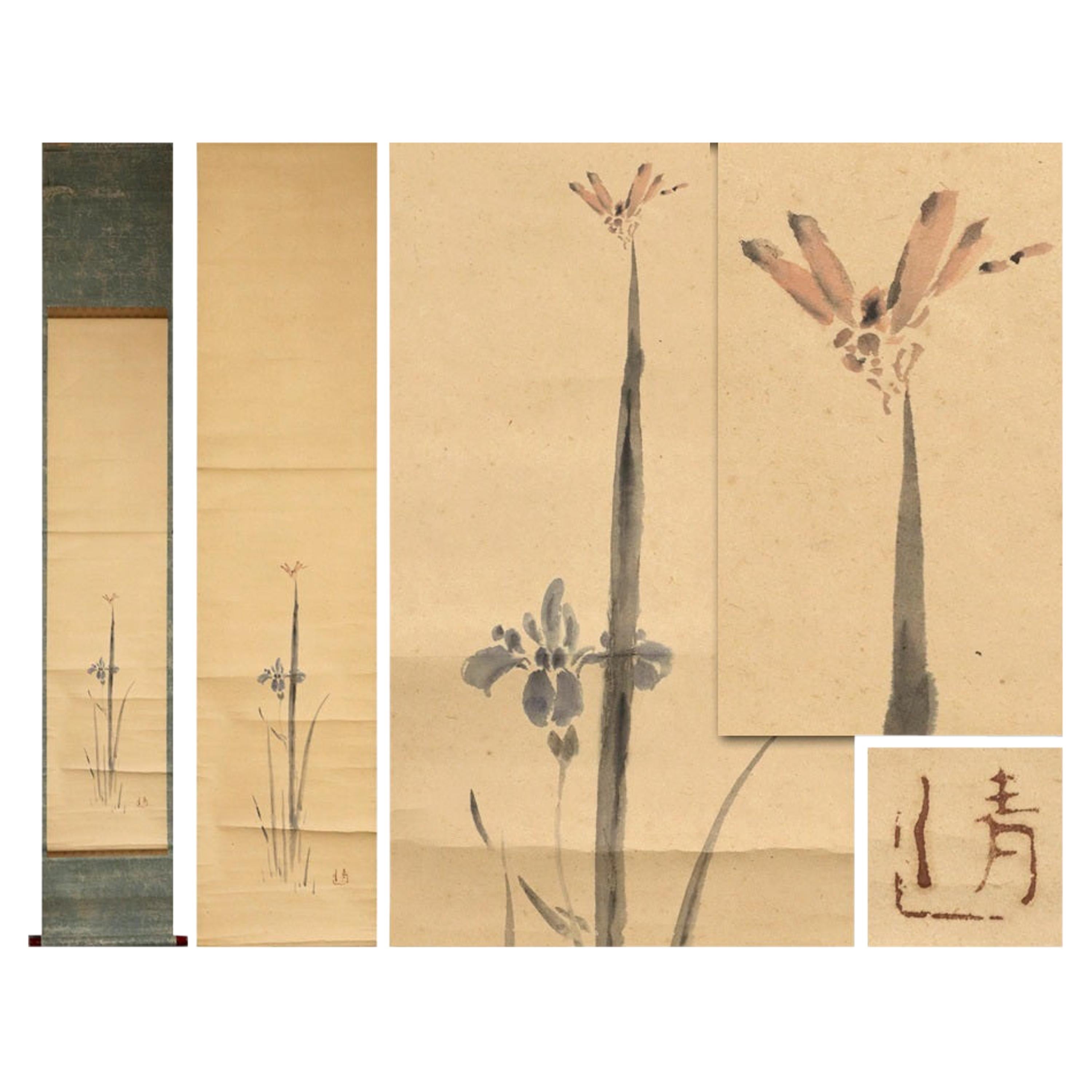
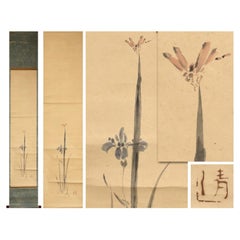
Flower Scene Edo Period Scroll Japan 19c Artist Kiyoshi Watanabe
Located in Amsterdam, Noord Holland
As you can see, this is an old painting by Kiyoshi Watanabe, a colored iris and a red dragonfly.
It has a simple yet calm texture, and
the appearance of a red dragonfly standing li...
Category
Antique 18th Century Japanese Edo Paintings and Screens
Materials
Silk
$1,054 Sale Price
20% Off