Items Similar to Monkey Playing the Trumpet - Etching - 16th Century
Want more images or videos?
Request additional images or videos from the seller
1 of 2
UnknownMonkey Playing the Trumpet - Etching - 16th Century 16th Century
16th Century
$331.36
£247.62
€280
CA$461.40
A$495.83
CHF 266.04
MX$5,840.53
NOK 3,345.16
SEK 3,055.78
DKK 2,134.46
About the Item
Etching on paper.
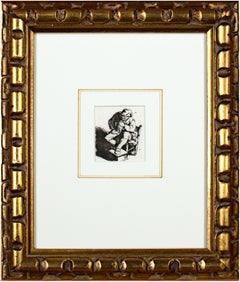
Charming and finely executed engraving depicting an anthropomorphic monkey seated in a pastoral landscape, animatedly playing a trumpet while holding a folded banner or flag. The animal is rendered with careful anatomical observation, combined with a humorous theatrical pose typical of the tradition of singeries—allegorical scenes in which monkeys parody human behavior.
Set within a lightly etched landscape framed by slender trees and distant architecture, the composition reflects the influence of Jean-Baptiste Oudry’s celebrated animal imagery, widely disseminated through engravings in the eighteenth century. Such scenes were popular for their wit and moral undertones, often satirizing vanity, pretension, or social folly.
Good, clear impression with delicate line work. Presented within a later hand-drawn and yellow-washed decorative border. Light foxing and age-related toning consistent with period impressions.
- Creation Year:16th Century
- Dimensions:Height: 5.12 in (13 cm)Width: 6.3 in (16 cm)Depth: 0.04 in (1 mm)
- Medium:
- Movement Style:
- Period:
- Framing:Framing Options Available
- Condition:Insurance may be requested by customers as additional service, contact us for more information.
- Gallery Location:Roma, IT
- Reference Number:Seller: T-1586521stDibs: LU650317438212
About the Seller
4.9
Platinum Seller
Premium sellers with a 4.7+ rating and 24-hour response times
1stDibs seller since 2017
7,914 sales on 1stDibs
Typical response time: 1 hour
- ShippingRetrieving quote...Shipping from: Grasse, France
- Return Policy
More From This Seller
View AllThe Monkey - Etching by Antonio Tempesta - 1610s
By Antonio Tempesta
Located in Roma, IT
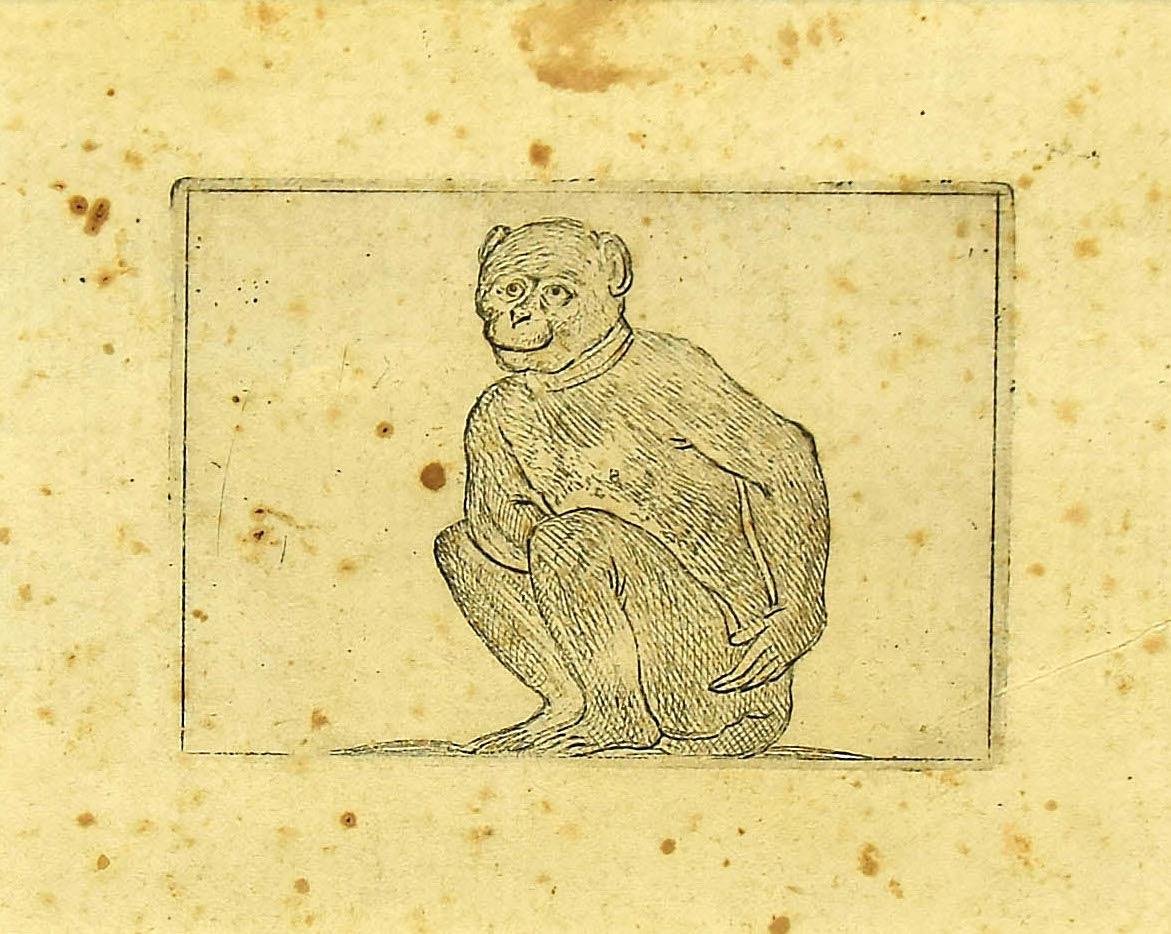
The Monkey is a wonderful black and white etching on thick laid paper, realized by the Italian master Antonio Tempesta (1555-1630).
Not signed.
In excellent conditions, except for some stains.
Image Dimensions: 5 x 7 / 8 x 10 cm.
Including a cream-colored cardboard passepartout, 34 x 50 cm.
An exciting original print, with all the dignity of a mythological or epic story, represented with an incredible balance of black and white, light and shadow, and a typical Baroque dynamism.
Antonio Tempesta, also known as Il Tempestino (Florence, 1555 - Rome, 1630), was an Italian painter and engraver of the early Baroque period. Antonio Tempesta trained in the culture of late Mannerism, with a naturalistic but also calligraphic taste, acquired from the frequentation of Giovanni Stradano, with whom he collaborated in the decoration of Palazzo Vecchio.
Moving to Rome in 1573, he worked for Pope Gregory XIII, frescoing some maps of Rome in the Vatican, including the famous Map of Rome (1593). In the pontifical capital, he worked for many noble families and for important cardinals, such as Alessandro Farnese and Scipione Borghese. His works are in San Giovanni dei Fiorentini, at the villa in Caprarola, in Tivoli.
He returned to Florence for a brief stay, where he collaborated with Alessandro Allori...
Category
Early 17th Century Figurative Prints
Materials
Etching

The Child and the Monkey - Original Etching by Thomas Holloway - 1810
By Thomas Holloway
Located in Roma, IT
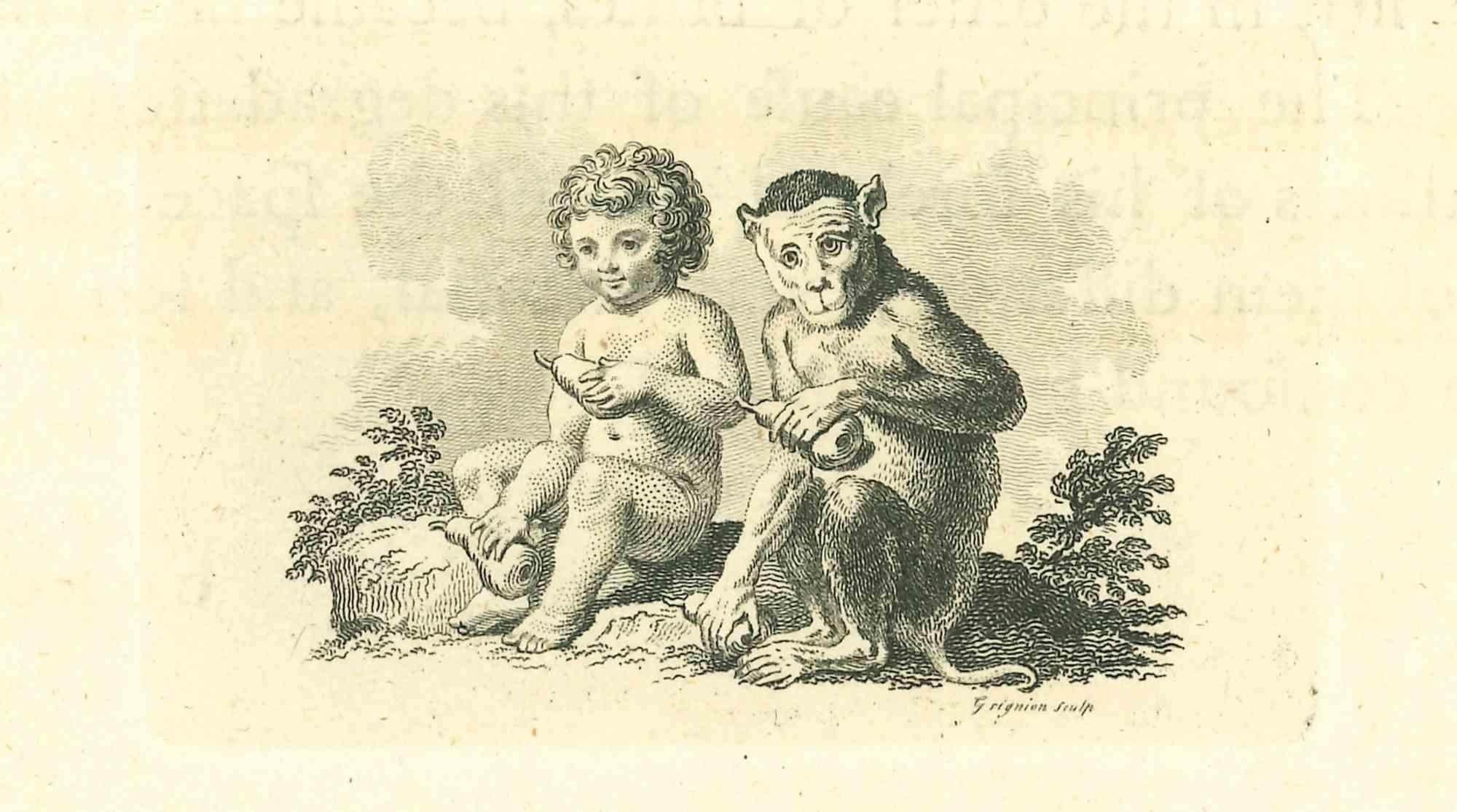
The Child and the Monkey is an original etching artwork realized by Thomas Holloway for Johann Caspar Lavater's "Essays on Physiognomy, Designed to Promote the Knowledge and the Love...
Category
1810s Modern Figurative Prints
Materials
Etching
Monkeys - Etching - 18th Century
Located in Roma, IT
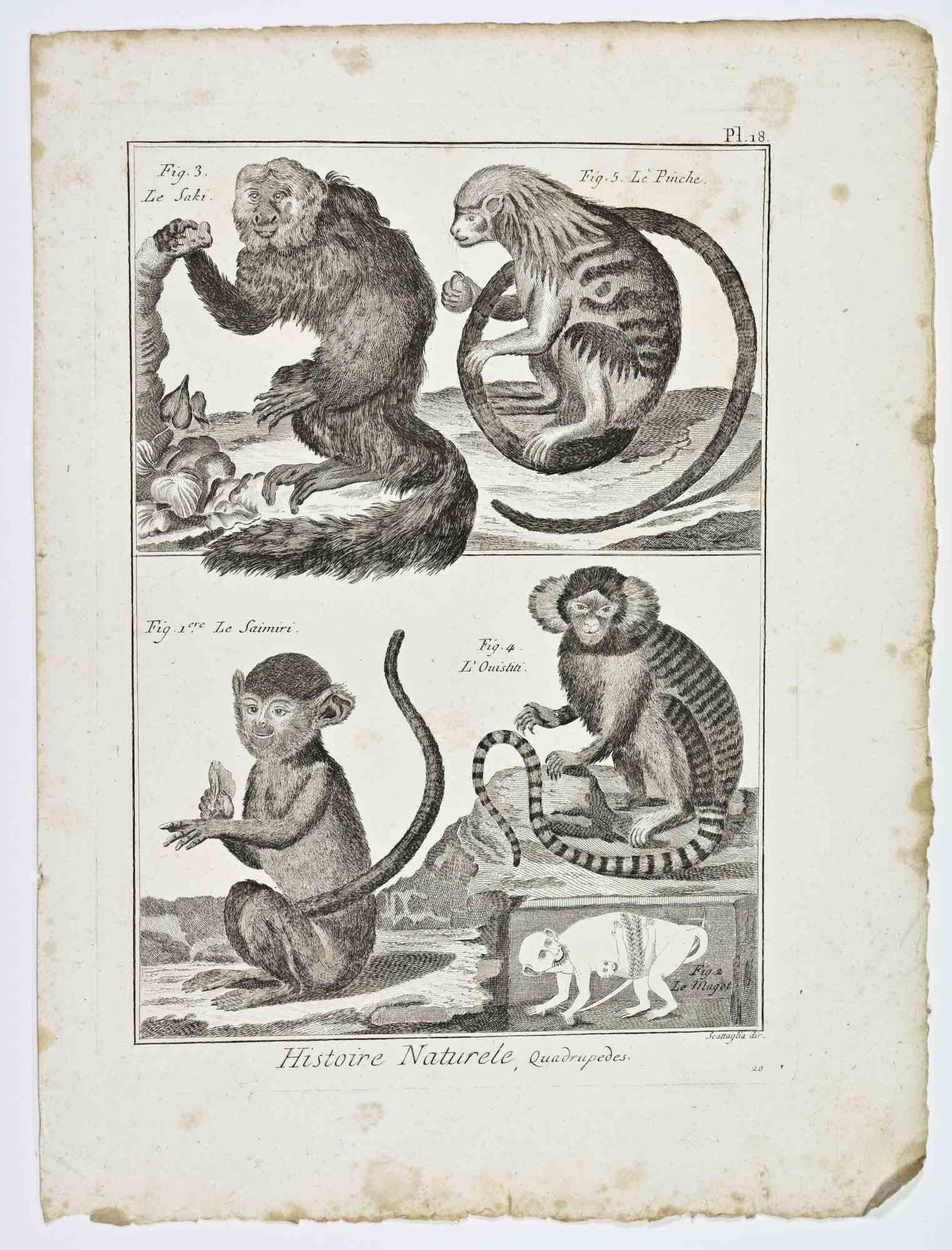
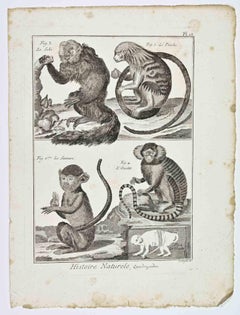
From Histoire Naturelle, Quadrupèdes.
Engraving on laid paper, plate 18, depicting a lively group of monkeys including the Saki, Pinché, Saimiri, Ouistiti, and Magot, each shown in ...
Category
18th Century Modern Figurative Prints
Materials
Etching
Monkies - Etching by P.F. Tardieu - 1771
Located in Roma, IT
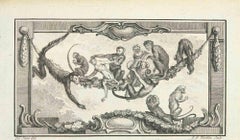
Monkies is an etching realized by P.F. Tardieu in 1771.
It belongs to the suite "Histoire naturelle, générale et particulière avec la description du Cabinet du Roi".
Artist's signa...
Category
1770s Modern Figurative Prints
Materials
Etching
Soldier - Etching - 17th Century
Located in Roma, IT
Soldier is an old master artwork realized in 17th Century.
Black and white etching.
Good conditions except for signs of time.
Category
17th Century Modern Figurative Prints
Materials
Etching
The Monkey - Original Lithograph by Paul Gervais - 1854
By Paul Gervais
Located in Roma, IT
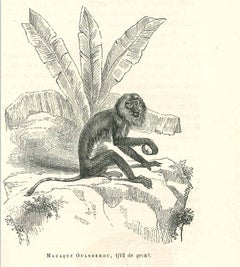
The Monkey is an original lithograph on ivory-colored paper, realized by Paul Gervais (1816-1879). The artwork is from The Series of "Les Trois Règnes de la Nature", and was publishe...
Category
1850s Modern Figurative Prints
Materials
Lithograph
You May Also Like
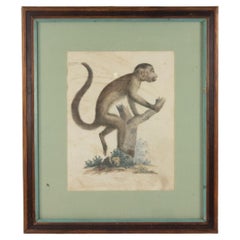
French Victorian Monkey Engraving Print
Located in Queens, NY
French Victorian colored engraving of monkey figure standing in green & black trimmed frame (as is, minor rips on paper)(1. Gatt. Colobus, illig.) (similar to Inv. #030290)
Conditi...
Category
Antique Late 19th Century French Victorian Paintings
Materials
Paper
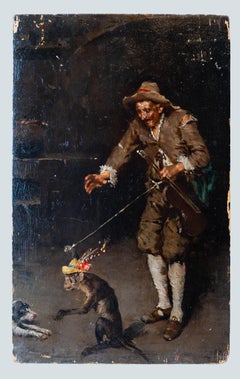
The violinist with his monkey and dog. 19th century Italian school
Located in GB
This evocative painting, exemplifies the artist’s mastery of genre scenes and his sensitivity to the rhythms of everyday life. Executed with fluid and assured brushwork, the piece ca...
Category
19th Century Italian School Figurative Paintings
Materials
Oil, Wood Panel
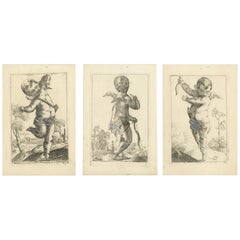
Baroque Whimsy: The Putti Engravings of F.L.D. Ciartres, circa 1620
Located in Langweer, NL
These images are rare but fine examples of original 17th-century European engravings, displaying characteristics that might point to an Italian origin based on stylistic analysis. Th...
Category
Antique 1620s Prints
Materials
Paper
$416 Sale Price / set
20% Off
Free Shipping
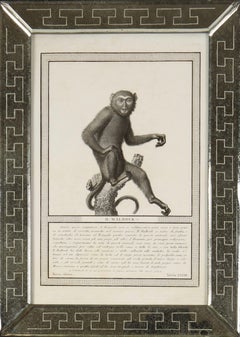
Nicolas Jacob: Stipple Engravings of Monkeys, C1810, Set of 12
Located in Richmond, GB
"Storia Naturelle delle Scimie", Milan 1810.
Stipple engravings by Luigi Rados (1773-1840), after drawings by Nicolas Henri Jacob (1782-1871).
Pres...
Category
19th Century Figurative Prints
Materials
Silver
The Smoker (Le Fumeur)
original etching by Cornelis-Pietersz Bega
By Cornelis Bega
Located in Milwaukee, WI
'The Smoker (Le Fumeur)' is an original etching by the celebrated Dutch painter and printmaker Cornelis-Pietersz Bega. It presents a genre scene of the type Bega was best known for: Bega's principal subjects were genre representations of taverns, domestic interiors and villages. He depicted nursing mothers, prostitutes, drunks, gamblers and fools such as quack doctors and alchemists. In this case, he shows a man seated on a chair with his foot on a flat stool and holding a smoking pipe. For Bega, this representation was more of a caricature than it was an image of a specific person, and such genre scenes would have held allegorical and symbolic meaning for the seventeenth-century viewer. During the seventeenth century, the Dutch of all levels of society consumed tobacco and alcohol, and these were an important part of the Dutch economy and a major source of wealth. At the same time, however, moralists and ministers sought to curb intoxication: they openly described drinking and smoking as sinful, immoral, and a general threat to one’s reputation. This paradox is reflected in prints such as this, which inherently carry the national pride of the Dutch economy alongside a moral warning in a print that could be just as easily consumed and collected.
2.5 x 2.25 inches, print
12.38 x 10.38 inches, frame
Framed to conservation standards using archival materials including 100 percent rag matting and mounting materials. Housed in a gold finish Spanish-style wood moulding.
Overall good and stable condition; margins cut to plate; some wrinkling in the corners from previous mounting; housed in a new custom frame.
Cornelis Bega was born into prosperous circumstances. His mother, Maria Cornelis, inherited half the estate (gold, silver, paintings, drawings and prints) and all of the red chalk drawings of her father, Cornelis Cornelisz van Haarlem, a renowned Mannerist artist. Bega's father was Pieter Jansz Begijn (d 1648), a gold and silversmith.
Like other family members, Bega was probably Catholic. Houbraken's claim that Bega studied with Adriaen van Ostade is likely to be correct; this was probably before 24 April 1653, when Bega joined Vincent Laurentsz. van der Vinne in Frankfurt for a journey through Germany, Switzerland and France. Bega had returned to Haarlem by 1 September 1654, at which time he joined the Guild of St Luke; he was already a competent draughtsman, as indicated by his first extant dated work, Interior with a Nursing Mother (1652; Frankfurt am Main, Städel. Kstinst.), and by a remarkable double portrait (Amsterdam, Rijksmuseum) drawn by him and Leendert van der Cooghen in 1654.
Bega painted, drew, etched and made counterproofs in a wide variety of materials on different types of small-scale supports. He may have been the first Dutch artist to make monotypes, but this remains controversial. Approximately 160 paintings, 80 drawings and six monotypes by Bega have been catalogued, as well as around 34 etchings.
Bega's principal subjects were genre representations of taverns, domestic interiors and villages. He depicted nursing mothers, prostitutes, drunks, smokers, gamblers and fools such as quack doctors and alchemists. Less common subjects include the ridiculed or pestered woman, as in Two Figures and Mother with a Spirits Bottle (c. 1662; Gouda, Stedel, Museum Catharina Gasthuis) and The Inn (etching), as well as witty satires on traditional scenes of middle-class music-makers, such as the Music Lesson (1663; Paris, Petit Palace).
Bega's early paintings, such as the Weaver's Family (c. 1652; St Petersburg, Hermitage), are freely executed, dark and coarse, recalling the many-figured peasant subjects of van Ostade. Between c. 1660 and 1664 he began to paint genre scenes with fewer figures, which are finely articulated, colourful and psychologically expressive, for example Two Men Singing (1662; Dublin, N.G.). His exquisite, late fijnschilderen ('fine painting') manner, evident in The Alchemist (1663; Malibu, Getty Museum), compares well with that of Gerrit Dou.
As a draughtsman Bega is noted for his single-figure studies, executed mainly in black and white chalk on blue paper or red chalk on white paper. None of the studies, which were drawn naer het leven (from life), seem to relate to a painting or etching. Bega traded drawings or shared models with other artists of the Haarlem school, including van der Cooghen, Gerrit Berckheyde, Dirck Helmbreker and Cornelis Visscher. These artists drew chalk figure studies in a very similar style, characterised by regular and precise parallel shading and well-defined forms; their drawings, especially those of Bega and Berckheyde, have been frequently confused. Unlike the realistic figure studies, Bega's etchings depict interiors with figures or single figures in the manner of van Ostade; the compositions, often with masterful chiaroscuro effects, reflect most closely the paintings of the 1650s.
Bega is likely to have remained in Haarlem, where he paid dues to the Guild in 1661. He probably died from the plague; fees for his expensive funeral at St. Bavo's were paid on 30 August 1664. Among the artists he influenced were Thomas Wijck, Jan Steen, Richard Brakenburg (1650-1702) and Cornelis Dusart. Painters such as R. Oostrzaen ( fl ?1656) and Jacob Toorenvliet...
Category
17th Century Old Masters Figurative Prints
Materials
Paper, Etching
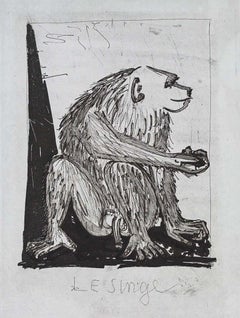
The Monkey, 1942 (Histoire Naturelle - Textes de Buffon, B.339)
By Pablo Picasso
Located in Greenwich, CT
The Monkey is an aquatint and drypoint print on chine from one of the deluxe copies of Picasso's 1942 Histoire Naturelle - Textes de Buffon series. The image size is 10.5 x 7.9 inche...
Category
20th Century Modern Prints and Multiples
Materials
Drypoint, Aquatint