Items Similar to Customs - Persian Palanquins - Lithograph - 1862
Want more images or videos?
Request additional images or videos from the seller
1 of 2
Various ArtistsCustoms - Persian Palanquins - Lithograph - 18621862
1862
$226.07
£168.20
€190
CA$313.13
A$335.52
CHF 179.98
MX$3,974.23
NOK 2,270.36
SEK 2,077.03
DKK 1,447.71
About the Item
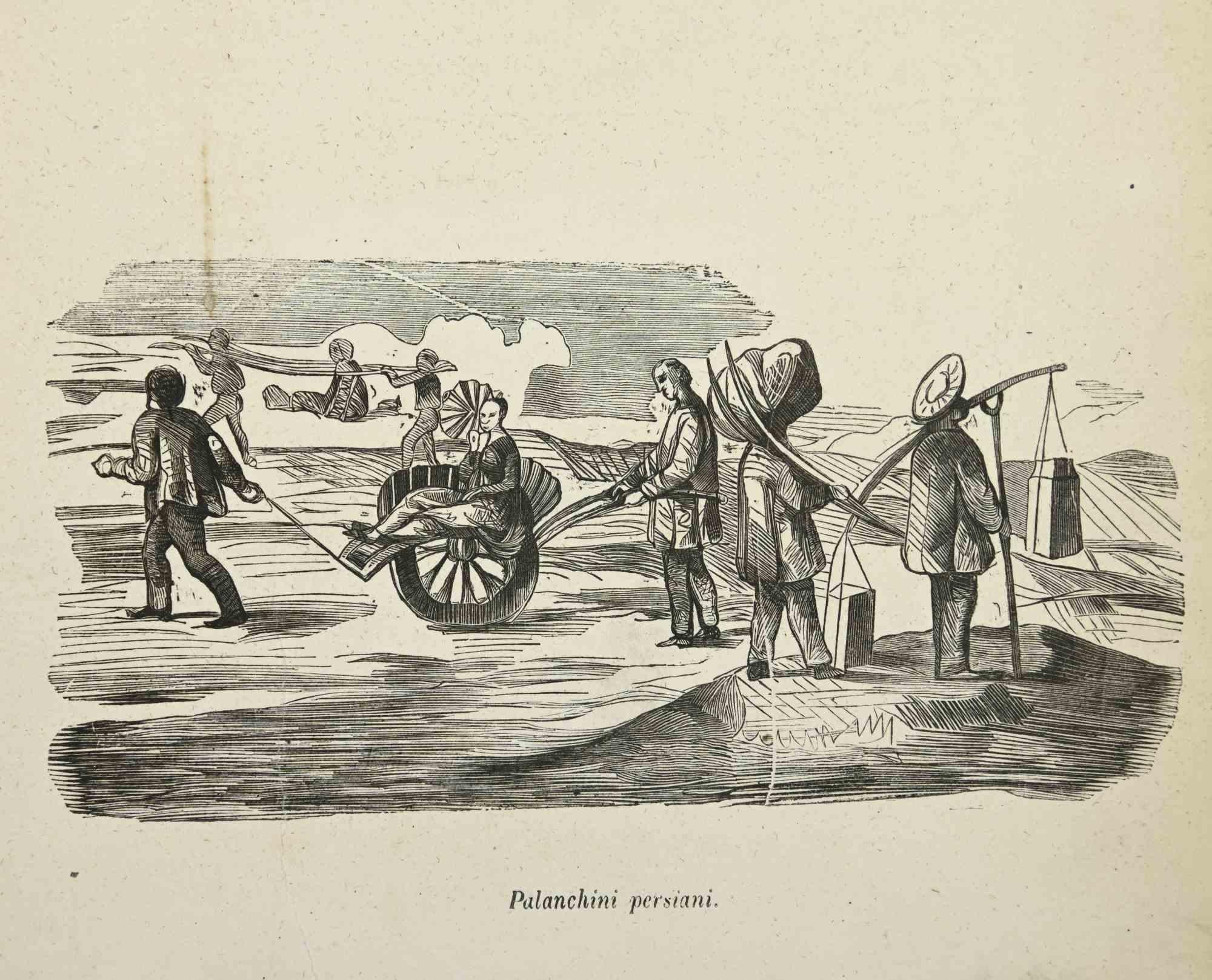
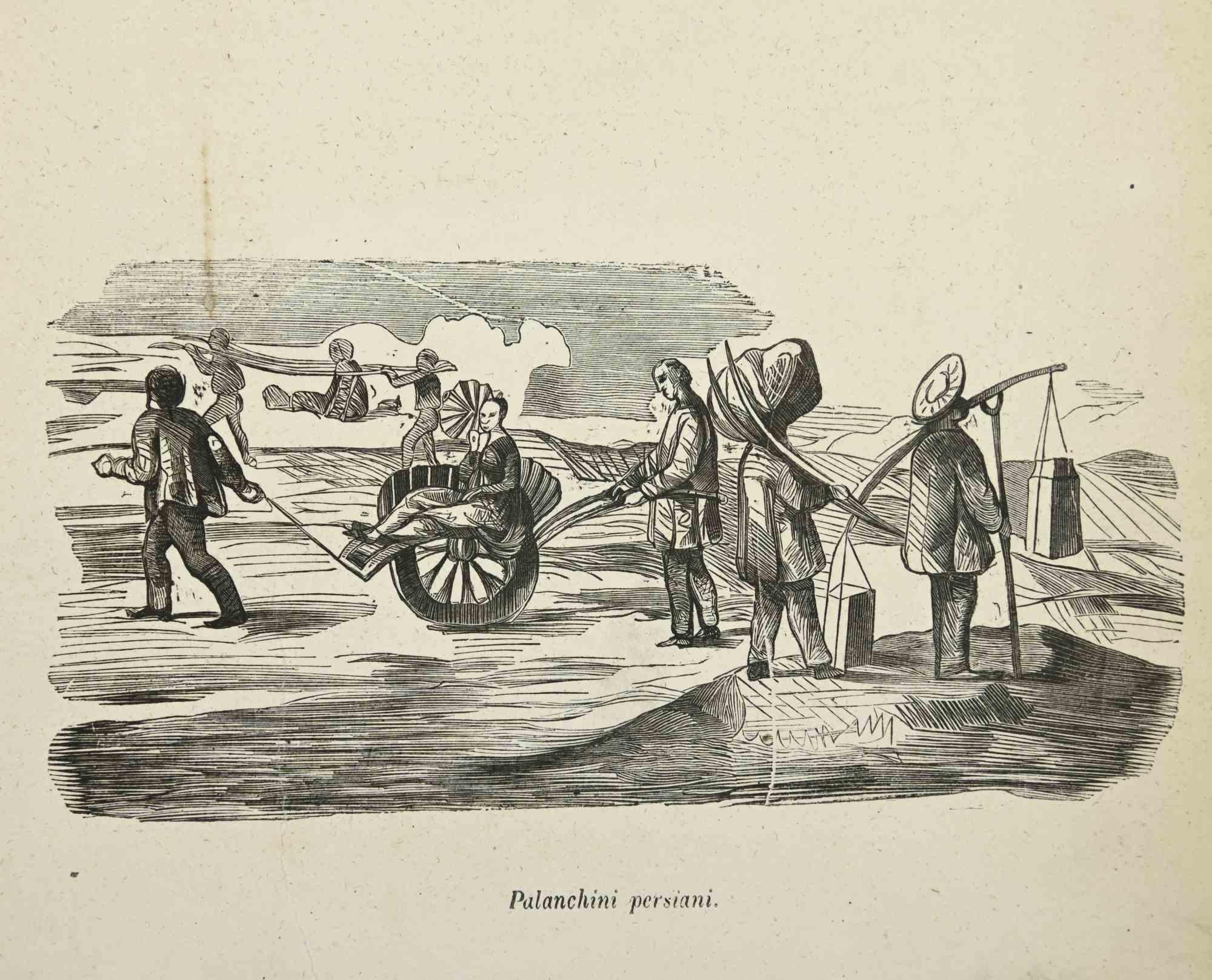
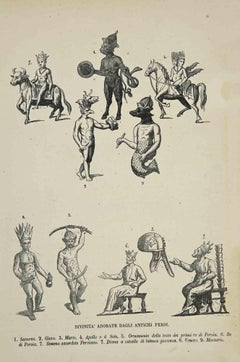
Customs - Persian palanquins is a lithograph on paper realized in 1862.
Titled on the lower.
The artwork belongs to the Suite Uses and customs of all the peoples of the universe : " History of the government, of the laws, of the militia, of the religion of all the nations from the most remote times up to the present day".
Good conditions slight foxing.
- Creator:Various Artists (Italian)
- Creation Year:1862
- Dimensions:Height: 5.52 in (14 cm)Width: 7.09 in (18 cm)Depth: 0.04 in (1 mm)
- Medium:
- Movement Style:
- Period:
- Framing:Framing Options Available
- Condition:Insurance may be requested by customers as additional service, contact us for more information.
- Gallery Location:Roma, IT
- Reference Number:Seller: T-1434401stDibs: LU650313489382
undefined
About the Seller
4.9
Platinum Seller
Premium sellers with a 4.7+ rating and 24-hour response times
1stDibs seller since 2017
7,918 sales on 1stDibs
Typical response time: 1 hour
- ShippingRetrieving quote...Shipping from: Grasse, France
- Return Policy
More From This Seller
View AllCustoms - Persian Palanquins - Lithograph - 1862
Located in Roma, IT
Customs - Persian Palanquins is a lithograph on paper realized in 1862.
Titled on the lower.
The artwork belongs to the Suite Uses and customs of all the peoples of the universe: "...
Category
1860s Modern Figurative Prints
Materials
Lithograph
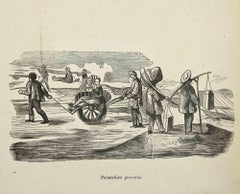
Customs - Palanquins - Lithograph - 1862
Located in Roma, IT
Customs - Palanquins is a lithograph on paper realized in 1862.
Titled on the lower.
The artwork belongs to the Suite Uses and customs of all the peoples of the universe : " Histor...
Category
1860s Modern Figurative Prints
Materials
Lithograph
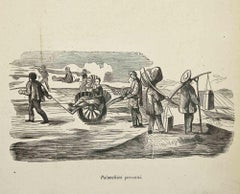
Palanquins - Costumes - Lithograph - 1862
Located in Roma, IT
Palanquins - Costumes is a Hand-colored lithograph on paper realized in 1862.
The artwork belongs to the Suite Uses and customs of all the peoples of the universe: " History of th...
Category
1860s Modern Figurative Prints
Materials
Lithograph
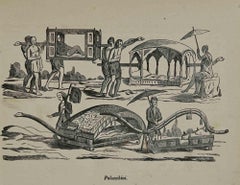
Customs - Sophi of Persia - Lithograph - 1862
Located in Roma, IT
Customs - Sophi of Persia is alithograph on paper realized in 1862.
Titled on the lower.
The artwork belongs to the Suite Uses and customs of all the peoples of the universe : " Hi...
Category
1860s Modern Figurative Prints
Materials
Lithograph
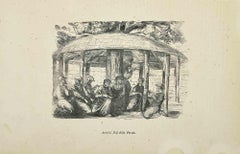
Customs - Persian Kings - Lithograph - 1862
Located in Roma, IT
Customs - Persian Kings is a lithograph on paper realized in 1862.
Titled on the lower.
The artwork belongs to the Suite Uses and customs of all the peoples of the universe: " Hist...
Category
1860s Modern Figurative Prints
Materials
Lithograph
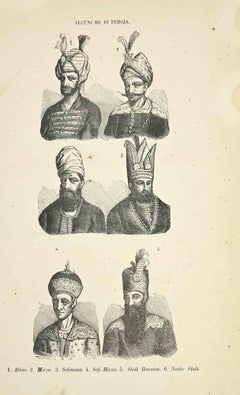
Customs - Persian Deities - Lithograph - 1862
Located in Roma, IT
Customs - Persian Deities is a lithograph on paper realized in 1862.
Titled on the lower.
The artwork belongs to the Suite Uses and customs of all the peoples of the universe: " Hi...
Category
1860s Modern Figurative Prints
Materials
Lithograph
You May Also Like
1844 Persian Cultural Figures: Engraved Prints of Traditional Attires
Located in Langweer, NL
Title: "1844 Persian Cultural Figures: Engraved Prints of Traditional Attires"
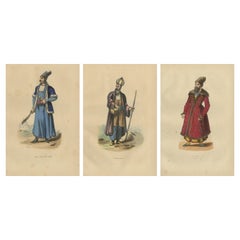
Description: This compilation features three handcoloured lithographs representing traditional Persian figures: a common man, a dervish, and a noble, from the esteemed 1844 collection "Moeurs, Usages et Costumes de tous les Peuples de Monde" by Auguste Wahlen.
Published in Paris, these prints are crafted through lithography, a popular 19th-century technique, and are enhanced with Arabic gum on wove (vellin) paper. The vivid depiction of their cultural attire and the distinct portrayal of each social stratum make these prints particularly captivating. They offer a glimpse into the historical socio-cultural fabric of Persia, making them highly sought after by collectors and enthusiasts of Middle Eastern art and history.
In the three prints you provided of Persian figures, each character holds something distinct that signifies their role or status within their culture:
1. Persé - Homme du Peuple (Common Man):
- Holding: This figure holds a walking stick or cane, which is a common accessory that could be used for practical purposes like walking support or herding animals.
- Outfit: He wears traditional attire with a long coat and a large hat, indicative of a common man's clothing in historical Persian society. His outfit and the stick both emphasize his everyday, practical life.
2. Derviche Persan (Dervish):
- Holding: The Dervish holds a stick and a begging bowl. Dervishes are known for their ascetic piety, often connected with Sufism in Islam. The stick (or staff) symbolizes their travels and spiritual journey, while the bowl is used to receive alms, reflecting their vow of poverty.
- Interesting Fact: Dervishes are part of a mystical spiritual ascetic practice within Islam, focusing on the universal values of love and service. Their clothing and accessories reflect simplicity and spiritual richness.
3. Noble Persan (Nobleman):
- Holding: The nobleman carries a sword, which is a symbol of power, authority, and martial prowess. It is commonly featured in depictions of nobility as a sign of their status and ability to command.
- Outfit: His clothing is significantly more elaborate and colorful compared to the others, with fur trim and decorative patterns, signifying wealth and high social status.
These accessories and their attire provide a deep insight into the roles and societal positions of each figure within Persian culture, reflecting a wide range of personal and social identities from the common man to spiritual seekers and the ruling elite. Each element, from the practical walking stick to the symbolically rich begging bowl and the authoritative sword, offers a narrative about their life, status, and societal roles during that historical period.
Keywords:
- Antique Persian prints...
Category
Antique 1840s Prints
Materials
Paper
1844 Persian Elegance: From Smoking Nobility to Warfare in Art
Located in Langweer, NL
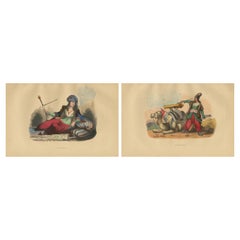
"1844 Persian Elegance: Exquisite Handcoloured Lithographs of Cultural Icons"
Description: Delve into the opulence of Persian culture with these strik...
Category
Antique 1840s Prints
Materials
Paper
$228 Sale Price / set
20% Off
Ottoman Military Encampment – The Grand Vizier’s Tent, 1734 Engraving
Located in Langweer, NL
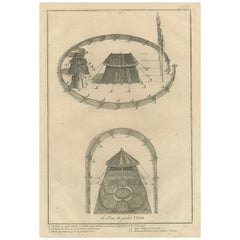
Title: Ottoman Military Encampment – The Grand Vizier’s Tent, 1734 Engraving
Description: This rare 1734 copperplate engraving presents a detailed architectural depiction of *La Ten...
Category
Antique 1730s Prints
Materials
Paper
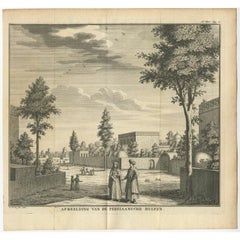
Old Engraving of Persian Houses, 1732
Located in Langweer, NL
Antique print titled 'Afbeelding van de Persiaansche Huizen'. Old print of Persian houses. This print originates from 'Hedendaagsche Historie, of tegenwoordige staat van alle volkeren (..)', published by Isaak Tirion, Amsterdam, 1732.
Artists and Engravers: Engraved by J.C. Philips. Jan Caspar Philips (ca. 1700-after 1773) was a Dutch engraver and draughtsman.
Condition: Very good, please study image carefully.
Date: 1732
Overall size: 21 x 20 cm.
Image size: 0.001 x 19 x 17 cm.
We also offer thousands of antique prints covering fields of interest as diverse as architecture, natural history, religion, ethnology and many more. Antique prints have long been appreciated for both their aesthetic and investment value. They were the product of engraved, etched or lithographed plates. These plates were handmade out of wood or metal, which required an incredible level of skill, patience and craftsmanship. Whether you have a house with Victorian furniture or more contemporary decor an old engraving...
Category
Antique 18th Century Prints
Materials
Paper
$180 Sale Price
20% Off
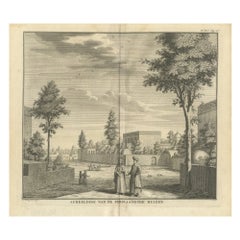
Depiction of Persian Houses – 18th-Century Architectural Scene
Located in Langweer, NL
Depiction of Persian Houses – 18th-Century Architectural Scene by J. van der Schley, 1731
This finely executed antique engraving titled Afbeelding van de Persiansche Huizen (“Depict...
Category
Antique 1730s Dutch Prints
Materials
Paper
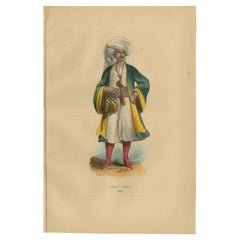
1844 Lithograph of a Bukharan Uzbek: Traditional Attire and Craft
Located in Langweer, NL
"1844 Lithograph of a Bukharan Uzbek: Traditional Attire and Craft"
Description: This 1844 lithograph captures a traditional Bukharan Uzbek man, from the renowned series "Moeurs, Usages et Costumes de tous les Peuples de Monde" by Auguste Wahlen.
Published in Paris using the technique of handcoloured lithography, enhanced with Arabic gum on vellin paper, this print vividly portrays the rich cultural attire unique to Bukhara, Uzbekistan.
The man's elaborate robe and distinctive headwear highlight the regional fashion and craftsmanship. The print’s appeal lies in its detailed depiction of historical dress and accessories, offering a window into the cultural diversity of Central Asia. Such prints are treasured for their historical value and intricate artistry, making them highly desirable to collectors and enthusiasts of ethnographic art.
The lithograph depicting a man from Bukhara, Uzbekistan, offers several intriguing cultural and historical insights:
1. Traditional Attire: The attire of the Bukharan man, particularly the elaborate robe and turban, is a rich display of Uzbek textile craftsmanship. Traditional robes, often made from silk and cotton, are adorned with intricate ikat patterns—a dyeing technique where threads are dyed before weaving. This style is emblematic of Uzbekistan's well-known textile industry.
2. Turban Significance: The turban, known locally as a "doppa" or "tubeteika," is more than just practical headwear; it serves as a cultural symbol of status and identity. The style, color, and way it is worn can convey information about the wearer's social status, region, and even his clan affiliations.
3. Historical Context: Bukhara was a pivotal Silk Road city, making it a melting pot of cultures, languages, and religions. The diverse influences are reflected in the traditional clothing, which blends Persian, Turkic, and nomadic styles.
4. Artistic Technique: The use of handcoloured lithography in the 19th century allowed for high-quality, detailed prints that were more accessible to the European public. This technique involved drawing on limestone with a greasy medium, then using water and oil-based ink to print vibrant images, which were then painted by hand.
5. Cultural Preservation: Prints like this serve not only as artwork but also as historical documents that preserve and share the cultural heritage of regions less known to the Western world at the time. They played a crucial role in educating and influencing perceptions about distant cultures during the 19th century.
This print, therefore, is not just a beautiful piece of art but a deep well of cultural history and craftsmanship, reflecting the rich tapestry of life in Central Asia during the 19th century.
Keywords:
- Antique Uzbek prints
- Handcoloured lithography
- 19th-century Central Asian costumes
- Auguste Wahlen lithographs
- Traditional Bukharan attire
- Ethnographic art prints
- Collectible cultural lithographs
- Historical Uzbek fashion
- Asian historical prints
- Vintage Uzbek art...
Category
Antique 1840s Prints
Materials
Paper
$142 Sale Price
20% Off
More Ways To Browse
Antique Persian Prints
Fernet Branca
George Caleb Bingham
Herbert Fink
Jim Dine Signed Poster
Joe Namath
John Kuhn
Jonah And The Whale
Keith Haring Apocalypse
Keith Haring Montreux
Keith Haring Signed Poster
Keith Haring South Africa
Le Cocu Magnifique
Leroy Neiman Golf
Leroy Neiman Originals
Les Caprices De Goya
Marc Chagall Green
Marc Chagall Rooster