Items Similar to American Folk Blues Festival poster 1969 by Gunther Kieser (Blues music)
Want more images or videos?
Request additional images or videos from the seller
1 of 7
Günther KieserAmerican Folk Blues Festival poster 1969 by Gunther Kieser (Blues music)1969
1969
On Hold
$340
$42520% Off
On Hold
£258.32
£322.9020% Off
On Hold
€296.86
€371.0720% Off
On Hold
CA$477.57
CA$596.9620% Off
On Hold
A$519.82
A$649.7820% Off
On Hold
CHF 275.44
CHF 344.3020% Off
On Hold
MX$6,251.68
MX$7,814.6020% Off
On Hold
NOK 3,502.11
NOK 4,377.6320% Off
On Hold
SEK 3,209.29
SEK 4,011.6220% Off
On Hold
DKK 2,217.52
DKK 2,771.9020% Off
About the Item
Gunther Kieser American Folk Blues Festival poster 1969:
Keiser's Blues guitar poster for the annual Hamburg festival devoted to American folk blues featuring a compelling pictorial of a well-worn acoustic guitar. Here, the instrument seems to be playing itself with the equally well-worn hands of a black woman. Names of featured acts are superimposed on the guitar image in type like so many familiar scratches.
Offset lithograph, 1969.
Measures: 33 x 47 inches.
Minor signs of handling; otherwise very good overall vintage condition.
1st printing, 1969.
Günther Kieser is one of Germany’s most important graphic designers—he was the go-to man for music posters in the 1960s, from Jimi Hendrix to the Grateful Dead and The Who. The retired, 87-year-old designer has never had a retrospective, until now. His poster designs were notably featured in MoMa's 1988. A retrospective entitled “Kieser, Posters” recently opened at the Bröhan Museum in Berlin in 2017.
Related Categories
John Lee Hooker. Muddy Waters. The Blues. Blues singers. Jazz. Rock and Roll. Jimi Hendrix. Eric Clapton. Southern. BB King. Led Zeppelin. Guitars.
- Creator:Günther Kieser
- Creation Year:1969
- Dimensions:Height: 47 in (119.38 cm)Width: 33 in (83.82 cm)
- Medium:
- Movement Style:
- Period:
- Condition:
- Gallery Location:NEW YORK, NY
- Reference Number:1stDibs: LU354312767442
About the Seller
5.0
Vetted Professional Seller
Every seller passes strict standards for authenticity and reliability
Established in 2014
1stDibs seller since 2016
4,621 sales on 1stDibs
Typical response time: 1 hour
- ShippingRetrieving quote...Shipping from: New York, NY
- Return Policy
More From This Seller
View AllKAWS exhibition poster 2001 (KAWS Tokyo 2001)
By KAWS
Located in NEW YORK, NY
KAWS Tokyo First Exhibit Poster 2001:
2001 KAWS Parco Gallery exhibition poster featuring a photograph by fashion photographer David Sims reimagined by KAWS in his classic 1990's int...
Category
21st Century and Contemporary Street Art Figurative Prints
Materials
Lithograph, Offset

Keith Haring 1985 announcement (Keith Haring at Tony Shafarzi Leo Castelli)
By (after) Keith Haring
Located in NEW YORK, NY
Keith Haring at Tony Shafrazi/Leo Castelli Gallery, New York, 1985:
Rare original 1980s announcement for two Keith Haring exhibitions:
Keith Haring at Tony Shafrazi Gallery, October 26...
Category
1980s Pop Art Figurative Prints
Materials
Offset, Lithograph
Keith Haring lithographic insert 1982 (Keith Haring Tony Shafrazi 1982)
By Keith Haring
Located in NEW YORK, NY
Keith Haring Lithograph 1982:
Double-sided lithographic insert from the seminal spiral bound, 1982 Tony Shafrazi catalog published on the occasion of Haring's first gallery solo exhi...
Category
1980s Pop Art Figurative Prints
Materials
Lithograph, Offset
$400 Sale Price
20% Off
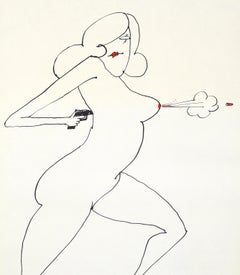
Tomi Ungerer Nude Gun (Tomi Ungerer underground sketchbook)
By Tomi Ungerer
Located in NEW YORK, NY
Tomi Ungerer Nude Gun: a selection from Underground Sketchbook:
First printing, 1965.
Medium: Vintage poster.
Dimensions: 23 in. x 29 in. (58.42 cm x 73.66 cm).
Very good overall vi...
Category
1960s Pop Art Nude Prints
Materials
Lithograph, Offset
$400 Sale Price
20% Off
KAWS Running Chum announcement 2012
By KAWS
Located in NEW YORK, NY
Vintage 2012 KAWS exhibition invitation Published on the occasion of:
“IMAGINARY FRIENDS”: Galerie Perrotin in Paris, 2012 (imagery: KAWS Running Chum).
Offset printed.
5x7.5 inche...
Category
21st Century and Contemporary Pop Art Prints and Multiples
Materials
Lithograph, Offset
Raymond Pettibon Black Flag 1983 postmarked (Raymond Pettibon prints)
By Raymond Pettibon
Located in NEW YORK, NY
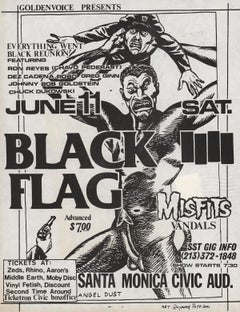
Raymond Pettibon: Rare early Black Flag punk flyer:
Black Flag Santa Monica Civic Auditorium, Jun 11, 1983. Santa Monica, CA. Flyer / handbill for gig by Black Flag, Misfits, Vandals featuring artwork by Pettibon. Post-marked 1983 on verso; rare as such given the SST stamp on verso (Black Flag's record label).
Offset Print; 8.5 x 11 inches.
Features Pettibon printed signure on the lower right.
Condition: Minor signs of handling and fading or yellowing; fold-lines and staple marks to upper & lower center (these were originally stapled together and mailed); in otherwise very good overall condition given age & medium.
Post-marked 1983 and hand addressed on verso. Rare.
Flea, the Red Hot Chili Peppers bassist once said of Pettibon's Black Flag illustrations and iconic logo: "Before I knew what Black Flag was I remember walking around Hollywood and seeing Raymond's flyers and being like, 'What the fuck is that?'… Those flyers made me feel like something is going on and it's romantic and it's mysterious and it's heavy and I don't know what it is but I wanna know."
About Raymond Pettibon (Americanb. 1957)
Raymond Pettibon is a contemporary American artist known for his stylized ink drawings combining images and text. His inventive narratives blend historical content with consumer culture to yield incisive critiques of contemporary society. “I was making my work as transparent as possible, without equivocations, without calling attention to itself, without apology,” he explained. “There's a lot of conventions in the art world that are not to be transgressed, but my economy of means doesn't abide by those strictures.” Born Raymond Ginn on June 16, 1957 in Tucson, AZ, the artist is self-taught, but cites drawings by William Blake, Edward Hopper, Francisco Goya, and John Sloan as instructive to his practice. Deriving inspiration from comics, cartoons, and other pop culture iconography, Pettibon began designing album covers and ephemera for his brother’s band Black Flag in the mid-1970s. He went on to produce cover art for Sonic Youth, the Minutemen...
Category
1980s Pop Art Nude Prints
Materials
Offset, Lithograph
You May Also Like
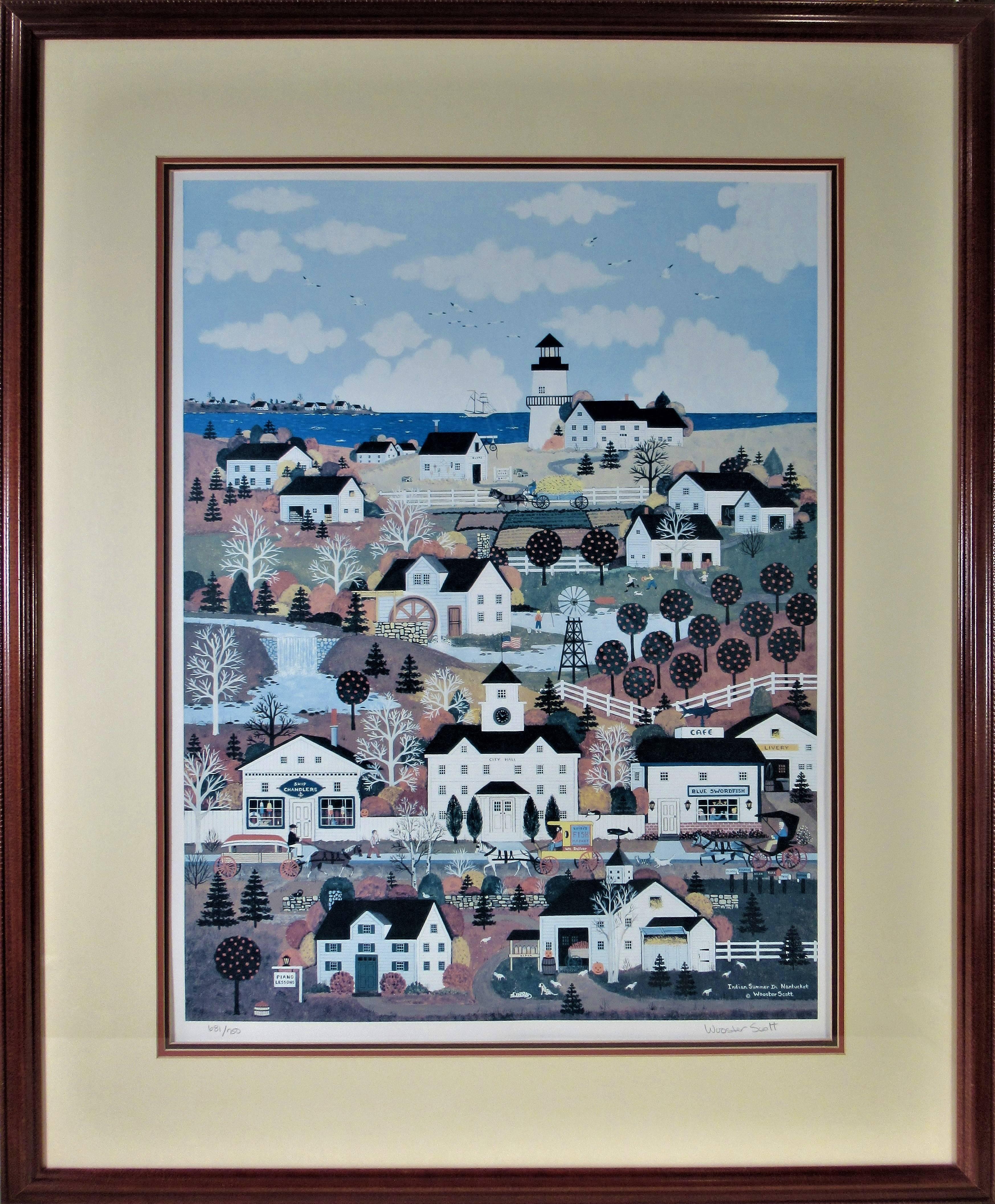
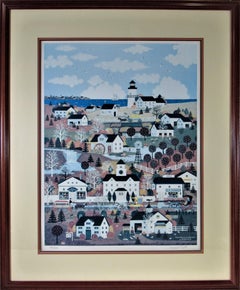
Indian Summer in Nantuckett
By Jane Wooster Scott
Located in San Francisco, CA
This artwork titled "Indian Summer in Nantuckett" is an original offset lithograph on wove paper by American artist Jane Wooster Scott, born 1933. It is hand signed and numbered 681/750 in pencil by the artist. The image size is 27 x 20 inches, framed size is 39 x 32.25 inches. It is beautifully framed in a custom wood frame. It is in excellent condition.
About the artist.
Jane Wooster Scott grew up in the Philadelphia area and moved West following her dream to be a movie star. She quickly learned that goal was not for her, but became the host of a talk show where she interviewed movie stars.
She photographs what she sees to recapture them later on canvas. However, few of her paintings are real, existing scenes. They are compositions drawn from her personal imagination. She has been exhibiting her work in Los Angeles and New York and most of her shows have completely sold out on opening night.
In the "Guinness Book of Records" as one of the most reproduced artists in America, Jane Wooster Scott began copying work by folk artists such as Grandma Moses and gradually evolved into her own style. A turning point for her career was a joint showing at the Ankrum Gallery in Los Angeles with her comedian friend, Jonathan Winters. It was mostly a business crowd, and she sold 40 paintings in an hour.
Her works hang in museums, in public buildings and private homes in Europe, Asia and South America as well as in the United States. She has become legendary for her exceptional scenes of America s celebrations and holidays,
Among her collectors are Aaron Spelling, Sylvester Stallone, Charles Bronson, Kenny Rogers, Farah...
Category
Late 20th Century Folk Art Figurative Prints
Materials
Offset
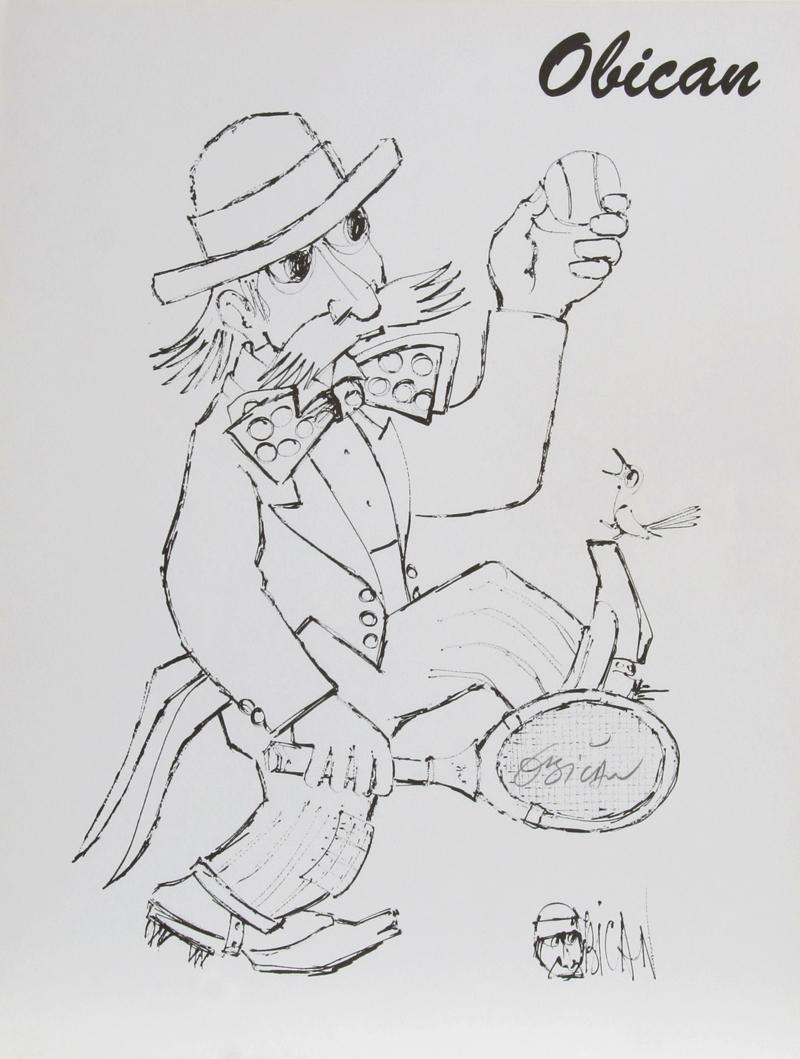
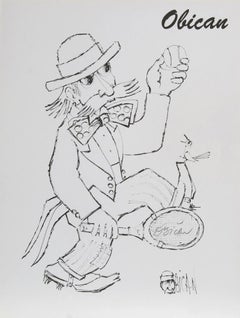
Tennis Player, Folk Art Poster by Jovan Obican
By Jovan Obican
Located in Long Island City, NY
Jovan Obican, French/Yugoslavian (1918 - 1986) - Tennis Player, Year: circa 1995, Medium: Poster, signed, Size: 22 in. x 17 in. (55.88 cm x 43.18 cm)
Category
1990s Folk Art Figurative Prints
Materials
Offset
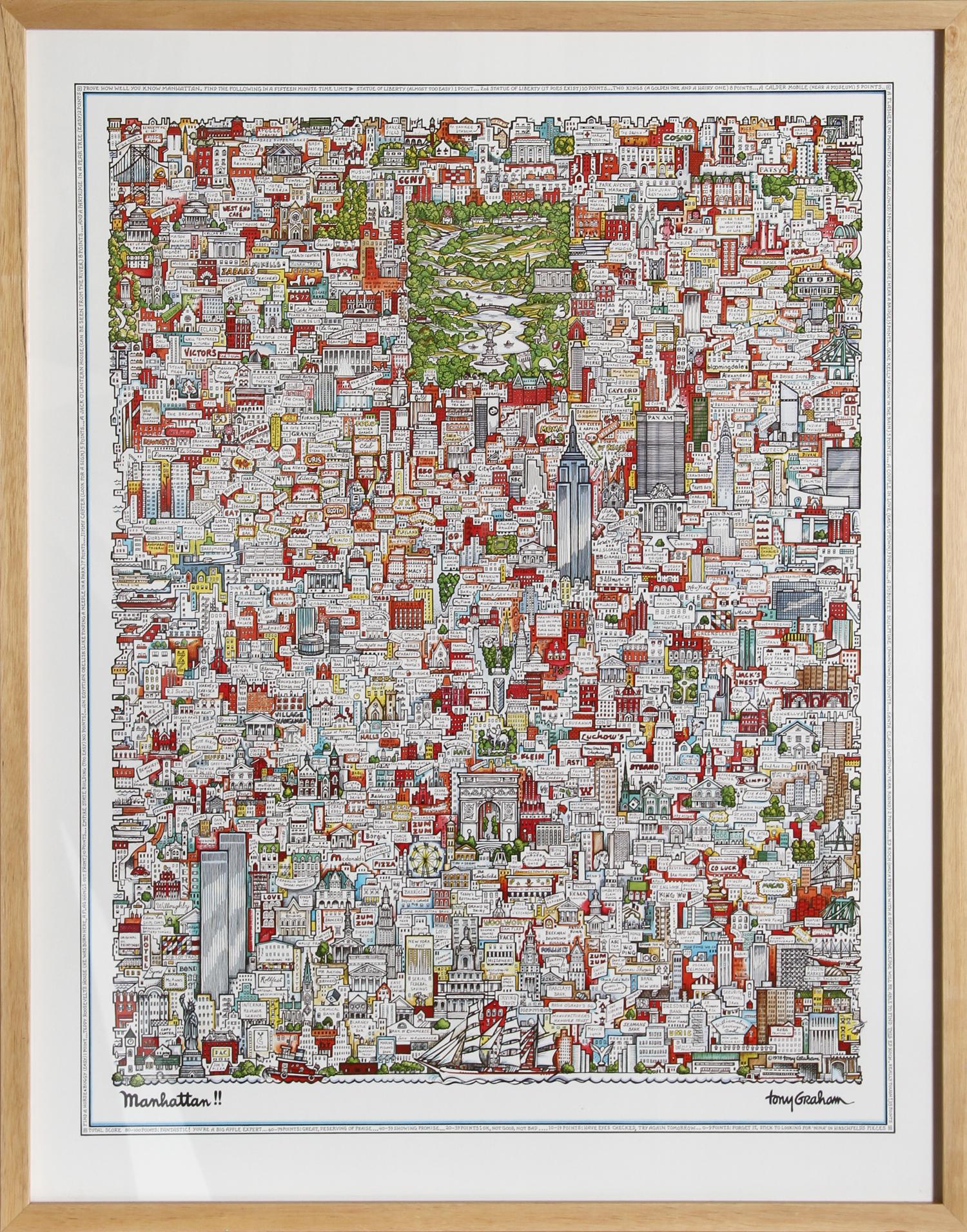
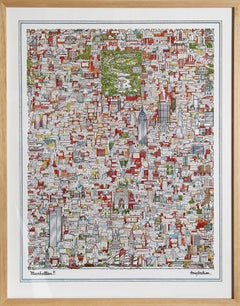
Manhattan!!, Pop Art Poster by Tony Graham
Located in Long Island City, NY
Tony Graham is a graphic artist known for his drawings and prints of New York City. “Manhattan” is the artist’s most iconic and collectible image published in 1978. Nicely framed.
M...
Category
1970s Folk Art Figurative Prints
Materials
Offset
$480 Sale Price
20% Off
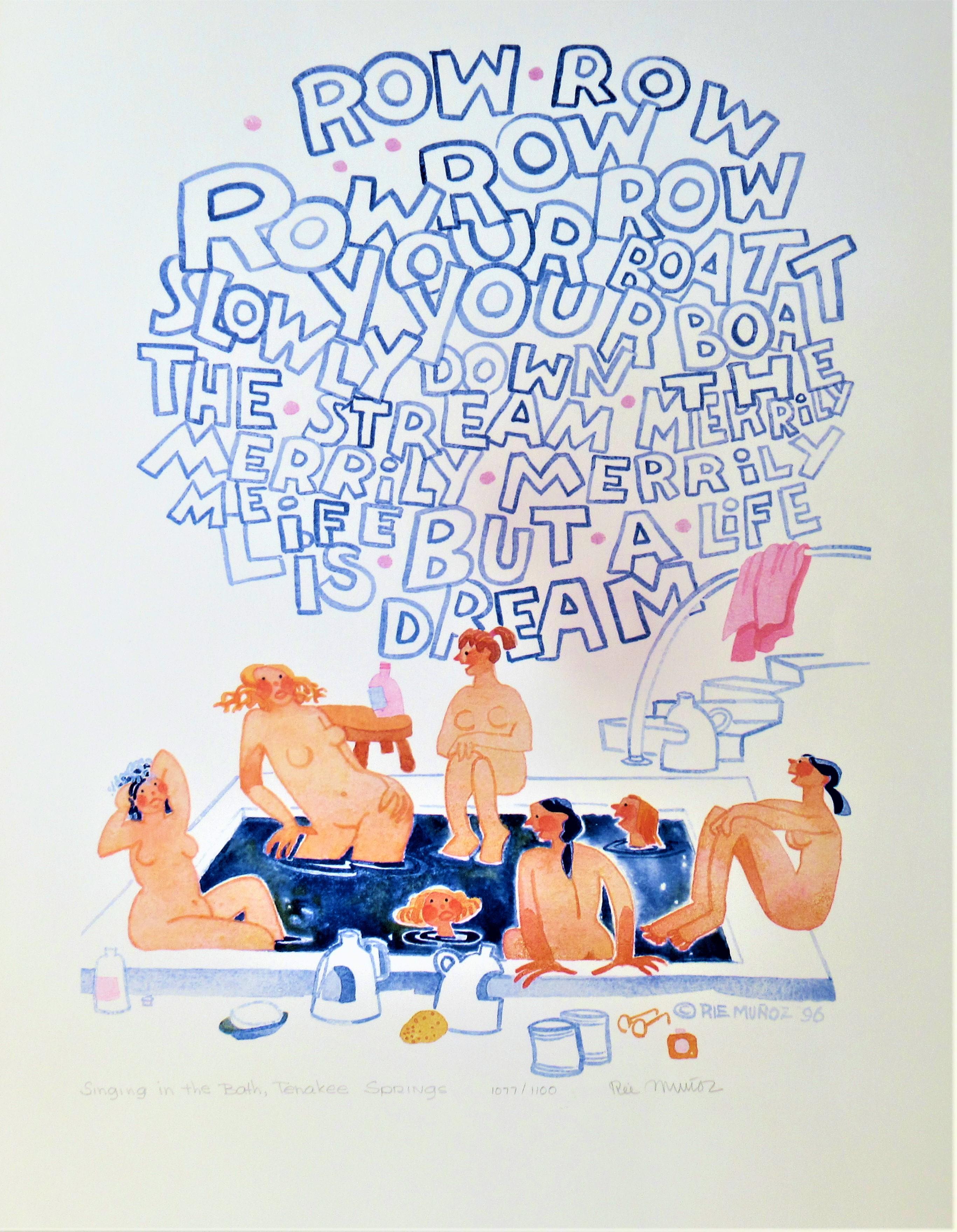
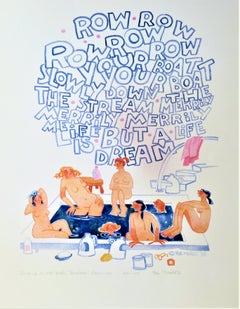
Singing in the Bath, Tenakee Springs
Located in San Francisco, CA
This artwork titled "Singing in the Bath, Tenakee Springs" 1996 is a color offset lithograph on paper by noted American artist Rie Mounier Munoz, 1921-2015. It is hand signed and numbered 1077/1100 in pencil by the artist. The image size is 13.5 x 10 inches, sheet size is 16 x 12.35 inches. It is in excellent condition, has never been framed.
About the artist:
Alaska painter Rie Mounier Munoz was the child of Dutch parents who immigrated to California, where she was born and raised. She is known for her colorful scenes of everyday life in Alaska.
Rie (from Marie) Munoz (moo nyos), studied art at Washington and Lee University in Virginia. In 1950, she traveled up the Inside Passage by steamship, fell in love with Juneau, and gave herself until the boat left the next day to find a job and a place to live. Since then Juneau has been home to Munoz. She began painting small vignettes of Alaska soon after arriving in Juneau, and also studied art at the University of Alaska-Juneau.
Munoz painted in oils in what she describes as a "painstakingly realistic" style, which she found stiff and "somewhat boring." Her breakthrough came a few years later when an artist friend introduced her to a versatile, water-soluble paint called casein. The immediacy of this inexpensive medium prompted an entirely new style. Rie's paintings became colorful and carefree, mirroring her own optimistic attitude toward life. With her newfound technique she set about recording everyday scenes of Alaskans at work and at play.
Of the many jobs she has held journalist, teacher, museum curator, artist, mother, Munoz recalls one of her most memorable was as a teacher on King Island in 1951, where she taught 25 Eskimo children. The island was a 13-hour umiak (a walrus skin boat) voyage from Nome, an experience she remembers vividly. After teaching in the Inupiat Eskimo village on the island with her husband during one school year, she felt a special affinity for Alaska's Native peoples and deliberately set about recording their traditional lifestyles that she knew to be changing very fast.
For the next twenty years, Rie practiced her art as a "Sunday painter," in and around prospecting with her husband, raising a son, and working as a freelance commercial artist, illustrator, cartoonist, and curator of exhibits for the Alaska State Museum. During her years in Alaska, Munoz has lived in a variety of small Alaskan communities, including prospecting and mining camps.
Her paintings reflect an interest in the day-to-day activities of village life such as fishing, berry picking, children at play, as well as her love of folklore and legends. Munoz says that what has appealed to her most were "images you might not think an artist would want to paint," such as people butchering crab, skinning a seal, or doing their laundry in a hand-cranked washing machine.
In 1972, with her hand-cut stencil and serigraph prints selling well in four locations in Alaska, she felt confident enough to leave her job at the Alaska State Museum and devote herself full time to her art. Freed from the constraints of an office job, she began to produce close to a hundred paintings a year, in addition to stone lithograph and serigraph prints.
From her earliest days as an artist, Rie had firm beliefs about selling her work. First, she insisted the edition size should be kept modest. When she decided in 1973 to reproduce Eskimo Story Teller as an offset lithography print and found the minimum print run to be 500, she destroyed 200 of the prints. She did the same with King Island, her second reproduction. Reluctantly, to meet market demand, she increased the edition size of the reproductions to 500 and then 750. The editions stayed at that level for almost ten years before climbing to 950 and 1250.
Her work has been exhibited many solo watercolor exhibits in Alaska, Oregon and Washington State, including the Charles and Emma Frye Art Museum, Alaska State Museum in Juneau, Anchorage Historical and Fine Arts Museum, Tongass Historical Museum in Ketchikan, and Yukon Regional Library in Whitehorse; Yukon Territory, and included in exhibits at the Smithsonian Institute and Russell Senate Office Building in Washington, D.C.
Munozs paintings have graced the covers of countless publications, from cookbooks to mail order catalogs, and been published in magazines, newspapers, posters, calendars, and two previous collections of her work: Rie Munoz...
Category
Late 20th Century Folk Art Nude Prints
Materials
Lithograph
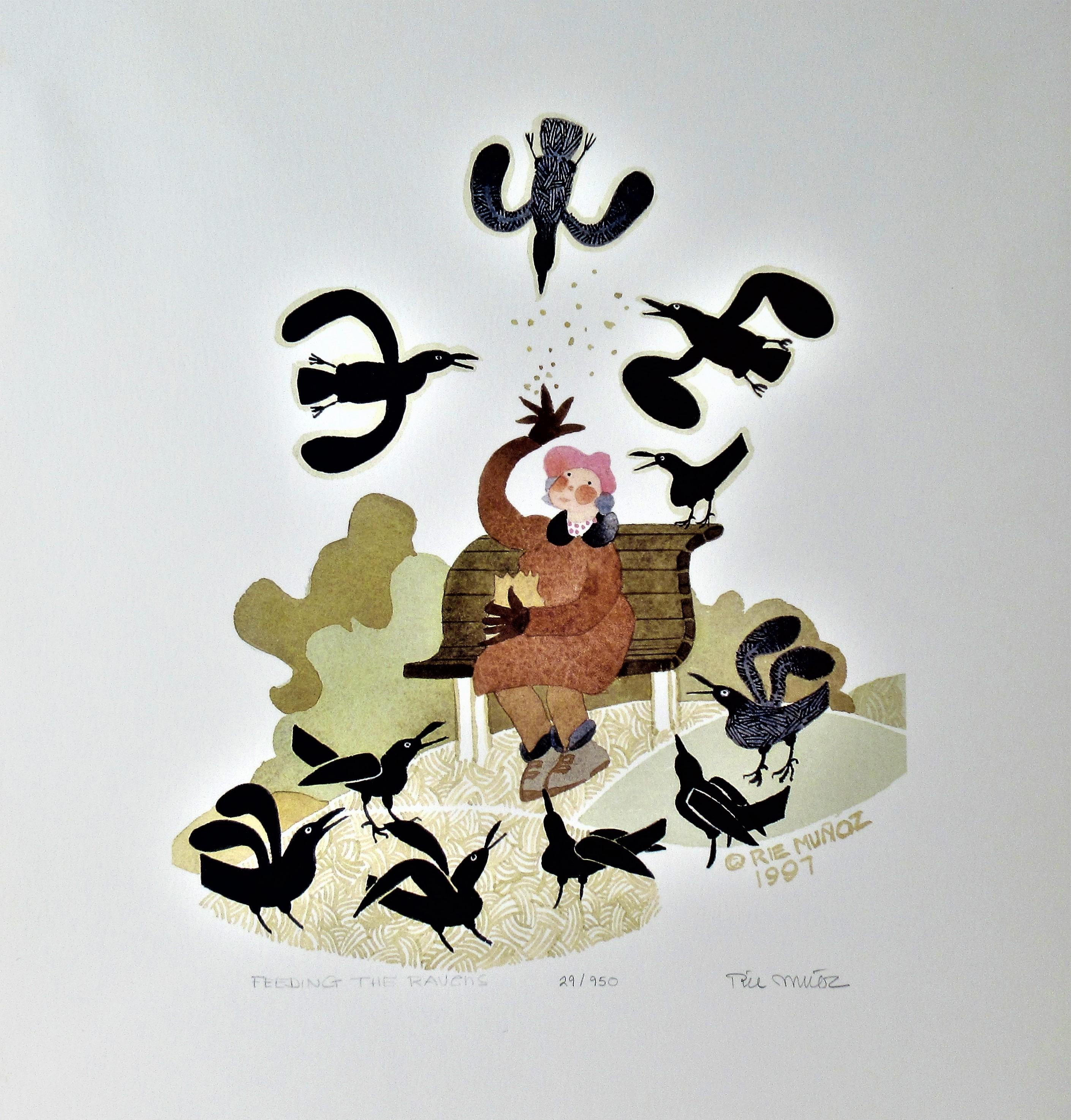
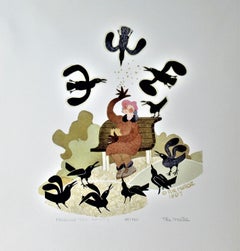
Feeding the Ravens
Located in San Francisco, CA
This artwork titled "Feeding the Ravens" 1997 is a color offset lithograph on paper by noted American artist Rie Mounier Munoz, 1921-2015. It is hand signed and numbered 29/950 in pencil by the artist. The image size is 9.65 x 8.35 inches, sheet size is 13.85 x 12.25 inches. It is in excellent condition, has never been framed.
About the artist:
Alaska painter Rie Mounier Munoz was the child of Dutch parents who immigrated to California, where she was born and raised. She is known for her colorful scenes of everyday life in Alaska.
Rie (from Marie) Munoz (moo nyos), studied art at Washington and Lee University in Virginia. In 1950, she traveled up the Inside Passage by steamship, fell in love with Juneau, and gave herself until the boat left the next day to find a job and a place to live. Since then Juneau has been home to Munoz. She began painting small vignettes of Alaska soon after arriving in Juneau, and also studied art at the University of Alaska-Juneau.
Munoz painted in oils in what she describes as a "painstakingly realistic" style, which she found stiff and "somewhat boring." Her breakthrough came a few years later when an artist friend introduced her to a versatile, water-soluble paint called casein. The immediacy of this inexpensive medium prompted an entirely new style. Rie's paintings became colorful and carefree, mirroring her own optimistic attitude toward life. With her newfound technique she set about recording everyday scenes of Alaskans at work and at play.
Of the many jobs she has held journalist, teacher, museum curator, artist, mother, Munoz recalls one of her most memorable was as a teacher on King Island in 1951, where she taught 25 Eskimo children. The island was a 13-hour umiak (a walrus skin boat) voyage from Nome, an experience she remembers vividly. After teaching in the Inupiat Eskimo village on the island with her husband during one school year, she felt a special affinity for Alaska's Native peoples and deliberately set about recording their traditional lifestyles that she knew to be changing very fast.
For the next twenty years, Rie practiced her art as a "Sunday painter," in and around prospecting with her husband, raising a son, and working as a freelance commercial artist, illustrator, cartoonist, and curator of exhibits for the Alaska State Museum. During her years in Alaska, Munoz has lived in a variety of small Alaskan communities, including prospecting and mining camps.
Her paintings reflect an interest in the day-to-day activities of village life such as fishing, berry picking, children at play, as well as her love of folklore and legends. Munoz says that what has appealed to her most were "images you might not think an artist would want to paint," such as people butchering crab, skinning a seal, or doing their laundry in a hand-cranked washing machine.
In 1972, with her hand-cut stencil and serigraph prints selling well in four locations in Alaska, she felt confident enough to leave her job at the Alaska State Museum and devote herself full time to her art. Freed from the constraints of an office job, she began to produce close to a hundred paintings a year, in addition to stone lithograph and serigraph prints.
From her earliest days as an artist, Rie had firm beliefs about selling her work. First, she insisted the edition size should be kept modest. When she decided in 1973 to reproduce Eskimo Story Teller as an offset lithography print and found the minimum print run to be 500, she destroyed 200 of the prints. She did the same with King Island, her second reproduction. Reluctantly, to meet market demand, she increased the edition size of the reproductions to 500 and then 750. The editions stayed at that level for almost ten years before climbing to 950 and 1250.
Her work has been exhibited many solo watercolor exhibits in Alaska, Oregon and Washington State, including the Charles and Emma Frye Art Museum, Alaska State Museum in Juneau, Anchorage Historical and Fine Arts Museum, Tongass Historical Museum in Ketchikan, and Yukon Regional Library in Whitehorse; Yukon Territory, and included in exhibits at the Smithsonian Institute and Russell Senate Office Building in Washington, D.C.
Munozs paintings have graced the covers of countless publications, from cookbooks to mail order catalogs, and been published in magazines, newspapers, posters, calendars, and two previous collections of her work: Rie Munoz...
Category
Late 20th Century Folk Art Animal Prints
Materials
Lithograph
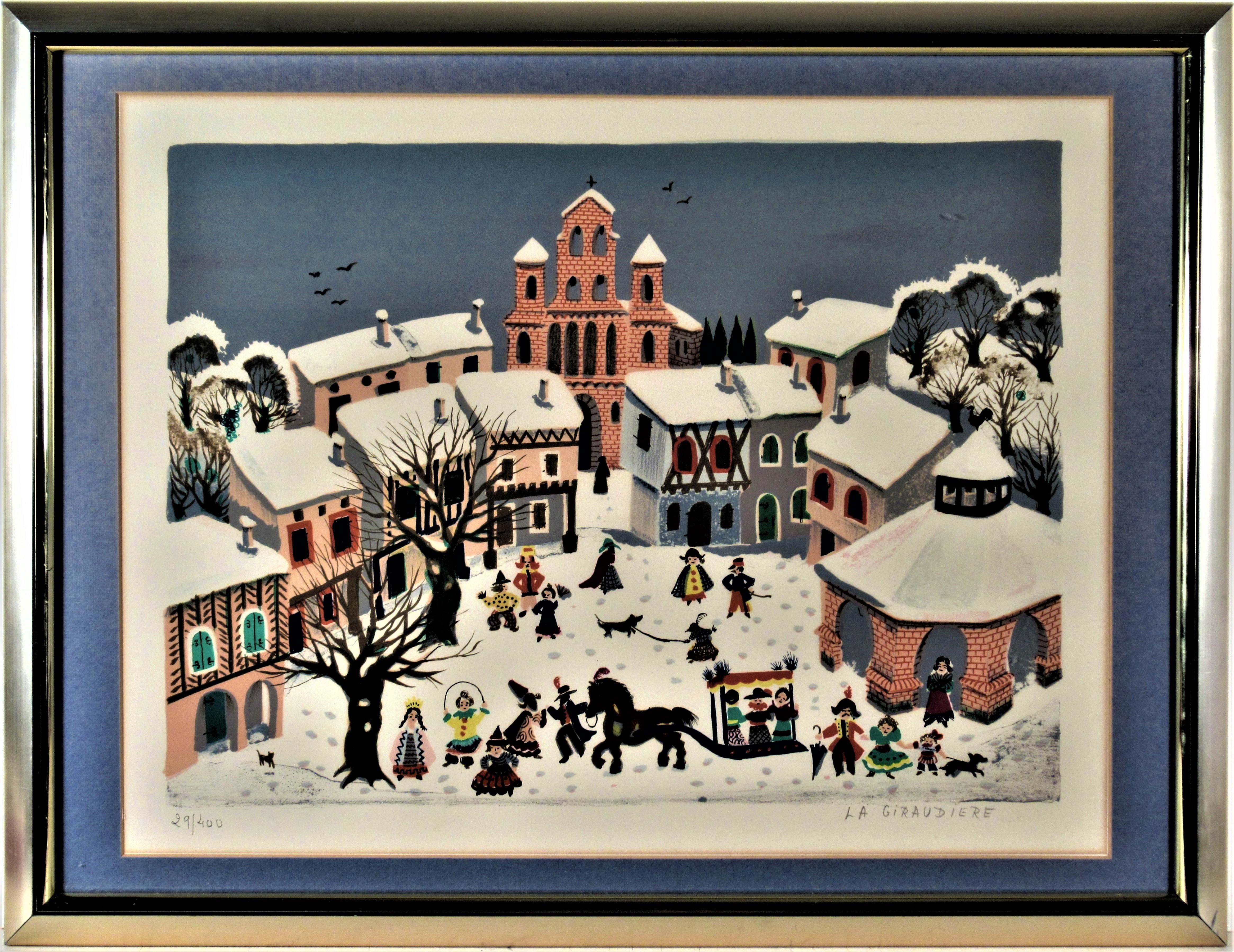
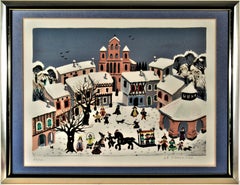
Village en Hiver
Located in San Francisco, CA
This artwork "Village en Hiver" c.1980 is an original color lithograph by French artist Madeleine (Mady) De La Giraudiere, 1922-2018. It is hand signed a...
Category
Late 20th Century Folk Art Figurative Prints
Materials
Lithograph
More Ways To Browse
Vintage Constellation Print
Vintage Gravestones
Vintage Heron Prints
Vintage Vinyl Record Covers
William A Cooper
Agam Lithographs
Albert Robida
Antonietta Raphael Mafai
Art Poster Automobile
Bernard Buffet Signed
Bill Graham
Boconcept Imola Chair
Butterfly Collage
Cezanne Lithograph
Chadwick Lynn
Chagall Plates
Chrysanthemum Print
Couronne Vintage