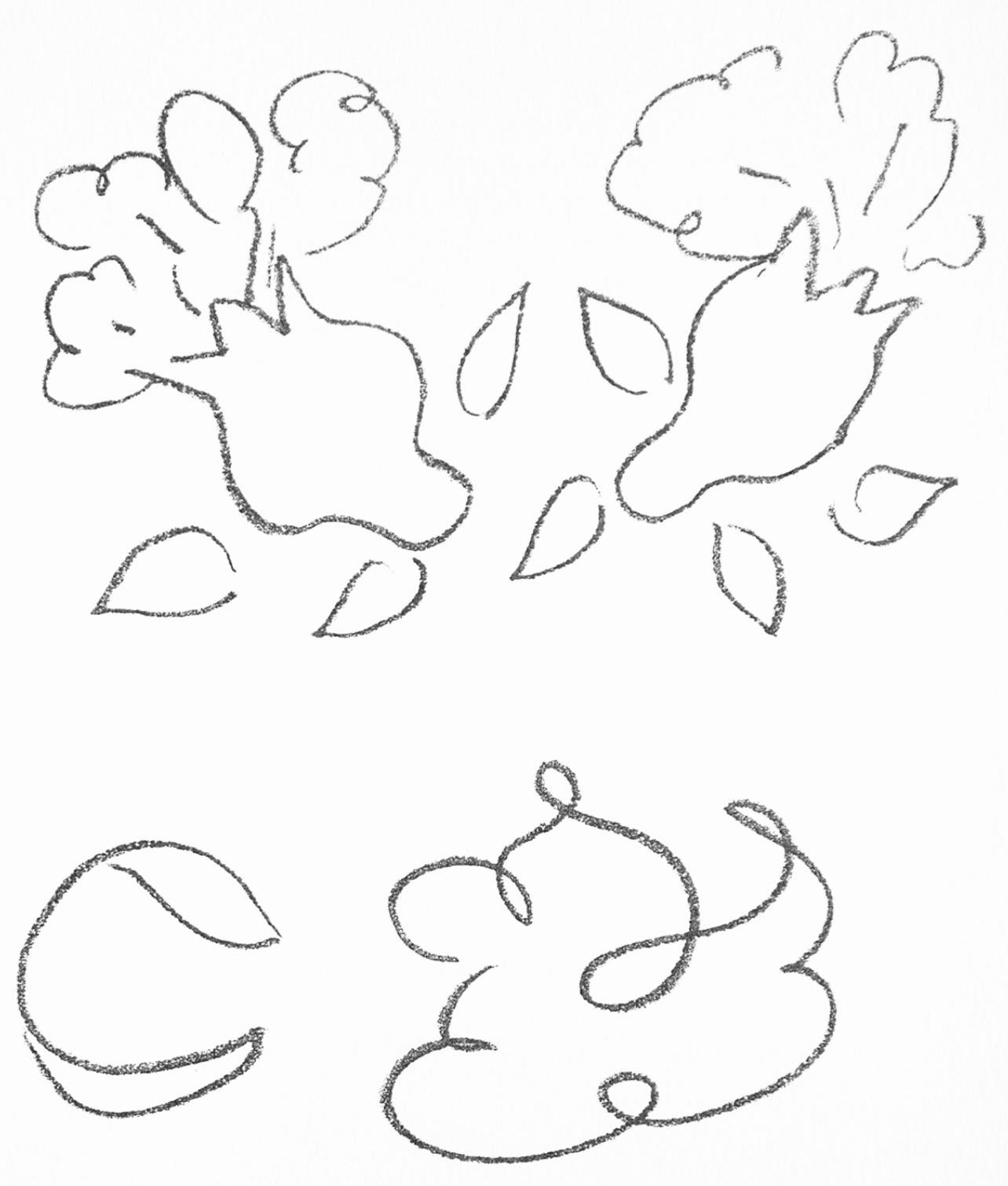
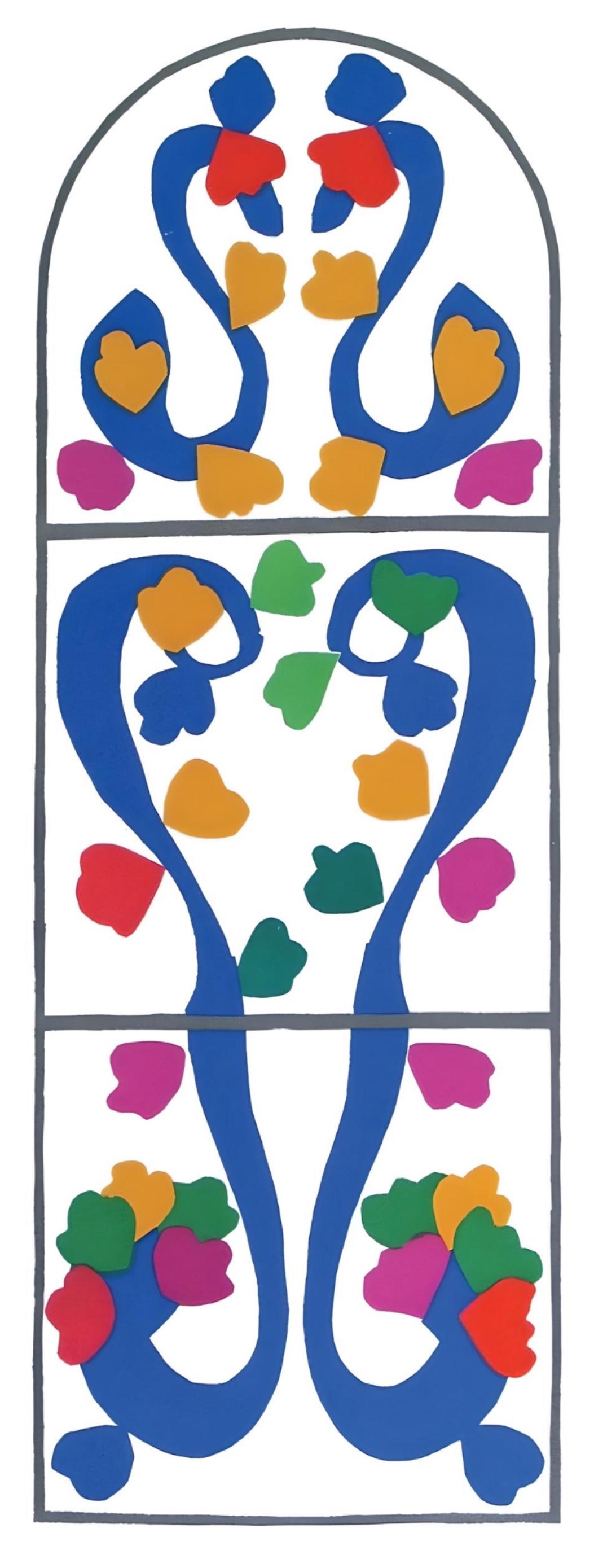
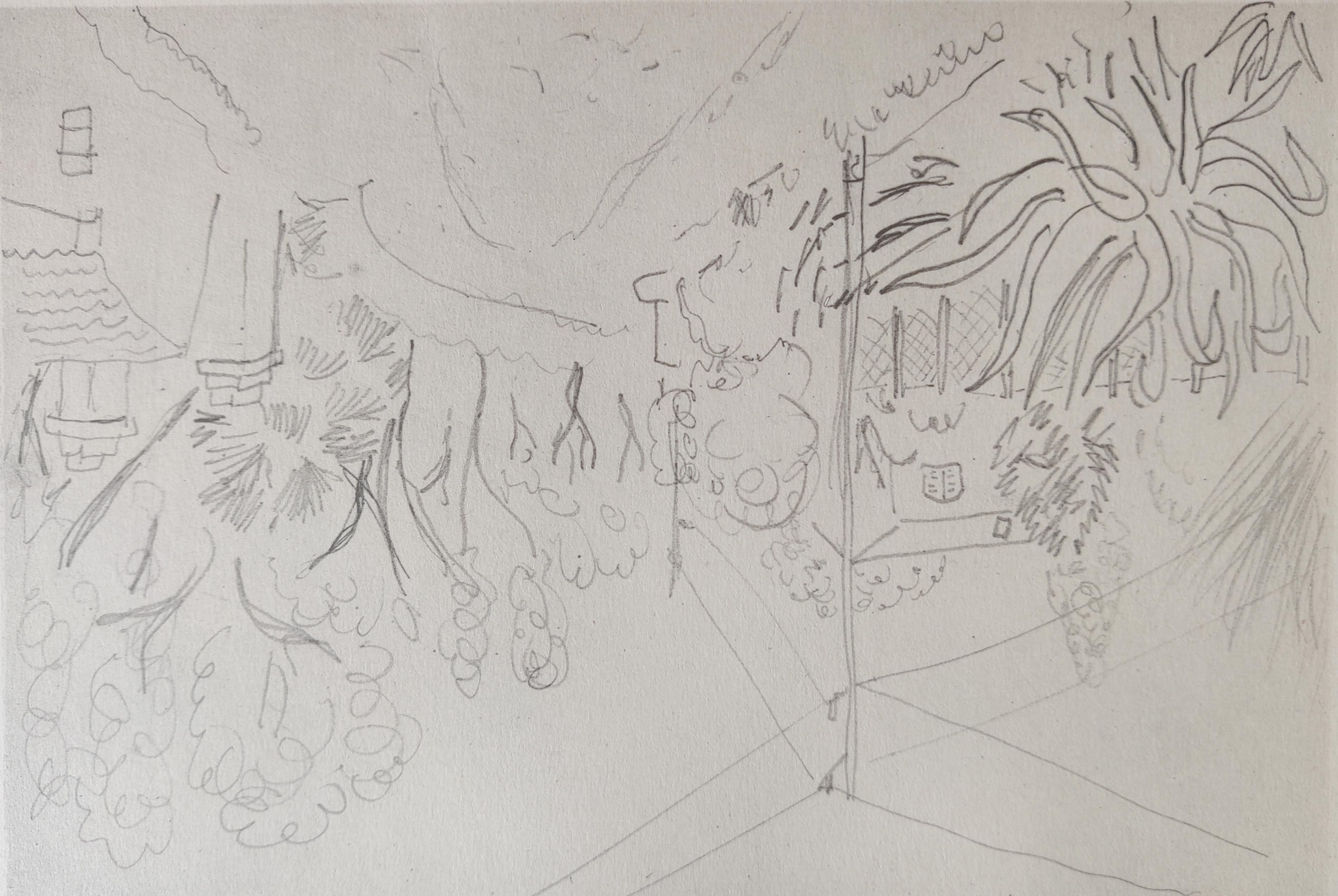
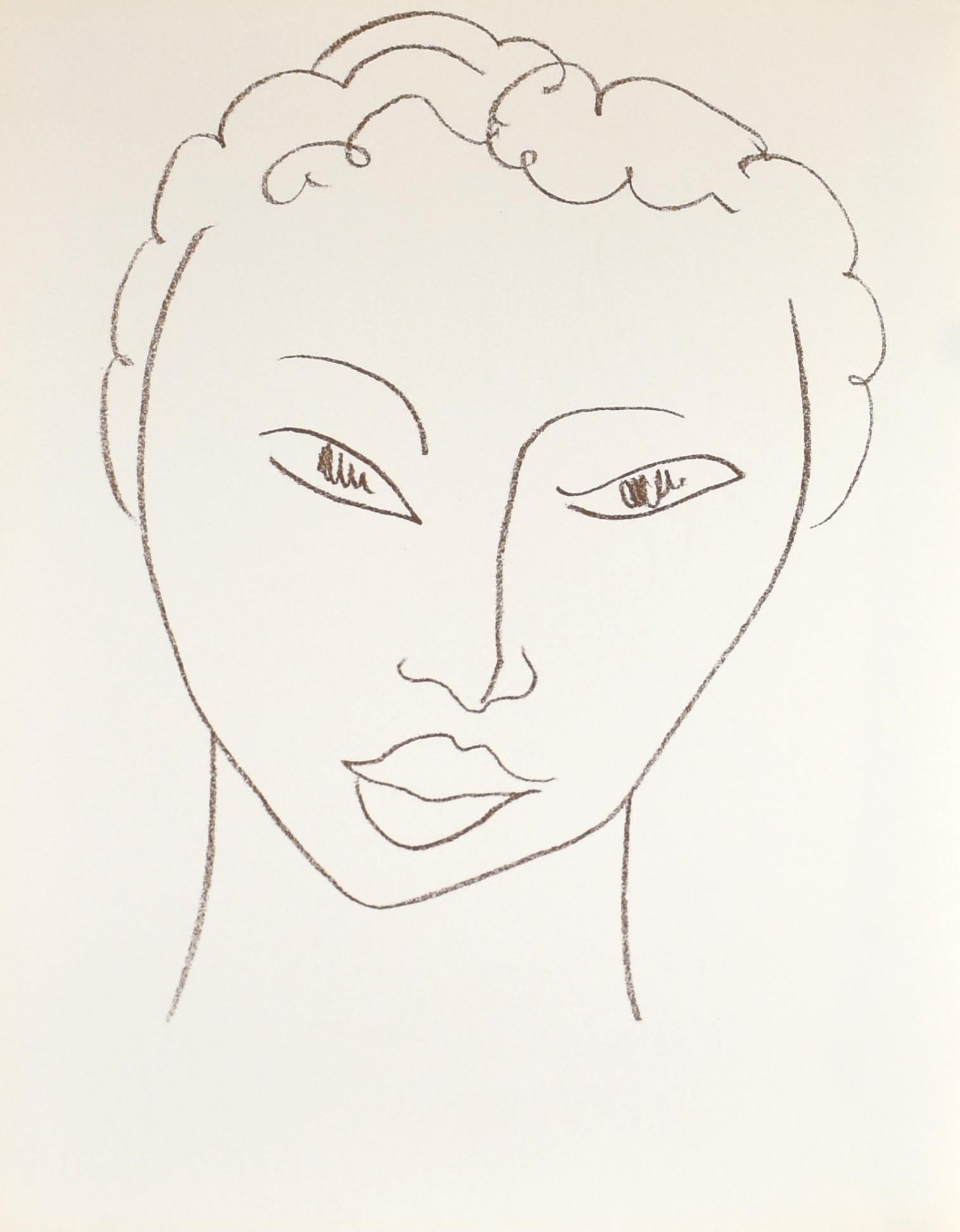
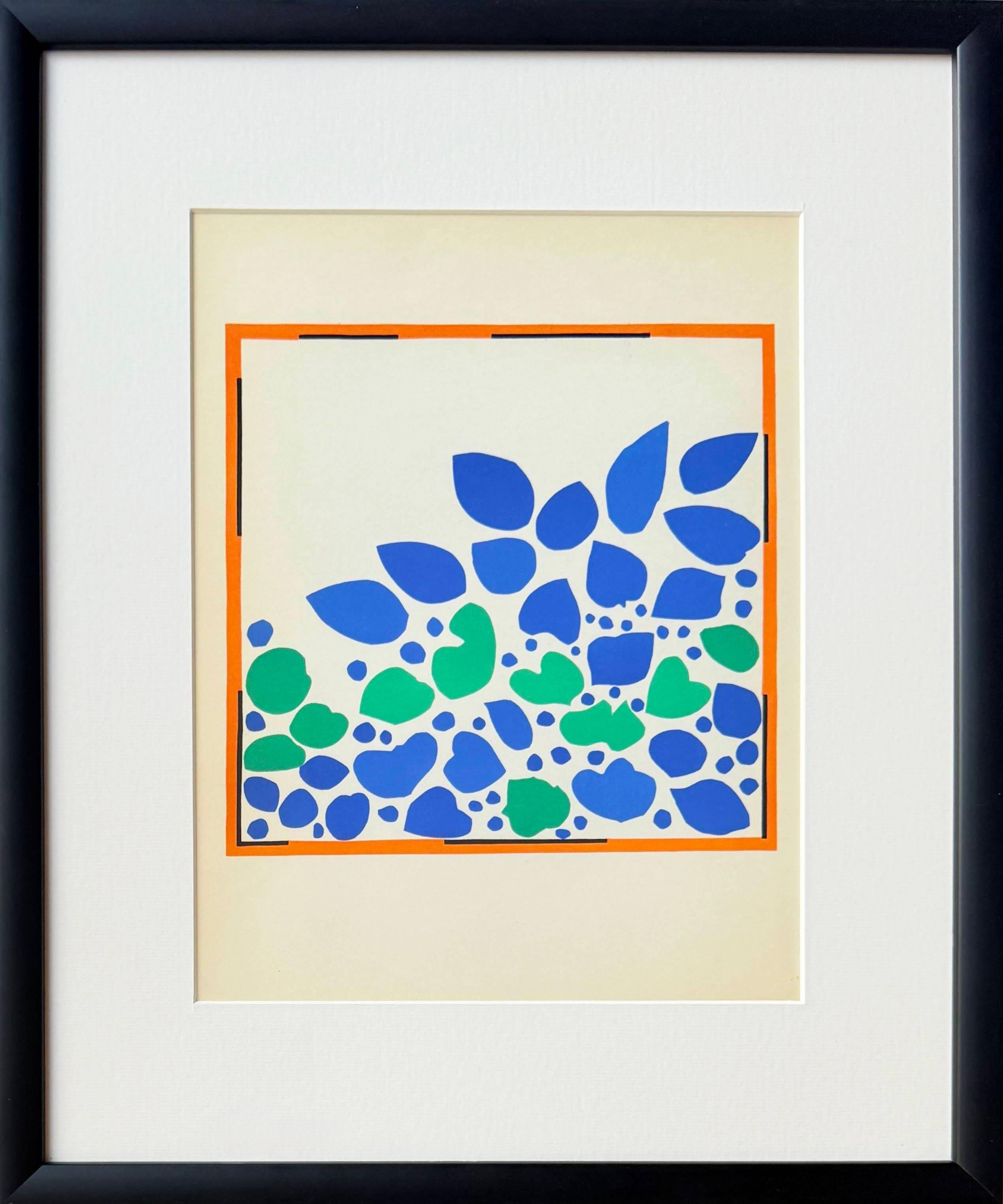
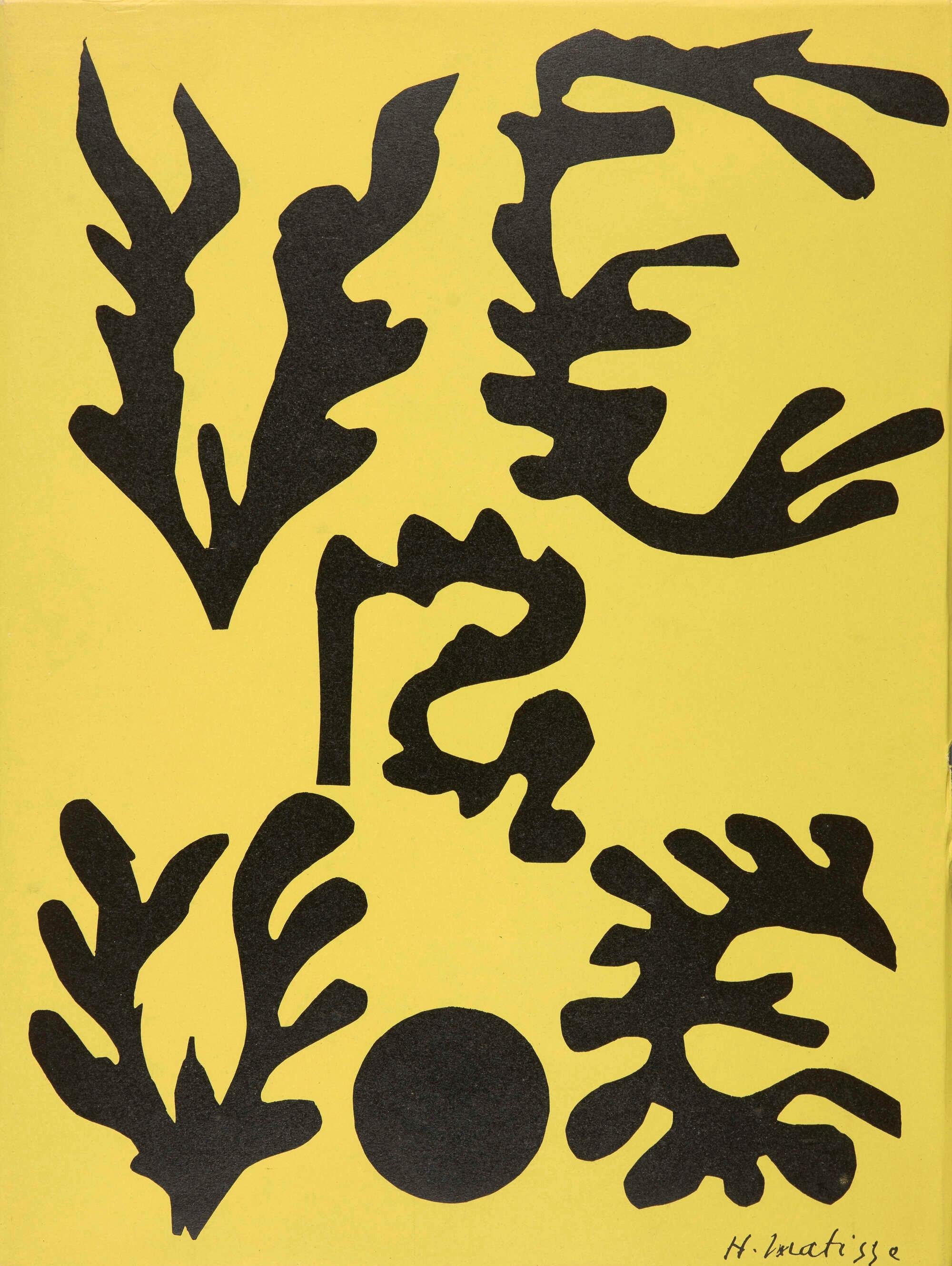
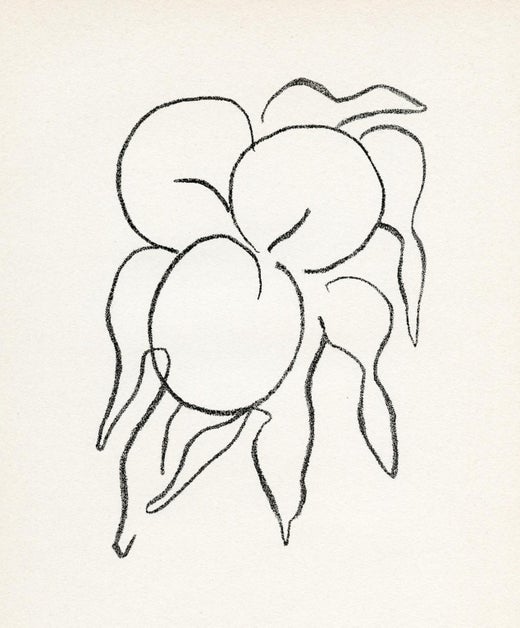
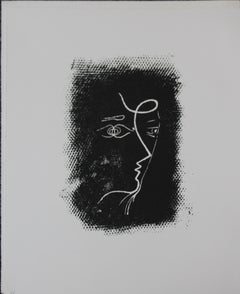
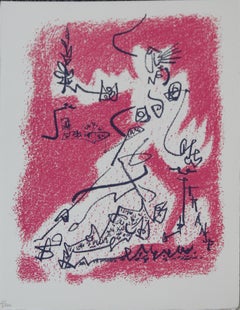
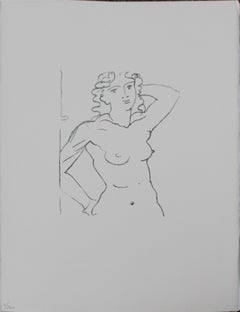
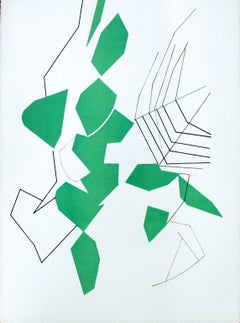
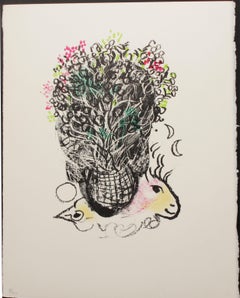
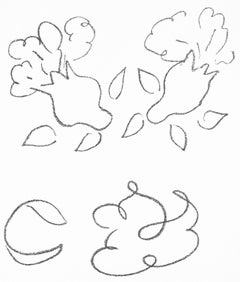
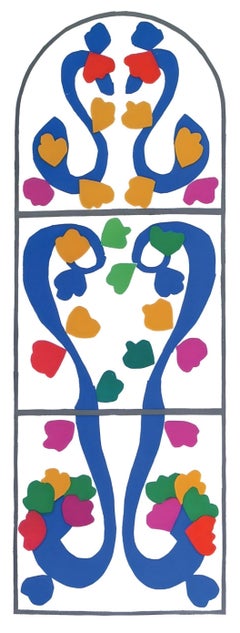
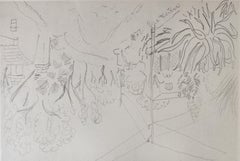
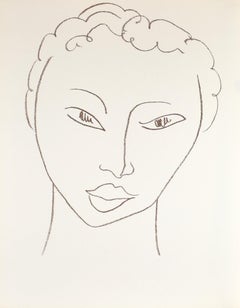
This exquisite lithograph after Henri Matisse (1869–1954), titled La Religieuse Portugaise (The Portuguese Nun), originates from the 1972 edition published by Editions A. C. Mazo et Cie., Paris, in collaboration with Leon Amiel, editeurs, New York, and printed by Mourlot Freres, Paris, April 5, 1972. This serene and balanced composition captures Matisse’s mastery of line, harmony, and emotional resonance. La Religieuse Portugaise reflects the artist’s lifelong exploration of purity and rhythm through simplified form and luminous balance, revealing his belief that true beauty lies in the unity of contour, and spirit. The lithograph exemplifies Matisse’s ability to transform spiritual themes into modern expressions of grace and contemplation.
Executed as a lithograph on velin d’Arches paper, this work measures 12.81 x 9.81 inches (32.54 x 24.92 cm). Unsigned and unnumbered as issued. The edition exemplifies the exceptional craftsmanship of the Mourlot Freres atelier, renowned for its collaboration with leading modern artists of the 20th century.
Artwork Details:
Artist: After Henri Matisse (1869–1954)
Title: La Religieuse Portugaise (The Portuguese Nun), 1972
Medium: Lithograph on velin d’Arches paper
Dimensions: 12.81 x 9.81 inches (32.54 x 24.92 cm)
Inscription: Unsigned and unnumbered as issued
Date: 1972
Publisher: Editions A. C. Mazo et Cie., Paris, in collaboration with Leon Amiel, editeurs, New York
Printer: Mourlot Freres, Paris
Condition: Well preserved, consistent with age and medium
Provenance: From the edition published by Editions A. C. Mazo et Cie., Paris, in collaboration with Leon Amiel, editeurs, New York, 1972
Notes:
Excerpted from the album (translated from French), This album is the album of friendship, and I want to thank all the artists who wanted to participate. Some lithographs presented here, and whose authors have left us for too long, were made at my request for an album "Adieu a la rue de Chabrol" that I intended to publish ten years ago. So it was at this time that I was able to get the lithos of Braque, Cocteau, Derain, Giacometti and Villon. Mrs. Duthuit-Matisse and her brothers authorized me to print the composition of Henri Matisse, an unused original lithograph of the album by Teriade "La Religieuse portugaise". I am happy to have brought together so many works by contemporary artists, it is a great honor for me and I am infinitely grateful to them. Finished printing in Paris on April 5, 1972, this album was printed on velin d’Arches, in DCCC numbered examples. In addition, a number of copies were printed for artists, friends and collaborators of this album. The original lithographs were printed by Mourlot, and the typography is from Fequet and Baudier. Alain A.C. Mazo, Paris, and Leon Amiel, New York, publishers.
About the Publication:
Souvenirs et Portraits d'Artistes (Memories and Portraits of Artists), published in 1972 by Editions A. C. Mazo et Cie., Paris, and Leon Amiel, New York, stands as one of the most distinguished collaborative albums of the postwar era. Bringing together original lithographs by some of the foremost artists of the 20th century, the portfolio celebrates artistic friendship, collaboration, and the enduring spirit of creative dialogue. La Religieuse Portugaise (The Portuguese Nun) after Henri Matisse exemplifies this spirit, blending spiritual serenity with the refined formal language that made Matisse one of the most influential artists in modern art. Printed at the renowned Atelier Mourlot, the work embodies the clarity, rhythm, and elegance that characterize Matisse’s timeless aesthetic.
About the Artist:
Henri Matisse (1869–1954) was a French painter, sculptor, draughtsman, and printmaker whose revolutionary vision redefined modern art through his daring use of color, line, and form. Celebrated as one of the greatest artists of the 20th century, Matisse led the Fauvist movement and devoted his life to the pursuit of balance, beauty, and emotional expression in visual art. His early works burst with vibrant hues and liberated brushwork, while his later “cut-out” compositions achieved a poetic simplicity that transformed the relationship between color and space. Deeply influenced by the work of Paul Cezanne, Vincent van Gogh, and Georges Seurat, as well as by the rhythmic patterns of Islamic art, Byzantine mosaics, and Japanese prints, Matisse forged a new visual language that celebrated joy, movement, and serenity. He was part of an extraordinary generation of artists who shaped the evolution of modernism, maintaining lifelong dialogue and friendly rivalry with contemporaries such as Pablo Picasso, Georges Braque, Marc Chagall, Andre Derain, Albert Marquet, and Raoul Dufy—peers who, like him, sought to expand the expressive potential of color and composition. Matisse’s influence extended across generations, inspiring modern and contemporary masters including Alexander Calder, Alberto Giacometti, Salvador Dali, Joan Miro, Wassily Kandinsky, Marcel Duchamp, and Man Ray, each of whom drew upon his fearless experimentation and refined visual harmony. His paintings, sculptures, and works on paper are held in the most prestigious museums in the world, including the Museum of Modern Art, the Centre Pompidou, the Tate, and the Hermitage Museum, where his art continues to symbolize the essence of creativity and human emotion. The highest price ever paid for a Henri Matisse artwork is approximately $80.8 million USD, achieved in 2018 at Christie's New York for Odalisque couchee aux magnolias (1923).
Henri Matisse La Religieuse Portugaise,
Matisse Mourlot...