1 of 5
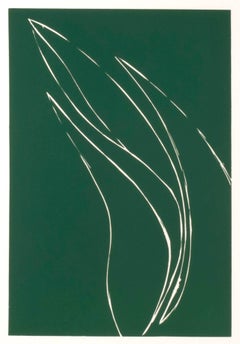
Hugo GuinnessFoxglove2017
2017
$1,229.13List Price
About the Item
- Creator:Hugo Guinness (1959, British)
- Creation Year:2017
- Dimensions:Height: 29.93 in (76 cm)Width: 22.64 in (57.5 cm)
- More Editions Sizes:Hand printed in small amounts not editioned, initialled by the artist.Price: $1,229
- Medium:
- Movement Style:
- Period:
- Condition:
- Gallery Location:London, GB
- Reference Number:Seller: Foxglove1stDibs: LU69232125693
Authenticity Guarantee
In the unlikely event there’s an issue with an item’s authenticity, contact us within 1 year for a full refund. DetailsMoney-Back Guarantee
If your item is not as described, is damaged in transit, or does not arrive, contact us within 7 days for a full refund. Details24-Hour Cancellation
You have a 24-hour grace period in which to reconsider your purchase, with no questions asked.Vetted Professional Sellers
Our world-class sellers must adhere to strict standards for service and quality, maintaining the integrity of our listings.Price-Match Guarantee
If you find that a seller listed the same item for a lower price elsewhere, we’ll match it.Trusted Global Delivery
Our best-in-class carrier network provides specialized shipping options worldwide, including custom delivery.You May Also Like
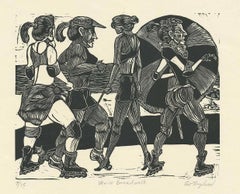
Venice Beach, linocut by Art Hazelood of women on rollerblades by the ocean
By Art Hazelwood
Located in Palm Springs, CA
Signed and numbered woodcut from the edition of 15. Political and social satire is a frequent topic in Hazelwood's work. But equally, he enjoys depicting the social scene in specific locations and activites. In this print, Hazelwood turns his eye on the social set on Venice Beach.
Art Hazelwood calls himself artist, instigator and impresario to define the three intertwining areas of his practice. He uses printmaking within a range of political allegory and satire making work from political posters to fine press edition artist books. He has curated and organized a range of exhibitions at venues from museums to immigrant centers. He has worked for over 20 years with homeless rights groups; creating prints, and street posters, and has authored one book and contributed to another on art and homelessness.
He has been a regular visiting guest artist at San Quentin State Prison and teaches currently at the San Francisco Art Institute. He organized the San Francisco Poster...
Category
1990s Contemporary Figurative Prints
Materials
Linocut
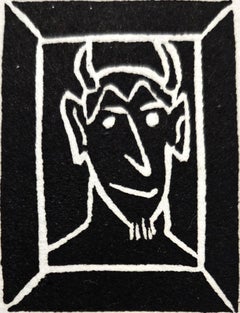
Devil /// Contemporary Pop Art Minimalism Linocut Black and White Art Religious
By Dan May
Located in Saint Augustine, FL
Artist: Dan May (American, 1955-)
Title: "Devil"
*Signed and numbered by May in pencil lower left
Year: 1999
Medium: Original Linocut on white Hosho handmade paper
Limited edition: 1...
Category
1990s Contemporary Portrait Prints
Materials
Handmade Paper, Linocut
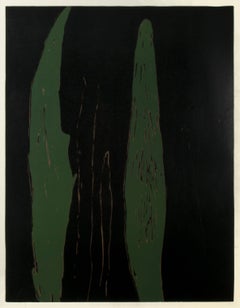
Cypresses
By Donald Sultan
Located in Fairlawn, OH
Cypresses
Reductive color woodcut in colors, black, green & brown, 1982
Unsigned
From: Tramp Picture series
"The printer was Claude Jinchat at Imprimerie Arnéra, Vallauris. The set w...
Category
1980s Contemporary Landscape Prints
Materials
Linocut
French Iris I
By Donald Sultan
Located in Fairlawn, OH
French Iris I
Reducutve color woodcut, 1982
Unsigned
Stamped verso “Imprimerie Arnera Archives/Non Signe”
From: Tramp Picture series
"The printer was Claude Jinchat at Imprimerie Arn...
Category
1980s Contemporary Still-life Prints
Materials
Linocut
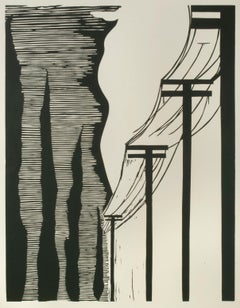
Poles and Cypresses
By Donald Sultan
Located in Fairlawn, OH
Poles and Cypresses
Woodcut printed in black, 1982
Unsigned
From: Tramp Picture series
"The printer was Claude Jinchat at Imprimerie Arnéra, Vallauris. The set was published by Blum ...
Category
1980s Contemporary Landscape Prints
Materials
Linocut
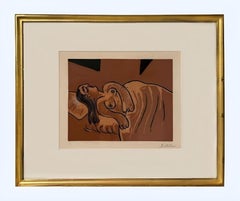
Femme endormie (Dormeuse), By Pablo Picasso
By Pablo Picasso
Located in Dubai, Dubai
Femme endormie [Dormeuse]
By Pablo Picasso
Pablo Picasso, a pioneering Spanish artist, co-founded the Cubist movement and played a pivotal role in the development of modern art dur...
Category
1960s Contemporary Figurative Prints
Materials
Archival Paper, Linocut
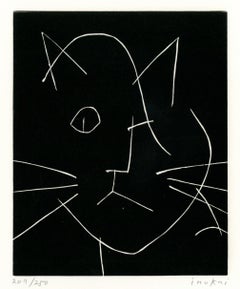
Mr. C
By Kyohei Inukai
Located in Fairlawn, OH
Mr. C (Cat)
Linocut, 1984
Signed in pencil (see photo)
Edition: 250 (209/250) (see photo)
Published by Associated American Artists, New York, NY
Reference: AAA/Czestochowski 1984.009...
Category
1980s Contemporary Animal Prints
Materials
Linocut
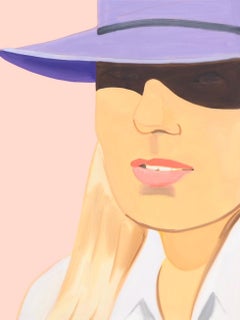
Nicole
By Alex Katz
Located in New York, NY
signed and numbered lower right
edition of 60
Catalogue raisonné 00717
Published by Simmelink Sukimoto Editions
Internationally recognized painter and printmaker Alex Katz was born...
Category
2010s Contemporary Figurative Prints
Materials
Linocut, Woodcut

Halsey (12/12)
By Alex Katz
Located in Fort Lauderdale, FL
Alex Katz was born in Brooklyn, New York in 1927. In 1928, at the outset of the Depression, his family moved to St. Albans, a diverse suburb of Queens that had sprung up between the two wars. Katz was raised in St. Albans by his Russian parents. His mother had been an actress and possessed a deep interest in poetry and his father, a businessman, also had an interest in the arts. Katz attended Woodrow Wilson High School for its unique program that allowed him to devote his mornings to academics and his afternoons to the arts. In 1946, Katz entered The Cooper Union Art School in Manhattan, a prestigious college of art, architecture, and engineering. At The Cooper Union, Katz studied painting under Morris Kantor and was trained in Modern art theories and techniques. Upon graduating in 1949, Katz was awarded a scholarship for summer study at the Skowhegan School for Painting and Sculpture in Maine, a grant that he would renew the following summer.
During his years at Cooper Union, Katz had been exposed primarily to modern art and was taught to paint from drawings. Skowhegan exposed him to painting from life, which would prove pivotal in his development as a painter and remains a staple of his practices today. Katz explains that Skowhegan’s plein air painting gave him “a reason to devote my life to painting.” Katz’s first one-person show was held at the Roko Gallery in 1954. Katz had begun to develop greater acquaintances with the New York School and their allies in the other arts; he counted amongst his friends’ figurative painters Larry Rivers and Fairfield Porter, photographer Rudolph Burckhardt, and poets John Ashbery, Edwin Denby, Frank O’Hara, and James Schuyler. From 1955 to 1959, usually following a day of painting, Katz made small collages of figures in landscapes from hand-colored strips of delicately cut paper.
In the late 1950s, he moved towards greater realism in his paintings. Katz became increasingly interested in portraiture, and painted his friends and his wife and muse, Ada. He embraced monochrome backgrounds, which would become a defining characteristic of his style, anticipating Pop Art and separating him from gestural figure painters and the New Perceptual Realism. In 1959, Katz made his first cutout, which would grow into a series of flat “sculptures;” freestanding or relief portraits that exist in actual space.
In the early 1960s, influenced by films, television, and billboard advertising, Katz began painting large-scale paintings, often with dramatically cropped faces. In 1965, he also embarked on a prolific career in printmaking. Katz would go on to produce many editions in lithography, etching, silkscreen, woodcut and linoleum cut. After 1964, Katz increasingly portrayed groups of figures.
He would continue painting these complex groups into the 1970s, portraying the social world of painters, poets, critics, and other colleagues that surrounded him. He began designing sets and costumes for choreographer Paul Taylor in the early 1960s, and he has painted many images of dancers throughout the years. In the 1980s, Katz took on a new subject in his work: fashion models in designer clothing. In the late 1980s and 1990s, Katz focused much of his attention on large landscape paintings, which he characterizes as “environmental.” Rather than observing a scene from afar, the viewer feels enveloped by nearby nature. Katz began each of these canvases with “an idea of the landscape, a conception,” trying to find the image in nature afterwards. In his landscape paintings, Katz loosened the edges of the forms, executing the works with greater painterliness than before in these allover canvases. In 1986, Katz began painting a series of night pictures—a sharp departure from the sunlit landscapes he had previously painted, forcing him to explore a new type of light. Variations on the theme of light falling through branches appear in Katz’s work throughout the 1990s and into the 21st century.
At the beginning of the new millennium, Katz also began painting flowers in profusion, covering canvases in blossoms similar to those he had first explored in the late 1960s, when he painted large close-ups of flowers in solitude or in small clusters. More recently Katz began painting a series of dancers and one of nudes, which was the subject of a 2011 exhibition at the Kestnergesellschaft in Hanover. Katz’s work continues to grow and evolve today. Alex Katz's work has been the subject of more than 200 solo exhibitions and nearly 500 group exhibitions internationally since 1951. In 2010, Alex Katz Prints was on view at the Albertina Museum in Vienna, which showed a retrospective survey of over 150 graphic works from a recent donation to the museum by Katz of his complete graphic oeuvre. The National Portrait Gallery in London presented an exhibition titled Alex Katz Portraits.
In June 2010, The Farnsworth Art Museum in Rockland, Maine opened Alex Katz: New Work, exhibiting recent large-scale paintings inspired by his summers spent in Maine. Katz was also represented in a show at the Metropolitan Museum of Art, New York, curated by Marla Prather, entitled Facing the Figure: Selections from the Permanent Collection, 2010. In 2009-2010, Alex Katz: An American Way Of Seeing was on view at the Sara Hildén Art Museum, Tampere, Finland; Musée Grenoble, Grenoble, France; and the Museum Kurhaus Kleve, Kleve, Germany. In 2007, Alex Katz: New York opened at the Irish Museum of Modern Art, Dublin, Ireland. The show, which included approximately 40 paintings and aquatints, was the first exhibition to concentrate primarily on Katz’s relationship with his native city.
The Jewish Museum, New York, presented Alex Katz Paints Ada in 2006-2007, an exhibition of 40 paintings focused on Katz’s wife, Ada, dating from 1957 to 2005. It coincided with an exhibition devoted to Katz’s paintings of the 1960s at PaceWildenstein, Alex Katz: The Sixties, on view from April 27 through June 17, 2006 at 545 West 22nd Street. Alex Katz in Maine, an exhibition of landscapes and portraits made over six decades, opened at The Farnsworth Art Museum and Wyeth...
Category
2010s Contemporary Prints and Multiples
Materials
Linocut
Sunrise 1
By Alex Katz
Located in Fort Lauderdale, FL
Alex Katz was born in Brooklyn, New York in 1927. In 1928, at the outset of the Depression, his family moved to St. Albans, a diverse suburb of Queens that had sprung up between the two wars. Katz was raised in St. Albans by his Russian parents. His mother had been an actress and possessed a deep interest in poetry and his father, a businessman, also had an interest in the arts. Katz attended Woodrow Wilson High School for its unique program that allowed him to devote his mornings to academics and his afternoons to the arts. In 1946, Katz entered The Cooper Union Art School in Manhattan, a prestigious college of art, architecture, and engineering. At The Cooper Union, Katz studied painting under Morris Kantor and was trained in Modern art theories and techniques. Upon graduating in 1949, Katz was awarded a scholarship for summer study at the Skowhegan School for Painting and Sculpture in Maine, a grant that he would renew the following summer.
During his years at Cooper Union, Katz had been exposed primarily to modern art and was taught to paint from drawings. Skowhegan exposed him to painting from life, which would prove pivotal in his development as a painter and remains a staple of his practices today. Katz explains that Skowhegan’s plein air painting gave him “a reason to devote my life to painting.” Katz’s first one-person show was held at the Roko Gallery in 1954. Katz had begun to develop greater acquaintances with the New York School and their allies in the other arts; he counted amongst his friends’ figurative painters Larry Rivers and Fairfield Porter, photographer Rudolph Burckhardt, and poets John Ashbery, Edwin Denby, Frank O’Hara, and James Schuyler. From 1955 to 1959, usually following a day of painting, Katz made small collages of figures in landscapes from hand-colored strips of delicately cut paper.
In the late 1950s, he moved towards greater realism in his paintings. Katz became increasingly interested in portraiture, and painted his friends and his wife and muse, Ada. He embraced monochrome backgrounds, which would become a defining characteristic of his style, anticipating Pop Art and separating him from gestural figure painters and the New Perceptual Realism. In 1959, Katz made his first cutout, which would grow into a series of flat “sculptures;” freestanding or relief portraits that exist in actual space.
In the early 1960s, influenced by films, television, and billboard advertising, Katz began painting large-scale paintings, often with dramatically cropped faces. In 1965, he also embarked on a prolific career in printmaking. Katz would go on to produce many editions in lithography, etching, silkscreen, woodcut and linoleum cut. After 1964, Katz increasingly portrayed groups of figures.
He would continue painting these complex groups into the 1970s, portraying the social world of painters, poets, critics, and other colleagues that surrounded him. He began designing sets and costumes for choreographer Paul Taylor in the early 1960s, and he has painted many images of dancers throughout the years. In the 1980s, Katz took on a new subject in his work: fashion models in designer clothing. In the late 1980s and 1990s, Katz focused much of his attention on large landscape paintings, which he characterizes as “environmental.” Rather than observing a scene from afar, the viewer feels enveloped by nearby nature. Katz began each of these canvases with “an idea of the landscape, a conception,” trying to find the image in nature afterwards. In his landscape paintings, Katz loosened the edges of the forms, executing the works with greater painterliness than before in these allover canvases. In 1986, Katz began painting a series of night pictures—a sharp departure from the sunlit landscapes he had previously painted, forcing him to explore a new type of light. Variations on the theme of light falling through branches appear in Katz’s work throughout the 1990s and into the 21st century.
At the beginning of the new millennium, Katz also began painting flowers in profusion, covering canvases in blossoms similar to those he had first explored in the late 1960s, when he painted large close-ups of flowers in solitude or in small clusters. More recently Katz began painting a series of dancers and one of nudes, which was the subject of a 2011 exhibition at the Kestnergesellschaft in Hanover. Katz’s work continues to grow and evolve today. Alex Katz's work has been the subject of more than 200 solo exhibitions and nearly 500 group exhibitions internationally since 1951. In 2010, Alex Katz Prints was on view at the Albertina Museum in Vienna, which showed a retrospective survey of over 150 graphic works from a recent donation to the museum by Katz of his complete graphic oeuvre. The National Portrait Gallery in London presented an exhibition titled Alex Katz Portraits.
In June 2010, The Farnsworth Art Museum in Rockland, Maine opened Alex Katz: New Work, exhibiting recent large-scale paintings inspired by his summers spent in Maine. Katz was also represented in a show at the Metropolitan Museum of Art, New York, curated by Marla Prather, entitled Facing the Figure: Selections from the Permanent Collection, 2010. In 2009-2010, Alex Katz: An American Way Of Seeing was on view at the Sara Hildén Art Museum, Tampere, Finland; Musée Grenoble, Grenoble, France; and the Museum Kurhaus Kleve, Kleve, Germany. In 2007, Alex Katz: New York opened at the Irish Museum of Modern Art, Dublin, Ireland. The show, which included approximately 40 paintings and aquatints, was the first exhibition to concentrate primarily on Katz’s relationship with his native city.
The Jewish Museum, New York, presented Alex Katz Paints Ada in 2006-2007, an exhibition of 40 paintings focused on Katz’s wife, Ada, dating from 1957 to 2005. It coincided with an exhibition devoted to Katz’s paintings of the 1960s at PaceWildenstein, Alex Katz: The Sixties, on view from April 27 through June 17, 2006 at 545 West 22nd Street. Alex Katz in Maine, an exhibition of landscapes and portraits made over six decades, opened at The Farnsworth Art Museum and Wyeth...
Category
2010s Contemporary Prints and Multiples
Materials
Linocut