Engraving Interior Prints

to
21
88
48
16
14
15
Overall Width
to
Overall Height
to
37
20
12
3
2
1
1
1
1
15
14
6
5
4
80
27
63
13
2
1
5
3
1
1
1
5
9
10
73
104
75
2
103
44
27
26
23
19
17
14
12
7
7
6
5
5
5
5
5
4
4
4
4,860
565
504
343
258
41
20
115
32
Medium: Engraving
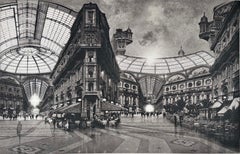
Hidden Cities III: Continuum, by Peter Milton
Located in Palm Springs, CA
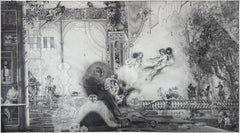
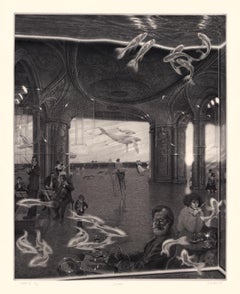
Peter Milton’s Hidden Cities: Continuum transforms the grandeur of the Galleria Vittorio Emanuele into a layered meditation on architecture, memory, and the passage of time. The Gall...
Category

Early 2000s Contemporary Engraving Interior Prints

Materials

Engraving, Etching

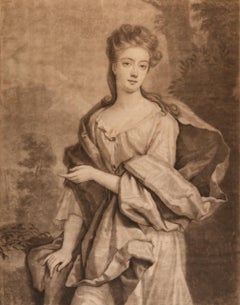
The Duchess of St. Albans: A 17th C. Portrait After a Kneller Painting
By (After) Sir Godfrey Kneller
Located in Alamo, CA
This is a 17th century engraved mezzotint portrait of the Duchess of St. Albans by John Smith, after a painting by Sir Godfrey Kneller. It was published in London by John Boydell in 1694. The Duchess of St. Albans (1642-1712) was a woman named Diana de Vere. She was born in 1642, the daughter of Aubrey de Vere, the 20th Earl of Oxford. In 1662, she married Charles Beauclerk, the illegitimate son of King Charles II and his mistress, Nell Gwyn. As a result of her marriage, Diana became the Duchess of St. Albans, and she and Charles had several children together. Diana was known for her beauty and charm, and she was a prominent figure in the court of King Charles II. Despite her husband's illegitimate birth, Diana was highly respected in the royal court and was known for her intelligence and wit. She was a patron of the arts and supported many artists and writers of the time. Diana lived through a tumultuous period of English history, including the Great Fire of London and the Glorious Revolution, which saw King James II replaced by William of Orange. She died in 1712 at the age of 70 and was buried in Westminster Abbey. Descendants of Diana and her husband, who was an illegitimate son of King Charles II, include Diana, Princess of Wales and her son William, Duke of Cambridge. An author wrote of her: "The line of Vere, so long renown’d in arms, Concludes with luster in St. Albans’s charms; Her conquering eyes have made their race complete, It rose in valor, and in beauty set." This striking mezzotint engraving depicts Diana, Duchess of St Albans in a three-quarter length pose, standing, wearing loose flowing dress and a wrap. She has a very serene, calm appearance as she is looking straight at the viewer. There is a landscape of trees in the background. The print is adhered in the corners to an archival backing, which is itself adhered in the upper corners to a larger backing. The print is trimmed to just beyond the plate mark. There are areas of discoloration in the margins and in the inscription area, but the print is otherwise in very good condition. The sheet measures 14.5" high and 10" wide. This mezzotint is held by multiple museums and institutions, including The British Museum, The National Portrait Gallery London, The Fine Arts Museum of Boston, The Lewis Walpole Library at Yale, The Yale Center for British Art, The Fitzwilliam Museum at Cambridge and The National Galleries of Scotland. The original Kneller painting is part of the British Royal Collection Trust and hangs in the King's Private Dining Room at Hampton Court Palace. Sir Godfrey Kneller (1646-1723) was a leading portrait painter of his time, particularly renowned for his depictions of the British aristocracy and royalty. He was born in Lübeck, Germany, and trained in Amsterdam under the painter Ferdinand Bol...
Category

Late 17th Century Engraving Interior Prints

Materials

Mezzotint

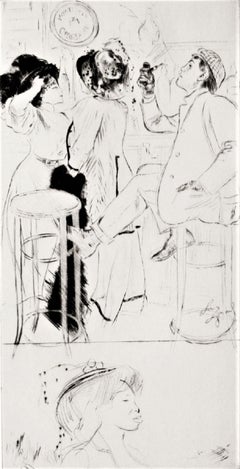
Sportsmen
Located in Plano, TX
Sportsmen. 1908. Etching and drypoint. Exsteens 271.i/ii. 11 1/4 x 5 3/4 (sheet 17 3/8 x 12 1/4). Series: Les Bars. From the first state edition of 30 proofs with the remarque sketch...
Category

Early 1900s Post-Impressionist Engraving Interior Prints

Materials

Drypoint, Etching

Sportsmen
Sportsmen
$800 Sale Price
54% Off
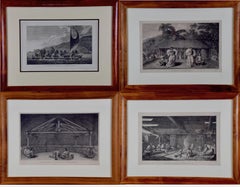
Four Koa Wood Framed 18th C. Engravings from Captain Cook s 3rd Voyage Journal
Located in Alamo, CA
A grouping of four framed engravings of Hawaii, Tahiti, Tonga and Vancouver Island from the atlas of the official British Admiralty sanctioned journal of Captain Cook's 3rd Voyage entitled "A Voyage to the Pacific Ocean Undertaken by the Command of His Majesty, for Making Discoveries in the Northern Hemisphere", published upon completion of the voyage in London in 1784 by Strahan & Cadell. These engravings were made from drawings by John Webber (1752-1793), who was the artist on Captain James Cook's 3rd and final voyage of discovery. The set of engravings includes: "A Canoe of the Sandwich Islands, the Rowers Masked", Plate 65 in the atlas; "A Dance in Otaheite" (Tahiti), Plate 28; "King of the Friendly Islands" (Tonga), plate 20; "Inside of a House in Nootka Sound" (Canada), plate 42. These engravings are professionally framed in Koa wood, the same wood as was used to make the canoes of the ancient Hawaiians. Koa wood is legendary in Hawaii. Not only is this amazing wood native to Hawaii, but it is known for the deep rich colors and varied grain pattern. Koa has an honored heritage in Hawaii and is highly revered and sacred. The word “koa” means “warrior” in Hawaiian. The warriors of King Kamehameha the Great, created canoes and weapons from a wood plentiful on the Big Island of Hawaii. This wood became synonymous with the warriors themselves, and it became known as koa. These four engravings would make a wonderful grouping for a display of 2, 3 or 4 prints. They may be purchased separately or in groups on 1stDibs. Their listing Reference #'s are: LU117324682432, LU117324682022, LU117324684052 and LU117324684062. A discount is available for a grouping depending on the number of items included. Hawaii was discovered by Captain Cook (1728-1779) during this voyage. Hawaii was originally called The Sandwich Islands in honor of The Earl of Sandwich...
Category

1780s Other Art Style Engraving Interior Prints

Materials

Engraving

Jesus and the Woman at the Well, by Amand-Durand, Engraving
By Armand Durand
Located in Oklahoma City, OK
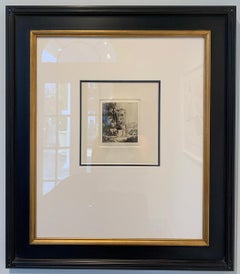
This early 19th century framed 35" x 31" engraving by artist Amand-Durand depcits an etching of 'Jesus and the Woman at the Well,' after the Dutch master, Rembrandt van Rijn. This poignant Biblical story is depicted by Arman-Durand in Rembrandt style...
Category

Early 19th Century Old Masters Engraving Interior Prints

Materials

Engraving

Les Belles et la Betes II: Before The Hunt, by Peter Milton
Located in Palm Springs, CA
Peter Milton’s Les Belles et la Bête: Before the Hunt shows his ability to weave together fantasy, art history, and the subconscious into a single intricate vision. The print stages ...
Category

1970s Contemporary Engraving Interior Prints

Materials

Engraving, Etching

Vatican Hallway designed by Raphael: 18th C. Hand-colored Engraving by Volpato
Located in Alamo, CA
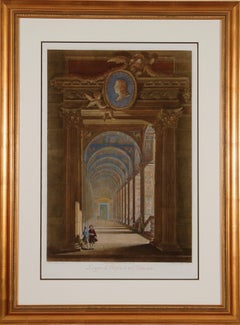
This is an original 18th century hand-colored copper-plate engraving by Giovanni Volpato after a drawing by Camporesi. It was the frontispiece for volume one of the rare and valuable...
Category

Late 18th Century Old Masters Engraving Interior Prints

Materials

Engraving

Elevations de Divers Especes de Dessus de Portes, Roubo French design engraving
Located in Melbourne, Victoria
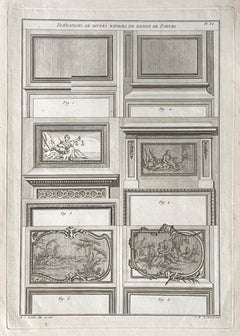
'Elevations de Divers Especes de Dessus de Portes' French copper-line engraving by JB Bichard after Andre Jacob Roubo (1739–1791). 18th century laid watermarked paper. From Roubo's...
Category

Late 18th Century French School Engraving Interior Prints

Materials

Engraving

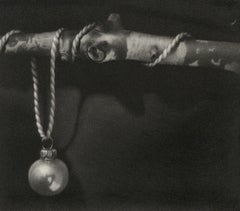
Bambalina (Are ornaments, decorations mere backdrop for true Christmas story)
Located in New Orleans, LA
Souto named this image Bambalina (backstage). It is an exclusive publication of Stone and Press Gallery. Francisco Souto was born in Venezuela. He received a BFA from Herron Schoo...
Category

21st Century and Contemporary American Modern Engraving Interior Prints

Materials

Mezzotint

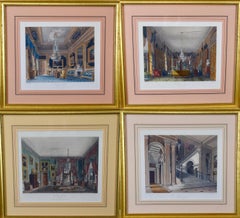
Four 19th Century Hand Colored Engravings Depicting English Royal Residences
Located in Alamo, CA
Four hand colored etchings and aquatints depicting interiors within English royal residences, including "The Blue Velvet Room at Carlton House", "The Queen's Library at Frogmore", "T...
Category

1810s Academic Engraving Interior Prints

Materials

Engraving

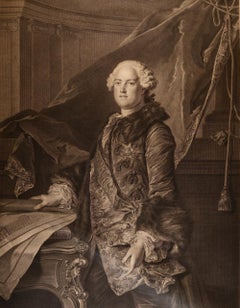
Marquis de Marigny: An 18th C. Wille Engraved Portrait after a Tocque Painting
Located in Alamo, CA
This is a mid 18th century engraved portrait of Abel François Poisson de Vandières, Marquis de Marigny by Jean Georges Wille after a painting by Louis Tocque...
Category

Mid-18th Century Engraving Interior Prints

Materials

Engraving

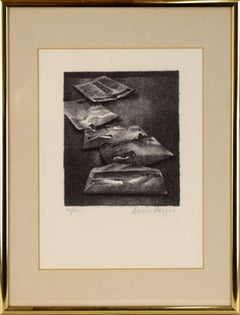
Newspapers on the Table - Still Life Etching on Heavy Paper
Located in Soquel, CA
Newspapers on the Table - Still Life Etching on Heavy Paper, #20/150 Black and white etching by Darien Payne (American, b. 1951). This piece is a meticulously detailed depiction of ...
Category

1990s Photorealist Engraving Interior Prints

Materials

Archival Paper, Drypoint, Etching

Xisco Mensua Spanish artist 1995 original signed framed engraving print n3
Located in Miami, FL
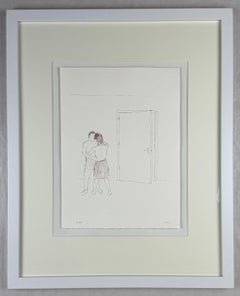
Xisco Mensua (Spain, 1960) Untitled from Portfolio "Junio - Julio", 1995 engraving on paper 12.6 x 9.5 in. (32 x 24 cm.) Edition of 6 Frame 16x20 in. ID: MEN1253-003 Hand-signed by a...
Category

1990s Contemporary Engraving Interior Prints

Materials

Paper, Engraving

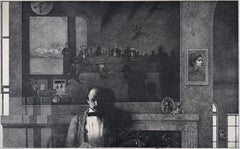
Interiors VI: Soundings
Located in New York, NY
Contemporary artist Peter Milton created this etching and engraving entitled "Interiors VI: Soundings" in 1989. The printed image size is 29 7/8 x 23 13/16 and paper size is 36 x 29 inches. This impression is signed, dated, and titled in pencil and inscribed “93/175” – the 93 impression of 175. “I do love to draw. I feel that I am being granted membership in the Brotherhood of Merlin, conjuring forth some apparition. As a drawing develops, I sense a vague presence coming more and more into focus, something in a white fog emerging and becoming increasingly palpable.” – P. Milton, “The primacy of touch. The Drawings of Peter Milton” “Working in layers, Milton begins with drawings based on people and places, with nods to Western art history and culture. He is a master of the appropriated image, a term that may conjure Andy Warhol and his Pop Art comrades. But Milton steps further back in history, avoiding the Pop sense of cool advertising and popular culture references. Instead, a broader cultural past is tapped through historical photographs of key players, architecture, and locales, which he reinvents by hand. He adds content drawn from his life as an avid reader – always with multiple possible interpretations – thus incorporating deeper meaning in his cinematic worlds. Elements of Greek mythology, classical music, art history, and history coalesce in his images, which embrace the messiness, sorrow, and elation that is life. One is hard-pressed to imagine a more erudite, skilled, passionate, and cheeky soul." – T. L. Johnson and A. Shafer Peter Milton was born in Pennsylvania in 1930. He studied for two years at the Virginia Military Institute...
Category

Late 20th Century Surrealist Engraving Interior Prints

Materials

Engraving, Etching

Tomb of the Virgin Mary: An Early 19th C. Aquatint after a Luigi Mayer Drawing
Located in Alamo, CA
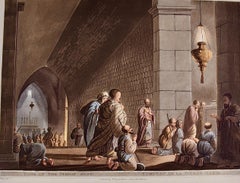
"Tomb of the Virgin Mary", Pl. 10 in Luigi Mayer's publication 'Views in Egypt, Palestine, and Other Parts of the Ottoman Empire', published by Robert Bowy...
Category

Early 19th Century Engraving Interior Prints

Materials

Engraving

Parmigiani Amica: An 18th Century Engraving and Etching by Strange After Mazzola
Located in Alamo, CA
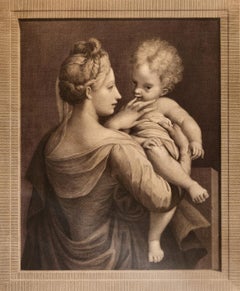
This is an 18th century engraving and etching entitled "Parmigiani Amica" by Robert Strange after a painting by Girolamo Francesco Maria Mazzola, better known as Parmigianino, who lived during the Renaissance period. It was published in London in 1774. As the inscription states, the painting was in the collection of the King of Naples at the time the engraving was made. The engraving depicts a half-length portrait of a young woman, known as Parmigiani's Amica (meaning "female friend" in Italian). She is depicted wearing a simple but elegant dress with a low-cut neckline, which reveals her delicate features and graceful neck. Her hair is arranged in a simple yet stylish manner. She is turning to the right to look lovingly at her infant, which she is holding with her right arm. She is touching the baby's mouth with her left hand. The background of the engraving is plain and unadorned, allowing the viewer to focus entirely on the subject of the portrait. The result is a beautiful and timeless image that captures the essence of Renaissance portraiture. The engraving is printed on watermarked paper. The sheet measures 16.25" high and 12' wide. The sheet is adhered to paper in its upper corners and it has been removed from the paper in its lower corners. There is some mild discoloration and some wrinkling in the margins, including the lower inscription area, and a small dark spot in the upper margin, which may represent a drop of ink occuring at the time of printing. These issues do not involve the image, which is in very good condition. The print is held by several museums and institutions, including: The Metropolitan Museum of Art in New York, The British Museum in London, The Royal Museums of the UK, The British National Trust...
Category

Late 18th Century Engraving Interior Prints

Materials

Engraving, Etching

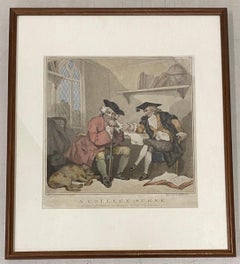
Edward Williams "A College Scene" After Thomas Rowlandson Color Engraving C.1787
Located in San Francisco, CA
Edward Williams "A College Scene" After Thomas Rowlandson Color Engraving C.1787 Late 18th century hand colored engraving after Thomas Rowlandson A scene of a young student asking ...
Category

Late 18th Century Engraving Interior Prints

Materials

Engraving

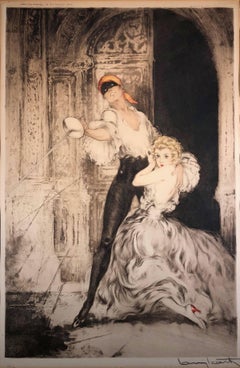
Don Juan
Located in Missouri, MO
Aquating Engraving Image Size: approx. 20 1/4 x 13 3/8 Framed Size: 28 x 20.5 inches Pencil Signed Lower Right Louis Justin Laurent Icart was born in Toulouse in 1890 and died in Paris in 1950. He lived in New York City in the 1920s, where he became known for his Art-Deco color etchings of glamourous women. He was first son of Jean and Elisabeth Icart and was officially named Louis Justin Laurent Icart. The use of his initials L.I. would be sufficient in this household. Therefore, from the moment of his birth he was dubbed 'Helli'. The Icart family lived modestly in a small brick home on rue Traversière-de-la-balance, in the culturally rich Southern French city of Toulouse, which was the home of many prominent writers and artists, the most famous being Henri de Toulouse-Lautrec. Icart entered the l'Ecole Superieure de Commerce de Toulouse in order to continue his studies for a career in business, particularly banking (his father's profession). However, he soon discovered the play writings of Victor Hugo (1802-1885), which were to change the course of his life. Icart borrowed whatever books he could find by Hugo at the Toulouse library, devouring the tales, rich in both romantic imagery and the dilemmas of the human condition. It was through Icart's love of the theater that he developed a taste for all the arts, though the urge to paint was not as yet as strong for him as the urge to act. It was not until his move to Paris in 1907 that Icart would concentrate on painting, drawing and the production of countless beautiful etchings, which have served (more than the other mediums) to indelibly preserve his name in twentieth century art history. Art Deco, a term coined at the 1925 Paris Exposition des Arts Decoratifs, had taken its grip on the Paris of the 1920s. By the late 1920s Icart, working for both publications and major fashion and design studios, had become very successful, both artistically and financially. His etchings reached their height of brilliance in this era of Art Deco, and Icart had become the symbol of the epoch. Yet, although Icart has created for us a picture of Paris and New York life in the 1920s and 1930s, he worked in his own style, derived principally from the study of eighteenth-century French masters such as Jean Antoine Watteau, François Boucher and Jean Honoré Fragonard. In Icart's drawings, one sees the Impressionists Degas...
Category

1920s Art Deco Engraving Interior Prints

Materials

Engraving, Aquatint

Don Juan
Don Juan
$2,800 Sale Price
20% Off
La Prêteuse sur Gage
Located in Middletown, NY
Brussels: Fondation de Dietrich et Cie, 1914. Etching with drypoint on Japon paper, 3 5/8 x 4 inches (93 x 102 mm); sheet 11 1/8 x 9 7/8 inches (283 x 251 mm), full margins. Signed a...
Category

Early 20th Century French School Engraving Interior Prints

Materials

Handmade Paper, Etching, Drypoint

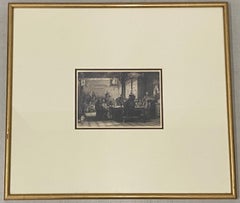
G. Paterson "Dinner Party at a Mandarin s House" Engraving After T. Allom c.1840
Located in San Francisco, CA
G. Paterson "Dinner Party at a Mandarin's House" Original Engraving After T. Allom C.1840 Original engraving Dimensions 8" wide x 5" high The frame measures 20.5" wide x 18.5" hig...
Category

Mid-19th Century Realist Engraving Interior Prints

Materials

Engraving

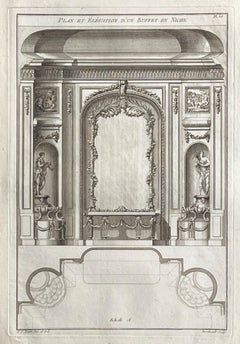
Plan et Elevation d un Buffet en Niche, Roubo French design engraving
Located in Melbourne, Victoria
'Plan et Elevation d'un Buffet en Niche' French copper-line engraving by Berthault after Andre Jacob Roubo (1739–1791). 18th century laid watermarked paper. From Roubo's 'L'Art du ...
Category

Late 18th Century French School Engraving Interior Prints

Materials

Engraving

Theater
Located in New York, NY
Michele Zalopany was born in Detroit, Michigan. She attended the Columbus College of Art and Design from 1973 to 1974 and the Cleveland Institute of Art from 1976 to 1978. She earned her Bachelor of Fine Arts degree from the School of Visual Arts in 1981. Through her labor-intensive mezzotints, Zalopany employs realism to depict fictitious scenes, bearing witness to the disintegration of what was once the fulcrum of the American economy in Detroit. Zalopany’s work is widely represented in many public and private collections in the United States and in Europe including The National Gallery of Art, The Yokohama Museum of Art, The Whitney Museum of American Art, The Walker Art Center, The Museum of Fine Art in Boston, The Cleveland Museum of Art, The Royal College of Art in London, and numerous others. Her work has been exhibited in galleries that include P.P.O.W., John Good...
Category

1990s Contemporary Engraving Interior Prints

Materials

Mezzotint

Theater
$720 Sale Price
52% Off
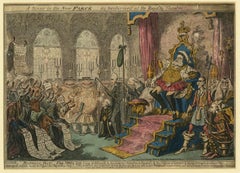
A Scene in the New Farce —as performed at the Royalty Theater
Located in Middletown, NY
A Scene in the New Farce —as performed at the Royalty Theater London: George Humphrey, 1821. Etching and engraving on cream wove paper with extensive hand coloring in watercolor. 9 5/8 x 13 3/4 inches (244 x 348 mm), trimmed at the platemark. A beautiful impression of this large, intricate print...
Category

Early 19th Century Engraving Interior Prints

Materials

Watercolor, Engraving, Etching

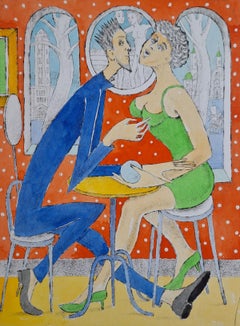
In the cafeteria - Figurative Drypoint Print, Colorful, Polish Art
Located in Warsaw, PL
CZESLAW TUMIELEWICZ (b. 1942) In 1968, he studied at the Architecture faculty of Gdank, before continuing his course at the Technical University in the same city, and then he taught ...
Category

Early 2000s Contemporary Engraving Interior Prints

Materials

Paper, Drypoint, Watercolor

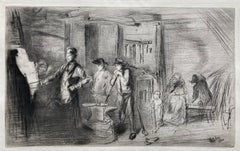
THE FORGE - Rich Drypoint
Located in Santa Monica, CA
JAMES ABBOTT MCNEIL WHISTLER (1834 – 1903) THE FORGE 1866 (Kennedy. 68 iv/vi: Glascow 86 vi/vi) Etching and drypoint. Signed and dated in the plate 1866. VERY GOOD IMPRESSION WITH...
Category

Late 19th Century Impressionist Engraving Interior Prints

Materials

Drypoint

Plan et Elevation d une Alcove, Roubo French design engraving
Located in Melbourne, Victoria
'Plan et Elevation d'une Alcove' French copper-line engraving by Berthault after Andre Jacob Roubo (1739–1791). 18th century laid watermarked paper. From Roubo's 'L'Art du Menuisie...
Category

Late 18th Century French School Engraving Interior Prints

Materials

Engraving

La diligence de Beaucaire
Located in Middletown, NY
Paris: Lemerre, 1880. Etching, drypoint, aquatint (dust ground and spirit ground), spit bite, and roulette in black on cream laid paper with a deckle edge, 6 3/4 x 4 1/2 inches (170 x 112 mm), full margins. Third state (of 3). An illustration from Alphonse Daudet's, Lettres de mon moulin, Paris, 1880. In very good condition with some light uniform toning and two areas of paper tape at the top right and left corners on the verso (from a former mount). With the 1921 J.H. de Bois circular ink stamp in green ink in the lower right margin on the recto (Lugt L.733). [Bourcard 110]. A note regarding the provenance: J. H. de Bois was a well known late-19th century modern art...
Category

1880s French School Engraving Interior Prints

Materials

Laid Paper, Drypoint, Etching, Aquatint

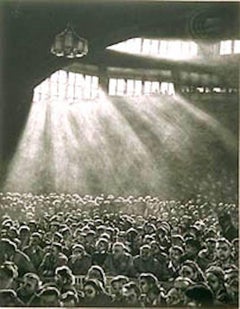
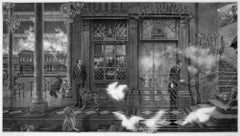
Interiors VII: The Train from Munich
Located in Middletown, NY
Interiors VII: The Train from Munich Robert E. Townsend, 1991. Resist ground etching and engraving with hand refinement in charcoal, pencil, stabilo, and eraser on BFK Rives white wove paper, 20 x 36 inches (507 x 914 mm), full margins. Signed, titled, dated and numbered 51/175 by the artist in pencil, lower margin. A brilliant, inky impression with luminous light and gradient tones. In excellent condition with one extremely minor and superficial spot of light tan adhesive residue on the verso, unobtrusive and not visible on the recto, with no other visible defects. With the blind stamp of the printer, Robert E. Townsend in the lower left margin. An especially fine impression in superb condition. [Milton 113]. When asked about this work in particular, Milton expressed that his favorite images were his darkest images, in theme, mood, and in ink. Milton, who has said that his work is infused with a postmodern awareness of the past, has focused here in a deeply personal way on a segment of history that continues to haunt us all. The work, published in 1991, evokes one of the darkest periods of European history, the eroding and erasing of European culture under fascism, and the eventual total loss of humanity. The Train from Munich is an especially relevant and emotional work for Milton, who created the piece for his wife, Edith, who escaped Munich in 1939 as a child on the fabled Kinderstransport. The Kinderstransport was a desperate rescue effort on the part of the British government to save as many Jewish children as possible by railway before borders closed on the precipice of the Second World War. Children left their parents behind, and boarded the trains alone, leaving the impending doom of Nazi Germany, they arrived in Great Britain as refugees. More than 10,000 children escaped the holocaust via the Kinderstransport. In Train from Munich, the image itself holds an almost immeasurable amount of symbolism; each inch of the matrix is a successful effort to confront this history in a way that is poignant through a series of motifs. We see the Café disappearing into a ghostlike memory of the past, an allegory to the disintegration of culture, while through the windows we can see a rampant, snarling dog; a portrait of Hitler's shepherd, Blondi. Blondi isn't the only notable figure in the composition. Milton has pointed out that the fading figure of the doorman at the Hotel Metropole is modeled after the artist and intellectual Marcel Duchamp, and the face of the young girl peering...
Category

1990s American Modern Engraving Interior Prints

Materials

Charcoal, ABS, Engraving, Etching

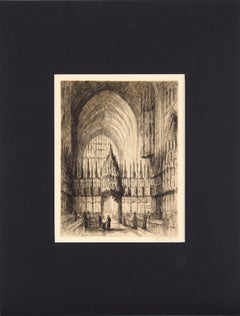
Chester Cathedral - Drypoint Etching in Ink on Paper
Located in Soquel, CA
Chester Cathedral - Drypoint Etching in Ink on Paper Dramatic drypoint etching by J. Alphege Brewer (British, 1881-1946). This composition shows the interior of Chester Cathedral in Brewer's characteristic style - highly detailed and with strong contrast. The scene encompasses the cathedral from floor to ceiling, capturing the immense size of the building. There are several people in the scene which contribute to the sense of scale. Signed by hand "J. Alphege Brewer" in the lower right corner. Titled "Chester Cathedral" in plate, lower left corner. Includes original card with artist's name. Presented in a new black mat with foamcore backing. Mat size: 16"H x 12"W Paper size: 10.75"H x 7.75"W James Alphege Brewer was well known in the early 20th century as a producer of color etchings of European cathedrals and other scenes of church, college, and community. He was born July 24, 1881, in the Kensington section of London, England, the son of Henry W. Brewer, noted artist of historical architecture and prominent convert to the Catholic Church, and the grandson of John Sherren Brewer, Jr., “the brilliant editor of the Calendar of Letters of Henry VIII.” His great uncle was E. Cobham Brewer, the polymath who compiled Brewer’s Dictionary of Phrase and Fable. Among his older siblings were the artist Henry C. Brewer and the organist and writer John Francis Brewer. Brewer attended the Westminster School of Art in London, where his brother Henry also trained. In 1910, he married Florence Emma Lucas, an accomplished painter in oil and watercolor, whose father was the noted landscape artist George Lucas and whose great uncle was David Lucas, the famous engraver for John Constable. Florence's brothers Edwin and George assisted Brewer in the printing of Brewer's etchings. Brewer exhibited at the Royal Academy (RA) and the Royal Institute of Painters in Watercolour (RI), at the Paris Salon of the Académie des Beaux-Arts, and in the shows of the Royal Cambrian Academy (RCA). He became an associate of the Royal Cambrian Academy in 1929 and a full member in the last two years of his life. He was also a member of the Hampstead Society of Artists, the Society of Graphic Art, and the Ealing Arts Club, where he was first Honorary Art Secretary and then Honorary Art Chairman. Most of Brewer's larger etchings were published by Alfred Bell...
Category

Early 20th Century Romantic Engraving Interior Prints

Materials

Paper, Ink, Drypoint

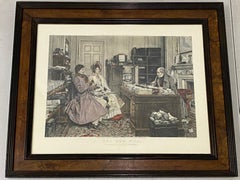
James Dobie "The New Will" Color Engraving After Walter Dendy Sadler c.1894
Located in San Francisco, CA
James Dobie "The New Will" Color Engraving After Walter Dendy Sadler c.1894 Original 19th century color engraving Engraved by James Dobie after artwork b...
Category

Late 19th Century Engraving Interior Prints

Materials

Engraving

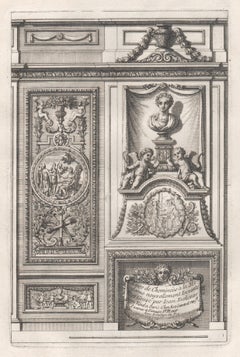
Four French Louis XIV period chimney-piece design engravings by Jean Dolivar
Located in Melbourne, Victoria
'Luire de Cheminees a la Moderne nouvellement Invente et Grave par Jean Dolivar.' Collection of 4 engravings with designs for chimney-pieces. Published in Paris, circa 1670. 210mm ...
Category

Mid-17th Century Baroque Engraving Interior Prints

Materials

Engraving, Etching

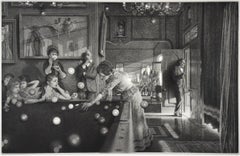
Points of Departure: Mary s Turn, by Peter Milton
Located in Palm Springs, CA
Peter Milton’s Mary’s Turn reimagines a scene where Mary Cassatt and Edgar Degas engage in a game of billiards, reflecting their real-life friendship and rivalry. Cassatt leans forwa...
Category

1990s Contemporary Engraving Interior Prints

Materials

Engraving, Etching

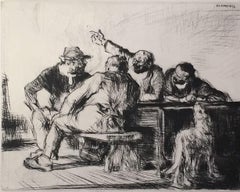
Politics
Located in Plano, TX
Politics (Tonnere de Brest). 1926. Drypoint. Appleby 108. 7 x 9 (sheet 10 1/2 x 15 1/2). A rich impression printed on cream wove paper with full margins. Illustrated: Salaman, Modern...
Category

Early 20th Century Modern Engraving Interior Prints

Materials

Drypoint, Etching

Politics
Politics
$1,250 Sale Price
28% Off
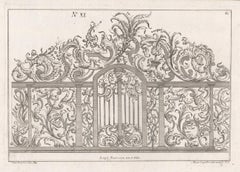
Rococo design for a gate, German mid 18th century etching
Located in Melbourne, Victoria
Rococo design for a gate, etching, by Joseph Baumann (active 1740-1760), circa 1750. Published by Martin Engelbrecht (1684–1756). Similar works ar...
Category

Mid-18th Century Rococo Engraving Interior Prints

Materials

Engraving, Etching

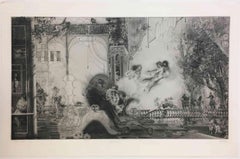
Les Belles et la Bête: Before the Hunt
Located in Middletown, NY
Resist ground etching and engraving on cream wove paper, 22 x 39 inches (558 x 990 mm), full margins. Signed, titled, dated, and numbered 27/160 in pencil, lower margin. With the blindstamp of the printer, Robert E. Townsend, in the lower left margin. A beautiful, richly inked impression of this highly detailed, large image. In very good condition with minor mat tone, extremely minor scattered light surface soiling, and one pin-point sized dot of brown discoloration on the lower left margin, recto, well outside of image area. [Milton 99]. Milton states that there is a metaphorical evolution at the root of his body of graphic work, and with Les Belles et la Bête, Before the Hunt, he found himself at a crossroads that he viewed as a sort of artistic adolescence, which he felt demanded a natural examination of mysteries of sexual awakening. The image is brimming with fantastical images and metaphors for the confrontation of sexual exploration; a Freudian analyst appears in the left of the image, scattered tableaus of paired figures...
Category

1970s American Modern Engraving Interior Prints

Materials

Archival Paper, Engraving, Etching

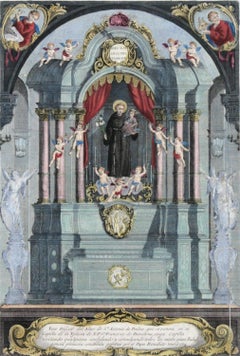
Altar de St. Antonio de Padua Hand Colored Engraving 1724
Located in Paonia, CO
Anthony of Padua or Anthony of Lisbon born Fernando Martins de Bulhoes 15 August 1195 – 13 June 1231) was a Portuguese Catholic priest and friar of the Franciscan Order. He was born and raised by a wealthy family in Lisbon, Portugal, and died in Padua, Italy. Noted by his contemporaries for his powerful preaching, expert knowledge of scripture, and undying love and devotion to the poor and the sick, he was one of the most quickly canonized saints in church history, being canonized less than a year after his death. He was proclaimed a Doctor of the Church by Pope Pius XII...
Category

1720s Baroque Engraving Interior Prints

Materials

Engraving

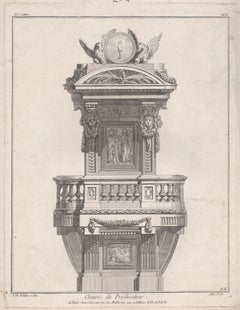
French Neoclassical design for a Pulpit, engraving after Delafosse
Located in Melbourne, Victoria
Copper-line engraving. C1768. Delafosse was a French decorative designer, engraver and architect. Apprenticed for a time to a sculptor, by 1767 he styled himself an 'architect and professor of design'. He published the first volume of his most important work, 'Nouvelle Iconologie Historique' in 1768, containing 110 plates of his designs for furniture, decorative arts and architectural...
Category

Late 18th Century French School Engraving Interior Prints

Materials

Engraving

In the Silence of Passing Years
Located in New Orleans, LA
This image is an artist proof XII / XII. The artist's subject matter was enigmatic: a recurring theme was that of anonymous packages tied with knots of rope; sometimes there are prison bars...
Category

Late 20th Century Contemporary Engraving Interior Prints

Materials

Mezzotint

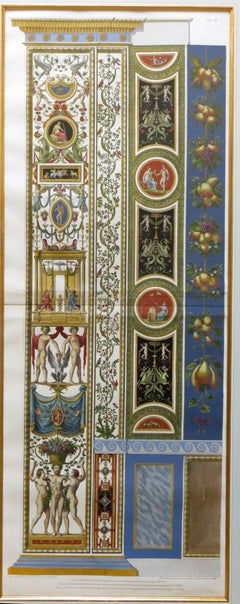
Logge di Rafaele nel Vaticano (Raphael s Loggia in the Vatican) Plate X Pilaster
By Gaetano Savorelli
Located in San Francisco, CA
Artists: Raffaello Sanzio d’Urbino.(1483 – 1520) Gateano Savorelli, artist. (unk.- 1791) Ludovico Teseo, draughtsman. (1731-1782) Pietro Camporesi, architect (1726 - 1781) Giovanni Ottoviani (1735-1808) & Giovanni Volpato (1735 – 1803), engravers Title: Delle Logge di Rafaele nel Vaticano, Plate X (10) Year: 1772-1777 Medium: Hand-colored copperplate engraving Sight size: 42 x 16 inches. Framed size: 55.5 x 28.5 inches Condition: Very good Frame: Frame in very good condition A tall and incredibly detailed printed panel, “Delle Logge di Rafaele nel Vaticano” (“Raphael Loggia...
Category

1770s Renaissance Engraving Interior Prints

Materials

Engraving, Watercolor

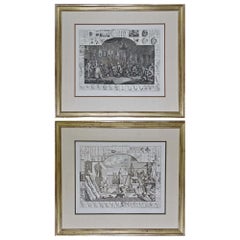
William Hogarth s "Analysis of Beauty": A Set of Two Framed 18th C. Engravings
Located in Alamo, CA
The two plates in this set were created utilizing both engraving and etching techniques by William Hogarth in 1753, originally as illustrations of his book on aesthetics, entitled "Analysis of Beauty". Due to their popularity, these plates were later published separately. The publication line in the lower right reads: "Designed, Engraved, and Publish'd by Wm. Hogarth, March 5th 1753, according to Act of Parliament." Hogarth's original copper plates were refurbished where needed by James Heath and engravings were republished in London in 1822 by Braddock, Cradock & Joy. This was the last time Hogarth's copper plates were used for printing. Most were melted during World War I for the construction of bombs. These large folio sized "Analysis of Beauty" engravings are presented in antiqued gold-colored frames with double mats; the outer silk mats are light brown-colored and the inner mats are dark brown. Each frame measures 27.38" x 31.25" x 1.13". There is one tiny spot in the right margin of plate 1 and another in the lower margin; the latter could be from the printing process. The prints are otherwise in excellent condition. The "Analysis of Beauty" series is in the collection of many major museums, including: The British Museum, The Metropolitan Museum of Art, The Tate Museum, The Chicago Art Institute and The Fine Arts Museums of San Francisco. The first engraving (Plate 1) depicts a courtyard of statues which is filled with some of the most famous works of classical sculpture. The most important sculptures are surrounded by less impressive works. The Medicean Venus (#13) is in the center with a statue of Julius Caesar (#19) to the right, elevated on a pulley with a short, overdressed Brutus stands over the falling Caesar. The Apollo Belvedere (#12) is next. A judge stands to the right with his foot on a cherub (#16). Another crying cherub holds a gallows and wipes his tears with the judge's robe. A sphinx (#21) and the drunken Silenus (#107) are below the Venus. Michaelangelo's torso (#54) and a statue of Antonius (#6) are seen in the foreground. The Farnese Hercules (#3) and a bust of another Hercules (#4) under two statuettes of Isis are also included in the scene. The key to these objects is included in the form of a serpentine line winding around a cone (#26), Hogarth's "Line of Beauty". For Hogarth the winding line is an essential element of beauty in art. Hogarth's theory of beauty is communicated in this plate. Plate 2 is thought to represent the Wanstead Assembly, with the Earl of Tynley and his household. It is an adaptation of a scene in the Happy Marriage series, which complements Hogarth's Marriage à la Mode...
Category

Mid-18th Century Old Masters Engraving Interior Prints

Materials

Engraving, Etching

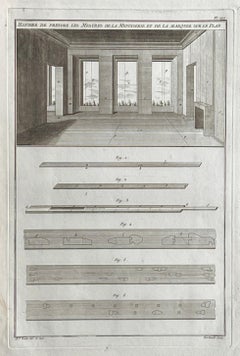
Maniere de Prendre Les Mesures, Roubo French cabinetmaking design engraving
Located in Melbourne, Victoria
'Maniere de Prendre Les Mesures de la Menuiserie et de la Marquer sur le Plan' French copper-line engraving by Berthault after Andre Jacob Roubo (1739–1791). 18th century laid water...
Category

Late 18th Century French School Engraving Interior Prints

Materials

Engraving

Library Case, Hepplewhite English Georgian furniture design engraving
Located in Melbourne, Victoria
'Library Case' From George Hepplewhite's 'Cabinet-Maker and Upholsterer's Guide', published by I. and J. Taylor in 1788. These engravings are the only evidence of Hepplewhite's styl...
Category

Late 18th Century English School Engraving Interior Prints

Materials

Engraving

Le Curé de Cucignan
Located in Middletown, NY
A lovely, dark impression with excellent provenance. Paris: Lemerre, 1880. Etching, drypoint, aquatint (dust ground and spirit ground), spit bite, and roulette in black on cream laid paper with a deckle edge, 6 3/4 x 4 1/2 inches (170 x 112 mm), full margins. Third state (of 4). An illustration from Alphonse Daudet's, Lettres de mon moulin, Paris, 1880. In very good condition with some light uniform toning and two areas of paper tape at the top right and left corners on the verso (from a former mount). With the 1921 J.H. de Bois circular ink stamp in green ink in the lower right margin on the recto (Lugt L.733). [Bourcard 112] A note regarding the provenance: J. H. de Bois was a well known late-19th century modern art...
Category

1880s French School Engraving Interior Prints

Materials

Drypoint, Etching, Aquatint, Laid Paper
Daylilies, by Peter Milton
Located in Palm Springs, CA
Peter Milton’s Daylilies is a haunting meditation on memory, mortality, and the layered complexity of personal and cultural history. Like much of Milton’s work, the print operates le...
Category

1990s Contemporary Engraving Interior Prints

Materials

Engraving, Etching

A Japanese Temple – English School, 18th century
Located in Middletown, NY
18th century image of a priest presiding over a traditional Japanese nuptual ceremony. One plate from A new and complete collection of voyages and travels containing all that have b...
Category

Late 18th Century English School Engraving Interior Prints

Materials

Watercolor, Handmade Paper, Engraving
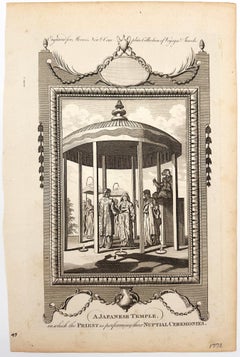
Rustics of Japan – English School, 18th century
Located in Middletown, NY
A Method of Riding as Practised by the Rustics of Japan. One plate from A new and complete collection of voyages and travels containing all that have been remarkable from the earlies...
Category

Late 18th Century English School Engraving Interior Prints

Materials

Watercolor, Handmade Paper, Engraving
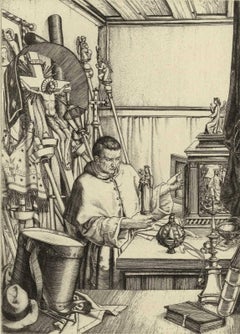
The Sacristan
Located in New Orleans, LA
This image shows a cleric seated in a church sacristy surrounded by religious statues, croziers, various saints, statues and chalices. It is an origina...
Category

Early 20th Century Modern Engraving Interior Prints

Materials

Engraving

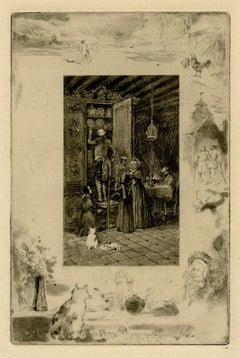
Les Vieux (The Elders)
Located in Middletown, NY
A lovely, dark impression with excellent provenance. Paris: Lemerre, 1880. Etching, drypoint, aquatint (dust ground and spirit ground), spit bite, and roulette in black on cream laid paper with a deckle edge, 6 3/4 x 4 1/2 inches (170 x 112 mm), full margins. Fourth state (of 5). An illustration from Alphonse Daudet's, Lettres de mon moulin, Paris, 1880. In very good condition with some light uniform toning and two areas of paper tape at the top right and left corners on the verso (from a former mount). With the 1921 J.H. de Bois circular ink stamp in green ink in the lower right margin on the recto (Lugt L.733). [Bourcard 113]. A note regarding the provenance: J. H. de Bois was a well known late-19th century modern art...
Category

1880s French School Engraving Interior Prints

Materials

Etching, Drypoint, Aquatint

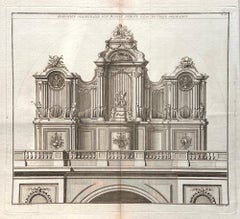
French pipe organ design, late 18th century engraving
Located in Melbourne, Victoria
'Elevation Geometralle d'Un Buffet D'Orgue d'Une Nouvelle Decoration' Copper-line engraving. C1770. 380mm by 420mm (platemark) 460mm by 560mm (sheet) From Roubo's 'L'Art du Menui...
Category

Late 18th Century Rococo Engraving Interior Prints

Materials

Engraving

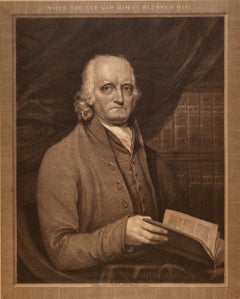
Richard Reynolds, Society of Friends: 19th C. Engraved Portrait by Wm. Sharp
Located in Alamo, CA
This is an early 19th century engraved portrait of the industrialist and philanthropist Richard Reynolds by William Sharp after William Hobday. It was published in London by Rudolph Ackerman in 1817. The print is entitled "Richard Reynolds of the Society of Friends, Late of Bristol". This three-quarter length portrait of Reynolds depicts him seated, directed to right, looking towards the viewer. He is holding an open book, wearing a plain suit. A curtain in the background is pulled to the left, revealing bookshelves. Some of the books are labelled 'Addison & Watts' 'Kempis & Fenelon' 'Milton & Cowley' etc. The inscription above the portrait reads: "When the eye saw him it blessed him". The lettering below the image reads: "Richard Reynolds of the Society of Friends, Late of Bristol; Whose Life and Fortune were devoted to the Glory of God by relieving the humble in Distress.', This plate is dedicated by Permission to his Royal Highness, the Prince Regent by his most devoted very humble servant William Hobday." This engraving is printed on thick paper. The sheet measures 16" high and 12" wide. It is adhered to an archival backing in the upper left corner. There is mild discoloration and toning in the margins, but it does not involve the image. Richard Reynolds (1735-1816) was a prominent member of the Society of Friends, also known as Quakers, in the 18th and 19th centuries. He was born into a wealthy family in Bristol, England, and inherited a successful copper smelting, iron manufacturing business from his father. Despite his privileged upbringing, Reynolds was known for his deep concern for the poor and his commitment to social justice. He used his wealth and influence to support a range of philanthropic causes, including the abolition of slavery, the improvement of working conditions for miners and factory workers, and the provision of education for the poor. Reynolds was also a prominent supporter of the Quaker...
Category

Early 19th Century Engraving Interior Prints

Materials

Engraving

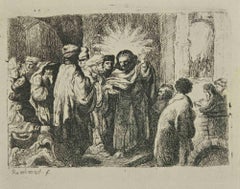
The Tribute Money - engraving after Rembrandt - 19th Century
Located in Roma, IT
The Tribute Money is an engraving on ivory-colored paper realized after Rembrandt by Charles Amand Durand (1831-1905) after an etching by Rembrandt. This wonderful piece of art belo...
Category

19th Century Old Masters Engraving Interior Prints

Materials

Engraving

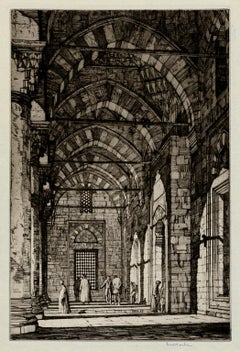
Mosque of the Sultan Bayazid, Constantinople — Vintage Realism
Located in Myrtle Beach, SC
Louis Conrad Rosenberg, 'Mosque of the Sultan Bayazid, Constantinople', etching, 1927. Signed in pencil. Initialed and dated in the plate, lower left. A fine, richly-inked impression...
Category

1920s American Realist Engraving Interior Prints

Materials

Drypoint

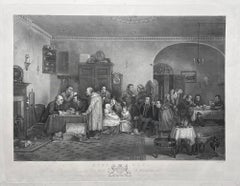
Rent Day, English antique engraving after Sir David Wilkie
By Sir David Wilkie
Located in Melbourne, Victoria
'Rent Day' Engraving by Abraham Raimbach (1776-1843) after Sir David Wilkie RA (1785-1841). Circa 1820. 'Second Plate' printed under engraver's name. Wilkie was an important Scot...
Category

Mid-19th Century Naturalistic Engraving Interior Prints

Materials

Engraving

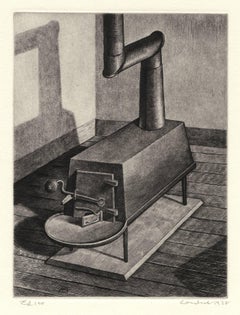
Shaker Stove.
Located in New York, NY
Armin Landeck created this drypoint in 1938 in an edition of 100. The image size is 7 13/16 x 5 7/8" and paper size 14 x 12". This piece is signed and dated in pencil in ...
Category

1930s American Realist Engraving Interior Prints

Materials

Drypoint

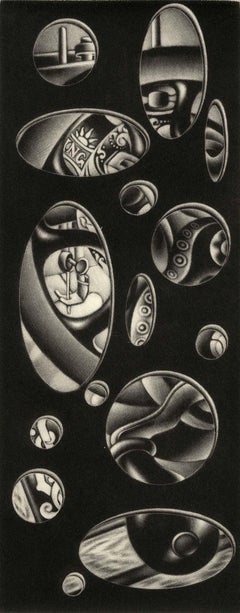
Singer 10101
Located in New Orleans, LA
Carol Wax's mezzotint, "Singer 10101", is an image of Singer I as seen through a drafting template. It was issued as an edition of 40 and was printed at the Indiana University print...
Category

Early 2000s Contemporary Engraving Interior Prints

Materials

Mezzotint

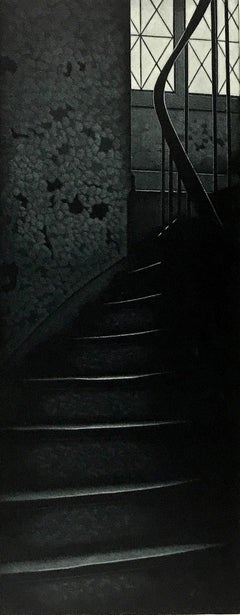
Before It Happened (A mysterious staircase offers no clues as to what happened)
Located in New Orleans, LA
This Finnish artist creates a mezzotint in black and white. This impression is #44 of 100 and is signed, dated and titled in pencil. Jukka Vanttinen (Finn, b. 1954) Jukka Vanttinen...
Category

Early 2000s Modern Engraving Interior Prints

Materials

Mezzotint

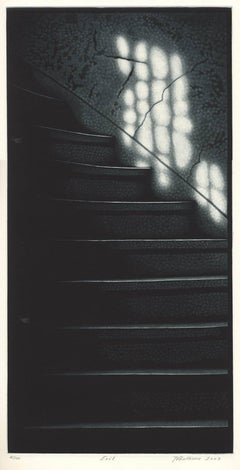
Exit (Dappled sunlight in an ancient stairway leads to an uncertain end.)
Located in New Orleans, LA
Finns always seek the solace of nature. Is this mysterious stairway an escape from the challenges of civilization? Vanttinen created this mezzotint in an edition of 100 and it is tit...
Category

Early 2000s Contemporary Engraving Interior Prints

Materials

Mezzotint

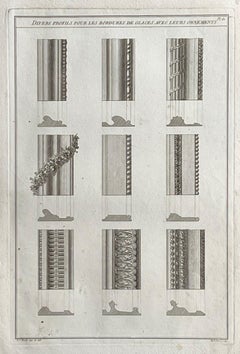
Different Profils Pour Les Bordures, Roubo French cabinetmaking design engraving
Located in Melbourne, Victoria
'Different Profils Pour Les Bordures de Glaces avec leurs Ornements' French copper-line engraving by Michelinot after Andre Jacob Roubo (1739–1791). 18th century laid watermarked pa...
Category

Late 18th Century French School Engraving Interior Prints

Materials

Engraving

The Great Fire of London, 1666
Located in Middletown, NY
A rare early 19th century view of the Great Fire of London over Ludgate, enhanced with hand coloring. London: Robert Wilkinson, 1811. Copperplat...
Category

Early 19th Century English School Engraving Interior Prints

Materials

Handmade Paper, Engraving, Watercolor
N. Lambert Seigneur de Thorigny: 17th C. Engraved Portrait After Largillière
Located in Alamo, CA
This is a 17th century engraving entitled "Messire Nicolas Lambert Seigneur de Thorigny, Conseiller du Roy" by Pierre Drevet after a painting by Noicolas de Largillière, published in Paris in 1698. This portrait depicts a three-quarter length view of Nicolas Lambert de Thorigny, who is dressed in elaborate robes and collar of a wealthy Parisian nobleman of the time. He is seated directed to the left and looking directly at the viewer. He is holding an inscribed note in his right hand. A magnificent billowing curtain is in the background. Lambert's coat of arms is shown in the center of the lower inscription area. In the inscription area is lettered with title, production detail: "Nic. Largilliere pinxit" and "Petr. Drevet sculpsit", and publication detail: "Se vend a Paris chez Drevet rüe du Foin au coin du College de Maître Gervais". Nicolas Lambert, Seigneur de Thorigny (1600-1664), was a French nobleman and military commander who lived in the 17th century. He served in the French army during the Thirty Years' War, a conflict that took place from 1618 to 1648 and involved many European powers. Lambert fought in several battles during the war and rose to the rank of colonel. After the war, Lambert returned to France and became involved in politics. He served as a member of the Estates General, a legislative body that advised the king, and as a governor of several provinces. He was a counsellor and confidant of King Louis XIV. He had the title of Président de la Chambre des Comptes. He also became a member of the French Academy of Sciences, a prestigious institution that promotes scientific research and scholarship. Lambert was known for his military expertise, his intelligence, and his commitment to public service. He iInherited the Hôtel Lambert in Paris from his brother Jean Baptiste in 1644 and hired some of the most prominent artists of the time, including Charles Le Brun to decorate and furnish the building. This beautiful old master engraving was created with impressive detailed technique. It is printed on laid, chain-linked paper. The sheet measures 18.5" high and 13.38" wide. The sheet is adhered to an archival backing paper at the top. There is a faint horizontal center fold and mild discoloration in the inscription area and in the upper margin on the right, with mild wrinkling here. The print is otherwise in very good condition, considering its age. This engraving is so rare, that no comparable prints could be identified for sale online. It is currently only listed in museum collections, including: The Metropolitan Museum of Art, The British Museum, The Louvre, The Riksmuseum, The Victoria & Albert Museum, The Fitzwilliam Museum at the U. of Cambridge, The Boston Museum of Fine Arts, Harvard Art Museums, The Finnish National Museum, The Philadelphia Museum. It is shown in the Metropolitan Museum's Cataloque of French paintings entitled: "French Paintings in The Metropolitan Museum of Art, published in 2018, page 36. The page is included in the photos. Nicolas de Largillière (1656-1746) was a French portrait painter who achieved great success and acclaim during the late Baroque and Rococo periods. He was born in Paris and trained under the painter Antoine Goubeau. He studied in Antwerp and London before returning to France. While in England he was a favorite painter of King Charles II and King James II of England...
Category

Late 17th Century Engraving Interior Prints

Materials

Engraving

Engraving interior prints for sale on 1stDibs.

Find a wide variety of authentic Engraving interior prints available on 1stDibs. While artists have worked in this medium across a range of time periods, art made with this material during the 21st Century is especially popular. There are many well-known artists whose body of work includes ceramic sculptures. Popular artists on 1stDibs associated with pieces like this include Carol Wax, Edmund Blampied, Peter Milton, and Laurent Schkolnyk. Frequently made by artists working in the Modern, Contemporary, all of these pieces for sale are unique and many will draw the attention of guests in your home. Not every interior allows for large Engraving interior prints, so small editions measuring 2.01 inches across are also available Prices for interior prints made by famous or emerging artists can differ depending on medium, time period and other attributes. On 1stDibs, the price for these items starts at $66 and tops out at $59,000, while the average work can sell for $560.