Items Similar to
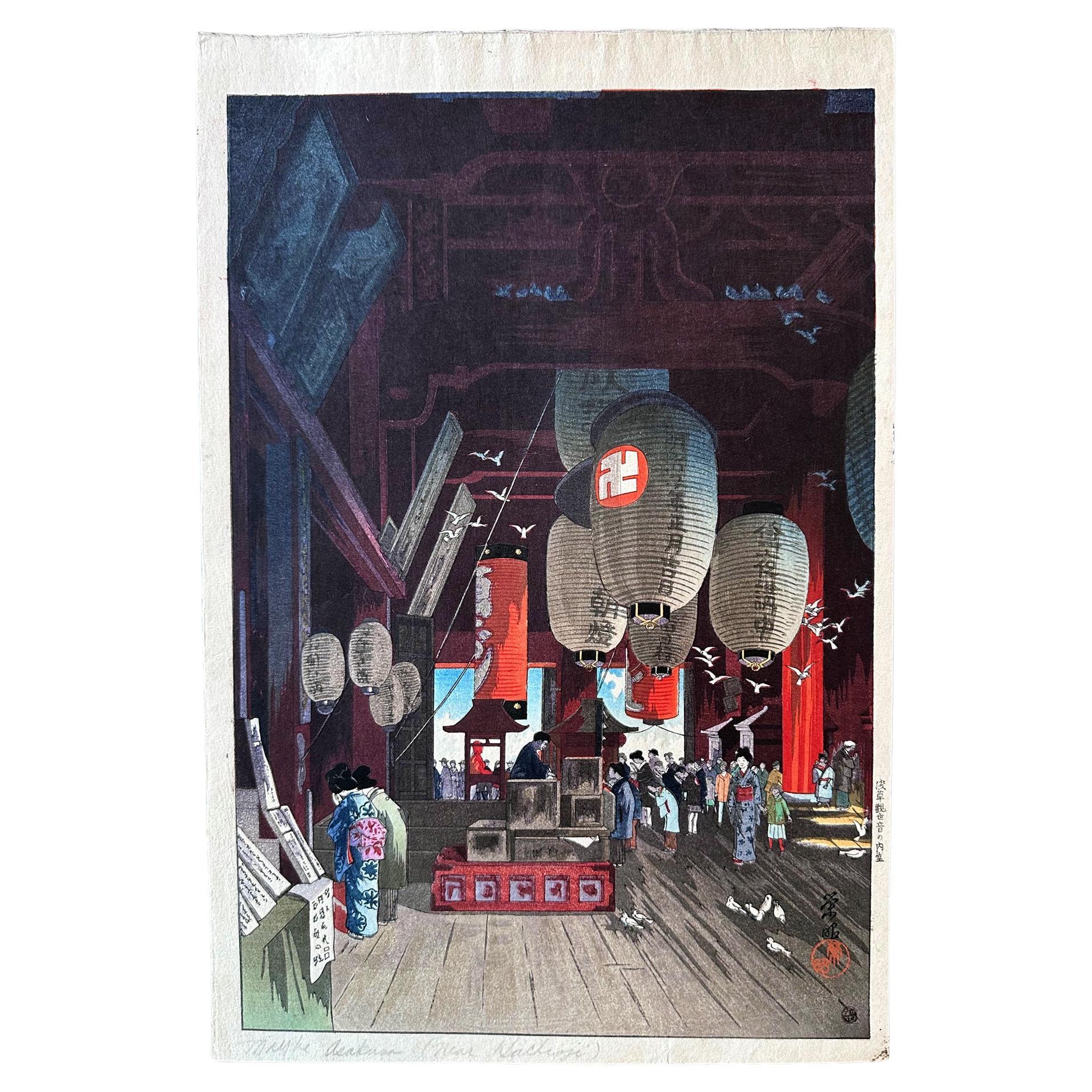
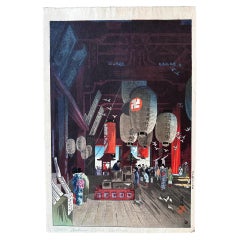
Interior of the Kannon Temple at Asakusa
— Tokyo Landmark, Early Edition
Want more images or videos?
Request additional images or videos from the seller
1 of 3
NARAZAKI EISHO
Interior of the Kannon Temple at Asakusa
— Tokyo Landmark, Early Edition1932
1932
$1,850
£1,409.73
€1,625.81
CA$2,627.55
A$2,823.16
CHF 1,514.62
MX$33,260.07
About the Item
NARAZAKI EISHO (1864-1936), 'Asakusa Kannon-do no naido' (Interior of the Kannon Temple at Asakusa), color woodblock print, 1932. Signed Eisho lower right, with the artist’s red seal beneath. A fine impression with fresh colors; the full sheet with slight overall age toning, a drying tack hole in the upper left margin, in overall excellent condition.
Vertical oban: image size 14 3/16 x 9 9/16 inches (360 x 243 mm); sheet size 15 1/4 x 10 1/2 inches (387 x 267 mm).
Published by Watanabe Shozaburo. A rare first or early edition impression with the Watanabe publisher’s seal “C” (1929-1942) in the lower left margin and the title and date in the lower right margin.
Collections: Harvard Art Museums, Los Angeles County Museum of Art, Museum of Fine Arts Boston.
Literature: 'Shin-Hanga: New Prints in Modern Japan,' Kendall Brown, Hollis Goodall-Cristante, Los Angeles County Museum of Art, 1996, p. 83, figure 113; 'Japanese Wood-block Prints,' Shizuya Fujikake, Japan Travel Bureau, 1938, p. 94, 95; 'The Legacy of Japanese Printmaking,' Barry Till, Art Gallery of Greater Victoria, 1986, plate 62; 'Modern Japanese Prints: The Twentieth Century,' Amanda T. Zehnder, Carnegie Museum of Art, 2009, p. 132; 'Hanga ni miru Tokyo no fukei; Kanto daishinsai kara senzen made, Ota Kuritsu Kyodo Hakubutsukan,' 2002, pl. 213, p. 50.
ABOUT THE IMAGE
The scene depicted is of the interior of the Asakusa Kannon Temple on New Year’s Day. Large celebratory lanterns hang from the high ceiling; the one in the foreground bears a 17th-century Buddhist symbol. The Buddhist temple Sensōji, also known as Asakusa Kannon Temple, is located in Asakusa, Tokyo. Completed in 645 AD, it is Tokyo's oldest temple and one of its most colorful and popular.
ABOUT THE ARTIST
Narazaki Eishō (1864-1936) was born in Edo (modern-day Tokyo), Japan. He was a highly esteemed artist known for his mastery of the traditional Japanese woodblock print technique, ukiyo-e. Eishō's life and work spanned a transformative period in Japanese history, witnessing the transition from the Edo period to the Meiji era and the subsequent modernization of Japan.
Eishō initially trained under the guidance of his father, Narazaki Kōgyo, a well-known artist and printmaker. Under his father's tutelage, Eishō honed his skills in woodblock printing and developed a deep appreciation for the rich artistic traditions of Japan. He demonstrated remarkable talent from a young age, quickly gaining recognition for his intricate designs and meticulous craftsmanship.
As Japan underwent rapid modernization and cultural shifts during the Meiji era, Eishō remained committed to preserving and revitalizing the art of ukiyo-e, which was facing challenges from Western influences and changing tastes. He drew inspiration from classical ukiyo-e masters, such as Hokusai and Hiroshige, and contemporary trends in Japanese art, blending traditional techniques with innovative approaches.
Eishō's prints, celebrated for their beauty, craftsmanship, and evocative portrayal of Japanese life and culture, encompassed various subjects, including landscapes, portraits, historical scenes, and depictions of kabuki actors and geisha. He demonstrated a keen eye for capturing the beauty and dynamism of everyday life in Japan, infusing his prints with vibrant colors, intricate details, and a sense of elegance and refinement.
One of Eishō's notable achievements was his collaboration with the publisher Watanabe Shōzaburō, who played a pivotal role in the revival of ukiyo-e during the early 20th century. Together, they produced a series of prints featuring famous landmarks, scenic views, and traditional customs of Japan, which gained popularity both domestically and internationally.
Throughout his career, Eishō remained dedicated to the preservation and promotion of ukiyo-e as a vital art form. He also contributed to the scholarly study of Japanese prints, publishing books and articles on the history and techniques of ukiyo-e.
Eishō's prints are represented in the collections of the Art Institute of Chicago, Carnegie Museum of Art, Georgetown University, Harvard Art Museums, University of Wisconsin, The Lavenberg Collection of Japanese Prints, and the Philadelphia Museum of Art.
About the Seller
5.0
Recognized Seller
These prestigious sellers are industry leaders and represent the highest echelon for item quality and design.
Platinum Seller
Premium sellers with a 4.7+ rating and 24-hour response times
Established in 1995
1stDibs seller since 2016
336 sales on 1stDibs
Typical response time: 1 hour
Associations
International Fine Print Dealers Association
- ShippingRetrieving quote...Shipping from: Myrtle Beach, SC
- Return Policy
More From This Seller
View All
Chion-in Temple Gate
from
Eight Scenes of Cherry Blossoms
— Jizuri Seal
By Hiroshi Yoshida
Located in Myrtle Beach, SC
Hiroshi Yoshida, 'Chion-in Temple Gate (Sunset)' from the series 'Eight Scenes of Cherry Blossoms (Sakura hachi dai: Sakura mon)', color woodblock print, 1935. Signed in brush 'Yoshida' and in pencil 'Hiroshi Yoshida'. A superb, early impression, with fresh colors; the full sheet with margins, on cream Japan paper; an area of slight toning in the top right sheet corner, not affecting the image, otherwise in excellent condition. Marked with a jizuri (self-printed) seal, upper left margin. Self-published by the artist.
Image size 9 5/8 x 14 3/4 inches (444 x 375 mm); sheet size 10 7/8 x 16 inches (276 x 406 mm). Archivally sleeved, unmatted.
Provenance: M. Nakazawa, Tokyo.
Literature: Japanese Landscapes of the 20th Century (Hotei Publishing calendar), 2001, May.
Collections: Honolulu Museum of Art, Museum of Fine Arts, Boston.
ABOUT THE IMAGE
Located in Kyoto, Chionin is the main temple of the Jodo sect of Japanese Buddhism, one of the most popular Buddhist sects in Japan, having millions of followers. The Sanmon Gate, Chionin's entrance gate, standing 24 meters tall and 50 meters wide, it is the largest wooden temple gate in Japan and dates back to the early 1600s. Behind the gate, a broad set of stairs leads to the main temple grounds.
ABOUT THE ARTIST
Painter and printmaker Yoshida Hiroshi (1876-1950) is regarded as one of the greatest artists of the Japanese 'shin hanga' (New Print) movement.
Yoshida was born as the second son of Ueda Tsukane in Kurume, Fukuoka Prefecture, a schoolteacher from an old samurai family. In 1891 he was adopted by his art teacher Yoshida Kasaburo in Fukuoka and took his surname. In 1893 he went to Kyoto to study painting, and the following year to Tokyo to join Koyama Shotaro's Fudosha private school; he also became a member of the Meiji Fine Arts Society. These institutions taught and advocated Western-style painting, greatly influencing Yoshida’s artistic development.
In 1899 Yoshida had his first American exhibition at Detroit Museum of Art (now Detroit Institute of Art), making the first of many visits to the US and Europe. In 1902 he helped reorganize the Meiji Fine Arts Society, renaming it the Taiheiyo-Gakai (Pacific Painting...
Category
1930s Showa Figurative Prints
Materials
Woodcut
Komyō-ji Temple at Autumn in Kyoto
— Sōsaku-hanga Woodblock Masterwork
Located in Myrtle Beach, SC
Ohtsu Kazuyuki, 'Kyo no Aki - Komyō-ji' (Komyō-ji temple at Autumn in Kyoto), large-scale color woodblock print, ed. 100, 2012. Signed, titled in Japanese, numbered 78/100, and date...
Category
2010s Landscape Prints
Materials
Woodcut
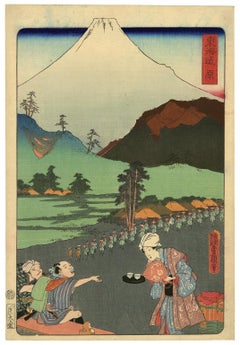
Tokaido
— Mt. Fuji Rising – Mid-Nineteenth Century Woodblock Print
By Utagawa Kunisada (Toyokuni III)
Located in Myrtle Beach, SC
Utagawa Kunisada (Tokoyuni III), 'Tokaido', color woodblock, 1863. Signed in the cartouche, lower right. A fine impression, with rich, fresh colors and pronounced woodgrain, the full...
Category
1860s Edo Figurative Prints
Materials
Woodcut
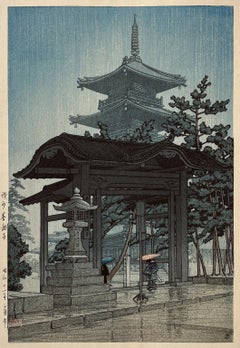
Zentsuji Temple in the Rain — from the series Collected Views of Japan II
By Kawase Hasui
Located in Myrtle Beach, SC
Kawase Hasui, 'Zentsuji Temple in the Rain' from the seres 'Collected Views of Japan II', color woodblock print, 1937. Signed Hasui in black ink, with the artist’s red seal Kawase, ...
Category
1930s Showa Landscape Prints
Materials
Woodcut
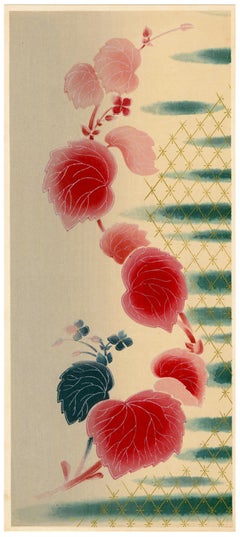
Japanese Kimono Fabric Design — Vintage Color Woodblock Print
Located in Myrtle Beach, SC
Anonymous, Japanese Kimono Fabric Design, color woodcut, c. 1930. A superb impression, with fresh colors, fine graduations, and metallic gold motifs, on ...
Category
Early 1900s Showa Figurative Prints
Materials
Woodcut
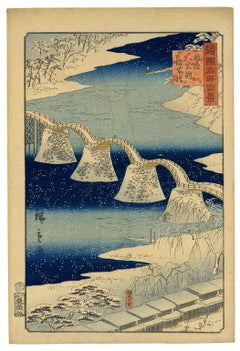
Kintai Bridge at Iwakuni in Suo Province (Suo iwakuni kintai-bashi), 1859
By Hiroshige II
Located in Myrtle Beach, SC
Utagawa Hiroshige II (1829-1869), 'Kintai Bridge at Iwakuni in Suo Province' (Suo iwakuni kintai-bashi), from the series 'One Hundred Views of Famous Pla...
Category
1850s Edo Landscape Prints
Materials
Woodcut
You May Also Like
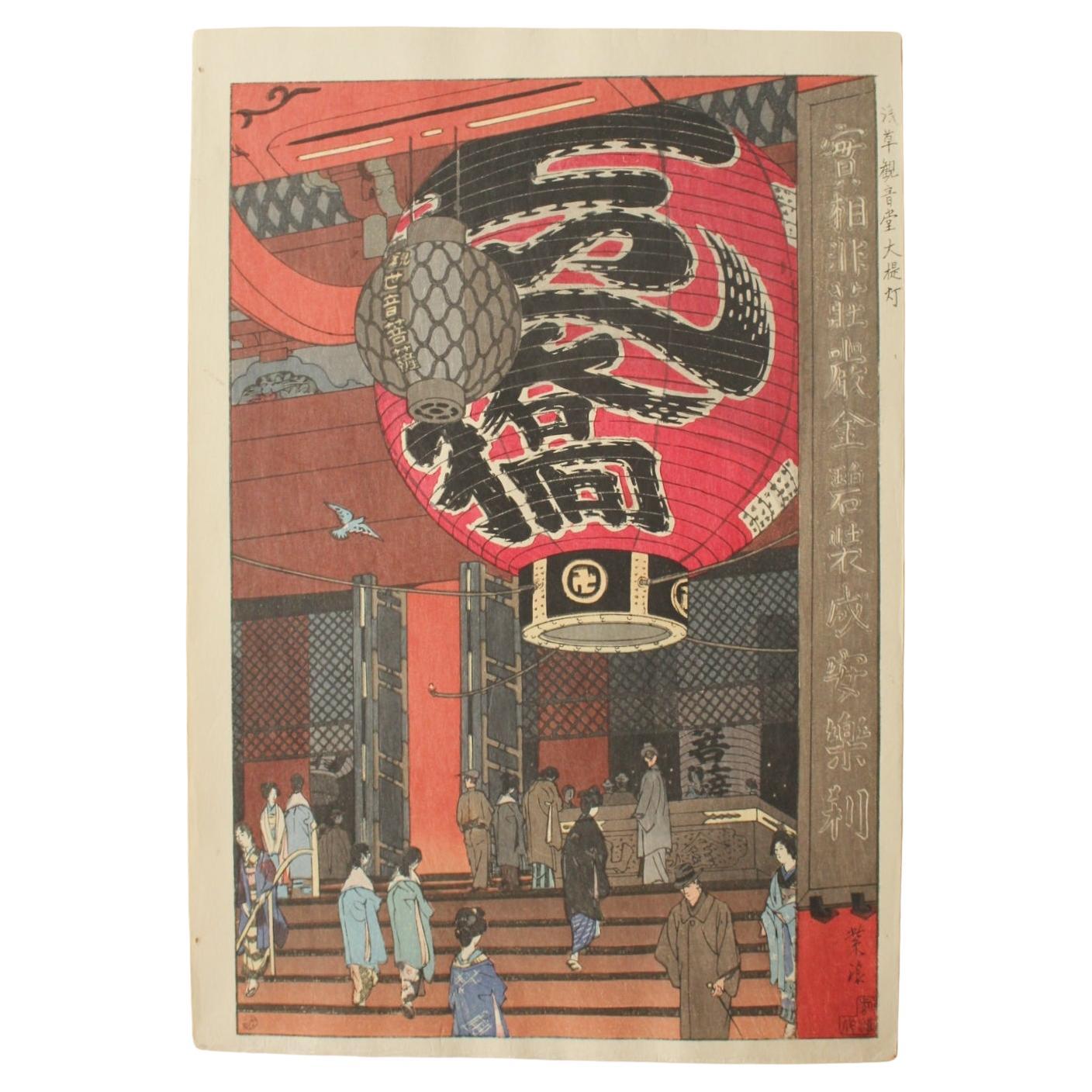
Japanese Wood Block Print Interior of Asakusa Temple by Eisho Narazaki
Located in Atlanta, GA
Japanese Wood Block Print
Artist: Eisho Narazaki (1864-1936)
Title: Asakusa Kannon-do no naido (Interior of the Kannon Temple at Asakusa)
Year of Creation: 1932
Pencil marked title ...
Category
Mid-20th Century Japanese Showa Prints
Materials
Paper
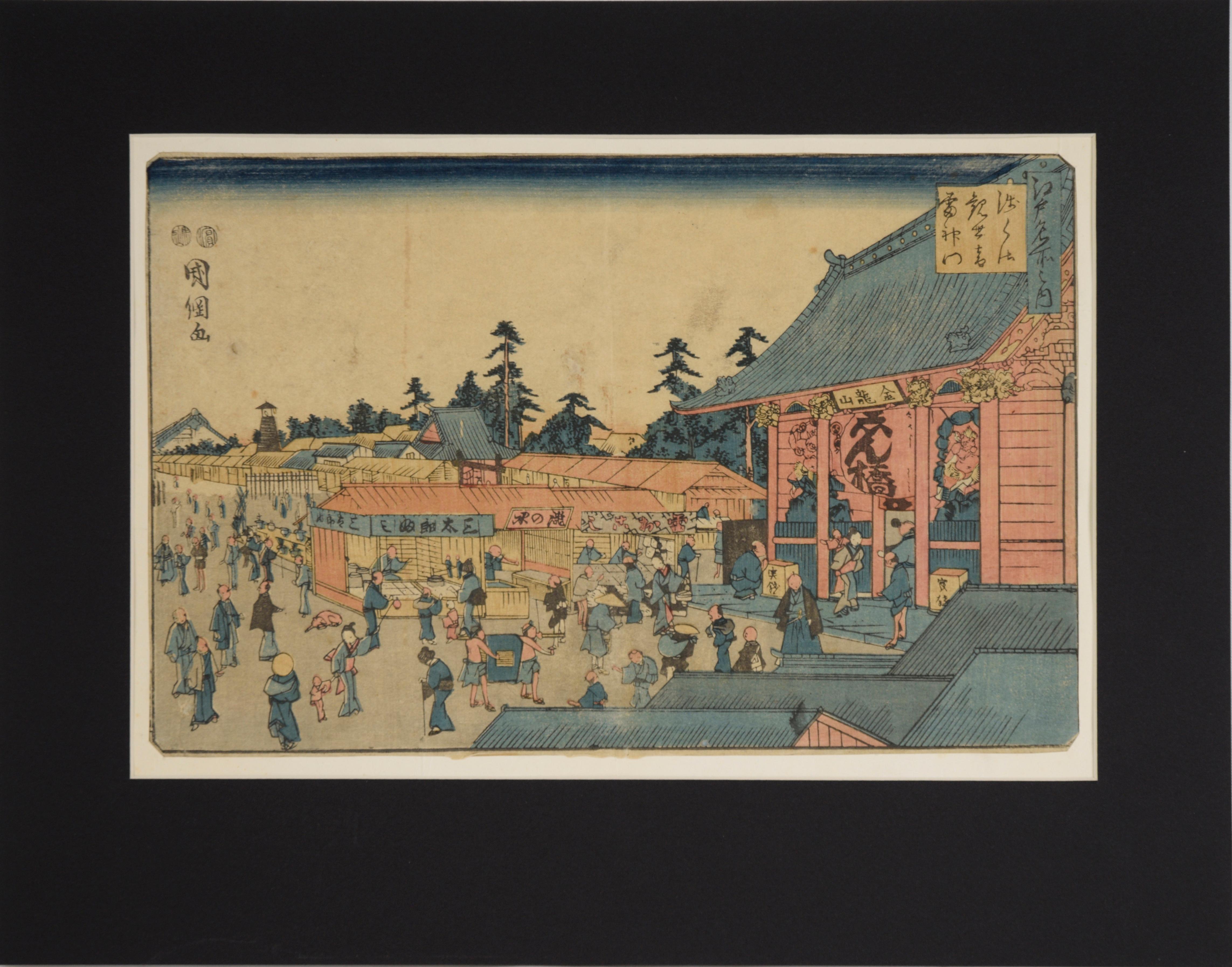
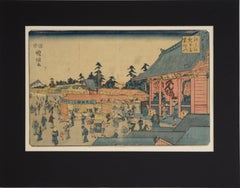
"The Kaminarimon at the Kanseon Temple in Asakusa" - Original Japanese Print
Located in Soquel, CA
"The Kaminarimon at the Kanseon Temple in Asakusa" - Original Japanese Print
Japanese Print "The Kaminarimon at the Kanseon Temple in Asakusa", from the series "Famous Places in Ed...
Category
1850s Showa Figurative Prints
Materials
Rice Paper, Woodcut
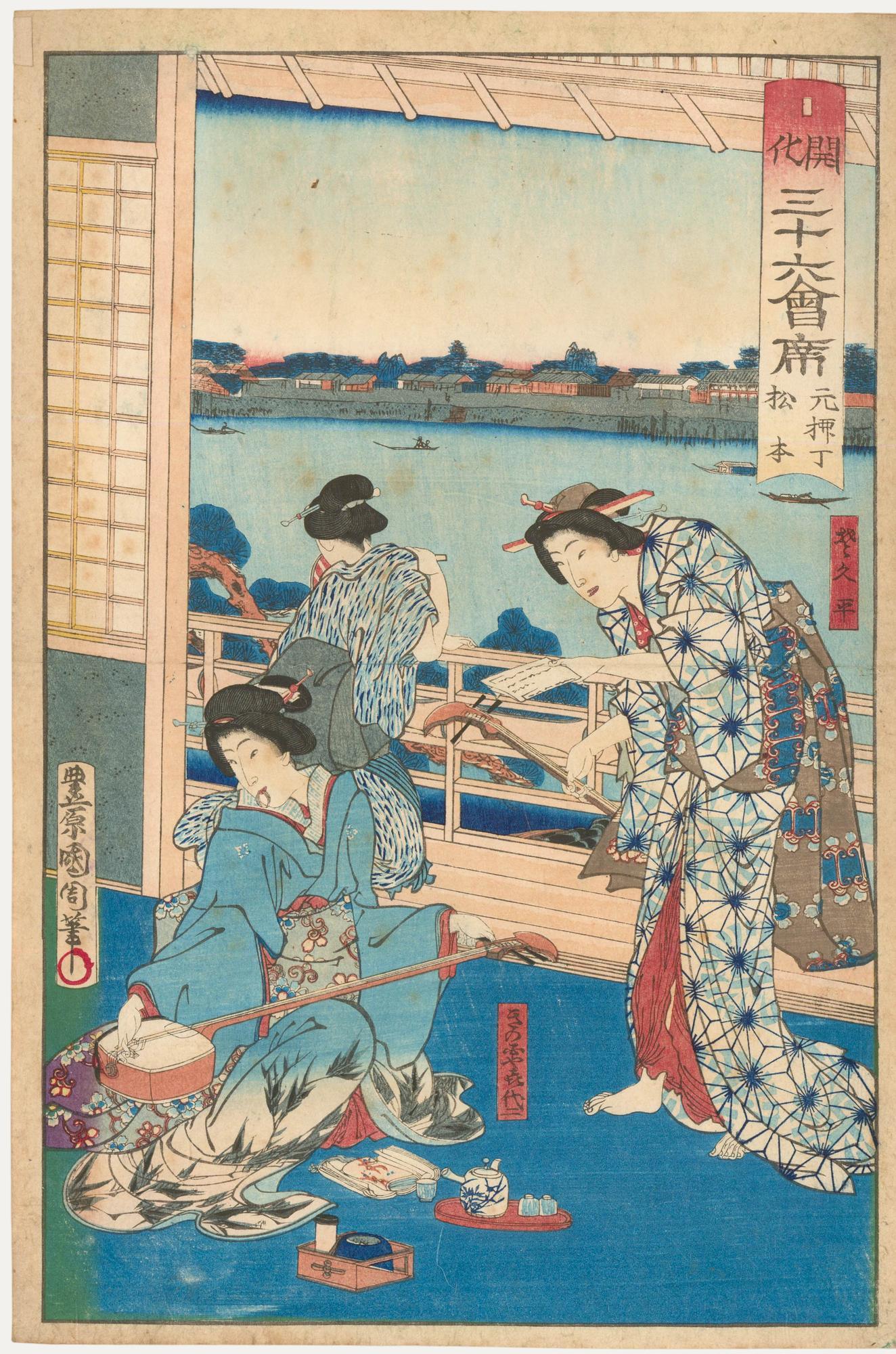
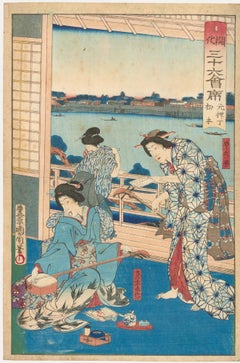
Toyohara Kunichika (1835-1900) - Woodblock, Kawacho Restaurant at Asakusa
By Toyohara Kunichika
Located in Corsham, GB
A charming Japanese woodblock print depicting three geishas playing instruments in a Kawacho restaurant. From Kaika sanjuroku kaiseki (Thirty-six famous restaurants and views of civi...
Category
Late 19th Century Figurative Prints
Materials
Woodcut
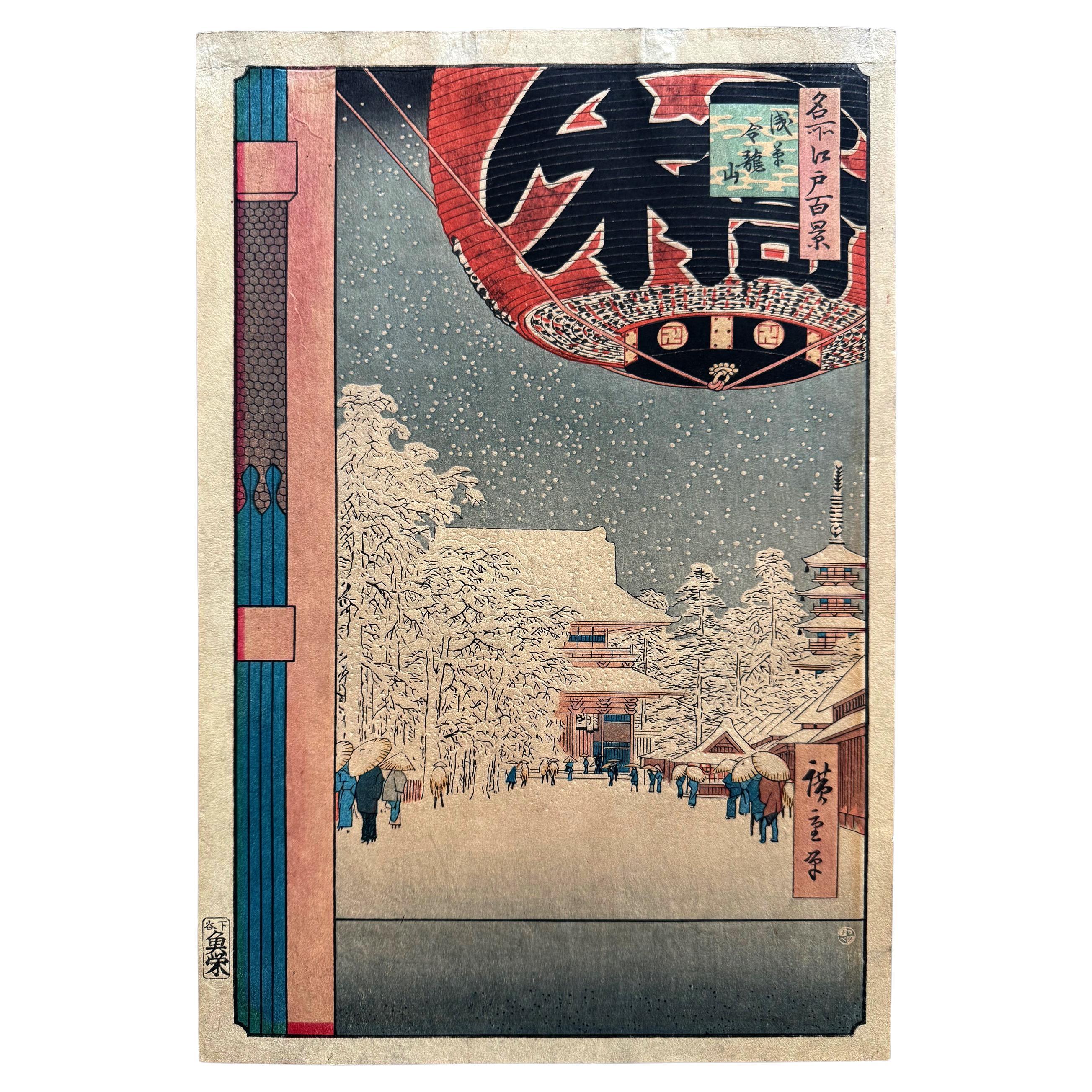
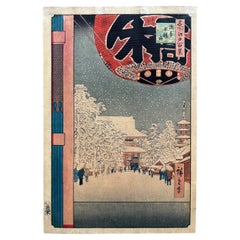
Japanese Woodblock Print Kinryuzan Temple at Asakusa by Utagawa Hiroshige
By Utagawa Hiroshige (Ando Hiroshige)
Located in Atlanta, GA
Title: Kinryuzan Temple at Asakusa from the series One Hundred Famous Views of Edo (Meisho Edo Hyakkei)
Artist: Utagawa Hiroshige (Japanese, 1797–1858)
Original published date: 7th m...
Category
Early 20th Century Japanese Edo Prints
Materials
Paper
Old Japanese Wood block print Shiro Kasamatsu. Lantern of Asakusa Kannon-do
Located in Niiza, JP
Print size: 245 x 360 mm
Sheet size: 270 x 385 mm
Exterior: 330 x 480 mm
A masterpiece by woodblock artist Shirou Kasamatsu 笠松紫浪
"Large Lantern of the Asakusa Kannon-do" 「浅草観音堂大提灯」
...
Category
20th Century Japanese Prints
Materials
Paper
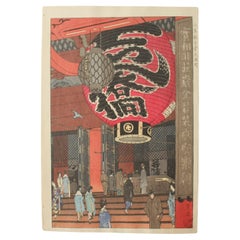
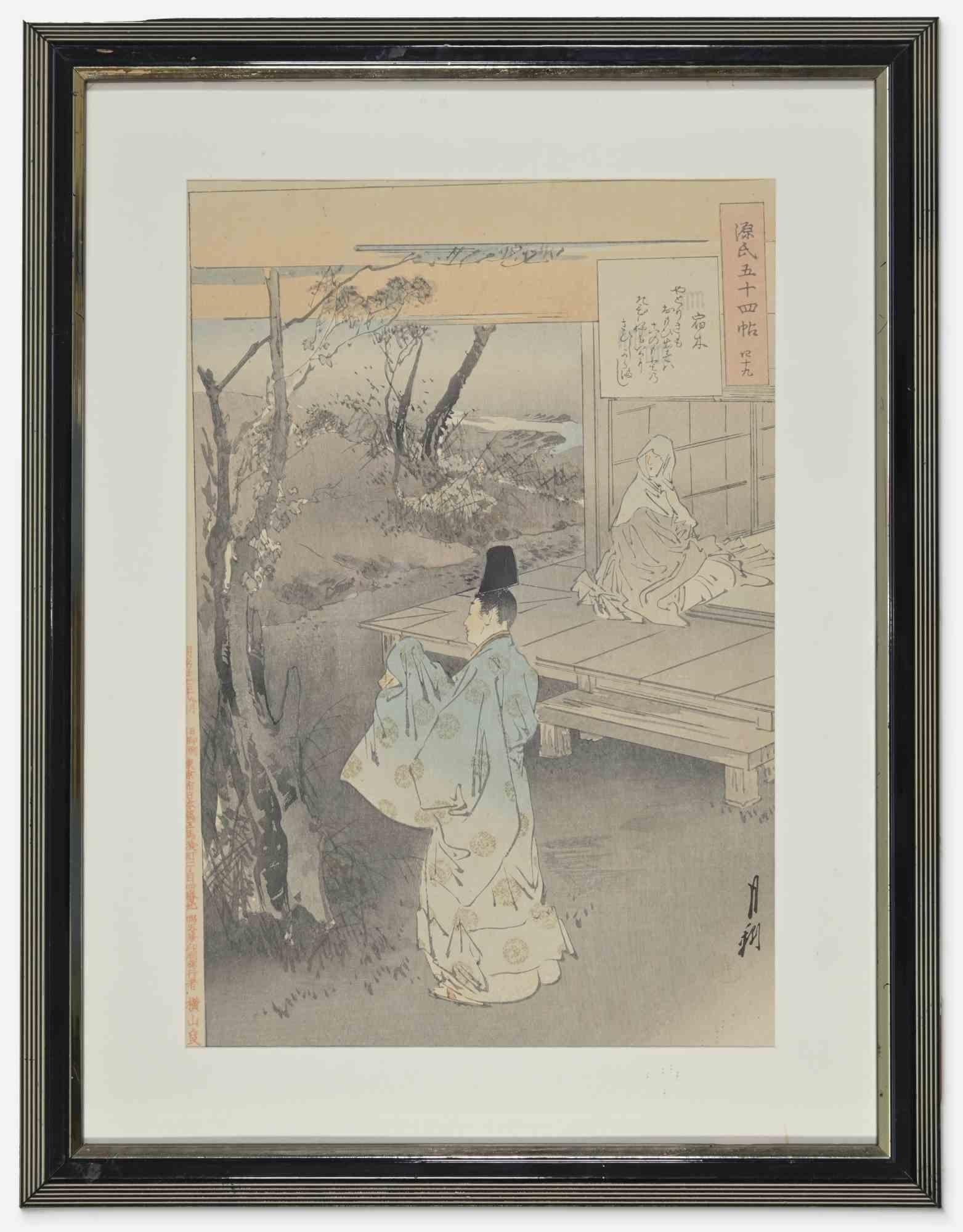
The Temple - Woodcut Print After Mizuno Toshikata - Early 20th Century
By Mizuno Toshikata
Located in Roma, IT
The temple is an artwork realized by Mizuno Toshikata (1866-1908).
Woodcut print, early 20th Century.
33 x 43 cm with frame.
Good conditions
Category
1950s Modern Figurative Prints
Materials
Woodcut
More Ways To Browse
Used Japanese Books
Japanese Block Prints
Japaneses Block Print
Japanese Wood Block
The Lamp Romare Bearden
Vintage Cocktail Waitress
Vintage Hunchback Of Notre Dame
Alice In Wonderland Lobby
Banksy Cut Run
David Hockney Poster France
David Hockney Studio
Ed Bearden
Elizabeth Catlett Glory
Miro Spanish Dancer
Movie Title Card
Still Life With Lobster Lichtenstein
Vintage Jazz Dress
Banksy Happy Choppers