1790s Interior Prints
to
1
2
13
Overall Width
to
Overall Height
to
15
123
235
1,071
752
11
12
22
55
39
62
72
209
240
95
103
13
3
15
7
2
2
2
1
1
1
1
1
16
12
12
13
1
16
Period: 1790s
FEOLI. Vedute del Museo Pio-Clementino
Located in London, London
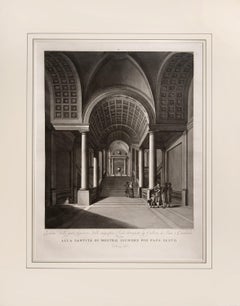
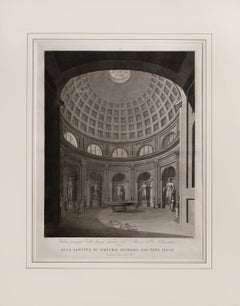
Magnificent large plate illustrating the Vatican Museum at the end of the eighteenth century by Vincenzo Feoli (1750 - 1831) after Miccinelli and Costa.
The Pio-Clementino museum, n...
Category
Naturalistic 1790s Interior Prints
Materials
Engraving, Handmade Paper
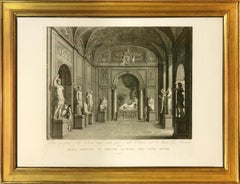
Magnificent large plate illustrating the Vatican Museum
Located in London, London
FEOLI, Vincenzo.
Vedute del Museo Pio-Clementino.
Rome, 1790.
A double-page engraved plate after Miccinelli and Costa. Sheet size: 70.5cm by 99cm. Mounted size: 81cm by 101cm.
Magnificent series of extra-large plates illustrating the Vatican Museum...
Category
Naturalistic 1790s Interior Prints
Materials
Engraving
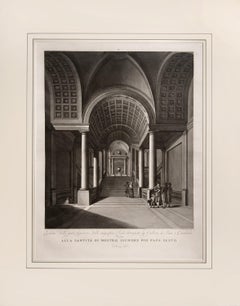
FEOLI. Vedute del Museo Pio-Clementino
Located in London, London
Magnificent large plate illustrating the Vatican Museum at the end of the eighteenth century by Vincenzo Feoli (1750 - 1831) after Miccinelli and Costa.
The Pio-Clementino museum, n...
Category
Naturalistic 1790s Interior Prints
Materials
Engraving, Handmade Paper
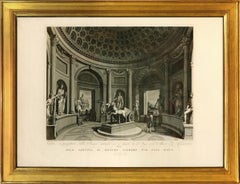
FEOLI. Vedute del Museo Pio-Clementino
Located in London, London
Magnificent large plate illustrating the Vatican Museum at the end of the eighteenth century by Vincenzo Feoli (1750 - 1831) after Miccinelli and Costa.
The Pio-Clementino museum, n...
Category
Naturalistic 1790s Interior Prints
Materials
Engraving, Handmade Paper
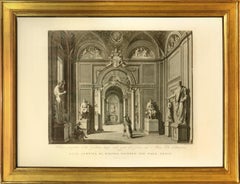
Magnificent large plate illustrating the Vatican Museum
Located in London, London
FEOLI, Vincenzo.
Vedute del Museo Pio-Clementino.
Rome, 1790.
A double-page engraved plate after Miccinelli and Costa. Sheet size: 70.5cm by 99cm.
Presented in a mount, size: 81cm by 101cm.
Magnificent series of extra-large plates illustrating the Vatican Museum...
Category
1790s Interior Prints
Materials
Handmade Paper, Engraving
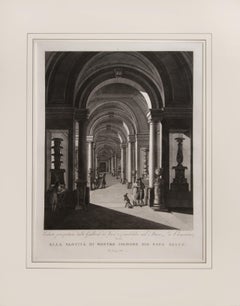
FEOLI. Vedute del Museo Pio-Clementino
Located in London, London
Magnificent large plate illustrating the Vatican Museum at the end of the eighteenth century by Vincenzo Feoli (1750 - 1831) after Miccinelli and Costa.
The Pio-Clementino museum, n...
Category
Naturalistic 1790s Interior Prints
Materials
Engraving, Handmade Paper
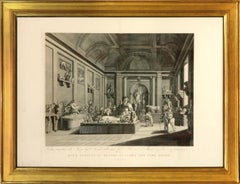
FEOLI. Vedute del Museo Pio-Clementino
Located in London, London
Magnificent large plate illustrating the Vatican Museum at the end of the eighteenth century by Vincenzo Feoli (1750 - 1831) after Miccinelli and Costa.
The Pio-Clementino museum, n...
Category
Naturalistic 1790s Interior Prints
Materials
Engraving, Handmade Paper
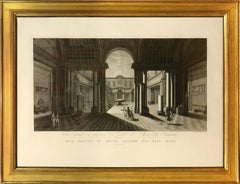
FEOLI. Vedute del Museo Pio-Clementino
Located in London, London
Magnificent large plate illustrating the Vatican Museum at the end of the eighteenth century by Vincenzo Feoli (1750 - 1831) after Micenelli and Costa.
The Pio-Clementino museum, na...
Category
Naturalistic 1790s Interior Prints
Materials
Engraving, Handmade Paper
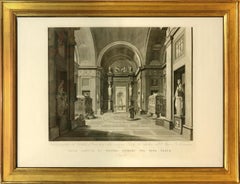
FEOLI. Vedute del Museo Pio-Clementino
Located in London, London
Magnificent large plate illustrating the Vatican Museum at the end of the eighteenth century by Vincenzo Feoli (1750 - 1831) after Miccinelli and Costa.
The Pio-Clementino museum, n...
Category
Naturalistic 1790s Interior Prints
Materials
Engraving, Handmade Paper
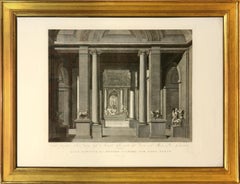
FEOLI. Vedute del Museo Pio-Clementino
Located in London, London
Magnificent large plate illustrating the Vatican Museum at the end of the eighteenth century by Vincenzo Feoli (1750 - 1831) after Miccinelli and Costa.
The Pio-Clementino museum, n...
Category
Naturalistic 1790s Interior Prints
Materials
Engraving, Handmade Paper
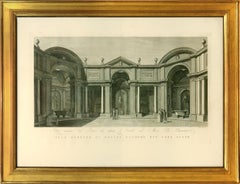
FEOLI. Vedute del Museo Pio-Clementino
Located in London, London
Magnificent large plate illustrating the Vatican Museum at the end of the eighteenth century by Vincenzo Feoli (1750 - 1831) after Miccinelli and Costa.
The Pio-Clementino museum, n...
Category
Naturalistic 1790s Interior Prints
Materials
Engraving, Handmade Paper
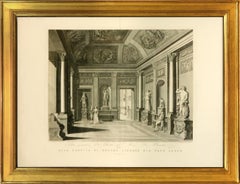
FEOLI. Vedute del Museo Pio-Clementino
Located in London, London
Magnificent large plate illustrating the Vatican Museum at the end of the eighteenth century by Vincenzo Feoli (1750 - 1831).
The Pio-Clementino museum, named after the two popes wh...
Category
Naturalistic 1790s Interior Prints
Materials
Color, Engraving
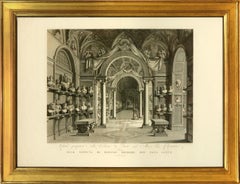
James Basire engraving Bishop
s Palace Exeter England 1796 Chimneypiece
Located in London, GB
James Basire (engraver) after W Davey (illustrator)
Chimneypiece in the Bishop's Palace, Exeter
50x33cm (to plate mark)
Engraving
Published by the Society of Antiquaries 23rd April 1...
Category
Realist 1790s Interior Prints
Materials
Engraving
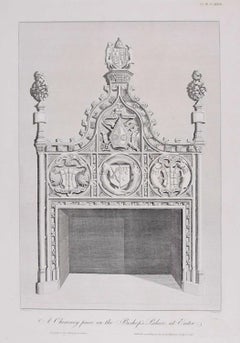
FEOLI. Vedute del Museo Pio-Clementino
Located in London, London
Magnificent large plate illustrating the Vatican Museum at the end of the eighteenth century by Vincenzo Feoli (1750 - 1831) after Miccinelli and Costa.
The Pio-Clementino museum, n...
Category
Naturalistic 1790s Interior Prints
Materials
Engraving, Handmade Paper
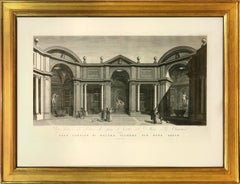
FEOLI. Vedute del Museo Pio-Clementino
Located in London, London
Magnificent large plate illustrating the Vatican Museum at the end of the eighteenth century by Vincenzo Feoli (1750 - 1831) after Miccinelli and Costa.
The Pio-Clementino museum, n...
Category
Naturalistic 1790s Interior Prints
Materials
Color, Engraving
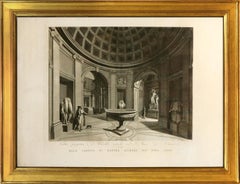
FEOLI. Vedute del Museo Pio-Clementino
Located in London, London
Magnificent large plate illustrating the Vatican Museum at the end of the eighteenth century by Vincenzo Feoli (1750 - 1831) after Miccinelli and Costa.
The Pio-Clementino museum, n...
Category
Naturalistic 1790s Interior Prints
Materials
Engraving, Handmade Paper
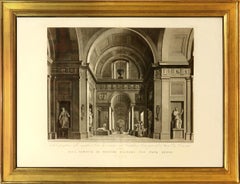
Related Items
Chester Cathedral - Drypoint Etching in Ink on Paper
Located in Soquel, CA
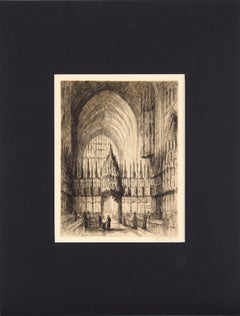
Chester Cathedral - Drypoint Etching in Ink on Paper
Dramatic drypoint etching by J. Alphege Brewer (British, 1881-1946). This composition shows the interior of Chester Cathedral in Brewer's characteristic style - highly detailed and with strong contrast. The scene encompasses the cathedral from floor to ceiling, capturing the immense size of the building. There are several people in the scene which contribute to the sense of scale.
Signed by hand "J. Alphege Brewer" in the lower right corner.
Titled "Chester Cathedral" in plate, lower left corner.
Includes original card with artist's name.
Presented in a new black mat with foamcore backing.
Mat size: 16"H x 12"W
Paper size: 10.75"H x 7.75"W
James Alphege Brewer was well known in the early 20th century as a producer of color etchings of European cathedrals and other scenes of church, college, and community. He was born July 24, 1881, in the Kensington section of London, England, the son of Henry W. Brewer, noted artist of historical architecture and prominent convert to the Catholic Church, and the grandson of John Sherren Brewer, Jr., “the brilliant editor of the Calendar of Letters of Henry VIII.” His great uncle was E. Cobham Brewer, the polymath who compiled Brewer’s Dictionary of Phrase and Fable. Among his older siblings were the artist Henry C. Brewer and the organist and writer John Francis Brewer.
Brewer attended the Westminster School of Art in London, where his brother Henry also trained. In 1910, he married Florence Emma Lucas, an accomplished painter in oil and watercolor, whose father was the noted landscape artist George Lucas and whose great uncle was David Lucas, the famous engraver for John Constable. Florence's brothers Edwin and George assisted Brewer in the printing of Brewer's etchings.
Brewer exhibited at the Royal Academy (RA) and the Royal Institute of Painters in Watercolour (RI), at the Paris Salon of the Académie des Beaux-Arts, and in the shows of the Royal Cambrian Academy (RCA). He became an associate of the Royal Cambrian Academy in 1929 and a full member in the last two years of his life. He was also a member of the Hampstead Society of Artists, the Society of Graphic Art, and the Ealing Arts Club, where he was first Honorary Art Secretary and then Honorary Art Chairman. Most of Brewer's larger etchings were published by Alfred Bell...
Category
Romantic 1790s Interior Prints
Materials
Paper, Ink, Drypoint

$495
H 16 in W 12 in D 0.25 in
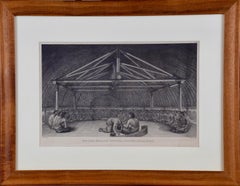
"King of the Friendly Islands" (Tonga); Engraving from Captain Cook
s 3rd Voyage
By John Webber
Located in Alamo, CA
"Poulaho, King of the Friendly Islands, Drinking Kava" is an engraving created by William Sharp (1749-1824), from a drawing by John Webber (1752-1793), who was the artist on Captain James Cook's 3rd and final voyage of discovery. It was published in the atlas of "A Voyage to the Pacific Ocean Undertaken by the Command of His Majesty, for Making Discoveries in the Northern Hemisphere", the official British Admirality sanctioned journal published upon completion of the voyage in London in 1784 by Strahan & Cadell.
Captain Cook visited Tonga on his 3rd voyage, which he named The Friendly Islands because of the warm welcome he and his crew received, unlike some of the other more hostile Pacific islands. The engraving depicts Cook and his men observed a kava ceremony at the village of Mu’a on Tongatapu. King Paulaho sits in the centre foreground, his back to the spectator with a man kneeling before him. The ceremonial mat depicted behind Paulaho indicates that nobody was allowed to sit behind him. The figure in the centre holds a single cup, referring to the Tongan custom of offering the cup to the king first. Kava is native to the islands of the South Pacific and was first described for English readers in 1768 by Captain James Cook. The kava root has been used for centuries as a central feature of ceremonies and celebrations because it was able to bring about a calming and pleasant social atmosphere. The root was crushed and processed into coconut milk to become the focal ceremonial beverage, simply referred to as kava.
This engraving is presented in a Koa wood frame and a white mat. Koa wood is legendary in Hawaii. There are occasional faint spots, but the print is otherwise in very good condition. This amazing Koa wood is native to Hawaii and it is known for the deep rich colors and varied grain pattern. Koa has an honored heritage in Hawaii and is highly revered and sacred. The word “koa” means “warrior” in Hawaiian. The warriors of King Kamehameha the Great, created canoes and weapons from a wood plentiful on the Big Island of Hawaii. This wood became synonymous with the warriors themselves, and it became known as koa.
There are three other engravings listed from the official journal of Captain Cook's 3rd voyage available that are presented in identical Koa wood frames and mats (LU117324682422, LU117324684052, LU117324684032). They would make a wonderful grouping for a display of 2, 3 or 4 prints. A discount is available for a grouping depending on the number of items included.
Captain Cook is remembered as one of the greatest explorers and navigators in history. His explorations included Australia, New Zealand and islands of the South Pacific and the northwest coast of North America. Hawaii was discovered by Captain Cook during this voyage. Hawaii was originally called The Sandwich Islands in honor of The Earl of Sandwich...
Category
Realist 1790s Interior Prints
Materials
Engraving
$2,375
H 18.25 in W 23.5 in D 0.88 in
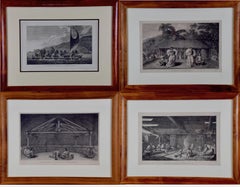
Four Koa Wood Framed 18th C. Engravings from Captain Cook
s 3rd Voyage Journal
By John Webber
Located in Alamo, CA
A grouping of four framed engravings of Hawaii, Tahiti, Tonga and Vancouver Island from the atlas of the official British Admiralty sanctioned journal of Captain Cook's 3rd Voyage entitled "A Voyage to the Pacific Ocean Undertaken by the Command of His Majesty, for Making Discoveries in the Northern Hemisphere", published upon completion of the voyage in London in 1784 by Strahan & Cadell. These engravings were made from drawings by John Webber (1752-1793), who was the artist on Captain James Cook's 3rd and final voyage of discovery. The set of engravings includes: "A Canoe of the Sandwich Islands, the Rowers Masked", Plate 65 in the atlas; "A Dance in Otaheite" (Tahiti), Plate 28; "King of the Friendly Islands" (Tonga), plate 20; "Inside of a House in Nootka Sound" (Canada), plate 42.
These engravings are professionally framed in Koa wood, the same wood as was used to make the canoes of the ancient Hawaiians. Koa wood is legendary in Hawaii. Not only is this amazing wood native to Hawaii, but it is known for the deep rich colors and varied grain pattern. Koa has an honored heritage in Hawaii and is highly revered and sacred. The word “koa” means “warrior” in Hawaiian. The warriors of King Kamehameha the Great, created canoes and weapons from a wood plentiful on the Big Island of Hawaii. This wood became synonymous with the warriors themselves, and it became known as koa.
These four engravings would make a wonderful grouping for a display of 2, 3 or 4 prints. They may be purchased separately or in groups on 1stDibs. Their listing Reference #'s are: LU117324682432, LU117324682022, LU117324684052 and LU117324684062. A discount is available for a grouping depending on the number of items included.
Hawaii was discovered by Captain Cook (1728-1779) during this voyage. Hawaii was originally called The Sandwich Islands in honor of The Earl of Sandwich...
Category
Other Art Style 1790s Interior Prints
Materials
Engraving
$9,575
H 20.75 in W 26.75 in D 0.88 in
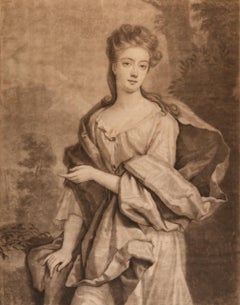
The Duchess of St. Albans: A 17th C. Portrait After a Kneller Painting
By (After) Sir Godfrey Kneller
Located in Alamo, CA
This is a 17th century engraved mezzotint portrait of the Duchess of St. Albans by John Smith, after a painting by Sir Godfrey Kneller. It was published in London by John Boydell in 1694.
The Duchess of St. Albans (1642-1712) was a woman named Diana de Vere. She was born in 1642, the daughter of Aubrey de Vere, the 20th Earl of Oxford. In 1662, she married Charles Beauclerk, the illegitimate son of King Charles II and his mistress, Nell Gwyn. As a result of her marriage, Diana became the Duchess of St. Albans, and she and Charles had several children together. Diana was known for her beauty and charm, and she was a prominent figure in the court of King Charles II. Despite her husband's illegitimate birth, Diana was highly respected in the royal court and was known for her intelligence and wit. She was a patron of the arts and supported many artists and writers of the time. Diana lived through a tumultuous period of English history, including the Great Fire of London and the Glorious Revolution, which saw King James II replaced by William of Orange. She died in 1712 at the age of 70 and was buried in Westminster Abbey. Descendants of Diana and her husband, who was an illegitimate son of King Charles II, include Diana, Princess of Wales and her son William, Duke of Cambridge.
An author wrote of her: "The line of Vere, so long renown’d in arms,
Concludes with luster in St. Albans’s charms;
Her conquering eyes have made their race complete,
It rose in valor, and in beauty set."
This striking mezzotint engraving depicts Diana, Duchess of St Albans in a three-quarter length pose, standing, wearing loose flowing dress and a wrap. She has a very serene, calm appearance as she is looking straight at the viewer. There is a landscape of trees in the background. The print is adhered in the corners to an archival backing, which is itself adhered in the upper corners to a larger backing. The print is trimmed to just beyond the plate mark. There are areas of discoloration in the margins and in the inscription area, but the print is otherwise in very good condition. The sheet measures 14.5" high and 10" wide. This mezzotint is held by multiple museums and institutions, including The British Museum, The National Portrait Gallery London, The Fine Arts Museum of Boston, The Lewis Walpole Library at Yale, The Yale Center for British Art, The Fitzwilliam Museum at Cambridge and The National Galleries of Scotland. The original Kneller painting is part of the British Royal Collection Trust and hangs in the King's Private Dining Room at Hampton Court Palace.
Sir Godfrey Kneller (1646-1723) was a leading portrait painter of his time, particularly renowned for his depictions of the British aristocracy and royalty. He was born in Lübeck, Germany, and trained in Amsterdam under the painter Ferdinand Bol...
Category
1790s Interior Prints
Materials
Mezzotint
Interiors VI: Soundings
By Peter Milton
Located in New York, NY
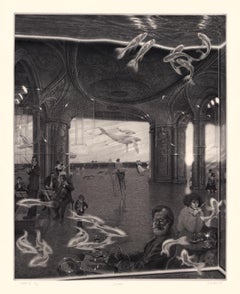
Contemporary artist Peter Milton created this etching and engraving entitled "Interiors VI: Soundings" in 1989. The printed image size is 29 7/8 x 23 13/16 and paper size is 36 x 29 inches. This impression is signed, dated, and titled in pencil and inscribed “93/175” – the 93 impression of 175.
“I do love to draw. I feel that I am being granted membership in the Brotherhood of Merlin, conjuring forth some apparition. As a drawing develops, I sense a vague presence coming more and more into focus, something in a white fog emerging and becoming increasingly palpable.” – P. Milton, “The primacy of touch. The Drawings of Peter Milton”
“Working in layers, Milton begins with drawings based on people and places, with nods to Western art history and culture. He is a master of the appropriated image, a term that may conjure Andy Warhol and his Pop Art comrades. But Milton steps further back in history, avoiding the Pop sense of cool advertising and popular culture references. Instead, a broader cultural past is tapped through historical photographs of key players, architecture, and locales, which he reinvents by hand. He adds content drawn from his life as an avid reader – always with multiple possible interpretations – thus incorporating deeper meaning in his cinematic worlds. Elements of Greek mythology, classical music, art history, and history coalesce in his images, which embrace the messiness, sorrow, and elation that is life. One is hard-pressed to imagine a more erudite, skilled, passionate, and cheeky soul."
– T. L. Johnson and A. Shafer
Peter Milton was born in Pennsylvania in 1930. He studied for two years at the Virginia Military Institute...
Category
Surrealist 1790s Interior Prints
Materials
Engraving, Etching
Antique French Copper Engraving - Cathedral
Located in Houston, TX
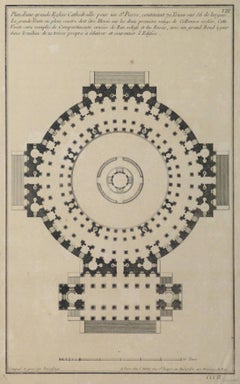
Bold antique copper engraving of the floor plan of a French cathedral from Recueil d'Architecture, 1780.
Original artwork on paper displayed on a whi...
Category
1790s Interior Prints
Materials
Ink, Paper, Engraving
"Toy Horse Dance" Japanese Woodblock Triptych with Beauties and Mt Fuji
Located in Soquel, CA
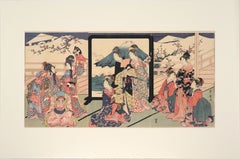
"Toy Horse Dance" Japanese Woodblock Triptych with Beauties and Mt Fuji
Vibrant three-panel woodblock print by Utagawa Toyohiro (Japanese,...
Category
Edo 1790s Interior Prints
Materials
Ink, Rice Paper, Woodcut
Utagawa Toyohiro"Toy Horse Dance" Japanese Woodblock Triptych with Beauties and Mt Fuji, early 1900s
$1,700
H 24 in W 36 in D 0.25 in
Kabuki actor Nakamura Shikan II by Utagawa Kunisada Edo Japanese Woodblock Print
Located in Soquel, CA
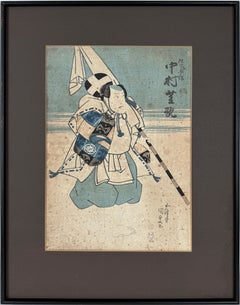
Kabuki actor Nakamura Shikan II by Utagawa Kunisada Japanese Woodblock Print
Wonderful portrait of Nakamura Shikan II, a prominent kabuki actor, in the role of Kisen Hoshi Toyokuni ...
Category
Realist 1790s Interior Prints
Materials
Printer s Ink, Rice Paper, Woodcut
$550
H 21.75 in W 16.75 in D 1.25 in
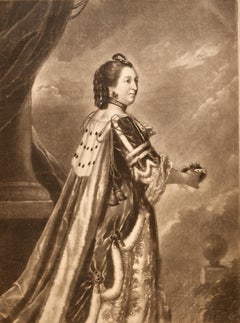
Elizabeth, Countess of Northumberland: Mezzotint After a Painting by J. Reynolds
By Joshua Reynolds
Located in Alamo, CA
This is an 18th century mezzotint portrait of Elizabeth, Countess of Northumberland, Baroness Percy by Richard Houston after a painting by Joshua Reynolds, published in London by Robert Sayer in 1763. It is a rare, full length portrait of Elizabeth, who was known as Lady Betty. Lady Betty stands, facing to the right, holding her coronet, and wearing her peeress’s ermine and velvet robes over a brocade dress. In the background are a column, a billowing drape, and the grounds of Alnwick Castle...
Category
1790s Interior Prints
Materials
Mezzotint
$2,575
H 17.5 in W 11.5 in
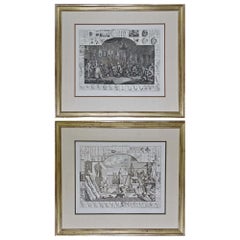
William Hogarth
s "Analysis of Beauty": A Set of Two Framed 18th C. Engravings
Located in Alamo, CA
The two plates in this set were created utilizing both engraving and etching techniques by William Hogarth in 1753, originally as illustrations of his book on aesthetics, entitled "Analysis of Beauty". Due to their popularity, these plates were later published separately. The publication line in the lower right reads: "Designed, Engraved, and Publish'd by Wm. Hogarth, March 5th 1753, according to Act of Parliament." Hogarth's original copper plates were refurbished where needed by James Heath and engravings were republished in London in 1822 by Braddock, Cradock & Joy. This was the last time Hogarth's copper plates were used for printing. Most were melted during World War I for the construction of bombs.
These large folio sized "Analysis of Beauty" engravings are presented in antiqued gold-colored frames with double mats; the outer silk mats are light brown-colored and the inner mats are dark brown. Each frame measures 27.38" x 31.25" x 1.13". There is one tiny spot in the right margin of plate 1 and another in the lower margin; the latter could be from the printing process. The prints are otherwise in excellent condition.
The "Analysis of Beauty" series is in the collection of many major museums, including: The British Museum, The Metropolitan Museum of Art, The Tate Museum, The Chicago Art Institute and The Fine Arts Museums of San Francisco.
The first engraving (Plate 1) depicts a courtyard of statues which is filled with some of the most famous works of classical sculpture. The most important sculptures are surrounded by less impressive works. The Medicean Venus (#13) is in the center with a statue of Julius Caesar (#19) to the right, elevated on a pulley with a short, overdressed Brutus stands over the falling Caesar. The Apollo Belvedere (#12) is next. A judge stands to the right with his foot on a cherub (#16). Another crying cherub holds a gallows and wipes his tears with the judge's robe.
A sphinx (#21) and the drunken Silenus (#107) are below the Venus. Michaelangelo's torso (#54) and a statue of Antonius (#6) are seen in the foreground. The Farnese Hercules (#3) and a bust of another Hercules (#4) under two statuettes of Isis are also included in the scene.
The key to these objects is included in the form of a serpentine line winding around a cone (#26), Hogarth's "Line of Beauty". For Hogarth the winding line is an essential element of beauty in art. Hogarth's theory of beauty is communicated in this plate.
Plate 2 is thought to represent the Wanstead Assembly, with the Earl of Tynley and his household. It is an adaptation of a scene in the Happy Marriage series, which complements Hogarth's Marriage à la Mode...
Category
Old Masters 1790s Interior Prints
Materials
Engraving, Etching
$2,975
H 27.38 in W 31.25 in D 1.13 in
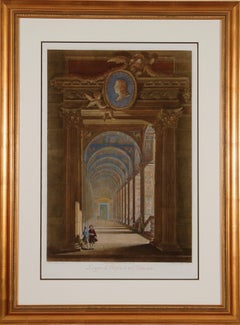
Vatican Hallway designed by Raphael: 18th C. Hand-colored Engraving by Volpato
Located in Alamo, CA
This is an original 18th century hand-colored copper-plate engraving by Giovanni Volpato after a drawing by Camporesi. It was the frontispiece for volume one of the rare and valuable...
Category
Old Masters 1790s Interior Prints
Materials
Engraving
Giovanni VolpatoVatican Hallway designed by Raphael: 18th C. Hand-colored Engraving by Volpato, 1772
$5,375
H 34.75 in W 26 in D 1.25 in
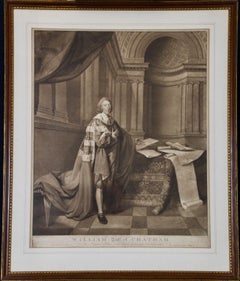
Portrait of William Pitt, Earl of Chatham: Rare Framed Mezzotint after Brompton
By Edward Fisher
Located in Alamo, CA
This is a large framed very rare hand-colored copperplate mezzotint engraved portrait of William Pitt, the Elder, 1st Earl of Chatham by Edward Fisher, published in London in 1779 after a painting by Richard Brompton. Pitt is depicted attired in a flowing regal appearing cape, standing in an ornate room with his left hand outstretched over a serious of manuscripts and scrolls that are laying on a table or desk to his left. The table is covered by a beautiful oriental carpet. The manuscripts include the Magna Carta, a map of the colonies, including Long Island and Staten Island, and papers entitled "A Plan for the Reconciliation between Great Britain and the Colonies", "A Motion Made in 1775 for the Recall of Troops from Boston", "A Provisional Act for Settling the Troubles in America Offered to the House of Lords in 1775", and "It is doing Nothing to repeal a few Scraps of Paper or Pieces of Parchment called Acts of Parliament. But our Business is to repeal the Ill-Will and the Animosity unfortunately now subsisting between Great Britain and North America". This engraving is held by the British Museum and the British Royal Collection Trust.
This large framed mezzotint engraving is presented in a brown wood frame with gold-colored beaded inner and outer trim, and a cream-colored French mat. The frame measures 31.63" high by 26.63" wide by 0.75" deep. There are three short tears along the right edge and mild creasing in the left upper, left lower and right lower corners. It is otherwise in very good condition.
William Pitt (1708-1778) was a member of the British parliament from 1735 to 1761 and prime minister from 1766 to 1768. Pitt was an advocate for the American colonies leading up to the War of Independence. He called for an amiable relationship between Great Britain and the colonies and opposed the Stamp Act and military action in America. He advocated for a withdrawal of English troops from Boston in 1775 and the settling of troubles in America, as two of his manuscripts on the table outline. Pitt's colleague, Lord Shelburne (later the Marquess of Lansdowne) shared his sympathies and after Pitt's death, signed a peace treaty with the United States in 1782.
The American city of Pittsburgh, Pennsylvania is named for William Pitt, the Elder. The name originated when the conflict between the British and French over territorial claims in the Northeast were settled in 1758. General John Forbes and his British army, supported by the American colonial troops, expelled the French from Fort Duquesne (which had been constructed by the French in 1754). Forbes re-named the site for William Pitt the Elder, who at the time was a British statesman. The earliest known reference to the new name, Pittsburgh, is in a letter sent from General John Forbes to Pitt, dated November 27, 1758. Pitt's son, William Pitt, the Younger, like his father, also served as British Prime Minister.
Edward Fisher (1730-1785) was born in Ireland in 1730. He was originally a hatter, but learned engraving in London. He became a member of the Incorporated Society of Artists in 1766, and exhibited there fourteen times between 1761 and 1776. He engraved more than sixty portraits. In addition to this portrait of William Pitt, Earl of Chatham, after Richard Brompton he engraved several portraits after Brompton, including George, Earl of Albemarle, as well as engraved portraits after paintings by Joshua Reynolds, including the Shakespearean actor David Garrick, Hugh, Earl of Northumberland, and Elizabeth, Countess of Northumberland and Laurence Sterne, and Hope Nursing Love, as well as Robert Brown, after Mason Chamberlin, Colley Cibber, after Jean-Baptiste van Loo, Christian VII of Denmark, after Nathaniel Dance, Simon, Earl Harcourt, after Hunter, Roger Long, after Benjamin Wilson...
Category
Old Masters 1790s Interior Prints
Materials
Mezzotint
$5,975
H 31.63 in W 26.63 in D 0.75 in
Previously Available Items
Magnificent large plate illustrating the Vatican Museum
Located in London, London
FEOLI, Vincenzo.
Vedute del Museo Pio-Clementino.
Rome, 1790.
A double-page engraved plate after Miccinelli and Costa. Sheet size: 70.5cm by 99cm. Mounted size: 81cm by 101cm.
Magnificent series of extra-large plates illustrating the Vatican Museum...
Category
Naturalistic 1790s Interior Prints
Materials
Engraving
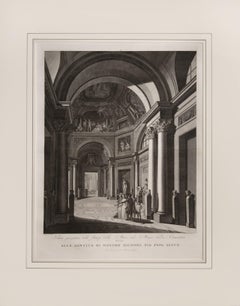
Magnificent large plate illustrating the Vatican Museum
Located in London, London
FEOLI, Vincenzo.
Vedute del Museo Pio-Clementino.
Rome, 1790.
A double-page engraved plate after Miccinelli and Costa. Sheet size: 70.5cm by 99cm. Mounted size: 81cm by 101cm.
Magnificent series of extra-large plates illustrating the Vatican Museum...
Category
Naturalistic 1790s Interior Prints
Materials
Engraving
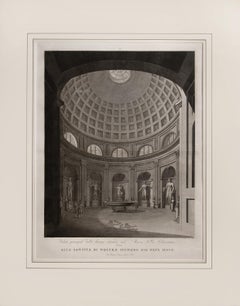
Magnificent large plate illustrating the Vatican Museum
Located in London, London
FEOLI, Vincenzo.
Vedute del Museo Pio-Clementino.
Rome, 1790.
A double-page engraved plate after Miccinelli and Costa. Sheet size: 70.5cm by 99cm. Mounted size: 81cm by 101cm.
Category
1790s Interior Prints
Materials
Handmade Paper, Engraving
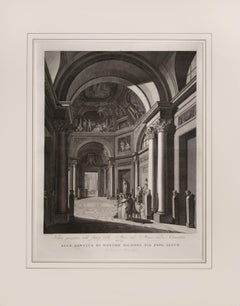
Magnificent large plate illustrating the Vatican Museum
Located in London, London
FEOLI, Vincenzo.
Vedute del Museo Pio-Clementino.
Rome, 1790.
A double-page engraved plate after Miccinelli and Costa. Sheet size: 70.5cm by 99cm. Mounted size: 81cm by 101cm.
Magnificent series of extra-large plates illustrating the Vatican Museum...
Category
1790s Interior Prints
Materials
Handmade Paper, Engraving
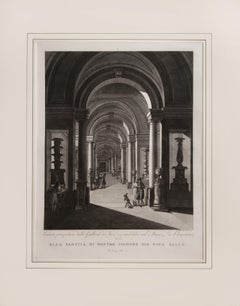
H 39.77 in W 31.89 in D 0.2 in
Magnificent large plate illustrating the Vatican Museum
Located in London, London
FEOLI, Vincenzo.
Vedute del Museo Pio-Clementino.
Rome, 1790.
A double-page engraved plate after Miccinelli and Costa. Sheet size: 70.5cm by 99cm. Mounted size: 81cm by 101cm.
Magnificent series of extra-large plates illustrating the Vatican Museum...
Category
1790s Interior Prints
Materials
Handmade Paper, Engraving
H 39.77 in W 31.89 in D 0.2 in
Magnificent large plate illustrating the Vatican Museum
Located in London, London
FEOLI, Vincenzo.
Vedute del Museo Pio-Clementino.
Rome, 1790.
A double-page engraved plate after Miccinelli and Costa. Sheet size: 70.5cm by 99cm. Mounted size: 81cm by 101cm.
Magnificent series of extra-large plates illustrating the Vatican Museum...
Category
1790s Interior Prints
Materials
Handmade Paper, Engraving
H 39.77 in W 31.89 in D 0.2 in