18th Century and Earlier Interior Prints
to
13
46
38
18
5
16
Overall Width
to
Overall Height
to
24
5
1
16
15
7
4
3
123
217
1,067
742
11
13
22
52
38
62
74
212
239
91
103
72
50
1
66
30
21
17
16
9
8
8
7
7
6
6
6
5
5
4
4
3
3
3
80
33
33
18
10
32
19
55
31
Period: 18th Century and Earlier
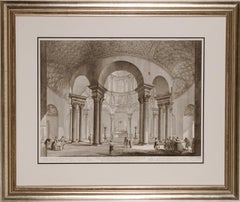
Church of St. Costanza, Rome: An 18th Century Piranesi Architectural Etching
Located in Alamo, CA
This is a framed 18th century Giovanni Battista Piranesi etching entitled: "Veduta interna del Sepocro di Santa Costanza, fabbricat...
Category
Old Masters 18th Century and Earlier Interior Prints
Materials
Etching
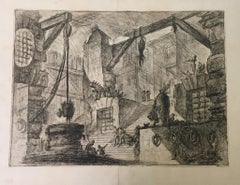
The Well, Carcere XIII - Etching by G.B.Piranesi - 1750s
Located in Roma, IT
Giovanni Battista Piranesi, The Well, Carcere XIII , from “ Images of Prisons”, Buchard , Rome, 1749-50
Etching on laid paper. Signed on plate “ Piranesi F.” lower-right. Very good ...
Category
Modern 18th Century and Earlier Interior Prints
Materials
Etching
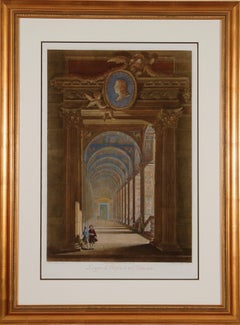
Vatican Hallway designed by Raphael: 18th C. Hand-colored Engraving by Volpato
Located in Alamo, CA
This is an original 18th century hand-colored copper-plate engraving by Giovanni Volpato after a drawing by Camporesi. It was the frontispiece for volume one of the rare and valuable...
Category
Old Masters 18th Century and Earlier Interior Prints
Materials
Engraving
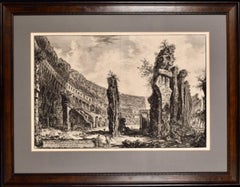
The Roman Colosseum: A Framed 18th Century Etching of the Interior by Piranesi
Located in Alamo, CA
This large framed 18th century etching by Giovanni Battista Piranesi entitled "Veduta dell'interno dell'Anfiteatro Flavio detto il Colosseo" (View of the interior of the Flavian Amph...
Category
Old Masters 18th Century and Earlier Interior Prints
Materials
Etching
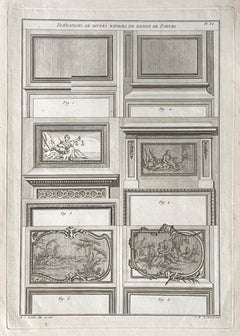
Elevations de Divers Especes de Dessus de Portes, Roubo French design engraving
Located in Melbourne, Victoria
'Elevations de Divers Especes de Dessus de Portes'
French copper-line engraving by JB Bichard after Andre Jacob Roubo (1739–1791). 18th century laid watermarked paper.
From Roubo's...
Category
French School 18th Century and Earlier Interior Prints
Materials
Engraving
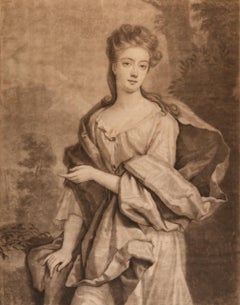
The Duchess of St. Albans: A 17th C. Portrait After a Kneller Painting
By (After) Sir Godfrey Kneller
Located in Alamo, CA
This is a 17th century engraved mezzotint portrait of the Duchess of St. Albans by John Smith, after a painting by Sir Godfrey Kneller. It was published in London by John Boydell in 1694.
The Duchess of St. Albans (1642-1712) was a woman named Diana de Vere. She was born in 1642, the daughter of Aubrey de Vere, the 20th Earl of Oxford. In 1662, she married Charles Beauclerk, the illegitimate son of King Charles II and his mistress, Nell Gwyn. As a result of her marriage, Diana became the Duchess of St. Albans, and she and Charles had several children together. Diana was known for her beauty and charm, and she was a prominent figure in the court of King Charles II. Despite her husband's illegitimate birth, Diana was highly respected in the royal court and was known for her intelligence and wit. She was a patron of the arts and supported many artists and writers of the time. Diana lived through a tumultuous period of English history, including the Great Fire of London and the Glorious Revolution, which saw King James II replaced by William of Orange. She died in 1712 at the age of 70 and was buried in Westminster Abbey. Descendants of Diana and her husband, who was an illegitimate son of King Charles II, include Diana, Princess of Wales and her son William, Duke of Cambridge.
An author wrote of her: "The line of Vere, so long renown’d in arms,
Concludes with luster in St. Albans’s charms;
Her conquering eyes have made their race complete,
It rose in valor, and in beauty set."
This striking mezzotint engraving depicts Diana, Duchess of St Albans in a three-quarter length pose, standing, wearing loose flowing dress and a wrap. She has a very serene, calm appearance as she is looking straight at the viewer. There is a landscape of trees in the background. The print is adhered in the corners to an archival backing, which is itself adhered in the upper corners to a larger backing. The print is trimmed to just beyond the plate mark. There are areas of discoloration in the margins and in the inscription area, but the print is otherwise in very good condition. The sheet measures 14.5" high and 10" wide. This mezzotint is held by multiple museums and institutions, including The British Museum, The National Portrait Gallery London, The Fine Arts Museum of Boston, The Lewis Walpole Library at Yale, The Yale Center for British Art, The Fitzwilliam Museum at Cambridge and The National Galleries of Scotland. The original Kneller painting is part of the British Royal Collection Trust and hangs in the King's Private Dining Room at Hampton Court Palace.
Sir Godfrey Kneller (1646-1723) was a leading portrait painter of his time, particularly renowned for his depictions of the British aristocracy and royalty. He was born in Lübeck, Germany, and trained in Amsterdam under the painter Ferdinand Bol...
Category
18th Century and Earlier Interior Prints
Materials
Mezzotint
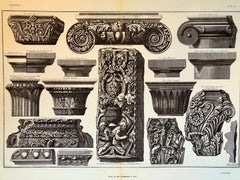
Piranesi IV.
Located in Slovak Republic, SK
Fine Art Print Hahnemuehle, editioned, Giovanni Battista Piranesi print in Verlag von AD Lehmann in Wien, end of the 19. century, SalamonArt certificate will be included.
Category
Italian School 18th Century and Earlier Interior Prints
Materials
Archival Pigment

$268 Sale Price
79% Off
Carcere ascura
Located in Fairlawn, OH
Carcere ascura
Etching, 1743
Signed in the plate bottom left corner
From: Prima Parte, 1743
Second edition: 1750-1778
Watermark: R 37-39
A lifetime impression printed during Piranesi’s life, before the plates are moved to Paris by his sons in the 1790’s
This image foretells Piranesi's famous set, Carceri (Prisons) which is his next creative effort.
Condition: Horizontal crease midway in the sheet associated with the manufacture of the paper.
Visible watermark verso
Small printer crease in the bottom right below the caption plate.
Image size: 14 1/2 x 9 1/2 inches
Reference: Robison 3 iii/VI
Piranesi In Rome: Prima Parte di Architetture e Prospettive
"Although Piranesi studied architecture in Venice, he never was able to find work in the field other than a few jobs involving remodeling in Rome. While Piranesi was struggling to support his architectural endeavors upon his arrival in Rome in 1740, he spent a short period of time in the studio of master painter Giovanni Battista Tiepolo (1696-1770) in addition to his apprenticeship with Giuseppe Vasi. The first production of Piranesi’s early years in Rome and a culmination of his training under Vasi, Tiepolo, and his uncle, was the Prima Parte di Architetture e Prospettive (1743). The Prima Parte was a collection of twelve etchings of imaginary temples, palaces, ruins, and a prison. During this time, Piranesi was still developing the unique style of etching he is known for today, and as such the Prima Parte differs significantly in technique compared to later works. In the Frontispiece of the Prima Parte, Piranesi’s lines are definite and exact with very little flow to them, designed in the form of traditional etching. The detail is immaculate, and yet perspective of the piece is oddly simple and familiar to the viewer. Piranesi’s technique employs miniscule markings and lines, intricately woven together to create a stippling effect. The Prima Parte, described as “rigid” by art historian Jonathan Scott, came to be seen as a stark contrast to his later sketches, which were much lighter and freer. Influenced by the style of Tiepolo, which epitomized the lightness and brightness of the Rococo period, Piranesi adopted some of the more painterly techniques of the masters he apprenticed under. Piranesi made the medium of etching appear as though it was a sketch or a painting, hence a “freer” and more fluid design in his later works. For example, the frontispiece of the Prima Parte read as an etching to Piranesi’s audience, but in his later vedute, the style of etching almost appears to be made of brushstrokes. Moreover, at the same time Piranesi was working on the Prima Parte, he aided the artist Giambattista Nolli. There is a small section of Nolli’s map...
Category
Old Masters 18th Century and Earlier Interior Prints
Materials
Etching
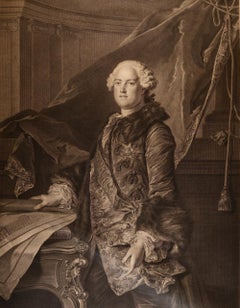
Marquis de Marigny: An 18th C. Wille Engraved Portrait after a Tocque Painting
By Louis Tocqué
Located in Alamo, CA
This is a mid 18th century engraved portrait of Abel François Poisson de Vandières, Marquis de Marigny by Jean Georges Wille after a painting by Louis Tocque...
Category
18th Century and Earlier Interior Prints
Materials
Engraving
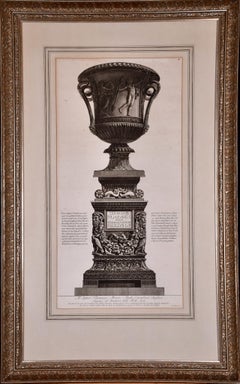
A Framed 18th C. Piranesi Etching of an Ancient Marble Vase from Hadrian
s Villa
Located in Alamo, CA
This large framed 18th century etching by Giovanni Battista Piranesi is entitled "Vaso antico di Marmo adornato di eccellenti Sculture si nella parte anteriere che nell' opposta, le ...
Category
Old Masters 18th Century and Earlier Interior Prints
Materials
Etching
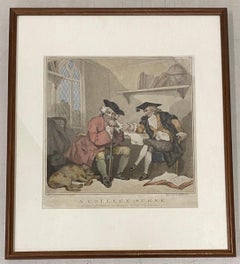
Edward Williams "A College Scene" After Thomas Rowlandson Color Engraving C.1787
Located in San Francisco, CA
Edward Williams "A College Scene" After Thomas Rowlandson Color Engraving C.1787
Late 18th century hand colored engraving after Thomas Rowlandson
A scene of a young student asking ...
Category
18th Century and Earlier Interior Prints
Materials
Engraving
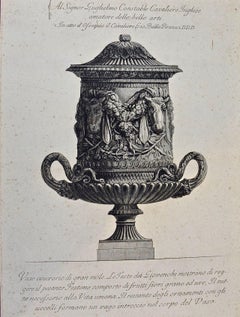
Ancient Roman Marble Vase: 18th C. Piranesi Etching Vaso Cinerario di Gran Mole
Located in Alamo, CA
"Vaso Cinerario di Gran Mole. Le Teste dei Giovenchi mostrano di reggere it pesante Festone composto di Frutti Fiori Grans ed use. Il tuto Necefsario all Vita Umana. Il Restante degl...
Category
Old Masters 18th Century and Earlier Interior Prints
Materials
Etching
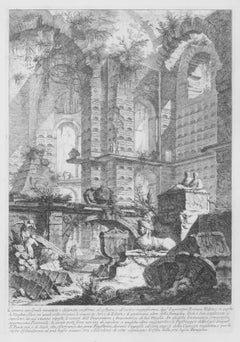
Camera sepolcrale
Located in Fairlawn, OH
Camera sepolcrale
Etching 1743
Signed in the bottom left corner
From: Prima Parte, 1743
Second edition: 1750-1778
Watermark: R 37-39
A lifetime impression printed during Piranesi’s life, before the plates are moved to Paris by his sons in the 1790’s
Condition: Excellent
Image size: 14 5/8 x 9 3/4 inches
Reference: Robison 20 iii/V
Piranesi In Rome: Prima Parte di Architetture e Prospettive
"Although Piranesi studied architecture in Venice, he never was able to find work in the field other than a few jobs involving remodeling in Rome. While Piranesi was struggling to support his architectural endeavors upon his arrival in Rome in 1740, he spent a short period of time in the studio of master painter Giovanni Battista Tiepolo (1696-1770) in addition to his apprenticeship with Giuseppe Vasi. The first production of Piranesi’s early years in Rome and a culmination of his training under Vasi, Tiepolo, and his uncle, was the Prima Parte di Architetture e Prospettive (1743). The Prima Parte was a collection of twelve etchings of imaginary temples, palaces, ruins, and a prison. During this time, Piranesi was still developing the unique style of etching he is known for today, and as such the Prima Parte differs significantly in technique compared to later works. In the Frontispiece of the Prima Parte, Piranesi’s lines are definite and exact with very little flow to them, designed in the form of traditional etching. The detail is immaculate, and yet perspective of the piece is oddly simple and familiar to the viewer. Piranesi’s technique employs miniscule markings and lines, intricately woven together to create a stippling effect. The Prima Parte, described as “rigid” by art historian Jonathan Scott, came to be seen as a stark contrast to his later sketches, which were much lighter and freer. Influenced by the style of Tiepolo, which epitomized the lightness and brightness of the Rococo period, Piranesi adopted some of the more painterly techniques of the masters he apprenticed under. Piranesi made the medium of etching appear as though it was a sketch or a painting, hence a “freer” and more fluid design in his later works. For example, the frontispiece of the Prima Parte read as an etching to Piranesi’s audience, but in his later vedute, the style of etching almost appears to be made of brushstrokes. Moreover, at the same time Piranesi was working on the Prima Parte, he aided the artist Giambattista Nolli. There is a small section of Nolli’s map...
Category
Old Masters 18th Century and Earlier Interior Prints
Materials
Etching
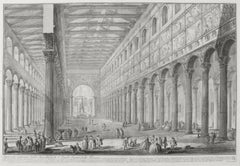
S. Paolo Fuori Le Mura (Vedute della Basilica di S. Paolo fuor della mura)
Located in Fairlawn, OH
S. Paolo Fuori Le Mura (Vedute della Basilica di S. Paolo fuor della mura)
Etching, 1748
From: Vedute di Roma, Plate 8
An early Roman printing, published by Bouchard e Gravier
Watermark: Fleur de Lys in a double circle
Signed in the plate
Condition: Small margins as are common with Bouchard published impressions.
Centerfold (as usual)
Rich impression with good contrasts
Plate/Image size: 15 7/8 x 24 1/8 inches
Sheet size: 17 3/8 x 24 3/4 inches
Reference: Focillon 723
Wilton-Ely 138
Hind 6 ii/VI, Bouchard e Gravier printing, before the price and numbers in later states
This image is Piranesi’s second interior scene from the Vedute di Roma. The first interior is a less complex composition of the Interior of St. Peters which lacks the challenging perspective that the artist masters in this image.
The Papal Basilica of St. Paul Outside the Walls...
Category
Old Masters 18th Century and Earlier Interior Prints
Materials
Etching
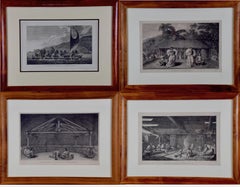
Four Koa Wood Framed 18th C. Engravings from Captain Cook
s 3rd Voyage Journal
By John Webber
Located in Alamo, CA
A grouping of four framed engravings of Hawaii, Tahiti, Tonga and Vancouver Island from the atlas of the official British Admiralty sanctioned journal of Captain Cook's 3rd Voyage entitled "A Voyage to the Pacific Ocean Undertaken by the Command of His Majesty, for Making Discoveries in the Northern Hemisphere", published upon completion of the voyage in London in 1784 by Strahan & Cadell. These engravings were made from drawings by John Webber (1752-1793), who was the artist on Captain James Cook's 3rd and final voyage of discovery. The set of engravings includes: "A Canoe of the Sandwich Islands, the Rowers Masked", Plate 65 in the atlas; "A Dance in Otaheite" (Tahiti), Plate 28; "King of the Friendly Islands" (Tonga), plate 20; "Inside of a House in Nootka Sound" (Canada), plate 42.
These engravings are professionally framed in Koa wood, the same wood as was used to make the canoes of the ancient Hawaiians. Koa wood is legendary in Hawaii. Not only is this amazing wood native to Hawaii, but it is known for the deep rich colors and varied grain pattern. Koa has an honored heritage in Hawaii and is highly revered and sacred. The word “koa” means “warrior” in Hawaiian. The warriors of King Kamehameha the Great, created canoes and weapons from a wood plentiful on the Big Island of Hawaii. This wood became synonymous with the warriors themselves, and it became known as koa.
These four engravings would make a wonderful grouping for a display of 2, 3 or 4 prints. They may be purchased separately or in groups on 1stDibs. Their listing Reference #'s are: LU117324682432, LU117324682022, LU117324684052 and LU117324684062. A discount is available for a grouping depending on the number of items included.
Hawaii was discovered by Captain Cook (1728-1779) during this voyage. Hawaii was originally called The Sandwich Islands in honor of The Earl of Sandwich...
Category
Other Art Style 18th Century and Earlier Interior Prints
Materials
Engraving
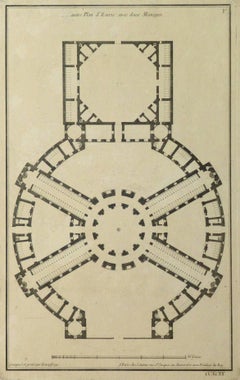
Antique French Copper Engraving - Horse Stables
Located in Houston, TX
Crisp antique copper engraving of a unique floor plan of French horse stables from Recueil d'Architecture, 1780.
Original artwork on paper displayed on a...
Category
18th Century and Earlier Interior Prints
Materials
Ink, Paper
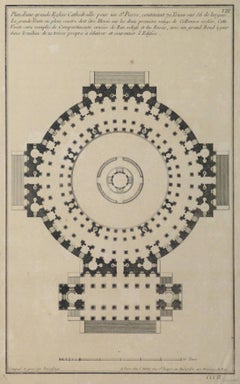
Antique French Copper Engraving - Cathedral
Located in Houston, TX
Bold antique copper engraving of the floor plan of a French cathedral from Recueil d'Architecture, 1780.
Original artwork on paper displayed on a whi...
Category
18th Century and Earlier Interior Prints
Materials
Ink, Paper, Engraving
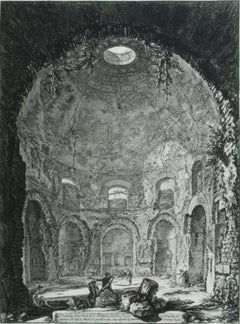
The So-Called Tempio della Tosse, Near Tivoli. Interior Upright
Located in Fairlawn, OH
The So-Called Tempio della Tosse, Near Tivoli. Interior Upright (Veduta interna del Tempio della Tosse)
"Temple of the Cough"
Etching, 1764
Signed in the plate
From: Vedute di Roma...
Category
Old Masters 18th Century and Earlier Interior Prints
Materials
Etching
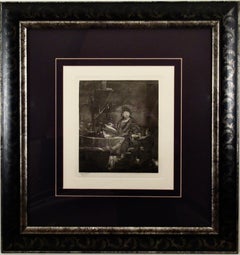
Jan Oytenbogaert
Located in San Francisco, CA
This artwork titled Jan Uytenbogaert" 1639 is an etching on paper After Rembrandt Van Rijn, 1606-1669, plate engraved By French renown engraver Charles Armand Durand, 1831-1905. Sign...
Category
Realist 18th Century and Earlier Interior Prints
Materials
Etching
Parmigiani Amica: An 18th Century Engraving and Etching by Strange After Mazzola
Located in Alamo, CA
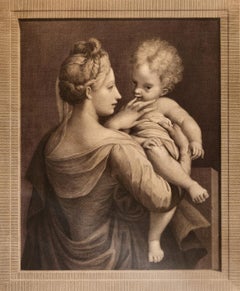
This is an 18th century engraving and etching entitled "Parmigiani Amica" by Robert Strange after a painting by Girolamo Francesco Maria Mazzola, better known as Parmigianino, who lived during the Renaissance period. It was published in London in 1774. As the inscription states, the painting was in the collection of the King of Naples at the time the engraving was made. The engraving depicts a half-length portrait of a young woman, known as Parmigiani's Amica (meaning "female friend" in Italian). She is depicted wearing a simple but elegant dress with a low-cut neckline, which reveals her delicate features and graceful neck. Her hair is arranged in a simple yet stylish manner. She is turning to the right to look lovingly at her infant, which she is holding with her right arm. She is touching the baby's mouth with her left hand. The background of the engraving is plain and unadorned, allowing the viewer to focus entirely on the subject of the portrait. The result is a beautiful and timeless image that captures the essence of Renaissance portraiture.
The engraving is printed on watermarked paper. The sheet measures 16.25" high and 12' wide. The sheet is adhered to paper in its upper corners and it has been removed from the paper in its lower corners. There is some mild discoloration and some wrinkling in the margins, including the lower inscription area, and a small dark spot in the upper margin, which may represent a drop of ink occuring at the time of printing. These issues do not involve the image, which is in very good condition. The print is held by several museums and institutions, including: The Metropolitan Museum of Art in New York, The British Museum in London, The Royal Museums of the UK, The British National Trust...
Category
18th Century and Earlier Interior Prints
Materials
Engraving, Etching
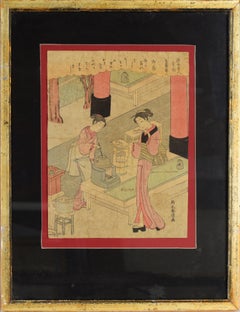
Deutzia Flowers: The Wife of Kasamori - Original Woodblock Print
Located in Soquel, CA
Deutzia Flowers: The Wife of Kasamori - Original Woodblock Print
Deutzia Flowers: The Wife of Kasamori, from the Series "Beauties of the Floating World Associated with Flowers" by S...
Category
Edo 18th Century and Earlier Interior Prints
Materials
Woodcut, Ink, Rice Paper
$720 Sale Price
20% Off
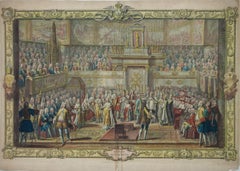
Le Roy Mene au Trone from Series Le Sacre de Louis XV 1722-1731
Located in Paonia, CO
Le Roy Mene au Trone from the Series Le Sacre de Louis XV (1722-1731 ) is an etching by French artist Charles Nicolas Cochin the Elder ( 1688-1754...
Category
French School 18th Century and Earlier Interior Prints
Materials
Etching
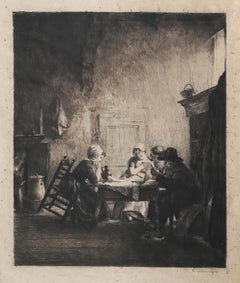
After Dinner Scene, Flemish Etching by F Schweitzer
Located in Long Island City, NY
After Dinner Scene
F. Schweitzer
Etching on laid paper, signed in pencil
Image Size: 9.25 x 7.5 inches
Size: 17.5 x 12.75 in. (44.45 x 32.39 cm)
Category
Flemish School 18th Century and Earlier Interior Prints
Materials
Etching
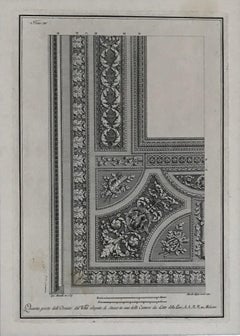
Ceiling designs. A set of three architectural engravings.
Located in Paris, FR
Ceiling designs. A set of three architectural engravings.
These engravings are framed in white gold covered french frames.
From the publication publishe...
Category
18th Century and Earlier Interior Prints
Materials
Engraving
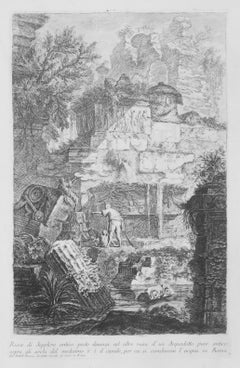
Ruine di Sepolcro antico
Located in Fairlawn, OH
Ruine di Sepolcro antico
Etching, 1743
Signed in the plate bottomleft in the caaption plate
From: Prima Parte, 1743
Second edition: 1750-1778
Watermark: R 37-39
A lifetime impression printed during Piranesi’s life, before the plates are moved to Paris by his sons in the 1790’s
Coniditon: Excellent/Very good
Image size: 14 5/8 x 9 3/4 inches
Reference: Robison 17 iii/V
Piranesi In Rome: Prima Parte di Architetture e Prospettive
"Although Piranesi studied architecture in Venice, he never was able to find work in the field other than a few jobs involving remodeling in Rome. While Piranesi was struggling to support his architectural endeavors upon his arrival in Rome in 1740, he spent a short period of time in the studio of master painter Giovanni Battista Tiepolo (1696-1770) in addition to his apprenticeship with Giuseppe Vasi. The first production of Piranesi’s early years in Rome and a culmination of his training under Vasi, Tiepolo, and his uncle, was the Prima Parte di Architetture e Prospettive (1743). The Prima Parte was a collection of twelve etchings of imaginary temples, palaces, ruins, and a prison. During this time, Piranesi was still developing the unique style of etching he is known for today, and as such the Prima Parte differs significantly in technique compared to later works. In the Frontispiece of the Prima Parte, Piranesi’s lines are definite and exact with very little flow to them, designed in the form of traditional etching. The detail is immaculate, and yet perspective of the piece is oddly simple and familiar to the viewer. Piranesi’s technique employs miniscule markings and lines, intricately woven together to create a stippling effect. The Prima Parte, described as “rigid” by art historian Jonathan Scott, came to be seen as a stark contrast to his later sketches, which were much lighter and freer. Influenced by the style of Tiepolo, which epitomized the lightness and brightness of the Rococo period, Piranesi adopted some of the more painterly techniques of the masters he apprenticed under. Piranesi made the medium of etching appear as though it was a sketch or a painting, hence a “freer” and more fluid design in his later works. For example, the frontispiece of the Prima Parte read as an etching to Piranesi’s audience, but in his later vedute, the style of etching almost appears to be made of brushstrokes. Moreover, at the same time Piranesi was working on the Prima Parte, he aided the artist Giambattista Nolli. There is a small section of Nolli’s map...
Category
Old Masters 18th Century and Earlier Interior Prints
Materials
Etching
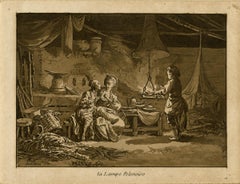
La Lampe Polonoise
Located in Fairlawn, OH
La Lampe Polonoise
Aquatint, 1771
Signed and dated in the plate lower left
Condition: Yellowing to the sheet
Image size: 6 1/8 x 8 1/8 inches
Reference: Hedou 147 ii/II
Provenance: C...
Category
Old Masters 18th Century and Earlier Interior Prints
Materials
Aquatint
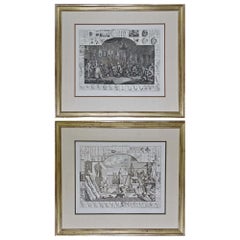
William Hogarth
s "Analysis of Beauty": A Set of Two Framed 18th C. Engravings
Located in Alamo, CA
The two plates in this set were created utilizing both engraving and etching techniques by William Hogarth in 1753, originally as illustrations of his book on aesthetics, entitled "Analysis of Beauty". Due to their popularity, these plates were later published separately. The publication line in the lower right reads: "Designed, Engraved, and Publish'd by Wm. Hogarth, March 5th 1753, according to Act of Parliament." Hogarth's original copper plates were refurbished where needed by James Heath and engravings were republished in London in 1822 by Braddock, Cradock & Joy. This was the last time Hogarth's copper plates were used for printing. Most were melted during World War I for the construction of bombs.
These large folio sized "Analysis of Beauty" engravings are presented in antiqued gold-colored frames with double mats; the outer silk mats are light brown-colored and the inner mats are dark brown. Each frame measures 27.38" x 31.25" x 1.13". There is one tiny spot in the right margin of plate 1 and another in the lower margin; the latter could be from the printing process. The prints are otherwise in excellent condition.
The "Analysis of Beauty" series is in the collection of many major museums, including: The British Museum, The Metropolitan Museum of Art, The Tate Museum, The Chicago Art Institute and The Fine Arts Museums of San Francisco.
The first engraving (Plate 1) depicts a courtyard of statues which is filled with some of the most famous works of classical sculpture. The most important sculptures are surrounded by less impressive works. The Medicean Venus (#13) is in the center with a statue of Julius Caesar (#19) to the right, elevated on a pulley with a short, overdressed Brutus stands over the falling Caesar. The Apollo Belvedere (#12) is next. A judge stands to the right with his foot on a cherub (#16). Another crying cherub holds a gallows and wipes his tears with the judge's robe.
A sphinx (#21) and the drunken Silenus (#107) are below the Venus. Michaelangelo's torso (#54) and a statue of Antonius (#6) are seen in the foreground. The Farnese Hercules (#3) and a bust of another Hercules (#4) under two statuettes of Isis are also included in the scene.
The key to these objects is included in the form of a serpentine line winding around a cone (#26), Hogarth's "Line of Beauty". For Hogarth the winding line is an essential element of beauty in art. Hogarth's theory of beauty is communicated in this plate.
Plate 2 is thought to represent the Wanstead Assembly, with the Earl of Tynley and his household. It is an adaptation of a scene in the Happy Marriage series, which complements Hogarth's Marriage à la Mode...
Category
Old Masters 18th Century and Earlier Interior Prints
Materials
Engraving, Etching
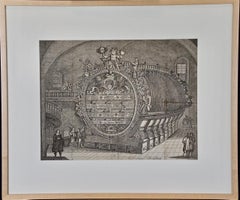
The Heidelberg Tun: A Framed 17th Century Engraving of a Huge Wine Cask
Located in Alamo, CA
"The Heidelberg Tun" is a 17th century engraving by an unknown artist. It depicts a famous huge ornamental wine cask that resided in the wine cellar of Heidelberg Castle. The cask shown here, built in 1664, is the second of four Heidelberg Tuns; the first was destroyed during the Thirty Years' War, between 1618 and 1648. This cask was built in 1664 when Karl Ludwig ordered Heidelberg cellar master...
Category
Old Masters 18th Century and Earlier Interior Prints
Materials
Engraving
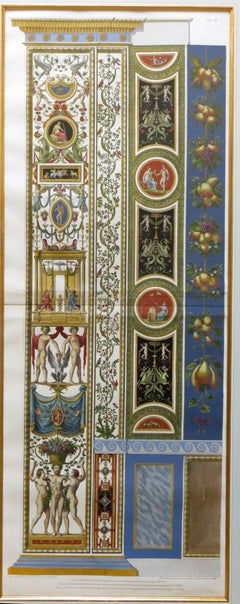
Logge di Rafaele nel Vaticano (Raphael
s Loggia in the Vatican) Plate X Pilaster
By Gaetano Savorelli
Located in San Francisco, CA
Artists: Raffaello Sanzio d’Urbino.(1483 – 1520)
Gateano Savorelli, artist. (unk.- 1791)
Ludovico Teseo, draughtsman. (1731-1782)
Pietro Camporesi, architect (1726 - 1781)
Giovanni Ottoviani (1735-1808) & Giovanni Volpato (1735 – 1803), engravers
Title: Delle Logge di Rafaele nel Vaticano, Plate X (10)
Year: 1772-1777
Medium: Hand-colored copperplate engraving
Sight size: 42 x 16 inches.
Framed size: 55.5 x 28.5 inches
Condition: Very good
Frame: Frame in very good condition
A tall and incredibly detailed printed panel, “Delle Logge di Rafaele nel Vaticano” (“Raphael Loggia...
Category
Renaissance 18th Century and Earlier Interior Prints
Materials
Engraving, Watercolor
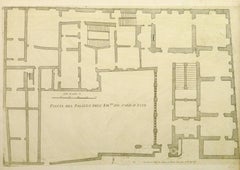
Antique Italian Engraving - Cardinal Este Palace
Located in Houston, TX
Over 350 year old antique copper engraving of the floor plan to the Palace of Cardinal Este located in Tivoli, Italy by Italian Giovanni Giacomo de Rossi, 1650.
Original artwork on ...
Category
18th Century and Earlier Interior Prints
Materials
Ink, Paper
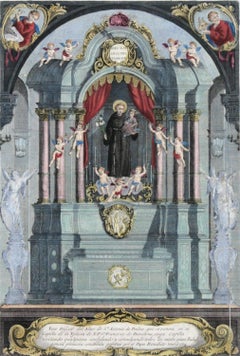
$250 Sale Price
50% Off
Altar de St. Antonio de Padua Hand Colored Engraving 1724
Located in Paonia, CO
Anthony of Padua or Anthony of Lisbon born Fernando Martins de Bulhoes 15 August 1195 – 13 June 1231) was a Portuguese Catholic priest and friar of the Franciscan Order. He was born and raised by a wealthy family in Lisbon, Portugal, and died in Padua, Italy. Noted by his contemporaries for his powerful preaching, expert knowledge of scripture, and undying love and devotion to the poor and the sick, he was one of the most quickly canonized saints in church history, being canonized less than a year after his death. He was proclaimed a Doctor of the Church by Pope Pius XII...
Category
Baroque 18th Century and Earlier Interior Prints
Materials
Engraving
Different Profils Pour Les Bordures, Roubo French cabinetmaking design engraving
Located in Melbourne, Victoria
'Different Profils Pour Les Bordures de Glaces avec leurs Ornements'
French copper-line engraving by Michelinot after Andre Jacob Roubo (1739–1791). 18th century laid watermarked pa...
Category
French School 18th Century and Earlier Interior Prints
Materials
Engraving
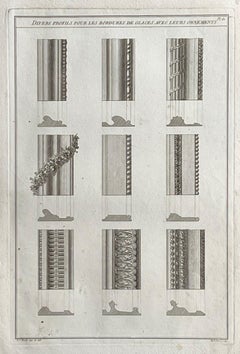
"House Cleaning in Preparation for the New Year" - Japanese Woodblock on Paper
Located in Soquel, CA
"House Cleaning in Preparation for the New Year" - Japanese Woodblock on Paper
House cleaning scene by Kitagawa Utamaro (Japanese, 1753-1806). This print was originally published around 1796-1799, with this example being a later reprint. The full scene is five sheets - there are two more sheets to the right that show more members of the house. However, it is these three sheets that contain the majority of the action - a maid sweeping at a mouse, a lady fainting, and a painting moved aside to allow for cleaning.
Presented in a new black mat.
Mat size: 24"H x 38"W
Paper size: 17.75"H x 33"W
Print Impression: 14.63"H x 29.5"W
Utamaro Kitagawa...
Category
Edo 18th Century and Earlier Interior Prints
Materials
Rice Paper, Woodcut

Allegory of the four seasons. Four engravings on two framed sheets.
Located in Paris, FR
Allegory of the four seasons. A pair of engravings.
These engravings are framed in white gold covered french frames.
From the publication published in Milan in 1782.
"Different ornam...
Category
18th Century and Earlier Interior Prints
Materials
Engraving
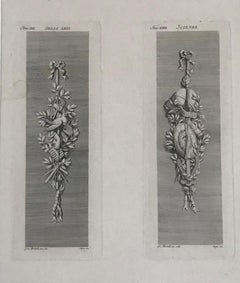
Four French Louis XIV period chimney-piece design engravings by Jean Dolivar
Located in Melbourne, Victoria
'Luire de Cheminees a la Moderne nouvellement Invente et Grave par Jean Dolivar.'
Collection of 4 engravings with designs for chimney-pieces. Published in Paris, circa 1670.
210mm ...
Category
Baroque 18th Century and Earlier Interior Prints
Materials
Engraving, Etching
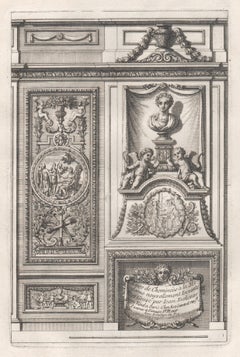
A Japanese Temple – English School, 18th century
Located in Middletown, NY
18th century image of a priest presiding over a traditional Japanese nuptual ceremony.
One plate from A new and complete collection of voyages and travels containing all that have b...
Category
English School 18th Century and Earlier Interior Prints
Materials
Watercolor, Handmade Paper, Engraving
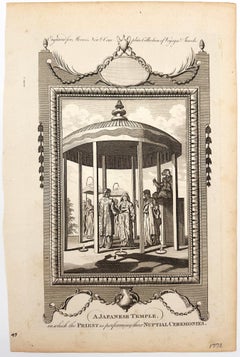
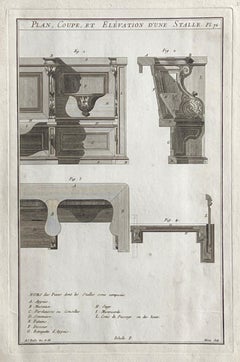
Plan, Coupe, et Elevation d
une Stalle, Roubo French cabinetmaking engraving
Located in Melbourne, Victoria
'Plan, Coupe, et Elevation d'une Stalle'
French copper-line engraving by Milson after Andre Jacob Roubo (1739–1791). 18th century laid watermarked paper.
From Roubo's 'L'Art du Men...
Category
French School 18th Century and Earlier Interior Prints
Materials
Engraving
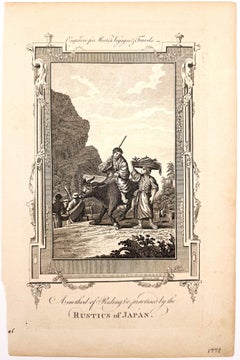
Rustics of Japan – English School, 18th century
Located in Middletown, NY
A Method of Riding as Practised by the Rustics of Japan.
One plate from A new and complete collection of voyages and travels containing all that have been remarkable from the earlies...
Category
English School 18th Century and Earlier Interior Prints
Materials
Watercolor, Handmade Paper, Engraving
Ancient Roman Medici Marble Vase: An 18th Century Etching by Piranesi
Located in Alamo, CA
This large 18th century etching by Giovanni Battista Piranesi is entitled "Vaso antico di Marmo adornato di eccellenti Sculture si nella parte anteriere che nell' opposta, le quail r...
Category
Old Masters 18th Century and Earlier Interior Prints
Materials
Etching

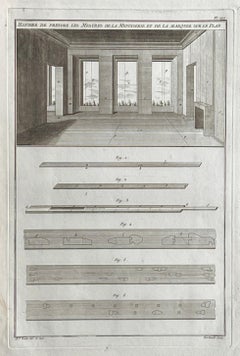
Maniere de Prendre Les Mesures, Roubo French cabinetmaking design engraving
Located in Melbourne, Victoria
'Maniere de Prendre Les Mesures de la Menuiserie et de la Marquer sur le Plan'
French copper-line engraving by Berthault after Andre Jacob Roubo (1739–1791). 18th century laid water...
Category
French School 18th Century and Earlier Interior Prints
Materials
Engraving
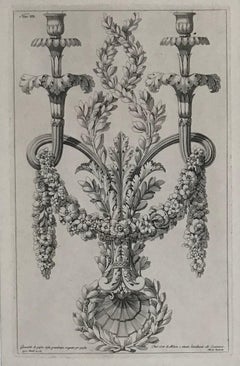
Chandelier designs. A pair of engravings
Located in Paris, FR
Chandelier designs. A pair of architectural engravings.
These engravings are framed in white gold covered french frames.
From the publication published in Milan in 1782.
"Different o...
Category
18th Century and Earlier Interior Prints
Materials
Engraving
Antique Architectural Engraving - Asti Palace
Located in Houston, TX
Over 350 year old antique architectural engraving of the floor plan of the Asti Palace located in Italy by Italian Giacomo Rossi, 1650...
Category
18th Century and Earlier Interior Prints
Materials
Paper, Ink
$250 Sale Price
44% Off
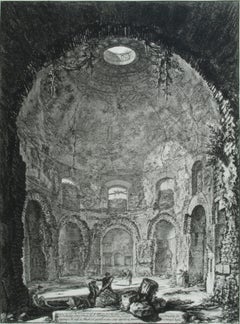
The So-Called Tempio della Tosse, Near Tivoli. Interior Upright
Located in Fairlawn, OH
The So-Called Tempio della Tosse, Near Tivoli. Interior Upright (Veduta interna del Tempio della Tosse)
"Temple of the Cough"
Etching, 1764
Signed in the plate
From: Vedute di Roma...
Category
Old Masters 18th Century and Earlier Interior Prints
Materials
Etching
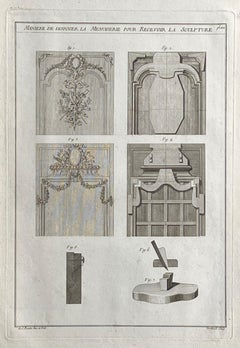
Maniere de Disposer La Menuiserie, Roubo French cabinetmaking design engraving
Located in Melbourne, Victoria
'Maniere de Disposer La Menuiserie pour Recevoir La Sculpture'
French copper-line engraving by Berthault after Andre Jacob Roubo (1739–1791). 18th century laid watermarked paper.
F...
Category
French School 18th Century and Earlier Interior Prints
Materials
Engraving
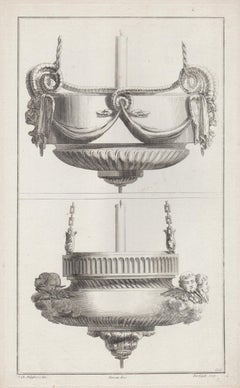
French Neoclassical Design Engraving for Braziers
Located in Melbourne, Victoria
Copper-line engraving. C1768.
Delafosse was a French decorative designer, engraver and architect. Apprenticed for a time to a sculptor, by 1767 he styled himself an 'architect and professor of design'. He published the first volume of his most important work, 'Nouvelle Iconologie Historique' in 1768, containing 110 plates of his designs for furniture, decorative arts and architectural...
Category
French School 18th Century and Earlier Interior Prints
Materials
Engraving
"Inside of a House in Nootka Sound" (Canada) from Captain Cook
s 3rd Voyage
By John Webber
Located in Alamo, CA
"The Inside of a House in Nootka Sound" is an engraving created by William Sharp (1749-1824), from a drawing by John Webber (1752-1793), who was the artist on Captain James Cook's 3rd and final voyage of discovery. It is Plate 65 in "A Voyage to the Pacific Ocean Undertaken by the Command of His Majesty, for Making Discoveries in the Northern Hemisphere", the official British Admirality sanctioned journal published upon completion of the voyage in London in 1784 by Strahan & Cadell.
This engraving is presented in a Koa wood frame and a white mat. There are occasional tiny faint spots, but the print is otherwise in very good condition. Koa wood is legendary in Hawaii. Not only is this amazing wood native to Hawaii, but it is known for the deep rich colors and varied grain pattern. Koa has an honored heritage in Hawaii and is highly revered and sacred. The word “koa” means “warrior” in Hawaiian. The warriors of King Kamehameha the Great, created canoes and weapons from a wood plentiful on the Big Island of Hawaii. This wood became synonymous with the warriors themselves, and it became known as koa.
There are three other engravings listed form the official journal of Captain Cook's 3rd voyage available that are presented in identical Koa wood frames and mats. They would make a wonderful grouping for a display of 2, 3 or 4 prints. Please see listings: LU117324682432, LU117324684022, LU117324684062. A discount is available for a grouping depending on the number of items included.
Nootka Sound is on the west coast of Vancouver Island, British Columbia, Canada. It was explored by Captain Cook in 1778 after he discovered Hawaii during his 3rd voyage. He originally named it King George's Sound, but did record Nootka Sound, which he thought was its native name. Hawaii was originally called The Sandwich Islands in honor of The Earl of...
Category
Realist 18th Century and Earlier Interior Prints
Materials
Engraving

N. Lambert Seigneur de Thorigny: 17th C. Engraved Portrait After Largillière
Located in Alamo, CA
This is a 17th century engraving entitled "Messire Nicolas Lambert Seigneur de Thorigny, Conseiller du Roy" by Pierre Drevet after a painting by Noicolas de Largillière, published in Paris in 1698. This portrait depicts a three-quarter length view of Nicolas Lambert de Thorigny, who is dressed in elaborate robes and collar of a wealthy Parisian nobleman of the time. He is seated directed to the left and looking directly at the viewer. He is holding an inscribed note in his right hand. A magnificent billowing curtain is in the background. Lambert's coat of arms is shown in the center of the lower inscription area. In the inscription area is lettered with title, production detail: "Nic. Largilliere pinxit" and "Petr. Drevet sculpsit", and publication detail: "Se vend a Paris chez Drevet rüe du Foin au coin du College de Maître Gervais".
Nicolas Lambert, Seigneur de Thorigny (1600-1664), was a French nobleman and military commander who lived in the 17th century. He served in the French army during the Thirty Years' War, a conflict that took place from 1618 to 1648 and involved many European powers. Lambert fought in several battles during the war and rose to the rank of colonel. After the war, Lambert returned to France and became involved in politics. He served as a member of the Estates General, a legislative body that advised the king, and as a governor of several provinces. He was a counsellor and confidant of King Louis XIV. He had the title of Président de la Chambre des Comptes. He also became a member of the French Academy of Sciences, a prestigious institution that promotes scientific research and scholarship. Lambert was known for his military expertise, his intelligence, and his commitment to public service. He iInherited the Hôtel Lambert in Paris from his brother Jean Baptiste in 1644 and hired some of the most prominent artists of the time, including Charles Le Brun to decorate and furnish the building.
This beautiful old master engraving was created with impressive detailed technique. It is printed on laid, chain-linked paper. The sheet measures 18.5" high and 13.38" wide. The sheet is adhered to an archival backing paper at the top. There is a faint horizontal center fold and mild discoloration in the inscription area and in the upper margin on the right, with mild wrinkling here. The print is otherwise in very good condition, considering its age. This engraving is so rare, that no comparable prints could be identified for sale online. It is currently only listed in museum collections, including: The Metropolitan Museum of Art, The British Museum, The Louvre, The Riksmuseum, The Victoria & Albert Museum, The Fitzwilliam Museum at the U. of Cambridge, The Boston Museum of Fine Arts, Harvard Art Museums, The Finnish National Museum, The Philadelphia Museum. It is shown in the Metropolitan Museum's Cataloque of French paintings entitled: "French Paintings in The Metropolitan Museum of Art, published in 2018, page 36. The page is included in the photos.
Nicolas de Largillière (1656-1746) was a French portrait painter who achieved great success and acclaim during the late Baroque and Rococo periods. He was born in Paris and trained under the painter Antoine Goubeau. He studied in Antwerp and London before returning to France. While in England he was a favorite painter of King Charles II and King James II of England...
Category
18th Century and Earlier Interior Prints
Materials
Engraving
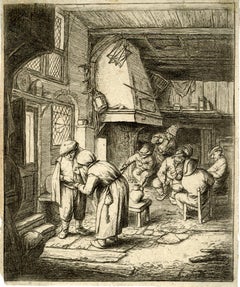
The Peasant Settling His Debt
Located in Middletown, NY
Etching on thin, cream laid paper 4 x 3 5/8 inches (100 x 90 mm), with narrow margins, trimmed inside the platemark. Adhesive residue at the top right and left corners, and archival ...
Category
Old Masters 18th Century and Earlier Interior Prints
Materials
Etching
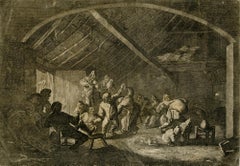
Farmers enjoying a barn dance with a violinist and a bagpiper.
Located in Middletown, NY
Etching on cream laid paper mounted to a cream laid paper support, 9 x 12 7/8 inches (230 x 327 mm), thread margins. Three small areas of light skinning with one extremely small hole...
Category
Old Masters 18th Century and Earlier Interior Prints
Materials
Etching, Laid Paper
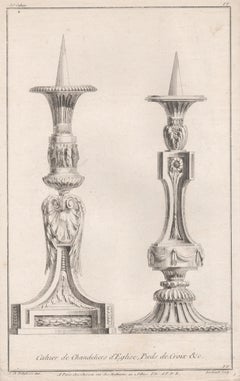
French Neoclassical Design for Candlesticks, engraving after Delafosse
Located in Melbourne, Victoria
Copper-line engraving. C1768.
Delafosse was a French decorative designer, engraver and architect. Apprenticed for a time to a sculptor, by 1767 he styled himself an 'architect and professor of design'. He published the first volume of his most important work, 'Nouvelle Iconologie Historique' in 1768, containing 110 plates of his designs for furniture, decorative arts and architectural...
Category
French School 18th Century and Earlier Interior Prints
Materials
Engraving
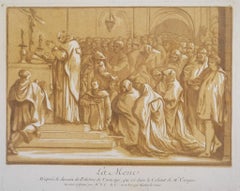
La Messe (The Mass), after Caravaggio
Located in Middletown, NY
Chiaroscuro woodcut with underlying engraving on cream laid paper, printed from two blocks in brown and olive. 10 1/4 x 12 3/4 inches (260 x 321 mm) (plate), full margins with the text printing clearly below in black ink. In very good condition with scattered surface soiling and several minor flecks of light discoloration in the margins, especially in the area of the lower right corner, well outside of image area. Unobtrusive notations in pencil in the margin and on the verso. All condition issues are consistent with age. After a drawing of the same title by Polidoro da Caravaggio...
Category
Old Masters 18th Century and Earlier Interior Prints
Materials
Laid Paper, Engraving, Woodcut
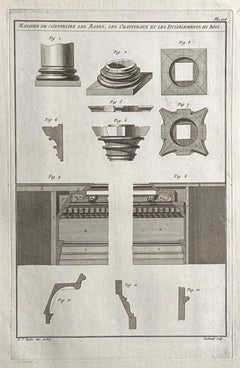
Maniere De Construire Les Bazes, Roubo French cabinetmaking design engraving
Located in Melbourne, Victoria
'Maniere de Construire Les Bazes, Les Chapiteaux et Les Entablements en Bois'
French copper-line engraving by Berthault after Andre Jacob Roubo (1739–1791). 18th century laid waterm...
Category
French School 18th Century and Earlier Interior Prints
Materials
Engraving
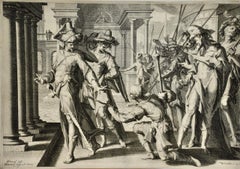
"Allegory of Justice": A 17th Century Old Master Engraving by van Swanenburg
By Willem van Swanenburg
Located in Alamo, CA
This old master engraving entitled "Allegorie op de Rechtspraak" is by Willem van Swaanenburg after a painting by Joachim Wtewael, published by Ch...
Category
Old Masters 18th Century and Earlier Interior Prints
Materials
Engraving
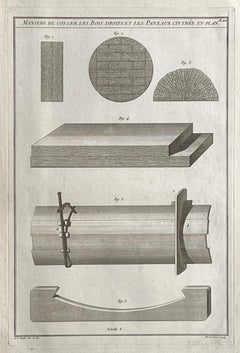
Maniere de Coller Les Bois Droits, Roubo French cabinetmaking design engraving
Located in Melbourne, Victoria
'Maniere de Coller Les Bois Droit et Les Paneaux Cintree en Plan'
French copper-line engraving by Michelinot after Andre Jacob Roubo (1739–1791). 18th century laid watermarked paper...
Category
French School 18th Century and Earlier Interior Prints
Materials
Engraving
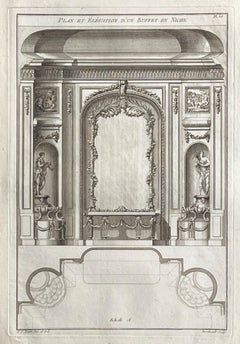
Plan et Elevation d
un Buffet en Niche, Roubo French design engraving
Located in Melbourne, Victoria
'Plan et Elevation d'un Buffet en Niche'
French copper-line engraving by Berthault after Andre Jacob Roubo (1739–1791). 18th century laid watermarked paper.
From Roubo's 'L'Art du ...
Category
French School 18th Century and Earlier Interior Prints
Materials
Engraving
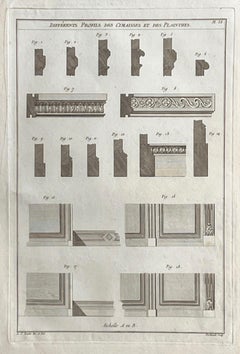
Different Profils Des Cimaisses, Roubo French cabinetmaking design engraving
Located in Melbourne, Victoria
'Different Profils Des Cimaisses et Des Plainthes'
French copper-line engraving by Berthault after Andre Jacob Roubo (1739–1791). 18th century laid watermarked paper.
From Roubo's ...
Category
French School 18th Century and Earlier Interior Prints
Materials
Engraving
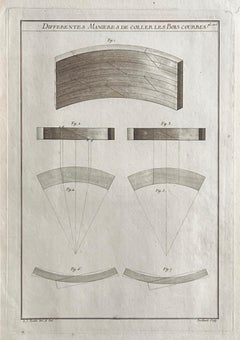
Differents Manieres de Coller, Roubo French cabinetmaking design engraving
Located in Melbourne, Victoria
'Differents Manieres de Coller les Bois Courbes'
French copper-line engraving by Berthault after Andre Jacob Roubo (1739–1791). 18th century laid watermarked paper.
From Roubo's 'L...
Category
French School 18th Century and Earlier Interior Prints
Materials
Engraving
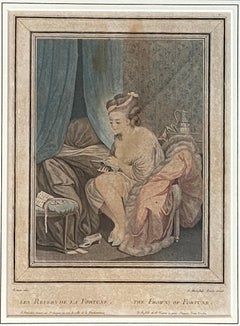
“Les Revers de la Fortune”
Located in Southampton, NY
Original stipple engraving with colors titled “Les Revers de la Fortune” (Reversal of Fortune) by the well known French engraver, Louis Marin Bonnet...
Category
Academic 18th Century and Earlier Interior Prints
Materials
Laid Paper, Engraving
$760 Sale Price
20% Off
French pipe organ design, late 18th century engraving
Located in Melbourne, Victoria
'Elevation Geometralle d'Un Buffet D'Orgue d'Une Nouvelle Decoration'
Copper-line engraving. C1770.
380mm by 420mm (platemark) 460mm by 560mm (sheet)
From Roubo's 'L'Art du Menui...
Category
Rococo 18th Century and Earlier Interior Prints
Materials
Engraving
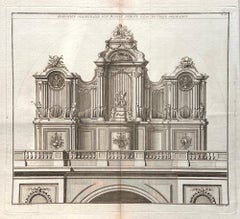
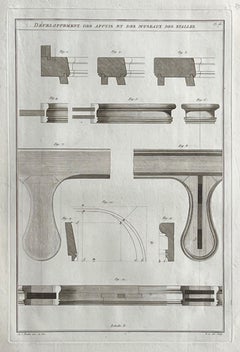
Developments des Appuis, Roubo French cabinetmaking design engraving
Located in Melbourne, Victoria
'Developments des Appuis et Des Museaux des Stalles'
French copper-line engraving by P Le Cor after Andre Jacob Roubo (1739–1791). 18th century laid watermarked paper.
From Roubo's...
Category
French School 18th Century and Earlier Interior Prints
Materials
Engraving