Items Similar to Dogwood
Want more images or videos?
Request additional images or videos from the seller
1 of 7
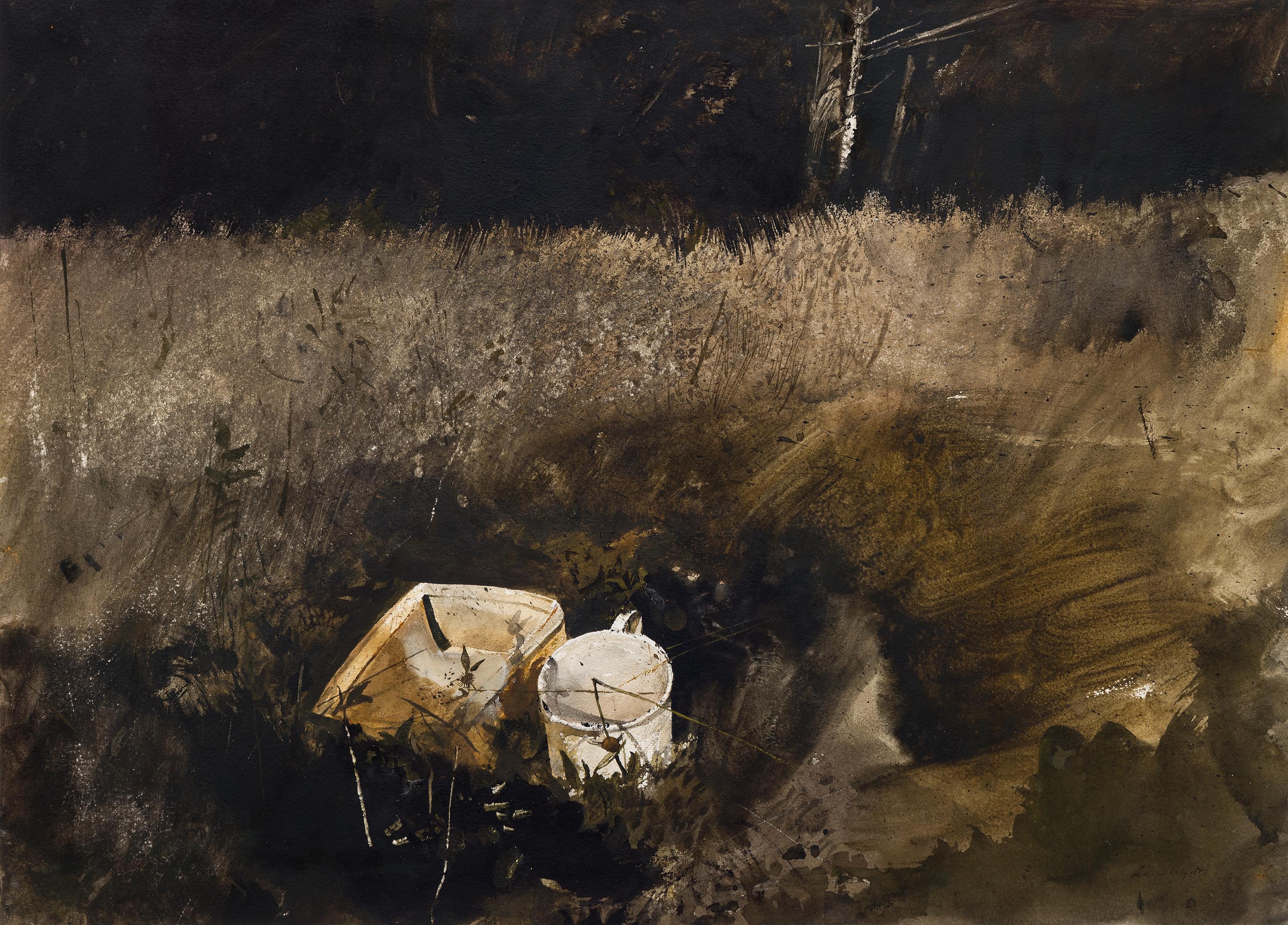
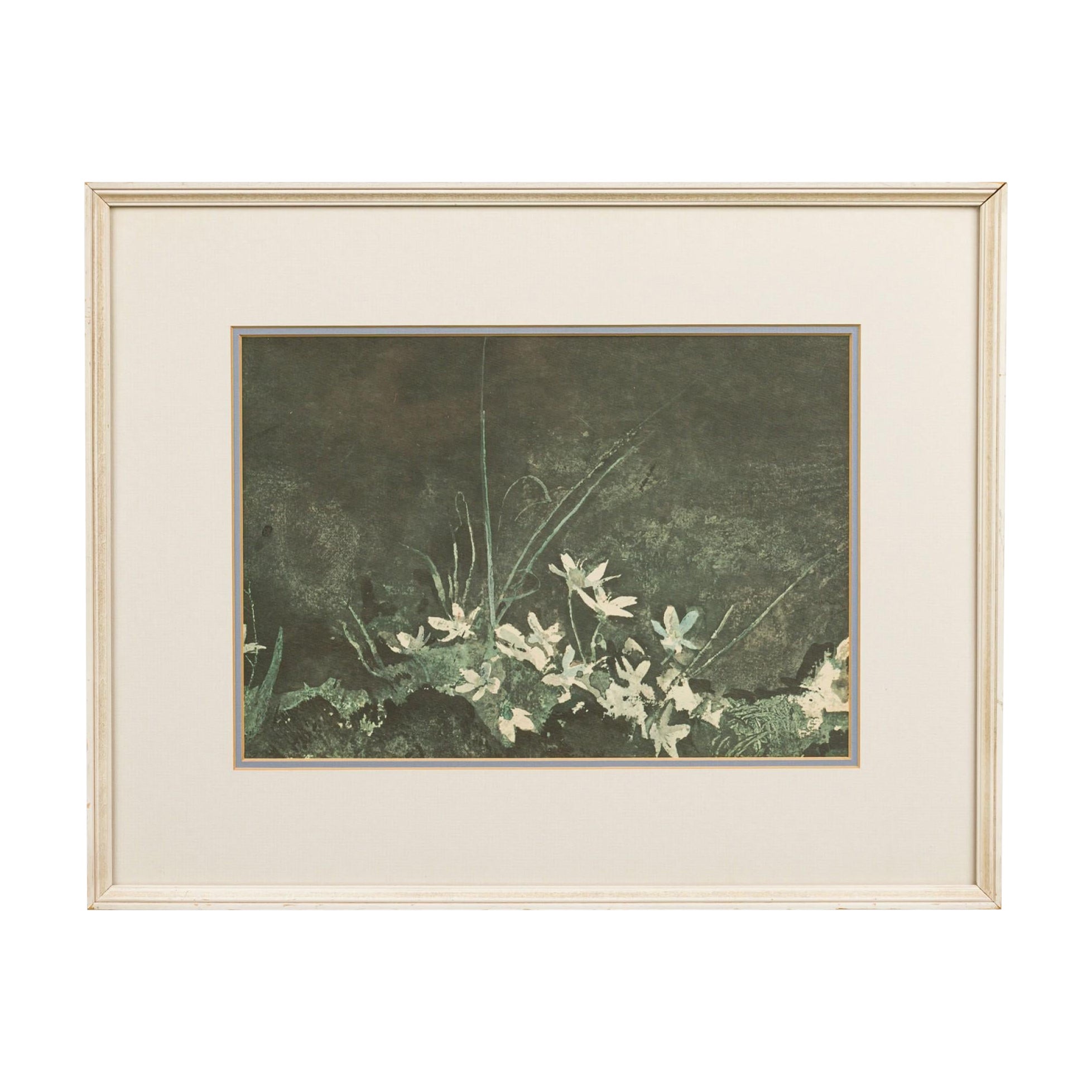
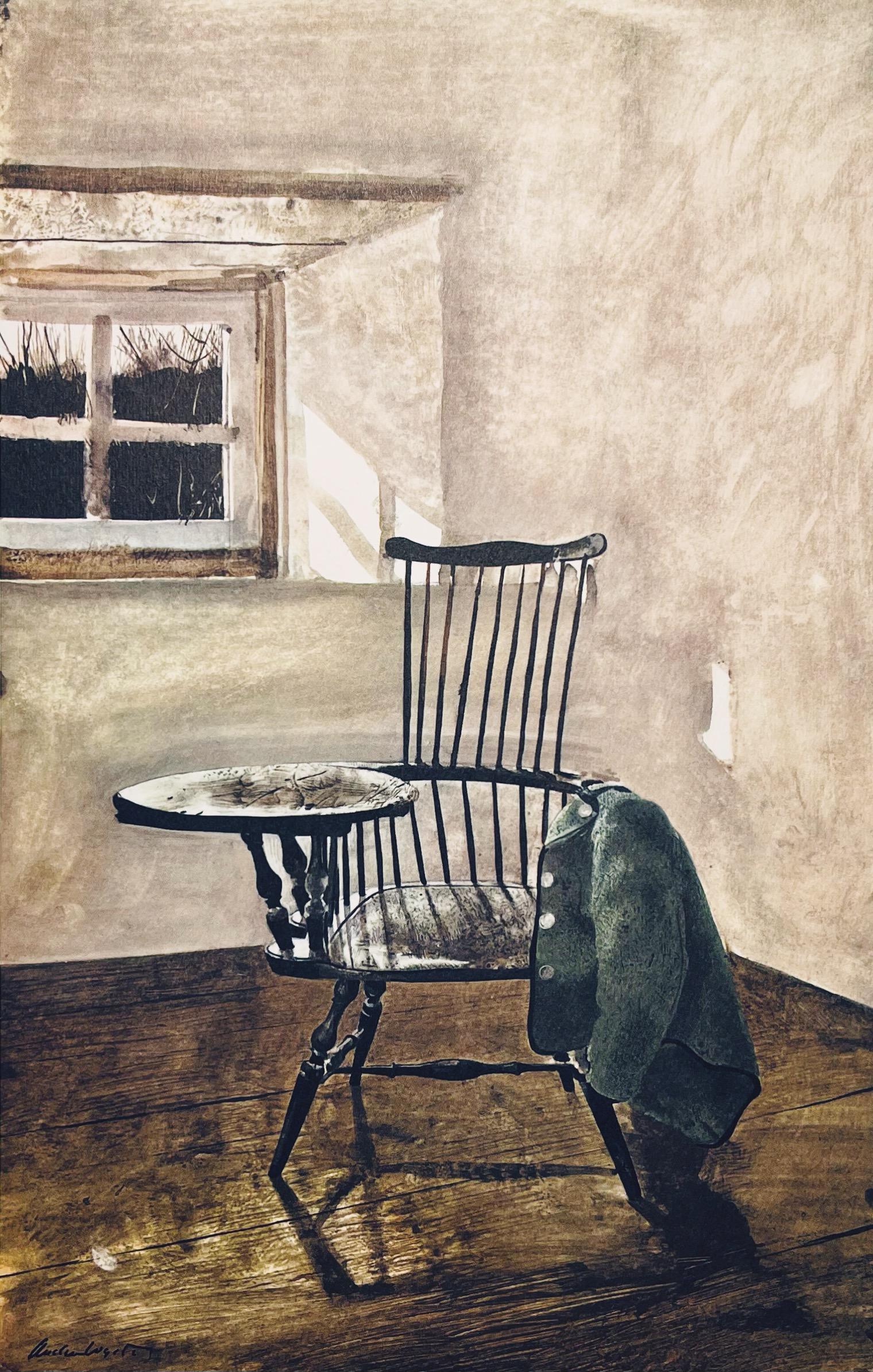
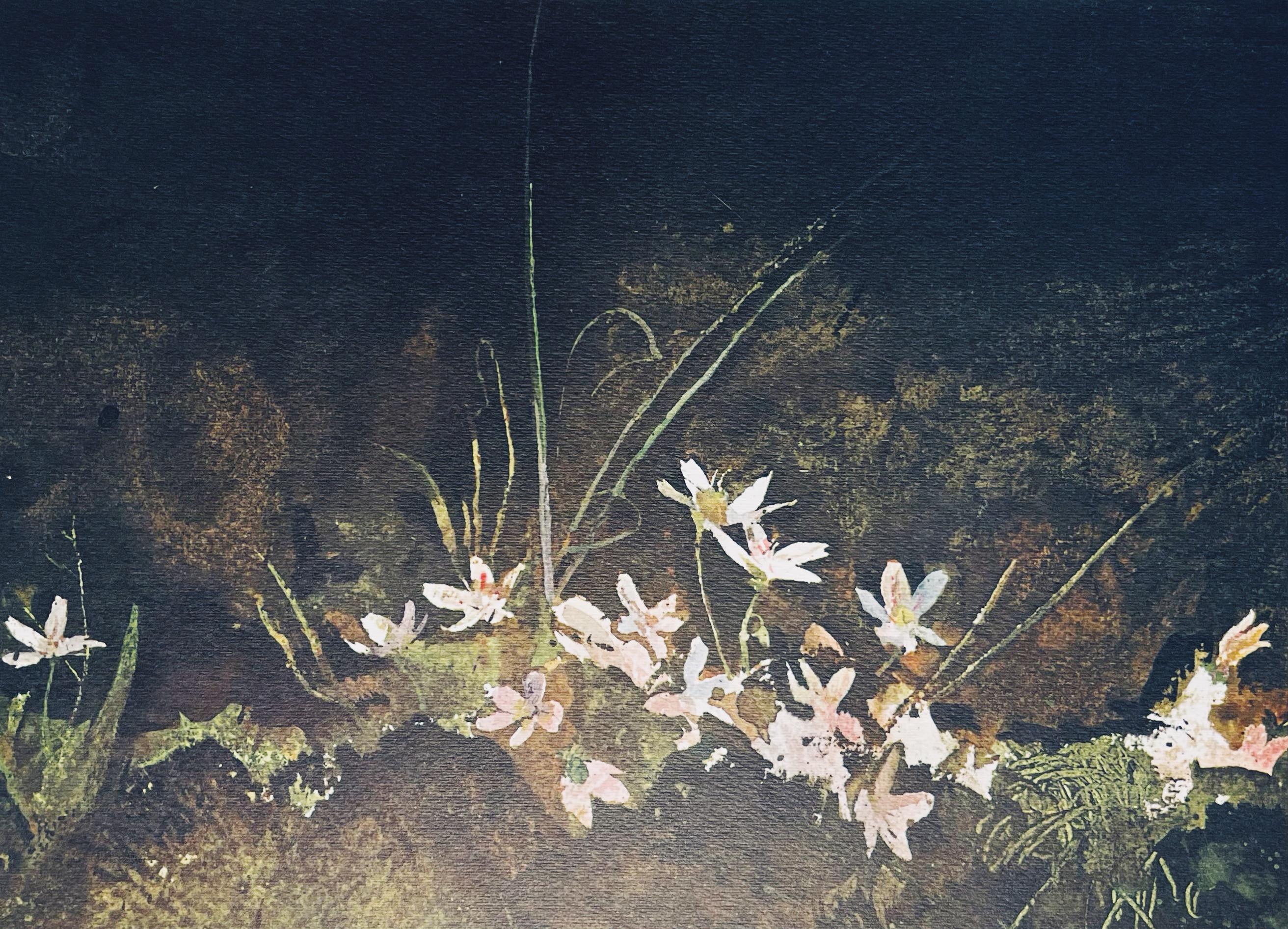
Andrew WyethDogwood1983
1983
Price Upon Request
Price Upon Request
Price Upon Request
Price Upon Request
Price Upon Request
Price Upon Request
Price Upon Request
Price Upon Request
Price Upon Request
Price Upon Request
About the Item
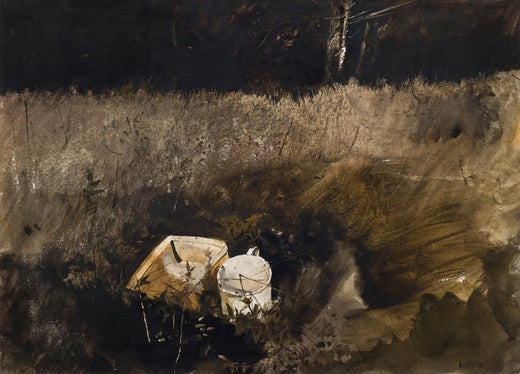
Andrew Wyeth
"Dogwood" 1983
Collotype
Ed. 115/300
Signed and Numbered Lower Right
Image Size: 21 x 28 3/4 inches
Framed Size: approx. 29 x 36.5 inches
A painter of landscape and figure subjects in Pennsylvania and Maine, Andrew Wyeth became one of the best-known American painters of the 20th century. His style is both realistic and abstract, and he works primarily in tempera and watercolor, often using the drybrush technique.
He is the son of Newell Convers and Carolyn Bockius Wyeth of Chadds Ford, Pennsylvania, and was home-schooled because of delicate health. His art instruction came from his famous-illustrator father, who preached the tying of painting to life--to mood and to essences and to capturing the subtleties of changing light and shadows.
The Wyeth household was a lively place with much intellectual and social stimulation. Because of the prominence of N.C. Wyeth, persons including many dignitaries came from all over the country to visit the family. Andrew's sisters Carolyn and Henriette became noted artists as did his brother-in-law, Peter Hurd. The non-art oriented brother, Nathaniel Wyeth, achieved much success as a chemist for DuPont where, among many inventions, he created a durable plastic so plastic bottles could hold carbonated beverages.
Andrew Wyeth maintained a style strongly oriented towards Realism when Abstract Expressionism was all-prevalent. Adhering to his own path, he was snubbed by many prominent art critics. However, his paintings have elements of abstraction in that the work derives from his strong feelings about his subjects, which often appear in unusual positions, juxtapositions, and with features highlighted for emotional effect. His work usually suggests rural quiet, isolation, and somber mood and is devoid of modern-day objects such as automobiles.
In 1937, Wyeth's first one-man show of watercolors depicting scenes around Port Clyde, Maine, sold out at the Macbeth Gallery in New York. In Maine, Andrew first spent his summers in Port Clyde with his family, but after his marriage to Betsy James in 1940, he and his wife went regularly to Cushing.
Christina Olson of Cushing, at the end of Hathorn Point, was his most famous model, but over the years, Wyeth formed close friendships with - and painted - several other Maine neighbors. His closest friend, Walt Anderson, gradually ages before the eyes of viewers in numerous Wyeth drawings and paintings that show life's changes from the youthful Young Swede (1939) to the older man in Adrift (1982).
The Olson House, where Christina and her brother lived, is now owned and maintained by the Farnsworth Museum, where Wyeth had his first major exhibition in 1951 and where the Andrew Wyeth Gallery is now a permanent exhibition place for his paintings. In 1964, the directors of the Farnsworth Museum paid $65,000 for Wyeth's painting Her Room, the highest price ever paid by a museum for the work of a living artist. The Olson House is the first property ever named to the National Register of Historic Places for being recognized as the site of a painting, Christina's World, one of the most recognized paintings in American art.
After the death of Christina Olson, Wyeth used female models Siri Erickson of Cushing, and Helga Testorf of Chadds Ford. Depictions of the nude Helga, a total of 240 works, provided grist for an avalanche of sensational publicity. The Helga paintings were exhibited in 1987 at the National Gallery of Art, the gallery's first exhibition of works by a living artist.
Wyeth has received many official honors. In 1963, he was the subject of a cover story for Time magazine and, thanks to President John F. Kennedy, he became the first visual artist to be nominated for the Presidential Medal of Freedom. In 1990, Wyeth received the Congressional Gold Medal, the first artist to have that honor.
Andrew and his wife Betsy have two sons, Nicholas and Jamie Browning, the latter who has become a prominent American artist, and the former who shares with his father and his uncle, Nathaniel, a great fascination with machines, especially aviation.
- Creator:Andrew Wyeth (1917-2009, American)
- Creation Year:1983
- Dimensions:Height: 29 in (73.66 cm)Width: 36.5 in (92.71 cm)Depth: 1 in (2.54 cm)
- Medium:
- Movement Style:
- Period:
- Condition:
- Gallery Location:Missouri, MO
- Reference Number:1stDibs: LU74734588772
Andrew Wyeth
An artist who pursued his own course when the rest of the art world was consumed with modernism and abstraction, Wyeth is considered among the preeminent representational painters of the 20th century. Born in Chadds Ford, Pennsylvania, Wyeth drew his subject matter from the world around him: the interiors and exteriors of the stone buildings, mills, and farms of the Brandywine River countryside, and in the summers, the clapboard houses and stark landscape of the Maine coast. After his father died in a 1945 automobile accident, Wyeth began to incorporate people into his pictures, most notably Christina Olson, and later Siri Erickson, of Cushing, Maine, and his Chadds Ford neighbors Karl and Anna Kuerner and Helga Testorf. The first visual artist to appear on the cover of Time magazine, Wyeth was also the first living American-born artist to be given an exhibition at The Metropolitan Museum of Art in New York. Wyeth’s naturalistic style is marked by strong editing combined with remarkable execution of details. While relying on keen visual observation, he pared down the elements of a composition to their most essential, giving his works an abstracted quality and imbuing them with a sense of quietude and stillness. The egg tempera medium (which he came to prefer to oil after first experimenting with it in the early 1940s) lent itself to the precise detailing required to create his subtle textural effects, since it dries quickly and translucent layers can be built up over one another. Wyeth also painted extensively in watercolor in works of more spontaneous execution, as well as in the drybrush technique (where most water is removed from the watercolor medium), sometimes combining the two.
About the Seller
5.0
Vetted Professional Seller
Every seller passes strict standards for authenticity and reliability
Established in 1970
1stDibs seller since 2017
157 sales on 1stDibs
Typical response time: 1 to 2 days
- ShippingRetrieving quote...Shipping from: Missouri, MO
- Return Policy
More From This Seller
View AllHerring Gulls
By Jamie Wyeth
Located in Missouri, MO
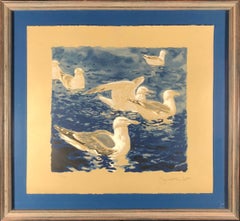
Jamie Wyeth
"Herring Gulls" 1978
Color Lithograph
Signed Lower Right
Numbered Lower Left 149/300
Born in 1946, James Browning Wyeth came of age when the meaning of patriotism was clouded by the traumas of the Vietnam War and the scandals of Watergate. Working in an era of turmoil and questioning of governmental authority, he did art that encompassed both marching off to war and marching in protest.
One of James's early masterworks, Draft Age (1965) depicts a childhood friend as a defiant Vietnam-era teenager resplendent in dark sunglasses and black leather jacket in a suitably insouciant pose.
Two years later Wyeth painstakingly composed a haunting, posthumous Portrait of President John F. Kennedy (1967) that seems to catch the martyred Chief Executive in a moment of agonized indecision. As Wyeth Center curator Lauren Raye Smith points out, Wyeth "did not deify the slain president, [but] on the contrary made him seem almost too human."
Based on hours of study and sketching of JFK's brothers Robert and Edward -
documented by insightful studies in the exhibition - the final, pensive portrait seemed too realistic to family members and friends. "His brother Robert," writes Smith in the exhibition catalogue, "reportedly felt uneasy about this depiction, and said it reminded him of the President during the Bay of Pigs invasion."
In spite of these misgivings, James's JFK likeness has been reproduced frequently and is one of the highlights of this show. The poignancy, appeal and perceptiveness of this portrait, painted when the youngest Wyeth was 21 years old, makes one wish he would do more portraits of important public figures.
James himself feels he is at his best painting people he knows well, as exemplified by his vibrant Portrait of Jean Kennedy Smith (1972), which captures the vitality of the slain President's handsome sister.
He did paint a portrait of Jimmy Carter for the January 1977 man-of-the-year cover of Time magazine, showing the casually dressed President-elect as a straightforward character posed under a flag-draped water tower next to the family peanut plant in Plains, Ga. James recalls that Carter had one Secret Service agent guarding him as he posed outdoors, a far cry from the protection our Chief Executives require today.
As a participating artist in the "Eyewitness to Space" program organized by the National Aeronautics and Space Administration in collaboration with the National Gallery of Art in the late 1960s, Wyeth deftly recorded in a series of watercolors his eyewitness observations of dramatic spacecraft launchings and more mundane scenes associated with the space program.
Commissioned by Harper's Magazine to cover the 1974 congressional hearings and trials of Watergate figures, James Wyeth executed a series of perceptive and now evocative sketches that recall those dark chapters in our history. Memorable images include a scowling John Ehrlichman, a hollow-eyed Bob Haldeman, an owlish Charles Colson, a focused Congressman Peter Rodino, a grim visaged Father/ Congressman Robert Drinan, and vignettes of the press and various courtroom activities. An 11-by-14-inch pencil sketch of the unflappable Judge John Sirica is especially well done. These "images are powerful as historical records," observes Smith, "and as lyrically journalistic impressions of events that changed the nation forever."
Wyeth's sketch of early-morning crowds lined up outside the Supreme Court
building hoping to hear the Watergate case, with the ubiquitous TV cameramen looking on, is reminiscent of recent scenes as the high court grappled with the Bush-Gore contest.
The Wyeth family penchant for whimsy and enigmatic images is evident in Islanders (1990), showing two of James's friends, wearing goofy hats, sitting on the porch of a small Monhegan Island (Me.) cottage draped with a large American flag. Mixing the serious symbolism of Old Glory with the irreverent appearance of the two men, James has created a puzzling but interesting composition.
Painting White House...
Category
1970s American Modern Animal Prints
Materials
Lithograph, Paper
Price Upon Request
Homestead
By Joan Parker
Located in Missouri, MO
Joan Parker (20th C.)
"Homestead"
Oil on Canvas
11 x 14 inches
13 x 16 framed
Joan Parker, is a Plein Air landscape painter and a native of California. Her artistic abilities were...
Category
21st Century and Contemporary American Impressionist Landscape Paintings
Materials
Canvas, Oil
$2,300
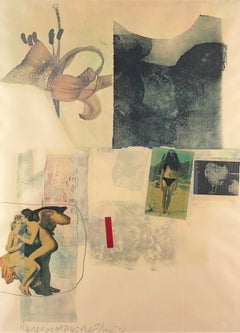
Untitled
By Robert Rauschenberg
Located in Missouri, MO
Robert Rauschenberg
"Untitled" 1973
Medium: Screenprint and collage in colors
Printed and Published by Styria Studios, New York and with their blindstamp
Signed and Numbered 71/100
Images Size: approx. 28 x 20 inches
Framed Size: approx. 34 x 26 inches
Born with the name Milton Rauschenberg in Port Arthur, Texas, Robert Rauschenberg became one of the major artists of his generation and is credited along with Jasper Johns of breaking the stronghold of Abstract Expressionism*.
Rauschenberg was known for assemblage*, conceptualist methods, printmaking, and willingness to experiment with non-artistic materials--all innovations that anticipated later movements such as Pop Art*, Conceptualism*, and Minimalism*.
In May, 1999, ARTNews magazine featured him as one of the top twenty-five influential western artists, stating: "His irreverent notions of what an artwork could be gained him the status of an enfant terrible. . .Rauschenberg pushed the viewer to accept the unexpected."
He has said that he believes painting should relate to both life and art and that he wants is artwork to be the intermediary between the two.
He received much formal art education beginning with the Kansas City Art Institute in 1947 and 1948. He studied briefly in Paris at the Academie Julian*, and from 1948 to 1949 was at Black Mountain College* in North Carolina with Josef and Anni Albers. This period was followed by several years attendance at the Art Students League* in New York City with Morris Kantor and Vaclav Vytlacil. In 1951, he exhibited all white and black paintings incorporating viewer participation through the shadows they cast on the works.
At Black Mountain College, he had met composer, John Cage, and dancer- choreographer, Merce Cunningham, for whom he worked in his company as a designer, manager, and performer. Frequently he scoured the area in which they were performing for 'unusual' objects such as tires, old radios...
Category
1970s Abstract Expressionist Figurative Prints
Materials
Lithograph
Price Upon Request
Fields of Lace
By Joseph Orr
Located in Missouri, MO
Joseph Orr, from Missouri, has been painting professionally since 1972. He paints much of his work on location (plein air) and his paintings depict the land...
Category
21st Century and Contemporary American Realist Landscape Paintings
Materials
Canvas, Acrylic
Price Upon Request
Springtime at the Farm
Located in Missouri, MO
George W. Drew (1875-1968)
"Springtime at the Farm"
Oil on Canvas
24 x 36 inches (site)
31.5 x 43.25 (framed)
George W. Drew was born 21 December 1875 in Massachusetts. He was a member of the Independent Artists Association. He exhibited at the National Academy of Design and they have him recorded as living at 745 Columbus Ave., N.Y. in the year 1898. He also exhibited at the Allied Artists of America, which was established in 1914, Salons of America, N.Y. State Fair, Newark State Fair, Newark Museum and New York Museum of Science & Industry.
Although there is little known about the personal life of George W. Drew, his paintings appear on the art market quite often. It is obvious that his work has always been well received because of the numerous exhibitions he has participated in. He is known for his rustic luminous depictions of the Nineteenth Century American Landscape. Like many of the Hudson River Painters...
Category
Early 20th Century American Impressionist Landscape Paintings
Materials
Canvas, Oil
Price Upon Request
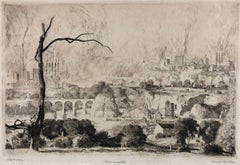
Harmonville
By Daniel Garber
Located in Missouri, MO
DANIEL GARBER
"Harmonville, Pennsylvania" c. 1925
Etching printed in black ink on wove paper.
7 7/8 x 11 3/4 inches, full margins.
Signed, titled and inscribed "DG imp" in pencil, ...
Category
1920s American Impressionist Landscape Prints
Materials
Etching
Price Upon Request
You May Also Like
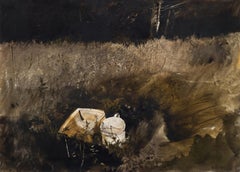
Quart and a Half
By Andrew Wyeth
Located in Palm Desert, CA
"Quart and a Half" is an American Realist abstract landscape watercolor on paper painting by Andrew Wyeth in 1961. The artwork is 21 x 29 1/4 inches and is 33 3/4 x 42 1/4 x 1 inches...
Category
20th Century American Realist Landscape Paintings
Materials
Paper, Watercolor
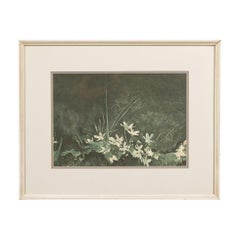
Andrew Wyeth American Mid-Century Lithograph Titled "May Day
Located in Queens, NY
American Mid-Century \"dry brush\" lithograph in a white frame of white flowers with a green and black background titled \"May Day\" by ANDREW WYETH)
Category
Mid-20th Century American Mid-Century Modern Paintings
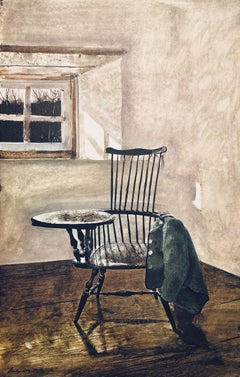
Andrew Wyeth, Early October, from The Four Seasons (after)
By Andrew Wyeth
Located in Southampton, NY
This exquisite lithograph after Andrew Wyeth (1917–2009), titled Early October, originates from the distinguished 1962 folio The Four Seasons: Paintings and Drawings by Andrew Wyeth....
Category
1960s American Realist Landscape Prints
Materials
Lithograph
Andrew Wyeth, May Day, from The Four Seasons (after)
By Andrew Wyeth
Located in Southampton, NY
This exquisite lithograph after Andrew Wyeth (1917–2009), titled May Day, originates from the distinguished 1962 folio The Four Seasons: Paintings and Drawings by Andrew Wyeth. Published and printed by Art in America Company, Inc., New York, the edition embodies Wyeth’s lyrical study of springtime renewal and human connection to the land. May Day captures a tender seasonal moment—nature reawakening beneath soft light—rendered with Wyeth’s quiet precision and emotional restraint that elevate the ordinary into the timeless.
Executed on velin paper, this lithograph measures 17 x 13 inches (43.2 x 33 cm). As issued, it is unsigned and unnumbered, representing the folio’s authentic format. The Four Seasons series was conceived by the editors of Art in America in collaboration with Andrew and Betsy Wyeth, who selected drawings from the artist’s studio and private collection to express the cyclical harmony between nature and spirit. Each image reflects Wyeth’s devotion to atmosphere and the fragile poetry of the passing year.
Artwork Details:
Artist: After Andrew Wyeth (1917–2009)
Title: May Day, from The Four Seasons, Paintings and Drawings by Andrew Wyeth, 1962
Medium: Lithograph on velin paper
Dimensions: 17 x 13 inches (43.2 x 33 cm)
Inscription: Unsigned and unnumbered, as issued
Date: 1962
Publisher: Art in America Company, Inc., New York
Printer: Art in America Company, Inc., New York
Condition: Well preserved, consistent with age and medium
Provenance: From the 1962 folio The Four Seasons, Paintings and Drawings by Andrew Wyeth, published and printed by Art in America Company, Inc., New York
Notes:
Excerpted from the 1962 folio:
"In 1962 the editors of Art in America proposed to Wyeth a portfolio of images of his recent dry-brush drawings. The artist and his wife suggested the theme, 'The Four Seasons,' because of the essential role played in his work by the cycle of the seasons. The drawings were selected by Andrew and Betsy Wyeth from works in the house and studio at Chadds Ford, supplemented by some owned by friends. With a few exceptions they had never been exhibited or reproduced. The plates were made directly from the originals. In these drawings Wyeth's loving concentration on the object is fully revealed. But as always in his work, this concern with the tangible is balanced by sensibility to mood, to the emotion arising from the actual. They are pervaded with a sense of the season—the exact time of year, the hour of the day, the quality of the light. To the truth and subtlety with which he captures these intangible factors, these drawings owe their poignant poetry."
About the Artist:
Andrew Wyeth (1917–2009) was an American visual artist and one of the best-known painters of the mid-20th century. Although he considered himself an abstractionist, Wyeth’s work is characterized by a meticulous realism imbued with psychological depth and atmosphere. He often painted the landscapes and people surrounding his homes in Chadds Ford, Pennsylvania, and Cushing, Maine, creating an intimate record of American rural life. The son of the celebrated illustrator N. C. Wyeth, Andrew trained under his father before developing his own deeply personal visual language inspired by Winslow Homer, Henry David Thoreau, and King Vidor. His wife, Betsy Wyeth, was both his muse and career manager, while his son Jamie Wyeth continued the family’s artistic legacy.
Among Wyeth’s best-known works is Christina’s World (1948), housed in the Museum of Modern Art, New York—a quintessential image of 20th-century American art. His other notable series include The Helga Pictures and his window studies, each reflecting a profound meditation on solitude, memory, and perception. Wyeth was the first painter to receive both the Presidential Medal of Freedom and the Congressional Gold Medal, and was elected to the French Académie des Beaux-Arts in 1980.
In 2022, Andrew Wyeth's painting Day Dream sold for USD 23.29 million at Christie’s New York, setting a world record for the artist.
Andrew Wyeth lithograph...
Category
1960s American Realist Landscape Prints
Materials
Lithograph
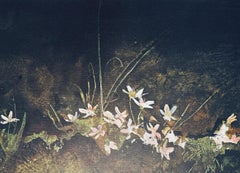
Dogwood Blossoms
By Jeffrey Vaughn
Located in Fairfield, CT
There is a sense of freedom that I experience when painting landscape. The quality of these kinds of images allows for expression and interpretation, yet they can still be viewed as...
Category
21st Century and Contemporary Realist Landscape Paintings
Materials
Oil, Wood Panel
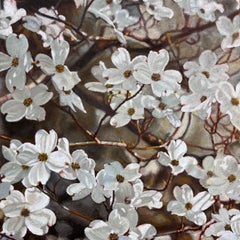
Contemporary, Photorealistic, Framed, Oil Painting on Linen, Flowers, Nature
By Jeffrey Vaughn
Located in St. Louis, MO
Contemporary, Photorealistic, Framed, Oil Painting on Linen, Flowers, Nature
Jeffrey Vaughn, from Alton, Illinois, received his Bachelor of Fine Arts degree in 1978 from Washington ...
Category
2010s Contemporary Landscape Paintings
Materials
Linen, Oil
More Ways To Browse
A Dupont
Dogwood Vintage
Andrew Wyeth Collotype
A Chorus Line
Antique Anatomical Drawings
Antique Goddess Painting
Bacardi Vintage
Bronze Patina Horse Sculpture
Bronze Sculpture Dress
Dominique Polles
Dr Seuss Vintage
Feather Art Birds
Francesca Bernardini
Hippo Sculptures
Horse Watch
Italian Villa Paintings
Jordi Bonet
Lucite Kinetic Art