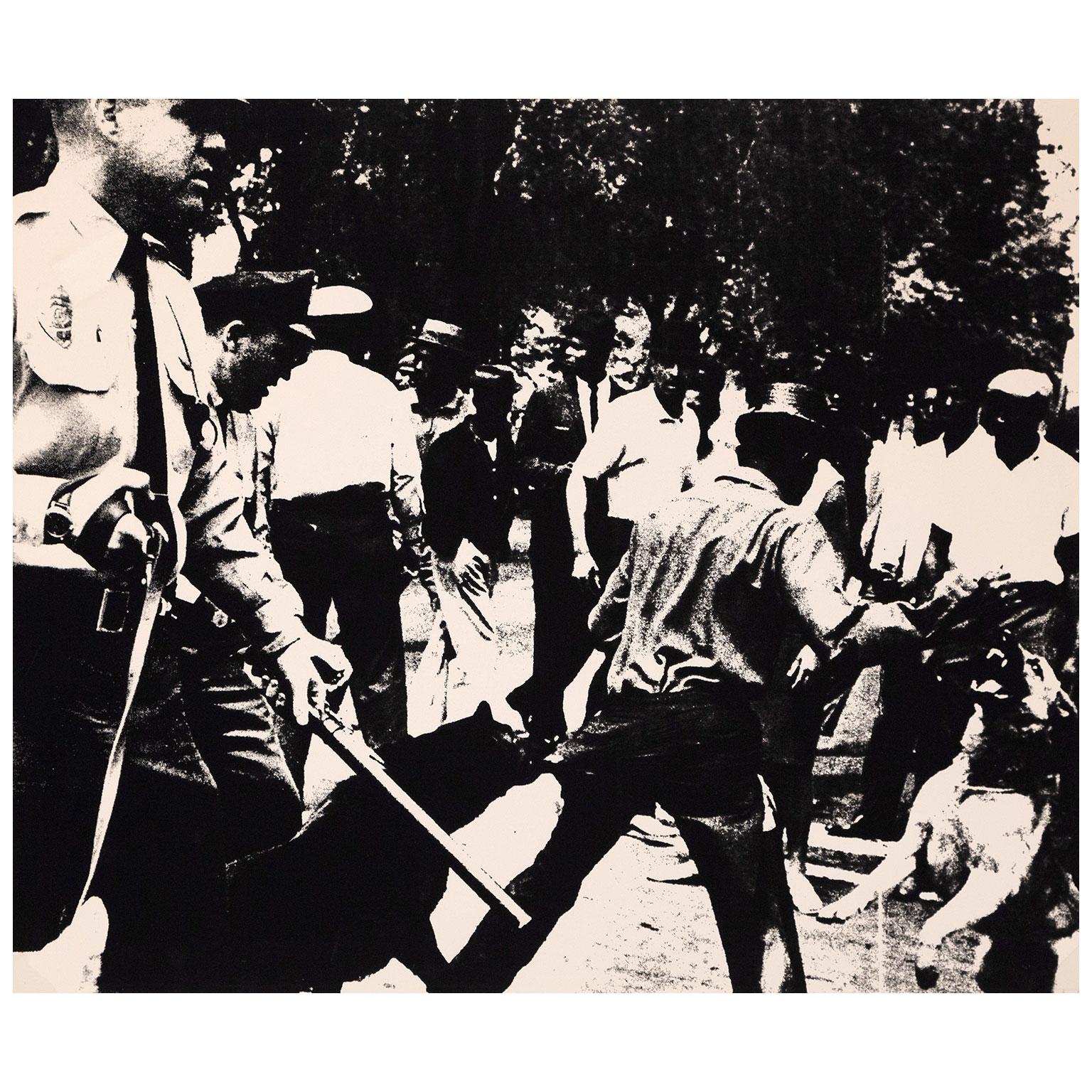
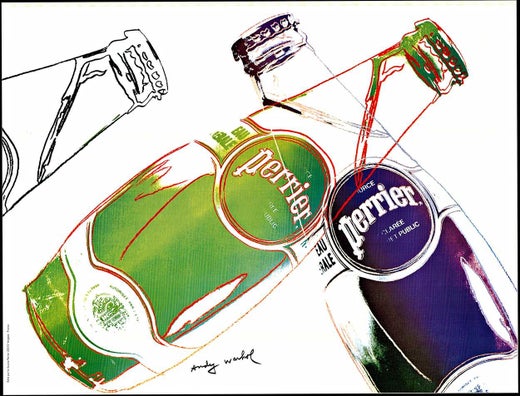
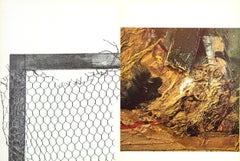
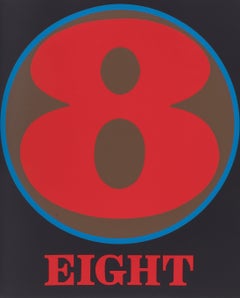
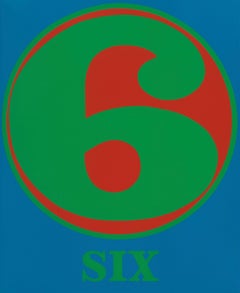
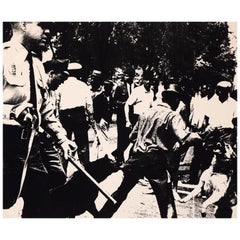
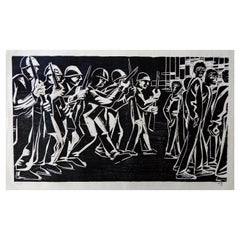
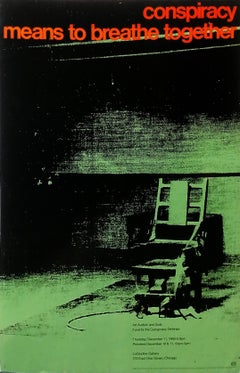
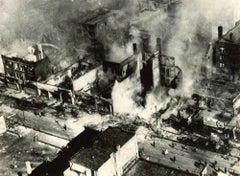
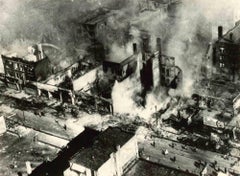
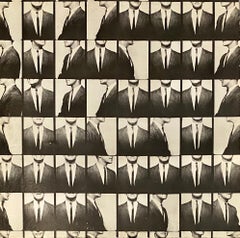
This exquisite silkscreen by Andy Warhol (1928–1987), titled Birmingham Race Riot, originates from the landmark 1964 folio X + X (Ten Works by Ten Painters). Published by the Wadsworth Atheneum Museum of Art, Hartford, and printed by Sirocco Screenprints, Inc., North Haven, in Birmingham Race Riot, Warhol channels the stark visual power, confrontational immediacy, and media-driven intensity that define his early 1960s practice, merging photographic source imagery with the graphic force of silkscreen to reveal the tensions, violence, and mass-circulated trauma at the heart of American social reality.
Executed as a silkscreen on Mohawk Superfine Bristol paper, this work measures 20 x 24 inches. Unsigned and unnumbered as issued. Printed by Sirocco Screenprints, Inc., North Haven, one of the most capable American screenprinting ateliers of the mid-20th century.
Artwork Details:
Artist: Andy Warhol (1928–1987)
Title: Birmingham Race Riot, from X + X (Ten Works by Ten Painters), 1964
Medium: Silkscreen on Mohawk Superfine Bristol paper
Dimensions: 20 x 24 inches (50.8 x 60.96 cm)
Inscription: Unsigned and unnumbered as issued
Date: 1964
Publisher: Wadsworth Atheneum Museum of Art, Hartford
Printer: Sirocco Screenprints, Inc., North Haven
Edition: D
Catalogue raisonne reference: Feldman, Frayda, et al. Andy Warhol Prints: A Catalogue Raisonne, 1962–1987. 3rd ed., revised and expanded by Frayda Feldman and Claudia Defendi, D.A.P./Distributed Art Publishers in association with R. Feldman Fine Arts, Inc., 1997, No. II.3.
Condition: Well preserved, consistent with age and medium
Provenance: From the 1964 folio X + X (Ten Works by Ten Painters), published by the Wadsworth Atheneum Museum of Art, Hartford
Notes:
Excerpted from the folio, This portfolio was commissioned and printed in an attempt to extend as much of the visual impact as possible of ten artists to paper and to make these prints available to collectors who might not otherwise have such a vivid slice of the artist. The dry surface of screening seemed to be most apt to translate the effect of their painting, both the flatness which is the unifying bond between the ten, and the insistance of paint on the surface of canvas so like the visible heft of ink on paper here. Samuel J. Wagstaff, Jr., Curator of Printings.
About the Publication:
X + X (Ten Works by Ten Painters), published in 1964 by the Wadsworth Atheneum Museum of Art in Hartford, stands as one of the most ambitious and influential printmaking endeavors of postwar American art. Conceived under the direction of curator Samuel J. Wagstaff, Jr., the project sought to capture and translate the defining visual languages of ten leading American painters of the era—Stuart Davis, Ellsworth Kelly, Robert Indiana, Adolph Gottlieb, George Ortman, Larry Poons, Richard Anuszkiewicz, Frank Stella, Andy Warhol, and Roy Lichtenstein—into original silkscreens. Each artwork was created as an autonomous work that embodied the formal, chromatic, and conceptual principles of its respective artist. The choice of silkscreen printing, executed by Sirocco Screenprints, Inc., was central to the portfolio’s purpose: its dry, matte surface and capacity for crisp, saturated color allowed for a faithful translation of the painters’ flatness, surface tension, optical effects, and graphic precision. Organized and published by a major American museum at a moment of seismic change in contemporary art, X + X marked a turning point in institutional engagement with editioned works, representing one of the first concerted efforts by a museum to commission an ensemble of original graphics from the leading figures of its time. The portfolio captured the pulse of 1960s American painting—from Hard-Edge abstraction to Pop, Op, and Color Field—offering both a curated snapshot of artistic innovation and an accessible format that expanded the audience for contemporary art. Today, X + X is widely regarded as a landmark in American printmaking, celebrated for its curatorial vision, technical accomplishment, and its role in defining the dialogue between museum patronage and the burgeoning print culture of the 1960s.
About the Artist:
Andy Warhol (1928–1987) was an American painter, printmaker, filmmaker, publisher, and cultural visionary whose groundbreaking fusion of fine art, mass media, celebrity worship, and consumer culture made him one of the most transformative and influential artists in modern history, drawing on the radical innovations of Pablo Picasso, Alexander Calder, Alberto Giacometti, Salvador Dali, Joan Miro, Wassily Kandinsky, Marcel Duchamp, and Man Ray to redefine the boundaries of artistic expression and elevate everyday commercial imagery—Campbell’s soup cans, Coca-Cola bottles, Brillo boxes, movie stars, and tabloid headlines—into powerful symbols of contemporary life; through his pioneering use of silkscreen printing, mechanical repetition, saturated color, and industrial studio production, he created a new aesthetic language that blurred the lines between high art and mass culture, reshaping global visual culture and turning Pop Art into an international movement. As the central figure of New York’s avant-garde, Warhol influenced and collaborated with major peers including Roy Lichtenstein, Jasper Johns, Robert Rauschenberg, Claes Oldenburg, James Rosenquist, and Cy Twombly, while mentoring and profoundly impacting younger artists such as Jean-Michel Basquiat, Keith Haring, Kenny Scharf, and David Salle, and laying a conceptual foundation that continues to shape the work of Jeff Koons, Damien Hirst, Cindy Sherman, Richard Prince, Takashi Murakami, Banksy, KAWS, and countless contemporary artists who explore themes of celebrity, branding, consumerism, and the spectacle of modern media. His studio, The Factory, became a legendary nexus of creative energy where artists, musicians, filmmakers, drag performers, writers, and underground icons—including Lou Reed, The Velvet Underground, Edie Sedgwick, Candy Darling, Truman Capote, and countless cultural outsiders—collided to remake the landscape of art, fashion, and music, forging a new model of interdisciplinary cultural production. Warhol’s oeuvre is represented in every major global museum, including the Museum of Modern Art, the Whitney Museum of American Art, the Metropolitan Museum of Art, the Guggenheim Museum, the Tate, the Centre Pompidou, the Art Institute of Chicago, the Walker Art Center, SFMOMA, and the National Gallery of Art, confirming his unparalleled historical importance and continuing relevance. His market remains one of the strongest in the world: the highest auction record for Warhol was set when Shot Sage Blue Marilyn sold for $195,040,000 USD at Christie’s New York on May 9, 2022, making it one of the most expensive artworks ever sold and further cementing his status as a defining artistic force of the 20th and 21st centuries.
Andy Warhol silkscreen, Warhol Birmingham Race Riot, Warhol X + X, Ten Works by Ten Painters, Wadsworth Atheneum portfolio, 1964 Pop Art, Sirocco Screenprints, Warhol civil rights imagery, Warhol graphic work, Warhol silkscreen print.