Items Similar to Chaim Soutine, Landscape at Cagnes, from Soutine, I, 1966 (after)
Want more images or videos?
Request additional images or videos from the seller
1 of 11
Chaim Soutine, Landscape at Cagnes, from Soutine, I, 1966 (after)1966
1966
$716
$89520% Off
£543.37
£679.2220% Off
€626.08
€782.6020% Off
CA$1,011.59
CA$1,264.4920% Off
A$1,083.91
A$1,354.8820% Off
CHF 581.44
CHF 726.8020% Off
MX$12,839.03
MX$16,048.7820% Off
NOK 7,334.54
NOK 9,168.1820% Off
SEK 6,709.97
SEK 8,387.4620% Off
DKK 4,676.92
DKK 5,846.1520% Off
About the Item
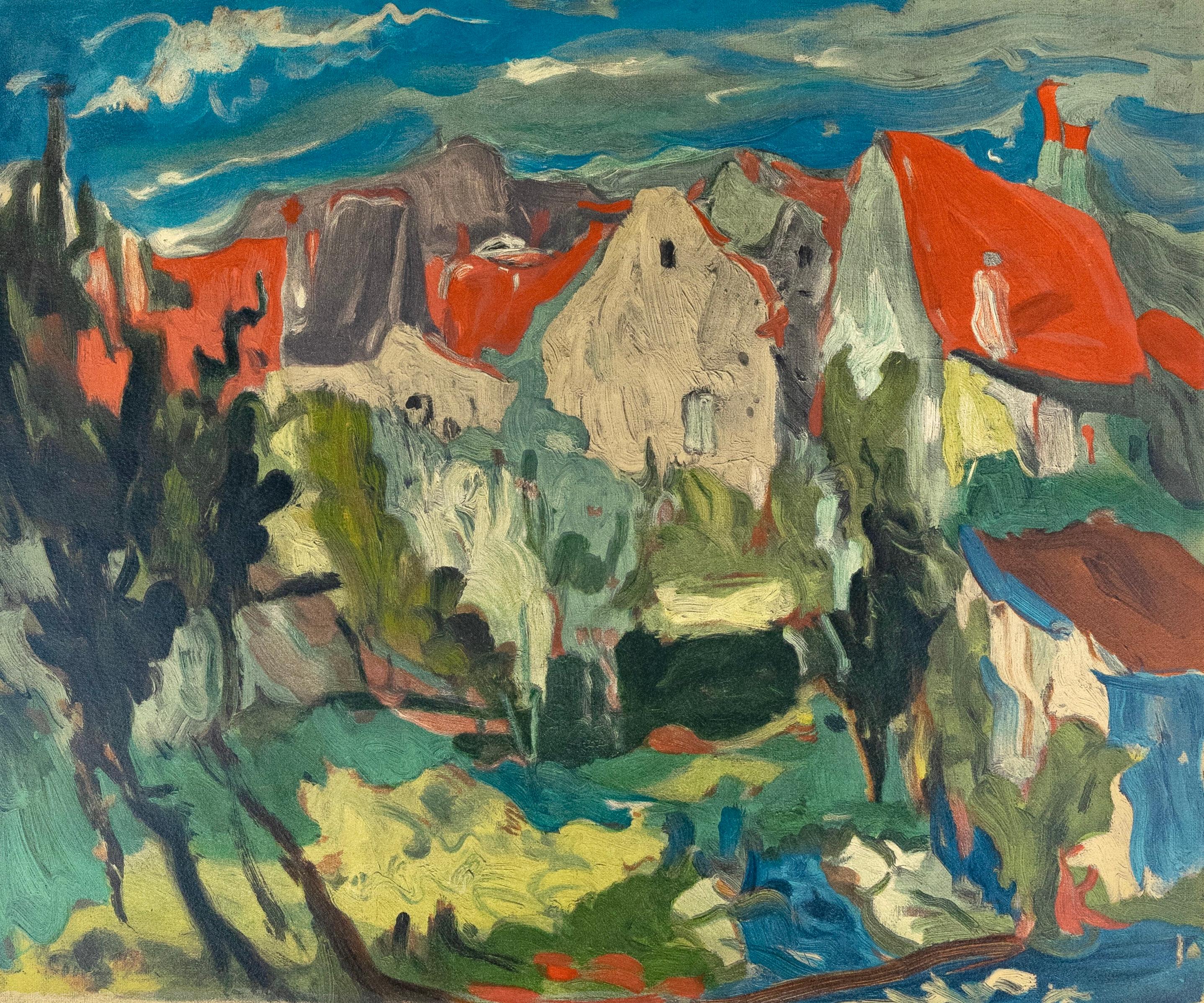
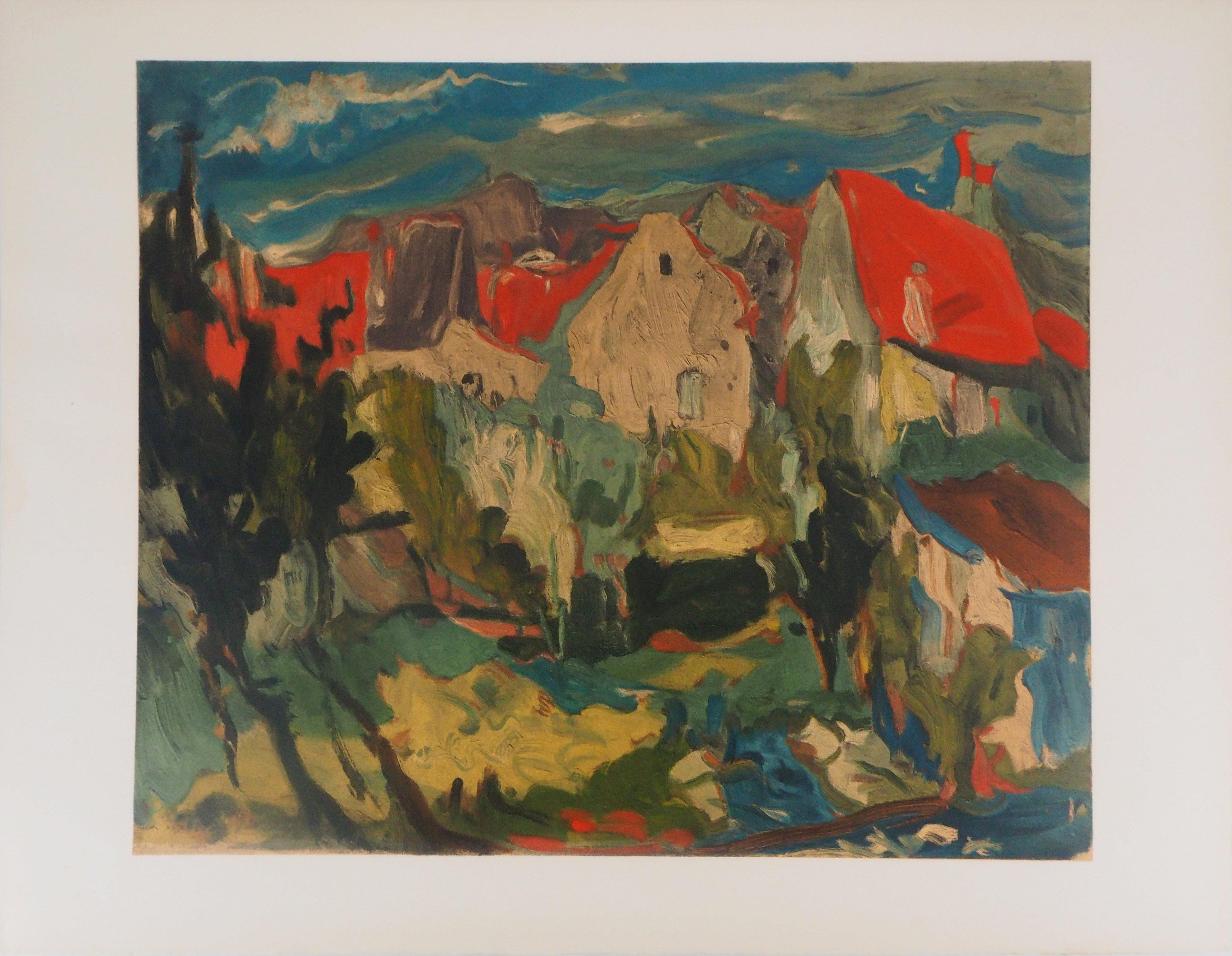
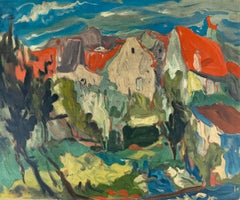
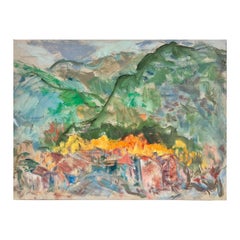
This exquisite lithograph after Chaim Soutine (1893–1943), titled Paysage a Cagnes (Landscape at Cagnes), from the folio Soutine, I, Collection Pierre Levy, 1966, originates from the edition published by Fernand Mourlot, Paris, and printed by Mourlot Freres, Paris, on October 20, 1966. The work conveys the sweeping emotional vigor and expressive distortions that define Soutines landscape vision, capturing in lithographic form the turbulent rhythm, chromatic intensity, and psychological tension characteristic of his mature periods in Cagnes.
Executed as a lithograph on velin d'Arches paper, this work measures 26 x 20 inches. Signed in the plate and unnumbered as issued. The edition exemplifies the technical mastery of the Mourlot atelier.
Artwork Details:
Artist: After Chaim Soutine (1893–1943)
Title: Paysage a Cagnes (Landscape at Cagnes), from the folio Soutine, I, Collection Pierre Levy
Medium: Lithograph on velin d'Arches paper
Dimensions: 26 x 20 inches
Inscription: Signed in the plate and unnumbered as issued
Date: 1966
Publisher: Fernand Mourlot, Paris
Printer: Mourlot Freres, Paris
Condition: Well preserved, consistent with age and medium
Provenance: From the folio Soutine, I, Collection Pierre Levy, 1966
Notes:
Excerpted from the folio (translated from French), This album, the first of a series dedicated to Mr. Pierre Levys collection, was printed in DL examples on Arches velin. Printing was finished on October 20, 1966 by Mourlot for lithographs of the canvases of Soutine, and by Fequet and Baudier for Waldemar Georges unpublished text. Fernand Mourlot, Paris 1966.
About the Publication:
Soutine, I, Collection Pierre Levy, published in 1966 by Fernand Mourlot, Paris, is the first album in the important series devoted to the Pierre Levy collection, one of the most significant private collections of twentieth century French painting. Conceived as a scholarly and visual record, the album was designed to present key works by Chaim Soutine in lithographic form at a moment of renewed international interest in his oeuvre. Created in collaboration with Mourlot Freres, the foremost lithographic atelier in France, the publication reflects the printers commitment to translating Soutines canvases into richly tonal lithographs that preserve the emotional intensity and structural dynamism of the originals. Issued in a single edition on Arches velin, the album stands as an essential document of postwar art publishing, illuminating the historical partnership between artist, collector, and master printer, and contributing to the larger historiography of modern French Expressionism and museum quality print albums of the mid twentieth century.
About the Artist:
Chaim Soutine (1893–1943) was a Belarus born French Expressionist painter whose explosive brushwork, emotionally charged distortions, and uncompromising commitment to depicting the psychological intensity of human experience have secured his place as one of the most vital and transformative figures in twentieth century art, creating his legacy within the same revolutionary modernist environment defined by Pablo Picasso, Alexander Calder, Alberto Giacometti, Salvador Dali, Joan Miro, Wassily Kandinsky, Marcel Duchamp, and Man Ray; after leaving his impoverished childhood in Smilavichy and arriving in Paris in 1913, Soutine immersed himself in the School of Paris circle at La Ruche—an incubator of international avant garde talent—where he developed formative friendships with Amedeo Modigliani, Marc Chagall, Jules Pascin, and other pioneering artists whose daring approaches inspired him to push color, gesture, and form into new emotional territories. His portraits of cooks, choirboys, servants, and village residents; his tempestuous landscapes of Cagnes, Chartres, and Ceret; and his deeply visceral still lifes—most famously his monumental depictions of slaughtered carcasses—reveal a singular ability to transform ordinary subjects into raw, pulsing, almost metaphysical dramas, building on the influence of Rembrandt, Goya, Velazquez, and El Greco while departing radically from academic restraint. His paintings vibrate with psychological tension, their twisted perspectives, molten colors, and trembling outlines capturing an inner world marked by anxiety, longing, resilience, and profound empathy. Soutines originality profoundly shaped the evolution of modern painting: Francis Bacon cited him as one of his greatest influences, Willem de Kooning and the Abstract Expressionists admired his gestural ferocity, and later artists—including Frank Auerbach, Leon Kossoff, Lucian Freud, Jenny Saville, and Adrian Ghenie—have continued to look to him as a benchmark for emotional authenticity and painterly power. His global reputation surged in the 1920s when American collector Albert C. Barnes purchased more than fifty works, bringing Soutine financial stability and international recognition, and his paintings are now held in the worlds leading museums and elite private collections. His market reflects this enduring prestige, with his highest auction record achieved by Le Boeuf Ecorche (1925), which sold for 28.2 million USD at Christies New York on May 15, 2018.
Soutine Lithograph Mourlot Soutine I 1966 Levy Collection.
- Creation Year:1966
- Dimensions:Height: 20 in (50.8 cm)Width: 26 in (66.04 cm)
- Medium:
- Movement Style:
- After:Chaïm Soutine (1893 - 1943, French, Belarusian)
- Period:
- Condition:
- Gallery Location:Southampton, NY
- Reference Number:1stDibs: LU1465217241462
About the Seller
4.9
Platinum Seller
Premium sellers with a 4.7+ rating and 24-hour response times
Established in 1978
1stDibs seller since 2021
1,270 sales on 1stDibs
Typical response time: 1 hour
- ShippingRetrieving quote...Shipping from: Southampton, NY
- Return Policy
More From This Seller
View AllChaim Soutine, Landscape at Cagnes, from Soutine, I, 1966 (after)
Located in Southampton, NY
This exquisite lithograph after Chaim Soutine (1893–1943), titled Paysage a Cagnes (Landscape at Cagnes), from the folio Soutine, I, Collection Pierre Levy, 1966, originates from the edition published by Fernand Mourlot, Paris, and printed by Mourlot Freres, Paris, on October 20, 1966. The work conveys the sweeping emotional vigor and expressive distortions that define Soutines landscape vision, capturing in lithographic form the turbulent rhythm, chromatic intensity, and psychological tension characteristic of his mature periods in Cagnes.
Executed as a lithograph on velin d'Arches paper, this work measures 26 x 20 inches. Unsigned and unnumbered as issued. The edition exemplifies the technical mastery of the Mourlot atelier.
Artwork Details:
Artist: After Chaim Soutine (1893–1943)
Title: Paysage a Cagnes (Landscape at Cagnes), from the folio Soutine, I, Collection Pierre Levy
Medium: Lithograph on velin d'Arches paper
Dimensions: 26 x 20 inches
Inscription: Unsigned and unnumbered as issued
Date: 1966
Publisher: Fernand Mourlot, Paris
Printer: Mourlot Freres, Paris
Condition: Well preserved, consistent with age and medium
Provenance: From the folio Soutine, I, Collection Pierre Levy, 1966
Notes:
Excerpted from the folio (translated from French), This album, the first of a series dedicated to Mr. Pierre Levys collection, was printed in DL examples on Arches velin. Printing was finished on October 20, 1966 by Mourlot for lithographs of the canvases of Soutine, and by Fequet and Baudier for Waldemar Georges unpublished text. Fernand Mourlot, Paris 1966.
About the Publication:
Soutine, I, Collection Pierre Levy, published in 1966 by Fernand Mourlot, Paris, is the first album in the important series devoted to the Pierre Levy collection, one of the most significant private collections of twentieth century French painting. Conceived as a scholarly and visual record, the album was designed to present key works by Chaim Soutine in lithographic form at a moment of renewed international interest in his oeuvre. Created in collaboration with Mourlot Freres, the foremost lithographic atelier in France, the publication reflects the printers commitment to translating Soutines canvases into richly tonal lithographs that preserve the emotional intensity and structural dynamism of the originals. Issued in a single edition on Arches velin, the album stands as an essential document of postwar art publishing, illuminating the historical partnership between artist, collector, and master printer, and contributing to the larger historiography of modern French Expressionism and museum quality print albums of the mid twentieth century.
About the Artist:
Chaim Soutine (1893–1943) was a Belarus born French Expressionist painter whose explosive brushwork, emotionally charged distortions, and uncompromising commitment to depicting the psychological intensity of human experience have secured his place as one of the most vital and transformative figures in twentieth century art, creating his legacy within the same revolutionary modernist environment defined by Pablo Picasso, Alexander Calder, Alberto Giacometti, Salvador Dali, Joan Miro, Wassily Kandinsky, Marcel Duchamp, and Man Ray; after leaving his impoverished childhood in Smilavichy and arriving in Paris in 1913, Soutine immersed himself in the School of Paris circle at La Ruche—an incubator of international avant garde talent—where he developed formative friendships with Amedeo Modigliani, Marc Chagall, Jules Pascin, and other pioneering artists whose daring approaches inspired him to push color, gesture, and form into new emotional territories. His portraits of cooks, choirboys, servants, and village residents; his tempestuous landscapes of Cagnes, Chartres, and Ceret; and his deeply visceral still lifes—most famously his monumental depictions of slaughtered carcasses—reveal a singular ability to transform ordinary subjects into raw, pulsing, almost metaphysical dramas, building on the influence of Rembrandt, Goya, Velazquez, and El Greco while departing radically from academic restraint. His paintings vibrate with psychological tension, their twisted perspectives, molten colors, and trembling outlines capturing an inner world marked by anxiety, longing, resilience, and profound empathy. Soutines originality profoundly shaped the evolution of modern painting: Francis Bacon cited him as one of his greatest influences, Willem de Kooning and the Abstract Expressionists admired his gestural ferocity, and later artists—including Frank Auerbach, Leon Kossoff, Lucian Freud, Jenny Saville, and Adrian Ghenie...
Category
1960s Modern Landscape Prints
Materials
Lithograph
$716 Sale Price
20% Off
Free Shipping
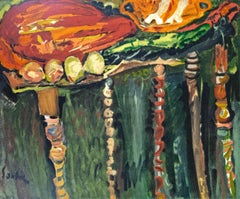
Chaim Soutine, Death in Pieces, from Soutine, I, 1966 (after)
Located in Southampton, NY
This exquisite lithograph after Chaim Soutine (1893–1943), titled Morte Au Morceau (Death in Pieces), from the folio Soutine, I, Collection Pierre Levy, 1966, originates from the edition published by Fernand Mourlot, Paris, and printed by Mourlot Freres, Paris, on October 20, 1966. The work conveys the heightened emotional tension and expressive force characteristic of Soutines painterly vision, capturing in lithographic form the dynamic structure and psychological intensity that define his mature still lifes.
Executed as a lithograph on velin d'Arches paper, this work measures 20 x 26 inches. Signed in the plate and unnumbered as issued. The edition exemplifies the technical mastery of the Mourlot atelier.
Artwork Details:
Artist: After Chaim Soutine (1899–1943)
Title: Morte Au Morceau (Death in Pieces), from the folio Soutine, I, Collection Pierre Levy
Medium: Lithograph on velin d'Arches paper
Dimensions: 20 x 26 inches
Inscription: Signed in the plate and unnumbered as issued
Date: 1966
Publisher: Fernand Mourlot, Paris
Printer: Mourlot Freres, Paris
Condition: Well preserved, consistent with age and medium
Provenance: From the folio Soutine, I, Collection Pierre Levy, 1966
Notes:
Excerpted from the folio (translated from French), This album, the first of a series dedicated to Mr. Pierre Levys collection, was printed in DL examples on Arches velin. Printing was finished on October 20, 1966 by Mourlot for lithographs of the canvases of Soutine, and by Fequet and Baudier for Waldemar Georges unpublished text. Fernand Mourlot, Paris 1966.
About the Publication:
Soutine, I, Collection Pierre Levy, published in 1966 by Fernand Mourlot, Paris, is the first album in the important series devoted to the Pierre Levy collection, one of the most significant private collections of twentieth century French painting. Conceived as a scholarly and visual record, the album was designed to present key works by Chaim Soutine in lithographic form at a time when renewed international interest in the artist was expanding. Created in collaboration with Mourlot Freres, the foremost lithographic atelier in France, the publication reflects the printers commitment to translating Soutines canvases into richly tonal lithographs that preserve the emotional intensity and structural drama of the originals. Issued in a single edition on Arches velin, the album stands as an essential document of postwar art publishing, illuminating the historical partnership between artist, collector, and master printer, and contributing to the larger historiography of modern French Expressionism and museum quality print albums of the mid twentieth century.
About the Artist:
Chaim Soutine (1893–1943) was a Belarus born French Expressionist painter whose explosive brushwork, emotionally charged distortions, and uncompromising commitment to depicting the psychological intensity of human experience have secured his place as one of the most vital and transformative figures in twentieth century art, creating his legacy within the same revolutionary modernist environment defined by Pablo Picasso, Alexander Calder, Alberto Giacometti, Salvador Dali, Joan Miro, Wassily Kandinsky, Marcel Duchamp, and Man Ray; after leaving his impoverished childhood in Smilavichy and arriving in Paris in 1913, Soutine immersed himself in the School of Paris circle at La Ruche—an incubator of international avant garde talent—where he developed formative friendships with Amedeo Modigliani, Marc Chagall, Jules Pascin, and other pioneering artists whose daring approaches inspired him to push color, gesture, and form into new emotional territories. His portraits of cooks, choirboys, servants, and village residents; his tempestuous landscapes of Cagnes, Chartres, and Ceret; and his deeply visceral still lifes—most famously his monumental depictions of slaughtered carcasses—reveal a singular ability to transform ordinary subjects into raw, pulsing, almost metaphysical dramas, building on the influence of Rembrandt, Goya, Velazquez, and El Greco while departing radically from academic restraint. His paintings vibrate with psychological tension, their twisted perspectives, molten colors, and trembling outlines capturing an inner world marked by anxiety, longing, resilience, and profound empathy. Soutines originality profoundly shaped the evolution of modern painting: Francis Bacon cited him as one of his greatest influences, Willem de Kooning and the Abstract Expressionists admired his gestural ferocity, and later artists—including Frank Auerbach, Leon Kossoff, Lucian Freud, Jenny Saville, and Adrian Ghenie...
Category
1960s Modern Still-life Prints
Materials
Lithograph
$716 Sale Price
20% Off
Free Shipping
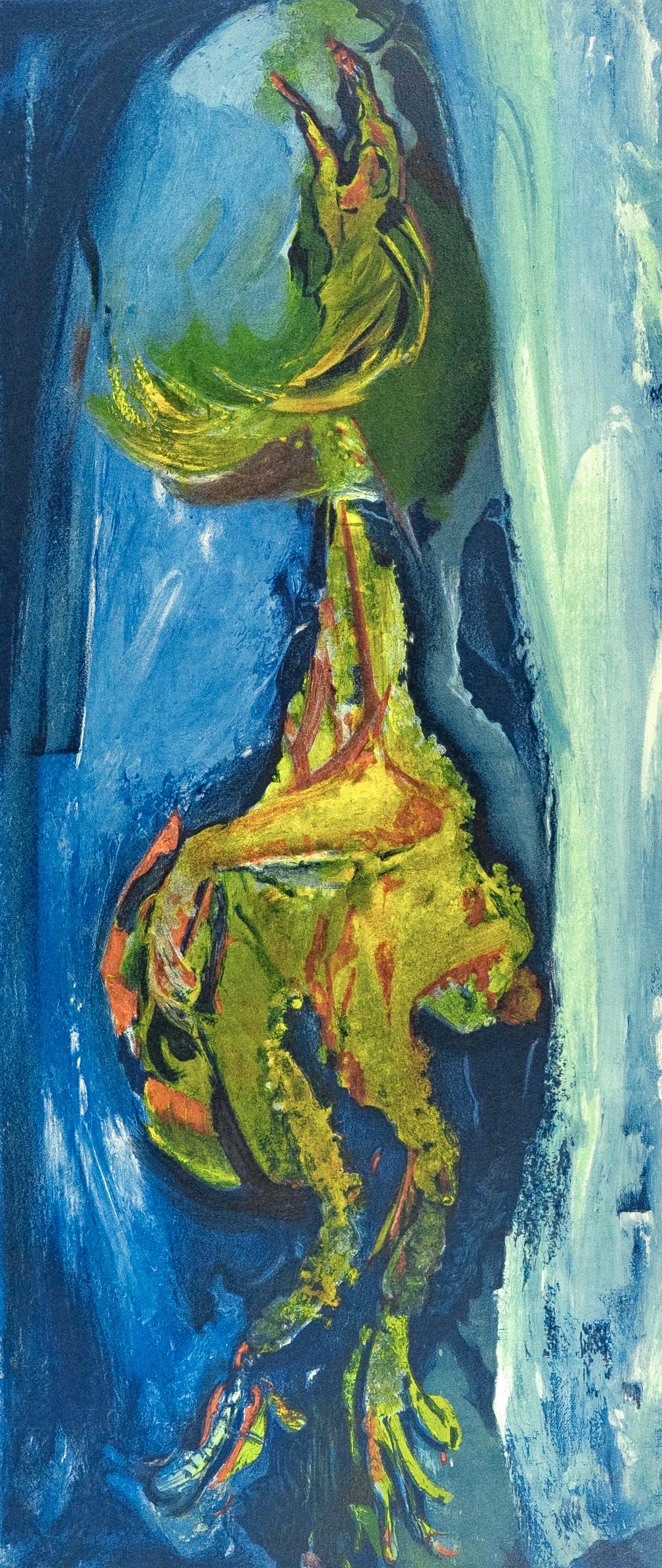
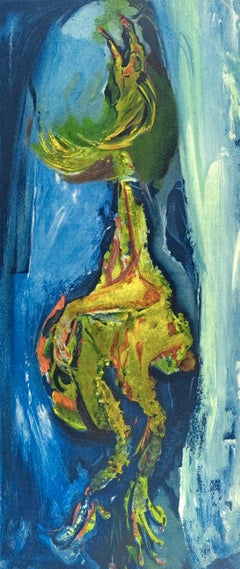
Chaim Soutine, The Rooster, from Soutine, I, 1966 (after)
Located in Southampton, NY
This exquisite lithograph after Chaim Soutine (1893–1943), titled Le Coq (The Rooster), from the folio Soutine, I, Collection Pierre Levy, 1966, originates from the edition published by Fernand Mourlot, Paris, and printed by Mourlot Freres, Paris, on October 20, 1966. The work conveys the heightened emotional tension and expressive force characteristic of Soutines painterly vision, capturing in lithographic form the dynamic structure and psychological immediacy that define his mature still lifes.
Executed as a lithograph on velin d'Arches paper, this work measures 26 x 20 inches. Unsigned and unnumbered as issued. The edition exemplifies the technical mastery of the Mourlot atelier.
Artwork Details:
Artist: After Chaim Soutine (1893–1943)
Title: Le Coq (The Rooster), from the folio Soutine, I, Collection Pierre Levy
Medium: Lithograph on velin d'Arches paper
Dimensions: 26 x 20 inches
Inscription: Unsigned and unnumbered as issued
Date: 1966
Publisher: Fernand Mourlot, Paris
Printer: Mourlot Freres, Paris
Condition: Well preserved, consistent with age and medium
Provenance: From the folio Soutine, I, Collection Pierre Levy, 1966
Notes:
Excerpted from the folio (translated from French), This album, the first of a series dedicated to Mr. Pierre Levys collection, was printed in DL examples on Arches velin. Printing was finished on October 20, 1966 by Mourlot for lithographs of the canvases of Soutine, and by Fequet and Baudier for Waldemar Georges unpublished text. Fernand Mourlot, Paris 1966.
About the Publication:
Soutine, I, Collection Pierre Levy, published in 1966 by Fernand Mourlot, Paris, is the first album in the important series devoted to the Pierre Levy collection, one of the most significant private collections of twentieth century French painting. Conceived as a scholarly and visual record, the album was designed to present key works by Chaim Soutine in lithographic form at a time when renewed international interest in the artist was expanding. Created in collaboration with Mourlot Freres, the foremost lithographic atelier in France, the publication reflects the printers commitment to translating Soutines canvases into richly tonal lithographs that preserve the emotional intensity and structural drama of the originals. Issued in a single edition on Arches velin, the album stands as an essential document of postwar art publishing, illuminating the historical partnership between artist, collector, and master printer, and contributing to the larger historiography of modern French Expressionism and museum quality print albums of the mid twentieth century.
About the Artist:
Chaim Soutine (1893–1943) was a Belarus-born French Expressionist painter whose explosive brushwork, emotionally charged distortions, and uncompromising commitment to depicting the psychological intensity of human experience have secured his place as one of the most vital and transformative figures in twentieth century art, creating his legacy within the same revolutionary modernist environment defined by Pablo Picasso, Alexander Calder, Alberto Giacometti, Salvador Dali, Joan Miro, Wassily Kandinsky, Marcel Duchamp, and Man Ray; after leaving his impoverished childhood in Smilavichy and arriving in Paris in 1913, Soutine immersed himself in the School of Paris circle at La Ruche—an incubator of international avant garde talent—where he developed formative friendships with Amedeo Modigliani, Marc Chagall, Jules Pascin, and other pioneering artists whose daring approaches inspired him to push color, gesture, and form into new emotional territories. His portraits of cooks, choirboys, servants, and village residents; his tempestuous landscapes of Cagnes, Chartres, and Ceret; and his deeply visceral still lifes—most famously his monumental depictions of slaughtered carcasses—reveal a singular ability to transform ordinary subjects into raw, pulsing, almost metaphysical dramas, building on the influence of Rembrandt, Goya, Velazquez, and El Greco while departing radically from academic restraint. His paintings vibrate with psychological tension, their twisted perspectives, molten colors, and trembling outlines capturing an inner world marked by anxiety, longing, resilience, and profound empathy. Soutines originality profoundly shaped the evolution of modern painting: Francis Bacon cited him as one of his greatest influences, Willem de Kooning and the Abstract Expressionists admired his gestural ferocity, and later artists—including Frank Auerbach, Leon Kossoff, Lucian Freud, Jenny Saville, and Adrian Ghenie...
Category
1960s Modern Landscape Prints
Materials
Lithograph
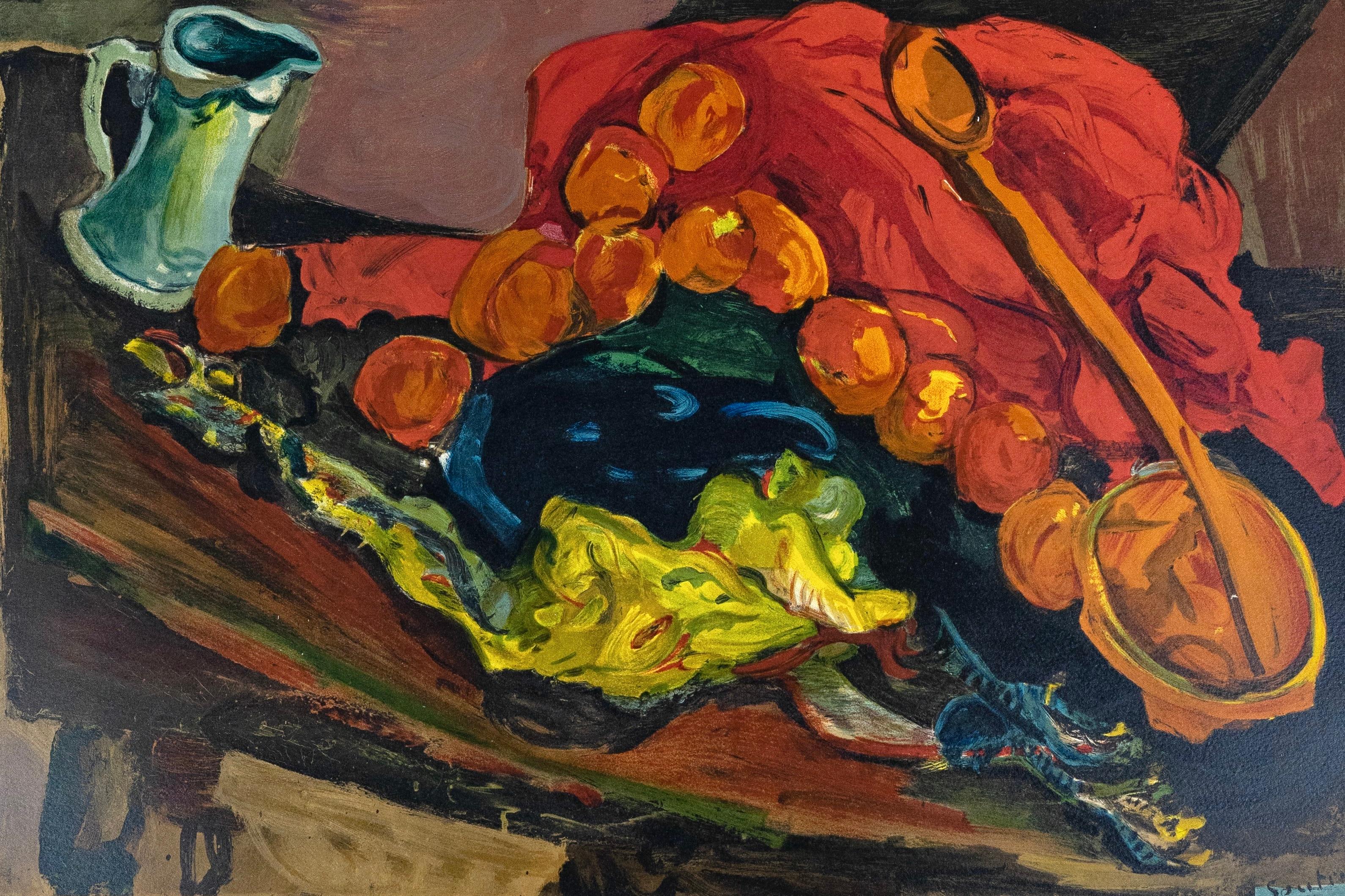
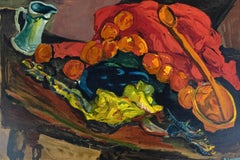
Chaim Soutine, Still Life with Turkey, from Soutine, I, 1966 (after)
Located in Southampton, NY
This exquisite lithograph after Chaim Soutine (1893–1943), titled Nature morte a la dinde (Still Life with Turkey), from the folio Soutine, I, Collection Pierre Levy, 1966, originates from the edition published by Fernand Mourlot, Paris, and printed by Mourlot Freres, Paris, on October 20, 1966. The work conveys the heightened emotional tension and expressive force characteristic of Soutines painterly vision, capturing in lithographic form the dynamic structure and psychological intensity that define his mature still lifes.
Executed as a lithograph on velin d'Arches paper, this work measures 20 x 26 inches. Signed in the plate and unnumbered as issued. The edition exemplifies the technical mastery of the Mourlot atelier.
Artwork Details:
Artist: After Chaim Soutine (1899–1943)
Title: Nature morte a la dinde (Still Life with Turkey), from the folio Soutine, I, Collection Pierre Levy
Medium: Lithograph on velin d'Arches paper
Dimensions: 20 x 26 inches
Inscription: Signed in the plate and unnumbered as issued
Date: 1966
Publisher: Fernand Mourlot, Paris
Printer: Mourlot Freres, Paris
Condition: Well preserved, consistent with age and medium
Provenance: From the folio Soutine, I, Collection Pierre Levy, 1966
Notes:
Excerpted from the folio (translated from French), This album, the first of a series dedicated to Mr. Pierre Levys collection, was printed in DL examples on Arches velin. Printing was finished on October 20, 1966 by Mourlot for lithographs of the canvases of Soutine, and by Fequet and Baudier for Waldemar Georges unpublished text. Fernand Mourlot, Paris 1966.
About the Publication:
Soutine, I, Collection Pierre Levy, published in 1966 by Fernand Mourlot, Paris, is the first album in the important series devoted to the Pierre Levy collection, one of the most significant private collections of twentieth century French painting. Conceived as a scholarly and visual record, the album was designed to present key works by Chaim Soutine in lithographic form at a time when renewed international interest in the artist was expanding. Created in collaboration with Mourlot Freres, the foremost lithographic atelier in France, the publication reflects the printers commitment to translating Soutines canvases into richly tonal lithographs that preserve the emotional intensity and structural drama of the originals. Issued in a single edition on Arches velin, the album stands as an essential document of postwar art publishing, illuminating the historical partnership between artist, collector, and master printer, and contributing to the larger historiography of modern French Expressionism and museum quality print albums of the mid twentieth century.
About the Artist:
Chaim Soutine (1893–1943) was a Belarus born French Expressionist painter whose explosive brushwork, emotionally charged distortions, and uncompromising commitment to depicting the psychological intensity of human experience have secured his place as one of the most vital and transformative figures in twentieth century art, creating his legacy within the same revolutionary modernist environment defined by Pablo Picasso, Alexander Calder, Alberto Giacometti, Salvador Dali, Joan Miro, Wassily Kandinsky, Marcel Duchamp, and Man Ray; after leaving his impoverished childhood in Smilavichy and arriving in Paris in 1913, Soutine immersed himself in the School of Paris circle at La Ruche—an incubator of international avant garde talent—where he developed formative friendships with Amedeo Modigliani, Marc Chagall, Jules Pascin, and other pioneering artists whose daring approaches inspired him to push color, gesture, and form into new emotional territories. His portraits of cooks, choirboys, servants, and village residents; his tempestuous landscapes of Cagnes, Chartres, and Ceret; and his deeply visceral still lifes—most famously his monumental depictions of slaughtered carcasses—reveal a singular ability to transform ordinary subjects into raw, pulsing, almost metaphysical dramas, building on the influence of Rembrandt, Goya, Velazquez, and El Greco while departing radically from academic restraint. His paintings vibrate with psychological tension, their twisted perspectives, molten colors, and trembling outlines capturing an inner world marked by anxiety, longing, resilience, and profound empathy. Soutines originality profoundly shaped the evolution of modern painting: Francis Bacon cited him as one of his greatest influences, Willem de Kooning and the Abstract Expressionists admired his gestural ferocity, and later artists—including Frank Auerbach, Leon Kossoff, Lucian Freud, Jenny Saville, and Adrian Ghenie...
Category
1960s Modern Still-life Prints
Materials
Lithograph
$716 Sale Price
20% Off
Free Shipping
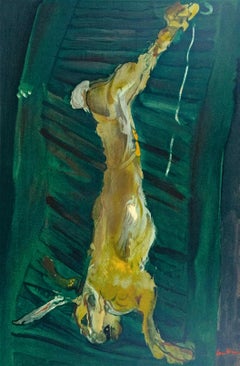
Chaim Soutine, The Hare at the Green Shutter, from Soutine, I, 1966 (after)
Located in Southampton, NY
This exquisite lithograph after Chaim Soutine (1893–1943), titled Le Lievre au volet vert (The Hare at the Green Shutter), from the folio Soutine, I, Collection Pierre Levy, 1966, originates from the edition published by Fernand Mourlot, Paris, and printed by Mourlot Freres, Paris, on October 20, 1966. The work conveys the heightened emotional tension and expressive force characteristic of Soutines painterly vision, capturing in lithographic form the dynamic structure and psychological immediacy that define his mature still lifes.
Executed as a lithograph on velin d'Arches paper, this work measures 26 x 20 inches. Signed in the plate and unnumbered as issued. The edition exemplifies the technical mastery of the Mourlot atelier.
Artwork Details:
Artist: After Chaim Soutine (1893–1943)
Title: Le Lievre au volet vert (The Hare at the Green Shutter), from the folio Soutine, I, Collection Pierre Levy
Medium: Lithograph on velin d'Arches paper
Dimensions: 26 x 20 inches
Inscription: Signed in the plate and unnumbered as issued
Date: 1966
Publisher: Fernand Mourlot, Paris
Printer: Mourlot Freres, Paris
Condition: Well preserved, consistent with age and medium
Provenance: From the folio Soutine, I, Collection Pierre Levy, 1966
Notes:
Excerpted from the folio (translated from French), This album, the first of a series dedicated to Mr. Pierre Levys collection, was printed in DL examples on Arches velin. Printing was finished on October 20, 1966 by Mourlot for lithographs of the canvases of Soutine, and by Fequet and Baudier for Waldemar Georges unpublished text. Fernand Mourlot, Paris 1966.
About the Publication:
Soutine, I, Collection Pierre Levy, published in 1966 by Fernand Mourlot, Paris, is the first album in the important series devoted to the Pierre Levy collection, one of the most significant private collections of twentieth century French painting. Conceived as a scholarly and visual record, the album was designed to present key works by Chaim Soutine in lithographic form at a time when renewed international interest in the artist was expanding. Created in collaboration with Mourlot Freres, the foremost lithographic atelier in France, the publication reflects the printers commitment to translating Soutines canvases into richly tonal lithographs that preserve the emotional intensity and structural drama of the originals. Issued in a single edition on Arches velin, the album stands as an essential document of postwar art publishing, illuminating the historical partnership between artist, collector, and master printer, and contributing to the larger historiography of modern French Expressionism and museum quality print albums of the mid twentieth century.
About the Artist:
Chaim Soutine (1893–1943) was a Belarus-born French Expressionist painter whose explosive brushwork, emotionally charged distortions, and uncompromising commitment to depicting the psychological intensity of human experience have secured his place as one of the most vital and transformative figures in twentieth century art, creating his legacy within the same revolutionary modernist environment defined by Pablo Picasso, Alexander Calder, Alberto Giacometti, Salvador Dali, Joan Miro, Wassily Kandinsky, Marcel Duchamp, and Man Ray; after leaving his impoverished childhood in Smilavichy and arriving in Paris in 1913, Soutine immersed himself in the School of Paris circle at La Ruche—an incubator of international avant garde talent—where he developed formative friendships with Amedeo Modigliani, Marc Chagall, Jules Pascin, and other pioneering artists whose daring approaches inspired him to push color, gesture, and form into new emotional territories. His portraits of cooks, choirboys, servants, and village residents; his tempestuous landscapes of Cagnes, Chartres, and Ceret; and his deeply visceral still lifes—most famously his monumental depictions of slaughtered carcasses—reveal a singular ability to transform ordinary subjects into raw, pulsing, almost metaphysical dramas, building on the influence of Rembrandt, Goya, Velazquez, and El Greco while departing radically from academic restraint. His paintings vibrate with psychological tension, their twisted perspectives, molten colors, and trembling outlines capturing an inner world marked by anxiety, longing, resilience, and profound empathy. Soutines originality profoundly shaped the evolution of modern painting: Francis Bacon cited him as one of his greatest influences, Willem de Kooning and the Abstract Expressionists admired his gestural ferocity, and later artists—including Frank Auerbach, Leon Kossoff, Lucian Freud, Jenny Saville, and Adrian Ghenie...
Category
1960s Modern Landscape Prints
Materials
Lithograph
$716 Sale Price
20% Off
Free Shipping
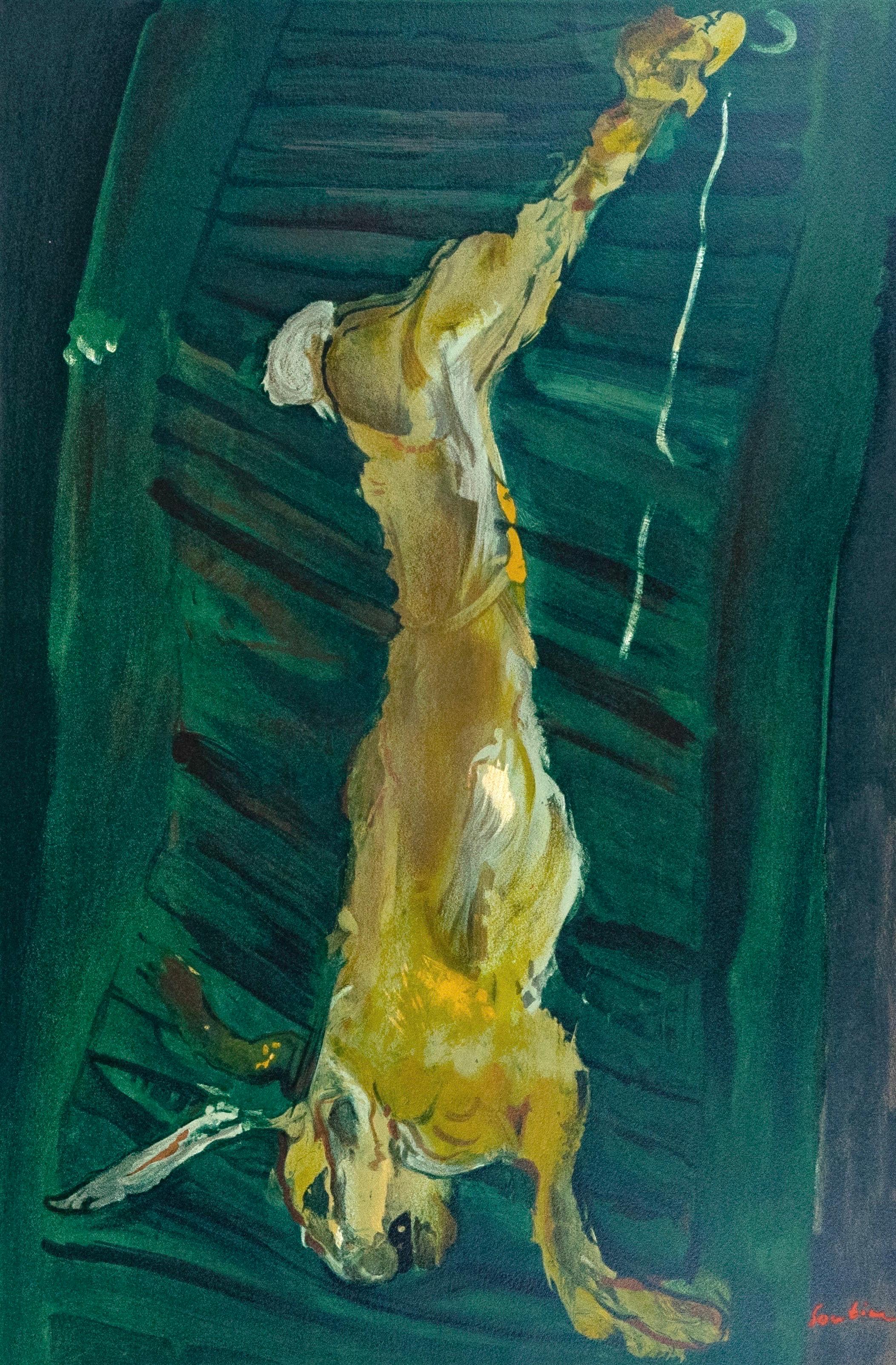
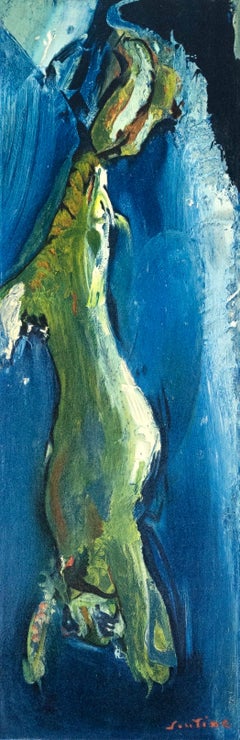
Chaim Soutine, Hanging Hare, from Soutine, I, 1966 (after)
Located in Southampton, NY
This exquisite lithograph after Chaim Soutine (1893–1943), titled Lievre pendu (Hanging Hare), from the folio Soutine, I, Collection Pierre Levy, 1966, originates from the edition published by Fernand Mourlot, Paris, and printed by Mourlot Freres, Paris, on October 20, 1966. The work conveys the heightened emotional tension and expressive force characteristic of Soutines painterly vision, capturing in lithographic form the dynamic structure and psychological immediacy that define his mature still lifes.
Executed as a lithograph on velin d'Arches paper, this work measures 26 x 20 inches. Signed in the plate and unnumbered as issued The edition exemplifies the technical mastery of the Mourlot atelier.
Artwork Details:
Artist: After Chaim Soutine (1893–1943)
Title: Lievre pendu (Hanging Hare), from the folio Soutine, I, Collection Pierre Levy
Medium: Lithograph on velin d'Arches paper
Dimensions: 26 x 20 inches
Inscription: Signed in the plate and unnumbered as issued
Date: 1966
Publisher: Fernand Mourlot, Paris
Printer: Mourlot Freres, Paris
Condition: Well preserved, consistent with age and medium
Provenance: From the folio Soutine, I, Collection Pierre Levy, 1966
Notes:
Excerpted from the folio (translated from French), This album, the first of a series dedicated to Mr. Pierre Levys collection, was printed in DL examples on Arches velin. Printing was finished on October 20, 1966 by Mourlot for lithographs of the canvases of Soutine, and by Fequet and Baudier for Waldemar Georges unpublished text. Fernand Mourlot, Paris 1966.
About the Publication:
Soutine, I, Collection Pierre Levy, published in 1966 by Fernand Mourlot, Paris, is the first album in the important series devoted to the Pierre Levy collection, one of the most significant private collections of twentieth century French painting. Conceived as a scholarly and visual record, the album was designed to present key works by Chaim Soutine in lithographic form at a time when renewed international interest in the artist was expanding. Created in collaboration with Mourlot Freres, the foremost lithographic atelier in France, the publication reflects the printers commitment to translating Soutines canvases into richly tonal lithographs that preserve the emotional intensity and structural drama of the originals. Issued in a single edition on Arches velin, the album stands as an essential document of postwar art publishing, illuminating the historical partnership between artist, collector, and master printer, and contributing to the larger historiography of modern French Expressionism and museum quality print albums of the mid twentieth century.
About the Artist:
Chaim Soutine (1893–1943) was a Belarus-born French Expressionist painter whose explosive brushwork, emotionally charged distortions, and uncompromising commitment to depicting the psychological intensity of human experience have secured his place as one of the most vital and transformative figures in twentieth century art, creating his legacy within the same revolutionary modernist environment defined by Pablo Picasso, Alexander Calder, Alberto Giacometti, Salvador Dali, Joan Miro, Wassily Kandinsky, Marcel Duchamp, and Man Ray; after leaving his impoverished childhood in Smilavichy and arriving in Paris in 1913, Soutine immersed himself in the School of Paris circle at La Ruche—an incubator of international avant garde talent—where he developed formative friendships with Amedeo Modigliani, Marc Chagall, Jules Pascin, and other pioneering artists whose daring approaches inspired him to push color, gesture, and form into new emotional territories. His portraits of cooks, choirboys, servants, and village residents; his tempestuous landscapes of Cagnes, Chartres, and Ceret; and his deeply visceral still lifes—most famously his monumental depictions of slaughtered carcasses—reveal a singular ability to transform ordinary subjects into raw, pulsing, almost metaphysical dramas, building on the influence of Rembrandt, Goya, Velazquez, and El Greco while departing radically from academic restraint. His paintings vibrate with psychological tension, their twisted perspectives, molten colors, and trembling outlines capturing an inner world marked by anxiety, longing, resilience, and profound empathy. Soutines originality profoundly shaped the evolution of modern painting: Francis Bacon cited him as one of his greatest influences, Willem de Kooning and the Abstract Expressionists admired his gestural ferocity, and later artists—including Frank Auerbach, Leon Kossoff, Lucian Freud, Jenny Saville, and Adrian Ghenie...
Category
1960s Modern Landscape Prints
Materials
Lithograph
You May Also Like
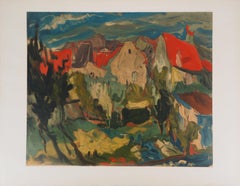
French Riviera : View of Cagnes - Lithograph, Mourlot
Located in Paris, IDF
Chaim SOUTINE (1893-1943)
French Riviera : View of Cagnes
Stone lithograph after a painting (Mourlot workshop)
Unsigned
On Arches vellum 50 x 65 cm (c. 20 x 26 inch)
Excellent cond...
Category
1970s Expressionist Landscape Prints
Materials
Lithograph
"Paysage a Aix" lithograph
By After Paul Cezanne
Located in Henderson, NV
Medium: lithograph (after the Paul Cezanne painting). Printed in Paris on Arches paper at the Mourlot studio in 1973 in an edition of 1000 for the Collection Pierre Lévy deluxe portf...
Category
1970s Impressionist Prints and Multiples
Materials
Lithograph
Village. Oil on cardboard, 79. 5 x 100. 5 cm
Located in Riga, LV
Village. Oil on cardboard, 79.5 x 100.5 cm
Aleksandr Rodin (1922-2001)
Painter Born in a family of farmers. Wife Rasma Lace - art scholar. Studied at the Stalingrad School of Art, S...
Category
1970s Expressionist Landscape Paintings
Materials
Oil, Cardboard
$809 Sale Price
20% Off
20th Century French Expressionist Provencal Landscape Green Hills
Town
Located in Cirencester, Gloucestershire
'Green Hills in Provence'
French School, late 20th century
oil on thin board, unframed
board: 13.5 x 18 inches
the painting is in overall very good and sou...
Category
20th Century Expressionist Landscape Paintings
Materials
Oil
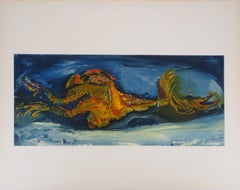
Still Life with a Turkey - Lithograph, Mourlot
Located in Paris, IDF
Chaim SOUTINE (1893-1943)
Still Life with a Turkey
Stone lithograph after a painting
Printed in Mourlot workshop
Unsigned
On Arches vellum 50 x 65 cm (c. 20 x 26 inch)
Excellent co...
Category
1970s Expressionist Still-life Prints
Materials
Lithograph
French Expressionist Landscape, The Abri at L
Olivette, Cap d
Antibes
Located in Cotignac, FR
A French Expressionist oil on canvas landscape of countryside at L'Olivette, Cap d'Antibes on the French Riviera, by Germain Bonel. The painting is signed bottom right and signed, dated and titled to the back of the canvas.
A strong and impactful composition of the trees and forest leading down to the sea wall and then the Mediterranean beyond at the Port (or 'Abri' as it is also known) of l'Olivette on the west coast of Cap d'Antibes, the iconic location in the South of France. This former small traditional fishing port from the beginning of the twentieth century is now converted into a picturesque little marina on Cap d'Antibes, with its rocky cove, its beach, its pine forest, its umbrella pines, olive trees, fig trees, and agaves and its famous 'Villa Aujourd'hui' a modernist residence built by American architect Barry Dierks (1899-1960) in 1938 for socialite Mrs. Audrey Chadwick. L'Olivette has a privileged panoramic view of the Gulf of Juan, and the coastal shores of Cap d'Antibes, Juan-les-Pins, Golfe-Juan, and the Pointe Croisette of Cannes.
Germain Bonel (5 August 1913 – 2002) was a French painter of Catalan origin. From 1967 to 1983, he was a professor of drawing and painting at the Perpignan School of Fine Arts. From 1969 to 1978, he also taught art in the schools of Saint-Cyprien-village and Saint-Cyprien-Plage.
Germain Bonel's painting is both expressionist and decorative. Georges-Henry Gourrier said of him: "Germain Bonel's painting expresses [quite naturally] the singular beauty of forms, the radiant force of colour, the deepening of matter and the tenderness of the things of life. His work appears to be a painting of plenitude."
From 1941 to 1945, Germain Bonel studied drawing at the Municipal School of Fine Arts in Perpignan. He won first prize in 1945. Out of competition, he continued his studies at the same school from 1945 to 1948 and he regularly exhibited his works at the annual exhibition held at the Salle Arago in Perpignan.
Germain Bonel met François Desnoyer in 1950 and introduced him to the Catalan artistic milieu.
He was admitted to the Salon d'Automne in Paris in 1951 and exhibited until 1961, when he became a member of the salon. As early as 1951 a commentary said, "with the canvas hanging...
Category
Mid-20th Century Expressionist Landscape Paintings
Materials
Canvas, Oil