Items Similar to Restaurant in Mott Street
Want more images or videos?
Request additional images or videos from the seller
1 of 6
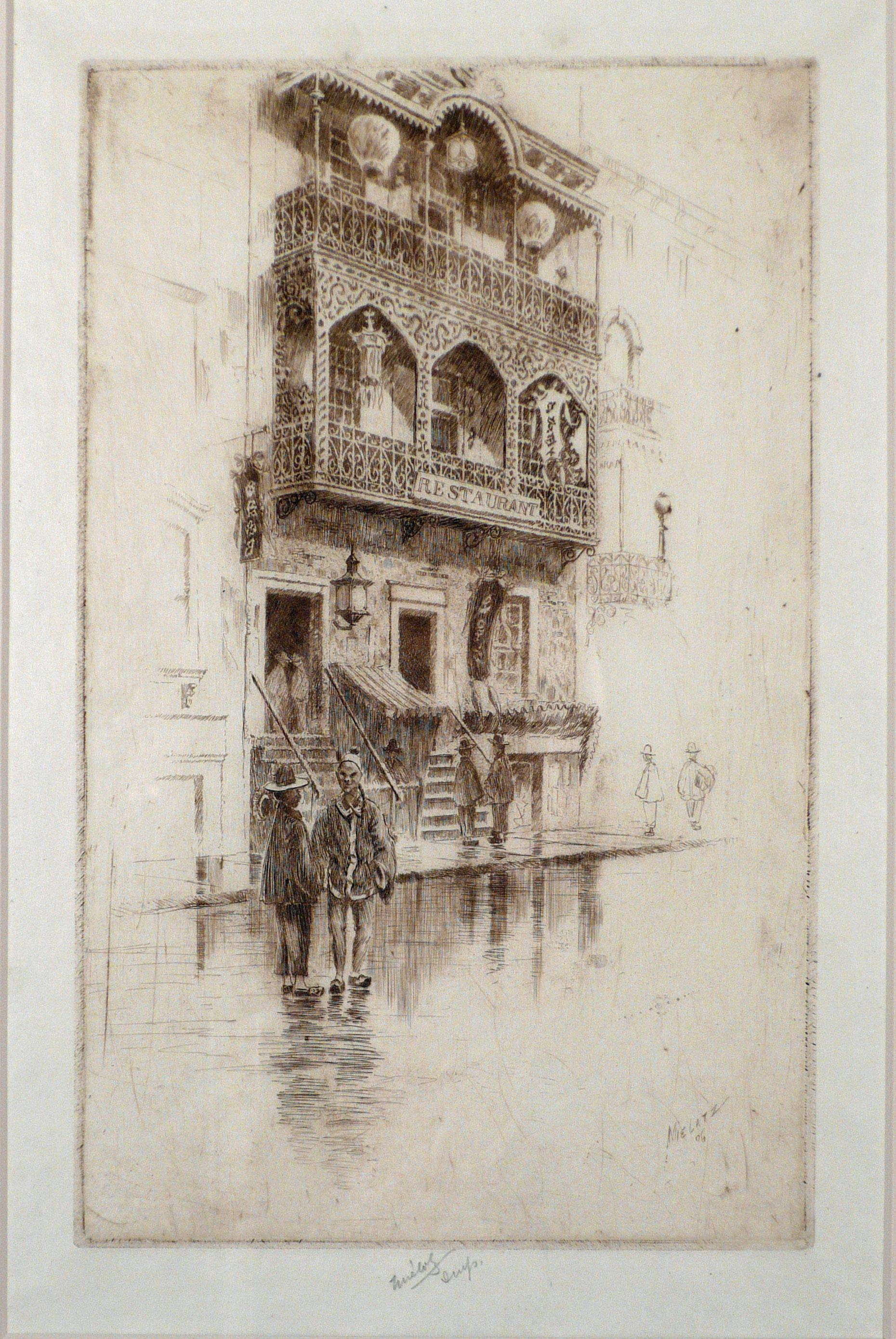
Charles Frederick William MielatzRestaurant in Mott Street1906
1906
$550
£415.65
€477.45
CA$773.62
A$819.06
CHF 443.25
MX$9,789.24
NOK 5,525.06
SEK 5,052.47
DKK 3,565.92
About the Item
The image depicts a restaurant on New York's Mott Street with ornamental iron work on the balconies. There are six figures in the scene in various stages of contrast. Mott Street is considered the unofficial Main Street of New York's Chinatown. Ella Fitzgerald sang it best: “And tell me what street compares with Mott Street in July? Sweet pushcarts gently gliding by.”
CFW Mielatz was an early influence on the drypoints and etchings of Martin Lewis. This piece was created in 1906 and it is signed in pencil. It is part of the collection of New York's Metropolitan Museum of Art
C.F.W. Mielatz
American, 1860-1919
Born in Bredding, Germany in 1864, Mielatz emigrated to the United States as a young boy and studied at the Chicago School of Design. Mostly self-taught, his first prints were large New England landscapes reminiscent of the painter-etcher school of American Art. Around 1890 he started to produce prints of New York City and by the time of his death, the number totaled over ninety images. He was a master technician in the field of etching, reworking many of his plates to get the exact feeling he was seeking. Mielatz was a member of the New York Etching Club and was elected an Associate Member of the National Academy in 1906. He succeeded James David Smillie as the etching teacher at the National Academy, a position he held for 15 years. According to Wilson’s Index of American Print Exhibitions, 1882-1940, he was involved in nine group exhibitions including the New York Etching Club, The Brooklyn Society of Etchers, and posthumously, at the Victoria and Albert Museum in 1929.
- Creator:Charles Frederick William Mielatz (1864 - 1919, American, German)
- Creation Year:1906
- Dimensions:Height: 9.88 in (25.1 cm)Width: 6.25 in (15.88 cm)
- Medium:
- Movement Style:
- Period:
- Condition:
- Gallery Location:New Orleans, LA
- Reference Number:1stDibs: LU84132639601
Charles Frederick William Mielatz
Charles Frederick William Mielatz was born in Bredding, Germany. He emigrated to the United States with his family and studied at the Chicago School of Design, the National Academy of Design and with James J. Calahan in Newport, Rhode Island, where he learned etching. Though his initial prints were pastoral landscapes of New England, Mielatz turned instead to the depiction of workaday urban settings. Mielatz was a member of the New York Etching Club, the Brooklyn Society of Etchers and was an associate member of the National Academy of Design. In 1906 he succeeded James David Smillie as the etching teacher at the National Academy, a position he held until his death in 1919. Echoes of his work can be seen in the prints of John Sloan and Martin Lewis, themselves champions of the urban environment. Mielatz died in New York City.
About the Seller
4.9
Recognized Seller
These prestigious sellers are industry leaders and represent the highest echelon for item quality and design.
Gold Seller
Premium sellers maintaining a 4.3+ rating and 24-hour response times
Established in 1988
1stDibs seller since 2018
811 sales on 1stDibs
Typical response time: 3 hours
Associations
International Fine Print Dealers Association
- ShippingRetrieving quote...Shipping from: New Orleans, LA
- Return Policy
More From This Seller
View AllA Gable in the Grande Rue, Lisieux
By John Taylor Arms
Located in New Orleans, LA
This image is the 3rd etching created by Arms. It was printed byGrederick Reynolds in an edition of 116. Referenced as Fletcher #3 the image is the second in his Gable series. Lis...
Category
1910s American Modern Landscape Prints
Materials
Etching
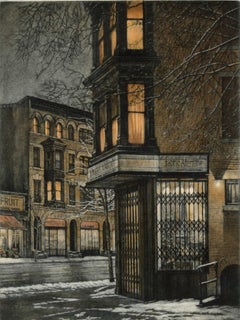
Late Night (Where Berkeley Place meets Seventh Avenue in Brooklyn
s Park Slope)
By Frederick Mershimer
Located in New Orleans, LA
In "Late Night", Frederick Mershimer created a winter scene where Berkeley Place meets Seventh Avenue in Brooklyn's Park Slope. This image, the seventh in t...
Category
1990s Contemporary Landscape Prints
Materials
Mezzotint, Aquatint
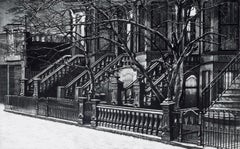
Still Night (spooky Brooklyn brownstones on 7th Ave off Flatbush Ave)
By Frederick Mershimer
Located in New Orleans, LA
In "Still Night", Frederick Mershimer depicts a row of brownstone houses on Seventh Avenue near Flatbush Avenue between Park and Stirling Places. Mershimer remembers that as he was ...
Category
1980s American Modern Landscape Prints
Materials
Mezzotint
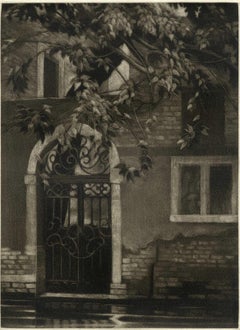
Rio Osmarin (boats on the canal Rio de S. Provolo o de l
Osmarin, Venice)
By Judith Rothchild
Located in New Orleans, LA
Rio Osmarin shows boats on the canal Rio de S. Provolo o de l'Osmarin in Venice) It was created in 2006 and this impression is #31 of 75 It is signed, titled, numbered and dated by...
Category
21st Century and Contemporary American Modern Still-life Prints
Materials
Mezzotint
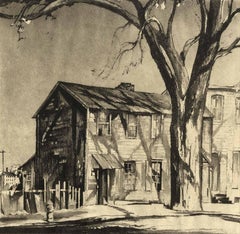
Dark House
By Earl Horter
Located in New Orleans, LA
Dark House is a soft-ground etching with aquatint signed in pencil by the artist. This image is in the collection of the Detroit Institute of the Arts
Printmaker Earl Horter, born in 1881 in Germantown, Pennsylvania, was known for his realistic etchings and aquatints of urban scenes, though he was also an illustrator and painter. As a teenager, he engraved stock certificates. He was essentially self-taught, though he did take an etching class when he moved to New York City in 1903 to work for an advertising agency. Horter had a one-man show in 1916 in New York City at the Frederick Keppel and Company gallery. He was given the exhibition by Carl Zigrosser, later the first Curator of Prints and Drawings at the Museum of Modern Art. Horter was back in Philadelphia in 1917, where he would remain until his death in 1940. He worked there as art director for the N. W. Ayer advertising firm from 1917-1923.
Horter was a member of the Society of Illustrators. He exhibited at the Pan American Exposition in 1915 in San Francisco, California; the Art Institute of Chicago, Illinois; and the Philadelphia Print Club's National Exhibition of Prints; as well as Corcoran Gallery biennials from 1935 to 1939, in Washington, D.C. Horter is listed in "Mantle Fielding's Dictionary of American Artists"; "Who Was Who in American Art"; and Mallett's "Index of Artists".
Though not a man of extraordinary means, Horter was a lover of modernist art, which he gradually purchased, creating an important collection, well ahead of its time in America, of Cubist and Precisionist works, as well as African sculpture and Native American artifacts. Artists Horter collected include Europeans Picasso, Braque, Duchamp and Brancusi, and Americans Charles Sheeler and Arthur B. Carles. He was a friend of Carles, as well as other artists and collectors such as Leopold Stokowski, conductor of the Philadelphia Orchestra; Franklin Watkins; S. S. White; and Carroll Tyson...
Category
1930s American Modern Landscape Prints
Materials
Etching
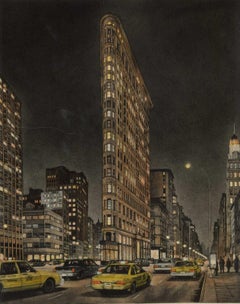
Destinations (Flatiron Bidg, 5th Avenue and Broadway at 23rd Street)
By Frederick Mershimer
Located in New Orleans, LA
In "Destinations", Frederick Mershimer creates an image of taxis rushing by the Fuller Building, better known as Flatiron Building. The building is only six feet wide at its rounded...
Category
1990s Contemporary Landscape Prints
Materials
Mezzotint, Aquatint
You May Also Like
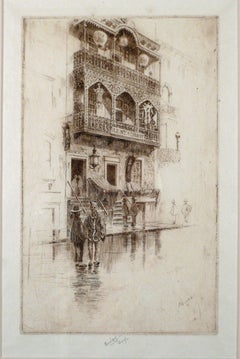
RESTAURANT IN CHINATOWN
By Charles Frederick William Mielatz
Located in Portland, ME
Mielatz, Charles. RESTAURANT IN CHINATOWN. Etching, 1906. Edition size not known. Signed and inscribed "imp."in pencil, and signed and dated in the plate. Printed on Japan paper with...
Category
Early 1900s Landscape Prints
Materials
Etching
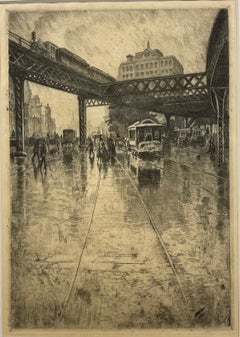
IN THE BOWERY
By Charles Frederick William Mielatz
Located in Portland, ME
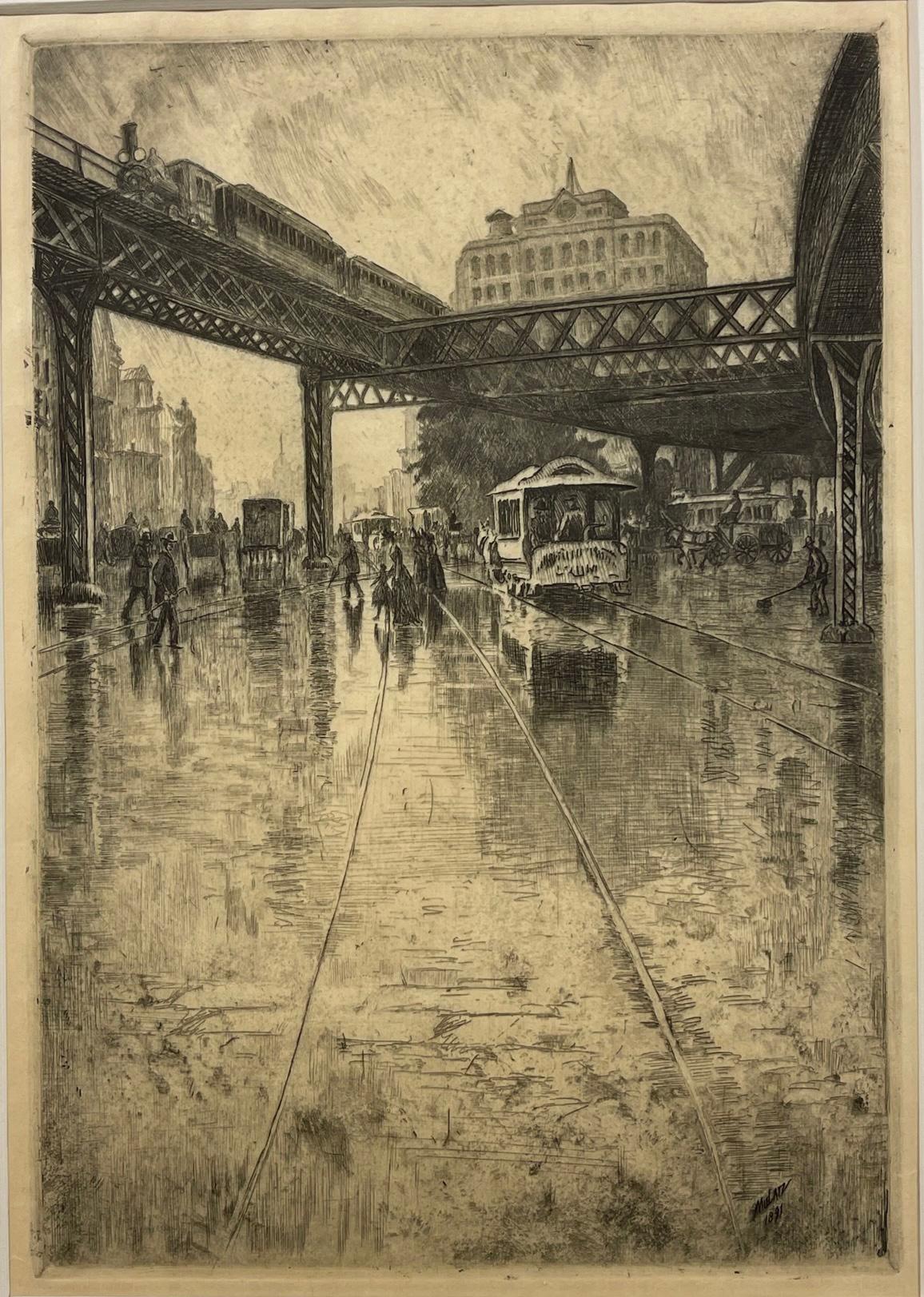
Mielatz, Charles. IN THE BOWERY. Etching, 1891. Edition size not known. Signed and dated in the plate. 9 7/8 x 7 inches. In excellent condition. Mielatz, taught etching at the Nation...
Category
1890s Landscape Prints
Materials
Etching
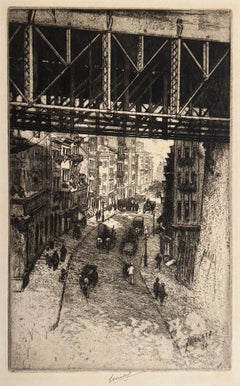
Cherry Street
By Charles Frederick William Mielatz
Located in Middletown, NY
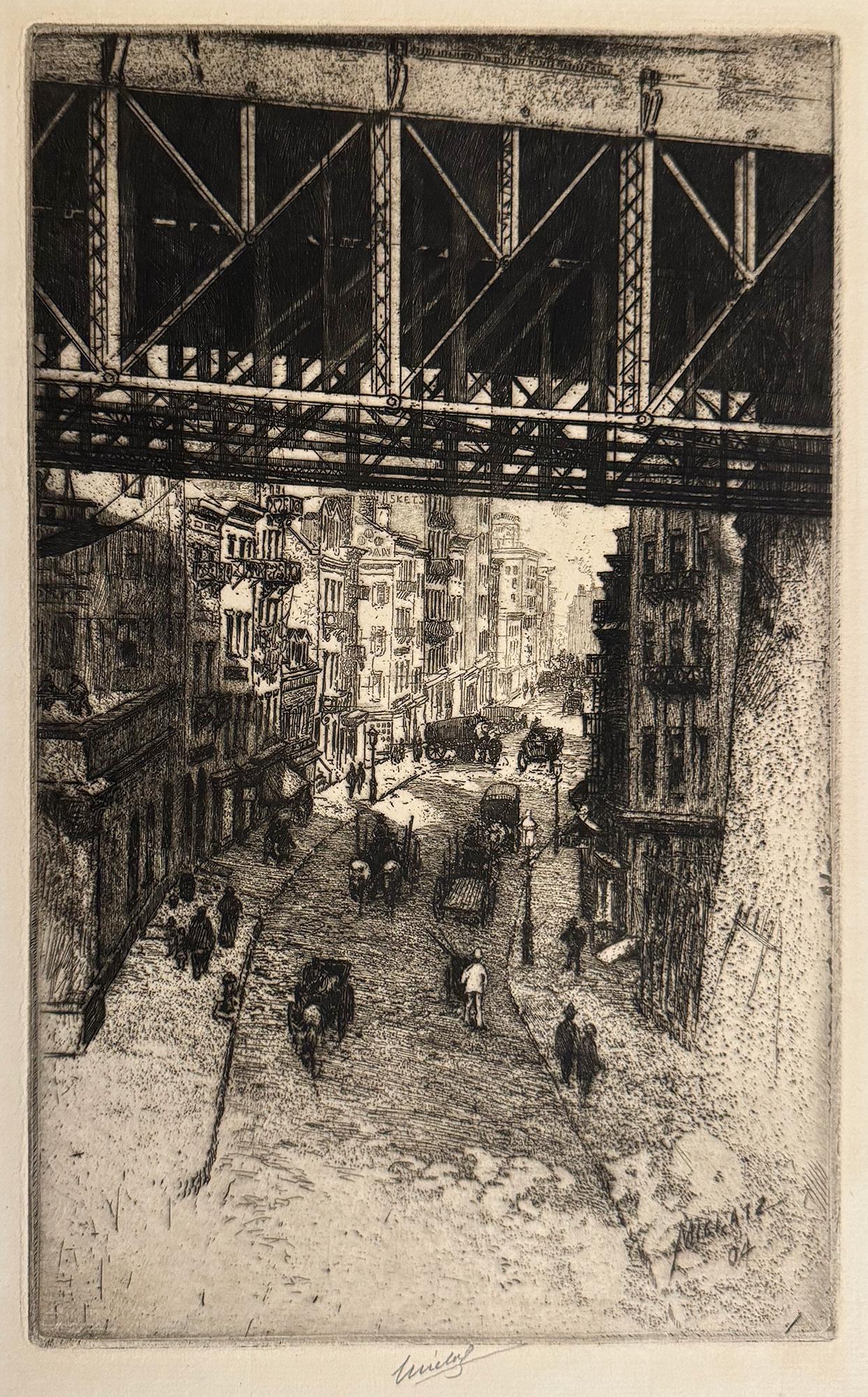
A view of lower Manhattan's Cherry Street as it appeared at the turn of the 20th century. One of only 5 proof impressions.
New York: 1904.
Drypoint with aquatint on watermarked, cr...
Category
Early 20th Century American Modern Landscape Prints
Materials
Handmade Paper, Drypoint, Etching
New York, Courtland Street
By Jean-Emile Laboureur
Located in Roma, IT
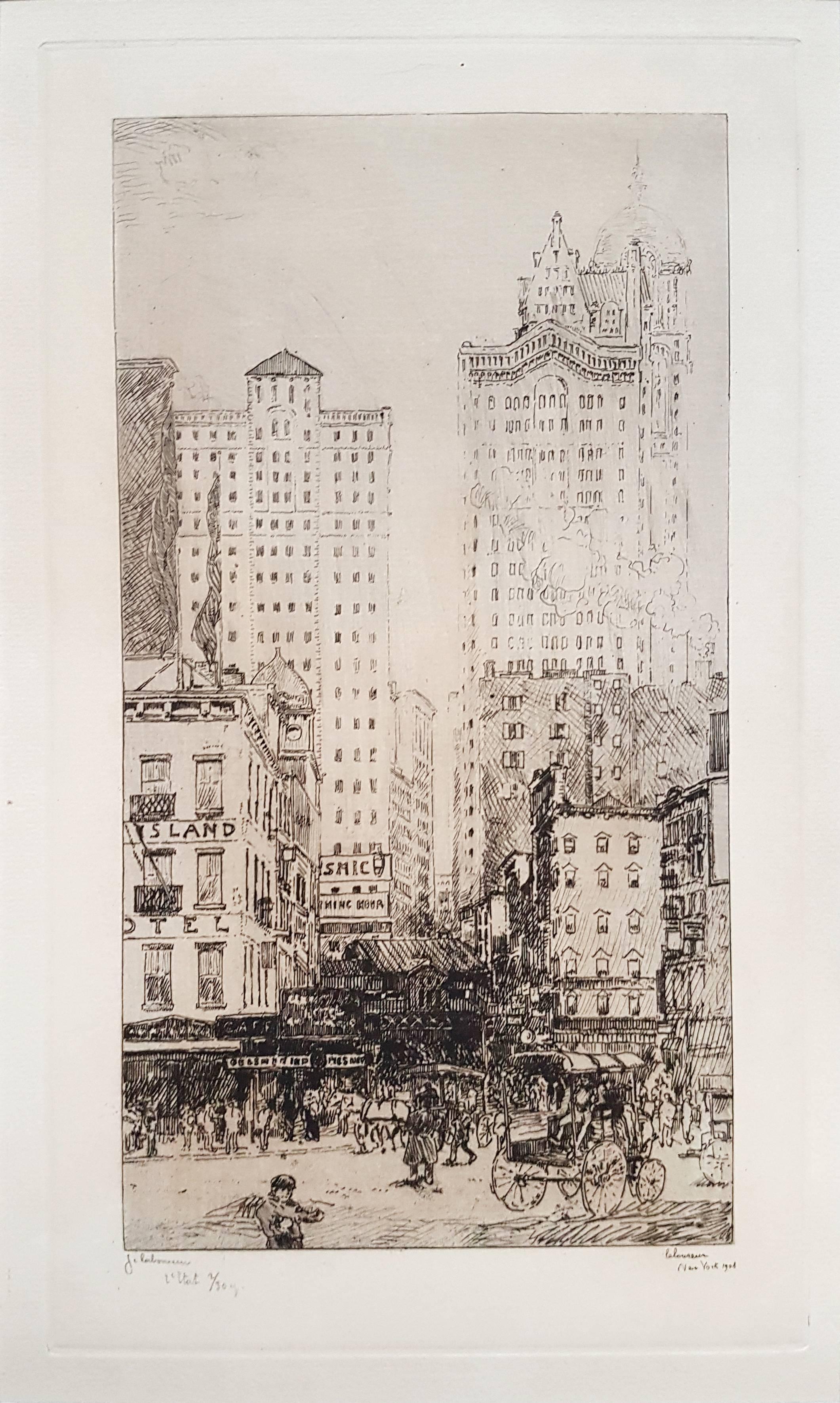
Etching, 1908.
Image Dimensions: 30 x 17 cm
Hand signed and signed on plate.
Provenance: Galleria Prandi 26/10/1976.
Jean-Émile Laboureur was a French painter, illustrator and engra...
Category
Early 1900s Realist Landscape Prints
Materials
Etching
Coin de Rue Dans Soho
By Jean-Emile Laboureur
Located in New York, NY
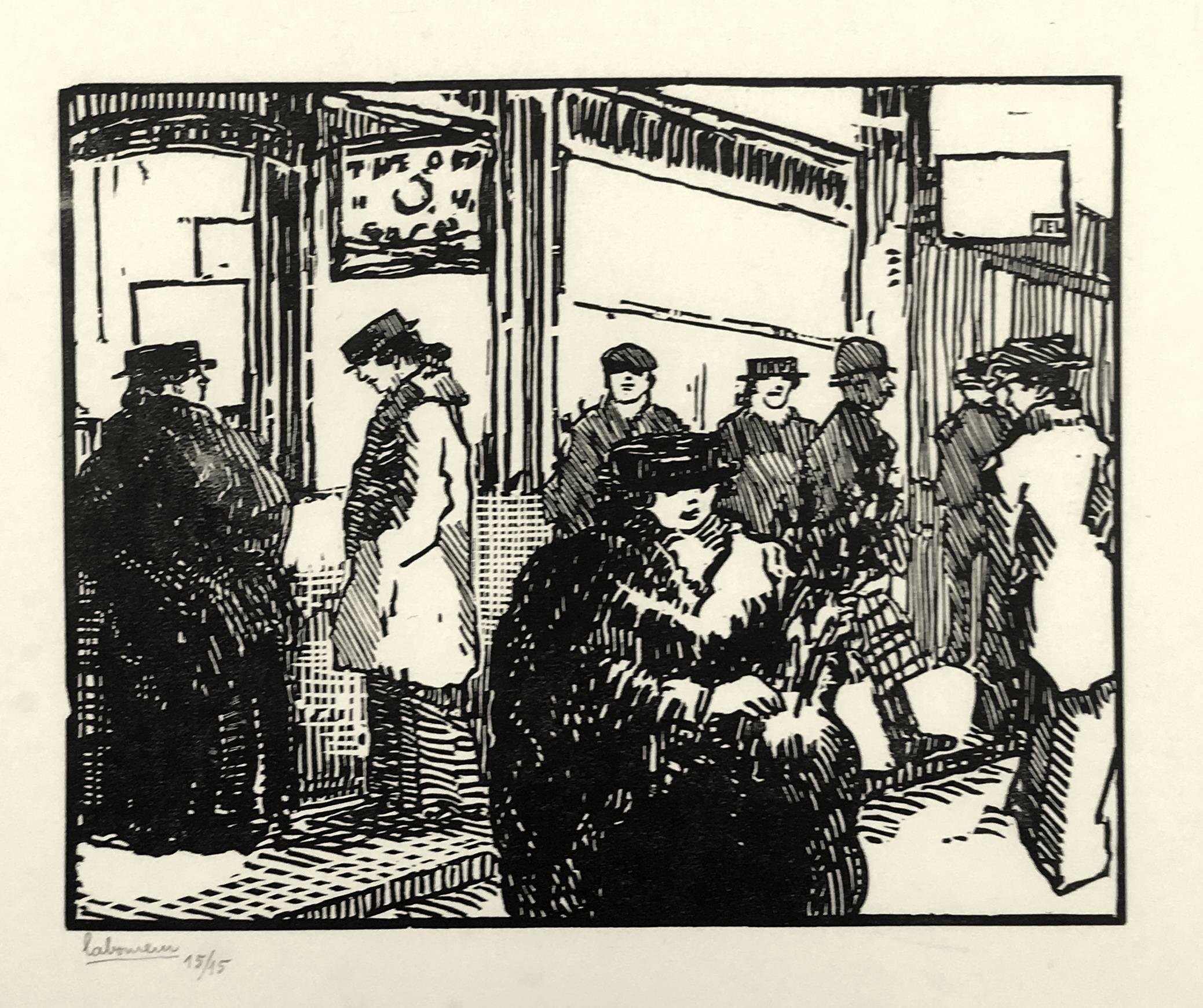
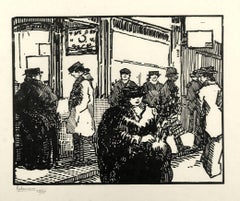
Jean-Emile Laboureur (1877-1947), Coin de Rue Dans Soho, woodcut, 1909, signed in pencil lower left and numbered (15/15) [also initials in the plate]. Reference: Sylvain Laboureur 64...
Category
Early 1900s Modern Landscape Prints
Materials
Woodcut
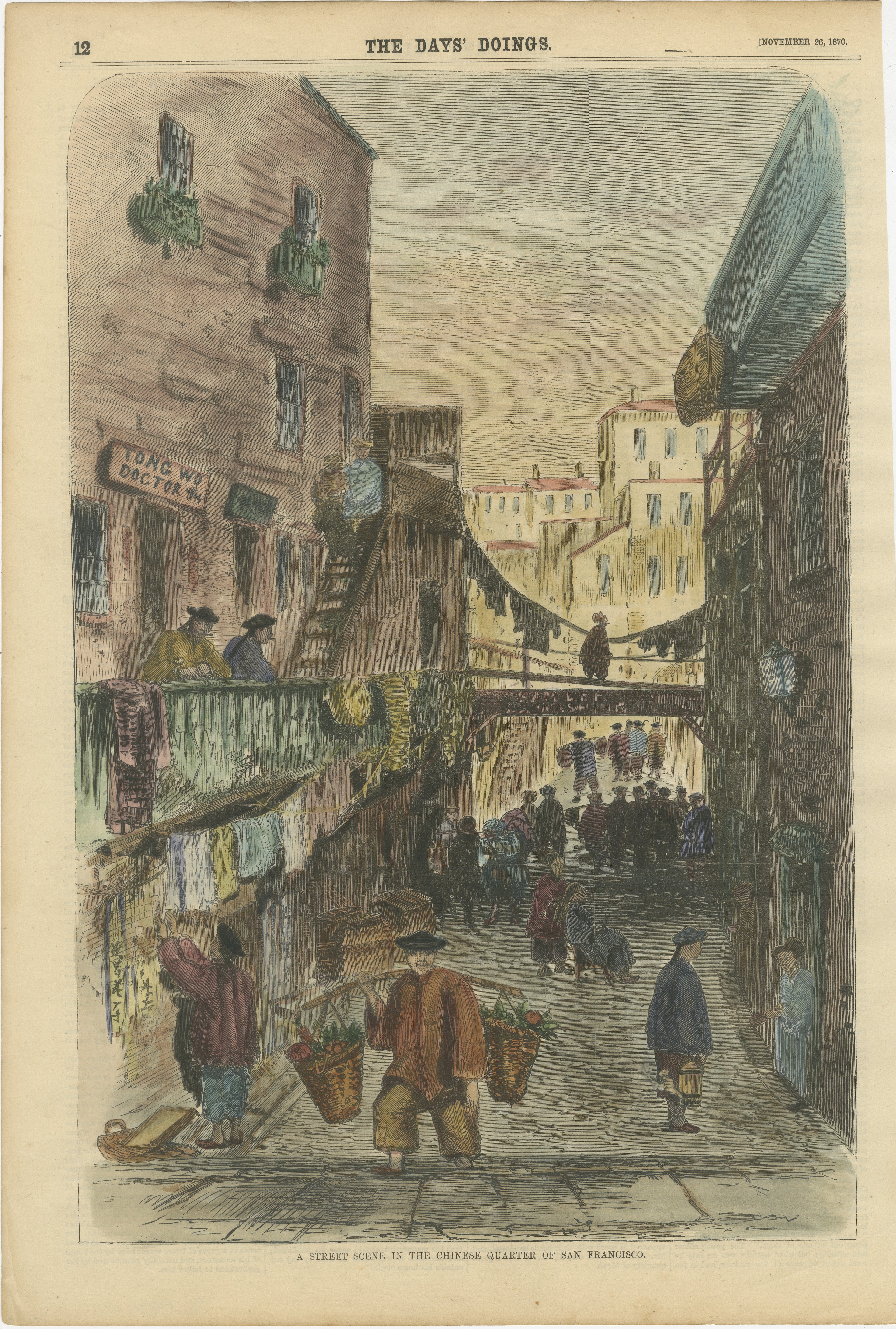
A Street Scene in the Chinese Quarter of San Francisco Published in 1870
Located in Langweer, NL
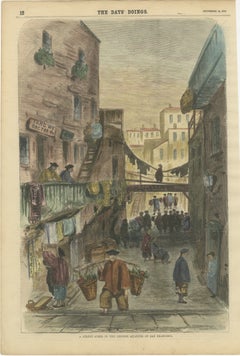
A Street Scene in the Chinese Quarter of San Francisco- Published in The Days' Doings, November 26, 1870.
Description: This hand-colored engraving, published in *The Days' Doings* on November 26, 1870, presents a vibrant and detailed view of daily life in the Chinese Quarter (Chinatown) of San Francisco during the late 19th century. The scene captures the bustling atmosphere of a narrow street, lined with wooden buildings, hanging laundry, and small businesses serving the local Chinese community.
The foreground features a man carrying two large baskets of produce, balanced on a pole over his shoulders. Behind him, people are seen engaging in various activities—gathering in groups, walking along the street, and conversing on balconies. A wooden sign reading "Tong Wo Doctor" can be seen on the left, advertising a local Chinese medicine shop, while another sign for "Sam Lee, Sam Sing" is displayed above a bridge-like structure connecting two buildings.
The narrow street, laundry lines, and multi-story wooden buildings with balconies give the scene a distinctly urban and immigrant quarter feel, reflecting the growing Chinese immigrant community in San Francisco during this time. The engraving captures both the vibrant energy of this neighborhood and the cultural exchanges occurring in the rapidly expanding city.
About the Publication and Technique:
*The Days' Doings* was a weekly illustrated newspaper that ran from 1870 to 1879, known for its sensationalist coverage of crime, scandals, and interesting stories from both America and Europe. It often depicted lively scenes from everyday life, such as this portrayal of San Francisco’s Chinatown, providing its audience with visual glimpses into different facets of society.
The engraving is produced using a wood engraving technique, where an image is carved into a block of wood for printing. Afterward, the image was hand-colored to add vibrancy to the bustling street scene. These prints were then mass-produced and circulated widely through publications like *The Days' Doings*.
---
Keywords: San Francisco Chinatown 1870, Chinese Quarter San Francisco, *The Days' Doings* November 26, 1870, Chinese immigrant life 19th century, hand-colored wood engraving, Chinatown street scene engraving, Tong Wo Doctor, Sam Lee Sam Sing, 19th-century San Francisco prints...
Category
Antique 1870s Prints
Materials
Paper
$210 Sale Price
20% Off
More Ways To Browse
Antique Ornamental Iron
W Rochelle
Welliver Screen Print
Wilbur Streech
William Irvine
William Simpson On Sale
Wysocki Charles Signed
Karapet Balakeseryan
Kuno Vollet Orbit
Lanvin Arpege Perfume
Lner Poster
Lone Ranger
Marina City
Mr Brainwash Life Is Beautiful
Painting Of Duck
Rachel Green
Red Pill Art
Robert Indiana Sculpture Love