Items Similar to
Navajo Medicine Ceremony of the Night Chant
— Native American Subject
Want more images or videos?
Request additional images or videos from the seller
1 of 6
Ira Moskowitz
Navajo Medicine Ceremony of the Night Chant
— Native American Subject1945
1945
$1,200
£906.32
€1,046.94
CA$1,690.63
A$1,810.66
CHF 973.40
MX$21,991.58
NOK 12,299.39
SEK 11,261.01
DKK 7,822.56
About the Item
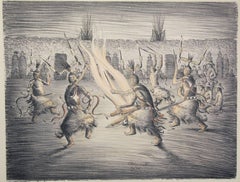
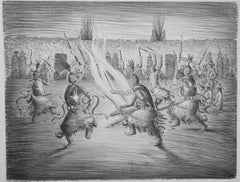
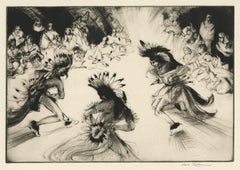
Ira Moskowitz, 'The Three Gods of Healing (Navajo Medicine Ceremony of the Night Chant)', lithograph, 1945, edition 30, Czestochowski 148. Signed and titled in pencil. Signed and dated in the stone, lower right. A fine, richly-inked impression, on cream wove paper, with full margins (2 1/4 to 2 3/4 inches), in excellent condition. Matted to museum standards, unframed.
Image size 12 1/4 x 15 13/16 inches (311 x 402 mm); sheet size 17 1/8 x 20 7/8 inches (435 x 530 mm).
Collection: Memphis Brooks Museum of Art.
ABOUT THE ARTIST
Ira Moskowitz was born in Galicia in 1912 and emigrated with his family to New York in 1927. He enrolled at the Art Students League, where he studied from 1928 to 1931. In 1935, Moskowitz traveled to Paris and subsequently lived in what is now Israel until 1937. He returned to the United States in 1938 to marry fellow artist Anna Barry in New York.
Soon after, the couple began traveling to Taos and Santa Fe, New Mexico, returning for extended periods until 1944, when they settled there permanently. They remained in New Mexico until 1949, a particularly productive phase in Moskowitz’s career during which he received a Guggenheim Fellowship. Deeply influenced by the landscape and cultural complexity of the region, his work engaged the interwoven traditions of the American Southwest, Native American communities, and Mexican culture. He focused especially on Pueblo and Navajo communities, developing a substantial body of work depicting Indigenous cultural life. Moskowitz and Barry also traveled extensively in Old Mexico, where they sketched and gathered material that further informed their work. While in the Southwest, Moskowitz flourished as a printmaker, alongside continued work in oil and watercolor.
More than one hundred of Moskowitz’s works depicting Indigenous ceremonial traditions were used to illustrate American Indian Ceremonial Dances by John Collier (Crown Publishers, New York, 1972), underscoring the historical and cultural significance of this aspect of his production.
After leaving the Southwest, printmaking remained central to Moskowitz’s practice, though his subject matter shifted toward Jewish religious life and customs. These works were well received and became a sustained focus for the remainder of his career. From 1963 to 1966, Moskowitz lived in Paris before returning to New York City in 1967, where he remained until his death in 2001.
Shortly before his death, the Zaplin-Lampert Gallery in Santa Fe presented a retrospective exhibition of Moskowitz’s work (December 2000–January 2001). Earlier one-person exhibitions included the 8th Street Playhouse, New York (1934), the Houston Museum (1941), and the San Antonio Museum (1941). His work was also included in exhibitions at the Art Students League, the Art Institute of Chicago, the Philadelphia Print Club, the College Art Association, and the International Exhibition of Graphic Arts at the Museum of Modern Art (1955).
Moskowitz’s lithographs are represented in the permanent collections of the Albany Institute of History and Art, the Bibliothèque nationale de France (Paris), the Carnegie Institute (Pittsburgh), the Museum of Fine Arts, Houston, the Library of Congress, the McNay Art Museum, the Metropolitan Museum of Art, the New Mexico Museum of Art, the New York Public Library, the Museum of Modern Art, the Smithsonian American Art Museum, and the Whitney Museum of American Art.
- Creator:Ira Moskowitz (1912, American)
- Creation Year:1945
- Dimensions:Height: 12.25 in (31.12 cm)Width: 15.82 in (40.19 cm)
- Medium:
- Movement Style:
- Period:
- Condition:
- Gallery Location:Myrtle Beach, SC
- Reference Number:Seller: 998371stDibs: LU532312905032
About the Seller
5.0
Recognized Seller
These prestigious sellers are industry leaders and represent the highest echelon for item quality and design.
Platinum Seller
Premium sellers with a 4.7+ rating and 24-hour response times
Established in 1995
1stDibs seller since 2016
336 sales on 1stDibs
Typical response time: 1 hour
Associations
International Fine Print Dealers Association
- ShippingRetrieving quote...Shipping from: Myrtle Beach, SC
- Return Policy
More From This Seller
View All
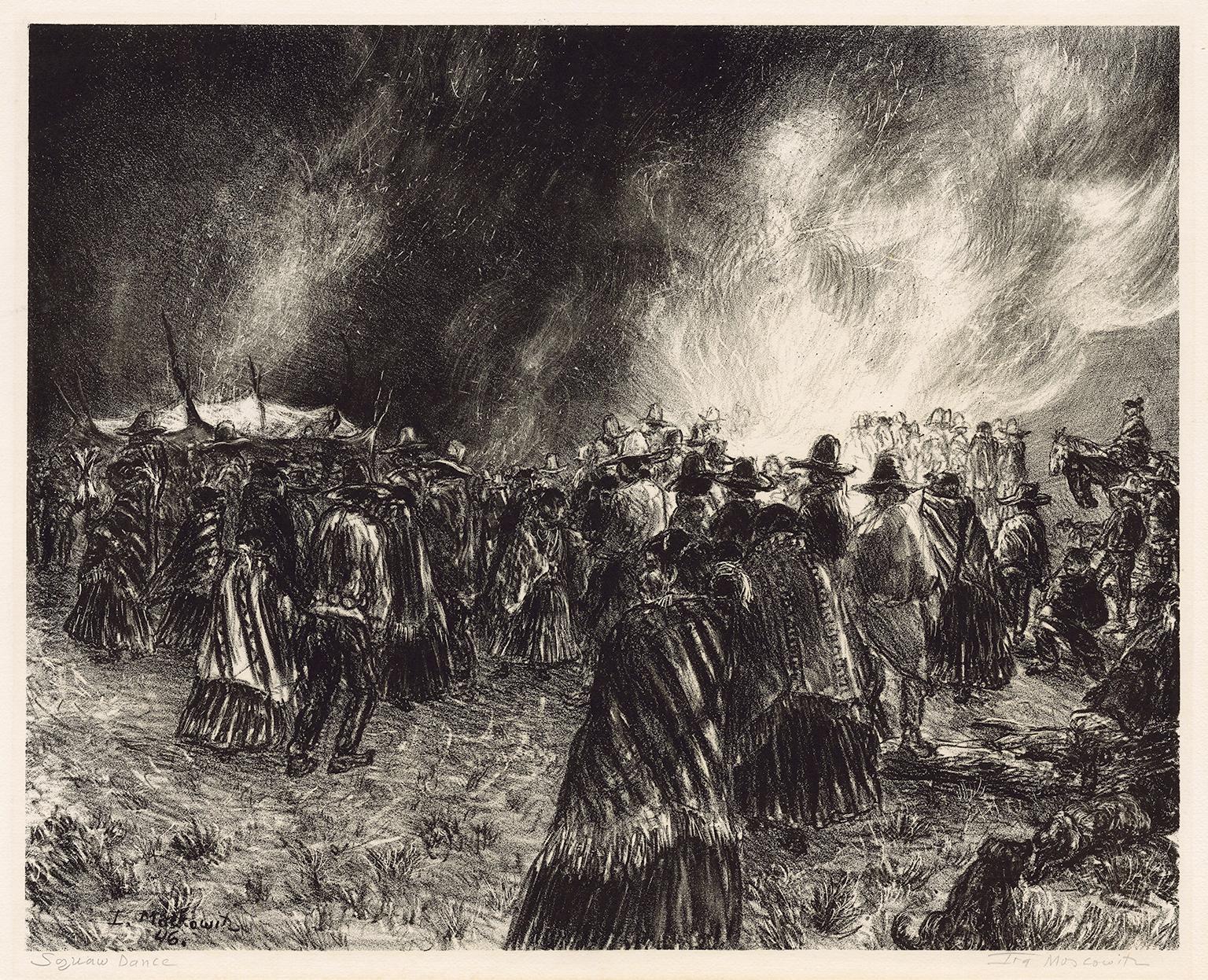
Navajo Courtship Dance
— Southwest Regionalism, Native American Subject
By Ira Moskowitz
Located in Myrtle Beach, SC
Ira Moskowitz, 'Navajo Courtship Dance (Squaw Dance)', lithograph, 1946, edition 30, Czestochowski 161. Signed and titled in pencil. Signed and dated in the stone, lower left. A fine...
Category
1940s American Modern Landscape Prints
Materials
Lithograph
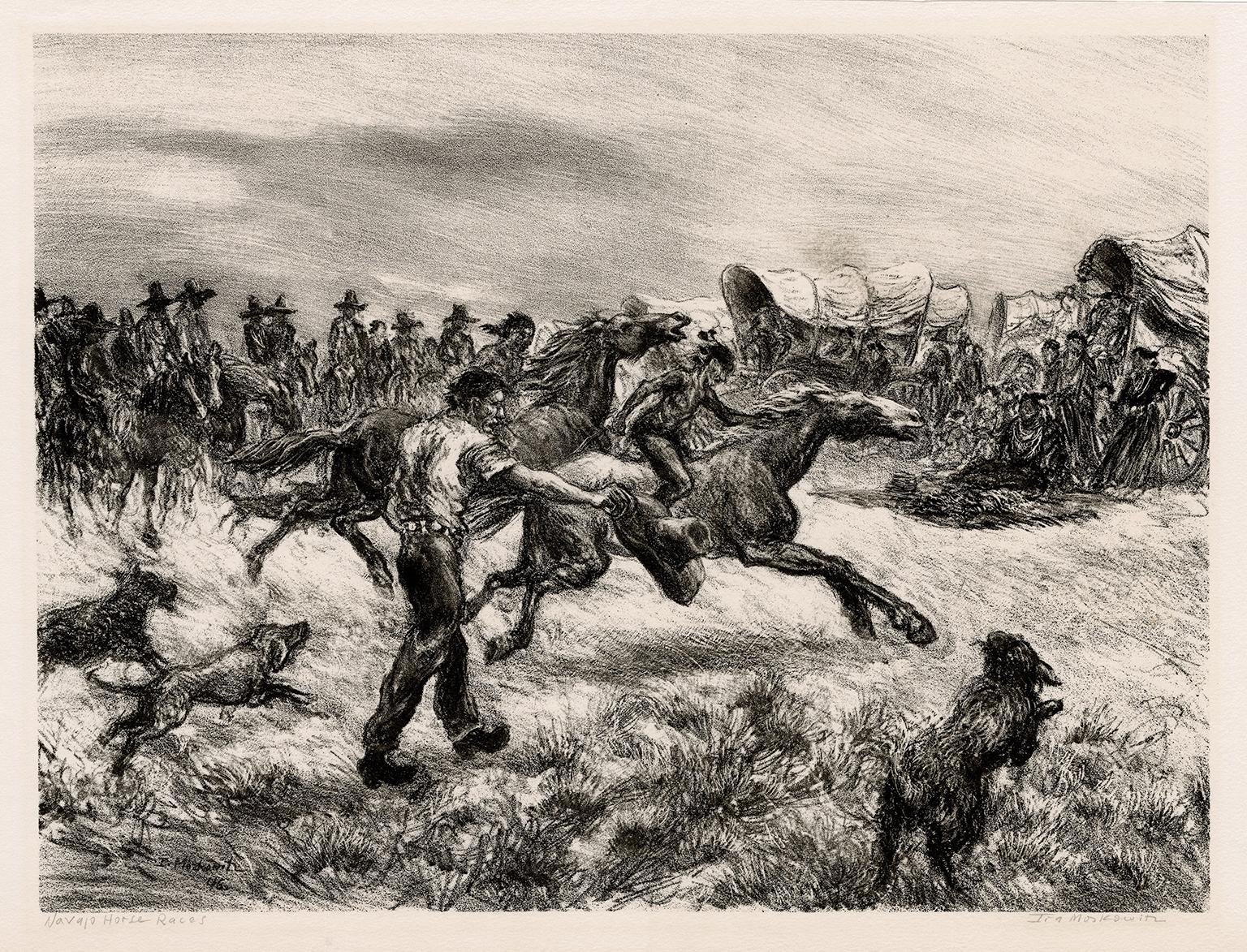
Navajo Horse Race
— Southwest Regionalism, Native American Subject
By Ira Moskowitz
Located in Myrtle Beach, SC
Ira Moskowitz, 'Navajo Horse Race', lithograph, 1946, edition 30, Czestochowski 204. Signed and titled in pencil. Signed and dated in the stone, lower le...
Category
1940s American Modern Landscape Prints
Materials
Lithograph
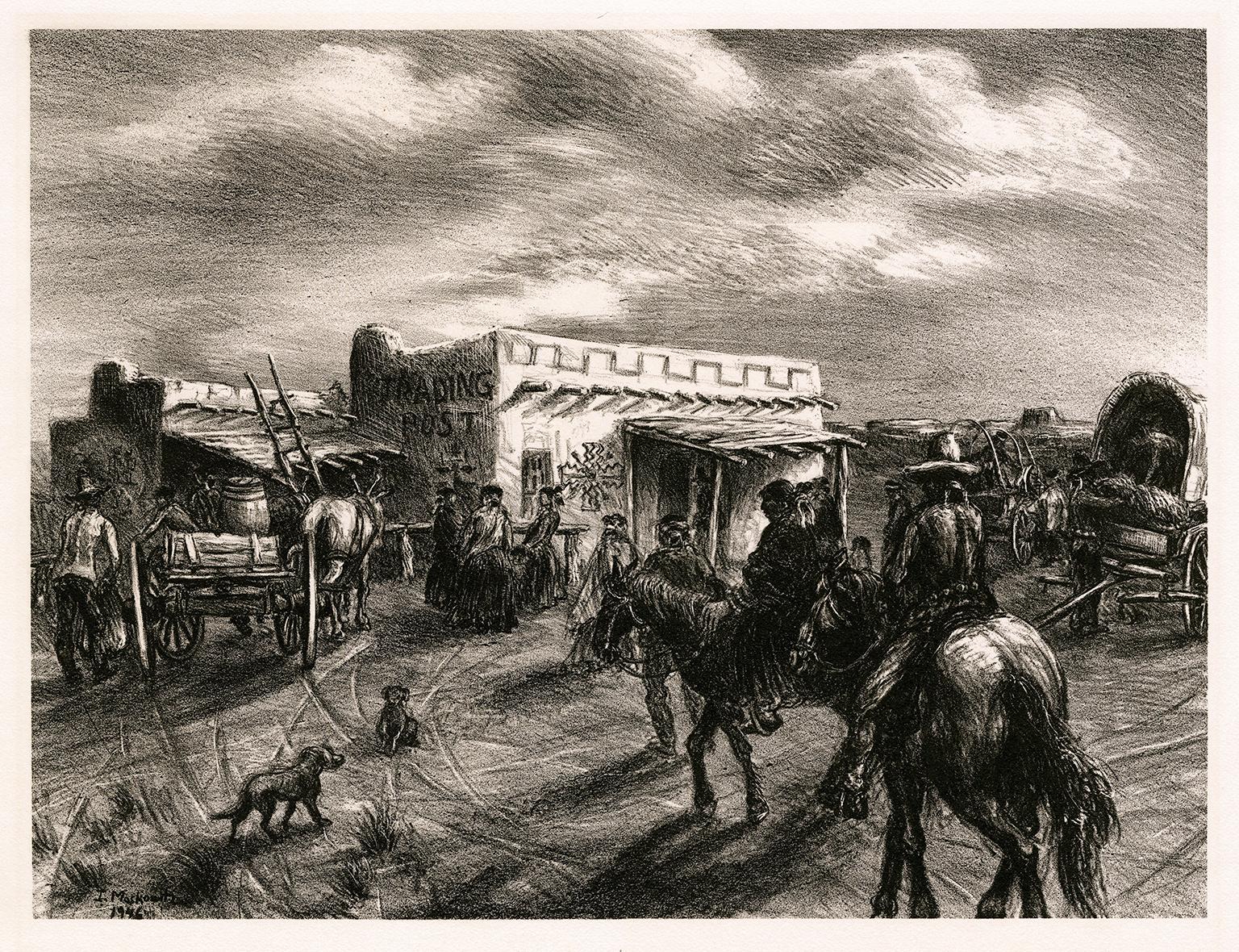
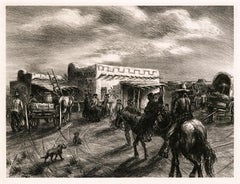
Navajo Trading Post
— Southwest Regionalism, Native American Subject
By Ira Moskowitz
Located in Myrtle Beach, SC
Ira Moskowitz, 'Navajo Trading Post', lithograph, 1946, edition 30, Czestochowski 161. Signed and dated in the stone, lower left. A fine, richly-inked impression, on cream wove paper...
Category
1940s American Modern Landscape Prints
Materials
Lithograph
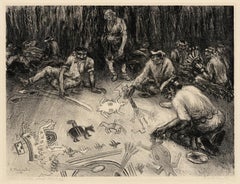
Preparing the Sand Painting
— Southwest Regionalism, Native American Subject
By Ira Moskowitz
Located in Myrtle Beach, SC
Ira Moskowitz, 'Preparing the Sand Painting', lithograph, 1946, edition 30, Czestochowski 205. Signed and titled in pencil. Signed and dated in the stone...
Category
1940s American Modern Landscape Prints
Materials
Lithograph
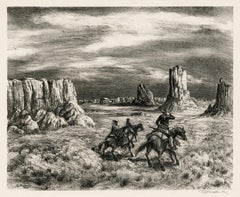
Navajo Country
— Southwest Regionalism, Native American Subject
By Ira Moskowitz
Located in Myrtle Beach, SC
Ira Moskowitz, 'Navajo Reservation Landscape', lithograph, 1945, edition c. 30. Signed and titled in pencil. Signed and dated in the stone, lower left. A fine, richly-inked impressio...
Category
1940s Landscape Prints
Materials
Lithograph
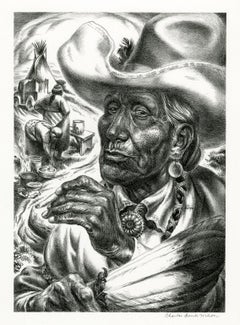
Old Injun
By Charles Banks Wilson
Located in Myrtle Beach, SC
Charles Banks Wilson, 'Old Injun', lithograph, 1948, edition 250, Hunt 39. Signed in pencil. A fine, richly-inked impression, on off-white wove paper, with full margins (1 3/4 to 2 inches), in excellent condition. Published by Associated American Artists.
Impressions of this work are in the permanent collections of the following institutions: Ackland Art Museum, Georgetown University...
Category
1940s American Realist Figurative Prints
Materials
Lithograph
You May Also Like
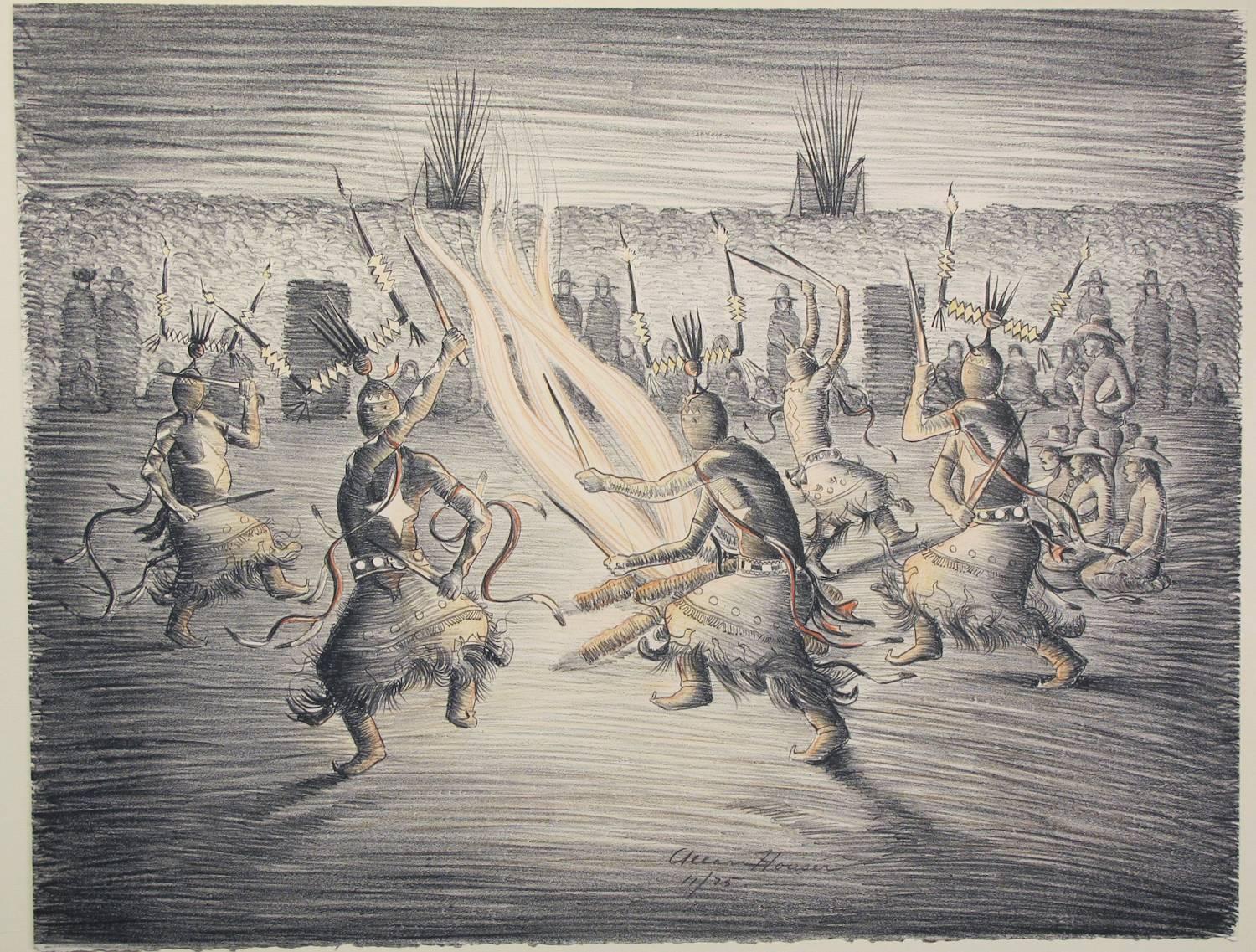
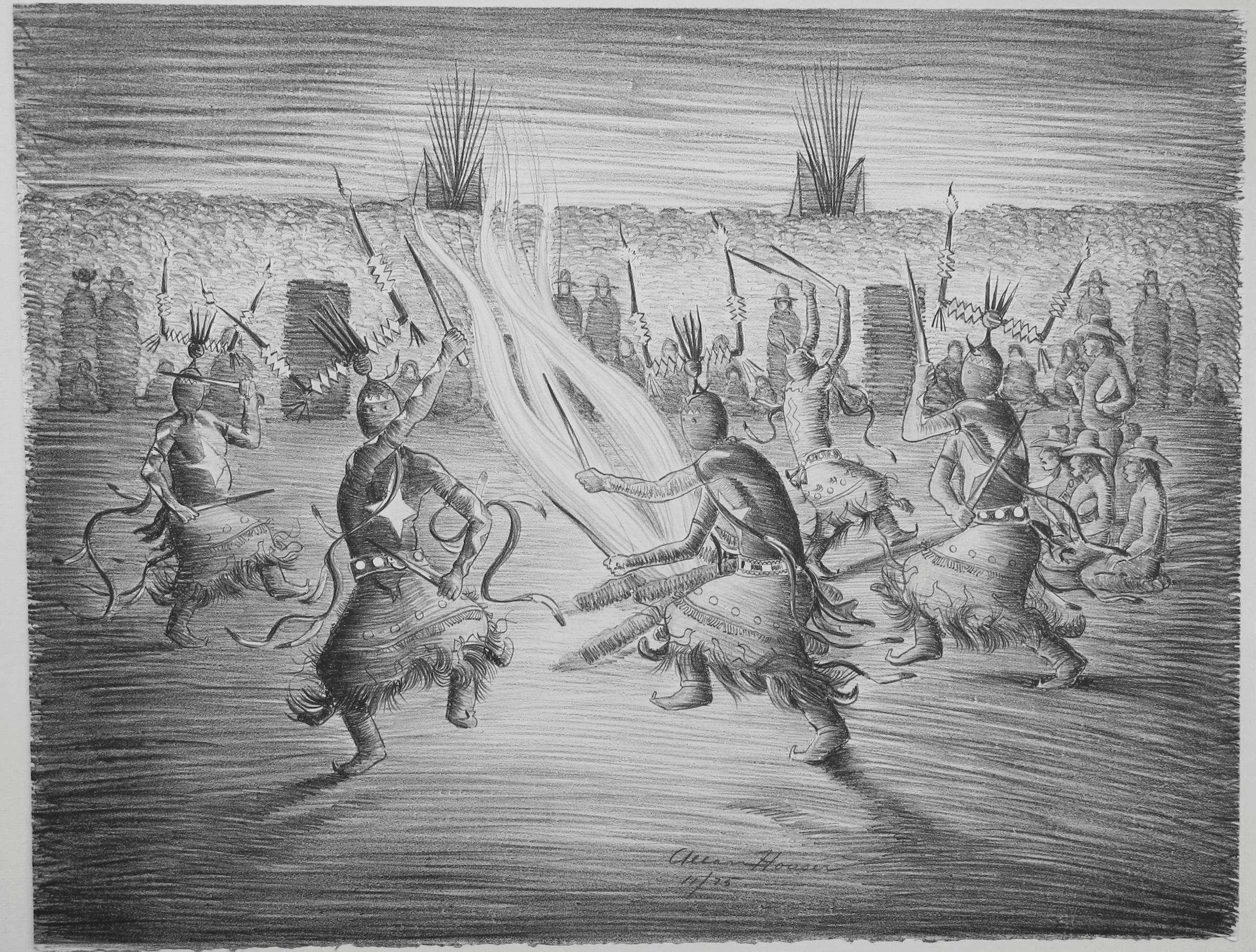
Apache Mountain Spirit Dancers, lithograph, Apache, Allan Houser Haozous black
By Allan Houser
Located in Santa Fe, NM
Apache Mountain Spirit Dancers, lithograph, Apache, Allan Houser Haozous black
Hand colored original lithograph edition by Allan Houser
hand printed in Santa Fe, New Mexico
Allan Houser (Haozous), Chiricahua Apache (1914-1994)
Selected Collections
Centre Georges Pompidou, Paris, France * “They’re Coming”, bronze
Dahlem Museum, Berlin, Germany
Japanese Royal Collection, Tokyo, Japan “The Eagle”, black marble commissioned by President William J. Clinton
United States Mission to the United Nations, New York City, NY *"Offering of the Sacred Pipe”, monumental bronze by Allan Houser © 1979 Presented to the United States Mission to the United Nations as a symbol of World Peace honoring the native people of all tribes in these United States of America on February 27, 1985 by the families of Allan and Anna Marie Houser, George and Thelma Green and Glenn and Sandy Green in New York City.
National Portrait Gallery, Smithsonian, Washington, DC * Portrait of Geronimo, bronze
National Museum of American Art, Smithsonian, Washington, D.C. * “Buffalo Dance Relief”, Indiana limestone...
Category
1970s Contemporary Figurative Prints
Materials
Color Pencil, Lithograph
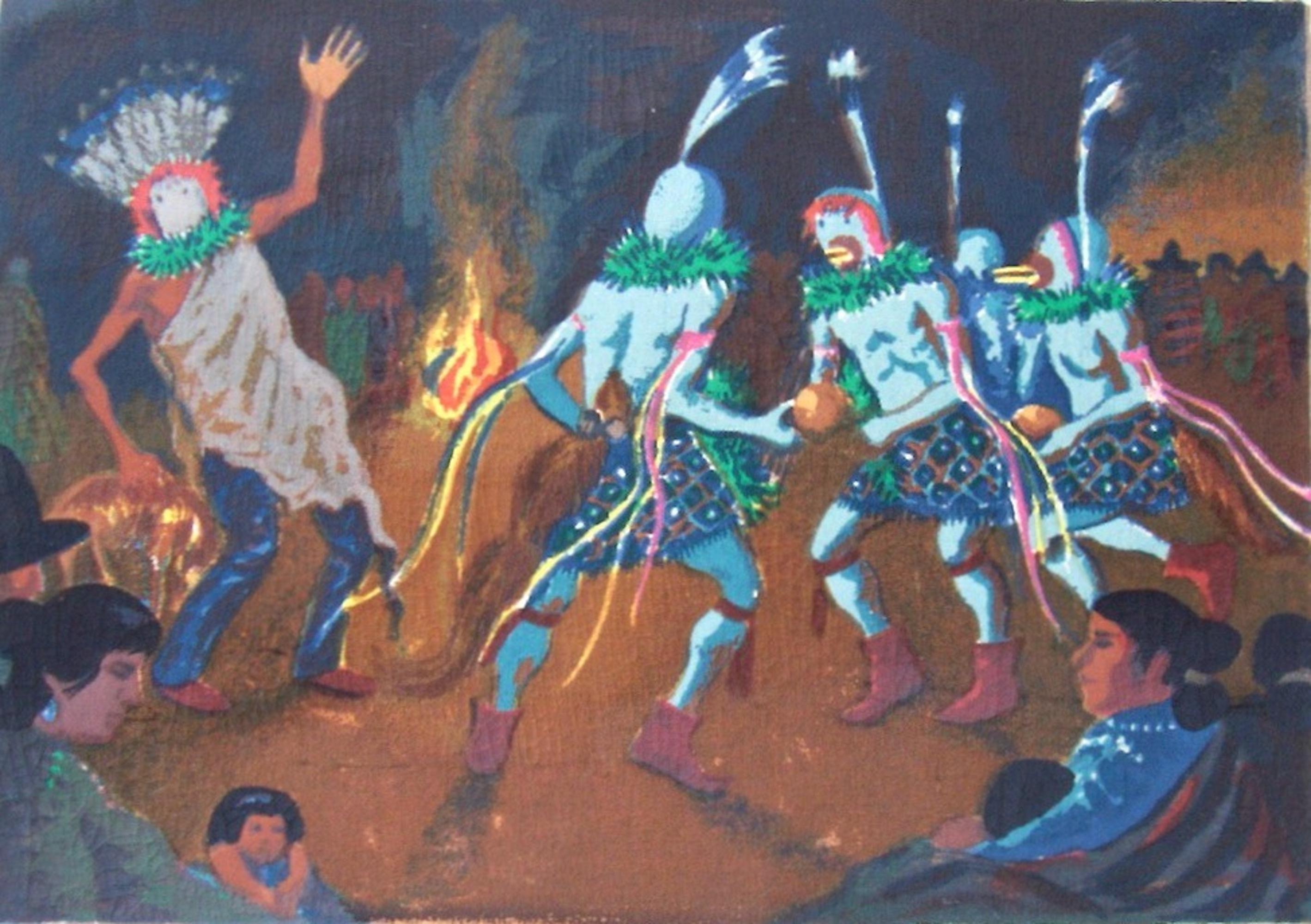
Anna Barry, Navajo Yei Bei Chai
By Anna Barry
Located in New York, NY
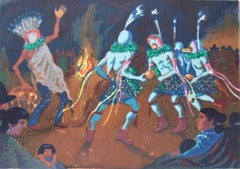
Anna Barry (1907-2001), and her husband, the artist Ira Moskovitz, spent years in New Mexico in the late 1930s and 40s. They returned permanently to New York City in 1949.
The screen print (also known as silk screen or serigraph) Navajo Yei...
Category
Mid-20th Century American Modern Figurative Prints
Materials
Screen
Apache Mountain Spirit Dancers, lithograph, black
white, Allan Houser
By Allan Houser
Located in Santa Fe, NM
Apache Mountain Spirit Dancers, lithograph, black & white, Allan Houser
hand pulled black and white lithograph edition printed in Santa Fe, New Mexico
L...
Category
1970s Contemporary Figurative Prints
Materials
Lithograph
Yei Bi Chei, etching, Navajo ceremony, black, white
By Grey Cohoe
Located in Santa Fe, NM
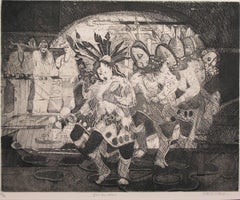
black and white etching on paper
unframed
#14/30
image size 12 x 14.5
signed, titled & numbered by the artist under the image on the front.
COHOE, Grey 1944-1991
PERSONAL: Born 1944, in Tocito, NM; died November 2, 1991. Education: Attended Institute of American Indian Arts, 1966-67, College of Santa Fe, 1967, Fort Lewis College, 1968, and Haystack Mountain...
Category
1980s Contemporary Figurative Prints
Materials
Etching
Indian Friendship Dance
By Gene Kloss
Located in Fairlawn, OH
Indian Friendship Dance
Drypoint, 1953
Signed in pencil lower right, (see photo)
Edition 200
Published by The Society of American Graphic Artists, New York
An impression is in the collection of SAAM, Washington and RISD Museum,
Condition: Excellent
Very rich impression with burr and selective whiping of the ink for atmospheric nocturnal effect.
Image/Plate size: 8 3/16 x 11 15/16 inches
Sheet size: 11 1/8 x 17 inches
Reference: Kloss 450
"'Indian Friendship Dance' is an eloquent statement of something which Gene Kloss has both observed and participated in. It is an Indian dance that is thought of as entertainment, rather than ceremony, but it is essentially an idea expressed in action, and an idea that has universal meaning. The young men who dance wear costumes of exquisite workmanship, intricately wrought with beads and feathers and subtle combinations of colors. The dancers are trained from childhood but develop their own steps and exhibit distinctive strength and grace. Singers and a tom-tom accompany the dance and since it usually takes place at night, a campfire is the source of light. The conclusion occurs when all the onlookers, old and young and from many places, join hands with the dancers in a slow revolving movement, while those who can, sing the difficult but meaningful Indian song that flows with the rhythmical dance step and speaks of fellowship, brotherhood, friendship." - An excerpt from a descriptive statement, written by Lynd Ward, and distributed with the drypoint at the time of publication." Courtesy Old Print Shop
Born Alice Glasier in Oakland, CA, Kloss grew up amid the worldly bustle of the San Francisco Bay Area. She attended the University of California at Berkeley, graduating with honors in art in 1924. She discovered her talents in intaglio printmaking during a senior-year course in figurative drawing. The professor, Perham Nahl, held up a print from Kloss’ first plate, still damp from the printing process, and announced that she was destined to become a printmaker.
In 1925, Gene married Phillips Kloss, a poet and composer who became her creative partner for life. The match was uncanny, for in her own way Gene, too, was a poet and a composer. Like poetry, her artworks capture a moment in time; like music, her compositions sing with aesthetic harmony. Although she was largely self-taught, Kloss was a printmaking virtuoso.
On their honeymoon the Klosses traveled east from California, camping along the way. They spent two week is Taos Canyon – with a portable printing press cemented to a rock near their campsite – where Gene learned to appreciate the wealth of artistic subject matter in New Mexico. The landscape, the cultures, and the immense sky left an indelible impression on the couple, who returned every summer until they made Taos their permanent home 20 years later.
Throughout her life, Kloss etched more than 625 copper plates, producing editions ranging from five to 250 prints. She pulled every print in every edition herself, manually cranking the wheel of her geared Sturges press until she finally purchased a motorized one when she was in her 70s. Believing that subject matter dictated technique, she employed etching, drypoint, aquatint, mezzotint, roulette, softground, and a variety of experimental approaches, often combining several techniques on the same plate. She also produced both oil and watercolor paintings.
Kloss’ artworks are filled with drama. Her prints employ striking contrasts of darkness and light, and her subjects are often illuminated by mysterious light sources. Though she was a devout realist, there is also a devout abstraction on Kloss’ work that adds an almost mythical quality.
For six decades Kloss documented the cultures of the region-from images of daily life to those of rarely seen ceremonies. She and her husband shared a profound respect for the land and people, which made them welcome among the Native American and Hispanic communities. Kloss never owned a camera but relied instead on observation and recollection. Her works provide an inside look at the cultures she depicted yet at the same time communicate the awe and freshness of an outsider’s perspective.
Although Kloss is best known for her images of Native American and Penitente scenes, she found artistic inspiration wherever she was. During the early years of their marriage, when she and Phil returned to the Bay Area each winter to care for their aging families, she created images of the California coast. And when the Klosses moved to southwestern Colorado in 1965, she etched the mining towns and mountainous landscapes around her.
In 1970 the Klosses returned to Taos and built a house north of town. Though her artwork continued to grow in popularity, she remained faithful to Taos’ Gallery A, where she insisted that owner Mary Sanchez keep the prices of her work reasonable regardless of its market value. Kloss continued to etch until 1985, when declining health made printmaking too difficult.
From her first exhibition at San Francisco’s exclusive Gump’s in 1937 to her 1972 election to full membership in the National Academy of Design, Kloss experienced a selective fame. She received numerous awards, and though she is not as well known as members of the Taos Society of Artists...
Category
1950s American Realist Figurative Prints
Materials
Drypoint
Keresan Dancers
By Gene Kloss
Located in Fairlawn, OH
Keresan Dancers
Etching & drypoint, 1962
Signed lower right (see photo)
Inscribed lower left: "Artist's Proof Keresan Dancers"
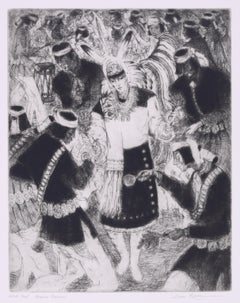
Depicts Keresan speaking peoples at Sam Felipe Pueblo
Contemporary Puebloans are customarily described as belonging to either the eastern or the western division. The eastern Pueblo villages are in New Mexico along the Rio Grande and comprise groups who speak Tanoan and Keresan languages. Tanoan languages such as Tewa are distantly related to Uto-Aztecan, but Keresan has no known affinities. The western Pueblo villages include the Hopi villages of northern Arizona and the Zuni, Acoma, and Laguna villages, all in western New Mexico.
Born Alice Glasier in Oakland, CA, Kloss grew up amid the worldly bustle of the San Francisco Bay Area. She attended the University of California at Berkeley, graduating with honors in art in 1924. She discovered her talents in intaglio printmaking during a senior-year course in figurative drawing. The professor, Perham Nahl, held up a print from Kloss’ first plate, still damp from the printing process, and announced that she was destined to become a printmaker.
In 1925, Gene married Phillips Kloss, a poet and composer who became her creative partner for life. The match was uncanny, for in her own way Gene, too, was a poet and a composer. Like poetry, her artworks capture a moment in time; like music, her compositions sing with aesthetic harmony. Although she was largely self-taught, Kloss was a printmaking virtuoso.
On their honeymoon the Klosses traveled east from California, camping along the way. They spent two week is Taos Canyon – with a portable printing press cemented to a rock near their campsite – where Gene learned to appreciate the wealth of artistic subject matter in New Mexico. The landscape, the cultures, and the immense sky left an indelible impression on the couple, who returned every summer until they made Taos their permanent home 20 years later.
Throughout her life, Kloss etched more than 625 copper plates, producing editions ranging from five to 250 prints. She pulled every print in every edition herself, manually cranking the wheel of her geared Sturges press until she finally purchased a motorized one when she was in her 70s. Believing that subject matter dictated technique, she employed etching, drypoint, aquatint, mezzotint, roulette, softground, and a variety of experimental approaches, often combining several techniques on the same plate. She also produced both oil and watercolor paintings.
Kloss’ artworks are filled with drama. Her prints employ striking contrasts of darkness and light, and her subjects are often illuminated by mysterious light sources. Though she was a devout realist, there is also a devout abstraction on Kloss’ work that adds an almost mythical quality.
For six decades Kloss documented the cultures of the region-from images of daily life to those of rarely seen ceremonies. She and her husband shared a profound respect for the land and people, which made them welcome among the Native American and Hispanic communities. Kloss never owned a camera but relied instead on observation and recollection. Her works provide an inside look at the cultures she depicted yet at the same time communicate the awe and freshness of an outsider’s perspective.
Although Kloss is best known for her images of Native American and Penitente scenes, she found artistic inspiration wherever she was. During the early years of their marriage, when she and Phil returned to the Bay Area each winter to care for their aging families, she created images of the California coast. And when the Klosses moved to southwestern Colorado in 1965, she etched the mining towns and mountainous landscapes around her.
In 1970 the Klosses returned to Taos and built a house north of town. Though her artwork continued to grow in popularity, she remained faithful to Taos’ Gallery A, where she insisted that owner Mary Sanchez keep the prices of her work reasonable regardless of its market value. Kloss continued to etch until 1985, when declining health made printmaking too difficult.
From her first exhibition at San Francisco’s exclusive Gump’s in 1937 to her 1972 election to full membership in the National Academy of Design, Kloss experienced a selective fame. She received numerous awards, and though she is not as well known as members of the Taos Society of Artists...
Category
1960s American Realist Figurative Prints
Materials
Drypoint
More Ways To Browse
John Collier
African American Vintage Posters
Alex Katz Pink
Bernard Buffet Lithograph Paris
Bernard Buffet Notre Dame
California Wine Country Art
Chanel Lithograph
Dali French Railway
David Roberts Jerusalem
Ella Fort On Sale
Etchings Brooklyn Bridge
Foll Art
Giovanni Battista Piranesi On Sale
Gonville Caius
Hockney Sun
James Swann
Jules Cavailles On Sale
Lichtenstein Haystack