Want more images or videos?
Request additional images or videos from the seller
1 of 10

Joan Miró
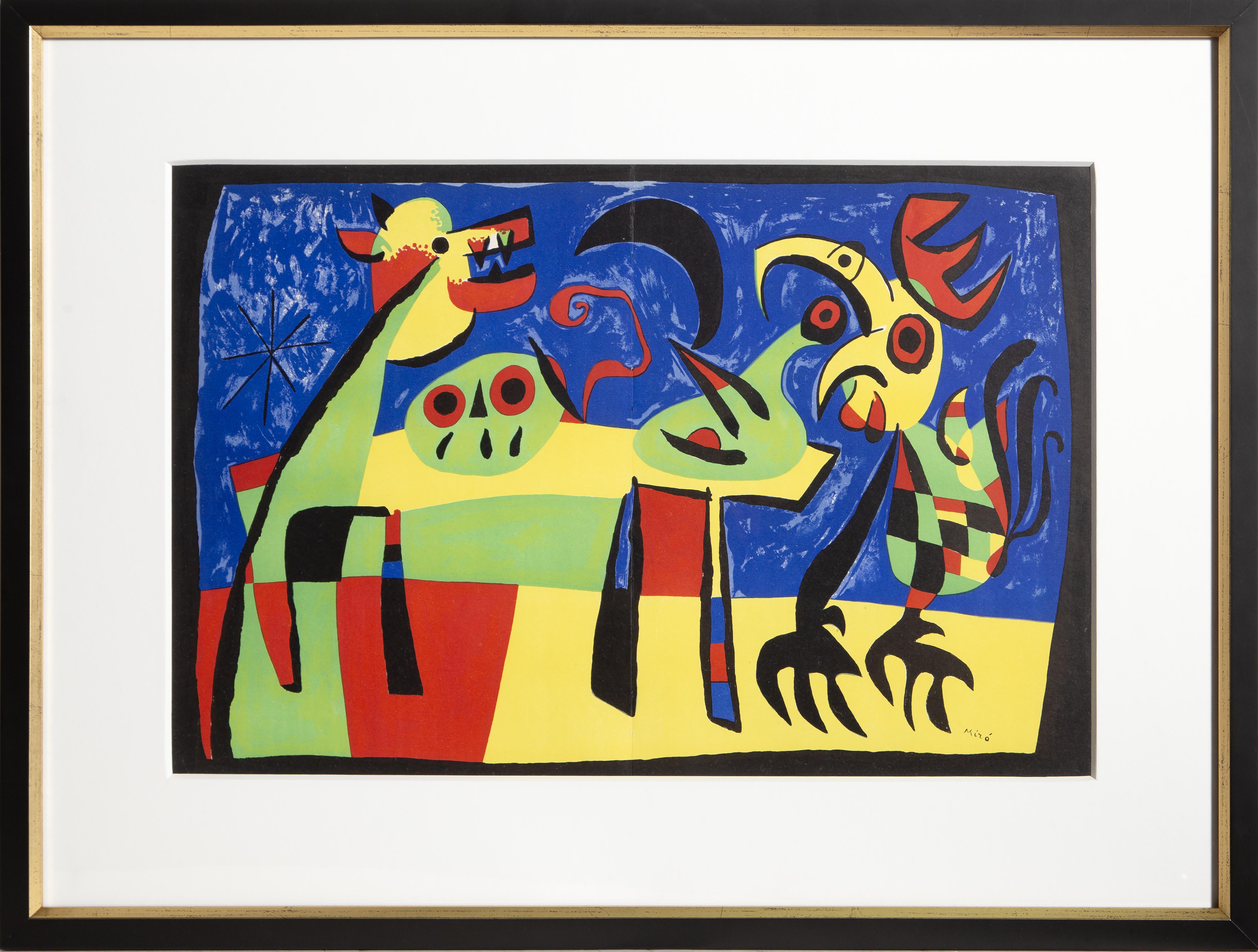
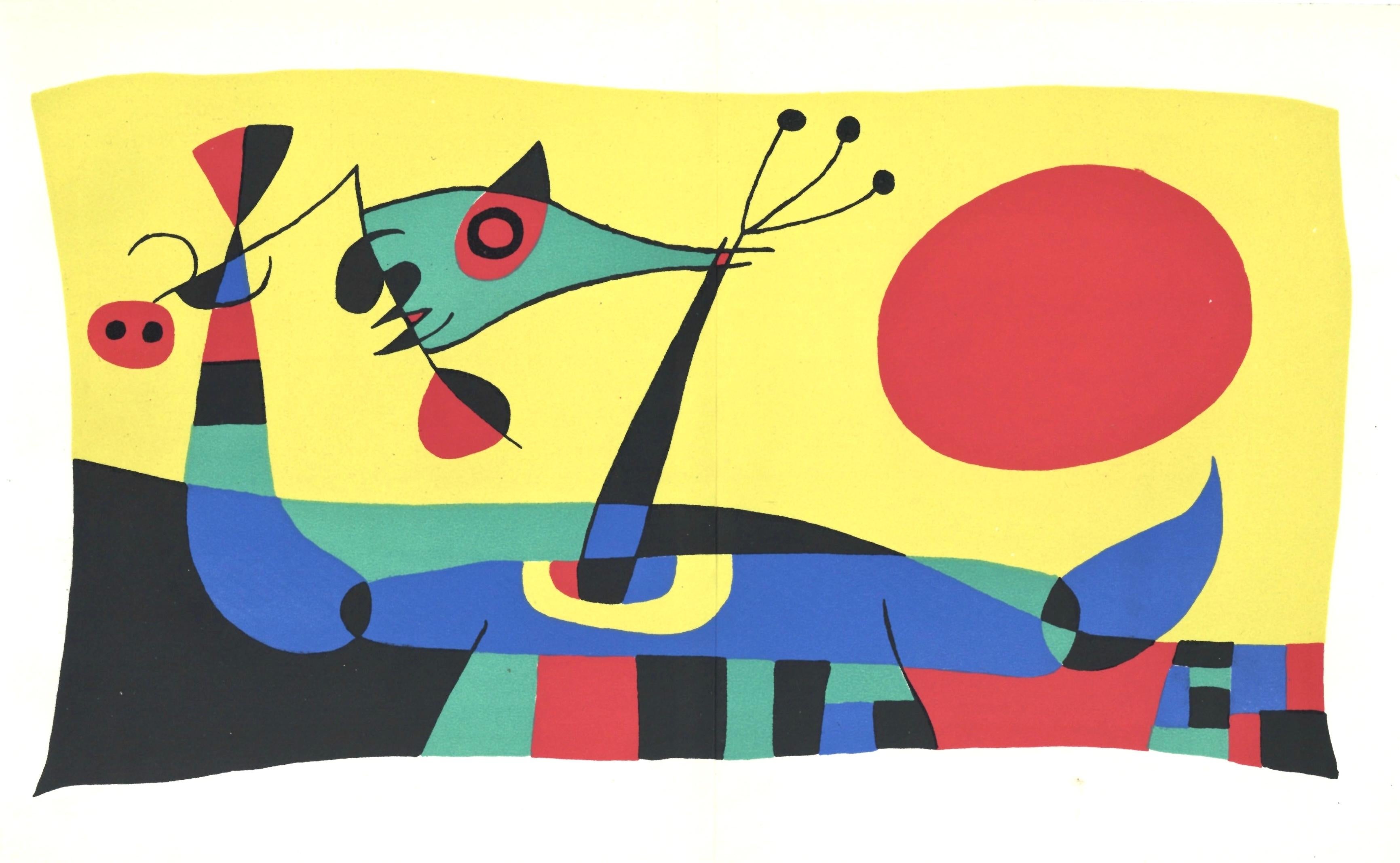
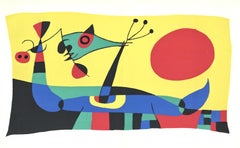
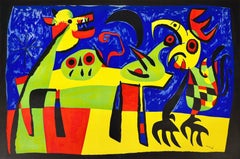
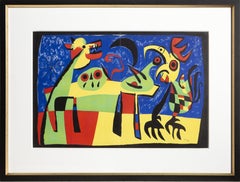
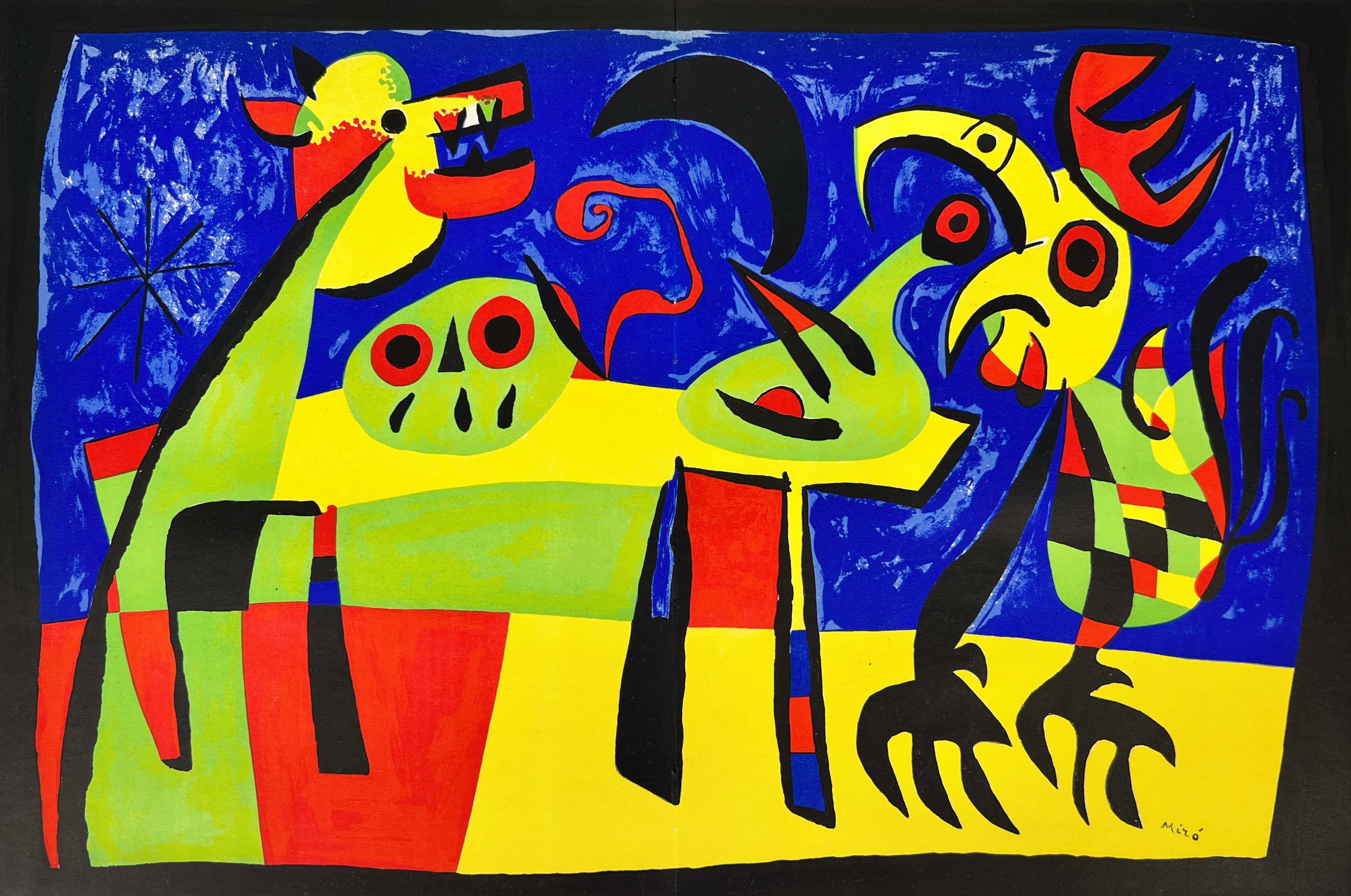
Joan Miro, Dog Barking at the Moon, from Verve, Revue Artistique, 1953

1953

$1,996
$2,49520% Off
£1,526.06
£1,907.5820% Off
€1,748.47
€2,185.5920% Off
CA$2,815.37
CA$3,519.2120% Off
A$3,065.22
A$3,831.5320% Off
CHF 1,636.73
CHF 2,045.9120% Off
MX$37,002.03
MX$46,252.5420% Off
NOK 20,576.64
NOK 25,720.8020% Off
SEK 19,138.67
SEK 23,923.3320% Off
DKK 13,060.22
DKK 16,325.2820% Off

About the Item

This exquisite lithograph by Joan Miro (1893–1983), titled Chien aboyant a la lune (Dog Barking at the Moon), from Verve, Revue Artistique et Litteraire, Vol. VII, No. 27–28, originates from the 1953 issue published by Editions de la revue Verve, Paris, under the direction of Teriade, Editeur, Paris, and printed by Mourlot Freres, Paris, 1953. This playful and dreamlike composition captures Miro’s characteristic blend of whimsy, symbolism, and abstraction. The image—an iconic motif of a small dog gazing up and barking at the moon—embodies both humor and mystery, evoking themes of desire, solitude, and wonder. Through bold shapes, floating lines, and radiant color, Miro transforms a simple scene into a poetic meditation on the connection between the earthly and the cosmic. Executed as a lithograph on velin du Marais paper, this work measures 14 x 21 inches, with centerfold and stitch perforations as issued. Signed in the plate and unnumbered as issued. The edition exemplifies the superb craftsmanship of the Mourlot Freres atelier, renowned for its collaborations with the foremost modern artists of the 20th century. Artwork Details: Artist: Joan Miro (1893–1983) Title: Chien aboyant a la lune (Dog Barking at the Moon), from Verve, Revue Artistique et Litteraire, Vol. VII, No. 27–28, 1953 Medium: Lithograph on velin du Marais paper Dimensions: 14 x 21 inches, with centerfold and stitch perforations as issued Inscription: Signed in the plate and unnumbered as issued Date: 1953 Publisher: Editions de la revue Verve, Paris, under the direction of Teriade, Editeur, Paris Printer: Mourlot Freres, Paris Catalogue raisonne reference: Miro, Joan, et al. Joan Miro: Lithographs. Leon Amiel, 1972, illustration 189. Condition: Well preserved, consistent with age and medium Provenance: From Verve, Revue Artistique et Litteraire, Vol. VII, No. 27–28, published by Editions de la revue Verve, Paris, 1953 About the Publication: Verve, Revue Artistique et Litteraire was one of the most influential art periodicals of the 20th century, founded in Paris in 1937 by the visionary Greek-born publisher Teriade (Stratis Eleftheriades). Conceived as a synthesis of art and literature, Verve brought together the greatest modern artists and writers of its time—Henri Matisse, Pablo Picasso, Marc Chagall, Georges Braque, Joan Miro, Fernand Leger, and others—alongside poets and philosophers such as Paul Eluard, Albert Camus, and Jean-Paul Sartre. Each issue was a work of art in itself, luxuriously printed by master lithographers such as Mourlot Freres and produced in collaboration with leading typographers and designers. Verve became a platform for avant-garde creativity, publishing original lithographs and essays that reflected the evolving spirit of modernism. Miro’s collaborations with Teriade for Verve exemplify his capacity to blend spontaneous imagery with profound poetic resonance. About the Artist: Joan Miro (1893–1983) was a Catalan painter, sculptor, printmaker, and ceramicist whose visionary imagination and lyrical abstraction made him one of the most influential and beloved artists of the 20th century. Born in Barcelona, Miro drew inspiration from Catalan folk art, Romanesque frescoes, and the luminous landscapes of Mont-roig del Camp, developing a deep connection to nature that infused his work with vitality and symbolism. After formal training at the Escola d'Art in Barcelona, he absorbed the lessons of Post-Impressionism and Cubism before moving to Paris in the early 1920s, where he became a leading figure in the Surrealist movement. There, Miro forged a personal visual language of biomorphic shapes, floating symbols, and radiant color harmonies that reflected both spontaneity and spiritual depth. In creative dialogue with peers such as Alexander Calder, Alberto Giacometti, Salvador Dali, Wassily Kandinsky, Marcel Duchamp, and Man Ray, he helped revolutionize modern art by dissolving the boundaries between abstraction and dream imagery. Miro's inventive approach extended far beyond painting, embracing sculpture, ceramics, and monumental public commissions that redefined how art could interact with space and emotion. His expressive freedom and gestural abstraction profoundly influenced later artists including Jackson Pollock, Mark Rothko, Alexander Calder, Jean Dubuffet, Antoni Tapies, and Joan Mitchell, inspiring generations who sought to merge instinct, color, and imagination. Today, Miro's work remains a cornerstone of modernism, prized by collectors and celebrated in major museums worldwide. His highest auction record was achieved by Peinture (Etoile Bleue) (1927), which sold for £23,561,250 (approximately $37 million) at Sotheby's, London, on June 19, 2012. Joan Miro Chien aboyant a la lune, Miro Verve, Miro Mourlot Freres, Miro Teriade, Miro 1953 lithograph, Miro velin du Marais, Miro Revue Artistique et Litteraire, Miro collectible print, Miro modernist lithograph.
  • Creator:
    Joan Miró (1893 - 1983, Catalan)
  • Creation Year:
    1953
  • Dimensions:
    Height: 14 in (35.56 cm)Width: 20.5 in (52.07 cm)
  • Medium:
  • Movement Style:
  • Period:
  • Condition:
  • Gallery Location:
    Southampton, NY
  • Reference Number:
    1stDibs: LU1465216383562

More From This Seller

View All
Joan Miro, The Three Birds, from XXe siecle, 1967
By Joan Miró
Located in Southampton, NY
This exquisite lithograph by Joan Miro (1893–1983), titled Les Trois Oiseaux (The Three Birds), from the album XXe Siecle, Nouvelle serie, XXIXe Annee, No. 28, originates from the 19...
Category

1960s Surrealist Abstract Prints

Materials

Lithograph

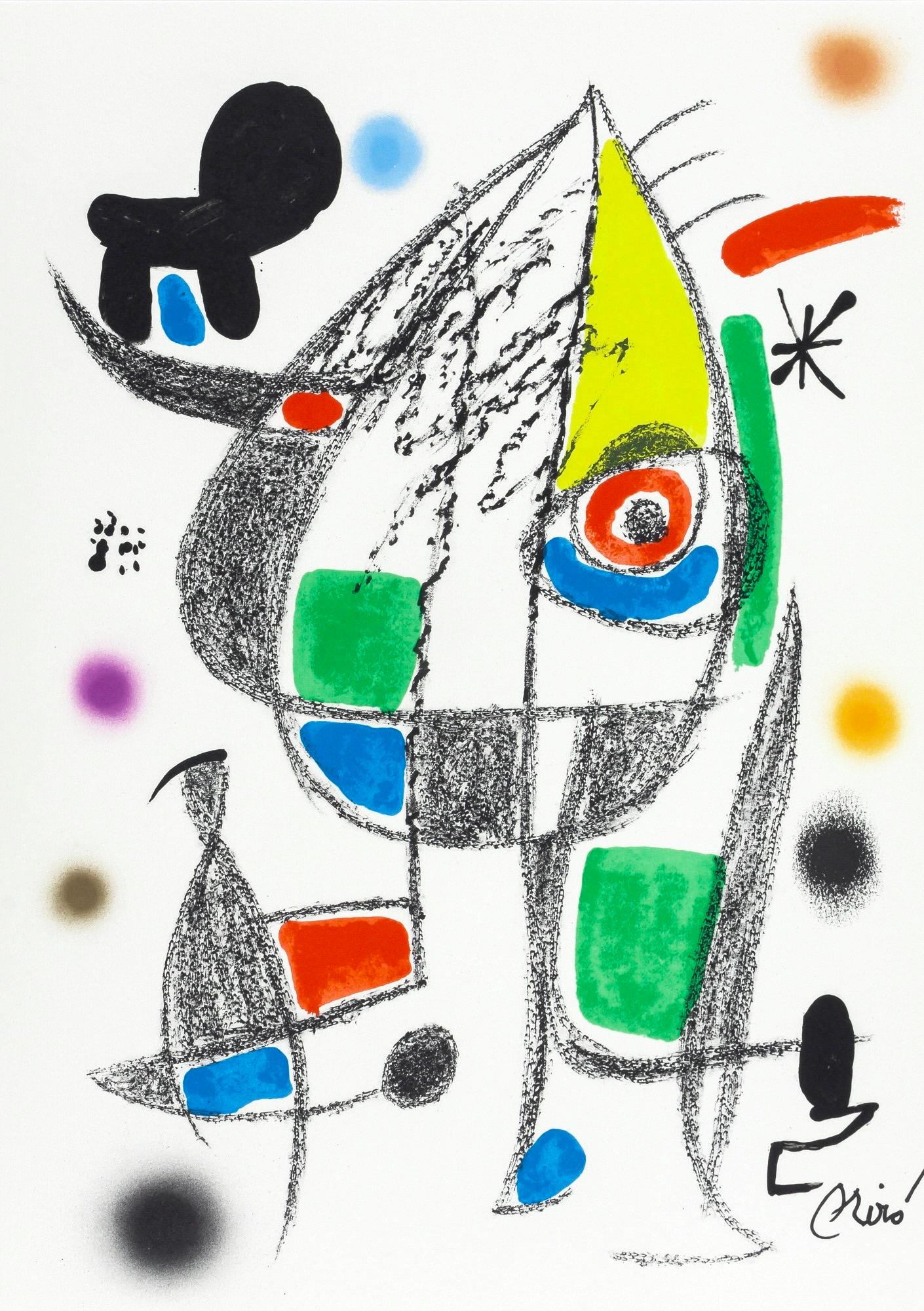
Joan Miro, Untitled, Marvels with Acrostic Variations in Miro’s Garden, 1975
By Joan Miró
Located in Southampton, NY
This exquisite lithograph by Joan Miro (1893–1983), titled Sans titre (Untitled), from the folio Maravillas con variaciones acrosticas en el Jardin de Miro (Marvels with Acrostic Var...
Category

1970s Surrealist Abstract Prints

Materials

Lithograph

Joan Miro, Untitled, from Joan Miro, 1956
By Joan Miró
Located in Southampton, NY
This exquisite lithograph by Joan Miro (1893–1983), titled Sans titre (Untitled), originates from the 1956 publication Joan Miro. Published by Maeght Editeur, Paris, and printed by M...
Category

1950s Surrealist Figurative Prints

Materials

Lithograph

Joan Miro, Summer, from Verve, Revue Artistique, 1937
By Joan Miró
Located in Southampton, NY
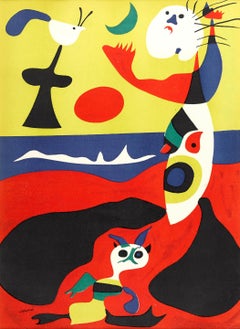
This exquisite lithograph by Joan Miro (1893–1983), titled L'Ete (Summer), from Verve, Revue Artistique et Litteraire, Vol. I, No. 1, originates from the 1937 issue published by Editions de la revue Verve, Paris, under the direction of Teriade, Editeur, Paris, and printed by Mourlot Freres, Paris, 1937. This early and vibrant composition captures Miro's poetic vision of nature and the cosmos, rendered through biomorphic forms and rhythmic abstraction. L'Ete reflects Miro's fascination with the cyclical harmony of life and his belief in art as an extension of natural forces. Through his distinctive visual language—combining organic shapes, symbolic gestures, and luminous color—Miro conveys a profound sense of vitality and dreamlike wonder, embodying the spirit of renewal that defines his oeuvre. Executed as a lithograph on velin du Marais paper, this work measures 14 x 10.5 inches. Signed in the plate and unnumbered as issued. The edition exemplifies the superb craftsmanship of the Mourlot Freres atelier, renowned for its collaborations with the leading modernists of the 20th century. Artwork Details: Artist: Joan Miro (1893–1983) Title: L'Ete (Summer), from Verve, Revue Artistique et Litteraire, Vol. I, No. 1, 1937 Medium: Lithograph on velin du Marais paper Dimensions: 14 x 10.5 inches Inscription: Signed in the plate and unnumbered as issued Date: 1937 Publisher: Editions de la revue Verve, Paris, under the direction of Teriade, Editeur, Paris Printer: Mourlot Freres, Paris Catalogue raisonne reference: Miro, Joan, et al. Miro, L'oeuvre Graphique: Musee d'art moderne de la ville de Paris, 1974, illustration 395. Condition: Well preserved, consistent with age and medium Provenance: From Verve, Revue Artistique et Litteraire, Vol. I, No. 1, published by Editions de la revue Verve, Paris, 1937 About the Publication: Verve, Revue Artistique et Litteraire was one of the most influential art periodicals of the 20th century, founded in Paris in 1937 by the visionary Greek-born publisher Teriade (Stratis Eleftheriades). Conceived as a synthesis of art and literature, Verve brought together the greatest modern artists and writers of its time—Henri Matisse, Pablo Picasso, Marc Chagall, Georges Braque, Joan Miro, Fernand Leger, and others—alongside poets and philosophers such as Paul Eluard, Albert Camus, and Jean-Paul Sartre. Each issue was a work of art in itself, luxuriously printed by master lithographers such as Mourlot Freres and produced in collaboration with leading typographers and designers. Verve became a platform for avant-garde creativity, publishing original lithographs and essays that reflected the evolving spirit of modernism. Matisse collaborated closely with Teriade from the magazine's inception, producing some of its most iconic issues, including those devoted to his paper cut-outs. The final Verve issue of 1958, which featured La Tristesse du Roi and the Nu Bleu series, stands as a testament to Matisse's enduring genius and to the publication's legacy as the definitive meeting of art, poetry, and printing craftsmanship in 20th-century France. About the Artist: Joan Miro (1893–1983) was a Catalan painter, sculptor, printmaker, and ceramicist whose visionary imagination and lyrical abstraction made him one of the most influential and beloved artists of the 20th century. Born in Barcelona, Miro drew inspiration from Catalan folk art, Romanesque frescoes, and the luminous landscapes of Mont-roig del Camp, developing a deep connection to nature that infused his work with vitality and symbolism. After formal training at the Escola d'Art in Barcelona, he absorbed the lessons of Post-Impressionism and Cubism before moving to Paris in the early 1920s, where he became a leading figure in the Surrealist movement. There, Miro forged a personal visual language of biomorphic shapes, floating symbols, and radiant color harmonies that reflected both spontaneity and spiritual depth. In creative dialogue with peers such as Alexander Calder, Alberto Giacometti, Salvador Dali, Wassily Kandinsky, Marcel Duchamp, and Man Ray, he helped revolutionize modern art by dissolving the boundaries between abstraction and dream imagery. Miro's inventive approach extended far beyond painting, embracing sculpture, ceramics, and monumental public commissions that redefined how art could interact with space and emotion. His expressive freedom and gestural abstraction profoundly influenced later artists including Jackson Pollock, Mark Rothko, Alexander Calder, Jean Dubuffet, Antoni Tapies, and Joan Mitchell, inspiring generations who sought to merge instinct, color, and imagination. Today, Miro's work remains a cornerstone of modernism, prized by collectors and celebrated in major museums worldwide. His highest auction record was achieved by Peinture (Etoile Bleue) (1927), which sold for £23,561,250 (approximately $37 million) at Sotheby's, London, on June 19, 2012. Joan Miro L'Ete, Miro Verve...
Category

1930s Surrealist Abstract Prints

Materials

Lithograph

Joan Miro, The Air, from Verve, Revue Artistique, 1938
By Joan Miró
Located in Southampton, NY
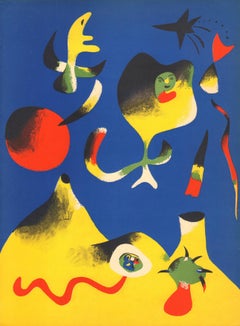
This exquisite lithograph by Joan Miro (1893–1983), titled L'air (The Air), from Verve, Revue Artistique et Litteraire, Vol. I, No. 3, originates from the 1938 issue published by Editions de la revue Verve, Paris, under the direction of Teriade, Editeur, Paris, and printed by Mourlot Freres, Paris, 1938. This lyrical and atmospheric composition embodies Miro's fascination with the invisible rhythms of nature and the poetry of movement. L'air captures the ethereal and weightless essence of the natural world through his fluid linework and organic forms, evoking a sense of freedom and transformation. The work reflects Miro's deep belief in the interconnectedness of all living things and his pursuit of an art that transcends material boundaries to reach the spiritual realm. Created during one of the artist's most innovative periods, this piece demonstrates the harmony between abstraction and imagination that defines his unique visual language. Executed as a lithograph on velin du Marais paper, this work measures 14 x 10.5 inches. Signed in the plate and unnumbered as issued. The edition exemplifies the superb craftsmanship of the Mourlot Freres atelier, renowned for its collaborations with the leading modernists of the 20th century. Artwork Details: Artist: Joan Miro (1893–1983) Title: L'air (The Air), from Verve, Revue Artistique et Litteraire, Vol. I, No. 3, 1938 Medium: Lithograph on velin du Marais paper Dimensions: 14 x 10.5 inches Inscription: Signed in the plate and unnumbered as issued Date: 1938 Publisher: Editions de la revue Verve, Paris, under the direction of Teriade, Editeur, Paris Printer: Mourlot Freres, Paris Catalogue raisonne references: Dupin, Jacques, et al. Miro Graveur. D. Lelong, 1984, illustration 1310. Miro, Joan, et al. Joan Miro: Lithographs. Leon Amiel, 1972, illustration 6. Condition: Well preserved, consistent with age and medium Provenance: From Verve, Revue Artistique et Litteraire, Vol. I, No. 3, published by Editions de la revue Verve, Paris, 1938 About the Publication: Verve, Revue Artistique et Litteraire was one of the most influential art periodicals of the 20th century, founded in Paris in 1937 by the visionary Greek-born publisher Teriade (Stratis Eleftheriades). Conceived as a synthesis of art and literature, Verve brought together the greatest modern artists and writers of its time—Henri Matisse, Pablo Picasso, Marc Chagall, Georges Braque, Joan Miro, Fernand Leger, and others—alongside poets and philosophers such as Paul Eluard, Albert Camus, and Jean-Paul Sartre. Each issue was a work of art in itself, luxuriously printed by master lithographers such as Mourlot Freres and produced in collaboration with leading typographers and designers. Verve became a platform for avant-garde creativity, publishing original lithographs and essays that reflected the evolving spirit of modernism. Matisse collaborated closely with Teriade from the magazine's inception, producing some of its most iconic issues, including those devoted to his paper cut-outs. The final Verve issue of 1958, which featured La Tristesse du Roi and the Nu Bleu series, stands as a testament to Matisse's enduring genius and to the publication's legacy as the definitive meeting of art, poetry, and printing craftsmanship in 20th-century France. About the Artist: Joan Miro (1893–1983) was a Catalan painter, sculptor, printmaker, and ceramicist whose visionary imagination and lyrical abstraction made him one of the most influential and beloved artists of the 20th century. Born in Barcelona, Miro drew inspiration from Catalan folk art, Romanesque frescoes, and the luminous landscapes of Mont-roig del Camp, developing a deep connection to nature that infused his work with vitality and symbolism. After formal training at the Escola d'Art in Barcelona, he absorbed the lessons of Post-Impressionism and Cubism before moving to Paris in the early 1920s, where he became a leading figure in the Surrealist movement. There, Miro forged a personal visual language of biomorphic shapes, floating symbols, and radiant color harmonies that reflected both spontaneity and spiritual depth. In creative dialogue with peers such as Alexander Calder, Alberto Giacometti, Salvador Dali, Wassily Kandinsky, Marcel Duchamp, and Man Ray, he helped revolutionize modern art by dissolving the boundaries between abstraction and dream imagery. Miro's inventive approach extended far beyond painting, embracing sculpture, ceramics, and monumental public commissions that redefined how art could interact with space and emotion. His expressive freedom and gestural abstraction profoundly influenced later artists including Jackson Pollock, Mark Rothko, Alexander Calder, Jean Dubuffet, Antoni Tapies, and Joan Mitchell, inspiring generations who sought to merge instinct, color, and imagination. Today, Miro's work remains a cornerstone of modernism, prized by collectors and celebrated in major museums worldwide. His highest auction record was achieved by Peinture (Etoile Bleue) (1927), which sold for £23,561,250 (approximately $37 million) at Sotheby's, London, on June 19, 2012. Joan Miro L'air, Miro Verve...
Category

1930s Surrealist Abstract Prints

Materials

Lithograph

Joan Miro, Woman and Bird in the Night, from XXe Siecle, 1957
By Joan Miró
Located in Southampton, NY
This exquisite lithograph and pochoir by Joan Miro (1893–1983), titled Femme et oiseau dans la nuit (Woman and Bird in the Night), from the album XXe Siecle, Nouvelle serie No. 8, or...
Category

1950s Surrealist Abstract Prints

Materials

Lithograph

You May Also Like

Dog barking at the moon
By Joan Miró
Located in OPOLE, PL
Joan Miro (1893-1983) - Dog barking at the moon Lithograph from 1952. Dimensions of work: 52 x 35 cm Publisher: Tériade, Paris. On the verso another Lithographs and lithographic ...
Category

1950s Surrealist More Prints

Materials

Lithograph

Le Chien aboyant a la lune, Surrealist Lithograph by Joan Miro
By Joan Miró
Located in Long Island City, NY
Artist: Joan Miro, Spanish (1893 - 1983) Title: Le Chien aboyant a la lune from «Verve», Vol. VII, nn. 27/28 Year: 1952 Medium: Lithograph, signed in the plate Size: 14.5 x 21 in. (3...
Category

1950s Surrealist Figurative Prints

Materials

Lithograph

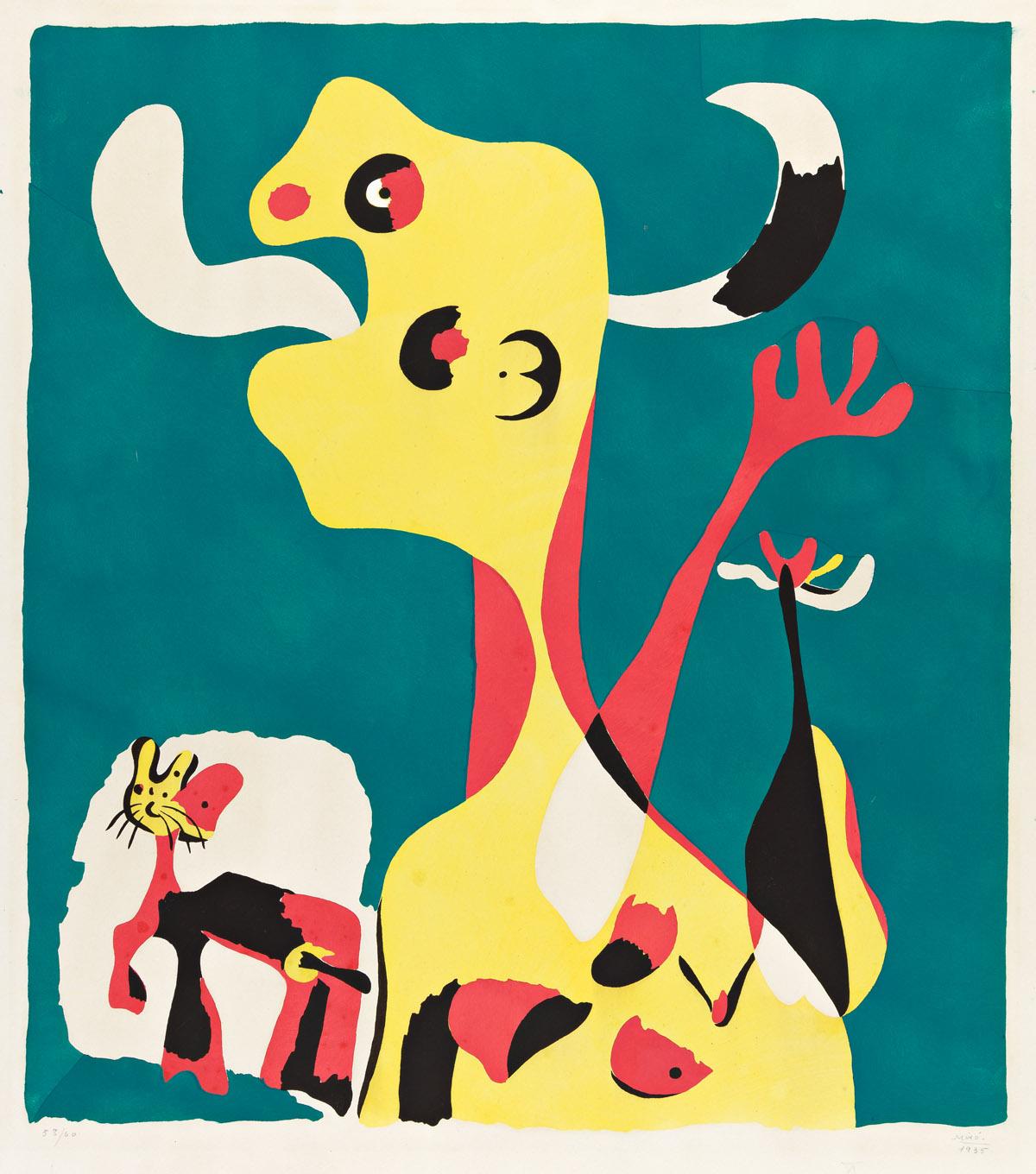
Femme et Chien devant la Lune
By Joan Miró
Located in New York, NY
A superb impression of this very scarce, early color pochoir. Signed, dated "1935" and numbered 58/60 in pencil by Miro. Published by Adlan, Barcelona. Ink stamp on the reverse indic...
Category

1930s Surrealist Abstract Prints

Materials

Color, Stencil

"Femmes et Oiseaux devant la Lune" original pochoir
By Joan Miró
Located in Henderson, NV
Medium: original pochoir stencil print in five colors. Catalogue reference: Dupin 50. Printed in 1947 in an edition of 1500 by Meriden Gravure and published by Curt Valentin for the ...
Category

1940s Surrealist Prints and Multiples

Materials

Lithograph, Stencil

Composition
By Joan Miró
Located in OPOLE, PL
Joan Miro (1893-1983) - Composition Lithograph from 1974. Dimensions of work: 56.2 x 27.5 cm. Plate signed. Publisher: Maeght Éditeur, Paris. The work is in Excellent condition.
Category

1970s Abstract More Prints

Materials

Lithograph

Composition
$855 Sale Price
20% Off
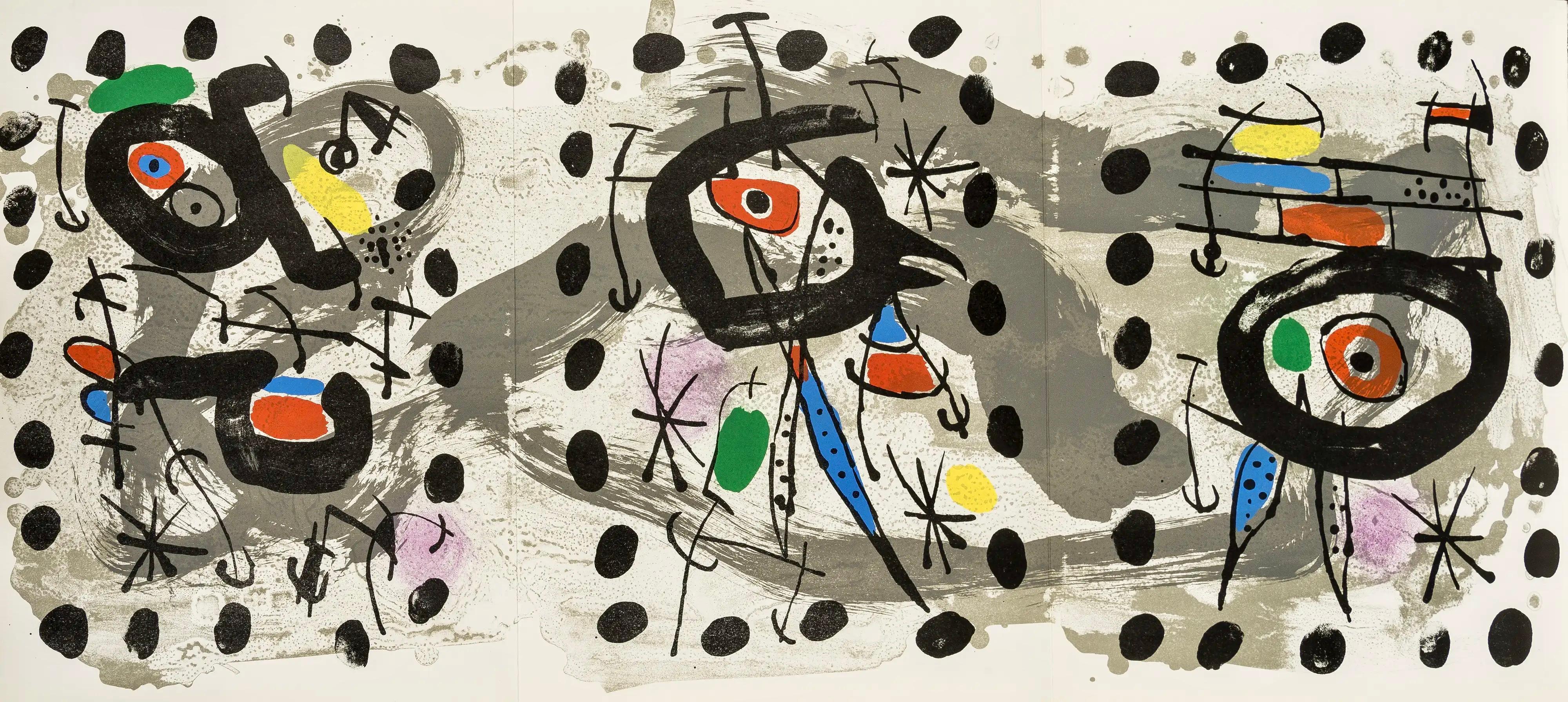
Oiseau solaire, oiseau lunaire, etincelles (Solar Bird, Lunar Bird, Sparks)
By Joan Miró
Located in Fairlawn, OH
Oiseau solaire, oiseau lunaire, etincelles (Solar Bird, Lunar Bird, Sparks) Color lithograph, 1967 Published in "Revue XXe Siecle, Volume 28 Published by San Lazzaro Printed by A. Ma...
Category

1960s Abstract Abstract Prints

Materials

Lithograph