Want more images or videos?
Request additional images or videos from the seller
1 of 8
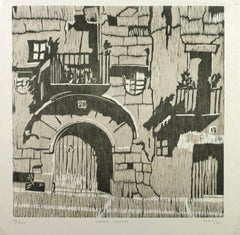
Joseph DomjanViolets1957
1957
$1,200List Price
About the Item
- Creator:Joseph Domjan (1907 - 1992, Hungarian)
- Creation Year:1957
- Dimensions:Height: 22.25 in (56.52 cm)Width: 19.8 in (50.3 cm)
- Medium:
- Period:
- Condition:Minor wear and tear.
- Gallery Location:Surfside, FL
- Reference Number:1stDibs: LU38210989022
About the Seller
4.9
Platinum Seller
Premium sellers with a 4.7+ rating and 24-hour response times
Established in 1995
1stDibs seller since 2014
1,843 sales on 1stDibs
Typical response time: 1 hour
Authenticity Guarantee
In the unlikely event there’s an issue with an item’s authenticity, contact us within 1 year for a full refund. DetailsMoney-Back Guarantee
If your item is not as described, is damaged in transit, or does not arrive, contact us within 7 days for a full refund. Details24-Hour Cancellation
You have a 24-hour grace period in which to reconsider your purchase, with no questions asked.Vetted Professional Sellers
Our world-class sellers must adhere to strict standards for service and quality, maintaining the integrity of our listings.Price-Match Guarantee
If you find that a seller listed the same item for a lower price elsewhere, we’ll match it.Trusted Global Delivery
Our best-in-class carrier network provides specialized shipping options worldwide, including custom delivery.You May Also Like
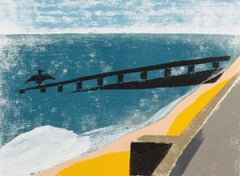
Sandgate Woodcut with Hand-Coloured by Keith Purser, 2009
By Keith Purser
Located in Kingsclere, GB
Sandgate Painting by Keith Purser B. 1944, 2009
Additional information:
Medium: Woodcut with hand-colouring
Dimensions: 42 x 53 cm
16 1/2 x 20 7/8 in
Signed, titled and dated.
Keit...
Category
21st Century and Contemporary More Art
Materials
Wood, Woodcut
$2,653
H 16.5 in W 20.875 in
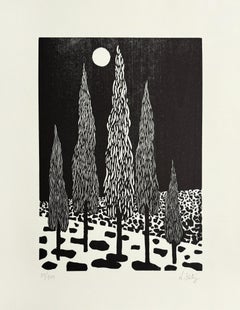
Trees
By Nicolas Party
Located in London, GB
Woodcut on BFK Rives paper, produced in 2020. Edition of 100. Mint condition, unframed. Signed and numbered in pencil by Nicolas Party.
Category
2010s Contemporary Landscape Prints
Materials
Woodcut
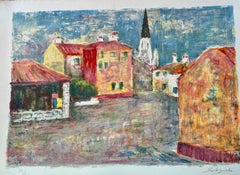
Village of Montmarte, Paris
By Shungo Sekiguchi
Located in Belgrade, MT
This piece is part of my private collection since the 1970's. It is an original color lithograph signed and numbered by the Japanese artist Shungo Sekiguchi. In 1935 Shungo Sekiguchi...
Category
Mid-20th Century Modern Landscape Prints
Materials
Lithograph, Woodcut
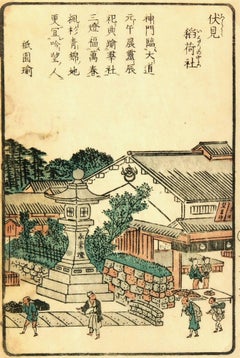
Japanese Woodblock - Street Scene
Located in Houston, TX
Lively Japanese woodblock print featuring street life. Ink on paper, circa 1860.
Original artwork on paper displayed on a white mat with a gold ...
Category
1860s Landscape Prints
Materials
Paper, Woodcut
Maison Typique Doorways
Located in Houston, TX
Delightful French woodcut titled "Maison Typique", 1981. Signed and dated lower right. 66/200
Original artwork on paper displayed on a white mat with...
Category
1980s Landscape Prints
Materials
Woodcut
Winslow Homer 19th Century Woodcut Engraving "Making Hay"
By Winslow Homer
Located in Alamo, CA
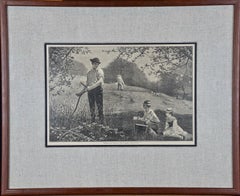
This Winslow Homer woodcut engraving entitled "Making Hay", was published in Harper's Weekly in the July 6, 1872 edition. It depicts a two men hand cutting high grass on a hill. The man in the foreground is looking at a young boy and a girl (presumably his children), who are sitting on the ground with a picnic basket.
This beautiful Homer woodcut engraving is presented in a brown wood frame and a light beige fabric mat with a black inner mat. The print is in excellent condition.
There are two other Homer woodcut engravings in identical frames and mats that are listed on 1stdibs. See LU117326148332 and LU117326148272. These would make a wonderful display grouping. A discount is available for the purchase of two or all three of these prints.
This Winslow Homer engraving...
Category
1870s American Impressionist Landscape Prints
Materials
Engraving, Woodcut
$700 Sale Price
20% Off
H 18.5 in W 22.32 in D 1.57 in
1870 View of Proposed Brooklyn Bridge and New York City
By Theodore R. Davis
Located in Alamo, CA
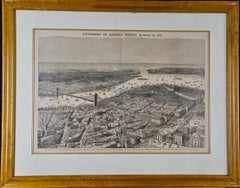
This framed engraving entitled "Birds-eye View of the Southern End of New York and Brooklyn, Showing the Projected Suspension-Bridge Over the East River, From the Western Terminus in Printing-House Square, New York" by Theodore R. Davis (1840–1894) was published as a supplement of Harper's Weekly, November 19, 1870.
The print is presented in a maple frame and a double mat. The frame measures 23.5" high, 29" wide and 0.75" deep. There is a vertical center fold and additional vertical lines, where wood engraving blocks were joined for the printing process. It is in excellent condition.
This framed image depicting New York in 1870 was a centerfold for the November 19, 1870 issue of Harper's Weekly. It includes the site and eventual appearance of the East River New York-Brooklyn Bridge; the name later shortened to the Brooklyn Bridge. The print was issued eleven months after the start of construction of the bridge on January 2, 1870, which would take another 12.5 years to complete. When this view was drawn, work on the bridge was all below ground, constructing the supports for the bridge’s towers. Labels in the upper portion of the print identify locations in the background including "Light Ship...
Category
Late 19th Century Naturalistic Landscape Prints
Materials
Woodcut
$460 Sale Price
20% Off
H 23.5 in W 29 in D 0.75 in
Winslow Homer 19th Century Woodcut Engraving "The Morning Walk"
By Winslow Homer
Located in Alamo, CA
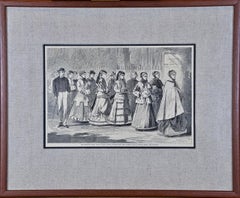
This Winslow Homer woodcut engraving entitled "The Morning Walk, Young Ladies' School Promenading the Avenue", was published in Harper's Weekly in the...
Category
1870s American Impressionist Landscape Prints
Materials
Engraving, Woodcut
$700 Sale Price
20% Off
H 18.5 in W 22.32 in D 1.57 in
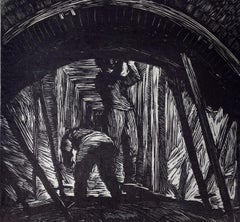
"Mine Shaft", Soviet Union: An Early 20th C. Woodcut Engraving by Abramovitz
By Albert Abramovitz
Located in Alamo, CA
This is a signed woodcut engraving entitled "Mine Shaft" created by Albert Abramovitz in 1935, after a trip to the Soviet Union. It depicts two Russian workers constructing a mine sh...
Category
1930s Landscape Prints
Materials
Woodcut
$940 Sale Price
20% Off
H 13.38 in W 8.88 in
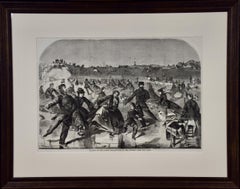
"Skating on Ladies
Pond Central Park": Winslow Homer 19th C. Woodcut Engraving
By Winslow Homer
Located in Alamo, CA
This Winslow Homer woodcut engraving entitled "Skating on the Ladies' Skating-Pond in Central Park, New York", was published in Harper's Weekly in the January 28, 1860 edition. It depicts a large number of men, women and children skating on a recently opened pond in Central Park. At the time of publication of this engraving, Central Park was in the early stages of construction. This engraving documents the very early appearance of Frederick Law Olmstead and Calvert Vaux's masterpiece of landscape design. According to Olmsted, the park was "of great importance as the first real Park made in this century – a democratic development of the highest significance". The people of New York were very proud of the plans for their park. It was stated at the time: "Our Park, which is progressing very satisfactorily under the management of the Commissioners, will undoubtedly be, one of these days, one of the finest place of the kind in the world...Those who saw the Park before the engineers went to work on it are amazed at the beautiful sites which have been contrived with such unpromising materials; all fair persons believe that the enterprise is managed with honesty and good taste."
Skating was rapidly rising in national popularity in part due to the opening of Central Park’s lake to skaters on a Sunday in December 1858 with 300 participants. The following Sunday it attracted ten thousand skaters. By Christmas Day, a reported 50,000 people came to the park, most of them to skate. There were rules governing who could use the skating pond. “The Ladies’ Pond...
Category
1870s American Impressionist Landscape Prints
Materials
Engraving, Woodcut
$940 Sale Price
20% Off
H 23.13 in W 29.5 in D 1.13 in
More From This Seller
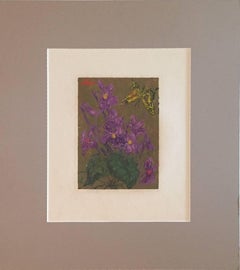
View AllViolets
By Joseph Domjan
Located in Surfside, FL
Born in Budapest in 1907, he had a humble upbringing and a passion for the arts. Shortly after the Hungarian Revolution broke out in 1956, Domján was invited to showcase his work in ...
Category
20th Century Landscape Prints
Materials
Wood, Mixed Media, Woodcut
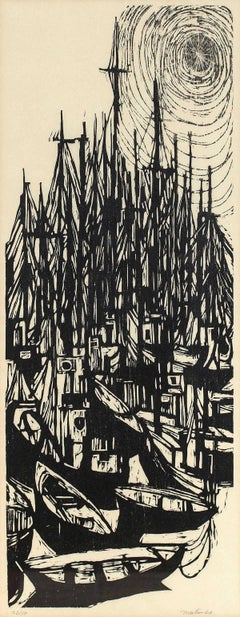
1966 Woodcut "Fleet" Modernist Print
By Roger Martin
Located in Surfside, FL
Genre: Modern
Subject: Landscape
Medium: Print, Woodcut
Surface: Paper
Dimensions w/Frame: 31" x 15 1/2"
Roger was born in the Addison Gilbert Hospital in Gloucester, MA, the son of Capt. Roger Martin and Ellie Emilia Oker, in 1925. His father was born in Rockport, of Portuguese heritage, and his mother was born in Finland. He graduated from Rockport Highschool in 1942. While in high school Roger prepared lobsters for tourists at the Roy Moore Lobster Company on Bearskin Neck and sang and played harmonica with Tony Torissi’s hillbilly band.
Roger enlisted in the U.S. Coast Guard in 1942 and mustered out in 1946, ending his military career as a member of the USCG canine corps only two weeks from going to the Pacific with a Marine detachment. After having lived on both coasts (Manhattan and Los Angeles) he returned to his home town from the West Coast, vowing to never leave again, and he hasn’t. When he returned to Cape Ann he entered the School of the Museum of Fine Arts in Boston where he majored in book design and illustration, graduating with honors.
He illustrated a number of textbooks for D.C. Heath, Beacon Press, and other Boston publishers, as well as provided illustrations for the New York Sunday Times, the New Yorker magazine, the Atlantic Monthly magazine, and a book for the United Church of Christ.
Roger also designed, carved and gold-leafed pipe shades for a number of C. B. Fisk pipe organs, builders of tracker action pipe organs, including those at Harvard and Stanford Universities.
He began his teaching career in Rockport, teaching elementary grade art, following that with four years teaching at the New England School of Art in Boston. Roger became a founding faculty member of the Montserrat College of Art in Beverly, MA, where he taught for twenty years, retiring to make paintings. He was also elected Rockport’s Poet Laureate in the 1990s and in addition wrote and published three books about Rockport.
Roger Martin has exhibited his work throughout New England and beyond. He has shown his work in Portland, ME; New York City; Andover’s Addison Gallery; the Boston ICA; galleries on Newbury Street in Boston; the Rockport Art Association; the Cape Ann Historical Museum (where he is part of the permanent collection); and many others. His work is represented in many private collections, including those of John...
Category
1960s Modern Landscape Prints
Materials
Woodcut
Rare 1923 Cubist Reuven Rubin Woodcut Woodblock Print Israeli Hasidic Judaica
By Reuven Rubin
Located in Surfside, FL
This is from the original first edition 1923 printing. there was a much later edition done after these originals.
These are individually hand signed in pencil by artist as issued.
This listing is for the one print. the other documentation is included here for provenance and is not included in this listing.
The various images inspired by the Jewish Mysticism and rabbis and mystics of jerusalem and Kabbalah is holy, dramatic and optimistic Rubin succeeded to evoke the spirit of life in Israel in those early days.
They are done in a modern art style influenced by German Expressionism, particularly, Ernst Barlach, Ernst Ludwig Kirchner, and Franz Marc, as introduced to Israel by Jakob Steinhardt, Hermann Struck and Joseph Budko.
Reuven Rubin 1893 -1974 was a Romanian-born Israeli painter and Israel's first ambassador to Romania.
Rubin Zelicovich (later Reuven Rubin) was born in Galati to a poor Romanian Jewish Hasidic family. He was the eighth of 13 children. In 1912, he left for Ottoman-ruled Palestine to study art at Bezalel Academy of Art and Design in Jerusalem. Finding himself at odds with the artistic views of the Academy's teachers, he left for Paris, France, in 1913 to pursue his studies at the École Nationale Supérieure des Beaux-Arts. He was of the well known Jewish artists in Paris along with Marc Chagall and Chaim Soutine,
At the outbreak of World War I, he was returned to Romania, where he spent the war years.
In 1921, he traveled to the United States with his friend and fellow artist, Arthur Kolnik. In New York City, the two met artist Alfred Stieglitz, who was instrumental in organizing their first American show at the Anderson Gallery. Following the exhibition, in 1922, they both returned to Europe. In 1923, Rubin emigrated to Mandate Palestine.
Rubin met his wife, Esther, in 1928, aboard a passenger ship to Palestine on his return from a show in New York. She was a Bronx girl who had won a trip to Palestine in a Young Judaea competition. He died in 1974.
Part of the early generation of artists in Israel, Joseph Zaritsky, Arieh Lubin, Reuven Rubin, Sionah Tagger, Pinchas Litvinovsky, Mordecai Ardon, Yitzhak Katz, and Baruch Agadati; These painters depicted the country’s landscapes in the 1920s rebelled against the Bezalel school of Boris Schatz. They sought current styles in Europe that would help portray their own country’s landscape, in keeping with the spirit of the time. Rubin’s Cezannesque landscapes from the 1920s were defined by both a modern and a naive style, portraying the landscape and inhabitants of Israel in a sensitive fashion. His landscape paintings in particular paid special detail to a spiritual, translucent light. His early work bore the influences of Futurism, Vorticism, Cubism and Surrealism.
In Palestine, he became one of the founders of the new Eretz-Yisrael style. Recurring themes in his work were the bible, the prophet, the biblical landscape, folklore and folk art, people, including Yemenite, Hasidic Jews and Arabs. Many of his paintings are sun-bathed depictions of Jerusalem and the Galilee. Rubin might have been influenced by the work of Henri Rousseau whose naice style combined with Eastern nuances, as well as with the neo-Byzantine art to which Rubin had been exposed in his native Romania. In accordance with his integrative style, he signed his works with his first name in Hebrew and his surname in Roman letters.
In 1924, he was the first artist to hold a solo exhibition at the Tower of David, in Jerusalem (later exhibited in Tel Aviv at Gymnasia Herzliya). That year he was elected chairman of the Association of Painters and Sculptors of Palestine. From the 1930s onwards, Rubin designed backdrops for Habima Theater, the Ohel Theater and other theaters.
His biography, published in 1969, is titled My Life - My Art. He died in Tel Aviv in October 1974, after having bequeathed his home on 14 Bialik Street and a core collection of his paintings to the city of Tel Aviv. The Rubin Museum opened in 1983. The director and curator of the museum is his daughter-in-law, Carmela Rubin. Rubin's paintings are now increasingly sought after. At a Sotheby's auction in New York in 2007, his work accounted for six of the ten top lots. Along with Yaacov Agam and Menashe Kadishman he is among Israel's best known artists internationally. Education
1912 Bezalel Academy of Arts and Design, Jerusalem
1913-14 École des Beaux Arts, Paris and Académie Colarossi, Paris
Select Group Exhibitions
Eged - Palestine Painters Group Eged - Palestine Painters Group, Allenby Street, Tel Aviv 1929
Artists: Chana Orloff, Abraham Melnikoff, Rubin, Reuven Nahum Gutman, Sionah Tagger,Arieh Allweil,
Jewish Artists Association, Levant Fair, Tel Aviv, 1929
Artists: Ludwig Blum,Eliyahu Sigad, Shmuel Ovadyahu, Itzhak Frenel Frenkel,Ozer Shabat, Menahem Shemi,
First Exhibition of ''Hever Omanim'' First Exhibition of ''Hever Omanim''
Steimatzky Gallery, Jerusalem
1936
Artists:
Gutman, Nachum Holzman, Shimshon Mokady, Moshe Sima, Miron Rubin, Reuven Steinhardt, Jakob Ben Zvi, Zeev Ziffer, Moshe Allweil, Arieh
Group Exhibition Group Exhibition
Katz Art Gallery, Tel Aviv
1939
Artists:
Avni, Aharon Holzman, Shimshon Gliksberg, Haim Gutman, Nachum Ovadyahu, Shmuel Shorr, Zvi Schwartz, Chaya Streichman, Yehezkel Tagger, Sionah Rubin, Reuven
A Collection of Works by Artists of the Land of Israel A Collection of Works by Artists of the Land of Israel
The Bezalel National Museum, Jerusalem
1940
Artists:
Shemi, Menahem Rubin, Reuven Avni, Aharon Mokady, Moshe Jonas, Ludwig Steinhardt, Jakob Ticho, Anna Krakauer, Leopold Gutman, Nachum Budko, Joseph Ardon, Mordecai Sima, Miron Castel, Moshe Pann, Abel Struck, Hermann Gur Arie, Meir Ben Zvi, Zeev Litvinovsky, Pinchas
Artists in Israel for the Defense, Tel Aviv Museum of Art, Helena Rubinstein Pavilion, Tel Aviv 1967
Artists: Avraham Binder, Motke Blum, (Mordechai) Samuel Bak, Yosl Bergner, Nahum Gilboa, Jean David, Marcel Janco, Lea Nikel, Jacob Pins, Esther Peretz...
Category
1920s Abstract Figurative Prints
Materials
Woodcut
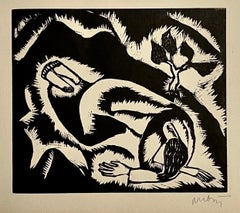
Rare 1923 Cubist Reuven Rubin Woodcut Woodblock Kabbalah Print Israeli Judaica
By Reuven Rubin
Located in Surfside, FL
This is from the original first edition 1923 printing. there was a much later edition done after these originals.
These are individually hand signed in pencil by artist as issued.
This listing is for the one print. the other documentation is included here for provenance and is not included in this listing.
The various images inspired by the Jewish Mysticism and rabbis and mystics of jerusalem and Kabbalah is holy, dramatic and optimistic Rubin succeeded to evoke the spirit of life in Israel in those early days.
They are done in a modern art style influenced by German Expressionism, particularly, Ernst Barlach, Ernst Ludwig Kirchner, and Franz Marc, as introduced to Israel by Jakob Steinhardt, Hermann Struck and Joseph Budko.
Reuven Rubin 1893 -1974 was a Romanian-born Israeli painter and Israel's first ambassador to Romania.
Rubin Zelicovich (later Reuven Rubin) was born in Galati to a poor Romanian Jewish Hasidic family. He was the eighth of 13 children. In 1912, he left for Ottoman-ruled Palestine to study art at Bezalel Academy of Art and Design in Jerusalem. Finding himself at odds with the artistic views of the Academy's teachers, he left for Paris, France, in 1913 to pursue his studies at the École Nationale Supérieure des Beaux-Arts. He was of the well known Jewish artists in Paris along with Marc Chagall and Chaim Soutine,
At the outbreak of World War I, he was returned to Romania, where he spent the war years.
In 1921, he traveled to the United States with his friend and fellow artist, Arthur Kolnik. In New York City, the two met artist Alfred Stieglitz, who was instrumental in organizing their first American show at the Anderson Gallery. Following the exhibition, in 1922, they both returned to Europe. In 1923, Rubin emigrated to Mandate Palestine.
Rubin met his wife, Esther, in 1928, aboard a passenger ship to Palestine on his return from a show in New York. She was a Bronx girl who had won a trip to Palestine in a Young Judaea competition. He died in 1974.
Part of the early generation of artists in Israel, Joseph Zaritsky, Arieh Lubin, Reuven Rubin, Sionah Tagger, Pinchas Litvinovsky, Mordecai Ardon, Yitzhak Katz, and Baruch Agadati; These painters depicted the country’s landscapes in the 1920s rebelled against the Bezalel school of Boris Schatz. They sought current styles in Europe that would help portray their own country’s landscape, in keeping with the spirit of the time. Rubin’s Cezannesque landscapes from the 1920s were defined by both a modern and a naive style, portraying the landscape and inhabitants of Israel in a sensitive fashion. His landscape paintings in particular paid special detail to a spiritual, translucent light. His early work bore the influences of Futurism, Vorticism, Cubism and Surrealism.
In Palestine, he became one of the founders of the new Eretz-Yisrael style. Recurring themes in his work were the bible, the prophet, the biblical landscape, folklore and folk art, people, including Yemenite, Hasidic Jews and Arabs. Many of his paintings are sun-bathed depictions of Jerusalem and the Galilee. Rubin might have been influenced by the work of Henri Rousseau whose naice style combined with Eastern nuances, as well as with the neo-Byzantine art to which Rubin had been exposed in his native Romania. In accordance with his integrative style, he signed his works with his first name in Hebrew and his surname in Roman letters.
In 1924, he was the first artist to hold a solo exhibition at the Tower of David, in Jerusalem (later exhibited in Tel Aviv at Gymnasia Herzliya). That year he was elected chairman of the Association of Painters and Sculptors of Palestine. From the 1930s onwards, Rubin designed backdrops for Habima Theater, the Ohel Theater and other theaters.
His biography, published in 1969, is titled My Life - My Art. He died in Tel Aviv in October 1974, after having bequeathed his home on 14 Bialik Street and a core collection of his paintings to the city of Tel Aviv. The Rubin Museum opened in 1983. The director and curator of the museum is his daughter-in-law, Carmela Rubin. Rubin's paintings are now increasingly sought after. At a Sotheby's auction in New York in 2007, his work accounted for six of the ten top lots. Along with Yaacov Agam and Menashe Kadishman he is among Israel's best known artists internationally. Education
1912 Bezalel Academy of Arts and Design, Jerusalem
1913-14 École des Beaux Arts, Paris and Académie Colarossi, Paris
Select Group Exhibitions
Eged - Palestine Painters Group Eged - Palestine Painters Group, Allenby Street, Tel Aviv 1929
Artists: Chana Orloff, Abraham Melnikoff, Rubin, Reuven Nahum Gutman, Sionah Tagger,Arieh Allweil,
Jewish Artists Association, Levant Fair, Tel Aviv, 1929
Artists: Ludwig Blum,Eliyahu Sigad, Shmuel Ovadyahu, Itzhak Frenel Frenkel,Ozer Shabat, Menahem Shemi...
Category
1920s Abstract Figurative Prints
Materials
Woodcut
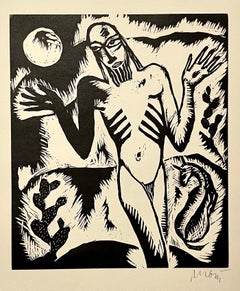
Rare 1923 Cubist Reuven Rubin Woodcut Woodblock Fisherman Print Israeli Judaica
By Reuven Rubin
Located in Surfside, FL
This is from the original first edition 1923 printing. there was a much later edition done after these originals.
These are individually hand signed in pencil by artist as issued.
This listing is for the one print. the other documentation is included here for provenance and is not included in this listing.
The various images inspired by the Jewish Mysticism and rabbis and mystics of jerusalem and Kabbalah is holy, dramatic and optimistic Rubin succeeded to evoke the spirit of life in Israel in those early days.
They are done in a modern art style influenced by German Expressionism, particularly, Ernst Barlach, Ernst Ludwig Kirchner, and Franz Marc, as introduced to Israel by Jakob Steinhardt, Hermann Struck and Joseph Budko.
Reuven Rubin 1893 -1974 was a Romanian-born Israeli painter and Israel's first ambassador to Romania.
Rubin Zelicovich (later Reuven Rubin) was born in Galati to a poor Romanian Jewish Hasidic family. He was the eighth of 13 children. In 1912, he left for Ottoman-ruled Palestine to study art at Bezalel Academy of Art and Design in Jerusalem. Finding himself at odds with the artistic views of the Academy's teachers, he left for Paris, France, in 1913 to pursue his studies at the École Nationale Supérieure des Beaux-Arts. He was of the well known Jewish artists in Paris along with Marc Chagall and Chaim Soutine,
At the outbreak of World War I, he was returned to Romania, where he spent the war years.
In 1921, he traveled to the United States with his friend and fellow artist, Arthur Kolnik. In New York City, the two met artist Alfred Stieglitz, who was instrumental in organizing their first American show at the Anderson Gallery. Following the exhibition, in 1922, they both returned to Europe. In 1923, Rubin emigrated to Mandate Palestine.
Rubin met his wife, Esther, in 1928, aboard a passenger ship to Palestine on his return from a show in New York. She was a Bronx girl who had won a trip to Palestine in a Young Judaea competition. He died in 1974.
Part of the early generation of artists in Israel, Joseph Zaritsky, Arieh Lubin, Reuven Rubin, Sionah Tagger, Pinchas Litvinovsky, Mordecai Ardon, Yitzhak Katz, and Baruch Agadati; These painters depicted the country’s landscapes in the 1920s rebelled against the Bezalel school of Boris Schatz. They sought current styles in Europe that would help portray their own country’s landscape, in keeping with the spirit of the time. Rubin’s Cezannesque landscapes from the 1920s were defined by both a modern and a naive style, portraying the landscape and inhabitants of Israel in a sensitive fashion. His landscape paintings in particular paid special detail to a spiritual, translucent light. His early work bore the influences of Futurism, Vorticism, Cubism and Surrealism.
In Palestine, he became one of the founders of the new Eretz-Yisrael style. Recurring themes in his work were the bible, the prophet, the biblical landscape, folklore and folk art, people, including Yemenite, Hasidic Jews and Arabs. Many of his paintings are sun-bathed depictions of Jerusalem and the Galilee. Rubin might have been influenced by the work of Henri Rousseau whose naice style combined with Eastern nuances, as well as with the neo-Byzantine art to which Rubin had been exposed in his native Romania. In accordance with his integrative style, he signed his works with his first name in Hebrew and his surname in Roman letters.
In 1924, he was the first artist to hold a solo exhibition at the Tower of David, in Jerusalem (later exhibited in Tel Aviv at Gymnasia Herzliya). That year he was elected chairman of the Association of Painters and Sculptors of Palestine. From the 1930s onwards, Rubin designed backdrops for Habima Theater, the Ohel Theater and other theaters.
His biography, published in 1969, is titled My Life - My Art. He died in Tel Aviv in October 1974, after having bequeathed his home on 14 Bialik Street and a core collection of his paintings to the city of Tel Aviv. The Rubin Museum opened in 1983. The director and curator of the museum is his daughter-in-law, Carmela Rubin. Rubin's paintings are now increasingly sought after. At a Sotheby's auction in New York in 2007, his work accounted for six of the ten top lots. Along with Yaacov Agam and Menashe Kadishman he is among Israel's best known artists internationally. Education
1912 Bezalel Academy of Arts and Design, Jerusalem
1913-14 École des Beaux Arts, Paris and Académie Colarossi, Paris
Select Group Exhibitions
Eged - Palestine Painters Group Eged - Palestine Painters Group, Allenby Street, Tel Aviv 1929
Artists: Chana Orloff, Abraham Melnikoff, Rubin, Reuven Nahum Gutman, Sionah Tagger,Arieh Allweil,
Jewish Artists Association, Levant Fair, Tel Aviv, 1929
Artists: Ludwig Blum,Eliyahu Sigad, Shmuel Ovadyahu, Itzhak Frenel Frenkel,Ozer Shabat, Menahem Shemi,
First Exhibition of ''Hever Omanim'' First Exhibition of ''Hever Omanim''
Steimatzky Gallery, Jerusalem
1936
Artists:
Gutman, Nachum Holzman, Shimshon Mokady, Moshe Sima, Miron Rubin, Reuven Steinhardt, Jakob Ben Zvi, Zeev Ziffer, Moshe Allweil, Arieh
Group Exhibition Group Exhibition
Katz Art Gallery, Tel Aviv
1939
Artists:
Avni, Aharon Holzman, Shimshon Gliksberg, Haim Gutman, Nachum Ovadyahu, Shmuel Shorr, Zvi Schwartz, Chaya Streichman, Yehezkel Tagger, Sionah Rubin, Reuven
A Collection of Works by Artists of the Land of Israel A Collection of Works by Artists of the Land of Israel
The Bezalel National Museum, Jerusalem
1940
Artists:
Shemi, Menahem Rubin, Reuven Avni, Aharon Mokady, Moshe Jonas, Ludwig Steinhardt, Jakob Ticho, Anna Krakauer, Leopold Gutman, Nachum Budko, Joseph Ardon, Mordecai Sima, Miron Castel, Moshe Pann, Abel Struck, Hermann Gur Arie, Meir Ben Zvi, Zeev Litvinovsky, Pinchas
Artists in Israel for the Defense, Tel Aviv Museum of Art, Helena Rubinstein Pavilion, Tel Aviv 1967
Artists: Avraham Binder, Motke Blum, (Mordechai) Samuel Bak, Yosl Bergner, Nahum Gilboa, Jean David, Marcel Janco, Lea Nikel, Jacob Pins, Esther Peretz...
Category
1920s Abstract Figurative Prints
Materials
Woodcut
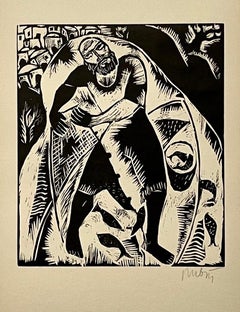
Rare 1923 Cubist Reuven Rubin Woodcut Woodblock Print Israeli Hasidic Judaica
By Reuven Rubin
Located in Surfside, FL
This is from the original first edition 1923 printing. there was a much later edition done after these originals.
These are individually hand signed in pencil by artist as issued.
This listing is for the one print. the other documentation is included here for provenance and is not included in this listing.
The various images inspired by the Jewish Mysticism and rabbis and mystics of jerusalem and Kabbalah is holy, dramatic and optimistic Rubin succeeded to evoke the spirit of life in Israel in those early days.
They are done in a modern art style influenced by German Expressionism, particularly, Ernst Barlach, Ernst Ludwig Kirchner, and Franz Marc, as introduced to Israel by Jakob Steinhardt, Hermann Struck and Joseph Budko.
Reuven Rubin 1893 -1974 was a Romanian-born Israeli painter and Israel's first ambassador to Romania.
Rubin Zelicovich (later Reuven Rubin) was born in Galati to a poor Romanian Jewish Hasidic family. He was the eighth of 13 children. In 1912, he left for Ottoman-ruled Palestine to study art at Bezalel Academy of Art and Design in Jerusalem. Finding himself at odds with the artistic views of the Academy's teachers, he left for Paris, France, in 1913 to pursue his studies at the École Nationale Supérieure des Beaux-Arts. He was of the well known Jewish artists in Paris along with Marc Chagall and Chaim Soutine,
At the outbreak of World War I, he was returned to Romania, where he spent the war years.
In 1921, he traveled to the United States with his friend and fellow artist, Arthur Kolnik. In New York City, the two met artist Alfred Stieglitz, who was instrumental in organizing their first American show at the Anderson Gallery. Following the exhibition, in 1922, they both returned to Europe. In 1923, Rubin emigrated to Mandate Palestine.
Rubin met his wife, Esther, in 1928, aboard a passenger ship to Palestine on his return from a show in New York. She was a Bronx girl who had won a trip to Palestine in a Young Judaea competition. He died in 1974.
Part of the early generation of artists in Israel, Joseph Zaritsky, Arieh Lubin, Reuven Rubin, Sionah Tagger, Pinchas Litvinovsky, Mordecai Ardon, Yitzhak Katz, and Baruch Agadati; These painters depicted the country’s landscapes in the 1920s rebelled against the Bezalel school of Boris Schatz. They sought current styles in Europe that would help portray their own country’s landscape, in keeping with the spirit of the time. Rubin’s Cezannesque landscapes from the 1920s were defined by both a modern and a naive style, portraying the landscape and inhabitants of Israel in a sensitive fashion. His landscape paintings in particular paid special detail to a spiritual, translucent light. His early work bore the influences of Futurism, Vorticism, Cubism and Surrealism.
In Palestine, he became one of the founders of the new Eretz-Yisrael style. Recurring themes in his work were the bible, the prophet, the biblical landscape, folklore and folk art, people, including Yemenite, Hasidic Jews and Arabs. Many of his paintings are sun-bathed depictions of Jerusalem and the Galilee. Rubin might have been influenced by the work of Henri Rousseau whose naice style combined with Eastern nuances, as well as with the neo-Byzantine art to which Rubin had been exposed in his native Romania. In accordance with his integrative style, he signed his works with his first name in Hebrew and his surname in Roman letters.
In 1924, he was the first artist to hold a solo exhibition at the Tower of David, in Jerusalem (later exhibited in Tel Aviv at Gymnasia Herzliya). That year he was elected chairman of the Association of Painters and Sculptors of Palestine. From the 1930s onwards, Rubin designed backdrops for Habima Theater, the Ohel Theater and other theaters.
His biography, published in 1969, is titled My Life - My Art. He died in Tel Aviv in October 1974, after having bequeathed his home on 14 Bialik Street and a core collection of his paintings to the city of Tel Aviv. The Rubin Museum opened in 1983. The director and curator of the museum is his daughter-in-law, Carmela Rubin. Rubin's paintings are now increasingly sought after. At a Sotheby's auction in New York in 2007, his work accounted for six of the ten top lots. Along with Yaacov Agam and Menashe Kadishman he is among Israel's best known artists internationally. Education
1912 Bezalel Academy of Arts and Design, Jerusalem
1913-14 École des Beaux Arts, Paris and Académie Colarossi, Paris
Select Group Exhibitions
Eged - Palestine Painters Group Eged - Palestine Painters Group, Allenby Street, Tel Aviv 1929
Artists: Chana Orloff, Abraham Melnikoff, Rubin, Reuven Nahum Gutman, Sionah Tagger,Arieh Allweil,
Jewish Artists Association, Levant Fair, Tel Aviv, 1929
Artists: Ludwig Blum,Eliyahu Sigad, Shmuel Ovadyahu, Itzhak Frenel Frenkel,Ozer Shabat, Menahem Shemi...
Category
1920s Abstract Figurative Prints
Materials
Woodcut
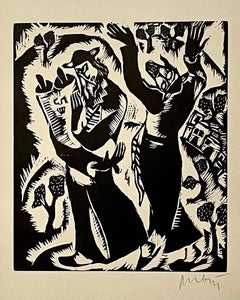
Recently Viewed
View AllMore Ways To Browse
Gordon Grant Lithograph
Italian Architecture Etching
Jean Claude Picot
Joe Jones
Leopold Levy
Lino Cut Prints
Lithograph Champs Elysees
Monet Lithograph
Patrick Henry Bruce
Pejac Art
Toshi Yoshida
Veduta Del Ponte
W L Wyllie
Yoshida Toshi
Yves Brayer Original
Cameron Etching
Canaletto Engraving
Corpus Christi College Oxford