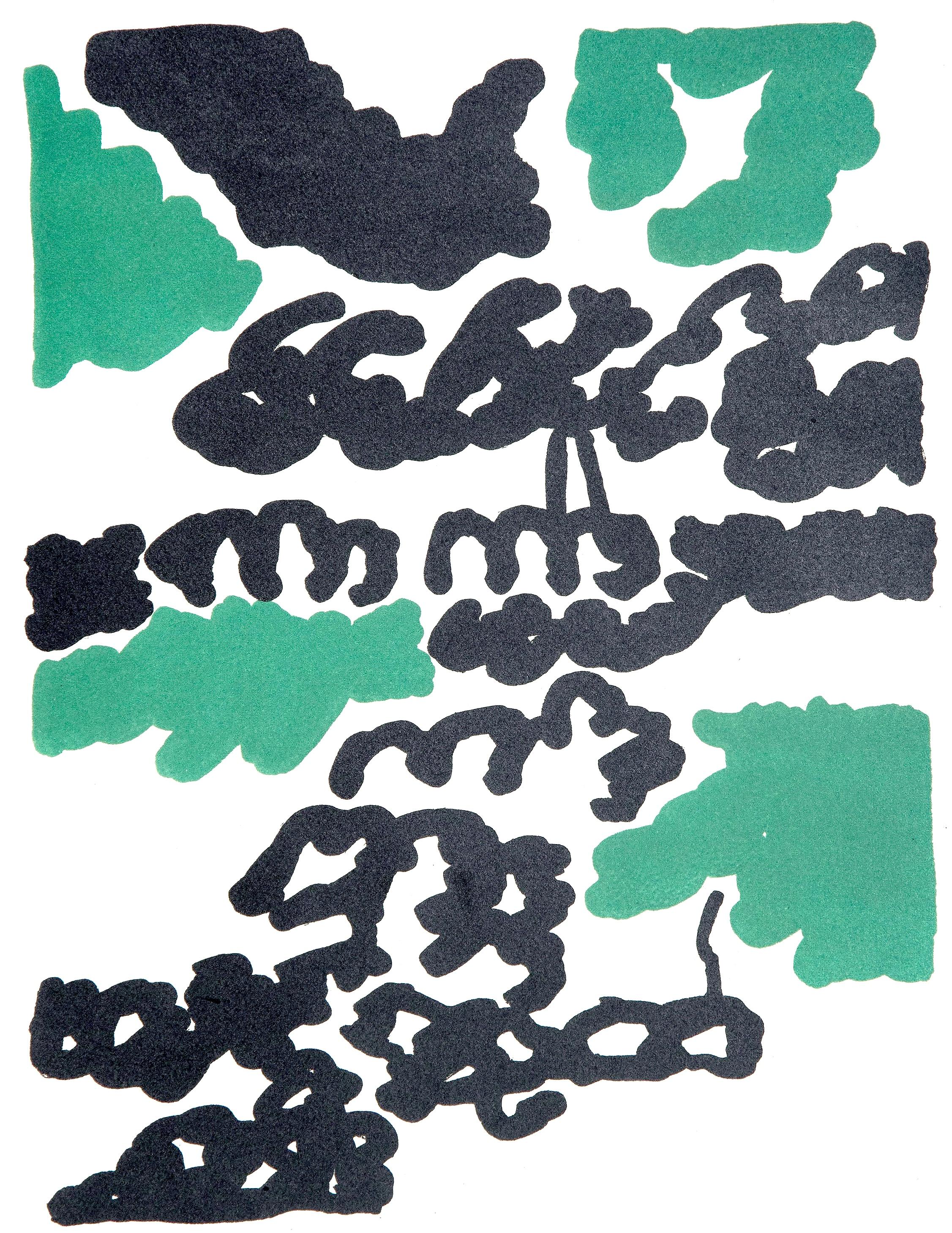
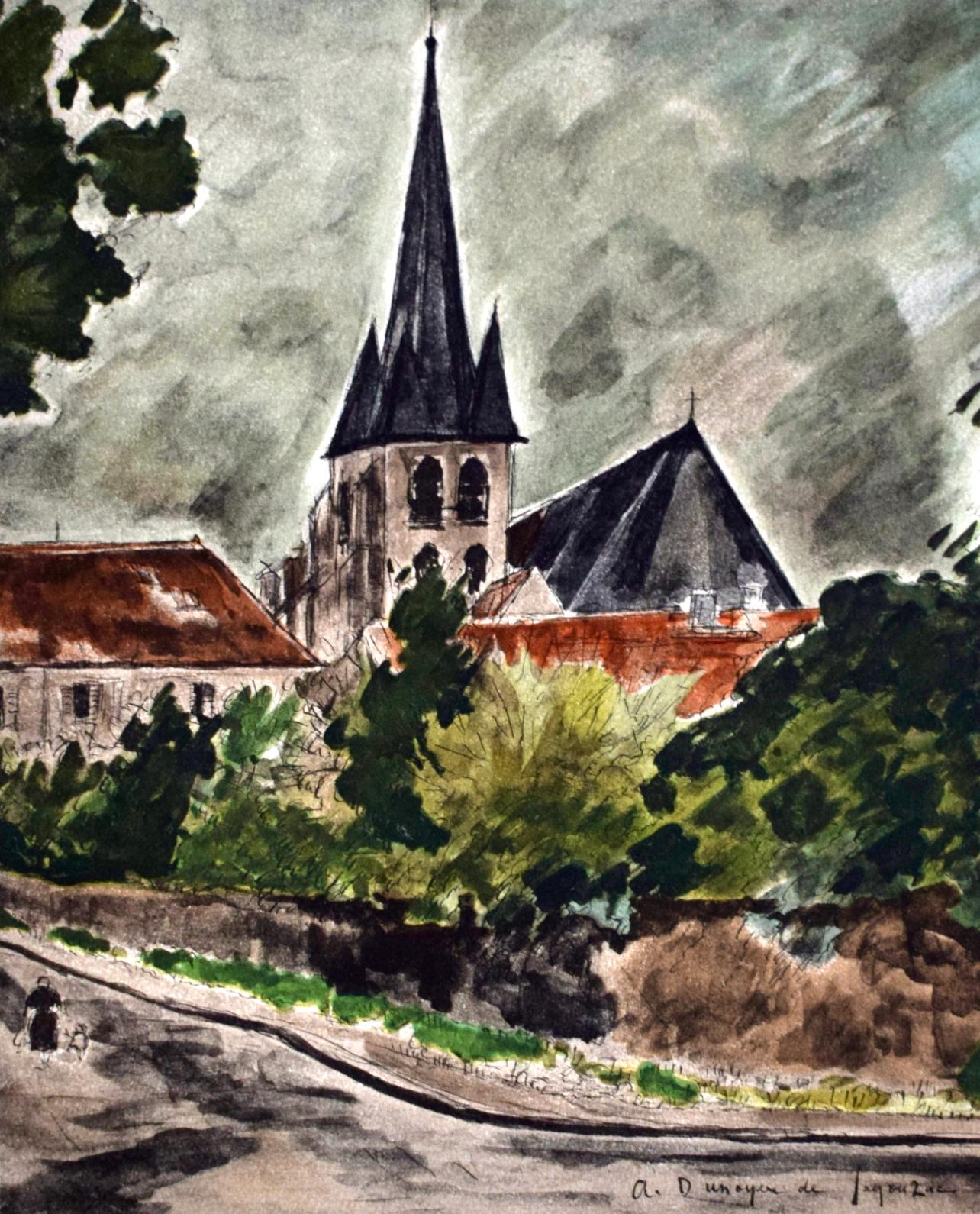
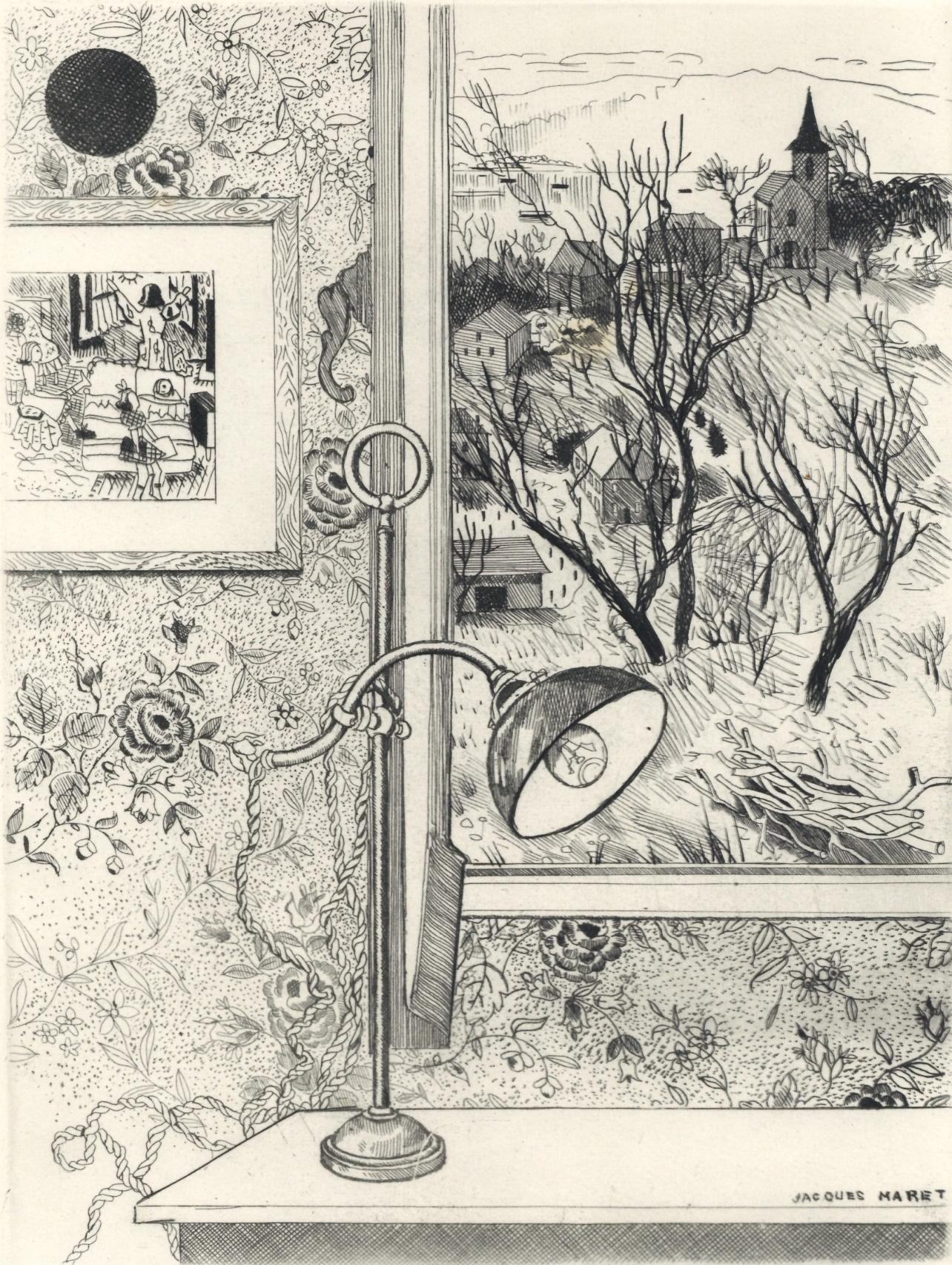
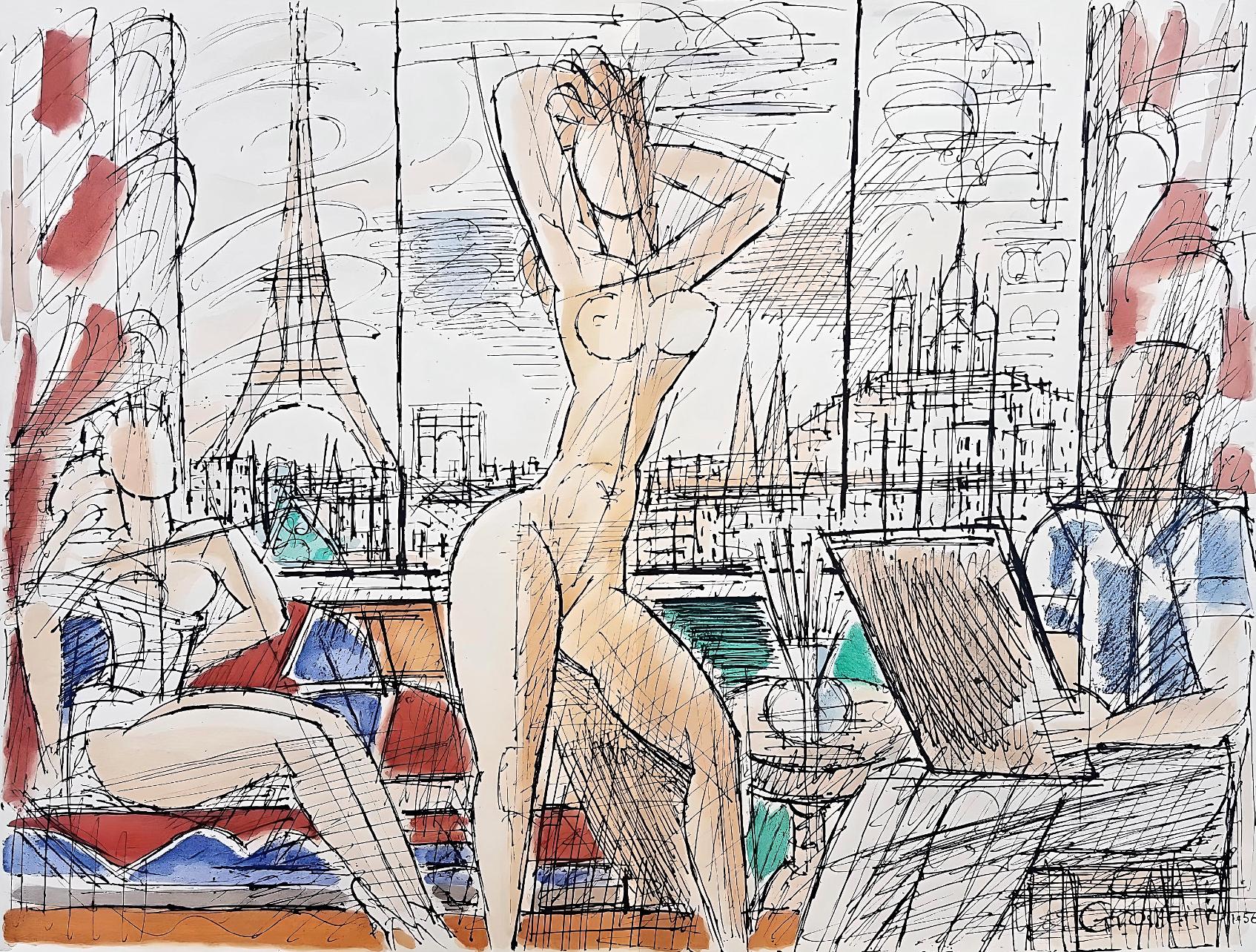
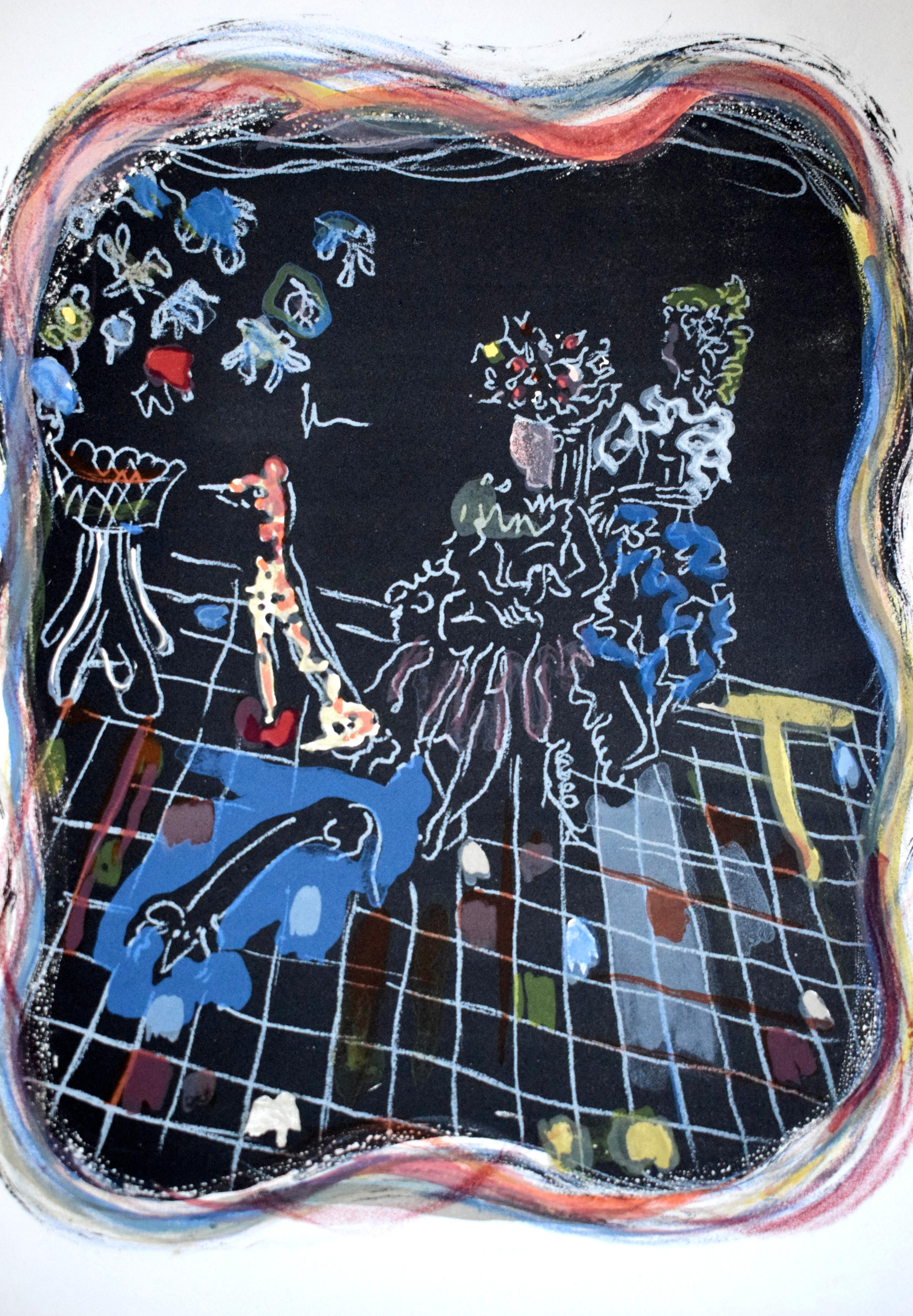
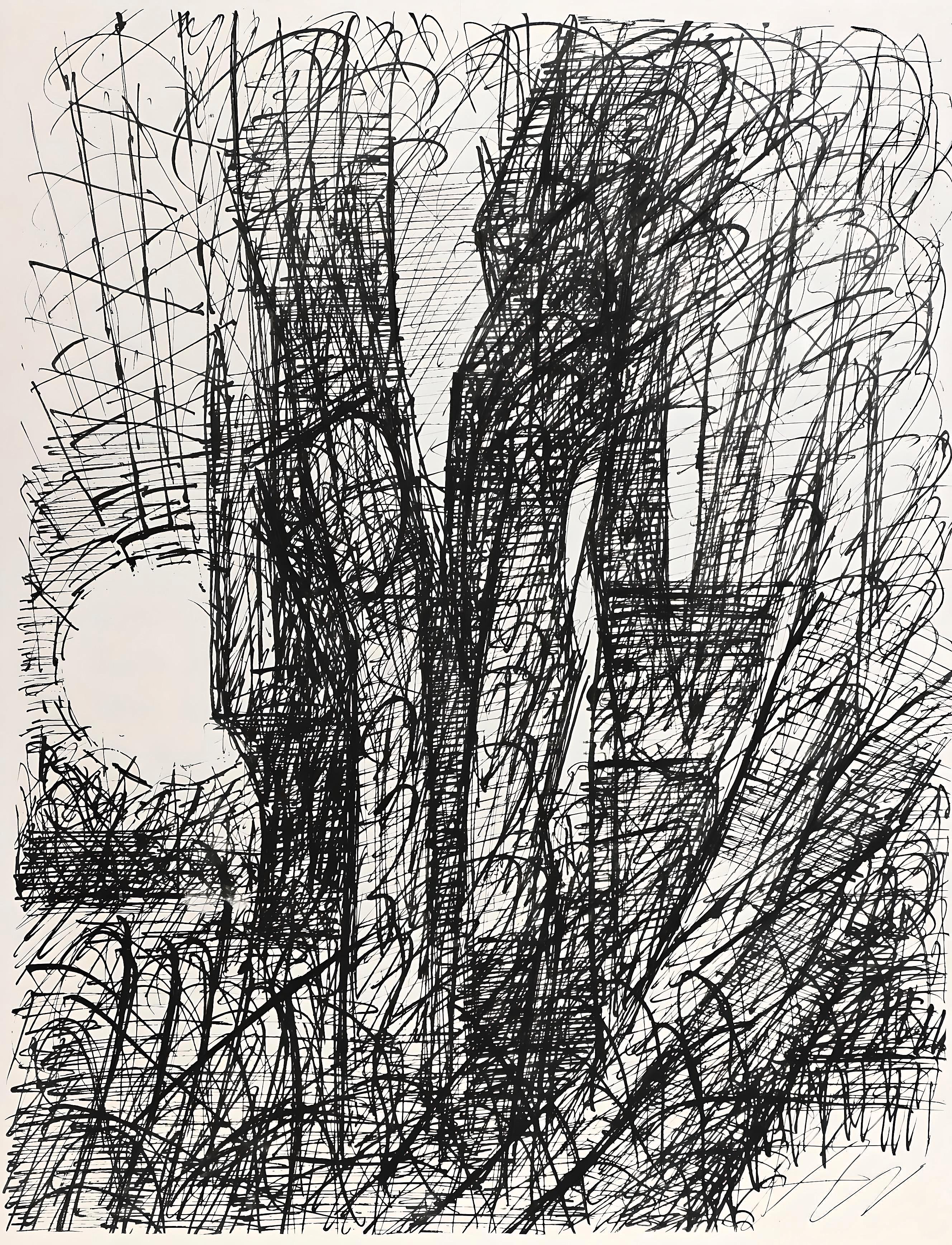
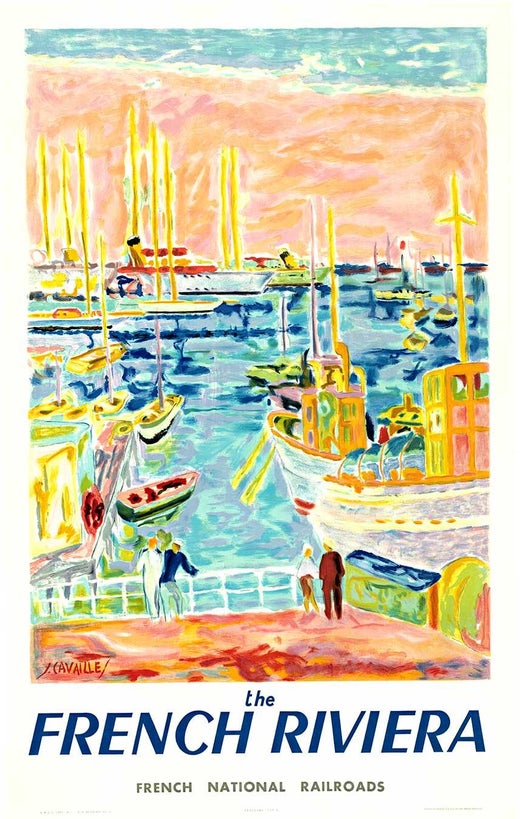
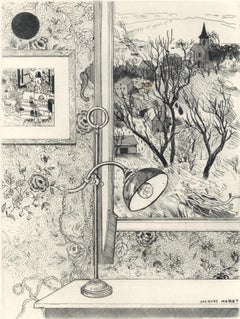
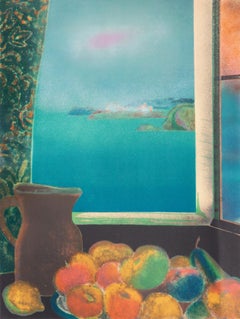
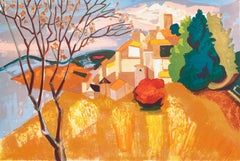
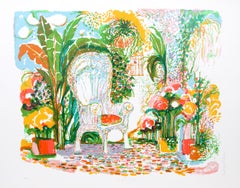
This exquisite lithograph by Jules Cavailles (1901–1977), titled Interieur a la Fenetre (Interior by the Window), from the folio Les Peintres mes amis (The Painters My Friends), originates from the 1965 edition published by Editions d'art Les Heures Claires, Paris, and printed by Mourlot Freres, Paris, May 20, 1965. Interieur a la Fenetre (Interior by the Window) exemplifies Cavailles’s radiant color harmonies and lyrical sensitivity, capturing the light-filled serenity of everyday life that defined his poetic realism. His refined handling of composition and color evokes the warmth and tranquility of domestic space, expressing his lifelong celebration of joy, simplicity, and beauty.
Executed as a lithograph on grand velin d'Arches paper, this work measures 15 x 11 inches. Unsigned and unnumbered as issued. The edition exemplifies the exceptional standards of Editions d'art Les Heures Claires, Paris, and the master craftsmanship of Mourlot Freres, Paris.
Artwork Details:
Artist: Jules Cavailles (1901–1977)
Title: Interieur a la Fenetre (Interior by the Window), from the folio Les Peintres mes amis (The Painters My Friends), 1965
Medium: Lithograph on grand velin d'Arches paper
Dimensions: 15 x 11 inches (38.1 x 27.94 cm)
Inscription: Unsigned and unnumbered as issued
Date: 1965
Publisher: Editions d'art Les Heures Claires, Paris
Printer: Mourlot Freres, Paris
Catalogue raisonne reference: Monod, Luc. Manuel de l’amateur de livres illustres modernes, 1875–1975. Ides et Calendes, 1992, illustration 11485.
Condition: Well preserved, consistent with age and medium
Provenance: From the folio Les Peintres mes amis (The Painters My Friends), published by Editions d'art Les Heures Claires, Paris; printed by Mourlot Freres, Paris, May 20, 1965
Notes:
Excerpted from the folio (translated from the folio), The lithographs by Derain and Van Dongen were printed by Lucien Detruit. Those by Dufy, Matisse, Chagall, Dunoyer de Segonzac, Cavailles, Terechkovitch, and Carzou were printed by Mourlot Freres. Those by Picasso and Buffet were printed by P.-J. Ballon. The lithograph by Miro was printed in the workshop Arte, which also printed, in phototype, the frontispiece. The etchings by Villon and Zadkine were printed by Manuel Robbe. That by Braque was printed by A. and P. Crommelynck. The wood engravings and printing of the illustrations by Vlaminck, Rouault, Pascin, and Utrillo were done by Raymond Jacquet. The texts by Andre Warnod, collected by his daughter Jeanine Warnod, were hand-set in De Roos type, size 24, and printed in Paris on the presses of Daragnes. Printing completed on May 20, 1965. Justification of the edition, III examples on large velin d'Arches containing the original copper plates inked for one intaglio illustration; a proof on silk of two lithographs; the four wood-engraved illustrations, mounted; a color separation of one lithograph; and a complete suite of the illustrations on Arches—numbered I to III. XVI examples on large velin d'Arches containing a proof on silk of two lithographs; the four wood-engraved illustrations, mounted; a color separation of one lithograph; and a complete suite of the illustrations on Arches—numbered IV to XIX. XXI examples on large velin d'Arches containing a proof on silk of two lithographs; the four wood-engraved illustrations, mounted; and a complete suite of the illustrations on Arches—numbered XX to XL. XL examples on large velin d'Arches containing a complete suite of the illustrations on Arches—numbered XLI to LXXX. CLXX examples on large velin d'Arches—numbered LXXXI to CCL.
About the Publication:
The folio Les Peintres mes amis (The Painters My Friends), published in Paris in 1965 by Editions d'art Les Heures Claires, stands among the most ambitious postwar French printmaking collaborations. Conceived as a celebration of modern art’s greatest masters, the volume unites original graphic works by Cavailles, Dunoyer de Segonzac, Dufy, Vlaminck, Matisse, Picasso, Chagall, Braque, Villon, Derain, Zadkine, Miro, and others, alongside critical essays by Andre Warnod. Each plate was executed under the supervision of Paris’s foremost ateliers—Mourlot Freres, Lucien Detruit, P.-J. Ballon, Manuel Robbe, and Raymond Jacquet—representing the finest techniques of lithography, etching, and woodcut. This luxurious folio exemplifies the artistry and craftsmanship of mid-20th-century French printing, merging text, image, and handcraft into a unified artistic statement. A triumph of the livre d’artiste tradition, it remains a vital record of the enduring creative dialogue between the painters, printers, and publishers who defined the visual culture of their time.
About the Artist:
Jules Cavailles (1901–1977) was a French painter, printmaker, and designer celebrated for his radiant color harmonies, lyrical compositions, and joyful depictions of everyday life, whose art represents one of the purest and most life-affirming expressions of 20th-century French modernism. Born in Carmaux, France, he originally trained as an architect before turning to painting at the Academie Julian in Paris, where he absorbed the lessons of Impressionism, Fauvism, and Post-Impressionism. Deeply inspired by Pierre Bonnard, Edouard Vuillard, Paul Cezanne, and Henri Matisse, Cavailles developed a style that combined the intimate domestic sensibility of the Nabis with the chromatic brilliance of the Fauves, creating paintings filled with warmth, balance, and light. His art rejected the anxiety and abstraction of the avant-garde in favor of harmony, sensuality, and the celebration of daily life, aligning him with the “Peintres de la Realite Poetique” (Painters of Poetic Reality) alongside Maurice Brianchon, Raymond Legueult, Christian Caillard, and Andre Planson. His still lifes, interiors, floral compositions, and sunlit landscapes radiate serenity and optimism through masterful orchestration of line, color, and texture, transforming the ordinary into visual symphonies of joy and calm. While contemporaries such as Pablo Picasso, Wassily Kandinsky, Joan Miro, Salvador Dali, Marcel Duchamp, Alexander Calder, Alberto Giacometti, and Man Ray pursued radical abstraction and conceptualism, Cavailles upheld a modern humanism rooted in beauty, proportion, and sincerity, finding renewal in the timeless pleasures of color and form. Exhibiting widely at the Salon des Tuileries, the Salon d’Automne, and the Galerie Druet, he became one of France’s most admired painters of the interwar and postwar periods, also contributing to mural design, tapestry, and book illustration. Appointed professor at the Ecole des Beaux-Arts in Paris after World War II, he influenced a new generation of artists—including Bernard Cathelin, Andre Brasilier, and Jean-Jacques Morvan—who carried forward his devotion to lyrical color and poetic realism. His philosophy of art was rooted in joy and equilibrium, believing painting to be an affirmation of life through light and harmony. Today, Cavailles’s works are represented in major institutions such as the Musee d’Art Moderne de Paris, Centre Pompidou, and Musee des Beaux-Arts in Albi, and continue to attract collectors for their refined beauty and emotional resonance. Standing alongside Picasso, Calder, Giacometti, Dali, Miro, Kandinsky, Duchamp, and Man Ray, Jules Cavailles occupies a singular position as a master of poetic modernism—a painter of serenity, elegance, and light. The highest auction record for Jules Cavailles was achieved by Fleurs et fruits sur une table (Flowers and Fruit on a Table), which sold for $120,000 USD at Sotheby’s, Paris, on December 3, 2020, confirming his enduring legacy as one of the most beloved and collectible French colorists of the 20th century.
Jules Cavailles Interieur a la Fenetre (Interior by the Window), Cavailles Les Peintres mes amis (The Painters My Friends), Cavailles Les Heures Claires, Cavailles Mourlot Freres, Cavailles grand velin d'Arches, Cavailles collectible print.