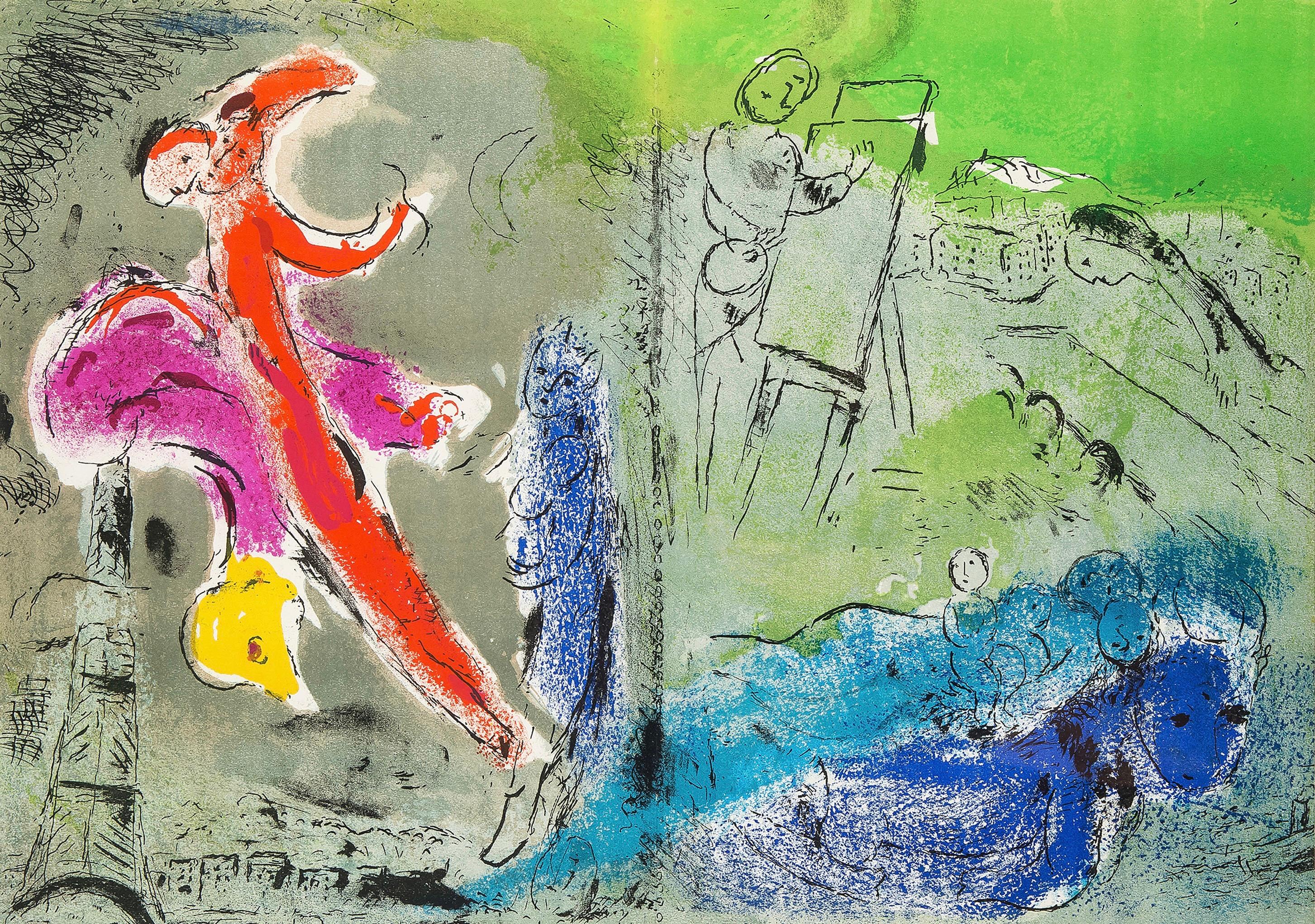
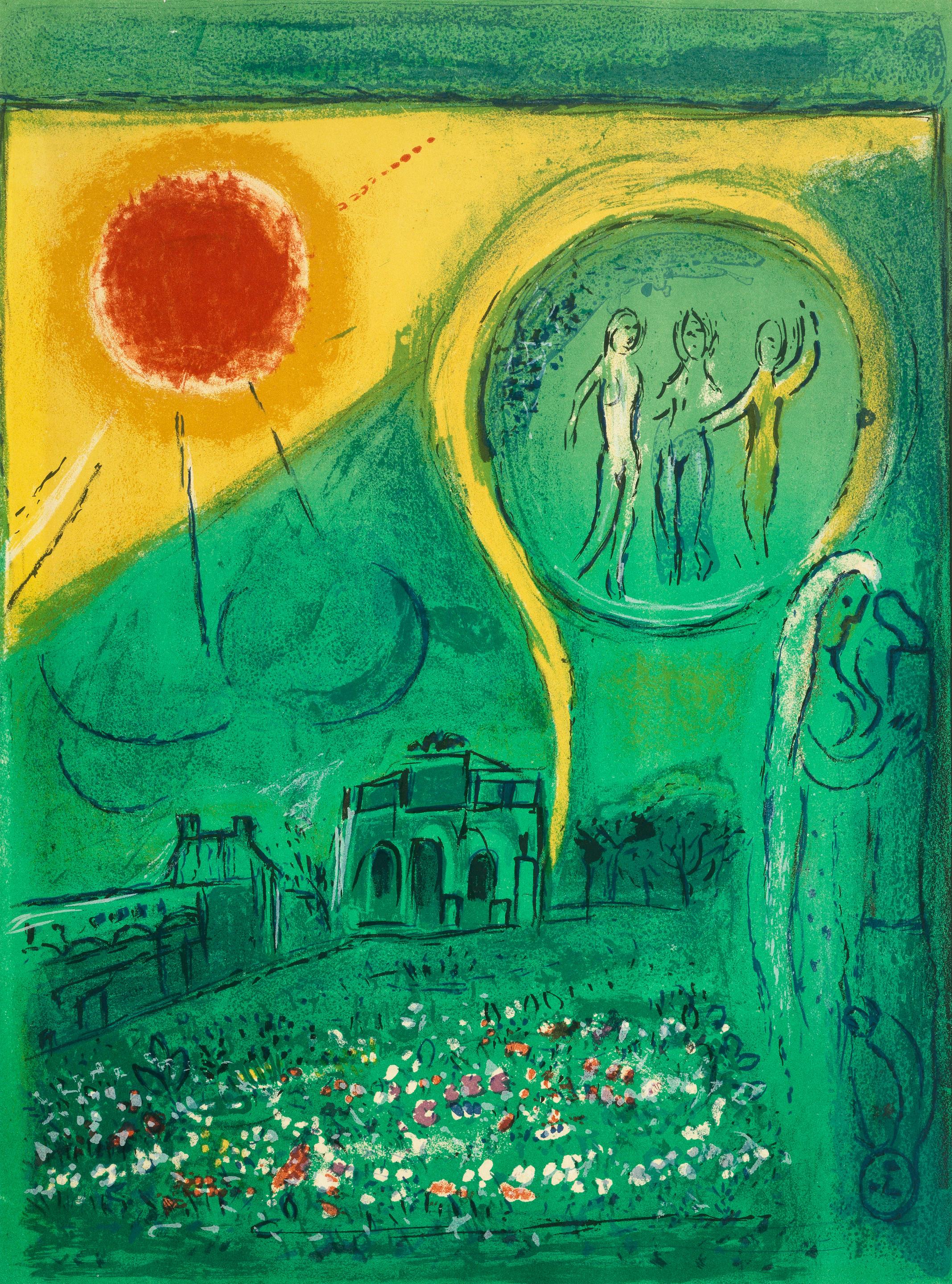
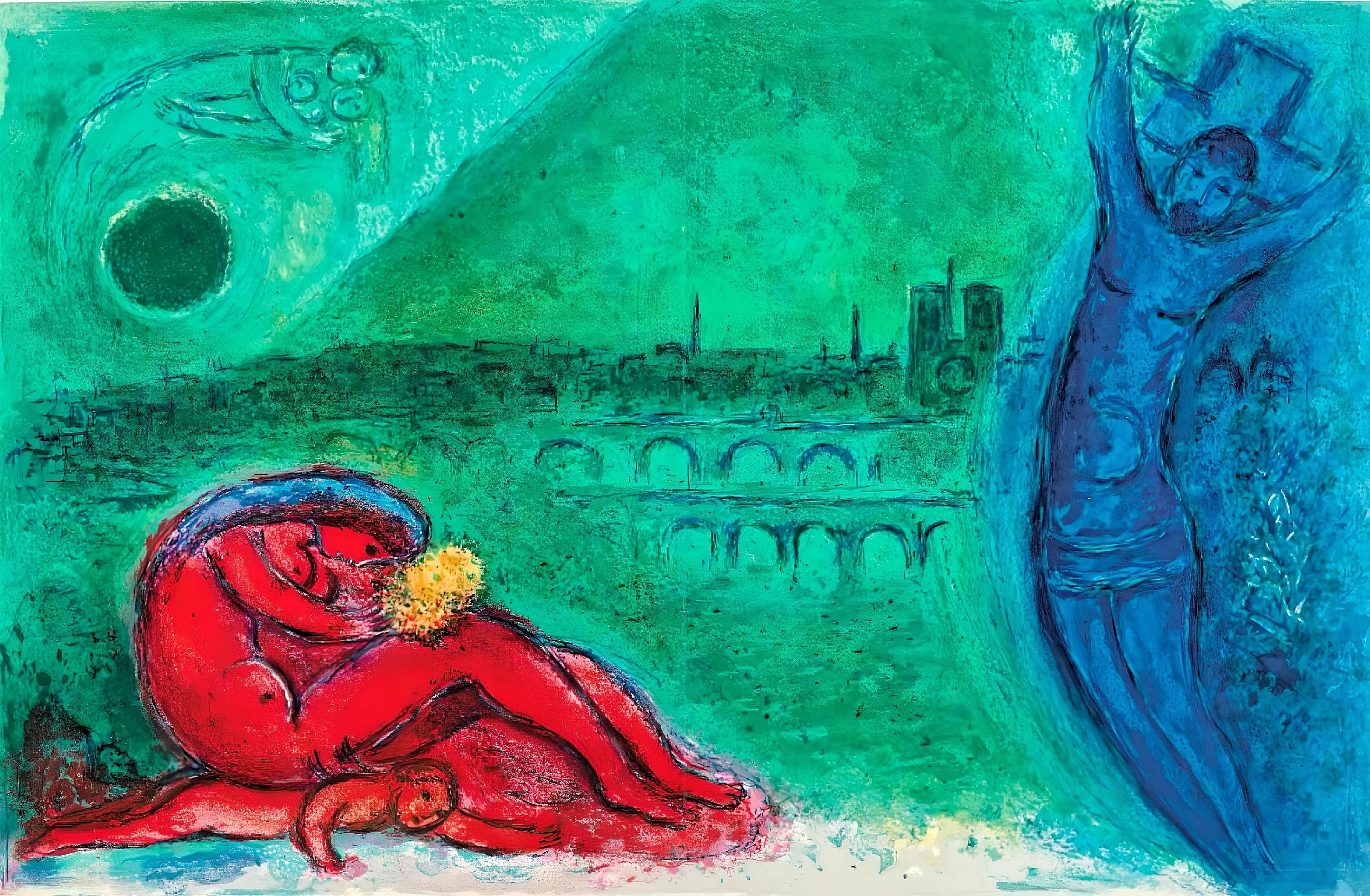
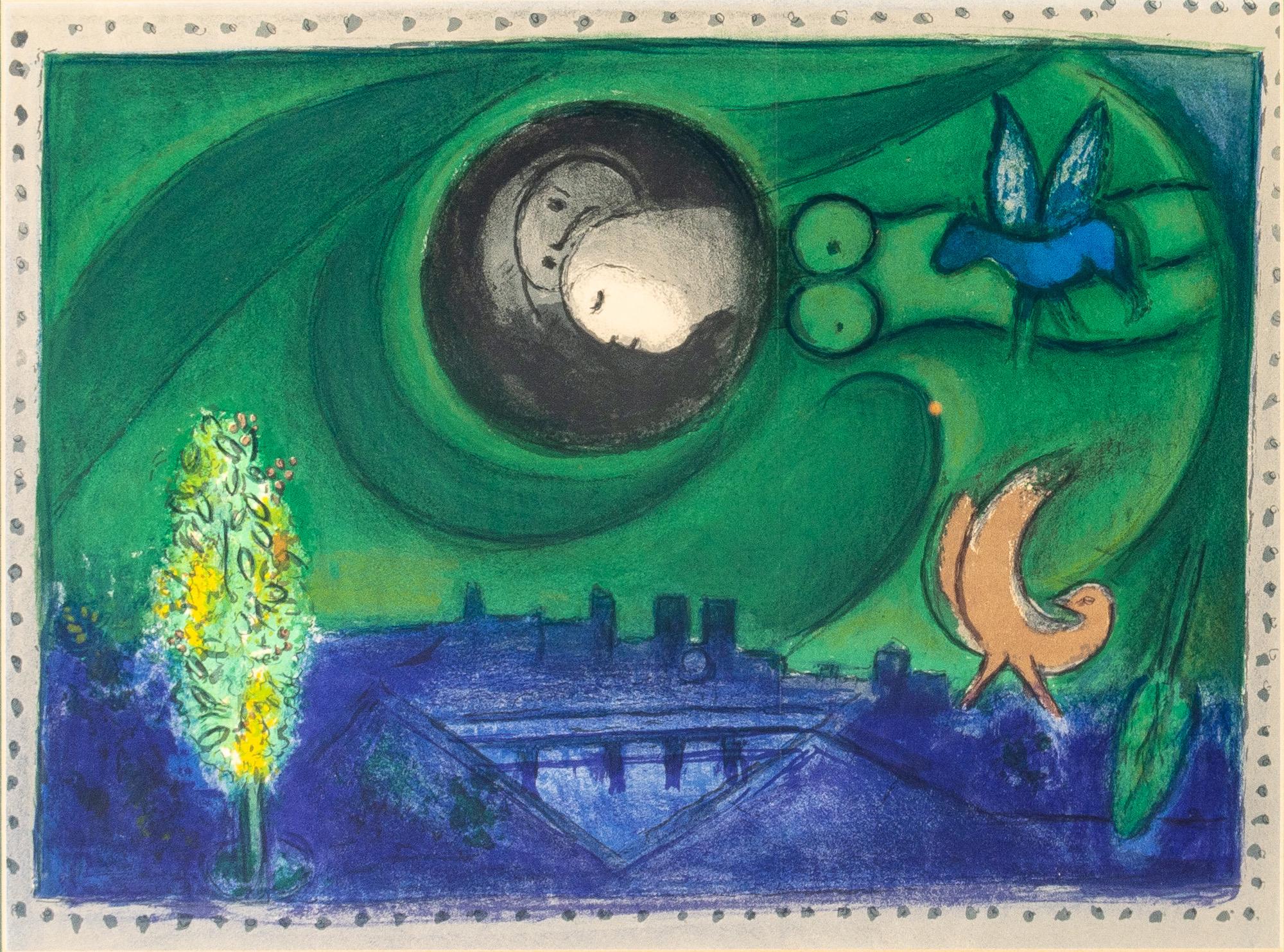
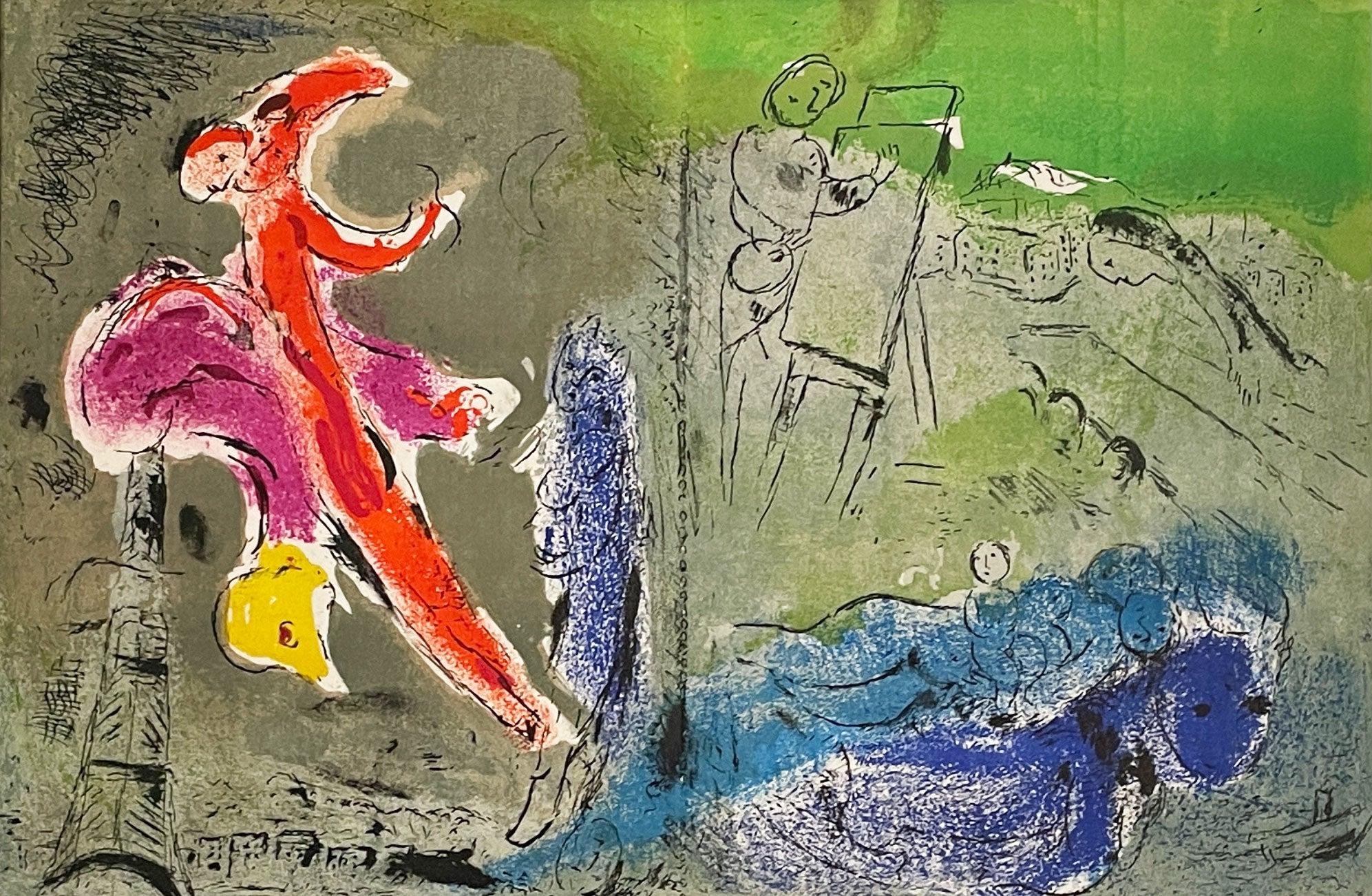
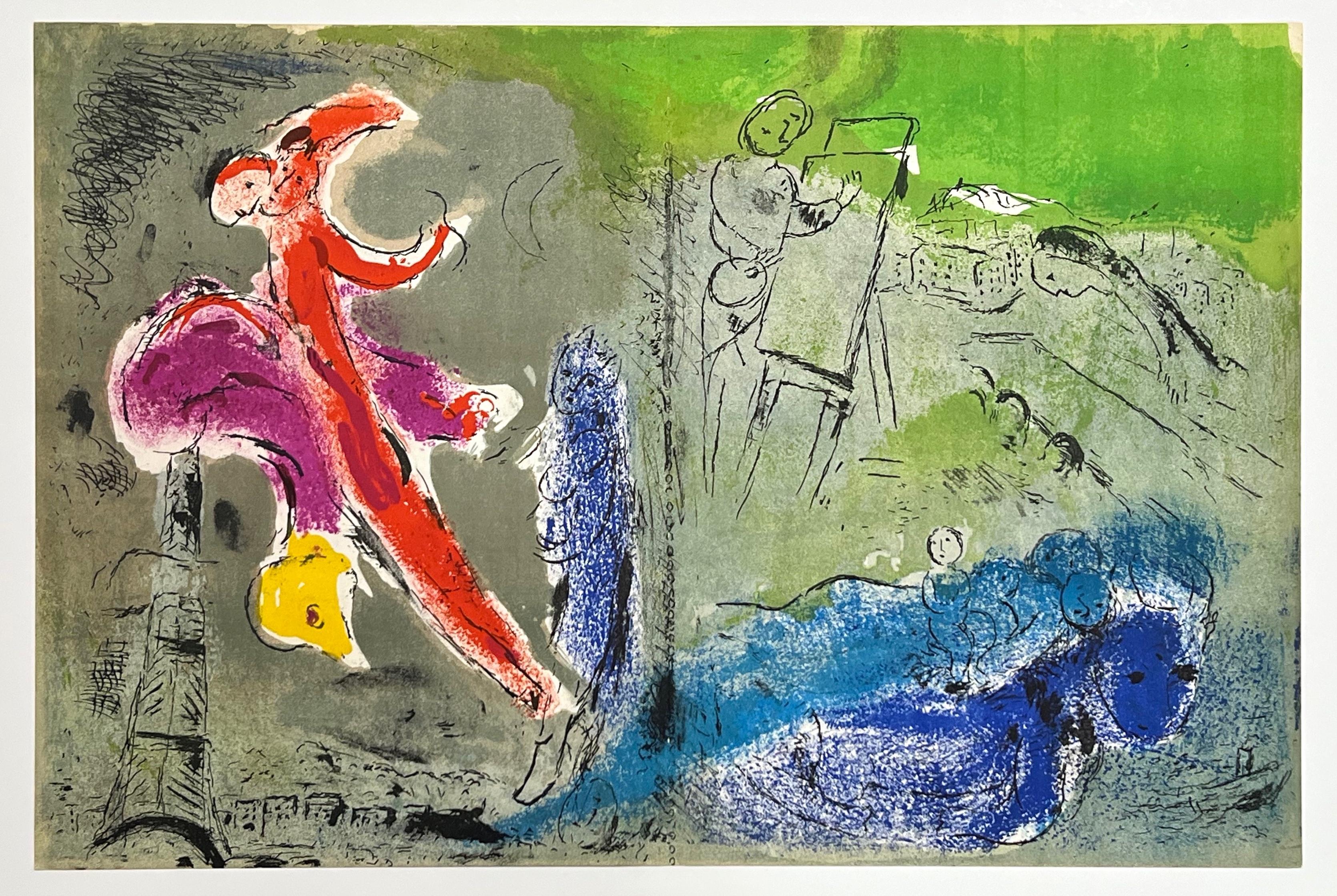
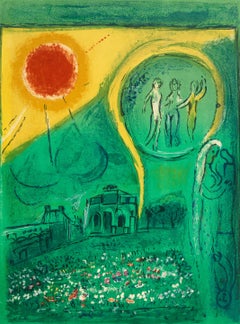
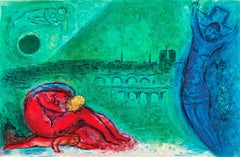
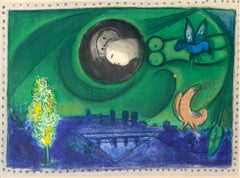
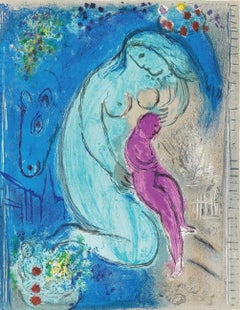
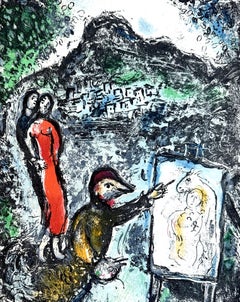
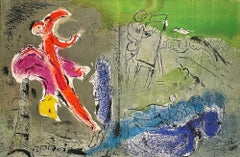
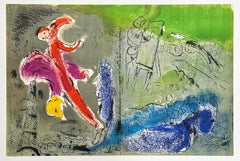
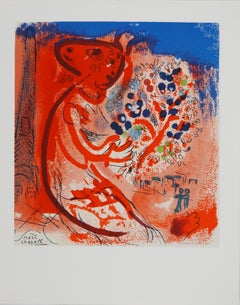
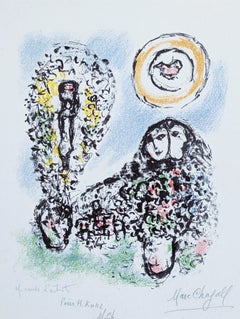
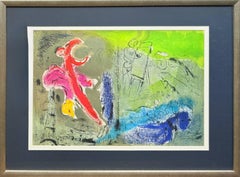
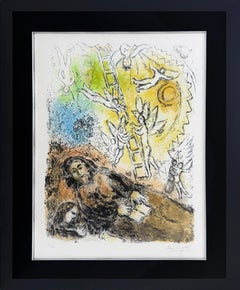
This exquisite lithograph by Marc Chagall (1887–1985), titled Place de la Concorde (Place de la Concorde), from Verve, Revue Artistique et Litteraire, Vol. VII, No. 27–28, originates from the 1953 issue published by Editions de la revue Verve, Paris, under the direction of Teriade, Editeur, Paris, and printed by Mourlot Freres, Paris, 1953. This poetic and luminous composition captures Chagall’s deeply emotional vision of Paris, blending the city’s grandeur with dreamlike tenderness. Place de la Concorde reflects Chagall’s unique ability to merge the real and the fantastical, portraying the familiar landmarks of the French capital as settings for human love, wonder, and transcendence.
Executed as a lithograph on velin du Marais paper, this work measures 14 x 10.5 inches. Unsigned and unnumbered as issued. The edition exemplifies the exquisite craftsmanship of the Mourlot Freres atelier, celebrated for its exceptional collaboration with the leading modern artists of the 20th century.
Artwork Details:
Artist: Marc Chagall (1887–1985)
Title: Place de la Concorde (Place de la Concorde), from Verve, Vol. VII, No. 27–28, 1953
Medium: Lithograph on velin du Marais paper
Dimensions: 14 x 10.5 inches
Inscription: Unsigned and unnumbered as issued
Date: 1953
Publisher: Editions de la revue Verve, Paris, under the direction of Teriade, Editeur, Paris
Printer: Mourlot Freres, Paris
Catalogue raisonne references: Cain, Julien, and Fernand Mourlot. Chagall Lithographe. Andre Sauret, Editeur, 1960, illustration 83. Cramer, Patrick, and Meret Meyer. Marc Chagall: Catalogue Raisonne Des Livres Illustres. P. Cramer ed., 1995, illustration 23.
Condition: Well preserved, consistent with age and medium
Provenance: From Verve, Revue Artistique et Litteraire, Vol. VII, No. 27–28, published by Editions de la revue Verve, Paris, 1953
About the Publication:
Verve, Revue Artistique et Litteraire was one of the most influential art periodicals of the 20th century, founded in Paris in 1937 by the visionary Greek-born publisher Teriade (Stratis Eleftheriades). Conceived as a synthesis of art and literature, Verve brought together the greatest modern artists and writers of its time—Henri Matisse, Pablo Picasso, Marc Chagall, Georges Braque, Joan Miro, Fernand Leger, and others—alongside poets and philosophers such as Paul Eluard, Albert Camus, and Jean-Paul Sartre. Each issue was a work of art in itself, luxuriously printed by master lithographers such as Mourlot Freres and produced in collaboration with leading typographers and designers. Verve became a platform for avant-garde creativity, publishing original lithographs and essays that reflected the evolving spirit of modernism. Matisse collaborated closely with Teriade from the magazine's inception, producing some of its most iconic issues, including those devoted to his paper cut-outs. The final Verve issue of 1958, which featured La Tristesse du Roi and the Nu Bleu series, stands as a testament to Matisse's enduring genius and to the publication's legacy as the definitive meeting of art, poetry, and printing craftsmanship in 20th-century France.
About the Artist:
Marc Chagall (1887–1985) was a Belarus-born French painter, printmaker, and designer whose visionary imagination, radiant color, and deeply poetic symbolism made him one of the most beloved and influential artists of the 20th century. Rooted in the imagery of his Jewish heritage and the memories of his childhood in Vitebsk, Chagall’s art wove together themes of faith, love, folklore, and fantasy with a dreamlike modern sensibility. His unique style—merging elements of Cubism, Fauvism, Expressionism, and Surrealism—defied categorization, transforming ordinary scenes into lyrical meditations on memory and emotion. Influenced by Russian icon painting, medieval religious art, and the modern innovations of artists such as Pablo Picasso, Henri Matisse, and Georges Braque, Chagall developed a profoundly personal visual language filled with floating figures, vibrant animals, musicians, and lovers that symbolized the transcendent power of imagination and love. During his early years in Paris, he became an integral part of the Ecole de Paris circle, forming friendships with Amedeo Modigliani, Fernand Leger, and Sonia Delaunay, and his creative spirit resonated with that of his peers and successors—Alexander Calder, Alberto Giacometti, Salvador Dali, Joan Miro, Wassily Kandinsky, Marcel Duchamp, and Man Ray—artists who, like Chagall, sought to push the boundaries of perception, emotion, and form. Over a prolific career that spanned painting, printmaking, stained glass, ceramics, and stage design, Chagall brought an unparalleled poetic sensibility to modern art, infusing even the most abstract subjects with human warmth and spiritual depth. His works are held in the most prestigious museums around the world, including the Museum of Modern Art, the Centre Pompidou, the Tate, and the Guggenheim, where they continue to inspire generations of artists and collectors. The highest price ever paid for a Marc Chagall artwork is approximately $28.5 million USD, achieved in 2017 at Sotheby’s New York for Les Amoureux (1928).
Marc Chagall Place de la Concorde, Chagall Verve, Chagall Mourlot Freres, Chagall Teriade, Chagall 1953 lithograph, Chagall velin du Marais, Chagall Revue Artistique et Litteraire, Chagall collectible print, Chagall modernist lithograph.