Watercolor Landscape Prints

to
71
116
37
21
46
11
Overall Width
to
Overall Height
to
37
36
21
17
8
4
3
3
3
1
1
1
42
20
18
12
6
16
54
40
123
1
2
3
1
7
4
4
2
6
11
140
74
17
94
36
32
31
27
25
24
22
20
20
16
15
15
13
13
10
9
8
8
8
25,834
6,569
3,732
2,728
1,444
50
24
133
90
Medium: Watercolor
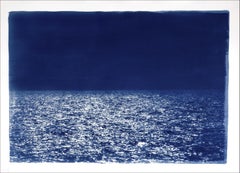
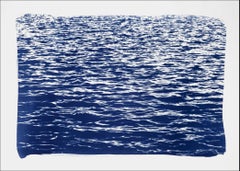
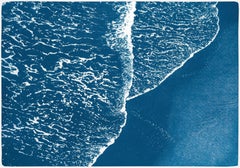
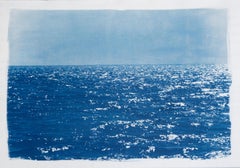
Coastal Blue Cyanotype of Day Time Seascape, Cold Waves, Nautical Painting Shore
Located in Barcelona, ES
This is an exclusive handprinted limited edition cyanotype. "Day Time Seascape in Blue" is a handmade cyanotype print portraying the vibrant reflections of the Sun as seen from the c...
Category

2010s Modern Watercolor Landscape Prints

Materials

Paper, Watercolor, Lithograph

Malibu Pine Sea View, Blue Tones California Landscape, Handmade Cyanotype, Paper
Located in Barcelona, ES
This is an exclusive handprinted limited edition cyanotype. Stunning image of a breezy "Malibu Pine Sea View". Details: + Title: Malibu Pine Sea View + Year: 2025 + Edition Size: 50...
Category

2010s Realist Watercolor Landscape Prints

Materials

Watercolor, Lithograph, Monotype

Barcelona Beach Night Horizon, Nocturnal Seascape Cyanotype on Watercolor Paper
Located in Barcelona, ES
This is an exclusive handprinted limited edition cyanotype. Outstanding "Barcelona Beach Night Horizon" shows a nocturnal seascape, taken on the Barcelona beach. Details: + Title: B...
Category

2010s Realist Watercolor Landscape Prints

Materials

Emulsion, Printer s Ink, Watercolor, Photographic Paper, Color, Photogram

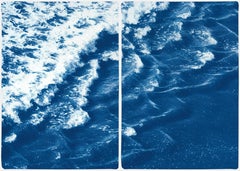
Blue Rolling Waves off Sidney, Seascape Diptych Cyanotype, Australian Coast Surf
Located in Barcelona, ES
This is an exclusive handprinted limited edition cyanotype. "Rolling Waves off Sidney" is a gorgeous original cyanotype diptych showing energetic waves embracing the Australian coas...
Category

2010s Photorealist Watercolor Landscape Prints

Materials

Emulsion, Watercolor, Lithograph, Monotype, Rag Paper

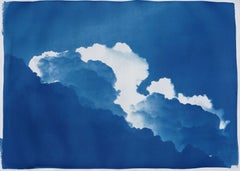
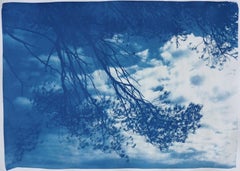
Azure Clouds, Blue Tones Cyanotype Print Landscape, Contemporary Skyscape
Located in Barcelona, ES
This is an exclusive handprinted limited edition cyanotype. "Azure Clouds" is an cyanotype of the semi-abstract patterns of clouds in the sky, showing shades of blue. Details: + Tit...
Category

2010s Naturalistic Watercolor Landscape Prints

Materials

Watercolor, Rag Paper

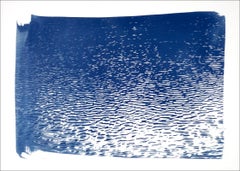
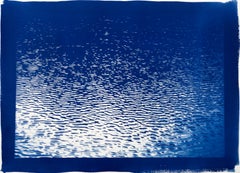
Lake Tahoe Panorama, Minimal Blue Tones Cyanotype Print on Watercolor Paper
Located in Barcelona, ES
This is an exclusive handprinted limited edition cyanotype. "Lake Tahoe Panorama" shows a sequence of abstracted ripples of the calm Tahoe waters. Details: + Title: Lake Tahoe Panor...
Category

2010s Minimalist Watercolor Landscape Prints

Materials

Watercolor, Lithograph, Rag Paper

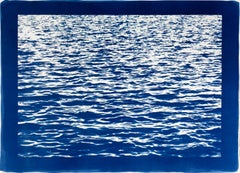
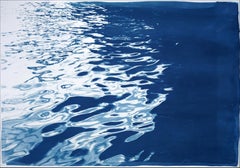
Mediterranean Blue Sea Waves, Handmade Cyanotype Print, Calming Ripples, Limited
Located in Barcelona, ES
This is an exclusive handprinted limited edition cyanotype. "Mediterranean Blue Sea Waves" is a handmade cyanotype print of the subtle tidal flow moving in on the Mediterranean Sea. ...
Category

2010s Realist Watercolor Landscape Prints

Materials

Emulsion, Watercolor

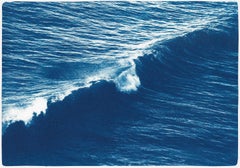
Venice Beach Seascape, Long Wave, Nautical Scene in Blue Tones, Limited Edition
Located in Barcelona, ES
This is an exclusive handprinted limited edition cyanotype. This beautiful cyanotype is titled "Long Wave in Venice Beach" and it shows an outstanding wave in one of the most iconic ...
Category

2010s Realist Watercolor Landscape Prints

Materials

Paper, Emulsion, Watercolor, Engraving, Etching, Monotype

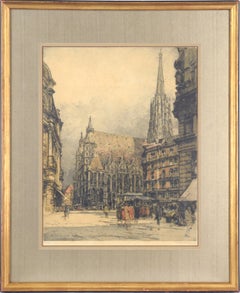
St. Stephen s Cathedral in Vienna - Hand Colored Cityscape Lithograph
Located in Soquel, CA
Detailed and dramatic hand-colored etching by Luigi Kasimir (Austrian, 1881-1962). St. Stephen's cathedral towers above the streets of Vienna, with people going about their daily bus...
Category

1920s Photorealist Watercolor Landscape Prints

Materials

Paper, Watercolor, Lithograph

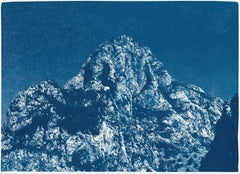
Yosemite Blue Mountain, Cyanotype on Watercolor Paper, Landscape in Indigo
Located in Barcelona, ES
This is an exclusive handprinted limited edition cyanotype. This cyanotype shows one of the mountains in beautiful Yosemite National park in California. Details: + Title: Yosemite Blue Mountain + Year: 2021 + Edition Size: 100 + Stamped and Certificate of Authenticity provided + Measurements : 70x100 cm (28x 40 in.), a standard frame size + All cyanotype prints are made on high-quality Italian watercolor paper * Frame is for illustrative purposes only. Artwork shipped carefully rolled and packaged in a tube. WHAT IS A CYANOTYPE? The cyanotype (a.k.a. sun-print) process is one of the oldest in the history of photography, dating back to the 1840's. Cyanotypes were then made famous by Anna Atkins, considered the first female photographer. Inspired by nature, we feel the need to look back at a craft that is handmade, analogue, and using an all-natural light source: the sun. Our cyanotypes are made by coating high-quality Italian watercolor paper with a light-sensitive emulsion. We then expose it in direct sunlight for several minutes using a photo negative to get the best image quality. Finally, the print is washed and fixed with water to stop the reaction and prevent fading. What you get is an amazing, royal blue image...
Category

2010s Photorealist Watercolor Landscape Prints

Materials

Emulsion, Watercolor, Photographic Paper, C Print, Engraving, Etching, M...

Pacific Sunset Waves, Contemporary Cyanotype on Paper, Navy Blue, Beach House
Located in Barcelona, ES
This is an exclusive handprinted limited edition cyanotype. "Pacific Sunset Waves" is an original cyanotype that abstractly shows the sunset reflections on the sea. Details: + Titl...
Category

2010s Realist Watercolor Landscape Prints

Materials

Emulsion, Mixed Media, Watercolor, Photographic Paper, Lithograph, Monop...

Mediterranean Seascape, Nautical Cyanotype on Watercolor Paper, Blueprint
Located in Barcelona, ES
This is an exclusive handprinted limited edition cyanotype. "Mediterranean Blue Sea Waves" is a handmade cyanotype print of the subtle tidal flow moving in on the Mediterranean Sea. ...
Category

2010s Realist Watercolor Landscape Prints

Materials

Emulsion, Watercolor, Rag Paper, Lithograph

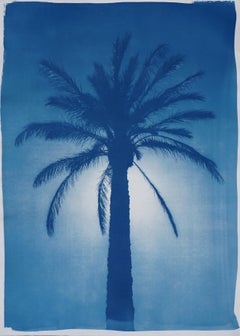
Cairo Citadel Palm, Cyanotype on Paper, Desert Botanical Tree in Blue Tones
Located in Barcelona, ES
This is an exclusive handprinted limited edition cyanotype. This cyanotype shows a desert palm tree located in the majestic mediterranean city of Cairo, Egypt. Details: + Title: C...
Category

2010s Naturalistic Watercolor Landscape Prints

Materials

Photographic Film, Other Medium, Emulsion, Watercolor, Archival Paper, P...

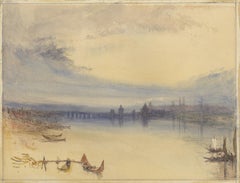
Lake Constance ; The Oberstadt at Bregenz with Lake Constance (the Bodensee) Bey
Located in Middletown, NY
Lake Constance c 1850. Watercolor on cream wove paper mounted on thin card stock, 10 x 12 1/2 inches (255 x 320 mm), wide margins. Adhesive residue aro...
Category

Mid-19th Century Victorian Watercolor Landscape Prints

Materials

Watercolor

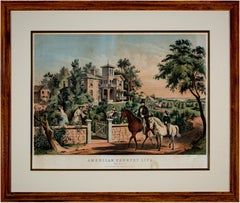
19th century color lithograph landscape figures horseback house scene trees sky
Located in Milwaukee, WI
The present print is one of several examples produced for Nathaniel Currier by his longtime collaborator Frances F. "Fanny" Palmer. Harry T. Peters wrote of her: "There is no more interesting and appealing character among the group of artists who worked for Currier & Ives than Fanny Palmer. In an age when women, well-bred women in particular, did not generally work for a living Fanny Palmer for years did exacting, full-time work in order to support a large and dependent family ... Her work ... had great charm, homeliness, and a conscientious attention to detail." One of a series of four prints showing American country life in different seasons, the image presents the viewer with a picturesque view of a successful American farm. In the foreground, a gentleman rides a horse with a young boy before a respectable Italianate country house. Two women and a young girl pick flowers in the garden and several farm workers attend to their duties. Beyond are other homes and a city on the coast. 16.63 x 23.75 inches, artwork 28.13 x 33.38 inches, frame Entitled bottom center "American Country Life - May Morning" Signed in the stone, lower left "F.F. Palmer, Del." Signed in the stone, lower right "Lith. by N. Currier" Copyrighted lower center "Entered according to Act of Congress in the year 1855 by N. Currier in the Clerk's office of the Southern District of N.Y." Inscribed bottom center "New York, Published by N. Currier 152 Nassau Street" Framed to conservation standards using silk-lined 100 percent rag matting and Museum Glass with a gold gilded liner, all housed in a stained wood moulding. Nathaniel Currier was a tall introspective man with a melancholy nature. He could captivate people with his piercing stare or charm them with his sparkling blue eyes. Nathaniel was born in Roxbury, Massachusetts on March 27th, 1813, the second of four children. His parents, Nathaniel and Hannah Currier, were distant cousins who lived a humble yet spartan life. When Nathaniel was eight years old, tragedy struck. Nathaniel’s father unexpectedly passed away leaving Nathaniel and his eleven-year-old brother Lorenzo to provide for the family. In addition to their mother, Nathaniel and Lorenzo had to care for six-year-old sister Elizabeth and two-year-old brother Charles. Nathaniel worked a series of odd jobs to support the family, and at fifteen, he started what would become a life-long career when he apprenticed in the Boston lithography shop of William and John Pendleton. A Bavarian gentleman named Alois Senefelder invented lithography just 30 years prior to young Nat Currier’s apprenticeship. While under the employ of the brothers Pendleton, Nat was taught the art of lithography by the firm’s chief printer, a French national named Dubois, who brought the lithography trade to America. Lithography involves grinding a piece of limestone flat and smooth then drawing in mirror image on the stone with a special grease pencil. After the image is completed, the stone is etched with a solution of aqua fortis leaving the greased areas in slight relief. Water is then used to wet the stone and greased-ink is rolled onto the raised areas. Since grease and water do not mix, the greased-ink is repelled by the moisture on the stone and clings to the original grease pencil lines. The stone is then placed in a press and used as a printing block to impart black on white images to paper. In 1833, now twenty-years old and an accomplished lithographer, Nat Currier left Boston and moved to Philadelphia to do contract work for M.E.D. Brown, a noted engraver and printer. With the promise of good money, Currier hired on to help Brown prepare lithographic stones of scientific images for the American Journal of Sciences and Arts. When Nat completed the contract work in 1834, he traveled to New York City to work once again for his mentor John Pendleton, who was now operating his own shop located at 137 Broadway. Soon after the reunion, Pendleton expressed an interest in returning to Boston and offered to sell his print shop to Currier. Young Nat did not have the financial resources to buy the shop, but being the resourceful type he found another local printer by the name of Stodart. Together they bought Pendleton’s business. The firm ‘Currier & Stodart’ specialized in "job" printing. They produced many different types of printed items, most notably music manuscripts for local publishers. By 1835, Stodart was frustrated that the business was not making enough money and he ended the partnership, taking his investment with him. With little more than some lithographic stones, and a talent for his trade, twenty-two year old Nat Currier set up shop in a temporary office at 1 Wall Street in New York City. He named his new enterprise ‘N. Currier, Lithographer’ Nathaniel continued as a job printer and duplicated everything from music sheets to architectural plans. He experimented with portraits, disaster scenes and memorial prints, and any thing that he could sell to the public from tables in front of his shop. During 1835 he produced a disaster print Ruins of the Planter's Hotel, New Orleans, which fell at two O’clock on the Morning of the 15th of May 1835, burying 50 persons, 40 of whom Escaped with their Lives. The public had a thirst for newsworthy events, and newspapers of the day did not include pictures. By producing this print, Nat gave the public a new way to “see” the news. The print sold reasonably well, an important fact that was not lost on Currier. Nat met and married Eliza Farnsworth in 1840. He also produced a print that same year titled Awful Conflagration of the Steamboat Lexington in Long Island Sound on Monday Evening, January 18, 1840, by which melancholy occurrence over One Hundred Persons Perished. This print sold out very quickly, and Currier was approached by an enterprising publication who contracted him to print a single sheet addition of their paper, the New York Sun. This single page paper is presumed to be the first illustrated newspaper ever published. The success of the Lexington print launched his career nationally and put him in a position to finally lift his family up. In 1841, Nat and Eliza had their first child, a son they named Edward West Currier. That same year Nat hired his twenty-one year old brother Charles and taught him the lithography trade, he also hired his artistically inclined brother Lorenzo to travel out west and make sketches of the new frontier as material for future prints. Charles worked for the firm on and off over the years, and invented a new type of lithographic crayon which he patented and named the Crayola. Lorenzo continued selling sketches to Nat for the next few years. In 1843, Nat and Eliza had a daughter, Eliza West Currier, but tragedy struck in early 1847 when their young daughter died from a prolonged illness. Nat and Eliza were grief stricken, and Eliza, driven by despair, gave up on life and passed away just four months after her daughter’s death. The subject of Nat Currier’s artwork changed following the death of his wife and daughter, and he produced many memorial prints and sentimental prints during the late 1840s. The memorial prints generally depicted grief stricken families posed by gravestones (the stones were left blank so the purchasers could fill in the names of the dearly departed). The sentimental prints usually depicted idealized portraits of women and children, titled with popular Christian names of the day. Late in 1847, Nat Currier married Lura Ormsbee, a friend of the family. Lura was a self-sufficient woman, and she immediately set out to help Nat raise six-year-old Edward and get their house in order. In 1849, Lura delivered a son, Walter Black Currier, but fate dealt them a blow when young Walter died one year later. While Nat and Lura were grieving the loss of their new son, word came from San Francisco that Nat’s brother Lorenzo had also passed away from a brief illness. Nat sank deeper into his natural quiet melancholy. Friends stopped by to console the couple, and Lura began to set an extra place at their table for these unexpected guests. She continued this tradition throughout their lives. In 1852, Charles introduced a friend, James Merritt Ives, to Nat and suggested he hire him as a bookkeeper. Jim Ives was a native New Yorker born in 1824 and raised on the grounds of Bellevue Hospital where his father was employed as superintendent. Jim was a self-trained artist and professional bookkeeper. He was also a plump and jovial man, presenting the exact opposite image of his new boss. Jim Ives met Charles Currier through Caroline Clark, the object of Jim’s affection. Caroline’s sister Elizabeth was married to Charles, and Caroline was a close friend of the Currier family. Jim eventually proposed marriage to Caroline and solicited an introduction to Nat Currier, through Charles, in hopes of securing a more stable income to support his future wife. Ives quickly set out to improve and modernize his new employer’s bookkeeping methods. He reorganized the firm’s sizable inventory, and used his artistic skills to streamline the firm’s production methods. By 1857, Nathaniel had become so dependent on Jims’ skills and initiative that he offered him a full partnership in the firm and appointed him general manager. The two men chose the name ‘Currier & Ives’ for the new partnership, and became close friends. Currier & Ives produced their prints in a building at 33 Spruce Street where they occupied the third, fourth and fifth floors. The third floor was devoted to the hand operated printing presses that were built by Nat's cousin, Cyrus Currier, at his shop Cyrus Currier & Sons in Newark, NJ. The fourth floor found the artists, lithographers and the stone grinders at work. The fifth floor housed the coloring department, and was one of the earliest production lines in the country. The colorists were generally immigrant girls, mostly German, who came to America with some formal artistic training. Each colorist was responsible for adding a single color to a print. As a colorist finished applying their color, the print was passed down the line to the next colorist to add their color. The colorists worked from a master print displayed above their table, which showed where the proper colors were to be placed. At the end of the table was a touch up artist who checked the prints for quality, touching-in areas that may have been missed as it passed down the line. During the Civil War, demand for prints became so great that coloring stencils were developed to speed up production. Although most Currier & Ives prints were colored in house, some were sent out to contract artists. The rate Currier & Ives paid these artists for coloring work was one dollar per one hundred small folios (a penny a print) and one dollar per one dozen large folios. Currier & Ives also offered uncolored prints to dealers, with instructions (included on the price list) on how to 'prepare the prints for coloring.' In addition, schools could order uncolored prints from the firm’s catalogue to use in their painting classes. Nathaniel Currier and James Merritt Ives attracted a wide circle of friends during their years in business. Some of their more famous acquaintances included Horace Greeley, Phineas T. Barnum, and the outspoken abolitionists Rev. Henry Ward, and John Greenleaf Whittier (the latter being a cousin of Mr. Currier). Nat Currier and Jim Ives described their business as "Publishers of Cheap and Popular Pictures" and produced many categories of prints. These included Disaster Scenes, Sentimental Images, Sports, Humor, Hunting Scenes, Politics, Religion, City and Rural Scenes, Trains, Ships, Fire Fighters, Famous Race Horses, Historical Portraits, and just about any other topic that satisfied the general public's taste. In all, the firm produced in excess of 7500 different titles, totaling over one million prints produced from 1835 to 1907. Nat Currier retired in 1880, and signed over his share of the firm to his son Edward. Nat died eight years later at his summer home 'Lion’s Gate' in Amesbury, Massachusetts. Jim Ives remained active in the firm until his death in 1895, when his share of the firm passed to his eldest son, Chauncey. In 1902, faced will failing health from the ravages of Tuberculosis, Edward Currier sold his share of the firm to Chauncey Ives...
Category

Mid-19th Century Romantic Watercolor Landscape Prints

Materials

Watercolor, Lithograph

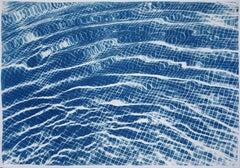
Miami Art Deco Pool, Blue Cyanotype on Paper, Abstract Shapes Water Reflections
Located in Barcelona, ES
This is an exclusive handprinted limited edition cyanotype. "Miami Art Deco Pool" shows the movements of water over a tiled swimming pool floor. Details: + Title: Miami Art Deco Poo...
Category

2010s Abstract Geometric Watercolor Landscape Prints

Materials

Emulsion, Watercolor, Photographic Paper, C Print, Lithograph, Other Medium

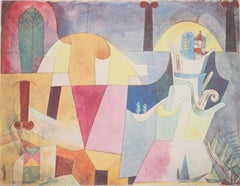
Landscape With Black Columns - Lithograph and Stencil
Located in Paris, IDF
Paul KLEE (after) Landscape With Black Columns Lithograph and stencil (Jacomet process), on canson paper Printed signature in the plate 50 x 38.2 cm (19....
Category

1960s Modern Watercolor Landscape Prints

Materials

Watercolor, Lithograph

White and Blue Abstract Nautical Cyanotype of Crashing Waters, Coastal Lifestyle
Located in Barcelona, ES
This is an exclusive handprinted limited edition cyanotype. "Abstract Crashing Water" is an original cyanotype that detailed portraits the eruptions and shapes of salty water in move...
Category

2010s Abstract Watercolor Landscape Prints

Materials

Watercolor, Lithograph, Rag Paper

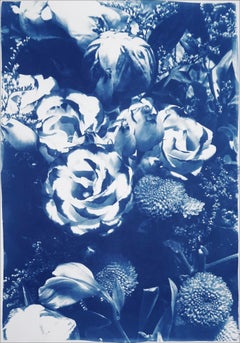
Botanical Cyanotype, Blue Flower Bouquet, Large Wild Roses Cyanotype, Watercolor
Located in Barcelona, ES
This is an exclusive handprinted limited edition cyanotype of a gorgeous blue bouquet. Details: + Title: Blue Flower Bouquet + Year: 2024 + Edition Size: 100 + Medium: Acrylic Pain...
Category

2010s Baroque Watercolor Landscape Prints

Materials

Emulsion, Watercolor, Photographic Paper, Monoprint, Monotype

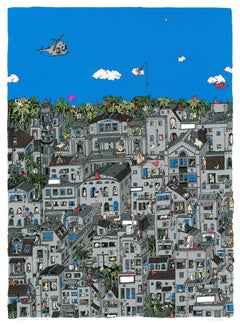
Fishing in the Clouds, fantastical jungle inspired cityscape by Guillaume Cornet
Located in Dallas, TX
GUILLAUME CORNET (b. 1987, Paris, France) Guillaume Cornet is an artist working with illustration and painting, exploring notions of abstract geometry, influenced by surreal perspec...
Category

2010s Pop Art Watercolor Landscape Prints

Materials

Watercolor, Permanent Marker, Screen, Mixed Media

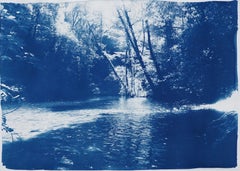
Romantic Landscape of Scandinavian Enchanted Forest, Large Lake Print Cyanotype
Located in Barcelona, ES
This is an exclusive handprinted limited edition cyanotype. Lovely scene of a hidden pond in a Scandinavian forest. Details: + Title: Scandinavian Enchanted Forest + Year: 2024 + ...
Category

2010s Romantic Watercolor Landscape Prints

Materials

Photographic Film, Emulsion, Watercolor, Photographic Paper, C Print, Co...

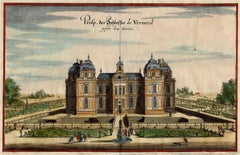
Chateau de Verneuil
Located in Middletown, NY
Engraving with hand coloring and heightening in watercolor on two leaves of expertly conjoined handmade laid paper, one leaf with a large watermark a feathered dragon, 7 1/4 x 11 1/4...
Category

Mid-17th Century Old Masters Watercolor Landscape Prints

Materials

Watercolor, Handmade Paper, Engraving

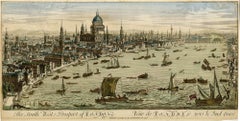
The South West Prospect of London – English School 18th century
Located in Middletown, NY
A stunning 18th century optical view of London from the Thames. London: 1760. Copper plate engraving with hand coloring in watercolor on cream laid paper with a large circular wate...
Category

Mid-18th Century English School Watercolor Landscape Prints

Materials

Watercolor, Handmade Paper, Engraving

Lake Tahoe Panorama, Nautical Landscape Cyanotype in Blue, Minimal Water Art
Located in Barcelona, ES
This is an exclusive handprinted limited edition cyanotype. "Lake Tahoe Panorama" shows a sequence of abstracted ripples of the calm Tahoe waters. Details: + Title: Lake Tahoe Panor...
Category

2010s Minimalist Watercolor Landscape Prints

Materials

Emulsion, Watercolor, C Print, Color, Engraving, Lithograph, Photogram

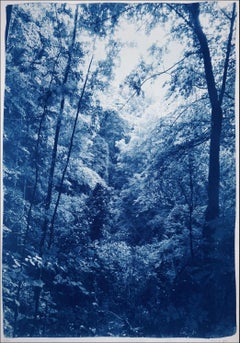
Soft Light in the Woods, Forest Landscape, Blue Tones, Handmade Cyanotype Print
Located in Barcelona, ES
This is an exclusive handprinted limited edition of a cyanotype print. This beautiful image shows the subtle afternoon light going through the woods during the summer. Details: + T...
Category

2010s Realist Watercolor Landscape Prints

Materials

Watercolor

Nocturnal Seascape, Black Sea, Nautical Cyanotype Print on Paper, Deep Navy Blue
Located in Barcelona, ES
This is an exclusive handprinted limited edition cyanotype. "Black Sea Rhythms" shows the peaceful, abstract, subtle ripples of ocean waters in movement. Details: + Title: Black Se...
Category

2010s Abstract Watercolor Landscape Prints

Materials

Watercolor, Rag Paper

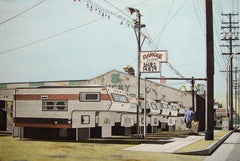
14829 East 14th Street
Located in Burlingame, CA
'14,829 East 14th Street' Hand Colored Aquatint Etching 2015 image size 10” x 15” with the paper being larger. Edition of 3' (one of three) Hand Colored...
Category

21st Century and Contemporary American Realist Watercolor Landscape Prints

Materials

Watercolor, Etching, Aquatint

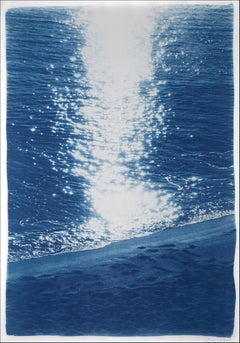
Dark Beach Sunrise, Blue Nautical Cyanotype, Watercolor Paper, Vertical Seascape
Located in Barcelona, ES
This is an exclusive handprinted limited edition cyanotype. "Dark Beach Sunrise" is a handmade cyanotype print portraying beautiful sunrise reflection on the beach. Details: + Titl...
Category

2010s Realist Watercolor Landscape Prints

Materials

Emulsion, Watercolor, Lithograph, Paper

Blue Pacific Foamy Shorelines, Horizontal Calm Seascape, Minimal Waterscape
Located in Barcelona, ES
This is an exclusive handprinted limited edition cyanotype. "Pacific Foamy Shoreline" is a handmade cyanotype print portraying a smooth wave reaching the shore. Details: + Title: Pa...
Category

2010s Minimalist Watercolor Landscape Prints

Materials

Watercolor, Lithograph, Paper

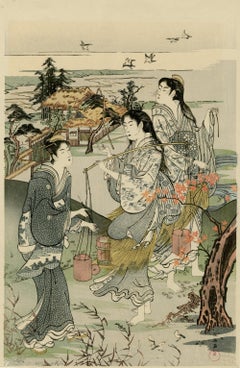
Mu-Tamagawa
Located in Middletown, NY
Woodcut in ink with embossing and hand-coloring in watercolor on laid Japon paper, 16 x 10 inches (406 x 253 mm), ōban tate-e, full margins. Scattered handling wear and toning, other...
Category

Late 19th Century Edo Watercolor Landscape Prints

Materials

Watercolor, Handmade Paper, Woodcut

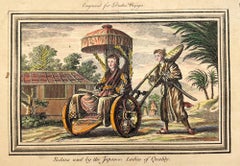
Sedans used by the Japanese Ladies of Quality – English School, 19th century
Located in Middletown, NY
Sedans used by the Japanese Ladies of Quality; One plate from Drake's Voyages London: circa 1860. Engraving with hand coloring in watercolor on cream laid paper; 7 1/2 x 10 3/4 inch...
Category

Mid-19th Century English School Watercolor Landscape Prints

Materials

Watercolor, Handmade Paper, Engraving

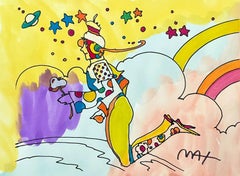
Superbly Free, Peter Max
Located in Fairfield, CT
Artist: Peter Max (1937) Title: Superbly Free Year: 2015 Medium: Watercolor and silkscreen on Fabriano paper Size: 11 x 15 inches Inscription: Signed in ink Notes: Published, printed...
Category

2010s Pop Art Watercolor Landscape Prints

Materials

Mixed Media, Watercolor, Screen

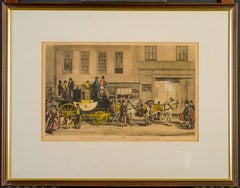
Quicksilver Royal Mail and The Blenheim
Located in Douglas, Isle of Man
James Pollard 1792-1867, was an English painter and watercolourist. Pollard was born in North London he was the son of a painter and publisher. He exhibited at the Royal Academy, Suf...
Category

1820s Watercolor Landscape Prints

Materials

Paper, Printer s Ink, Watercolor

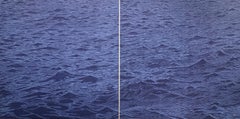
Seascape Diptych Six, Cobalt Blue Horizontal Seascape, Waves Woodcut Print
Located in Kent, CT
This large, horizontal diptych woodcut print on paper evokes the peacefulness of ocean waves depicted in shades of cobalt blue with purple undertones and the artist's addition of wat...
Category

2010s Contemporary Watercolor Landscape Prints

Materials

Archival Ink, Watercolor, Archival Paper, Color Pencil, Woodcut

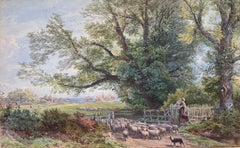
“Tending the Sheep”
Located in Southampton, NY
Beautifully executed original hand colored lithograph using gouache and watercolor. Scene in Surrey, England. Signedxwith monogram in plate lower left, Myles Birket Foster. Published by M. H. Long. Condition is very good. In original 2 inch wide birdseye maple antique frame with thick museum mat with gold innner edge. Overall 22 by 26 inches. Biography Myles Birket Foster (4 February 1825 – 27 March 1899) was a popular English illustrator, watercolour artist and engraver in the Victorian period. His name is also to be found as Myles Birkett Foster. Life and work Foster was born in North Shields, England of a primarily Quaker family, but his family moved south to London in 1830, where his father founded M. B. Foster & sons — a successful beer-bottling company. He was schooled at Hitchin, Hertfordshire and on leaving initially went into his father's business. However, noticing his talent for art, his father secured an apprenticeship with the notable wood engraver, Ebenezer Landells, where he worked on illustrations for Punch magazine and the Illustrated London News. On leaving Landells' employ, he continued to produce work for the Illustrated London News and the Illustrated London Almanack. He also found work as a book illustrator and, during the 1850s, trained himself to paint in watercolours. His illustrations of Longfellow’s Evangeline and books of poetry by other contemporaries were a great success, and he quickly became a successful artist in watercolours. Birket Foster became an Associate of the "Old" Watercolour Society (Later the Royal Watercolour Society) in 1860 and exhibited some 400 of his paintings at the Royal Academy over more than 2 decades. Birket Foster travelled widely, painting the countryside around Scotland, the Rhine Valley, the Swiss lakes and in Italy, especially Venice. In 1863 he moved to Witley, near Godalming in Surrey where he had a house ("The Hill") built. Being friendly with Edward Burne-Jones and William Morris, he had the house decorated and furnished in contemporary style, with tiles and paintings by Burne-Jones and Morris' firm, Morris and Company. The same year he published a volume of "English Landscapes," with text by Tom Taylor...
Category

1880s Impressionist Watercolor Landscape Prints

Materials

Lithograph, Watercolor, Gouache

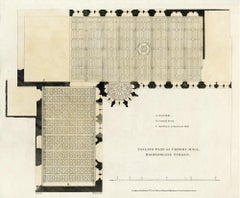
Ceiling plan of Crosby Hall, Bishopsgate Street
Located in Middletown, NY
Robert Wilkinson, 1816. Copperplate engraving on buff wove paper with hand coloring in watercolor, 10 7/8 x 13 /4 inches (275 x 336 mm), full margins. In good condition with some sc...
Category

Early 19th Century English School Watercolor Landscape Prints

Materials

Handmade Paper, Engraving, Watercolor

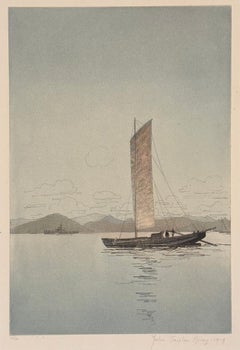
A Hong Kong Canal Boat
Located in Middletown, NY
Aquatint with hand coloring in watercolor on watermarked, laid Arches paper, 8 1/16 x 5 9/16 inches (206 x 142 mm), full margins. Signed, titled, dated, and numbered 22/40 in pencil,...
Category

Mid-20th Century American Modern Watercolor Landscape Prints

Materials

Handmade Paper, Laid Paper, Watercolor, Aquatint

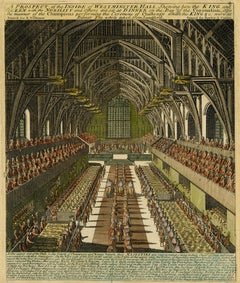
The Grand Coronation Banquet of King George IV at Westminster Hall, 17 July 1821
Located in Middletown, NY
The Grand Coronation Banquet of King George IV at Westminster Hall, the oldest building on the Parliamentary estate. A Prospect of the Inside of Westminster Hall; The Grand Coronati...
Category

Early 19th Century English School Watercolor Landscape Prints

Materials

Handmade Paper, Engraving, Watercolor

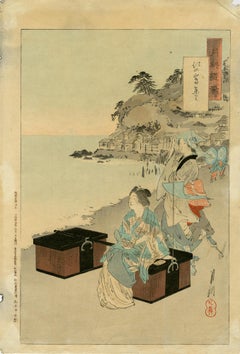
Pilgrimage to Enoshima
Located in Middletown, NY
Tokyo: Matsuki Heikichi, 1893 Woodcut in ink with embossing and hand-coloring in watercolor on handmade mulberry paper, 14 1/2 x 9 7/8 inches (368 x 251 mm), ōban tate-e, full margi...
Category

Late 19th Century Edo Watercolor Landscape Prints

Materials

Watercolor, Handmade Paper, Woodcut

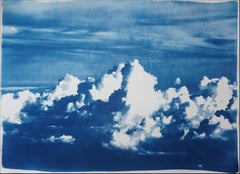
Blustery Clouds, Stormy Sky Landscape, Blue Tones, Extra Large Cyanotype, Paper
Located in Barcelona, ES
This is an exclusive handprinted limited edition cyanotype. "Blustery Clouds" is an cyanotype of the semi-abstract patterns of clouds in the sky after a storm. Details: + Title: Blu...
Category

2010s Realist Watercolor Landscape Prints

Materials

Watercolor, Paper, Emulsion, Etching, Lithograph

A Sandstorm on the Little Colorado River, Arizona
Located in Plano, TX
A Sandstorm on the Little Colorado River, Arizona. 1920. Soft-ground etching. Seeber 189. 6 7/8 x 9 3/4 (sheet 9 5/8 x 13). Edition 40, #6. Series: Desert Set. Illustrated: American ...
Category

Early 20th Century American Modern Watercolor Landscape Prints

Materials

Watercolor

View of Paris - Drawing - 1950s
Located in Roma, IT
View of Paris is an artwork realized by an anonymous artist in the 1950s.   Watercolor drawing on paper.   Good conditions. The artwork is created through deft brushstokes and har...
Category

1950s Modern Watercolor Landscape Prints

Materials

Paper, Watercolor

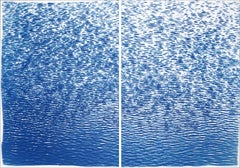
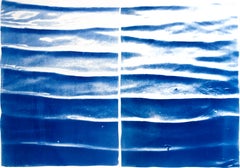
Serene Cove Ripples, Mediterranean Seascape Diptych in Blue White, Cyanotype
Located in Barcelona, ES
This is an exclusive handprinted limited edition cyanotype. "Serene Cove Ripples" is a gorgeous original cyanotype diptych showing calming sea ripples in a Mediterranean cove. Details: + Title: Serene Cove Ripples + Year: 2022 + Edition Size: 100 + Medium: Handmade Cyanotype Print on Watercolor Paper + Stamped and Certificate of Authenticity provided + Measurements : 100x140 cm (40 x 55.2 in.) Each paper measures 70x100 cm (28x 40 in.) each, a standard frame size + All cyanotype prints are made on high-quality Italian watercolor paper WHAT IS A CYANOTYPE? The cyanotype (a.k.a. sun-print) process is one of the oldest in the history of photography, dating back to the 1840's. Cyanotypes were then made famous by Anna Atkins...
Category

2010s Post-Impressionist Watercolor Landscape Prints

Materials

Watercolor, Lithograph, Paper

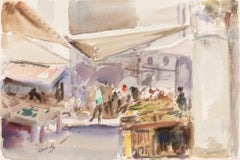
Market in Paris - Drawing by Carlo Ravagnan - 1970s
Located in Roma, IT
Watercolor on heavy paper realized by Carlo Ravagnan in 1970s. Hand signed lower left. Excellent condition. Carlo Ravagnan was born in Udine on September 4, 1911, died in Venice i...
Category

1970s Contemporary Watercolor Landscape Prints

Materials

Watercolor

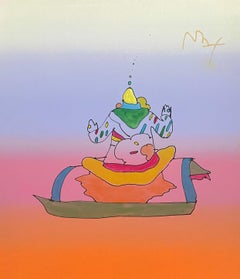
Magic Carpet Ride, Peter Max
Located in Fairfield, CT
Artist: Peter Max (1937) Title: Magic Carpet Ride Year: 2015 Medium: Watercolor and silkscreen on Fabriano paper Size: 13.75 x 12 inches Inscription: Signed in ink Notes: Published, ...
Category

2010s Pop Art Watercolor Landscape Prints

Materials

Mixed Media, Watercolor, Screen

Angel with Spread Wings, Peter Max
Located in Fairfield, CT
Artist: Peter Max (1937) Title: Angel with Spread Wings Year: 2015 Medium: Watercolor and silkscreen on Fabriano paper Size: 11 x 15 inches Inscription: Signed in ink Notes: Publishe...
Category

2010s Pop Art Watercolor Landscape Prints

Materials

Mixed Media, Watercolor, Screen

Calm Water Blue Tones Diptych of Japanese Zen Pond Ripples, Feng Shui Cyanotype
Located in Barcelona, ES
This is an exclusive handprinted limited edition cyanotype. This diptych is titled "Japanese Zen Pond Ripples", and shows ripples of water from a calming pond. Details: + Title: Ja...
Category

2010s Abstract Watercolor Landscape Prints

Materials

Emulsion, Monotype, Photographic Film, Watercolor, C Print, Lithograph, ...

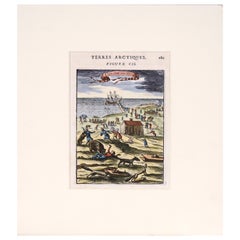
Rare Hand Colored "Cabane Des Hold" - 1st Ed "Description de l’Univers" C. 1683
Located in Soquel, CA
Rare Engraving "Cabane Des Hold, Terres Artiques, Fig CII," 1st edition "Description de l’Univers, page 281 This rare image depicts the Willem Barentsz expedition of 1597 to Novaya Zemlya, Russia. The engraving, with later hand-coloring, shows the cabin and ship of the Dutch arctic expedition of Barentsz on Novaya Zemlya (Nova Zembla), with the party being attacked (and in some cases apparently eaten) by bears and wolves. Dutch explorer, Willem Barentsz, reached the west coast of Novaya Zemlya in 1594, and in a subsequent expedition of 1596 rounded the northern point and wintered on the northeast coast. Barentsz died during the expedition, and may have been buried on the northern island. This artwork is a page from a book by 17th century cartographer and engineer, Allain Manesson Mallet (French, 1630-1706), "Description de L'Univers, contenant les differents systêmes du monde, les cartes générals et particulières de la géographie ancienne et modern." Paris: Denys Thierry, 1683. Presented in an cream colored mat. Text on verso shown in images. Mat Size: 11.5"H x 9.07"W Paper Size: 8.25"H x 5.44"W Image Size: 5.63"H x 3.75"W Alain Manesson Mallet (French, 1630-1706) was a 17th century cartographer and military engineer. He started his career as a musketeer in the army of Louis XIV, became a Sergeant-Major in the artillery and an Inspector of Fortifications. He later served under Alfonso VI, King of Portugal...
Category

1680s Realist Watercolor Landscape Prints

Materials

Paper, Ink, Gouache

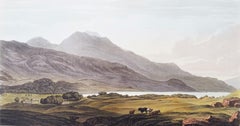
Ben Lawers /// George Fennell Robson Antique Scottish Landscape Engraving Scene
Located in Saint Augustine, FL
Artist: (after) George Fennell Robson (English, 1788-1833) Title: "Ben Lawers" (Plate 18) Portfolio: Scenery of the Grampian Mountains Year: 1819 (Second edition) Medium: Original Ha...
Category

1810s Victorian Watercolor Landscape Prints

Materials

Watercolor, Aquatint

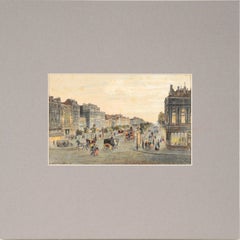
Boulevard du Temple, Paris, France - Hand Colored Lithograph
Located in Soquel, CA
Boulevard du Temple, Paris, France - Hand Colored Lithograph Detailed lithograph of a Paris street scene by Louis Valentin Emile de La Tramblais (French, 1821-1892). This piece is f...
Category

Late 19th Century Watercolor Landscape Prints

Materials

Paper, Ink, Watercolor

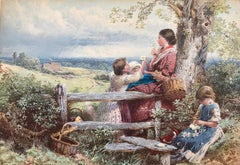
“Flower Picking”
Located in Southampton, NY
Beautifully executed original hand colored lithograph using gouache and watercolor. Scene in Surrey, England. Signedxwith monogram in plate lower left, Myles Birket Foster. Published by M. H. Long. Condition is very good. In original 2 inch wide birdseye maple antique frame with thick museum mat with gold innner edge. Overall 22 by 26 inches. Biography Myles Birket Foster (4 February 1825 – 27 March 1899) was a popular English illustrator, watercolour artist and engraver in the Victorian period. His name is also to be found as Myles Birkett Foster. Life and work Foster was born in North Shields, England of a primarily Quaker family, but his family moved south to London in 1830, where his father founded M. B. Foster sons — a successful beer-bottling company. He was schooled at Hitchin, Hertfordshire and on leaving initially went into his father's business. However, noticing his talent for art, his father secured an apprenticeship with the notable wood engraver, Ebenezer Landells, where he worked on illustrations for Punch magazine and the Illustrated London News. On leaving Landells' employ, he continued to produce work for the Illustrated London News and the Illustrated London Almanack. He also found work as a book illustrator and, during the 1850s, trained himself to paint in watercolours. His illustrations of Longfellow’s Evangeline and books of poetry by other contemporaries were a great success, and he quickly became a successful artist in watercolours. Birket Foster became an Associate of the "Old" Watercolour Society (Later the Royal Watercolour Society) in 1860 and exhibited some 400 of his paintings at the Royal Academy over more than 2 decades. Birket Foster travelled widely, painting the countryside around Scotland, the Rhine Valley, the Swiss lakes and in Italy, especially Venice. In 1863 he moved to Witley, near Godalming in Surrey where he had a house ("The Hill") built. Being friendly with Edward Burne-Jones and William Morris, he had the house decorated and furnished in contemporary style, with tiles and paintings by Burne-Jones and Morris' firm, Morris and Company. The same year he published a volume of "English Landscapes," with text by Tom Taylor...
Category

1880s Impressionist Watercolor Landscape Prints

Materials

Lithograph, Watercolor, Gouache

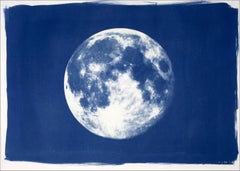
Full Blue Moon, Handmade Cyanotype on Watercolor Paper, Cosmos, Deep Blue Space
Located in Barcelona, ES
This is an exclusive handprinted limited edition cyanotype. "Blue Moon" shows an outstanding full moon with all its details. Details: + Title: Blue Moon + Year: 2022 + Edition Size...
Category

2010s Realist Watercolor Landscape Prints

Materials

Emulsion, Watercolor

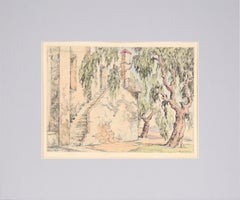
Corkscrew Willows with Stairs - Hand Colored Drypoint Etching California Adobe
Located in Soquel, CA
Delicate and detailed etching by Orpha Klinker (American, 1891-1964). At the edge of an old Adobe building, a staircase leads to the second floor. The stucco on the walls of the building is cracked, revealing the stonework below. Next to the building is a garden with Corkscrew Willow trees. One of her first projects with which Orpha impressed the public was a notable series of her large color portraits of California pioneers in the L.A.TIMES under the heading of "Speaking Of Pioneers." This led to another series on landmarks and famous tales of early California including oil paintings of historic adobes, buildings, and trees of California. Signed in plate, lower left. Paper size: 8.5"H x 10.5"W Mat size: 10"H x 12"W Orpha Klinker (American, 1891-1964) graduated from Polytechnic High School, L.A. and later studied at U.C.L.A. Art School and at the Cannon Art School. Artists Paul Lauritz and Anna A. Hills of Laguna Beach were her first art teachers. She continued her study of art at the Julian and Colarossi Academies in Europe. Some of her earliest work was in designing. Many pages of her fine pen work drawings appeared in Los Angeles newspapers, illustrating the fashions of the day, not only in clothes but in furniture and other things. Then for a time she did her work in New York City and later with the Ladies Home Journal in Philadelphia. One of her first projects with which Orpha impressed the public was a notable series of her large color portraits of California pioneers in the L.A.TIMES under the heading of "Speaking Of Pioneers." This led to another series on landmarks and famous tales of early California including oil paintings of historic adobes, buildings, and trees of California. From the Mexican border to Death Valley she roamed, meeting and painting portraits of such characters as Death Valley Scotty, Shoshone Johnny, the ancient Indian who supposedly saw the first white man come to Death Valley, Emanuel A. Speegle, "The Last of the 49'ers" (over 90 years of age) and others. Orpha was active in keeping alive the memory of one historical event in particular, the signing of the Treaty of Cahuenga ending the Mexican War...
Category

1930s American Impressionist Watercolor Landscape Prints

Materials

Paper, Watercolor, Drypoint

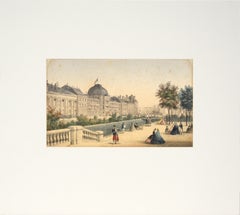
Les Tuileries, Paris - Hand Colored Lithograph 1845-1860
Located in Soquel, CA
Les Tuileries, Paris - Hand Colored Lithograph Delicate hand-colored lithograph of Tuileries Palace in Paris, France printed by Rose-Joseph Lemercier (French, 1803 - 1887). Published, Paris 1843 to 1867 by Hautecoeur Freres (Eugène and Alfred Hautecoeur (French). After Charles Riviere...
Category

Mid-19th Century Romantic Watercolor Landscape Prints

Materials

Paper, Ink, Watercolor

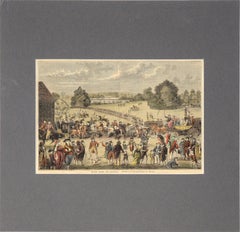
"Hyde Park on Sunday" - Hand Colored Etching from "Old and New London"
Located in Soquel, CA
"Hyde Park on Sunday" - Hand Colored Etching from "Old and New London" Detailed etching of a typical Sunday in Hyde Park around 1800 after an etching by Ed...
Category

Late 19th Century Romantic Watercolor Landscape Prints

Materials

Paper, Ink, Watercolor

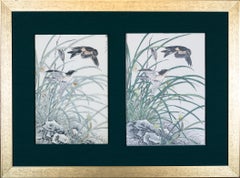
Original Japanese Watercolor and Woodblock Print of Orchid and Swallows
Located in Burbank, CA
Orchid and small swallows (Hokuri, kotsubame). Original preparatory watercolor next to the finished original Japanese woodblock print. This is a highly finished preparatory watercolo...
Category

1890s Art Deco Watercolor Landscape Prints

Materials

Watercolor, Woodcut

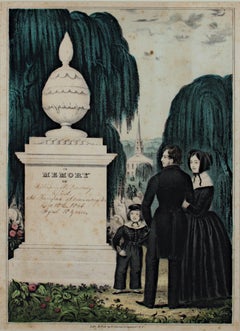
19th century color lithograph figures cemetery willow tree memorial headstone
Located in Milwaukee, WI
The present hand-colored lithograph was produced as part of the funeral and mourning culture in the United States during the 19th century. Images like this were popular as ways of remembering loved ones, an alternative to portraiture of the deceased. This lithograph shows a man, woman and child in morning clothes next to an urn-topped stone monument. Behind are additional putto-topped headstones beneath weeping willows, with a steepled church beyond. The monument contains a space where a family could inscribe the name and death dates of a deceased loved one. In this case, it has been inscribed to a young Civil War soldier: William W. Peabody Died at Fairfax Seminary, VA December 18th, 1864 Aged 18 years The young Mr. Peabody probably died in service for the Union during the American Civil War. Farifax Seminary was a Union hospital and military headquarters in Alexandria, Virginia. The hospital served nearly two thousand soldiers during the war time. Five hundred were also buried on the Seminary's grounds. 13.75 x 9.5 inches, artwork 23 x 19 inches, frame Published before 1864 Inscribed bottom center "Lith. & Pub. by N. Currier. 2 Spruce St. N.Y." Framed to conservation standards using 100 percent rag matting and TruVue Conservation Clear glass, housed in a gold gilded moulding. Nathaniel Currier was a tall introspective man with a melancholy nature. He could captivate people with his piercing stare or charm them with his sparkling blue eyes. Nathaniel was born in Roxbury, Massachusetts on March 27th, 1813, the second of four children. His parents, Nathaniel and Hannah Currier, were distant cousins who lived a humble yet spartan life. When Nathaniel was eight years old, tragedy struck. Nathaniel’s father unexpectedly passed away leaving Nathaniel and his eleven-year-old brother Lorenzo to provide for the family. In addition to their mother, Nathaniel and Lorenzo had to care for six-year-old sister Elizabeth and two-year-old brother Charles. Nathaniel worked a series of odd jobs to support the family, and at fifteen, he started what would become a life-long career when he apprenticed in the Boston lithography shop of William and John Pendleton. A Bavarian gentleman named Alois Senefelder invented lithography just 30 years prior to young Nat Currier’s apprenticeship. While under the employ of the brothers Pendleton, Nat was taught the art of lithography by the firm’s chief printer, a French national named Dubois, who brought the lithography trade to America. Lithography involves grinding a piece of limestone flat and smooth then drawing in mirror image on the stone with a special grease pencil. After the image is completed, the stone is etched with a solution of aqua fortis leaving the greased areas in slight relief. Water is then used to wet the stone and greased-ink is rolled onto the raised areas. Since grease and water do not mix, the greased-ink is repelled by the moisture on the stone and clings to the original grease pencil lines. The stone is then placed in a press and used as a printing block to impart black on white images to paper. In 1833, now twenty-years old and an accomplished lithographer, Nat Currier left Boston and moved to Philadelphia to do contract work for M.E.D. Brown, a noted engraver and printer. With the promise of good money, Currier hired on to help Brown prepare lithographic stones of scientific images for the American Journal of Sciences and Arts. When Nat completed the contract work in 1834, he traveled to New York City to work once again for his mentor John Pendleton, who was now operating his own shop located at 137 Broadway. Soon after the reunion, Pendleton expressed an interest in returning to Boston and offered to sell his print shop to Currier. Young Nat did not have the financial resources to buy the shop, but being the resourceful type he found another local printer by the name of Stodart. Together they bought Pendleton’s business. The firm ‘Currier & Stodart’ specialized in "job" printing. They produced many different types of printed items, most notably music manuscripts for local publishers. By 1835, Stodart was frustrated that the business was not making enough money and he ended the partnership, taking his investment with him. With little more than some lithographic stones, and a talent for his trade, twenty-two year old Nat Currier set up shop in a temporary office at 1 Wall Street in New York City. He named his new enterprise ‘N. Currier, Lithographer’ Nathaniel continued as a job printer and duplicated everything from music sheets to architectural plans. He experimented with portraits, disaster scenes and memorial prints, and any thing that he could sell to the public from tables in front of his shop. During 1835 he produced a disaster print Ruins of the Planter's Hotel, New Orleans, which fell at two O’clock on the Morning of the 15th of May 1835, burying 50 persons, 40 of whom Escaped with their Lives. The public had a thirst for newsworthy events, and newspapers of the day did not include pictures. By producing this print, Nat gave the public a new way to “see” the news. The print sold reasonably well, an important fact that was not lost on Currier. Nat met and married Eliza Farnsworth in 1840. He also produced a print that same year titled Awful Conflagration of the Steamboat Lexington in Long Island Sound on Monday Evening, January 18, 1840, by which melancholy occurrence over One Hundred Persons Perished. This print sold out very quickly, and Currier was approached by an enterprising publication who contracted him to print a single sheet addition of their paper, the New York Sun. This single page paper is presumed to be the first illustrated newspaper ever published. The success of the Lexington print launched his career nationally and put him in a position to finally lift his family up. In 1841, Nat and Eliza had their first child, a son they named Edward West Currier. That same year Nat hired his twenty-one year old brother Charles and taught him the lithography trade, he also hired his artistically inclined brother Lorenzo to travel out west and make sketches of the new frontier as material for future prints. Charles worked for the firm on and off over the years, and invented a new type of lithographic crayon which he patented and named the Crayola. Lorenzo continued selling sketches to Nat for the next few years. In 1843, Nat and Eliza had a daughter, Eliza West Currier, but tragedy struck in early 1847 when their young daughter died from a prolonged illness. Nat and Eliza were grief stricken, and Eliza, driven by despair, gave up on life and passed away just four months after her daughter’s death. The subject of Nat Currier’s artwork changed following the death of his wife and daughter, and he produced many memorial prints and sentimental prints during the late 1840s. The memorial prints generally depicted grief stricken families posed by gravestones (the stones were left blank so the purchasers could fill in the names of the dearly departed). The sentimental prints usually depicted idealized portraits of women and children, titled with popular Christian names of the day. Late in 1847, Nat Currier married Lura Ormsbee, a friend of the family. Lura was a self-sufficient woman, and she immediately set out to help Nat raise six-year-old Edward and get their house in order. In 1849, Lura delivered a son, Walter Black Currier, but fate dealt them a blow when young Walter died one year later. While Nat and Lura were grieving the loss of their new son, word came from San Francisco that Nat’s brother Lorenzo had also passed away from a brief illness. Nat sank deeper into his natural quiet melancholy. Friends stopped by to console the couple, and Lura began to set an extra place at their table for these unexpected guests. She continued this tradition throughout their lives. In 1852, Charles introduced a friend, James Merritt Ives, to Nat and suggested he hire him as a bookkeeper. Jim Ives was a native New Yorker born in 1824 and raised on the grounds of Bellevue Hospital where his father was employed as superintendent. Jim was a self-trained artist and professional bookkeeper. He was also a plump and jovial man, presenting the exact opposite image of his new boss. Jim Ives met Charles Currier through Caroline Clark, the object of Jim’s affection. Caroline’s sister Elizabeth was married to Charles, and Caroline was a close friend of the Currier family. Jim eventually proposed marriage to Caroline and solicited an introduction to Nat Currier, through Charles, in hopes of securing a more stable income to support his future wife. Ives quickly set out to improve and modernize his new employer’s bookkeeping methods. He reorganized the firm’s sizable inventory, and used his artistic skills to streamline the firm’s production methods. By 1857, Nathaniel had become so dependent on Jims’ skills and initiative that he offered him a full partnership in the firm and appointed him general manager. The two men chose the name ‘Currier & Ives’ for the new partnership, and became close friends. Currier & Ives produced their prints in a building at 33 Spruce Street where they occupied the third, fourth and fifth floors. The third floor was devoted to the hand operated printing presses that were built by Nat's cousin, Cyrus Currier, at his shop Cyrus Currier & Sons in Newark, NJ. The fourth floor found the artists, lithographers and the stone grinders at work. The fifth floor housed the coloring department, and was one of the earliest production lines in the country. The colorists were generally immigrant girls, mostly German, who came to America with some formal artistic training. Each colorist was responsible for adding a single color to a print. As a colorist finished applying their color, the print was passed down the line to the next colorist to add their color. The colorists worked from a master print displayed above their table, which showed where the proper colors were to be placed. At the end of the table was a touch up artist who checked the prints for quality, touching-in areas that may have been missed as it passed down the line. During the Civil War, demand for prints became so great that coloring stencils were developed to speed up production. Although most Currier & Ives prints were colored in house, some were sent out to contract artists. The rate Currier & Ives paid these artists for coloring work was one dollar per one hundred small folios (a penny a print) and one dollar per one dozen large folios. Currier & Ives also offered uncolored prints to dealers, with instructions (included on the price list) on how to 'prepare the prints for coloring.' In addition, schools could order uncolored prints from the firm’s catalogue to use in their painting classes. Nathaniel Currier and James Merritt Ives attracted a wide circle of friends during their years in business. Some of their more famous acquaintances included Horace Greeley, Phineas T. Barnum, and the outspoken abolitionists Rev. Henry Ward, and John Greenleaf Whittier (the latter being a cousin of Mr. Currier). Nat Currier and Jim Ives described their business as "Publishers of Cheap and Popular Pictures" and produced many categories of prints. These included Disaster Scenes, Sentimental Images, Sports, Humor, Hunting Scenes, Politics, Religion, City and Rural Scenes, Trains, Ships, Fire Fighters, Famous Race Horses, Historical Portraits, and just about any other topic that satisfied the general public's taste. In all, the firm produced in excess of 7500 different titles, totaling over one million prints produced from 1835 to 1907. Nat Currier retired in 1880, and signed over his share of the firm to his son Edward. Nat died eight years later at his summer home 'Lion’s Gate' in Amesbury, Massachusetts. Jim Ives remained active in the firm until his death in 1895, when his share of the firm passed to his eldest son, Chauncey. In 1902, faced will failing health from the ravages of Tuberculosis, Edward Currier sold his share of the firm to Chauncey Ives...
Category

Mid-19th Century Romantic Watercolor Landscape Prints

Materials

Watercolor, Lithograph

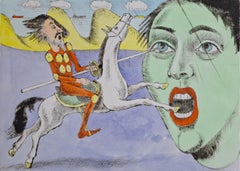
Don Quixote and apparition - Figurative Drypoint Print, Colorful, Polish Art
Located in Warsaw, PL
Subject for this artwork comes from Miguel de Cervantes' book. CZESLAW TUMIELEWICZ (b. 1942) In 1968, he studied at the Architecture faculty of Gdank, before continuing his course a...
Category

Early 2000s Contemporary Watercolor Landscape Prints

Materials

Paper, Watercolor, Drypoint

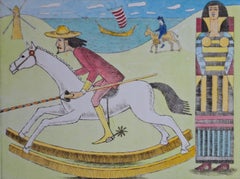
Dulcinea and Don Quixote - Figurative Drypoint Print, Colorful, Polish Art
Located in Warsaw, PL
Colorful figurative drypoint print by Polish artist Czeslaw Tumielewicz. Subject for this artwork comes from Miguel de Cervantes' book. The print is signed, it comes from edition lim...
Category

2010s Contemporary Watercolor Landscape Prints

Materials

Paper, Drypoint, Watercolor

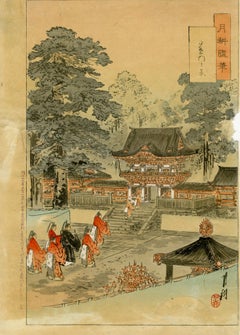
Toshogu Shrine
Located in Middletown, NY
In image of the Tokugawa family paying homage to Tosho-gu Shrine in Nikko. Tokyo: Matsuki Heikichi, 1896 Woodcut in ink with embossing and hand-coloring in watercolor on handmade m...
Category

Late 19th Century Edo Watercolor Landscape Prints

Materials

Watercolor, Handmade Paper, Woodcut

Watercolor landscape prints for sale on 1stDibs.

Find a wide variety of authentic Watercolor landscape prints available on 1stDibs. While artists have worked in this medium across a range of time periods, art made with this material during the 21st Century is especially popular. If you’re looking to add landscape prints created with this material to introduce a provocative pop of color and texture to an otherwise neutral space in your home, the works available on 1stDibs include elements of blue, purple, yellow and other colors. There are many well-known artists whose body of work includes ceramic sculptures. Popular artists on 1stDibs associated with pieces like this include Kind of Cyan, Guillaume Cornet, Peter Max, and Deborah Freedman. Frequently made by artists working in the Contemporary, Pop Art, all of these pieces for sale are unique and many will draw the attention of guests in your home. Not every interior allows for large Watercolor landscape prints, so small editions measuring 0.01 inches across are also available