Woodcut Landscape Prints
to
319
580
126
56
29
30
Overall Width
to
Overall Height
to
289
192
106
27
20
16
4
4
2
2
1
169
28
13
12
12
7
98
608
111
8
12
238
47
30
23
62
18
19
15
3
526
275
19
446
260
190
155
117
99
74
65
62
61
56
48
48
39
35
35
31
25
22
22
4,865
6,824
3,577
2,692
1,399
79
177
557
165
Medium: Woodcut
Composition (Morane, N° 100), Les Petites Fleurs de St. Françoise, Émile Bernard
Located in Southampton, NY
Wood engraving on vergé d'Arches paper. Inscription: unsigned and unnumbered, as issued. Good condition. Notes: From the volume, Les Petites Fleurs de St. François, 1928. Published b...
Category
1920s Post-Impressionist Woodcut Landscape Prints
Materials
Woodcut
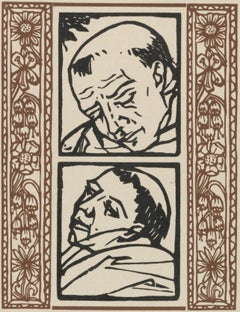
Composition (Morane, N° 100), Les Petites Fleurs de St. Françoise, Émile Bernard
Located in Southampton, NY
Wood engraving on vergé d'Arches paper. Inscription: unsigned and unnumbered, as issued. Good condition. Notes: From the volume, Les Petites Fleurs de St. François, 1928. Published b...
Category
1920s Post-Impressionist Woodcut Landscape Prints
Materials
Woodcut
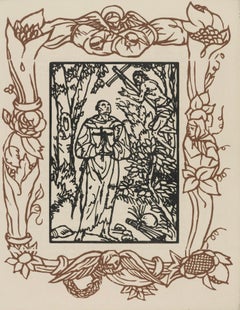
Composition (Morane, N° 100), Les Petites Fleurs de St. Françoise, Émile Bernard
Located in Southampton, NY
Wood engraving on vergé d'Arches paper. Inscription: unsigned and unnumbered, as issued. Good condition. Notes: From the volume, Les Petites Fleurs de St. François, 1928. Published b...
Category
1920s Post-Impressionist Woodcut Landscape Prints
Materials
Woodcut
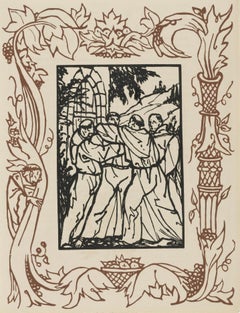
Composition (Morane, N° 100), Les Petites Fleurs de St. Françoise, Émile Bernard
Located in Southampton, NY
Wood engraving on vergé d'Arches paper. Inscription: unsigned and unnumbered, as issued. Good condition. Notes: From the volume, Les Petites Fleurs de St. François, 1928. Published b...
Category
1920s Post-Impressionist Woodcut Landscape Prints
Materials
Woodcut
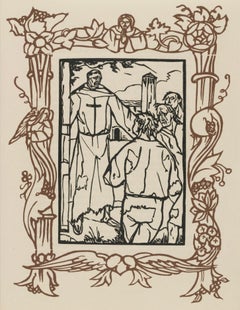
Composition (Morane, N° 100), Les Petites Fleurs de St. Françoise, Émile Bernard
Located in Southampton, NY
Wood engraving on vergé d'Arches paper. Inscription: unsigned and unnumbered, as issued. Good condition. Notes: From the volume, Les Petites Fleurs de St. François, 1928. Published b...
Category
1920s Post-Impressionist Woodcut Landscape Prints
Materials
Woodcut
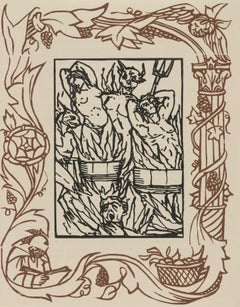
Composition (Morane, N° 100), Les Petites Fleurs de St. Françoise, Émile Bernard
Located in Southampton, NY
Wood engraving on vergé d'Arches paper. Inscription: unsigned and unnumbered, as issued. Good condition. Notes: From the volume, Les Petites Fleurs de St. François, 1928. Published b...
Category
1920s Post-Impressionist Woodcut Landscape Prints
Materials
Woodcut
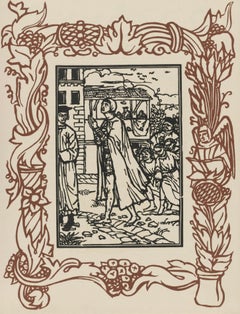
Composition (Morane, N° 100), Les Petites Fleurs de St. Françoise, Émile Bernard
Located in Southampton, NY
Wood engraving on vergé d'Arches paper. Inscription: unsigned and unnumbered, as issued. Good condition. Notes: From the volume, Les Petites Fleurs de St. François, 1928. Published b...
Category
1920s Post-Impressionist Woodcut Landscape Prints
Materials
Woodcut
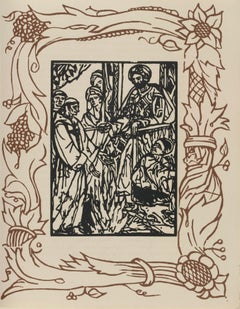
Composition (Morane, N° 100), Les Petites Fleurs de St. Françoise, Émile Bernard
Located in Southampton, NY
Wood engraving on vergé d'Arches paper. Inscription: unsigned and unnumbered, as issued. Good condition. Notes: From the volume, Les Petites Fleurs de St. François, 1928. Published b...
Category
1920s Post-Impressionist Woodcut Landscape Prints
Materials
Woodcut
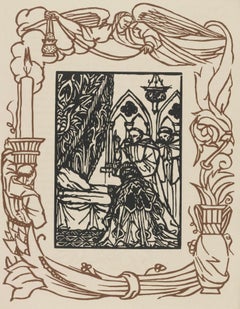
Composition (Morane, N° 100), Les Petites Fleurs de St. Françoise, Émile Bernard
Located in Southampton, NY
Wood engraving on vergé d'Arches paper. Inscription: unsigned and unnumbered, as issued. Good condition. Notes: From the volume, Les Petites Fleurs de St. François, 1928. Published b...
Category
1920s Post-Impressionist Woodcut Landscape Prints
Materials
Woodcut
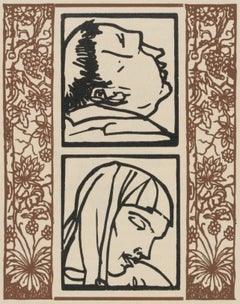
Composition (Morane, N° 100), Les Petites Fleurs de St. Françoise, Émile Bernard
Located in Southampton, NY
Wood engraving on vergé d'Arches paper. Inscription: unsigned and unnumbered, as issued. Good condition. Notes: From the volume, Les Petites Fleurs de St. François, 1928. Published b...
Category
1920s Post-Impressionist Woodcut Landscape Prints
Materials
Woodcut
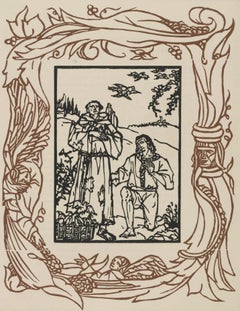
Composition (Morane, N° 100), Les Petites Fleurs de St. Françoise, Émile Bernard
Located in Southampton, NY
Wood engraving on vergé d'Arches paper. Inscription: unsigned and unnumbered, as issued. Good condition. Notes: From the volume, Les Petites Fleurs de St. François, 1928. Published b...
Category
1920s Post-Impressionist Woodcut Landscape Prints
Materials
Woodcut
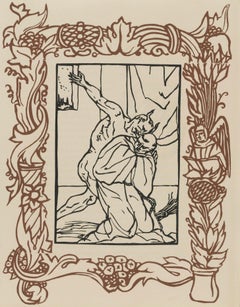
Composition (Morane, N° 100), Les Petites Fleurs de St. Françoise, Émile Bernard
Located in Southampton, NY
Wood engraving on vergé d'Arches paper. Inscription: unsigned and unnumbered, as issued. Good condition. Notes: From the volume, Les Petites Fleurs de St. François, 1928. Published b...
Category
1920s Post-Impressionist Woodcut Landscape Prints
Materials
Woodcut
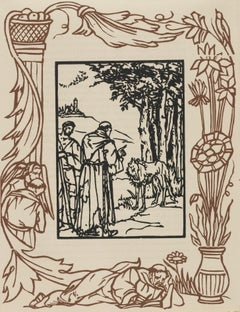
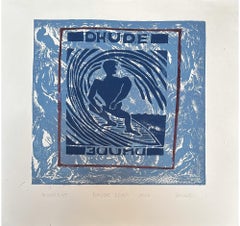
Dhude Logo - Surfing Art - Figurative - Woodcut Print By Marc Zimmerman
Located in Carmel, CA
Dhude Logo - Surfing Art - Figurative - Woodcut Print By Marc Zimmerman
Limited Edition 01/04
This masterwork is exhibited in the Zimmerman Gallery, Carmel CA.
Immerse yourself in...
Category
2010s Contemporary Woodcut Landscape Prints
Materials
Woodcut
Bernard, Composition, Éloge de Émile Bernard (after)
Located in Southampton, NY
Woodcut on vélin d’Arches paper. Inscription: unsigned and unnumbered, as issued. Good condition. Notes: From the volume, Éloge de Émile Bernard, 1962. Published by Editions d'Art Ma...
Category
1960s Post-Impressionist Woodcut Landscape Prints
Materials
Woodcut


$796 Sale Price
20% Off
Bernard, Composition, Éloge de Émile Bernard (after)
Located in Southampton, NY
Woodcut on vélin d’Arches paper. Inscription: unsigned and unnumbered, as issued. Good condition. Notes: From the volume, Éloge de Émile Bernard, 1962. Published by Editions d'Art Ma...
Category
1960s Post-Impressionist Woodcut Landscape Prints
Materials
Woodcut

$796 Sale Price
20% Off
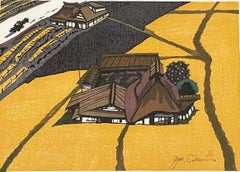
FARMHOUSE WITH YELLOW FIELDS
Located in Portland, ME
Sekino, Junchiro (Jaoanese, 1914-1988), FARMHOUSE WITH YELLOW FIELDS. Color Woodblock, not dated. Signed, Lower right. 13 3/8 x 19 inches, framed to 20 x 25 inches. In excellent cond...
Category
Mid-20th Century Woodcut Landscape Prints
Materials
Woodcut
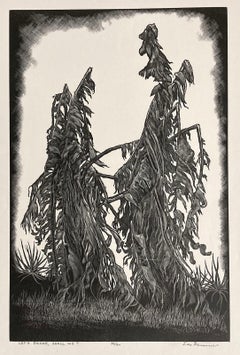
Leo Meissner, Let
s Dance, Shall We?
By Leo Meissner
Located in New York, NY
Detroit-born Leo Meissner lived in New York and was respected as a painter, draftsman, and illustrator, but is most known for his wood engravings. His ski...
Category
Mid-20th Century Modern Woodcut Landscape Prints
Materials
Woodcut
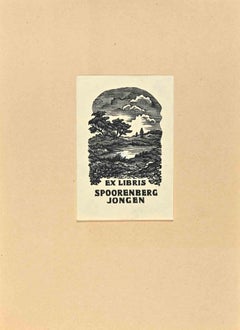
Ex Libris - Spoorenberg - Woodcut Print - Mid-20th Century
Located in Roma, IT
Ex Libris - Spoorenberg is a Modern Artwork realized in the mid-20th Century.
Woodcut print on paper.
The work is glued on a cardboard.
Good conditions.
Category
Mid-20th Century Woodcut Landscape Prints
Materials
Woodcut
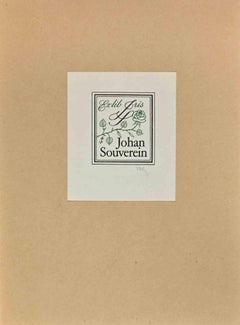
Ex Libris - Johan Souverein - Woodcut Print - Mid-20th Century
Located in Roma, IT
Ex Libris - Johan Souverein is a Modern Artwork realized in the mid-20th Century.
Woodcut print on paper.
Monogrammed on the lower.
The work is glued on a cardboard.
Good condit...
Category
Mid-20th Century Woodcut Landscape Prints
Materials
Woodcut
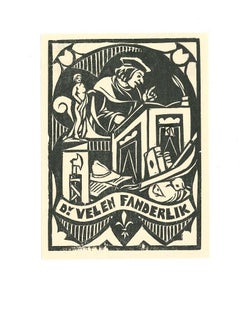
Ex Libris Fanderlik - Woodcut Print - Mid-20th Century
Located in Roma, IT
Ex Libris Fanderlik is a Contemporary Artwork realized in the mid-20th Century.
B/W woodcut print on ivory-colored paper.
The work is glued on cardboard.
Total dimensions: 21...
Category
Mid-20th Century Woodcut Landscape Prints
Materials
Woodcut
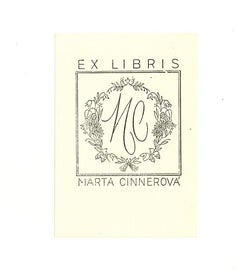
Ex Libris Marta Cinnerova - Woodcut Print - Mid-20th Century
Located in Roma, IT
Ex Libris Marta Cinnerova is a Contemporary Artwork realized in the mid-20th Century.
B/W Lithograph Artwork on ivory-colored paper.
The work is glued on cardboard.
Total dime...
Category
Mid-20th Century Modern Woodcut Landscape Prints
Materials
Woodcut
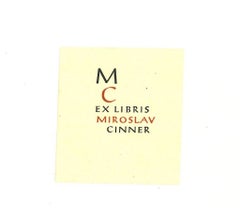
Ex Libris Cinner - Woodcut Print - Mid-20th Century
Located in Roma, IT
Ex Libris Marta Cinner is a Contemporary Artwork realized in the mid-20th Century.
Artwork on ivory-colored paper. The title is inscripted in the center in red and black.
The work ...
Category
Mid-20th Century Modern Woodcut Landscape Prints
Materials
Woodcut
Ex Libris Benes - Woodcut Print - Mid-20th Century
Located in Roma, IT
Ex Libris Benes is a Contemporary Artwork realized in the mid-20th Century.
B/W woodcut print on ivory-colored paper.
The work is glued on cardboard.
Total dimensions: 21 x 1...
Category
Mid-20th Century Modern Woodcut Landscape Prints
Materials
Woodcut

Ex Libris Marta Cinnerova - Woodcut Print - Mid-20th Century
Located in Roma, IT
Ex Libris Marta Cinnerova is a Contemporary Artwork realized in the mid-20th Century.
B/W Lithograph Artwork on ivory-colored paper.
The work is glued on cardboard.
Total dime...
Category
Mid-20th Century Modern Woodcut Landscape Prints
Materials
Woodcut
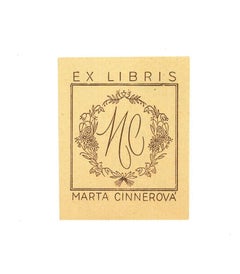
Ex Libris Heynova - Woodcut Print - Mid-20th Century
Located in Roma, IT
Ex Libris Heynova is a Contemporary Artwork realized in the mid-20th Century.
B/W Offset Artwork on ivory-colored paper.
The work is glued on cardboard.
Total dimensions: 21 x...
Category
Mid-20th Century Modern Woodcut Landscape Prints
Materials
Woodcut
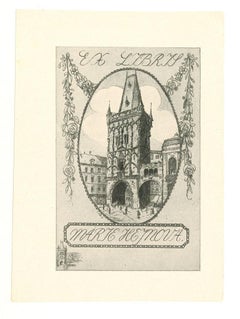
Ex Libris Susi Kolar - Woodcut Print - Mid-20th Century
Located in Roma, IT
Ex Libris Susi Kolar is a Contemporary Artwork realized in the mid-20th Century.
B/W woodcut print on ivory-colored paper. Sigled in pencil on the lower central margin.
The work ...
Category
Mid-20th Century Woodcut Landscape Prints
Materials
Woodcut
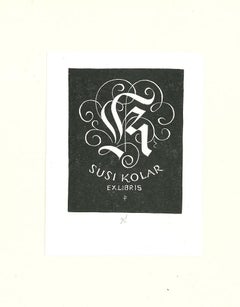
Ex Libris Dolezal - Woodcut Print - Mid-20th Century
Located in Roma, IT
Ex Libris Dolezal is a Contemporary Artwork realized in the mid-20th Century.
Woodcut print on ivory-colored paper.
The work is glued on cardboard.
Total dimensions: 21 x 15 ...
Category
Mid-20th Century Woodcut Landscape Prints
Materials
Woodcut
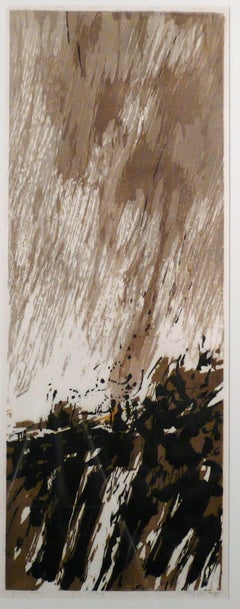
SPRING RAIN
By Seong Moy
Located in Portland, ME
Moy, Seong (American, born China, 1921-2013). SPRING RAIN. Color woodcut, 1963. Edition of 210 published by IGAS. Signed, numbered 188/210, and titled in p...
Category
1960s Woodcut Landscape Prints
Materials
Woodcut
$1,200 Sale Price
20% Off
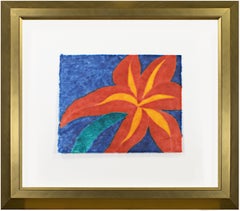
Narcissus Braziliana
original woodcut
monotype signed by Carol Summers
Located in Milwaukee, WI
The present artwork is a vibrant and colorful example of the woodcut prints of Carol Summers. The image is dominated by the form of a red tropical flower, closely cropped around the petals like in the photographs of Imogen Cunningham and the paintings of Georgia O'Keeffe. The playfulness of the image is enhanced by Summers' signature printmaking technique, which allows the ink from the woodblock to seep through the paper, blurring the edges of each form.
9.63 x 11.63 inches, artwork
21 x 23 inches, frame
Edition 16/50 in pencil, lower right
Titled in pencil, lower right
Signed in pencil, lower center
Framed to conservation standards using archival materials including 100 percent rag matting, Museum Glass to inhibit fading, and housed in a modern profile gold gilded wood moulding.
Carol Summers (1925-2016) has worked as an artist throughout the second half of the 20th century and into the first years of the next, outliving most of his mid-century modernist peers. Initially trained as a painter, Summers was drawn to color woodcuts around 1950 and it became his specialty thereafter. Over the years he has developed a process and style that is both innovative and readily recognizable. His art is known for it’s large scale, saturated fields of bold color, semi-abstract treatment of landscapes from around the world and a luminescent quality achieved through a printmaking process he invented.
In a career that has extended over half a century, Summers has hand-pulled approximately 245 woodcuts in editions that have typically run from 25 to 100 in number. His talent was both inherited and learned. Born in 1925 in Kingston, a small town in upstate New York, Summers was raised in nearby Woodstock with his older sister, Mary. His parents were both artists who had met in art school in St. Louis. During the Great Depression, when Carol was growing up, his father supported the family as a medical illustrator until he could return to painting. His mother was a watercolorist and also quite knowledgeable about the different kinds of papers used for various kinds of painting. Many years later, Summers would paint or print on thinly textured paper originally collected by his mother.
From 1948 to 1951, Carol Summers trained in the classical fine and studio arts at Bard College and at the Art Students League of New York. He studied painting with Steven Hirsh and printmaking with Louis Schanker. He admired the shapes and colors favored by early modernists Paul Klee (Sw: 1879-1940) and Matt Phillips (Am: b.1927- ). After graduating, Summers quit working as a part-time carpenter and cabinetmaker (which had supported his schooling and living expenses) to focus fulltime on art. That same year, an early abstract, Bridge No. 1 was selected for a Purchase Prize in a competition sponsored by the Brooklyn Museum.
In 1952, his work (Cathedral, Construction and Icarus) was shown the first time at the Museum of Modern Art in New York City in an exhibition of American woodcuts. In 1954, Summers received a grant from the Italian government to study for a year in Italy. Woodcuts completed soon after his arrival there were almost all editions of only 8 to 25 prints, small in size, architectural in content and black and white in color. The most well-known are Siennese Landscape and Little Landscape, which depicted the area near where he resided. Summers extended this trip three more years, a decision which would have significant impact on choices of subject matter and color in the coming decade.
After returning from Europe, Summers’ images continued to feature historical landmarks and events from Italy as well as from France, Spain and Greece. However, as evidenced in Aetna’s Dream, Worldwind and Arch of Triumph, a new look prevailed. These woodcuts were larger in size and in color. Some incorporated metal leaf in the creation of a collage and Summers even experimented with silkscreening. Editions were now between 20 and 50 prints in number. Most importantly, Summers employed his rubbing technique for the first time in the creation of Fantastic Garden in late 1957.
Dark Vision of Xerxes, a benchmark for Summers, was the first woodcut where Summers experimented using mineral spirits as part of his printmaking process. A Fulbright Grant as well as Fellowships from the Louis Comfort Tiffany Foundation and the Guggenheim Foundation followed soon thereafter, as did faculty positions at colleges and universities primarily in New York and Pennsylvania. During this period he married a dancer named Elaine Smithers with whom he had one son, Kyle. Around this same time, along with fellow artist Leonard Baskin, Summers pioneered what is now referred to as the “monumental” woodcut. This term was coined in the early 1960s to denote woodcuts that were dramatically bigger than those previously created in earlier years, ones that were limited in size mostly by the size of small hand-presses. While Baskin chose figurative subject matter, serious in nature and rendered with thick, striated lines, Summers rendered much less somber images preferring to emphasize shape and color; his subject matter approached abstraction but was always firmly rooted in the landscape.
In addition to working in this new, larger scale, Summers simultaneously refined a printmaking process which would eventually be called the “Carol Summers Method” or the “ Carol Summers Technique”. Summers produces his woodcuts by hand, usually from one or more blocks of quarter-inch pine, using oil-based printing inks and porous mulberry papers. His woodcuts reveal a sensitivity to wood especially its absorptive qualities and the subtleties of the grain. In several of his woodcuts throughout his career he has used the undulating, grainy patterns of a large wood plank to portray a flowing river or tumbling waterfall. The best examples of this are Dream, done in 1965 and the later Flash Flood Escalante, in 2003. In the majority of his woodcuts, Summers makes the blocks slightly larger than the paper so the image and color will bleed off the edge.
Before printing, he centers a dry sheet of paper over the top of the cut wood block or blocks, securing it with giant clips. Then he rolls the ink directly on the front of the sheet of paper and pressing down onto the dry wood block or reassembled group of blocks. Summers is technically very proficient; the inks are thoroughly saturated onto the surface of the paper but they do not run into each other. The precision of the color inking in Constantine’s Dream in 1969 and Rainbow Glacier in 1970 has been referred to in various studio handbooks. Summers refers to his own printing technique as “rubbing”. In traditional woodcut printing, including the Japanese method, the ink is applied directly onto the block. However, by following his own method, Summers has avoided the mirror-reversed image of a conventional print and it has given him the control over the precise amount of ink that he wants on the paper. After the ink is applied to the front of the paper, Summers sprays it with mineral spirits, which act as a thinning agent. The absorptive fibers of the paper draw the thinned ink away from the surface softening the shapes and diffusing and muting the colors. This produces a unique glow that is a hallmark of the Summers printmaking technique. Unlike the works of other color field artists or modernists of the time, this new technique made Summers’ extreme simplification and flat color areas anything but hard-edged or coldly impersonal.
By the 1960s, Summers had developed a personal way of coloring and printing and was not afraid of hard work, doing the cutting, inking and pulling himself. In 1964, at the age of 38, Summers’ work was exhibited for a second time at the Museum of Modern Art. This time his work was featured in a one-man show and then as one of MoMA’s two-year traveling exhibitions which toured throughout the United States. In subsequent years, Summers’ works would be exhibited and acquired for the permanent collections of multiple museums throughout the United States, Europe and Asia. Summers’ familiarity with landscapes throughout the world is firsthand. As a navigator-bombardier in the Marines in World War II, he toured the South Pacific and Asia.
Following college, travel in Europe and subsequent teaching positions, in 1972, after 47 years on the East Coast, Carol Summers moved permanently to Bonny Doon in the Santa Cruz Mountains in Northern California. There met his second wife, Joan Ward Toth, a textile artist who died in 1998; and it was here his second son, Ethan was born. During the years that followed this relocation, Summers’ choice of subject matter became more diverse although it retained the positive, mostly life-affirming quality that had existed from the beginning. Images now included moons, comets, both sunny and starry skies, hearts and flowers, all of which, in one way or another, remained tied to the landscape.
In the 1980s, from his home and studio in the Santa Cruz mountains, Summers continued to work as an artist supplementing his income by conducting classes and workshops at universities in California and Oregon as well as throughout the Mid and Southwest. He also traveled extensively during this period hiking and camping, often for weeks at a time, throughout the western United States and Canada. Throughout the decade it was not unusual for Summers to backpack alone or with a fellow artist into mountains or back country for six weeks or more at a time. Not surprisingly, the artwork created during this period rarely departed from images of the land, sea and sky. Summers rendered these landscapes in a more representational style than before, however he always kept them somewhat abstract by mixing geometric shapes with organic shapes, irregular in outline. Some of his most critically acknowledged work was created during this period including First Rain, 1985 and The Rolling Sea, 1989. Summers received an honorary doctorate from his alma mater, Bard College in 1979 and was selected by the United States Information Agency to spend a year conducting painting and printmaking workshops at universities throughout India. Since that original sabbatical, he has returned every year, spending four to eight weeks traveling throughout that country.
In the 1990s, interspersed with these journeys to India have been additional treks to the back roads and high country areas of Mexico, Central America, Nepal, China and Japan. Travel to these exotic and faraway places had a profound influence on Summers’ art. Subject matter became more worldly and non-western as with From Humla to Dolpo, 1991 or A Former Life of Budha, 1996, for example. Architectural images, such as The Pillars of Hercules, 1990 or The Raja’s Aviary, 1992 became more common. Still life images made a reappearance with Jungle Bouquet in 1997. This was also a period when Summers began using odd-sized paper to further the impact of an image.
The 1996 Night, a view of the earth and horizon as it might be seen by an astronaut, is over six feet long and only slightly more than a foot-and-a-half high. From 1999, Revuelta A Vida (Spanish for “Return to Life”) is pie-shaped and covers nearly 18 cubic feet. It was also at this juncture that Summers began to experiment with a somewhat different palette although he retained his love of saturated colors. The 2003 Far Side of Time is a superb example of the new direction taken by this colorist.
At the turn of the millennium in 1999, “Carol Summers Woodcuts...
Category
Early 2000s Contemporary Woodcut Landscape Prints
Materials
Monotype, Woodcut
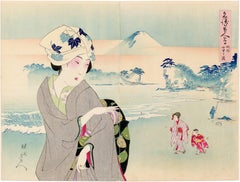
Beauties on the Beach with view of Mount Fuji
Located in Burbank, CA
Shichirigahama, Sagami Province. A beauty in the foreground waves to her young companions, who run towards her on the beach. The beauty at left wears a western-style golden ring. We ...
Category
1890s Edo Woodcut Landscape Prints
Materials
Handmade Paper, Mulberry Paper, Woodcut
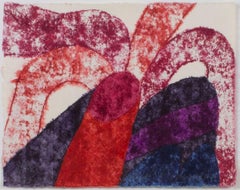
"Paricutin (Volcano in Michoacan, Mexico)" Woodcut
Monotype signed by Summers
Located in Milwaukee, WI
"Paricutin (Volcano in Michoacan, Mexico)" is a woodcut and monotype signed by Carol Summers. In the image, an abstracted volcano erupts in a joyous burst of purples and oranges. The playfulness of the image is enhanced by Summers' signature printmaking technique, which allows the ink from the woodblock to seep through the paper, blurring the edges of each form.
Art: 8 x 11 in
Frame: 17 x 19 in
Carol Summers (1925-2016) has worked as an artist throughout the second half of the 20th century and into the first years of the next, outliving most of his mid-century modernist peers. Initially trained as a painter, Summers was drawn to color woodcuts around 1950 and it became his specialty thereafter. Over the years he has developed a process and style that is both innovative and readily recognizable. His art is known for it’s large scale, saturated fields of bold color, semi-abstract treatment of landscapes from around the world and a luminescent quality achieved through a printmaking process he invented.
In a career that has extended over half a century, Summers has hand-pulled approximately 245 woodcuts in editions that have typically run from 25 to 100 in number. His talent was both inherited and learned. Born in 1925 in Kingston, a small town in upstate New York, Summers was raised in nearby Woodstock with his older sister, Mary. His parents were both artists who had met in art school in St. Louis. During the Great Depression, when Carol was growing up, his father supported the family as a medical illustrator until he could return to painting. His mother was a watercolorist and also quite knowledgeable about the different kinds of papers used for various kinds of painting. Many years later, Summers would paint or print on thinly textured paper originally collected by his mother.
From 1948 to 1951, Carol Summers trained in the classical fine and studio arts at Bard College and at the Art Students League of New York. He studied painting with Steven Hirsh and printmaking with Louis Schanker. He admired the shapes and colors favored by early modernists Paul Klee (Sw: 1879-1940) and Matt Phillips (Am: b.1927- ). After graduating, Summers quit working as a part-time carpenter and cabinetmaker (which had supported his schooling and living expenses) to focus fulltime on art. That same year, an early abstract, Bridge No. 1 was selected for a Purchase Prize in a competition sponsored by the Brooklyn Museum.
In 1952, his work (Cathedral, Construction and Icarus) was shown the first time at the Museum of Modern Art in New York City in an exhibition of American woodcuts. In 1954, Summers received a grant from the Italian government to study for a year in Italy. Woodcuts completed soon after his arrival there were almost all editions of only 8 to 25 prints, small in size, architectural in content and black and white in color. The most well-known are Siennese Landscape and Little Landscape, which depicted the area near where he resided. Summers extended this trip three more years, a decision which would have significant impact on choices of subject matter and color in the coming decade.
After returning from Europe, Summers’ images continued to feature historical landmarks and events from Italy as well as from France, Spain and Greece. However, as evidenced in Aetna’s Dream, Worldwind and Arch of Triumph, a new look prevailed. These woodcuts were larger in size and in color. Some incorporated metal leaf in the creation of a collage and Summers even experimented with silkscreening. Editions were now between 20 and 50 prints in number. Most importantly, Summers employed his rubbing technique for the first time in the creation of Fantastic Garden in late 1957.
Dark Vision of Xerxes, a benchmark for Summers, was the first woodcut where Summers experimented using mineral spirits as part of his printmaking process. A Fulbright Grant as well as Fellowships from the Louis Comfort Tiffany Foundation and the Guggenheim Foundation followed soon thereafter, as did faculty positions at colleges and universities primarily in New York and Pennsylvania. During this period he married a dancer named Elaine Smithers with whom he had one son, Kyle. Around this same time, along with fellow artist Leonard Baskin, Summers pioneered what is now referred to as the “monumental” woodcut. This term was coined in the early 1960s to denote woodcuts that were dramatically bigger than those previously created in earlier years, ones that were limited in size mostly by the size of small hand-presses. While Baskin chose figurative subject matter, serious in nature and rendered with thick, striated lines, Summers rendered much less somber images preferring to emphasize shape and color; his subject matter approached abstraction but was always firmly rooted in the landscape.
In addition to working in this new, larger scale, Summers simultaneously refined a printmaking process which would eventually be called the “Carol Summers Method” or the “ Carol Summers Technique”. Summers produces his woodcuts by hand, usually from one or more blocks of quarter-inch pine, using oil-based printing inks and porous mulberry papers. His woodcuts reveal a sensitivity to wood especially its absorptive qualities and the subtleties of the grain. In several of his woodcuts throughout his career he has used the undulating, grainy patterns of a large wood plank to portray a flowing river or tumbling waterfall. The best examples of this are Dream, done in 1965 and the later Flash Flood Escalante, in 2003. In the majority of his woodcuts, Summers makes the blocks slightly larger than the paper so the image and color will bleed off the edge.
Before printing, he centers a dry sheet of paper over the top of the cut wood block or blocks, securing it with giant clips. Then he rolls the ink directly on the front of the sheet of paper and pressing down onto the dry wood block or reassembled group of blocks. Summers is technically very proficient; the inks are thoroughly saturated onto the surface of the paper but they do not run into each other. The precision of the color inking in Constantine’s Dream in 1969 and Rainbow Glacier in 1970 has been referred to in various studio handbooks. Summers refers to his own printing technique as “rubbing”. In traditional woodcut printing, including the Japanese method, the ink is applied directly onto the block. However, by following his own method, Summers has avoided the mirror-reversed image of a conventional print and it has given him the control over the precise amount of ink that he wants on the paper. After the ink is applied to the front of the paper, Summers sprays it with mineral spirits, which act as a thinning agent. The absorptive fibers of the paper draw the thinned ink away from the surface softening the shapes and diffusing and muting the colors. This produces a unique glow that is a hallmark of the Summers printmaking technique. Unlike the works of other color field artists or modernists of the time, this new technique made Summers’ extreme simplification and flat color areas anything but hard-edged or coldly impersonal.
By the 1960s, Summers had developed a personal way of coloring and printing and was not afraid of hard work, doing the cutting, inking and pulling himself. In 1964, at the age of 38, Summers’ work was exhibited for a second time at the Museum of Modern Art. This time his work was featured in a one-man show and then as one of MoMA’s two-year traveling exhibitions which toured throughout the United States. In subsequent years, Summers’ works would be exhibited and acquired for the permanent collections of multiple museums throughout the United States, Europe and Asia. Summers’ familiarity with landscapes throughout the world is firsthand. As a navigator-bombardier in the Marines in World War II, he toured the South Pacific and Asia.
Following college, travel in Europe and subsequent teaching positions, in 1972, after 47 years on the East Coast, Carol Summers moved permanently to Bonny Doon in the Santa Cruz Mountains in Northern California. There met his second wife, Joan Ward Toth, a textile artist who died in 1998; and it was here his second son, Ethan was born. During the years that followed this relocation, Summers’ choice of subject matter became more diverse although it retained the positive, mostly life-affirming quality that had existed from the beginning. Images now included moons, comets, both sunny and starry skies, hearts and flowers, all of which, in one way or another, remained tied to the landscape.
In the 1980s, from his home and studio in the Santa Cruz mountains, Summers continued to work as an artist supplementing his income by conducting classes and workshops at universities in California and Oregon as well as throughout the Mid and Southwest. He also traveled extensively during this period hiking and camping, often for weeks at a time, throughout the western United States and Canada. Throughout the decade it was not unusual for Summers to backpack alone or with a fellow artist into mountains or back country for six weeks or more at a time. Not surprisingly, the artwork created during this period rarely departed from images of the land, sea and sky. Summers rendered these landscapes in a more representational style than before, however he always kept them somewhat abstract by mixing geometric shapes with organic shapes, irregular in outline. Some of his most critically acknowledged work was created during this period including First Rain, 1985 and The Rolling Sea, 1989. Summers received an honorary doctorate from his alma mater, Bard College in 1979 and was selected by the United States Information Agency to spend a year conducting painting and printmaking workshops at universities throughout India. Since that original sabbatical, he has returned every year, spending four to eight weeks traveling throughout that country.
In the 1990s, interspersed with these journeys to India have been additional treks to the back roads and high country areas of Mexico, Central America, Nepal, China and Japan. Travel to these exotic and faraway places had a profound influence on Summers’ art. Subject matter became more worldly and non-western as with From Humla to Dolpo, 1991 or A Former Life of Budha, 1996, for example. Architectural images, such as The Pillars of Hercules, 1990 or The Raja’s Aviary, 1992 became more common. Still life images made a reappearance with Jungle Bouquet in 1997. This was also a period when Summers began using odd-sized paper to further the impact of an image.
The 1996 Night, a view of the earth and horizon as it might be seen by an astronaut, is over six feet long and only slightly more than a foot-and-a-half high. From 1999, Revuelta A Vida (Spanish for “Return to Life”) is pie-shaped and covers nearly 18 cubic feet. It was also at this juncture that Summers began to experiment with a somewhat different palette although he retained his love of saturated colors. The 2003 Far Side of Time is a superb example of the new direction taken by this colorist.
At the turn of the millennium in 1999, “Carol Summers Woodcuts...
Category
Early 2000s Contemporary Woodcut Landscape Prints
Materials
Monotype, Woodcut
"Sin Fin"
Located in Lyons, CO
Color woodcut.
Rafael Ferrer depicts the intense life of the Caribbean in his paintings and prints. With hot colors, deep shadows and mysterious ...
Category
1990s Contemporary Woodcut Landscape Prints
Materials
Woodcut
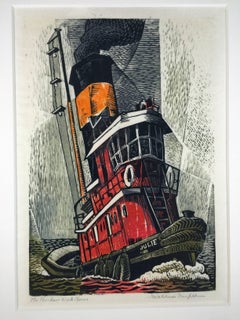
THE HARBOR WORKHORSE
By Woldemar Neufeld
Located in Portland, ME
Neufeld, Woldemar. THE HARBOR WORKHORSE. Woodcut in colors, not dated (c.1940s-50s). Edition size not known, but likely 50 or fewer. 17 1/2 x 12 inches, plu...
Category
Mid-20th Century American Modern Woodcut Landscape Prints
Materials
Woodcut
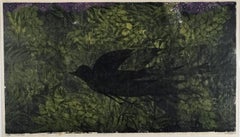
NIGHT FLIGHT
Located in Portland, ME
Frasconi, Antonio. NIGHT FLIGHT. Color Woodcut, 1958. Edition of 20. Signed and dated, numbered 10/20, and inscribed "imp," all in pencil. 19 x 34 inches,...
Category
1950s Woodcut Landscape Prints
Materials
Alkyd, Woodcut
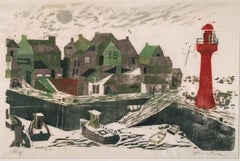
UNTITLED (LIGHTHOUSE, HOUSES AND BOATS).
By John T. Ross
Located in Portland, ME
Ross, John T. UNTITLED (LIGHTHOUSE, HOUSES AND BOATS). Color woodcut, not dated. Inscribed "proof," lower left, and signed lower right, in pencil. 9 x 14 7/8 inches (image), on a lar...
Category
Mid-20th Century Woodcut Landscape Prints
Materials
Color, Woodcut
QUEENSBRIDGE
Located in Portland, ME
Bernhardt, John (American 1921-1963. QUEENSBRIDGE. Color Woodcut, 1965. Ttiled, signed, dated and annotated "To Smitty" in pencil. 17 3/4 x 28 inches. In very good condition. Framed
...
Category
Mid-20th Century American Modern Woodcut Landscape Prints
Materials
Color, Woodcut
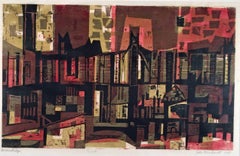
$700 Sale Price
36% Off
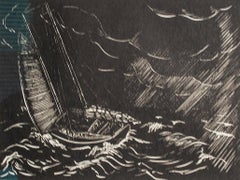
"Squall, " Sailboat Maritime Scene Wood Engraving by Lowell Merritt Lee
By Lowell Merritt Lee
Located in Milwaukee, WI
"Squall is an original wood engraving by Lowell Merritt Lee. It features a rendition of a squall, a sudden violent gust of wind that often brings in rain, snow, or sleet.
Image: 6.1...
Category
1930s American Modern Woodcut Landscape Prints
Materials
Woodcut
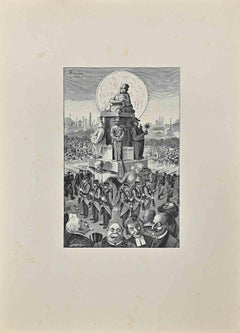
Loi, Bible, Dogme - Woodcut by Louis Willaume - 1903
Located in Roma, IT
Loi, Bible, Dogme is a woodcut print realized by in 1903 by Louis Willaume (1874-1949).
Signed on Plate.
Good condition.
The artwork is depicted through soft strokes in a well-bal...
Category
Early 20th Century Modern Woodcut Landscape Prints
Materials
Woodcut
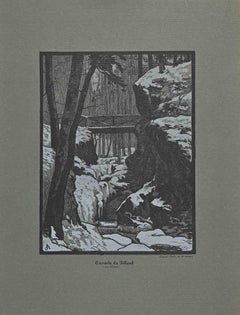
The River through Threes - Original Woodcut - 20th Century
Located in Roma, IT
The River through Threes is a woodcut print on paper realized after a photograph by M. Renaud artist in the 20th century.
Signed on the plate and Monogrammed.
With another artwork ...
Category
Mid-20th Century Modern Woodcut Landscape Prints
Materials
Woodcut
Parade - Woodblock Print by Utagawa Kunisada - Mid-19th Century
Located in Roma, IT
Celebratory Parade is an original Woodcut print realized in mid 19th century after Utagawa Kunisada.
Good condition and Beautiful colored woodblock print.
This wonderful modern a...
Category
Mid-19th Century Modern Woodcut Landscape Prints
Materials
Woodcut
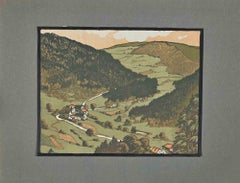
Landscape - Original Woodcut by A. Jacquol - 1934
By A. Jacquol
Located in Roma, IT
Landscape is an Original woodcut print realized by A. Jacquol in January 1934.
The beautiful artwork is in good condition included a green cardboard (25x32.7 cm).
Monogrammed on th...
Category
1930s Modern Woodcut Landscape Prints
Materials
Woodcut
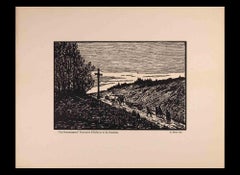
Knowledge - Original Woodcut by Georges Zevort - Early 20th Century
Located in Roma, IT
Knowledge is an Original woodcut print realized by Georges Zevort (1883-1959).
The artwork is in good condition included a white cardboard passpartout (50x35 cm).
Signature stamped.
Category
Early 20th Century Modern Woodcut Landscape Prints
Materials
Woodcut
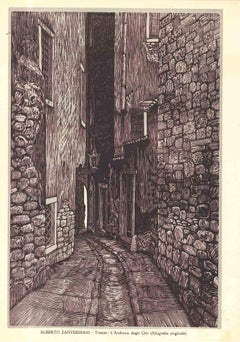
L
Androne degli Orti - Woodcut by A. Zanverdiani - Early 20th Century
Located in Roma, IT
Trieste: l'Androne degli Orti is an original woodcut print by Alberto Zanverdiani in the early 20th Century.
Good conditions.
The artwork is depicted through stong strokes in a wel...
Category
Early 20th Century Modern Woodcut Landscape Prints
Materials
Woodcut
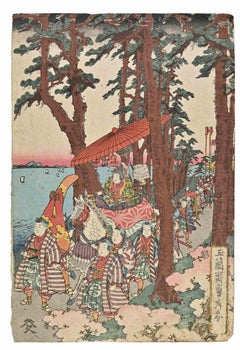
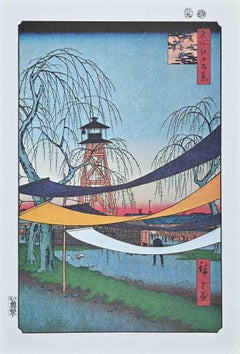
Hatsune Riding Grounds - Lithograph after Utagawa Hiroshige -1950s
Located in Roma, IT
Hatsune Riding Grounds, Bakuro-cho is a modern artwork realized in the mid-20th century after Utagawa Hiroshige.
Mixed colored lithograph after a woodcut realized by Utagawa Hiroshi...
Category
Mid-20th Century Modern Woodcut Landscape Prints
Materials
Woodcut
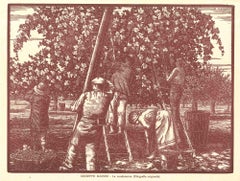
La Vendemmia - Original Woodcut by Giuseppe Mainini - Early 20th century
Located in Roma, IT
La Vendemmia is an original woodcut print by Giuseppe Mainini in the early 20th century.
The artwork depicts a harvest scene in garnet red colors.
Good conditions.
Category
20th Century Modern Woodcut Landscape Prints
Materials
Woodcut
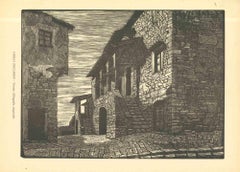
Viterbo - Original Woodcut by Carlo Zuccarini - Early 20th century
Located in Roma, IT
Viterbo is an original woodcut print realized by Carlo Zuccarini in the early 20th century.
The artwork is a glimpse of the Medieval architecture...
Category
Early 20th Century Modern Woodcut Landscape Prints
Materials
Woodcut
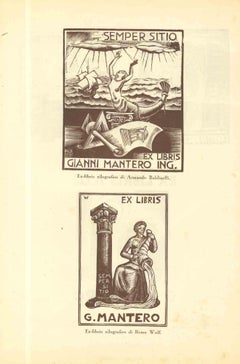
Remo Wolf - Woodcut by Armando Baldinelli - Early 20th Century
Located in Roma, IT
Remo Wolf, Pair of Ex Libris Gianni Mantero is an original woodcut print by Armando Baldinelli in the early 20th Century.
Good conditions.
The art...
Category
20th Century Modern Woodcut Landscape Prints
Materials
Woodcut
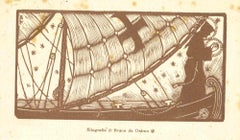
The Saint - Original Woodcut by Bruno da Osimo - Early 20th Century
Located in Roma, IT
The Saint is an Original Woodcut Print on paper realized by Bruno da Osimo in the Early 20th Century
Good Conditions.
The artwork is depicted through ...
Category
Early 20th Century Modern Woodcut Landscape Prints
Materials
Woodcut
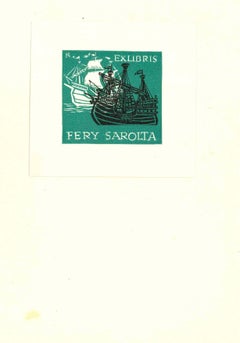
Ex Libris Fery Sarolta - Original Woodcut - 1940
Located in Roma, IT
Ex Libris Fery Sarolta is an original Contemporary Artwork realized in the mid-20th Century .
Original Colored woodcut artwork on ivory-colored paper.
The work is glued on card...
Category
1940s Modern Woodcut Landscape Prints
Materials
Woodcut
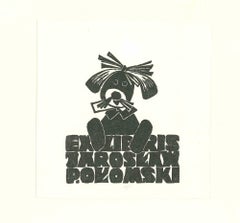
Ex Libris Pokomski - Original Woodcut - Mid-20th Century
Located in Roma, IT
Ex Libris Pokomski is an original Contemporary Artwork realized in the half of the 20th Century.
Original B/W woodcut print on ivory-colored paper.
Sigled in pencil on the lower...
Category
Mid-20th Century Modern Woodcut Landscape Prints
Materials
Woodcut
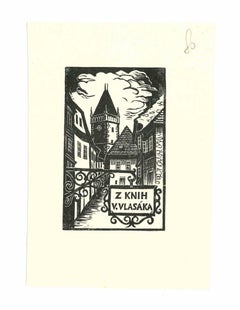
Ex Libris Vlasaka - Original Woodcut - Mid-20th Century
Located in Roma, IT
Ex Libris Vlasaka is an original Artwork realized in the Second half of the 20th Century.
Original B/W woodcut print on ivory-colored paper.
The work is glued on cardboard.
To...
Category
Mid-20th Century Modern Woodcut Landscape Prints
Materials
Woodcut
Ex Libris Florian Spychalski - Original Woodcut - Mid-20th Century
Located in Roma, IT
Ex Libris Florian Spychalski is an original Artwork realized in the half of the 20 Century.
Original B/W woodcut print on ivory-colored paper.
The work is glued on cardboard.
...
Category
Mid-20th Century Modern Woodcut Landscape Prints
Materials
Woodcut
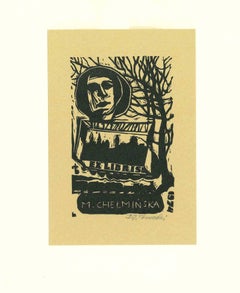
Ex Libris Klubu Ksiazki - Original Woodcut - Mid-20th Century
Located in Roma, IT
Ex Libris Klubu Ksiazki is an original Contemporary Artwork realized in the half of the 20th Century.
Original colored woodcut print on ivory-colored paper.
The work is glued on...
Category
Mid-20th Century Modern Woodcut Landscape Prints
Materials
Woodcut

Ex Libris Okolskich - Original Woodcut - 1955
Located in Roma, IT
Ex Libris Okolskich is an original Contemporary Artwork realized in 1955.
Original woodcut print on ivory-colored paper.
The work is glued on cardboard.
Total dimensions: 21 x...
Category
1950s Modern Woodcut Landscape Prints
Materials
Woodcut

Ex Libris Ludwika - Original Woodcut - Mid-20th Century
Located in Roma, IT
Ex Libris Ludwika is an original Artwork realized in the half of the 20th Century.
Original B/W woodcut on ivory-colored paper.
The work is glued on cardboard.
Total dimension...
Category
Mid-20th Century Modern Woodcut Landscape Prints
Materials
Woodcut
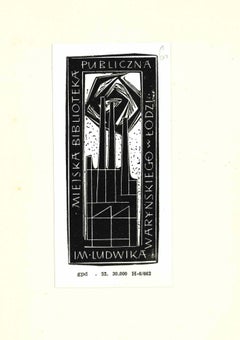
Ex Libris Nawrockiego - Original Woodcut - Mid-20th Century
Located in Roma, IT
Ex Libris Nawrockiego is an original Modern Artwork realized in the half of the 20th Century.
Original B/W woodcut print on ivory-colored paper.
The work is glued on cardboard. ...
Category
Mid-20th Century Modern Woodcut Landscape Prints
Materials
Woodcut

Ex Libris Norberta - Original Woodcut - Mid-20th Century
Located in Roma, IT
Ex Libris Norberta is an original Contemporary Artwork realized in the Second half of the 20th Century.
Original colored woodcut print on ivory-colored paper.
The work is glued ...
Category
Mid-20th Century Modern Woodcut Landscape Prints
Materials
Woodcut

Ex Libris Zdena Zezulkova - Original Woodcut - 1970s
Located in Roma, IT
Ex Libris Zdena Zezulkova is an original Artwork realized in the 1970s.
Original B/W woodcut print on ivory-colored paper.
Hand-signed in pencil on the lower right corner.
The...
Category
1970s Modern Woodcut Landscape Prints
Materials
Woodcut

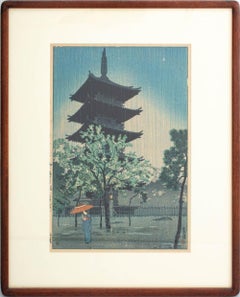
"Yanaka Pagoda"
Located in Astoria, NY
Shiro Kasamatsu (Japanese, 1898-1991), "Yanaka Pagoda", Woodblock Print on Paper, Japanese character marks to left border, chop seal stamp lower right, wood frame. Image: 14.25" H x ...
Category
Mid-20th Century Modern Woodcut Landscape Prints
Materials
Woodcut
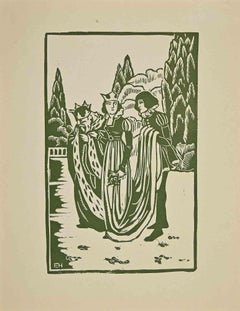
The Head - Original Woodcut by Ebba Holm - 1925
Located in Roma, IT
The Head is an original Woodcut from "Old King", realized by Ebba Holm in 1925.
Good conditions.
The artwork is depicted through perfect hatching in a well-balanced composition.
Category
1920s Modern Woodcut Landscape Prints
Materials
Woodcut
Woodcut landscape prints for sale on 1stDibs.
Find a wide variety of authentic Woodcut landscape prints available on 1stDibs. While artists have worked in this medium across a range of time periods, art made with this material during the 21st Century is especially popular. If you’re looking to add landscape prints created with this material to introduce a provocative pop of color and texture to an otherwise neutral space in your home, the works available on 1stDibs include elements of blue, orange, yellow, green and other colors. There are many well-known artists whose body of work includes ceramic sculptures. Popular artists on 1stDibs associated with pieces like this include Marc Zimmerman, Eve Stockton, Carol Summers, and Utagawa Hiroshige. Frequently made by artists working in the Modern, Contemporary, all of these pieces for sale are unique and many will draw the attention of guests in your home. Not every interior allows for large Woodcut landscape prints, so small editions measuring 0.01 inches across are also available