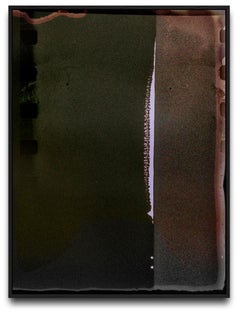
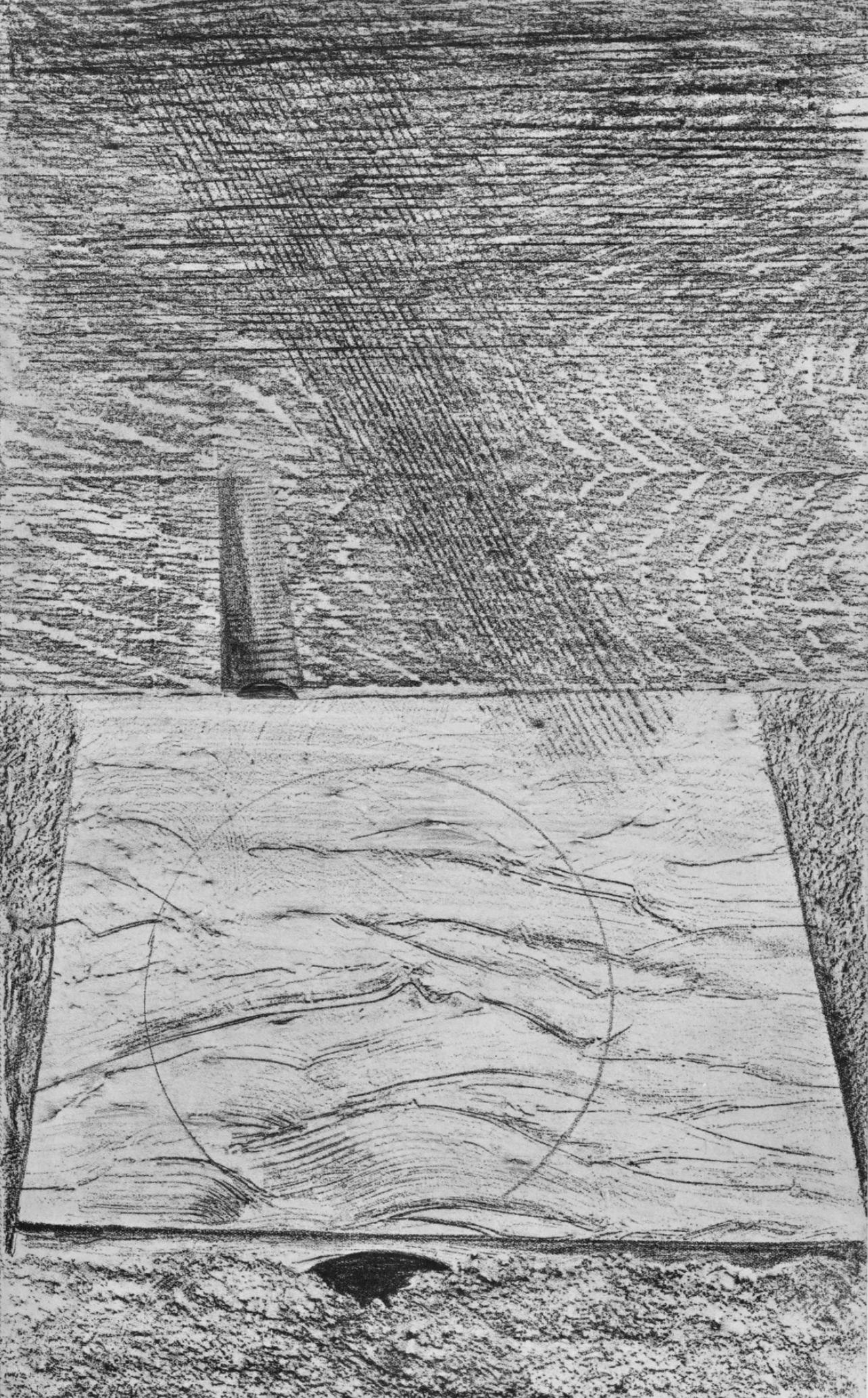
Items Similar to Max Ernst, Shaving the Walls, from Natural History, 1972 (after)
Want more images or videos?
Request additional images or videos from the seller
1 of 9
Max Ernst, Shaving the Walls, from Natural History, 1972 (after)1972
1972
$716
$89520% Off
£543.74
£679.6820% Off
€624.66
€780.8220% Off
CA$1,009.39
CA$1,261.7420% Off
A$1,073.19
A$1,341.4920% Off
CHF 580.35
CHF 725.4420% Off
MX$12,765.94
MX$15,957.4220% Off
NOK 7,269.70
NOK 9,087.1320% Off
SEK 6,639.40
SEK 8,299.2520% Off
DKK 4,666.39
DKK 5,832.9920% Off
About the Item
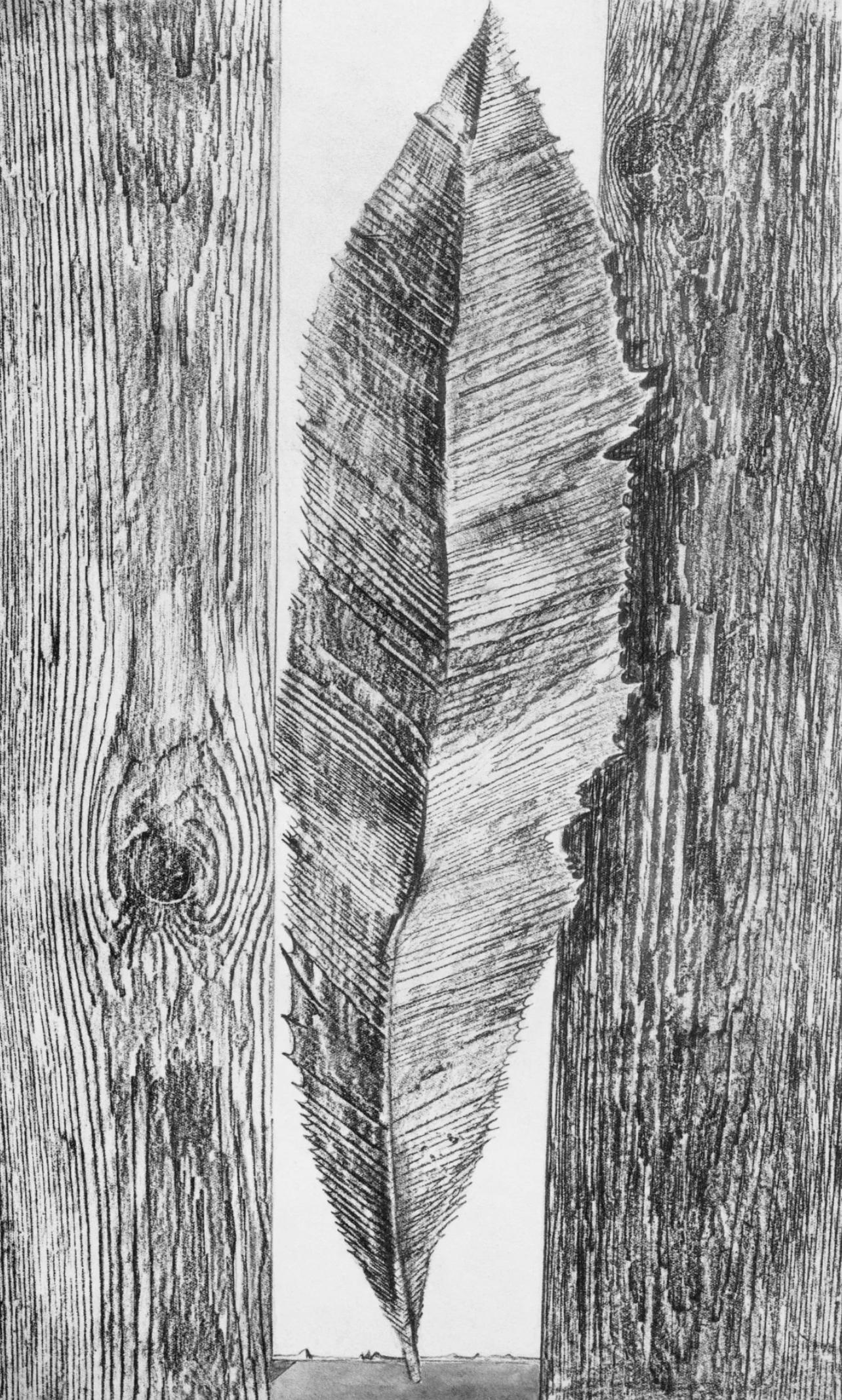
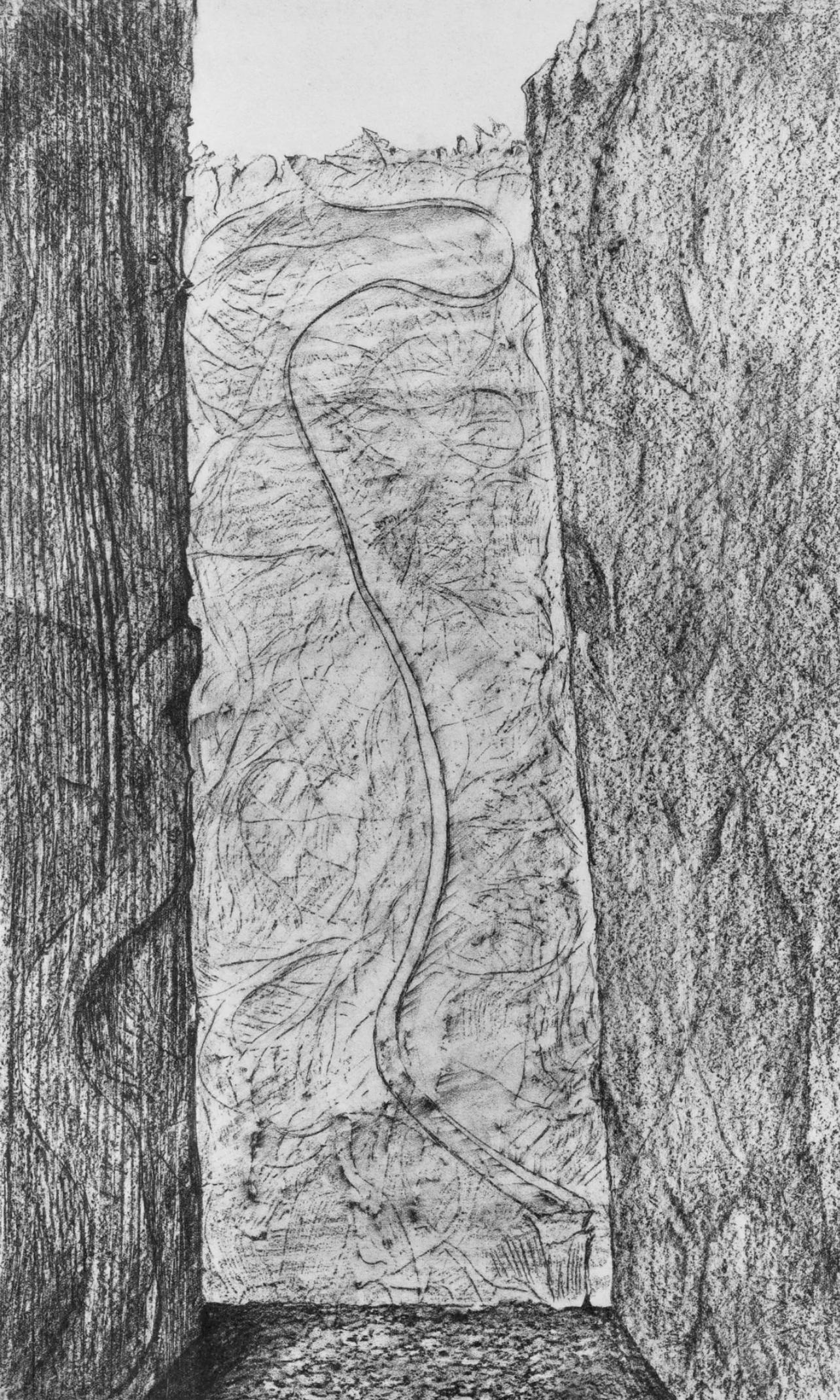
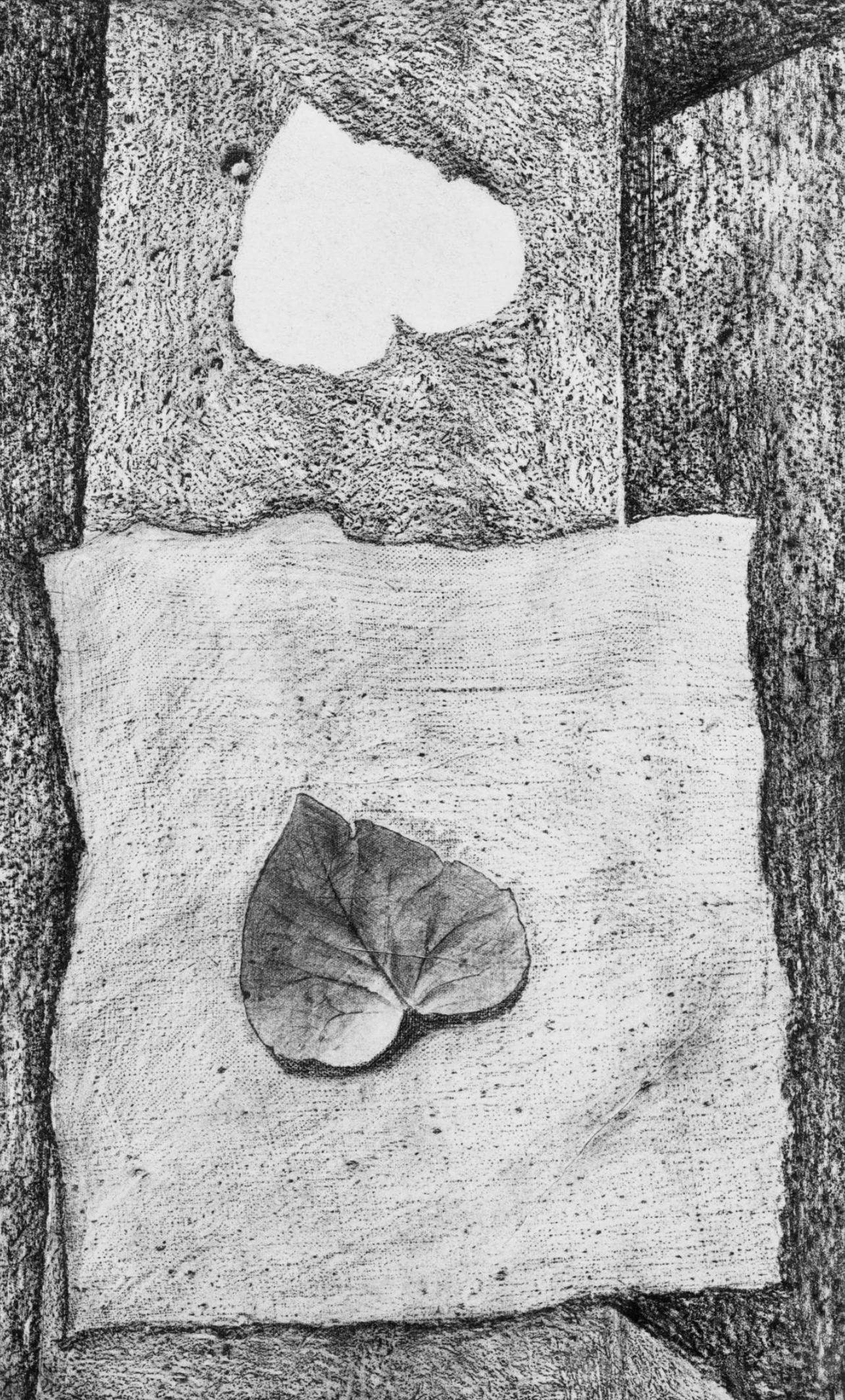
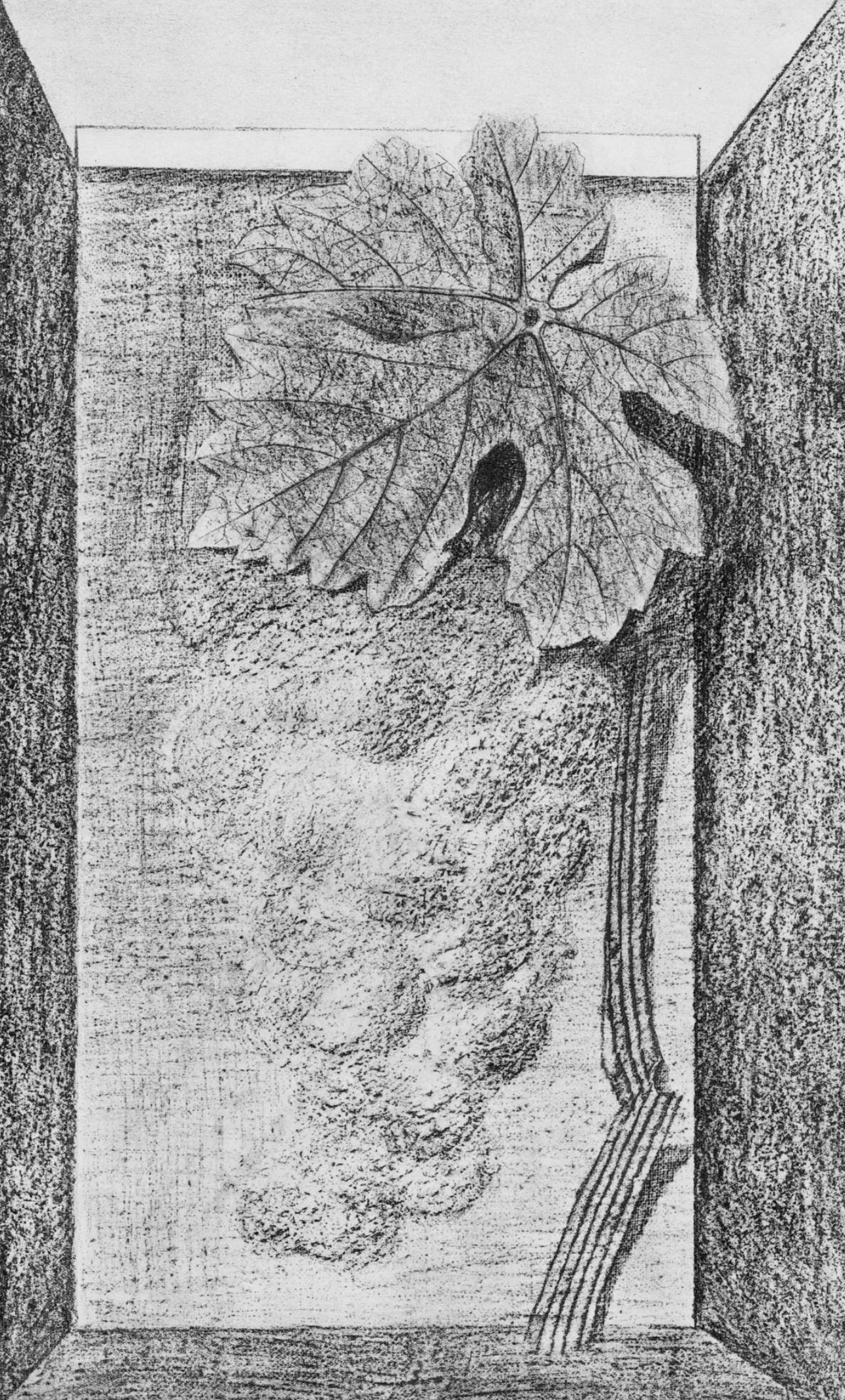
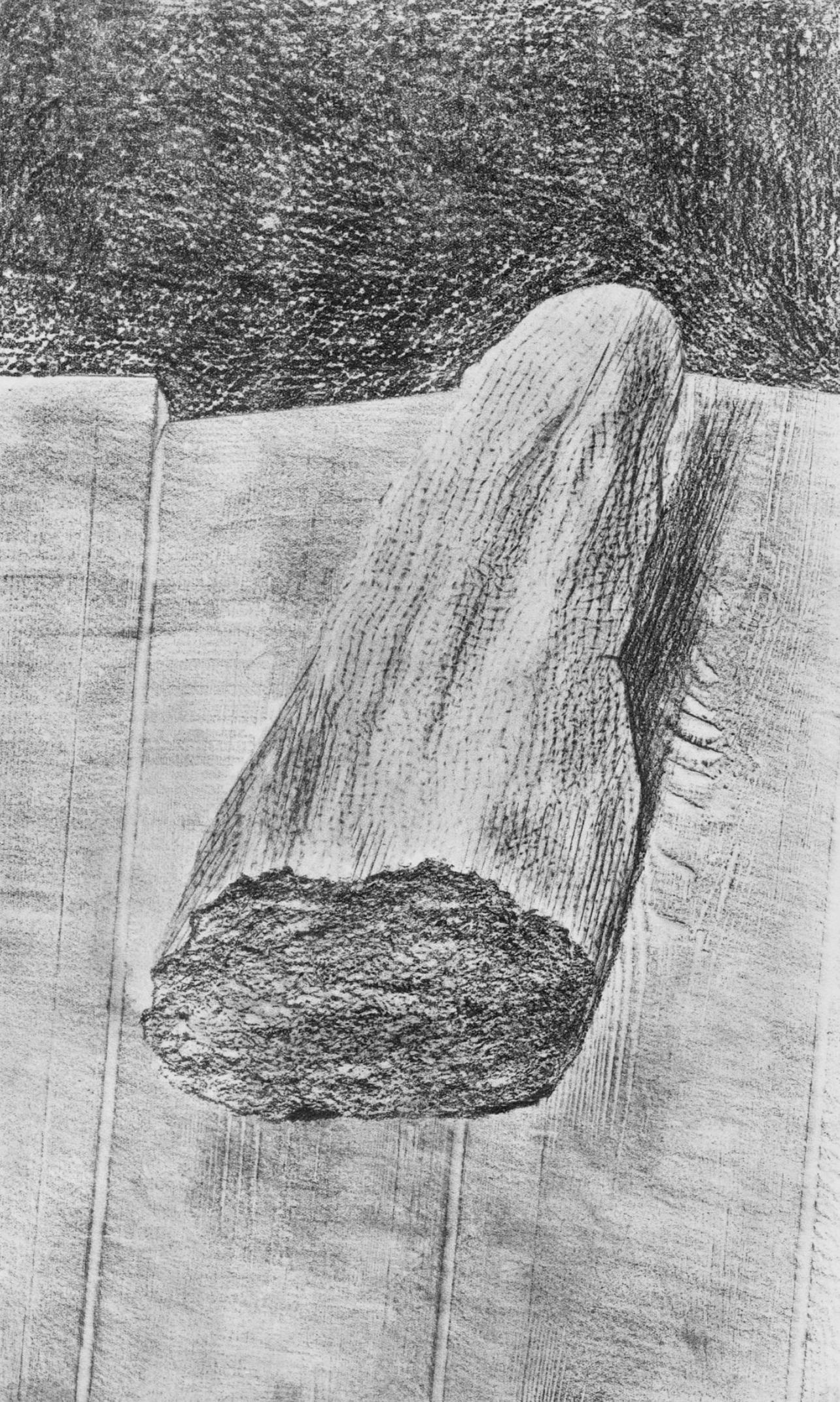
This exquisite collotype after Max Ernst (1891–1976), titled Rasant les murs (Shaving the Walls), from the album Max Ernst, Histoire Naturelle (Natural History), originates from the 1972 edition published and printed by Verlag Gerd Hatje, Stuttgart. This remarkable work exemplifies Ernst’s revolutionary use of frottage—the technique of transferring textured surfaces to paper through rubbing—to evoke the mysterious interplay between chance, nature, and imagination. Its organic abstractions suggest the forces of creation, blurring the boundaries between the terrestrial and the cosmic in a poetic vision of nature’s hidden language.
Executed as a collotype from frottage on velin paper, this work measures 19.5 x 12.75 inches. Unsigned and unnumbered as issued. The edition demonstrates the superb craftsmanship of Verlag Gerd Hatje and the enduring influence of Ernst’s early Surrealist experiments in texture and automatism.
Artwork Details:
Artist: After Max Ernst (1891–1976)
Title: Rasant les murs (Shaving the Walls), from the album Max Ernst, Histoire Naturelle (Natural History)
Medium: Collotype from frottage on velin paper
Dimensions: 19.5 x 12.75 inches (49.53 x 32.39 cm)
Inscription: Unsigned and unnumbered as issued
Date: 1972
Publisher: Verlag Gerd Hatje, Stuttgart
Printer: Verlag Gerd Hatje, Stuttgart
Catalogue Raisonne: Spies, Werner, and Helmut Leppien. Max Ernst: Das Graphische Werk. Berne: Editions Kornfeld, 1975. No. 222.
Condition: Well preserved, consistent with age and medium
Provenance: From the album Max Ernst, Histoire Naturelle (Natural History), published and printed by Verlag Gerd Hatje, Stuttgart, 1972
Notes:
Excerpted from the album (translated from German), The first edition of the Histoire Naturelle appeared in 1926 by Editions Jeanne Bucher, Paris, in an edition of CCCVI examples. Hans Arp wrote the introduction. This new edition appeared in 1972. The German edition contains CCCL examples, of which CXI examples contain an original lithograph in three colors signed and numbered by the artist, which was printed by Pierre Chave in Vence, France. The preferred edition is numbered from I-CXI, the normal edition of CXII-CCCL. Some roman numbered examples also contain the original lithograph and are not intended for trade. For the new printing, the dimensions of the boards increased by one centimeter. Instead of the Roman numbering Arabic numbering was used. Verlag Gerd Hatje, Stuttgart.
About the Publication:
Max Ernst’s Histoire Naturelle (Natural History) stands among the most seminal illustrated works of Surrealism. First published in 1926 by Editions Jeanne Bucher, Paris, it marked a turning point in the artist’s exploration of chance-based processes. Comprising thirty-four collotypes created through frottage, the series reveals Ernst’s fascination with the hidden forms of nature and the unconscious. Each image evokes landscapes, flora, and organisms conjured from the textures of wood, fabric, and leaves—transforming accidental patterns into dreamlike compositions. The 1972 Stuttgart edition by Verlag Gerd Hatje faithfully reissued this landmark suite, under the supervision of Max Ernst. A milestone in Surrealist printmaking, Histoire Naturelle reflects Ernst’s belief that the artist’s role is to reveal the unseen—to uncover meaning from the spontaneous dialogue between matter and imagination.
About the Artist:
Max Ernst (1891–1976) was a German-French painter, sculptor, printmaker, and poet whose groundbreaking imagination and experimental techniques made him one of the most revolutionary figures of 20th-century art. A founding member of both Dada and Surrealism, Ernst dismantled traditional notions of art through chance, dream imagery, and psychological exploration, transforming painting, sculpture, and collage into instruments of the unconscious mind. Born in Bruhl, Germany, he studied philosophy and psychology at the University of Bonn before rejecting academic convention to pursue art, inspired by the Symbolists, Cubists, and the early abstractions of Pablo Picasso and Wassily Kandinsky. His traumatic experience serving in World War I left him disillusioned with logic and order, propelling him toward the Dada movement in Cologne in 1919, where he began creating his seminal collages that fused scientific diagrams and Victorian engravings into surreal dreamscapes. By 1922, Ernst had moved to Paris and joined a circle of avant-garde luminaries that included Picasso, Alexander Calder, Alberto Giacometti, Salvador Dali, Joan Miro, Marcel Duchamp, Man Ray, and Andre Breton, each of whom shared his fascination with the irrational and the unseen. Ernst’s invention of frottage (rubbing) and grattage (scraping) revolutionized modern painting, revealing textures and hidden images beneath the surface and allowing chance to become an active participant in creation. His visionary paintings—such as The Elephant Celebes (1921), Two Children Are Threatened by a Nightingale (1924), and Europe After the Rain II (1940–42)—blend myth, science, and dream into vast symbolic landscapes that remain among the defining masterpieces of Surrealism. A restless innovator, Ernst expanded into sculpture, crafting enigmatic totemic forms such as Capricorne (1948–1963) that bridged organic abstraction and surreal fantasy, echoing the fluid equilibrium of Calder’s mobiles and the conceptual wit of Duchamp. Fleeing Nazi-occupied France during World War II, Ernst emigrated to the United States with the support of Peggy Guggenheim, whom he later married, influencing the emerging Abstract Expressionists—among them Jackson Pollock, Robert Motherwell, and Willem de Kooning—through his fusion of automatism, texture, and mythic narrative. Returning to Europe after the war, he continued to refine his poetic, alchemical approach to painting, blending chaos and order into cosmic landscapes that inspired later artists such as Anselm Kiefer, Robert Rauschenberg, Cy Twombly, and Kiki Smith. His work, housed in major museums including MoMA, the Tate, and the Centre Pompidou, stands as a testament to his belief that art could bridge the conscious and unconscious, the rational and the fantastic. Standing alongside Pablo Picasso, Alexander Calder, Alberto Giacometti, Salvador Dali, Joan Miro, Wassily Kandinsky, Marcel Duchamp, and Man Ray, Max Ernst remains a cornerstone of modern art—an artist-philosopher whose limitless curiosity reshaped visual language and influenced generations of creators. His highest auction record was achieved by Le roi jouant avec la reine (The King Playing with the Queen) (1944), which sold for approximately 24.4 million USD at Christie’s, New York, in November 2022, reaffirming Max Ernst’s enduring legacy as one of the most visionary, provocative, and collectible masters of 20th-century modernism.
Max Ernst Rasant les murs Shaving the Walls Histoire Naturelle Natural History Verlag Gerd Hatje Stuttgart Spies Leppien 222 collotype frottage Surrealism.
- Creation Year:1972
- Dimensions:Height: 19.625 in (49.85 cm)Width: 12.75 in (32.39 cm)
- Medium:
- Movement Style:
- After:Max Ernst (1891-1976, American, German, French)
- Period:
- Condition:
- Gallery Location:Southampton, NY
- Reference Number:1stDibs: LU1465217013782
About the Seller
4.9
Platinum Seller
Premium sellers with a 4.7+ rating and 24-hour response times
Established in 1978
1stDibs seller since 2021
1,272 sales on 1stDibs
Typical response time: 1 hour
- ShippingRetrieving quote...Shipping from: Southampton, NY
- Return Policy
More From This Seller
View AllErnst, Composition (Spies/Leppien 222), Histoire Naturelle (after)
By Max Ernst
Located in Southampton, NY
Collotype from frottage on vélin paper. Unsigned and unnumbered, as issued. Good condition. Notes: From the album, Max Ernst, Histoire Naturelle, 1972. Published and printed by Verla...
Category
1970s Surrealist Landscape Prints
Materials
Lithograph
$716 Sale Price
20% Off
Free Shipping
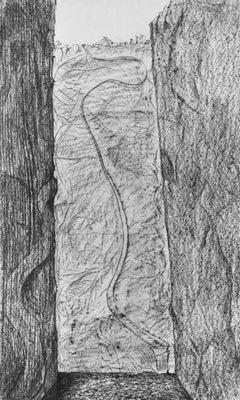
Max Ernst, The Scars, from Natural History, 1972 (after)
By Max Ernst
Located in Southampton, NY
This exquisite collotype after Max Ernst (1891–1976), titled Les Cicatrices (The Scars), from the album Max Ernst, Histoire Naturelle (Natural History), originates from the 1972 edit...
Category
1970s Surrealist Landscape Prints
Materials
Lithograph
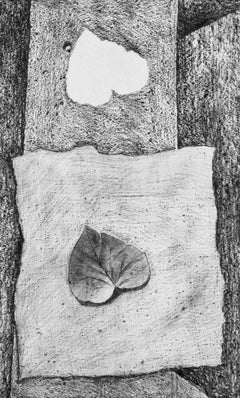
Max Ernst, The Palette of Caesar, from Natural History, 1972 (after)
By Max Ernst
Located in Southampton, NY
This exquisite collotype after Max Ernst (1891–1976), titled La Palette de Cesar (The Palette of Caesar), from the album Max Ernst, Histoire Naturelle (Natural History), originates f...
Category
1970s Surrealist Landscape Prints
Materials
Lithograph
$716 Sale Price
20% Off
Free Shipping
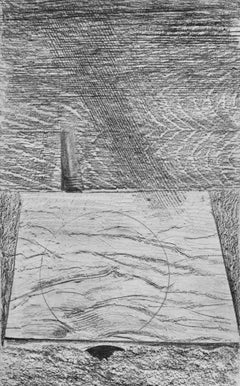
Max Ernst, The Sea and the Rain, from Natural History, 1972 (after)
By Max Ernst
Located in Southampton, NY
This exquisite collotype after Max Ernst (1891–1976), titled La Mer et la pluie (The Sea and the Rain), from the album Max Ernst, Histoire Naturelle (Natural History), originates fro...
Category
1970s Surrealist Landscape Prints
Materials
Lithograph
$716 Sale Price
20% Off
Free Shipping
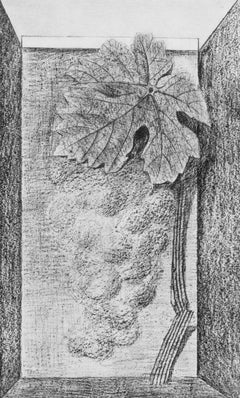
Max Ernst, The Idol, from Natural History, 1972 (after)
By Max Ernst
Located in Southampton, NY
This exquisite collotype after Max Ernst (1891–1976), titled L’Idole (The Idol), from the album Max Ernst, Histoire Naturelle (Natural History), originates from the 1972 edition publ...
Category
1970s Surrealist Landscape Prints
Materials
Lithograph
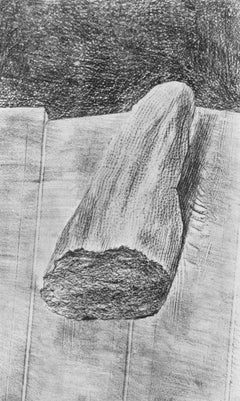
Max Ernst, The Vaccinated Bread, from Natural History, 1972 (after)
By Max Ernst
Located in Southampton, NY
This exquisite collotype after Max Ernst (1891–1976), titled Le Pain vaccine (The Vaccinated Bread), from the album Max Ernst, Histoire Naturelle (Natural History), originates from t...
Category
1970s Surrealist Landscape Prints
Materials
Lithograph
$716 Sale Price
20% Off
Free Shipping
You May Also Like
Untitled
Located in PARIS, FR
Renaud Bihi
Untitled
Charbon Charcoal
28 x 28 x 68 cm 11 x 11 x 26.8 in.
Renaud Bihi, an artist of materials and a man of contrasts, has had a singular career in the art world. On...
Category
2010s Contemporary Mixed Media
Materials
Wood
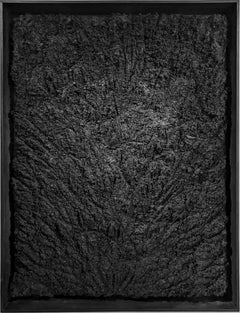
French Contemporary Art by Jeremie Faivre - Forma
Located in Paris, IDF
Acrylic on canvas
Jeremie Faivre is a French artist born in 1977 who lives and works in Paris, France. He is graduated from Massachussetts College of Art & Design in Boston, MA, Uni...
Category
2010s Contemporary Abstract Paintings
Materials
Acrylic, Canvas
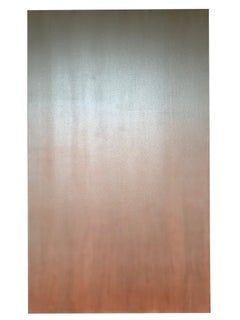
French Contemporary Art by Jeremie Faivre - Untitled II
Located in Paris, IDF
Screen Print on canvas
Jeremie Faivre is a French artist born in 1977 who lives and works in Paris, France. He is graduated from Massachussetts College of Art
Design in Bosto...
Category
2010s Contemporary Abstract Prints
Materials
Canvas, Screen
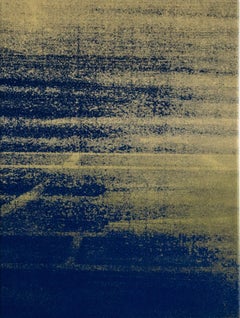
Erwin Bechtold - Margenes 8
By Erwin Bechtold
Located in Saint Ouen, FR
Erwin Bechtold - Margenes 8
Technique: etching on Guarro paper
Signed and numbered 2/75
1977
Size of the work : 56 cm x 76 cm
Size of the image : 49.5 cm x 68.5 cm
Perfect conditio...
Category
1970s Abstract Abstract Prints
Materials
Paper
#27, Abstract, Photography, Painting, Expressionism
By Joachim Schmeisser
Located in München, BY
Unique piece
More sizes and an Essay from Lyle Rexer about this series on request.
Joachim Schmeisser’s work rescues photography from the centuries-old straightjacket of realism to...
Category
2010s Abstract Abstract Paintings
Materials
Pigment
#27, Abstract, Photography, Painting, Expressionism
By Joachim Schmeisser
Located in München, BY
Unique piece
More sizes and an Essay from Lyle Rexer about this series on request.
Joachim Schmeisser’s work rescues photography from the centuries-old straightjacket of realism to...
Category
2010s Abstract Abstract Paintings
Materials
Pigment