1 of 8
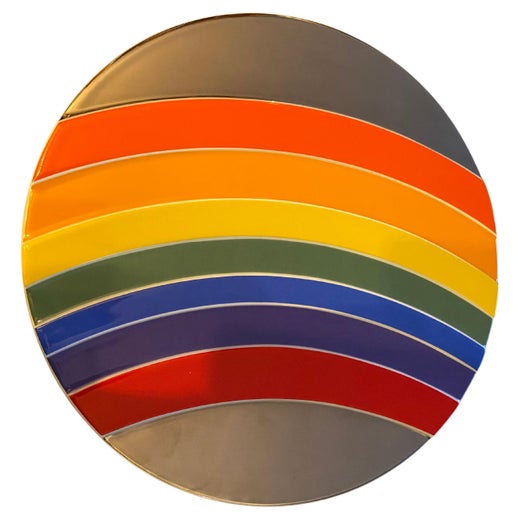
Otto PienePax - Day
Night1969-1970
1969-1970
$3,563.07List Price
About the Item
- Creator:Otto Piene (1928 - 2014, German)
- Creation Year:1969-1970
- Dimensions:Height: 35.04 in (89 cm)Width: 25.01 in (63.5 cm)
- Medium:
- Movement Style:
- Period:
- Condition:
- Gallery Location:Antwerp, BE
- Reference Number:1stDibs: LU151227812532
Otto Piene
Otto Piene (18 April 1928 – 17 July 2014) was a German-American artist specializing in kinetic and technology-based art, often working collaboratively.
Authenticity Guarantee
In the unlikely event there’s an issue with an item’s authenticity, contact us within 1 year for a full refund. DetailsMoney-Back Guarantee
If your item is not as described, is damaged in transit, or does not arrive, contact us within 7 days for a full refund. Details24-Hour Cancellation
You have a 24-hour grace period in which to reconsider your purchase, with no questions asked.Vetted Professional Sellers
Our world-class sellers must adhere to strict standards for service and quality, maintaining the integrity of our listings.Price-Match Guarantee
If you find that a seller listed the same item for a lower price elsewhere, we’ll match it.Trusted Global Delivery
Our best-in-class carrier network provides specialized shipping options worldwide, including custom delivery.You May Also Like
Explosive Spring -Original ScreenPrint by Maddalena Striglio - Late 20th century
Located in Roma, IT
Explosive Spring is a very brightly colored screen print realized by the contemporary Italian artist Maddalena Striglio in the late 20th Century.
...
Category
Late 20th Century Modern Landscape Prints
Materials
Screen
$332
H 19.69 in W 27.56 in D 0.04 in
Meadow with Poppies - Screen Print by Maddalena Striglio - Late 20th century
Located in Roma, IT
Meadow with Poppies is a very brightly colored screen print realized by the contemporary Italian artist Maddalena Striglio in the late 20th Century.
Hand-signed in pencil on the lo...
Category
Late 20th Century Modern Landscape Prints
Materials
Screen
$332
H 19.69 in W 39.38 in D 0.04 in
Explosive Spring - Original Screen print by Maddalena Striglio-Late 20th century
Located in Roma, IT
Explosive Spring is a very brightly colored screen print realized by the contemporary Italian artist Maddalena Striglio in the late 20th Century.
Hand-signed in pencil on the lower...
Category
Late 20th Century Modern Figurative Prints
Materials
Screen
$266 Sale Price
20% Off
H 19.69 in W 27.56 in D 0.04 in
My Retreat - Screen Print by Maddalena Striglio - Late 20th century
Located in Roma, IT
My Retreat is a very brightly colored screen print realized by the contemporary Italian artist Maddalena Striglio in the late 20th Century.
Hand-s...
Category
Late 20th Century Modern Landscape Prints
Materials
Screen
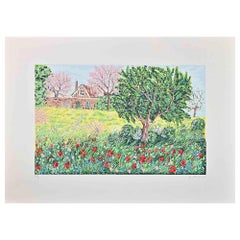
$308
H 22.05 in W 29.93 in D 0.04 in
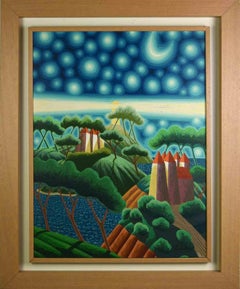
Landscape - Screen Print by Luca Dall
Olio - 2000s
Located in Roma, IT
Landscape is an artwork realized by Luca Dall'Olio.
Materic screen printing on canvas, cm 65x50, ex. IV/XXX.
Signature and edition
On the back: Stamperia d'Arte Artevalori stamp
...
Category
Early 2000s Modern Figurative Prints
Materials
Paper, Screen
$356
H 25.6 in W 19.69 in D 0.04 in
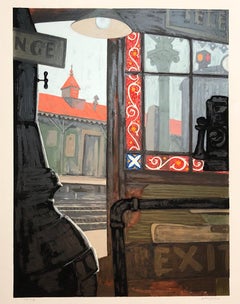
Modernist Silkscreen Screenprint
El Station, Interior
NYC Subway, WPA Artist
By Anthony Velonis
Located in Surfside, FL
screenprint printed in color ink on wove paper. New York City subway station interior.
Anthony Velonis (1911 – 1997) was an American painter and designer born in New York City who helped introduce the public to silkscreen printing in the early 20th century.
While employed under the federal Works Progress Administration, WPA during the Great Depression, Velonis brought the use of silkscreen printing as a fine art form, referred to as the "serigraph," into the mainstream. By his own request, he was not publicly credited for coining the term.
He experimented and mastered techniques to print on a wide variety of materials, such as glass, plastics, and metal, thereby expanding the field. In the mid to late 20th century, the silkscreen technique became popular among other artists such as Robert Rauschenberg and Andy Warhol.
Velonis was born into a relatively poor background of a Greek immigrant family and grew up in the tenements of New York City. Early on, he took creative inspiration from figures in his life such as his grandfather, an immigrant from the mountains in Greece, who was "an ecclesiastical painter, on Byzantine style." Velonis attended James Monroe High School in The Bronx, where he took on minor artistic roles such as the illustration of his high school yearbook. He eventually received a scholarship to the NYU College of Fine Arts, into which he was both surprised and ecstatic to have been admitted. Around this time he took to painting, watercolor, and sculpture, as well as various other art forms, hoping to find a niche that fit. He attended NYU until 1929, when the Great Depression started in the United States after the stock market crash.
Around the year 1932, Velonis became interested in silk screen, together with fellow artist Fritz Brosius, and decided to investigate the practice. Working in his brother's sign shop, Velonis was able to master the silkscreen process. He reminisced in an interview three decades later that doing so was "plenty of fun," and that a lot of technology can be discovered through hard work, more so if it is worked on "little by little."
Velonis was hired by Mayor LaGuardia in 1934 to promote the work of New York's city government via posters publicizing city projects. One such project required him to go on a commercial fishing trip to locations including New Bedford and Nantucket for a fortnight, where he primarily took photographs and notes, and made sketches. Afterward, for a period of roughly six months, he was occupied with creating paintings from these records. During this trip, Velonis developed true respect and affinity for the fishermen with whom he traveled, "the relatively uneducated person," in his words.
Following this, Velonis began work with the Public Works of Art Project (PWAP), an offshoot of the Civil Works Administration (CWA), where he was assigned to serve the different city departments of New York. After the formation of the federal Works Progress Administration, which hired artists and sponsored projects in the arts, he also worked in theater.
Velonis began working for the federal WPA in 1935. He kept this position until 1936 or 1938, at which point he began working in the graphic art division of the Federal Art Project, which he ultimately led. Under various elements of the WPA program, many young artists, writers and actors gained employment that helped them survive during the Depression, as well as contributing works that created an artistic legacy for the country.
When interviewed in December 1994 by the Library of Congress about his time in the WPA, Velonis reflected that he had greatly enjoyed that period, saying that he liked the "excitement" and "meeting all the other artists with different points of view." He also said in a later interview that "the contact and the dialogue with all those artists and the work that took place was just invaluable." Among the young artists he hired was Edmond Casarella, who later developed an innovative technique using layered cardboard for woodcuts.
Velonis introduced silkscreen printing to the Poster Division of the WPA. As he recalled in a 1965 interview: "I suggested that the Poster division would be a lot more productive and useful if they had an auxiliary screen printing project that worked along with them. And apparently this was very favorably received..."
As a member of the Federal Art Project, a subdivision of the WPA, Velonis later approached the Public Use of Arts Committee (PUAC) for help in "propagandizing for art in the parks, in the subways, et cetera." Since the Federal Art Project could not be "self-promoting," an outside organization was required to advertise their art more extensively. During his employment with the Federal Art Project, Velonis created nine silkscreen posters for the federal government.
Around 1937-1939 Velonis wrote a pamphlet titled "Technical Problems of the Artist: Technique of the Silkscreen Process," which was distributed to art centers run by the WPA around the country. It was considered very influential in encouraging artists to try this relatively inexpensive technique and stimulated printmaking across the country.
In 1939, Velonis founded the Creative Printmakers Group, along with three others, including Hyman Warsager. They printed both their own works and those of other artists in their facility. This was considered the most important silkscreen shop of the period.
The next year, Velonis founded the National Serigraph Society. It started out with relatively small commercial projects, such as "rather fancy" Christmas cards that were sold to many of the upscale Fifth Avenue shops...
Category
1980s American Modern Figurative Prints
Materials
Screen
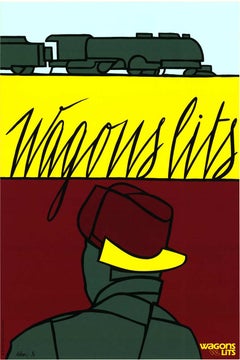
Original "Wagon Lits" pop art style serigraph travel by train poster
By Valerio Adami
Located in Spokane, WA
Original “Wagon Lits” serigraph poster by the artist Valerio Adami.
It was printed in France by GrafiCaza (Michel Caza), one of the finest serigraph companies on woven paper—in exce...
Category
1990s American Modern Figurative Prints
Materials
Screen
$260 Sale Price
20% Off
H 36 in W 24 in D 0.05 in
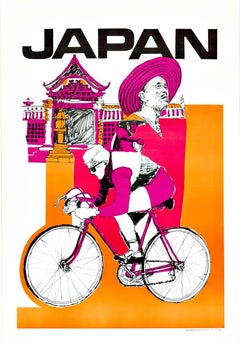
Original "Japan" vintage travel poster serigraph bicycle
Located in Spokane, WA
Original Japan serigraph travel poster. Linen backed in very find condition, ready to frame.
Japanese travel posters have a rich history and are renowned for their captivating aesthetics, often blending traditional imagery with modern elements. In the 1970s, during the height of travel poster popularity, Japanese artists created numerous designs promoting tourism within the country and to international destinations. The poster you're referring to, produced by the American Screen Printing Co. in 1972, likely aimed to capture the essence of Japanese culture and scenery while appealing to an American audience.
Pagodas are iconic structures in Japanese architecture. They are multi-tiered towers...
Category
1970s Modern Landscape Prints
Materials
Screen
$420 Sale Price
20% Off
H 35 in W 23.5 in D 0.05 in
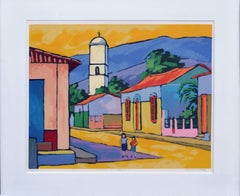
Calle De La Ermita, Valencia Spain
By Guido Lopez
Located in Soquel, CA
Bright and bold screen print by Spanish artist Guido Lopez (Spain, 20th century). Signed and titled, "Guido Lopez", 12/150. Unframed. Image 22.5"H x 25"L, Mat 31"H x 34.25"L.
Category
Early 2000s Modern Figurative Prints
Materials
Screen
$1,020 Sale Price
20% Off
H 31 in W 34.25 in D 1 in
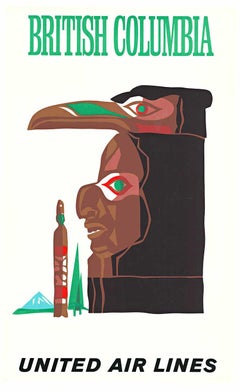
Original British Columbia United Air Lines travel poster
Located in Spokane, WA
Behold the original British Columbia United Air Lines vintage Travel Poster—a rare gem from the mid-century Modern era. This archival linen-backed beauty is in excellent condition an...
Category
1960s American Modern Figurative Prints
Materials
Screen
Recently Viewed
View AllMore Ways To Browse
17th Century Venetian Paintings
Alejandro Otero
Antique Prints San Francisco
Art Deco Women Paintings
Belly Dance
Belly Dancer
Black Coyote
Boxing Sculptures
C Henry Paintings
Cabana Art
Cappello Carmelo
Charles Rumsey
Eastern European Artists
Edith Isaac Rose
Eileen Agar
Eric Valat
Examination Table
Free Standing Art Sculptures