Want more images or videos?
Request additional images or videos from the seller
1 of 17
Picasso, The Basket (Orozco 95), Picasso (after)1946
1946
$3,996List Price
About the Item
- Creation Year:1946
- Dimensions:Height: 12.625 in (32.07 cm)Width: 18.75 in (47.63 cm)
- Medium:
- Movement Style:
- After:Pablo Picasso (1881-1973, Spanish)
- Period:
- Condition:
- Gallery Location:Fairfield, CT
- Reference Number:1stDibs: LU1342116194992
About the Seller
4.8
Vetted Professional Seller
Every seller passes strict standards for authenticity and reliability
Established in 2002
1stDibs seller since 2020
916 sales on 1stDibs
Typical response time: 1 hour
Authenticity Guarantee
In the unlikely event there’s an issue with an item’s authenticity, contact us within 1 year for a full refund. DetailsMoney-Back Guarantee
If your item is not as described, is damaged in transit, or does not arrive, contact us within 7 days for a full refund. Details24-Hour Cancellation
You have a 24-hour grace period in which to reconsider your purchase, with no questions asked.Vetted Professional Sellers
Our world-class sellers must adhere to strict standards for service and quality, maintaining the integrity of our listings.Price-Match Guarantee
If you find that a seller listed the same item for a lower price elsewhere, we’ll match it.Trusted Global Delivery
Our best-in-class carrier network provides specialized shipping options worldwide, including custom delivery.You May Also Like
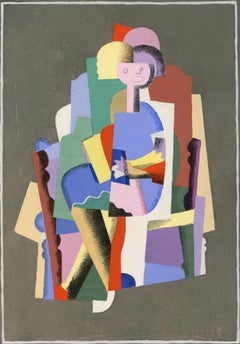
Georges Valmier, Seated Woman, 1929 (after)
By Georges Valmier
Located in Southampton, NY
This exquisite lithograph and pochoir after Georges Valmier (1885–1937), titled Femme assise (Seated Woman), from the album L'Art Cubiste, Theories et Realisations, Etude Critique (C...
Category
1920s Cubist Still-life Prints
Materials
Lithograph, Stencil
$1,916 Sale Price
20% Off
Free Shipping
H 10.83 in W 8.27 in
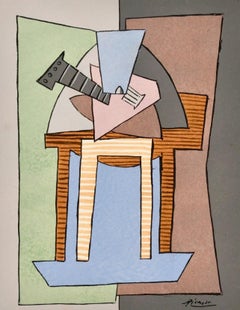
Pablo Picasso, Guitarist, from Oeuvres 1920-1926 (after)
By Pablo Picasso
Located in Southampton, NY
This exquisite lithograph and pochoir after Pablo Picasso (1881–1973), titled Guitariste (Guitarist), from the album, Picasso, Oeuvres 1920-1926, 1926, originates from the 1926 edition published and printed by Editions des Cahiers d'Art, Paris, under the direction of Christian Zervos, Editeur, Paris, December 10, 1926. Guitariste (Guitarist) captures Picasso’s evolving exploration of form, movement, and emotion during the mid-1920s—a pivotal period in which he redefined the relationship between classical representation and modern abstraction. With its bold contouring, stylized anatomy, and rhythmic color balance, the composition embodies the harmony between structural precision and sensual fluidity that characterized Picasso’s work in this era.
Executed as a lithograph and pochoir on velin paper, this work measures 11 x 8.75 inches. Signed in the plate and unnumbered as issued. The edition exemplifies the refined craftsmanship of Editions des Cahiers d'Art and the technical excellence of Parisian printmaking in the interwar period.
Artwork Details:
Artist: After Pablo Picasso (1881–1973)
Title: Guitariste (Guitarist), from the album, Picasso, Oeuvres 1920-1926, 1926
Medium: Lithograph and pochoir on velin paper
Dimensions: 11 x 8.75 inches (27.94 x 22.23 cm)
Inscription: Signed in the plate and unnumbered as issued
Date: 1926
Publisher: Editions des Cahiers d'Art, Paris, under the direction of Christian Zervos, Editeur, Paris
Printer: Ducros & Colas, Paris
Catalogue raisonne references: Cramer, Patrick. Pablo Picasso, The Illustrated Books: Catalogue Raisonne. Patrick Cramer, 1983, illustration 15; Bloch, Georges. Pablo Picasso: Catalogue of the Printed Graphic Work 1904–1967. Kornfeld & Klipstein, 1968, illustration 56
Condition: Well preserved, consistent with age and medium
Provenance: From the album, Picasso, Oeuvres 1920-1926, published and printed by Editions des Cahiers d'Art, Paris, under the direction of Christian Zervos, Editeur, Paris, 1926
Notes:
Excerpted from the album (translated from French), This volume was completed to be printed by the Ducros & Colas printing house, 7, rue Croulebarbe in Paris, for the Editions des Cahiers d'Art, on December 10th MCMXXVI, DCC numbered examples, VI on Japon Imperial with an etching by Picasso, numbered from I to VI, L examples on paper by papier de Hollande, Van Gelder, with an etching by Picasso, numbered from VII to LVI, DCXL examples on velin, numbered from LVII to DCC, plus II examples intended for legal deposit.
About the Publication:
The album Picasso, Oeuvres 1920-1926 was issued in 1926 by Editions des Cahiers d'Art under the direction of Christian Zervos, one of the most influential editors, critics, and publishers of 20th-century modernism. Conceived as both a visual and intellectual tribute to Pablo Picasso’s mastery during a crucial transitional period, the volume presents a series of lithographs and pochoirs that chronicle his stylistic evolution from synthetic Cubism toward a renewed engagement with the human figure. Published in conjunction with the legendary Cahiers d'Art journal, the edition reflects Zervos’s vision of uniting scholarship, craftsmanship, and artistic authenticity in the modern book arts. Each composition was executed by the master printers Ducros & Colas and colored using the pochoir technique, faithfully translating the tonal subtleties and compositional balance of Picasso’s original drawings and gouaches. Completed on December 10, 1926, the edition comprised DCC examples—VI on Japon Imperial, L on Hollande Van Gelder, and DCXL on velin paper, plus II copies reserved for legal deposit—each numbered and printed to exacting standards. The volume stands as one of the earliest major Cahiers d'Art collaborations with Picasso, preceding the monumental Catalogue Raisonne des Oeuvres de Picasso that Zervos would later dedicate his life to producing. Today, Picasso, Oeuvres 1920-1926 remains a cornerstone of interwar art publishing, representing the confluence of avant-garde innovation, technical excellence, and intellectual rigor that defined the Parisian art world of the 1920s.
About the Artist:
Pablo Picasso (1881–1973) was a Spanish painter, sculptor, printmaker, and ceramicist whose extraordinary vision revolutionized modern art and defined the visual language of the 20th century. A child prodigy from Malaga, Spain, Picasso's career spanned more than seven decades and encompassed an astonishing range of styles and innovations—from the melancholic Blue and romantic Rose periods to his pioneering invention of Cubism with Georges Braque, which shattered conventional notions of perspective and form. Influenced by the bold expressiveness of El Greco, the structure of Cezanne, and the vitality of African and Iberian sculpture, Picasso became a central figure of the Paris avant-garde, working in creative dialogue with contemporaries such as Henri Matisse, Alexander Calder, Alberto Giacometti, Salvador Dali, Joan Miro, Wassily Kandinsky, Marcel Duchamp, and Man Ray. His insatiable experimentation extended across painting, drawing, printmaking, ceramics, and sculpture, forever expanding the boundaries of artistic expression. A master of reinvention, Picasso profoundly shaped generations of artists who followed—from Andy Warhol, Roy Lichtenstein, David Hockney, and Jean-Michel Basquiat to Jeff Koons and Banksy—cementing his status as a timeless cultural icon whose works remain among the most sought after worldwide. His landmark painting Les Femmes d'Alger (Version O) achieved a record-breaking sale of 179,365,000 USD at Christie's, New York, on May 11, 2015, affirming Picasso's enduring legacy as one of the most influential and valuable artists in history.
Pablo Picasso Guitariste (Guitarist), Picasso Oeuvres 1920-1926, Picasso Zervos Cahiers d'Art, Picasso pochoir...
Category
1920s Cubist Still-life Prints
Materials
Lithograph, Stencil
$2,396 Sale Price
20% Off
Free Shipping
H 11 in W 8.75 in
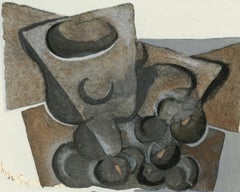
Juan Gris, Still Life, 1929 (after)
By Juan Gris
Located in Southampton, NY
This exquisite lithograph and pochoir after Juan Gris (1887–1927), titled Nature morte (Still Life), from the album L'Art Cubiste, Theories et Realisations, Etude Critique (Cubist Ar...
Category
1920s Cubist Still-life Prints
Materials
Lithograph, Stencil
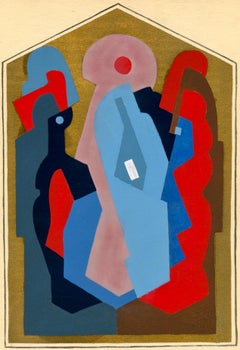
Albert Gleizes, The Bathers, 1929 (after)
By Albert Gleizes
Located in Southampton, NY
This exquisite lithograph and pochoir after Albert Gleizes (1881–1953), titled Les Baigneuses (The Bathers), from the album L'Art Cubiste, Theories et Realisations, Etude Critique (C...
Category
1920s Cubist Still-life Prints
Materials
Lithograph, Stencil
$1,916 Sale Price
20% Off
Free Shipping
H 10.83 in W 8.27 in
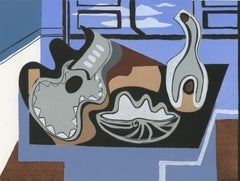
Louis Marcoussis, Still Life with Guitar, 1929 (after)
By Louis Marcoussis
Located in Southampton, NY
This exquisite lithograph and pochoir after Louis Marcoussis (1878–1941), titled Nature morte avec guitare (Still Life with Guitar), from the album L'Art Cubiste, Theories et Realisa...
Category
1920s Cubist Still-life Prints
Materials
Lithograph, Stencil
$1,916 Sale Price
20% Off
Free Shipping
H 8.27 in W 10.83 in
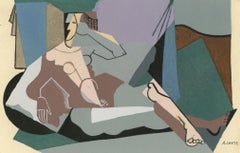
Andre Lhote, Reclining Woman, 1929 (after)
By André Lhote
Located in Southampton, NY
This exquisite lithograph and pochoir after Andre Lhote (1885–1962), titled Femme allongee (Reclining Woman), from the album L'Art Cubiste, Theories et Realisations, Etude Critique (...
Category
1920s Cubist Still-life Prints
Materials
Lithograph, Stencil
$1,916 Sale Price
20% Off
Free Shipping
H 8.27 in W 10.83 in
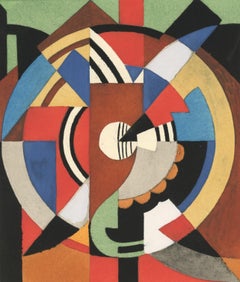
Auguste Herbin, Composition on Green Background, 1929 (after)
By Auguste Herbin
Located in Southampton, NY
This exquisite lithograph and pochoir after Auguste Herbin (1882–1960), titled Composition sur fond vert (Composition on Green Background), from the album L'Art Cubiste, Theories et ...
Category
1920s Cubist Still-life Prints
Materials
Lithograph, Stencil
$1,916 Sale Price
20% Off
Free Shipping
H 10.83 in W 8.27 in
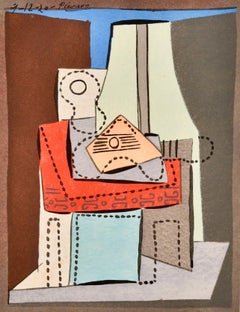
Pablo Picasso, Seated Woman in an Armchair, from Oeuvres 1920-1926 (after)
By Pablo Picasso
Located in Southampton, NY
This exquisite lithograph and pochoir after Pablo Picasso (1881–1973), titled Femme Assise dans un Fauteuil (Seated Woman in an Armchair), from the album, Picasso, Oeuvres 1920-1926, 1926, originates from the 1926 edition published and printed by Editions des Cahiers d'Art, Paris, under the direction of Christian Zervos, Editeur, Paris, December 10, 1926. Femme Assise dans un Fauteuil (Seated Woman in an Armchair) captures Picasso’s evolving exploration of form, movement, and emotion during the mid-1920s—a pivotal period in which he redefined the relationship between classical representation and modern abstraction. With its bold contouring, stylized anatomy, and rhythmic color balance, the composition embodies the harmony between structural precision and sensual fluidity that characterized Picasso’s work in this era.
Executed as a lithograph and pochoir on velin paper, this work measures 11 x 8.75 inches. Signed in the plate and unnumbered as issued. The edition exemplifies the refined craftsmanship of Editions des Cahiers d'Art and the technical excellence of Parisian printmaking in the interwar period.
Artwork Details:
Artist: After Pablo Picasso (1881–1973)
Title: Femme Assise dans un Fauteuil (Seated Woman in an Armchair), from the album, Picasso, Oeuvres 1920-1926, 1926
Medium: Lithograph and pochoir on velin paper
Dimensions: 11 x 8.75 inches (27.94 x 22.23 cm)
Inscription: Signed in the plate and unnumbered as issued
Date: 1926
Publisher: Editions des Cahiers d'Art, Paris, under the direction of Christian Zervos, Editeur, Paris
Printer: Ducros & Colas, Paris
Catalogue raisonne references: Cramer, Patrick. Pablo Picasso, The Illustrated Books: Catalogue Raisonne. Patrick Cramer, 1983, illustration 15; Bloch, Georges. Pablo Picasso: Catalogue of the Printed Graphic Work 1904–1967. Kornfeld & Klipstein, 1968, illustration 56
Condition: Well preserved, consistent with age and medium
Provenance: From the album, Picasso, Oeuvres 1920-1926, published and printed by Editions des Cahiers d'Art, Paris, under the direction of Christian Zervos, Editeur, Paris, 1926
Notes:
Excerpted from the album (translated from French), This volume was completed to be printed by the Ducros & Colas printing house, 7, rue Croulebarbe in Paris, for the Editions des Cahiers d'Art, on December 10th MCMXXVI, DCC numbered examples, VI on Japon Imperial with an etching by Picasso, numbered from I to VI, L examples on paper by papier de Hollande, Van Gelder, with an etching by Picasso, numbered from VII to LVI, DCXL examples on velin, numbered from LVII to DCC, plus II examples intended for legal deposit.
About the Publication:
The album Picasso, Oeuvres 1920-1926 was issued in 1926 by Editions des Cahiers d'Art under the direction of Christian Zervos, one of the most influential editors, critics, and publishers of 20th-century modernism. Conceived as both a visual and intellectual tribute to Pablo Picasso’s mastery during a crucial transitional period, the volume presents a series of lithographs and pochoirs that chronicle his stylistic evolution from synthetic Cubism toward a renewed engagement with the human figure. Published in conjunction with the legendary Cahiers d'Art journal, the edition reflects Zervos’s vision of uniting scholarship, craftsmanship, and artistic authenticity in the modern book arts. Each composition was executed by the master printers Ducros & Colas and colored using the pochoir technique, faithfully translating the tonal subtleties and compositional balance of Picasso’s original drawings and gouaches. Completed on December 10, 1926, the edition comprised DCC examples—VI on Japon Imperial, L on Hollande Van Gelder, and DCXL on velin paper, plus II copies reserved for legal deposit—each numbered and printed to exacting standards. The volume stands as one of the earliest major Cahiers d'Art collaborations with Picasso, preceding the monumental Catalogue Raisonne des Oeuvres de Picasso that Zervos would later dedicate his life to producing. Today, Picasso, Oeuvres 1920-1926 remains a cornerstone of interwar art publishing, representing the confluence of avant-garde innovation, technical excellence, and intellectual rigor that defined the Parisian art world of the 1920s.
About the Artist:
Pablo Picasso (1881–1973) was a Spanish painter, sculptor, printmaker, and ceramicist whose extraordinary vision revolutionized modern art and defined the visual language of the 20th century. A child prodigy from Malaga, Spain, Picasso's career spanned more than seven decades and encompassed an astonishing range of styles and innovations—from the melancholic Blue and romantic Rose periods to his pioneering invention of Cubism with Georges Braque, which shattered conventional notions of perspective and form. Influenced by the bold expressiveness of El Greco, the structure of Cezanne, and the vitality of African and Iberian sculpture, Picasso became a central figure of the Paris avant-garde, working in creative dialogue with contemporaries such as Henri Matisse, Alexander Calder, Alberto Giacometti, Salvador Dali, Joan Miro, Wassily Kandinsky, Marcel Duchamp, and Man Ray. His insatiable experimentation extended across painting, drawing, printmaking, ceramics, and sculpture, forever expanding the boundaries of artistic expression. A master of reinvention, Picasso profoundly shaped generations of artists who followed—from Andy Warhol, Roy Lichtenstein, David Hockney, and Jean-Michel Basquiat to Jeff Koons and Banksy—cementing his status as a timeless cultural icon whose works remain among the most sought after worldwide. His landmark painting Les Femmes d'Alger (Version O) achieved a record-breaking sale of 179,365,000 USD at Christie's, New York, on May 11, 2015, affirming Picasso's enduring legacy as one of the most influential and valuable artists in history.
Pablo Picasso Femme Assise dans un Fauteuil (Seated Woman in an Armchair), Picasso Oeuvres 1920-1926, Picasso Zervos Cahiers d'Art, Picasso pochoir...
Category
1920s Cubist Still-life Prints
Materials
Lithograph, Stencil
$2,396 Sale Price
20% Off
Free Shipping
H 11 in W 8.75 in
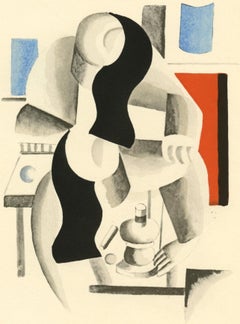
Fernand Leger, Woman with a Vase, 1929 (after)
By Fernand Léger
Located in Southampton, NY
This exquisite lithograph and pochoir after Fernand Leger (1881–1955), titled La Femme au Vase (Woman with a Vase), from the album L'Art Cubiste, Theories et Realisations, Etude Crit...
Category
1920s Cubist Still-life Prints
Materials
Lithograph, Stencil
$1,916 Sale Price
20% Off
Free Shipping
H 10.83 in W 8.27 in
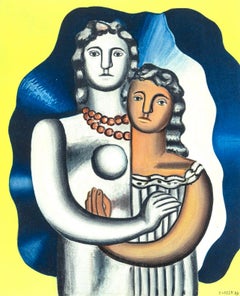
Fernand Leger, The Two Figures, from Derriere le miroir, 1955 (after)
By Fernand Léger
Located in Southampton, NY
This exquisite lithograph after Fernand Leger (1881–1955), titled Le deux figures (The Two Figures), from the folio Derriere le miroir, No. 79-81, originates from the 1955 edition published by Maeght Editeur, Paris, and printed by Mourlot Freres, Paris, 1955. This composition exemplifies Leger’s rhythmic balance of color, form, and movement, translating the mechanical vitality of modern life into a harmonious, humanized geometry.
Executed as a lithograph on velin paper, this work measures 15 x 11 inches. Signed in the plate and unnumbered as issued. The edition exemplifies the superb craftsmanship of Mourlot Freres, Paris.
Artwork Details:
Artist: After Fernand Leger (1881–1955)
Title: Le deux figures (The Two Figures), from the folio Derriere le miroir, No. 79-81
Medium: Lithograph on velin paper
Dimensions: 15 x 11 inches (38.1 x 27.94 cm)
Inscription: Signed in the plate and unnumbered as issued
Date: 1955
Publisher: Maeght Editeur, Paris
Printer: Mourlot Freres, Paris
Condition: Well preserved, consistent with age and medium
Provenance: From the folio Derriere le miroir, No. 79-81, published by Maeght Editeur, Paris; printed by Mourlot Freres, Paris, 1955
About the Publication:
Derriere le miroir (Behind the Mirror) was one of the most important art publications of the 20th century, created and published by Maeght Editeur in Paris from 1946 to 1982. Founded by the visionary art dealer and publisher Aime Maeght, the series served as both an exhibition catalogue and a work of art in its own right, uniting original lithographs by leading modern and contemporary artists with critical essays, poetry, and design of the highest quality. Printed by master lithographers such as Mourlot Freres and Arte, Derriere le miroir became synonymous with the artistic vanguard of postwar Europe. Each issue was devoted to a single artist or theme and published to accompany exhibitions at the Galerie Maeght in Paris, featuring works by Pablo Picasso, Henri Matisse, Georges Braque, Joan Miro, Marc Chagall, Alexander Calder, Fernand Leger, and Alberto Giacometti, among others. The publication reflected Maeght's belief that art should be both accessible and elevated—an ideal realized through its luxurious production values, meticulous printing, and collaboration with the greatest creative minds of its time.
About the Artist:
Fernand Leger (1881–1955) was a visionary French painter, sculptor, designer, and filmmaker whose groundbreaking fusion of modern industry, vivid color, and geometric form transformed the course of 20th-century art. Born in Argentan, Normandy, Leger began as an architectural draftsman before studying at the Academie Julian and the Ecole des Beaux-Arts in Paris, where he absorbed the lessons of Paul Cezanne’s structural rigor and the revolutionary ideas of Cubism. Alongside Pablo Picasso and Georges Braque, he became one of the leading innovators of the avant-garde, yet his work stood apart through its embrace of mechanical rhythm, bold contrasts, and industrial modernity—earning him the title “the painter of the machine age.” His art celebrated the beauty of technology, urban life, and the human form rendered in dynamic, interlocking cylinders and planes, evoking the pulse of the modern world. Immersed in the vibrant Parisian art scene, Leger worked in dialogue with peers and contemporaries such as Alexander Calder, Alberto Giacometti, Salvador Dali, Joan Miro, Wassily Kandinsky, Marcel Duchamp, and Man Ray, all of whom shared his commitment to innovation and the reimagining of artistic expression. Beyond painting, Leger’s creative reach extended into film, design, and monumental public art—his 1924 collaboration on Ballet Mecanique with Dudley Murphy and Man Ray remains a landmark of avant-garde cinema. His later works evolved toward greater clarity and monumentality, celebrating the unity of form, color, and humanity through large-scale murals and mosaics that bridged fine art and architecture. Leger’s synthesis of Cubism, Futurism, and abstraction paved the way for movements such as Pop Art and influenced generations of artists including Roy Lichtenstein, Ellsworth Kelly, Robert Indiana, and Alexander Calder, who admired his fusion of structure, energy, and optimism. Today, his works are prized by major museums and collectors worldwide for their bold visual power and enduring modernity. His highest auction record was achieved by La femme en rouge et vert (1914), which sold for 39,241,000 USD at Sotheby’s, New York, on May 7, 2008.
After Fernand Leger Le deux figures 1955, Leger Derriere le miroir No. 79-81, Leger Mourlot...
Category
1950s Cubist Still-life Prints
Materials
Lithograph
$956 Sale Price
20% Off
Free Shipping
H 15 in W 11 in
More From This Seller
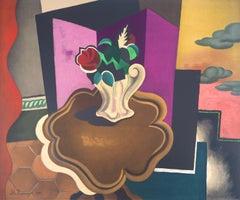
View Allde La Fresnaye, La table Louis-Philippe, Collection Pierre Lévy (after)
By Roger de la Fresnaye
Located in Fairfield, CT
Medium: Lithograph on vélin d'Arches paper
Year: 1968
Paper Size: 20 x 26 inches
Inscription: Signed in the plate and unnumbered, as issued
Notes: From the folio, Roger de la Fresnay...
Category
1960s Cubist Landscape Prints
Materials
Lithograph
$716 Sale Price
20% Off
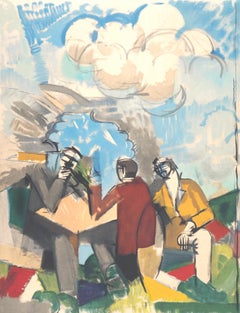
de La Fresnaye, La conquête de l
air, Collection Pierre Lévy (after)
By Roger de la Fresnaye
Located in Fairfield, CT
Medium: Lithograph on vélin d'Arches paper
Year: 1968
Paper Size: 20 x 26 inches
Inscription: Unsigned and unnumbered, as issued
Notes: From the folio, Roger de la Fresnaye, III, Col...
Category
1960s Cubist Landscape Prints
Materials
Lithograph
$716 Sale Price
20% Off
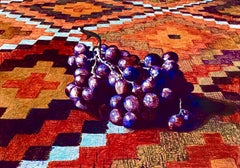
Grapes on Navajo Rug, Lowell Nesbitt
By Lowell Nesbitt
Located in Fairfield, CT
Artist: Lowell Nesbitt (1933-1993)
Title: Grapes on Navajo Rug
Year: 1977
Edition: 145/175, plus proofs.
Medium: Lithograph on Arches paper
Size: 24 x 31 inches
Condition: Good
Inscription: Signed and numbered by the artist.
LOWELL NESBITT (1933-1993) One of the most celebrated and most noted for his floral works of art. An artist with a highly personal style, Nesbitt made realistic studies of many themes throughout his career. His most well known series, and perhaps his most beautiful and poetic, are the more than four hundred works he created using the flower as theme. Since his first show in 1957, Nesbitt has had more than eighty one man shows. His painting, drawings and prints...
Category
1970s Pop Art Landscape Prints
Materials
Lithograph
$636 Sale Price
36% Off
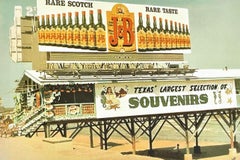
Straight Shot, Ron Kleemann
By Ron Kleemann
Located in Fairfield, CT
Artist: Ron Kleemann (1937-2014)
Title: Straight Shot
Year: 1980
Medium: Silkscreen on Somerset paper
Edition: 225/250, plus proofs
Size: 22 x 30 inches
Condition: Good
Inscription:...
Category
1980s Photorealist Landscape Prints
Materials
Lithograph
$600 Sale Price
20% Off
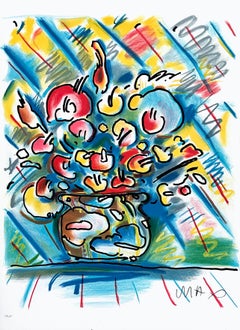
Vase of Flowers, Peter Max
By Peter Max
Located in Fairfield, CT
Artist: Peter Max (1937)
Title: Vase of Flowers
Year: 1979
Edition: 138/350, plus proofs
Medium: Lithograph on Somerset paper
Size: 30 x 22 inches
Condition: Excellent
Inscription: S...
Category
1970s Pop Art Still-life Prints
Materials
Lithograph
$876 Sale Price
20% Off
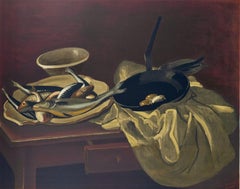
Derain, Nature morte aux Poissons et a La Poêle, Collection Pierre Lévy (after)
By André Derain
Located in Fairfield, CT
Medium: Lithograph on vélin d'Arches paper
Year: 1970
Paper Size: 20 x 26 inches
Inscription: Signed in the plate and unnumbered, as issued
Notes: From the folio, André Derain entre ...
Category
1970s Modern Landscape Prints
Materials
Lithograph
$716 Sale Price
20% Off
Recently Viewed
View AllMore Ways To Browse
Shang Chengxiang
Tetsuro Sawada
Vintage Chartreuse Poster
Vintage Climbing Poster
Vintage Hart Skis
Vintage Miami Beach Poster
Vintage Wisconsin Travel Posters
W Coter
Waldo Chase
Wick Antiques
William Cummings
Zoot Suit
A Midnight Race On The Mississippi
Åke Pettersson-Nåw On Sale
Alain Jeanne
Alex Katz Flowers 2
Anne Kendall
Antique Beaver Traps