1640s Landscape Prints
to
1
Overall Width
to
Overall Height
to
1
1
1,013
2,176
9,753
4,040
117
115
718
497
431
1,007
1,419
1,631
1,387
696
655
1
1
1
1
1
1
1
1
1
1
1
1
1
Period: 1640s
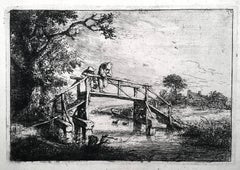
The Anglers
Located in New York, NY
Adriaen Van Ostade (1610-1685) etching The Anglers, circa 1647, Godefry 26, Bartsch 26. Very good condition, with small (1/2 inch) margins, on cream laid paper, archival mounting. 4 ...
Category
Old Masters 1640s Landscape Prints
Materials
Etching
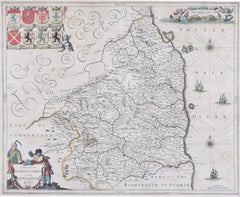
Map of Northumberland by Joannem Janssonium 17th century
Located in London, GB
To see our other original maps, scroll down to "More from this Seller" and below it click on "See all from this Seller" - or send us a message if you cannot find the poster you want....
Category
1640s Landscape Prints
Materials
Engraving
Related Items
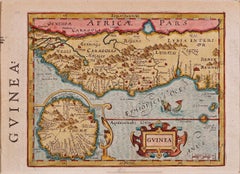
West Africa: A 17th Century Hand-Colored Map by Mercator/Hondius
Located in Alamo, CA
A 17th century hand-colored map entitled "Guineae Nova Descriptio" by Gerard Mercator and Jodocus Hondius, published in their 'Atlas Minor' in Amsterdam in 1635. It is focused on the...
Category
1640s Landscape Prints
Materials
Engraving
Daniel Marot
s The Siege of the Dutch Fortified City of Ypres by Louis XIV
By Daniel Marot
Located in Alamo, CA
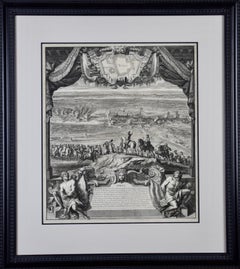
"Ypres, Grand Ville Riche & Marchande" is an engraving and etching by Daniel Marot (le Vieux) (1661–1752). It depicts a view of the siege of the city of Ypres and its citadel on the left in the Spanish Netherlands by Louis XIV's troops. This battle took place between March 18 and March 25, 1678, as part of the Franco-Dutch War. Marot illustrated in great detail (best appreciated with magnification) the French attack on the strong pentagonal citadel on the extreme left, which had been built recently in anticipation of a French attack. The trenches built by the French approaching the town are seen on the right. King Louis XIV can be seen in the foreground surveying the battle mounted on his white horse, surrounded by his officers and troops.
The print is presented in an attractive ornate black wood frame with a cream-colored double mat with a black inner trim. It is glazed with plexiglas. The frame measures 25.38" x 22.63" x .88". The engraving, frame, mat and glazing are in excellent condition.
Artist: Daniel Marot (1661–1752) was also called "Le Vieux". He was the son of the famous architect, Jean Marot. Marot had diverse interests and talents. In addition to his art, he designed garden projects, architectural ornaments, furniture, and even upholstery. Marot as a Huguenot protestant was forced to leave France in 1685 following the revocation of the Edict of Nantes. He emigrated to Holland, where he worked for William of Orange (an arch enemy of his former employer Louis XIV). Marot was largely responsible for the interiors of Williams palace at the Loo. In 1694 he went Britain as William had married Queen Mary and he had become King William III of England. He later returned to Holland in about 1698 and died in the Hague in 1752. He left a lasting legacy on the decorative arts in the Netherlands, where his grand version of the Louis XIV style remained popular into the 1730s.
Historical Background: In October 1677, Mary Stuart, niece and possible successor of Charles II of England, married Louis XIV's arch enemy William III of Orange...
Category
Old Masters 1640s Landscape Prints
Materials
Engraving, Etching

$1,275
H 25.38 in W 22.63 in D 0.88 in
"A Dance in Otaheite" (Tahiti), Engraving from Captain Cook
s 3rd Voyage
By John Webber
Located in Alamo, CA
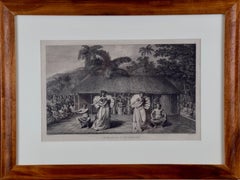
"A Dance in Otaheite" (Tahiti) is an engraving created by William Sharp (1749-1824), from a drawing by John Webber (1752-1793), who was the artist on Captain James Cook's 3rd and final voyage of discovery. It is a plate in the atlas of "A Voyage to the Pacific Ocean Undertaken by the Command of His Majesty, for Making Discoveries in the Northern Hemisphere", the official British Admirality sanctioned journal published upon completion of the voyage in London in 1784 by Strahan & Cadell.
Two women and two men wearing ceremonial costumes, performing a dance outdoors standing on a mat. Three men are playing the drums in the background, in front of a thatched roof building. An audience of men are sitting on both sides of the stage. By the time Webber arrived in Tahiti, 'south sea' imagery had become familiar. Webber gave concentrated attention to dance. He had the opportunity to distinguish the Tahitian dance from the more formalized dancing of Tonga. Whereas they seem to have called to mind the more formal dances of antiquity, the Tahitian dancing aroused memories of peasant and folk dancing.
This engraving is professionally framed in Koa wood. Koa wood is legendary in Hawaii. Not only is this amazing wood native to Hawaii, but it is known for the deep rich colors and varied grain pattern. Koa has an honored heritage in Hawaii and is highly revered and sacred. The word “koa” means “warrior” in Hawaiian. The warriors of King Kamehameha the Great, created canoes and weapons from a wood plentiful on the Big Island of Hawaii. This wood became synonymous with the warriors themselves, and it became known as koa.
The print is in excellent condition.
There are three other engravings listed from the official journal of Captain Cook's 3rd voyage available that are presented in identical Koa wood frames and double mats (LU117324682432, LU117324684052, LU117324684062). They would make a wonderful grouping for a display of 2, 3 or 4 prints. A discount is available for a grouping depending on the number of items included.
Hawaii was discovered by Captain Cook during this voyage. Hawaii was originally called The Sandwich Islands in honor of The Earl of Sandwich...
Category
Realist 1640s Landscape Prints
Materials
Engraving
$2,375
H 21.75 in W 23.75 in D 0.88 in
Engraving of a British Fox Hunting Scene "The Pink Of Condition"
Located in Alamo, CA
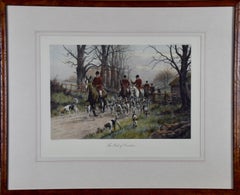
The engraving "The Pink Of Condition" by George Wright was published in London in 1909. It depicts the beginning of a British fox hunting scene. The ...
Category
Naturalistic 1640s Landscape Prints
Materials
Engraving
$1,075
H 23.63 in W 28.75 in D 0.88 in
Hadrian
s Mausoleum, Castel S. Angelo: A Framed 18th Century Etching by Piranesi
Located in Alamo, CA
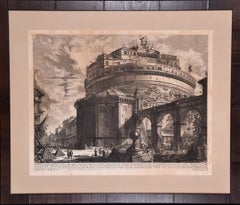
This large framed 18th century etching by Giovanni Battista Piranesi entitled "Veduta del Mausoleo d'Elio Adriana ora chiamato Castello S. Angelo nella parte opposta alla Facciata de...
Category
Old Masters 1640s Landscape Prints
Materials
Etching
$5,875
H 28.88 in W 37.25 in D 1.25 in
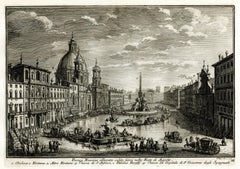
Piazza Navona allagata solito farsi nelle Feste di Agosto
Located in Fairlawn, OH
Piazza Navona allagata solito farsi nelle Feste di Agosto
Etching, 1752
Signed in the plate lower right (see photo)
From: Della Magnificenze di Roma Antica e Moderna ( The Magnificense of Ancient and Modern Rome) , (1747-1761)
Volume II, The Main Squares and Obelisks, columns and other ornaments, 1752, Plate No. 26
Della Magnificenze di Roma Antica e Moderna_ (1747-61), a collection of 238 plates that was published in ten volumes. Vasi recorded all types of architecture and organized these images of contemporary Rome by subject, with each volume representing a different category of architecture. This comprehensive project provides one of the most complete views of eighteenth-century Rome
Condition: Excellent
Image/Plate size: 8 .25 x 12.63 inches
Sheet size: 11 x 15 7/8 inches
Vasi was Giovanni Battista Piranesi’s teacher. Piranesi (1720-1778) entered Vasi’s studio as an apprentice at age 20 c. 1740. Piranesi left Vasi’s employment after stabbing Vasi over the perception that Vasi was withholding secrets of the etching process.
Giuseppe Vasi was an Italian engraver and painter born and trained in Sicily. He received a classical education in his hometown of Corleone and trained as a printmaker in nearby Palermo, perhaps under the tutelage of the etchers Antonino Bova and Francesco Cichè. He moved to Rome in 1736, already an established printmaker, and spent most of his career documenting the urban landscape of the city in engravings. Through his patron, the politically and culturally influential Cardinal Troiano Acquaviva d’Aragona, Vasi met other artists working in Rome, such as Sebastiano Conca, Ferdinando Fuga, and Luigi Vanvitelli. He was also influenced by his predecessors, including Giovanni Paolo Panini, Giovanni Battista Falda...
Category
Old Masters 1640s Landscape Prints
Materials
Etching
$500
H 8.25 in W 12.63 in
Four Framed Hogarth Engravings "Four Times of the Day"
Located in Alamo, CA
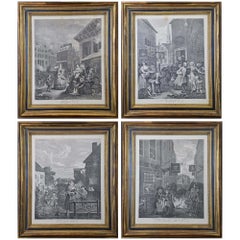
The four plates in this "Four Times of the Day" set were created utilizing both engraving and etching techniques by William Hogarth in 1738. Hogarth's original copper plates were refurbished where needed by James Heath and these engravings were republished in London in 1822 by Braddock, Cradock & Joy. This was the last time Hogarth's original copper plates were used for printing. Most were melted down during World War I for the construction of bombs. Printed upon early nineteenth century wove paper and with large, full margins as published by William Heath in 1822. The inscription below each print reads "Invented Painted & Engraved by Wm. Hogarth & Publish'd March 25. 1738 according to Act of Parliament".
These large folio sized "Four Times of the Day" engravings/etchings are presented in complex gold-colored wood frames with black bands and scalloped gold inner trim. A majority of each thick impressive frame is covered with glass applied near the outer edge. Each frame measures 25.75" high, 22.25" wide and 1.88" deep. There are a few small dents in the edge of these frames, which are otherwise in very good condition. "Morning" has two focal areas of discoloration in the upper margin and some discoloration in the right margin, a short tear in the left margin and a short tear or crease in the right margin. "Noon" has a spot in the upper margin that extends into the upper image, but it is otherwise in very good condition. "Evening" has a faint spot in the upper margin, but it is otherwise in very good condition. "Night" is in excellent condition.
The "Four Times of the Day" series is in the collection of many major museums, including: The British Museum, The Metropolitan Museum of Art, The Tate Museum, The Chicago Art Institute and The Victoria and Albert Museum.
Through this series Hogarth is portraying early 18th century London street life at "Four Times of the Day". His characters are exhibiting their personalities, quircks, strange activities, but he also wants to draw attention the disparities between the wealthy aristocracy and the common working class.
Plate 1, "Morning" depicts morning in Covent Garden in the winter in front of Tom King...
Category
Old Masters 1640s Landscape Prints
Materials
Engraving, Etching
$6,775
H 25.75 in W 22.25 in D 1.88 in
Sandwich Islands Canoe (Hawaii): Framed 18th C. Engraving Captain Cook
s Journal
By John Webber
Located in Alamo, CA
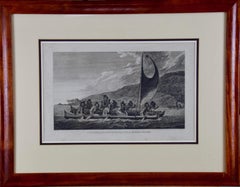
"A Canoe of the Sandwich Islands, the Rowers Masked" is an engraving created by Charles Grignion, from a drawing by John Webber (1752-1793), who was the artist on Captain James Cook's 3rd and final voyage of discovery. It is Plate 65 in the atlas of "A Voyage to the Pacific Ocean Undertaken by the Command of His Majesty, for Making Discoveries in the Northern Hemisphere", the official British Admiralty sanctioned journal published upon completion of the voyage in London in 1784 by Strahan & Cadell.
This famous image of ten Hawaiian rowers transporting a priest who is carrying a feather-covered image of Kukailimoku, the Hawaiian god of war. The priests and paddlers are all wearing gourd masks in their double-hulled canoe with an upright lateen woven sail. Each hull was shaped from a single large Koa log harvested from island rainforests, where they were carved before being transported to the coast.
This engraving is presented in a Koa wood frame and a white mat. There are occasional faint spots, but the print is otherwise in very good condition. Koa is the same wood as was used to make the canoe. Koa wood is legendary in Hawaii. Not only is this amazing wood native to Hawaii, but it is known for the deep rich colors and varied grain pattern. Koa has an honored heritage in Hawaii and is highly revered and sacred. The word “koa” means “warrior” in Hawaiian. The warriors of King Kamehameha the Great, created canoes and weapons from a wood plentiful on the Big Island of Hawaii. This wood became synonymous with the warriors themselves, and it became known as koa. The frame measures 20.75" high, 26.75" wide and 0.88" deep.
There are three other engravings listed from the official journal of Captain Cook's 3rd voyage available that are presented in identical Koa wood frames and mat (LU117324682022, LU117324684052, LU117324684062). They would make a wonderful grouping for a display of 2, 3 or 4 prints. A discount is available for a grouping depending on the number of items included.
Hawaii was discovered by Captain Cook (1728-1779) during this voyage. Hawaii was originally called The Sandwich Islands in honor of The Earl of Sandwich...
Category
1640s Landscape Prints
Materials
Engraving
$2,575
H 20.75 in W 26.75 in D 0.88 in
Ancient Roman Architecture: Original Framed 18th C. Etching by G. Piranesi
Located in Alamo, CA
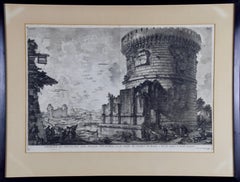
"Veduta del Sepolcro della Famiglia Plauzia per la Strada Che Conduce da Roma a Tivoli vicino a Ponte Lugano" from "Le Antichità Romane" (Roman Antiquities), one of the most famous works by Piranesi. "Antichita" illustrates the tombs along the Appian Way...
Category
Old Masters 1640s Landscape Prints
Materials
Etching, Engraving, Drypoint
$3,875
H 24.38 in W 31.75 in D 0.75 in
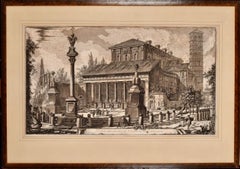
Basilica of San Lorenzo in Rome: A Framed 18th Century Etching by Piranesi
Located in Alamo, CA
This large framed 18th century etching by Giovanni Battista Piranesi entitled "Veduta della Basilica di S. Lorenzo fuor della mura" (Basilica of San Lorenzo Outside the Walls), published in Rome in 1750 in Piranesi's Vedute di Roma (Views of Rome), This etching depicts the Basilica of San Lorenzo Outside the Walls, which is a Roman Catholic papal basilica and parish church, located in Rome, Italy. The Basilica is one of the Seven Pilgrim Churches of Rome and one of the five "papal basilicas". It was built as a shrine to the martyred Roman deacon St. Lawrence.
This Piranesi etching is held by many museums and institutions, including: The Metropolitan Museum, The British Museum, The National Gallery of Art, The Yale University Art Gallery, and The Harvard Museum of Art.
This magnificent etching is presented in a brown-colored wood frame and a tan French...
Category
Old Masters 1640s Landscape Prints
Materials
Etching
$2,975
H 23.13 in W 33 in D 0.5 in
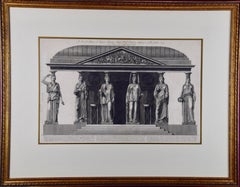
Ancient Roman Architecture: Framed Original 18th C. Etching by G. Piranesi
Located in Alamo, CA
"A sua Eccellenza il Signor Henry Hope Cav. Scozzese Amatore delle Belle Arti from "Vasi, Candelabri, Cippi, Sarcofagi, Tripodi, Lucerne, Ed Ornamenti Antichi", (Vases, candelabra, grave stones, sarcophagi, tripods, lamps, and ancient ornaments) is an etching by Giovanni Battista Piranesi, published in 1778. It depicts stone caryatids...
Category
Old Masters 1640s Landscape Prints
Materials
Etching
$3,975
H 31.25 in W 40 in D 1 in
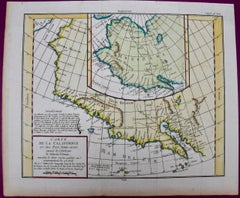
California: 18th Century Hand-colored Map by de Vaugondy
By Didier Robert de Vaugondy
Located in Alamo, CA
This is an 18th century hand-colored map of the western portions of North America entitled "Carte de la Californie et des Pays Nord-Ouest separés de l'Asie par le détroit d'Anian, ex...
Category
1640s Landscape Prints
Materials
Engraving
$875
H 13.75 in W 16.63 in
Previously Available Items
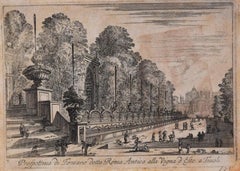
Prospettiva di Fontane detta Roma Antica alla Vigna d’Este a Tivoli - 1646
Located in Roma, IT
Prospettiva di Fontane detta Roma Antica alla Vigna d’Este a Tivoli is a splendid ancient etching engraved by the French artist Israel Silvestre for the series Alcune Vedute di Giard...
Category
1640s Landscape Prints
Materials
Etching
H 3.75 in W 5.24 in D 0.04 in
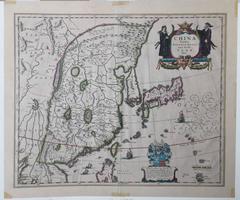
China (Japan
Korea)
By Willem Janszoon Bleau
Located in Santa Monica, CA
Willem Janszoon Bleau (1571-1668)
China - Veteribus Sinarum Regio Nunc Incolis....,,,.
Engraving with early color 1640-45
French text on verso. Neatline 16 x 19 1/2, sheet 18 1/2 ...
Category
Old Masters 1640s Landscape Prints
Materials
Engraving