19th Century Landscape Prints
to
401
1,464
515
104
38
17
Overall Width
to
Overall Height
to
945
72
68
12
7
6
3
2
1
113
63
34
32
26
1,008
2,152
9,933
4,029
117
114
693
514
592
1,138
1,458
1,650
1,308
621
656
1,521
610
5
1,290
456
383
287
251
203
183
171
147
137
133
129
123
110
97
96
95
95
82
74
1,106
681
288
252
98
186
1,311
953
639
Period: 19th Century
Toulouse Lautrec Original Lithograph Famous Political 1800s Collection Signed
Located in Milwaukee, WI
"Lautrec Book: From Au Pied du Sinai written by Georges Clemenceau" lithographs created by the legendary Henri de Toulouse-Lautrec. This book, Au Pied...
Category
Post-Impressionist 19th Century Landscape Prints
Materials
Mulberry Paper, Lithograph
Canvass Back Duck: An Original 19th C. Audubon Hand-colored Bird Lithograph
Located in Alamo, CA
This is an original John James Audubon hand-colored lithograph entitled "Canvass Back Duck, 1. Male 2. Female, View of Baltimore, Maryland", No. 79, Plate 395 from Audubon's "Birds o...
Category
Naturalistic 19th Century Landscape Prints
Materials
Lithograph
Tortoise-shell Butterfly, Hawk Moth: Antique Hand-colored Engraving by M. Harris
By Moses Harris
Located in Alamo, CA
This is a hand-colored antique engraving depicting the natural history of the Tortoise-shell Butterfly and Privet Hawk Moth, which is plate 2 from Moses Harris' publication "The Aure...
Category
Realist 19th Century Landscape Prints
Materials
Engraving
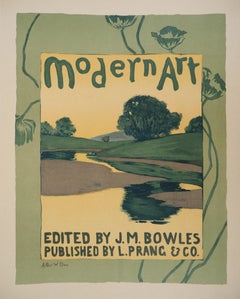
Modern Art - Lithograph (Les Maîtres de l
Affiche), 1895
Located in Paris, IDF
Arthur Wesley DOW (1857-1922)
Modern Art
Lithograph
Printed signature in the plate
On vellum
Size 39 x 29 cm (c. 15.3 x 11.4")
INFORMATION : Plate 36 of "Les Maîtres de...
Category
Art Nouveau 19th Century Landscape Prints
Materials
Lithograph
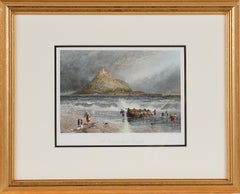
St. Michael
s Mount, Cornwall: A Framed 19th C. Engraving After Myles Foster
Located in Alamo, CA
This beautiful 19th century framed hand-colored engraving is entitled "St. Michael's Mount, Cornwall" by J. Saddler after an original painting by the British artist Myles Birket Fost...
Category
Romantic 19th Century Landscape Prints
Materials
Engraving

$460 Sale Price
20% Off
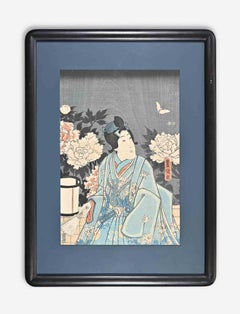
Kabuki Actor - Woodblock Print attr. to Utagawa Kunisada - Mid-19th Century
Located in Roma, IT
Kabuki Actor is an original Woodcut print realized in mid 19 century and attributed to Utagawa Kunisada.
Beautiful colored woodblock print, included a cardboard passpartout.
Includ...
Category
Modern 19th Century Landscape Prints
Materials
Woodcut
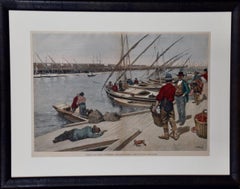
San Francisco Sicilian and Italian Fishermen: A 19th C. Hand-colored Woodcut
Located in Alamo, CA
This is a framed hand-colored woodcut engraving entitled "Sicilian and Italian Fisherman's Dock - San Francisco", created by Henry François Farny ...
Category
19th Century Landscape Prints
Materials
Woodcut
Honey Buzzard Bird: A Framed Original 19th C. Hand-colored Lithograph by Gould
Located in Alamo, CA
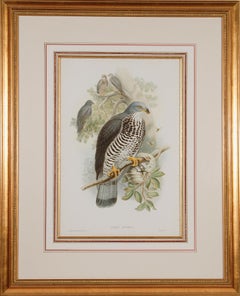
This is a framed original 19th century hand-colored folio-sized lithograph entitled “Pernis Apivorus (The Honey Buzzard) by John Gould, plate 6 in volume 1 of his "Birds of Great Britain", published in London between 1862 and 1873. The print depicts an adult Honey Buzzard perched on a branch of a leafy tree in the foreground and three others in the background. The bird in the foreground has an insect in its beak and others are in flight on the right
This striking framed Gould...
Category
Naturalistic 19th Century Landscape Prints
Materials
Lithograph
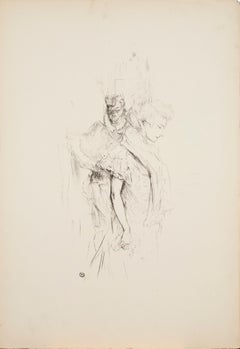
Blanche et Noire
Located in Columbia, MO
HENRI DE TOULOUSE-LAUTREC
Blanche et Noire
1948
Lithograph on paper
Ed. 166/740
20.5 x 14 inches
Category
Post-Impressionist 19th Century Landscape Prints
Materials
Lithograph
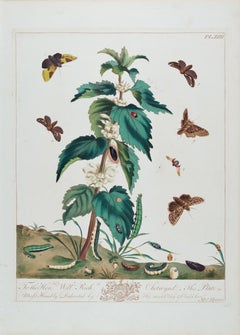
Moths and a Lady Bug in a Landscape: A Hand-colored Engraving by Moses Harris
By Moses Harris
Located in Alamo, CA
This is a hand-colored engraving depicting the natural history of moths and a lady bug, which is plate 22 from Moses Harris' publication "The Aurelian: or Natural History of English Insects; Namely Moths & Butterflies", first published in London in 1766 and this from an 1840 edition. The engraving depicts the natural history developmental stages of the Burnished Brass Moth, the Dark Gothic...
Category
Realist 19th Century Landscape Prints
Materials
Engraving
Three 19th C. Hand Colored Engravings of London Architecture by T. Shepherd
By Thomas Hosmer Shepherd
Located in Alamo, CA
A set of three hand-colored engravings from "Metropolitan Improvements; or London in the Nineteenth Century", published in London, England in 1828. The scenes were drawn by Thomas Ho...
Category
Realist 19th Century Landscape Prints
Materials
Engraving
Original
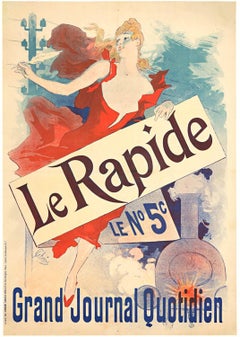
Le Rapide Grande Journal Quotidien; art nouveau vintage poster
By Jules Chéret
Located in Spokane, WA
Original “Le Rapide, Grand Journal Quotidien” art nouveau vintage poster. Conservation linen backed and ready to frame. Year: 1892
Artist: Jules Cheret, referred to as the father of the poster.
Le Rapide, Grand Journal Quotidien. Jules Cheret (French, 1836-1932) is a well-listed draftsman, printmaker, and designer is best known as a fin de siecle poster designer. Arguably, he is the best-known French poster designer of his age.
Figure no 126; No 568; Posters of Jules Cheret.
Most people overlook the fact that she is still writing for Le Rapide using a quill instead of an ink pen. Yes, this poster is over 130 years old and still presents itself well. There are telegraph wires in the sky background. The last time this poster was sold in the big NYC poster...
Category
Art Nouveau 19th Century Landscape Prints
Materials
Lithograph
$2,600 Sale Price
20% Off
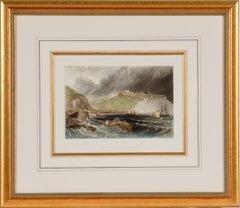
A View of Dover, England: A Framed 19th C. Engraving After J. M. W. Turner
By J.M.W. Turner
Located in Alamo, CA
This beautiful 19th century framed engraving "Dover" by Thomas Lupton is based on an original painting by the renowned British artist J.M.W. Turner, which depicts a panoramic view of the harbor of Dover, a town in southeastern England, that has been an important port for centuries. The engraving captures the dramatic sky and sea that Turner was known for, with billowing clouds and waves crashing against the shore. The town and its famous white cliffs are visible in the background, while ships and boats dot the harbor in the foreground. Several wooden rowboats...
Category
Romantic 19th Century Landscape Prints
Materials
Engraving
$460 Sale Price
20% Off
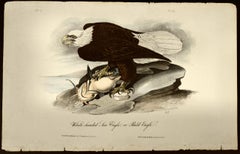
"Bald Eagle", an Original Audubon Hand-colored First Edition Lithograph
Located in Alamo, CA
An original rare and extremely collectible first octavo edition John James Audubon hand-colored royal octavo lithograph entitled "White-headed Sea Eagle or Bald Eagle", No. 3, Plate ...
Category
Naturalistic 19th Century Landscape Prints
Materials
Lithograph
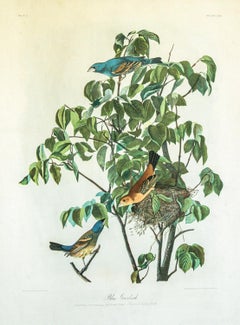
Blue Grosbeak original chromolithograph by J.J. Audubon Bien edition 1860
Located in Paonia, CO
Blue Grosbeak is an original chromolithograph from the rare Bien edition 1860 by J.J. Audubon and shows a male and female adult Grosbeak with a young Grosbeak perched on the edge of the nest. This group of colorful birds are seen on a Dogwood cornus florida tree. This print is in good condition. The paper is evenly age toned throughout.
The ” Birds of America” by John James...
Category
Other Art Style 19th Century Landscape Prints
Materials
Lithograph
S. Anton Patenkirchen / - The Home of the Landscape -
Located in Berlin, DE
Hans Thoma (1839 Bernau - 1924 Karlsruhe), S. Anton Patenkirchen, 1895. Algraph on strong wove paper, published by Breitkopf und Härtel in Leipzig as ‘Zeitgenössisches Kunstblatt Nr....
Category
Realist 19th Century Landscape Prints
Materials
Paper
$180 Sale Price
20% Off
Le chateau de Chillon, Switzerland by Albert Emil Kirchner - Engraving 20x27 cm
Located in Geneva, CH
Engraving by Albert Emil Kirchner Dutch artist born in 1813 and died on 1885
He have 176 registered auctions. The oldest was in 1989 and the most recent in 2022
The theme of the engraving is one of the most famous castle in Switzerland "le chateau...
Category
Realist 19th Century Landscape Prints
Materials
Engraving
La Répétition - Etching by Edouard Moyse - 1870s
Located in Roma, IT
La Répétition is an artwork realized by Edouard Moyse in the 1870s.
Etching.
Image size:19x29
Good conditions.
Realized for the "Société des Aquafortistes. Born on the initiati...
Category
Modern 19th Century Landscape Prints
Materials
Etching
Paris - Cirque de L
Imperatrice, French lithograph, 1861
By Felix Benoist
Located in Melbourne, Victoria
'Cirque de l'Imperatrice aux Champs-Elysses', tinted lithograph by Felix Benoist (1818-1896).
From a series of lithographs depicting the famous buildings of Paris - 'Paris dans sa S...
Category
Naturalistic 19th Century Landscape Prints
Materials
Lithograph
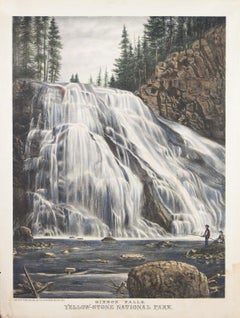
Gibbon Falls, Yellow-Stone National Park
Located in Paonia, CO
Gibbon Falls, Yellow-Stone National Park is a chromolithograph from c.1880 showing two fisherman at the base of Gibbon Falls. This chromolithograph is a dramatic view of the powerful Gibbon waterfall that cascades 84 feet into a small, clear pool. The setting is quintessential Yellowstone, with scrubby pine trees and rocky cliffs. The inscription on the bottom left corner below the image says Scenery From Nature on the Northern Pacific R.R. Established by the U.S. Congress and signed into law by President Ulysses S. Grant on March 1, 1872 Yellowstone was the first national park in the U.S. and is widely held to be the first national park in the world. Native Americans have lived in the Yellowstone region for at least 11,000 years. The Northern Pacific Railroad...
Category
Naturalistic 19th Century Landscape Prints
Materials
Lithograph
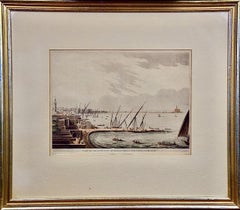
Alexandria, Egypt
Lighthouse: A Hand-colored Aquatint
Engraving by L. Mayer
By Luigi Mayer
Located in Alamo, CA
This is a hand-colored aquatint and engraving entitled "Part of the New City of Alexandria, with the Light House", published in London by R. Bowyer from 1802-1805. The print was crea...
Category
Romantic 19th Century Landscape Prints
Materials
Engraving, Aquatint
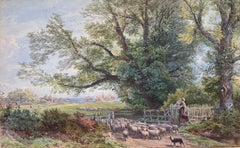
“Tending the Sheep”
Located in Southampton, NY
Beautifully executed original hand colored lithograph using gouache and watercolor. Scene in Surrey, England. Signedxwith monogram in plate lower left, Myles Birket Foster. Published by M. H. Long. Condition is very good. In original 2 inch wide birdseye maple antique frame with thick museum mat with gold innner edge. Overall 22 by 26 inches.
Biography
Myles Birket Foster (4 February 1825 – 27 March 1899) was a popular English illustrator, watercolour artist and engraver in the Victorian period. His name is also to be found as Myles Birkett Foster.
Life and work
Foster was born in North Shields, England of a primarily Quaker family, but his family moved south to London in 1830, where his father founded M. B. Foster & sons — a successful beer-bottling company. He was schooled at Hitchin, Hertfordshire and on leaving initially went into his father's business. However, noticing his talent for art, his father secured an apprenticeship with the notable wood engraver, Ebenezer Landells, where he worked on illustrations for Punch magazine and the Illustrated London News.
On leaving Landells' employ, he continued to produce work for the Illustrated London News and the Illustrated London Almanack. He also found work as a book illustrator and, during the 1850s, trained himself to paint in watercolours. His illustrations of Longfellow’s Evangeline and books of poetry by other contemporaries were a great success, and he quickly became a successful artist in watercolours. Birket Foster became an Associate of the "Old" Watercolour Society (Later the Royal Watercolour Society) in 1860 and exhibited some 400 of his paintings at the Royal Academy over more than 2 decades.
Birket Foster travelled widely, painting the countryside around Scotland, the Rhine Valley, the Swiss lakes and in Italy, especially Venice. In 1863 he moved to Witley, near Godalming in Surrey where he had a house ("The Hill") built. Being friendly with Edward Burne-Jones and William Morris, he had the house decorated and furnished in contemporary style, with tiles and paintings by Burne-Jones and Morris' firm, Morris and Company. The same year he published a volume of "English Landscapes," with text by Tom Taylor...
Category
Impressionist 19th Century Landscape Prints
Materials
Lithograph, Watercolor, Gouache
$1,120 Sale Price
20% Off
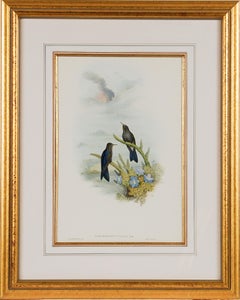
Thorn-Bill Hummingbirds: A Framed 19th C. Hand-colored Lithograph by Gould
Located in Alamo, CA
This is an original framed 19th century hand-colored folio-sized lithograph entitled "Ramphomicron vulcani" (Southern Thorn-Bill Hummingbirds) by John Gould, Pl. 186 from his "Monograph of the Trochilidae, or Family of Hummingbirds", published in London in 1853. The print depicts two Southern Thorn-Bill hummingbirds sitting on branches of a flowering plant.
This striking framed Gould hand-colored lithograph is presented in a antiqued gold frame, a gold-colored fillet, and a light tan French mat, embellished with a mint-colored broad band. The frame measures 32" high, 25.5" wide and 1.25" thick. The hand-coloring is enhanced by the use of gum-arabic paint...
Category
Naturalistic 19th Century Landscape Prints
Materials
Lithograph
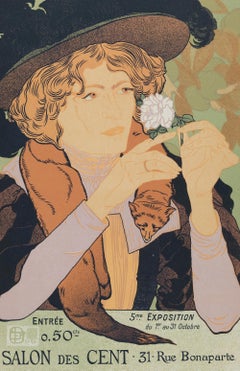
Salon des Cents: A 19th C. Lithograph from Maitres de l
Affiche by Feure/Cheret
Located in Alamo, CA
This is a 19th century color lithograph entitled "Expo Salon des Cents" (Salon of the Hundred) created by Georges de Feure and published between 1898 in Paris, France by Jules Cheret...
Category
Art Nouveau 19th Century Landscape Prints
Materials
Lithograph
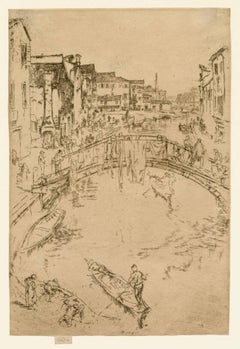
The Bridge, Santa Maria
Located in New York, NY
James Whistler (1834-1903), The Bridge, Santa Marta, 1879-80, etching with drypoint, printed in sepia on fine laid paper. Signed with the butterfly and inscribed imp on the tab (also with an exceedingly light butterfly lower right in the plate). Kennedy 204, probably eighth (final) state; Glasgow 201, probably state 9 (of 9) (cf. Margaret F. MacDonald, Grischka Petri, Meg Hausberg, and Joanna Meacock, James McNeill Whistler: The Etchings, a catalogue raisonné, University of Glasgow, 2011), Lochnan 199. Trimmed to the platemark by the artist, h: 11.8 x w: 7.9 in / h: 30 x w: 20.1 cm.
A fine impression, printed with subtle tone.
The bridge theme occurs repeatedly in Whistler’s vistas. It is also the main focus of more than one of the Venetian prints. While some bridges are seen from below, from where one would see it if approaching in a gondola (for example Ponte del Piovan, Kennedy 209), The Bridge depicts the scene from a high perspective, opening up the view into the far distance. The small boat approaching the arch in the foreground is again, as in the earlier Thames prints, a stock motif that is probably ultimately derived from the Japanese woodcuts of Hokusai and Hiroshige. The bridge here is the Ponte de le Terese over the Rio de l’Arzere in the Santa Marta quarter.
The early biography of Whistler by Elizabeth and Joseph Pennell is essential for its “immense quantity of information” but also notorious for “the inherent hyperbole and misinformation” (Eric Denker, Annotated Bibliography, in Fine, p. 184). Still, it is worth quoting from the Pennels’ appraisal of The Bridge: “Simplicity of expression has never been carried further. Probably the finest plate, in its simplicity and directness, is The Bridge. Whistler now obtained the quality of richness by suggesting detail, and also by printing. In The Traghetto...
Category
Impressionist 19th Century Landscape Prints
Materials
Drypoint, Etching
Waterfall on Fordingdale beck, Lake District scenery C19th English aquatint
Located in Melbourne, Victoria
'Waterfall on Fordingdale beck, at the foot of Hawes Water'
Aquatint by William Green, 1804
William Green of Ambleside was a Lake District draughtsman...
Category
Naturalistic 19th Century Landscape Prints
Materials
Engraving, Aquatint
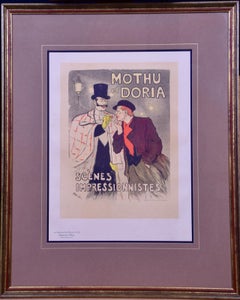
Mothu et Doria: A 19th C. Lithograph from Les Maitres de l
Affiche by Steinlen
Located in Alamo, CA
This is a framed 19th century color lithograph entitled "Mothu et Doria" created by Theophile Alexandre Steinlen and published between 1896 and 1899 in Paris, France by Jules Cheret in his famous series of miniature colored stone lithographs of popular Belle Epoch posters...
Category
19th Century Landscape Prints
Materials
Lithograph
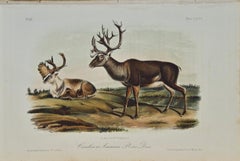
Caribou or American Reindeer: Original 19th C. Audubon Hand-colored Lithograph
Located in Alamo, CA
This is an original 19th century John James Audubon hand-colored quadruped lithograph entitled "Caribou or American Rein Deer", No. 26, Plate CXXVI, from Audubon's "Quadrupeds of Nor...
Category
Naturalistic 19th Century Landscape Prints
Materials
Lithograph
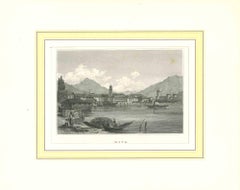
Ancient View of Riva - Original Lithograph - Early 19th Century
Located in Roma, IT
Riva is an original modern artwork realized in Italy in the first half of the 19th Century.
Original Lithograph on Ivory Paper.
Inscripted in capital letters on the lower margin: ...
Category
Modern 19th Century Landscape Prints
Materials
Lithograph
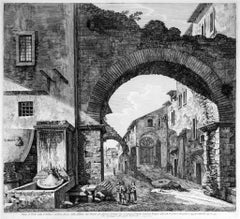
Veduta di Tivoli mista d
Antico, e moderno (...) - Etching by L. Rossini - 1824
Located in Roma, IT
Veduta di Tivoli mista d'Antico, e moderno (...)
From the collection: “Le antichità de' contorni di Roma ossia le più famose città del Lazio. Tivoli, Albano...
Category
Modern 19th Century Landscape Prints
Materials
Etching
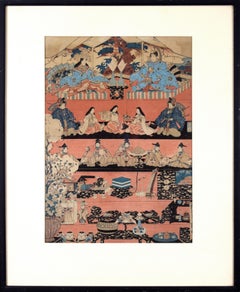
"Various Himochi" Wagashi Festival Japanese Woodblock Print by Utagawa Toyokuni
Located in Soquel, CA
"Various Himochi" Wagashi Festival Japanese Woodblock Print by Utagawa Toyokuni
Rare oversized early 19th century 5-tiered woodblock by Utagawa Ichiyosai Toyokuni, (Japan, 1769-1825), a Japanese lord and wife oversee a sekku festival of food, music, and dolls or toys. '"oshi" is the first day of “Mi (Snake)” in the third month of the lunar calendar. This day, known in modern Japan as the Girls' Festival, originated in China as a form of purification ceremony in which water and drinking peach blossom wine were used to drive away evil. Many kinds of hishi-mochi appear in this picture of hina ningyo (dolls associated with Hinamatsuri, or the Girl’s Day) from Omochae.
The custom of eating special dishes at events throughout the year and at milestones in people's lives has existed since ancient times. This paragraph specifically focuses on the annual event called sekku, and life events that involve eating sweets. Joshi is the first day of “Mi (Snake)” in the third month of the lunar calendar. This day, known in modern Japan as the Girls' Festival, originated in China as a form of purification ceremony in which water and drinking peach blossom wine were used to drive away evil. According to the Keiso saijiki, in ancient China, on the third day of the third lunar month, people ate “ryuzetsuhan,” which is the juice of gogyo (Jersey cudweed) mixed with rice flour and nectar. In Japan, there is a record in the Heian period history book Nihon Montoku tenno jitsuroku [839-5] that it was an annual event to make kusamochi using gogyo on the third day of the third month of the lunar calendar, which may have been influenced by Chinese customs.
The tradition of eating kusamochi on the third day of the third month of the lunar calendar continued after that. By the Edo period, however, hishimochi had come to be used as a sweet to serve on the third day of the third month. A picture of a hishimochi is included in the Morisada manko , which we mentioned in Part 1. According to it, hishimochi in the Edo period were often three layers of green-white-green instead of the now common red-white-green. However, it is possible to see from our collection that not all hishimochi were made in this way. Omochae published in 1857, is a good example. Omochae is a type of ukiyoe print...
Category
Edo 19th Century Landscape Prints
Materials
Ink, Rice Paper, Woodcut
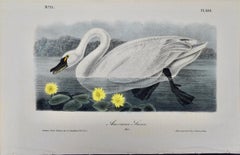
"American Swan", Audubon Hand-colored First Octavo Edition Lithograph
Located in Alamo, CA
This is an original rare and extremely collectible 1st royal octavo edition John James Audubon hand-colored royal octavo lithograph entitled "American Swan", No. 77, Plate 384, from Audubon's "Birds of America". It was lithographed, printed and colored by J. T. Bowen and published in Philadelphia between 1840-1844. It depicts an adult white American Swan swimming in a body of water. Plants with yellow flowers are in the foreground and hills are in the background.
This original rare first edition hand-colored Audubon bird lithograph has a mildly wavy lower edge of the paper where it was previously bound. It is otherwise in excellent condition. The sheet measures 6.63" x 10.13". The original text pages 226-234 are included.
John James Audubon (1785-1851) was a naturalist and artist. He was initially unsuccessful financially prior to the publication of his famous work “The Birds of America”, spending time in debtor’s prison, once stabbing a disgruntled investor in self-defense. However, his obsession with birds and art motivated him to persist in his goal of documenting every bird in America via his watercolor paintings and publishing his works for all to enjoy. Audubon's first illustrations were published in a large elephant folio size. Due to their expense they were purchased in rather small numbers by the wealthy. To reach a larger audience, Audubon, with the help of his sons and J. T. Bowen, published a smaller octavo sized lithograph version, which were much more affordable.
With the success of his bird projects, Audubon then turned his attention to four-legged animals. He explored the Missouri River in 1843 sketching the four-legged animals he encountered in their natural setting. His expedition covered some of the same regions recently explored by Lewis and Clark, traveling from present day Alaska to Mexico. Audubon realized that this was an opportunity to document these animals in the still relatively pristine American wilderness, before man encroached on their environment.
Between 1845 and 1848, Audubon and his sons John Woodhouse Audubon and Victor Gifford Audubon produced a set of elephant folio sized lithographs that were primarily engraved and hand colored by J. T. Bowen in Philadelphia. The publication, which included text descriptions of the animals was published 3 years before Audubon died. As with the birds, this was followed by a three-volume set of 155 octavo-sized plates entitled “The Quadrupeds of North America” completed and published by Audubon’s sons, John, Jr. and Victor.
Audubon prints continue to be popular and a wise investment. The double elephant folio set...
Category
Naturalistic 19th Century Landscape Prints
Materials
Lithograph
$1,900 Sale Price
20% Off
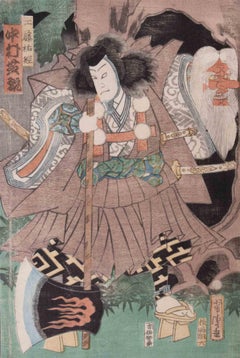
Kabuki Actor - Woodcut by Utagawa Kunisada - 1848/49
Located in Roma, IT
Kabuki Actor is a woodcut print realized by Utagawa Kunisada in 1848/49.
Lifetime impression in very good condition, except for some very minor sign of time.
Category
Modern 19th Century Landscape Prints
Materials
Woodcut
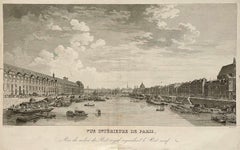
Pierre Gabriel Bernhault ca. 1800 Engraving "Vue intérieure de Paris"
Located in Chicago, IL
A ca. 1800 engraving by Pierre Gabriel Berthault, "Vue intérieure de Paris prise du milieu du Pont Royal regardant le Pont Neuf". Artwork size: 16 3/8" x 26". archivally matted to...
Category
French School 19th Century Landscape Prints
Materials
Engraving, Paper
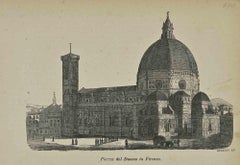
Uses and Customs - Cathedral Square in Florence - Lithograph - 1862
Located in Roma, IT
Uses and Customs - Cathedral Square in Florence is a lithograph on paper realized in 1862.
The artwork belongs to the Suite Uses and customs of all the peoples of the universe: " Hi...
Category
Modern 19th Century Landscape Prints
Materials
Lithograph
Port Glasgow - Etching by W. H.Bartlett - 1845
Located in Roma, IT
Port Glasgow is an etching realized in 1845 by W. H. Bartlett.
Signed on the plate.
Titled on the lower center, from the series of "Ports of Great Britain".
Good conditions with...
Category
Modern 19th Century Landscape Prints
Materials
Etching
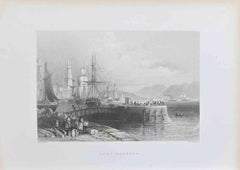
$142 Sale Price
40% Off
Jobs for Fighters original post World War 1 vintage American poster
By Gordon Grant
Located in Spokane, WA
Jobs for Fighters. Original post World War 1 vintage poster, linen backed. Artist: Gordon Grant. Printer: United States Department of Labor - United States Employment Service...
Category
American Realist 19th Century Landscape Prints
Materials
Lithograph
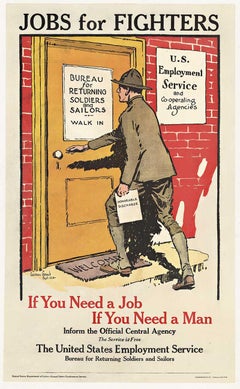
$398 Sale Price
20% Off
The Nodding Renealmia from Temple of Flora
Located in New York, NY
"The Queen Flower" by Dr. Robert Thornton from the quarto edition of "Temple of Flora." London, 1812. Mixed media engraving (aquatint, mezzotint, color...
Category
19th Century Landscape Prints
Materials
Paper
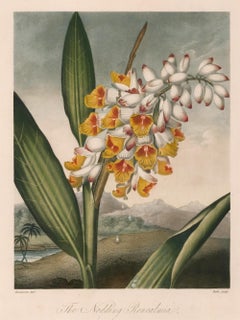
Louisiana: A Framed 19th Century Map by O.W. Gray
Located in Alamo, CA
This framed 19th century map of the Louisiana territory was published in "Gray's Atlas of the United States with General Maps of the World, accompanied by Descriptions Geographical, Historical, Scientific and Statistica" published in 1873 in Philadelphia by O.W. Gray and Son and Stedman, Brown and Lyon. It is a highly detailed map of Louisiana...
Category
19th Century Landscape Prints
Materials
Engraving
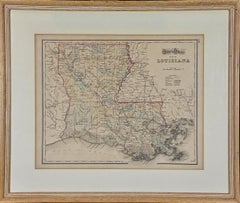
$780 Sale Price
20% Off
La Sablière - Etching after C. Corot by G.M. Greux - 19th Century
Located in Roma, IT
La Sablière is a drawing in etching technique on paper glued on ivory-colored cardboard, realized after Jean-Baptiste Camille Corot (1796-1875) and Gustave-Marie Greux, a sculptor an...
Category
Old Masters 19th Century Landscape Prints
Materials
Etching
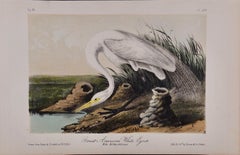
Great White Egret: An Original 19th C. Hand-colored Lithograph by Audubon
Located in Alamo, CA
This is an original hand-colored lithograph entitled "Great American White Egret", No. 74, Plate 370, by John James Audubon from his "Birds of America" publication. It was lithograph...
Category
Naturalistic 19th Century Landscape Prints
Materials
Lithograph
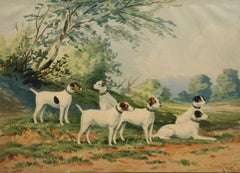
Jack Russell Terriers by Alexander Pope
By Alexander Pope
Located in Paonia, CO
An original chromolithograph from the Celebrated Dogs of America by Alexander Pope Jr. and published by S.E. Casino, Boston,1882. This compositio...
Category
Other Art Style 19th Century Landscape Prints
Materials
Lithograph
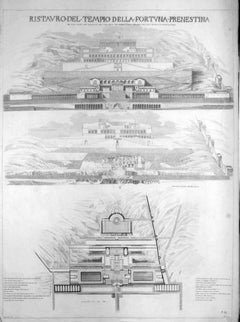
Ristauro del Tempio della Fortuna Prenestina - Etching by L. Rossini - 1826
Located in Roma, IT
Ristauro del Tempio della Fortuna Prenestina.
From the collection “Le antichità de’ contorni di Roma (...)” a Virtuous proof concerning the restoration of the Fortuna Prenestina Temple, with artchitectural plan, sections and some notes.
Signed on plate “Rossini dis. e inc.” lower-left corner, with date and place “Roma, 1826”.
In Excellent condition with some light stains.
Image Dim: cm 67.5 x 51 , Dim: cm 70 x 53
Luigi Rossini (1790 – 1857)
Like Giovanni Battista Piranesi, Luigi Rossini was an architect and his etchings have the same tendency to emphasize the massive constructions of the Ancient Rome. He became famous thanks to his etchings representing Roman landscapes and antique monuments...
Category
Modern 19th Century Landscape Prints
Materials
Etching
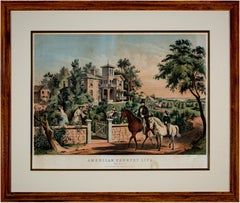
19th century color lithograph landscape figures horseback house scene trees sky
Located in Milwaukee, WI
The present print is one of several examples produced for Nathaniel Currier by his longtime collaborator Frances F. "Fanny" Palmer. Harry T. Peters wrote of her: "There is no more interesting and appealing character among the group of artists who worked for Currier & Ives than Fanny Palmer. In an age when women, well-bred women in particular, did not generally work for a living Fanny Palmer for years did exacting, full-time work in order to support a large and dependent family ... Her work ... had great charm, homeliness, and a conscientious attention to detail."
One of a series of four prints showing American country life in different seasons, the image presents the viewer with a picturesque view of a successful American farm. In the foreground, a gentleman rides a horse with a young boy before a respectable Italianate country house. Two women and a young girl pick flowers in the garden and several farm workers attend to their duties. Beyond are other homes and a city on the coast.
16.63 x 23.75 inches, artwork
28.13 x 33.38 inches, frame
Entitled bottom center "American Country Life - May Morning"
Signed in the stone, lower left "F.F. Palmer, Del."
Signed in the stone, lower right "Lith. by N. Currier"
Copyrighted lower center "Entered according to Act of Congress in the year 1855 by N. Currier in the Clerk's office of the Southern District of N.Y."
Inscribed bottom center "New York, Published by N. Currier 152 Nassau Street"
Framed to conservation standards using silk-lined 100 percent rag matting and Museum Glass with a gold gilded liner, all housed in a stained wood moulding.
Nathaniel Currier was a tall introspective man with a melancholy nature. He could captivate people with his piercing stare or charm them with his sparkling blue eyes. Nathaniel was born in Roxbury, Massachusetts on March 27th, 1813, the second of four children. His parents, Nathaniel and Hannah Currier, were distant cousins who lived a humble yet spartan life. When Nathaniel was eight years old, tragedy struck. Nathaniel’s father unexpectedly passed away leaving Nathaniel and his eleven-year-old brother Lorenzo to provide for the family. In addition to their mother, Nathaniel and Lorenzo had to care for six-year-old sister Elizabeth and two-year-old brother Charles. Nathaniel worked a series of odd jobs to support the family, and at fifteen, he started what would become a life-long career when he apprenticed in the Boston lithography shop of William and John Pendleton.
A Bavarian gentleman named Alois Senefelder invented lithography just 30 years prior to young Nat Currier’s apprenticeship. While under the employ of the brothers Pendleton, Nat was taught the art of lithography by the firm’s chief printer, a French national named Dubois, who brought the lithography trade to America.
Lithography involves grinding a piece of limestone flat and smooth then drawing in mirror image on the stone with a special grease pencil. After the image is completed, the stone is etched with a solution of aqua fortis leaving the greased areas in slight relief. Water is then used to wet the stone and greased-ink is rolled onto the raised areas. Since grease and water do not mix, the greased-ink is repelled by the moisture on the stone and clings to the original grease pencil lines. The stone is then placed in a press and used as a printing block to impart black on white images to paper.
In 1833, now twenty-years old and an accomplished lithographer, Nat Currier left Boston and moved to Philadelphia to do contract work for M.E.D. Brown, a noted engraver and printer. With the promise of good money, Currier hired on to help Brown prepare lithographic stones of scientific images for the American Journal of Sciences and Arts. When Nat completed the contract work in 1834, he traveled to New York City to work once again for his mentor John Pendleton, who was now operating his own shop located at 137 Broadway. Soon after the reunion, Pendleton expressed an interest in returning to Boston and offered to sell his print shop to Currier. Young Nat did not have the financial resources to buy the shop, but being the resourceful type he found another local printer by the name of Stodart. Together they bought Pendleton’s business.
The firm ‘Currier & Stodart’ specialized in "job" printing. They produced many different types of printed items, most notably music manuscripts for local publishers. By 1835, Stodart was frustrated that the business was not making enough money and he ended the partnership, taking his investment with him. With little more than some lithographic stones, and a talent for his trade, twenty-two year old Nat Currier set up shop in a temporary office at 1 Wall Street in New York City. He named his new enterprise ‘N. Currier, Lithographer’
Nathaniel continued as a job printer and duplicated everything from music sheets to architectural plans. He experimented with portraits, disaster scenes and memorial prints, and any thing that he could sell to the public from tables in front of his shop. During 1835 he produced a disaster print Ruins of the Planter's Hotel, New Orleans, which fell at two O’clock on the Morning of the 15th of May 1835, burying 50 persons, 40 of whom Escaped with their Lives. The public had a thirst for newsworthy events, and newspapers of the day did not include pictures. By producing this print, Nat gave the public a new way to “see” the news. The print sold reasonably well, an important fact that was not lost on Currier.
Nat met and married Eliza Farnsworth in 1840. He also produced a print that same year titled Awful Conflagration of the Steamboat Lexington in Long Island Sound on Monday Evening, January 18, 1840, by which melancholy occurrence over One Hundred Persons Perished. This print sold out very quickly, and Currier was approached by an enterprising publication who contracted him to print a single sheet addition of their paper, the New York Sun. This single page paper is presumed to be the first illustrated newspaper ever published.
The success of the Lexington print launched his career nationally and put him in a position to finally lift his family up. In 1841, Nat and Eliza had their first child, a son they named Edward West Currier. That same year Nat hired his twenty-one year old brother Charles and taught him the lithography trade, he also hired his artistically inclined brother Lorenzo to travel out west and make sketches of the new frontier as material for future prints. Charles worked for the firm on and off over the years, and invented a new type of lithographic crayon which he patented and named the Crayola. Lorenzo continued selling sketches to Nat for the next few years.
In 1843, Nat and Eliza had a daughter, Eliza West Currier, but tragedy struck in early 1847 when their young daughter died from a prolonged illness. Nat and Eliza were grief stricken, and Eliza, driven by despair, gave up on life and passed away just four months after her daughter’s death.
The subject of Nat Currier’s artwork changed following the death of his wife and daughter, and he produced many memorial prints and sentimental prints during the late 1840s. The memorial prints generally depicted grief stricken families posed by gravestones (the stones were left blank so the purchasers could fill in the names of the dearly departed). The sentimental prints usually depicted idealized portraits of women and children, titled with popular Christian names of the day.
Late in 1847, Nat Currier married Lura Ormsbee, a friend of the family. Lura was a self-sufficient woman, and she immediately set out to help Nat raise six-year-old Edward and get their house in order. In 1849, Lura delivered a son, Walter Black Currier, but fate dealt them a blow when young Walter died one year later. While Nat and Lura were grieving the loss of their new son, word came from San Francisco that Nat’s brother Lorenzo had also passed away from a brief illness. Nat sank deeper into his natural quiet melancholy. Friends stopped by to console the couple, and Lura began to set an extra place at their table for these unexpected guests. She continued this tradition throughout their lives.
In 1852, Charles introduced a friend, James Merritt Ives, to Nat and suggested he hire him as a bookkeeper. Jim Ives was a native New Yorker born in 1824 and raised on the grounds of Bellevue Hospital where his father was employed as superintendent. Jim was a self-trained artist and professional bookkeeper. He was also a plump and jovial man, presenting the exact opposite image of his new boss.
Jim Ives met Charles Currier through Caroline Clark, the object of Jim’s affection. Caroline’s sister Elizabeth was married to Charles, and Caroline was a close friend of the Currier family. Jim eventually proposed marriage to Caroline and solicited an introduction to Nat Currier, through Charles, in hopes of securing a more stable income to support his future wife.
Ives quickly set out to improve and modernize his new employer’s bookkeeping methods. He reorganized the firm’s sizable inventory, and used his artistic skills to streamline the firm’s production methods. By 1857, Nathaniel had become so dependent on Jims’ skills and initiative that he offered him a full partnership in the firm and appointed him general manager. The two men chose the name ‘Currier & Ives’ for the new partnership, and became close friends.
Currier & Ives produced their prints in a building at 33 Spruce Street where they occupied the third, fourth and fifth floors. The third floor was devoted to the hand operated printing presses that were built by Nat's cousin, Cyrus Currier, at his shop Cyrus Currier & Sons in Newark, NJ. The fourth floor found the artists, lithographers and the stone grinders at work. The fifth floor housed the coloring department, and was one of the earliest production lines in the country. The colorists were generally immigrant girls, mostly German, who came to America with some formal artistic training. Each colorist was responsible for adding a single color to a print. As a colorist finished applying their color, the print was passed down the line to the next colorist to add their color. The colorists worked from a master print displayed above their table, which showed where the proper colors were to be placed. At the end of the table was a touch up artist who checked the prints for quality, touching-in areas that may have been missed as it passed down the line. During the Civil War, demand for prints became so great that coloring stencils were developed to speed up production.
Although most Currier & Ives prints were colored in house, some were sent out to contract artists. The rate Currier & Ives paid these artists for coloring work was one dollar per one hundred small folios (a penny a print) and one dollar per one dozen large folios. Currier & Ives also offered uncolored prints to dealers, with instructions (included on the price list) on how to 'prepare the prints for coloring.' In addition, schools could order uncolored prints from the firm’s catalogue to use in their painting classes.
Nathaniel Currier and James Merritt Ives attracted a wide circle of friends during their years in business. Some of their more famous acquaintances included Horace Greeley, Phineas T. Barnum, and the outspoken abolitionists Rev. Henry Ward, and John Greenleaf Whittier (the latter being a cousin of Mr. Currier).
Nat Currier and Jim Ives described their business as "Publishers of Cheap and Popular Pictures" and produced many categories of prints. These included Disaster Scenes, Sentimental Images, Sports, Humor, Hunting Scenes, Politics, Religion, City and Rural Scenes, Trains, Ships, Fire Fighters, Famous Race Horses, Historical Portraits, and just about any other topic that satisfied the general public's taste. In all, the firm produced in excess of 7500 different titles, totaling over one million prints produced from 1835 to 1907.
Nat Currier retired in 1880, and signed over his share of the firm to his son Edward. Nat died eight years later at his summer home 'Lion’s Gate' in Amesbury, Massachusetts. Jim Ives remained active in the firm until his death in 1895, when his share of the firm passed to his eldest son, Chauncey.
In 1902, faced will failing health from the ravages of Tuberculosis, Edward Currier sold his share of the firm to Chauncey Ives...
Category
Romantic 19th Century Landscape Prints
Materials
Watercolor, Lithograph
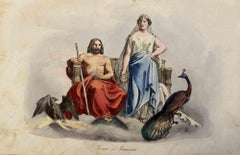
Uses and Customs - Jupiter and Juno - Lithograph - 1862
Located in Roma, IT
Uses and Customs -Jupiter and Juno is a lithograph on paper realized in 1862.
The artwork belongs to the Suite Uses and customs of all the peoples of the universe: " History of the ...
Category
Modern 19th Century Landscape Prints
Materials
Lithograph
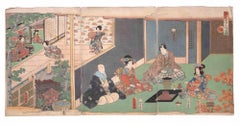
Genji in the Twelve Months - Woodcut by Utagawa Toyokuni III - 1858
Located in Roma, IT
Genji in the Twelve Months / The Tenth Month (Moto) is a tryptich woodcut print realized by Utagawa Toyokuni III in 1858.
Very good condition except for some minor signs of wear.
Category
Modern 19th Century Landscape Prints
Materials
Woodcut
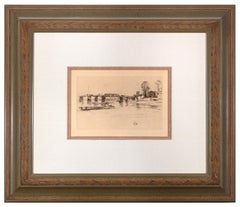
19th century engraving landscape bridge industrial river scene ink signed
Located in Milwaukee, WI
"Fulham A.K.A. Chelsea" is an original etching by James Abbott MacNeill Whistler. The artist signed the piece in the plate with his butterfly monogram in the lower right. IT was publ...
Category
Impressionist 19th Century Landscape Prints
Materials
Etching
Orchids: Framed 19th C. Hand-Colored Engraving of "Trichosma Suavis" by J. Fitch
Located in Alamo, CA
This beautiful, original hand-colored orchid lithograph entitled "Trichosma Suavis" Orchids by John Nugent Fitch is plate 114 in Robert Warner's publication 'The Orchid Album, Compri...
Category
Naturalistic 19th Century Landscape Prints
Materials
Engraving
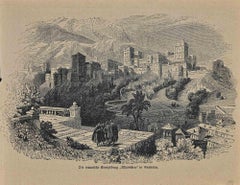
Ancient View of Granada - Original Lithograph - 19th Century
Located in Roma, IT
Ancient View of Granada is an original lithograph on paper realized by an anonymous artist in The 19th Century.
Original lithograph on paper.
Titled on the lower center.
Good conditions.
An impressive landscape...
Category
Modern 19th Century Landscape Prints
Materials
Lithograph
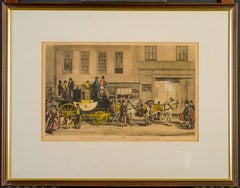
Quicksilver Royal Mail and The Blenheim
Located in Douglas, Isle of Man
James Pollard 1792-1867, was an English painter and watercolourist. Pollard was born in North London he was the son of a painter and publisher. He exhibited at the Royal Academy, Suf...
Category
19th Century Landscape Prints
Materials
Paper, Printer s Ink, Watercolor
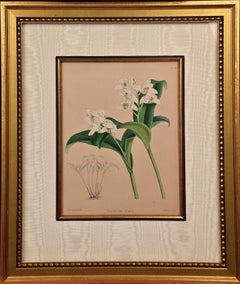
Orchids" Framed 19th C. Hand-Colored Engraving of "Lycaste Harrisoniae" by Fitch
Located in Alamo, CA
This beautiful, original hand-colored orchid lithograph entitled "Lycaste Harrisoniae Eburnea" Orchids by John Nugent Fitch is plate 100 in Robert Warner's publication 'The Orchid Al...
Category
Naturalistic 19th Century Landscape Prints
Materials
Engraving

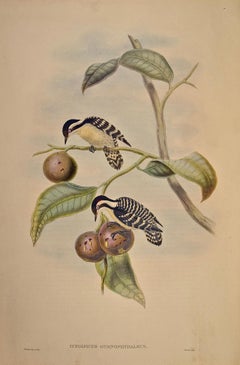
Woodpeckers, Ceylonese Pygmy: A 19th C. Gould Hand-colored Lithograph
Located in Alamo, CA
This is a hand-colored folio sized lithograph entitled "Iyngipicus Gymnophthalamus" (Ceylonese Pygmy Woodpecker) by John Gould from his monograph "The Birds of Asia", published in London in 1850-1883. The print, which was drawn by Gould and W. Hart and lithographed by Hullmandel and Walton, depicts two striped brown and ivory-colored woodpeckers with white and black on their heads. One is perched on a tree limb with pea green-colored leaves and the other on a round rose, brown-colored fruit. Both are pecking at fruit.
This beautiful Gould hand-colored woodpecker lithograph measures 21" x 14.13". There is minimal faint focal discoloration in the lower margin. It is otherwise in excellent condition. The original text page is included with a round blindstamp in the right lower corner.
There are several other unframed Gould woodpecker and other bird lithographs available via our 1stdibs storefront. Two or more of these would make an attractive display grouping. A discount is available for purchase of a set depending on the number. These additional Gould hummingbirds...
Category
Naturalistic 19th Century Landscape Prints
Materials
Lithograph
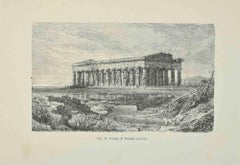
Temple of Neptune Pesto - Lithograph - 1862
Located in Roma, IT
Uses and Customs - Temple of Neptune Pesto is a lithograph on paper realized in 1862.
The artwork belongs to the Suite Uses and customs of all the peoples of the universe: " History...
Category
Modern 19th Century Landscape Prints
Materials
Lithograph
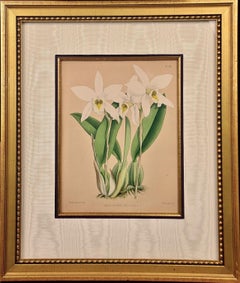
Orchids: Framed 19th C. Hand-Colored Engraving of "Laelia Anceps" by J. Fitch
Located in Alamo, CA
This beautiful, original hand-colored orchid lithograph entitled "Laelia Anceps Williamsii" Orchids by John Nugent Fitch is plate 100 in Robert Warner's publication 'The Orchid Album...
Category
Naturalistic 19th Century Landscape Prints
Materials
Engraving
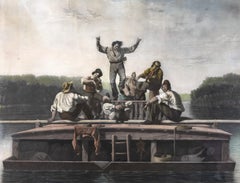
The Jolly Flat Boat Men
By George Caleb Bingham
Located in Missouri, MO
The Jolly Flat Boat Men, 1847
After George Caleb Bingham (American, 1811-1879)
Engraved by Thomas Doney (French, active New York 1844-1849)
Engraving with Hand-Coloring
Published by The American Art-Union, New York (1838-1851)
Printed by Powell and Co.
18 x 24 inches
32 x 38 inches with frame
In 1847, the American Art-Union purchased Bingham’s painting "The Jolly Flat Boat Men" (1846; National Gallery of Art) directly from the artist. The subscription-based organization, founded in 1838 as the Apollo Association, boasted nearly ten-thousand members at this date. For an annual fee of five dollars, each received a large reproductive engraving and was entered in a lottery to win original artworks exhibited at the Art-Union’s Free Gallery. Aimed at educating the public about contemporary American art, the organization developed an impressive distribution network that reached members in every state. The broad circulation of the Art-Union's print helped to establish Bingham's reputation and made his river scene famous.
Born in Augusta County, Virginia in the Shenandoah River Valley, George Caleb Bingham became known for classically rendered western genre, especially Missouri and Mississippi River scenes of boatmen bringing cargo to the American West and politicians seeking to influence frontier life. One of his most famous river genre paintings was The Jolly Flatboatmen completed in several versions in 1846. This first version of this painting is in the Manoogian Collection at the National Gallery of Art. Fame resulted for this work when it was exhibited in New York at the American Art Union whose organizers made an engraving of 10,000 copies and distributed it to all of their members. Paintings such as Country Politician (1849) and County Election (1852) and Stump Speaking (1854) reflected Bingham's political interests.
In 1819, as an eight-year old, he moved to Boon's Lick, Missouri with his parents and grandfather who had been farmers and inn keepers in the Shenandoah Valley near Rockingham, Virginia. Reportedly as a child there, he took every opportunity to escape supervision to travel the River and watch the marine activity.
His father died in 1827, when his son was sixteen years old. His mother had encouraged his art talent, but art lessons were not easily obtainable. In order to earn money, he apprenticed to a cabinet maker but determined to become an artist. By 1835, he had a modest reputation as a frontier painter and successfully charged twenty dollars per portrait in St. Louis. "His portraits had become standard decorations in prosperous Missouri homes." (Samuels 46). In 1836, he moved to Natchez, Mississippi and there had the same kind of career, only was able to charge forty dollars per portrait.
He remained largely self taught until 1837, when he, age 26 and using the proceeds from his portraiture, studied several months at the Pennsylvania Academy of the Fine Arts. He later said that he learned much of his atmospheric style and classically balanced composition by copying paintings in collections in St. Louis and Philadelphia and that among his most admired painters were Thomas Cole, John Vanderlyn, and William Sidney Mount. Between 1856 and 1859, Bingham traveled back and forth to Dusseldorf, Germany, where he studied the work of genre painters. Some critics think these influences were negative on his work because during that time period, he abandoned his luminist style that had brought him so much public affirmation.
Bingham credited Chester Harding (1792-1866) as being the earliest and one of the most lasting influences on his work. Harding,a leading portraitists when Bingham was a young man, had a studio in Franklin, near Bingham's home town. In 1822, when Bingham was ten years old, he watched Harding finish a portrait of Daniel Boone. Bingham recalled that watching Harding with the Boone portrait was a lasting inspiration and that it was the first time he had ever seen a painting in progress. Harding suggested to Bingham that he begin doing portraiture by finding subjects in the river men, which, of course, opened the subject matter that established fame and financial success for Bingham. Harding also encouraged Bingham to copy with paint engravings. He later painted two portraits of Boone but, contrary to the assertions of some scholars, he did not do Boone portraits in the company of Harding.
Bingham's portraits of Boone are not located, but one of them, a wood signboard for a hotel in Boonville circa 1828 to 1830, showed a likeness of Boone in buckskin dress...
Category
Hudson River School 19th Century Landscape Prints
Materials
Engraving
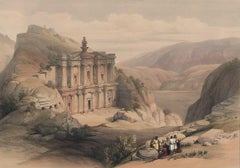
El Deir, Petra
Located in London, GB
Available in the First Edition lithograph
Full plate: 90
Presented in a acid free mount
We only sell the original 19th century lithographs by David Roberts, please read the informa...
Category
Victorian 19th Century Landscape Prints
Materials
Lithograph
Page from "Spring View in Takanawa" Mid 18th Century Ukiyo-e Print
Located in Soquel, CA
Page from "Spring View in Takanawa" Mid 18th Century Ukiyo-e Print
Left page from the triptych print "Spring View in Takanawa" by Utagawa Kunisada (Toyokuni III) (Japanese b. 1786 d...
Category
Edo 19th Century Landscape Prints
Materials
Printer s Ink, Mulberry Paper, Woodcut
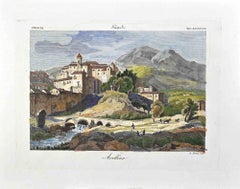
View of Avellino - Etching by Tommaso Piroli - Mid-19th century
Located in Roma, IT
View of Avellino is a print realized by Tommaso Piroli in the mid-19th century.
Etching Hand-watercolored on paper.
Signed and titled on the plate.
Good conditions with foxing
Category
Contemporary 19th Century Landscape Prints
Materials
Etching
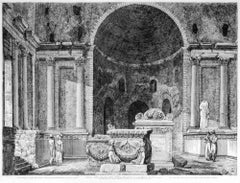
Interno della Basilica della Fortuna Prenestina - by L. Rossini - 1826
Located in Roma, IT
Interno della Basilica della Fortuna Prenestina
Image dimensions: 40x53 cm.
From the collection “Le antichità de’ contorni di Roma (...)”, published in Rome, 1826 an artist's proof w...
Category
Old Masters 19th Century Landscape Prints
Materials
Etching
Port Glasgow - Lithograph By W.H. Bartlett - 19th Century
Located in Roma, IT
Port Glasgow is a lithograph on paper realized by the artist W.H. Bartlett .
Signed on the plate on the lower left. Titled on the lower center.
The state of preservation is good, only a yellowed paper along the edge.
William Henry Bartlett...
Category
Modern 19th Century Landscape Prints
Materials
Lithograph