Victorian Landscape Prints
to
12
47
55
3
Overall Width
to
Overall Height
to
4,675
3,197
812
808
745
657
649
442
370
89
83
78
28
15
23
11
11
2
2
2
88
15
1
1
2
81
24
71
29
18
15
13
13
13
12
12
11
9
9
8
7
7
6
5
5
5
4
55
27
14
12
7
2
17
31
18
Style: Victorian
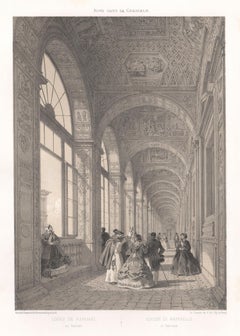
Loggia of Raphael, Vatican, Rome, Italy. Tinted lithograph by Philippe Benoist
Located in Melbourne, Victoria
'Loggia di Raffaello, in Vaticano'
Tinted lithograph by Philippe Benoist (1813-1881). From a French series titled 'Rome dans Sa Grandeur', circa 1870.
Benoist was one of France's...
Category
Late 19th Century Victorian Landscape Prints
Materials
Lithograph
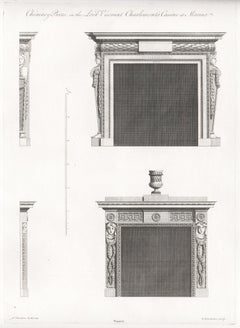
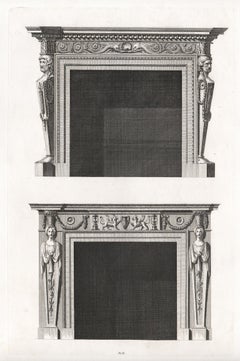
William Chambers Georgian Architecture - Chimney Pieces
Located in Melbourne, Victoria
Copper-line engraving by Pierre Foudrinier (1698-1758) after Sir William Chambers (1723-1796), 1794.
Sir William Chambers (1723-1796) was a renown 18th century British architect. He traveled to China, France and Italy before establishing an architectural practice in London. He became Architect of the King's Works and worked for Augusta, Dowager Princess of Wales, making fanciful garden buildings...
Category
Late 18th Century Victorian Landscape Prints
Materials
Engraving
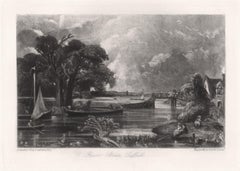
River Stour, Suffolk. Mezzotint by Lucas after John Constable, 1855
By David Lucas
Located in Melbourne, Victoria
'River Stour, Suffolk'
Mezzotint on steel by David Lucas (1802-1881) after John Constable (1776–1836).
From 'English Landscape Scenery', 1855. John Constable RA was an English Romantic landscape...
Category
Mid-19th Century Victorian Landscape Prints
Materials
Mezzotint
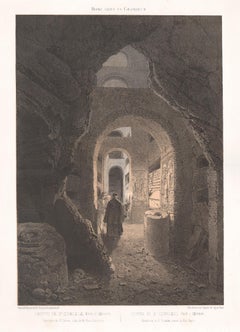
Cripta di S Cornelio, Rome Italy. Tinted lithograph, Felix Benoist
By Felix Benoist
Located in Melbourne, Victoria
'Cripta di S Cornelio, Papa e Martire, Cemetero di S Calisto, presso la Via Appia'
Tinted lithograph by Sabatier after Felix Benoist (1813-1881), with figures by Bayot. From a Fren...
Category
Late 19th Century Victorian Landscape Prints
Materials
Lithograph
William Chambers Georgian Architecture - Chimney Pieces
Located in Melbourne, Victoria
Copper-line engraving by Pierre Foudrinier (1698-1758) after Sir William Chambers (1723-1796), 1794.
Sir William Chambers (1723-1796) was a renown 18th century British architect. He traveled to China, France and Italy before establishing an architectural practice in London. He became Architect of the King's Works and worked for Augusta, Dowager Princess of Wales, making fanciful garden buildings...
Category
Late 18th Century Victorian Landscape Prints
Materials
Engraving
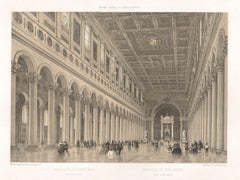
Basilica di San Paolo, Rome, Italy. Tinted lithograph, Philippe Benoist
Located in Melbourne, Victoria
'Basilica di San Paolo fuori delle mura'
Tinted lithograph by Philippe Benoist (1813-1881). From a French series titled 'Rome dans Sa Grandeur', circa 1870...
Category
Late 19th Century Victorian Landscape Prints
Materials
Lithograph
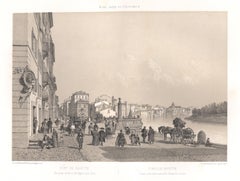
Porto di Ripetta, Rome, Italy. Lithograph
Located in Melbourne, Victoria
'Porto di Ripetta. Veduta presa dalla scala della Chiesa di S. Rocco'
Tinted lithograph by Philippe Benoist (1813-1881). Figures by Bayou. From a French series titled 'Rome dans Sa...
Category
Late 19th Century Victorian Landscape Prints
Materials
Lithograph
Ashdod. Tinted lithograph after David Roberts, 1855.
Located in Melbourne, Victoria
'Ashdod', tinted lithograph after David Roberts RA.
Signed in stone lower right. Printed title below the image. Roberts travelled throughout Egypt an...
Category
Mid-19th Century Victorian Landscape Prints
Materials
Lithograph

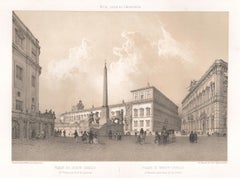
Piazza di Monte Cavallo, Rome, Italy. Tinted lithograph by Philippe Benoist
Located in Melbourne, Victoria
'Piazza di Monte Cavallo e Palazzo pontificio del Quirinale'
Tinted lithograph by Philippe Benoist (1813-1881). From a French series titled 'Rome dans Sa Grandeur', circa 1870.
B...
Category
Late 19th Century Victorian Landscape Prints
Materials
Lithograph
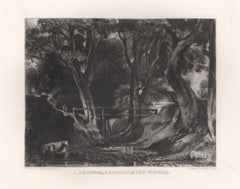
A Dell, Helmingham Park, Suffolk. Mezzotint by Lucas after John Constable, 1855
By David Lucas
Located in Melbourne, Victoria
'A Dell, Helmingham Park, Suffolk'
Mezzotint on steel by David Lucas (1802-1881) after John Constable (1776–1836).
From 'English Landscape Scenery', 1855. John Constable RA was an English Romantic...
Category
Mid-19th Century Victorian Landscape Prints
Materials
Mezzotint
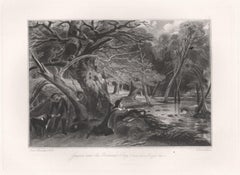
Jacques and the Wounded Stag. Mezzotint by Lucas after John Constable, 1855
By David Lucas
Located in Melbourne, Victoria
'Jacques and the Wounded Stag, Scene from 'As you like it''
Mezzotint on steel by David Lucas (1802-1881) after John Constable (1776–1836).
From 'English Landscape Scenery', 1855. ...
Category
Mid-19th Century Victorian Landscape Prints
Materials
Mezzotint
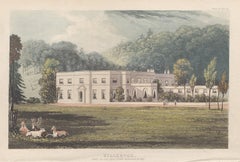
Killerton, Devon, English Regency country house colour aquatint, 1818
Located in Melbourne, Victoria
'Killerton, Seat of Sir Thos. Dyke Ackland Bt MP'.
Killerton is an 18th-century house in Broadclyst, Exeter, Devon. It was built for the Acland family in 1778. The garden was creat...
Category
Early 19th Century Victorian Landscape Prints
Materials
Engraving, Etching, Aquatint
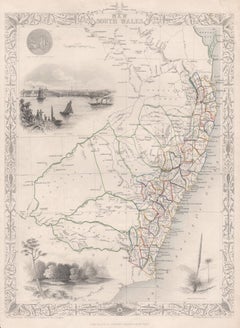
New South Wales, Australia, antique mid 19th century engraved John Tallis map
Located in Melbourne, Victoria
'New South Wales'
With decorative border surrounds and vignettes of 'Sydney Cove'. 'The Murray' and 'Xanthorrhea'.
'Drawn and engraved by J Rapkin'. Published by John Tallis.
375m...
Category
1840s Victorian Landscape Prints
Materials
Engraving
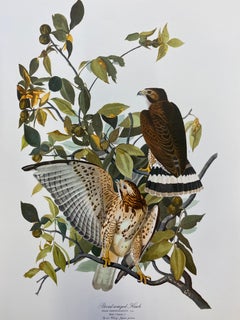
Large Classical Bird Color Print after John James Audubon - Cat Bird
Located in Cirencester, Gloucestershire
Classical Bird print,
after John James Audubon,
printed by Harry N. Abrams, Publishers, New York
unframed, 17 x 14 inches color print on pap...
Category
20th Century Victorian Landscape Prints
Materials
Color

$128 Sale Price
30% Off
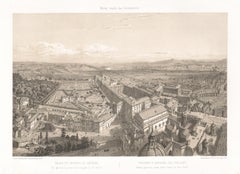
Palazzo e Giardini del Vaticano, Rome Italy. Tinted lithograph, Felix Benoist
By Felix Benoist
Located in Melbourne, Victoria
'Palazzo e Giardini del Vaticano. Veduta generale presa dalla Cupola di San Pietro'
Palace and gardens of the Vatican, taken from the Cupola of St Peter's,
Tinted lithograph by P...
Category
Late 19th Century Victorian Landscape Prints
Materials
Lithograph
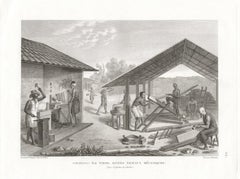
Coupang : Ile Timor. Divers Travaux Mécaniques. Early 19th century engraving.
Located in Melbourne, Victoria
'Coupang : Ile Timor. Divers Travaux Mécaniques'
Steel-engraving by Friedrich Schroeder (1768-1839) after F Garnier after Alphonse Pellion. Alphonse Pellion, artist and naval draughtsman, was a midshipman aboard l'Uranie on Louis de Freycinet's three-year scientific and ethnographic expedition around the world in 1817-1820.
From Louis Freycinet's 'Voyage Autour du Monde, Entrepris par Ordre du Roi ... Execue sur les Corvettes de S. M. l'Uranie et la Physicienne Pendant les Annees 1817, 1818, 1819 et 1820', published in Paris in 1825.
Louis Claude de Saulces de Freycinet (1779-1842) joined the French Navy in 1793 and was a veteran of the Baudin's voyage of discovery (1801-1803). He also completed the narrative of the expedition which appeared under the title of 'Voyage de Decouvertes aux Terres Australes'. In 1817 de Freycinet successfully lobbied the Government and King Louis XVIII agreed to support a new global campaign. Its mission was to finally determine the shape of the earth and return with detailed reports on geography, people, government, commerce and art of this new world. The 350-ton corvette Uranie had a complement of 120 men and 23 officers including the artist Jacques Arago and a priest. Over the next three years Uranie visited Australia, East Timor...
Category
Early 19th Century Victorian Landscape Prints
Materials
Engraving
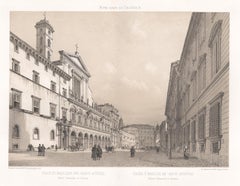
Piazza e Basilica de Santi Apostoli, Rome, Italy. Lithograph, Philippe Benoist
Located in Melbourne, Victoria
'Piazza e Basilica de Santi Apostoli. Palazzi Odescalchi e Colonna'
Tinted lithograph by Philippe Benoist (1813-1881). From a French series titled 'Rome dans Sa Grandeur', circa 18...
Category
Late 19th Century Victorian Landscape Prints
Materials
Lithograph
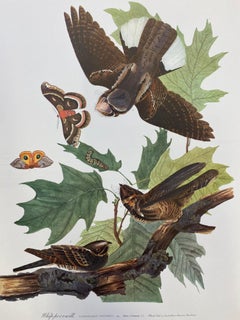
Large Classical Bird Color Print after John James Audubon - Brown Pelican
Located in Cirencester, Gloucestershire
Classical Bird print,
after John James Audubon,
printed by Harry N. Abrams, Publishers, New York
unframed, 17 x 14 inches color print on pap...
Category
20th Century Victorian Landscape Prints
Materials
Color
$128 Sale Price
30% Off
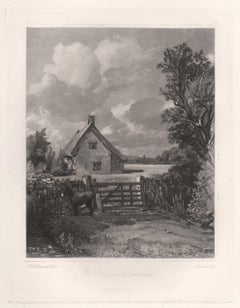
A Cottage in a Cornfield. Mezzotint by David Lucas after John Constable, 1855
By David Lucas
Located in Melbourne, Victoria
'A Cottage in a Cornfield'
Mezzotint on steel by David Lucas (1802-1881) after John Constable (1776–1836).
From 'English Landscape Scenery', 1855. John Constable RA was an English Romantic...
Category
Mid-19th Century Victorian Landscape Prints
Materials
Mezzotint
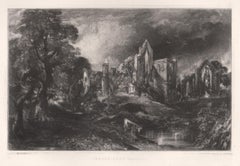
Castle Acre Priory, Norfolk. Mezzotint by David Lucas after John Constable, 1855
By David Lucas
Located in Melbourne, Victoria
'Castle Acre Priory'
Mezzotint on steel by David Lucas (1802-1881) after John Constable (1776–1836).
From 'English Landscape Scenery', 1855. John Constable RA was an English Romantic landscape...
Category
Mid-19th Century Victorian Landscape Prints
Materials
Mezzotint
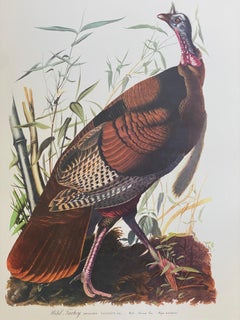
Large Classical Bird Color Print after John James Audubon - Wild Turkey
Located in Cirencester, Gloucestershire
Classical Bird print,
after John James Audubon,
printed by Harry N. Abrams, Publishers, New York
unframed, 17 x 14 inches color print on pap...
Category
20th Century Victorian Landscape Prints
Materials
Color
$128 Sale Price
30% Off
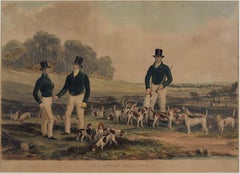
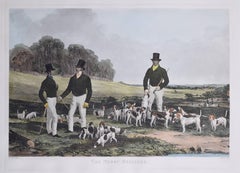
The Merry Beaglers engraving by John Harris after Harry Hall
s 1845 painting
Located in London, GB
John Harris after Harry Hall
The Merry Beaglers
c. 1845
48x65cm
Aquatint with hand colouring
The most famous beagling print there is, after the 1845 pa...
Category
1840s Victorian Landscape Prints
Materials
Aquatint
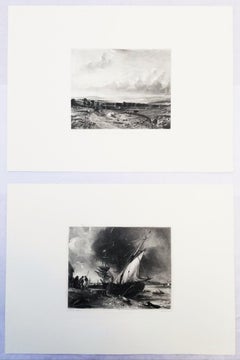
Set of Two Mezzotint Engravings from Constable
s "English Landscape Scenery"
By John Constable
Located in Saint Augustine, FL
Artist: (after) John Constable (English, 1776-1837)
Title: "View on the Orwell near Ipswich" (Plate 28) and "Hampstead Heath, Harrow in the distance" (Plate 10)
Portfolio: English La...
Category
1850s Victorian Landscape Prints
Materials
Engraving, Mezzotint
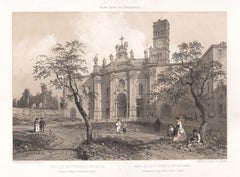
Basilica di Santa Croce-in-Gerusalemme, Rome, Italy. Lithograph, Felix Benoist
By Felix Benoist
Located in Melbourne, Victoria
'Basilica di Santa Croce-in-Gerusalemme, ed avanzi del Tempio detto di Venere e Cupido'
Tinted lithograph by Eugene Cicero after Felix Benoist (1813-1881...
Category
Late 19th Century Victorian Landscape Prints
Materials
Lithograph
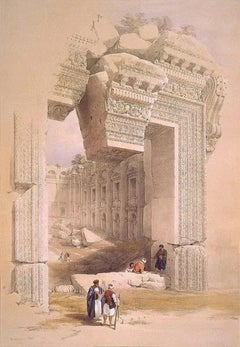
The Doorway, Baalbec
Located in London, GB
David Roberts RA
The Doorway, Baalbec
1796 - 1864
Subscription and first edition lithograph available
Full plate 81
Presented in a acid free mount
Hand coloured lithograph printed i...
Category
19th Century Victorian Landscape Prints
Materials
Lithograph
The Merry Beaglers restrike aquatint by John Harris after Harry Hall
Located in London, GB
John Harris after Harry Hall
The Merry Beaglers
Restrike print - c. mid twentieth century
48x65cm
Aquatint with hand colouring
The most famous beagling...
Category
Mid-20th Century Victorian Landscape Prints
Materials
Aquatint
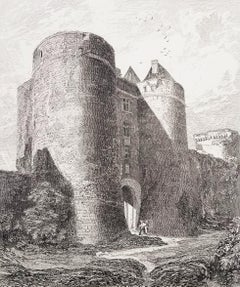
Entrance to the Castle at Tancarville /// John Sell Cotman Architectural Etching
Located in Saint Augustine, FL
Artist: John Sell Cotman (English, 1782-1842)
Title: "Entrance to the Castle at Tancarville" (Vol. 2, Plate 86)
Portfolio: Architectural Antiquities of Normandy
Year: 1822
Medium: Or...
Category
1820s Victorian Landscape Prints
Materials
Etching, Intaglio
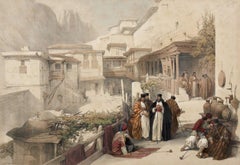
Principal Court of the Convent of St. Catherine
Located in London, GB
First Edition lithograph
Full plate: 120
Presented in a acid free mount
Category
19th Century Victorian Landscape Prints
Materials
Lithograph
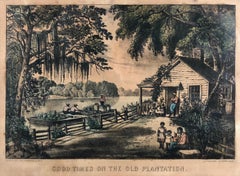
Good Times on the Old Plantation
By Currier
Ives
Located in Missouri, MO
Currier & Ives (Publishers)
"Good times on the Old Plantation" 1872
Handcolored Lithograph
Size Height 10 in.; Width 13.9 in.
Framed Size: approx 16 x 19.5
Category
1870s Victorian Landscape Prints
Materials
Lithograph
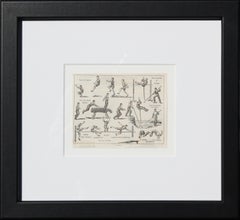
"Saut" Figurative French Gymnastics Vaulting Illustration Larousse Dictionary
Located in Houston, TX
Figurative French etching from the Larousse dictionary of various gymnastic vaulting events. Each event features multiple stages of the movement, similar to the style of Eadweard Muybridge. Currently hung in a solid black from with a wide white matting.
Dimensions Without Frame: H 3.5 in. x W 4.25 in.
Artist Biography: Louis Bombled (1862-1927) is a French painter , draftsman and engraver. He was the son of the Dutch painter Karel Frederik Bombled. Living in Chantilly, he became a pupil of Évariste-Vital Luminais.
He worked for the newspapers L'Illustration, Le Monde illustré, Le Petit Journal...
Category
1920s Victorian Landscape Prints
Materials
Etching
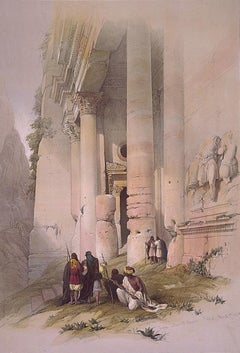
The Acropolis, Lower End of the Valley
Located in London, GB
David Roberts RA
The Acropolis, Lower End of the Valley
1796 - 1864
Subscription and first edition lithographs in stock
Full plate: 102
Presented in a acid free mount
Category
19th Century Victorian Landscape Prints
Materials
Lithograph
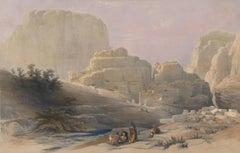
Lower Portion of El Khasne, Petra
Located in London, GB
Subscription and first edition lithograph in stock
Full plate: 94
Presented in a acid free mount
Category
19th Century Victorian Landscape Prints
Materials
Lithograph
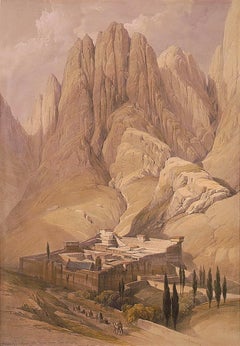
Convent of St. Catherine, Mt. Horeb
Located in London, GB
First edition lithographs in stock
Full plate: 118
Presented in a acid free mount
Category
19th Century Victorian Landscape Prints
Materials
Lithograph
19th century color lithograph portraits ship seascape patriotic flags military
Located in Milwaukee, WI
The present hand-colored lithograph is an excellent example of patriotic mid-nineteenth century American imagery. The print shows the battle and several of the major figures involved in the Battle of Lake Erie: At the center is a view of several frigates on the lake, embroiled in conflict. Above the battle is the quotation: "We have met the enemy and they are ours." Surrounding are laurel-lined roundels with portraits of Oliver Hazard Perry (1785-1819), Stephen Dicateur (1779-1820), Johnston Blakeley (1871-1814), William Bainbridge (1774-1833), David Porter (1780-1843), and James Lawrence (1781-1813) - all of these framed by American flags, banners and cannons. This print shows that the Battle of Lake Erie, part of the War of 1812, still held resonance for American audiences several decades later and was part of the larger narrative of the founding of the country.
9.5 x 13.5 inches, artwork
20 x 23.38 inches, frame
Entitled in the image
Signed in the stone, lower left "Lith. and Pub. by N. Currier"
Inscribed lower right "2 Spruce N.Y." and "No. 1"
Copyrighted lower center "Entered according to Act of Congress in the year 1846 by N. Currier in the Clerk's office of the Southern District of N.Y."
Framed to conservation standards using 100 percent rag matting and housed in a gold gilded moulding.
Nathaniel Currier was a tall introspective man with a melancholy nature. He could captivate people with his piercing stare or charm them with his sparkling blue eyes. Nathaniel was born in Roxbury, Massachusetts on March 27th, 1813, the second of four children. His parents, Nathaniel and Hannah Currier, were distant cousins who lived a humble yet spartan life. When Nathaniel was eight years old, tragedy struck. Nathaniel’s father unexpectedly passed away leaving Nathaniel and his eleven-year-old brother Lorenzo to provide for the family. In addition to their mother, Nathaniel and Lorenzo had to care for six-year-old sister Elizabeth and two-year-old brother Charles. Nathaniel worked a series of odd jobs to support the family, and at fifteen, he started what would become a life-long career when he apprenticed in the Boston lithography shop of William and John Pendleton.
A Bavarian gentleman named Alois Senefelder invented lithography just 30 years prior to young Nat Currier’s apprenticeship. While under the employ of the brothers Pendleton, Nat was taught the art of lithography by the firm’s chief printer, a French national named Dubois, who brought the lithography trade to America.
Lithography involves grinding a piece of limestone flat and smooth then drawing in mirror image on the stone with a special grease pencil. After the image is completed, the stone is etched with a solution of aqua fortis leaving the greased areas in slight relief. Water is then used to wet the stone and greased-ink is rolled onto the raised areas. Since grease and water do not mix, the greased-ink is repelled by the moisture on the stone and clings to the original grease pencil lines. The stone is then placed in a press and used as a printing block to impart black on white images to paper.
In 1833, now twenty-years old and an accomplished lithographer, Nat Currier left Boston and moved to Philadelphia to do contract work for M.E.D. Brown, a noted engraver and printer. With the promise of good money, Currier hired on to help Brown prepare lithographic stones of scientific images for the American Journal of Sciences and Arts. When Nat completed the contract work in 1834, he traveled to New York City to work once again for his mentor John Pendleton, who was now operating his own shop located at 137 Broadway. Soon after the reunion, Pendleton expressed an interest in returning to Boston and offered to sell his print shop to Currier. Young Nat did not have the financial resources to buy the shop, but being the resourceful type he found another local printer by the name of Stodart. Together they bought Pendleton’s business.
The firm ‘Currier & Stodart’ specialized in "job" printing. They produced many different types of printed items, most notably music manuscripts for local publishers. By 1835, Stodart was frustrated that the business was not making enough money and he ended the partnership, taking his investment with him. With little more than some lithographic stones, and a talent for his trade, twenty-two year old Nat Currier set up shop in a temporary office at 1 Wall Street in New York City. He named his new enterprise ‘N. Currier, Lithographer’
Nathaniel continued as a job printer and duplicated everything from music sheets to architectural plans. He experimented with portraits, disaster scenes and memorial prints, and any thing that he could sell to the public from tables in front of his shop. During 1835 he produced a disaster print Ruins of the Planter's Hotel, New Orleans, which fell at two O’clock on the Morning of the 15th of May 1835, burying 50 persons, 40 of whom Escaped with their Lives. The public had a thirst for newsworthy events, and newspapers of the day did not include pictures. By producing this print, Nat gave the public a new way to “see” the news. The print sold reasonably well, an important fact that was not lost on Currier.
Nat met and married Eliza Farnsworth in 1840. He also produced a print that same year titled Awful Conflagration of the Steamboat Lexington in Long Island Sound on Monday Evening, January 18, 1840, by which melancholy occurrence over One Hundred Persons Perished. This print sold out very quickly, and Currier was approached by an enterprising publication who contracted him to print a single sheet addition of their paper, the New York Sun. This single page paper is presumed to be the first illustrated newspaper ever published.
The success of the Lexington print launched his career nationally and put him in a position to finally lift his family up. In 1841, Nat and Eliza had their first child, a son they named Edward West Currier. That same year Nat hired his twenty-one year old brother Charles and taught him the lithography trade, he also hired his artistically inclined brother Lorenzo to travel out west and make sketches of the new frontier as material for future prints. Charles worked for the firm on and off over the years, and invented a new type of lithographic crayon which he patented and named the Crayola. Lorenzo continued selling sketches to Nat for the next few years.
In 1843, Nat and Eliza had a daughter, Eliza West Currier, but tragedy struck in early 1847 when their young daughter died from a prolonged illness. Nat and Eliza were grief stricken, and Eliza, driven by despair, gave up on life and passed away just four months after her daughter’s death.
The subject of Nat Currier’s artwork changed following the death of his wife and daughter, and he produced many memorial prints and sentimental prints during the late 1840s. The memorial prints generally depicted grief stricken families posed by gravestones (the stones were left blank so the purchasers could fill in the names of the dearly departed). The sentimental prints usually depicted idealized portraits of women and children, titled with popular Christian names of the day.
Late in 1847, Nat Currier married Lura Ormsbee, a friend of the family. Lura was a self-sufficient woman, and she immediately set out to help Nat raise six-year-old Edward and get their house in order. In 1849, Lura delivered a son, Walter Black Currier, but fate dealt them a blow when young Walter died one year later. While Nat and Lura were grieving the loss of their new son, word came from San Francisco that Nat’s brother Lorenzo had also passed away from a brief illness. Nat sank deeper into his natural quiet melancholy. Friends stopped by to console the couple, and Lura began to set an extra place at their table for these unexpected guests. She continued this tradition throughout their lives.
In 1852, Charles introduced a friend, James Merritt Ives, to Nat and suggested he hire him as a bookkeeper. Jim Ives was a native New Yorker born in 1824 and raised on the grounds of Bellevue Hospital where his father was employed as superintendent. Jim was a self-trained artist and professional bookkeeper. He was also a plump and jovial man, presenting the exact opposite image of his new boss.
Jim Ives met Charles Currier through Caroline Clark, the object of Jim’s affection. Caroline’s sister Elizabeth was married to Charles, and Caroline was a close friend of the Currier family. Jim eventually proposed marriage to Caroline and solicited an introduction to Nat Currier, through Charles, in hopes of securing a more stable income to support his future wife.
Ives quickly set out to improve and modernize his new employer’s bookkeeping methods. He reorganized the firm’s sizable inventory, and used his artistic skills to streamline the firm’s production methods. By 1857, Nathaniel had become so dependent on Jims’ skills and initiative that he offered him a full partnership in the firm and appointed him general manager. The two men chose the name ‘Currier & Ives’ for the new partnership, and became close friends.
Currier & Ives produced their prints in a building at 33 Spruce Street where they occupied the third, fourth and fifth floors. The third floor was devoted to the hand operated printing presses that were built by Nat's cousin, Cyrus Currier, at his shop Cyrus Currier & Sons in Newark, NJ. The fourth floor found the artists, lithographers and the stone grinders at work. The fifth floor housed the coloring department, and was one of the earliest production lines in the country. The colorists were generally immigrant girls, mostly German, who came to America with some formal artistic training. Each colorist was responsible for adding a single color to a print. As a colorist finished applying their color, the print was passed down the line to the next colorist to add their color. The colorists worked from a master print displayed above their table, which showed where the proper colors were to be placed. At the end of the table was a touch up artist who checked the prints for quality, touching-in areas that may have been missed as it passed down the line. During the Civil War, demand for prints became so great that coloring stencils were developed to speed up production.
Although most Currier & Ives prints were colored in house, some were sent out to contract artists. The rate Currier & Ives paid these artists for coloring work was one dollar per one hundred small folios (a penny a print) and one dollar per one dozen large folios. Currier & Ives also offered uncolored prints to dealers, with instructions (included on the price list) on how to 'prepare the prints for coloring.' In addition, schools could order uncolored prints from the firm’s catalogue to use in their painting classes.
Nathaniel Currier and James Merritt Ives attracted a wide circle of friends during their years in business. Some of their more famous acquaintances included Horace Greeley, Phineas T. Barnum, and the outspoken abolitionists Rev. Henry Ward, and John Greenleaf Whittier (the latter being a cousin of Mr. Currier).
Nat Currier and Jim Ives described their business as "Publishers of Cheap and Popular Pictures" and produced many categories of prints. These included Disaster Scenes, Sentimental Images, Sports, Humor, Hunting Scenes, Politics, Religion, City and Rural Scenes, Trains, Ships, Fire Fighters, Famous Race Horses, Historical Portraits, and just about any other topic that satisfied the general public's taste. In all, the firm produced in excess of 7500 different titles, totaling over one million prints produced from 1835 to 1907.
Nat Currier retired in 1880, and signed over his share of the firm to his son Edward. Nat died eight years later at his summer home 'Lion’s Gate' in Amesbury, Massachusetts. Jim Ives remained active in the firm until his death in 1895, when his share of the firm passed to his eldest son, Chauncey.
In 1902, faced will failing health from the ravages of Tuberculosis, Edward Currier sold his share of the firm to Chauncey Ives...
Category
1850s Victorian Landscape Prints
Materials
Watercolor, Lithograph
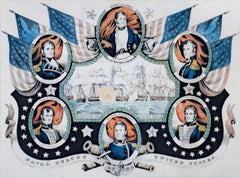
Remains of the Triumphal Arch, Petra
Located in London, GB
David Roberts RA
Remains of the Triumphal Arch, Petra
1796 - 1864
Subscription and First Edition lithographs
Full plate: 100
Presented in a acid free mount
Category
19th Century Victorian Landscape Prints
Materials
Lithograph
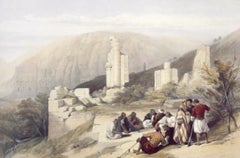
The Pool of Bethesda- Jerusalem
Located in London, GB
THE POOL OF BETHESDA- JERUSALEM
Subscription and first edition lithographs in stock
Full plate: 12
Presented in a acid free mount
£1,200
Published by F.G. Moon & Son, London 1842-49.
Subscription edition were coloured during production and First edition are modern hand-coloured lithograph, that was printed a few years after the subscription edition David Roberts.
We have both Subscription and First Edition lithographs in stock. The subscription edition was printed on a fine paper, hand coloured and then stuck on card. The first edition was printed on a more coarse paper and not coloured by hand. These ones we colour to match the subscription colouring. Each lithograph is sold in mint condition and in an acid free mount.
Please do not hesitate to contact us for more information, or if you are looking for another David Roberts lithograph...
Category
19th Century Victorian Landscape Prints
Materials
Lithograph
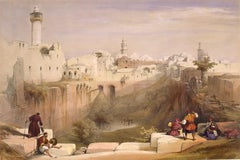
Ancient Watch Tower
Located in London, GB
David Roberts RA
Ancient Watch Tower
1796 - 1864
Subscription and first edition lithograph in stock
Half plate: 93
Presented in a acid free mount
Category
19th Century Victorian Landscape Prints
Materials
Lithograph
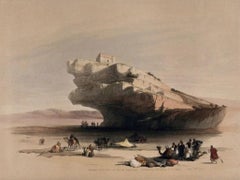
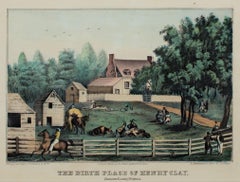
"Birthplace of Henry Clay, Hanover County, VA, " Lithograph by Kelloggs
Thayer
Located in Milwaukee, WI
"Birthplace of Henry Clay, Hanover County, Virginia" is an original hand-colored lithograph by Kelloggs & Thayer. The piece features a homestead and farm anima...
Category
1870s Victorian Landscape Prints
Materials
Lithograph
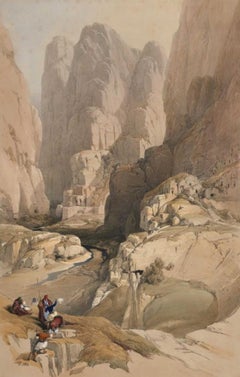
The Theatre, Petra
Located in London, GB
First Edition lithograph
Full plate: 98
Presented in a acid free mount
Category
19th Century Victorian Landscape Prints
Materials
Lithograph
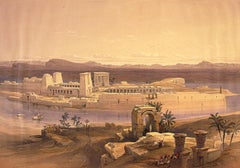
General View of the Island of Philae, Nubia
Located in London, GB
General View of the Island of Philae, Nubia
Subscription and first edition lithographs in stock
Full plate: 151
Presented in a acid free mount
£2080
Scroll down for more information....
Category
19th Century Victorian Landscape Prints
Materials
Lithograph
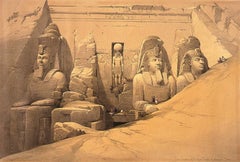
Front Elevation of The Great Temple of Aboo Simbel
Located in London, GB
Front Elevation of The Great Temple of Aboo Simbel
First edition lithograph
Full plate: 169
Presented in a acid free mount
£2,600
Scroll down for more information.
Roberts reached A...
Category
19th Century Victorian Landscape Prints
Materials
Lithograph
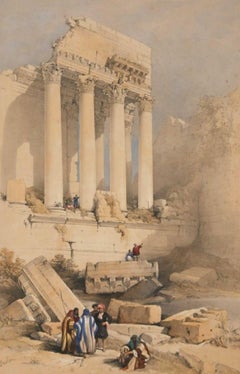
Baalbec, Western Portico
Located in London, GB
First edition lithograph in stock
Full plate: 79
Presented in a acid free mount
Modern hand-coloured lithograph for the first edition of David Roberts’ The Holy Land available.
Pub...
Category
19th Century Victorian Landscape Prints
Materials
Lithograph
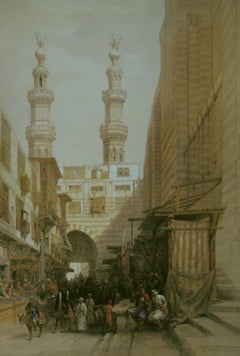
Minaret
Grand Entrance of the Metwaleys, Cairo
Located in London, GB
Subscription and first edition lithograph in stock
Full plate: 218
Presented in an acid free mount
Category
19th Century Victorian Landscape Prints
Materials
Lithograph
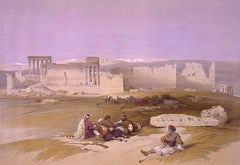
Baalbec, General View
Located in London, GB
Subscription and first Edition lithographs
Full plate: 77
Presented in an acid free mount
Original hand coloured subscription edition and modern hand-coloured lithograph for the fir...
Category
19th Century Victorian Landscape Prints
Materials
Lithograph
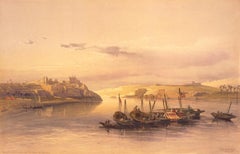
General View Asouan
The Island of Elephantine
Located in London, GB
Subscription and first edition lithographs in stock
Full plate: 196
Presented in a acid free mount
Category
19th Century Victorian Landscape Prints
Materials
Lithograph
Victorian landscape prints for sale on 1stDibs.
Find a wide variety of authentic Victorian landscape prints available for sale on 1stDibs. Works in this style were very popular during the 20th Century, but contemporary artists have continued to produce works inspired by this movement. Many Pop art paintings were created by popular artists on 1stDibs, including Philippe Benoist, David Lucas, David Roberts, and John Harris the Younger. Frequently made by artists working with Lithograph, and Engraving and other materials, all of these pieces for sale are unique and have attracted attention over the years. Not every interior allows for large Victorian landscape prints, so small editions measuring 5.12 inches across are also available. Prices for landscape prints made by famous or emerging artists can differ depending on medium, time period and other attributes. On 1stDibs, the price for these items starts at $95 and tops out at $8,000, while the average work sells for $240.