Vienna Secession Landscape Prints
to
2
23
Overall Width
to
Overall Height
to
4,674
3,274
828
745
664
659
570
447
384
90
82
72
28
15
18
5
1
1
25
18
1
1
5
22
3
7
4
4
3
2
2
2
1
1
1
1
1
1
1
1
1
1
1
1
1
23
2
1
25
Style: Vienna Secession
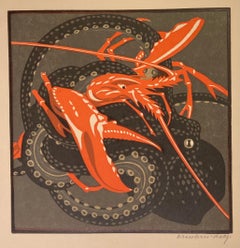
LOBSTER and OCTOPUS (KAMPF - BATTLE)
Located in Santa Monica, CA
NORBERTINE VON BRESSLERN-ROTH (1891 1978)
KAMPF (BATTLE - LOBSTER and OCTOPUS) c. 1928
Color linoleum cut Signed in pencil. Image 8 5/8 x 8 11/16”
In excellent condition and full ...
Category
1920s Vienna Secession Landscape Prints
Materials
Linocut
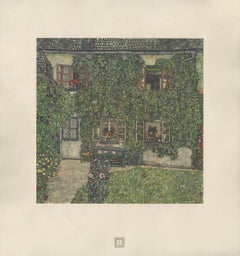
Max Eisler Eine Nachlese folio “House in a Garden” collotype print
Located in Palm Beach, FL
After Gustav Klimt, Max Eisler #9, Haus Im Garten; aka Forester’s House in Weissenbach II; multi-color collotype after 1914 painting in oil on canvas.
GUSTAV KLIMT EINE NACHLESE (GU...
Category
1930s Vienna Secession Landscape Prints
Materials
Paper
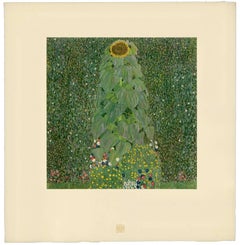
H.O. Miethke Das Werk folio "Sunflower" collotype print
Located in Palm Beach, FL
Sunflower, no. 10 from the third installment of Das Werk Gustav Klimts
Created during his residency in Litzlberg on Attersee, where Klimt and the Floge family summered from 1900-1907, Klimt explores nature’s transcendental qualities. His single sunflower is human-like, it’s golden halo is like a ring of sun-kissed hair surrounding a bald pate. It’s known that at the same time Klimt was creating this image, he was also at work on a photo essay about the Floge sisters’ clothing from their fashion salon. Their fashion house was best known for its “reform dresses” which featured loose-fitting long robes which billowed at the arms and torso. Viewed with this in mind, it is not a hard leap to imagine the lone sunflower as a self-portrait from reverse. Klimt’s balding head crowned in a golden corona forms the apex of a pyramidal flowing gown of foliage and flowers. By orienting the anthropomorphic flower at the garden’s central foreground and adorning it with repetitive motifs of round flowers of varying sizes, Klimt’s sunflower...
Category
Early 1900s Vienna Secession Landscape Prints
Materials
Paper
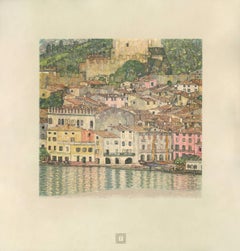
Max Eisler Eine Nachlese folio “Malcesine on Lake Garda" collotype print
Located in Palm Beach, FL
After Gustav Klimt, Max Eisler #7, Malcesine am Gardasee; multi-color collotype after 1913 painting in oil on canvas. The original was destroyed by fire ...
Category
1930s Vienna Secession Landscape Prints
Materials
Paper
Max Eisler Eine Nachlese folio "Houses in Unterach on Lake Attersee" collotype
Located in Palm Beach, FL
After Gustav Klimt, Max Eisler Plate #29, Am Attersee; brown-toned monochrome collotype after the 1915-16 painting in oil on canvas.
GUSTAV KLIMT EINE NACHLESE (GUSTAV KLIMT AN AFTERMATH), a portfolio of 30 collotypes prints, 15 are multi-color and 15 are monochrome, on chine colle paper laid down on heavy cream-wove paper with deckled edges; Max Eisler, Editor-Publisher; Osterreichischer Staatsdruckerei (Austrian State Printing Office), Printer; in a limited edition of 500 numbered examples of which: 200 were printed in German, 150 were printed in French and 150 were printed in English; Vienna, 1931.
2018 marks the 100th anniversary of Gustav Klimt’s death. It is a fitting time to reflect upon the enduring legacy and deep impact of his art. Recognizing this need for posterity with uncanny foresight, the publication of Gustav Klimt: An Aftermath (Eine Nachlese) provides a rare collection of work after Klimt which has proven to be an indispensable tool for Klimt scholarship as well as a source for pure visual delight.
Approximately 25 percent of the original works featured in the Aftermath portfolio have since been lost. Of those 30, six were destroyed by fire on 8 May 1945. On that fateful final day of WWII, the retreating Feldherrnhalle, a tank division of the German Army, set fire to the Schloss Immendorf which was a 16th century castle in Lower Austria used between 1942-1945 to store objects of art. All three of Klimt’s Faculty Paintings: Philosophy, Medicine and Jurisprudence (1900-1907), originally created for the University of Vienna, were on premises at that time. Also among the inventory of Klimt paintings in storage there was art which had been confiscated by the Nazis. One of the most significant confiscated collections was the Lederer collection which featured many works by Gustav Klimt such as Girlfriends II and Garden Path with Chickens. In many instances, Aftermath is our only link to these lost treasures.
Max Eisler (1881-1937), the publisher of the 1931 Aftermath portfolio, was an art historian at Vienna University specializing in modern and contemporary arts and crafts whose 1920 book on Klimt was the first Klimt monograph. He saw An Aftermath as filling-in important gaps left by the earlier print portfolios which had only featured Klimt up to 1913 and which had glossed over major art projects such as the Tree of Life frieze for the Palais Stoclet. And whereas only 10 of the 50 prints from the earlier portfolios published by H.O. Miethke were made in intricate multi-color images, Eisler augmented the earlier format by featuring half of the 30 images in stunning multi-colored collotypes. Understanding the fragile nature of the collotype printing process also reinforces this project’s distinctive and exceptional characteristics. Fragile collotype plates can not be reused. As such, this necessitates the completion of a run on the first go and also dictates a limited production number. Printed by hand, the collotypes required deft handling by the printer, Osterreichische Staatsdruckerei. A complicated and lengthy process involving gelatin colloids mixed with dichromates, the creation of 16 color separation thin glass filters to achieve the light-sensitive internegative images which could faithfully capture all of the painting’s tonal gradations and colors, exposure to actinic light, and delicate chine collie papers which allowed for greater color saturation, the printer’s collaborative role in capturing and transmitting Klimt’s nuanced paint strokes is nothing short of remarkable.
The Österreichische Staatsdruckerei (Austrian State Printing Office), was the successor to the KK Hof -und Staatsdruckerei which was founded by Emperor Franz I in 1804 and whose collotype printing innovations of Klimt’s art...
Category
1930s Vienna Secession Landscape Prints
Materials
Archival Paper
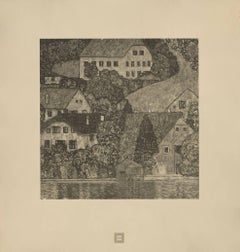
H.O. Miethke Das Werk folio "Farmhouse With Birch Trees" collotype print
Located in Palm Beach, FL
DAS WERK GUSTAV KLIMTS, a portfolio of 50 prints, ten of which are multicolor collotypes on chine colle paper laid down on hand-made heavy cream wove paper with deckled edges; under ...
Category
Early 1900s Vienna Secession Landscape Prints
Materials
Paper
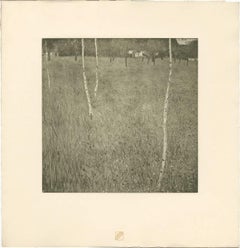
H.O. Miethke Das Werk folio "Birch Forest I" collotype print
Located in Palm Beach, FL
DAS WERK GUSTAV KLIMTS, a portfolio of 50 prints, ten of which are multicolor collotypes on chine colle paper laid down on hand-made heavy cream wove paper with deckled edges; under each of the 50 prints is a gold signet intaglio...
Category
Early 1900s Vienna Secession Landscape Prints
Materials
Paper
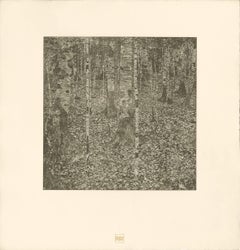
H.O. Miethke Das Werk folio "Pond in the Morning" collotype print
Located in Palm Beach, FL
DAS WERK GUSTAV KLIMTS, a portfolio of 50 prints, ten of which are multicolor collotypes on chine colle paper laid down on hand-made heavy cream wove paper with deckled edges; under ...
Category
Early 1900s Vienna Secession Landscape Prints
Materials
Paper

H.O. Miethke Das Werk folio "The Swamp" collotype print
Located in Palm Beach, FL
DAS WERK GUSTAV KLIMTS, a portfolio of 50 prints, ten of which are multicolor collotypes on chine colle paper laid down on hand-made heavy cream wove paper with deckled edges; under ...
Category
Early 1900s Vienna Secession Landscape Prints
Materials
Paper
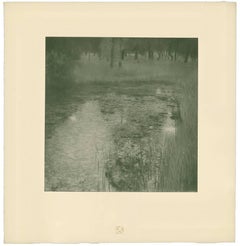
H.O. Miethke Das Werk folio "Fruit Trees" collotype print
Located in Palm Beach, FL
DAS WERK GUSTAV KLIMTS, a portfolio of 50 prints, ten of which are multicolor collotypes on chine colle paper laid down on hand-made heavy cream wove paper with deckled edges; under ...
Category
Early 1900s Vienna Secession Landscape Prints
Materials
Paper
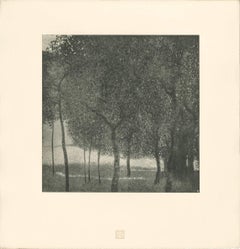
H.O. Miethke Das Werk folio "The Great Poplar I" collotype print
Located in Palm Beach, FL
DAS WERK GUSTAV KLIMTS, a portfolio of 50 prints, ten of which are multicolor collotypes on chine colle paper laid down on hand-made heavy cream wove paper with deckled edges; under ...
Category
Early 1900s Vienna Secession Landscape Prints
Materials
Paper
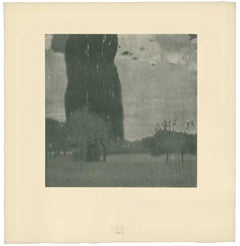
Max Eisler Eine Nachlese folio "Gastein" collotype
Located in Palm Beach, FL
After Gustav Klimt, Max Eisler Plate #21, Gastein; grey-green monochrome collotype after the 1917 painting in oil on canvas. Original destroyed by fire May 1945.
GUSTAV KLIMT EINE NACHLESE (GUSTAV KLIMT AN AFTERMATH), a portfolio of 30 collotypes prints, 15 are multi-color and 15 are monochrome, on chine colle paper laid down on heavy cream-wove paper with deckled edges; Max Eisler, Editor-Publisher; Osterreichischer Staatsdruckerei (Austrian State Printing Office), Printer; in a limited edition of 500 numbered examples of which: 200 were printed in German, 150 were printed in French and 150 were printed in English; Vienna, 1931.
2018 marks the 100th anniversary of Gustav Klimt’s death. It is a fitting time to reflect upon the enduring legacy and deep impact of his art. Recognizing this need for posterity with uncanny foresight, the publication of Gustav Klimt: An Aftermath (Eine Nachlese) provides a rare collection of work after Klimt which has proven to be an indispensable tool for Klimt scholarship as well as a source for pure visual delight.
Approximately 25 percent of the original works featured in the Aftermath portfolio have since been lost. Of those 30, six were destroyed by fire on 8 May 1945. On that fateful final day of WWII, the retreating Feldherrnhalle, a tank division of the German Army, set fire to the Schloss Immendorf which was a 16th century castle in Lower Austria used between 1942-1945 to store objects of art. All three of Klimt’s Faculty Paintings: Philosophy, Medicine and Jurisprudence (1900-1907), originally created for the University of Vienna, were on premises at that time. Also among the inventory of Klimt paintings in storage there was art which had been confiscated by the Nazis. One of the most significant confiscated collections was the Lederer collection which featured many works by Gustav Klimt such as Girlfriends II and Garden Path with Chickens. In many instances, Aftermath is our only link to these lost treasures.
Max Eisler (1881-1937), the publisher of the 1931 Aftermath portfolio, was an art historian at Vienna University specializing in modern and contemporary arts and crafts whose 1920 book on Klimt was the first Klimt monograph. He saw An Aftermath as filling-in important gaps left by the earlier print portfolios which had only featured Klimt up to 1913 and which had glossed over major art projects such as the Tree of Life frieze for the Palais Stoclet. And whereas only 10 of the 50 prints from the earlier portfolios published by H.O. Miethke were made in intricate multi-color images, Eisler augmented the earlier format by featuring half of the 30 images in stunning multi-colored collotypes. Understanding the fragile nature of the collotype printing process also reinforces this project’s distinctive and exceptional characteristics. Fragile collotype plates can not be reused. As such, this necessitates the completion of a run on the first go and also dictates a limited production number. Printed by hand, the collotypes required deft handling by the printer, Osterreichische Staatsdruckerei. A complicated and lengthy process involving gelatin colloids mixed with dichromates, the creation of 16 color separation thin glass filters to achieve the light-sensitive internegative images which could faithfully capture all of the painting’s tonal gradations and colors, exposure to actinic light, and delicate chine collie papers which allowed for greater color saturation, the printer’s collaborative role in capturing and transmitting Klimt’s nuanced paint strokes is nothing short of remarkable.
The Österreichische Staatsdruckerei (Austrian State Printing Office), was the successor to the KK Hof -und Staatsdruckerei which was founded by Emperor Franz I in 1804 and whose collotype printing innovations of Klimt’s art...
Category
1930s Vienna Secession Landscape Prints
Materials
Paper
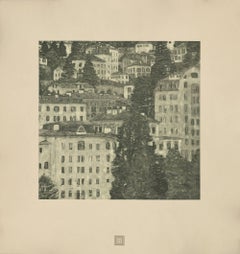
H.O. Miethke Das Werk folio "Cottage Garden with Crucifix" collotype print
Located in Palm Beach, FL
DAS WERK GUSTAV KLIMTS, a portfolio of 50 prints, ten of which are multicolor collotypes on chine colle paper laid down on hand-made heavy cream wove paper with deckled edges; under ...
Category
Early 1900s Vienna Secession Landscape Prints
Materials
Paper
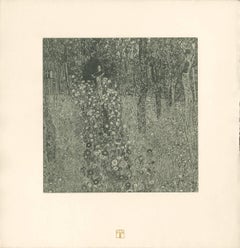
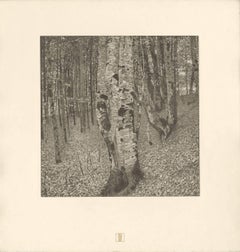
H.O. Miethke Das Werk folio "Beech Forest II" collotype print
Located in Palm Beach, FL
DAS WERK GUSTAV KLIMTS, a portfolio of 50 prints, ten of which are multicolor collotypes on chine colle paper laid down on hand-made heavy cream wove paper with deckled edges; under ...
Category
Early 1900s Vienna Secession Landscape Prints
Materials
Paper
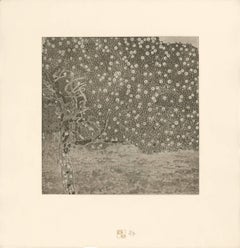
H.O. Miethke Das Werk folio "Golden Apple Tree" collotype print
Located in Palm Beach, FL
DAS WERK GUSTAV KLIMTS, a portfolio of 50 prints, ten of which are multicolor collotypes on chine colle paper laid down on hand-made heavy cream wove paper with deckled edges; under ...
Category
Early 1900s Vienna Secession Landscape Prints
Materials
Paper
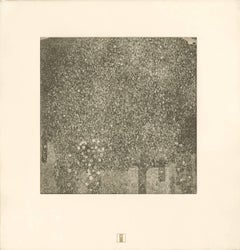
H.O. Miethke Das Werk folio "Rose" collotype print
Located in Palm Beach, FL
DAS WERK GUSTAV KLIMTS, a portfolio of 50 prints, ten of which are multicolor collotypes on chine colle paper laid down on hand-made heavy cream wove paper wi...
Category
Early 1900s Vienna Secession Landscape Prints
Materials
Paper
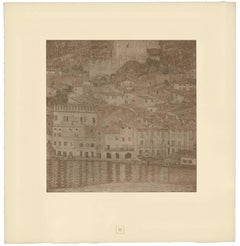
H.O. Miethke Das Werk folio "Malcesine on Lake Garda" collotype print
Located in Palm Beach, FL
DAS WERK GUSTAV KLIMTS, a portfolio of 50 prints, ten of which are multicolor collotypes on chine colle paper laid down on hand-made heavy cream wove paper with deckled edges; under ...
Category
Early 1900s Vienna Secession Landscape Prints
Materials
Paper
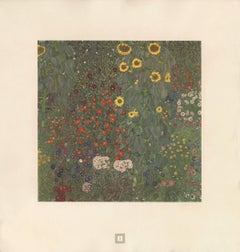
H.O. Miethke Das Werk folio "Farm Garden With Sunflowers" collotype print
Located in Palm Beach, FL
DAS WERK GUSTAV KLIMTS, a portfolio of 50 prints, ten of which are multicolor collotypes on chine colle paper laid down on hand-made heavy cream wove paper with deckled edges; under ...
Category
Early 1900s Vienna Secession Landscape Prints
Materials
Paper
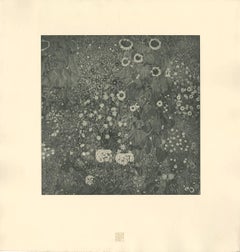
H.O. Miethke Das Werk folio "Farm House in Buchberg" collotype print
Located in Palm Beach, FL
DAS WERK GUSTAV KLIMTS, a portfolio of 50 prints, ten of which are multicolor collotypes on chine colle paper laid down on hand-made heavy cream wove paper with deckled edges; under each of the 50 prints is a gold signet intaglio printed on the cream paper each of which Klimt designed for the publication as unique and relating to its corresponding image; H.O. Miethke, Editor-Publisher; k.k. Hof-und Staatsdruckerei, Printer; printed in a limited edition of 300 numbered plus several presentation copies; Vienna, 1908-1914.
The idea of collaboration in the arts is anything but new; however it has so often been viewed and assessed as somehow devaluing the intrinsic worth of art. It’s as if it was a dirty secret to be hidden away. More so even than the eroticism explored by Klimt, which divided public opinion, the artistic avant-garde began to boldly flaunt artistic collaboration beginning in the 19th century- which gained steam in the first part of the 20th century- to become a driving vehicle of contemporary artistic creation. Viewed in this context, the folios of collotype prints published by H.O. Miethke in Vienna between 1908-1914 known as Das Werk Gustav Klimts, are important art documents worthy of as much consideration for their bold stand they take on established ways of thinking about artistic collaboration as they are for their breathtakingly striking images.
1908 is indeed a watershed moment in the history of art. To coincide with the 60th anniversary of the reign of Emperor Franz Joseph I, Kunstschau opened in Vienna in May of that year. It was there that Klimt delivered the inaugural speech. Speaking about the avant-garde group’s unifying philosophy of Gesamtkunstwerk, or the synthesis of the arts, Klimt shared his belief that the ideal means to bring artists and an audience together was via “work on major art projects.” It was at Kunstschau 1908 that Klimt first exhibited his most iconic painting, The Kiss, as well as The Sunflower, Water Snakes I and II and Danae. It was at Kunstschau 1908 that Das Werk Gustav Klimts was first available for purchase. Thanks to Galerie Miethke’s organization, Kunstschau 1908 was possible. Miethke’s pioneering art...
Category
Early 1900s Vienna Secession Landscape Prints
Materials
Paper
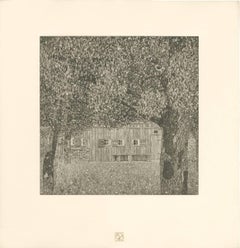
H.O. Miethke Das Werk folio "Church in Cassone" collotype print
Located in Palm Beach, FL
DAS WERK GUSTAV KLIMTS, a portfolio of 50 prints, ten of which are multicolor collotypes on chine colle paper laid down on hand-made heavy cream wove paper with deckled edges; under ...
Category
Early 1900s Vienna Secession Landscape Prints
Materials
Paper
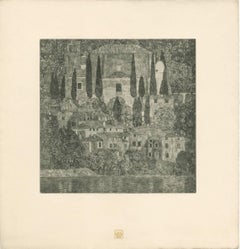
H.O. Miethke Das Werk folio "Orchard in the Evening" collotype print
Located in Palm Beach, FL
DAS WERK GUSTAV KLIMTS, a portfolio of 50 prints, ten of which are multicolor collotypes on chine colle paper laid down on hand-made heavy cream wove paper with deckled edges; under ...
Category
Early 1900s Vienna Secession Landscape Prints
Materials
Paper
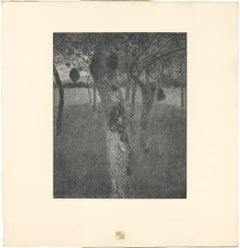
H.O. Miethke Das Werk folio "The Great Poplar II (Thunderstorm)" collotype print
Located in Palm Beach, FL
DAS WERK GUSTAV KLIMTS, a portfolio of 50 prints, ten of which are multicolor collotypes on chine colle paper laid down on hand-made heavy cream wove paper with deckled edges; under ...
Category
Early 1900s Vienna Secession Landscape Prints
Materials
Paper
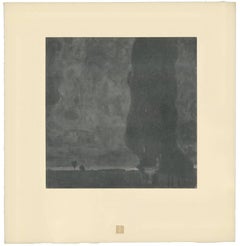
Max Eisler Eine Nachlese folio "Litzlberg on Lake Attersee" collotype
Located in Palm Beach, FL
After Gustav Klimt, Max Eisler Plate #8, Litzlberg on Lake Attersee; blue monochrome collotype after the 1915 painting in oil on canvas.
GUSTAV KLIMT EINE NACHLESE (GUSTAV KLIMT AN ...
Category
1930s Vienna Secession Landscape Prints
Materials
Paper
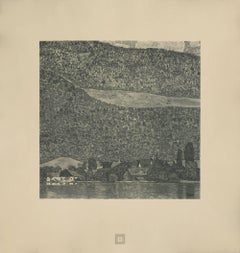
H.O. Miethke Das Werk folio "Schloss Kammer on Lake Attarsee II" collotype print
Located in Palm Beach, FL
DAS WERK GUSTAV KLIMTS, a portfolio of 50 prints, ten of which are multicolor collotypes on chine colle paper laid down on hand-made heavy cream wove paper with deckled edges; under each of the 50 prints is a gold signet intaglio printed on the cream paper each of which Klimt designed for the publication as unique and relating to its corresponding image; H.O. Miethke, Editor-Publisher; k.k. Hof-und Staatsdruckerei, Printer; printed in a limited edition of 300 numbered plus several presentation copies; Vienna, 1908-1914.
The idea of collaboration in the arts is anything but new; however it has so often been viewed and assessed as somehow devaluing the intrinsic worth of art. It’s as if it was a dirty secret to be hidden away. More so even than the eroticism explored by Klimt, which divided public opinion, the artistic avant-garde began to boldly flaunt artistic collaboration beginning in the 19th century- which gained steam in the first part of the 20th century- to become a driving vehicle of contemporary artistic creation. Viewed in this context, the folios of collotype prints published by H.O. Miethke in Vienna between 1908-1914 known as Das Werk Gustav Klimts, are important art documents worthy of as much consideration for their bold stand they take on established ways of thinking about artistic collaboration as they are for their breathtakingly striking images.
1908 is indeed a watershed moment in the history of art. To coincide with the 60th anniversary of the reign of Emperor Franz Joseph I, Kunstschau opened in Vienna in May of that year. It was there that Klimt delivered the inaugural speech. Speaking about the avant-garde group’s unifying philosophy of Gesamtkunstwerk, or the synthesis of the arts, Klimt shared his belief that the ideal means to bring artists and an audience together was via “work on major art projects.” It was at Kunstschau 1908 that Klimt first exhibited his most iconic painting, The Kiss, as well as The Sunflower, Water Snakes I and II and Danae. It was at Kunstschau 1908 that Das Werk Gustav Klimts was first available for purchase. Thanks to Galerie Miethke’s organization, Kunstschau 1908 was possible. Miethke’s pioneering art house had become Klimt’s exclusive art dealer and main promoter of his modernist vision. Paul Bacher and Carl Moll, a founding member with Klimt of the Vienna Secession, who all broke away during the rift in 1905, took stewardship of the gallery following the fallout with the Secession. Das Werk Gustav Klimts is a prime example of Miethke’s masterful and revolutionary approach to marketing art. Miethke’s innovative marketing strategy played to a penchant for exclusivity. The art gallery and publishing house utilized the press and art critics- such as Austria’s preeminent Art Historian, Hugo Haberfield, who became Director of the gallery in 1912- as a means of gaining publicity as well as maintaining effective public relations. Miethke used the grand exposition format to extend the art gallery’s market reach, cultivating their product’s prestige by stroking the egos of current art patrons while simultaneously creating accessibility for newcomers and others avid collectors to share a relative proximity to other wealthy and respected members of the art collecting community. Essentially, their approach paved the way for what is still the predominant means of marketing.
Between 1908 and 1914, H.O. Miethke published a total of 5 installments of print folios of Klimt’s painted work, each comprising 10 prints. The series was limited in availability to 300 and purchase was arranged through subscription. Each issue was presented unbound in a gold embossed black paper folder. Included in the folio was a Title Page, a Justification page and a Table of Contents page itemizing each of the 10 printed works with details about their corresponding painted works as well as information about each work’s current owner. These folios were not comprehensive of Klimt’s work; but rather, they feature what he believed were his most important paintings from 1898-1913. Only 2 collotypes in each folio were multicolored.
To punctuate the fact that Klimt, himself, was very much an active player in creating these printed works, he created square-shaped signets, unique to each collotype which were intaglio printed in gold ink at the bottom of the cream wove papers to which the chine collie papers were affixed.These signets relate thematically to their corresponding printed images and designate each of those images by their placement in the folio’s Table...
Category
Early 1900s Vienna Secession Landscape Prints
Materials
Paper
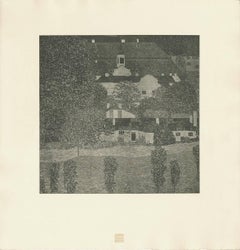
Slowakisches Bauernhaus,
By Karl Schwetz
Located in New York, NY
Schweiz, Karl. Slowakisches Bauernhaus, Ca 1911. Color linoleum cut.
Framed.
Provenance: Galerie Michael Pabst, Munich.
Noted artist, painter, illustr...
Category
1910s Vienna Secession Landscape Prints
Materials
Linocut
Related Items
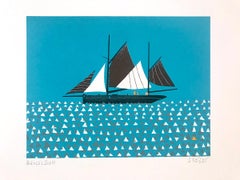
Excelsior by Simon Tozer, Limited edition, Sailing, Landscape, Figurative art
By Simon Tozer
Located in Deddington, GB
Excelsior by Simon Tozer [2021]
limited_edition and hand signed by the artist
Screenprint on Paper
Edition number of 30
Image size: H:23 cm x W:30 cm
...
Category
21st Century and Contemporary Vienna Secession Landscape Prints
Materials
Paper, Screen

$130
H 13.78 in W 19.69 in D 0.04 in
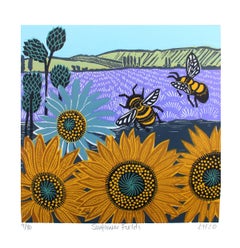
Sunflower Fields by Kate Heiss, Sunflowers, Lavender, Bees Art, Bumblebee Art
By Kate Heiss
Located in Deddington, GB
Kate Heiss
Sunflower Fields
Linocut
Edition of 30
Image Size 30 x 30cm
Mounted size 40x 40cm
Oil based inks on 300GSM Soft white Somerset Velvet Paper
Signe...
Category
21st Century and Contemporary Vienna Secession Landscape Prints
Materials
Paper, Linocut
$326
H 15.75 in W 15.75 in D 0.2 in
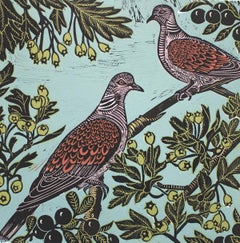
Twoturtle Doves, Kate Heiss, Contemporary art, Animal and Wildlife art
By Kate Heiss
Located in Deddington, GB
TwoTurle Doves by Kate Heiss [2017]
Limited edition Linocut
Hand signed by the artist
Edition of 30
Oil based inks on 300gsm Somerset Velvet soft white paper
Image Size: H:30cm x W:30cm
Complete size of unframed work (sold in mount) H:40cm x W:40cm x D:0.1cm
Two visiting Turtle doves perched in a hawthorn bush who have survived their migratory journey to spend the summer in the English countryside. The Turtle Dove is now the UK’s fastest declining breed of bird. Between 1995 and 2004 the number of breeding turtle doves in the UK fell by 93%. This print is featured in a new book called “When Turtle Doves Fly” produced in conjunction with Operation Turtle dove (a branch of the RSPB dedicated to saving Turtle Doves from extinction)
Kate Heiss is a textile designer and print-maker who has worked with a wide range of fashion brands including Fenchurch, Miss Selfridge and the Japanese fashion designer Michiko Koshino...
Category
21st Century and Contemporary Vienna Secession Landscape Prints
Materials
Paper, Linocut
$177
H 15.75 in W 15.75 in D 0.04 in
Girl in the Garden (Gelburd/Rosenberg 62), Romare Bearden
Located in Fairfield, CT
Artist: Romare Bearden (1911-1988)
Title: Girl in the Garden (Gelburd/Rosenberg 62)
Year: 1979
Medium: Lithograph on vélin d’Arches paper
Edition: 33/150, plus proofs
Size: 28.75 x 2...
Category
1970s Vienna Secession Landscape Prints
Materials
Lithograph

$6,000 Sale Price
20% Off
H 28.75 in W 21.125 in
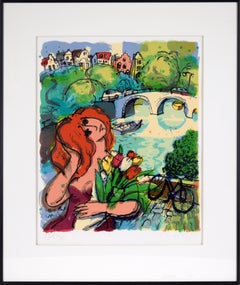
"By the Canal" Limited Edition Lithograph on Archival Paper
Located in Soquel, CA
"By the Canal" Limited Edition Lithograph on Archival Paper
Vibrant lithograph of a red-headed woman near a canal by Michael Leu (Taiwanese, b. 1950). The woman is holding a bouquet of tulips. Nearby, a bicycle is parked alongside the canal. There is a bridge over the canal, connecting to a small town in the distance. This piece is whimsical, bold, and expressive.
Numbered "31/198" in the lower left corner.
Signed and dated "Michal Leu 95" in the lower right corner.
Presented in a black aluminum frame with a white mat.
Frame size: 32.75"H x 27.25"W
Image size: 24"H x 19"W
Born in Taipei, Taiwan, Michael Leu (b. 1950) studied fine art and design in his home town in the late 1960s and learned printmaking techniques at Otis Parsons...
Category
1990s Vienna Secession Landscape Prints
Materials
Ink, Archival Paper, Lithograph
$1,100
H 32.75 in W 27.25 in D 1 in
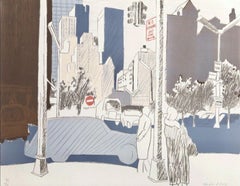
New York City Street Scene (L.18), Fairfield Porter
Located in Fairfield, CT
Artist: Fairfield Porter (1907-1975)
Title: Street Scene (L.18)
Year: 1969
Medium: Lithograph on Arches paper
Edition: 69/100, plus proofs
Size: 22.25 x 30 inches
Condition: Excellen...
Category
1960s Vienna Secession Landscape Prints
Materials
Lithograph
$2,396 Sale Price
20% Off
H 22.25 in W 30 in
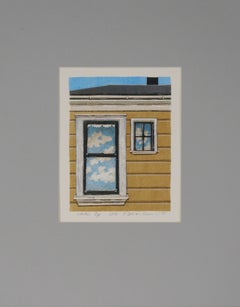
"Weather Eye" - 1989 Lithograph on Paper
Located in Soquel, CA
"Weather Eye" - 1989 Lithograph on Paper
1989 Lithograph on paper titled "Weather Eye" by Deborah Rumer (American, 20th Century). A windowsill is the focal point, as the viewer look...
Category
1980s Vienna Secession Landscape Prints
Materials
Paper, Ink, Lithograph
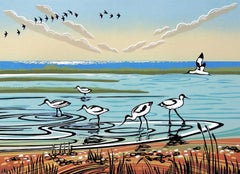
Avocets, Bird Art, UK Art, Landscape Print, Animal Artwork, Coastal Art
By Rob Barnes
Located in Deddington, GB
I saw these Acocets on the North Norfolk coast in a wetlands just below the dunes. They are inspiring birds with a delicate beak and sophisticated wading behaviour.
Rob Barnes, artist, is available for sale online and in our art gallery at Wychwood Art. Rob Barnes studied painting and printmaking at Hull College of Art and London University in the early 1960s. He taught etching, screen-printing, lino and related surface printmaking at Keswick Hall College in Norfolk. He later moved to the University of East Anglia, Norwich where he continued teaching in the School of Education until 2006. Presently he divides his time between printmaking and his other passion, playing the violin in local orchestras and for choral performances. In 2017 he began making a small number of sterling silver jewellery pieces following a course at West Dean, Sussex. His artwork follows themes, such as light on water, or shadows in the landscape. Linocuts are hand-printed on an Albion press...
Category
2010s Vienna Secession Landscape Prints
Materials
Paper, Linocut
$267
H 19.3 in W 24.02 in D 0.04 in
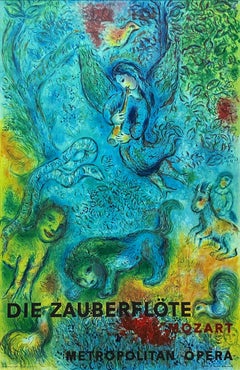
Chagall, Die Zauberflöte (Mourlot CS. 38), The Metropolitan Opera (after)
By Marc Chagall
Located in Fairfield, CT
Title: Die Zauberflöte (Mourlot CS. 38), The Metropolitan Opera
Year: 1973
Medium: Lithograph on wove paper
Size: 39.5 x 25.75 inches
Notes: From the opening of Mozart's 'The Magic F...
Category
1970s Vienna Secession Landscape Prints
Materials
Lithograph
$716 Sale Price
20% Off
H 39.5 in W 25.75 in
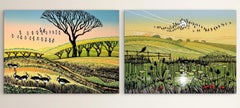
Springtime Lapwings
By Rob Barnes
Located in Deddington, GB
Springtime Lapwings. "In this linocut I was interested in the colours I could create in the sky and land. Lapwings are ever present in farming areas and are a great source of inspira...
Category
21st Century and Contemporary Vienna Secession Landscape Prints
Materials
Linocut
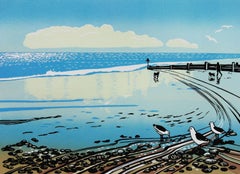
Cloud Reflection, Seascape Print, Coastal Art, Beach Art, Bird Art, Animal Art
By Rob Barnes
Located in Deddington, GB
On a bright sunlit day at the coast, I was inspired by a cloud reflection on the wet sand. It was dramatic and completed by seeing a dog walker in the distance. The linocut is all ab...
Category
2010s Vienna Secession Landscape Prints
Materials
Linocut, Paper
$267
H 19.3 in W 24.02 in D 0.08 in
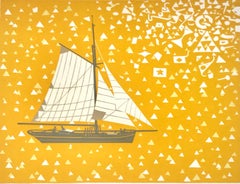
Carlotta Auba by Simon Tozer, Limited edition print, Sailing, Coastal
Located in Deddington, GB
Carlotta Auba by Simon Tozer [2022]
limited_edition and hand signed by the artist
Screenprint on Paper
Edition number of 18
Image size: H:23.5 cm x W:3...
Category
21st Century and Contemporary Vienna Secession Landscape Prints
Materials
Paper, Screen
$129
H 14.22 in W 16.15 in D 0.04 in
Previously Available Items
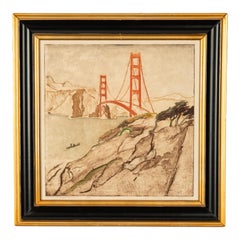
Max Pollak San Francisco Colored Etching Aquatint Golden Gate Bridge Signed 1944
By Max Pollak
Located in Portland, OR
Etching & color aquatint of San Francisco, The Golden Gate Bridge, by Max Pollak (1886 - 1970), circa 1944. Edition of 150, this being numbered 52, image size 14 7/8" x 14 1/2" plate...
Category
1940s Vienna Secession Landscape Prints
Materials
Aquatint
H 20.75 in W 20.75 in D 0.75 in
Max Eisler Eine Nachlese folio “Church on Lake Wolfgang” collotype print
Located in Palm Beach, FL
After Gustav Klimt, Max Eisler #28, Kirche am Wolfgangsee; multi-color collotype after 1915/16 painting in oil on canvas.
GUSTAV KLIMT EINE NACHLESE (GUSTAV KLIMT AN AFTERMATH), a portfolio of 30 collotypes prints, 15 are multi-color and 15 are monochrome, on chine colle paper laid down on heavy cream-wove paper with deckled edges; Max Eisler, Editor-Publisher; Osterreichischer Staatsdruckerei (Austrian State Printing Office), Printer; in a limited edition of 500 numbered examples of which: 200 were printed in German, 150 were printed in French and 150 were printed in English; Vienna, 1931.
2018 marks the 100th anniversary of Gustav Klimt’s death. It is a fitting time to reflect upon the enduring legacy and deep impact of his art. Recognizing this need for posterity with uncanny foresight, the publication of Gustav Klimt: An Aftermath (Eine Nachlese) provides a rare collection of work after Klimt which has proven to be an indispensable tool for Klimt scholarship as well as a source for pure visual delight.
Approximately 25 percent of the original works featured in the Aftermath portfolio have since been lost. Of those 30, six were destroyed by fire on 8 May 1945. On that fateful final day of WWII, the retreating Feldherrnhalle, a tank division of the German Army, set fire to the Schloss Immendorf which was a 16th century castle in Lower Austria used between 1942-1945 to store objects of art. All three of Klimt’s Faculty Paintings: Philosophy, Medicine and Jurisprudence (1900-1907), originally created for the University of Vienna, were on premises at that time. Also among the inventory of Klimt paintings in storage there was art which had been confiscated by the Nazis. One of the most significant confiscated collections was the Lederer collection which featured many works by Gustav Klimt such as Girlfriends II and Garden Path with Chickens. In many instances, Aftermath is our only link to these lost treasures.
Max Eisler (1881-1937), the publisher of the 1931 Aftermath portfolio, was an art historian at Vienna University specializing in modern and contemporary arts and crafts whose 1920 book on Klimt was the first Klimt monograph. He saw An Aftermath as filling-in important gaps left by the earlier print portfolios which had only featured Klimt up to 1913 and which had glossed over major art projects such as the Tree of Life frieze for the Palais Stoclet. And whereas only 10 of the 50 prints from the earlier portfolios published by H.O. Miethke were made in intricate multi-color images, Eisler augmented the earlier format by featuring half of the 30 images in stunning multi-colored collotypes. Understanding the fragile nature of the collotype printing process also reinforces this project’s distinctive and exceptional characteristics. Fragile collotype plates can not be reused. As such, this necessitates the completion of a run on the first go and also dictates a limited production number. Printed by hand, the collotypes required deft handling by the printer, Osterreichische Staatsdruckerei. A complicated and lengthy process involving gelatin colloids mixed with dichromates, the creation of 16 color separation thin glass filters to achieve the light-sensitive internegative images which could faithfully capture all of the painting’s tonal gradations and colors, exposure to actinic light, and delicate chine collie papers which allowed for greater color saturation, the printer’s collaborative role in capturing and transmitting Klimt’s nuanced paint strokes is nothing short of remarkable.
The Österreichische Staatsdruckerei (Austrian State Printing Office), was the successor to the KK Hof -und Staatsdruckerei which was founded by Emperor Franz I...
Category
1930s Vienna Secession Landscape Prints
Materials
Paper
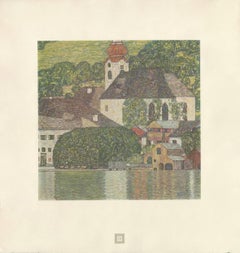
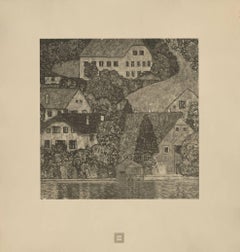
Max Eisler Eine Nachlese folio "Houses in Unterach on Lake Attersee" collotype
Located in Palm Beach, FL
After Gustav Klimt, Max Eisler Plate #29, Am Attersee; brown-toned monochrome collotype after the 1915-16 painting in oil on canvas.
GUSTAV KLIMT EINE NACHLESE (GUSTAV KLIMT AN AFTERMATH), a portfolio of 30 collotypes prints, 15 are multi-color and 15 are monochrome, on chine colle paper laid down on heavy cream-wove paper with deckled edges; Max Eisler, Editor-Publisher; Osterreichischer Staatsdruckerei (Austrian State Printing Office), Printer; in a limited edition of 500 numbered examples of which: 200 were printed in German, 150 were printed in French and 150 were printed in English; Vienna, 1931.
2018 marks the 100th anniversary of Gustav Klimt’s death. It is a fitting time to reflect upon the enduring legacy and deep impact of his art. Recognizing this need for posterity with uncanny foresight, the publication of Gustav Klimt: An Aftermath (Eine Nachlese) provides a rare collection of work after Klimt which has proven to be an indispensable tool for Klimt scholarship as well as a source for pure visual delight.
Approximately 25 percent of the original works featured in the Aftermath portfolio have since been lost. Of those 30, six were destroyed by fire on 8 May 1945. On that fateful final day of WWII, the retreating Feldherrnhalle, a tank division of the German Army, set fire to the Schloss Immendorf which was a 16th century castle in Lower Austria used between 1942-1945 to store objects of art. All three of Klimt’s Faculty Paintings: Philosophy, Medicine and Jurisprudence (1900-1907), originally created for the University of Vienna, were on premises at that time. Also among the inventory of Klimt paintings in storage there was art which had been confiscated by the Nazis. One of the most significant confiscated collections was the Lederer collection which featured many works by Gustav Klimt such as Girlfriends II and Garden Path with Chickens. In many instances, Aftermath is our only link to these lost treasures.
Max Eisler (1881-1937), the publisher of the 1931 Aftermath portfolio, was an art historian at Vienna University specializing in modern and contemporary arts and crafts whose 1920 book on Klimt was the first Klimt monograph. He saw An Aftermath as filling-in important gaps left by the earlier print portfolios which had only featured Klimt up to 1913 and which had glossed over major art projects such as the Tree of Life frieze for the Palais Stoclet. And whereas only 10 of the 50 prints from the earlier portfolios published by H.O. Miethke were made in intricate multi-color images, Eisler augmented the earlier format by featuring half of the 30 images in stunning multi-colored collotypes. Understanding the fragile nature of the collotype printing process also reinforces this project’s distinctive and exceptional characteristics. Fragile collotype plates can not be reused. As such, this necessitates the completion of a run on the first go and also dictates a limited production number. Printed by hand, the collotypes required deft handling by the printer, Osterreichische Staatsdruckerei. A complicated and lengthy process involving gelatin colloids mixed with dichromates, the creation of 16 color separation thin glass filters to achieve the light-sensitive internegative images which could faithfully capture all of the painting’s tonal gradations and colors, exposure to actinic light, and delicate chine collie papers which allowed for greater color saturation, the printer’s collaborative role in capturing and transmitting Klimt’s nuanced paint strokes is nothing short of remarkable.
The Österreichische Staatsdruckerei (Austrian State Printing Office), was the successor to the KK Hof -und Staatsdruckerei which was founded by Emperor Franz I...
Category
1930s Vienna Secession Landscape Prints
Materials
Archival Paper
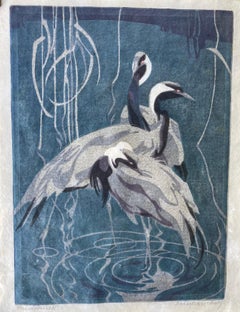
TWO CRANES
Located in Santa Monica, CA
NORBERTINE BRESSLERN ROTH (Austrian 1891-197)
TWO CRANES ca. 1920
Color woodcut signed in pencil. Image 9 ¾ x 7 1/8 inches. On fine fibrous paper. Full s...
Category
1920s Vienna Secession Landscape Prints
Materials
Woodcut
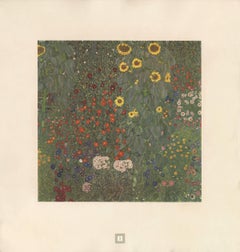
Max Eisler Eine Nachlese folio “Sunflowers” collotype print
Located in Palm Beach, FL
After Gustav Klimt, Max Eisler #3, Sonnenblumen; multi-color collotype after 1908 painting in oil on canvas.
GUSTAV KLIMT EINE NACHLESE (GUSTAV KLIMT AN AFTERMATH), a portfolio of 30 collotypes prints, 15 are multi-color and 15 are monochrome, on chine colle paper laid down on heavy cream-wove paper with deckled edges; Max Eisler, Editor-Publisher; Osterreichischer Staatsdruckerei (Austrian State Printing Office), Printer; in a limited edition of 500 numbered examples of which: 200 were printed in German, 150 were printed in French and 150 were printed in English; Vienna, 1931.
2018 marks the 100th anniversary of Gustav Klimt’s death. It is a fitting time to reflect upon the enduring legacy and deep impact of his art. Recognizing this need for posterity with uncanny foresight, the publication of Gustav Klimt: An Aftermath (Eine Nachlese) provides a rare collection of work after Klimt which has proven to be an indispensable tool for Klimt scholarship as well as a source for pure visual delight.
Approximately 25 percent of the original works featured in the Aftermath portfolio have since been lost. Of those 30, six were destroyed by fire on 8 May 1945. On that fateful final day of WWII, the retreating Feldherrnhalle, a tank division of the German Army, set fire to the Schloss Immendorf which was a 16th century castle in Lower Austria used between 1942-1945 to store objects of art. All three of Klimt’s Faculty Paintings: Philosophy, Medicine and Jurisprudence (1900-1907), originally created for the University of Vienna, were on premises at that time. Also among the inventory of Klimt paintings in storage there was art which had been confiscated by the Nazis. One of the most significant confiscated collections was the Lederer collection which featured many works by Gustav Klimt such as Girlfriends II and Garden Path with Chickens...
Category
1930s Vienna Secession Landscape Prints
Materials
Paper
Max Eisler Eine Nachlese folio "Houses in Unterach on Lake Attersee" collotype
Located in Palm Beach, FL
After Gustav Klimt, Max Eisler Plate #29, Am Attersee; brown-toned monochrome collotype after the 1915-16 painting in oil on canvas.
GUSTAV KLIMT EINE NACHLESE (GUSTAV KLIMT AN AFTERMATH), a portfolio of 30 collotypes prints, 15 are multi-color and 15 are monochrome, on chine colle paper laid down on heavy cream-wove paper with deckled edges; Max Eisler, Editor-Publisher; Osterreichischer Staatsdruckerei (Austrian State Printing Office), Printer; in a limited edition of 500 numbered examples of which: 200 were printed in German, 150 were printed in French and 150 were printed in English; Vienna, 1931.
2018 marks the 100th anniversary of Gustav Klimt’s death. It is a fitting time to reflect upon the enduring legacy and deep impact of his art. Recognizing this need for posterity with uncanny foresight, the publication of Gustav Klimt: An Aftermath (Eine Nachlese) provides a rare collection of work after Klimt which has proven to be an indispensable tool for Klimt scholarship as well as a source for pure visual delight.
Approximately 25 percent of the original works featured in the Aftermath portfolio have since been lost. Of those 30, six were destroyed by fire on 8 May 1945. On that fateful final day of WWII, the retreating Feldherrnhalle, a tank division of the German Army, set fire to the Schloss Immendorf which was a 16th century castle in Lower Austria used between 1942-1945 to store objects of art. All three of Klimt’s Faculty Paintings: Philosophy, Medicine and Jurisprudence (1900-1907), originally created for the University of Vienna, were on premises at that time. Also among the inventory of Klimt paintings in storage there was art which had been confiscated by the Nazis. One of the most significant confiscated collections was the Lederer collection which featured many works by Gustav Klimt such as Girlfriends II and Garden Path with Chickens...
Category
1930s Vienna Secession Landscape Prints
Materials
Archival Paper
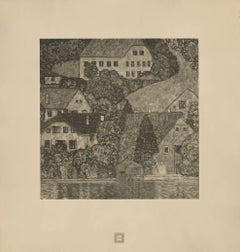
Max Eisler Eine Nachlese folio "Italian Garden Landscape" collotype
Located in Palm Beach, FL
After Gustav Klimt, Max Eisler Plate #23, Italienische Landschaft; blue-grey monochrome collotype after the 1913 painting in oil on canvas.
GUSTAV KLIMT EINE NACHLESE (GUSTAV KLIMT AN AFTERMATH), a portfolio of 30 collotypes prints, 15 are multi-color and 15 are monochrome, on chine colle paper laid down on heavy cream-wove paper with deckled edges; Max Eisler, Editor-Publisher; Osterreichischer Staatsdruckerei (Austrian State Printing Office), Printer; in a limited edition of 500 numbered examples of which: 200 were printed in German, 150 were printed in French and 150 were printed in English; Vienna, 1931.
2018 marks the 100th anniversary of Gustav Klimt’s death. It is a fitting time to reflect upon the enduring legacy and deep impact of his art. Recognizing this need for posterity with uncanny foresight, the publication of Gustav Klimt: An Aftermath (Eine Nachlese) provides a rare collection of work after Klimt which has proven to be an indispensable tool for Klimt scholarship as well as a source for pure visual delight.
Approximately 25 percent of the original works featured in the Aftermath portfolio have since been lost. Of those 30, six were destroyed by fire on 8 May 1945. On that fateful final day of WWII, the retreating Feldherrnhalle, a tank division of the German Army, set fire to the Schloss Immendorf which was a 16th century castle in Lower Austria used between 1942-1945 to store objects of art. All three of Klimt’s Faculty Paintings: Philosophy, Medicine and Jurisprudence (1900-1907), originally created for the University of Vienna, were on premises at that time. Also among the inventory of Klimt paintings in storage there was art which had been confiscated by the Nazis. One of the most significant confiscated collections was the Lederer collection which featured many works by Gustav Klimt such as Girlfriends II and Garden Path with Chickens...
Category
1930s Vienna Secession Landscape Prints
Materials
Paper
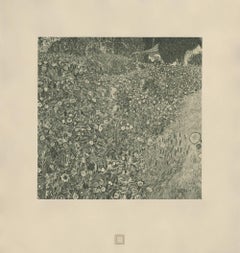
Max Eisler Eine Nachlese folio "Poppy Field (Poppies in Bloom)" collotype
Located in Palm Beach, FL
After Gustav Klimt, Max Eisler #5, Mohnwiese; multi-color collotype after 1907 painting in oil on canvas.
GUSTAV KLIMT EINE NACHLESE (GUSTAV KLIMT AN AFTERMATH), a portfolio of 30 collotypes prints, 15 are multi-color and 15 are monochrome, on chine colle paper laid down on heavy cream-wove paper with deckled edges; Max Eisler, Editor-Publisher; Osterreichischer Staatsdruckerei (Austrian State Printing Office), Printer; in a limited edition of 500 numbered examples of which: 200 were printed in German, 150 were printed in French and 150 were printed in English; Vienna, 1931.
2018 marks the 100th anniversary of Gustav Klimt’s death. It is a fitting time to reflect upon the enduring legacy and deep impact of his art. Recognizing this need for posterity with uncanny foresight, the publication of Gustav Klimt: An Aftermath (Eine Nachlese) provides a rare collection of work after Klimt which has proven to be an indispensable tool for Klimt scholarship as well as a source for pure visual delight.
Approximately 25 percent of the original works featured in the Aftermath portfolio have since been lost. Of those 30, six were destroyed by fire on 8 May 1945. On that fateful final day of WWII, the retreating Feldherrnhalle, a tank division of the German Army, set fire to the Schloss Immendorf which was a 16th century castle in Lower Austria used between 1942-1945 to store objects of art. All three of Klimt’s Faculty Paintings: Philosophy, Medicine and Jurisprudence (1900-1907), originally created for the University of Vienna, were on premises at that time. Also among the inventory of Klimt paintings in storage there was art which had been confiscated by the Nazis. One of the most significant confiscated collections was the Lederer collection which featured many works by Gustav Klimt such as Girlfriends II and Garden Path with Chickens...
Category
1930s Vienna Secession Landscape Prints
Materials
Archival Paper
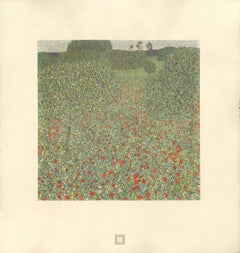
H.O. Miethke Das Werk folio "Church in Cassone" collotype print
Located in Palm Beach, FL
DAS WERK GUSTAV KLIMTS, a portfolio of 50 prints, ten of which are multicolor collotypes on chine colle paper laid down on hand-made heavy cream wove paper with deckled edges; under each of the 50 prints is a gold signet intaglio printed on the cream paper each of which Klimt designed for the publication as unique and relating to its corresponding image; H.O. Miethke, Editor-Publisher; k.k. Hof-und Staatsdruckerei, Printer; printed in a limited edition of 300 numbered plus several presentation copies; Vienna, 1908-1914.
The idea of collaboration in the arts is anything but new; however it has so often been viewed and assessed as somehow devaluing the intrinsic worth of art. It’s as if it was a dirty secret to be hidden away. More so even than the eroticism explored by Klimt, which divided public opinion, the artistic avant-garde began to boldly flaunt artistic collaboration beginning in the 19th century- which gained steam in the first part of the 20th century- to become a driving vehicle of contemporary artistic creation. Viewed in this context, the folios of collotype prints published by H.O. Miethke in Vienna between 1908-1914 known as Das Werk Gustav Klimts, are important art documents worthy of as much consideration for their bold stand they take on established ways of thinking about artistic collaboration as they are for their breathtakingly striking images.
1908 is indeed a watershed moment in the history of art. To coincide with the 60th anniversary of the reign of Emperor Franz Joseph I, Kunstschau opened in Vienna in May of that year. It was there that Klimt delivered the inaugural speech. Speaking about the avant-garde group’s unifying philosophy of Gesamtkunstwerk, or the synthesis of the arts, Klimt shared his belief that the ideal means to bring artists and an audience together was via “work on major art projects.” It was at Kunstschau 1908 that Klimt first exhibited his most iconic painting, The Kiss, as well as The Sunflower, Water Snakes I and II and Danae. It was at Kunstschau 1908 that Das Werk Gustav Klimts was first available for purchase. Thanks to Galerie Miethke’s organization, Kunstschau 1908 was possible. Miethke’s pioneering art house had become Klimt’s exclusive art dealer and main promoter of his modernist vision. Paul Bacher and Carl Moll, a founding member with Klimt of the Vienna Secession, who all broke away during the rift in 1905, took stewardship of the gallery following the fallout with the Secession. Das Werk Gustav Klimts is a prime example of Miethke’s masterful and revolutionary approach to marketing art. Miethke’s innovative marketing strategy played to a penchant for exclusivity. The art gallery and publishing house utilized the press and art critics- such as Austria’s preeminent Art Historian, Hugo Haberfield, who became Director of the gallery in 1912- as a means of gaining publicity as well as maintaining effective public relations. Miethke used the grand exposition format to extend the art gallery’s market reach, cultivating their product’s prestige by stroking the egos of current art patrons while simultaneously creating accessibility for newcomers and others avid collectors to share a relative proximity to other wealthy and respected members of the art collecting community. Essentially, their approach paved the way for what is still the predominant means of marketing.
Between 1908 and 1914, H.O. Miethke published a total of 5 installments of print folios of Klimt’s painted work, each comprising 10 prints. The series was limited in availability to 300 and purchase was arranged through subscription. Each issue was presented unbound in a gold embossed black paper folder. Included in the folio was a Title Page, a Justification page and a Table of Contents page itemizing each of the 10 printed works with details about their corresponding painted works as well as information about each work’s current owner. These folios were not comprehensive of Klimt’s work; but rather, they feature what he believed were his most important paintings from 1898-1913. Only 2 collotypes in each folio were multicolored.
To punctuate the fact that Klimt, himself, was very much an active player in creating these printed works, he created square-shaped signets, unique to each collotype which were intaglio printed in gold ink at the bottom of the cream wove papers to which the chine collie papers were affixed.These signets relate thematically to their corresponding printed images and designate each of those images by their placement in the folio’s Table...
Category
Early 1900s Vienna Secession Landscape Prints
Materials
Paper
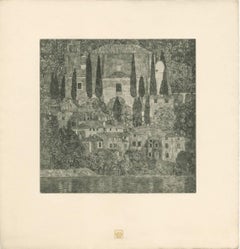
Max Eisler Eine Nachlese folio “Sunflowers” collotype print
Located in Palm Beach, FL
After Gustav Klimt, Max Eisler #3, Sonnenblumen; multi-color collotype after 1908 painting in oil on canvas.
GUSTAV KLIMT EINE NACHLESE (GUSTAV KLIMT AN AF...
Category
1930s Vienna Secession Landscape Prints
Materials
Paper
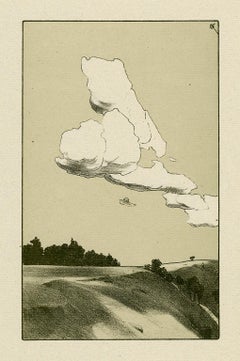
Ballwolken (Cumulus Clouds)
Located in Myrtle Beach, SC
Gustav Kampmann, 'Ballwolken (Culumus Clouds)', color lithograph, 1899. Annotated in linotype in the bottom left sheet edge 'GUSTAF KAMPMANN, BALLWOLKEN, PAN V 3, ZWEIFARBIGE ORIGINA...
Category
1890s Vienna Secession Landscape Prints
Materials
Lithograph
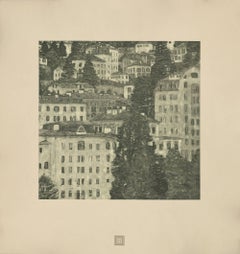
Max Eisler Eine Nachlese folio "Gastein" collotype
Located in Palm Beach, FL
After Gustav Klimt, Max Eisler Plate #21, Gastein; grey-green monochrome collotype after the 1917 painting in oil on canvas. Original destroyed by fire May ...
Category
1930s Vienna Secession Landscape Prints
Materials
Paper
Vienna Secession landscape prints for sale on 1stDibs.
Find a wide variety of authentic Vienna Secession landscape prints available for sale on 1stDibs. Works in this style were very popular during the 20th Century, but contemporary artists have continued to produce works inspired by this movement. Many Pop art paintings were created by popular artists on 1stDibs, including Gustav Klimt
K.K. Hof-und Staatsdruckerei, (after) Gustav Klimt, Norbertine Bresslern-Roth, and Karl Schwetz. Frequently made by artists working with Paper, and Archival Paper and other materials, all of these pieces for sale are unique and have attracted attention over the years. Not every interior allows for large Vienna Secession landscape prints, so small editions measuring 7.13 inches across are also available. Prices for landscape prints made by famous or emerging artists can differ depending on medium, time period and other attributes. On 1stDibs, the price for these items starts at $500 and tops out at $36,000, while the average work sells for $3,500.