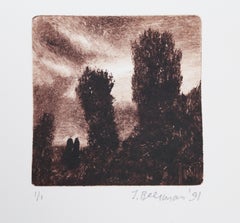
Women Landscape Prints
to
1,322
1,515
462
320
205
109
Overall Width
to
Overall Height
to
831
305
293
152
142
134
70
51
31
21
3
1
1
1
102
56
37
23
22
124
289
1,933
279
11
24
210
119
260
323
284
249
159
84
61
1,573
955
81
6,857
3,386
2,625
2,377
1,875
1,674
1,511
1,397
1,235
1,055
1,029
999
873
860
842
737
583
534
530
530
1,340
507
250
243
190
155
572
1,887
618
Art Subject: Women
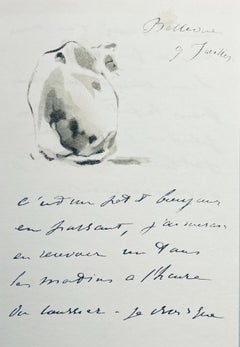
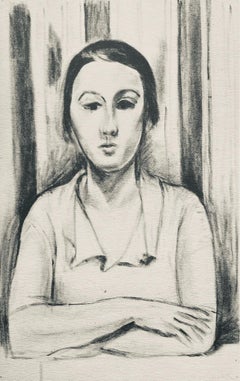
Manet, Composition, Édouard Manet, Letters with Aquarelles (after)
Located in Southampton, NY
Lithograph and stencil on vélin Foreign Affairs paper mounted on Foreign Affairs museum board, as issued . Unsigned and unnumbered, as issued. Good Condition. Notes: From the folio, Édouard Manet, Letters with Aquarelles, 1944. Published by Pantheon Books, New York; rendered and printed by Raymond and...
Category
1940s Impressionist Figurative Prints
Materials
Lithograph

$716 Sale Price
20% Off
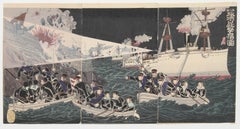
The Second Army Bombarding, Ukiyo-E Wooblock by Watanabe Nobukazu
By Watanabe Nobukazu
Located in Long Island City, NY
Artist: Watanabe Nobukazu, Japanese (1872 - 1944)
Title: The Second Army Bombarding and Occupying Port Arthur
Year: 1894
Medium: Woodblock Triptych...
Category
1890s Other Art Style Landscape Prints
Materials
Woodcut
Composition, Le Peseur d
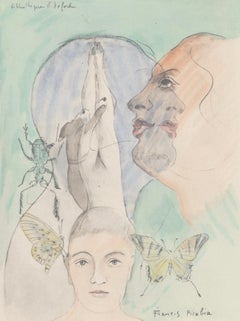
âmes (The Weigher of Souls), Francis Picabia
Located in Southampton, NY
Lithograph and stencil on vélin d'Arches paper. Unsigned and unnumbered, as issued. Good Condition. Notes: From the volume, Le Peseur d'âmes, précédé d'un frontispice et suivi de hui...
Category
1930s Modern Landscape Prints
Materials
Lithograph, Stencil
$1,436 Sale Price
20% Off
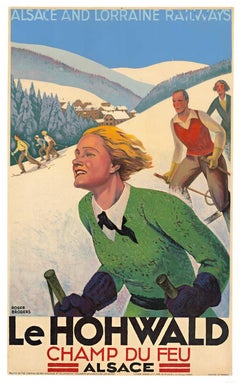
Original
Le Hohwald Champ du Feu, Alsace" vintage 1930
s ski poster
Located in Spokane, WA
Original Vintage French Travel Poster "LE HOHWALD" by ROGER BRODERS ca. 1930. Size: 24.5" x 39.25". Archival linen-backed antique skiing French vinta...
Category
1930s Art Deco Landscape Prints
Materials
Lithograph
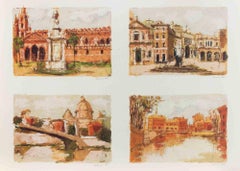
Italian Landscapes - Lithograph by Franco Marzilli - 1980s
Located in Roma, IT
Lithograph realized by Franco Marzilli.
Hand signed in pencil under each landscape.
Excellent condition.
Category
1980s Contemporary Figurative Prints
Materials
Lithograph
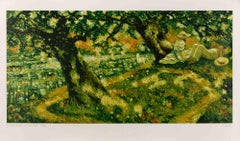
I Sentieri degli Innamorati - Lithograph by Antonio Saliola - 1990s
Located in Roma, IT
Lithograph realized by Antonio Saliola in 1990s.
Hand signed in pencil.
Edition of v/z, marked in pencil.
Excellent condition.
Category
1990s Contemporary Figurative Prints
Materials
Lithograph
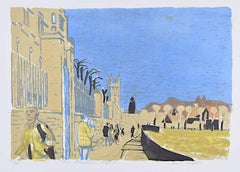
Christ Church Meadows, Oxford lithograph by Edwin La Dell
Located in London, GB
To see our other views of Oxford and Cambridge, or our other Modern British Art, scroll down to "More from this Seller" and below it click on "See all from this Seller" - or send us ...
Category
1950s Impressionist Landscape Prints
Materials
Lithograph
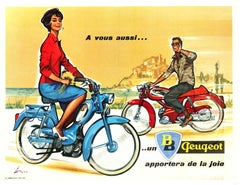
Original Peugeot Moped and Motorcycles vintage French poster, linen-backed
Located in Spokane, WA
Original Peugeot BB vintage moped and motorcycle vintage poster, linen-backed, in Grade A- condition, ready to frame. All the posters were shipped folded vertically. The original fol...
Category
1960s American Modern Figurative Prints
Materials
Offset
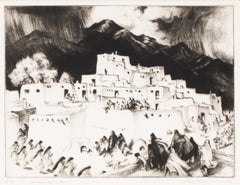
1953 Signed Black
White Etching Print
Ceremonial Day at Taos
New Mexico
By Gene Kloss
Located in Denver, CO
"Ceremonial Day at Taos" is a captivating vintage black and white etching by renowned American artist Gene Kloss. Created in 1953, this drypoint etching depicts the vibrant life of T...
Category
1950s American Modern Landscape Prints
Materials
Etching
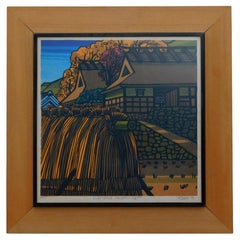
Clifton Karhu Original Color Woodblock, 1974, Koshihata Autumn
Located in Phoenix, AZ
This beautiful, limited edition original color woodblock is by the famous
Showa Shin Hanga woodblock master Clifton Karhu (1927-2007).
It bears the original frame and has a label on the back from a Tokyo gallery.
The work is a beautiful impression with rich color. It and the frame are in excellent condition.
The print measures 16 x 16 inches. The frame is 23 ½ x 23 ½ inches.
It is numbered lower left as AP5 - Artist Proof #5 and is pencil signed and dated ‘74 lower right.
An American of Finnish descent, Clifton Karhu was born in Minnesota in 1927. Raised together with his twin brother Raymond, Karhu was the son of painters Arne and Anna Karhu. After his graduation in 1946 he served in the military at an American Navy base in Japan.
Returning to America following his military service in 1950, Karhu enrolled at the Minneapolis School of Art but quit two years later to pursue missionary work as a Lutheran minister.
Karhu left the missionary work in 1958 and chose to move his new family to Gifu City, a small provincial town northwest of Kyoto, Japan where he set about returning to his art. Karhu soon found local success in 1961; obtaining first prize at the Chubu Taiheijo Bijutsu Kyokai Ten (The Middle Pacific Art Group Exhibition) and fixing his first single, professional exhibition at the Shin Gifu Gallery.
In hopes of providing their three children with an international education, Karhu settled in Kyoto in 1963. The next few years proved heavily influential in Karhu’s work. Arguably forming the foundation for all his future success, Karhu found tutelage under recognized woodblock artist and gallery owner Tetsuo Yamada and colour theorist Stanton Macdonald-Wright. Responsible for shifting Karhu’s artistic doubts, Karhu proceeded to fulfill a very successful career in woodblock printing - carving his own works largely by himself.
Clifton Karhu passed away in 2007 after an illustrious career that saw him viewed and celebrated as a local Kyoto celebrity, as well as having exhibited widely in many countries around the world. His woodblock prints have been collected by many famous museums including the Tokyo Modern Art...
Category
Late 20th Century Landscape Prints
Materials
Paper
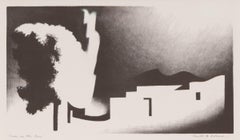
Kenneth Miller Adams “House in the Sun” 1950 Southwestern Modernist Lithograph
Located in Denver, CO
House in the Sun is an original 1950 black-and-white lithograph by celebrated New Mexico modernist Kenneth Miller Adams, a distinguished member of the Taos and Santa Fe art colonies....
Category
1950s American Modern Landscape Prints
Materials
Lithograph
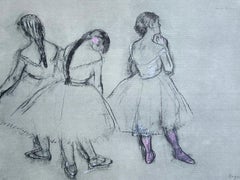
Edgar Degas, Three Dancers, 1945 (after)
By Edgar Degas
Located in Southampton, NY
This exquisite lithograph after Edgar Degas (1834–1917), titled Trois danseurs (Three Dancers), originates from the 1945 folio Degas, Ten Ballet Sketches. Published by The Studio Publications, Inc., New York, rendered and printed by Albert Carman, City Island, 1945, this work reflects Degas’s sensitive mastery of line, movement, and the intimate psychological nuances of the ballet studio.
Executed as a lithograph and pochoir on velin paper, this work measures 13 x 17 inches (33.02 x 43.18 cm). Signed in the plate and unnumbered as issued. Rendered and printed by Albert Carman, City Island.
Artwork Details:
Artist: After Edgar Degas (1834–1917)
Title: Trois danseurs (Three Dancers), from Degas, Ten Ballet Sketches, 1945
Medium: Lithograph and pochoir on velin paper
Dimensions: 13 x 17 inches (33.02 x 43.18 cm)
Inscription: Signed in the plate and unnumbered as issued
Date: 1945
Publisher: The Studio Publications, Inc., New York
Printer: Albert Carman, City Island
Condition: Well preserved, consistent with age and medium
Provenance: From the 1945 folio Degas, Ten Ballet Sketches, published by The Studio Publications, Inc., New York
Notes:
Excerpted from the album, Born in Paris in 1834, Edgar Degas lived, and surely loved the life of that city during most of his years. These continued somewhat sadly beyond those of most of his friends— into the debacle of the first World War, during which he died in 1917. Judging by the frequency with which he used them as models, he must have had an especial admiration for the ballet girls who followed a profession that at the time brought none of the glory and prosperity which attend it today. New aspects of the human body, revealed in movement, fascinated him. But his occupation with the simply anatomical side of his subjects never resulted in a cold interpretation. On the contrary there is a warmth and sympathy that pervades all of his work. The drawings here represent the painter in one important phase of his multi-sensitive view of life; and permit an insight which a more ambitious work might not do-into the operation of the creative process, the artist's transformation of reality as it passes through the mesh of his sensibilities. The Edition of this Portfolio is limited to MMMD examples. Rendered by Albert Carman.
About the Publication:
Degas, Ten Ballet Sketches (1945) is one of the earliest and most significant American postwar fine art portfolios devoted to Edgar Degas’s intimate works on paper. Published by The Studio Publications, Inc., New York, and rendered and printed by Albert Carman at City Island, the album sought to faithfully reproduce a group of Degas’s ballet-related drawings through a combination of lithography and hand-applied pochoir coloring. This hybrid technique allowed the edition to preserve the immediacy, tonal subtlety, and gestural delicacy central to Degas’s draftsmanship. Conceived as a fine art publication rather than a commercial book, the portfolio provided American audiences unprecedented access to Degas’s private, spontaneous studies—images that reveal the artist’s fascination with movement, anatomy, and the psychological atmosphere of the rehearsal studio. The album exemplifies the mid-20th-century revival of pochoir as a means of recreating the texture and coloristic nuance of original works on paper, and it remains an important document of how Degas’s legacy was translated into high-quality printed form for collectors, museums, and connoisseurs.
About the Artist:
Edgar Degas (1834–1917) was a French painter, draughtsman, printmaker, and sculptor whose groundbreaking fusion of classical draftsmanship, modern experimentation, and psychological depth helped define the trajectory of Western art, positioning him as one of the most influential figures of the nineteenth and early twentieth centuries; renowned for his depictions of ballet dancers, racehorses, theater scenes, cafe life, domestic interiors, milliners, laundresses, and women at their toilette, Degas reimagined observational realism through radical compositional innovation—employing extreme cropping, asymmetrical framing, oblique viewpoints, and dramatic lighting that anticipated photographic and cinematic language long before these technologies shaped visual culture, and although associated with Impressionism, he rejected plein-air spontaneity in favor of studio-based discipline rooted in the linear precision of Jean-Auguste-Dominique Ingres, the expressive chromaticism of Eugene Delacroix, and the modernity of Edouard Manet while also drawing inspiration from Japanese ukiyo-e prints, classical sculpture, and early photography; his independent artistic philosophy resonated with and helped shape the innovations of Pablo Picasso, Alexander Calder, Alberto Giacometti, Salvador Dali, Joan Miro, Wassily Kandinsky, Marcel Duchamp, and Man Ray, whose explorations of movement, form, dream logic, abstraction, and conceptualism all find antecedents in Degas’s investigations into seriality, temporality, and the fragmented figure, and his pioneering use of pastel, monotype, and wax sculpture fundamentally transformed each medium, influencing artists from Henri Matisse, Francis Bacon, Lucian Freud, and Giacomo Manzu to Paula Rego, contemporary realists, experimental photographers, and choreographers; his works are held in nearly every major museum collection worldwide—including the Musee dOrsay, the Louvre, the Metropolitan Museum of Art, the National Gallery of Art, the Art Institute of Chicago, the Courtauld Institute, and the National Gallery, London—affirming his central place in the history of art, and the highest auction record for Degas was achieved at Sothebys London on February 3, 2015, when Danseuses en Bleu sold for 37,033,000 GBP, cementing his status as one of the most sought-after and enduringly significant artists of the Western canon.
Degas pochoir, Degas lithograph...
Category
1940s Impressionist Figurative Prints
Materials
Lithograph
$796 Sale Price
20% Off
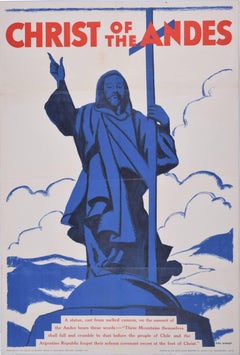
Hal Woolf: Christ of the Andes - vintage poster c. 1930s Argentina Chile border
By Hal Woolf
Located in London, GB
Hal Woolf
Christ of the Andes
Original Vintage Poster
76x50cm
Printed by the David Allen Printing Co (London) Ltd., Wandsworth, SW18
Published by the League of Nations Union, 15 Cros...
Category
1930s Modern Landscape Prints
Materials
Lithograph
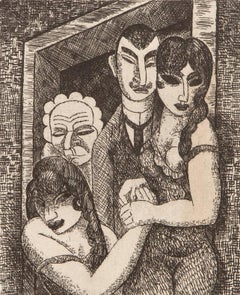
Composition, Vers un monde volage, Marcel Gromaire
Located in Southampton, NY
Etching on vélin d'Arches paper. Unsigned and unnumbered, as issued. Good condition. Published by Éditions Marcel Seheur, Paris; printed by Atelier d'art Paul Haasen, Paris, Septembe...
Category
1920s Modern Figurative Prints
Materials
Etching
$1,436 Sale Price
20% Off
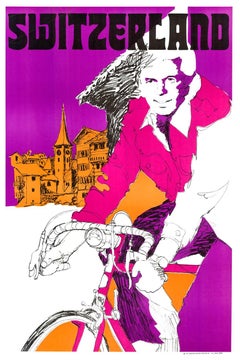
Original Switzerland Bicycle travel poster - neon pop art, linen backed, unique
Located in Spokane, WA
Original 1972 "Switzerland" Bicycle Poster – Vintage Psychedelic Pop Art Screen Print. Archival linen-backed in excellent condition, ready to frame. Very seldom available.
Vibrant, ...
Category
1970s American Modern Portrait Prints
Materials
Screen
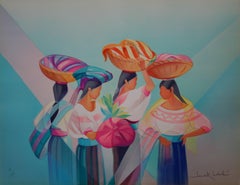
Women of Guatemala - Original handsigned lithograph
Located in Paris, IDF
Janick LEDERLE
Women of Guatemala
Original lithograph
Handsigned in pencil
Numbered on /275 copies
On vellum 53 x 68 cm (c. 20.8 x 26.7 in)
Excellent condition
Category
Late 20th Century Modern Landscape Prints
Materials
Lithograph
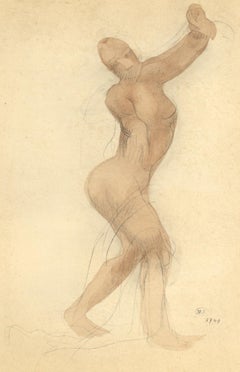
Francois Auguste Rene Rodin, Untitled, from The Varende, 1944 (after)
Located in Southampton, NY
This exquisite lithograph after Francois Auguste Rene Rodin (1840–1917), titled Sans titre (Untitled), from the folio La Varende, Rodin (La Varende, Rodin), originates from the 1944 ...
Category
1940s Modern Figurative Prints
Materials
Lithograph, Stencil
$716 Sale Price
20% Off
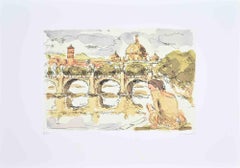
View of Saint Peter (Rome) with Ballerina-Lithograph by Franco Marzilli - 1980s
Located in Roma, IT
Etching realized by Franco Marzilli in 1980s.
Hand signed in pencil.
Artist proof.
Excellent condition.
Category
1980s Contemporary Figurative Prints
Materials
Lithograph
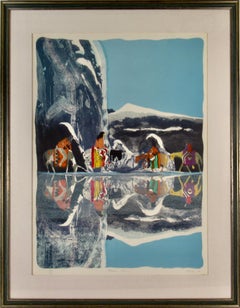
Mirror Pass
By Earl Biss
Located in San Francisco, CA
This artwork titled "Mirror Pass" 1977 is an original color screenprint by noted Native American artist Earl Biss, 1947-1998. It is hand signed, dated and numbered 37/100 in pencil by the artist. The artwork (image) size is 29 x 21 inches, framed size is 38.5 x 30 inches. Custom framed in a wooden silver and blue frame, with fabric matting. It is in excellent condition.
About the artist:
Born in Washington state, Earl Biss became a well-known Native American artist. He was raised by his grandmother on the Crow reservation in Montana and earned a scholarship to the Institute of American Indian Art in Santa Fe where he studied jewelry design. He attended the San Francisco Art Institute and then traveled widely in Europe where he was heavily influenced by the impressionist style of Monet and other European artists.
His paintings have a dream-like, abstract quality with Indian figures merging with the landscape. He worked on numerous paintings, sometimes as many as twenty, simultaneously. On October 18, 1998, he died from a stroke while in his studio painting.
• 1965 - 1966 Studied at the Institute of American Indian Arts (IAIA) in Santa Fe, New Mexico. Was a member of the inaugural class. The IAIA was founded in 1962.
• Studied under Fritz Scholder, Charles Loloma, Alan Houser...
Category
Late 20th Century Impressionist Figurative Prints
Materials
Screen
Henri Matisse, Plume, from Drawings by Henri Matisse, 1925 (after)
Located in Southampton, NY
This exquisite lithograph after Henri Matisse (1869–1954), titled Plume (Feather), from the album Dessins de Henri-Matisse (Drawings by Henri Matisse), originates from the 1925 editi...
Category
1920s Modern Landscape Prints
Materials
Lithograph
$956 Sale Price
20% Off
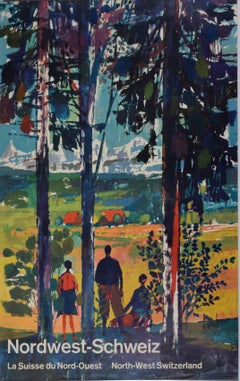
Original Poster - Hugo Wetli: Nordwest-Schweiz North-West Switzerland Skiing
By Hugo Wetli
Located in London, GB
To see our other original vintage travel posters, many of which are from Switzerland, scroll down to "More from this Seller" and below it click on "See all from this Seller" - or sen...
Category
1960s Modern Landscape Prints
Materials
Lithograph
"Various Himochi" Wagashi Festival Japanese Woodblock Print by Utagawa Toyokuni
Located in Soquel, CA
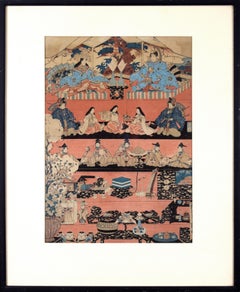
"Various Himochi" Wagashi Festival Japanese Woodblock Print by Utagawa Toyokuni
Rare oversized early 19th century 5-tiered woodblock by Utagawa Ichiyosai Toyokuni, (Japan, 1769-1825), a Japanese lord and wife oversee a sekku festival of food, music, and dolls or toys. '"oshi" is the first day of “Mi (Snake)” in the third month of the lunar calendar. This day, known in modern Japan as the Girls' Festival, originated in China as a form of purification ceremony in which water and drinking peach blossom wine were used to drive away evil. Many kinds of hishi-mochi appear in this picture of hina ningyo (dolls associated with Hinamatsuri, or the Girl’s Day) from Omochae.
The custom of eating special dishes at events throughout the year and at milestones in people's lives has existed since ancient times. This paragraph specifically focuses on the annual event called sekku, and life events that involve eating sweets. Joshi is the first day of “Mi (Snake)” in the third month of the lunar calendar. This day, known in modern Japan as the Girls' Festival, originated in China as a form of purification ceremony in which water and drinking peach blossom wine were used to drive away evil. According to the Keiso saijiki, in ancient China, on the third day of the third lunar month, people ate “ryuzetsuhan,” which is the juice of gogyo (Jersey cudweed) mixed with rice flour and nectar. In Japan, there is a record in the Heian period history book Nihon Montoku tenno jitsuroku [839-5] that it was an annual event to make kusamochi using gogyo on the third day of the third month of the lunar calendar, which may have been influenced by Chinese customs.
The tradition of eating kusamochi on the third day of the third month of the lunar calendar continued after that. By the Edo period, however, hishimochi had come to be used as a sweet to serve on the third day of the third month. A picture of a hishimochi is included in the Morisada manko , which we mentioned in Part 1. According to it, hishimochi in the Edo period were often three layers of green-white-green instead of the now common red-white-green. However, it is possible to see from our collection that not all hishimochi were made in this way. Omochae published in 1857, is a good example. Omochae is a type of ukiyoe print...
Category
1820s Edo Figurative Prints
Materials
Ink, Rice Paper, Woodcut
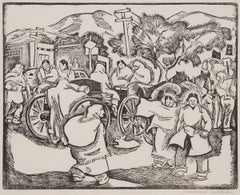
Barbara Latham 1950s Modernist Linocut “Saturday Morning, Taos Plaza”
By Barbara Latham
Located in Denver, CO
A vibrant celebration of Taos life and culture, Saturday Morning (Market, Taos Plaza, New Mexico) is a striking 1950s modernist linocut print by acclaimed New Mexico artist Barbara L...
Category
Mid-20th Century American Modern Figurative Prints
Materials
Linocut
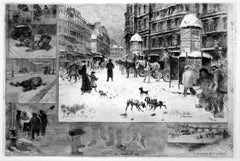
L’Hiver a Paris ou La Neige a Paris
Located in New York, NY
Felix Buhot (1847-1898), L’Hiver a Paris ou La Neige a Paris, 1879, etching, aquatint, drypoint, roulette. [signed and dated in the plate Felix Buhot Par...
Category
1870s Realist Landscape Prints
Materials
Drypoint, Etching, Aquatint
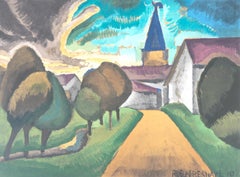
de La Fresnaye, L
entrée du village, Collection Pierre Lévy (after)
Located in Fairfield, CT
Medium: Lithograph on vélin d'Arches paper
Year: 1968
Paper Size: 20 x 26 inches
Inscription: Signed in the plate and unnumbered, as issued
Notes: From the folio, Roger de la Fresnay...
Category
1960s Cubist Landscape Prints
Materials
Lithograph
$716 Sale Price
20% Off
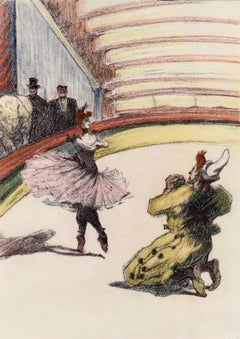
Henri de Toulouse-Lautrec, The Recall, from The Circus, 1952 (after)
Located in Southampton, NY
This exquisite lithograph after Henri de Toulouse-Lautrec (1864–1901), titled Le Rappel (The Recall), originates from the 1952 album The Circus of Toulouse-Lautrec. Published by Pari...
Category
1950s Post-Impressionist Figurative Prints
Materials
Lithograph
$716 Sale Price
20% Off
19th century color lithograph figures cemetery willow tree memorial headstone
Located in Milwaukee, WI
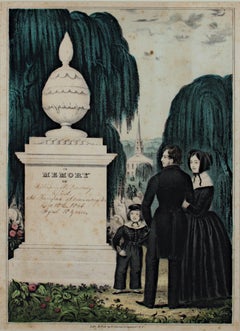
The present hand-colored lithograph was produced as part of the funeral and mourning culture in the United States during the 19th century. Images like this were popular as ways of remembering loved ones, an alternative to portraiture of the deceased. This lithograph shows a man, woman and child in morning clothes next to an urn-topped stone monument. Behind are additional putto-topped headstones beneath weeping willows, with a steepled church beyond. The monument contains a space where a family could inscribe the name and death dates of a deceased loved one. In this case, it has been inscribed to a young Civil War soldier:
William W. Peabody
Died at Fairfax Seminary, VA
December 18th, 1864
Aged 18 years
The young Mr. Peabody probably died in service for the Union during the American Civil War. Farifax Seminary was a Union hospital and military headquarters in Alexandria, Virginia. The hospital served nearly two thousand soldiers during the war time. Five hundred were also buried on the Seminary's grounds.
13.75 x 9.5 inches, artwork
23 x 19 inches, frame
Published before 1864
Inscribed bottom center "Lith. & Pub. by N. Currier. 2 Spruce St. N.Y."
Framed to conservation standards using 100 percent rag matting and TruVue Conservation Clear glass, housed in a gold gilded moulding.
Nathaniel Currier was a tall introspective man with a melancholy nature. He could captivate people with his piercing stare or charm them with his sparkling blue eyes. Nathaniel was born in Roxbury, Massachusetts on March 27th, 1813, the second of four children. His parents, Nathaniel and Hannah Currier, were distant cousins who lived a humble yet spartan life. When Nathaniel was eight years old, tragedy struck. Nathaniel’s father unexpectedly passed away leaving Nathaniel and his eleven-year-old brother Lorenzo to provide for the family. In addition to their mother, Nathaniel and Lorenzo had to care for six-year-old sister Elizabeth and two-year-old brother Charles. Nathaniel worked a series of odd jobs to support the family, and at fifteen, he started what would become a life-long career when he apprenticed in the Boston lithography shop of William and John Pendleton.
A Bavarian gentleman named Alois Senefelder invented lithography just 30 years prior to young Nat Currier’s apprenticeship. While under the employ of the brothers Pendleton, Nat was taught the art of lithography by the firm’s chief printer, a French national named Dubois, who brought the lithography trade to America.
Lithography involves grinding a piece of limestone flat and smooth then drawing in mirror image on the stone with a special grease pencil. After the image is completed, the stone is etched with a solution of aqua fortis leaving the greased areas in slight relief. Water is then used to wet the stone and greased-ink is rolled onto the raised areas. Since grease and water do not mix, the greased-ink is repelled by the moisture on the stone and clings to the original grease pencil lines. The stone is then placed in a press and used as a printing block to impart black on white images to paper.
In 1833, now twenty-years old and an accomplished lithographer, Nat Currier left Boston and moved to Philadelphia to do contract work for M.E.D. Brown, a noted engraver and printer. With the promise of good money, Currier hired on to help Brown prepare lithographic stones of scientific images for the American Journal of Sciences and Arts. When Nat completed the contract work in 1834, he traveled to New York City to work once again for his mentor John Pendleton, who was now operating his own shop located at 137 Broadway. Soon after the reunion, Pendleton expressed an interest in returning to Boston and offered to sell his print shop to Currier. Young Nat did not have the financial resources to buy the shop, but being the resourceful type he found another local printer by the name of Stodart. Together they bought Pendleton’s business.
The firm ‘Currier & Stodart’ specialized in "job" printing. They produced many different types of printed items, most notably music manuscripts for local publishers. By 1835, Stodart was frustrated that the business was not making enough money and he ended the partnership, taking his investment with him. With little more than some lithographic stones, and a talent for his trade, twenty-two year old Nat Currier set up shop in a temporary office at 1 Wall Street in New York City. He named his new enterprise ‘N. Currier, Lithographer’
Nathaniel continued as a job printer and duplicated everything from music sheets to architectural plans. He experimented with portraits, disaster scenes and memorial prints, and any thing that he could sell to the public from tables in front of his shop. During 1835 he produced a disaster print Ruins of the Planter's Hotel, New Orleans, which fell at two O’clock on the Morning of the 15th of May 1835, burying 50 persons, 40 of whom Escaped with their Lives. The public had a thirst for newsworthy events, and newspapers of the day did not include pictures. By producing this print, Nat gave the public a new way to “see” the news. The print sold reasonably well, an important fact that was not lost on Currier.
Nat met and married Eliza Farnsworth in 1840. He also produced a print that same year titled Awful Conflagration of the Steamboat Lexington in Long Island Sound on Monday Evening, January 18, 1840, by which melancholy occurrence over One Hundred Persons Perished. This print sold out very quickly, and Currier was approached by an enterprising publication who contracted him to print a single sheet addition of their paper, the New York Sun. This single page paper is presumed to be the first illustrated newspaper ever published.
The success of the Lexington print launched his career nationally and put him in a position to finally lift his family up. In 1841, Nat and Eliza had their first child, a son they named Edward West Currier. That same year Nat hired his twenty-one year old brother Charles and taught him the lithography trade, he also hired his artistically inclined brother Lorenzo to travel out west and make sketches of the new frontier as material for future prints. Charles worked for the firm on and off over the years, and invented a new type of lithographic crayon which he patented and named the Crayola. Lorenzo continued selling sketches to Nat for the next few years.
In 1843, Nat and Eliza had a daughter, Eliza West Currier, but tragedy struck in early 1847 when their young daughter died from a prolonged illness. Nat and Eliza were grief stricken, and Eliza, driven by despair, gave up on life and passed away just four months after her daughter’s death.
The subject of Nat Currier’s artwork changed following the death of his wife and daughter, and he produced many memorial prints and sentimental prints during the late 1840s. The memorial prints generally depicted grief stricken families posed by gravestones (the stones were left blank so the purchasers could fill in the names of the dearly departed). The sentimental prints usually depicted idealized portraits of women and children, titled with popular Christian names of the day.
Late in 1847, Nat Currier married Lura Ormsbee, a friend of the family. Lura was a self-sufficient woman, and she immediately set out to help Nat raise six-year-old Edward and get their house in order. In 1849, Lura delivered a son, Walter Black Currier, but fate dealt them a blow when young Walter died one year later. While Nat and Lura were grieving the loss of their new son, word came from San Francisco that Nat’s brother Lorenzo had also passed away from a brief illness. Nat sank deeper into his natural quiet melancholy. Friends stopped by to console the couple, and Lura began to set an extra place at their table for these unexpected guests. She continued this tradition throughout their lives.
In 1852, Charles introduced a friend, James Merritt Ives, to Nat and suggested he hire him as a bookkeeper. Jim Ives was a native New Yorker born in 1824 and raised on the grounds of Bellevue Hospital where his father was employed as superintendent. Jim was a self-trained artist and professional bookkeeper. He was also a plump and jovial man, presenting the exact opposite image of his new boss.
Jim Ives met Charles Currier through Caroline Clark, the object of Jim’s affection. Caroline’s sister Elizabeth was married to Charles, and Caroline was a close friend of the Currier family. Jim eventually proposed marriage to Caroline and solicited an introduction to Nat Currier, through Charles, in hopes of securing a more stable income to support his future wife.
Ives quickly set out to improve and modernize his new employer’s bookkeeping methods. He reorganized the firm’s sizable inventory, and used his artistic skills to streamline the firm’s production methods. By 1857, Nathaniel had become so dependent on Jims’ skills and initiative that he offered him a full partnership in the firm and appointed him general manager. The two men chose the name ‘Currier & Ives’ for the new partnership, and became close friends.
Currier & Ives produced their prints in a building at 33 Spruce Street where they occupied the third, fourth and fifth floors. The third floor was devoted to the hand operated printing presses that were built by Nat's cousin, Cyrus Currier, at his shop Cyrus Currier & Sons in Newark, NJ. The fourth floor found the artists, lithographers and the stone grinders at work. The fifth floor housed the coloring department, and was one of the earliest production lines in the country. The colorists were generally immigrant girls, mostly German, who came to America with some formal artistic training. Each colorist was responsible for adding a single color to a print. As a colorist finished applying their color, the print was passed down the line to the next colorist to add their color. The colorists worked from a master print displayed above their table, which showed where the proper colors were to be placed. At the end of the table was a touch up artist who checked the prints for quality, touching-in areas that may have been missed as it passed down the line. During the Civil War, demand for prints became so great that coloring stencils were developed to speed up production.
Although most Currier & Ives prints were colored in house, some were sent out to contract artists. The rate Currier & Ives paid these artists for coloring work was one dollar per one hundred small folios (a penny a print) and one dollar per one dozen large folios. Currier & Ives also offered uncolored prints to dealers, with instructions (included on the price list) on how to 'prepare the prints for coloring.' In addition, schools could order uncolored prints from the firm’s catalogue to use in their painting classes.
Nathaniel Currier and James Merritt Ives attracted a wide circle of friends during their years in business. Some of their more famous acquaintances included Horace Greeley, Phineas T. Barnum, and the outspoken abolitionists Rev. Henry Ward, and John Greenleaf Whittier (the latter being a cousin of Mr. Currier).
Nat Currier and Jim Ives described their business as "Publishers of Cheap and Popular Pictures" and produced many categories of prints. These included Disaster Scenes, Sentimental Images, Sports, Humor, Hunting Scenes, Politics, Religion, City and Rural Scenes, Trains, Ships, Fire Fighters, Famous Race Horses, Historical Portraits, and just about any other topic that satisfied the general public's taste. In all, the firm produced in excess of 7500 different titles, totaling over one million prints produced from 1835 to 1907.
Nat Currier retired in 1880, and signed over his share of the firm to his son Edward. Nat died eight years later at his summer home 'Lion’s Gate' in Amesbury, Massachusetts. Jim Ives remained active in the firm until his death in 1895, when his share of the firm passed to his eldest son, Chauncey.
In 1902, faced will failing health from the ravages of Tuberculosis, Edward Currier sold his share of the firm to Chauncey Ives...
Category
Mid-19th Century Romantic Figurative Prints
Materials
Watercolor, Lithograph
View of Saint Peter (Rome) with Ballerin - Lithograph by Franco Marzilli - 1980s
Located in Roma, IT
Etching realized by Franco Marzilli in 1980s.
Hand signed in pencil.
Artist proof.
Excellent condition.
Category
1980s Contemporary Figurative Prints
Materials
Lithograph
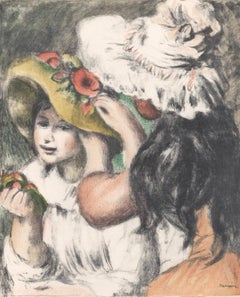
Pierre-Auguste Renoir, The Pinned Hat, Color State, 1951 (after)
Located in Southampton, NY
This exquisite lithograph after Pierre-Auguste Renoir (1841–1919), titled Le chapeau epingle, etat en couleur (The Pinned Hat, Color State), from the album Les Lithographies de Renoi...
Category
1950s Impressionist Figurative Prints
Materials
Lithograph
$716 Sale Price
20% Off
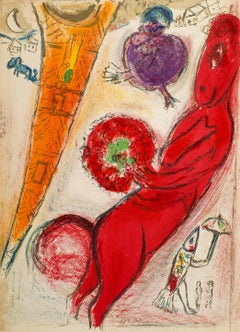
Marc Chagall, The Eiffel Tower and the Donkey, from Derriere le miroir, 1954
By Marc Chagall
Located in Southampton, NY
This exquisite lithograph by Marc Chagall (1887–1985), titled La Tour Eiffel a l'Ane (The Eiffel Tower and the Donkey), from the folio Derriere le miroir, No. 67–68, originates from ...
Category
1950s Expressionist Landscape Prints
Materials
Lithograph
$7,196 Sale Price
20% Off
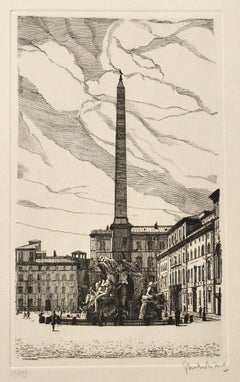
Navona Square - Etching by Giuseppe Malandrino - 1970
Located in Roma, IT
Navona Square - Rome is an original artwork realized by Giuseppe Malandrino.
Original print in etching technique.
Hand-signed by the artist in pencil on the lower right corner. Num...
Category
1970s Modern Figurative Prints
Materials
Etching
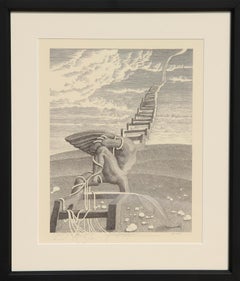
Untitled - XIII, Framed Surrealist Lithograph by Wojtek Kowalczyk
Located in Long Island City, NY
Untitled - XIII
Wojtek Kowalczyk, Polish (1960)
Date: 2005
Lithograph, signed in pencil
Size: 19.5 in. x 13.5 in. (49.53 cm x 34.29 cm)
Frame Size: 21 x 18 inches
Category
Early 2000s Surrealist Figurative Prints
Materials
Lithograph
$480 Sale Price
20% Off
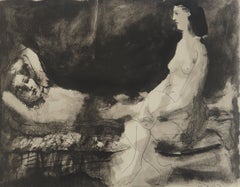
Pablo Picasso, Reclining Man and Seated Woman, The Double Flute, 1967 (after)
Located in Southampton, NY
This exquisite lithograph and pochoir after Pablo Picasso (1881–1973), titled Homme couche et femme assise (Reclining Man and Seated Woman), from the folio Picasso, La flute double, ...
Category
1960s Cubist Figurative Prints
Materials
Lithograph, Stencil
$2,636 Sale Price
20% Off
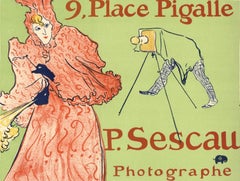
Toulouse-Lautrec, Composition, Les Affiches De Toulouse-Lautrec (after)
Located in Fairfield, CT
Medium: Lithograph on grand vélin Filigrané a sa marque paper
Year: 1950
Paper Size: 9.75 x 12.5 inches; image size: 8.27 x 10.63 inches
Inscription: Signed in the plate and unnumber...
Category
1950s Post-Impressionist Figurative Prints
Materials
Lithograph
$716 Sale Price
20% Off
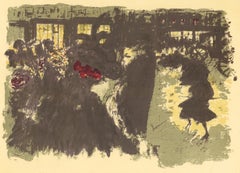
Bonnard, Place le soir, Bonnard Lithographe (after)
Located in Fairfield, CT
Medium: Lithograph on grand vélin Renage filigrané paper.
Year: 1952
Paper Size: 9.5 x 12.5 inches; image size: 7.08 x 10.23 inches
Inscription: Unsigned and unnumbered, as issued
No...
Category
1950s Post-Impressionist Figurative Prints
Materials
Lithograph
$716 Sale Price
20% Off
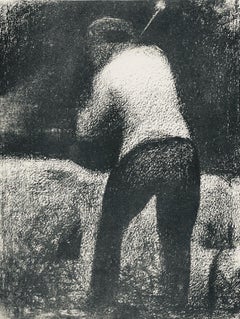
Seurat, Le casseur de pierres, Seurat (after)
Located in Fairfield, CT
Medium: Lithograph on vélin du Canson & Montgolfier Vidalon-Les-Annonay paper
Year: 1948
Paper Size: 12.5 x 9.75 inches
Inscription: Unsigned and unnumbered, as issued
Notes: From th...
Category
1940s Post-Impressionist Figurative Prints
Materials
Lithograph
$876 Sale Price
20% Off
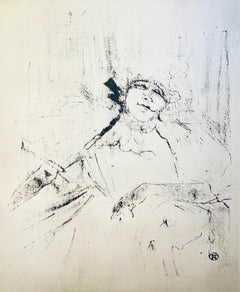
Toulouse-Lautrec, Composition, Images de Lautrec (after)
Located in Fairfield, CT
Medium: Lithograph and stencil on vélin Polifilo paper
Year: 1947
Paper Size: 13.78 x 10.24 inches
Inscription: Signed in the plate and unnumbered, as issued
Notes: From the folio, I...
Category
1940s Post-Impressionist Figurative Prints
Materials
Lithograph
$716 Sale Price
20% Off
Toulouse-Lautrec, Composition, Toulouse-Lautrec, Album De Marine (after)
Located in Fairfield, CT
Medium: Lithograph and stencil on Papeteries de Rives paper
Year: 1953
Paper Size: 8.86 x 5.71 inches
Inscription: Unsigned and unnumbered, as issued
Notes: From the album, Toulouse-...
Category
1950s Post-Impressionist Figurative Prints
Materials
Lithograph

$716 Sale Price
20% Off
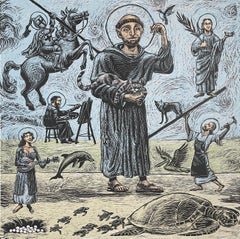
Todos Santos, November 1
Located in Palm Springs, CA
Medium: Screenprint
Year: 2021
Image Size: 22 x 22 inches
Edition of 25
Jos Sances was born John Joseph Sances in Boston and attended Montserrat School of Visual Art in Beverly, Mas...
Category
2010s Contemporary Animal Prints
Materials
Screen
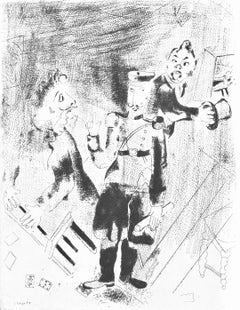
Marc Chagall, Appearance of the Policemen, Nicolas Gogol, Dead Souls, 1923-1927
By Marc Chagall
Located in Southampton, NY
This exquisite etching by Marc Chagall (1887–1985), titled Apparition des policiers (Appearance of the Policemen), originates from the celebrated folio Nicolas Gogol, Les Ames mortes...
Category
1920s Expressionist Figurative Prints
Materials
Etching
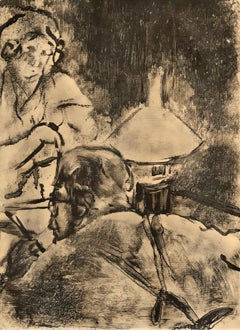
Degas, Famille Cardinal, E. Degas Monotypes (after)
By Edgar Degas
Located in Fairfield, CT
Medium: Engraving on vélin du Marais paper
Year: 1948
Paper Size: 12.25 x 9.125 inches; image size: 8.5 x 6.25 inches
Inscription: Unsigned and unnumbered, as issued
Notes: From the ...
Category
1940s Impressionist Figurative Prints
Materials
Engraving
$956 Sale Price
20% Off
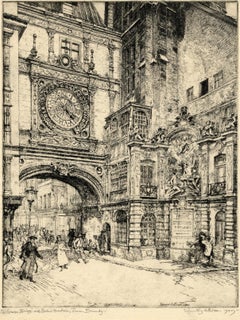
The Grosse Horloge and Fountain, Rouen, Normandy.
Located in Middletown, NY
Etching on cream laid paper with an unknown watermark with an AL inside a ribbon. 10 1/4 x 7 7/8 inches (258 x 187 mm), full margins. Signed, titled, and dated in pencil lower margin. In good condition with one small, very minor 1/4- inch horizontal tear in lower-center quadrant of the image area, in the area of the doorway beneath the arch, very difficult to discern, and completely unobtrusive. 1/2-inch minor horizontal edge tear center sheet edge, bottom margin (outside of image area). Paper tape from a previous hinge at top right and left sheet edges. Light scattered age tone and surface soiling.
__________
Perhaps now most famous for one particular illustration for an edition of The Rubaiyat of Omar Khayyam, Sullivan's etching of a skeleton crowned in roses was appropriated by Stanley Mouse and Alton Kelley...
Category
Mid-20th Century Modern Landscape Prints
Materials
Laid Paper, Etching
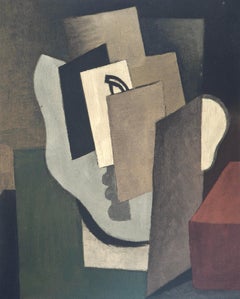
Roger de La Fresnaye, Face, 1968 (after)
Located in Southampton, NY
This exquisite lithograph after Roger de La Fresnaye (1885–1925), titled Visage (Face), from the album Roger de la Fresnaye, III, Collection Pierre Levy, 1968, originates from the ed...
Category
1960s Cubist Figurative Prints
Materials
Lithograph
$716 Sale Price
20% Off
The Departure of the Argonaut Francesco Clemente (bound book) Alberto Savinio
Located in New York, NY
The Departure of the Argonaut (1918) is the travelogue and wartime diary of Alberto Savinio, one of the seminal figures in twentieth-century Italian arts and letters. Clemente's acco...
Category
1980s Abstract Figurative Prints
Materials
Lithograph
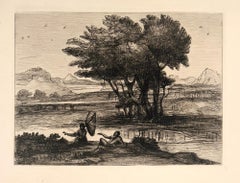
Fishermen resting by a riverbank
Located in Middletown, NY
ngraving on light cream wove paper. In good condition with minor age tone and edge wear, well outside of image area. 6 3/8 x 8 3/8 inches (162 x 213 mm); sheet 15 3/4 x 11 3/4 inches...
Category
Early 19th Century French School Landscape Prints
Materials
Handmade Paper
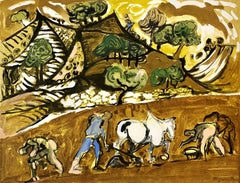
Composition, Arbres et Voiles, Édouard Pignon
Located in Southampton, NY
Lithograph and stencil on grand Velin d'Arches paper. Inscription: signed in the plate and unnumbered, as issued. Good condition. Notes: from the folio, Édouard Pignon, Arbres et Voi...
Category
1950s Modern Landscape Prints
Materials
Lithograph, Stencil
$876 Sale Price
20% Off
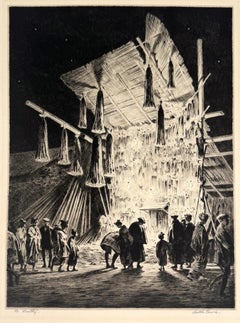
Street Booth, Tokyo, New Year
s Eve
By Martin Lewis
Located in Middletown, NY
A superb impression of Martin Lewis's consummate image of Japan.
Etching with drypoint on fine cream laid paper, 13 7/8 x 10 3/8 inches (352 x 265 mm); sheet 17 3/4 x 14 1/4 inches ...
Category
Mid-20th Century American Modern Landscape Prints
Materials
Handmade Paper, Laid Paper, Drypoint, Etching
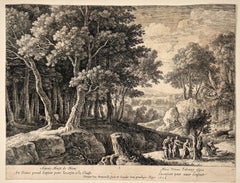
The Birth of Adonis; Plate 1 from The Story of Adonis
Located in Middletown, NY
Etching with engraving on thin laid paper with an early and large unidentified heraldic watermark with a windmill, and the collector's stamp of Count F. J. von Enzenberg (1802-1879),...
Category
Early 17th Century Old Masters Landscape Prints
Materials
Laid Paper, Engraving, Etching
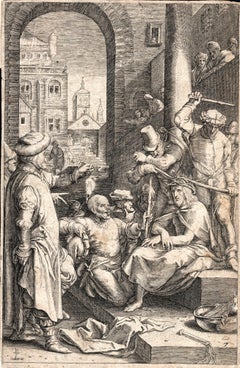
Christ Crowned with Thorns, from The Passion of Christ
By Hendrick Goltzius
Located in Middletown, NY
Engraving on cream wove paper, 8 x 5 3/8 inches (203 x 137 mm), narrow to thread margins. First state (of 2). A fine impression with archival paper adhered at left top and bottom cor...
Category
Early 17th Century Old Masters Figurative Prints
Materials
Engraving
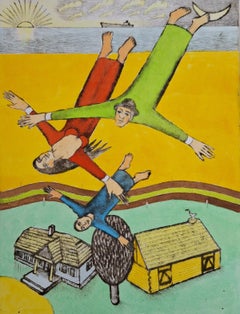
Flight over the manor house - Figurative Drypoint Print, Colorful, Polish Art
Located in Warsaw, PL
Colorful figurative drypoint print by Polish artist Czeslaw Tumielewicz. The print is signed, it comes from edition limited to 10.
CZESLAW TUMIELEWICZ (b. 1942)
In 1968, he studied ...
Category
2010s Contemporary Landscape Prints
Materials
Paper, Drypoint, Watercolor
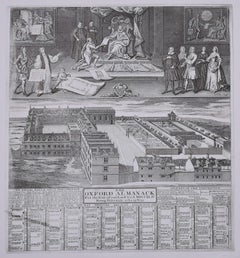
The Oxford Almanack 1744, engraving by Joseph Skelton after G Vertue
Located in London, GB
To see our other views of Oxford and Cambridge, scroll down to "More from this Seller" and below it click on "See all from this Seller" - or send us a message if you cannot find the ...
Category
1740s Landscape Prints
Materials
Engraving
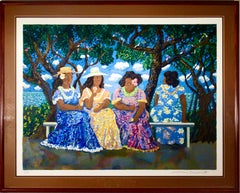
Honolulu Shaved Ice
By Guy Buffet
Located in San Francisco, CA
This artwork titled "Honolulu Shaved Ice" 1986, is an original color lithograph on paper by noted French artist Guy Buffet, 1943-2023. It is hand signed and numbered P.P. 2/5 in penc...
Category
Late 20th Century Modern Landscape Prints
Materials
Lithograph
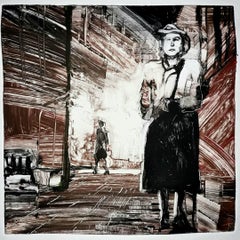
Third Man 3, night, city scape, monochromatic, narrative
By Tom Bennett
Located in Brooklyn, NY
Dramatic imagery from FILM NOIR series of black and white monotypes, blending surrealistic mindscapes with stark realism
About Tom Bennett:
With quick brushstrokes, Tom Bennett crea...
Category
2010s American Modern Figurative Drawings and Watercolors
Materials
Archival Paper, Monotype
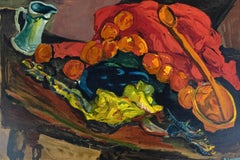
Chaim Soutine, Still Life with Turkey, from Soutine, I, 1966 (after)
Located in Southampton, NY
This exquisite lithograph after Chaim Soutine (1893–1943), titled Nature morte a la dinde (Still Life with Turkey), from the folio Soutine, I, Collection Pierre Levy, 1966, originates from the edition published by Fernand Mourlot, Paris, and printed by Mourlot Freres, Paris, on October 20, 1966. The work conveys the heightened emotional tension and expressive force characteristic of Soutines painterly vision, capturing in lithographic form the dynamic structure and psychological intensity that define his mature still lifes.
Executed as a lithograph on velin d'Arches paper, this work measures 20 x 26 inches. Signed in the plate and unnumbered as issued. The edition exemplifies the technical mastery of the Mourlot atelier.
Artwork Details:
Artist: After Chaim Soutine (1899–1943)
Title: Nature morte a la dinde (Still Life with Turkey), from the folio Soutine, I, Collection Pierre Levy
Medium: Lithograph on velin d'Arches paper
Dimensions: 20 x 26 inches
Inscription: Signed in the plate and unnumbered as issued
Date: 1966
Publisher: Fernand Mourlot, Paris
Printer: Mourlot Freres, Paris
Condition: Well preserved, consistent with age and medium
Provenance: From the folio Soutine, I, Collection Pierre Levy, 1966
Notes:
Excerpted from the folio (translated from French), This album, the first of a series dedicated to Mr. Pierre Levys collection, was printed in DL examples on Arches velin. Printing was finished on October 20, 1966 by Mourlot for lithographs of the canvases of Soutine, and by Fequet and Baudier for Waldemar Georges unpublished text. Fernand Mourlot, Paris 1966.
About the Publication:
Soutine, I, Collection Pierre Levy, published in 1966 by Fernand Mourlot, Paris, is the first album in the important series devoted to the Pierre Levy collection, one of the most significant private collections of twentieth century French painting. Conceived as a scholarly and visual record, the album was designed to present key works by Chaim Soutine in lithographic form at a time when renewed international interest in the artist was expanding. Created in collaboration with Mourlot Freres, the foremost lithographic atelier in France, the publication reflects the printers commitment to translating Soutines canvases into richly tonal lithographs that preserve the emotional intensity and structural drama of the originals. Issued in a single edition on Arches velin, the album stands as an essential document of postwar art publishing, illuminating the historical partnership between artist, collector, and master printer, and contributing to the larger historiography of modern French Expressionism and museum quality print albums of the mid twentieth century.
About the Artist:
Chaim Soutine (1893–1943) was a Belarus born French Expressionist painter whose explosive brushwork, emotionally charged distortions, and uncompromising commitment to depicting the psychological intensity of human experience have secured his place as one of the most vital and transformative figures in twentieth century art, creating his legacy within the same revolutionary modernist environment defined by Pablo Picasso, Alexander Calder, Alberto Giacometti, Salvador Dali, Joan Miro, Wassily Kandinsky, Marcel Duchamp, and Man Ray; after leaving his impoverished childhood in Smilavichy and arriving in Paris in 1913, Soutine immersed himself in the School of Paris circle at La Ruche—an incubator of international avant garde talent—where he developed formative friendships with Amedeo Modigliani, Marc Chagall, Jules Pascin, and other pioneering artists whose daring approaches inspired him to push color, gesture, and form into new emotional territories. His portraits of cooks, choirboys, servants, and village residents; his tempestuous landscapes of Cagnes, Chartres, and Ceret; and his deeply visceral still lifes—most famously his monumental depictions of slaughtered carcasses—reveal a singular ability to transform ordinary subjects into raw, pulsing, almost metaphysical dramas, building on the influence of Rembrandt, Goya, Velazquez, and El Greco while departing radically from academic restraint. His paintings vibrate with psychological tension, their twisted perspectives, molten colors, and trembling outlines capturing an inner world marked by anxiety, longing, resilience, and profound empathy. Soutines originality profoundly shaped the evolution of modern painting: Francis Bacon cited him as one of his greatest influences, Willem de Kooning and the Abstract Expressionists admired his gestural ferocity, and later artists—including Frank Auerbach, Leon Kossoff, Lucian Freud, Jenny Saville, and Adrian Ghenie...
Category
1960s Modern Still-life Prints
Materials
Lithograph
$716 Sale Price
20% Off
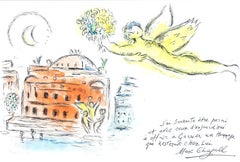
Marc Chagall, Homage to Garnier, The Ceiling of the Paris Opera, 1965 (after)
By Marc Chagall
Located in Southampton, NY
This exquisite lithograph after Marc Chagall (1887–1985), titled Hommage a Garnier (Homage to Garnier), from the album Le plafond de l’Opera de Paris par Marc Chagall (The Ceiling of...
Category
1960s Expressionist Figurative Prints
Materials
Lithograph
$716 Sale Price
20% Off
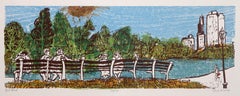
Park Bench, Pop Art Woodcut and Gold Foil by Ted Davies
By Ted Davies
Located in Long Island City, NY
Ted Davies, American (1928 - ) - Park Bench, Year: 1958-1973, Medium: Woodcut and Gold Foil on CM Fabriano Cotton paper, signed, titled and dated in pencil, Edition: 154/250, Imag...
Category
1970s Pop Art Landscape Prints
Materials
Gold Leaf
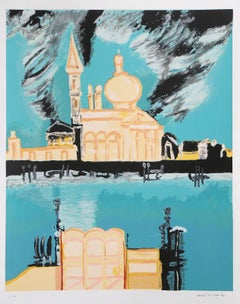
Venezia, Impressionist Lithograph by Remo Brindisi
Located in Long Island City, NY
Remo Brindisi, Italian (1918 - 1996) - Venezia, Year: circa 1985, Medium: Lithograph on Fabriano paper, signed and numbered in pencil, Edition: PA, Image Size: 22 x 17.5 inches, ...
Category
1980s Impressionist Landscape Prints
Materials
Lithograph
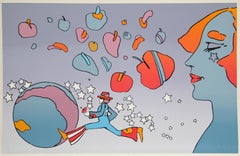
76 Jumper, Psychedelic Art Screenprint by Peter Max
By Peter Max
Located in Long Island City, NY
Peter Max, German/American (1937 - ) - '76 Jumper, Year: 1975, Medium: Screenprint, Signed and Numbered in Pencil, Edition: 75, Size: 26 in. x 36.5 in. (66.04 cm x 92.71 cm)
Category
1970s Pop Art Landscape Prints
Materials
Screen
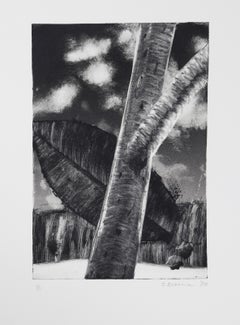
Tree, Leaf, and Sky, Impressionist Monotype by John Beerman
By John Beerman
Located in Long Island City, NY
John Beerman, American (1958 - ) - Tree, Leaf, and Sky, Year: 1990, Medium: \, Edition: 1/1, Image Size: 7.5 x 5.5 inches, Size: 19 x 14 in. (48.26 x 35.56 cm), Printer: Sylvia...
Category
1990s Impressionist Landscape Prints
Materials
Monotype
Hill and Prarie, Impressionist Monotype by John Beerman
By John Beerman
Located in Long Island City, NY
John Beerman, American (1958 - ) - Hill and Prarie, Medium: Monotype, signed and numbered in pencil, Edition: 1/1, Image Size: 3.5 x 3.5 inches, Size: 11 x 8.5 in. (27.94 x 21.59...
Category
1990s Impressionist Landscape Prints
Materials
Monotype