Lithograph Prints and Multiples

to
9,244
15,460
5,915
8,800
3,369
1,687
Overall Width
to
Overall Height
to
10,212
3,863
3,291
2,415
1,454
1,031
827
585
480
131
98
84
56
51
824
799
331
295
200
65
5,676
27,383
2,133
333
376
993
1,108
1,508
3,596
4,643
6,322
3,197
1,207
45
23,598
11,021
542
15,499
8,337
5,503
5,255
4,593
3,634
3,404
2,438
2,226
2,110
1,950
1,356
1,282
1,274
1,138
951
934
853
830
721
19,636
17,700
10,512
5,601
3,567
11,426
18,776
12,798
Medium: Lithograph
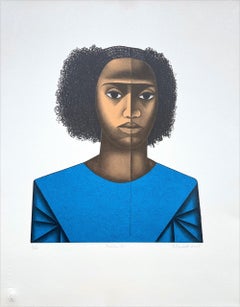
KEISHA M. Hand Drawn Lithograph, Young Black Female Portrait, Afro Hairstyle
Located in Union City, NJ
KEISHA M. is an original hand drawn, limited edition lithograph by the renowned African-American woman sculptor, printmaker and painter Elizabeth Catlett (191...
Category

Early 2000s Contemporary Lithograph Prints and Multiples

Materials

Lithograph

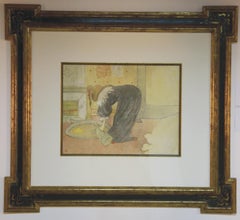
"Femme au Tub" from "Elles" by Toulouse-Lautrec
Located in Hinsdale, IL
TOULOUSE-LAUTREC, HENRI DE (1864-1901) "FEMME AU TUB" (Woman with Tub) From the series, “Elles”, c. 1896 Wittrock 159, Adhemar 204 From the edition of 100; per Wittrock Original color crayon brush and splatter lithograph, five colors, printed on wove paper Printed without margins to deckled edge of paper Bearing Artist’s Monogram Stamp...
Category

1890s Art Nouveau Lithograph Prints and Multiples

Materials

Crayon, Lithograph

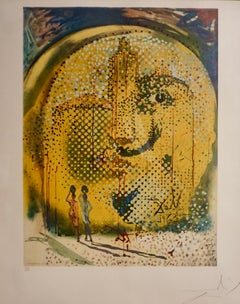
Clavilegnio
Located in OPOLE, PL
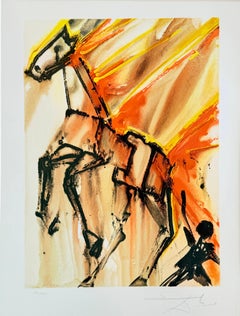
This work will be exhibited at Art on Paper NYC, September 4–7, 2025. – Salvador Dali (1904-1989) - Clavilegnio Lithograph from 1972. The edition of 187/250. Dimensions of work:...
Category

1970s Surrealist Lithograph Prints and Multiples

Materials

Lithograph

Clavilegnio
Clavilegnio
$6,561 Sale Price
20% Off
Original 1970 exhibition poster was created for Henri Matisse’s Œuvre Gravé
Located in PARIS, FR
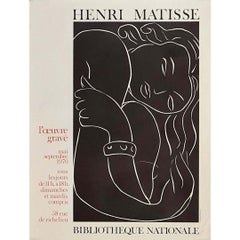
This original 1970 exhibition poster was created for Henri Matisse’s "L’Œuvre Gravé" (The Engraved Work) at the Bibliothèque Nationale in Paris. This event celebrated Matisse’s maste...
Category

1970s Lithograph Prints and Multiples

Materials

Paper, Lithograph

Marc Chagall Itinerant Players 1963- Lithograph
Located in Brooklyn, NY
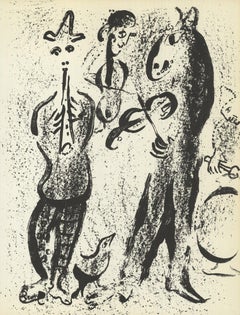
This black-and-white lithograph by Marc Chagall, titled "Itinerant Players," is featured on page 31 of Chagall Lithographs II. Published by André Sauret in 1963 and printed by Mourlo...
Category

1950s Modern Lithograph Prints and Multiples

Materials

Lithograph

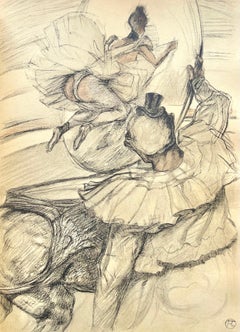
Toulouse-Lautrec, Composition, Henri de Toulouse-Lautrec, Dessinateur (after)
Located in Southampton, NY
Lithograph on vélin paper. Paper size: 12.25 x 9.25 inches. Inscription: Signed in the plate and unnumbered, as issued. Notes: From the album, Henri de Toulouse-Lautrec, Dessinateur,...
Category

1940s Post-Impressionist Lithograph Prints and Multiples

Materials

Lithograph

Sol Y Dali
Located in Hollywood, FL
ARTIST: Salvador Dali TITLE: Sol Y Dali MEDIUM: Lithograph SIGNED: Hand Signed EDITION NUMBER: 153/200 MEASUREMENTS: 16.5" x 21.9" YEAR: 1967 FRAMED: Yes CONDITION: Excelle...
Category

1960s Surrealist Lithograph Prints and Multiples

Materials

Lithograph

Blankless Tone, lithograph silkscreen with embossing folded corner. Signed/N
Located in New York, NY
Shusaku Arakawa Blankless Tone, 1979 Color lithograph and silkscreen with embossing on Arches paper with deckled edges and folded collage upper left Hand-signed by artist, Titled "Bl...
Category

1970s Conceptual Lithograph Prints and Multiples

Materials

Lithograph, Screen

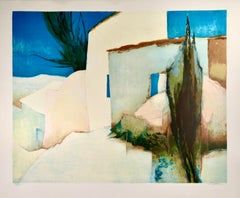
Village
Located in San Francisco, CA
This artwork "Village" c.1980, is an original color lithograph on Wove paper by noted French artist Claude Gaveau, b.1940. It is hand signed and numbered 77/170 in pencil by the arti...
Category

Late 20th Century Modern Lithograph Prints and Multiples

Materials

Lithograph

Nudes 2, Israel by Hans Erni - Lithograph 50x70 cm
Located in Geneva, CH
Lithograph numbered and signed by hand 19/60 edition From Israel collection
Category

1960s Surrealist Lithograph Prints and Multiples

Materials

Lithograph

original lithograph
Located in Henderson, NV
Medium: original lithograph. This lithograph is from the rare 1957 "Improvisations" portfolio, published by the Artists Equity Association of New York on the occasion of the 1957 Spr...
Category

1950s Lithograph Prints and Multiples

Materials

Lithograph

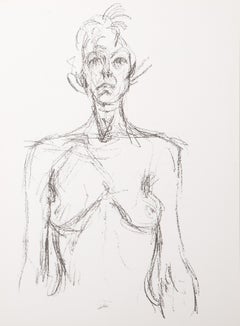
Nude Woman, Expressionist Lithograph by Alberto Giacometti
Located in Long Island City, NY
Alberto Giacometti, Swiss (1901 - 1966) - Nude Woman From Derriere Le Miroir no. 127, Year: 1961, Medium: Lithograph, Edition: ~2500, Size: 15 x 11 in. (38.1 x 27.94 cm), Publish...
Category

1960s Expressionist Lithograph Prints and Multiples

Materials

Lithograph

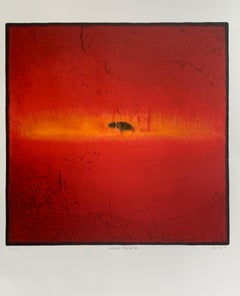
Seasons Quartet IV Red Lithograph AP 6
Located in West Palm Beach, FL
Seasons Quartet IV Red Lithograph AP 6 The French fine art paper is BFK Rives and is 33 X 22 inches. The image is 17 X 17. This signed Artist Proof lithograph depicts Sebastian Spr...
Category

Early 2000s Contemporary Lithograph Prints and Multiples

Materials

Lithograph

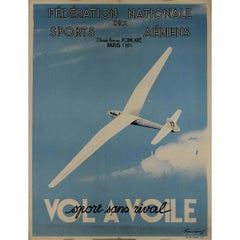
1945 original poster by Bouchenaf for Vol à Voile Sport Sans Rival
Located in PARIS, FR
The 1945 original poster by Bouchenaf for Vol à Voile Sport Sans Rival created for the Fédération Nationale des Sports Aériens is a testament to the post-war fascination with aviatio...
Category

1940s Lithograph Prints and Multiples

Materials

Paper, Lithograph

original lithograph
Located in Henderson, NV
Medium: original lithograph. Printed in 1966 for the art revue Derriere le Miroir (issue number 160) and published in Paris by Maeght. Size: 15 x 11 inches (378 x 277 mm). Published ...
Category

1960s Lithograph Prints and Multiples

Materials

Lithograph

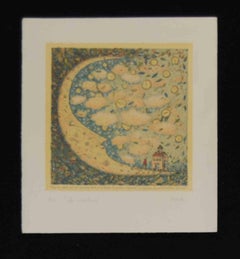
La Curva Luna - Lithograph by Cynthia Segato - 2000s
Located in Roma, IT
Lithograph made on zinc plate on Sicar paper 310 gr/m2, paper size 50cm x 55cm, work size 38cm x 38cm. Ellent condition, slight signs of use, no defects. Cynthia Segato was born in ...
Category

Early 2000s Contemporary Lithograph Prints and Multiples

Materials

Paper, Lithograph

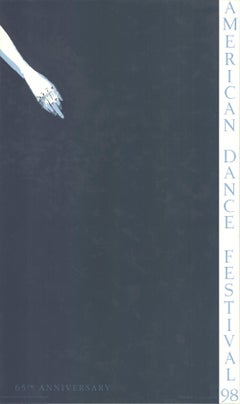
Alex Katz American Dance Festival 1998
Located in Brooklyn, NY
Paper Size: 59 x 35 inches ( 149.86 x 88.9 cm ) Image Size: 59 x 32 inches ( 149.86 x 81.28 cm ) Framed: No Condition: A-: Near Mint, very light signs of handling Additional Details:...
Category

1990s Pop Art Lithograph Prints and Multiples

Materials

Lithograph

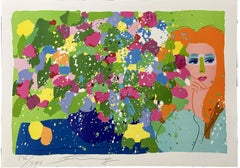
Lady with Vase 1979 Signed Limited Edition Lithograph
Located in Rochester Hills, MI
Artist: Walasse Ting Title: Lady with Vase  Year: 1979 Medium: Lithograph on Somerset paper   22'' x 30'' Edition: signed and numbered in pencil 136/200 Walasse Ting (DING XIONGQUAN...
Category

1970s Pop Art Lithograph Prints and Multiples

Materials

Lithograph

Untitled
Located in Paris, FR
Lithograph, 1964 Edition : 19/150 Publisher : Hochschule St. Gallen (St. Gallen) Printer : Maeght (Paris) Catalog : [Cramer 111] 65.00 cm. x 50.00 cm. 25.59 in. x 19.69 in. (...
Category

1960s Abstract Lithograph Prints and Multiples

Materials

Lithograph

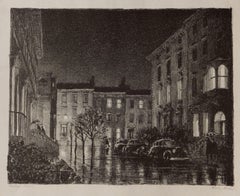
Fermin Rocker Mid-Century Signed Lithograph “Montague Terrace (Brooklyn N.Y.)
By Fermin Rocker
Located in Phoenix, AZ
Fermin Rocker (1907-2004) original pencil signed lithograph. The subject is a very atmospheric rendering of the Brooklyn Heights area of New York. The image measures 11 x 14 and rest...
Category

Mid-20th Century Lithograph Prints and Multiples

Materials

Paper, Lithograph

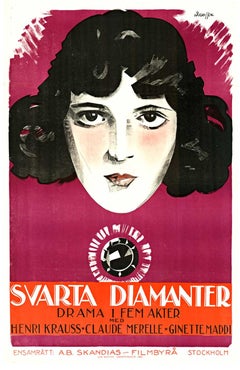
Original Svarta Diamanter - Black Diamond - Swedish movie poster film noir
Located in Spokane, WA
Svarta Diamanter of The Black Diamond, 1922 original Swedish film poster. Archival linen backing with restored fold marks. Issued in Sweden by A.B. Svenska. Artist: Gunner Hakansson....
Category

1920s Art Deco Lithograph Prints and Multiples

Materials

Lithograph

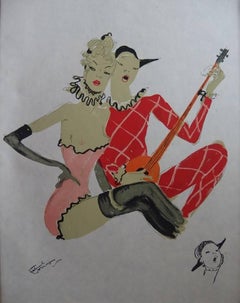
At the Cabaret : Nude and Harlequine - Original lithograph - Mourlot, 1956
Located in Paris, IDF
Jean-Gabriel DOMERGUE At the Cabaret : Nude and Harlequine , 1956 Original lithograph (Mourlot workshop) Printed signature in the plate On Japan paper 40 x 31 cm (c. 16 x 12") INFO...
Category

1950s Modern Lithograph Prints and Multiples

Materials

Lithograph

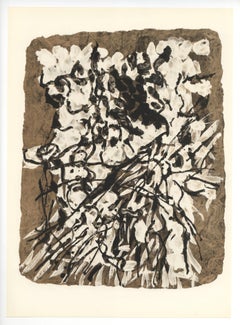
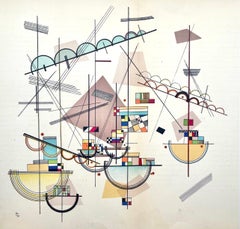
Wassily Kandinsky, Untitled, from Derriere le Miroir, 1953 (after)
Located in Southampton, NY
This exquisite lithograph after Wassily Kandinsky (1866–1944), titled Sans Titre (Untitled), originates from the 1953 folio Derriere le Miroir, Nos. 60–61, published by Maeght Editeur, Paris, under the direction of Aime Maeght, and printed by Mourlot Freres, Paris. This plate pays homage to the artist’s groundbreaking geometric abstraction and his profound influence on postwar modernism. Through precise form and rhythmic structure, Sans Titre captures the musicality and spiritual dynamism that defined Kandinsky’s mature visual language, balancing intuitive movement with mathematical harmony. Executed on velin paper, this lithograph measures 15 x 22 inches (38.1 x 55.9 cm), with centerfold, as issued. Signed in the plate and unnumbered, as issued. The edition reflects the exceptional quality and craftsmanship of the Maeght and Mourlot collaborations, honoring Kandinsky’s legacy in fine art printing. Artwork Details: Artist: After Wassily Kandinsky (1866–1944) Title: Sans Titre (Untitled), from Derriere le Miroir, Nos. 60–61, 1953 Medium: Lithograph on velin paper Dimensions: 15 x 22 inches (38.1 x 55.9 cm), with centerfold, as issued Inscription: Signed in the plate and unnumbered, as issued Date: 1953 Publisher: Maeght Editeur, Paris Printer: Mourlot Freres, Paris Condition: Well preserved, consistent with age and medium Provenance: From the 1953 folio Derriere le Miroir, Nos. 60–61, published by Maeght Editeur, Paris About the Publication: Derriere le Miroir (translated as "Behind the Mirror") was an iconic French art periodical published from 1946 to 1982 by Maeght Editeur, one of the most influential art publishers of the 20th century. Founded by Aime Maeght in Paris, the publication was conceived as a visual and literary collaboration between leading modern artists, poets, and critics. Each issue functioned as both an exhibition catalogue and a work of art in itself—featuring original lithographs printed directly from the artists' stones or plates, alongside essays, poems, and critical commentary. Over the course of 36 years, Derriere le Miroir produced more than 250 issues and showcased an extraordinary roster of artists including Henri Matisse, Marc Chagall, Joan Miro, Georges Braque, Alexander Calder, Fernand Leger, Pierre Bonnard, Alberto Giacometti, Eduardo Chillida, Ellsworth Kelly, Francis Bacon, Paul Rebeyrolle, Claude Garache, Antoni Tapies, Bram van Velde, Pierre Alechinsky, Pol Bury, Shusaku Arakawa, and Gerard Titus-Carmel. Printed in the ateliers of Mourlot, Arte, and Imprimerie Moderne du Lion, the periodical set new standards for quality in color lithography, combining fine art printing with elegant typography and poetic text. Beyond its visual brilliance, Derriere le Miroir also became a cultural chronicle of postwar European modernism. Each issue coincided with exhibitions held at Galerie Maeght, providing a collectible and widely accessible record of groundbreaking shows. Its integration of image, text, and philosophy created a dialogue between art and literature that elevated the modern art book to new aesthetic heights. Today, Derriere le Miroir remains one of the most sought-after and historically significant art publications, prized by collectors and scholars alike for its craftsmanship, influence, and its role in defining the visual language of 20th-century modernism. The Maeght Foundation in Saint-Paul-de-Vence continues to honor this legacy through exhibitions and archival preservation of the series, affirming Derriere le Miroir's enduring place in the history of modern art and fine art publishing. About the Artist: Wassily Kandinsky (1866–1944) was a Russian-born painter, theorist, and pioneer of abstract art whose revolutionary vision transformed 20th-century modernism. Regarded as one of the first artists to create purely nonobjective paintings, Kandinsky sought to express inner emotion and spirituality through color, rhythm, and form, believing that art could evoke the same universal harmony as music. His groundbreaking theories on abstraction and the “spiritual in art” shaped the foundation of modern aesthetics and influenced generations of artists worldwide. Closely associated with the Bauhaus movement, he developed a dynamic visual language that combined geometry and lyricism, bridging intuition and intellect. Kandinsky’s legacy resonates alongside the innovations of Pablo Picasso, Henri Matisse, Alexander Calder, Georges Braque, Marc Chagall, Alberto Giacometti, Salvador Dali, Joan Miro, Marcel Duchamp, and Man Ray—artists who, like him, redefined the possibilities of modern art. His works are represented in the world’s leading museums, including MoMA, the Guggenheim, the Centre Pompidou, and the Tate, and remain among the most coveted by collectors globally. The highest price ever paid for a Wassily Kandinsky artwork is approximately $45.6 million USD, achieved in 2017 at Christie’s London for Bild mit weissen Linien (Painting with White Lines) (1913). Wassily Kandinsky Sans Titre, Kandinsky Derriere le Miroir, Kandinsky Maeght Editeur Paris, Kandinsky Mourlot Freres, Kandinsky 1953 edition, Kandinsky lithograph...
Category

1950s Modern Lithograph Prints and Multiples

Materials

Lithograph

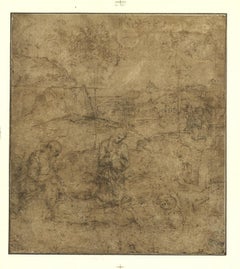
Pietro Perugino The Lamentation for Christ 1930- Lithograph
Located in Brooklyn, NY
Drawings by Italian Masters of the XV-XVIII Centuries. From a selection of 40 reproductions of the originals preserved in the Albertina Collection in Vienna. With an introduction and...
Category

1930s Renaissance Lithograph Prints and Multiples

Materials

Lithograph

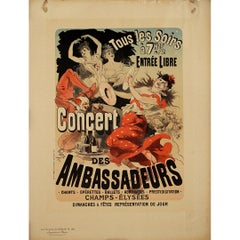
1898 Original lithographic poster by Jules Chéret - Concert des Ambassadeurs
Located in PARIS, FR
This original lithographic poster by Jules Chéret was published in 1898 as Plate 165 in the prestigious Les Maîtres de l’Affiche series. Created to promote the famous Concert des Amb...
Category

1890s Lithograph Prints and Multiples

Materials

Paper, Lithograph

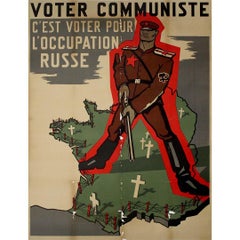
1951 original poster by the French anti-communist group "Paix et Liberté"
Located in PARIS, FR
The original 1951 poster by the French anti-communist group "Paix et Liberté" titled "Voter Communiste c'est voter pour l'occupation russe" (Voting Communist is Voting for Russian Oc...
Category

1950s Lithograph Prints and Multiples

Materials

Linen, Paper, Lithograph

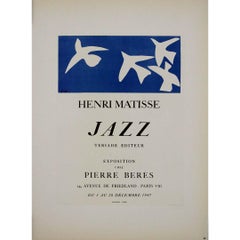
original 1947 poster for the exhibition of Henri Matisse
Located in PARIS, FR
This original 1947 poster was created for the exhibition of Henri Matisse’s legendary art book "Jazz", published by Tériade. Held at the renowned Pierre Berès gallery in Paris from D...
Category

1940s Lithograph Prints and Multiples

Materials

Paper, Lithograph

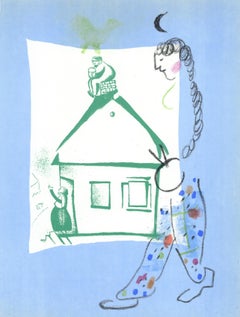
Marc Chagall, The House of My Village, from The Lithographs of Chagall, 1960
Located in Southampton, NY
This exquisite lithograph by Marc Chagall (1887–1985), titled La Maison de Mon Village (The House of My Village), from the album The Lithographs of Chagall, Volume I, originates from...
Category

1960s Expressionist Lithograph Prints and Multiples

Materials

Lithograph

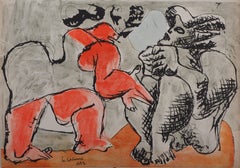
Couple : The Argument - Original Lithograph
Located in Paris, IDF
Le Corbusier (1887-1965) Couple : The Argument, 1938 Original lithograph Signature printed in the plate Dated in the plate On light vellum 21 x 27 cm (c. 8 x 11 inch) Very good con...
Category

1930s Modern Lithograph Prints and Multiples

Materials

Lithograph

"Les chiens ont soif" lithograph
Located in Henderson, NV
Medium: lithograph (after the drawing). Printed by Mourlot for the deluxe limited edition portfolio "Les chiens ont soif", this is one of 250 impressions on BFK Rives wove paper (the...
Category

1960s Surrealist Lithograph Prints and Multiples

Materials

Lithograph

Dufy, Composition, Les Côtes Normandes (after)
Located in Southampton, NY
Lithograph on grand vélin d'Arches spécial paper. Unsigned and unnumbered, as issued. Good condition with centerfold, as issued. Notes: From the folio, Les Côtes Normandes 1961. Publ...
Category

1960s Modern Lithograph Prints and Multiples

Materials

Lithograph

L Odyssée, Planche XIX
Located in OPOLE, PL
Marc Chagall (1887–1985) L'Odyssée, Planche XIX Lithograph in colours, 1974, A unique trial proof printed, notably without the central fold, with variant colouration differing from ...
Category

1970s Symbolist Lithograph Prints and Multiples

Materials

Lithograph

Lovers with a Bouquet of Flowers - Original lithograph HANDIGNED (Mourlot #1037)
Located in Paris, IDF
Marc Chagall (1887-1985) Lovers with a Bouquet, 1984 Original color lithograph Signed with the artist's stamp Justified EA (artist proof) On Arches vellum, 56 x 43 cm (c. 22 x 17 in) Authenticated by the artist's studio dry stamp REFERENCES: Sorlier / Mourlot catalogue raisonné...
Category

1980s Modern Lithograph Prints and Multiples

Materials

Lithograph

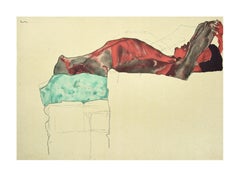
Reclining Male Reclining Male Nude with - 2000s - Lithograph After Egon Schiele
Located in Roma, IT
Reclining Male Nude with Green Cloth is a beautiful and original colored lithograph from the portfolio "Erotica" by Egon Schiele. It deals with a repro...
Category

Early 2000s Modern Lithograph Prints and Multiples

Materials

Lithograph

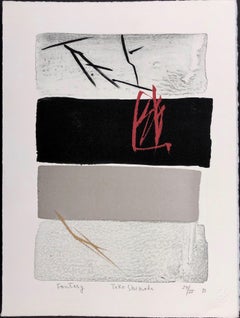
Fantasy, Japanese, limited edition lithograph, black, white, red, signed, titled
Located in Santa Fe, NM
Fantasy, Japanese, limited edition lithograph, black, white, red, signed, titled Shinoda's works have been collected by public galleries and museums, including the Museum of Modern Art, Solomon R. Guggenheim Museum, Brooklyn Museum and Metropolitan Museum (all in New York City), the National Museum of Modern Art in Tokyo, the British Museum in London, the Art Institute of Chicago, Arthur M. Sackler Gallery of the Smithsonian in Washington, D.C., the Singapore Art Museum, the National Museum of Singapore, the Kröller-Müller Museum in Otterlo, Netherlands, the Albright–Knox Art Gallery in Buffalo, New York, the Cincinnati Art Museum, and the Yale University Art Gallery in New Haven, Connecticut. New York Times Obituary, March 3, 2021 by Margalit Fox, Alex Traub contributed reporting. Toko Shinoda, one of the foremost Japanese artists of the 20th century, whose work married the ancient serenity of calligraphy with the modernist urgency of Abstract Expressionism, died on Monday at a hospital in Tokyo. She was 107. Her death was announced by her gallerist in the United States. A painter and printmaker, Ms. Shinoda attained international renown at midcentury and remained sought after by major museums and galleries worldwide for more than five decades. Her work has been exhibited at, among other places, the Metropolitan Museum of Art and the Museum of Modern Art in New York; the Art Institute of Chicago; the British Museum; and the National Museum of Modern Art in Tokyo. Private collectors include the Japanese imperial family. Writing about a 1998 exhibition of Ms. Shinoda’s work at a London gallery, the British newspaper The Independent called it “elegant, minimal and very, very composed,” adding, “Her roots as a calligrapher are clear, as are her connections with American art of the 1950s, but she is quite obviously a major artist in her own right.” As a painter, Ms. Shinoda worked primarily in sumi ink, a solid form of ink, made from soot pressed into sticks, that has been used in Asia for centuries. Rubbed on a wet stone to release their pigment, the sticks yield a subtle ink that, because it is quickly imbibed by paper, is strikingly ephemeral. The sumi artist must make each brush stroke with all due deliberation, as the nature of the medium precludes the possibility of reworking even a single line. “The color of the ink which is produced by this method is a very delicate one,” Ms. Shinoda told The Business Times of Singapore in 2014. “It is thus necessary to finish one’s work very quickly. So the composition must be determined in my mind before I pick up the brush. Then, as they say, the painting just falls off the brush.” Ms. Shinoda painted almost entirely in gradations of black, with occasional sepias and filmy blues. The ink sticks she used had been made for the great sumi artists of the past, some as long as 500 years ago. Her line — fluid, elegant, impeccably placed — owed much to calligraphy. She had been rigorously trained in that discipline from the time she was a child, but she had begun to push against its confines when she was still very young. Deeply influenced by American Abstract Expressionists like Jackson Pollock, Mark Rothko and Robert Motherwell, whose work she encountered when she lived in New York in the late 1950s, Ms. Shinoda shunned representation. “If I have a definite idea, why paint it?,” she asked in an interview with United Press International in 1980. “It’s already understood and accepted. A stand of bamboo is more beautiful than a painting could be. Mount Fuji is more striking than any possible imitation.” Spare and quietly powerful, making abundant use of white space, Ms. Shinoda’s paintings are done on traditional Chinese and Japanese papers, or on backgrounds of gold, silver or platinum leaf. Often asymmetrical, they can overlay a stark geometric shape with the barest calligraphic strokes. The combined effect appears to catch and hold something evanescent — “as elusive as the memory of a pleasant scent or the movement of wind,” as she said in a 1996 interview. Ms. Shinoda’s work also included lithographs; three-dimensional pieces of wood and other materials; and murals in public spaces, including a series made for the Zojoji Temple in Tokyo. The fifth of seven children of a prosperous family, Ms. Shinoda was born on March 28, 1913, in Dalian, in Manchuria, where her father, Raijiro, managed a tobacco plant. Her mother, Joko, was a homemaker. The family returned to Japan when she was a baby, settling in Gifu, midway between Kyoto and Tokyo. One of her father’s uncles, a sculptor and calligrapher, had been an official seal carver to the Meiji emperor. He conveyed his love of art and poetry to Toko’s father, who in turn passed it to Toko. “My upbringing was a very traditional one, with relatives living with my parents,” she said in the U.P.I. interview. “In a scholarly atmosphere, I grew up knowing I wanted to make these things, to be an artist.” She began studying calligraphy at 6, learning, hour by hour, impeccable mastery over line. But by the time she was a teenager, she had begun to seek an artistic outlet that she felt calligraphy, with its centuries-old conventions, could not afford. “I got tired of it and decided to try my own style,” Ms. Shinoda told Time magazine in 1983. “My father always scolded me for being naughty and departing from the traditional way, but I had to do it.” Moving to Tokyo as a young adult, Ms. Shinoda became celebrated throughout Japan as one of the country’s finest living calligraphers, at the time a signal honor for a woman. She had her first solo show in 1940, at a Tokyo gallery. During World War II, when she forsook the city for the countryside near Mount Fuji, she earned her living as a calligrapher, but by the mid-1940s she had started experimenting with abstraction. In 1954 she began to achieve renown outside Japan with her inclusion in an exhibition of Japanese calligraphy at MoMA. In 1956, she traveled to New York. At the time, unmarried Japanese women could obtain only three-month visas for travel abroad, but through zealous renewals, Ms. Shinoda managed to remain for two years. She met many of the titans of Abstract Expressionism there, and she became captivated by their work. “When I was in New York in the ’50s, I was often included in activities with those artists, people like Mark Rothko, Jackson Pollock, Motherwell and so forth,” she said in a 1998 interview with The Business Times. “They were very generous people, and I was often invited to visit their studios, where we would share ideas and opinions on our work. It was a great experience being together with people who shared common feelings.” During this period, Ms. Shinoda’s work was sold in the United States by Betty Parsons, the New York dealer who represented Pollock, Rothko and many of their contemporaries. Returning to Japan, Ms. Shinoda began to fuse calligraphy and the Expressionist aesthetic in earnest. The result was, in the words of The Plain Dealer of Cleveland in 1997, “an art of elegant simplicity and high drama.” Among Ms. Shinoda’s many honors, she was depicted, in 2016, on a Japanese postage stamp. She is the only Japanese artist to be so honored during her lifetime. No immediate family members survive. When she was quite young and determined to pursue a life making art, Ms. Shinoda made the decision to forgo the path that seemed foreordained for women of her generation. “I never married and have no children,” she told The Japan Times in 2017. “And I suppose that it sounds strange to think that my paintings are in place of them — of course they are not the same thing at all. But I do say, when paintings that I have made years ago are brought back into my consciousness, it seems like an old friend, or even a part of me, has come back to see me.” Works of a Woman's Hand Toko Shinoda bases new abstractions on ancient calligraphy Down a winding side street in the Aoyama district, western Tokyo. into a chunky white apartment building, then up in an elevator small enough to make a handful of Western passengers friends or enemies for life. At the end of a hall on the fourth floor, to the right, stands a plain brown door. To be admitted is to go through the looking glass. Sayonara today. Hello (Konichiwa) yesterday and tomorrow. Toko Shinoda, 70, lives and works here. She can be, when she chooses, on e of Japans foremost calligraphers, master of an intricate manner of writing that traces its lines back some 3,000 years to ancient China. She is also an avant-garde artist of international renown, whose abstract paintings and lithographs rest in museums around the world. These diverse talents do not seem to belong in the same epoch. Yet they have somehow converged in this diminutive woman who appears in her tiny foyer, offering slippers and ritual bows of greeting. She looks like someone too proper to chip a teacup, never mind revolutionize an old and hallowed art form She wears a blue and white kimono of her own design. Its patterns, she explains, are from Edo, meaning the period of the Tokugawa shoguns, before her city was renamed Tokyo in 1868. Her black hair is pulled back from her face, which is virtually free of lines and wrinkles. except for the gold-rimmed spectacles perched low on her nose (this visionary is apparently nearsighted). Shinoda could have stepped directly from a 19th century Meji print. Her surroundings convey a similar sense of old aesthetics, a retreat in the midst of a modern, frenetic city. The noise of the heavy traffic on a nearby elevated highway sounds at this height like distant surf. delicate bamboo shades filter the daylight. The color arrangement is restful: low ceilings of exposed wood, off-white walls, pastel rugs of blue, green and gray. It all feels so quintessentially Japanese that Shinoda’s opening remarks come as a surprise. She points out (through a translator) that she was not born in Japan at all but in Darien, Manchuria. Her father had been posted there to manage a tobacco company under the aegis of the occupying Japanese forces, which seized the region from Russia in 1905. She says,”People born in foreign places are very free in their thinking, not restricted” But since her family went back to Japan in 1915, when she was two, she could hardly remember much about a liberated childhood? She answers,”I think that if my mother had remained in Japan, she would have been an ordinary Japanese housewife. Going to Manchuria, she was able to assert her own personality, and that left its mark on me.” Evidently so. She wears her obi low on the hips, masculine style. The Porcelain aloofness she displays in photographs shatters in person. Her speech is forceful, her expression animated and her laugh both throaty and infectious. The hand she brings to her mouth to cover her amusement (a traditional female gesture of modesty) does not stand a chance. Her father also made a strong impression on the fifth of his seven children:”He came from a very old family, and he was quite strict in some ways and quite liberal in others.” He owned one of the first three bicycles ever imported to Japan and tinkered with it constantly He also decided that his little daughter would undergo rigorous training in a procrustean antiquity. “I was forced to study from age six on to learn calligraphy,” Shinoda says, The young girl dutifully memorized and copied the accepted models. In one sense, her father had pushed her in a promising direction, one of the few professional fields in Japan open to females. Included among the ancient terms that had evolved around calligraphy was onnade, or woman's writing. Heresy lay ahead. By the time she was 15, she had already been through nine years of intensive discipline, “I got tired of it and decided to try my own style. My father always scolded me for being naughty and departing from the traditional way, but I had to do it.” She produces a brush and a piece of paper to demonstrate the nature of her rebellion. “This is kawa, the accepted calligraphic character for river,” she says, deftly sketching three short vertical strokes. “But I wanted to use more than three lines to show the force of the river.” Her brush flows across the white page, leaving a recognizable river behind, also flowing.” The simple kawa in the traditional language was not enough for me. I wanted to find a new symbol to express the word river.” Her conviction grew that ink could convey the ineffable, the feeling, "as she says, of wind blowing softly.” Another demonstration. She goes to the sliding wooden door of an anteroom and disappears in back of it; the only trace of her is a triangular swatch of the right sleeve of her kimono, which she has arranged for that purpose. A realization dawns. The task of this artist is to paint that three sided pattern so that the invisible woman attached to it will be manifest to all viewers. Gen, painted especially for TIME, shows Shinoda’s theory in practice. She calls the work “my conception of Japan in visual terms.” A dark swath at the left, punctuated by red, stands for history. In the center sits a Chinese character gen, which means in the present or actuality. A blank pattern at the right suggests an unknown future. Once out of school, Shinoda struck off on a path significantly at odds with her culture. She recognized marriage for what it could mean to her career (“a restriction”) and decided against it. There was a living to be earned by doing traditional calligraphy:she used her free time to paint her variations. In 1940 a Tokyo gallery exhibited her work. (Fourteen years would pass before she got a second show.)War came, and bad times for nearly everyone, including the aspiring artist , who retreated to a rural area near Mount Fuji and traded her kimonos for eggs. In 1954 Shinoda’s work was included in a group exhibit at New York City’s Museum of Modern Art. Two years later, she overcame bureaucratic obstacles to visit the U.S.. Unmarried Japanese women are allowed visas for only three months, patiently applying for two-month extensions, one at a time, Shinoda managed to travel the country for two years. She pulls out a scrapbook from this period. Leafing through it, she suddenly raises a hand and touches her cheek:”How young I looked!” An inspection is called for. The woman in the grainy, yellowing newspaper photograph could easily be the on e sitting in this room. Told this, she nods and smiles. No translation necessary. Her sojourn in the U.S. proved to be crucial in the recognition and development of Shinoda’s art. Celebrities such as actor Charles Laughton and John Lewis of the Modern Jazz Quartet bought her paintings and spread the good word. She also saw the works of the abstract expressionists, then the rage of the New York City art world, and realized that these Western artists, coming out of an utterly different tradition, were struggling toward the same goal that had obsessed her. Once she was back home, her work slowly made her famous. Although Shinoda has used many materials (fabric, stainless steel, ceramics, cement), brush and ink remain her principal means of expression. She had said, “As long as I am devoted to the creation of new forms, I can draw even with muddy water.” Fortunately, she does not have to. She points with evident pride to her ink stone, a velvety black slab of rock, with an indented basin, that is roughly a foot across and two feet long. It is more than 300 years old. Every working morning, Shinoda pours about a third of a pint of water into it, then selects an ink stick from her extensive collection, some dating back to China’s Ming dynasty. Pressing stick against stone, she begins rubbing. Slowly, the dried ink dissolves in the water and becomes ready for the brush. So two batches of sumi (India ink) are exactly alike; something old, something new. She uses color sparingly. Her clear preference is black and all its gradations. “In some paintings, sumi expresses blue better than blue.” It is time to go downstairs to the living quarters. A niece, divorced and her daughter,10,stay here with Shinoda; the artist who felt forced to renounce family and domesticity at the outset of her career seems welcome to it now. Sake is offered, poured into small cedar boxes and happily accepted. Hold carefully. Drink from a corner. Ambrosial. And just right for the surroundings and the hostess. A conservative renegade; a liberal traditionalist; a woman steeped in the male-dominated conventions that she consistently opposed. Her trail blazing accomplishments are analogous to Picasso’s. When she says goodbye, she bows. --by Paul Gray...
Category

1990s Contemporary Lithograph Prints and Multiples

Materials

Lithograph

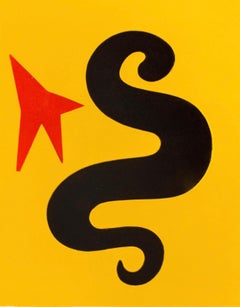
Calder, Composition, Derrière le miroir (after)
Located in Southampton, NY
Lithograph on vélin paper. Inscription: Unsigned and unnumbered, as issued. Good condition. Notes: From Derrière le miroir, N° 195, 1971. Published by Aimé Maeght, Éditeur, Paris; pr...
Category

1970s Modern Lithograph Prints and Multiples

Materials

Lithograph

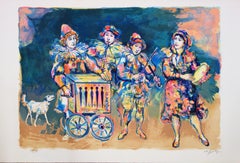
Musicians Troupe - Handsigned lithograph
Located in Paris, IDF
Walter SPITZER (1927-) Musicians Troupe Original lithograph Handsigned in pencil Numbered /75 copies On Japan paper 61 x 90 cm (c. 24 x 36 inch) Excellent condition
Category

Late 20th Century Modern Lithograph Prints and Multiples

Materials

Lithograph

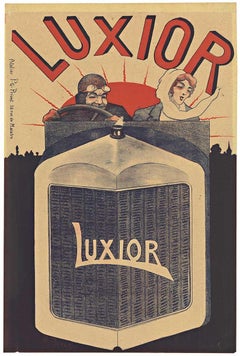
LUXIOR Automobile early automotive original vintage poster
Located in Spokane, WA
LUXIOR. Original antique French turn of the century rare antique automobile poster. Printer / atelier:: Henri Privat Livemont. Size: 15.75" ...
Category

1910s Art Nouveau Lithograph Prints and Multiples

Materials

Lithograph

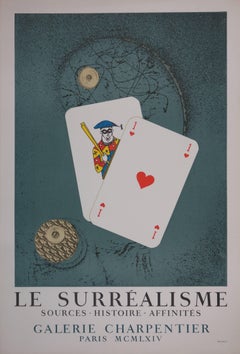
Playing Cards - Lithograph poster for "Le Surrealisme" by Max ERNST (Mourlot)
Located in Paris, IDF
Exhibition poster after Max ERNST featuring an image of playing cards HIgh-quality lithograph printed in Mourlot workshop in 1964 Created for the exhibition "Le Surréalisme, Sources...
Category

1960s Surrealist Lithograph Prints and Multiples

Materials

Lithograph

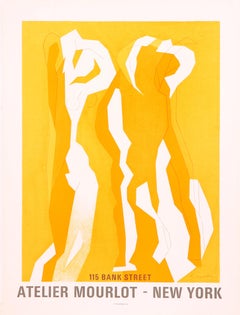
115 Bank Street New York Atelier Mourlot by Andre Beaudin, 1967
Located in New York, NY
This bright yellow modern lithographic poster was printed at the Atelier Mourlot in New York City in 1967. Certificate of Provenance: Each individual work of art carefully curated...
Category

1970s Modern Lithograph Prints and Multiples

Materials

Lithograph

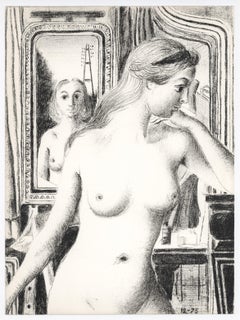
"La Reflection" original lithograph
Located in Henderson, NV
Medium: original lithograph. Printed in Paris in 1975 at the atelier Mourlot and published as the frontispiece of the Mira Jacob catalogue raisonne of Paul Delvaux engraved works. Si...
Category

1970s Surrealist Lithograph Prints and Multiples

Materials

Lithograph

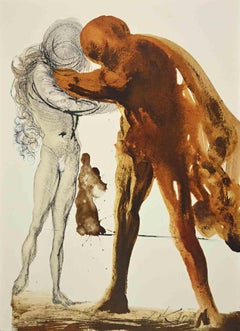
Filius Prodigus - Lithograph - 1964
Located in Roma, IT
Filius Prodigus is a Color lithograph on heavy rag paper realized in 1964. It is part of Biblia Sacra vulgatæ edition is published by Rizzoli-Mediolani between 1967 and 1969. Signed...
Category

1960s Surrealist Lithograph Prints and Multiples

Materials

Lithograph

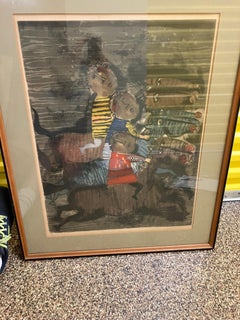
Graciela Rodo Boulanger Children on horses
Located in San Francisco, CA
Graciela Rodo Boulanger: she is a Bolivian artist born in 1935. She is best known for her paintings and prints of children. This beautiful colored lithograph sold for over $1800 at a...
Category

1960s Lithograph Prints and Multiples

Materials

Lithograph

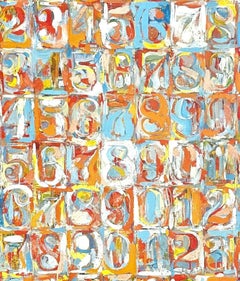
Numbers in Color, 1981, Johns
Located in Fairfield, CT
Title: Numbers in Color Year: 1981 Medium: Offset Lithograph exhibition poster on archival paper Edition: 5,000 Size: 39.5 x 27 inches Condition: Excellent Notes: Published by the Al...
Category

1980s Abstract Expressionist Lithograph Prints and Multiples

Materials

Lithograph

original lithograph
Located in Henderson, NV
Medium: original lithograph. Printed in 1972 for the art revue Derriere le Miroir (issue number 196) and published in Paris by Maeght. Size: 15 x 11 inches (378 x 276 mm). There is t...
Category

1970s Lithograph Prints and Multiples

Materials

Lithograph

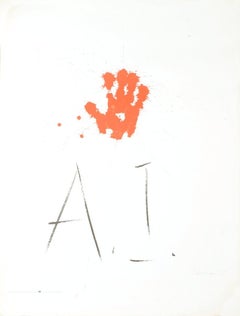
Liberman 1977 Amnesty International Vintage
Located in Brooklyn, NY
First edition advertising poster by Alexander Liberman for Amnesty International in 1977. " Artists for Amnesty, a series of art posters creat...
Category

1970s Pop Art Lithograph Prints and Multiples

Materials

Lithograph

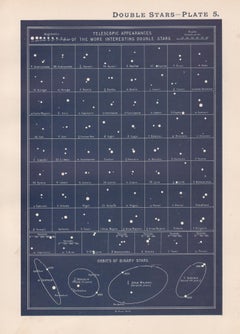
Double Stars. Antique Astronomy science print
Located in Melbourne, Victoria
Colour lithograph, 1890. 285mm by 210mm (sheet). From W Peck's 'A Handbook and Atlas of Astronomy', 1890. Sir William Peck FRSE FRAS (1862 – 1925) was a Scottish astronomer and scien...
Category

Late 19th Century Victorian Lithograph Prints and Multiples

Materials

Lithograph

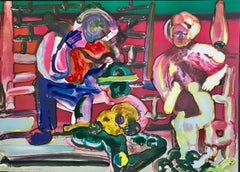
LOUISIANA SERENADE Signed Lithograph, Two Men Playing Guitars, Woman on Veranda
Located in Union City, NJ
LOUISIANA SERENADE is a limited edition color lithograph by the renowned African American artist Romare Bearden, printed on archival Somerset printmaking paper, 100% acid free, in an edition size of 175. LOUISIANA SERENADE, from Bearden's late 1970's colorful JAZZ series of musical imagery, captures a Southern evening depicting two male figures playing their guitars on the veranda while a seated woman sits listening beside a glowing glass chimney lamp. LOUISIANA SERENADE, printed in lush hues of green, red, yellow, purple, blue presents a free flowing watercolor-like abstract music portrait by the renowned American artist Romare Bearden. Print size - 24.5 x 33.75 inches, unframed, excellent condition, fresh colors, full bleed image, no margins, hand signed in pencil by Romare Bearden, printer's chop mark embossed on lower edge, print documentation provided Year Published - 1979 Edition size - 175, plus proofs About the artist- Romare Bearden (1911-1988) Born in Charlotte, North Carolina, Romare Bearden is one of America’s most esteemed African American contemporary artists. Bearden grew up in the Harlem neighborhood of New York City and attended New York University where he received a degree in mathematics. Following graduation, Bearden turned his attention to art, pursuing further studies with George Grosz at the Art Students League. The artist served in the United States Army from 1942 to 1945. After leaving the Army, Bearden used funds from the GI Bill to travel to Europe for six months to study art history and philosophy at the Sorbonne. During this trip, Bearden had the opportunity to meet Henri Matisse, Georges Braque and Joan Miro, all of who had a strong influence on his artwork. Bearden’s work on canvas and collages expressed the complexities of rural Black America. “My intention is to reveal through pictorial complexities of the life I know,” he said. He integrated scenes from his childhood in North Carolina and from New York City, including many rituals and social customs. Another theme throughout his work was music. Bearden grew up surrounded by musicians and loved jazz and blues. Romare Bearden’s artwork can be found in numerous permanent collections around the country including the Museum of Modern Art and the Metropolitan Museum of Art. Retrospective exhibitions of Bearden’s art have been held by The Mint Museum of Art, Charlotte; the Museum of Modern Art; the Detroit Institute; and the Studio Museum in Harlem. As well, President Reagan...
Category

1970s Contemporary Lithograph Prints and Multiples

Materials

Lithograph

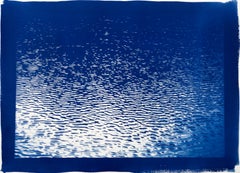
Lake Tahoe Panorama, Nautical Landscape Cyanotype in Blue, Minimal Water Art
Located in Barcelona, ES
This is an exclusive handprinted limited edition cyanotype. "Lake Tahoe Panorama" shows a sequence of abstracted ripples of the calm Tahoe waters. Details: + Title: Lake Tahoe Panor...
Category

2010s Minimalist Lithograph Prints and Multiples

Materials

Emulsion, Watercolor, C Print, Color, Engraving, Lithograph, Photogram

White and Blue Abstract Nautical Cyanotype of Crashing Waters, Coastal Lifestyle
Located in Barcelona, ES
This is an exclusive handprinted limited edition cyanotype. "Abstract Crashing Water" is an original cyanotype that detailed portraits the eruptions and shapes of salty water in move...
Category

2010s Abstract Lithograph Prints and Multiples

Materials

Watercolor, Lithograph, Rag Paper

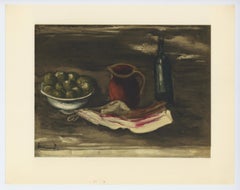
"Still Life with Bacon" lithograph
Located in Henderson, NV
Medium: lithograph. This lithograph (after the Vlaminck painting) was printed in Paris in 1958 by the Mourlot atelier, and published by Andre Sauret in an edition of 2000. The image ...
Category

1950s Lithograph Prints and Multiples

Materials

Lithograph

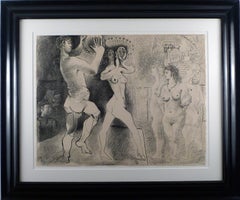
La Répétition (B. 756; M. 252)
Located in Madrid, ES
PABLO PICASSO Spanish, 1881 - 1973 La Répétition (B. 756; M. 252) signed in black ink "Picasso" (lower left) numbered in pencil "11/50" (lower right) lithograph on Arches S. 19-2/3 x...
Category

1950s Lithograph Prints and Multiples

Materials

Lithograph

Rammellzee Annina Nosei Gallery 1983 (Rammellzee Gothic Futurism announcement)
Located in NEW YORK, NY
Rammellzee Annina Nosei Gallery, New York, 1983 (Rammellzee Gothic Futurism, Rammellzee Ikonoklast Panzerism): RARE Rammellzee illustrated announcement card published by Annina Nosei...
Category

1980s Abstract Expressionist Lithograph Prints and Multiples

Materials

Paper, Lithograph, Offset

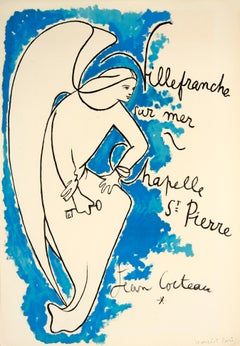
Villefranche sur Mer - Chapelle St. Pierre by Jean Cocteau, 1957
Located in New York, NY
Artist: Jean Cocteau Medium: Original Lithographic Poster, 1957 Dimensions: 29.5 x 20.5 in, 74.9 x 52.07 cm Arches Paper - Excellent Condition A This iconic and original lithogra...
Category

1950s Lithograph Prints and Multiples

Materials

Lithograph

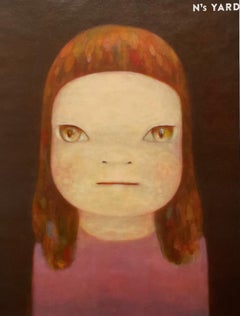
Midnight Truth, published by N s Yard, Japan, offset print, stamped, unnumbered
Located in New York, NY
Yoshitomo Nara Midnight Truth, 2017 Offset lithographic poster Stamped with title, artist's name, copyright and year Unnumbered 20 1/2 × 14 1/4 inches Unframed published by N's Yard,...
Category

2010s Pop Art Lithograph Prints and Multiples

Materials

Lithograph, Offset

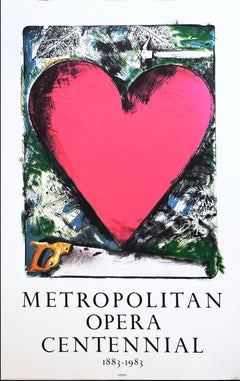
Metropolitan Opera Centennial 1883-1983 lithographic poster A Heart at the Opera
Located in New York, NY
Jim Dine Metropolitan Opera Centennial 1883-1983 poster, 1983 Offset lithograph poster; unsigned 46 × 29 inches Unframed This limited edition poster was pu...
Category

1980s Pop Art Lithograph Prints and Multiples

Materials

Lithograph, Offset

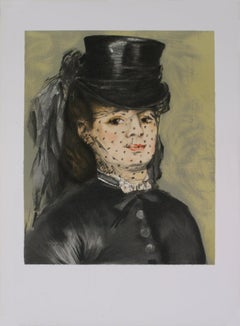
Pierre-Auguste Renoir Portrait of a Woman with black veil Lithograph
Located in Brooklyn, NY
Printed on Arches paper, a high-quality, heavyweight paper known for its durability and fine texture, this lithograph belongs to the printer's proofs. These proofs are typically prod...
Category

1980s Impressionist Lithograph Prints and Multiples

Materials

Lithograph

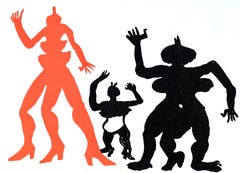
Alexander Calder, The Madwomen of Sache, from Derriere le Miroir, 1975
Located in Southampton, NY
This exquisite lithograph by Alexander Calder (1898–1976), titled Les folles de Sache (The Madwomen of Sache), originates from the historic 1975 folio Derriere le Miroir, No. 212. Pu...
Category

1970s Surrealist Lithograph Prints and Multiples

Materials

Lithograph

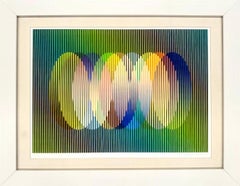
Oval 2 from the Serie Cardíaca Portfolio, Op Art Lithograph by Carlos Cruz-Diez
Located in Long Island City, NY
Oval 2 Carlos Cruz-Diez, Venezuelan (1923–2019) Portfolio: Serie Cardíaca Date: 2015 Lithograph, signed and numbered in pencil Edition of 75 Size: 13.75 x 19.75 in. (34.93 x 50.17 cm...
Category

2010s Op Art Lithograph Prints and Multiples

Materials

Lithograph

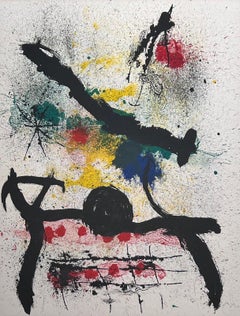
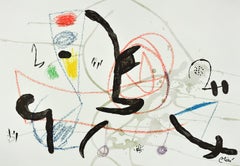
MARAVILLAS CON VARIACIONES... Lithograph Contemporary Art Abstract Black Green
Located in Madrid, Madrid
Maravillas con variaciones acrósticas en el jardín de Miró XI Date of creation: 1975 Medium: Lithograph on Gvarro paper Edition: 1500 Size: 49,5 x 71 cm Observations: Lithograph on G...
Category

1970s Abstract Lithograph Prints and Multiples

Materials

Lithograph

Vintage Lithographs and Other Prints for Sale on 1stDibs

Buying art and design is one thing. Collecting it is quite another. Whether you’re looking to add a focal point to your living room or you’re introducing a new acquisition to an already thriving collection of art, the range of vintage lithographs and other fine art prints on 1stDibs is waiting for you.  

The lithographic process begins by drawing on or painting on a stone surface with an oil-based substance, such as a greasy crayon or tusche (an oily wash). The stone is then covered with water, which is repelled by the oily areas. Oil-based ink is then applied to the wet stone, adhering only to the oily image. The stone is then covered with a sheet of paper and run through a press. 

Lithographs tend to be more painterly than other printing techniques such as woodcut printmaking and drypoint, and many postwar and contemporary painters have collaborated with lithographic workshops to push their practices in new directions. The collection of vintage lithographs on 1stDibs includes works by Marc Chagall, Joan Miró, Peter Max, Jasper Johns and other artists.

Groundbreaking print studios like Gemini began to crop up in the mid-20th century. These included Tamarind, first founded as a lithography shop in Los Angeles; ULAE on New York’s Long Island; and Crown Point Press in San Francisco. The timing was due to the fact that many artists had developed a taste for printmaking during the Great Depression via the Works Progress Administration (WPA), which opened print shops for unemployed artists to help create useful and uplifting messages that could be widely disseminated.

Find vintage lithographs and other types of prints for sale on 1stDibs.

Recently Viewed

View All