Items Similar to Empire
Want more images or videos?
Request additional images or videos from the seller
1 of 4
Robert CottinghamEmpire
$2,250
$3,25030% Off
£1,713.33
£2,474.8130% Off
€1,972.85
€2,849.6730% Off
CA$3,188.45
CA$4,605.5430% Off
A$3,429.63
A$4,953.9130% Off
CHF 1,832.89
CHF 2,647.5130% Off
MX$40,425.59
MX$58,392.5230% Off
NOK 23,108.51
NOK 33,378.9630% Off
SEK 21,125.56
SEK 30,514.7030% Off
DKK 14,740.53
DKK 21,291.8730% Off
About the Item
Robert Cottingham (1935)
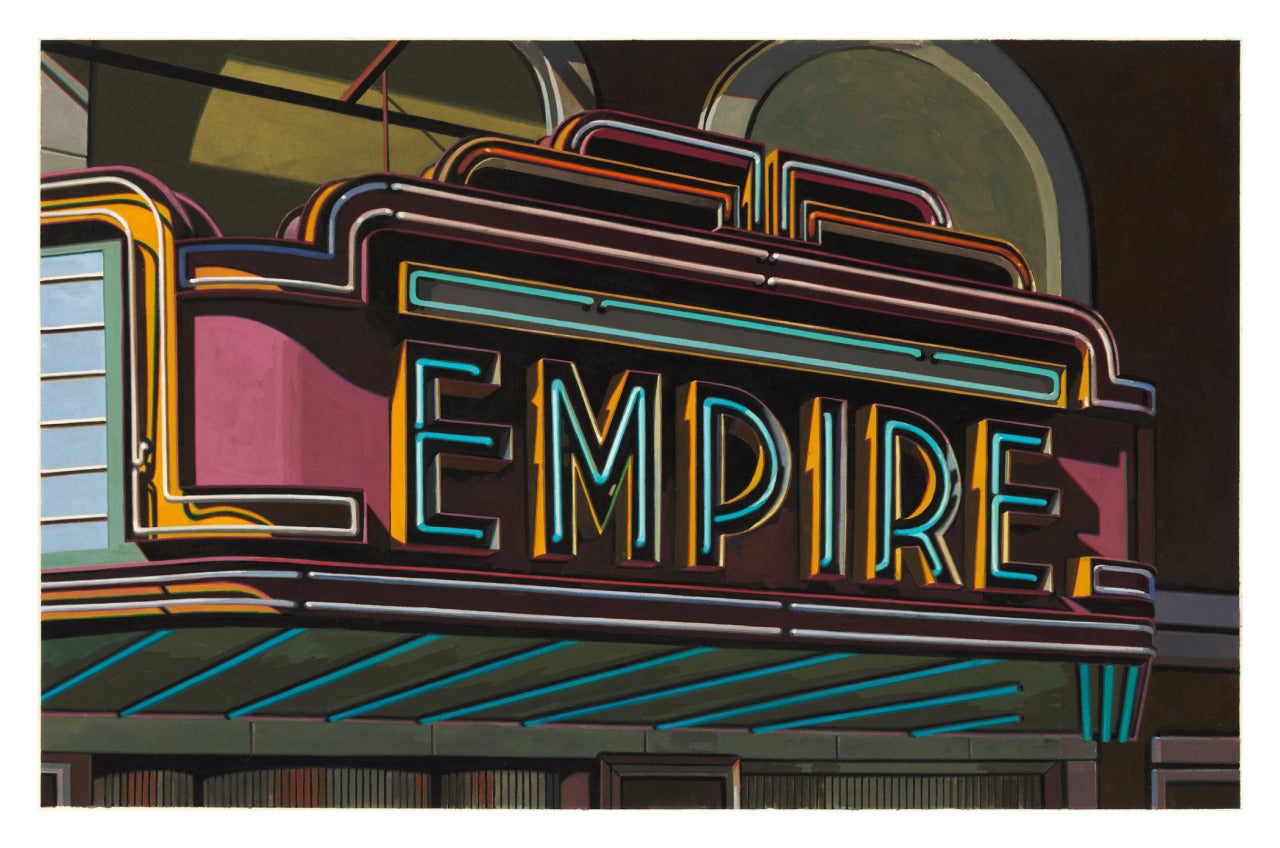
Empire
2008
Screenprint in colors
Image: 25.625 h x 39.875 w in (65 x 101 cm)
Sheet: 32.75 h x 46 w in (83 x 117 cm)
Signed, titled, dated and numbered to lower edge 'Empire PP 3/9 Cottingham 2009'. This work is printer's proof 3 of 9 apart from the edition of 117 printed by List Art Posters and published by Lincoln Center for the Performing Arts, New York.
Born in 1935 in Brooklyn, Robert Cottingham is known for his paintings and prints of urban American landscapes, particularly building facades, neon signs, movie marquees, and shop fronts. After serving in the U.S. Army from 1955 through 1958, he earned a BFA at Pratt Institute, Brooklyn, in 1963. Cottingham began his professional artistic career as an art director for the advertising firm Young and Rubicam in the early 1960s. Although he is typically associated with Photorealism, Cottingham never considered himself a Photorealist, but rather a realist painter working in a long tradition of American vernacular scenes. In this respect, his work often draws parallels to a number of American painters such as Stuart Davis, Charles Demuth, Edward Hopper, and Charles Sheeler.
Cottingham’s interest in the intersections of art and commerce derive from his career as an adman and the influence of Pop art. Many of his paintings convey an interest in typography and lettering, as well as an awareness of the psychological impact of certain isolated words and letters. In his facades, techniques from advertising, namely cropping and enlarging, often produce words of enigmatic or comical resonance such as “Art,” “Ha,” or “Oh.” Cottingham’s enlarged sense of scale is reminiscent of James Rosenquist’s work, while his interest in text suggests the influence of Robert Indiana and Jasper Johns. In general, Cottingham viewed his work as continuing the legacy of Pop artists such as Andy Warhol, who also had a background in advertising.
In 1964, Cottingham relocated to Los Angeles for work. There, inspired by the drastically different environment of the West Coast metropolis, he began to commit seriously to painting. Fascinated by Hollywood’s exaggerated glitz and the downtrodden atmosphere of the downtown, Cottingham saw in Los Angeles the relics of a bygone commercial heyday and desired to capture its kitschy and uncanny atmosphere, bathed in the near perpetual sunlight of Southern California.
In 1968, Cottingham ended his advertising career in order to devote all his time to painting. In the late 1960s, he started using photography in his practice, first as an initial reference point for his process. After selecting a photograph, he translates it into black-and-white drawings by projecting the image onto gridded paper, as a means of perfecting the tonal range between light and shadow. He often creates subsequent studies on paper using color. He finalizes the process by projecting either the original slide or any of the drawings onto a canvas and organizing the composition according to a grid. Another reason for Cottingham’s rejection of the Photorealist label is that he does not view his works as mere painterly translations of photographs or reproductions of reality. He has been known to change the words in his facades to alter the meaning of the subject. His primary interest lies in the subject matter—the urban American vernacular—rather than the deployment of a photo-based technique. After spending a period of time in London from 1972 to 1976, Cottingham found the city’s signs and history too foreign and removed from his own interests, and returned to the United States to settle in rural Connecticut. During the late 1970s and 1980s, his urban cityscapes became more expansive, with more complex and broader views of storefronts, vistas, and entire neighborhoods. In the late 1980s and early 1990s, Cottingham expanded his iconography of American vernacular culture to include trains and railroad imagery. More recently, he has focused on images of vintage typewriters, a subject that first interested him in the late 1990s.
Cottingham taught at the Art Center College of Design, Los Angeles (1969–70), and the National Academy of Design, New York (1991). He was the artist in residence at Wesleyan University, Middletown, Connecticut (1987–92). His work has been included in significant group exhibitions, including Documenta, Kassel, West Germany (1972), and those at the Serpentine Gallery, London (1973); Centre national d’art contemporain, Paris (1974); Whitney Museum of American Art, New York (1978); a traveling exhibition at the National Museum of American Art (now Smithsonian American Art Museum), Washington, D.C. (1986); Samsung Museum of Modern Art, Seoul (2001); and Deutsche Guggenheim, Berlin (2009). Cottingham’s printed oeuvre was celebrated by a solo presentation at National Museum of American Art in 1998–99. The artist lives and works in western Connecticut.
- Creator:Robert Cottingham (1935, American)
- Dimensions:Height: 32.75 in (83.19 cm)Width: 46 in (116.84 cm)Depth: 0.2 in (5.08 mm)
- Medium:
- Movement Style:
- Period:
- Condition:Excellent condition.
- Gallery Location:Miami, FL
- Reference Number:1stDibs: LU2519215214962
Robert Cottingham
Robert Cottingham is an American painter best known for his Photorealist depictions of cropped commercial signage. Born on September 26, 1935, in Brooklyn, NY, Cottingham studied at Pratt Institute. He received his BFA in 1963 before starting a five-year career in commercial advertising. Upon moving to Los Angeles, Cottingham seriously committed himself to his painting practice, which eventually subsumed his advertising career by 1968 as the artist rose to prominence along with the Photorealist movement. Notably—though Cottingham is considered among the most prominent Photorealists of the latter half of the 20th century—he disavowed his relationship to the movement. Instead, he views his work as part of the lineage of vernacular Americana painters, including the likes of Stuart Davis and Edward Hopper. His work can be found in The Metropolitan Museum of Art collections in New York and the Smithsonian American Art Museum in Washington, D.C., among others.
About the Seller
5.0
Vetted Professional Seller
Every seller passes strict standards for authenticity and reliability
Established in 2023
1stDibs seller since 2023
20 sales on 1stDibs
- ShippingRetrieving quote...Shipping from: Miami, FL
- Return Policy
More From This Seller
View AllErebos
Located in Miami, FL
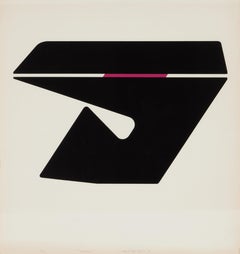
Gerd Leufert
Title: Erebos
Signed, titled, dated ‘91 and inscribed P/A in pencil (lower center)
Screenprint on paper
23⅝ by 22⅜ in. / 60 by 56.8 cm.
Executed in 1991, this work is an artist’s proof from an edition of 35 plus 1 artist’s proof.
Provenance: Private Collection, Venezuela - Acquired from the above by the present owner - Sotheby's Auction
“The first duty of the creator: restlessness,” Gerd Leufert wrote in 1985, looking back on his 30-year career as an artist, designer, museum worker, and professor of art in Venezuela.1 Bridging the worlds of commerce and culture in Caracas, Leufert’s impact on art and design owed to his interdisciplinary approach: the influence of cutting-edge developments in abstract art appeared in his graphic design, while the efficiency and bold contrast of mid-century design characterized his paintings.
An immigrant born in German-controlled Lithuania at the cusp of the first World War, Leufert studied arts and design in Hannover, Mainz, and, finally, in Munich with the German typographer Fritz H...
Category
1990s Abstract Geometric Abstract Prints
Materials
Screen
$2,700 Sale Price
40% Off
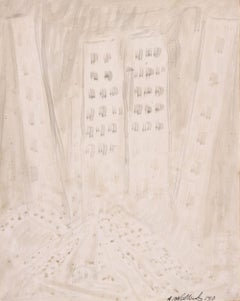
New York Improvisation
By Abraham Walkowitz
Located in Miami, FL
Abraham Walkowitz (1878–1965)
New York Improvisation, 1910
Ink wash on paper
Signed lower right 'A. Walkowitz 1910'
Titled and dated on Zabriskie Gallery label enclosed in clear sle...
Category
Early 1900s Post-Impressionist Figurative Drawings and Watercolors
Materials
Ink
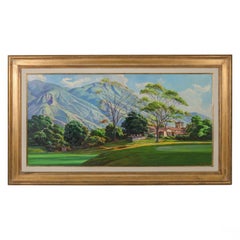
La Casa del Club (Caracas Country Club)
Located in Miami, FL
Francisco Vadillo (1933)
La Casa del Club, 2003
Oil on Canvas
61 x 122 cm (work size, excluding frame)
Signed in lower right
Original oil on canvas titled "La Casa del Club" (2003)....
Category
Early 2000s Contemporary Landscape Paintings
Materials
Oil
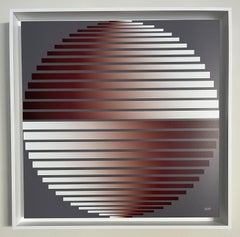
Circule I
Located in Miami, FL
Circule I
24" x 24"
Digital Art
Print in aluminum
Marianella Blasini, a relevant emerging artist born in Caracas, Venezuela, resides in Miami, Florida, since the ye...
Category
21st Century and Contemporary Abstract Geometric Mixed Media
Materials
Digital
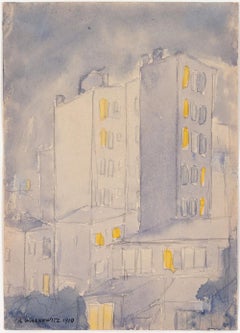
Improvisations of New York
By Abraham Walkowitz
Located in Miami, FL
Abraham Walkowitz (1878–1965)
Improvisations of New York, 1910
Watercolor and pencil on paper
Signed lower right 'A. Walkowitz 1910'
Dimensions: 7 x 5 inches (paper)
Titled on Berna...
Category
Early 1900s Post-Impressionist Landscape Drawings and Watercolors
Materials
Watercolor
Untitled
Located in Miami, FL
Gertrud Goldschmidt (Gego)
Untitled, 1974
Lithograph in colors on BFK Rives wove paper
Registered with the Gego Foundation (FG-3647)
56 x 50 cm
Signed, dated, and numbered in crayon....
Category
1970s Abstract Prints
Materials
Lithograph
You May Also Like
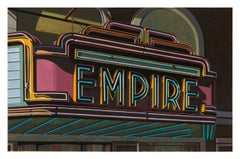
"Empire" by Robert Cottingham (Photorealism, Neon, City, Text, Screen print)
By Robert Cottingham
Located in New York, NY
Robert Cottingham is known for imagery that celebrates the history of communications in America, specifically neon signage on urban storefronts and signs on railroad cars.
In 2008, Lincoln Center commissioned Robert Cottingham to commemorate the 46th anniversary of its Film Festival. Inspired by his earlier photographs of the Empire Theatre in Montgomery Alabama...
Category
Early 2000s Photorealist Figurative Prints
Materials
Screen
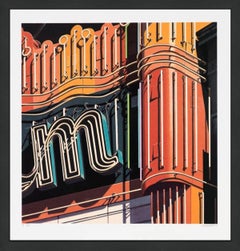
M
By Robert Cottingham
Located in Aventura, FL
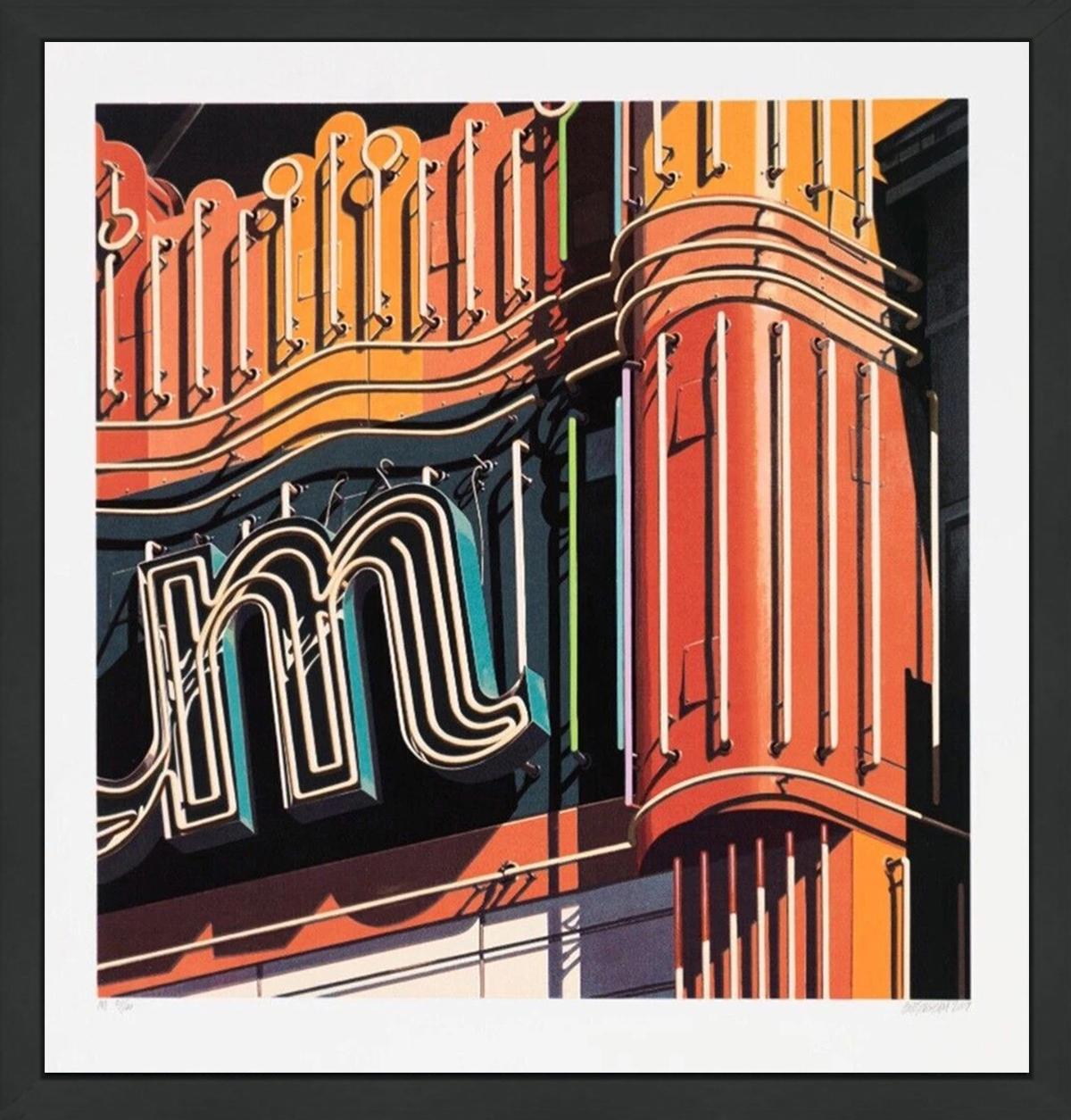
Hand signed, titled, numbered and dated, lower margin. Screen print in colors on wove paper with full margins. Sheet size: 38 x 37 inches. Image size: 32 x 32 inches. Frame size approx 41 x 40 inches. Edition of 100. From American Signs portfolio.
Certificate of Authenticity included. Published by Greg Smith...
Category
Early 2000s Photorealist Landscape Prints
Materials
Paper, Screen
$2,590 Sale Price
30% Off
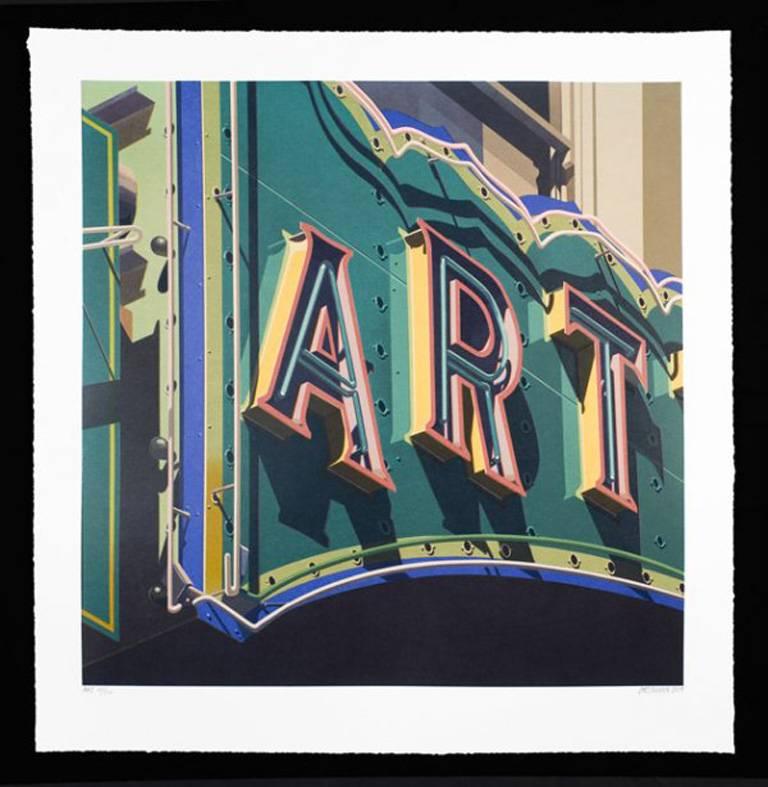
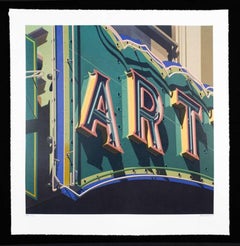
Art, from American Signs portfolio
By Robert Cottingham
Located in New York, NY
ROBERT COTTINGHAM
Art, from American Signs portfolio, 2009
screenprint in colors, on wove paper, with full margins,
40 1/8 x 39 1/8 in (101.9 x 99.4 cm)
signed, dated `2009' and...
Category
Early 2000s Photorealist Abstract Prints
Materials
Screen
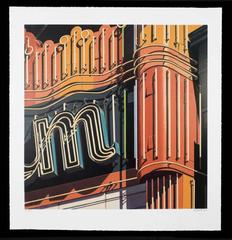
M, from American Signs portfolio
By Robert Cottingham
Located in New York, NY
ROBERT COTTINGHAM
M, from American Signs portfolio, 2009
screenprint in colors, on wove paper, with full margins,
40 1/8 x 39 1/8 in (101.9 x 99.4 cm)
signed, dated `2009' and n...
Category
Early 2000s Photorealist Abstract Prints
Price Upon Request
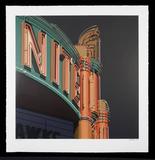
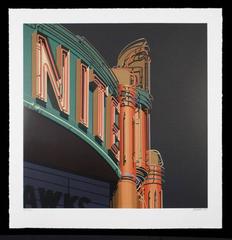
Nite, from American Signs portfolio
By Robert Cottingham
Located in New York, NY
ROBERT COTTINGHAM
NIte, from American Signs portfolio, 2009
screenprint in colors, on wove paper, with full margins,
40 1/8 x 39 1/8 in (101.9 x 99.4 cm)
signed, dated `2009' an...
Category
Photorealist Abstract Prints
Materials
Screen
Price Upon Request
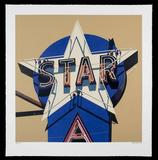
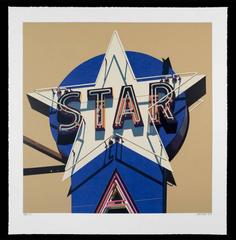
Star, from American Signs Portfolio
By Robert Cottingham
Located in New York, NY
ROBERT COTTINGHAM
Star, from American Signs portfolio, 2009
screenprint in colors, on wove paper, with full margins,
40 1/8 x 39 1/8 in (101.9 x 99.4 cm)
signed, dated `2009' and numbered edition of 100 in pencil
--
Robert Cottingham
B. 1935, BROOKLYN, NEW YORK
Born in 1935 in Brooklyn, Robert Cottingham is known for his paintings and prints of urban American landscapes, particularly building facades, neon signs, movie marquees, and shop fronts. After serving in the U.S. Army from 1955 through 1958, he earned a BFA at Pratt Institute, Brooklyn, in 1963. Cottingham began his professional artistic career as an art director for the advertising firm Young and Rubicam in the early 1960s. Although he is typically associated with Photorealism, Cottingham never considered himself a Photorealist, but rather a realist painter working in a long tradition of American vernacular scenes. In this respect, his work often draws parallels to a number of American painters such as Stuart Davis, Charles Demuth, Edward Hopper, and Charles Sheeler.
Cottingham’s interest in the intersections of art and commerce derive from his career as an adman and the influence of Pop art. Many of his paintings convey an interest in typography and lettering, as well as an awareness of the psychological impact of certain isolated words and letters. In his facades, techniques from advertising, namely cropping and enlarging, often produce words of enigmatic or comical resonance such as “Art,” “Ha,” or “Oh.” Cottingham’s enlarged sense of scale is reminiscent of James Rosenquist’s work, while his interest in text suggests the influence of Robert Indiana and Jasper Johns. In general, Cottingham viewed his work as continuing the legacy of Pop artists such as Andy Warhol, who also had a background in advertising.
In 1964, Cottingham relocated to Los Angeles for work. There, inspired by the drastically different environment of the West Coast metropolis, he began to commit seriously to painting. Fascinated by Hollywood’s exaggerated glitz and the downtrodden atmosphere of the downtown, Cottingham saw in Los Angeles the relics of a bygone commercial heyday and desired to capture its kitschy and uncanny atmosphere, bathed in the near perpetual sunlight of Southern California.
In 1968, Cottingham ended his advertising career in order to devote all his time to painting. In the late 1960s, he started using photography in his practice, first as an initial reference point for his process. After selecting a photograph, he translates it into black-and-white drawings by projecting the image onto gridded paper...
Category
Early 2000s Photorealist More Prints
Materials
Screen
Price Upon Request
More Ways To Browse
Banksy Dirty Funker
Blue Dog Original Prints
Boac Caribbean
Cadiz Poster
Claes Oldenburg Notes
Cote De Azur Poster
Damien Hirst Skateboard
Ddr Poster
Deborah Kass Oy
Dig For Victory Poster
Dirty Funker
Goddess Of Liberty
Hamburg Amerika Linie
Infantry Poster
John Lennon Self Portrait
Lithograph Pasta
Lovely Day For A Guinness
Martin Peikert Vintage Posters