Kinetic More Prints
to
1
2
3
1
Overall Width
to
Overall Height
to
2,037
1,003
890
849
702
121
95
82
70
43
33
24
23
20
2
1
1
1
4
2
1
1
1
1
2
2
2
1
1
1
1
2
2
1
1
1
2
4
1
Style: Kinetic
Original
Soccer
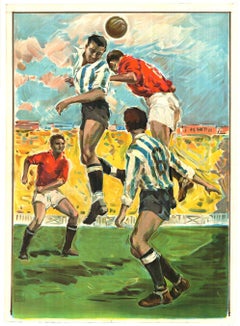
vintage lithograph posters a.k.a. "Heads Up", Spain
Located in Spokane, WA
Original Soccer vintage sports poster. Linen backed in very good condition, ready to frame. Printed by Ortega Company in Valencia.
This type of untitled vintage poster was commonly printed and the date of an upcoming game and team would be added at the bottom of the poster. Soccer games were played quite often, allowing the local team to advertise their events without reprinting a new poster for each game or event. This poster was printed as a full lithograph, so it was expensive to produce. There is no specific designation of which two teams are being shown here in this antique poster
The poster has a nickname of ‘heads-up,” as two of the players are in the air as they position themselves to control the soccer ball.
Valencia two main clubs, FC València and Levante UD, attract hordes of fans to their matches. Both clubs play in the First Division of La Liga...
Category
1960s Kinetic More Prints
Materials
Lithograph

$680 Sale Price
20% Off
L
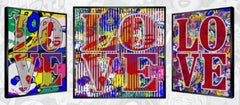
amour en rouge
Located in Rye, NY
Patrick Rubinstein is a French contemporary artist, born in 1960
in Paris. He belongs to the movement of Op Art and Kinetic art.
He is the inventor of the movement Kinetic Pop Art,...
Category
2010s Kinetic More Prints
Materials
Mixed Media, Digital
L
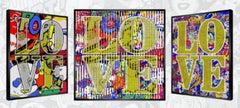
amour en Jaune
Located in Rye, NY
Patrick Rubinstein is a French contemporary artist, born in 1960
in Paris. He belongs to the movement of Op Art and Kinetic art.
He is the inventor of the movement Kinetic Pop Art,...
Category
2010s Kinetic More Prints
Materials
Digital, Mixed Media
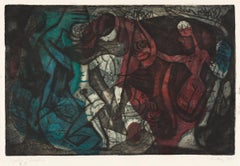
Apollo and Daphne
Located in New York, NY
A superb, richly-inked impression of this extremely scarce, early etching, aquatint and engraving with hand coloring in watercolor on cream wove paper. Colors are strong with crisp, ...
Category
1940s Kinetic More Prints
Materials
Watercolor, Engraving, Etching, Aquatint
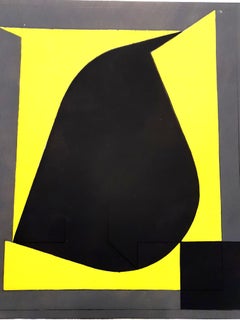
Victor Vasarely (after) - Stencil
Located in Collonge Bellerive, Geneve, CH
Victor Vasarely (after) - pochoir print by Daniel Jacomet
Published in the deluxe art review, XXe Siecle
1958
Dimensions: 32 x 25 cm
Publisher: G. di San Lazzaro.
Victor Vasarely...
Category
1950s Kinetic More Prints
Materials
Stencil
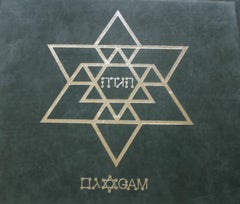
The Agam Passover Haggadah - Gold Edition
By Yaacov Agam
Located in Jerusalem, IL
A Passover Haggadah, made by the artist Yaacov Agam.
58 original serigraphs, pulled by hand on Rivs 270 Gr. (Arjomarie-Prioux) by Atelier Arcay in Paris, 1985.
All color separations ...
Category
1980s Kinetic More Prints
Materials
Paper, Color
Related Items
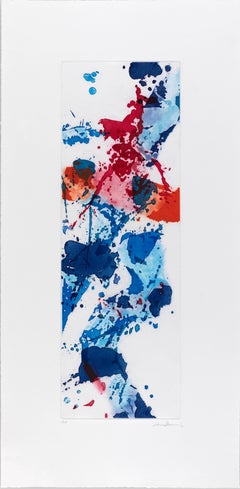
Untitled
By Sam Francis
Located in London, GB
86.4 x 71.8 cms (34 x 28.25 ins)
Edition of 17
Paper: Somerset Textured
Proofs: 9 AP, I CTP (on handmade paper)
Signed right, under image; numbered left, under image; publisher's chop lower right
Publisher: The Litho Shop Inc., Santa Monica, California
Printed by Jacob Samuel...
Category
1980s Kinetic More Prints
Materials
Aquatint, Color
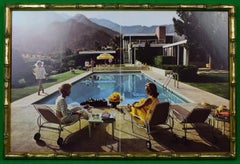
Slim Aarons Poolside Glamour At The Kaufmann Desert House In Palm Springs
By Slim Aarons
Located in Bristol, CT
Print Sz: 13" x 20 1/8"
Frame Sz: 14 1/4" x 21 3/8"
In gilt bamboo frame w/ UV glass
*w/ centerfold double plate crease from book as published*
Original double color plate from "...
Category
1970s Kinetic More Prints
Materials
Paper
$1,200
H 14.25 in W 21.38 in
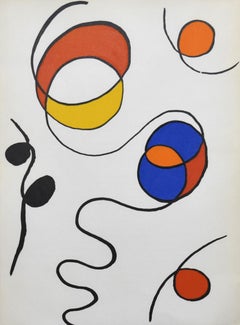
Plate 1, from Derriere Le Miroir #173
Located in Washington, DC
Artist: Alexander Calder
Title: Plate 1
Portfolio: Derriere le Miroir #173
Medium: Lithograph
Year: 1968
Edition: Unnumbered
Frame Size: 21 1/4" x 17 1/4"
Sheet Size: 15" x 11"
Image...
Category
1960s Kinetic More Prints
Materials
Lithograph
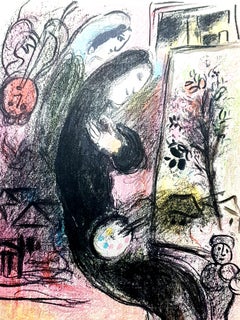
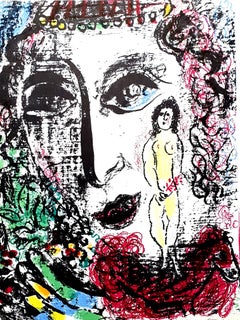
Marc Chagall - Inspiration - Original Lithograph from "Chagall Lithographe" v. 2
By Marc Chagall
Located in Collonge Bellerive, Geneve, CH
Marc Chagall
Original Lithograph from Chagall Lithographe 1957-1962. VOLUME II.
1963
Dimensions: 32 x 24 cm
From the unsigned edition of 10000 copies without margins
Reference: Mourlot 398
Condition : Excellent
Marc Chagall (born in 1887)
Marc Chagall was born in Belarus in 1887 and developed an early interest in art. After studying painting, in 1907 he left Russia for Paris, where he lived in an artist colony on the city’s outskirts. Fusing his own personal, dreamlike imagery with hints of the fauvism and cubism popular in France at the time, Chagall created his most lasting work—including I and the Village (1911)—some of which would be featured in the Salon des Indépendants exhibitions. After returning to Vitebsk for a visit in 1914, the outbreak of WWI trapped Chagall in Russia. He returned to France in 1923 but was forced to flee the country and Nazi persecution during WWII. Finding asylum in the U.S., Chagall became involved in set and costume design before returning to France in 1948. In his later years, he experimented with new art forms and was commissioned to produce numerous large-scale works. Chagall died in St.-Paul-de-Vence in 1985.
The Village
Marc Chagall was born in a small Hassidic community on the outskirts of Vitebsk, Belarus, on July 7, 1887. His father was a fishmonger, and his mother ran a small sundries shop in the village. As a child, Chagall attended the Jewish elementary school, where he studied Hebrew and the Bible, before later attending the Russian public school. He began to learn the fundamentals of drawing during this time, but perhaps more importantly, he absorbed the world around him, storing away the imagery and themes that would feature largely in most of his later work.
At age 19 Chagall enrolled at a private, all-Jewish art school and began his formal education in painting, studying briefly with portrait artist Yehuda Pen. However, he left the school after several months, moving to St. Petersburg in 1907 to study at the Imperial Society for the Protection of Fine Arts. The following year, he enrolled at the Svanseva School, studying with set designer Léon Bakst, whose work had been featured in Sergei Diaghilev's Ballets Russes. This early experience would prove important to Chagall’s later career as well.
Despite this formal instruction, and the widespread popularity of realism in Russia at the time, Chagall was already establishing his own personal style, which featured a more dreamlike unreality and the people, places and imagery that were close to his heart. Some examples from this period are his Window Vitebsk (1908) and My Fianceé with Black Gloves (1909), which pictured Bella Rosenfeld, to whom he had recently become engaged.
The Beehive
Despite his romance with Bella, in 1911 an allowance from Russian parliament member and art patron Maxim Binaver enabled Chagall to move to Paris, France. After settling briefly in the Montparnasse neighborhood, Chagall moved further afield to an artist colony known as La Ruche (“The Beehive”), where he began to work side by side with abstract painters such as Amedeo Modigliani and Fernand Léger as well as the avant-garde poet Guillaume Apollinaire. At their urging, and under the influence of the wildly popular fauvism and cubism, Chagall lightened his palette and pushed his style ever further from reality. I and the Village (1911) and Homage to Apollinaire (1912) are among his early Parisian works, widely considered to be his most successful and representative period.
Though his work stood stylistically apart from his cubist contemporaries, from 1912 to 1914 Chagall exhibited several paintings at the annual Salon des Indépendants exhibition, where works by the likes of Juan Gris, Marcel Duchamp and Robert Delaunay were causing a stir in the Paris art world. Chagall’s popularity began to spread beyond La Ruche, and in May 1914 he traveled to Berlin to help organize his first solo exhibition, at Der Sturm Gallery. Chagall remained in the city until the highly acclaimed show opened that June. He then returned to Vitebsk, unaware of the fateful events to come.
War, Peace and Revolution
In August 1914 the outbreak of World War I precluded Chagall’s plans to return to Paris. The conflict did little to stem the flow of his creative output, however, instead merely giving him direct access to the childhood scenes so essential to his work, as seen in paintings such as Jew in Green (1914) and Over Vitebsk (1914). His paintings from this period also occasionally featured images of the war’s impact on the region, as with Wounded Soldier (1914) and Marching (1915). But despite the hardships of life during wartime, this would also prove to be a joyful period for Chagall. In July 1915 he married Bella, and she gave birth to a daughter, Ida, the following year. Their appearance in works such as Birthday (1915), Bella and Ida by the Window (1917) and several of his “Lovers” paintings give a glimpse of the island of domestic bliss that was Chagall’s amidst the chaos.
To avoid military service and stay with his new family, Chagall took a position as a clerk in the Ministry of War Economy in St. Petersburg. While there he began work on his autobiography and also immersed himself in the local art scene, befriending novelist Boris Pasternak, among others. He also exhibited his work in the city and soon gained considerable recognition. That notoriety would prove important in the aftermath of the 1917 Russian Revolution when he was appointed as the Commissar of Fine Arts in Vitebsk. In his new post, Chagall undertook various projects in the region, including the 1919 founding of the Academy of the Arts. Despite these endeavors, differences among his colleagues eventually disillusioned Chagall. In 1920 he relinquished his position and moved his family to Moscow, the post-revolution capital of Russia.
In Moscow, Chagall was soon commissioned to create sets and costumes for various productions at the Moscow State Yiddish Theater...
Category
1960s Kinetic More Prints
Materials
Lithograph
$1,483
H 9.45 in W 12.6 in D 0.04 in
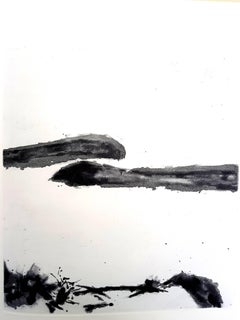
Zao Wou-ki - Moments - Original Aquatint with Hand-Signed Justification
By Zao Wou-Ki
Located in Collonge Bellerive, Geneve, CH
Zao Wou-ki - Moments - Original Aquatint
Edition of 130
Dimensions: 34.2 x 30.5 cm
Vellum paper BFK Rives
1996
Bibliography: Jørgen Ågerup, Zao Wou-Ki: The Graphic Work, A Catalogue ...
Category
1990s Kinetic More Prints
Materials
Aquatint
$1,898
H 13.47 in W 12.01 in D 0.04 in
Generations 8
By Robyn Denny
Located in London, GB
Etching with aquatint on watercolour wash on paper
53 x 71 cms (21 x 28 ins)
Edition of 35, Set of 24
Signed, dated, and numbered 3/35
Published by Bernard Jacobson Ltd., London
Prin...
Category
1970s Kinetic More Prints
Materials
Color, Etching, Aquatint
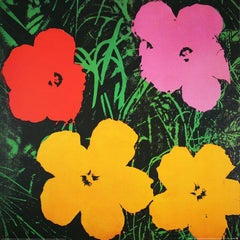
Flowers by Andy Warhol (1964) Art Print – Iconic Pop Art Design
Located in Winterswijk, NL
A bold and vibrant reproduction of Andy Warhol’s iconic 1964 Flowers series, this striking artwork is printed on heavy art paper, showcasing the enduring brilliance of Pop Art. The c...
Category
1960s Kinetic More Prints
Materials
Paper
$154
H 38.19 in W 38.19 in
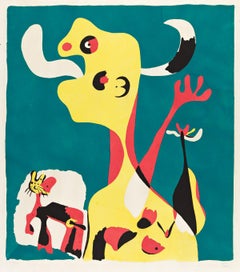
Femme et Chien devant la Lune
By Joan Miró
Located in New York, NY
A superb impression of this very scarce, early color pochoir. Signed, dated "1935" and numbered 58/60 in pencil by Miro. Published by Adlan, Barcelona. Ink stamp on the reverse indic...
Category
1930s Kinetic More Prints
Materials
Color, Stencil
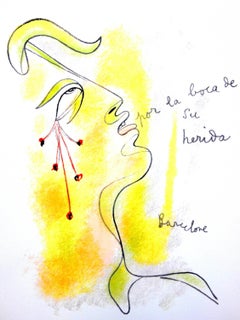
Jean Cocteau - Profile - Original Lithograph
By Jean Cocteau
Located in Collonge Bellerive, Geneve, CH
Original Lithograph by Jean Cocteau
Title: Taureaux
Signed in the plate
Dimensions: 40 x 30 cm
Edition: 200
Luxury print edition from the portfolio of Trinckvel
1965
Jean Cocteau
W...
Category
1960s Kinetic More Prints
Materials
Lithograph
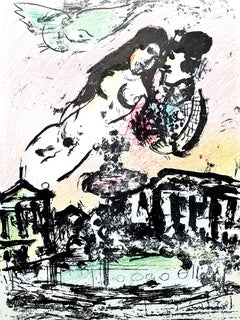
Marc Chagall - Original Lithograph
By Marc Chagall
Located in Collonge Bellerive, Geneve, CH
Marc Chagall
Original Lithograph
1963
Dimensions: 32 x 24 cm
Reference: Chagall Lithographe 1957-1962. VOLUME II.
Condition : Excellent
Marc Chagall (born in 1887)
Marc Chagall was born in Belarus in 1887 and developed an early interest in art. After studying painting, in 1907 he left Russia for Paris, where he lived in an artist colony on the city’s outskirts. Fusing his own personal, dreamlike imagery with hints of the fauvism and cubism popular in France at the time, Chagall created his most lasting work—including I and the Village (1911)—some of which would be featured in the Salon des Indépendants exhibitions. After returning to Vitebsk for a visit in 1914, the outbreak of WWI trapped Chagall in Russia. He returned to France in 1923 but was forced to flee the country and Nazi persecution during WWII. Finding asylum in the U.S., Chagall became involved in set and costume design before returning to France in 1948. In his later years, he experimented with new art forms and was commissioned to produce numerous large-scale works. Chagall died in St.-Paul-de-Vence in 1985.
The Village
Marc Chagall was born in a small Hassidic community on the outskirts of Vitebsk, Belarus, on July 7, 1887. His father was a fishmonger, and his mother ran a small sundries shop in the village. As a child, Chagall attended the Jewish elementary school, where he studied Hebrew and the Bible, before later attending the Russian public school. He began to learn the fundamentals of drawing during this time, but perhaps more importantly, he absorbed the world around him, storing away the imagery and themes that would feature largely in most of his later work.
At age 19 Chagall enrolled at a private, all-Jewish art school and began his formal education in painting, studying briefly with portrait artist Yehuda Pen. However, he left the school after several months, moving to St. Petersburg in 1907 to study at the Imperial Society for the Protection of Fine Arts. The following year, he enrolled at the Svanseva School, studying with set designer Léon Bakst, whose work had been featured in Sergei Diaghilev's Ballets Russes. This early experience would prove important to Chagall’s later career as well.
Despite this formal instruction, and the widespread popularity of realism in Russia at the time, Chagall was already establishing his own personal style, which featured a more dreamlike unreality and the people, places and imagery that were close to his heart. Some examples from this period are his Window Vitebsk (1908) and My Fianceé with Black Gloves (1909), which pictured Bella Rosenfeld, to whom he had recently become engaged.
The Beehive
Despite his romance with Bella, in 1911 an allowance from Russian parliament member and art patron Maxim Binaver enabled Chagall to move to Paris, France. After settling briefly in the Montparnasse neighborhood, Chagall moved further afield to an artist colony known as La Ruche (“The Beehive”), where he began to work side by side with abstract painters such as Amedeo Modigliani and Fernand Léger as well as the avant-garde poet Guillaume Apollinaire. At their urging, and under the influence of the wildly popular fauvism and cubism, Chagall lightened his palette and pushed his style ever further from reality. I and the Village (1911) and Homage to Apollinaire (1912) are among his early Parisian works, widely considered to be his most successful and representative period.
Though his work stood stylistically apart from his cubist contemporaries, from 1912 to 1914 Chagall exhibited several paintings at the annual Salon des Indépendants exhibition, where works by the likes of Juan Gris, Marcel Duchamp and Robert Delaunay were causing a stir in the Paris art world. Chagall’s popularity began to spread beyond La Ruche, and in May 1914 he traveled to Berlin to help organize his first solo exhibition, at Der Sturm Gallery. Chagall remained in the city until the highly acclaimed show opened that June. He then returned to Vitebsk, unaware of the fateful events to come.
War, Peace and Revolution
In August 1914 the outbreak of World War I precluded Chagall’s plans to return to Paris. The conflict did little to stem the flow of his creative output, however, instead merely giving him direct access to the childhood scenes so essential to his work, as seen in paintings such as Jew in Green (1914) and Over Vitebsk (1914). His paintings from this period also occasionally featured images of the war’s impact on the region, as with Wounded Soldier (1914) and Marching (1915). But despite the hardships of life during wartime, this would also prove to be a joyful period for Chagall. In July 1915 he married Bella, and she gave birth to a daughter, Ida, the following year. Their appearance in works such as Birthday (1915), Bella and Ida by the Window (1917) and several of his “Lovers” paintings give a glimpse of the island of domestic bliss that was Chagall’s amidst the chaos.
To avoid military service and stay with his new family, Chagall took a position as a clerk in the Ministry of War Economy in St. Petersburg. While there he began work on his autobiography and also immersed himself in the local art scene, befriending novelist Boris Pasternak, among others. He also exhibited his work in the city and soon gained considerable recognition. That notoriety would prove important in the aftermath of the 1917 Russian Revolution when he was appointed as the Commissar of Fine Arts in Vitebsk. In his new post, Chagall undertook various projects in the region, including the 1919 founding of the Academy of the Arts. Despite these endeavors, differences among his colleagues eventually disillusioned Chagall. In 1920 he relinquished his position and moved his family to Moscow, the post-revolution capital of Russia.
In Moscow, Chagall was soon commissioned to create sets and costumes for various productions at the Moscow State Yiddish Theater...
Category
1960s Kinetic More Prints
Materials
Lithograph
Marc Chagall - Original Lithograph
By Marc Chagall
Located in Collonge Bellerive, Geneve, CH
Marc Chagall
Original Lithograph
1963
Dimensions: 32 x 24 cm
Reference: Chagall Lithographe 1957-1962. VOLUME II.
Condition : Excellent
Marc Chagall (born in 1887)
Marc Chagall was born in Belarus in 1887 and developed an early interest in art. After studying painting, in 1907 he left Russia for Paris, where he lived in an artist colony on the city’s outskirts. Fusing his own personal, dreamlike imagery with hints of the fauvism and cubism popular in France at the time, Chagall created his most lasting work—including I and the Village (1911)—some of which would be featured in the Salon des Indépendants exhibitions. After returning to Vitebsk for a visit in 1914, the outbreak of WWI trapped Chagall in Russia. He returned to France in 1923 but was forced to flee the country and Nazi persecution during WWII. Finding asylum in the U.S., Chagall became involved in set and costume design before returning to France in 1948. In his later years, he experimented with new art forms and was commissioned to produce numerous large-scale works. Chagall died in St.-Paul-de-Vence in 1985.
The Village
Marc Chagall was born in a small Hassidic community on the outskirts of Vitebsk, Belarus, on July 7, 1887. His father was a fishmonger, and his mother ran a small sundries shop in the village. As a child, Chagall attended the Jewish elementary school, where he studied Hebrew and the Bible, before later attending the Russian public school. He began to learn the fundamentals of drawing during this time, but perhaps more importantly, he absorbed the world around him, storing away the imagery and themes that would feature largely in most of his later work.
At age 19 Chagall enrolled at a private, all-Jewish art school and began his formal education in painting, studying briefly with portrait artist Yehuda Pen. However, he left the school after several months, moving to St. Petersburg in 1907 to study at the Imperial Society for the Protection of Fine Arts. The following year, he enrolled at the Svanseva School, studying with set designer Léon Bakst, whose work had been featured in Sergei Diaghilev's Ballets Russes. This early experience would prove important to Chagall’s later career as well.
Despite this formal instruction, and the widespread popularity of realism in Russia at the time, Chagall was already establishing his own personal style, which featured a more dreamlike unreality and the people, places and imagery that were close to his heart. Some examples from this period are his Window Vitebsk (1908) and My Fianceé with Black Gloves (1909), which pictured Bella Rosenfeld, to whom he had recently become engaged.
The Beehive
Despite his romance with Bella, in 1911 an allowance from Russian parliament member and art patron Maxim Binaver enabled Chagall to move to Paris, France. After settling briefly in the Montparnasse neighborhood, Chagall moved further afield to an artist colony known as La Ruche (“The Beehive”), where he began to work side by side with abstract painters such as Amedeo Modigliani and Fernand Léger as well as the avant-garde poet Guillaume Apollinaire. At their urging, and under the influence of the wildly popular fauvism and cubism, Chagall lightened his palette and pushed his style ever further from reality. I and the Village (1911) and Homage to Apollinaire (1912) are among his early Parisian works, widely considered to be his most successful and representative period.
Though his work stood stylistically apart from his cubist contemporaries, from 1912 to 1914 Chagall exhibited several paintings at the annual Salon des Indépendants exhibition, where works by the likes of Juan Gris, Marcel Duchamp and Robert Delaunay were causing a stir in the Paris art world. Chagall’s popularity began to spread beyond La Ruche, and in May 1914 he traveled to Berlin to help organize his first solo exhibition, at Der Sturm Gallery. Chagall remained in the city until the highly acclaimed show opened that June. He then returned to Vitebsk, unaware of the fateful events to come.
War, Peace and Revolution
In August 1914 the outbreak of World War I precluded Chagall’s plans to return to Paris. The conflict did little to stem the flow of his creative output, however, instead merely giving him direct access to the childhood scenes so essential to his work, as seen in paintings such as Jew in Green (1914) and Over Vitebsk (1914). His paintings from this period also occasionally featured images of the war’s impact on the region, as with Wounded Soldier (1914) and Marching (1915). But despite the hardships of life during wartime, this would also prove to be a joyful period for Chagall. In July 1915 he married Bella, and she gave birth to a daughter, Ida, the following year. Their appearance in works such as Birthday (1915), Bella and Ida by the Window (1917) and several of his “Lovers” paintings give a glimpse of the island of domestic bliss that was Chagall’s amidst the chaos.
To avoid military service and stay with his new family, Chagall took a position as a clerk in the Ministry of War Economy in St. Petersburg. While there he began work on his autobiography and also immersed himself in the local art scene, befriending novelist Boris Pasternak, among others. He also exhibited his work in the city and soon gained considerable recognition. That notoriety would prove important in the aftermath of the 1917 Russian Revolution when he was appointed as the Commissar of Fine Arts in Vitebsk. In his new post, Chagall undertook various projects in the region, including the 1919 founding of the Academy of the Arts. Despite these endeavors, differences among his colleagues eventually disillusioned Chagall. In 1920 he relinquished his position and moved his family to Moscow, the post-revolution capital of Russia.
In Moscow, Chagall was soon commissioned to create sets and costumes for various productions at the Moscow State Yiddish Theater...
Category
1960s Kinetic More Prints
Materials
Lithograph
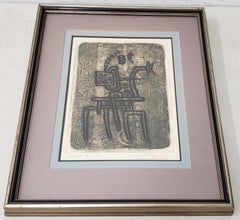
The Blue Rider
By Max Papart
Located in San Francisco, CA
Max Papart (1911-1994) "The Blue Rider" Original Etching with Aquatint, circa 1973
This is a rare artist proof. The artist proof is pencil signed and titled by the artist.
The regu...
Category
Mid-20th Century Kinetic More Prints
Materials
Etching, Aquatint
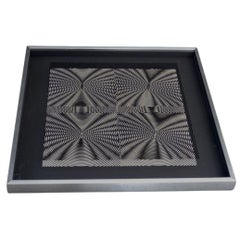
Previously Available Items
Serigrafia di Albero Biasi, Italia 1972
By Alberto Biasi
Located in Vicenza, VI
Serigrafia su carta e plexiglass dell'artista italiano Alberto Biasi.
L'opera appartiene alla caratteristica produzione cinetica dell'artista, che attraverso la sua arte attua una ri...
Category
1970s Kinetic More Prints
Materials
Plexiglass, Wood, Paper, Screen
L
amour en Bleu
Located in Rye, NY
Patrick Rubinstein is a French contemporary artist, born in 1960
in Paris. He belongs to the movement of Op Art and Kinetic art.
He is the inventor of the movement Kinetic Pop Art,...
Category
2010s Kinetic More Prints
Materials
Mixed Media, Digital
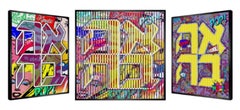
Ahava Pop Yellow
Located in Rye, NY
Patrick Rubinstein is a French contemporary artist, born in 1960
in Paris. He belongs to the movement of Op Art and Kinetic art.
He is the inventor of the movement Kinetic Pop Art,...
Category
2010s Kinetic More Prints
Materials
Digital, Mixed Media
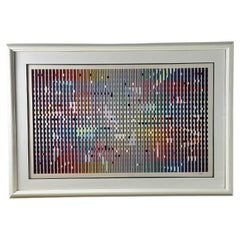
Silkscreen by Yaacov Agam
By Yaacov Agam
Located in Tel Aviv, IL
Yaacov Agam, Silkscreen, Colored work, International artist, Israeli artist, Israeli art. Yaacov Agam’s polymorph is a unique example of geometric and kinetic art that changes as the...
Category
Late 20th Century Kinetic More Prints
Materials
Silk, Screen, Color
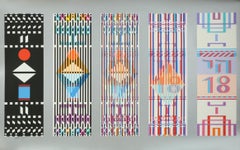
Multicolor Kinetic Op Art Lithograph by Israeli Artist Yaacov Agam
Located in Pasadena, CA
With this lithograph, Yaacov Agam demonstrates his groundbreaking approach to art rooted in the principles of kinetic and Op art, for which he has achieved worldwide fame. The present work, hand signed and numbered 81 /225, embodies with precision Agam's innovative and thought-provoking vision, aimed at challenging the traditional boundaries of art and engaging the audience in a dynamic and participatory experience through movement.
It sits in its original white lacquered frame.
Agam's signature style features bold hues, geometric shapes, and optical illusions that encourage viewers to explore the work's numerous facets. In this art piece, Agam embraces unpredictability, and multiplicity, broadening the potential for different fields of vision, reception, and interpretation to engage the audience further.
Through a subtle composition made with rectangular forms and triangular prisms painted with intricate geometric patterns, Agam creates varying visual effects through the viewer's random displacement, rather than through moving elements within the artwork. The movement of the viewer thus becomes an integral part of the design and not merely a means to impart movement to an already static painting.
Agam was born Yaacov Gibstein in 1928 and grew up in a religious Jewish...
Category
1970s Kinetic More Prints
Materials
Lithograph
H 37 in W 54.5 in D 2 in
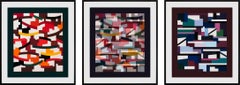
“Union" Suite of 3 Limited Edition Hand-Signed Serigraphs by Yaacov Agam, Framed
By Yaacov Agam
Located in Encino, CA
"Union," a suite of three original silkscreens by Yaacov Agam, are pieces for the true collector. Agam is considered the father of Kinetic art. His iconic style is recognizable acros...
Category
1970s Kinetic More Prints
Materials
Screen
H 39.5 in W 111.375 in D 1.25 in
Composition XII, from The Elementary Memory
Located in London, GB
ALEXANDER CALDER 1898-1976
Lawnton, Pennsylvania 1898 - 1976 New York (American)
Title: Composition XII, from The Elementary Memory La mémoire élémentaire, 1976
Technique: Origin...
Category
1970s Kinetic More Prints
Materials
Lithograph
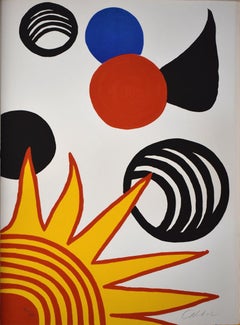
Composition X, from The Elementary Memory La mémoire élémentaire
Located in London, GB
ALEXANDER CALDER 1898-1976
Lawnton, Pennsylvania 1898 - 1976 New York (American)
Title: Composition X, from The Elementary Memory La mémoire élémentaire, 1976
Technique: Original...
Category
1970s Kinetic More Prints
Materials
Lithograph
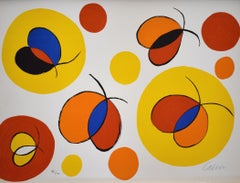
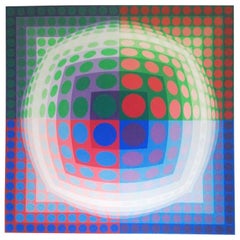
Vega, hand signed and numbered
Located in Paris, FR
Very rare op art, Victor Vasarely, original screen-print signed in pencil by the artist.
Kinetic composition; screen-print in great colors, hand signed and hand numbered 72/267 in p...
Category
1970s Kinetic More Prints
Materials
Paper
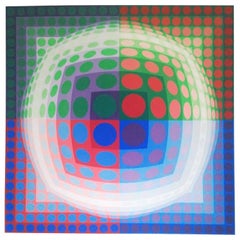
Victor Vasarely - Original Lithograph
Located in Collonge Bellerive, Geneve, CH
Victor Vasarely - Original Lithograph
Published in the deluxe art review, XXe Siecle
1954
Dimensions: 32 x 25 cm
Publisher: G. di San Lazzaro.
Victor Vasarely, whose original name...
Category
1950s Kinetic More Prints
Materials
Lithograph
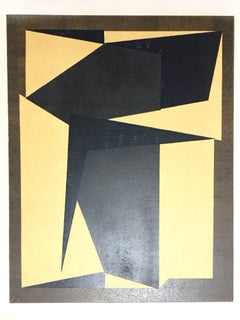
Vega, hand signed and numbered
Located in Paris, FR
Very rare op art, Victor Vasarely, original screen-print signed in pencil by the artist.
Kinetic composition; screen-print in great colors, hand signed and hand numbered 72/267 in p...
Category
1970s Kinetic More Prints
Materials
Paper
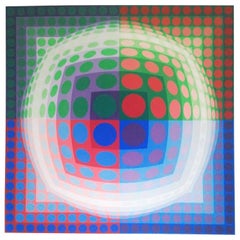
Vega, hand signed and numbered
Located in Paris, FR
Very rare op art, Victor Vasarely, original screen-print signed in pencil by the artist.
Kinetic composition; screen-print in great colors, hand signed and hand numbered 72/267 in p...
Category
1970s Kinetic More Prints
Materials
Paper
Kinetic more prints for sale on 1stDibs.
Find a wide variety of authentic Kinetic more prints available for sale on 1stDibs. Works in this style were very popular during the 20th Century, but contemporary artists have continued to produce works inspired by this movement. Many Pop art paintings were created by popular artists on 1stDibs, including George Rickey, Victor Vasarely, and Yaacov Agam. Frequently made by artists working with Aquatint, and Engraving and other materials, all of these pieces for sale are unique and have attracted attention over the years. Not every interior allows for large Kinetic more prints, so small editions measuring 9.85 inches across are also available. Prices for more prints made by famous or emerging artists can differ depending on medium, time period and other attributes. On 1stDibs, the price for these items starts at $850 and tops out at $15,000, while the average work sells for $2,696.
More Ways To Browse
James B Painter
Jan V Roy Posters
John Lennon On Sale
Lait Pur Sterilize
Lake District Vintage Travel Poster
Land Rover Poster
Le Frou Frou Vintage Poster
Leon De Pas
Leon Wuidar
Lillian Snelling
Man Ray Electro Magie
Maurin Quina Print
Michael Schwab Posters
Miroslav Sutej
Mordechai Rosenstein
Murakami Flowers Blooming In This World
Oranges By Donald Sultan
Picasso Bullring