Want more images or videos?
Request additional images or videos from the seller
1 of 7
(after) Henri Matisseafter Henri Matisse - Sleeping Blue Nude - Lithograph1952
1952
Price:$1,545.39
About the Item
- Creator:(after) Henri Matisse (French)
- Creation Year:1952
- Dimensions:Height: 29.93 in (76 cm)Width: 22.05 in (56 cm)Depth: 0.04 in (1 mm)
- Medium:
- Movement Style:
- Period:
- Condition:
- Gallery Location:Collonge Bellerive, Geneve, CH
- Reference Number:1stDibs: LU16122142433
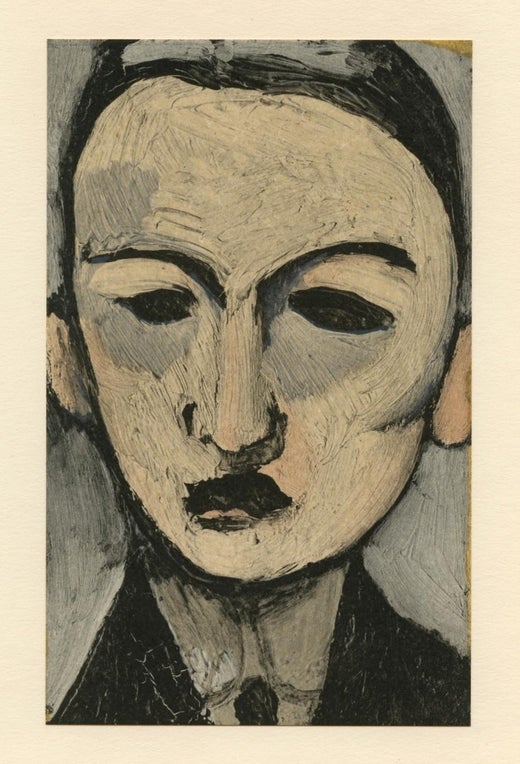
(after) Henri Matisse
Henri Matisse was born on December 31, 1869, in Le Cateau-Cambrésis, France. At 22, he had given up studying law in Paris to pursue painting. He had briefly studied art at the Académie Julian and Ecole des Beaux-Arts with Gustave Moreau. At 32, Matisse exhibited at the Salon des Indépendants in Paris, where he met Maurice de Vlaminck, who with Matisse would eventually lead the Fauve art movement. Matisse's work was included in the 1913 Armory Show in New York, and throughout the 1910s and into the 1920s, his work began to find collectors around the world. Throughout the 1920s and 1930s, he divided his time between Paris and southern France, producing paintings, sculpture, lithographs, and etchings. Like many avant-garde artists in Paris, Matisse was receptive to a broad range of influences, particularly 'primitive' art, Near Eastern decorative art, African masks and sculpture, impressionist color, cubism, and the paintings of Paul Cezanne. The artist's images of the human face and figure -rendered in fluid lines and flat fields of color- typify these influences. Matisse argued for the prominence of instinct in art production, believing that an artist should not have complete control over color and form. He died on November 3, 1954, in Nice.
About the Seller
4.9
Gold Seller
Premium sellers maintaining a 4.3+ rating and 24-hour response times
Established in 2015
1stDibs seller since 2015
970 sales on 1stDibs
Typical response time: 1 hour
Authenticity Guarantee
In the unlikely event there’s an issue with an item’s authenticity, contact us within 1 year for a full refund. DetailsMoney-Back Guarantee
If your item is not as described, is damaged in transit, or does not arrive, contact us within 7 days for a full refund. Details24-Hour Cancellation
You have a 24-hour grace period in which to reconsider your purchase, with no questions asked.Vetted Professional Sellers
Our world-class sellers must adhere to strict standards for service and quality, maintaining the integrity of our listings.Price-Match Guarantee
If you find that a seller listed the same item for a lower price elsewhere, we’ll match it.Trusted Global Delivery
Our best-in-class carrier network provides specialized shipping options worldwide, including custom delivery.You May Also Like
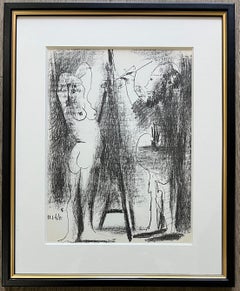
Le Peintre Et Son Modele
By (after) Pablo Picasso
Located in London, GB
After Pablo Picasso
Le Peintre Et Son Modele, 1964
Original Lithograph on Arches paper
unsigned
25.4 x 19.1 cm - sheet
35.6 x 29 cm - framed
Edition of 2000
Limited edition lithogra...
Category
1960s Modern Figurative Prints
Materials
Lithograph
September Morn - In Celebration of Pride Month
By Joseph Hirsch
Located in New Orleans, LA
Stone and Press Gallery is excited to offer several works in celebration of the LGBTQ community.
Three women strolling on a beach. This impression is one of the rare impressions p...
Category
1960s American Modern Nude Prints
Materials
Lithograph
$1,200 Sale Price
33% Off
H 12.5 in W 18 in
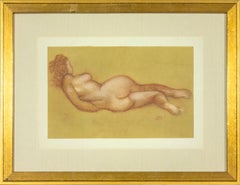
Nude Lying Down framed lithograph of woman by artist Aristide Maillol
By Aristide Maillol
Located in Boca Raton, FL
Framed lithograph of a female Nude Lying Down pastel by artist Aristide Maillol. Image size: 9 1/4 x 14 1/2 inches. Framed under glass in wooden frame.
Category
20th Century Modern Figurative Prints
Materials
Lithograph
$450
H 18.5 in W 23.75 in
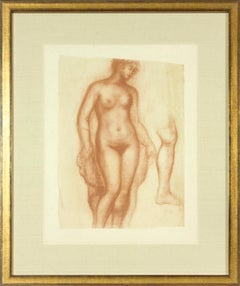
Untitled nude woman framed lithograph by artist Aristide Maillol
By Aristide Maillol
Located in Boca Raton, FL
Framed lithograph of a female nude pastel by artist Aristide Maillol. Image size: 12 1/2 x 9 1/2 inches. Framed under glass in wooden frame.
Category
20th Century Modern Figurative Prints
Materials
Lithograph
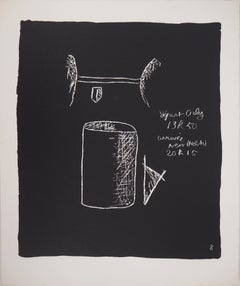
The Architect
s Tools - Original lithograph (Atelier Michel Cassé), 1964
By Le Corbusier
Located in Paris, IDF
Le Corbusier
The Architect's Tools, 1964
Original lithograph
Printed signature in the plate
Limited to 250 copies
On Arches vellum 42.5 x 35.5 cm (c. 16.5 x 13.7 in)
Edited by Forc...
Category
1960s Modern Figurative Prints
Materials
Lithograph
$1,188
H 16.74 in W 13.98 in
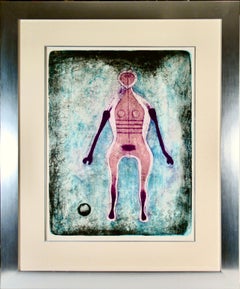
La Negra (The Black Woman)
By Rufino Tamayo
Located in San Francisco, CA
This artwork titled "La Negra (The Black Woman)" from the suite "The Mujeres File" 1969 is an original colors lithograph on B.F.K. Rives paper by renown Mexican artist Rufino Tamayo, 1899-1991. It is hand signed and numbered 150/150 in pencil by the artist. The image size is 26.85 x 21.25 inches, sheet size is 29.5 x 22.15 inches, framed size is 42 x 35 inches. Published by Touchtone Publisher, New York, printed by Ateliers Desjobert, Paris. Referenced and pictured in the artist's catalogue raisonne by Pereda, plate #109 page 107. Custom framed in a wooden silver frame, with silver spacer and fabric matting. It is in excellent condition.
About the artist:
A native of Oaxaca in Southern Mexico, Rufino Tamayo's father was a shoemaker, and his mother a seamstress. Some accounts state that he was descended from Zapotec Indians, but he was actually 'mestizo' - of mixed indigenous/European ancestry. (Santa Barbara Museum of Art). He began painting at age 11. Orphaned at the age of 12, Tamayo moved to Mexico City, where he was raised by his maternal aunt who owned a wholesale fruit business.
In 1917, he entered the San Carlos Academy of Fine Arts, but left soon after to pursue independent study. Four years later, Tamayo was appointed the head designer of the department of ethnographic drawings at the National Museum of Archaeology in Mexico City. There he was surrounded by pre-Colombian objects, an aesthetic inspiration that would play a pivotal role in his life. In his own work, Tamayo integrated the forms and tones of pre-Columbian ceramics into his early still lives and portraits of Mexican men and women.
In the early 1920s he also taught art classes in Mexico City's public schools. Despite his involvement in Mexican history, he did not subscribe to the idea of art as nationalistic propaganda. Modern Mexican art at that time was dominated by 'The Three Great Ones' : Diego Rivera, Jose Clemente Orozco, and David Alfaro Siqueros, but Tamayo began to be noted as someone 'new' and different' for his blending of the aesthetics of post Revolutionary Mexico with the vanguard artists of Europe and the United States.
After the Mexican Revolution, he focused on creating his own identity in his work, expressing what he thought was the traditional Mexico, and refusing to follow the political trends of his contemporary artists. This caused some to see him as a 'traitor' to the political cause, and he felt it difficult to freely express himself in his art. As a result, he decided to leave Mexico in 1926 and move to New York, along with his friend, the composer Carlos Chavez. The first exhibition of Tamayo's work in the United States was held at the Weyhe Gallery, New York, in that same year. The show was successful, and Tamayo was praised for his 'authentic' status as a Mexican of 'indigenous heritage', and for his internationally appealing Modernist aesthetic. (Santa Barbara Museum of Art).
Throughout the late thirties and early forties New York's Valentine Gallery gave him shows. For nine years, beginning in 1938, he taught at the Dalton School in New York.
In 1929, some health problems led him to return to Mexico for treatment. While there he took a series of teaching jobs. During this period he became romantically involved with the artist Maria Izquierdo...
Category
Mid-20th Century Modern Figurative Prints
Materials
Lithograph
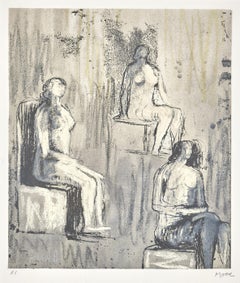
Three seated figures
By Henry Moore
Located in London, GB
Colour lithograph on paper.
Hand-signed and numbered by the artist.
Paper size: 33 x 28 cm
H.C. aside from an edition of 50
Henry Moore's (1898-1986) drawings and prints offer a un...
Category
1980s Modern Figurative Prints
Materials
Lithograph
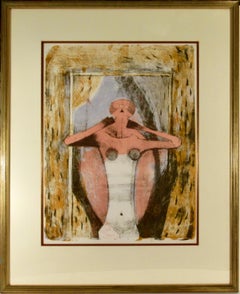
Torso de Mujer
By Rufino Tamayo
Located in San Francisco, CA
This artwork titled "Torso de Mujer (Torso de Femmee)" from the suite "The Mujeres File" 1969 is an original colors lithograph on Wove paper by renown Mexican artist Rufino Tamayo, 1899-1991. It is hand signed and inscribed H.C. (Hors Commerce) in pencil by the artist. The image size is 26.85 x 21 inches, framed size is 40.75 x 33 inches. Published by Touchtone Publisher, New York, printed by Ateliers Desjobert, Paris. Referenced and pictured in the artist's catalogue raisonne by Pereda, plate #108 page 107. Custom framed in a wooden gold frame, with gold bevel and light beige fabric matting. It is in excellent condition.
About the artist:
A native of Oaxaca in Southern Mexico, Rufino Tamayo's father was a shoemaker, and his mother a seamstress. Some accounts state that he was descended from Zapotec Indians, but he was actually 'mestizo' - of mixed indigenous/European ancestry. (Santa Barbara Museum of Art). He began painting at age 11. Orphaned at the age of 12, Tamayo moved to Mexico City, where he was raised by his maternal aunt who owned a wholesale fruit business.
In 1917, he entered the San Carlos Academy of Fine Arts, but left soon after to pursue independent study. Four years later, Tamayo was appointed the head designer of the department of ethnographic drawings at the National Museum of Archaeology in Mexico City. There he was surrounded by pre-Colombian objects, an aesthetic inspiration that would play a pivotal role in his life. In his own work, Tamayo integrated the forms and tones of pre-Columbian ceramics...
Category
Mid-20th Century Modern Figurative Prints
Materials
Lithograph
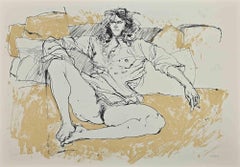
Nude - Lithograph by Sergio Barletta - 1980
By Sergio Barletta
Located in Roma, IT
Nude is a lithograph a on paper realized in 1980 by Sergio Barletta.
Hand-signed on the lower right in pencil. from the edition of 100 prints. Numbered in pencil on the lower left.
I...
Category
1980s Modern Figurative Prints
Materials
Lithograph
$213 Sale Price
40% Off
H 19.69 in W 28.35 in D 0.08 in
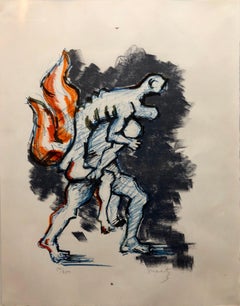
Lithuanian French Cubist Modernist Lithograph "Flight" Refugees
By Jacques Lipchitz
Located in Surfside, FL
Actual sheet is 25 X 20 size includes frame. Hand signed and numbered.
The Flight exhibition comes from a portfolio of prints organized by Varian Fry in 1964 and completed in 1971. B...
Category
1960s Modern Figurative Prints
Materials
Lithograph
$2,500
H 34.75 in W 29 in
More From This Seller
View Allafter Henri Matisse - Acrobat
By Henri Matisse
Located in Collonge Bellerive, Geneve, CH
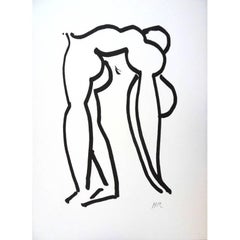
after Henri Matisse - Acrobat
Edition of 200
with the printed signature, as issued
76 x 56
With stamp of the Succession Matisse
References : Artvalue - Succession Matisse
Category
1950s Modern Nude Prints
Materials
Lithograph
Leonor Fini - Pride - Original Lithograph
By Leonor Fini
Located in Collonge Bellerive, Geneve, CH
Leonor Fini - Pride - Original Lithograph
The Flowers of Evil
1964
Conditions: excellent
Edition: 500
Dimensions: 46 x 34 cm
Editions: Le Cercle du Livre Précieux, Paris
Unsigned a...
Category
1960s Modern Nude Prints
Materials
Lithograph
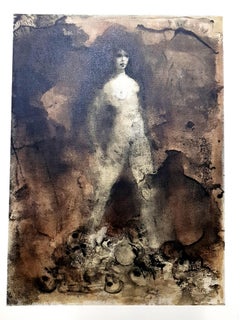
Leonor Fini - Saturday Night Dress - Original Lithograph
By Leonor Fini
Located in Collonge Bellerive, Geneve, CH
Leonor Fini - Saturday Night Dress - Original Lithograph
The Flowers of Evil
1964
Conditions: excellent
Edition: 500
Dimensions: 46 x 34 cm
Editions: Le Cercle du Livre Précieux, P...
Category
1960s Modern Nude Prints
Materials
Lithograph
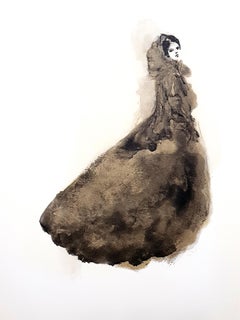
Marc Chagall - Double Portrait - Original Lithograph
By Marc Chagall
Located in Collonge Bellerive, Geneve, CH
Marc Chagall, Original Lithograph depicting an instant of the Bible.
Technique: Original lithograph in colours
Year: 1956
Sizes: 35,5 x 26 cm / 14" x 10.2" (sheet)
Published by: Édit...
Category
1950s Modern Figurative Prints
Materials
Lithograph
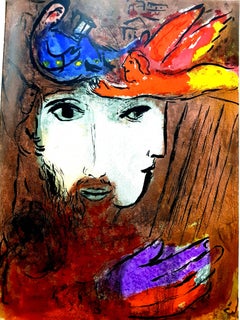
Leonor Fini - Prisonners - Original Lithograph
By Leonor Fini
Located in Collonge Bellerive, Geneve, CH
Leonor Fini - Prisonners - Original Lithograph
The Flowers of Evil
1964
Conditions: excellent
Edition: 500
Dimensions: 46 x 34 cm
Editions: Le Cercle du Livre Précieux, Paris
Unsig...
Category
1960s Modern Nude Prints
Materials
Lithograph
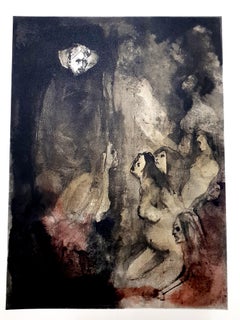
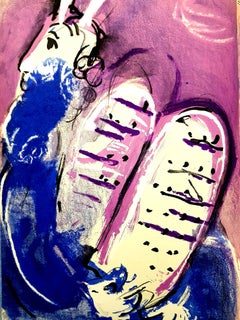
Marc Chagall - Moses with Tablets of Stone - Original Lithograph
By Marc Chagall
Located in Collonge Bellerive, Geneve, CH
Marc Chagall, Original Lithograph depicting an instant of the Bible.
Technique: Original lithograph in colours
Year: 1956
Sizes: 35,5 x 26 cm / 14" x 10.2" (sheet)
Published by: Éditions de la Revue Verve, Tériade, Paris
Printed by: Atelier Mourlot, Paris
Documentation / References: Mourlot, F., Chagall Lithograph [II] 1957-1962, A. Sauret, Monte Carlo 1963, nos. 234 and 257
Marc Chagall (born in 1887)
Marc Chagall was born in Belarus in 1887 and developed an early interest in art. After studying painting, in 1907 he left Russia for Paris, where he lived in an artist colony on the city’s outskirts. Fusing his own personal, dreamlike imagery with hints of the fauvism and cubism popular in France at the time, Chagall created his most lasting work—including I and the Village (1911)—some of which would be featured in the Salon des Indépendants exhibitions. After returning to Vitebsk for a visit in 1914, the outbreak of WWI trapped Chagall in Russia. He returned to France in 1923 but was forced to flee the country and Nazi persecution during WWII. Finding asylum in the U.S., Chagall became involved in set and costume design before returning to France in 1948. In his later years, he experimented with new art forms and was commissioned to produce numerous large-scale works. Chagall died in St.-Paul-de-Vence in 1985.
The Village
Marc Chagall was born in a small Hassidic community on the outskirts of Vitebsk, Belarus, on July 7, 1887. His father was a fishmonger, and his mother ran a small sundries shop in the village. As a child, Chagall attended the Jewish elementary school, where he studied Hebrew and the Bible, before later attending the Russian public school. He began to learn the fundamentals of drawing during this time, but perhaps more importantly, he absorbed the world around him, storing away the imagery and themes that would feature largely in most of his later work.
At age 19 Chagall enrolled at a private, all-Jewish art school and began his formal education in painting, studying briefly with portrait artist Yehuda Pen. However, he left the school after several months, moving to St. Petersburg in 1907 to study at the Imperial Society for the Protection of Fine Arts. The following year, he enrolled at the Svanseva School, studying with set designer Léon Bakst, whose work had been featured in Sergei Diaghilev's Ballets Russes. This early experience would prove important to Chagall’s later career as well.
Despite this formal instruction, and the widespread popularity of realism in Russia at the time, Chagall was already establishing his own personal style, which featured a more dreamlike unreality and the people, places and imagery that were close to his heart. Some examples from this period are his Window Vitebsk (1908) and My Fianceé with Black Gloves (1909), which pictured Bella Rosenfeld, to whom he had recently become engaged.
The Beehive
Despite his romance with Bella, in 1911 an allowance from Russian parliament member and art patron Maxim Binaver enabled Chagall to move to Paris, France. After settling briefly in the Montparnasse neighborhood, Chagall moved further afield to an artist colony known as La Ruche (“The Beehive”), where he began to work side by side with abstract painters such as Amedeo Modigliani and Fernand Léger as well as the avant-garde poet Guillaume Apollinaire. At their urging, and under the influence of the wildly popular fauvism and cubism, Chagall lightened his palette and pushed his style ever further from reality. I and the Village (1911) and Homage to Apollinaire (1912) are among his early Parisian works, widely considered to be his most successful and representative period.
Though his work stood stylistically apart from his cubist contemporaries, from 1912 to 1914 Chagall exhibited several paintings at the annual Salon des Indépendants exhibition, where works by the likes of Juan Gris, Marcel Duchamp and Robert Delaunay were causing a stir in the Paris art world. Chagall’s popularity began to spread beyond La Ruche, and in May 1914 he traveled to Berlin to help organize his first solo exhibition, at Der Sturm Gallery. Chagall remained in the city until the highly acclaimed show opened that June. He then returned to Vitebsk, unaware of the fateful events to come.
War, Peace and Revolution
In August 1914 the outbreak of World War I precluded Chagall’s plans to return to Paris. The conflict did little to stem the flow of his creative output, however, instead merely giving him direct access to the childhood scenes so essential to his work, as seen in paintings such as Jew in Green (1914) and Over Vitebsk (1914). His paintings from this period also occasionally featured images of the war’s impact on the region, as with Wounded Soldier (1914) and Marching (1915). But despite the hardships of life during wartime, this would also prove to be a joyful period for Chagall. In July 1915 he married Bella, and she gave birth to a daughter, Ida, the following year. Their appearance in works such as Birthday (1915), Bella and Ida by the Window (1917) and several of his “Lovers” paintings give a glimpse of the island of domestic bliss that was Chagall’s amidst the chaos.
To avoid military service and stay with his new family, Chagall took a position as a clerk in the Ministry of War Economy in St. Petersburg. While there he began work on his autobiography and also immersed himself in the local art scene, befriending novelist Boris Pasternak, among others. He also exhibited his work in the city and soon gained considerable recognition. That notoriety would prove important in the aftermath of the 1917 Russian Revolution when he was appointed as the Commissar of Fine Arts in Vitebsk. In his new post, Chagall undertook various projects in the region, including the 1919 founding of the Academy of the Arts. Despite these endeavors, differences among his colleagues eventually disillusioned Chagall. In 1920 he relinquished his position and moved his family to Moscow, the post-revolution capital of Russia.
In Moscow, Chagall was soon commissioned to create sets and costumes for various productions at the Moscow State Yiddish...
Category
1950s Modern Figurative Prints
Materials
Lithograph
Recently Viewed
View AllMore Ways To Browse
Vintage Mermaid Painting
Ann Rothman
Audrey Hepburn Signed
Balinese Figurative
Banquet Paintings
Cat Trees
Dancing Hippo
Dice Painting
Dtr Modern Galleries Hunt Slonem
Dutch 1900 Painting
Eye Of The Storm
Francisco Ribera
Giraffe Canvas
Glass Sculpture Chihuly
Gold Framed Bird Paintings
Hale Woodruff
Hanging Sculpture Textile
Henri Manguin