Miniature Nude Prints
to
230
1,061
479
606
180
127
Overall Width
to
Overall Height
to
351
189
115
53
42
42
15
13
11
8
2
1
64
24
23
21
19
15
45
839
162
15
59
94
94
38
80
102
125
68
40
11
753
274
30
760
458
440
277
211
193
190
114
112
27
24
22
20
19
19
18
17
17
12
12
413
352
175
118
52
63
306
511
475
Size: Miniature
Nude - Vintage Offset Print by Franco Gentilini - 20th Century
Located in Roma, IT
Nude is an original Vintage Offset Print on ivory-colored paper, realized by Franco Gentilini (Italian Painter, 1909-1981) in the late 20th Century.
The state of preservation of the...
Category
20th Century Figurative Prints
Materials
Offset
Giclée Print:
EMMA
Located in New York, NY
GRAPHICTHERAPY is David Calderley:
an Englishman in New York, Creative/Art Director, Graphic Designer and Illustrator. After graduating from the esteemed St. Martin’s School of Art in Covent Garden, London and beginning a freelance career, he moved to New York City in 1990. Over the last 30+ years he has designed over 1200 albums and single covers, as well as promotional and full campaigns for a myriad of artists including, Interpol, Madonna, The White Stripes, RZA, Moby, The Black Crowes, Elvis Costello, to name a few.
After a 10 year spot as the Creative Director for Sir Richard Branson’s North American Record Label V2, he set up GRAPHICTHERAPY in 2007, a small boutique creative agency that offers a complete range of design services, both in print and media.
A unique mix of art direction, design and creative illustration can be seen across a wide variety of brands, products and publications in music, fashion, events and campaigns. His largest illustrated piece is a 90ftx50ft mural on 57th and Park Avenue for the British menswear company, Turnbull & Asser, as part of their rebrand. David’s work has been recognized by numerous global companies and publications, and has won several industry awards. He continues to work from his studio in Harlem.
This capsule of collage/mixed media prints:
‘Eating Vinegar with A Fork,’ reflecting a dry wit, as suggested in the title; juxtaposing formal Victorian etchings...
Category
2010s Contemporary Figurative Prints
Materials
Giclée
Cover for "Il Tirreno" - Watercolor by Mino Maccari - 1960s
By Mino Maccari
Located in Roma, IT
Original artwork realized by Mino Maccari in the 1960s.
Mixed colored watercolor drawing on cardboard realized for the newspaper "Il Tirreno".
Hand-signed by the artist on the lowe...
Category
1960s Modern Figurative Drawings and Watercolors
Materials
Watercolor

$665 Sale Price
30% Off
Nude - Monotype on Paper - 20th Century
Located in Roma, IT
Nude is a monotype on paper realized by Anonymous artist of the XX century.
The state of preservation of the artwork is very good.
The artwork represents a nude female figure, posi...
Category
20th Century Figurative Prints
Materials
Monotype
Suffering- Original Woodcut on Paper by Erikma Lawson Frimke - 1937
By Erikma Lawson Frimke
Located in Roma, IT
Suffering is an original woodcut artwork on paper realized in 1937 by Russian artist Erikma Lawson Frimke (1878-1956), Hand-signed and dated on the lower in pencil.
The state of pre...
Category
1930s Modern Figurative Prints
Materials
Woodcut
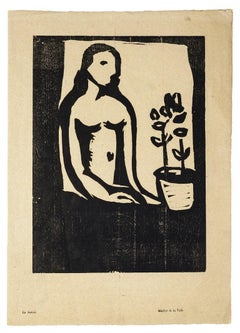
Serena - Woodcut Print by Arturo Martini - 20th Century
Located in Roma, IT
Serena is an original woodcut realized by Arturo Martini. Title and signature printed on the lower margin.
The State of preservation is good.
The artwork is representing a woman beside a vase of flowers in a frame through intense bla...
Category
20th Century Nude Prints
Materials
Woodcut
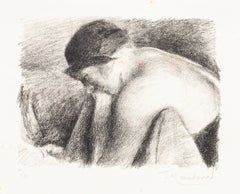
Female Figure with Hat - Original Lithograph by J.H. Marchand - 1920 ca.
By Jean Hippolyte Marchand
Located in Roma, IT
Female Figure with Hat is an original modern artwork realized by the French artist Jean Hippolyte Marchand in the 1920s.
Original Lithograph on ivory paper.
Passepartout included (...
Category
1920s Post-Impressionist Figurative Prints
Materials
Lithograph
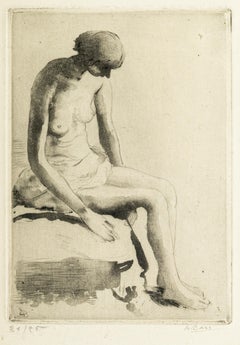
Pensive Nude - Etching and Aquatint by Anna Bass - Late 20th Century
By Anna Bass
Located in Roma, IT
Pensive Nude is a black and white print realized by Anna Bass (Strasbourg 1876 - Paris 1961) in the First Half 20th Century.
The artwork represents a nude female portrait.
Hand-si...
Category
Late 20th Century Contemporary Figurative Prints
Materials
Etching, Aquatint
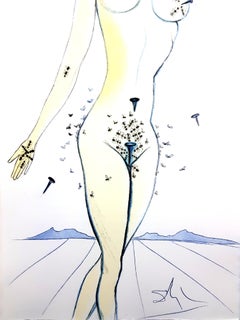
Salvador Dali - Nails on Nude
Located in Collonge Bellerive, Geneve, CH
Salvador Dali - Nails on Nude - Original Etching
Dimensions: 38 x 28 cm
Edition: 390
1967
On Rives Vellum
References : Field 67-4 (p. 32-33) / Michler & Lopsinger 174 to 187.
Category
1960s Surrealist Nude Prints
Materials
Etching
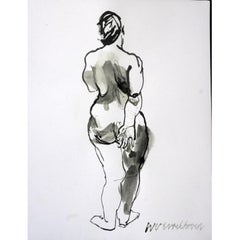
Wim van Broekhoven "Standing Back Nude" Nude
Located in Winterswijk, NL
Standing Nude by Wim van Broekhoven.
Drawing from models and observing urban, industrial and natural landscapes are recurring motifs.
Drawing from a model is about representing expr...
Category
21st Century and Contemporary Abstract Nude Paintings
Materials
Ink
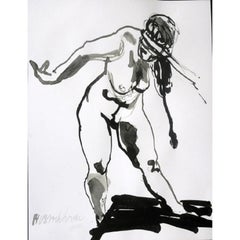
Wim van Broekhoven "Standing Nude" Nude
Located in Winterswijk, NL
Standing Nude by Wim van Broekhoven.
Drawing from models and observing urban, industrial and natural landscapes are recurring motifs.
Drawing from a model is about representing expr...
Category
21st Century and Contemporary Abstract Nude Paintings
Materials
Ink
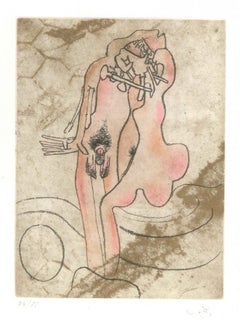
Untitled Plate 8 from Paroles Peintes Suite - 1970s - Sebastián Matta
Located in Roma, IT
Untitled Plate 8 from Paroles Peintes Suite is an etching and aquatint on Japon paper.
Hand-signed and hand-numbered in pencil on the lower margin. Edition of 85 prints.
Perfect con...
Category
1970s Contemporary Abstract Prints
Materials
Etching, Aquatint

Untitled Plate 5 from Paroles Peintes Suite - 1970s - Sebastián Matta
Located in Roma, IT
Untitled Plate 5 from the Paroles Peintes Suite is an etching with aquatint on Japon paper. Hand-signed in pencil on the lower right; numbered on the lower left in pencil. Edition of...
Category
1970s Contemporary Abstract Prints
Materials
Etching, Aquatint
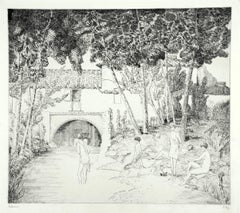
Le Moulin Abandonné
Located in New York, NY
Jean-Emile Laboureur (1877-1943), Le Moulin Abandonne, etching and engraving, 1934, signed lower left and numbered and annotated “imp” in pencil lower right....
Category
1930s Mannerist Landscape Prints
Materials
Engraving, Etching
Nu assis, chevelure claire
Located in London, GB
Lithograph on Japon paper, Edition of 50
Paper size: 43.7 x 28.1 cms (17.2 x 11.1 ins)
Image size: 39.1 x 23.7 cms (15 3/8 x 9 1/4 ins)
Category
1920s Impressionist Nude Prints
Materials
Lithograph
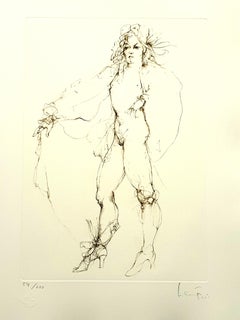
Leonor Fini - Fearless - Original Handsigned Lithograph
By Leonor Fini
Located in Collonge Bellerive, Geneve, CH
Leonor Fini - Fearless - Original Handsigned Lithograph
Les Elus de la Nuit
1986
Conditions: excellent
Handsigned and Numbered
Edition: 230
Dimensions: 38 x 28 cm
Editions: Trinckve...
Category
1980s Modern Nude Prints
Materials
Lithograph
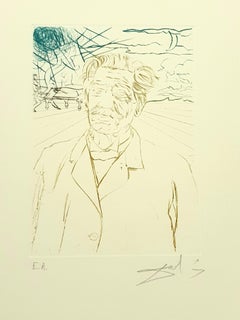
Salvador Dali - Albert Schweitzer - Original Handsigned Engraving
Located in Collonge Bellerive, Geneve, CH
Salvador Dali - Albert Schweitzer - Original Handsigned Engraving
Dimensions: 17.5 x 12.5 cm
1970
Signed in pencil
EA
Jean Schneider, Basel
Reference...
Category
1960s Surrealist Nude Prints
Materials
Engraving
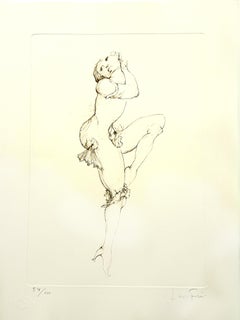
Leonor Fini - Dancing - Original Handsigned Lithograph
By Leonor Fini
Located in Collonge Bellerive, Geneve, CH
Leonor Fini - Dancing - Original Handsigned Lithograph
Les Elus de la Nuit
1986
Conditions: excellent
Handsigned and Numbered
Edition: 230
Dimensions: 38 x 28 cm
Editions: Trinckvel...
Category
1980s Modern Nude Prints
Materials
Lithograph
Jean Gabriel Domergue - The Hug - Original Etching
Located in Collonge Bellerive, Geneve, CH
Original Etching by Jean-Gabriel Domergue
Dimensions: 33 x 25 cm
1924
Edition of 100
This artwork is part of the famous portfolio The Afternoon of a Faun.
Jean-Gabriel Domergue
Jea...
Category
1920s Impressionist Nude Prints
Materials
Lithograph
Pablo Picasso (after) Helene Chez Archimede - Wood Engraving
Located in Collonge Bellerive, Geneve, CH
Pablo Picasso (after)
Helene Chez Archimede
Medium: engraved on wood by Georges Aubert
Dimensions: 44 x 33 cm
Portfolio: Helen Chez Archimede
Year: 1955
Edition: 240 (Here it is on...
Category
1950s Cubist Figurative Prints
Materials
Engraving
American Contemporary Art by Michael Alan - Buck Naked
By Michael Alan
Located in Paris, IDF
Silkscreen on paper, ed. 2/7
Michael Alan is an American artist born in 1977 who lives & works in New York, USA. As a multidisciplinary artist. His work has been featured in many so...
Category
2010s Contemporary Nude Prints
Materials
Paper, Silk
Ossip Zadkine - Ultimate Step - Original Etching
Located in Collonge Bellerive, Geneve, CH
Etching monogrammed in the plate.
Illustration for a Robert Ganzo's poem "Lespugue"
Editions Marcel Sautier, Paris, 1966.
Conditions: Good Conditions
Dimensions: 25,5 x 16,5 cm.
Vellum paper
Référence Czwiklitzer n°55.
1890
Zadkine was born on the 14th of July in Vitebsk, a city in Belarussia, on the Dvina.
His father Ephime teaches classical languages at the local seminar.
His mother Sophie Lester descended from Scots, who emigrated at the time of Peter the Great.
1905
His parents send him to Sunderland, in the North of England, where his mother’s family lives.
He studies English and attends modelling courses at the local Art School.
1905-1909
He travels to London without his parents permission where he attends courses at the Regent Street Polytechnicum.
In order to earn his living, he plans to work with a stonecutter.
He visits the British Museum and studies classical sculpture there.
Returns to Smolensk where he produces his first sculpture.
Goes back to London.
1909-1910
Zadkine settles in Paris and studies in the ecole Nationale des Beaux-Arts.
Finds a workshop in a building called La Ruche, in the XVe arrondissement.
1911
Zadkine presents statues and drawings at the annual Salon d’Automne and at the Salon des Indépendants.
It is the ‘cubists’ who draw his attention in Paris.
Is essentially close to Russian students who get together in a cafe of the ‘Quartier Latin’.
Has himself called Joe Zadkine until 1914.
1912-1913
Finds a room in the neighbourhood of Montparnasse, in the rue de Vaugirard.
Studies Roman sculpture.
Zadkine is immortalized by his neighbour, photographer Marc Vaux, in his new workshop.
Meets Brancusi, Guillaume Apollinaire, Jacques Lipchitz, Pablo Picasso, Antoine Bourdelle, Leopold Survage and Robert Delaunay.
Henri Matisse visits Zadkine’s workshop.
1914-1915
Exhibition at the Freie Sezession in Berlin, at De Onafhankelijken in Amsterdam (Holland) and at
the Allied Artists Association in London.
Thanks to collector Paul Rodocanachi, he can settle in a workshop in the rue Rousselet.
Becomes friends with Modigliani.
1916-1917
Works as a stretcher-bearer on the front. Produces drawings and watercolours dealing with war.
Zadkine is discharged in 1917.
He says he is ‘bodily and spiritually’ ruined by the war.
After his stay in the Epernay hospital he recovers in Bruniquel, in the southwest of France.
1918-1919
Makes a series of 20 war etchings...
Category
1960s Modern Figurative Prints
Materials
Etching

HOMME NU ASSIS EN TAILLEUR (BLOCH 1600)
Located in Aventura, FL
Homme nu assis en Tailleur, Plate 121 from Series 347 (B. 1600; Ba. 1616). Etching on wove paper. Hand signed and numbered by the artist. Edition 47/50. Image size 3.5 x 2.5 inches...
Category
1960s Cubist Nude Prints
Materials
Paper, Etching

$13,200 Sale Price
20% Off
Jean Gabriel Domergue - Lying Woman - Original Etching
Located in Collonge Bellerive, Geneve, CH
Original Etching by Jean-Gabriel Domergue
Dimensions: 33 x 25 cm
1924
Edition of 100
This artwork is part of the famous portfolio The Afternoon of a Faun.
Jean-Gabriel Domergue
Jea...
Category
1920s Impressionist Nude Prints
Materials
Lithograph
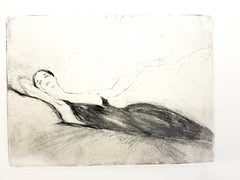
Jean Gabriel Domergue - Woman - Original Etching
Located in Collonge Bellerive, Geneve, CH
Original Etching by Jean-Gabriel Domergue
Dimensions: 33 x 25 cm
1924
Edition of 100
This artwork is part of the famous portfolio The Afternoon of a F...
Category
1920s Impressionist Nude Prints
Materials
Lithograph
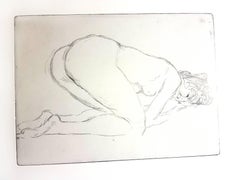
Marc Chagall - Moses with Tablets of Stone - Original Lithograph
By Marc Chagall
Located in Collonge Bellerive, Geneve, CH
Marc Chagall, Original Lithograph depicting an instant of the Bible.
Technique: Original lithograph in colours
Year: 1956
Sizes: 35,5 x 26 cm / 14" x 10.2" (sheet)
Published by: Éditions de la Revue Verve, Tériade, Paris
Printed by: Atelier Mourlot, Paris
Documentation / References: Mourlot, F., Chagall Lithograph [II] 1957-1962, A. Sauret, Monte Carlo 1963, nos. 234 and 257
Marc Chagall (born in 1887)
Marc Chagall was born in Belarus in 1887 and developed an early interest in art. After studying painting, in 1907 he left Russia for Paris, where he lived in an artist colony on the city’s outskirts. Fusing his own personal, dreamlike imagery with hints of the fauvism and cubism popular in France at the time, Chagall created his most lasting work—including I and the Village (1911)—some of which would be featured in the Salon des Indépendants exhibitions. After returning to Vitebsk for a visit in 1914, the outbreak of WWI trapped Chagall in Russia. He returned to France in 1923 but was forced to flee the country and Nazi persecution during WWII. Finding asylum in the U.S., Chagall became involved in set and costume design before returning to France in 1948. In his later years, he experimented with new art forms and was commissioned to produce numerous large-scale works. Chagall died in St.-Paul-de-Vence in 1985.
The Village
Marc Chagall was born in a small Hassidic community on the outskirts of Vitebsk, Belarus, on July 7, 1887. His father was a fishmonger, and his mother ran a small sundries shop in the village. As a child, Chagall attended the Jewish elementary school, where he studied Hebrew and the Bible, before later attending the Russian public school. He began to learn the fundamentals of drawing during this time, but perhaps more importantly, he absorbed the world around him, storing away the imagery and themes that would feature largely in most of his later work.
At age 19 Chagall enrolled at a private, all-Jewish art school and began his formal education in painting, studying briefly with portrait artist Yehuda Pen. However, he left the school after several months, moving to St. Petersburg in 1907 to study at the Imperial Society for the Protection of Fine Arts. The following year, he enrolled at the Svanseva School, studying with set designer Léon Bakst, whose work had been featured in Sergei Diaghilev's Ballets Russes. This early experience would prove important to Chagall’s later career as well.
Despite this formal instruction, and the widespread popularity of realism in Russia at the time, Chagall was already establishing his own personal style, which featured a more dreamlike unreality and the people, places and imagery that were close to his heart. Some examples from this period are his Window Vitebsk (1908) and My Fianceé with Black Gloves (1909), which pictured Bella Rosenfeld, to whom he had recently become engaged.
The Beehive
Despite his romance with Bella, in 1911 an allowance from Russian parliament member and art patron Maxim Binaver enabled Chagall to move to Paris, France. After settling briefly in the Montparnasse neighborhood, Chagall moved further afield to an artist colony known as La Ruche (“The Beehive”), where he began to work side by side with abstract painters such as Amedeo Modigliani and Fernand Léger as well as the avant-garde poet Guillaume Apollinaire. At their urging, and under the influence of the wildly popular fauvism and cubism, Chagall lightened his palette and pushed his style ever further from reality. I and the Village (1911) and Homage to Apollinaire (1912) are among his early Parisian works, widely considered to be his most successful and representative period.
Though his work stood stylistically apart from his cubist contemporaries, from 1912 to 1914 Chagall exhibited several paintings at the annual Salon des Indépendants exhibition, where works by the likes of Juan Gris, Marcel Duchamp and Robert Delaunay were causing a stir in the Paris art world. Chagall’s popularity began to spread beyond La Ruche, and in May 1914 he traveled to Berlin to help organize his first solo exhibition, at Der Sturm Gallery. Chagall remained in the city until the highly acclaimed show opened that June. He then returned to Vitebsk, unaware of the fateful events to come.
War, Peace and Revolution
In August 1914 the outbreak of World War I precluded Chagall’s plans to return to Paris. The conflict did little to stem the flow of his creative output, however, instead merely giving him direct access to the childhood scenes so essential to his work, as seen in paintings such as Jew in Green (1914) and Over Vitebsk (1914). His paintings from this period also occasionally featured images of the war’s impact on the region, as with Wounded Soldier (1914) and Marching (1915). But despite the hardships of life during wartime, this would also prove to be a joyful period for Chagall. In July 1915 he married Bella, and she gave birth to a daughter, Ida, the following year. Their appearance in works such as Birthday (1915), Bella and Ida by the Window (1917) and several of his “Lovers” paintings give a glimpse of the island of domestic bliss that was Chagall’s amidst the chaos.
To avoid military service and stay with his new family, Chagall took a position as a clerk in the Ministry of War Economy in St. Petersburg. While there he began work on his autobiography and also immersed himself in the local art scene, befriending novelist Boris Pasternak, among others. He also exhibited his work in the city and soon gained considerable recognition. That notoriety would prove important in the aftermath of the 1917 Russian Revolution when he was appointed as the Commissar of Fine Arts in Vitebsk. In his new post, Chagall undertook various projects in the region, including the 1919 founding of the Academy of the Arts. Despite these endeavors, differences among his colleagues eventually disillusioned Chagall. In 1920 he relinquished his position and moved his family to Moscow, the post-revolution capital of Russia.
In Moscow, Chagall was soon commissioned to create sets and costumes for various productions at the Moscow State Yiddish...
Category
1950s Modern Figurative Prints
Materials
Lithograph
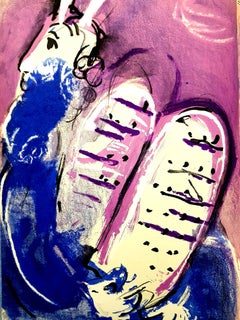
Nude with a Fan - Female Nude with Fan French Russian Ecole de Paris
By Marc Chagall
Located in London, GB
This original etching with drypoint is hand signed in pencil by the artist "Marc Chagall" at the lower right corner.
It is also hand numbered 6 in pencil from the edition of 100, at...
Category
1920s Modern Nude Prints
Materials
Drypoint, Etching
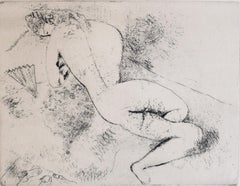
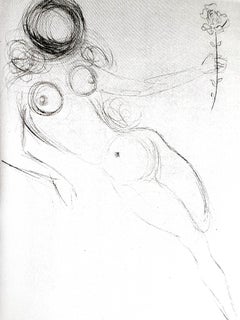
Salvador Dali - Nude with Flower - Original Etching on Silk
Located in Collonge Bellerive, Geneve, CH
Salvador Dali - Nude with Flower - from "Les Amours de Cassandre"
Original Etching
From the suite on Silk made for editions 9 to 34
Dimensions: 38,5 ...
Category
1960s Surrealist Nude Prints
Materials
Etching
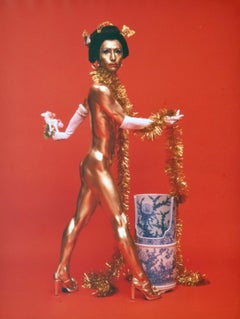
Yasumasa Morimura Cibachrome Print
Located in Lake Worth Beach, FL
Additional Information: Work is titled BLUE PISSOIR. Certificate of Documentation to reverse states: “This work was donated by the artist, courtesy of Luhring Augustine Gallery, to benefit Housing Works...
Category
1990s Contemporary Nude Prints
Materials
C Print
$1,200 Sale Price
20% Off
Salvador Dali - Head of Veal - Original Etching
Located in Collonge Bellerive, Geneve, CH
Salvador Dali - Head of Veal - Original Etching
Embossed signature
From the edition of 731
Dimensions: 38,5 x 28,5 cm
1969
References : Field 69-1 / Michler & Lopsinger 305
Category
1960s Surrealist Nude Prints
Materials
Etching

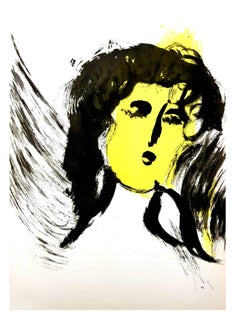
Marc Chagall - Woman Angel - Original Lithograph
By Marc Chagall
Located in Collonge Bellerive, Geneve, CH
Marc Chagall, Original Lithograph depicting an instant of the Bible.
Technique: Original lithograph in colours
Year: 1956
Sizes: 35,5 x 26 cm / 14" x 10.2" (sheet)
Published by: Édit...
Category
1950s Modern Figurative Prints
Materials
Lithograph
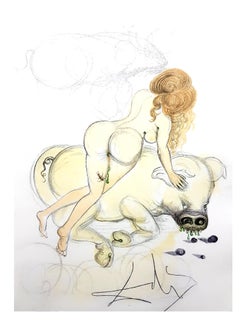
Salvador Dali - Girl and Pig - Original Etching
Located in Collonge Bellerive, Geneve, CH
Salvador Dali - Girl and Pig - Original Etching
Dimensions: 38 x 28 cm
Edition: 390
1967
On Rives Vellum
Signed in the plate
References : Field 67-4 (p. 3...
Category
1960s Surrealist Nude Prints
Materials
Etching
Jean Gabriel Domergue - Women - Original Etching
Located in Collonge Bellerive, Geneve, CH
Original Etching by Jean-Gabriel Domergue
Dimensions: 33 x 25 cm
1924
Edition of 100
This artwork is part of the famous portfolio The Afternoon of a F...
Category
1920s Impressionist Nude Prints
Materials
Lithograph
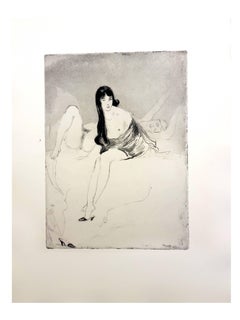
Jean Cocteau - Lovers - Original Lithograph
By Jean Cocteau
Located in Collonge Bellerive, Geneve, CH
Jean Cocteau - Under the Fire Coat - Lovers - Original Lithograph
Signed "Jean" in the plate and dated 1954 in the plate.
Joseph Forêt Editions
Dimensions: 4...
Category
1950s Modern Nude Prints
Materials
Lithograph
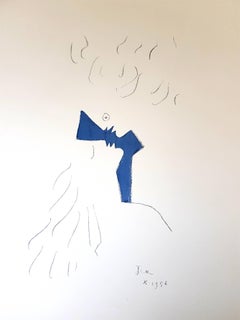
Salvador Dali - Baubo (Woman Riding a Sow), from Faust - Original Etching
Located in Collonge Bellerive, Geneve, CH
Salvador Dali - Baubo (Woman Riding a Sow), from Faust
Embossed signature (from the standard book edition of 731)
Dimensions: 38,5 x 28,5 cm
1969
References : Field 69-1 B / Michler ...
Category
1960s Surrealist Nude Prints
Materials
Etching
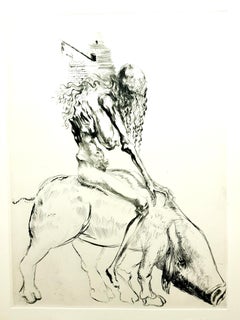
Study I
Located in Toronto, ON
12" x 9" Unframed
Etching of 75
Hand Signed by Soyer
Category
21st Century and Contemporary Nude Prints
Materials
Etching
$3,000
The Human Comedy - Lithograph
Located in Collonge Bellerive, Geneve, CH
after Pablo Picasso - The Human Comedy - Lithograph
Signed and dated in the plate
Dimensions: 32 x 24 cm
This artwork is a lithograph in colors on wov...
Category
1950s Modern Nude Prints
Materials
Lithograph
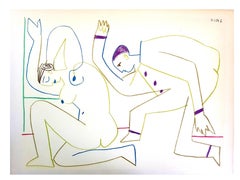
André Derain - Ovid
s Heroides - Original Etching
By André Derain
Located in Collonge Bellerive, Geneve, CH
André Derain - Ovid's Heroides
Original Etching
Edition of 134
Dimensions: 32 x 25 cm
Ovide [Marcel Prevost], Héroïdes, Paris, Société des Cent-une, 1938...
Category
1930s Modern Nude Prints
Materials
Etching
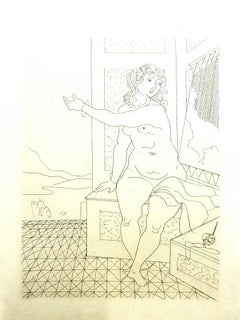
Jean Cocteau - Three in One - Original Handcolored Lithograph
By Jean Cocteau
Located in Collonge Bellerive, Geneve, CH
Jean Cocteau
Three in One - Autobiography about Cocteau's discovery of his homosexuality. The book was first published anonymously and created a scandal.
Original Handcolored Lithogr...
Category
1930s Modern Portrait Prints
Materials
Lithograph
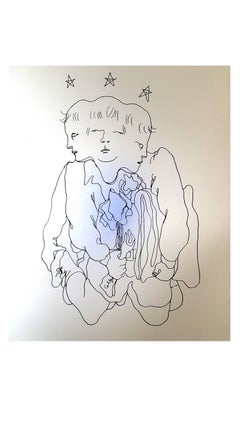
The Human Comedy - Lithograph
Located in Collonge Bellerive, Geneve, CH
After Pablo Picasso
The Human Comedy - Lithograph after an original drawing, as published in the journal "Verve"
Printed signature and date
Dimensions: 32...
Category
1950s Modern Nude Prints
Materials
Lithograph
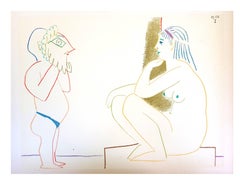
Jean Gabriel Domergue - Lying Naked - Original Etching
Located in Collonge Bellerive, Geneve, CH
Original Etching by Jean-Gabriel Domergue
Dimensions: 33 x 25 cm
1924
Edition of 100
This artwork is part of the famous portfolio The Afternoon of a Faun.
Jean-Gabriel Domergue
Jea...
Category
1920s Impressionist Nude Prints
Materials
Lithograph
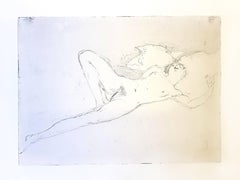
Jean Gabriel Domergue - Nonchalance - Original Etching
Located in Collonge Bellerive, Geneve, CH
Original Etching by Jean-Gabriel Domergue
Dimensions: 33 x 25 cm
1924
Edition of 100
This artwork is part of the famous portfolio The Afternoon of a F...
Category
1920s Impressionist Nude Prints
Materials
Lithograph
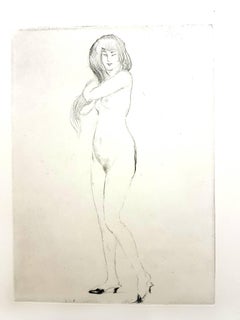
André Derain - Ovid
s Heroides - Original Etching
By André Derain
Located in Collonge Bellerive, Geneve, CH
André Derain - Ovid's Heroides
Original Etching
Edition of 134
Dimensions: 32 x 25 cm
Ovide [Marcel Prevost], Héroïdes, Paris, Société des Cent-une, 1938...
Category
1930s Modern Nude Prints
Materials
Etching
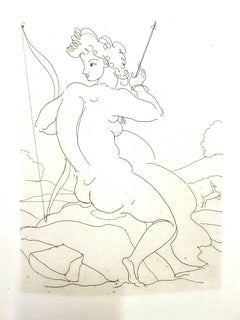
Salvador Dali - The Arrival of Iseult - Original Etching
Located in Collonge Bellerive, Geneve, CH
Salvador Dali - The Arrival of Iseult - Original Etching
Dimensions: 45 x 33 cm
Edition: 125
1970
Signed in pencil.
On Arches Vellum
References : Field 70-10 (p. 60-61)
Category
1970s Surrealist Nude Prints
Materials
Etching
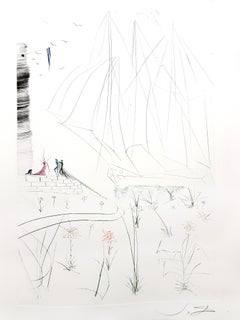
André Derain - Ovid
s Heroides - Original Etching
By André Derain
Located in Collonge Bellerive, Geneve, CH
André Derain - Ovid's Heroides
Original Etching
Edition of 134
Dimensions: 32 x 25 cm
Ovide [Marcel Prevost], Héroïdes, Paris, Société des Cent-une, 1938...
Category
1930s Modern Nude Prints
Materials
Etching
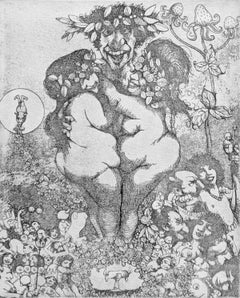
LUST
Located in Aventura, FL
Etching on paper. Hand signed, titled and numbered by the artist. Sheet size 14 x 11 inches. Image size 9.75 x 7.5 inches. Edition of 300. Artwork is in excellent condition. Cert...
Category
Late 20th Century Contemporary Nude Prints
Materials
Paper, Etching
$200 Sale Price
50% Off
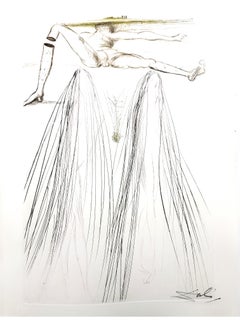
Salvador Dali - The Knights of King Arthur
Located in Collonge Bellerive, Geneve, CH
Salvador Dali - The Knights of King Arthur - Original Etching
Dimensions: 45 x 33 cm
Edition: 125
1970
Signed in pencil.
On Arches Vellum
References : Fiel...
Category
1970s Surrealist Nude Prints
Materials
Etching
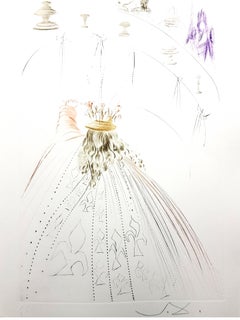
Salvador Dali - The Giant Beliagog
Located in Collonge Bellerive, Geneve, CH
Salvador Dali - The Giant Beliagog - Original Etching
Dimensions: 45 x 33 cm
Edition: 125
1970
Signed in pencil.
On Arches Vellum
References : Field 70-10 (p. 60-61)
Category
1970s Surrealist Nude Prints
Materials
Etching
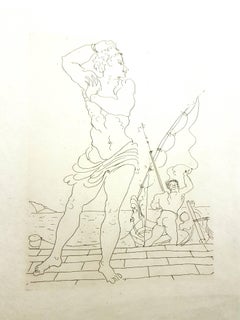
André Derain - Ovid
s Heroides - Original Etching
By André Derain
Located in Collonge Bellerive, Geneve, CH
André Derain - Ovid's Heroides
Original Etching
Edition of 134
Dimensions: 32 x 25 cm
Ovide [Marcel Prevost], Héroïdes, Paris, Société des Cent-une, 1938
Andre Derain was born in 1880 in Chatou, an artist colony outside Paris. In 1898, he enrolled in the Academie Carriere in Paris where he met Matisse. He attended art school and in 1900, set up a studio with Maurice deVlaminck. After his military service from 1900-1904, Derain exhibited his work at the Salon des Independants and then at the Salon d'Automne with Matisse, Vlaminck and others, thus creating the movement of Fauvism.He worked with Henri Matisse in 1905 at Collioure, and participated in the 1905 Salon d’Automne with Matisse, Vlaminck, and Braque, the exhibition in which this group was labeled as Fauves, or Wild Beasts. Along with Vlaminck, Derain was one of the first artists to collect the tribal art of Africa which was influential to many of the artists of the early 20th century.
In 1906, Derain met Picasso and his dealer, who purchased Derain's entire studio, creating newfound financial success. During this time, he was hired for the illustrations for works by Guillaume Apollinaire and Andre Breton. After World War I, his friend's Cubism movement affected his art, along with influence from Classicism and African Art.
Derain stayed in Paris during most of the Occupation, where he was esteemed by the Nazis because of his artistic integrity. Hitler's Foreign Minister commissioned him to paint a family portrait, but he politely refused. His popularity began to decline after the war because of disagreement over new artistic movements. He later lost most of his eyesight due to illness, which may have been the reason he was hit by a truck in 1954, dying from shock at the age of 74.
Derain’s Fauve paintings are typically bright with intense color. Influenced by the work of Cézanne as well as the early Cubist paintings of Picasso and Braque’s, Derain’s style changed and by 1912, the paintings became more traditional and structured. For the remainder of his career, he continued to investigate different compositional methods including the perspective of Cézanne and the pointillism of Seurat. He also designed ballet sets and made a number of sculptures.
At the turn of the century, Andre Derain exhibited at the radical Fauve Salon d’Automne (1905) and was one of the founding members of the Fauvist movement together with his life-long friends Matisse and Vlaminck. The works he produced in this period, often under the guidance of Matisse, have been counted among the masterpieces of Fauvism.
From around 1918, Derain turned his back on the avant-garde and had begun to explore some of the more traditional genres of Western art, including landscapes. His main source of inspiration once the Fauves group had dispersed was found in the Louvre, where he admired the early Renaissance works in particular. Talking of his frequent visits there, he once said, ‘That seemed to me then, the true, pure absolute painting.’ His work evolved through many styles and, most significantly, turned back to the past, particularly after 1922 when Lenin had publicly pronounced his disdain for abstract art.
Derain built up an immense and fascinating collection of paintings, sculpture and objets d’art throughout his life which aided his experimentation and was reflected in his work between 1930 and 1945. During these years, his painting technique displayed the most avenues of invention, using a repertoire of primitivist motifs. His eclectic collection was constantly changing. In 1930 he sold his African collection in exchange for bronzes of antiquity and the Renaissance which indicated a real change of interest in the objects, as did his later pursuit of Greek ceramic painting and his enthusiasm for grand cycles of literary and antique themes...
Category
1930s Modern Nude Prints
Materials
Etching
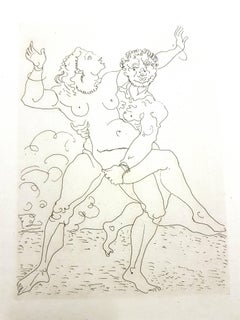
André Derain - Ovid
s Heroides - Original Etching
By André Derain
Located in Collonge Bellerive, Geneve, CH
André Derain - Ovid's Heroides
Original Etching
Edition of 134
Dimensions: 32 x 25 cm
Ovide [Marcel Prevost], Héroïdes, Paris, Société des Cent-une, 1938...
Category
1930s Modern Nude Prints
Materials
Etching
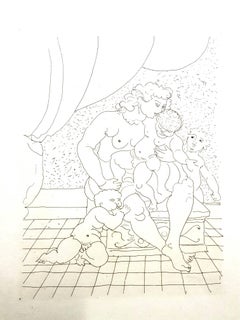
Lauren
Located in Toronto, ON
Image Size: 14" x 11" Unframed
Limited Edition Giclee on Canvas Printer's Proof of 5
Hand Signed by Robert Hartshorn
Category
21st Century and Contemporary Nude Prints
Materials
Giclée
$1,950
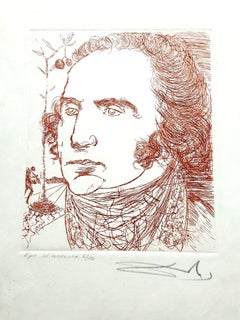
Salvador Dali - George Washington - Original Handsigned Etching
Located in Collonge Bellerive, Geneve, CH
Salvador Dali - George Washington - Original Handsigned Etching
Dimensions: 38 x 28 cm
1967
Signed in pencil
EA in Sanguine
Jean Schneider, Basel
References : Field 67-3
Category
1960s Surrealist Nude Prints
Materials
Etching
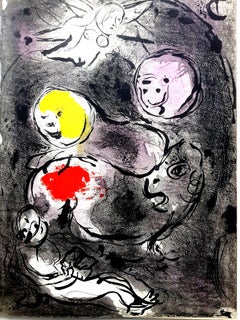
Marc Chagall - The Bible - Original Lithograph
By Marc Chagall
Located in Collonge Bellerive, Geneve, CH
Marc Chagall, Original Lithograph depicting an instant of the Bible.
Technique: Original lithograph in colours
Year: 1956
Sizes: 35,5 x 26 cm / 14" x 10.2" (sheet)
Published by: Éditions de la Revue Verve, Tériade, Paris
Printed by: Atelier Mourlot, Paris
Documentation / References: Mourlot, F., Chagall Lithograph [II] 1957-1962, A. Sauret, Monte Carlo 1963, nos. 234 and 257
Marc Chagall (born in 1887)
Marc Chagall was born in Belarus in 1887 and developed an early interest in art. After studying painting, in 1907 he left Russia for Paris, where he lived in an artist colony on the city’s outskirts. Fusing his own personal, dreamlike imagery with hints of the fauvism and cubism popular in France at the time, Chagall created his most lasting work—including I and the Village (1911)—some of which would be featured in the Salon des Indépendants exhibitions. After returning to Vitebsk for a visit in 1914, the outbreak of WWI trapped Chagall in Russia. He returned to France in 1923 but was forced to flee the country and Nazi persecution during WWII. Finding asylum in the U.S., Chagall became involved in set and costume design before returning to France in 1948. In his later years, he experimented with new art forms and was commissioned to produce numerous large-scale works. Chagall died in St.-Paul-de-Vence in 1985.
The Village
Marc Chagall was born in a small Hassidic community on the outskirts of Vitebsk, Belarus, on July 7, 1887. His father was a fishmonger, and his mother ran a small sundries shop in the village. As a child, Chagall attended the Jewish elementary school, where he studied Hebrew and the Bible, before later attending the Russian public school. He began to learn the fundamentals of drawing during this time, but perhaps more importantly, he absorbed the world around him, storing away the imagery and themes that would feature largely in most of his later work.
At age 19 Chagall enrolled at a private, all-Jewish art school and began his formal education in painting, studying briefly with portrait artist Yehuda Pen. However, he left the school after several months, moving to St. Petersburg in 1907 to study at the Imperial Society for the Protection of Fine Arts. The following year, he enrolled at the Svanseva School, studying with set designer Léon Bakst, whose work had been featured in Sergei Diaghilev's Ballets Russes. This early experience would prove important to Chagall’s later career as well.
Despite this formal instruction, and the widespread popularity of realism in Russia at the time, Chagall was already establishing his own personal style, which featured a more dreamlike unreality and the people, places and imagery that were close to his heart. Some examples from this period are his Window Vitebsk (1908) and My Fianceé with Black Gloves (1909), which pictured Bella Rosenfeld, to whom he had recently become engaged.
The Beehive
Despite his romance with Bella, in 1911 an allowance from Russian parliament member and art patron Maxim Binaver enabled Chagall to move to Paris, France. After settling briefly in the Montparnasse neighborhood, Chagall moved further afield to an artist colony known as La Ruche (“The Beehive”), where he began to work side by side with abstract painters such as Amedeo Modigliani and Fernand Léger as well as the avant-garde poet Guillaume Apollinaire. At their urging, and under the influence of the wildly popular fauvism and cubism, Chagall lightened his palette and pushed his style ever further from reality. I and the Village (1911) and Homage to Apollinaire (1912) are among his early Parisian works, widely considered to be his most successful and representative period.
Though his work stood stylistically apart from his cubist contemporaries, from 1912 to 1914 Chagall exhibited several paintings at the annual Salon des Indépendants exhibition, where works by the likes of Juan Gris, Marcel Duchamp and Robert Delaunay were causing a stir in the Paris art world. Chagall’s popularity began to spread beyond La Ruche, and in May 1914 he traveled to Berlin to help organize his first solo exhibition, at Der Sturm Gallery. Chagall remained in the city until the highly acclaimed show opened that June. He then returned to Vitebsk, unaware of the fateful events to come.
War, Peace and Revolution
In August 1914 the outbreak of World War I precluded Chagall’s plans to return to Paris. The conflict did little to stem the flow of his creative output, however, instead merely giving him direct access to the childhood scenes so essential to his work, as seen in paintings such as Jew in Green (1914) and Over Vitebsk (1914). His paintings from this period also occasionally featured images of the war’s impact on the region, as with Wounded Soldier (1914) and Marching (1915). But despite the hardships of life during wartime, this would also prove to be a joyful period for Chagall. In July 1915 he married Bella, and she gave birth to a daughter, Ida, the following year. Their appearance in works such as Birthday (1915), Bella and Ida by the Window (1917) and several of his “Lovers” paintings give a glimpse of the island of domestic bliss that was Chagall’s amidst the chaos.
To avoid military service and stay with his new family, Chagall took a position as a clerk in the Ministry of War Economy in St. Petersburg. While there he began work on his autobiography and also immersed himself in the local art scene, befriending novelist Boris Pasternak, among others. He also exhibited his work in the city and soon gained considerable recognition. That notoriety would prove important in the aftermath of the 1917 Russian Revolution when he was appointed as the Commissar of Fine Arts in Vitebsk. In his new post, Chagall undertook various projects in the region, including the 1919 founding of the Academy of the Arts. Despite these endeavors, differences among his colleagues eventually disillusioned Chagall. In 1920 he relinquished his position and moved his family to Moscow, the post-revolution capital of Russia.
In Moscow, Chagall was soon commissioned to create sets and costumes for various productions at the Moscow State Yiddish Theater, where he would paint a series of murals titled Introduction to the Jewish Theater as well. In 1921, Chagall also found work as a teacher at a school for war orphans. By 1922, however, Chagall found that his art had fallen out of favor, and seeking new horizons he left Russia for good.
Flight
After a brief stay in Berlin, where he unsuccessfully sought to recover the work exhibited at Der Sturm before the war, Chagall moved his family to Paris in September 1923. Shortly after their arrival, he was commissioned by art dealer and publisher Ambroise Vollard to produce a series of etchings for a new edition of Nikolai Gogol's 1842 novel Dead Souls. Two years later Chagall began work on an illustrated edition of Jean de la Fontaine’s Fables, and in 1930 he created etchings for an illustrated edition of the Old Testament, for which he traveled to Palestine to conduct research.
Chagall’s work during this period brought him new success as an artist and enabled him to travel throughout Europe in the 1930s. He also published his autobiography, My Life (1931), and in 1933 received a retrospective at the Kunsthalle in Basel, Switzerland. But at the same time that Chagall’s popularity was spreading, so, too, was the threat of Fascism and Nazism. Singled out during the cultural "cleansing" undertaken by the Nazis in Germany, Chagall’s work was ordered removed from museums throughout the country. Several pieces were subsequently burned, and others were featured in a 1937 exhibition of “degenerate art” held in Munich. Chagall’s angst regarding these troubling events and the persecution of Jews in general can be seen in his 1938 painting White Crucifixion.
With the eruption of World War II, Chagall and his family moved to the Loire region before moving farther south to Marseilles following the invasion of France. They found a more certain refuge when, in 1941, Chagall’s name was added by the director of the Museum of Modern Art (MOMA) in New York City to a list of artists and intellectuals deemed most at risk from the Nazis’ anti-Jewish campaign. Chagall and his family would be among the more than 2,000 who received visas and escaped this way.
Haunted Harbors
Arriving in New York City in June 1941, Chagall discovered that he was already a well-known artist there and, despite a language barrier, soon became a part of the exiled European artist community. The following year he was commissioned by choreographer Léonide Massine to design sets and costumes for the ballet Aleko, based on Alexander Pushkin’s “The Gypsies” and set to the music of Pyotr Ilyich Tchaikovsky.
But even as he settled into the safety of his temporary home, Chagall’s thoughts were frequently consumed by the fate befalling the Jews of Europe and the destruction of Russia, as paintings such as The Yellow Crucifixion...
Category
1950s Modern Figurative Prints
Materials
Lithograph
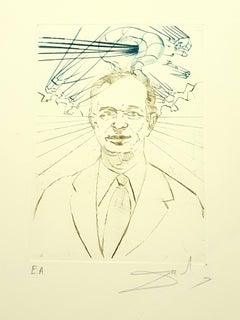
Salvador Dali - Enrico Fermi - Original Handsigned Engraving
Located in Collonge Bellerive, Geneve, CH
Salvador Dali - Enrico Fermi - Original Handsigned Engraving
Dimensions: 17.5 x 12.5 cm
1970
Signed in pencil
EA
Jean Schneider, Basel
References : Field 70-5
Category
1960s Surrealist Nude Prints
Materials
Engraving
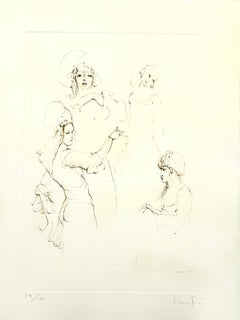
Leonor Fini - Servants - Original Handsigned Lithograph
By Leonor Fini
Located in Collonge Bellerive, Geneve, CH
Leonor Fini - Servants - Original Handsigned Lithograph
Les Elus de la Nuit
1986
Conditions: excellent
Handsigned and Numbered
Edition: 230
Dimensions: 38 x 28 cm
Editions: Trinckve...
Category
1980s Modern Nude Prints
Materials
Lithograph
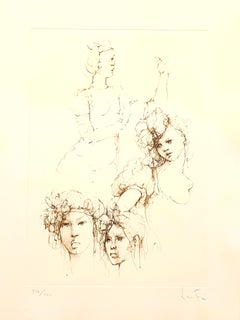
Leonor Fini - Portraits - Original Handsigned Lithograph
By Leonor Fini
Located in Collonge Bellerive, Geneve, CH
Leonor Fini - Portraits - Original Handsigned Lithograph
Les Elus de la Nuit
1986
Conditions: excellent
Handsigned and Numbered
Edition: 230
Dimensions: 38 x 28 cm
Editions: Trinckv...
Category
1980s Modern Nude Prints
Materials
Lithograph
Salvador Dali - Eye Watches
Located in Collonge Bellerive, Geneve, CH
Salvador Dali - Eye Watches - Original Etching
Dimensions: 38 x 28 cm
Edition: 390
1967
On Rives Vellum
References : Field 67-4 (p. 32-33) / Michler & Lopsinger 174 to 187.
Category
1960s Surrealist Nude Prints
Materials
Etching

Salvador Dali - Jonas Salk - Original Handsigned Engraving
Located in Collonge Bellerive, Geneve, CH
Salvador Dali - Jonas Salk - Original Handsigned Engraving
Dimensions: 17.5 x 12.5 cm
1970
Signed in pencil
EA
Jean Schneider, Basel
References : Field 70-5
Category
1960s Surrealist Nude Prints
Materials
Engraving
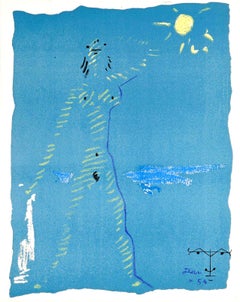
Jean Cocteau - Under the Fire Coat - Original Lithograph
By Jean Cocteau
Located in Collonge Bellerive, Geneve, CH
Jean Cocteau - Under the Fire Coat - Original Lithograph
Signed "Jean" in the plate and dated 1954 in the plate.
Joseph Forêt Editions
Dimensions: 41 x 33 cm...
Category
1950s Surrealist Nude Prints
Materials
Lithograph
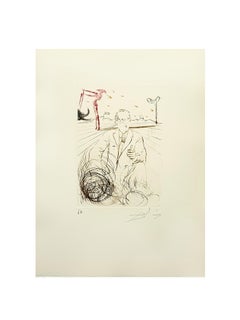
Salvador Dali - Nude Riding - Original Etching on Silk
Located in Collonge Bellerive, Geneve, CH
Salvador Dali - Nude Ridding - from "Les Amours de Cassandre"
Original Etching
From the suite on Silk made for editions 9 to 34
Dimensions: 38,...
Category
1960s Surrealist Nude Prints
Materials
Etching
