Lithograph Nude Prints
to
50
150
74
71
11
6
Overall Width
to
Overall Height
to
313
141
106
53
46
38
34
13
10
3
3
1
1
34
15
15
15
13
7
278
28
2
3
30
25
7
68
39
24
26
2
227
85
247
144
126
123
67
65
59
51
42
12
9
7
7
6
6
5
4
4
4
4
313
193
69
53
29
42
83
193
108
Style: Modern
Medium: Lithograph
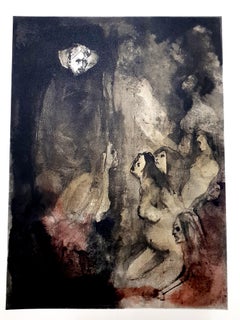
Leonor Fini - Prisonners - Original Lithograph
By Leonor Fini
Located in Collonge Bellerive, Geneve, CH
Leonor Fini - Prisonners - Original Lithograph
The Flowers of Evil
1964
Conditions: excellent
Edition: 500
Dimensions: 46 x 34 cm
Editions: Le Cercle du Livre Précieux, Paris
Unsig...
Category
1960s Modern Lithograph Nude Prints
Materials
Lithograph

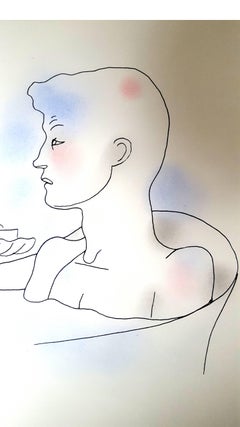
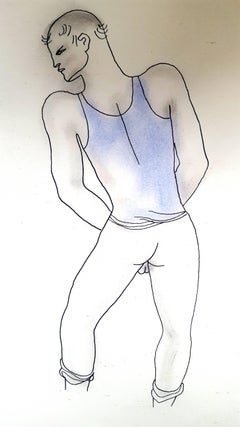
Jean Cocteau - Bath - Original Handcolored Lithograph
By Jean Cocteau
Located in Collonge Bellerive, Geneve, CH
Jean Cocteau
White Book - Autobiography about Cocteau's discovery of his homosexuality. The book was first published anonymously and created a scandal.
Original Handcolored Lithograph...
Category
1930s Modern Lithograph Nude Prints
Materials
Lithograph
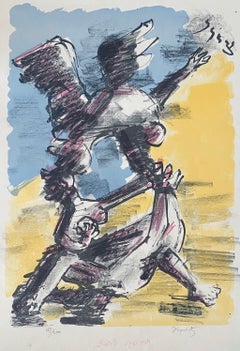
Jacques Lipchitz French Cubist Modernist Lithograph Hebrew Judaica ZIon
Located in Surfside, FL
Hand signed and numbered.
with Hebrew calligraphy "Zion"
Chaim Jacob Lipchitz, 1891-1973, was born in Lithuania and came of age in Paris during the early 20th century, where he was...
Category
1960s Modern Lithograph Nude Prints
Materials
Lithograph
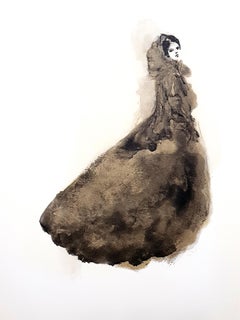
Leonor Fini - Saturday Night Dress - Original Lithograph
By Leonor Fini
Located in Collonge Bellerive, Geneve, CH
Leonor Fini - Saturday Night Dress - Original Lithograph
The Flowers of Evil
1964
Conditions: excellent
Edition: 500
Dimensions: 46 x 34 cm
Editions: Le Cercle du Livre Précieux, P...
Category
1960s Modern Lithograph Nude Prints
Materials
Lithograph
Leonor Fini - Duo - Original Lithograph
By Leonor Fini
Located in Collonge Bellerive, Geneve, CH
Leonor Fini - Duo - Original Lithograph
The Flowers of Evil
1964
Conditions: excellent
Edition: 500
Dimensions: 46 x 34 cm
Editions: Le Cercle du Livre Précieux, Paris
Unsigned and...
Category
1960s Modern Lithograph Nude Prints
Materials
Lithograph
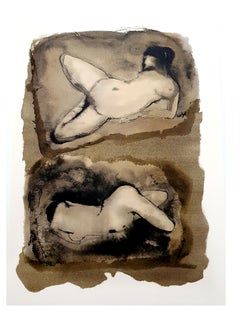
Leonor Fini - Satyr - Original Handsigned Lithograph
By Leonor Fini
Located in Collonge Bellerive, Geneve, CH
Leonor Fini - Satyr - Original Handsigned Lithograph
Circa 1982
On colored paper
Handsigned and Numbered
Edition: 275
Dimensions: 69 x 52.5 cm
Category
1980s Modern Lithograph Nude Prints
Materials
Lithograph
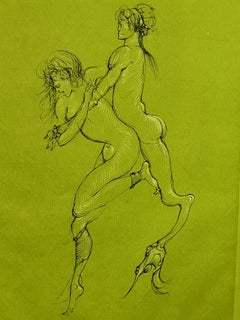
Leda and the Swan No. 10, Framed Minimalist Nude Lithograph by Reuben Nakian
Located in Long Island City, NY
Artist: Reuben Nakian
Title: Leda and the Swan - 10
Year: circa 1970
Medium: Lithograph, signed in pencil
Edition: BAT
Image Size: 22 in. x 30 in. (55.88 cm x 76.2 cm)
Frame Size: 32...
Category
1970s Modern Lithograph Nude Prints
Materials
Lithograph
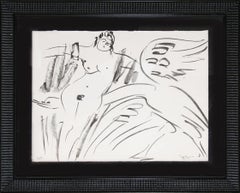
Untitled nude woman framed lithograph by artist Aristide Maillol
Located in Boca Raton, FL
Framed lithograph of a female nude pastel by artist Aristide Maillol. Image size: 12 1/2 x 9 1/2 inches. Framed under glass in wooden frame.
Category
20th Century Modern Lithograph Nude Prints
Materials
Lithograph
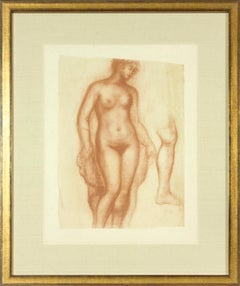
Jean Cocteau - White Book - Original Handcolored Lithograph
By Jean Cocteau
Located in Collonge Bellerive, Geneve, CH
Jean Cocteau
White Book - Autobiography about Cocteau's discovery of his homosexuality. The book was first published anonymously and created a scandal.
Original Handcolored Lithograph...
Category
1930s Modern Lithograph Nude Prints
Materials
Lithograph
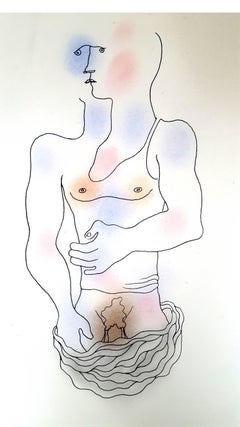
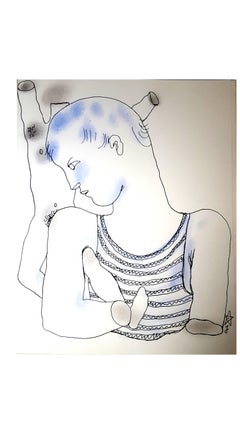
Jean Cocteau - White Book - Original Handcolored Lithograph
By Jean Cocteau
Located in Collonge Bellerive, Geneve, CH
Jean Cocteau
White Book - Autobiography about Cocteau's discovery of his homosexuality. The book was first published anonymously and created a scandal.
Original Handcolored Lithograp...
Category
1930s Modern Lithograph Nude Prints
Materials
Lithograph
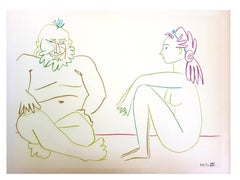
The Human Comedy - Lithograph
Located in Collonge Bellerive, Geneve, CH
after Pablo Picasso - The Human Comedy - Lithograph
Signed and dated in the plate
Dimensions: 32 x 24 cm
This artwork is a lithograph in colors on wove paper after a drawing by Pablo...
Category
1950s Modern Lithograph Nude Prints
Materials
Lithograph
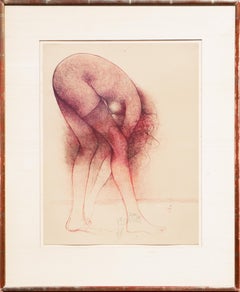
Modern Abstract Red
Purple Toned Figurative Lithograph of Nude Changing Woman
By Bruno Bruni
Located in Houston, TX
Modern abstract red and purple toned offset lithograph of a female figure by Italian artist Bruno Bruni. The work features a loosely rendered nude woman bent over in the process of c...
Category
Mid-20th Century Modern Lithograph Nude Prints
Materials
Lithograph
Marc Chagall - Creation - Adam and Eve - Original Lithograph from Bible
By Marc Chagall
Located in Collonge Bellerive, Geneve, CH
Marc Chagall, Original Lithograh depicting an instant of the Bible.
Technique: Original lithograph in colours (Mourlot no. 234)
On the reverse: another black and white original litho...
Category
1960s Modern Lithograph Nude Prints
Materials
Lithograph
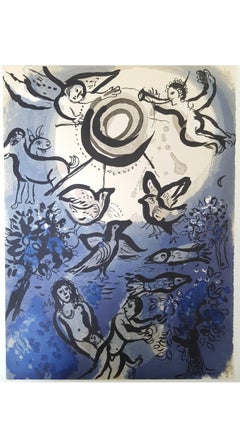
Marc Chagall - The Bible - Original Lithograph
By Marc Chagall
Located in Collonge Bellerive, Geneve, CH
Marc Chagall, Original Lithograph depicting an instant of the Bible.
Technique: Original lithograph in colours
Year: 1956
Sizes: 35,5 x 26 cm / 14" x 10.2" (sheet)
Published by: Éditions de la Revue Verve, Tériade, Paris
Printed by: Atelier Mourlot, Paris
Documentation / References: Mourlot, F., Chagall Lithograph [II] 1957-1962, A. Sauret, Monte Carlo 1963, nos. 234 and 257
Marc Chagall (born in 1887)
Marc Chagall was born in Belarus in 1887 and developed an early interest in art. After studying painting, in 1907 he left Russia for Paris, where he lived in an artist colony on the city’s outskirts. Fusing his own personal, dreamlike imagery with hints of the fauvism and cubism popular in France at the time, Chagall created his most lasting work—including I and the Village (1911)—some of which would be featured in the Salon des Indépendants exhibitions. After returning to Vitebsk for a visit in 1914, the outbreak of WWI trapped Chagall in Russia. He returned to France in 1923 but was forced to flee the country and Nazi persecution during WWII. Finding asylum in the U.S., Chagall became involved in set and costume design before returning to France in 1948. In his later years, he experimented with new art forms and was commissioned to produce numerous large-scale works. Chagall died in St.-Paul-de-Vence in 1985.
The Village
Marc Chagall was born in a small Hassidic community on the outskirts of Vitebsk, Belarus, on July 7, 1887. His father was a fishmonger, and his mother ran a small sundries shop in the village. As a child, Chagall attended the Jewish elementary school, where he studied Hebrew and the Bible, before later attending the Russian public school. He began to learn the fundamentals of drawing during this time, but perhaps more importantly, he absorbed the world around him, storing away the imagery and themes that would feature largely in most of his later work.
At age 19 Chagall enrolled at a private, all-Jewish art school and began his formal education in painting, studying briefly with portrait artist Yehuda Pen. However, he left the school after several months, moving to St. Petersburg in 1907 to study at the Imperial Society for the Protection of Fine Arts. The following year, he enrolled at the Svanseva School, studying with set designer Léon Bakst, whose work had been featured in Sergei Diaghilev's Ballets Russes. This early experience would prove important to Chagall’s later career as well.
Despite this formal instruction, and the widespread popularity of realism in Russia at the time, Chagall was already establishing his own personal style, which featured a more dreamlike unreality and the people, places and imagery that were close to his heart. Some examples from this period are his Window Vitebsk (1908) and My Fianceé with Black Gloves (1909), which pictured Bella Rosenfeld, to whom he had recently become engaged.
The Beehive
Despite his romance with Bella, in 1911 an allowance from Russian parliament member and art patron Maxim Binaver enabled Chagall to move to Paris, France. After settling briefly in the Montparnasse neighborhood, Chagall moved further afield to an artist colony known as La Ruche (“The Beehive”), where he began to work side by side with abstract painters such as Amedeo Modigliani and Fernand Léger as well as the avant-garde poet Guillaume Apollinaire. At their urging, and under the influence of the wildly popular fauvism and cubism, Chagall lightened his palette and pushed his style ever further from reality. I and the Village (1911) and Homage to Apollinaire (1912) are among his early Parisian works, widely considered to be his most successful and representative period.
Though his work stood stylistically apart from his cubist contemporaries, from 1912 to 1914 Chagall exhibited several paintings at the annual Salon des Indépendants exhibition, where works by the likes of Juan Gris, Marcel Duchamp and Robert Delaunay were causing a stir in the Paris art world. Chagall’s popularity began to spread beyond La Ruche, and in May 1914 he traveled to Berlin to help organize his first solo exhibition, at Der Sturm Gallery. Chagall remained in the city until the highly acclaimed show opened that June. He then returned to Vitebsk, unaware of the fateful events to come.
War, Peace and Revolution
In August 1914 the outbreak of World War I precluded Chagall’s plans to return to Paris. The conflict did little to stem the flow of his creative output, however, instead merely giving him direct access to the childhood scenes so essential to his work, as seen in paintings such as Jew in Green (1914) and Over Vitebsk (1914). His paintings from this period also occasionally featured images of the war’s impact on the region, as with Wounded Soldier (1914) and Marching (1915). But despite the hardships of life during wartime, this would also prove to be a joyful period for Chagall. In July 1915 he married Bella, and she gave birth to a daughter, Ida, the following year. Their appearance in works such as Birthday (1915), Bella and Ida by the Window (1917) and several of his “Lovers” paintings give a glimpse of the island of domestic bliss that was Chagall’s amidst the chaos.
To avoid military service and stay with his new family, Chagall took a position as a clerk in the Ministry of War Economy in St. Petersburg. While there he began work on his autobiography and also immersed himself in the local art scene, befriending novelist Boris Pasternak, among others. He also exhibited his work in the city and soon gained considerable recognition. That notoriety would prove important in the aftermath of the 1917 Russian Revolution when he was appointed as the Commissar of Fine Arts in Vitebsk. In his new post, Chagall undertook various projects in the region, including the 1919 founding of the Academy of the Arts. Despite these endeavors, differences among his colleagues eventually disillusioned Chagall. In 1920 he relinquished his position and moved his family to Moscow, the post-revolution capital of Russia.
In Moscow, Chagall was soon commissioned to create sets and costumes for various productions at the Moscow State Yiddish Theater, where he would paint a series of murals titled Introduction to the Jewish Theater as well. In 1921, Chagall also found work as a teacher at a school for war orphans. By 1922, however, Chagall found that his art had fallen out of favor, and seeking new horizons he left Russia for good.
Flight
After a brief stay in Berlin, where he unsuccessfully sought to recover the work exhibited at Der Sturm before the war, Chagall moved his family to Paris in September 1923. Shortly after their arrival, he was commissioned by art dealer and publisher Ambroise Vollard to produce a series of etchings for a new edition of Nikolai Gogol's 1842 novel Dead Souls. Two years later Chagall began work on an illustrated edition of Jean de la Fontaine’s Fables, and in 1930 he created etchings for an illustrated edition of the Old Testament, for which he traveled to Palestine to conduct research.
Chagall’s work during this period brought him new success as an artist and enabled him to travel throughout Europe in the 1930s. He also published his autobiography, My Life (1931), and in 1933 received a retrospective at the Kunsthalle in Basel, Switzerland. But at the same time that Chagall’s popularity was spreading, so, too, was the threat of Fascism and Nazism. Singled out during the cultural "cleansing" undertaken by the Nazis in Germany, Chagall’s work was ordered removed from museums throughout the country. Several pieces were subsequently burned, and others were featured in a 1937 exhibition of “degenerate art” held in Munich. Chagall’s angst regarding these troubling events and the persecution of Jews in general can be seen in his 1938 painting White Crucifixion.
With the eruption of World War II, Chagall and his family moved to the Loire region before moving farther south to Marseilles following the invasion of France. They found a more certain refuge when, in 1941, Chagall’s name was added by the director of the Museum of Modern Art (MOMA) in New York City to a list of artists and intellectuals deemed most at risk from the Nazis’ anti-Jewish campaign. Chagall and his family would be among the more than 2,000 who received visas and escaped this way.
Haunted Harbors
Arriving in New York City in June 1941, Chagall discovered that he was already a well-known artist there and, despite a language barrier, soon became a part of the exiled European artist community. The following year he was commissioned by choreographer Léonide Massine to design sets and costumes for the ballet Aleko, based on Alexander Pushkin’s “The Gypsies” and set to the music of Pyotr Ilyich Tchaikovsky.
But even as he settled into the safety of his temporary home, Chagall’s thoughts were frequently consumed by the fate befalling the Jews of Europe and the destruction of Russia, as paintings such as The Yellow Crucifixion...
Category
1950s Modern Lithograph Nude Prints
Materials
Lithograph
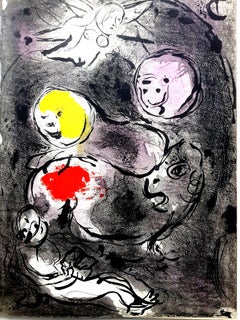
Leonor Fini - Orgy - Original Handsigned Lithograph
By Leonor Fini
Located in Collonge Bellerive, Geneve, CH
Leonor Fini - Orgy - Original Handsigned Lithograph
Circa 1982
On colored paper
Handsigned and Numbered
Edition: 275
Dimensions: 69 x 52.5 cm
Category
1980s Modern Lithograph Nude Prints
Materials
Lithograph
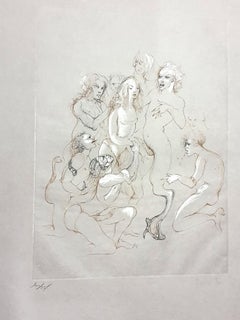
Leonor Fini - Sadness - Original Lithograph
By Leonor Fini
Located in Collonge Bellerive, Geneve, CH
Leonor Fini - Sadness - Original Lithograph
The Flowers of Evil
1964
Conditions: excellent
Edition: 500
Dimensions: 46 x 34 cm
Editions: Le Cercle du Livre Précieux, Paris
Unsigned...
Category
1960s Modern Lithograph Nude Prints
Materials
Lithograph
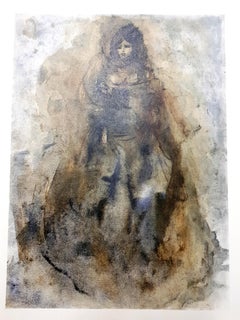
Leonor Fini - Portraits - Original Handsigned Lithograph
By Leonor Fini
Located in Collonge Bellerive, Geneve, CH
Leonor Fini - Portraits - Original Handsigned Lithograph
Les Elus de la Nuit
1986
Conditions: excellent
Handsigned and Numbered
Edition: 230
Dimensions: 38 x 28 cm
Editions: Trinckv...
Category
1980s Modern Lithograph Nude Prints
Materials
Lithograph
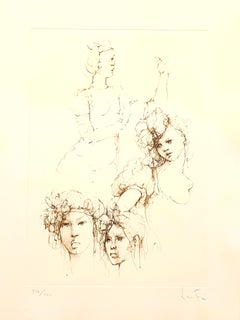
Marc Chagall - The Bible - Adam and Eve - Original Lithograph
By Marc Chagall
Located in Collonge Bellerive, Geneve, CH
Marc Chagall, Original Lithograh depicting an instant of the Bible.
Technique: Original lithograph in colours (Mourlot no. 234)
On the reverse: another black and white original litho...
Category
1960s Modern Lithograph Nude Prints
Materials
Lithograph
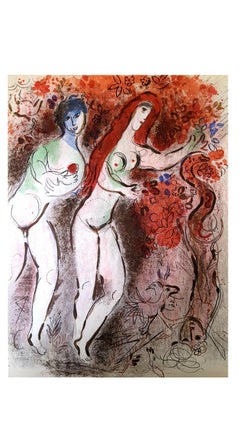
Leonor Fini - Toads - Original Handsigned Lithograph
By Leonor Fini
Located in Collonge Bellerive, Geneve, CH
Leonor Fini - Toads - Original Handsigned Lithograph
Circa 1982
On colored paper
Handsigned and Numbered
Edition: 275
Dimensions: 69 x 52.5 cm
Category
1980s Modern Lithograph Nude Prints
Materials
Lithograph
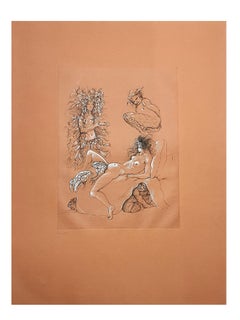
Marc Chagall - The Bible - Original Lithograph
By Marc Chagall
Located in Collonge Bellerive, Geneve, CH
Marc Chagall, Original Lithograph depicting an instant of the Bible.
Technique: Original lithograph in colours
Year: 1956
Sizes: 35,5 x 26 cm / 14" x 10.2" (...
Category
1950s Modern Lithograph Nude Prints
Materials
Lithograph
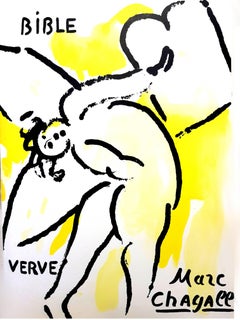
after Henri Matisse, "Sitting Blue Nude"
Located in Collonge Bellerive, Geneve, CH
Lithograph after Henri Matisse - Sitting Blue Nude
Artist : after Henri MATISSE
Edition of 200
76 x 56 cm
With stamp of the Succession Matisse
References : Artvalue - Succession Ma...
Category
1950s Modern Lithograph Nude Prints
Materials
Lithograph
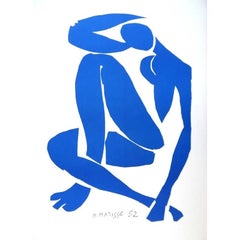
La blouse turque - Étude de jambes
Located in Laguna Beach, CA
La blouse turque - Étude de jambes is a lithograph from 1925 printed on Japan paper. There were 50 in the regular edition and 10 Artist Proofs. The piece is signed and numbered 30...
Category
Mid-20th Century Modern Lithograph Nude Prints
Materials
Lithograph
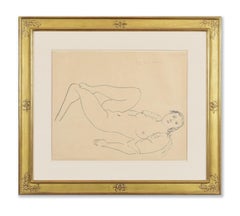
The Human Comedy - Lithograph
Located in Collonge Bellerive, Geneve, CH
After Pablo Picasso
The Human Comedy - Lithograph after an original drawing, as published in the journal "Verve"
Printed signature and date
Dimensions: 32...
Category
1950s Modern Lithograph Nude Prints
Materials
Lithograph
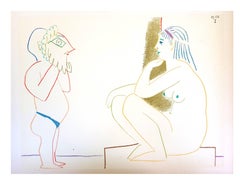
Nude original Lithograph EA by Alain Bonnefoit
Located in Pasadena, CA
Original Lithographe EA (Epreuve d'Artiste ) Alain Bonnefoit’s trademark female nudes reflect both Western and Eastern art historical influences. A painter, engraver, and sculptor, B...
Category
Late 20th Century Modern Lithograph Nude Prints
Materials
Lithograph
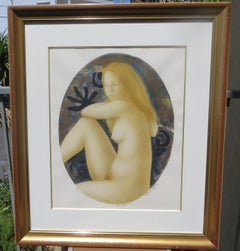
Leonor Fini - Nimphs - Original Handsigned Lithograph
By Leonor Fini
Located in Collonge Bellerive, Geneve, CH
Leonor Fini - Nimphs - Original Handsigned Lithograph
Circa 1982
On colored paper
Handsigned and Numbered
Edition: 275
Dimensions: 69 x 52.5 cm
Category
1980s Modern Lithograph Nude Prints
Materials
Lithograph
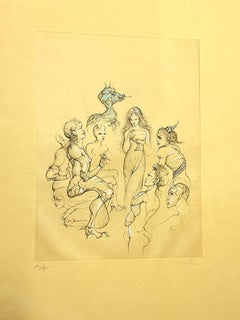
Leonor Fini - Disagreement - Original Lithograph
By Leonor Fini
Located in Collonge Bellerive, Geneve, CH
Leonor Fini - Disagreement - Original Lithograph
The Flowers of Evil
1964
Conditions: excellent
Edition: 500
Dimensions: 46 x 34 cm
Editions: Le Cercle du Livre Précieux, Paris
Uns...
Category
1960s Modern Lithograph Nude Prints
Materials
Lithograph
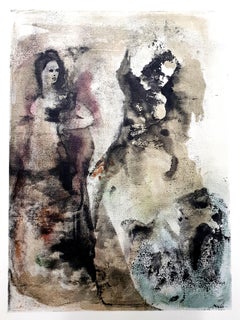
Leonard Foujita - Soldiers - Original Lithograph
Located in Collonge Bellerive, Geneve, CH
Original Lithograph by Leonard Foujita
Title: Soldiers
Signed in the plate
Dimensions: 23 x 28 cm
Edition of 97
From the " Propos d'un intoxiqué " Portfolio, published in 1928 by Jav...
Category
1920s Modern Lithograph Nude Prints
Materials
Lithograph
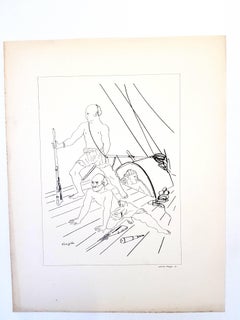
Jean Cocteau - Marine Mountains - Original Lithograph
By Jean Cocteau
Located in Collonge Bellerive, Geneve, CH
Jean Cocteau - Marine Mountains - Original Lithograph
Dimensions: 38 x 28 cm
Edition: 200
In Rives
From: COCTEAU. — VERDET (André). Montagnes marines. S. l. (Paris), Les Messagers du...
Category
1960s Modern Lithograph Nude Prints
Materials
Lithograph
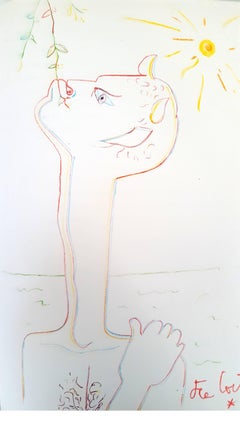
Titania Lithograph, Midsummer Night
s Dream, by Marion Epstein
Located in New York, NY
Marion Epstein (American, 1921-2002)
Titania, 1973
Lithograph
Framed: 31 1/2 x 25 x 1/2 in.
Numbered, titled, signed and dated bottom
For over 60 years, local artist Marion Epstein has worked through her art to bridge the personal and the political, family and career. A versatile and prolific artist, she has done sculpture, enameling, painting and photography. But it was printmaking that truly captivated her imagination.
Like many artists of her generation, Epstein was powerfully influenced by the political activism of the 1960s. A member of the Women's International League for Peace and Freedom, Epstein recalls attending meetings out of town with her young son in tow.
The anti-war movement influenced a number of her pieces. "Where Have All the Flowers Gone?" echoes the sentiment of the popular anti-war folk song. This very tall print (6-by-2-1/2 feet) in tones of black, cream and ochre shows a tall woman (Marion) shielding a child, with spindly flowers drooping around them.
"I didn't do abstractions," says Epstein. "I was always trying to say something."
Another anti-war piece, "Generations of Thy Children," combines oil painting and collage on a bisected canvas. On the right half, a lone figure of a Vietnamese child stands forlornly on a reddish orange background. The left side of the canvas is crowded with images of soldiers, artillery and politicians.
Epstein's print "Metamorphosis," completed following her participation in a civil rights march in Washington, tries to capture the changes and uncertainty in America during that time. In the background a white man looms with a questioning, almost fearful look on his face while the black youth in the foreground has his eyes downcast. Works such as "Dream Deferred" and "Aching To be Free" also represent the artist's personal reflections on the struggle for racial equality.
Much of Epstein's art is a complex layering of imagery and texture, line and translucent color. In her haunting print, "Ovens and Shoes," one of several works in which she addresses the Holocaust, she makes interesting use of photographic images from the U.S. Holocaust Memorial Museum in Washington, D.C. Over a saturated black print of the death camp ovens, she has superimposed a pale ochre print of the pile of discarded shoes. Layered on top of these and centered between the arches of the ovens is the violet image of a Rodin sculpture of a man.
(Bio sourced from Cleveland Jewish News, by Susan Kahn)
Category
1970s American Modern Lithograph Nude Prints
Materials
Lithograph
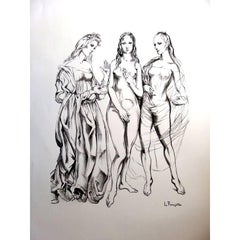
Léonard Foujita - The Three Graces - Original Lithograph
Located in Collonge Bellerive, Geneve, CH
Léonard Foujita (French/Japanese, 1886–1968)
The Three Graces
Original Lithograph
76 x 54 cm
Signed in the plate
Reference: Sylvie Buisson réf. #60.28 (vol. 1, p.531)
Léonard ...
Category
1960s Modern Lithograph Nude Prints
Materials
Lithograph
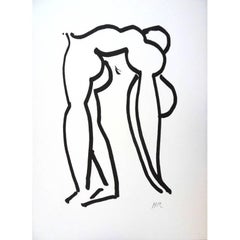
after Henri Matisse - Acrobat
Located in Collonge Bellerive, Geneve, CH
after Henri Matisse - Acrobat
Edition of 200
with the printed signature, as issued
76 x 56
With stamp of the Succession Matisse
References : Artvalue - Succession Matisse
Category
1950s Modern Lithograph Nude Prints
Materials
Lithograph
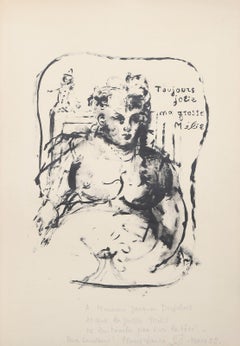
La Grosse Melie, Signed Nude Lithograph by Marie-Laure De Noailles
Located in Long Island City, NY
La Grosse Melie
Marie-Laure de Noailles, French (1902–1970)
Date: 1952
Lithograph on Arches, signed and dedicated in pencil
Edition of Dedicated Proof
Image Size: 14 x 11 inches
Size...
Category
1950s Modern Lithograph Nude Prints
Materials
Lithograph
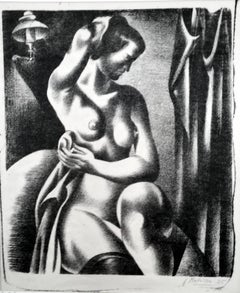
Three-Quarter View of Nude Bathing Seated Near Lamp
By Jan Matulka
Located in New York, NY
Jan Matulka (1890-1972), Three-Quarter View of Nude Bathing Seated Near Lamp, lithograph, 1925, signed and dated in pencil lower right. Reference: Flint 9...
Category
1920s American Modern Lithograph Nude Prints
Materials
Lithograph
The Escape - Lithograph by Antonio Scordia - 1945
Located in Roma, IT
The Escape is an original lithograph artwork realized by Antonio Scordia in 1945. Edition of 25/80 prints. Hand-signed in pencil on the lower right; numbered on the lower left.
Good conditions.
The artwork represents two figures, in the front the nude one, resembles the Hermes, with his position of flying and his feet. The artwork is created through quick and confident strokes, in a well-balanced composition.
Antonio Scordia (Santa Fè, Argentina, 1918 - Rome, 1988) was an Italian painter. In 1921, he moved to Rome with his family where he attended the School of the Academy of France...
Category
1940s Modern Lithograph Nude Prints
Materials
Lithograph
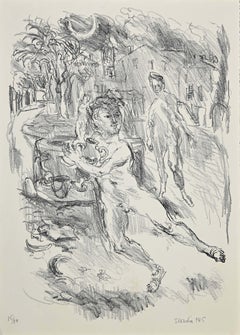
Figure - Original Lithograph - Late 20th Century
Located in Roma, IT
Figure is an original lithograph artwork realized by the artist of the 20th Century.
Hand-signed in pencil on the lower right.
Numbered, edition 57/100.
The state of preservation ...
Category
Late 20th Century Modern Lithograph Nude Prints
Materials
Lithograph
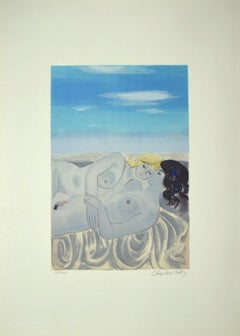
Figure - Original Lithograph by L. Sasso - 20th Century
Located in Roma, IT
Figure is a splendid lithograph engraved by L. Sasso.
The state of preservation of the artwork is excellent.
Image Container: 40 x 30 cm
Image Dimensions: 23.5 x 16 cm
Illegible ...
Category
20th Century Modern Lithograph Nude Prints
Materials
Lithograph
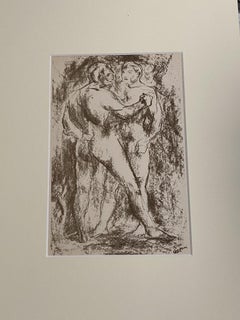
Model in the Studio - Lithograph by Felice Casorati - 1946
Located in Roma, IT
Modella nello studio is a beautiful original lithograph on paper, realized by the Italian master Felice Casorati in 1946.
Hand-signed in pencil "F. Casorati" on the lower left margi...
Category
1940s Modern Lithograph Nude Prints
Materials
Lithograph
$1,198 Sale Price
20% Off
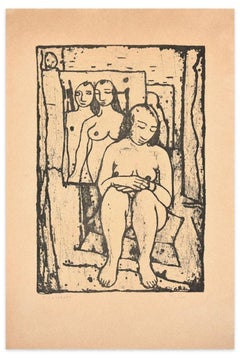
Reconstruction - Original Lithograph - 20th Century
Located in Roma, IT
"Reconstruction" is an original lithograph realized by an Anonymous Artist of the XX Century.
The state of preservation of the artwork is very good.
Sheet dimension:28 x 18.5 cm.
...
Category
Early 20th Century Modern Lithograph Nude Prints
Materials
Lithograph
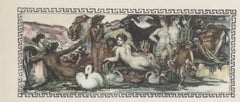
Femme Nue Allongée - Lithograph by B. Kelly - 1980s
Located in Roma, IT
Femme Nue Allongée is a sensual color lithograph realized by Bernadette Kelly (1933-) in the 20th century.
Dimensions: cm 32 x 24. Very good conditions.
This suggestive artwork is ...
Category
1980s Modern Lithograph Nude Prints
Materials
Lithograph
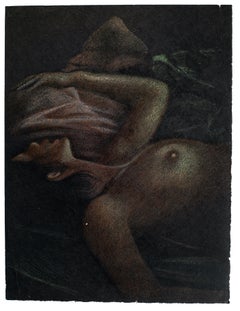
Leonor Fini - Sitting - Original Lithograph
By Leonor Fini
Located in Collonge Bellerive, Geneve, CH
Leonor Fini - Sitting - Original Lithograph
The Flowers of Evil
1964
Conditions: excellent
Edition: 500
Dimensions: 46 x 34 cm
Editions: Le Cercle du Livre Précieux, Paris
Unsigned...
Category
1960s Modern Lithograph Nude Prints
Materials
Lithograph
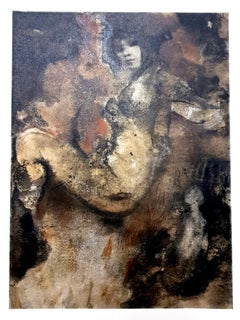
Jean Cocteau - White Book - Original Handcolored Lithograph
By Jean Cocteau
Located in Collonge Bellerive, Geneve, CH
Jean Cocteau
White Book - Autobiography about Cocteau's discovery of his homosexuality. The book was first published anonymously and created a scandal.
Original Handcolored Lithograp...
Category
1930s Modern Lithograph Nude Prints
Materials
Lithograph
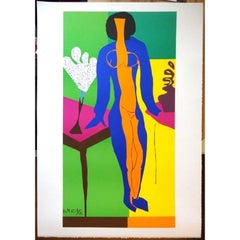
after Henri Matisse - Zulma - Lithograph
Located in Collonge Bellerive, Geneve, CH
after Henri Matisse - Zulma - Lithograph
Artist : Henri MATISSE
posthumous edition of 200 after the original paper cut-out
signature printed in the plate
80 x 60 cm
With stamp of t...
Category
Mid-20th Century Modern Lithograph Nude Prints
Materials
Lithograph
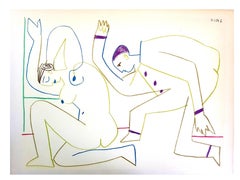
The Human Comedy - Lithograph
Located in Collonge Bellerive, Geneve, CH
after Pablo Picasso - The Human Comedy - Lithograph
Signed and dated in the plate
Dimensions: 32 x 24 cm
This artwork is a lithograph in colors on wov...
Category
1950s Modern Lithograph Nude Prints
Materials
Lithograph
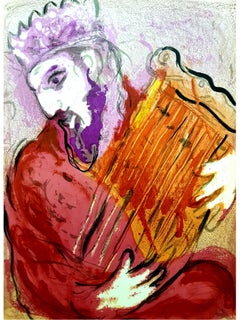
Marc Chagall - Colorful Bible King - Original Lithograph
By Marc Chagall
Located in Collonge Bellerive, Geneve, CH
Marc Chagall, Original Lithograph depicting an instant of the Bible.
Technique: Original lithograph in colours
Year: 1956
Sizes: 35,5 x 26 cm / 14" x 10.2" (sheet)
Published by: Édit...
Category
1950s Modern Lithograph Nude Prints
Materials
Lithograph
Leonor Fini - Lovers - Original Lithograph
By Leonor Fini
Located in Collonge Bellerive, Geneve, CH
Leonor Fini - Lovers - Original Lithograph
The Flowers of Evil
1964
Conditions: excellent
Edition: 500
Dimensions: 46 x 34 cm
Editions: Le Cercle du Livre Précieux, Paris
Unsigned ...
Category
1960s Modern Lithograph Nude Prints
Materials
Lithograph
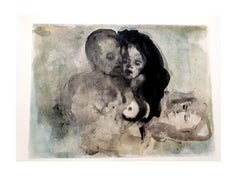
Leonor Fini - Road to Death - Original Lithograph
By Leonor Fini
Located in Collonge Bellerive, Geneve, CH
Leonor Fini - Road to Death - Original Lithograph
The Flowers of Evil
1964
Conditions: excellent
Edition: 500
Dimensions: 46 x 34 cm
Editions: Le Cercle du Livre Précieux, Paris
Un...
Category
1960s Modern Lithograph Nude Prints
Materials
Lithograph
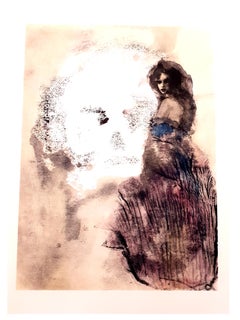
after Henri Matisse - Nude With Oranges - Lithograph
Located in Collonge Bellerive, Geneve, CH
after Henri Matisse - Nude With Oranges
Edition of 200
printed signature, as issued
76 x 56 cm
Posthumous edition after the original drawing with the stamp of the Succession Matisse ...
Category
Mid-20th Century Modern Lithograph Nude Prints
Materials
Lithograph
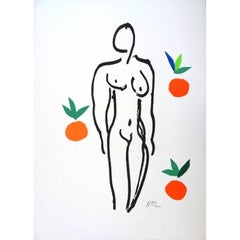
Marc Chagall - The Bible - Original Lithograph
By Marc Chagall
Located in Collonge Bellerive, Geneve, CH
Marc Chagall, Original Lithograph depicting an instant of the Bible.
Technique: Original lithograph in colours
Year: 1956
Sizes: 35,5 x 26 cm / 14" x 10.2" (sheet)
Published by: Édit...
Category
1950s Modern Lithograph Nude Prints
Materials
Lithograph
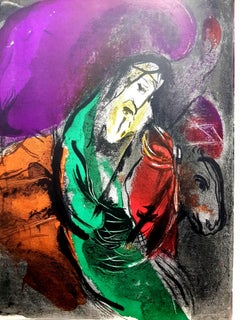
Leonor Fini - Flower Crown - Original Lithograph
By Leonor Fini
Located in Collonge Bellerive, Geneve, CH
Leonor Fini - Flower Crown - Original Lithograph
The Flowers of Evil
1964
Conditions: excellent
Edition: 500
Dimensions: 46 x 34 cm
Editions: Le Cercle ...
Category
1960s Modern Lithograph Nude Prints
Materials
Lithograph
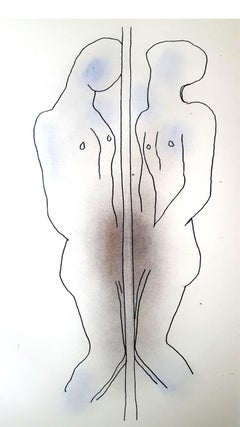
Jean Cocteau - Duality - Original Handcolored Lithograph
By Jean Cocteau
Located in Collonge Bellerive, Geneve, CH
Jean Cocteau
White Book - Autobiography about Cocteau's discovery of his homosexuality. The book was first published anonymously and created a scandal.
Original Handcolored Lithograph...
Category
1930s Modern Lithograph Nude Prints
Materials
Lithograph
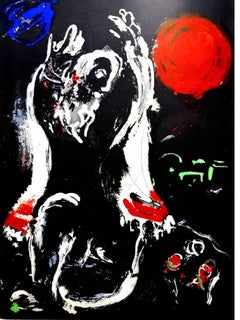
Marc Chagall - The Bible - Original Lithograph
By Marc Chagall
Located in Collonge Bellerive, Geneve, CH
Marc Chagall, Original Lithograph depicting an instant of the Bible.
Technique: Original lithograph in colours
Year: 1956
Sizes: 35,5 x 26 cm / 14" x 10.2" (...
Category
1950s Modern Lithograph Nude Prints
Materials
Lithograph
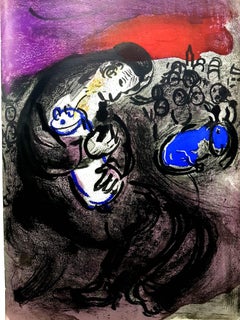
Marc Chagall - The Bible - Original Lithograph
By Marc Chagall
Located in Collonge Bellerive, Geneve, CH
Marc Chagall, Original Lithograph depicting an instant of the Bible.
Technique: Original lithograph in colours
Year: 1956
Sizes: 35,5 x 26 cm / 14" x 10.2" (sheet)
Published by: Éditions de la Revue Verve, Tériade, Paris
Printed by: Atelier Mourlot, Paris
Documentation / References: Mourlot, F., Chagall Lithograph [II] 1957-1962, A. Sauret, Monte Carlo 1963, nos. 234 and 257
Marc Chagall (born in 1887)
Marc Chagall was born in Belarus in 1887 and developed an early interest in art. After studying painting, in 1907 he left Russia for Paris, where he lived in an artist colony on the city’s outskirts. Fusing his own personal, dreamlike imagery with hints of the fauvism and cubism popular in France at the time, Chagall created his most lasting work—including I and the Village (1911)—some of which would be featured in the Salon des Indépendants exhibitions. After returning to Vitebsk for a visit in 1914, the outbreak of WWI trapped Chagall in Russia. He returned to France in 1923 but was forced to flee the country and Nazi persecution during WWII. Finding asylum in the U.S., Chagall became involved in set and costume design before returning to France in 1948. In his later years, he experimented with new art forms and was commissioned to produce numerous large-scale works. Chagall died in St.-Paul-de-Vence in 1985.
The Village
Marc Chagall was born in a small Hassidic community on the outskirts of Vitebsk, Belarus, on July 7, 1887. His father was a fishmonger, and his mother ran a small sundries shop in the village. As a child, Chagall attended the Jewish elementary school, where he studied Hebrew and the Bible, before later attending the Russian public school. He began to learn the fundamentals of drawing during this time, but perhaps more importantly, he absorbed the world around him, storing away the imagery and themes that would feature largely in most of his later work.
At age 19 Chagall enrolled at a private, all-Jewish art school and began his formal education in painting, studying briefly with portrait artist Yehuda Pen. However, he left the school after several months, moving to St. Petersburg in 1907 to study at the Imperial Society for the Protection of Fine Arts. The following year, he enrolled at the Svanseva School, studying with set designer Léon Bakst, whose work had been featured in Sergei Diaghilev's Ballets Russes. This early experience would prove important to Chagall’s later career as well.
Despite this formal instruction, and the widespread popularity of realism in Russia at the time, Chagall was already establishing his own personal style, which featured a more dreamlike unreality and the people, places and imagery that were close to his heart. Some examples from this period are his Window Vitebsk (1908) and My Fianceé with Black Gloves (1909), which pictured Bella Rosenfeld, to whom he had recently become engaged.
The Beehive
Despite his romance with Bella, in 1911 an allowance from Russian parliament member and art patron Maxim Binaver enabled Chagall to move to Paris, France. After settling briefly in the Montparnasse neighborhood, Chagall moved further afield to an artist colony known as La Ruche (“The Beehive”), where he began to work side by side with abstract painters such as Amedeo Modigliani and Fernand Léger as well as the avant-garde poet Guillaume Apollinaire. At their urging, and under the influence of the wildly popular fauvism and cubism, Chagall lightened his palette and pushed his style ever further from reality. I and the Village (1911) and Homage to Apollinaire (1912) are among his early Parisian works, widely considered to be his most successful and representative period.
Though his work stood stylistically apart from his cubist contemporaries, from 1912 to 1914 Chagall exhibited several paintings at the annual Salon des Indépendants exhibition, where works by the likes of Juan Gris, Marcel Duchamp and Robert Delaunay were causing a stir in the Paris art world. Chagall’s popularity began to spread beyond La Ruche, and in May 1914 he traveled to Berlin to help organize his first solo exhibition, at Der Sturm Gallery. Chagall remained in the city until the highly acclaimed show opened that June. He then returned to Vitebsk, unaware of the fateful events to come.
War, Peace and Revolution
In August 1914 the outbreak of World War I precluded Chagall’s plans to return to Paris. The conflict did little to stem the flow of his creative output, however, instead merely giving him direct access to the childhood scenes so essential to his work, as seen in paintings such as Jew in Green (1914) and Over Vitebsk (1914). His paintings from this period also occasionally featured images of the war’s impact on the region, as with Wounded Soldier (1914) and Marching (1915). But despite the hardships of life during wartime, this would also prove to be a joyful period for Chagall. In July 1915 he married Bella, and she gave birth to a daughter, Ida, the following year. Their appearance in works such as Birthday (1915), Bella and Ida by the Window (1917) and several of his “Lovers” paintings give a glimpse of the island of domestic bliss that was Chagall’s amidst the chaos.
To avoid military service and stay with his new family, Chagall took a position as a clerk in the Ministry of War Economy in St. Petersburg. While there he began work on his autobiography and also immersed himself in the local art scene, befriending novelist Boris Pasternak, among others. He also exhibited his work in the city and soon gained considerable recognition. That notoriety would prove important in the aftermath of the 1917 Russian Revolution when he was appointed as the Commissar of Fine Arts in Vitebsk. In his new post, Chagall undertook various projects in the region, including the 1919 founding of the Academy of the Arts. Despite these endeavors, differences among his colleagues eventually disillusioned Chagall. In 1920 he relinquished his position and moved his family to Moscow, the post-revolution capital of Russia.
In Moscow, Chagall was soon commissioned to create sets and costumes for various productions at the Moscow State Yiddish Theater, where he would paint a series of murals titled Introduction to the Jewish Theater as well. In 1921, Chagall also found work as a teacher at a school for war orphans. By 1922, however, Chagall found that his art had fallen out of favor, and seeking new horizons he left Russia for good.
Flight
After a brief stay in Berlin, where he unsuccessfully sought to recover the work exhibited at Der Sturm before the war, Chagall moved his family to Paris in September 1923. Shortly after their arrival, he was commissioned by art dealer and publisher Ambroise Vollard to produce a series of etchings for a new edition of Nikolai Gogol's 1842 novel Dead Souls. Two years later Chagall began work on an illustrated edition of Jean de la Fontaine’s Fables, and in 1930 he created etchings for an illustrated edition of the Old Testament, for which he traveled to Palestine to conduct research.
Chagall’s work during this period brought him new success as an artist and enabled him to travel throughout Europe in the 1930s. He also published his autobiography, My Life (1931), and in 1933 received a retrospective at the Kunsthalle in Basel, Switzerland. But at the same time that Chagall’s popularity was spreading, so, too, was the threat of Fascism and Nazism. Singled out during the cultural "cleansing" undertaken by the Nazis in Germany, Chagall’s work was ordered removed from museums throughout the country. Several pieces were subsequently burned, and others were featured in a 1937 exhibition of “degenerate art” held in Munich. Chagall’s angst regarding these troubling events and the persecution of Jews in general can be seen in his 1938 painting White Crucifixion.
With the eruption of World War II, Chagall and his family moved to the Loire region before moving farther south to Marseilles following the invasion of France. They found a more certain refuge when, in 1941, Chagall’s name was added by the director of the Museum of Modern Art (MOMA) in New York City to a list of artists and intellectuals deemed most at risk from the Nazis’ anti-Jewish campaign. Chagall and his family would be among the more than 2,000 who received visas and escaped this way.
Haunted Harbors
Arriving in New York City in June 1941, Chagall discovered that he was already a well-known artist there and, despite a language barrier, soon became a part of the exiled European artist community. The following year he was commissioned by choreographer Léonide Massine to design sets and costumes for the ballet Aleko, based on Alexander Pushkin’s “The Gypsies” and set to the music of Pyotr Ilyich Tchaikovsky.
But even as he settled into the safety of his temporary home, Chagall’s thoughts were frequently consumed by the fate befalling the Jews of Europe and the destruction of Russia, as paintings such as The Yellow Crucifixion...
Category
1950s Modern Lithograph Nude Prints
Materials
Lithograph
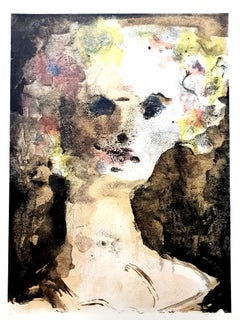
Leonor Fini - Fearless - Original Handsigned Lithograph
By Leonor Fini
Located in Collonge Bellerive, Geneve, CH
Leonor Fini - Fearless - Original Handsigned Lithograph
Les Elus de la Nuit
1986
Conditions: excellent
Handsigned and Numbered
Edition: 230
Dimensions: 38 x 28 cm
Editions: Trinckve...
Category
1980s Modern Lithograph Nude Prints
Materials
Lithograph
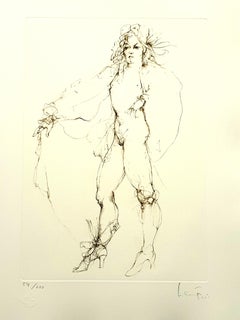
The Human Comedy - Lithograph
Located in Collonge Bellerive, Geneve, CH
After Pablo Picasso
The Human Comedy - Lithograph after an original drawing, as published in the journal "Verve"
Printed signature and date Dimensio...
Category
1950s Modern Lithograph Nude Prints
Materials
Lithograph
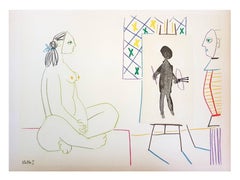
Jean Cocteau (after) - Carmen - Lithograph
By Jean Cocteau
Located in Collonge Bellerive, Geneve, CH
Lithograph after a drawing by Jean Cocteau
Title: Carmen
1971
Dimensions: 38 x 28 cm
Lithograph made for the portfolio "Gitans et Corridas" published by Société de Diffusion Artistique
Category
1960s Modern Lithograph Nude Prints
Materials
Lithograph
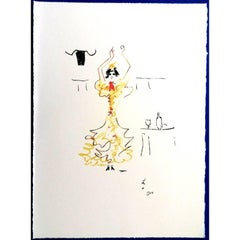
Jean Cocteau - Three in One - Original Handcolored Lithograph
By Jean Cocteau
Located in Collonge Bellerive, Geneve, CH
Jean Cocteau
Three in One - Autobiography about Cocteau's discovery of his homosexuality. The book was first published anonymously and created a scandal.
Original Handcolored Lithogr...
Category
1930s Modern Lithograph Nude Prints
Materials
Lithograph
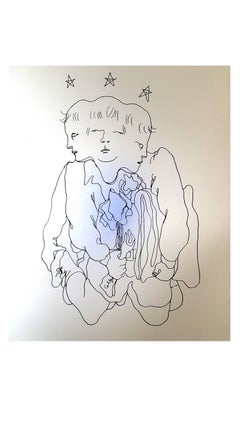
Leonor Fini - Playing - Original Handsigned Lithograph
By Leonor Fini
Located in Collonge Bellerive, Geneve, CH
Leonor Fini - Playing - Original Handsigned Lithograph
Les Elus de la Nuit
1986
Conditions: excellent
Handsigned and Numbered
Edition: 230
Dimensions: 38 x 28 cm
Editions: Trinckvel...
Category
1980s Modern Lithograph Nude Prints
Materials
Lithograph
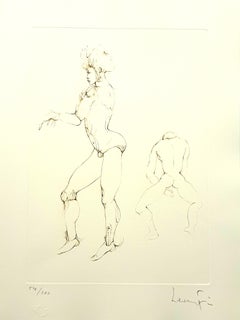
Leonor Fini - Thinking - Original Lithograph
By Leonor Fini
Located in Collonge Bellerive, Geneve, CH
Leonor Fini - Thinking - Original Lithograph
The Flowers of Evil
1964
Conditions: excellent
Edition: 500
Dimensions: 46 x 34 cm
Editions: Le Cercle du Livre Précieux, Paris
Unsigne...
Category
1960s Modern Lithograph Nude Prints
Materials
Lithograph
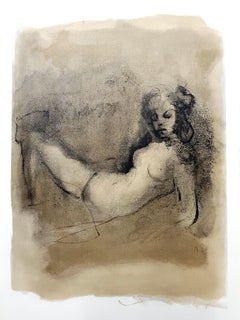
Leonor Fini - Dancing - Original Handsigned Lithograph
By Leonor Fini
Located in Collonge Bellerive, Geneve, CH
Leonor Fini - Dancing - Original Handsigned Lithograph
Les Elus de la Nuit
1986
Conditions: excellent
Handsigned and Numbered
Edition: 230
Dimensions: 38 x 28 cm
Editions: Trinckvel...
Category
1980s Modern Lithograph Nude Prints
Materials
Lithograph
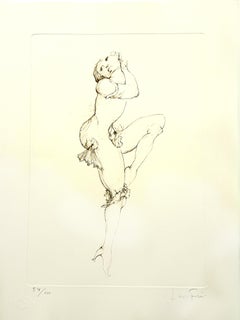
Leonor Fini - Walking Dead - Original Lithograph
By Leonor Fini
Located in Collonge Bellerive, Geneve, CH
Leonor Fini - Walking Dead - Original Lithograph
The Flowers of Evil
1964
Conditions: excellent
Edition: 500
Dimensions: 46 x 34 cm
Editions: Le Cercle ...
Category
1960s Modern Lithograph Nude Prints
Materials
Lithograph
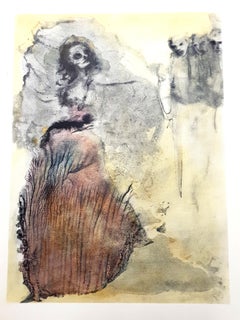
Lithograph nude prints for sale on 1stDibs.
Find a wide variety of authentic Lithograph nude prints available on 1stDibs. While artists have worked in this medium across a range of time periods, art made with this material during the 21st Century is especially popular. If you’re looking to add nude prints created with this material to introduce a provocative pop of color and texture to an otherwise neutral space in your home, the works available on 1stDibs include elements of orange, yellow, blue, purple and other colors. There are many well-known artists whose body of work includes ceramic sculptures. Popular artists on 1stDibs associated with pieces like this include Mel Ramos, Leonor Fini, (after) Egon Schiele, and Apelles Fenosa. Frequently made by artists working in the Modern, Contemporary, all of these pieces for sale are unique and many will draw the attention of guests in your home. Not every interior allows for large Lithograph nude prints, so small editions measuring 0.04 inches across are also available Prices for nude prints made by famous or emerging artists can differ depending on medium, time period and other attributes. On 1stDibs, the price for these items starts at $11 and tops out at $1,500,000, while the average work can sell for $853.