1940s Prints and Multiples
to
804
1,434
398
383
125
97
Overall Width
to
Overall Height
to
1,069
212
116
105
35
33
30
13
12
10
2
1
1
68
47
37
26
24
4,818
10,521
57,401
24,983
715
976
2,265
2,312
2,441
4,954
7,734
13,499
7,979
4,202
3,983
1,771
656
9
1,264
641
617
434
405
287
260
248
227
189
147
137
121
121
116
113
90
72
61
57
1,508
390
292
153
117
180
358
1,498
873
Period: 1940s
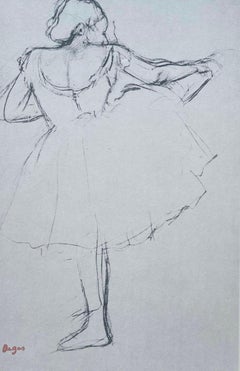
Edgar Degas, Dancer at the Barre, 1945 (after)
Located in Southampton, NY
This exquisite lithograph after Edgar Degas (1834–1917), titled Danseur au bar (Dancer at the Barre), originates from the 1945 folio Degas, Ten Ballet Sketches. Published by The Studio Publications, Inc., New York, rendered and printed by Albert Carman, City Island, 1945, this work reflects Degas’s sensitive mastery of line, movement, and the intimate psychological nuances of the ballet studio. Executed as a lithograph and pochoir on velin paper, this work measures 13 x 17 inches (33.02 x 43.18 cm). Signed in the plate and unnumbered as issued. Rendered and printed by Albert Carman, City Island. Artwork Details: Artist: After Edgar Degas (1834–1917) Title: Danseur au bar (Dancer at the Barre), from Degas, Ten Ballet Sketches, 1945 Medium: Lithograph and pochoir on velin paper Dimensions: 13 x 17 inches (33.02 x 43.18 cm) Inscription: Signed in the plate and unnumbered as issued Date: 1945 Publisher: The Studio Publications, Inc., New York Printer: Albert Carman, City Island Condition: Well preserved, consistent with age and medium Provenance: From the 1945 folio Degas, Ten Ballet Sketches, published by The Studio Publications, Inc., New York Notes: Excerpted from the album, Born in Paris in 1834, Edgar Degas lived, and surely loved the life of that city during most of his years. These continued somewhat sadly beyond those of most of his friends— into the debacle of the first World War, during which he died in 1917. Judging by the frequency with which he used them as models, he must have had an especial admiration for the ballet girls who followed a profession that at the time brought none of the glory and prosperity which attend it today. New aspects of the human body, revealed in movement, fascinated him. But his occupation with the simply anatomical side of his subjects never resulted in a cold interpretation. On the contrary there is a warmth and sympathy that pervades all of his work. The drawings here represent the painter in one important phase of his multi-sensitive view of life; and permit an insight which a more ambitious work might not do-into the operation of the creative process, the artist's transformation of reality as it passes through the mesh of his sensibilities. The Edition of this Portfolio is limited to MMMD examples. Rendered by Albert Carman. About the Publication: Degas, Ten Ballet Sketches (1945) is one of the earliest and most significant American postwar fine art portfolios devoted to Edgar Degas’s intimate works on paper. Published by The Studio Publications, Inc., New York, and rendered and printed by Albert Carman at City Island, the album sought to faithfully reproduce a group of Degas’s ballet-related drawings through a combination of lithography and hand-applied pochoir coloring. This hybrid technique allowed the edition to preserve the immediacy, tonal subtlety, and gestural delicacy central to Degas’s draftsmanship. Conceived as a fine art publication rather than a commercial book, the portfolio provided American audiences unprecedented access to Degas’s private, spontaneous studies—images that reveal the artist’s fascination with movement, anatomy, and the psychological atmosphere of the rehearsal studio. The album exemplifies the mid-20th-century revival of pochoir as a means of recreating the texture and coloristic nuance of original works on paper, and it remains an important document of how Degas’s legacy was translated into high-quality printed form for collectors, museums, and connoisseurs. About the Artist: Edgar Degas (1834–1917) was a French painter, draughtsman, printmaker, and sculptor whose groundbreaking fusion of classical draftsmanship, modern experimentation, and psychological depth helped define the trajectory of Western art, positioning him as one of the most influential figures of the nineteenth and early twentieth centuries; renowned for his depictions of ballet dancers, racehorses, theater scenes, cafe life, domestic interiors, milliners, laundresses, and women at their toilette, Degas reimagined observational realism through radical compositional innovation—employing extreme cropping, asymmetrical framing, oblique viewpoints, and dramatic lighting that anticipated photographic and cinematic language long before these technologies shaped visual culture, and although associated with Impressionism, he rejected plein-air spontaneity in favor of studio-based discipline rooted in the linear precision of Jean-Auguste-Dominique Ingres, the expressive chromaticism of Eugene Delacroix, and the modernity of Edouard Manet while also drawing inspiration from Japanese ukiyo-e prints, classical sculpture, and early photography; his independent artistic philosophy resonated with and helped shape the innovations of Pablo Picasso, Alexander Calder, Alberto Giacometti, Salvador Dali, Joan Miro, Wassily Kandinsky, Marcel Duchamp, and Man Ray, whose explorations of movement, form, dream logic, abstraction, and conceptualism all find antecedents in Degas’s investigations into seriality, temporality, and the fragmented figure, and his pioneering use of pastel, monotype, and wax sculpture fundamentally transformed each medium, influencing artists from Henri Matisse, Francis Bacon, Lucian Freud, and Giacomo Manzu to Paula Rego, contemporary realists, experimental photographers, and choreographers; his works are held in nearly every major museum collection worldwide—including the Musee dOrsay, the Louvre, the Metropolitan Museum of Art, the National Gallery of Art, the Art Institute of Chicago, the Courtauld Institute, and the National Gallery, London—affirming his central place in the history of art, and the highest auction record for Degas was achieved at Sothebys London on February 3, 2015, when Danseuses en Bleu sold for 37,033,000 GBP, cementing his status as one of the most sought-after and enduringly significant artists of the Western canon. Degas pochoir, Degas lithograph...
Category

Impressionist 1940s Prints and Multiples
Materials

Lithograph

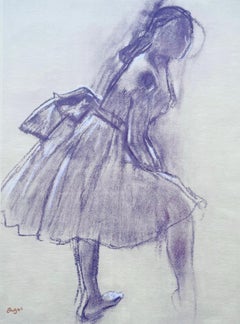
Edgar Degas, Dancer Standing in Profile, 1945 (after)
Located in Southampton, NY
This exquisite lithograph after Edgar Degas (1834–1917), titled Danseur debout de profil (Dancer Standing in Profile), originates from the 1945 folio Degas, Ten Ballet Sketches. Published by The Studio Publications, Inc., New York, rendered and printed by Albert Carman, City Island, 1945, this work reflects Degas’s sensitive mastery of line, movement, and intimate observation, capturing the grace, poise, and psychological immediacy that define his iconic ballet imagery. In Danseur debout de profil (Dancer Standing in Profile), Degas reveals gesture and inner emotion through economical contour and lyrical nuance. Executed as a lithograph and pochoir on velin paper, this work measures 17 x 13 inches (43.18 x 33.02 cm). Signed in the plate and unnumbered as issued. Rendered and printed by Albert Carman, City Island, one of the notable American ateliers specializing in fine art lithography during the mid-20th century. Artwork Details: Artist: After Edgar Degas (1834–1917) Title: Danseur debout de profil (Dancer Standing in Profile), from Degas, Ten Ballet Sketches, 1945 Medium: Lithograph and pochoir on velin paper Dimensions: 17 x 13 inches (43.18 x 33.02 cm) Inscription: Signed in the plate and unnumbered as issued Date: 1945 Publisher: The Studio Publications, Inc., New York Printer: Albert Carman, City Island, 1945 Condition: Well preserved, consistent with age and medium Provenance: From the 1945 folio Degas, Ten Ballet Sketches, published by The Studio Publications, Inc., New York Notes: Excerpted from the album, Born in Paris in 1834, Edgar Degas lived, and surely loved the life of that city during most of his years. These continued somewhat sadly beyond those of most of his friends— into the debacle of the first World War, during which he died in 1917. Judging by the frequency with which he used them as models, he must have had an especial admiration for the ballet girls who followed a profession that at the time brought none of the glory and prosperity which attend it today. New aspects of the human body, revealed in movement, fascinated him. But his occupation with the simply anatomical side of his subjects never resulted in a cold interpretation. On the contrary there is a warmth and sympathy that pervades all of his work. The drawings here represent the painter in one important phase of his multi-sensitive view of life; and permit an insight which a more ambitious work might not do-into the operation of the creative process, the artist's transformation of reality as it passes through the mesh of his sensibilities. The Edition of this Portfolio is limited to MMMD examples. Rendered by Albert Carman. About the Publication: Degas, Ten Ballet Sketches, published in 1945 by The Studio Publications, Inc., New York, stands as one of the most elegant and scholarly mid-century American fine art folios devoted to the ballet imagery of Edgar Degas. Conceived as a high-quality interpretive portfolio, the album presents a series of lithograph-and-pochoir renderings based on Degas’s original drawings, executed with exceptional attention to tonal subtlety, contour fidelity, and the emotional interiority that defines the artist’s draftsmanship. Rendered and printed by Albert Carman on City Island, the publication embodies an American postwar effort to restore and celebrate European masterworks through meticulous handcraft and artisanal color application, honoring Degas’s distinctive line and the atmospheric delicacy of his studio-based studies. Produced in a substantial edition of MMMD examples, the portfolio offered audiences rare access to Degas’s private working drawings—images rarely seen outside institutional collections—while exemplifying the technical refinement and interpretive care characteristic of Carman’s workshop. Today, Degas, Ten Ballet Sketches remains a sought-after historical publication, valued for its craft, fidelity to Degas’s aesthetic, and its role in preserving and disseminating the artist’s intimate ballet imagery in a beautifully executed mid-century fine art format. About the Artist: Edgar Degas (1834–1917) was a French painter, draughtsman, printmaker, and sculptor whose groundbreaking fusion of classical draftsmanship, modern experimentation, and psychological depth helped define the trajectory of Western art, positioning him as one of the most influential figures of the nineteenth and early twentieth centuries; renowned for his depictions of ballet dancers, racehorses, theater scenes, cafe life, domestic interiors, milliners, laundresses, and women at their toilette, Degas reimagined observational realism through radical compositional innovation—employing extreme cropping, asymmetrical framing, oblique viewpoints, and dramatic lighting that anticipated photographic and cinematic language long before these technologies shaped visual culture, and although associated with Impressionism, he rejected plein-air spontaneity in favor of studio-based discipline rooted in the linear precision of Jean-Auguste-Dominique Ingres, the expressive chromaticism of Eugene Delacroix, and the modernity of Edouard Manet while also drawing inspiration from Japanese ukiyo-e prints, classical sculpture, and early photography; his independent artistic philosophy resonated with and helped shape the innovations of Pablo Picasso, Alexander Calder, Alberto Giacometti, Salvador Dali, Joan Miro, Wassily Kandinsky, Marcel Duchamp, and Man Ray, whose explorations of movement, form, dream logic, abstraction, and conceptualism all find antecedents in Degas’s investigations into seriality, temporality, and the fragmented figure, and his pioneering use of pastel, monotype, and wax sculpture fundamentally transformed each medium, influencing artists from Henri Matisse, Francis Bacon, Lucian Freud, and Giacomo Manzu to Paula Rego, contemporary realists, experimental photographers, and choreographers; his works are held in nearly every major museum collection worldwide—including the Musee dOrsay, the Louvre, the Metropolitan Museum of Art, the National Gallery of Art, the Art Institute of Chicago, the Courtauld Institute, and the National Gallery, London—affirming his central place in the history of art, and the highest auction record for Degas was achieved at Sothebys London on February 3, 2015, when Danseuses en Bleu sold for 37,033,000 GBP, cementing his status as one of the most sought-after and enduringly significant artists of the Western canon. Edgar Degas lithograph...
Category

Impressionist 1940s Prints and Multiples
Materials

Lithograph

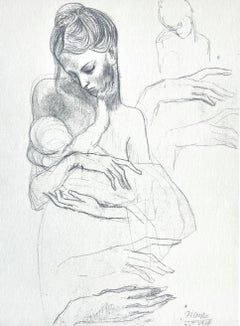
Pablo Picasso, Mother and Child, from Fifteen Drawings, 1946 (after)
Located in Southampton, NY
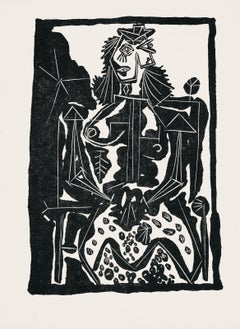
This exquisite lithograph and pochoir after Pablo Picasso (1881–1973), titled Mother and Child, from the folio Picasso, Fifteen Drawings, 1946, originates from the 1946 edition published by Pantheon Books, Inc., New York, and rendered and printed by Albert Carman, City Island, New York, 1946. Mother and Child conveys Picassos timeless exploration of tenderness, intimacy, and the human bond, distilling the universal theme of maternal love through graceful line and lyrical composition. With rhythmic simplicity and emotional clarity, the work captures the purity of affection and the quiet strength of motherhood—an enduring motif throughout Picassos artistic life. Executed as a lithograph and pochoir on velin paper, this work measures 18.75 x 12.63 inches. Signed in the plate and unnumbered as issued. The edition exemplifies the exemplary standards and artistic integrity of the fine art publishing and printmaking of Pantheon Books, Inc., and Albert Carman whose next collaborative project following this edition was with Marc Chagall in the creation of his monumental suite, Four Tales from the Arabian Nights in 1948. Artwork Details: Artist: After Pablo Picasso (1881–1973) Title: Mother and Child, from the folio Picasso, Fifteen Drawings, 1946 Medium: Lithograph and pochoir on velin paper Dimensions: 18.75 x 12.63 inches (47.6 x 32.1 cm) Inscription: Signed in the plate and unnumbered as issued Date: 1946 Edition: D, primary edition; L, out of commerce, hand signed by Pablo Picasso Publisher: Pantheon Books, Inc., New York Printer: Albert Carman, City Island, New York Catalogue raisonne reference: Orozco, Miguel. Picasso Interpretation Prints II - Etchings, Pochoirs Woodcuts. Catalogue Raisonne. 2023, illustration 388–402 Condition: Well preserved, consistent with age and medium Provenance: From the folio Picasso, Fifteen Drawings, 1946, published by Pantheon Books, Inc., New York; printed by Albert Carman, City Island, New York, 1946 About the Publication: Picasso, Fifteen Drawings (1946) was one of the earliest fine art portfolios issued in the United States to feature the work of Pablo Picasso in the mediums of lithography and pochoir. Published by Pantheon Books, Inc., New York—a press renowned for its pioneering role in introducing European modernism to American audiences—the portfolio marked an important cultural bridge between postwar Paris and the emerging art scene in New York. The suite comprised fifteen images selected from Picassos prolific oeuvre, including depictions of mythological figures, musicians, and introspective portraits. Each work was rendered using a combination of lithography and pochoir, printed by Albert Carman at his atelier in City Island, New York, whose craftsmanship ensured a remarkable fidelity to the tonal and chromatic nuances of Picassos originals. The portfolio was produced in an edition of D, primary edition; L, out of commerce, hand signed by Pablo Picasso, issued unbound within a printed paper folder, and distributed primarily through Pantheons art book division under the direction of Kurt Wolff and Monroe Wheeler—key figures in shaping the intellectual reception of modern art in the United States. Picasso, Fifteen Drawings helped establish the artists postwar reputation among American collectors, scholars, and institutions, introducing a generation of viewers to the expressive immediacy and psychological depth of his draftsmanship. The publication also exemplified Pantheons broader mission to make modern European art accessible to an American audience, alongside their landmark editions devoted to Henri Matisse, Georges Rouault, and Marc Chagall. Technically refined and historically significant, the portfolio stands as a testament to the transatlantic exchange of modernist aesthetics during the mid-20th century and remains one of the most sought-after Picasso print editions issued in the United States before 1950. About the Artist: Pablo Picasso (1881–1973) was a Spanish painter, sculptor, printmaker, and ceramicist whose extraordinary vision revolutionized modern art and defined the visual language of the 20th century. A child prodigy from Malaga, Spain, Picassos career spanned more than seven decades and encompassed an astonishing range of styles and innovations—from the melancholic Blue and romantic Rose periods to his pioneering invention of Cubism with Georges Braque, which shattered conventional notions of perspective and form. Influenced by the bold expressiveness of El Greco, the structure of Cezanne, and the vitality of African and Iberian sculpture, Picasso became a central figure of the Paris avant-garde, working in creative dialogue with contemporaries such as Henri Matisse, Alexander Calder, Alberto Giacometti, Salvador Dali, Joan Miro, Wassily Kandinsky, Marcel Duchamp, and Man Ray. His insatiable experimentation extended across painting, drawing, printmaking, ceramics, and sculpture, forever expanding the boundaries of artistic expression. A master of reinvention, Picasso profoundly shaped generations of artists who followed—from Andy Warhol, Roy Lichtenstein, David Hockney, and Jean-Michel Basquiat to Jeff Koons and Banksy—cementing his status as a timeless cultural icon whose works remain among the most sought after worldwide. His landmark painting Les Femmes d'Alger (Version O) achieved a record-breaking sale of 179,365,000 USD at Christie's, New York, on May 11, 2015, affirming Picassos enduring legacy as one of the most influential and valuable artists in history. Pablo Picasso Mother and Child...
Category

Modern 1940s Prints and Multiples

Materials

Lithograph, Stencil

Elwood W. Bartlett, Wisconsin Farm, about 1945, mid-century wood engraving
Located in New York, NY
Elwood Warren Bartlett is a Wisconsin native who also worked in Indiana. Largely self taught as a printmaker, Bartlett worked in a style that once identified as his, immediately t...
Category

American Modern 1940s Prints and Multiples

Materials

Woodcut

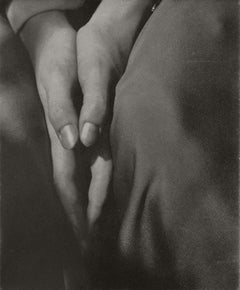
Alfred Stieglitz, Hands, Dorothy Norman, 1947 (after)
Located in Southampton, NY
This exquisite halftone print after Alfred Stieglitz (1864–1946), titled Hands, Dorothy Norman, originates from the 1947 folio Stieglitz Memorial Portfolio, 1864–1946. Published by T...
Category

American Modern 1940s Prints and Multiples

Materials

Offset

River View — Mid-Century American Modernism
Located in Myrtle Beach, SC
Edward Landon 'River View, color serigraph, 1942, edition 50, Ryan 159. Signed in pencil in the image, lower right. Titled, dated, and annotated '9 COLORS – 50 PRINTS' in the screen,...
Category

American Modern 1940s Prints and Multiples

Materials

Screen

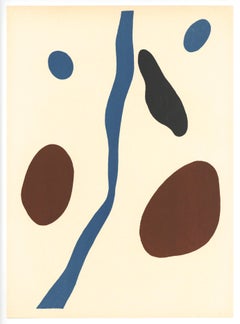
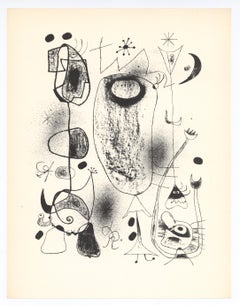
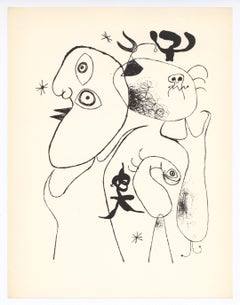
Surrealist composition
Located in Henderson, NV
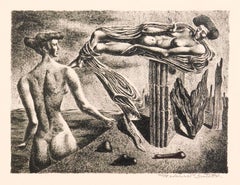
Medium: collotype (after the Miro lithograph). Printed in 1947 in an edition of 1500 by Meriden Gravure and published by Curt Valentin for "The Prints of Joan Miro" portfolio. Size: ...
Category

Surrealist 1940s Prints and Multiples

Materials

Photogravure

Head of a Woman with Mantilla (Plate I), from Carmen
Located in Washington, DC
Artist: Pablo Picasso Title: Head of a Woman with Mantilla (Plate I) Portfolio: Carmen Medium: Original etching on Montval wove paper Year: 1949 Edition: 289 Frame Size: 21" x 18" Sh...
Category

Cubist 1940s Prints and Multiples

Materials

Etching

Carmen, The Small Moon - Original Etching (Cramer #52)
Located in Paris, IDF
Pablo PICASSO Carmen, The Small Moon, 1949 Original burin engraving (Atelier Lacourière, Paris) Unsigned On Montval wove paper 33 x 26 cm (12.9 x 10.2 in) REFERENCES : - Catalog ra...
Category

Modern 1940s Prints and Multiples

Materials

Etching

Surrealist composition
Located in Henderson, NV
Medium: collotype (after the Miro lithograph). Printed in 1947 in an edition of 1500 by Meriden Gravure and published by Curt Valentin for "The Prints of Joan Miro" portfolio. Size: ...
Category

Surrealist 1940s Prints and Multiples

Materials

Photogravure

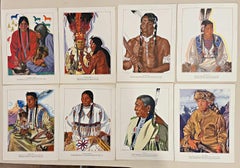
Blackfeet Indians, Great Northern Railway 14 prints
Located in Spokane, WA
A group of 14 Blackfeet Indians prints created by the artist Winold Reiss. The Great Northern Railway printed and released these prints in c. 1940. This is for the entire group...
Category

American Realist 1940s Prints and Multiples

Materials

Lithograph

Surrealist composition
Located in Henderson, NV
Medium: collotype (after the Miro lithograph). Printed in 1947 in an edition of 1500 by Meriden Gravure and published by Curt Valentin for "The Prints of Joan Miro" portfolio. Size: ...
Category

Surrealist 1940s Prints and Multiples

Materials

Photogravure

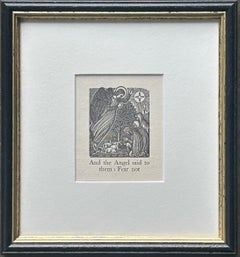
‘And the Angel Said: Fear not’
Located in Bournemouth, Dorset
David Jones (1895-1974) ‘And the Angel Said: Fear not’ Woodcut Image: 9.0 x 5.5 cm Frame: 21.0 x 19.5 cm David Jones CH, CBE (1 November 1895 – 28 October 1974) was a Welsh paint...
Category

1940s Prints and Multiples

Materials

Woodcut

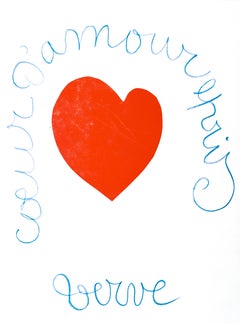
Henri Matisse, Heart of Love Taken, from Verve, Revue Artistique, 1949
Located in Southampton, NY
This exquisite lithograph by Henri Matisse (1869–1954), titled Coeur d’amour epris (Heart of Love Taken), from Verve, Revue Artistique et Litteraire, Vol. VI, No. 23, originates from...
Category

Fauvist 1940s Prints and Multiples

Materials

Lithograph

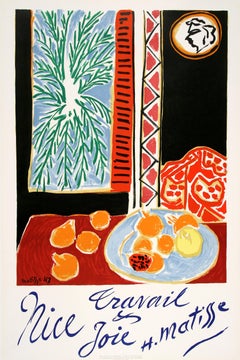
Original Henri Matisse Travel Vintage Poster for Nice France Created in 1947 Tra
Located in Boca Raton, FL
Nice Travail et Joie is a 1947 French travel poster by master artist, Henri Matisse. This travel poster was created exclusively for the city of Nice, where Matisse settled towards th...
Category

1940s Prints and Multiples

Materials

Lithograph

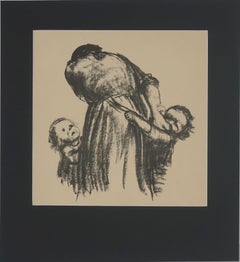
"Bread" lithograph by Käthe Kollwitz
Located in Soquel, CA
Bold lithograph titled "Bread" by Kathe Kollwitz (German, 1867-1945). This piece is one of the Lithographic reproductions of the original lithographs, plate 2 from a series of 10, pr...
Category

Expressionist 1940s Prints and Multiples

Materials

Paper, Ink, Lithograph

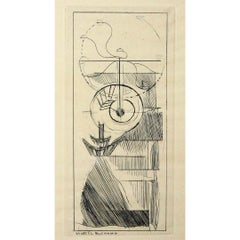
1947 original engraving by Marcel Duchamp - Coffee Mill
Located in PARIS, FR
This rare 1947 original engraving, Coffee Mill, by Marcel Duchamp is a profound example of his conceptual approach to mechanical imagery and Dada aesthetics. Signed by the artist and...
Category

1940s Prints and Multiples

Materials

Paper, Engraving

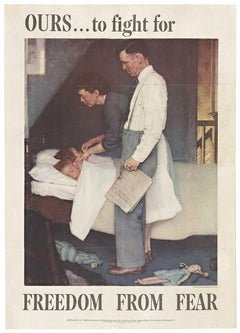
Original Freedom from Want 1943 vintage poster. Thanksgiving
Located in Spokane, WA
Original vintage poster: FREEDOM FROM WANT, Ours to fight for ... Original. Artist: Normal Rockwell. Archival linen backed in fine condition, ready to frame. Note: All US Go...
Category

American Realist 1940s Prints and Multiples

Materials

Offset

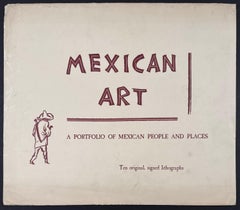
Mexican Art: A Portfolio of Mexican People and Places
Located in Palm Springs, CA
Ten lithographs in excellent condition, with portfolio cover. The ten artists included in the 1946 portfolio "Mexican Art: A Portfolio of Mexican People and Places" include: Ángel Bracho / Francisco Mora / Fernando Castro Pacheco / Raúl Anguiano / Alberto Beltrán...
Category

1940s Prints and Multiples

Materials

Lithograph

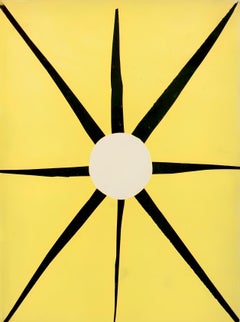
Henri Matisse, The Sun, from Verve, Revue Artistique, 1948
Located in Southampton, NY
This exquisite lithograph by Henri Matisse (1869–1954), titled Le Soleil (The Sun), from Verve, Revue Artistique et Litteraire, Vol. VI, No. 21–22, originates from the 1948 issue pub...
Category

Fauvist 1940s Prints and Multiples

Materials

Lithograph

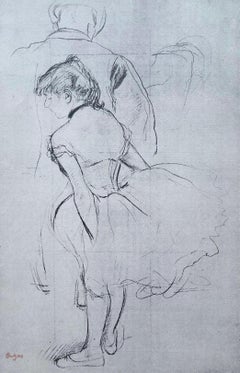
Edgar Degas, Dancer Arranging Her Dress, 1945 (after)
Located in Southampton, NY
This exquisite lithograph after Edgar Degas (1834–1917), titled Danseuse arrangeant sa robe (Dancer Arranging Her Dress), originates from the 1945 folio Degas, Ten Ballet Sketches. Published by The Studio Publications, Inc., New York, rendered and printed by Albert Carman, City Island, 1945, this work reflects Degas’s sensitive mastery of line, movement, and intimate observation, capturing the grace, poise, and psychological immediacy that define his iconic ballet imagery. In Danseuse arrangeant sa robe (Dancer Arranging Her Dress), Degas reveals gesture and inner emotion through economical contour and lyrical nuance. Executed as a lithograph and pochoir on velin paper, this work measures 17 x 13 inches (43.18 x 33.02 cm). Signed in the plate and unnumbered as issued. Rendered and printed by Albert Carman, City Island, one of the notable American ateliers specializing in fine art lithography during the mid-20th century. Artwork Details: Artist: After Edgar Degas (1834–1917) Title: Danseuse arrangeant sa robe (Dancer Arranging Her Dress), from Degas, Ten Ballet Sketches, 1945 Medium: Lithograph and pochoir on velin paper Dimensions: 17 x 13 inches (43.18 x 33.02 cm) Inscription: Signed in the plate and unnumbered as issued Date: 1945 Publisher: The Studio Publications, Inc., New York Printer: Albert Carman, City Island, 1945 Condition: Well preserved, consistent with age and medium Provenance: From the 1945 folio Degas, Ten Ballet Sketches, published by The Studio Publications, Inc., New York Notes: Excerpted from the album, Born in Paris in 1834, Edgar Degas lived, and surely loved the life of that city during most of his years. These continued somewhat sadly beyond those of most of his friends— into the debacle of the first World War, during which he died in 1917. Judging by the frequency with which he used them as models, he must have had an especial admiration for the ballet girls who followed a profession that at the time brought none of the glory and prosperity which attend it today. New aspects of the human body, revealed in movement, fascinated him. But his occupation with the simply anatomical side of his subjects never resulted in a cold interpretation. On the contrary there is a warmth and sympathy that pervades all of his work. The drawings here represent the painter in one important phase of his multi-sensitive view of life; and permit an insight which a more ambitious work might not do-into the operation of the creative process, the artist's transformation of reality as it passes through the mesh of his sensibilities. The Edition of this Portfolio is limited to MMMD examples. Rendered by Albert Carman. About the Publication: Degas, Ten Ballet Sketches, published in 1945 by The Studio Publications, Inc., New York, stands as one of the most elegant and scholarly mid-century American fine art folios devoted to the ballet imagery of Edgar Degas. Conceived as a high-quality interpretive portfolio, the album presents a series of lithograph-and-pochoir renderings based on Degas’s original drawings, executed with exceptional attention to tonal subtlety, contour fidelity, and the emotional interiority that defines the artist’s draftsmanship. Rendered and printed by Albert Carman on City Island, the publication embodies an American postwar effort to restore and celebrate European masterworks through meticulous handcraft and artisanal color application, honoring Degas’s distinctive line and the atmospheric delicacy of his studio-based studies. Produced in a substantial edition of MMMD examples, the portfolio offered audiences rare access to Degas’s private working drawings—images rarely seen outside institutional collections—while exemplifying the technical refinement and interpretive care characteristic of Carman’s workshop. Today, Degas, Ten Ballet Sketches remains a sought-after historical publication, valued for its craft, fidelity to Degas’s aesthetic, and its role in preserving and disseminating the artist’s intimate ballet imagery in a beautifully executed mid-century fine art format. About the Artist: Edgar Degas (1834–1917) was a French painter, draughtsman, printmaker, and sculptor whose groundbreaking fusion of classical draftsmanship, modern experimentation, and psychological depth helped define the trajectory of Western art, positioning him as one of the most influential figures of the nineteenth and early twentieth centuries; renowned for his depictions of ballet dancers, racehorses, theater scenes, cafe life, domestic interiors, milliners, laundresses, and women at their toilette, Degas reimagined observational realism through radical compositional innovation—employing extreme cropping, asymmetrical framing, oblique viewpoints, and dramatic lighting that anticipated photographic and cinematic language long before these technologies shaped visual culture, and although associated with Impressionism, he rejected plein-air spontaneity in favor of studio-based discipline rooted in the linear precision of Jean-Auguste-Dominique Ingres, the expressive chromaticism of Eugene Delacroix, and the modernity of Edouard Manet while also drawing inspiration from Japanese ukiyo-e prints, classical sculpture, and early photography; his independent artistic philosophy resonated with and helped shape the innovations of Pablo Picasso, Alexander Calder, Alberto Giacometti, Salvador Dali, Joan Miro, Wassily Kandinsky, Marcel Duchamp, and Man Ray, whose explorations of movement, form, dream logic, abstraction, and conceptualism all find antecedents in Degas’s investigations into seriality, temporality, and the fragmented figure, and his pioneering use of pastel, monotype, and wax sculpture fundamentally transformed each medium, influencing artists from Henri Matisse, Francis Bacon, Lucian Freud, and Giacomo Manzu to Paula Rego, contemporary realists, experimental photographers, and choreographers; his works are held in nearly every major museum collection worldwide—including the Musee dOrsay, the Louvre, the Metropolitan Museum of Art, the National Gallery of Art, the Art Institute of Chicago, the Courtauld Institute, and the National Gallery, London—affirming his central place in the history of art, and the highest auction record for Degas was achieved at Sothebys London on February 3, 2015, when Danseuses en Bleu sold for 37,033,000 GBP, cementing his status as one of the most sought-after and enduringly significant artists of the Western canon. Edgar Degas lithograph...
Category

Impressionist 1940s Prints and Multiples

Materials

Lithograph

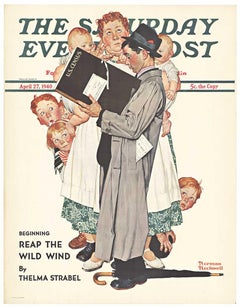
U. S. Census Saturday Evening Post original 1940 vintage poster
Located in Spokane, WA
Original poster: THE SAURDAY EVENING POST. Artist: Noman Rockwell. Size: 21.75" x 28". Archival linen backed in very fine condition. The painting for this original poster ...
Category

American Realist 1940s Prints and Multiples

Materials

Offset

Alfred Stieglitz, Georgia O Keeffe Hands with Thimble, 1947 (after)
Located in Southampton, NY
This exquisite halftone print after Alfred Stieglitz (1864–1946), titled Georgia O'Keeffe Hands with Thimble, originates from the 1947 folio Stieglitz Memorial Portfolio, 1864–1946. ...
Category

American Modern 1940s Prints and Multiples

Materials

Offset

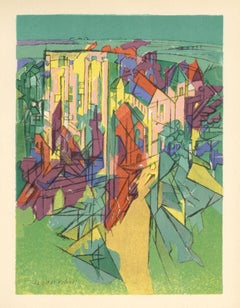
Chepstow Castle ( on a limestone cliff above the River Wye in Wales)
Located in New Orleans, LA
The magnificent printed works of the Yorkshire artist, Percival Gaskell have only been fully rediscovered in recent years. Percival Gaskell rose to prominence whilst working together with Sir Frank Short in the engraving school at the Royal College of Art in London during the first two decades of the 20th century. A true painter-printmaker, Percival Gaskell developed a sensitivity to atmospheric tone which is displayed in an air of timeless beauty throughout his printed works. (sheet 24 x 20 1/2). A fine impression with tone printed in warm brown/black ink on chine appliqué mounted on white wove paper, and a backing board. Signed in pencil. Superb signed proof impression printed in warm-brownish-black ink. One of Gaskell's best large scale mezzotints. The speed with which William the Conqueror committed to the creation of a castle at Chepstow is testament to its strategic importance. There is no evidence for a settlement there of any size before the Norman invasion of Wales, although it is possible that the castle site itself may have previously been a prehistoric or early...
Category

English School 1940s Prints and Multiples

Materials

Mezzotint, Etching

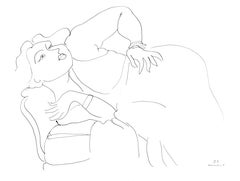
Henri Matisse, Series D, Var. 3, Drawings, Themes and Variations, 1943 (after)
Located in Southampton, NY
This exquisite lithograph after Henri Matisse (1869–1954), titled Serie D, var. 3 (Series D, Variation 3), from the album Henri Matisse, Dessins, Themes et Variations (Drawings, Them...
Category

Modern 1940s Prints and Multiples

Materials

Lithograph

Picasso, La Petite Colombe (Mourlot 174; Cramer 55) (after)
Located in Southampton, NY
Lithograph on wove paper. Unsigned and unnumbered, as issued. Good Condition; never framed or matted. Notes: Executed in 1949 and issued as the frontispiece of the Picasso Lithograph...
Category

Modern 1940s Prints and Multiples

Materials

Lithograph

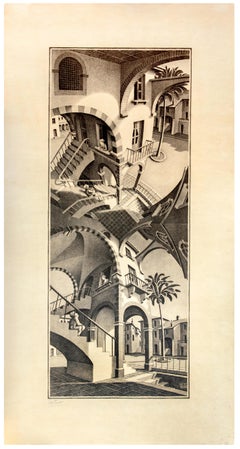
Up And Down - Lithograph by M.C. Escher - 1947
Located in Roma, IT
Hand Signed. Printed in black ink, and part of a limited edition thought to be of 400 specimen. Image Dimensions : 51 x 20 cm  Reference: Bool n. 352 Locher 146.  Very good conditio...
Category

Modern 1940s Prints and Multiples

Materials

Lithograph

Stars/Sterren - Woodcut by Maurits Cornelis Escher - 1948
Located in Roma, IT
Woodcut print realized by Escher in 1948. Hand signed in pencil and annotated in pencil lower right "eigen druck". Monogrammed and dated in the plate "MCE/X-'48 upper right. One o...
Category

Modern 1940s Prints and Multiples

Materials

Woodcut

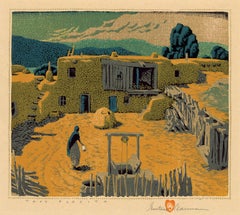
Taos Placita — American Southwest Regionalist Masterwork
Located in Myrtle Beach, SC
Gustave Baumann, 'Taos Placita', color woodcut, 1947, edition 125. Baumann 132. Signed, titled, and numbered '20-125' in pencil; with the artist’s Hand-in-Heart chop. A superb, richly-inked impression, with fresh colors, on fibrous oatmeal wove paper; the full sheet with margins (2 to 3 1/8 inches); slight rippling at the left sheet edge, in excellent condition. Matted to museum standards, unframed. Image size 9 5/8 x 11 1/4 inches (244 x 286 mm); sheet size 13 1/4 x 17 inches (337 x 432 mm). Collections: Harwood Museum of Art, New Mexico Museum of Art, Phoenix Art Museum, Scottsdale Art Museum, Wichita Art Museum. ABOUT THE ARTIST Gustave Baumann (1881-1971) was a renowned printmaker and a leading figure of the American color woodcut revival whose exquisite craftsmanship and vibrant imagery captured the essence of the Southwest. "A brilliant printmaker, Baumann brought to the medium a full mastery of the craft of woodworking that he acquired from his father, a German cabinetmaker. This craftsmanship was coupled with a strong artistic training that resulted in the handsome objects we see in the exhibition today. After discovering New Mexico in 1918, Baumann began to explore in his woodblock prints of this period the light. color, and architectural forms of that landscape. His prints of this period are among the most beautiful and poetic images of the American West." —Lewis I. Sharp, Director, Denver Art Museum Baumann, the son of a craftsman, immigrated to the United States from Germany with his family when he was ten, settling in Chicago. From 1897 to 1904, he studied in the evenings at the Art Institute of Chicago, working in a commercial printmaking shop during the day. In 1905, he returned to Germany to attend the Kunstwerbe Schule in Munich, where he decided on a career in printmaking. He returned to Chicago in 1906 and worked for a few years as a graphic designer of labels. Baumann made his first prints in 1909 and exhibited them at the Art Institute of Chicago the following year. In 1910, he moved to the artists’ colony in Nashville, Indiana, where he explored the creative and commercial possibilities of a career as a printmaker. In 1915, he exhibited his color woodcuts at the Panama-Pacific International Exposition in San Francisco, winning the gold medal. Among Baumann’s ongoing commercial activities was his work for the Packard Motor Car Company from 1914 to 1920 where he produced designs, illustrations, and color woodcuts until 1923. In 1919, Baumann’s printmaking work dominated the important exhibition of American color woodcuts at the Detroit Institute of Arts. Twenty-six of his prints were included, far more than the works of any other artist. A set of his blocks, a preparatory drawing, and seven progressive proofs complemented the exhibition. That same year, Baumann worked in New York and, over the summer, in Provincetown, Massachusetts. His airy images of Cape Cod employed soft, pastel colors and occasionally showed the influence of the white-line woodcut technique. Many of his Chicago artist friends had traveled to the southwest, and Baumann became intrigued by their paintings, souvenirs, and stories of an exotic place named Taos, New Mexico. In the summer of 1918, he spent the summer in Taos sketching and painting before visiting Santa Fe. Paul Walter, the director of the Museum of New Mexico, offered him a studio in the museum's basement. Inspired by the rugged beauty of the Southwest—the vibrant colors and dramatic landscapes of the region became a central theme in his work, influencing his artistic style and subject matter for the remainder of his career. Later in the decade, he traveled to the West Coast and made prints of California landscape. Baumann's prints became synonymous with the Southwest, capturing the spirit of its place in America's identity with a unique sense of authenticity and reverence. His iconic images of desert vistas, pueblo villages, and indigenous cultures served as visual tributes to the region's rich cultural heritage, earning him a dedicated following among collectors and curators alike. A true craftsman and artist, Baumann completed every step of the printmaking process himself, cutting each block, mixing the inks, and printing every impression on the handmade paper he selected. His dedication to true craftsmanship and his commitment to preserving the integrity of his artistic vision earned him widespread acclaim and recognition within the art world. About the vibrant colors he produced, Baumann stated, “A knowledge of color needs to be acquired since they don’t all behave the same way when ground or mixed...careful chemistry goes into the making of colors, with meticulous testing for permanence. While complicated formulae evolve new colors, those derived from Earth and metal bases are still the most reliable.” In the 1930s, Baumann became interested in puppet theater. He designed and carved his own marionettes and established a little traveling company. From 1943 to 1945, the artist carved an altarpiece for the Episcopal Church of the Holy Faith in Santa Fe. In 1952, a retrospective exhibition of his prints was mounted at the New Mexico Museum of Fine Arts. Throughout his prolific career, Baumann executed nearly four hundred color woodcuts. Baumann’s woodcuts...
Category

American Modern 1940s Prints and Multiples

Materials

Woodcut

original lithograph for Pierre a feu Les miroirs profonds
Located in Henderson, NV
Medium: original lithograph. Printed in 1947 at the Mourlot atelier in an edition of 950 on Rives wove paper for "Pierre a feu / Les miroirs profonds" and published in Paris by Maegh...
Category

1940s Prints and Multiples

Materials

Lithograph

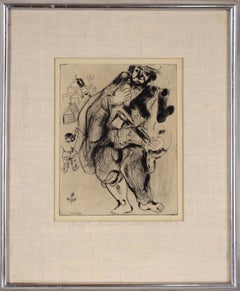
"The Barefoot Lumberjack" Etching from "Les Ames Mortes" by Marc Chagall
Located in Soquel, CA
"The Barefoot Lumberjack" Etching from "Les Ames Mortes" by Marc Chagall Playful etching of a lumberjack by Marc Chagall (Russian, 1887-1985). A stout lumberjack is shown holing his...
Category

Post-War 1940s Prints and Multiples

Materials

Ink, Laid Paper

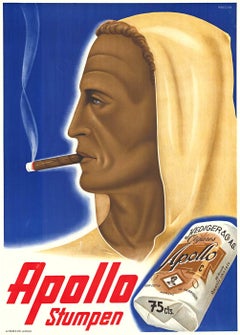
Original Apollo Stumpen vintage Swiss cigar poster
Located in Spokane, WA
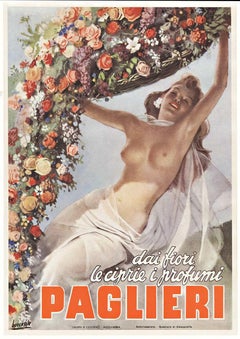
Original Swiss poster: Apollo Stumpen Cigars. Johannes Handschin created this Swiss poster. Swiss size of 35" x 49". Professional acid-free archival linen backed, ready to frame. The colors are vibrant and intense. Great colors. Rare original Swiss (Switzerland) vintage poster. This is the rarer large format, the rarest version of the poster. The small format is 20 x 27, about 1/2 the size. There is a flaw in the lower section of the man’s covering, the lower left of his chin. Shown in images. Switzerland was known for some of the better printing of their posters and the use of more expensive inks, thus richer colors in the posters that survive today. This art deco-style cigar poster...
Category

American Modern 1940s Prints and Multiples

Materials

Lithograph

Composition (Cramer 36; Bloch 360; Horodisch A6), Non Vouloir, Pablo Picasso
Located in Southampton, NY
Zincograph on Vélin Bouffant paper. Unsigned and unnumbered, as issued. Good condition. Notes: From the volume, Non Vouloir, 1942. Published by Éditions Jeanne Bucher, Paris; printed...
Category

Cubist 1940s Prints and Multiples

Materials

Etching

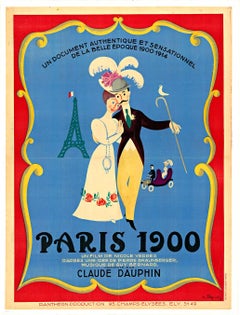
Original Paris 1900 de la Belle Epoque 1900-1914 vintage French movie poster
Located in Spokane, WA
Original 1947 Paris 1900 lithographic movie poster by the artist Raymond Peynet. The poster had originally been folded, and there is some wrinkling at the bottom edge of the poste...
Category

Art Nouveau 1940s Prints and Multiples

Materials

Lithograph

Surrealist composition
Located in Henderson, NV
Medium: collotype (after the Miro lithograph). Printed in 1947 in an edition of 1500 by Meriden Gravure and published by Curt Valentin for "The Prints of Joan Miro" portfolio. Size: ...
Category

Surrealist 1940s Prints and Multiples

Materials

Photogravure

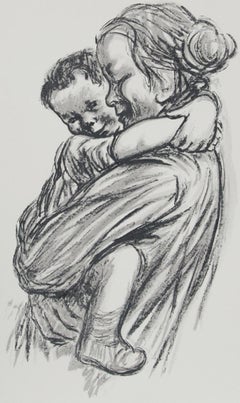
Kollwitz, Mother and Child (after)
Located in Southampton, NY
Lithograph on vélin paper. Inscription: Unsigned and unnumbered, as issued. Good condition. Notes: From the folio, Kathe Kollwitz, Ten Lithographs. Published by Henry C. Kleemann and...
Category

Modern 1940s Prints and Multiples

Materials

Lithograph

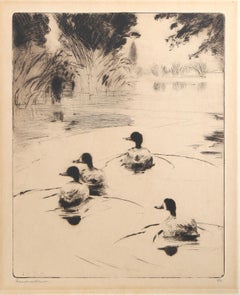
Ducks at Play, Signed Modern Etching Mounted to Board by Frank Weston Benson
Located in Long Island City, NY
Ducks at Play Frank Weston Benson, American (1862–1951) Date: 1940 Etching mounted to board, signed and dated in pencil Image Size: 10 x 8 inches Size: 12 x 10 in. (30.48 x 25.4 cm)
Category

Modern 1940s Prints and Multiples

Materials

Etching

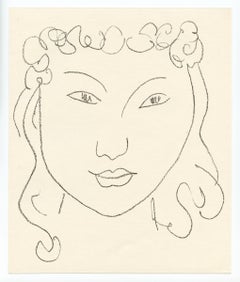
Tête de Femme (Duthuit 21), Le Poème pulvérisé, Henri Matisse
Located in Southampton, NY
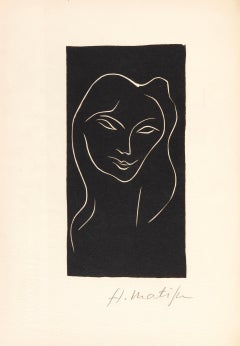
Linocut on vélin pur fil Johannot a la forme paper. Inscription: signed in pencil and unnumbered, as issued, from the edition of 50. Good condition. Notes: From the folio, Le Poème p...
Category

Modern 1940s Prints and Multiples

Materials

Linocut

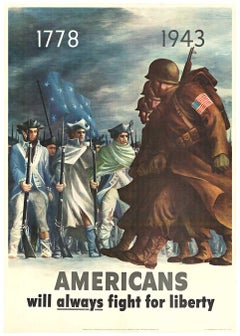
Original Americans will Always Fight for Liberty vintage WWII (1943) poster
Located in Spokane, WA
Title: Original 1943 WWII Propaganda Poster - "Americans Will Always Fight for Liberty" - Authentic U.S. Government Issue. Archival linen-backed with the original US Government-issue...
Category

American Modern 1940s Prints and Multiples

Materials

Offset

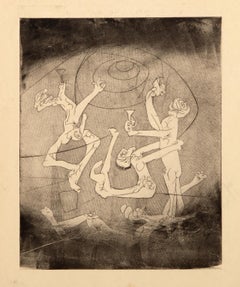
Raising A Glass, Surrealist Etching by Roberto Matta
Located in Long Island City, NY
Roberto Matta, Chilean (1911 - 2002) - Raising A Glass, Year: circa 1943, Medium: Etching, Image Size: 9.75 x 8 inches, Size: 15 x 11.75 in. (38.1 x 29.85 cm), Reference: Unrecorde...
Category

Surrealist 1940s Prints and Multiples

Materials

Etching

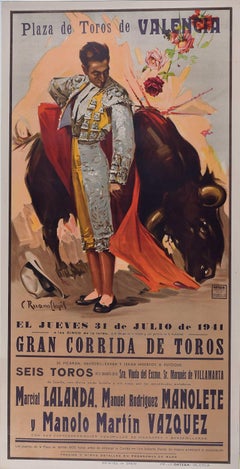
Bullfighting Poster with Manolete - Valencia, 31 July 1941
Located in London, GB
Carlos Ruano Llopis (1878-1950) Original Vintage Bullfighting Poster March 1953 107cm x 53cm Carlos Ruano Llopis was born in 1878 in Orba, Spain ...
Category

Other Art Style 1940s Prints and Multiples

Materials

Lithograph

Surrealist composition
Located in Henderson, NV
Medium: collotype (after the Miro lithograph). Printed in 1947 in an edition of 1500 by Meriden Gravure and published by Curt Valentin for "The Prints of Joan Miro" portfolio. Size: ...
Category

Surrealist 1940s Prints and Multiples

Materials

Photogravure

The Singing Of The Cart - Phototype after Renato Guttuso - 1947
Located in Roma, IT
The Singing Of The Cart is an artwork realized after the Italian artist  Renato Guttuso  (Bagheria, 1911 – Rome, 1987) in 1947. Phototype print..  Good condition. Italian title on...
Category

Contemporary 1940s Prints and Multiples

Materials

Offset

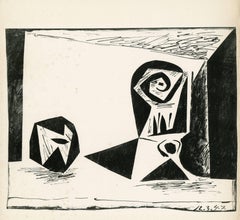
Composition au verre a pied (Composition with stemmed glass)
Located in Fairlawn, OH
Composition au verre a pied (Composition with stemmed glass) Lithograph (Ink drawing, pen and brush transferred to lithograph stone) , 1947 Unsigned Editi...
Category

Cubist 1940s Prints and Multiples

Materials

Ink, Lithograph

Henri Matisse, Frontispiece, Vence 1944–1948, from Verve, Revue Artistique, 1948
Located in Southampton, NY
This exquisite lithograph by Henri Matisse (1869–1954), titled Frontispice, Vence 1944–1948 (Frontispiece, Vence 1944–1948), from Verve, Revue Artistique et Litteraire, Vol. VI, No. ...
Category

Fauvist 1940s Prints and Multiples

Materials

Lithograph

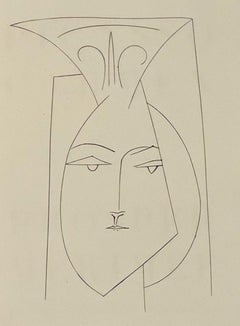
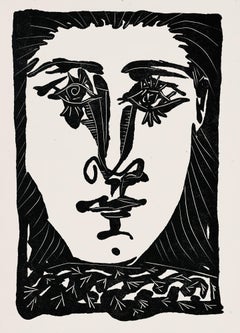
Carmen, Portrait of Woman - Original Etching (Cramer #52)
Located in Paris, IDF
Pablo PICASSO Carmen, Portrait of a Woman, 1949 Original burin engraving (Atelier Lacourière, Paris) Unsigned On Montval wove paper 33 x 26 cm (12.9 x 10.2 in) REFERENCES : - Cata...
Category

Modern 1940s Prints and Multiples

Materials

Etching

Original 1942 "CASABLANCA" vintage Academy Award winning movie poster
Located in Spokane, WA
Original 1942 CASABLANCA vintage movie poster. Archival linen backed in very good condition, ready to frame. The original production fold marks have been touched up and restored. This is an authentic vintage 1942 issue of Casablanca for sale. "Casablanca" is widely regarded as one of the greatest films in cinema history. It received critical acclaim upon its release and won three Academy Awards, including Best Picture, Best Director for Michael Curtiz, and Best Adapted Screenplay. The cast's performances, memorable dialogue, and timeless romance have contributed to the film's enduring popularity. "Casablanca" remains a cultural touchstone and is often referenced in popular media. • Rick Blaine (Humphrey Bogart): The owner of Rick's Café Américain, an establishment known for its lively atmosphere. Rick is initially portrayed as detached and cynical, but his past is revealed as the story progresses. • Ilsa Lund (Ingrid Bergman): A Norwegian woman with a complicated history with Rick. She is caught in a love triangle between Rick and her husband, Victor Laszlo. • Captain Louis Renault (Claude Rains): The corrupt and witty French police captain in Casablanca. He adds a layer of humor to the film and undergoes a moral transformation as the story unfolds. Over the years, the Casablanca poster...
Category

American Realist 1940s Prints and Multiples

Materials

Offset

Original Save Freedom of Speech, Buy War Bonds (Large) format vintage poster
Located in Spokane, WA
Original FREEDOM OF SPEECH, large size format, 1943 vintage poster. Archival linen backing with the original fold marks restored and ready to frame. This is the most popular and most requested among the Four Freedoms posters...
Category

American Realist 1940s Prints and Multiples

Materials

Offset

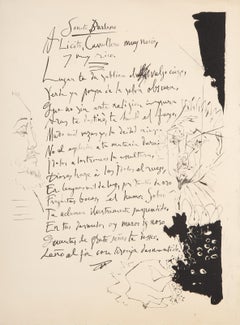
Gongora (Soneto Burlesco), Etching by Pablo Picasso
Located in Long Island City, NY
Pablo Picasso, Spanish (1881 - 1973) - Gongora (Soneto Burlesco), Year: Circa 1947, Medium: Etching, Size: 15 x 11.25 in. (38.1 x 28.58 cm), Reference: Bloch 476-516, Provenance: Fr...
Category

Modern 1940s Prints and Multiples

Materials

Etching

Henri Matisse, Series L, Var. 6, Drawings, Themes and Variations, 1943 (after)
Located in Southampton, NY
This exquisite lithograph after Henri Matisse (1869–1954), titled Serie L, var. 6 (Series L, Variation 6), from the album Henri Matisse, Dessins, Themes et Variations (Drawings, Them...
Category

Modern 1940s Prints and Multiples

Materials

Lithograph

Henri Matisse, Series E, Var. 1, Drawings, Themes and Variations, 1943 (after)
Located in Southampton, NY
This exquisite lithograph after Henri Matisse (1869–1954), titled Serie E, var. 1 (Series E, Variation 1), from the album Henri Matisse, Dessins, Themes et Variations (Drawings, Them...
Category

Modern 1940s Prints and Multiples

Materials

Lithograph

Tauromaquia - Plate 12
Located in Henderson, NV
Medium: heliogravure (after the etching from Goya's Tauromaquia series). Printed in 1947 in a limited edition of 500 on Guarro laid paper, and published in Barcelona by Ediciones Ome...
Category

1940s Prints and Multiples

Materials

Photogravure

Le Marocchine - Etching by Luigi Bartolini - 1944
Located in Roma, IT
Image dimensions: 17.4 x 23.5 cm. Le marocchine (Maurina e sua sorella) is an original artwork realized by Luigi Bartolini in 1944. Original etching and China ink on paper. Titled, dated and signed on plate on the lower central: "Maurina 1944 14 giugno L. Bartolini". Titled, dated, numbered and hand-signed in pencil at the bottom: "Le marocchine 1944 Es. 9/30 Luigi Bartolini". Excellent conditions. Other titles of the work: Maurina; Maurina e sua sorella; Le marocchine (Ragazze da marocchini). The work is also present in the book Arthur Rimbaud, Une saison en enfer - De Luigi, Rome, 1943. Luigi Bartolini Cupramontana (Ancona), 1892 – Rome 1963 An accomplished Twentieth Century Italian engraver, painter, writer, art critic and engraver. He spent his early years living in Rome, Siena, and Florence and was professionally formed through university courses in art and medicine, museums, and the Academy Belle Arti. He begins to study art in 1912 with a special preference for Goya, Rembrandt, and Fattori. His success as an engraver arrives in 1924 with his exhibitions at Bragaglia’s House of Art and Casa Palazzi di Roma (70 etchings). In 1925 he participates in the II Roman Biennial and then in the Venice Biennial from 1928 to 1936. He is considered, along with Morandi, the greatest Italian engraver. His expositive work continues with intensity in the post-war period with one-man exhibitions in both Italy and abroad. His last one-man exhibition takes place at the XXXI Venice Biennial and at the National Chalcography in Rome in 1962. Bartolini lives through his era in complete liberty, dedicating himself to painting, to art criticism, to literature and teaching. This intellectual and artistic autonomy is well reflected in his engravings and it is exactly because of this characteristic of intellectual autonomy that he has never really belonged to the Scuola Romana although he was very attached to it because he frequented the Roman environment and it’s artists who he would often exhibit with. His literary production is gathered the volumes Polemiche (1940), Credo d’artista (1945), Il Fallimento della Pittura (1948) and Poesie 1911-1963(1964). As a critic, he collaborates with numerous magazines such as “Il Selvaggio”, “Quadrivio”, “La Tribuna”, “L’Ambrosiano” etc. After the war, “Bicycle Thieves...
Category

1940s Prints and Multiples

Materials

Etching

SLOW TRAIN THROUGH ARKANSAS
Located in Portland, ME
Benton, Thomas Hart (American, 1889-1975 SLOW TRAIN THROUGH ARKANSAS. Fath . Lithograph, 1941. Edition of 250 published by Associated American Artists (A.A.A.). 9 7/8 x 12 inches (im...
Category

1940s Prints and Multiples

Materials

Lithograph

Scarabei in Combattimento - Etching by Luigi Bartolini - 1941
Located in Roma, IT
Image dimensions: 23.5 x 27.5 cm. Scarabei in combattimento (Fighting Beetles) is an original artwork realized by the great Italian poet, artist, and engraver Luigi Bartolini in 19...
Category

1940s Prints and Multiples

Materials

Etching

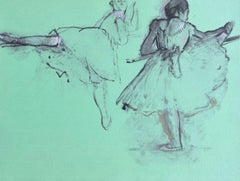
Degas, Melina Darde, Ten Ballet Sketches (after)
Located in Fairfield, CT
Medium: Lithograph and stencil on vélin paper Year: 1945 Paper Size: 17 x 13 inches Inscription: Signed in the plate and unnumbered, as issued Notes: From the folio, Degas, Ten Balle...
Category

Impressionist 1940s Prints and Multiples

Materials

Lithograph

Uccellini Imbalsamati (Embalmed Birds) - Etching by Luigi Bartolini - 1943
Located in Roma, IT
Image dimensions: 22.5 x 34.7 cm. Uccellini imbalsamati is an original artwork realized by the Italian artist and poet Luigi Bartolini in 1943. Original etching on paper.  Signed ...
Category

1940s Prints and Multiples

Materials

Etching

Paloma Picasso (1949) - Vallauris - Colour screen printing
Located in Varese, IT
Colour screen printing Limited edition of 200 copies, numbered as 78/200 in lower left corner. Signed in pencil by artist in lower right corner. Paper size: 69,7 x 49 cm Very good c...
Category

Abstract 1940s Prints and Multiples

Materials

Screen

Sylvan Maze — Mid-century American Surrealism
Located in Myrtle Beach, SC
Robert Vale Faro, 'Sylvan Maze', color lithograph, 1946, edition 20. Signed, dated, titled and numbered '112' and '11/20' in pencil. A fine, richly-inked impression with fresh colors, on heavy, off-white wove paper; full margins (1 to 1 1/2 inch), in excellent condition. Image size 13 11/16 x 9 11/16 inches; sheet size 16 1/8 x 12 5/16 inches. Scarce. Matted to museum standards, unframed. ABOUT THE ARTIST Robert Vale Faro (1902-1988) was a modernist architect and artist associated with the Chicago Bauhaus. He received his degree in architecture and design from the Armour Institute in Chicago and worked at L'Ecole des Beaux-Arts, Paris, from 1924-27, where he was influenced by Harry Kurt Bieg and Le Corbusier. Upon his return to Chicago, Faro worked with the important modernist Chicago architects George and William Keck under Louis Sullivan. Faro founded the avant-garde printmaking group Vanguard in 1945. The group counted Atelier 17 artists Stanley William Hayter, Sue Fuller...
Category

American Modern 1940s Prints and Multiples

Materials

Lithograph

Surrealist composition
Located in Henderson, NV
Medium: collotype (after the Miro lithograph). Printed in 1947 in an edition of 1500 by Meriden Gravure and published by Curt Valentin for "The Prints of Joan Miro" portfolio. Size: ...
Category

Surrealist 1940s Prints and Multiples

Materials

Photogravure

Still Thinking About These?

All Recently Viewed