1960s Prints and Multiples

to
1,981
3,386
1,794
1,765
635
223
Overall Width
to
Overall Height
to
2,185
1,336
1,080
457
392
191
102
42
41
32
11
7
1
549
283
239
132
114
4,819
10,540
58,050
24,440
721
985
2,307
2,325
2,439
5,020
7,805
13,648
8,121
4,357
3,983
5,723
1,917
135
2,920
1,712
1,297
1,000
911
906
836
468
432
423
341
257
253
203
175
162
158
136
131
128
4,748
1,219
836
565
370
771
2,345
4,455
2,864
Period: 1960s
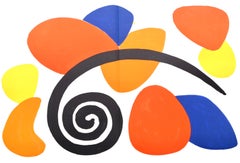
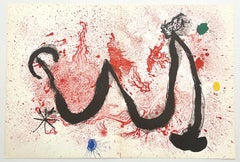
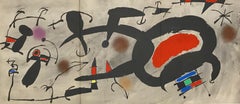
Alexander Calder, Composition with Spirals, from Derriere le miroir, 1968
Located in Southampton, NY
This exquisite lithograph by Alexander Calder (1898–1976), titled Composition aux Spirales (Composition with Spirals), from the folio Derriere le miroir, No. 173, originates from the 1968 edition published by Maeght Editeur, Paris, and printed by Mourlot Freres, Paris, 1968. Composition aux Spirales exemplifies Calder’s mastery of rhythm and form, translating his sculptural language of balance and motion into vivid, dynamic compositions on paper that capture his signature sense of energy and harmony. Executed as a lithograph on velin paper, this work measures 15 x 22 inches, with centerfold, as issued. Unsigned and unnumbered as issued. The edition exemplifies the superb craftsmanship of Mourlot Freres, Paris. Artwork Details: Artist: Alexander Calder (1898–1976) Title: Composition aux Spirales (Composition with Spirals), from the folio Derriere le miroir, No. 173 Medium: Lithograph on velin paper Dimensions: 15 x 22 inches (38.1 x 55.88 cm), with centerfold, as issued Inscription: Unsigned and unnumbered as issued Date: 1968 Publisher: Maeght Editeur, Paris Printer: Mourlot Freres, Paris Condition: Well preserved, consistent with age and medium Provenance: From the folio Derriere le miroir, No. 173, published by Maeght Editeur, Paris; printed by Mourlot Freres, Paris, 1968 Notes: Excerpted from the folio (translated from French), The illustrations in this issue are original lithographs by Alexander Calder drawn in the workshops of the Arte printing shop. This issue of "Behind the Mirror" has a luxury edition drawn on velin de Lana and limited to CL examples numbered and signed by the artist on the colophon. The text of G. Carandente was translated from Italian by Alain Veinstein. About the Publication: Derriere le miroir (Behind the Mirror) was one of the most important art publications of the 20th century, created and published by Maeght Editeur in Paris from 1946 to 1982. Founded by the visionary art dealer and publisher Aime Maeght, the series served as both an exhibition catalogue and a work of art in its own right, uniting original lithographs by leading modern and contemporary artists with critical essays, poetry, and design of the highest quality. Printed by master lithographers such as Mourlot Freres and Arte, Derriere le miroir became synonymous with the artistic vanguard of postwar Europe. Each issue was devoted to a single artist or theme and published to accompany exhibitions at the Galerie Maeght in Paris, featuring works by Pablo Picasso, Henri Matisse, Georges Braque, Joan Miro, Marc Chagall, Alexander Calder, Fernand Leger, and Alberto Giacometti, among others. The publication reflected Maeght’s belief that art should be both accessible and elevated—an ideal realized through its luxurious production values, meticulous printing, and collaboration with the greatest creative minds of its time. About the Artist: Alexander Calder (1898–1976) was an American sculptor, painter, and printmaker whose pioneering innovations in kinetic art revolutionized 20th-century sculpture and transformed modern visual language. Born in Lawnton, Pennsylvania, into a family of artists, Calder initially trained as a mechanical engineer at the Stevens Institute of Technology before turning to art at the Art Students League in New York—a combination of technical precision and creative imagination that defined his career. Moving to Paris in 1926, he immersed himself in the avant-garde and formed friendships with Pablo Picasso, Alberto Giacometti, Joan Miro, Wassily Kandinsky, Salvador Dali, Marcel Duchamp, and Man Ray, whose ideas profoundly shaped his artistic philosophy. From Picasso, he absorbed structural invention; from Miro, lyrical abstraction; from Kandinsky, spiritual geometry; and from Duchamp and Man Ray, the courage to merge intellect and play. In Paris, Calder created his famous Cirque Calder, a miniature mechanical circus that introduced motion and performance as central components of sculpture, and by the early 1930s, he invented the mobile—a term coined by Duchamp—to describe his delicately balanced, moving sculptures that responded to air currents. Later, Jean Arp would name his stationary counterparts stabiles. These two inventions—sculptures that could either float and spin gracefully or stand monumentally still—transformed art into a dynamic dialogue between movement, balance, and space. Calder’s signature forms, painted in vivid reds, blacks, blues, and yellows, embodied both joy and precision, creating an art that was at once abstract, organic, and deeply human. Like Kandinsky and Miro, he viewed art as a form of rhythm and emotion; like Duchamp, he embraced innovation and humor; and like Giacometti and Dali, he was fascinated by perception, structure, and the unseen forces of motion. His monumental public sculptures—such as La Grande Vitesse (1969) in Grand Rapids and Flamingo (1973) in Chicago—redefined public art as a symbol of civic optimism and modern progress. A key bridge between European modernism and American abstraction, Calder’s influence extended to artists including Jean Tinguely, George Rickey, Donald Judd, Ellsworth Kelly, Richard Serra, and Olafur Eliasson, whose works in kinetic and spatial art continue to echo his vision. His gouaches, prints, and jewelry carried the same balance and movement as his sculptures, revealing a unified language of rhythm across media. Represented in every major modern museum—including MoMA, the Guggenheim, the Tate, and the Centre Pompidou—Calder remains celebrated for merging engineering, color, and poetry into an art of pure equilibrium. Standing alongside Pablo Picasso, Alexander Calder, Alberto Giacometti, Salvador Dali, Joan Miro, Wassily Kandinsky, Marcel Duchamp, and Man Ray, he remains one of the cornerstones of modern art—a visionary whose works breathe with motion, grace, and joy. His highest auction record was achieved by Poisson Volant (Flying Fish) (1957), which sold for $25.9 million at Christie’s, New York, on May 15, 2014, reaffirming Alexander Calder’s enduring legacy as one of the most inventive, dynamic, and collectible artists in the history of modern art. Alexander Calder Composition...
Category

Surrealist 1960s Prints and Multiples

Materials

Lithograph

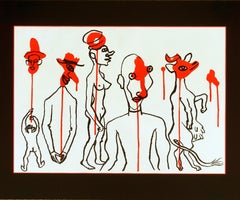
Alexander Calder Mid Century Derrière le Miroir Lithograph
Located in Soquel, CA
Vintage 1960s Alexander Calder Lithograph double page part of portfolio "Derriere le Miroir". Published by: Galerie Maeght, Paris, 1966. No. 156. Text on verso. Unsigned, from an unknown edition. Presented in black mat with red core. Mat size: 20"H x 24"W. Image size: 15"H x 22"W. American artist Alexander Calder changed the course of modern art by developing an innovative method of sculpting, bending, and twisting wire to create three-dimensional “drawings in space.” Resonating with the Futurists and Constructivists, as well as the language of early nonobjective painting, Calder’s mobiles (a term coined by Marcel Duchamp in 1931 to describe his work) consist of abstract shapes made of industrial materials––often poetic and gracefully formed and at times boldly colored––that hang in an uncanny, perfect balance. His complex assemblage Cirque Calder (1926–31), which allowed for the artist’s manipulation of its various characters presented before an audience, predated Performance Art by some 40 years. Later in his career, Calder devoted himself to making outdoor monumental sculptures...
Category

Modern 1960s Prints and Multiples

Materials

Paper, Ink

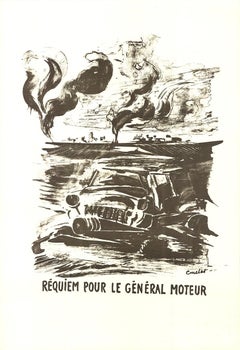
ARTIST UNKNOWN Requiem for General Moteur 1968
Located in Brooklyn, NY
Unknown artist created this leaflet titled "Requiem for General Motor" from the portfolio "Mai 68 and the French Revolt of the Time" likely reflects on the socio-political upheavals ...
Category

Contemporary 1960s Prints and Multiples

Materials

Lithograph

screenprint
Located in Henderson, NV
Medium: screenprint (after the drawing). Printed in 1963 on a special semi-transparent paper in an edition of 450 for "Naissances" and published by Galerie Der Spiegel. Size: 11 3/4 ...
Category

1960s Prints and Multiples

Materials

Screen

original lithograph
Located in Henderson, NV
Medium: original lithograph. Printed in 1963 for the art revue Derriere le Miroir (issue number 139-140 devoted to Miro and Artigas) and published in Paris by the Maeght atelier. Siz...
Category

Abstract 1960s Prints and Multiples

Materials

Lithograph

Salvador Dali "The Fisherman"
Located in Boston, MA
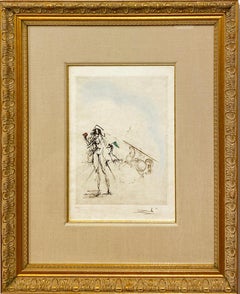
Artist: Dali, Salvador Title: The Fisherman Series: Les Amours de Cassandre Date: 1968 Medium: drypoint with added color Framed Dimensions: 27.5" x 23.5" Signature: Pencil sig...
Category

Surrealist 1960s Prints and Multiples

Materials

Drypoint

Lipstick, Signed and Numbered Pop Art Screenprint on Arches
Located in Long Island City, NY
Lipstick Unknown Artist Date: 1965 Screenprint on Arches, signed, numbered, dated and dedicated in pencil Edition of 4/30 Image Size: 17 x 12 inches Size: 22.25 x 15 in. (56.52 x 38....
Category

Pop Art 1960s Prints and Multiples

Materials

Screen

Femme au Clown - Etching - 1969
Located in Roma, IT
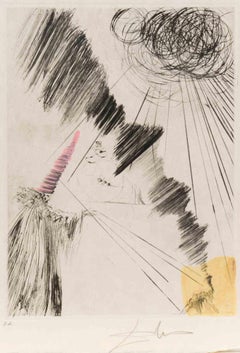
Etching and drypoint with roulette on Japanese paper from the Series "Faust" (Walpurgis Night). Image dimension 32x24 cm. Hand signed in pencil Artist proof. Blindstamp "Dali", ou...
Category

Surrealist 1960s Prints and Multiples

Materials

Etching

Henri Matisse, Fruits, from Prints from the Mourlot Press, 1964 (after)
Located in Southampton, NY
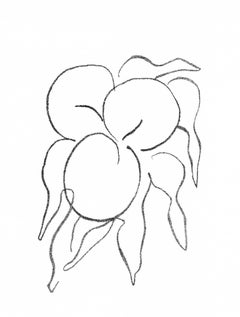
This exquisite lithograph after Henri Matisse (1869–1954), titled Fruits, from the album Prints from the Mourlot Press, exhibition sponsored by the French Embassy, circulated by the ...
Category

Fauvist 1960s Prints and Multiples

Materials

Lithograph

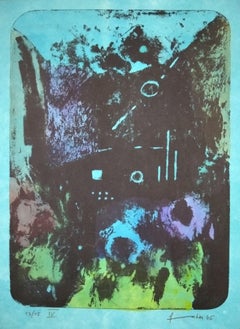
Untitled
Located in Barcelona, BARCELONA
The painting is being offered with a work and authenticity certificate
Category

Abstract 1960s Prints and Multiples

Materials

Lithograph

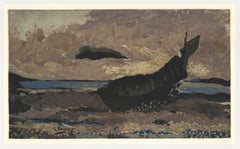
"La barque echouee" lithograph
Located in Henderson, NV
Medium: lithograph (after the painting). Printed in 1968 by L'Imprimerie Arte and published by the atelier Maeght for the Varengeville portfolio. Size: 8 1/4 x 13 3/4 inches (210 x 3...
Category

1960s Prints and Multiples

Materials

Lithograph

original lithograph
Located in Henderson, NV
Medium: original lithograph. Executed for Derriere le Miroir (No. 148) in 1964, and published in Paris by Maeght. This lithograph was published on the occasion of the inauguration of...
Category

1960s Prints and Multiples

Materials

Lithograph

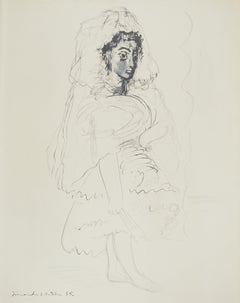
Pablo Picasso, Jacqueline in Spanish Dress, from The Double Flute, 1967 (after)
Located in Southampton, NY
This exquisite lithograph and pochoir after Pablo Picasso (1881–1973), titled Jacqueline en Espagnole (Jacqueline in Spanish Dress), from the folio Picasso, La flute double, 16 Dessi...
Category

Cubist 1960s Prints and Multiples

Materials

Lithograph, Stencil

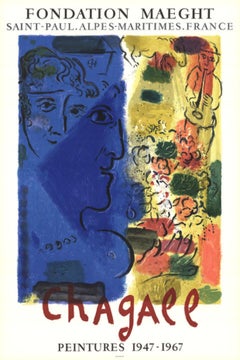
Le Visage Bleu By Marc Chagall
Located in Dubai, Dubai
Le Visage Bleu By Marc Chagall 1967 Medium: Lithograph Paper Size: 34 x 22.5 inches ( 86 x 57 cm ) Image Size: 26 x 19 inches ( 66 x 48 cm ) Edition Size: Unknown
Category

Contemporary 1960s Prints and Multiples

Materials

Lithograph

Lips By Man Ray
Located in Dubai, Dubai
Lips By Man Ray 1966 Medium: Offset Lithograph Paper Size: 21.25 x 36.75 inches ( 54 x 93 cm ) Image Size: 14 x 36.75 inches ( 36 x 93 cm ) Edition Size: Unknown
Category

Contemporary 1960s Prints and Multiples

Materials

Lithograph, Offset

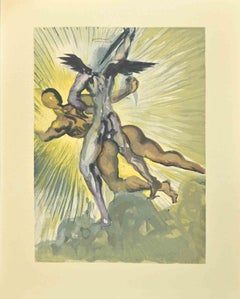
The Guardian Angels of the Valley - Woodcut - 1963
Located in Roma, IT
The Guardian Angels of the Valley - Purgatory, Plate - 8 - Divine Comedy is a woodcut print realized in 1963 for a series illustrating the Medieval poem of the "Divine Comedy" by Dan...
Category

Surrealist 1960s Prints and Multiples

Materials

Woodcut

Maria Helena Vieira da Silva, The Card Players, Painters of Today, 1960 (after)
Located in Southampton, NY
This exquisite heliogravure after Maria Helena Vieira da Silva (1908–1992), titled Les joueurs de cartes (The Card Players), from the folio Vieira da Silva, Peintres d'aujourd'hui (V...
Category

Modern 1960s Prints and Multiples

Materials

Lithograph

Pietro Consagra Italian Mod Abstract Expressionist Forma, Art Brut Lithograph
Located in Surfside, FL
Pietro Consagra (Italian, 1920-2005). Hand signed in pencil and numbered limited edition color lithograph on Magnani paper. Embossed stamp with limited edition numbers in pencil to lower left, and having artist pencil signature to lower right. (from a limited edition of 80 with 15 artist's proofs) Published by Stamperia 2RC, Rome Italy and Marlborough Gallery, Rome, Italy. Abstract Modernist work in colors, produced in the style of the Forma art movement of Postwar Italy, of which the artist was a prominent member. Pietro Consagra (1920 – 2005) was an Italian Post war artist working in painting, printmaking and sculpture. In 1947 he was among the founding members of the Forma 1 group of artists, proponents of structured abstraction. (similar to the Art Informel and Art Brut in France and the Brutalist artists) Consagra was born on 6 October 1920 in Mazara del Vallo, in the province of Trapani in south-western Sicily, to Luigi Consagra and Maria Lentini. From 1931 he enrolled in a trade school for sailors, studying first to become a mechanic, and later to become a captain. In 1938 he moved to Palermo, where he enrolled in the liceo artistico; despite an attack of tuberculosis, he graduated in 1941, and in the same year signed up at the Accademia di Belle Arti, where he studied sculpture under Archimede Campini. After the Invasion of Sicily and the Allied occupation of Palermo in 1943, Consagra found work as a caricaturist for the American Red Cross club of the city; he also joined the Italian Communist Party. Early in 1944, armed with a letter of introduction from an American officer, he travelled to Rome. There he came into contact with the Sicilian artist Concetto Maugeri, and through him with Renato Guttuso, who was also Sicilian and who introduced him to the intellectual life of the city and to other postwar artists such as Leoncillo Leonardi, Mario Mafai and Giulio Turcato. Consagra signed up at the Accademia di Belle Arti di Roma in September 1944 and studied sculpture there under Michele Guerrisi, but left before completing his diploma. In 1947, with Carla Accardi, Ugo Attardi, Piero Dorazio, Mino Guerrini, Achille Perilli, Antonio Sanfilippo and Giulio Turcato, Consagra started the artist's group Forma 1, which advocated both Marxism and structured abstraction. Steadily Consagra's work began to find an audience. Working primarily in metal, and later in marble and wood, his thin, roughly carved reliefs, began to be collected by Peggy Guggenheim and other important patrons of the arts. He showed at the Venice Biennale eleven times between 1950 and 1993, and in 1960 won the sculpture prize at the exhibition. During the 1960s he was associated with the Continuità group, an offshoot of Forma I, and in 1967 taught at the School of Arts in Minneapolis. Large commissions allowed him to begin working on a more monumental scale, and works of his were installed in the courtyard of the Foreign Ministry in Rome and in the European Parliament, Strasbourg. His work is found in the collections of The Tate Gallery, London, in Museo Cantonale d'Arte of Lugano and the Museum of Modern Art, Paris, and the National Gallery of Art in Washington, D.C.. Consagra returned to Sicily where he sculpted a number of significant works during the 1980s. With Senator Ludovico Corrao, he helped created an open-air museum in the new town of Gibellina, after the older town had been destroyed in the earthquake of 1968. Consagra designed the gates to the town's entrance, the building named "Meeting" and the gates to the cemetery, where he was later buried. In 1952 Consagra published La necessità della scultura ("the need for sculpture"), a response to the essay La scultura lingua morta ("sculpture, a dead language"), published in 1945 by Arturo Martini. Other works include L'agguato c'è ("the snare exists", 1960), and La città frontale ("the frontal city", 1969). His autobiography, Vita Mia, was published by Feltrinelli in 1980. In 1989 a substantial retrospective exhibition of work by Consagra was shown at the Galleria Nazionale d'Arte Moderna in Rome; in 1993 a permanent exhibition of his work was installed there. In 1991 his work was shown in the Hermitage Museum in St. Petersburg. In 2002 the Galerie der Stadt Stuttgart opened a permanent exhibition of his work. He was one of ten artists invited by Giovanni Carandente, along with David Smith, Alexander Calder, Arnaldo Pomodoro, Lynn Chadwick, and Beverly Pepper, to fabricate works in Italsider factories in Italy for an outdoor exhibition, "Sculture nella città", held in Spoleto during the summer of 1962. He was included in the The 1962 International Prize for Sculpture the jury included Argan, Romero Brest and James Johnson Sweeney the former director of the Solomon R. Guggenheim Museum in New York. The participants included Louise Nevelson and John Chamberlain for the United States; Lygia Clark for Brazil; Pietro Consagra, Lucio Fontana, Nino Franchina, and Gió Pomodoro for Italy; Pablo Serrano for Spain; and Eduardo Paolozzi, William Turnbull, and Kenneth Armitage for England. Gyula Kosice, Noemí Gerstein...
Category

Abstract Expressionist 1960s Prints and Multiples

Materials

Lithograph

screenprint
Located in Henderson, NV
Medium: screenprint (after the drawing). Printed in 1963 on a special semi-transparent paper in an edition of 450 for "Naissances" and published by Galerie Der Spiegel. Size: 11 3/4 ...
Category

1960s Prints and Multiples

Materials

Screen

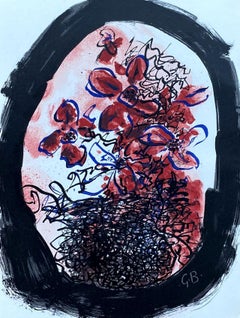
Bouquet of Flowers - Original Lithograph - Signed in the Plate (Vallier #188)
Located in Paris, IDF
Georges BRAQUE Bouquet of flowers, 1961 Original lithograph in six colors (Mourlot workshop) Printed signature in the plate On vellum 34 x 26 cm (c. 13 x 10 inch) REFERENCE : Catal...
Category

Expressionist 1960s Prints and Multiples

Materials

Lithograph

Joan Miro, Woman and Bird V/X, from Miro 1959–1960, 1961 (after)
Located in Southampton, NY
This exquisite lithograph and pochoir after Joan Miro (1893–1983), titled Femme et oiseau V/X (Woman and Bird V/X), from the album Miro 1959–1960 (Miro 1959–1960), originates from th...
Category

Surrealist 1960s Prints and Multiples

Materials

Lithograph

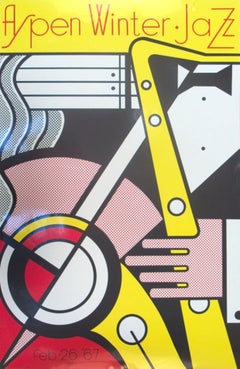
Aspen Jazz By Roy Lichtenstein
Located in Dubai, Dubai
Aspen Jazz By Roy Lichtenstein 1967 Medium: Serigraph Paper Size: 40 x 26 inches ( 102 x 66 cm ) Image Size: 40 x 26 inches ( 102 x 66 cm ) Edition Size: 300
Category

Pop Art 1960s Prints and Multiples

Materials

Screen

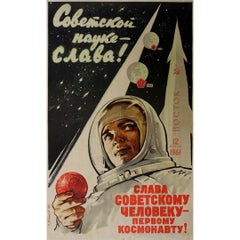
1961 original propaganda poster - Soviet glory! Yuri Gagarine - Space conquest
By V. Volikov
Located in PARIS, FR
The 1961 original Soviet propaganda poster by V. Volikov, titled "Gloire soviétique ! À l'homme soviétique le premier cosmonaute Yuri Gagarine - Space conquest," stands as a powerful...
Category

1960s Prints and Multiples

Materials

Linen, Paper, Lithograph

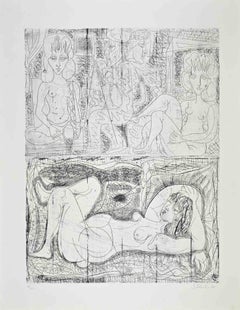
Nudes - Etching by Gian Paolo Berto - 1968
Located in Roma, IT
Etching realized in 1968. Hand signed and numbered in pencil. Edition of 100, Very good condition.
Category

Contemporary 1960s Prints and Multiples

Materials

Etching

Untitled - Etching by Adolf Frohner - 1968
Located in Roma, IT
Etching realized in 1968. Hand signed in pencil. Artist proof. Very good condition.
Category

Contemporary 1960s Prints and Multiples

Materials

Etching

Pietro Consagra Italian Mod Abstract Expressionist Forma Brutalist Lithograph
Located in Surfside, FL
Pietro Consagra (Italian, 1920-2005). Hand signed in pencil and numbered limited edition color lithograph on Magnani paper. Embossed stamp with limited edition numbers in pencil to lower left, and having artist pencil signature to lower right. (from a limited edition of 80 with 15 artist's proofs) Published by Stamperia 2RC, Rome Italy and Marlborough Gallery, Rome, Italy. Abstract Modernist work in colors, produced in the style of the Forma art movement of Postwar Italy, of which the artist was a prominent member. Pietro Consagra (1920 – 2005) was an Italian Post war artist working in painting, printmaking and sculpture. In 1947 he was among the founding members of the Forma 1 group of artists, proponents of structured abstraction. Consagra was born on 6 October 1920 in Mazara del Vallo, in the province of Trapani in south-western Sicily, to Luigi Consagra and Maria Lentini. From 1931 he enrolled in a trade school for sailors, studying first to become a mechanic, and later to become a captain. In 1938 he moved to Palermo, where he enrolled in the liceo artistico; despite an attack of tuberculosis, he graduated in 1941, and in the same year signed up at the Accademia di Belle Arti, where he studied sculpture under Archimede Campini. After the Invasion of Sicily and the Allied occupation of Palermo in 1943, Consagra found work as a caricaturist for the American Red Cross club of the city; he also joined the Italian Communist Party. Early in 1944, armed with a letter of introduction from an American officer, he travelled to Rome. There he came into contact with the Sicilian artist Concetto Maugeri, and through him with Renato Guttuso, who was also Sicilian and who introduced him to the intellectual life of the city and to other postwar artists such as Leoncillo Leonardi, Mario Mafai and Giulio Turcato. Consagra signed up at the Accademia di Belle Arti di Roma in September 1944 and studied sculpture there under Michele Guerrisi, but left before completing his diploma. In 1947, with Carla Accardi, Ugo Attardi, Piero Dorazio, Mino Guerrini, Achille Perilli, Antonio Sanfilippo and Giulio Turcato, Consagra started the artist's group Forma 1, which advocated both Marxism and structured abstraction. Steadily Consagra's work began to find an audience. Working primarily in metal, and later in marble and wood, his thin, roughly carved reliefs, began to be collected by Peggy Guggenheim and other important patrons of the arts. He showed at the Venice Biennale eleven times between 1950 and 1993, and in 1960 won the sculpture prize at the exhibition. During the 1960s he was associated with the Continuità group, an offshoot of Forma I, and in 1967 taught at the School of Arts in Minneapolis. Large commissions allowed him to begin working on a more monumental scale, and works of his were installed in the courtyard of the Foreign Ministry in Rome and in the European Parliament, Strasbourg. His work is found in the collections of The Tate Gallery, London, in Museo Cantonale d'Arte of Lugano and the Museum of Modern Art, Paris, and the National Gallery of Art in Washington, D.C.. Consagra returned to Sicily where he sculpted a number of significant works during the 1980s. With Senator Ludovico Corrao, he helped created an open-air museum in the new town of Gibellina, after the older town had been destroyed in the earthquake of 1968. Consagra designed the gates to the town's entrance, the building named "Meeting" and the gates to the cemetery, where he was later buried. In 1952 Consagra published La necessità della scultura ("the need for sculpture"), a response to the essay La scultura lingua morta ("sculpture, a dead language"), published in 1945 by Arturo Martini. Other works include L'agguato c'è ("the snare exists", 1960), and La città frontale ("the frontal city", 1969). His autobiography, Vita Mia, was published by Feltrinelli in 1980. In 1989 a substantial retrospective exhibition of work by Consagra was shown at the Galleria Nazionale d'Arte Moderna in Rome; in 1993 a permanent exhibition of his work was installed there. In 1991 his work was shown in the Hermitage Museum in St. Petersburg. In 2002 the Galerie der Stadt Stuttgart opened a permanent exhibition of his work. He was one of ten artists invited by Giovanni Carandente, along with David Smith, Alexander Calder, Arnaldo Pomodoro, Lynn Chadwick, and Beverly Pepper, to fabricate works in Italsider factories in Italy for an outdoor exhibition, "Sculture nella città", held in Spoleto during the summer of 1962. He was included in the The 1962 International Prize for Sculpture the jury included Argan, Romero Brest and James Johnson Sweeney the former director of the Solomon R. Guggenheim Museum in New York. The participants included Louise Nevelson and John Chamberlain for the United States; Lygia Clark for Brazil; Pietro Consagra, Lucio Fontana, Nino Franchina, and Gió Pomodoro for Italy; Pablo Serrano for Spain; and Eduardo Paolozzi, William Turnbull, and Kenneth Armitage for England. Gyula Kosice, Noemí Gerstein...
Category

Abstract Expressionist 1960s Prints and Multiples

Materials

Lithograph

Melancholic Muses III
Located in London, GB
'Melancholic Muses III', one of a poignant set of six signed artist proof lithographs by the celebrated Spanish artist from Barcelona, Vicenç Caraltó (circa 1960s). This collection o...
Category

Modern 1960s Prints and Multiples

Materials

Lithograph

Pietro Consagra Italian Mod Abstract Expressionist Forma, Art Brut Lithograph
Located in Surfside, FL
Pietro Consagra (Italian, 1920-2005). Hand signed in pencil and numbered limited edition color lithograph on Magnani paper. Embossed stamp with limited edition numbers in pencil to lower left, and having artist pencil signature to lower right. (from a limited edition of 80 with 15 artist's proofs) Published by Stamperia 2RC, Rome Italy and Marlborough Gallery, Rome, Italy. Abstract Modernist work in colors, produced in the style of the Forma art movement of Postwar Italy, of which the artist was a prominent member. Pietro Consagra (1920 – 2005) was an Italian Post war artist working in painting, printmaking and sculpture. In 1947 he was among the founding members of the Forma 1 group of artists, proponents of structured abstraction. (similar to the Art Informel and Art Brut in France and the Brutalist artists) Consagra was born on 6 October 1920 in Mazara del Vallo, in the province of Trapani in south-western Sicily, to Luigi Consagra and Maria Lentini. From 1931 he enrolled in a trade school for sailors, studying first to become a mechanic, and later to become a captain. In 1938 he moved to Palermo, where he enrolled in the liceo artistico; despite an attack of tuberculosis, he graduated in 1941, and in the same year signed up at the Accademia di Belle Arti, where he studied sculpture under Archimede Campini. After the Invasion of Sicily and the Allied occupation of Palermo in 1943, Consagra found work as a caricaturist for the American Red Cross club of the city; he also joined the Italian Communist Party. Early in 1944, armed with a letter of introduction from an American officer, he travelled to Rome. There he came into contact with the Sicilian artist Concetto Maugeri, and through him with Renato Guttuso, who was also Sicilian and who introduced him to the intellectual life of the city and to other postwar artists such as Leoncillo Leonardi, Mario Mafai and Giulio Turcato. Consagra signed up at the Accademia di Belle Arti di Roma in September 1944 and studied sculpture there under Michele Guerrisi, but left before completing his diploma. In 1947, with Carla Accardi, Ugo Attardi, Piero Dorazio, Mino Guerrini, Achille Perilli, Antonio Sanfilippo and Giulio Turcato, Consagra started the artist's group Forma 1, which advocated both Marxism and structured abstraction. Steadily Consagra's work began to find an audience. Working primarily in metal, and later in marble and wood, his thin, roughly carved reliefs, began to be collected by Peggy Guggenheim and other important patrons of the arts. He showed at the Venice Biennale eleven times between 1950 and 1993, and in 1960 won the sculpture prize at the exhibition. During the 1960s he was associated with the Continuità group, an offshoot of Forma I, and in 1967 taught at the School of Arts in Minneapolis. Large commissions allowed him to begin working on a more monumental scale, and works of his were installed in the courtyard of the Foreign Ministry in Rome and in the European Parliament, Strasbourg. His work is found in the collections of The Tate Gallery, London, in Museo Cantonale d'Arte of Lugano and the Museum of Modern Art, Paris, and the National Gallery of Art in Washington, D.C.. Consagra returned to Sicily where he sculpted a number of significant works during the 1980s. With Senator Ludovico Corrao, he helped created an open-air museum in the new town of Gibellina, after the older town had been destroyed in the earthquake of 1968. Consagra designed the gates to the town's entrance, the building named "Meeting" and the gates to the cemetery, where he was later buried. In 1952 Consagra published La necessità della scultura ("the need for sculpture"), a response to the essay La scultura lingua morta ("sculpture, a dead language"), published in 1945 by Arturo Martini. Other works include L'agguato c'è ("the snare exists", 1960), and La città frontale ("the frontal city", 1969). His autobiography, Vita Mia, was published by Feltrinelli in 1980. In 1989 a substantial retrospective exhibition of work by Consagra was shown at the Galleria Nazionale d'Arte Moderna in Rome; in 1993 a permanent exhibition of his work was installed there. In 1991 his work was shown in the Hermitage Museum in St. Petersburg. In 2002 the Galerie der Stadt Stuttgart opened a permanent exhibition of his work. He was one of ten artists invited by Giovanni Carandente, along with David Smith, Alexander Calder, Arnaldo Pomodoro, Lynn Chadwick, and Beverly Pepper, to fabricate works in Italsider factories in Italy for an outdoor exhibition, "Sculture nella città", held in Spoleto during the summer of 1962. He was included in the The 1962 International Prize for Sculpture the jury included Argan, Romero Brest and James Johnson Sweeney the former director of the Solomon R. Guggenheim Museum in New York. The participants included Louise Nevelson and John Chamberlain for the United States; Lygia Clark for Brazil; Pietro Consagra, Lucio Fontana, Nino Franchina, and Gió Pomodoro for Italy; Pablo Serrano for Spain; and Eduardo Paolozzi, William Turnbull, and Kenneth Armitage for England. Gyula Kosice, Noemí Gerstein...
Category

Abstract Expressionist 1960s Prints and Multiples

Materials

Lithograph

signed original etching - Artist s Proof
Located in Henderson, NV
Medium: original soft ground etching. Signed in pencil and annotated "Artist's Proof". Printed in 1967 for the Dreigroschen Film portfolio and published by Touchstone Publishers. Thi...
Category

Expressionist 1960s Prints and Multiples

Materials

Etching

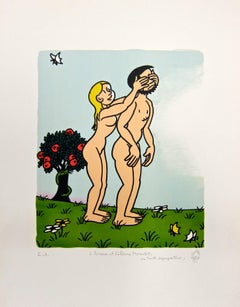
Adam and Eve by Jean Effel
Located in New York, NY
Artist: Jean Effel Medium: Lithograph, E.A. Signed, Edition of 150, 1960s Dimensions: 25.75 x 19.5 in, 65.41 x 49.53 cm
Category

1960s Prints and Multiples

Materials

Lithograph

original lithograph
Located in Henderson, NV
Medium: original lithograph. Printed in 1964 and published by Eberhard Kornfeld for the 1 Cent Life portfolio in an edition of 2000. Size: 16 1/4 x 11 3/8 inches (408 x 288 mm). Ther...
Category

1960s Prints and Multiples

Materials

Lithograph

Blacks and Whites I ( Acetates) - Plate F - Lithograph Embossing with 1969
Located in Roma, IT
Hand Signed. Edition 34/90 prints plus 15 out of commerce Artist's Proofs in Roman Numerals. Publisher : 2RC Gallery The work is part of the "Black and white" folder that Alberto Bu...
Category

Contemporary 1960s Prints and Multiples

Materials

Mixed Media

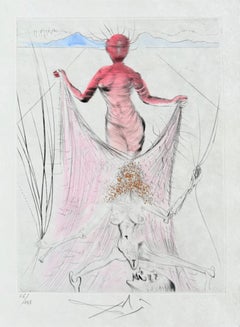
Femme tenant le voile
Located in OPOLE, PL
Salvador Dali (1904-1989) - Femme tenant le voile Etching from 1969. 66/145 on Japan paper. Dimensions of work: 38 x 28 cm. Hand signed. Publisher: Graphik Europa Anstalt. Refe...
Category

Surrealist 1960s Prints and Multiples

Materials

Etching

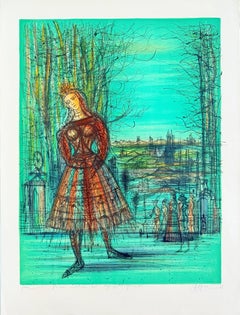
Princesse d Azur
Located in OPOLE, PL
Jean Carzou (1907-2000) - Princesse d'Azur Lithograph from 1966. Dedicated to Pierre Sorlier, on Arches paper. Dimensions of work: 79 x 59.5 cm. Hand signed. The work is in Good...
Category

Modern 1960s Prints and Multiples

Materials

Lithograph

original lithograph
Located in Henderson, NV
Medium: original lithograph. Printed on Arjomari paper in 1969 at the Mourlot Freres atelier and published by Editions Richelieu in a limited edition of 2400 for the L'Odyssee portfo...
Category

1960s Prints and Multiples

Materials

Lithograph

"Au jardin" original lithograph
Located in Henderson, NV
Medium: original lithograph. This richly inked impression was printed in 1960 at the atelier Mourlot in an edition of 200 on Marais paper for the rare "Eloge de Andre Lhote" and publ...
Category

1960s Prints and Multiples

Materials

Lithograph

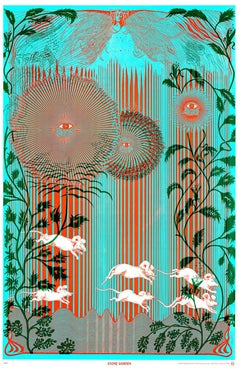
Original Stone Garden - psychedelic pop-art 1960s vintage poster
Located in Spokane, WA
The original Stone Garden vintage psychedelic 1960s poster is in excellent condition. The artist is Wilfred Satty (1939 – 1982). German-born collage artist and graphic designer ...
Category

Modern 1960s Prints and Multiples

Materials

Lithograph

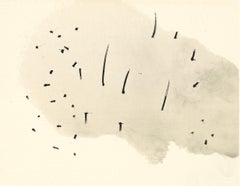
"Trace sur l eau" lithograph
Located in Henderson, NV
Medium: lithograph (after the watercolor). From the scarce "Trace sur l'eau" portfolio, beautifully printed in 1963 by the Maeght atelier on thin Marais onion skin paper in an editio...
Category

Abstract 1960s Prints and Multiples

Materials

Lithograph

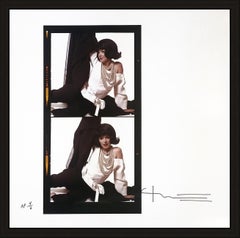
THE LAST SITTING: MARILYN MONROE IN JACKIE WIG
Located in Aventura, FL
C-print on paper. Hand signed and numbered by Bert Stern. Frame size approx 33 x 33 inches. AP edition of 6. Artwork is in excellent condition. Certificate of Authenticity include...
Category

Contemporary 1960s Prints and Multiples

Materials

C Print, Paper

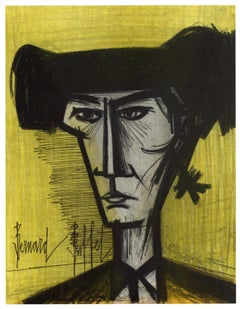
"Torero" original lithograph
Located in Henderson, NV
Medium: original lithograph. Printed in Paris in 1968 by the Mourlot Freres atelier. Size: 12 1/4 x 9 1/2 inches (310 x 240 mm). Signed in the plate, not by hand.
Category

1960s Prints and Multiples

Materials

Lithograph

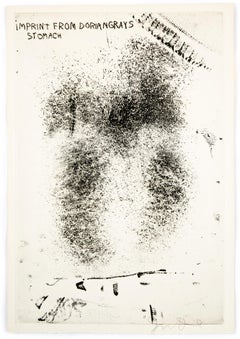
Jim Dine: Dorian Gray s Stomach from "The Picture of Dorian Gray" black etching
Located in New York, NY
This humorous black and white Jim Dine etching features what is ostensibly the imprint of an inked stomach. Around the print, black marks, scribbles, ...
Category

Pop Art 1960s Prints and Multiples

Materials

Etching

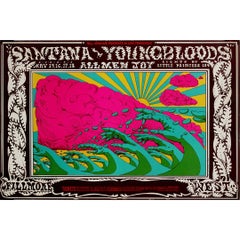
1969 psychedelic poster by Lee Conklin - Santana Youngbloods all men joy
Located in PARIS, FR
This vivid original 1969 concert poster was designed by Lee Conklin, one of the iconic artists of the psychedelic poster movement, for a legendary series of shows at the Fillmore West in San Francisco. Featuring Santana, The Youngbloods, and Allmen Joy, with light shows by Little Princess 109, the concerts ran May 15–18, 1969. Conklin’s surrealist vision explodes in a cascade of melting forms, vibrant color, and sun-drenched dreamscapes, encapsulating the acid rock aesthetic and the energy of the late-60s Bay Area music scene. His use of morphing hands and searing color waves evoke a hallucinatory trance that pairs perfectly with Santana’s Latin-infused psychedelia and The Youngbloods’ mellow groove. Commissioned by Bill Graham Presents, this is BG #124 in the Fillmore poster...
Category

1960s Prints and Multiples

Materials

Paper, Lithograph

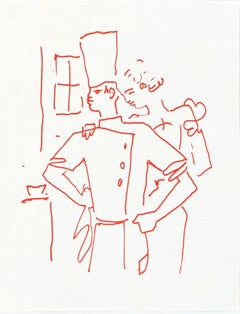
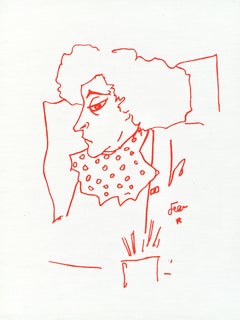
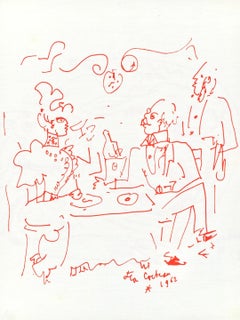
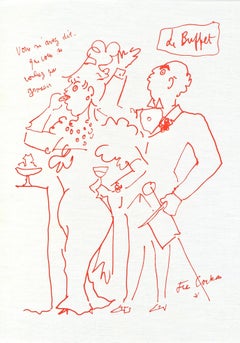
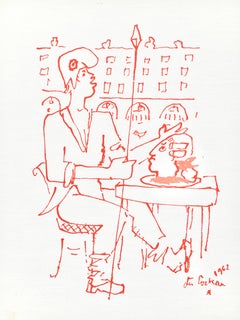
Jean Cocteau, Untitled, from Recipes for a Friend, 1964
Located in Southampton, NY
This exquisite lithograph by Jean Cocteau (1889–1963), titled Sans titre (Untitled), originates from the 1964 album Recettes pour un ami, illustrations de Jean Cocteau (Recipes for a...
Category

Modern 1960s Prints and Multiples

Materials

Lithograph

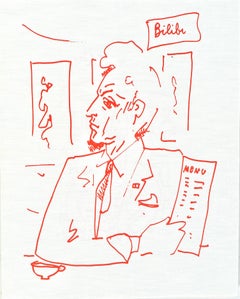
Jean Cocteau, Untitled, from Recipes for a Friend, 1964
Located in Southampton, NY
This exquisite lithograph by Jean Cocteau (1889–1963), titled Sans titre (Untitled), originates from the 1964 album Recettes pour un ami, illustrations de Jean Cocteau (Recipes for a...
Category

Modern 1960s Prints and Multiples

Materials

Lithograph

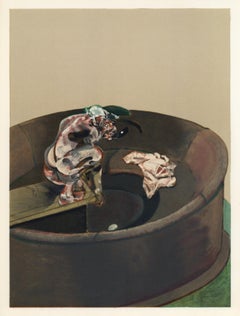
"George Dyer Squatting" lithograph
Located in Henderson, NV
Medium: lithograph (after the painting). Printed in 1966 for Derriere le Miroir (issue number 162) and published in Paris by Maeght. This lithograph was done after the Francis Bacon ...
Category

Surrealist 1960s Prints and Multiples

Materials

Lithograph

Lt. Ed. Artist Book: Business Cards (Signed by Ed Ruscha and Billy Al Bengston)
Located in New York, NY
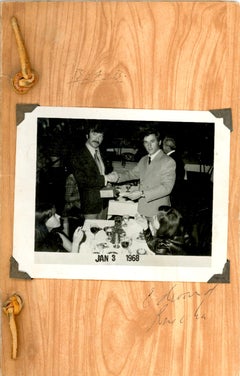
Ed Ruscha, Billy Al Bengston Business Cards (hand signed by Ed Ruscha and Billy Al Bengston), 1968 Mixed Media Artist's Book: Softback monograph with a latigo leather thong, silver g...
Category

Pop Art 1960s Prints and Multiples

Materials

Leather, Paper, Ink, Mixed Media, Lithograph, Offset, Silver Gelatin
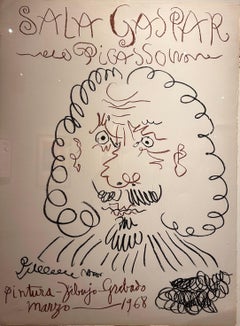
Sala Gaspar, Exhibition Poster
Located in Laguna Beach, CA
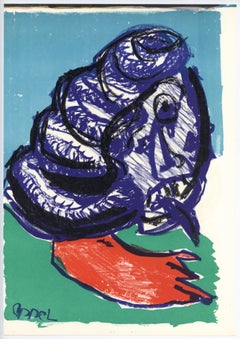
With a swirly goatee and whimsical line work, the figure in this vibrant color lithograph reflects Picasso’s child-like spirit and joyful composition. Created as an advertisement for...
Category

1960s Prints and Multiples

Materials

Lithograph

"Study for an engraving" pochoir
Located in Henderson, NV
Medium: pochoir (after the oil on paper). Issued in 1967 in an edition of 1200 for the rare exhibition catalogue "Oiseau solaire, oiseau lunaire, etincelles", published by the Pierre...
Category

Abstract 1960s Prints and Multiples

Materials

Lithograph, Stencil

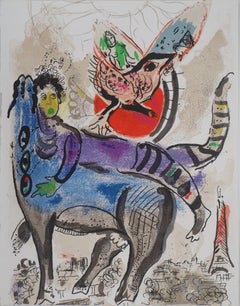
The Blue Cow - Original lithograph - Mourlot #488
Located in Paris, IDF
Marc CHAGALL The Blue Cow, 1967 Original lithograph (Mourlot workshop) Not signed On paper 31 x 24 cm (c. 12 x 10 in) REFERENCE : Catalog raisonne Mourlot #488 Edited by XX Siecle ...
Category

Surrealist 1960s Prints and Multiples

Materials

Lithograph

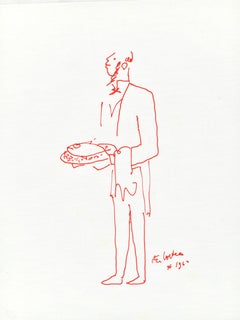
Jean Cocteau, Untitled, from Recipes for a Friend, 1964
Located in Southampton, NY
This exquisite lithograph by Jean Cocteau (1889–1963), titled Sans titre (Untitled), originates from the 1964 album Recettes pour un ami, illustrations de Jean Cocteau (Recipes for a...
Category

Modern 1960s Prints and Multiples

Materials

Lithograph

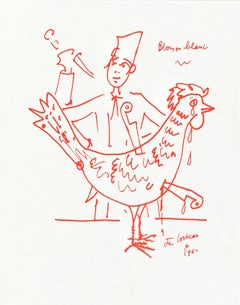
Jean Cocteau, Untitled, from Recipes for a Friend, 1964
Located in Southampton, NY
This exquisite lithograph by Jean Cocteau (1889–1963), titled Sans titre (Untitled), originates from the 1964 album Recettes pour un ami, illustrations de Jean Cocteau (Recipes for a...
Category

Modern 1960s Prints and Multiples

Materials

Lithograph

Jean Cocteau, Untitled, from Recipes for a Friend, 1964
Located in Southampton, NY
This exquisite lithograph by Jean Cocteau (1889–1963), titled Sans titre (Untitled), originates from the 1964 album Recettes pour un ami, illustrations de Jean Cocteau (Recipes for a...
Category

Modern 1960s Prints and Multiples

Materials

Lithograph

Jean Cocteau, Untitled, from Recipes for a Friend, 1964
Located in Southampton, NY
This exquisite lithograph by Jean Cocteau (1889–1963), titled Sans titre (Untitled), originates from the 1964 album Recettes pour un ami, illustrations de Jean Cocteau (Recipes for a...
Category

Modern 1960s Prints and Multiples

Materials

Lithograph

Jean Cocteau, Untitled, from Recipes for a Friend, 1964
Located in Southampton, NY
This exquisite lithograph by Jean Cocteau (1889–1963), titled Sans titre (Untitled), originates from the 1964 album Recettes pour un ami, illustrations de Jean Cocteau (Recipes for a...
Category

Modern 1960s Prints and Multiples

Materials

Lithograph

Jean Cocteau, Untitled, from Recipes for a Friend, 1964
Located in Southampton, NY
This exquisite lithograph by Jean Cocteau (1889–1963), titled Sans titre (Untitled), originates from the 1964 album Recettes pour un ami, illustrations de Jean Cocteau (Recipes for a...
Category

Modern 1960s Prints and Multiples

Materials

Lithograph

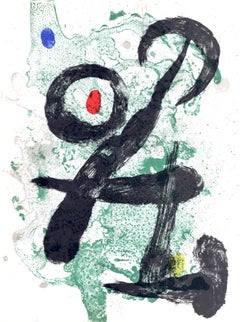
Joan Miro, The Woman and the Bird, from Derriere le miroir, 1963
Located in Southampton, NY
This exquisite lithograph by Joan Miro (1893–1983), titled La femme et l'oiseau (The Woman and the Bird), from the folio Derriere le miroir, No. 139–140, originates from the 1963 edi...
Category

Surrealist 1960s Prints and Multiples

Materials

Lithograph

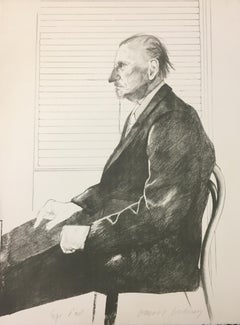
The Print Collector (Portrait of Felix Mann)- 1960s - David Hockney - Lithograph
Located in Roma, IT
The Print Collector (Portrait of Felix Mann) is an original lithograph realized by David Hockney in 1969. This beautiful artwork is from an edition of...
Category

Contemporary 1960s Prints and Multiples

Materials

Lithograph

original lithograph
Located in Henderson, NV
Medium: original lithograph. Printed on Arjomari paper in 1969 at the Mourlot Freres atelier and published by Editions Richelieu in a limited edition of 2400 for the L'Odyssee portfo...
Category

1960s Prints and Multiples

Materials

Lithograph

Torture - Lithograph by Giuseppe Mazzullo - 1969
Located in Roma, IT
Lithograph realized in 1969. Hand signed and numbered in pencil. Edition of 50. Printed by Alberto Caprini, Rome. Very good condition.
Category

Modern 1960s Prints and Multiples

Materials

Lithograph

1967 original poster hand signed by the artist Japan Air France Airline Tourism
Located in PARIS, FR
Georges Mathieu, French painter and designer, the master of Art Informel, a movement linked to post-war modern painting, produced a series of 16 posters for Air France in 1968. It pr...
Category

1960s Prints and Multiples

Materials

Paper, Lithograph

Still Thinking About These?

All Recently Viewed