1980s Prints and Multiples

to
1,481
1,749
1,001
2,948
1,617
807
Overall Width
to
Overall Height
to
2,053
1,180
1,051
879
353
207
154
125
84
47
23
20
12
183
103
87
81
76
4,817
10,538
58,083
24,422
721
985
2,307
2,324
2,452
5,031
7,797
13,648
8,122
4,378
3,983
4,727
2,974
376
2,685
1,458
1,115
938
813
763
450
431
425
362
341
338
255
253
236
214
211
193
181
174
3,323
1,827
1,229
1,154
1,116
1,028
3,693
5,516
2,401
Period: 1980s
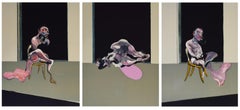
Triptych August 1972 - Irish Triptych
Located in London, GB
This complete set of three lithographs in colours, comprising the triptych, are each hand signed in pencil by the artist "Francis Bacon" at the lower right margins. Each sheet is als...
Category

1980s Prints and Multiples

Materials

Lithograph

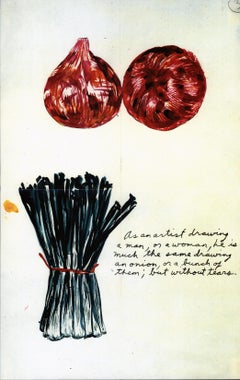
Raymond Pettibon Illustration Without Tears (vintage Raymond Pettibon poster)
Located in NEW YORK, NY
Vintage Raymond Pettibon exhibition poster: Raymond Pettibon 'Illustration Without Tears': Rare vintage Pettibon exhibit poster published by Regen Pr...
Category

Pop Art 1980s Prints and Multiples

Materials

Lithograph, Offset

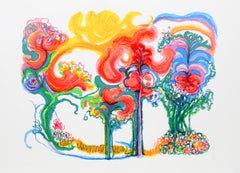
Fire Stars, Psychedelic Lithograph by Ronald Julius Christensen
Located in Long Island City, NY
Fire Stars Ronald Julius Christensen, American (1923–1999) Date: 1980 Lithograph, signed and numbered in pencil Edition of 295 Size: 27.25 x 38 in. (69.22 x 96.52 cm)
Category

American Impressionist 1980s Prints and Multiples

Materials

Lithograph

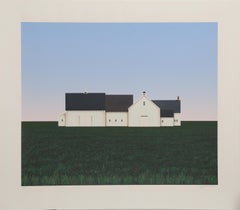
Barns, Folk Art Screenprint by Ted Jeremenko
Located in Long Island City, NY
Ted Jeremenko, Yugoslavian/American (1938 - ) - Barns. Year: circa 1985, Medium: Screenprint, signed and numbered in pencil, Edition: 175, Size: 27 x 30.5 in. (68.58 x 77.47 cm), Des...
Category

Folk Art 1980s Prints and Multiples

Materials

Screen

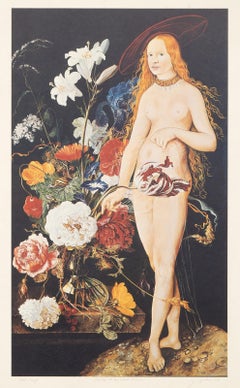
Still Life with Cranach and De Heem, Pop Art Screenprint by Josef Levi
Located in Long Island City, NY
Josef Levi, American (1938 - ) - Still Life with Cranach and De Heem, Year: 1980, Medium: Screenprint on Arches, signed, titled, numbered and dated in pencil, Edition: Trial Proof,...
Category

Pop Art 1980s Prints and Multiples

Materials

Screen

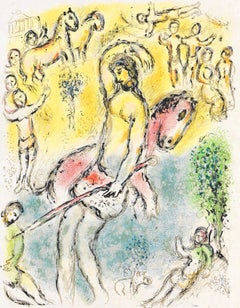
Marc Chagall, ...I Am Odysseus, from Homer, The Odyssey, 1989 (after)
Located in Southampton, NY
This exquisite lithograph after Marc Chagall (1887–1985), titled ...Ich bin Odysseus (...I Am Odysseus), from Homer, Die Odyssee (The Odyssey), originates from the 1989 German-language folio published by Daco-Verlag Gunter Blase, Stuttgart, and printed by Lichtdruck AG, Zurich, Dielsdorf, September 1989. This authorized edition, issued under the direction of Vava Chagall, captures the defining moment of revelation when Odysseus declares his identity. In ...Ich bin Odysseus, Chagall fuses mythic grandeur with human emotion, portraying the hero’s return to self and destiny in a luminous interplay of color and movement that reflects the artist’s timeless vision of triumph, recognition, and truth. Executed on 250 g/m² Butten Papierwerke Miliani AG, Fabriano paper, this lithograph measures 14.88 x 11.69 inches. Unsigned and unnumbered, as issued. The edition exemplifies the exceptional quality and precision of Lichtdruck AG’s craftsmanship, reproducing the depth and richness of Chagall’s original lithographs with remarkable fidelity. Artwork Details: Artist: After Marc Chagall (1887–1985) Title: ...Ich bin Odysseus (...I Am Odysseus), from Homer, Die Odyssee (The Odyssey), 1989 Medium: Lithograph on 250 g/m² Butten Papierwerke Miliani AG, Fabriano paper Dimensions: 14.88 x 11.69 inches Inscription: Unsigned and unnumbered, as issued Date: 1989 Publisher: Daco-Verlag Gunter Blase, Stuttgart Printer: Lichtdruck AG, Zurich, Dielsdorf Condition: Well preserved, consistent with age and medium Provenance: From the folio Homer, Die Odyssee (The Odyssey), Daco-Verlag Gunter Blase, Stuttgart, 1989 Notes: Excerpted from the folio (translated from German), Imprint—The French edition, L'Odyssée, with the original lithographs by Marc Chagall was published in 1974/75 in a CCL-example edition by Fernand Mourlot, Paris. In 1989, with the authorization of Mrs. Vava Chagall, the German-language edition of the Odyssey in two volumes was published by Daco-Verlag Gunter Blase, Stuttgart. Volume I contains the songs I - XII with XX color plates, including IV on double pages and XIX gray printed reproductions in the text. Volume II contains the songs XIII - XXIV with XXIII color plates, including II on double pages and XX gray printed reproductions in the text. For the German text, the prose translation by Wolfgang Schadewaldt was chosen with the permission of Rowohlt Taschenbuch Verlag, Reinbek near Hamburg. Set design in the Berthold Garamond Antiqua by F+M Bauer...
Category

Expressionist 1980s Prints and Multiples

Materials

Lithograph

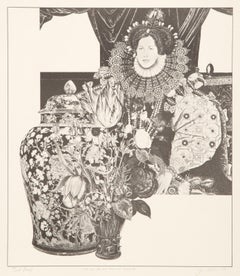
Still Life with Gail, Gower, and Bosschaert, Pop Art Screenprint by Josef Levi
Located in Long Island City, NY
Josef Levi, American (1938 - ) - Still Life with Gail, Gower, and Bosschaert, Year: 1980, Medium: Screenprint on Arches, signed, titiled, numbered and dated in pencil, Edition: Tri...
Category

Pop Art 1980s Prints and Multiples

Materials

Screen

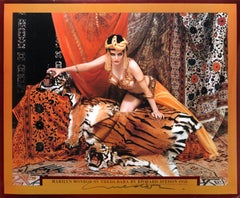
Marilyn Monroe as Theda Bara, Poster signed by Richard Avedon
Located in Long Island City, NY
Richard Avedon was an American fashion and portrait photographer who's work often showed the vulnerability and humanity in celebrities. This poster is signed in marker. Published by ...
Category

Post-Modern 1980s Prints and Multiples

Materials

Offset

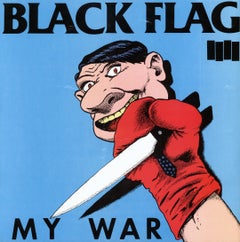
Raymond Pettibon Black Flag 1984 (Raymond Pettibon punk)
Located in NEW YORK, NY
Raymond Pettibon Black Flag 1984: Rare early 1980's Black Flag promotional poster illustrated by Raymond Pettibon for the seminal Black Flag record: My War. A striking, historic 1980s Raymond Pettibon Black Flag poster sure to standout in any setting. Offset printed punk poster...
Category

Pop Art 1980s Prints and Multiples

Materials

Lithograph, Offset

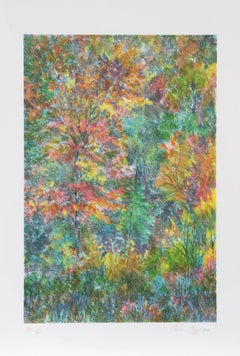
Carpenter Woods, Abstract Screenprint by Thelma Appel
Located in Long Island City, NY
Artist: Thelma Appel, American (1940 - ) Title: Carpenter Woods Year: 1982 Medium: Serigraph, signed and numbered in pencil Edition: 250, AP 25 Image Size: 22 x 15 inches Size: 29 in...
Category

Contemporary 1980s Prints and Multiples

Materials

Screen

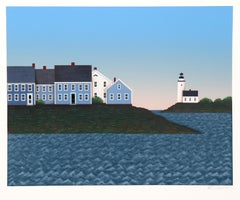
Town and Lighthouse, Folk Art Screenprint by Ted Jeremenko
Located in Long Island City, NY
Ted Jeremenko, Yugoslavian/American (1938 - ) - Town and Lighthouse. Year: circa 1989, Medium: Screenprint on Arches, signed and numbered in pencil, Edition: C ( 100 ), Image Size: 2...
Category

Folk Art 1980s Prints and Multiples

Materials

Screen

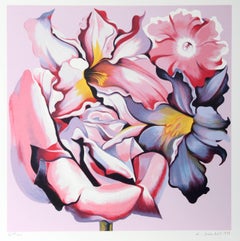
Rose Monochrome, Photorealist Screenprint by Lowell Nesbitt
Located in Long Island City, NY
Artist: Lowell Blair Nesbitt, American (1933 - 1993) Title: Rose Monochrome Year: circa 1980 Medium: Screenprint, signed and numbered in pencil Edition: 200 Image Size: 27 x 27 inche...
Category

Photorealist 1980s Prints and Multiples

Materials

Screen

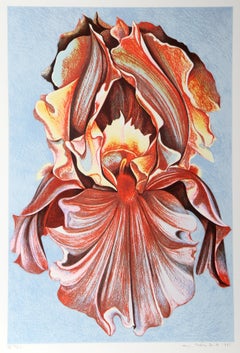
Pink Iris, Photorealist Flower Print by Lowell Nesbitt
Located in Long Island City, NY
Date: 1981 Screenprint, signed and numbered in pencil Edition of 200, AP 40 Image Size: 34.5 x 23 inches Size: 38 x 26 in. (96.52 x 66.04 cm)
Category

Photorealist 1980s Prints and Multiples

Materials

Screen

1981 American Post Minimalist Abstract Art Lithograph Neon Series Keith Sonnier
Located in Surfside, FL
Keith Sonnier, American (1941-2020) lithograph From Neon series circa 1980-1981 Bears the Waterstreet Press watermarks and Arches paper blind stamp to lower right corner. Pub. Edizioni Lucio Amelio Hand signed with initials in pencil Dimensions: 30 x 21 3/4 inches Post minimalist Abstract by Keith Sonnier Keith Sonnier (1941 – 2020) was a post minimalist sculptor, performance artist, video and light artist. Sonnier was one of the first artists to use light in sculpture in the 1960s. With his use of neon in combination with ephemeral materials he achieved international recognition. Sonnier was part of the Process Art movement. James Keith Sonnier was born July 31, 1941, in Mamou, Louisiana. His family was Cajun and Roman Catholic. His father was a hardware store owner, Joseph Sonnier, and his mother was a florist and singer, Mae Ledoux. He graduated in 1963 from Southwestern Louisiana Institute (now known as the University of Louisiana at Lafayette). In 1966, he graduated with his MFA degree from Rutgers University, where he studied under Allan Kaprow, Robert Watts, and Robert Morris. After graduation from Rutgers, he moved to New York City with Jackie Winsor and some of his former classmates. Sonnier died in Southampton, NY on July 18, 2020. Sonnier began experimenting with neon in 1968. Neon lights became a signature material used in his sculptural works. The common materials Sonnier employed included neon and fluorescent lights; reflective materials; aluminum and copper; and glass and wires. Of the generation of James Turrell and Dan Flavin, He was also associated with the Light and Space movement, a loosely affiliated art movement related to op art, minimalism and geometric abstraction originating in Southern California in the 1960s and influenced by John McLaughlin. It is characterized by a focus on perceptual phenomena, such as light, volume and scale, and the use of materials such as glass, neon, fluorescent lights, resin and cast acrylic, often forming installations conditioned by the work's surroundings. Artists included Ron Cooper...
Category

Post-Minimalist 1980s Prints and Multiples

Materials

Paper, Lithograph

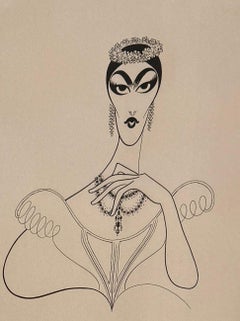
Maria Callas Opera Diva Icon Superstar Greek-American Classical Music
Located in New York, NY
Maria Callas Opera Diva Icon Superstar Greek-American Classical Music Al Hirschfeld (1903-2003) "Maria Callas" Sight: 14 1/4 x 10 1/2 inches Lithograph on heavy paper Signed lower ...
Category

Performance 1980s Prints and Multiples

Materials

Paper, Lithograph

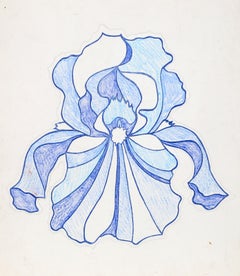
Blue Iris, Photorealist Etching on Paper by Lowell Nesbitt
Located in Long Island City, NY
Lowell Blair Nesbitt was an American painter and printmaker who’s work consists of unique and vivid depictions of flowers. Blue Iris Lowell Blair Nesbitt, American (1933–1993) Date:...
Category

Photorealist 1980s Prints and Multiples

Materials

Etching

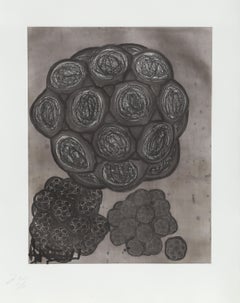
Abstract Etching from Album, Etching by Terry Winters
Located in Long Island City, NY
Artist: Terry Winters, American (1949 - ) Title: untitled 6 from Album Year: 1988 Medium: Etching with Aquatint, signed and numbered in pencil Edition: HC 2/2 Image: 20 x 16 inches S...
Category

Contemporary 1980s Prints and Multiples

Materials

Etching, Aquatint

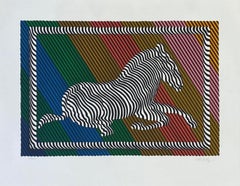
Zebra 3
Located in Paris, FR
Lithograph, 1984 Handsigned by the artist in pencil and numbered 108/125 Publisher : Graphos Verlag A.G. Printer : Silium (Paris) Catalog : Benavides 986 61.00 cm. x 78.00 cm. 24.02...
Category

Abstract 1980s Prints and Multiples

Materials

Lithograph

Folkokta
Located in Paris, FR
Silksreen, 1989 Handsigned by the artist in pencil and numbered 17/100 Publisher : AZG Austria Zeichen Catalog : Benavides 474 49.00 cm. x 48.00 cm. 19.29 in. x 18.9 in. (paper) 37....
Category

Abstract 1980s Prints and Multiples

Materials

Silk

Sheep 5, Conceptual Pop Art Screenprint by Menashe Kadishman
Located in Long Island City, NY
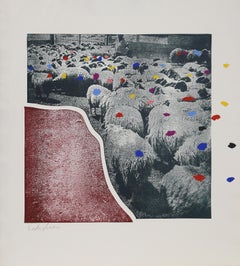
Artist: Menashe Kadishman, Israeli (1932 - 2015) Title: Sheep Portfolio 4 Year: 1981 Medium: Screenprint and Etching, signed in pencil Edition: 65, AP 5 Size: 33.5 x 31 in. (85.09 x...
Category

Conceptual 1980s Prints and Multiples

Materials

Screen

Jennifer and Eric
Located in Toronto, Ontario
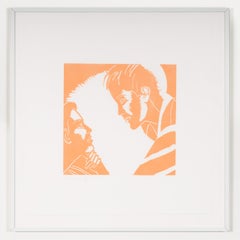
Adored by collectors and art lovers the world over, Alex Katz is renowned for his elegant and distinctive version of figuration. Born in 1927, Katz has been dedicated to art-making s...
Category

Pop Art 1980s Prints and Multiples

Materials

Woodcut

Jennifer and Eric
Jennifer and Eric
$6,000 Sale Price
20% Off
I Dreamed by Rene Ricard: abstract yellow and black brushwork with poetry
Located in New York, NY
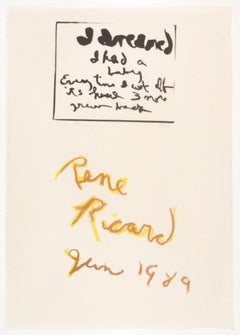
Abstract yellow and black Rene Ricard print with hand painted poetry on handmade paper. Printed in black ink at the top of the sheet and framed with a thin line, the artist's loose h...
Category

Contemporary 1980s Prints and Multiples

Materials

Lithograph

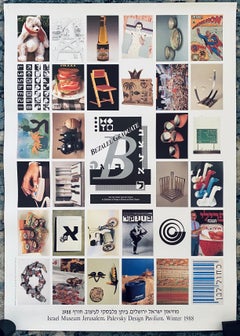
Bezalel School Jerusalem Israeli Exhibition Contemporary Offset Lithograph
Located in Surfside, FL
Bezalel Academy of Arts and Design (Hebrew: בצלאל, אקדמיה לאמנות ועיצוב) is an academic college of design and art located in Jerusalem, Israel. Established in 1906 by Jewish painter ...
Category

Contemporary 1980s Prints and Multiples

Materials

Lithograph

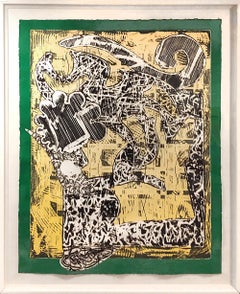
"Green Journal" 76x62x3 Framed etching, screenprint, Relief Edition of only 25
Located in Southampton, NY
The work of Blue Chip artist Frank Stella is in the collection of every Major Museum Worldwide. In 2019 a work of his sold at Christies for over 28 Million Dollars. This etching, screenprint, and relief on white TGL handmade paper by Frank Stella is from a very limited edition of only 25 works, there were also eight artists proofs. Titled, "Green Journal", Created in 1985, it is hand signed, dated, and numbered in pencil 13/25 F. Stella 85 in the lower right. The TGL Blind Stamp is located on the lower right from the publisher Tyler Graphics Ltd. Paper size is a large 66x51" and the framed size 76x62". Catalog Raisonne reference is Axsom 163. "Green Journal" is a first for Frank Stella, in that it is the first time a printed word occurs in a Stella print...
Category

Abstract 1980s Prints and Multiples

Materials

Etching, Screen

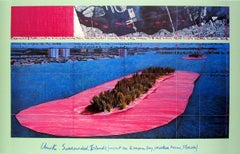
Surrounded Islands 1982 , Key Biscayne, Miami, Florida
Located in Brooklyn, NY
Surrounded Islands, Biscayne Bay, Greater Miami, Florida, 1980-83 Using 6.5 million square feet of floating pink fabric, Christo and Jeanne-Claude encircled eleven islands in Miami...
Category

Contemporary 1980s Prints and Multiples

Materials

Offset

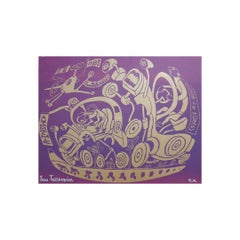
1983 Original serigraphy realized by Yvon Taillandier - Automachie
Located in PARIS, FR
Beautiful serigraphy realized in 1983 by Yvon Taillandier. Yvon Taillandier's work is related to free figuration, mixing image and language. His painting has an aesthetic closeness to the Art brut. Automotive - Art Brut - Figuration Libre...
Category

1980s Prints and Multiples

Materials

Paper

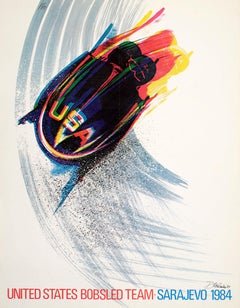
Original 1984 Winter Olympics Bobsled Poster for the United States Team
Located in Boca Raton, FL
Dennis Wheeler (b1935 - ) is an American artist who enjoyed a successful career doing commercial artwork. His notable projects included creating the covers of Time, Fortune, and Life...
Category

1980s Prints and Multiples

Materials

Lithograph

Keith Haring Untitled (1987) 1989- Pop Art Vintage
Located in Brooklyn, NY
Keith Haring's art vibrantly portrays themes of love, unity, and movement. This reproduction features three iconic images that encapsulate these themes: Two Men in Love: Depicts two...
Category

Pop Art 1980s Prints and Multiples

Materials

Offset

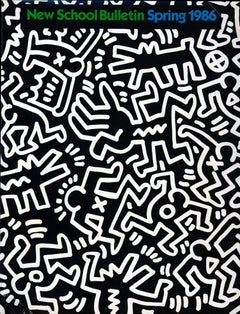
Keith Haring 1986 cover art (Keith Haring new school)
Located in NEW YORK, NY
Keith Haring Illustration art 1986: Rare seldom available 1980s Keith Haring illustrated New School university catalog featuring Haring double-sided cover art and a printed signature. Quite scarce, especially in good condition as presented here. Offset printed university catalog; Soft cover; 292 pages. 8.5 x 11 inches. Very good overall vintage condition with the exception of surface creasing in a couple of areas; well-preserved with crisp colors. Printed signature on lower left ("1985 Haring"); from an edition of unknown; published 1985/1986 by the New School (New York, NY). Haring credit further appears on the lower left interior of 1st pg: 'Cover art for New School by Keith Haring.' (See the 2nd to last image in listing). Keith Haring rose to prominence in 1980s New York within the East Village art scene alongside Jean-Michel Basquiat, Kenny Scharf, and Jenny Holzer. He bridged the gap between the art world and the street, graffiting city subways and sidewalks before committing to a studio practice. Haring united the appeal of cartoons with the raw energy of Art Brut artists such as Jean DuBuffet as he developed a distinct pop-graffiti aesthetic that comprised energetic, boldly outlined figures against solid or patterned backdrops. His major themes included exploitation, subjugation, drug abuse, and the threat of nuclear holocaust; Haring boldly engaged with social issues, especially after receiving an AIDS diagnosis in 1987. Today, his work sells for seven figures at auction and has been the subject of solo shows at the Brooklyn Museum, the San Francisco Museum of Modern Art, and the Albertina Museum in Vienna, among other institutions. Related Categories: Keith Haring 1986. Keith Haring prints. Keith Haring cover art. Keith Haring catalog...
Category

Pop Art 1980s Prints and Multiples

Materials

Paper

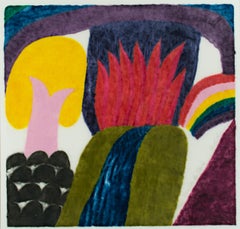
"Pura Vida" original color woodcut print signed by Carol Summers
Located in Milwaukee, WI
"Pura Vida" is an original color woodcut signed by Carol Summers. A multi-colored piece shows a waterfall with red flames behind it in the middle of the piece. On the left stands a tree with yellow leaves on a hill. To the right is a rainbow. This is an excellent example of Summer's printmaking, not just because of the technique and imagery, but because it numbered 1 of the edition of 125. In addition, it contains a personal inscription to the Milwaukee gallerist David Barnett, who has championed the work of Summers and produced catalogs of his work. Indeed, this print appears as no. 189 in the David Barnett Gallery's 1988 catalogue raisonné of Summer's woodcuts. Feel free to inquire if you would like to purchase a copy of the catalogue raisonné along with your Carol Summers print. Art: 24.25 x 24.75 in Frame: 36 x 35 in signed lower right titled and inscribed to David [Barnett] lower right edition (1/125) lower right Carol Summers (1925-2016) has worked as an artist throughout the second half of the 20th century and into the first years of the next, outliving most of his mid-century modernist peers. Initially trained as a painter, Summers was drawn to color woodcuts around 1950 and it became his specialty thereafter. Over the years he has developed a process and style that is both innovative and readily recognizable. His art is known for it’s large scale, saturated fields of bold color, semi-abstract treatment of landscapes from around the world and a luminescent quality achieved through a printmaking process he invented. In a career that has extended over half a century, Summers has hand-pulled approximately 245 woodcuts in editions that have typically run from 25 to 100 in number. His talent was both inherited and learned. Born in 1925 in Kingston, a small town in upstate New York, Summers was raised in nearby Woodstock with his older sister, Mary. His parents were both artists who had met in art school in St. Louis. During the Great Depression, when Carol was growing up, his father supported the family as a medical illustrator until he could return to painting. His mother was a watercolorist and also quite knowledgeable about the different kinds of papers used for various kinds of painting. Many years later, Summers would paint or print on thinly textured paper originally collected by his mother. From 1948 to 1951, Carol Summers trained in the classical fine and studio arts at Bard College and at the Art Students League of New York. He studied painting with Steven Hirsh and printmaking with Louis Schanker. He admired the shapes and colors favored by early modernists Paul Klee (Sw: 1879-1940) and Matt Phillips (Am: b.1927- ). After graduating, Summers quit working as a part-time carpenter and cabinetmaker (which had supported his schooling and living expenses) to focus fulltime on art. That same year, an early abstract, Bridge No. 1 was selected for a Purchase Prize in a competition sponsored by the Brooklyn Museum. In 1952, his work (Cathedral, Construction and Icarus) was shown the first time at the Museum of Modern Art in New York City in an exhibition of American woodcuts. In 1954, Summers received a grant from the Italian government to study for a year in Italy. Woodcuts completed soon after his arrival there were almost all editions of only 8 to 25 prints, small in size, architectural in content and black and white in color. The most well-known are Siennese Landscape and Little Landscape, which depicted the area near where he resided. Summers extended this trip three more years, a decision which would have significant impact on choices of subject matter and color in the coming decade. After returning from Europe, Summers’ images continued to feature historical landmarks and events from Italy as well as from France, Spain and Greece. However, as evidenced in Aetna’s Dream, Worldwind and Arch of Triumph, a new look prevailed. These woodcuts were larger in size and in color. Some incorporated metal leaf in the creation of a collage and Summers even experimented with silkscreening. Editions were now between 20 and 50 prints in number. Most importantly, Summers employed his rubbing technique for the first time in the creation of Fantastic Garden in late 1957. Dark Vision of Xerxes, a benchmark for Summers, was the first woodcut where Summers experimented using mineral spirits as part of his printmaking process. A Fulbright Grant as well as Fellowships from the Louis Comfort Tiffany Foundation and the Guggenheim Foundation followed soon thereafter, as did faculty positions at colleges and universities primarily in New York and Pennsylvania. During this period he married a dancer named Elaine Smithers with whom he had one son, Kyle. Around this same time, along with fellow artist Leonard Baskin, Summers pioneered what is now referred to as the “monumental” woodcut. This term was coined in the early 1960s to denote woodcuts that were dramatically bigger than those previously created in earlier years, ones that were limited in size mostly by the size of small hand-presses. While Baskin chose figurative subject matter, serious in nature and rendered with thick, striated lines, Summers rendered much less somber images preferring to emphasize shape and color; his subject matter approached abstraction but was always firmly rooted in the landscape. In addition to working in this new, larger scale, Summers simultaneously refined a printmaking process which would eventually be called the “Carol Summers Method” or the “ Carol Summers Technique”. Summers produces his woodcuts by hand, usually from one or more blocks of quarter-inch pine, using oil-based printing inks and porous mulberry papers. His woodcuts reveal a sensitivity to wood especially its absorptive qualities and the subtleties of the grain. In several of his woodcuts throughout his career he has used the undulating, grainy patterns of a large wood plank to portray a flowing river or tumbling waterfall. The best examples of this are Dream, done in 1965 and the later Flash Flood Escalante, in 2003. In the majority of his woodcuts, Summers makes the blocks slightly larger than the paper so the image and color will bleed off the edge. Before printing, he centers a dry sheet of paper over the top of the cut wood block or blocks, securing it with giant clips. Then he rolls the ink directly on the front of the sheet of paper and pressing down onto the dry wood block or reassembled group of blocks. Summers is technically very proficient; the inks are thoroughly saturated onto the surface of the paper but they do not run into each other. The precision of the color inking in Constantine’s Dream in 1969 and Rainbow Glacier in 1970 has been referred to in various studio handbooks. Summers refers to his own printing technique as “rubbing”. In traditional woodcut printing, including the Japanese method, the ink is applied directly onto the block. However, by following his own method, Summers has avoided the mirror-reversed image of a conventional print and it has given him the control over the precise amount of ink that he wants on the paper. After the ink is applied to the front of the paper, Summers sprays it with mineral spirits, which act as a thinning agent. The absorptive fibers of the paper draw the thinned ink away from the surface softening the shapes and diffusing and muting the colors. This produces a unique glow that is a hallmark of the Summers printmaking technique. Unlike the works of other color field artists or modernists of the time, this new technique made Summers’ extreme simplification and flat color areas anything but hard-edged or coldly impersonal. By the 1960s, Summers had developed a personal way of coloring and printing and was not afraid of hard work, doing the cutting, inking and pulling himself. In 1964, at the age of 38, Summers’ work was exhibited for a second time at the Museum of Modern Art. This time his work was featured in a one-man show and then as one of MOMA’s two-year traveling exhibitions which toured throughout the United States. In subsequent years, Summers’ works would be exhibited and acquired for the permanent collections of multiple museums throughout the United States, Europe and Asia. Summers’ familiarity with landscapes throughout the world is firsthand. As a navigator-bombardier in the Marines in World War II, he toured the South Pacific and Asia. Following college, travel in Europe and subsequent teaching positions, in 1972, after 47 years on the East Coast, Carol Summers moved permanently to Bonny Doon in the Santa Cruz Mountains in Northern California. There met his second wife, Joan Ward Toth, a textile artist who died in 1998; and it was here his second son, Ethan was born. During the years that followed this relocation, Summers’ choice of subject matter became more diverse although it retained the positive, mostly life-affirming quality that had existed from the beginning. Images now included moons, comets, both sunny and starry skies, hearts and flowers, all of which, in one way or another, remained tied to the landscape. In the 1980s, from his home and studio in the Santa Cruz mountains, Summers continued to work as an artist supplementing his income by conducting classes and workshops at universities in California and Oregon as well as throughout the Mid and Southwest. He also traveled extensively during this period hiking and camping, often for weeks at a time, throughout the western United States and Canada. Throughout the decade it was not unusual for Summers to backpack alone or with a fellow artist into mountains or back country for six weeks or more at a time. Not surprisingly, the artwork created during this period rarely departed from images of the land, sea and sky. Summers rendered these landscapes in a more representational style than before, however he always kept them somewhat abstract by mixing geometric shapes with organic shapes, irregular in outline. Some of his most critically acknowledged work was created during this period including First Rain, 1985 and The Rolling Sea, 1989. Summers received an honorary doctorate from his alma mater, Bard College in 1979 and was selected by the United States Information Agency to spend a year conducting painting and printmaking workshops at universities throughout India. Since that original sabbatical, he has returned every year, spending four to eight weeks traveling throughout that country. In the 1990s, interspersed with these journeys to India have been additional treks to the back roads and high country areas of Mexico, Central America, Nepal, China and Japan. Travel to these exotic and faraway places had a profound influence on Summers’ art. Subject matter became more worldly and nonwestern as with From Humla to Dolpo, 1991 or A Former Life of Budha, 1996, for example. Architectural images, such as The Pillars of Hercules, 1990 or The Raja’s Aviary, 1992 became more common. Still life images made a reappearance with Jungle Bouquet in 1997. This was also a period when Summers began using odd-sized paper to further the impact of an image. The 1996 Night, a view of the earth and horizon as it might be seen by an astronaut, is over six feet long and only slightly more than a foot-and-a-half high. From 1999, Revuelta A Vida (Spanish for “Return to Life”) is pie-shaped and covers nearly 18 cubic feet. It was also at this juncture that Summers began to experiment with a somewhat different palette although he retained his love of saturated colors. The 2003 Far Side of Time is a superb example of the new direction taken by this colorist. At the turn of the millennium in 1999, “Carol Summers Woodcuts...
Category

Contemporary 1980s Prints and Multiples

Materials

Woodcut

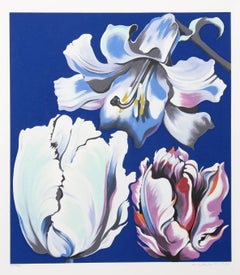
Flowers on Blue, Photorealist Screenprint by Lowell Nesbitt
Located in Long Island City, NY
Artist: Lowell Blair Nesbitt, American (1933 - 1993) Title: Flowers on Blue Year: 1980 Medium: Screenprint, signed and numbered in pencil Edition: 200, AP 40 Image Size: 30 x 26.25 i...
Category

American Realist 1980s Prints and Multiples

Materials

Screen

Moonlight
Located in London, GB
Lithograph from four aluminium plates using tusche and washes, printed in transparent red, orange and a red to orange blend, with hand colouring in ivory black watercolour and blue and green gouache. On two sheets of buff BFK Rives mould-made paper (300 gsm) Hand-signed by artist, Signed with initials and dated 1980 in pencil, in the lower left on the left-hand sheet. Numbered in pencil in the lower right, verso Published by Bernard Jacobson Ltd. Exhibition History: 'Howard Hodgkin: Views. An Exhibition of Early Prints', Bernard Jacobson Gallery, London, 02 March - 02 April 2013; 'Howard Hodgkin Recollections’, Bernard Jacobson Gallery, London, 21 April - 14 May 2022 Literature: Pat Gilmour, 'Howard Hodgkin', The Print Collector's Newsletter, vol. 12, no. 1, March-April 1981, p. 5 (ill. front cover); Deborah Phillips, 'New Editions: Howard Hodgkin', ARTnews, vol. 80, no. 7, September 1981, p. 161; 'Prints by Six British Painters: Stephen Buckley...
Category

Abstract 1980s Prints and Multiples

Materials

Lithograph

Seasons 1981 Photo Color Copier Print Photograph Museum Collected Art Xerography
Located in Surfside, FL
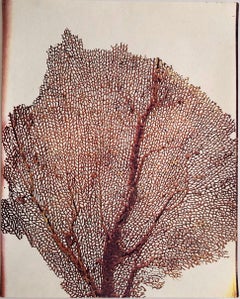
SEASONS (1981) This is for the single print listed here. (not the outside folder or title sheet) Title: Sea Fan. This one is hand signed and dated verso. Seasons explores the seasons of Man, Woman, Child, Civilization, Nature and Technology. First digital artwork purchased by the Metropolitan Museum. Date: 1980-1981 Medium: vintage color photocopy print. “I worked at The Metropolitan Museum in 1981, when they acquired [Lesley’s] SEASONS portfolio. We knew we wanted it, even though we didn’t have a category for it.” David Kiehl, Curator of Prints and Special Collections The Whitney Museum of American Art, New York City. Lesley Schiff (born 1951) is an American fine artist. Schiff studied painting at the Art Institute Chicago before developing her signature practice using color laser printers to create images. Her work is included in the collections of the Whitney Museum of American Art, the Mead Art Museum and the Metropolitan Museum of Art and other major museums, corporate and private collections globally. Lesley Schiff revolutionized the photocopier from being an office tool to just another instrument in the artist's arsenal. Rather than addressing the tool in her work, Schiff instead uses the photocopier like a paintbrush to realize her vision. Once a painter, Schiff says: “I never intended to stop painting. I just decided to start painting with a modern tool. Working with the color laser printer keeps you in your culture. It's like America. Plugged in. Electronic. Direct." Painting with light, Schiff's body of work outlines a cycle of life: man, woman, child, civilization, nature, technology. More recent works challenge the viewer to understand the concept of eye-levels and perspectives, reinventing the way we see. Schiff's work was the Metropolitan Museum of Art's first digital acquisition, and most recently, was featured at the Whitney Museum of American Art in "Experiments in Electrostatics". She uses a color laser printer “like a paintbrush” to create her art. She has said about her work and her tool: “I never intended to stop painting. I just decided to start painting with a modern tool. Working with the color laser printer keeps you in your culture. It's like America. Plugged in. Electronic. Direct—but no matter how hi-tech my tools become, I’m a painter, but instead of painting with oils, I paint with light. The Whitney Museum will show Lesley Schiff's pioneering SEASONS portfolio in its entirety. Many prominent collections acquired SEASONS as their first digital artwork. She participated in the Punk Art show in the 1970's. Her work kind of relates to Fluxus and Dada. Leslie Schiff moved from Chicago to New York in the early 1970s. Much of her art involves collage and the Xerox photocopy machine. Her images are rooted in her personal psyche and have an intuitive meaning that is not always easily understood. In exhibitions, Xerox sheets are combined and displayed decoratively on the wall. Schiff has also created books; and made video and sound tapes. She was included in the seminal New York/New Wave 1981 exhibition show at MoMA PS1 along with Jean-Michel Basquiat, William S.Burroughs, David Byrne, Larry Clark, Crash (John Matos), Ronnie Cutrone, Brian Eno, Nan Goldin, Keith Haring, Ray Johnson, Joseph Kosuth, Robert Mapplethorpe, Kenny Scharf, Steven Sprouse, Andy Warhol and Lawrence Weiner. She did a “visual biography,” comprised of portraits of Bob Dylan—depicted at different ages, from his 20s to his 60s—illustrations of his lyrics, and images of iconic objects like his sunglasses and harmonica. Schiff collaborated with Matthew Carter...
Category

Contemporary 1980s Prints and Multiples

Materials

Color

Modernist Silkscreen Screenprint El Station, Interior NYC Subway, WPA Artist
Located in Surfside, FL
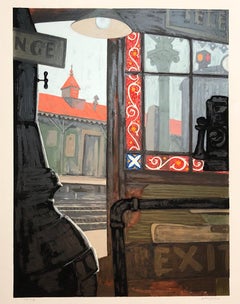
screenprint printed in color ink on wove paper. New York City subway station interior. Anthony Velonis (1911 – 1997) was an American painter and designer born in New York City who helped introduce the public to silkscreen printing in the early 20th century. While employed under the federal Works Progress Administration, WPA during the Great Depression, Velonis brought the use of silkscreen printing as a fine art form, referred to as the "serigraph," into the mainstream. By his own request, he was not publicly credited for coining the term. He experimented and mastered techniques to print on a wide variety of materials, such as glass, plastics, and metal, thereby expanding the field. In the mid to late 20th century, the silkscreen technique became popular among other artists such as Robert Rauschenberg and Andy Warhol. Velonis was born into a relatively poor background of a Greek immigrant family and grew up in the tenements of New York City. Early on, he took creative inspiration from figures in his life such as his grandfather, an immigrant from the mountains in Greece, who was "an ecclesiastical painter, on Byzantine style." Velonis attended James Monroe High School in The Bronx, where he took on minor artistic roles such as the illustration of his high school yearbook. He eventually received a scholarship to the NYU College of Fine Arts, into which he was both surprised and ecstatic to have been admitted. Around this time he took to painting, watercolor, and sculpture, as well as various other art forms, hoping to find a niche that fit. He attended NYU until 1929, when the Great Depression started in the United States after the stock market crash. Around the year 1932, Velonis became interested in silk screen, together with fellow artist Fritz Brosius, and decided to investigate the practice. Working in his brother's sign shop, Velonis was able to master the silkscreen process. He reminisced in an interview three decades later that doing so was "plenty of fun," and that a lot of technology can be discovered through hard work, more so if it is worked on "little by little." Velonis was hired by Mayor LaGuardia in 1934 to promote the work of New York's city government via posters publicizing city projects. One such project required him to go on a commercial fishing trip to locations including New Bedford and Nantucket for a fortnight, where he primarily took photographs and notes, and made sketches. Afterward, for a period of roughly six months, he was occupied with creating paintings from these records. During this trip, Velonis developed true respect and affinity for the fishermen with whom he traveled, "the relatively uneducated person," in his words. Following this, Velonis began work with the Public Works of Art Project (PWAP), an offshoot of the Civil Works Administration (CWA), where he was assigned to serve the different city departments of New York. After the formation of the federal Works Progress Administration, which hired artists and sponsored projects in the arts, he also worked in theater. Velonis began working for the federal WPA in 1935. He kept this position until 1936 or 1938, at which point he began working in the graphic art division of the Federal Art Project, which he ultimately led. Under various elements of the WPA program, many young artists, writers and actors gained employment that helped them survive during the Depression, as well as contributing works that created an artistic legacy for the country. When interviewed in December 1994 by the Library of Congress about his time in the WPA, Velonis reflected that he had greatly enjoyed that period, saying that he liked the "excitement" and "meeting all the other artists with different points of view." He also said in a later interview that "the contact and the dialogue with all those artists and the work that took place was just invaluable." Among the young artists he hired was Edmond Casarella, who later developed an innovative technique using layered cardboard for woodcuts. Velonis introduced silkscreen printing to the Poster Division of the WPA. As he recalled in a 1965 interview: "I suggested that the Poster division would be a lot more productive and useful if they had an auxiliary screen printing project that worked along with them. And apparently this was very favorably received..." As a member of the Federal Art Project, a subdivision of the WPA, Velonis later approached the Public Use of Arts Committee (PUAC) for help in "propagandizing for art in the parks, in the subways, et cetera." Since the Federal Art Project could not be "self-promoting," an outside organization was required to advertise their art more extensively. During his employment with the Federal Art Project, Velonis created nine silkscreen posters for the federal government. Around 1937-1939 Velonis wrote a pamphlet titled "Technical Problems of the Artist: Technique of the Silkscreen Process," which was distributed to art centers run by the WPA around the country. It was considered very influential in encouraging artists to try this relatively inexpensive technique and stimulated printmaking across the country. In 1939, Velonis founded the Creative Printmakers Group, along with three others, including Hyman Warsager. They printed both their own works and those of other artists in their facility. This was considered the most important silkscreen shop of the period. The next year, Velonis founded the National Serigraph Society. It started out with relatively small commercial projects, such as "rather fancy" Christmas cards that were sold to many of the upscale Fifth Avenue shops...
Category

American Modern 1980s Prints and Multiples

Materials

Screen

The Faucet, Surrealist Photorealist Screenprint by Doug Webb
By Doug Webb
Located in Long Island City, NY
Artist: Doug Webb, Turkish (1946 - ) Title: Faucet Year: 1985 Medium: Screenprint, signed and numbered in pencil Edition: AP 54/75 Size: 29.5 in. x 36 in. (74.93 cm x 91.44 cm) Frame...
Category

Surrealist 1980s Prints and Multiples

Materials

Screen

Balaton
Located in OPOLE, PL
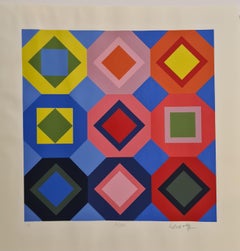
Victor Vasarely (1906-1997) - Balaton Silkscreen / Serigraph from 1989. Edition of 250. Dimensions of work: 47 x 37.5 cm Reference: Catalogue Raisonné Vol I par Pedro Benavides n...
Category

Op Art 1980s Prints and Multiples

Materials

Screen

Barbara, Lithograph by Branko Bahunek
Located in Long Island City, NY
Branko Bahunek, Croatian (1935 - ) - Barbara. Year: 1984, Medium: Lithograph, signed and numbered in pencil, Edition: 152/175, Size: 11 in. x 9.5 in. (27.94 cm x 24.13 cm), Frame Si...
Category

Modern 1980s Prints and Multiples

Materials

Lithograph

Untitled
Located in London, GB
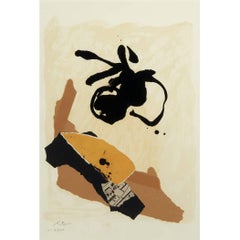
Robert Motherwell Untitled 1986 Colour lithograph and collage, on Guarro paper, Edtion of 100 55.9 x 37.8 cms (22 x 14 7/8 ins)
Category

Abstract Expressionist 1980s Prints and Multiples

Materials

Lithograph

Spell III, Framed Pop Art Screenprint by Hunt Slonem
Located in Long Island City, NY
A bright and vibrant still life by pop artist Hunt Slonem. The silkscreen print is hand-signed and numbered in pencil, nicely framed. Spell III by Hunt Slonem, American (1951) Date:...
Category

Contemporary 1980s Prints and Multiples

Materials

Screen

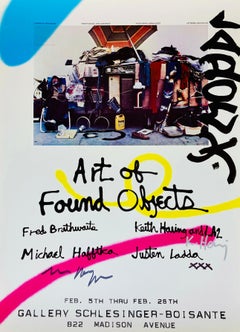
Signed Keith Haring exhibition poster 1983 (Keith Haring 1983)
Located in NEW YORK, NY
Keith Haring 1983: A rare hand signed Keith Haring 1983 exhibition poster published on the occasion of: ‘Art of Found Objects’, Gallery Schlesinger-B...
Category

Pop Art 1980s Prints and Multiples

Materials

Lithograph, Offset

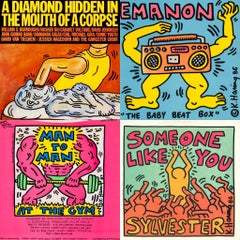
1980s Keith Haring Record Art: set of works (Keith Haring album art)
Located in NEW YORK, NY
1980s Keith Haring Record Art (set of 4 works): Four individual 12 inch albums - all illustrated by Haring during his lifetime - making for standout vintage 1980s Keith Haring wall ...
Category

Pop Art 1980s Prints and Multiples

Materials

Lithograph, Offset

Joan Miro -- La Mélodie Acide, Complete portfolio of 14
Located in BRUCE, ACT
Joan Miro La Mélodie Acide, 1980 The complete portfolio of 14 Lithographs In Original Slip Case Hand Numbered. 184 / 1500 Plate signed Published by Ediciones Poligrafa Reference: M. 1212-1225 Acquire a unique and valuable piece of surrealist art with Joan Miró’s Melodie Acide...
Category

1980s Prints and Multiples

Materials

Lithograph

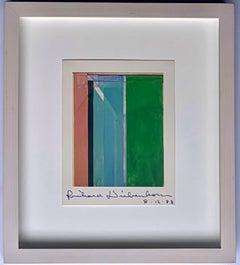
Art Card: Richard Diebenkorn, Ocean Park 30 (Hand Signed by Richard Diebenkorn)
Located in New York, NY
Art Card: Richard Diebenkorn, Ocean Park 30 (Hand Signed by Richard Diebenkorn) from the Estate of UACC President Cordelia Platt Offset lithograph card Hand signed and dated 8.12.88...
Category

Abstract 1980s Prints and Multiples

Materials

Postcard

American Abstract Expressionist Artist Melissa Meyer Aquatint Etching
Located in Surfside, FL
Melissa Meyer (American, b. 1946) 1984-1987, aquatint etching in black on wove paper, hand signed print, dated, and numbered from small edition of 10. Unframed. size: 9.75'' x 6'',...
Category

Abstract Expressionist 1980s Prints and Multiples

Materials

Etching, Aquatint

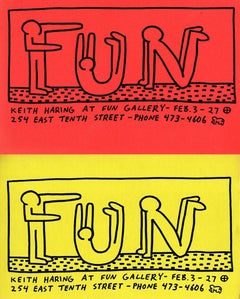
Keith Haring Fun Gallery 1983 (announcements set of 2)
Located in NEW YORK, NY
Keith Haring Fun Gallery 1983:
 A set of 2 rare original 1983 Keith Haring illustrated announcements published on the occasion of Haring's historic ...
Category

Pop Art 1980s Prints and Multiples

Materials

Offset

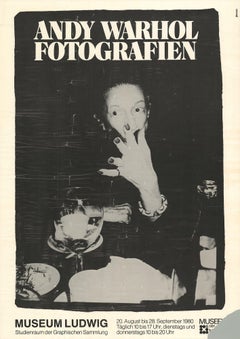
Andy Warhol Andy Warhol Photographs 1980
Located in Brooklyn, NY
Original poster for Andy Warhol: Fotografien, an exhibition of photographs by Andy Warhol held at Museum Ludwig in 1980. Showcasing Warhol’s unique perspective behind the camera, the...
Category

1980s Prints and Multiples

Materials

Offset

Roger Bezombes Mutation 1986
Located in Brooklyn, NY
Vibrant lithograph printed on Arches. Printed by Mourlot. Bezombes' approach to art was influenced by Fauvism and Cubism, resulting in artworks that exuded energy and dynamism. His p...
Category

1980s Prints and Multiples

Materials

Lithograph

French Stacks
Located in Fairlawn, OH
French Stacks Linocut printed in color Unsigned Stamped verso “Imprimerie Arnera Archives/Non Signe” Printer: Jaime Arnera, Vallarius, France (their stamp verso) Condition: Printed ...
Category

Abstract Expressionist 1980s Prints and Multiples

Materials

Linocut

Purple Spell, Pop Art Serigraph by Hunt Slonem
Located in Long Island City, NY
Artist: Hunt Slonem, American (1951 - ) Title: Purple Spell Year: 1980 Medium: Serigraph, signed and numbered in pencil Edition: AP 29 Size: 22 x 30 inches
Category

Pop Art 1980s Prints and Multiples

Materials

Screen

Keith Haring Pop Shop Tokyo 1988 (announcements)
Located in NEW YORK, NY
Keith Haring Pop Shop Tokyo 1988: Rare vintage original Keith Haring Tokyo Pop Shop advertisements designed by Haring to advertise the opening of his 1980s Tokyo Pop Shop store and c...
Category

Pop Art 1980s Prints and Multiples

Materials

Paper, Offset

Sunrise
Located in San Francisco, CA
Artist: (Romain De Tirtoff) Erte (Russian, 1892-1990) Title: Sunrise Year: 1984 Medium: Color serigraph, with stamped gold foil Paper: Wove Edition: Numbered 285/300 in pencil ...
Category

Art Nouveau 1980s Prints and Multiples

Materials

Screen

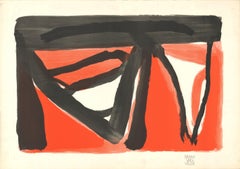
Bram van Velde Untitled 1989 Vintage
Located in Brooklyn, NY
This original lithograph by Bram van Velde, published by Arte, Paris, is a striking example of the artist’s intensely expressive abstract style. Printed on a large sheet with full ma...
Category

Contemporary 1980s Prints and Multiples

Materials

Lithograph

silkscreen
Located in Henderson, NV
Medium: silkscreen. Printed in 1984 for "Ficciones" and published by The Limited Editions Club in an edition of 1500. Size: 8 x 7 3/4 inches (203 x 198 mm). Not signed. Condition: t...
Category

1980s Prints and Multiples

Materials

Screen

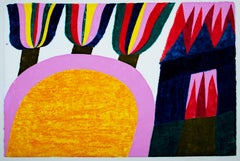
"Ravanna s Palace Burning, " Woodcut Landscape signed by Carol Summers
Located in Milwaukee, WI
"Ravanna's Palace Burning" is a woodcut signed by Carol Summers. The image combines landscape and architecture, which is typical of the works Summers produced during the 1980s and '90s. In the image, a dark building stands burning, bright red flames licking from the windows and rooftop. It stands beside an orange field framed in pink, probably representing a plaza. Beyond the plaza are multicolored trees, their branches reaching upward like the flames on the building. The playfulness of the image is enhanced by Summers' signature printmaking technique, which allows the ink from the woodblock to seep through the paper, blurring the edges of each form. Art: 24.5 x 37.25 in Frame: 30 x 42.75 in Numbered 53 of the edition of 125 Carol Summers (1925-2016) has worked as an artist throughout the second half of the 20th century and into the first years of the next, outliving most of his mid-century modernist peers. Initially trained as a painter, Summers was drawn to color woodcuts around 1950 and it became his specialty thereafter. Over the years he has developed a process and style that is both innovative and readily recognizable. His art is known for it’s large scale, saturated fields of bold color, semi-abstract treatment of landscapes from around the world and a luminescent quality achieved through a printmaking process he invented. In a career that has extended over half a century, Summers has hand-pulled approximately 245 woodcuts in editions that have typically run from 25 to 100 in number. His talent was both inherited and learned. Born in 1925 in Kingston, a small town in upstate New York, Summers was raised in nearby Woodstock with his older sister, Mary. His parents were both artists who had met in art school in St. Louis. During the Great Depression, when Carol was growing up, his father supported the family as a medical illustrator until he could return to painting. His mother was a watercolorist and also quite knowledgeable about the different kinds of papers used for various kinds of painting. Many years later, Summers would paint or print on thinly textured paper originally collected by his mother. From 1948 to 1951, Carol Summers trained in the classical fine and studio arts at Bard College and at the Art Students League of New York. He studied painting with Steven Hirsh and printmaking with Louis Schanker. He admired the shapes and colors favored by early modernists Paul Klee (Sw: 1879-1940) and Matt Phillips (Am: b.1927- ). After graduating, Summers quit working as a part-time carpenter and cabinetmaker (which had supported his schooling and living expenses) to focus fulltime on art. That same year, an early abstract, Bridge No. 1 was selected for a Purchase Prize in a competition sponsored by the Brooklyn Museum. In 1952, his work (Cathedral, Construction and Icarus) was shown the first time at the Museum of Modern Art in New York City in an exhibition of American woodcuts. In 1954, Summers received a grant from the Italian government to study for a year in Italy. Woodcuts completed soon after his arrival there were almost all editions of only 8 to 25 prints, small in size, architectural in content and black and white in color. The most well-known are Siennese Landscape and Little Landscape, which depicted the area near where he resided. Summers extended this trip three more years, a decision which would have significant impact on choices of subject matter and color in the coming decade. After returning from Europe, Summers’ images continued to feature historical landmarks and events from Italy as well as from France, Spain and Greece. However, as evidenced in Aetna’s Dream, Worldwind and Arch of Triumph, a new look prevailed. These woodcuts were larger in size and in color. Some incorporated metal leaf in the creation of a collage and Summers even experimented with silkscreening. Editions were now between 20 and 50 prints in number. Most importantly, Summers employed his rubbing technique for the first time in the creation of Fantastic Garden in late 1957. Dark Vision of Xerxes, a benchmark for Summers, was the first woodcut where Summers experimented using mineral spirits as part of his printmaking process. A Fulbright Grant as well as Fellowships from the Louis Comfort Tiffany Foundation and the Guggenheim Foundation followed soon thereafter, as did faculty positions at colleges and universities primarily in New York and Pennsylvania. During this period he married a dancer named Elaine Smithers with whom he had one son, Kyle. Around this same time, along with fellow artist Leonard Baskin, Summers pioneered what is now referred to as the “monumental” woodcut. This term was coined in the early 1960s to denote woodcuts that were dramatically bigger than those previously created in earlier years, ones that were limited in size mostly by the size of small hand-presses. While Baskin chose figurative subject matter, serious in nature and rendered with thick, striated lines, Summers rendered much less somber images preferring to emphasize shape and color; his subject matter approached abstraction but was always firmly rooted in the landscape. In addition to working in this new, larger scale, Summers simultaneously refined a printmaking process which would eventually be called the “Carol Summers Method” or the “ Carol Summers Technique”. Summers produces his woodcuts by hand, usually from one or more blocks of quarter-inch pine, using oil-based printing inks and porous mulberry papers. His woodcuts reveal a sensitivity to wood especially its absorptive qualities and the subtleties of the grain. In several of his woodcuts throughout his career he has used the undulating, grainy patterns of a large wood plank to portray a flowing river or tumbling waterfall. The best examples of this are Dream, done in 1965 and the later Flash Flood Escalante, in 2003. In the majority of his woodcuts, Summers makes the blocks slightly larger than the paper so the image and color will bleed off the edge. Before printing, he centers a dry sheet of paper over the top of the cut wood block or blocks, securing it with giant clips. Then he rolls the ink directly on the front of the sheet of paper and pressing down onto the dry wood block or reassembled group of blocks. Summers is technically very proficient; the inks are thoroughly saturated onto the surface of the paper but they do not run into each other. The precision of the color inking in Constantine’s Dream in 1969 and Rainbow Glacier in 1970 has been referred to in various studio handbooks. Summers refers to his own printing technique as “rubbing”. In traditional woodcut printing, including the Japanese method, the ink is applied directly onto the block. However, by following his own method, Summers has avoided the mirror-reversed image of a conventional print and it has given him the control over the precise amount of ink that he wants on the paper. After the ink is applied to the front of the paper, Summers sprays it with mineral spirits, which act as a thinning agent. The absorptive fibers of the paper draw the thinned ink away from the surface softening the shapes and diffusing and muting the colors. This produces a unique glow that is a hallmark of the Summers printmaking technique. Unlike the works of other color field artists or modernists of the time, this new technique made Summers’ extreme simplification and flat color areas anything but hard-edged or coldly impersonal. By the 1960s, Summers had developed a personal way of coloring and printing and was not afraid of hard work, doing the cutting, inking and pulling himself. In 1964, at the age of 38, Summers’ work was exhibited for a second time at the Museum of Modern Art. This time his work was featured in a one-man show and then as one of MOMA’s two-year traveling exhibitions which toured throughout the United States. In subsequent years, Summers’ works would be exhibited and acquired for the permanent collections of multiple museums throughout the United States, Europe and Asia. Summers’ familiarity with landscapes throughout the world is firsthand. As a navigator-bombardier in the Marines in World War II, he toured the South Pacific and Asia. Following college, travel in Europe and subsequent teaching positions, in 1972, after 47 years on the East Coast, Carol Summers moved permanently to Bonny Doon in the Santa Cruz Mountains in Northern California. There met his second wife, Joan Ward Toth, a textile artist who died in 1998; and it was here his second son, Ethan was born. During the years that followed this relocation, Summers’ choice of subject matter became more diverse although it retained the positive, mostly life-affirming quality that had existed from the beginning. Images now included moons, comets, both sunny and starry skies, hearts and flowers, all of which, in one way or another, remained tied to the landscape. In the 1980s, from his home and studio in the Santa Cruz mountains, Summers continued to work as an artist supplementing his income by conducting classes and workshops at universities in California and Oregon as well as throughout the Mid and Southwest. He also traveled extensively during this period hiking and camping, often for weeks at a time, throughout the western United States and Canada. Throughout the decade it was not unusual for Summers to backpack alone or with a fellow artist into mountains or back country for six weeks or more at a time. Not surprisingly, the artwork created during this period rarely departed from images of the land, sea and sky. Summers rendered these landscapes in a more representational style than before, however he always kept them somewhat abstract by mixing geometric shapes with organic shapes, irregular in outline. Some of his most critically acknowledged work was created during this period including First Rain, 1985 and The Rolling Sea, 1989. Summers received an honorary doctorate from his alma mater, Bard College in 1979 and was selected by the United States Information Agency to spend a year conducting painting and printmaking workshops at universities throughout India. Since that original sabbatical, he has returned every year, spending four to eight weeks traveling throughout that country. In the 1990s, interspersed with these journeys to India have been additional treks to the back roads and high country areas of Mexico, Central America, Nepal, China and Japan. Travel to these exotic and faraway places had a profound influence on Summers’ art. Subject matter became more worldly and nonwestern as with From Humla to Dolpo, 1991 or A Former Life of Budha, 1996, for example. Architectural images, such as The Pillars of Hercules, 1990 or The Raja’s Aviary, 1992 became more common. Still life images made a reappearance with Jungle Bouquet in 1997. This was also a period when Summers began using odd-sized paper to further the impact of an image. The 1996 Night, a view of the earth and horizon as it might be seen by an astronaut, is over six feet long and only slightly more than a foot-and-a-half high. From 1999, Revuelta A Vida (Spanish for “Return to Life”) is pie-shaped and covers nearly 18 cubic feet. It was also at this juncture that Summers began to experiment with a somewhat different palette although he retained his love of saturated colors. The 2003 Far Side of Time is a superb example of the new direction taken by this colorist. At the turn of the millennium in 1999, “Carol Summers Woodcuts...
Category

Contemporary 1980s Prints and Multiples

Materials

Woodcut

Ferris Wheel, Minimalist Abstract Lithograph by Gene Davis
Located in Long Island City, NY
Artist: Gene Davis Title: Ferris Wheel Year: 1980 Medium: Lithograph on Arches Paper, signed and numbered in pencil Edition: 250 Image Size: 18 x 25.5 in...
Category

Abstract 1980s Prints and Multiples

Materials

Lithograph

Seasons 1981 Photo Color Copier Print Photograph Museum Collected Art Xerography
Located in Surfside, FL
SEASONS (1981) This is for the single print listed here. (not the outside folder or title sheet) Children in water. This one is not hand signed although the rest in the portfolio wer...
Category

Contemporary 1980s Prints and Multiples

Materials

Color

Indistinct Clear - Fluctuating ambivalence -
Located in Berlin, DE
Karl Ludwig Mordstein (1937 Füssen - 2006 Wilszhofen), Undeutlicher deutlich, 1982. Color etching, e.a. (Epreuve d'artiste) 4/9, 22.5 x 28 cm (image), 40 x 45 cm (sheet), 43 x 48 cm ...
Category

Abstract 1980s Prints and Multiples

Materials

Etching

Keith Haring Yoko Ono 1987 (announcement)
Located in NEW YORK, NY
Keith Haring Yoko Ono 1987: Rare 1980s Keith Haring illustrated announcement for “Dance Plus” - a 1987 week long performance hosted by Keith Haring, Tseng Kwon Chi, Yoko Ono, Judith ...
Category

Pop Art 1980s Prints and Multiples

Materials

Offset

Aztec, Op Art Geometric Abstract Screenprint by Roy Ahlgren
Located in Long Island City, NY
Artist: Roy Ahlgren, American (1927 - 2011) Title: Aztec Year: 1983 Medium: Screenprint, signed and numbered in pencil Edition: 150 Image Size: 18 x 26 inches Size: 22.5 x 30 in. (57...
Category

Op Art 1980s Prints and Multiples

Materials

Screen

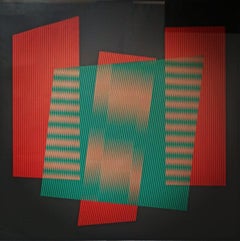
Untitled, 1959/84
Located in Miami, FL
Carlos Cruz-Diez (1923-2019) Original silkscreen print, signed and numbered Title: Untitled, 1959/84 From: Exacta. Dal Costruttivismo all'arte sistematica 1918-1985 Media: Silksc...
Category

Op Art 1980s Prints and Multiples

Materials

Lithograph

Still Thinking About These?

All Recently Viewed