20th Century Prints and Multiples

to
13,861
22,212
9,678
15,488
6,474
3,260
Overall Width
to
Overall Height
to
13,360
7,701
7,108
4,633
3,347
1,291
1,279
1,026
794
267
227
191
47
24
1,192
945
936
530
445
4,815
10,523
24,933
715
976
2,266
2,312
2,439
4,948
7,695
13,481
7,941
4,178
3,980
37,769
17,615
1,531
23,807
12,866
9,980
7,649
7,366
5,972
5,446
3,980
3,566
3,230
2,553
2,252
1,821
1,517
1,449
1,438
1,376
1,283
1,158
1,128
27,465
10,887
7,484
7,105
3,561
6,933
19,800
32,871
20,454
Period: 20th Century
René Magritte - LA VALSE HESITATION. Limited Surrealism French Contemporary
Located in Madrid, Madrid
René Magritte - LA VALSE HESITATION, 1950 (THE HESITATION WALTZ) Date of creation: 2010 Medium: Lithograph on BFK Rives Paper Edition number: 131/275 Size: 60 x 45 cm Condition: New,...
Category

Surrealist 20th Century Prints and Multiples

Materials

Paper, Lithograph

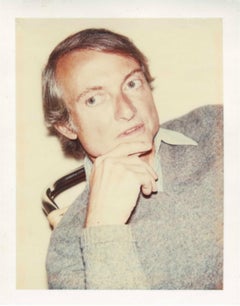
Unique portrait of Roy Lichtenstein, Authenticated by the Andy Warhol Foundation
Located in New York, NY
Andy Warhol Portrait of Roy Lichtenstein, 1975 Polaroid dye-diffusion print Authenticated by the Andy Warhol Foundation for the Visual Arts, bears the Foundation stamp verso Frame included: Framed in white wood frame with UV plexiglass; with die-cut window in the back to show official Warhol Foundation authentication stamp and text Measurements: 9 9/16 x 8 9/16 x 9/16 inches (frame) 3 1/2 x 2 3/4 inches (window) 4.16 x 3.15 inches (Artwork) Authenticated and stamped by the Estate of Andy Warhol/Warhol Foundation for the Visual Arts An impressive piece of Pop Art history! A must-have for fans and collectors of both Andy Warhol and Roy Lichtenstein: This is a unique, authenticated color Polaroid taken by one Pop Art legend, Andy Warhol, of his most formidable contemporary and, in many respects, rival, Roy Lichtenstein. One of only a few portraits Andy Warhol took of Roy Lichtenstein, during one tense photo shoot. Both iconic artists, colleagues and, perhaps lesser known to the public, rivals, would be represented at the time by the renowned Leo Castelli Gallery. The truth is - they were really more rivals than friends. (the rivalry intensified when Warhol, who was working with Walt Disney, discovered that Lichtenstein painted Mickey Mouse before he did!!) Leo Castelli was committed to Roy Lichtenstein, and, it's easy to forget today, wasn't that interested in Warhol as he considered Lichtenstein the greater talent and he could relate better with Roy on a personal level. However, Ivan Karp, who worked at Castelli, was very interested in Warhol, as were some powerful European dealers, as well as many wealthy and influential American and European collectors. That was the start of Warhol's bypassing the traditional gallery model - so that dealers like Castelli could re-discover him after everybody else had. Warhol is known to have taken hundreds of self-portrait polaroid photographs - shoe boxes full - and he took many dozens of images of celebrities like Blondie and Farrah Fawcett. But only a small number of photographic portraits of fellow Pop Art legend Roy Lichtenstein -- each unique,- are known to have appeared on the market over the past half a century - all from the same photo session. This is one of them. There is another Polaroid - from this same (and only) sitting, in the permanent collection of the Getty Museum in California. There really weren't any other collaborations between these two titans, making the resulting portrait from this photo session extraordinary. It is fascinating to study Roy Lichtenstein's face and demeanor in this photograph, in the context of the great sense of competition, but perhaps even greater, albeit uneasy respect, these two larger than life Pop art titans had for each other: Like Leo Castelli, Roy Lichtenstein was Jewish of European descent; whereas Warhol was Catholic and quintessentially American, though also of European (Polish) descent. They were never going to be good friends, but this portrait, perhaps even arranged by Leo Castelli, represents an uneasy acknowledgement there would be room at the top for both of them. Floated, framed with die cut back revealing authentication details, and ready to hang. Measurements: 9 9/16 x 8 9/16 x 9/16 inches (frame) 3 1/2 x 2 3/4 inches (window) 4.16 x 3.15 inches (sheet) Authenticated by the Estate of Andy Warhol/The Andy Warhol Foundation for the Visual Arts. Estate Stamped: Stamped with the Andy Warhol Estate, Warhol Foundation for the Visual Arts stamp, numbered "B 512536P", with the Estate of Andy Warhol stamp and inscribed UP on the reverse. Bears the Warhol Foundation unique inventory number. Roy Lichtenstein Biography Roy Lichtenstein was one of the most influential and innovative artists of the second half of the twentieth century. He is preeminently identified with Pop Art, a movement he helped originate, and his first fully achieved paintings were based on imagery from comic strips and advertisements and rendered in a style mimicking the crude printing processes of newspaper reproduction. These paintings reinvigorated the American art scene and altered the history of modern art. Lichtenstein’s success was matched by his focus and energy, and after his initial triumph in the early 1960s, he went on to create an oeuvre of more than 5,000 paintings, prints, drawings, sculptures, murals and other objects celebrated for their wit and invention. Roy Fox Lichtenstein was born on October 27, 1923, in New York City, the first of two children born to Milton and Beatrice Werner Lichtenstein. Milton Lichtenstein (1893–1946) was a successful real estate broker, and Beatrice Lichtenstein (1896–1991), a homemaker, had trained as a pianist, and she exposed Roy and his sister Rénee to museums, concerts and other aspects of New York culture. Roy showed artistic and musical ability early on: he drew, painted and sculpted as a teenager, and spent many hours in the American Museum of Natural History and the Museum of Modern Art. He played piano and clarinet, and developed an enduring love of jazz, frequenting the nightspots in Midtown to hear it. Lichtenstein attended the Franklin School for Boys, a private junior high and high school, and was graduated in 1940. That summer he studied painting and drawing from the model at the Art Students League of New York with Reginald Marsh. In September he entered Ohio State University (OSU) in Columbus in the College of Education. His early artistic idols were Rembrandt, Daumier and Picasso, and he often said that Guernica (1937; Museo Reina Sofía, Madrid), then on long-term loan to the Museum of Modern Art, was his favorite painting. Even as an undergraduate, Lichtenstein objected to the notion that one set of lines (one person’s drawings) “was considered brilliant, and somebody’s else’s, that may have looked better to you, was considered nothing by almost everyone.”i Lichtenstein’s questioning of accepted canons of taste was encouraged by Hoyt L. Sherman, a teacher whom he maintained was the person who showed him how to see and whose perception-based approach to art shaped his own. In February 1943, Lichtenstein was drafted, and he was sent to Europe in 1945. As part of the infantry, he saw action in France, Belgium and Germany. He made sketches throughout his time in Europe and, after peace was declared there, he intended to study at the Sorbonne. Lichtenstein arrived in Paris in October 1945 and enrolled in classes in French language and civilization, but soon learned that his father was gravely ill. He returned to New York in January 1946, a few weeks before Milton Lichtenstein died. In the spring of that year, Lichtenstein went back to OSU to complete his BFA and in the fall he was invited to join the faculty as an instructor. In June 1949, he married Isabel Wilson Sarisky (1921–80), who worked in a cooperative art gallery in Cleveland where Lichtenstein had exhibited his work. While he was teaching, Lichtenstein worked on his master’s degree, which he received in 1949. During his second stint at OSU, Lichtenstein became closer to Sherman, and began teaching his method on how to organize and unify a composition. Lichtenstein remained appreciative of Sherman’s impact on him. He gave his first son the middle name of “Hoyt,” and in 1994 he donated funds to endow the Hoyt L. Sherman Studio Art Center at OSU. In the late 1940s and early 1950s, Lichtenstein began working in series and his iconography was drawn from printed images. His first sustained theme, intimate paintings and prints in the vein of Paul Klee that poked lyrical fun at medieval knights, castles and maidens, may well have been inspired by a book about the Bayeux Tapestry. Lichtenstein then took an ironic look at nineteenth-century American genre paintings he saw in history books, creating Cubist interpretations of cowboys and Indians spiked with a faux-primitive whimsy. As with his most celebrated Pop paintings of the 1960s, Lichtenstein gravitated toward what he would characterize as the “dumbest” or “worst” visual item he could find and then went on to alter or improve it. In the 1960s, commercial art was considered beneath contempt by the art world; in the early 1950s, with the rise of Abstract Expressionism, nineteenth-century American narrative and genre paintings were at the nadir of their reputation among critics and collectors. Paraphrasing, particularly the paraphrasing of despised images, became a paramount feature of Lichtenstein’s art. Well before finding his signature mode of expression in 1961, Lichtenstein called attention to the artifice of conventions and taste that permeated art and society. What others dismissed as trivial fascinated him as classic and idealized—in his words, “a purely American mythological subject matter.”ii Lichtenstein’s teaching contract at OSU was not renewed for the 1951–52 academic year, and in the autumn of 1951 he and Isabel moved to Cleveland. Isabel Lichtenstein became an interior decorator specializing in modern design, with a clientele drawn from wealthy Cleveland families. Whereas her career blossomed, Lichtenstein did not continue to teach at the university level. He had a series of part-time jobs, including industrial draftsman, furniture designer, window dresser and rendering mechanical dials for an electrical instrument company. In response to these experiences, he introduced quirkily rendered motors, valves and other mechanical elements into his paintings and prints. In 1954, the Lichtensteins’ first son, David, was born; two years later, their second child, Mitchell, followed. Despite the relative lack of interest in his work in Cleveland, Lichtenstein did place his work with New York dealers, which always mattered immensely to him. He had his first solo show at the Carlebach Gallery in New York in 1951, followed by representation with the John Heller Gallery from 1952 to 1957. To reclaim his academic career and get closer to New York, Lichtenstein accepted a position as an assistant professor at the State University of New York at Oswego, in the northern reaches of the state. He was hired to teach industrial design, beginning in September 1957. Oswego turned out to be more geographically and aesthetically isolated than Cleveland ever was, but the move was propitious, for both his art and his career. Lichtenstein broke away from representation to a fully abstract style, applying broad swaths of pigment to the canvas by dragging the paint across its surface with a rag wrapped around his arm. At the same time, Lichtenstein was embedding comic-book characters figures such as Mickey Mouse and Donald Duck in brushy, expressionistic backgrounds. None of the proto-cartoon paintings from this period survive, but several pencil and pastel studies from that time, which he kept, document his intentions. Finally, when he was in Oswego, Lichtenstein met Reginald Neal, the new head of the art department at Douglass College, the women’s college of Rutgers University, in New Brunswick, New Jersey. The school was strengthening and expanding its studio art program, and when Neal needed to add a faculty member to his department, Lichtenstein was invited to apply for the job. Lichtenstein was offered the position of assistant professor, and he began teaching at Douglass in September 1960. At Douglass, Lichtenstein was thrown into a maelstrom of artistic ferment. With New York museums and galleries an hour away, and colleagues Geoffrey Hendricks and Robert Watts at Douglass and Allan Kaprow and George Segal at Rutgers, the environment could not help but galvanize him. In June 1961, Lichtenstein returned to the idea he had fooled around with in Oswego, which was to combine cartoon characters from comic books with abstract backgrounds. But, as Lichtenstein said, “[I]t occurred to me to do it by mimicking the cartoon style without the paint texture, calligraphic line, modulation—all the things involved in expressionism.”iii Most famously, Lichtenstein appropriated the Benday dots, the minute mechanical patterning used in commercial engraving, to convey texture and gradations of color—a stylistic language synonymous with his subject matter. The dots became a trademark device forever identified with Lichtenstein and Pop Art. Lichtenstein may not have calibrated the depth of his breakthrough immediately but he did realize that the flat affect and deadpan presentation of the comic-strip panel blown up and reorganized in the Sherman-inflected way “was just so much more compelling”iv than the gestural abstraction he had been practicing. Among the first extant paintings in this new mode—based on comic strips and illustrations from advertisements—were Popeye and Look Mickey, which were swiftly followed by The Engagement Ring, Girl with Ball and Step-on Can with Leg. Kaprow recognized the energy and radicalism of these canvases and arranged for Lichtenstein to show them to Ivan Karp, director of the Leo Castelli Gallery. Castelli was New York’s leading dealer in contemporary art, and he had staged landmark exhibitions of Jasper Johns and Robert Rauschenberg in 1958 and Frank Stella in 1960. Karp was immediately attracted to Lichtenstein’s paintings, but Castelli was slower to make a decision, partly on account of the paintings’ plebeian roots in commercial art, but also because, unknown to Lichtenstein, two other artists had recently come to his attention—Andy Warhol and James Rosenquist—and Castelli was only ready for one of them. After some deliberation, Castelli chose to represent Lichtenstein, and the first exhibition of the comic-book paintings was held at the gallery from February 10 to March 3, 1962. The show sold out and made Lichtenstein notorious. By the time of Lichtenstein’s second solo exhibition at Castelli in September 1963, his work had been showcased in museums and galleries around the country. He was usually grouped with Johns, Rauschenberg, Warhol, Rosenquist, Segal, Jim Dine, Claes Oldenburg, Robert Indiana and Tom Wesselmann. Taken together, their work was viewed as a slap in the face to Abstract Expressionism and, indeed, the Pop artists shifted attention away from many members of the New York School. With the advent of critical and commercial success, Lichtenstein made significant changes in his life and continued to investigate new possibilities in his art. After separating from his wife, he moved from New Jersey to Manhattan in 1963; in 1964, he resigned from his teaching position at Douglass to concentrate exclusively on his work. The artist also ventured beyond comic book subjects, essaying paintings based on oils by Cézanne, Mondrian and Picasso, as well as still lifes and landscapes. Lichtenstein became a prolific printmaker and expanded into sculpture, which he had not attempted since the mid-1950s, and in both two- and three-dimensional pieces, he employed a host of industrial or “non-art” materials, and designed mass-produced editioned objects that were less expensive than traditional paintings and sculpture. Participating in one such project—the American Supermarket show in 1964 at the Paul Bianchini Gallery, for which he designed a shopping bag—Lichtenstein met Dorothy Herzka (b. 1939), a gallery employee, whom he married in 1968. The late 1960s also saw Lichtenstein’s first museum surveys: in 1967 the Pasadena Art Museum initiated a traveling retrospective, in 1968 the Stedelijk Musem in Amsterdam presented his first European retrospective, and in 1969 he had his first New York retrospective, at the Solomon R. Guggenheim Museum. Wanting to grow, Lichtenstein turned away from the comic book subjects that had brought him prominence. In the late 1960s his work became less narrative and more abstract, as he continued to meditate on the nature of the art enterprise itself. He began to explore and deconstruct the notion of brushstrokes—the building blocks of Western painting. Brushstrokes are conventionally conceived as vehicles of expression, but Lichtenstein made them into a subject. Modern artists have typically maintained that the subject of a painting is painting itself. Lichtenstein took this idea one imaginative step further: a compositional element could serve as the subject matter of a work and make that bromide ring true. The search for new forms and sources was even more emphatic after 1970, when Roy and Dorothy Lichtenstein bought property in Southampton, New York, and made it their primary residence. During the fertile decade of the 1970s, Lichtenstein probed an aspect of perception that had steadily preoccupied him: how easily the unreal is validated as the real because viewers have accepted so many visual conceptions that they don’t analyze what they see. In the Mirror series, he dealt with light and shadow upon glass, and in the Entablature series, he considered the same phenomena by abstracting such Beaux-Art architectural elements as cornices, dentils, capitals and columns. Similarly, Lichtenstein created pioneering painted bronze sculpture that subverted the medium’s conventional three-dimensionality and permanence. The bronze forms were as flat and thin as possible, more related to line than volume, and they portrayed the most fugitive sensations—curls of steam, rays of light and reflections on glass. The steam, the reflections and the shadow were signs for themselves that would immediately be recognized as such by any viewer. Another entire panoply of works produced during the 1970s were complex encounters with Cubism, Futurism, Purism, Surrealism and Expressionism. Lichtenstein expanded his palette beyond red, blue, yellow, black, white and green, and invented and combined forms. He was not merely isolating found images, but juxtaposing, overlapping, fragmenting and recomposing them. In the words of art historian Jack Cowart, Lichtenstein’s virtuosic compositions were “a rich dialogue of forms—all intuitively modified and released from their nominal sources.”v In the early 1980s, which coincided with re-establishing a studio in New York City, Lichtenstein was also at the apex of a busy mural career. In the 1960s and 1970s, he had completed four murals; between 1983 and 1990, he created five. He also completed major commissions for public sculptures in Miami Beach, Columbus, Minneapolis, Paris, Barcelona and Singapore. Lichtenstein created three major series in the 1990s, each emblematic of his ongoing interest in solving pictorial problems. The Interiors, mural-sized canvases inspired by a miniscule advertisement in an Italian telephone...
Category

Pop Art 20th Century Prints and Multiples

Materials

Polaroid

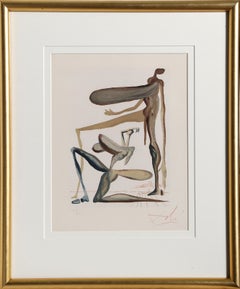
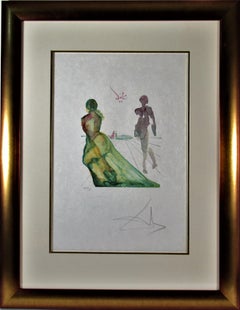
Purgatory Canto 22 - Prodigality, Surrealist Woodcut by Salvador Dalí­
Located in Long Island City, NY
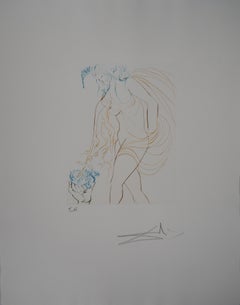
Salvador Dali, Spanish (1904 -1989) - Purgatory Canto 22 - Prodigality, Portfolio: The Divine Comedy, Year: 1964, Medium: Woodcut, signed and numbered in red pencil, Edition: 126...
Category

Surrealist 20th Century Prints and Multiples

Materials

Woodcut

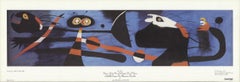
1996 After Joan Miro Femme Hantee par le passage de l Oiseau
Located in Brooklyn, NY
This high-quality reproduction of Joan Miró's "Femme Hantée par le Passage de l'Oiseau" was published in 1996 by Allan Ashley in Yonkers, NY. Printed using the collograph technique, ...
Category

Abstract 20th Century Prints and Multiples

Materials

Offset

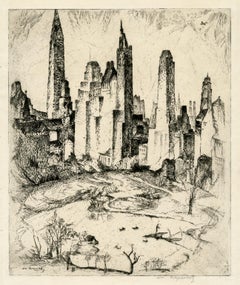
New York, Central Park — 1930s American Modernism
Located in Myrtle Beach, SC
'New York, Central Park', etching, edition 40, c. 1930. Signed in pencil. Titled and numbered '14/40' on the bottom sheet edge, in pencil. Signed in the plate, lower left. A superb, ...
Category

American Modern 20th Century Prints and Multiples

Materials

Etching

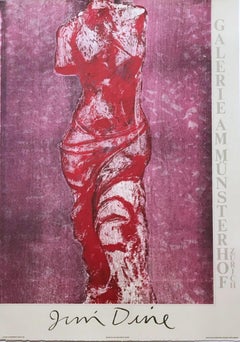
Jim Dine European museum print on lithographic paper Limited Edition of 300
Located in New York, NY
Jim Dine, 1985 Color Lithograph on wove paper with deckled edges 38 1/2 × 27 1/2 inches Edition of 300 Unframed Signed in plate, unnumbered; bears museum copyright on the lower front...
Category

Pop Art 20th Century Prints and Multiples

Materials

Lithograph, Offset

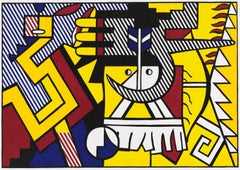
American Indian Theme VI
Located in Washington, DC
Artist: Roy Lichtenstein Title: American Indian Theme VI Medium: Woodcut on handmade Suzuki Paper Date: 1980 Edition: 24/50 Frame Size: 40" x 53" Sheet Size: 37 3/4" x 50 5/16" Image...
Category

Pop Art 20th Century Prints and Multiples

Materials

Woodcut

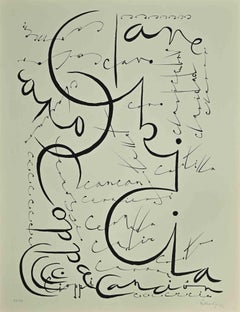
Letter C - Lithograph by Rafael Alberti - 1972
Located in Roma, IT
Letter C, from the Alphabet series,  is a lithograph, realized by Rafael Alberti in 1972. Hand-signed and dated on the lower right margin.  Numbered in pencil on the lower, from an...
Category

Contemporary 20th Century Prints and Multiples

Materials

Lithograph

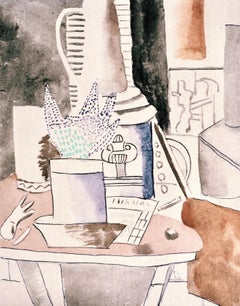
Fernand Leger, Still Life with Newspaper, from Contrastes, 1959 (after)
Located in Southampton, NY
This exquisite lithograph and pochoir after Fernand Leger (1881–1955), titled Nature Morte au Journal (Still Life with Newspaper), from the folio Contrastes, 13 Aquarelles, Gouache, ...
Category

Modern 20th Century Prints and Multiples

Materials

Lithograph, Stencil

Litografía original II
Located in OPOLE, PL
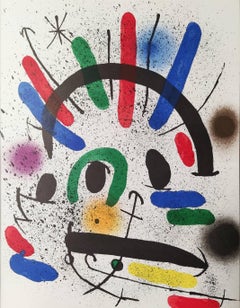
Joan Miro (1893-1983) - Litografía original II Lithograph from 1972. Dimensions of work: 32 x 24.5 cm. Publisher: Maeght Éditeur, Paris. Printed by: Fernand Mourlot, Paris. The ...
Category

Surrealist 20th Century Prints and Multiples

Materials

Lithograph

Original 1980 exhibition poster featuring Femme en bleue by Henri Matisse
Located in PARIS, FR
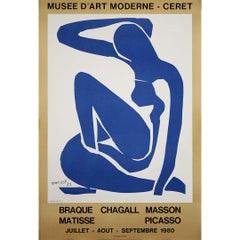
This is an original 1980 exhibition poster featuring Femme en bleue by Henri Matisse, created for a show at the Musée d’Art Moderne de Céret. Printed in rich, elegant tones, this pos...
Category

20th Century Prints and Multiples

Materials

Paper, Lithograph

Chepstow Castle ( on a limestone cliff above the River Wye in Wales)
Located in New Orleans, LA
The magnificent printed works of the Yorkshire artist, Percival Gaskell have only been fully rediscovered in recent years. Percival Gaskell rose to prominence whilst working together with Sir Frank Short in the engraving school at the Royal College of Art in London during the first two decades of the 20th century. A true painter-printmaker, Percival Gaskell developed a sensitivity to atmospheric tone which is displayed in an air of timeless beauty throughout his printed works. (sheet 24 x 20 1/2). A fine impression with tone printed in warm brown/black ink on chine appliqué mounted on white wove paper, and a backing board. Signed in pencil. Superb signed proof impression printed in warm-brownish-black ink. One of Gaskell's best large scale mezzotints. The speed with which William the Conqueror committed to the creation of a castle at Chepstow is testament to its strategic importance. There is no evidence for a settlement there of any size before the Norman invasion of Wales, although it is possible that the castle site itself may have previously been a prehistoric or early...
Category

English School 20th Century Prints and Multiples

Materials

Mezzotint, Etching

LA PARADE
Located in Santa Monica, CA
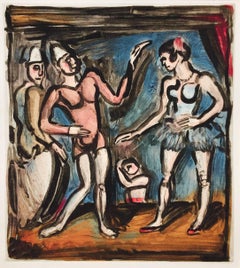
GEORGES ROUAULT (1871 – 1958) La PARADE 1932 (CR.203, W.211) color etching and aquatint 1932. Edition 270. Frontispiece from “Cirque”. Signed in plate as i...
Category

Modern 20th Century Prints and Multiples

Materials

Etching

LA PARADE
LA PARADE
$1,100 Sale Price
43% Off
France via Bicycle and French Bread serigraph
Located in Spokane, WA
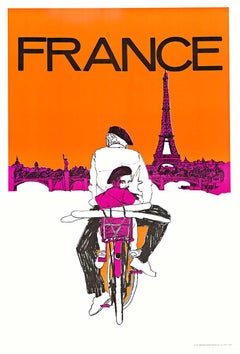
Original France travel by bicycle (and French bread) vintage serigraph poster, excellent condition, ready to frame. These images are of the exact rare poster you will receive. Ar...
Category

Post-Modern 20th Century Prints and Multiples

Materials

Screen

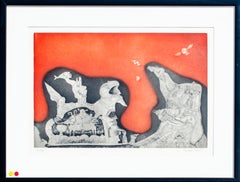
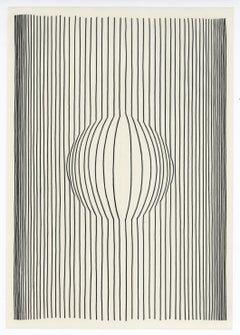
Surrealist Aquatint by Bernard Berthois-Rigal, Custom Frame
Located in New York, NY
Bernard Berthois-Rigal (French, b. 1927) La Nef de Lysimaque, c. 1970s/80s Aquatint Sight: 22 1/4 x 32 in. Framed: 32 x 41 1/4 x 1 3/8 in. Edition 36 of 95 Numbered lower left, signe...
Category

Post-Modern 20th Century Prints and Multiples

Materials

Aquatint

Mid 1960s abstraction color field silkscreen signed/N Framed famed Indian artist
By Natvar Bhavsar
Located in New York, NY
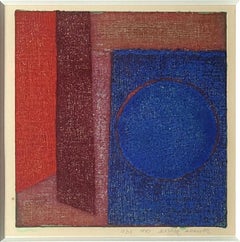
Natvar Bhavsar Untitled mid 1960s abstraction, 1967 Silkscreen Pencil signed, dated and numbered 10/30 by Natvar Bhavsar on the front Frame included: Elegantly framed in a museum qua...
Category

Color-Field 20th Century Prints and Multiples

Materials

Screen

Woolworth Building Under Construction — Early 20th Century Modernism
Located in Myrtle Beach, SC
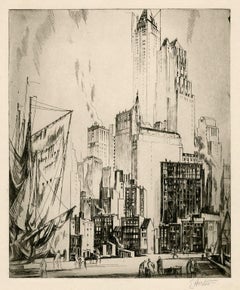
Earl Horter, 'The Woolworth Building Under Construction', etching, c. 1912, edition not stated. Signed in pencil. A fine, richly-inked impression, in warm black ink, with selectively...
Category

American Modern 20th Century Prints and Multiples

Materials

Etching

Manhattan Mountains
Located in Storrs, CT
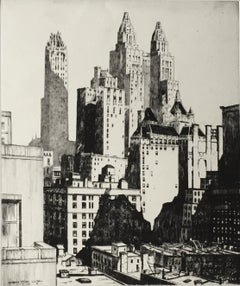
Manhattan Mountains. 1938. Etching and drypoint. 14 3/4 x 12 3/8 (sheet 17 1/4 x 14 3/4). Artist proof, previous to the edition of 40. An atmospheric impression printed on buff-colored laid paper. Signed and dated in the plate. Signed, titled, and annotated 'Final state' and 'Jones Proof'in pencil. Housed in an archival sleeve. Painter and printmaker Lawrence Nelson...
Category

American Modern 20th Century Prints and Multiples

Materials

Drypoint, Etching

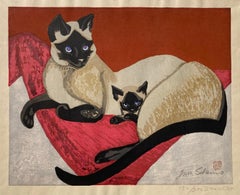
TWO SIAMESE CATS
Located in Santa Monica, CA
JUN'ICHIRO SEKINO (1914-1988) TWO SIAMESE CATS Japanese Woodblock Print, c. 1960, 1st edition, pencil signed, titled and numbered 90/200 with red Sekino pub...
Category

Modern 20th Century Prints and Multiples

Materials

Woodcut

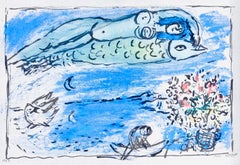
Marc Chagall, The Flying Fish, from Color of Love, 1958 (after)
Located in Southampton, NY
This exquisite lithograph and pochoir after Marc Chagall (1887–1985), titled Le Poisson Volant (The Flying Fish), from the folio Couleur amour, 13 Aquarelles, Gouaches, Lavis (Color ...
Category

Modern 20th Century Prints and Multiples

Materials

Lithograph, Stencil

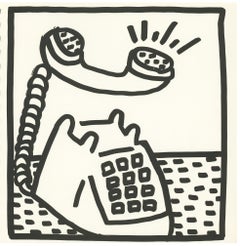
Keith Haring lithographic insert 1982 (Keith Haring Tony Shafrazi 1982)
Located in NEW YORK, NY
Keith Haring Lithograph 1982: Double-sided lithographic insert from the seminal spiral bound, 1982 Tony Shafrazi catalog published on the occasion of Haring's first gallery solo exhi...
Category

Pop Art 20th Century Prints and Multiples

Materials

Lithograph, Offset

Max Ernst, The Wheel of Light, from Natural History, 1972 (after)
Located in Southampton, NY
This exquisite collotype after Max Ernst (1891–1976), titled La Roue de la lumiere (The Wheel of Light), from the album Max Ernst, Histoire Naturelle (Natural History), originates fr...
Category

Surrealist 20th Century Prints and Multiples

Materials

Lithograph

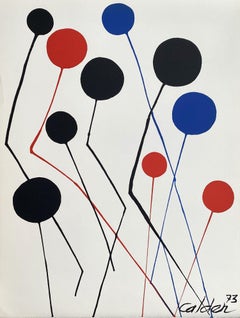
Red, Blue Black Balloons - Original Lithograph Signed in the Plate
Located in Paris, IDF
Alexander CALDER (1898-1976) Red, blue and black balloons Original lithograph, 1973 Signed in the plate On Arches vellum size 78 x 59 cm (c. 29 x 23 in) Very good condition
Category

Abstract 20th Century Prints and Multiples

Materials

Lithograph

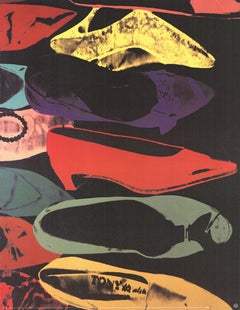
Andy Warhol Shoes, 1980-small 1992- Poster
Located in Brooklyn, NY
Paper Size: 30 x 23.25 inches ( 76.2 x 59.055 cm ) Image Size: 30 x 23.25 inches ( 76.2 x 59.055 cm ) Framed: No Condition: A: Mint Additional Details: Shoes, 1980 by Andy Warhol, pr...
Category

20th Century Prints and Multiples

Materials

Offset

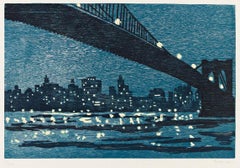
Brooklyn Bridge
Located in New York, NY
An exquisitely printed image created by Richard Bosman in 1996, the artist’s iconic Brooklyn Bridge is a woodcut on Japan paper. Measuring 18 x 24 1/2 in. (45.7 x 62.2 cm), unframed,...
Category

Neo-Expressionist 20th Century Prints and Multiples

Materials

Woodcut

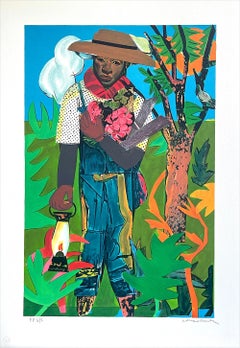
THE LANTERN Hand Signed Lithograph, Collage Portrait, African American Heritage
Located in Union City, NJ
THE LANTERN is an original, handmade limited edition lithograph printed in 13 colors from hand drawn lithography plates using traditional hand lithography methods on archival Somerse...
Category

Contemporary 20th Century Prints and Multiples

Materials

Lithograph

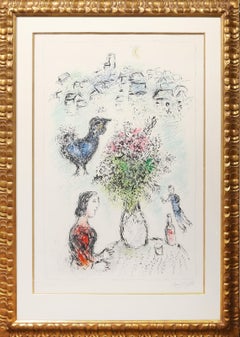
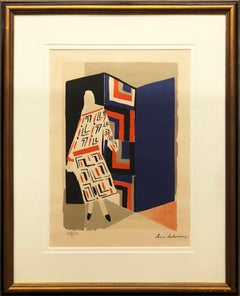
Le Bouquet Rose, Large Signed Modern Lithograph by Marc Chagall
Located in Long Island City, NY
This simple still life is a lithograph by Russian Modern artist Marc Chagall. It employs several of Chagall's recurring motifs, such as a bird (in this case a rooster), a bouquet of ...
Category

Modern 20th Century Prints and Multiples

Materials

Lithograph

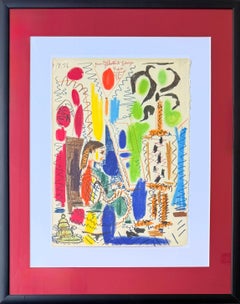
L atelier de Cannes
Located in OPOLE, PL
Pablo Picasso (1881-1973) - L'atelier de Cannes Lithograph from 1958. On Arches paper. Dimensions of work: 44.8 x 33.4 cm. Plate signed. It's an enhanced version of the first st...
Category

Modern 20th Century Prints and Multiples

Materials

Lithograph

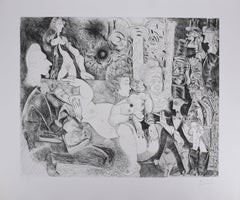
The 156, Painter Drawing is Model - Original Etching, Signed (Baer #1876)
Located in Paris, IDF
Pablo PICASSO (1881-1973) Series 156, Painter Drawing is Model (plate 16), 1978 Original etching (Crommelynck workshop) Signed with stamp Justified HC B/C On vellum, 63 x 76 cm (c. ...
Category

Cubist 20th Century Prints and Multiples

Materials

Etching

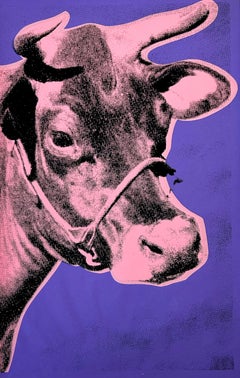
Cow
Located in Washington, DC
Artist: Andy Warhol Title: Cow Medium: Screenprint on wallpaper Date: 1976 Edition: Unnumbered Frame Size: 52 1/2" x 36 1/4" Sheet Size: 45 1/2" x 29 3/4" Signature: Unsigned Refere...
Category

Pop Art 20th Century Prints and Multiples

Materials

Screen

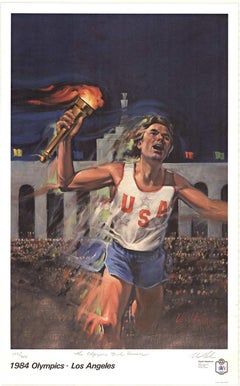
Original "1984 Olympics Los Angeles" Torch Runner signed and numbered
Located in Spokane, WA
The Los Angeles Olympics Torch /runner. 1984 Los Angeles Olympics original vintage poster. Original, hand signed and numbered #232/300 "The Olympic Tor...
Category

American Realist 20th Century Prints and Multiples

Materials

Lithograph

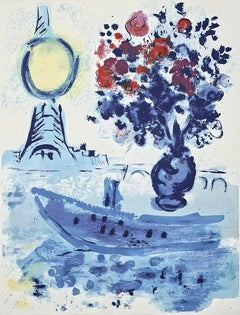
Bateau-Mouche au Bouquet (Mourlot 352; Cramer 53), Marc Chagall
Located in Southampton, NY
Lithograph on Arches paper. Edition: 180, plus proofs. Inscription: unsigned and unnumbered, as issued. Good Condition; never framed or matted. Notes: Extracted from the folio, Regar...
Category

Expressionist 20th Century Prints and Multiples

Materials

Lithograph

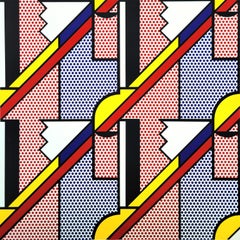
Modern Print /// Roy Lichtenstein Pop Art Abstract Geometric MoMA Gemini G.E.L.
Located in Saint Augustine, FL
Artist: Roy Lichtenstein (American, 1923-1997) Title: "Modern Print" *Numbered, signed, and dated by Lichtenstein in pencil lower right Year: 1971 Medium: Original Lithograph and Scr...
Category

Pop Art 20th Century Prints and Multiples

Materials

Lithograph, Screen

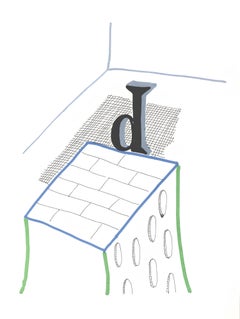
David Hockney, Letter D, from Hockney s Alphabet, 1991
Located in Southampton, NY
This exquisite lithograph by David Hockney (born 1937), titled Letter D, from the folio Hockney's Alphabet, Drawings by David Hockney, originates from the 1991 edition published by A...
Category

Contemporary 20th Century Prints and Multiples

Materials

Lithograph

Léger, Composition, mes voyages (after)
Located in Southampton, NY
Lithograph on vélin bouffant des Papeteries de Hauteville paper. Unsigned and unnumbered, as issued. Good condition. Notes: From the folio, Fernand Léger mes voyages avec un poème d'...
Category

Modern 20th Century Prints and Multiples

Materials

Lithograph

Delaunay- Untitled #11, Mid Century Vintage Lithograph
Located in Brooklyn, NY
Framed in an ornate wood frame with a front profile of 1 1/2 inches and a side profile of 1 inch, this piece is elegantly seated behind a 4-inch mat. This is Edition #669/900, publis...
Category

Contemporary 20th Century Prints and Multiples

Materials

Lithograph

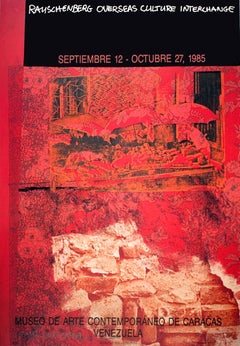
Rauschenberg-ROCI: Venezuela-hand signed Pop Art Vintage
Located in Brooklyn, NY
This is titled Venezuela, an exhibition poster created for Robert Rauschenberg's Overseas Culture Interchange (ROCI) series. The poster is signed in pencil by Rauschenberg...
Category

Pop Art 20th Century Prints and Multiples

Materials

Offset

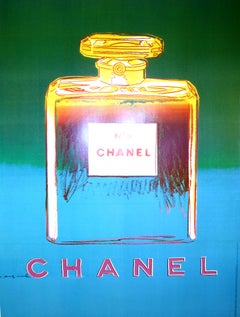
Original Vintage Chanel No. 5 Perfume Poster by Andy Warhol 1997
Located in Boca Raton, FL
This poster, part of a series by Andy Warhol for Chanel No. 5 features the sophisticated design of the bottle in the center of the image. Aiming for simplicity, the bottle is the foc...
Category

20th Century Prints and Multiples

Materials

Lithograph

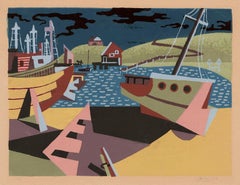
Abstract Boats — American Modernism, WPA
Located in Myrtle Beach, SC
Leon Bibel, 'Abstract Boats', color serigraph, 1938, edition 12. Signed, dated, and numbered ' /12' in pencil. A fine, painterly impression, with fresh colors, on buff wove paper; t...
Category

American Modern 20th Century Prints and Multiples

Materials

Screen

KEITH HARING THE STORY OF RED AND BLUE - 1990, L. pp. 128-13, SIGNED NUMBERED
Located in Pembroke Pines, FL
Artist: Keith Haring Title: Plate 5 from Story of Red and Blue (L. pp. 128-133) Medium: Screen print in colors on wove paper Sheet Size: 22 x 16.5 inches Frame Size: approx 28.5 x 22...
Category

Pop Art 20th Century Prints and Multiples

Materials

Screen

Milton, Lost Paradise : The Cup Offered - Original Hand Signed Etching, 1974
Located in Paris, IDF
Salvador DALI The Cup Offered Original etching in colour Hand signed in pencil Justified EA (Éprouve d’artiste - artist proof) On Auvergne vellum 58 x 45,5 cm...
Category

Surrealist 20th Century Prints and Multiples

Materials

Etching

Braque, Composition, Derrière le miroir (after)
Located in Southampton, NY
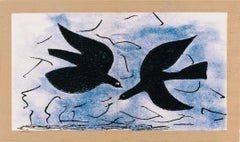
Lithograph on vélin Chiffon de Mandeure paper. Signed in the plate and unnumbered, as issued. Good condition, with centerfold, as issued. Notes: From the album, Lithographies et Eaux...
Category

Modern 20th Century Prints and Multiples

Materials

Lithograph

Le Pieton de Paris
Located in San Francisco, CA
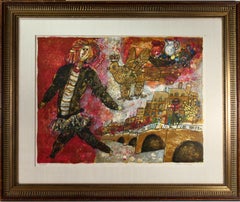
Artist: Teo Tobiasse (French/Israeli, 1927-2012) Title: "Le Pieton de Paris" Year: c.1975 Medium: Color lithograph Edition: Numbered 42/175 in pencil Paper: Japan paper Image ...
Category

Expressionist 20th Century Prints and Multiples

Materials

Lithograph

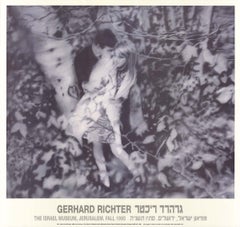
Gerhard Richter Lovers in the Forest 1995- Poster
Located in Brooklyn, NY
Paper Size: 26.75 x 28.25 inches ( 67.945 x 71.755 cm ) Image Size: 22.5 x 26.75 inches ( 57.15 x 67.945 cm ) Framed: No Condition: A: Mint Additional Details: This reproduction of ...
Category

20th Century Prints and Multiples

Materials

Offset

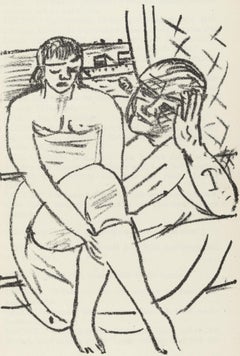
Beckmann, Composition (Hofmaier 323-329), Der Mensch ist kein Haustier (after)
Located in Southampton, NY
Lithograph on Van Gelder Zonen Bütten paper. Inscription: Unsigned and unnumbered, as issued. Good condition. Notes: From the volume, Der Mensch ist kein Haustier, 1937. Published by...
Category

Modern 20th Century Prints and Multiples

Materials

Lithograph

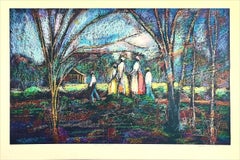
GOING TO CHURCH Signed Lithograph, Southern Landscape, African American Heritage
Located in Union City, NJ
GOING TO CHURCH is an original hand drawn lithograph (not a photo reproduction or digital print) printed on archival printmaking paper 100% acid free, using hand lithography techniqu...
Category

Contemporary 20th Century Prints and Multiples

Materials

Lithograph

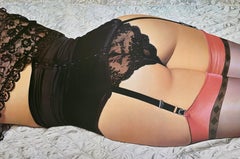
Illeana, John Kacere
Located in Fairfield, CT
Artist: John Kacere (1930-1999) Title: Illeana II Year: 1991 Edition: A.P.; 100, plus proofs. Medium: Lithograph on wove paper Size: 23.5 x 31.5 inches Inscription: Signed by the art...
Category

Pop Art 20th Century Prints and Multiples

Materials

Lithograph

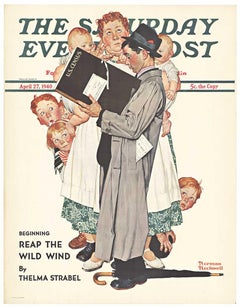
U. S. Census Saturday Evening Post original 1940 vintage poster
Located in Spokane, WA
Original poster: THE SAURDAY EVENING POST. Artist: Noman Rockwell. Size: 21.75" x 28". Archival linen backed in very fine condition. The painting for this original poster ...
Category

American Realist 20th Century Prints and Multiples

Materials

Offset

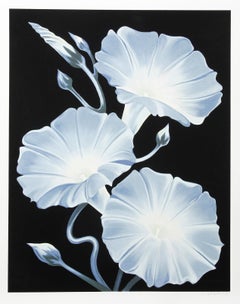
Morning Glories, Photorealist Screenprint on Paper by Lowell Nesbitt
Located in Long Island City, NY
A series of ghostly Morning Glory blooms set against a rich black background. These moon-toned flowers are rendered as a screenprint by Lowell Blair Nesbitt. This print is signed and...
Category

Photorealist 20th Century Prints and Multiples

Materials

Screen

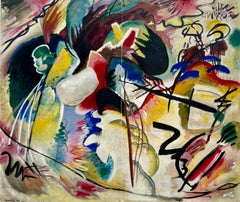
Wassily Kandinsky, Tableau avec formes blanches, L édition de tête (after)
Located in Southampton, NY
Lithograph on vélin de Rives paper. Inscription: Unsigned and unnumbered, as issued. Good condition, with centerfold, as issued. Notes: From the folio, tête edition, Consacré au Blau...
Category

Modern 20th Century Prints and Multiples

Materials

Lithograph

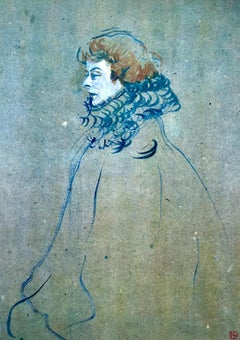
Henri de Toulouse-Lautrec, Untitled, from Derriere le Miroir, 1966 (after)
Located in Southampton, NY
This exquisite lithograph after Henri de Toulouse-Lautrec (1864–1901), titled Sans titre (Untitled), originates from the 1966 folio Derriere le Miroir, No. 158–159, published by Maeg...
Category

Post-Impressionist 20th Century Prints and Multiples

Materials

Lithograph

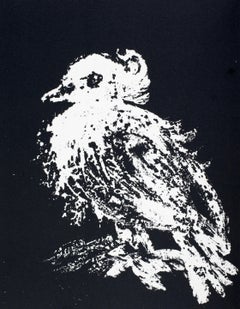
Picasso, La Petite Colombe (Mourlot 174; Cramer 55) (after)
Located in Southampton, NY
Lithograph on wove paper. Unsigned and unnumbered, as issued. Good Condition; never framed or matted. Notes: Executed in 1949 and issued as the frontispiece of the Picasso Lithograph...
Category

Modern 20th Century Prints and Multiples

Materials

Lithograph

"La Deese de Cythere" from the suite "l Art d Aimer d Ovide"
Located in San Francisco, CA
This artwork titled, "La Deesse de Cythere" from the suite, "l'Art d'Aimer d'Ovide" 1976. is an original wood engraving on Japan nacre paper by artist Salvador Dali 1904-1989. It i...
Category

Surrealist 20th Century Prints and Multiples

Materials

Woodcut

original lithograph for Pierre a feu Les miroirs profonds
Located in Henderson, NV
Medium: original lithograph. Printed in 1947 at the Mourlot atelier in an edition of 950 on Rives wove paper for "Pierre a feu / Les miroirs profonds" and published in Paris by Maegh...
Category

20th Century Prints and Multiples

Materials

Lithograph

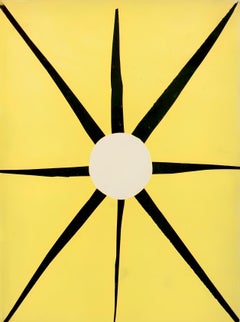
Henri Matisse, The Sun, from Verve, Revue Artistique, 1948
Located in Southampton, NY
This exquisite lithograph by Henri Matisse (1869–1954), titled Le Soleil (The Sun), from Verve, Revue Artistique et Litteraire, Vol. VI, No. 21–22, originates from the 1948 issue pub...
Category

Fauvist 20th Century Prints and Multiples

Materials

Lithograph

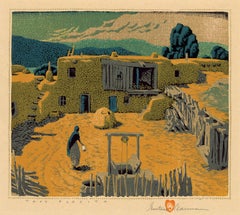
Taos Placita — American Southwest Regionalist Masterwork
Located in Myrtle Beach, SC
Gustave Baumann, 'Taos Placita', color woodcut, 1947, edition 125. Baumann 132. Signed, titled, and numbered '20-125' in pencil; with the artist’s Hand-in-Heart chop. A superb, richly-inked impression, with fresh colors, on fibrous oatmeal wove paper; the full sheet with margins (2 to 3 1/8 inches); slight rippling at the left sheet edge, in excellent condition. Matted to museum standards, unframed. Image size 9 5/8 x 11 1/4 inches (244 x 286 mm); sheet size 13 1/4 x 17 inches (337 x 432 mm). Collections: Harwood Museum of Art, New Mexico Museum of Art, Phoenix Art Museum, Scottsdale Art Museum, Wichita Art Museum. ABOUT THE ARTIST Gustave Baumann (1881-1971) was a renowned printmaker and a leading figure of the American color woodcut revival whose exquisite craftsmanship and vibrant imagery captured the essence of the Southwest. "A brilliant printmaker, Baumann brought to the medium a full mastery of the craft of woodworking that he acquired from his father, a German cabinetmaker. This craftsmanship was coupled with a strong artistic training that resulted in the handsome objects we see in the exhibition today. After discovering New Mexico in 1918, Baumann began to explore in his woodblock prints of this period the light. color, and architectural forms of that landscape. His prints of this period are among the most beautiful and poetic images of the American West." —Lewis I. Sharp, Director, Denver Art Museum Baumann, the son of a craftsman, immigrated to the United States from Germany with his family when he was ten, settling in Chicago. From 1897 to 1904, he studied in the evenings at the Art Institute of Chicago, working in a commercial printmaking shop during the day. In 1905, he returned to Germany to attend the Kunstwerbe Schule in Munich, where he decided on a career in printmaking. He returned to Chicago in 1906 and worked for a few years as a graphic designer of labels. Baumann made his first prints in 1909 and exhibited them at the Art Institute of Chicago the following year. In 1910, he moved to the artists’ colony in Nashville, Indiana, where he explored the creative and commercial possibilities of a career as a printmaker. In 1915, he exhibited his color woodcuts at the Panama-Pacific International Exposition in San Francisco, winning the gold medal. Among Baumann’s ongoing commercial activities was his work for the Packard Motor Car Company from 1914 to 1920 where he produced designs, illustrations, and color woodcuts until 1923. In 1919, Baumann’s printmaking work dominated the important exhibition of American color woodcuts at the Detroit Institute of Arts. Twenty-six of his prints were included, far more than the works of any other artist. A set of his blocks, a preparatory drawing, and seven progressive proofs complemented the exhibition. That same year, Baumann worked in New York and, over the summer, in Provincetown, Massachusetts. His airy images of Cape Cod employed soft, pastel colors and occasionally showed the influence of the white-line woodcut technique. Many of his Chicago artist friends had traveled to the southwest, and Baumann became intrigued by their paintings, souvenirs, and stories of an exotic place named Taos, New Mexico. In the summer of 1918, he spent the summer in Taos sketching and painting before visiting Santa Fe. Paul Walter, the director of the Museum of New Mexico, offered him a studio in the museum's basement. Inspired by the rugged beauty of the Southwest—the vibrant colors and dramatic landscapes of the region became a central theme in his work, influencing his artistic style and subject matter for the remainder of his career. Later in the decade, he traveled to the West Coast and made prints of California landscape. Baumann's prints became synonymous with the Southwest, capturing the spirit of its place in America's identity with a unique sense of authenticity and reverence. His iconic images of desert vistas, pueblo villages, and indigenous cultures served as visual tributes to the region's rich cultural heritage, earning him a dedicated following among collectors and curators alike. A true craftsman and artist, Baumann completed every step of the printmaking process himself, cutting each block, mixing the inks, and printing every impression on the handmade paper he selected. His dedication to true craftsmanship and his commitment to preserving the integrity of his artistic vision earned him widespread acclaim and recognition within the art world. About the vibrant colors he produced, Baumann stated, “A knowledge of color needs to be acquired since they don’t all behave the same way when ground or mixed...careful chemistry goes into the making of colors, with meticulous testing for permanence. While complicated formulae evolve new colors, those derived from Earth and metal bases are still the most reliable.” In the 1930s, Baumann became interested in puppet theater. He designed and carved his own marionettes and established a little traveling company. From 1943 to 1945, the artist carved an altarpiece for the Episcopal Church of the Holy Faith in Santa Fe. In 1952, a retrospective exhibition of his prints was mounted at the New Mexico Museum of Fine Arts. Throughout his prolific career, Baumann executed nearly four hundred color woodcuts. Baumann’s woodcuts...
Category

American Modern 20th Century Prints and Multiples

Materials

Woodcut

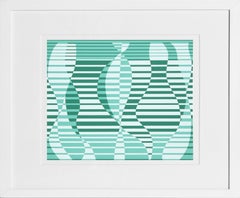
In the Water - P1, F2, I1, Geometric Abstract Screenprint by Josef Albers
Located in Long Island City, NY
Artist: Josef Albers, German (1888 - 1976) Title: In the Water - P1, F2, I1 Year: 1972 Edition size: 1000 Medium: Screenprint on Mohawk Superfine Bristol paper Image Size: 13 x 15 in...
Category

Abstract Geometric 20th Century Prints and Multiples

Materials

Screen

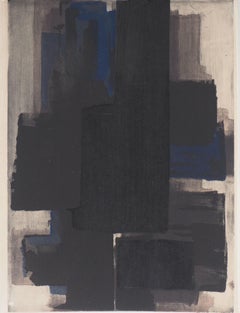
Composition in Black and Blue - Lithograph and stencil, 1956
Located in Paris, IDF
Pierre SOULAGES Composition in Black and Blue, 1956 Lithograph and stencil (Jacomet workshop) Unsigned On wove paper 31 x 24 cm (c. 12.2 x 9.4 inches) Edited by San Lazaro in 1956 ...
Category

Abstract 20th Century Prints and Multiples

Materials

Lithograph, Stencil

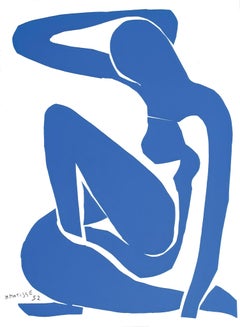
Henri Matisse, Blue Nude VI, from Verve, Revue Artistique, 1958 (after)
Located in Southampton, NY
This exquisite lithograph after Henri Matisse (1869–1954), titled Nu Bleu VI (Blue Nude VI), from Verve, Revue Artistique et Litteraire, Vol. IX, No. 35–36, originates from the 1958 ...
Category

Modern 20th Century Prints and Multiples

Materials

Lithograph

screenprint
Located in Henderson, NV
Medium: screenprint (after the drawing). Printed in 1963 on a special semi-transparent paper in an edition of 450 for "Naissances" and published by Galerie Der Spiegel. Size: 11 3/4 ...
Category

20th Century Prints and Multiples

Materials

Screen

Recently Viewed

View All