Want more images or videos?
Request additional images or videos from the seller
1 of 4
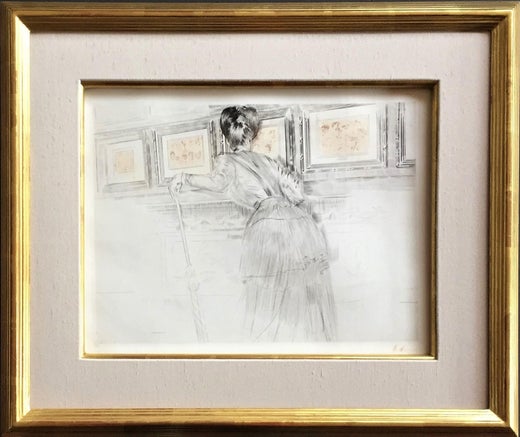
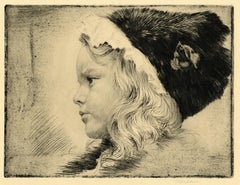
Paul César HelleuJeune Femme Cousant; Madame Helleu (Young Woman Sewing, artist
s wife)1892
1892
Price:$1,200
About the Item
- Creator:Paul César Helleu (1859-1927, French)
- Creation Year:1892
- Dimensions:Height: 7.57 in (19.23 cm)Width: 5.875 in (14.93 cm)
- Medium:
- Movement Style:
- Period:
- Condition:
- Gallery Location:Middletown, NY
- Reference Number:Seller: BH1401stDibs: LU1979210342402
Paul César Helleu
Rich impression with dramatic drypoint burr and tone no other artist epitomizes the whole atmosphere of elegance and hedonistic pleasure which pervaded Paris society at the first decade of the century as does Helleu. A close friend of Proust and the inspiration for one of the principal characters in La Recherche du Temps Perdu, Helleu’s whole life style echoed the incomparable elegance and flow of his drawing, the sheer style of his art, and his eye for the poses of the beautiful women who were his friends and his patrons. During the 1870’s, Helleu had come to know the painters of Impressionism and also artists Sargent and Whistler who became his special friends and inspiration. By the early 1880’s, he had already developed the quality of expressive sweeping line, which is the essence of his drawing, but in 1885 he was encouraged by Tissot to try working on prints in drypoint. At this time, Tissot had decided, after the death of his lover and model Kathleen Newton, to travel to the Holy Land on an artistic pilgrimage. Having decided he would no longer engrave, he gave Helleu his diamond stylus…a literal and figurative “passing of the baton”. It was in the incision and texture of drypoint that his art was to reach one of its greatest peaks. He had an innate feel for the balance between a lightly curving stroke and the deeply cut highly tonal burr of the strongest drypoint. Around the turn of the century he started to combine drypoint with multi-inking in colors, the areas of color restricted to such touches as the bows on the hats, the hair color or the red of the lips. The plate was drawn at a single sitting, and then the color inks were brushed onto it. The results are some of the most splendid and decorative of all Belle Époque prints.
About the Seller
5.0
Vetted Professional Seller
Every seller passes strict standards for authenticity and reliability
Established in 2004
1stDibs seller since 2022
80 sales on 1stDibs
Typical response time: 20 hours
Authenticity Guarantee
In the unlikely event there’s an issue with an item’s authenticity, contact us within 1 year for a full refund. DetailsMoney-Back Guarantee
If your item is not as described, is damaged in transit, or does not arrive, contact us within 7 days for a full refund. Details24-Hour Cancellation
You have a 24-hour grace period in which to reconsider your purchase, with no questions asked.Vetted Professional Sellers
Our world-class sellers must adhere to strict standards for service and quality, maintaining the integrity of our listings.Price-Match Guarantee
If you find that a seller listed the same item for a lower price elsewhere, we’ll match it.Trusted Global Delivery
Our best-in-class carrier network provides specialized shipping options worldwide, including custom delivery.You May Also Like
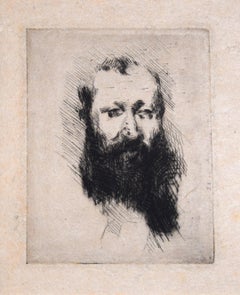
Portrait d’Homme Barbu Alphonse Hirsch - Etching by G. De Nittis -1875
By Giuseppe De Nittis
Located in Roma, IT
Important and rare etching by G. De Nittis. Good condition with fine tonal contrasts. Slight foxing all over the sheet .
1st state - before the ink veiling. Edition unknown. "This d...
Category
1870s Impressionist Figurative Prints
Materials
Etching, Paper, Drypoint
$15,023
H 8.86 in W 7.09 in D 0.04 in
Becquet
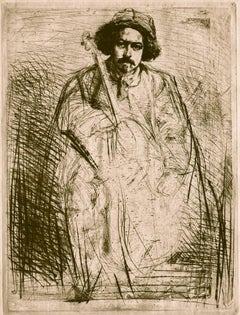
By James Abbott McNeill Whistler
Located in Storrs, CT
J. Becquet, Sculptor (The Fiddler). 1859. Drypoint. Kennedy 52 state iv; Glasgow 62. state i. 10 1/8 x 7 1/2 (sheet 15 5/16 x 9 3/4). Series: "Sixteen Etchings or Scenes on the Thame...
Category
Mid-19th Century American Impressionist Figurative Prints
Materials
Drypoint, Etching
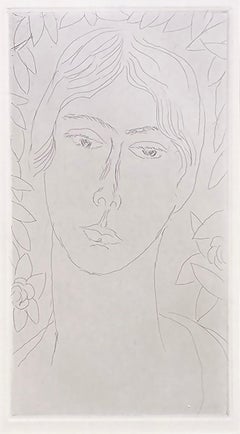
"Mlle Landsberg" (grade planche, pl. 16)
By Henri Matisse
Located in Missouri, MO
"Mlle Landsberg" (grade planche, pl. 16), 1914
Henri Matisse (French, 1869-1954)
Signed and Numbered Lower Right
Edition 12/15
Image size: 7 7/8 x 4 5/16 inches
Sheet size: 17 11/16 x 12 1/2 inches
With frame: 19 1/2 x 14 1/2 inches
Henri Matisse came from a family who were of Flemish origin and lived near the Belgian border. At eight o'clock on the evening of December 31, 1869, he was born in his grandparents' home in the town of Le Cateau in the cheerless far north of France. His father was a self-made seed merchant who was a mixture of determination and tightly coiled tension.
Henri had no clear idea of what he wanted to do with his life. He was a twenty-year-old law clerk convalescing from appendicitis when he first began to paint, using a box of colors given to him by his mother. Little more than a year later, in 1890, he had abandoned law and was studying art in Paris. The classes consisted of drawing from plaster casts and nude models and of copying paintings in the Louvre. He soon rebelled against the school's conservative atmosphere; he replaced the dark tones of his earliest works with brighter colors that reflected his awareness of Impressionism. Matisse was also a violinist; he took an odd pride in the notion that if his painting eye failed, he could support his family by fiddling on the streets of Paris.
Henri found a girlfriend while studying art, and he fathered a daughter, Marguerite, by her in 1894. In 1898 he married another woman, Amelie Parayre. She adopted the beloved Marguerite; they eventually had two sons, Jean, a sculptor and Pierre who became an eminent art dealer. Relations between Matisse and his wife were often strained. He often dallied with other women, and they finally separated in 1939 over a model who had been hired as a companion for Mme. Matisse. She was Madame Lydia, and after Mme. Matisse left, she remained with Matisse until he died.
Matisse spent the summer of 1905 working with Andre Derain in the small Mediterranean seaport of Collioure. They began using bright and dissonant colors. When they and their colleagues exhibited together, they caused a sensation. The critics and the public considered their paintings to be so crude and so roughly crafted that the group became known as Les Fauves (the wild beasts).
By 1907, Matisse moved on from the concerns of Fauvism and turned his attention to studies of the human figure. He had begun to sculpt a few years earlier. In 1910, when he saw an exhibition of Islamic art, he was fascinated with the multiple patterned areas and adapted the decorative universe of the miniatures to his interiors. As a continuation of his interest in the "exotic", Matisse made extended trips to Morocco in 1912 and 1913.
At the end of 1917, Matisse moved to Nice; he would spend part of each year there for the remainder of his life. A meticulous dandy, he wore a light tweed jacket amd a tie when he painted. He never used a palette, but instead squeezed his colors on to plain white kitchen dishes...
Category
1910s Fauvist Figurative Prints
Materials
Drypoint, Etching
Trajan - Drypoint Etching attr. to Salvador Dalì - 1973
By Salvador Dalí
Located in Roma, IT
Trajan is an original contemporary artwork realized in 1973.
Black and white drypoin etching.
Hand signed on the lower margin.
Numbered on the lower left. Edition of 216/261.
Ref...
Category
1970s Surrealist Figurative Prints
Materials
Etching, Drypoint

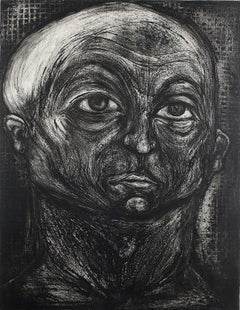
Mr. Thirteen (the insignificance of the significant)
By Seyed M. S. Edalatpour
Located in New Orleans, LA
"Mr. Thirteen" is an etching, engraving and drypoint created in 1995, edition: 12 signed in pencil. The print has an embossed chop in the lower right corner, a capital P in a circl...
Category
1990s Surrealist Portrait Prints
Materials
Etching, Engraving, Drypoint
$746 Sale Price
37% Off
H 23 in W 17.5 in
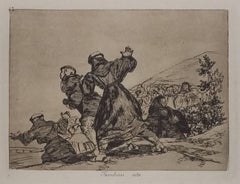
TAMBIEN ESTO
By Francisco Goya
Located in Aventura, FL
Tambien esto / So is this (Disasters of War, plate 43, Harris 163, Delteil 162). Original etching, burnished aquatint, and burnisher, c. 1808-1814. The clergy are running; their floc...
Category
Early 19th Century Romantic Figurative Prints
Materials
Drypoint, Etching, Paper
Madame M. - Original Etching and Drypoint by C.A. Waltner - 1894
By Charles Albert Waltner
Located in Roma, IT
Madame M. is a black an white etching and drypoint realized by a French artist active at the end of XIX century, Maurice Deville in 1894.
This original print, representing a superb...
Category
1890s Modern Figurative Prints
Materials
Drypoint, Etching

$180
H 13.51 in W 9.85 in D 0.04 in
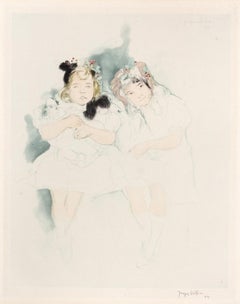
"Mes Petites Amies, Les Deux Sœurs" signed by Jacques Villon
By Jacques Villon
Located in Milwaukee, WI
This is a drypoint and aquatint artwork by Jacques Villon. The artist signed in pencil on the lower right. As well as signed in plate at the top right of the image. This is a wonderful artwork of different intaglio processes being brought together in a beautiful almost seamless harmony. The thin pencil like markings and hair detailing are made using the Drypoint printmaking method. Whilst the color details around the girls are made using the Aquatint etching method. Jacques Villon shows his skills as a printmaker with the way these pieces line up perfectly and with how clean the rest of the plate is around the girls. An unnumbered impression, apart from the numbered edition of 50.
Catalogue Raisonne E101, pg. 66-67 (Ginestet & Pouillon. It depicts two young girls.
15" x 11 1/2" art
25 1/8" x 20" frame
French painter, printmaker and illustrator. The oldest of three brothers who became major 20th-century artists, including Raymond Duchamp-Villon and Marcel Duchamp, he learnt engraving at the age of 16 from his maternal grandfather, Emile-Frédéric Nicolle (1830-94), a ship-broker who was also a much appreciated amateur artist. In January 1894, having completed his studies at the Lycée Corneille in Rouen, he was sent to study at the Faculty of Law of the University of Paris, but within a year he was devoting most of his time to art, already contributing lithographs to Parisian illustrated newspapers such as Assiette au beurre. At this time he chose his pseudonym: Jack (subsequently Jacques) in homage to Alphonse Daudet’s novel Jack (1876) and Villon in appreciation of the 15th-century French poet François Villon...
Category
Early 1900s Modern Figurative Prints
Materials
Drypoint, Aquatint, Etching, Intaglio
$21,600
H 25.125 in W 20 in
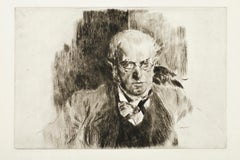
Portrait of Adolph Menzel - Etching by Giovanni Boldini - 1897
By Giovanni Boldini
Located in Roma, IT
Portrait of Adolph Menzel is a magnificent drypoint realized by Giovanni Boldini in 1897.
Reference:
Buzzoni / M. Toffanello, Museo Giovanni Boldini, G...
Category
1890s Modern Portrait Prints
Materials
Drypoint, Etching
$22,235
H 14.57 in W 20.08 in D 0.08 in
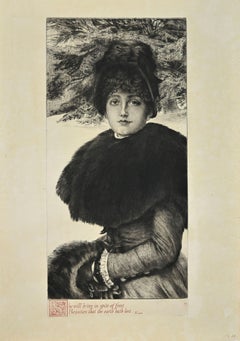
Promenade dans la Neige - Etching by J. Tissot - 1880
By James Tissot
Located in Roma, IT
Beautiful print on verge crème, 2° state on 3, with letters printed in red. Stamp “Lugt 1545”.
Little crack and fold on lower left margin of the sheet.
Some small traces of oxidati...
Category
1880s Post-Impressionist Portrait Prints
Materials
Drypoint, Etching
$7,091
H 22.29 in W 10.52 in D 0.04 in
More From This Seller
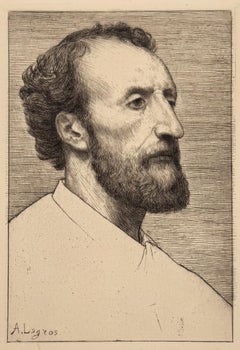
View AllPortrait of the sculptor Jules Dalou
By Alphonse Legros
Located in Middletown, NY
London: 1876.
Etching with drypoint on cream laid paper with a partial large heraldic watermark, 9 3/4 x 6 1/2 inches (247 x 165 mm); sheet 14 x 10 3/8 inches (355 x 264 mm), full m...
Category
Mid-19th Century French School Portrait Prints
Materials
Etching, Laid Paper, Drypoint
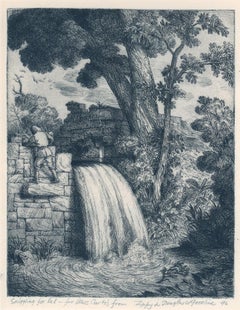
Sniggling for Eel
By Douglas Gorsline
Located in Middletown, NY
Etching with drypoint in black ink on antique laid paper with various large watermarks, 6 3/4 x 5 3/8 inches (172 x 132 mm), full margins with deckle edges on two sides. Signed, date...
Category
Mid-20th Century American Realist Portrait Prints
Materials
Laid Paper, Drypoint, Etching
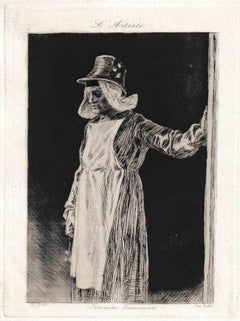
Vieille Masken, La Servante Anversoise
By Félicien Rops
Located in Middletown, NY
Etching with engraving and drypoint printed in brownish black ink on cream laid paper with a partial heraldic A and fleur-de-lis watermark, 5 5/8 x 4 1/4 inches ( 341 x 107 mm), full...
Category
Late 19th Century French School Portrait Prints
Materials
Laid Paper, Engraving, Drypoint, Etching
My Daughter
Located in Middletown, NY
Drypoint etching on buff wove paper, 9 3/4 x 12 3/4 inches (250 x 322 mm), full margins. Signed in pencil, lower right margin. Some general age tone, and minor mat tone around the pe...
Category
Early 20th Century Modern Portrait Prints
Materials
Drypoint, Etching
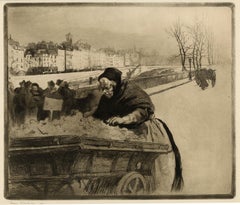
La Marchande des Quatres-Saisons
By Edgar Chahine
Located in Middletown, NY
Etching with drypoint on cream wove paper, 11 3/4 x 13 3/4 inches (297 x 347 mm), full margins. Signed in pencil and numbered 32/40, lower margin. Minor mat tone and several small lo...
Category
Early 20th Century Post-Impressionist Portrait Prints
Materials
Handmade Paper, Rag Paper, Drypoint, Etching
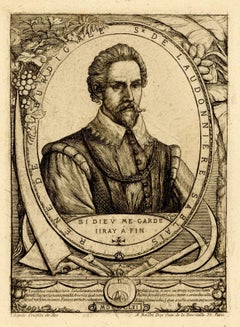
René de Laudonnière Sablais (de Burdigale). After Crispjin van de Passe I
By Charles Meryon
Located in Middletown, NY
Paris: 1861
Etching, drypoint, and engraving on cream laid paper, 6 x 4 1/4 inches (152 x 108 mm), full margins. Dog-eared left corner, extending 3-inches into the sheet, but well ou...
Category
Mid-19th Century French School Portrait Prints
Materials
Laid Paper, Engraving, Drypoint, Etching
Still Thinking About These?
All Recently ViewedMore Ways To Browse
Lithograph Hopper
Matisse Poesies Antillaises
Muhammad Ali Signed
Peter Max Woman
Reigning Queens
Warhol Ladies Gentlemen
Warhol Liz
Andy Warhol Estate Stamp
Chris Levine Queen
Lucelle Raad
Marilyn Crying
Mel Ramos On Sale
Peter Max Signed Serigraph
Portrait Of Jean Cocteau
Russell Young Bardot
Alex Katz White Shirt
Amedeo Modigliani Signed
Andy Warhol Liz