Items Similar to Tom Tower, Christ Church, St Aldate
s, Oxford by Hill after Pugin for Ackermann
Want more images or videos?
Request additional images or videos from the seller
1 of 6
Rudolph AckermannTom Tower, Christ Church, St Aldate
s, Oxford by Hill after Pugin for Ackermann1813
1813
$654.74
£480
€557.54
CA$902.07
A$983.84
CHF 521.17
MX$11,794.79
NOK 6,637.39
SEK 6,069.40
DKK 4,165.34
About the Item
To see our other Oxford and Cambridge pictures, including an extensive collection of works by Ackermann, scroll down to "More from this Seller" and below it click on "See all from this Seller" - or send us a message if you cannot find the view you want.
John Hill (1770 - 1850) after Augustus Charles Pugin (1762 - 1832)
St Aldate's From Carfax (1813)
Aquatint with original hand colouring
27 x 21 cm
Published by Rudolph Ackermann (1764 - 1834).
An engraving of St Aldate's, overlooked by Christ Church's pale and magnificent Tom Tower.
John Hill was born in London in 1770, and was an engraver's apprentice. He worked in aquatint and largely produced book illustration aquatints. He went to America in 1816 and produced the notable Picturesque Views of American Scenery amongst other books of prints.
Augustus Charles Pugin was an Anglo-French artist and architectural draughtsman. Pugin produced views of London, jointly creating the illustrations for the 'Microcosm of London' published by Rudolph Ackermann in 1811, followed by plates for Ackermann's books about Westminster Abbey, Oxford and Cambridge universities, and Winchester College. His later works included illustrations for Specimens of Gothic Architecture (1821–1823), The Royal Pavilion at Brighton (1826), Architectural Antiquities of Great Britain (1826), Specimens of the Architectural Antiquities of Normandy (1827), Illustrations of the Public Buildings of London (1825 to 1828), Paris and its Environs (1829 to 1831), and Examples of Gothic Architecture (1831). He also produced a book of furniture designs called Gothic Furniture, and assisted architects with detailing for their gothic designs. He ran a drawing school at his house in Bloomsbury.
Ackermann was an Anglo-German bookseller, inventor, lithographer, publisher and businessman. He attended the Latin school in Stollberg, but his wish to study at the university was made impossible by lack of financial means, and he therefore became a saddler like his father.
He worked as a saddler and coach-builder in different German cities, moved from Dresden to Basel and Paris, and then, 23 years old, settled in London. He established himself in Long Acre, the centre of coach-making in London and close to the market at Covent Garden.
Ackermann then moved to Little Russell Street where he published Imitations of Drawings of Fashionable Carriages (1791) to promote his coach-making. Other publications followed. In 1795 he established a print-shop and drawing-school at 96 Strand. Here Ackermann set up a lithographic press and began a trade in prints. He later began to manufacture colours and thick carton paper for landscape and miniature painters. Within three years the premises had become too small and he moved to 101 Strand, in his own words "four doors nearer to Somerset House", the seat of the Royal Academy of Arts.
Between 1797 and 1800 Ackermann rapidly developed his print and book publishing business, encompassing many different genres including topography, caricature, portraits, transparencies and decorative prints.
During the Napoleonic wars, Ackermann was an energetic supporter of the Allied cause and made significant contributions to British propaganda through his publication of anti-Napoleonic prints and military manuals. He became a naturalised British citizen in March 1809.
As one of the pioneers of modern publishing methods, Ackermann developed an international distribution network for his publications and came to have significant commercial interests in South America. The business he founded in London flourished throughout the 19th century under the management of his descendants. He was buried at St. Clement Danes in the Strand, London.
In 2020, the St. Louis Mercantile Library wrote that:
"Ackermann excelled in the creation of landscape and architectural engravings. He created beautiful illustrations of the city of London, his adopted home, as well as two volumes of classic views of Westminster Abbey, along with exquisite views of river scenes. One of our favorite collections are four massive volumes of lovingly illustrated exterior and interior landmarks of Oxford and Cambridge Universities created just over two hundred years ago. These publications show Ackermann’s hand at every turn of the page along with the team of assistant designers and engravers he employed to create these works. Perhaps they were a way by which the artist could lay to rest his own regret at not being able to attend [an Oxbridge] college himself in a fondly depicted idyll to learning which these prints so aptly represent."
Rudolph Ackermann was an Anglo-German bookseller, inventor, lithographer, publisher and businessman. In 1795 he established a print-shop and drawing-school at 96 Strand. Here Ackermann set up a lithographic press and began a trade in prints. He later began to manufacture colours and thick carton paper for landscape and miniature painters. Within three years the premises had become too small and he moved to 101 Strand, in his own words "four doors nearer to Somerset House", the seat of the Royal Academy of Arts. Between 1797 and 1800 Ackermann rapidly developed his print and book publishing business, encompassing many different genres including topography, caricature, portraits, transparencies, and decorative prints.
About the Seller
4.8
Vetted Professional Seller
Every seller passes strict standards for authenticity and reliability
Established in 2014
1stDibs seller since 2017
362 sales on 1stDibs
Typical response time: 13 hours
- ShippingRetrieving quote...Shipping from: London, United Kingdom
- Return Policy
More From This Seller
View AllSt Mary
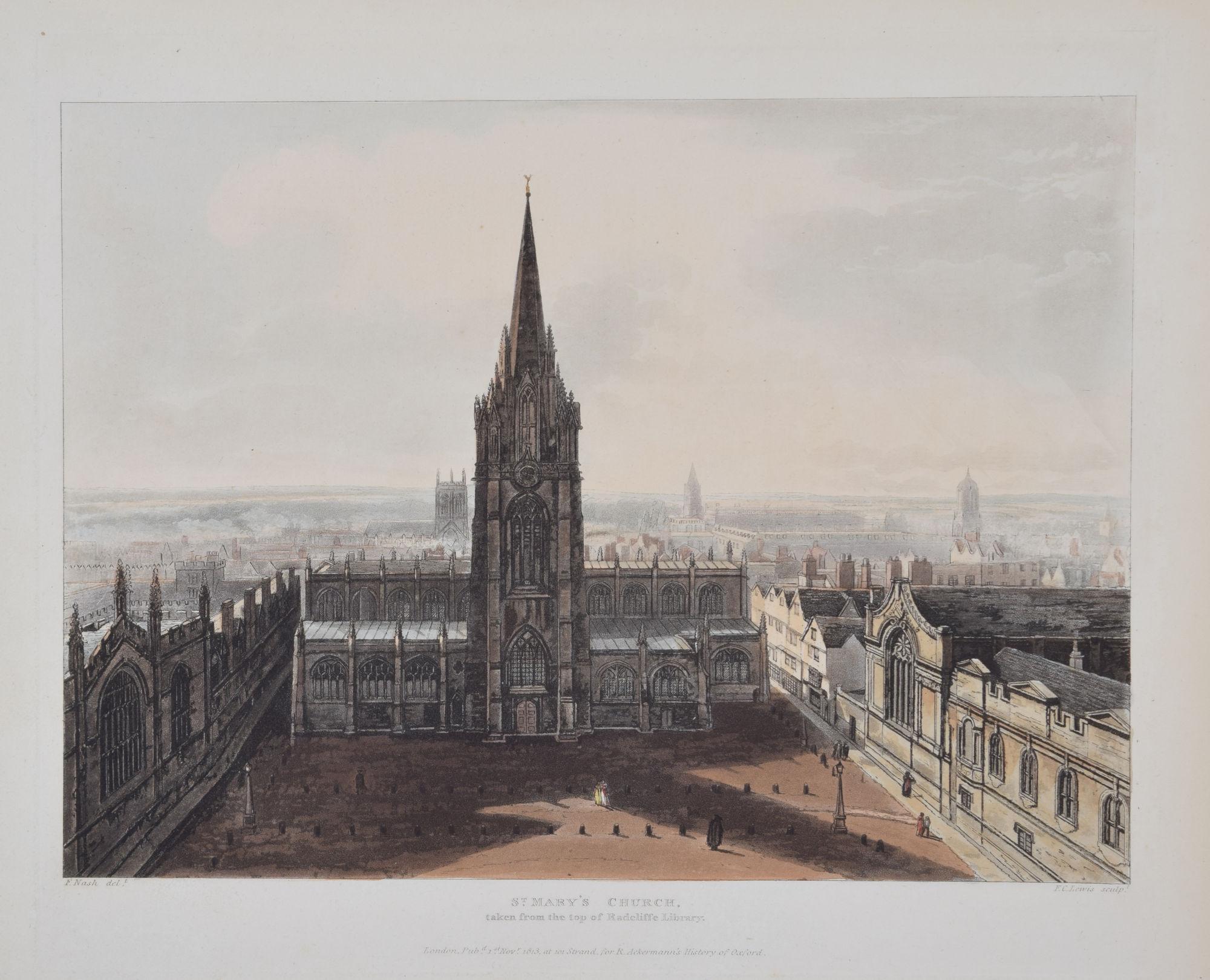
s Church, Oxford engraving by Lewis after Nash for Ackermann
Located in London, GB
To see our other Oxford and Cambridge pictures, including an extensive collection of works by Ackermann, scroll down to "More from this Seller" and below it click on "See all from this Seller" - or send us a message if you cannot find the view you want.
Frederick Christian Lewis (1779 - 1856) after Frederick Nash (1782 - 1856)
St Mary's Church, Oxford (1813)
Aquatint with original hand colouring
21 x 27 cm
Published by Rudolph Ackermann (1764 - 1834).
Frederick Nash was born in Lambeth. He studied architectural drawing under Thomas Malton and then enrolled at the Royal Academy of Arts. From 1801 to 1809 he worked with the antiquarians John Britton and Edward Wedlake Brayley, subsequently becoming a member of the Society of Painters in Watercolours - a group of painters who had left the Royal Academy following complaints of under-recognition of their works. Nash became primarily a landscape painter and toured the rivers of Germany.
Frederick Christian Lewis was an English etcher, aquatint and stipple engraver, landscape and portrait painter. He studied under J. C. Stadler and in the schools of the Royal Academy and aquatinted most of Thomas Girtin's etchings of Paris...
Category
1810s Prints and Multiples
Materials
Aquatint
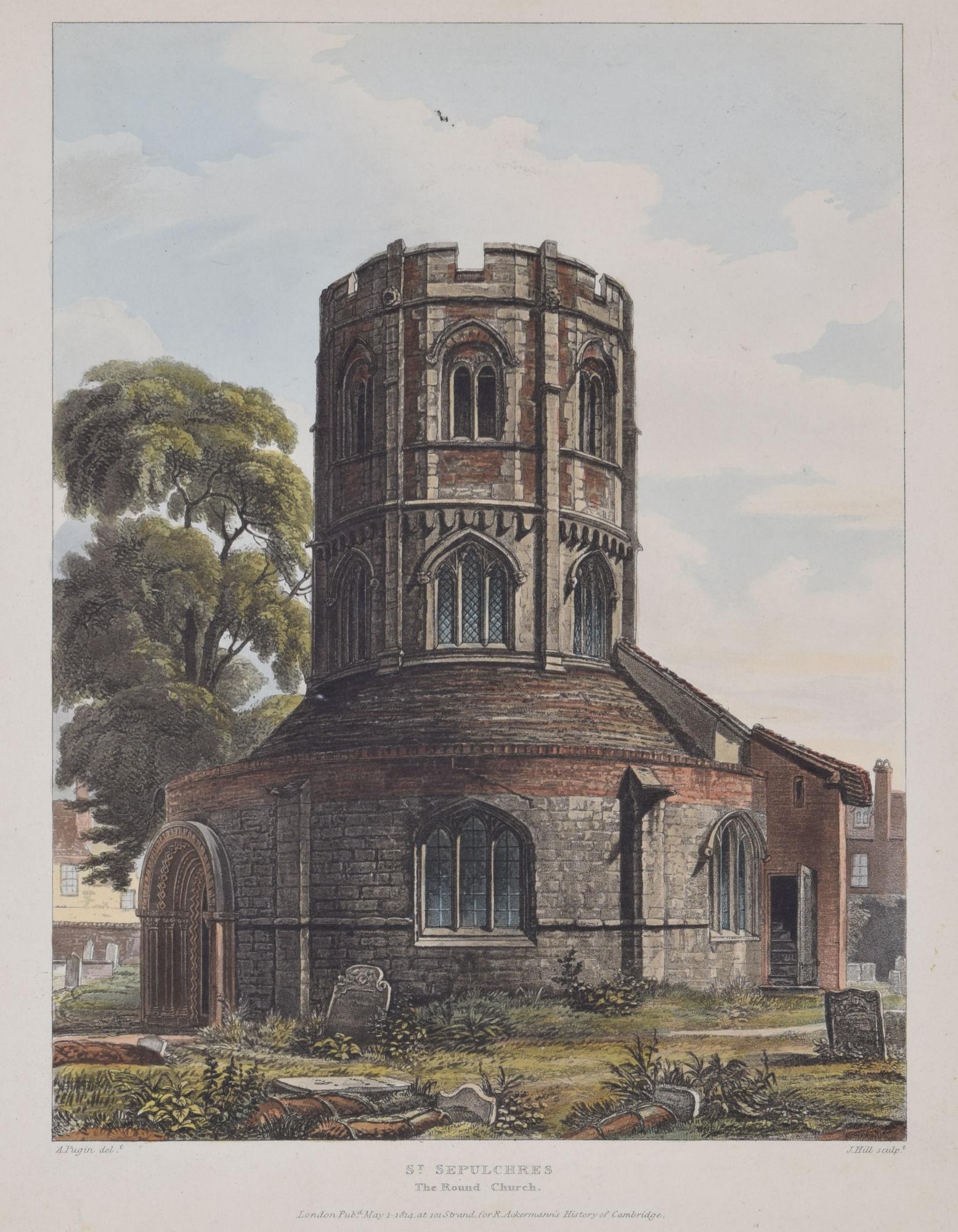
St Sepulchre, The Round Church, Cambridge exterior after Pugin for Ackermann
Located in London, GB
To see our other Oxford and Cambridge pictures, including an extensive collection of works by Ackermann, scroll down to "More from this Seller" and below it click on "See all from this Seller" - or send us a message if you cannot find the view you want.
John Hill (1770 - 1850) after Augustus Charles Pugin (1762 - 1832)
St Sepulchre's - The Round Church (1814)
Aquatint with original hand colouring
24 x 29 cm
Published by Rudolph Ackermann (1764 - 1834).
An engraving of the Church of the Holy Sepulchre, Cambridge, the round shape of which is inspired by the rotunda in the church of the Holy Sepulchre, Jerusalem.
John Hill was born in London in 1770, and was an engraver's apprentice. He worked in aquatint and largely produced book illustration aquatints. He went to America in 1816 and produced the notable Picturesque Views of American Scenery amongst other books of prints.
Augustus Charles Pugin was an Anglo-French artist and architectural draughtsman. Pugin produced views of London, jointly creating the illustrations for the 'Microcosm of London' published by Rudolph Ackermann in 1811, followed by plates for Ackermann's books about Westminster Abbey, Oxford and Cambridge universities, and Winchester College. His later works included illustrations for Specimens of Gothic Architecture (1821–1823), The Royal Pavilion at Brighton (1826), Architectural Antiquities of Great Britain (1826), Specimens of the Architectural Antiquities of Normandy (1827), Illustrations of the Public Buildings of London (1825 to 1828), Paris and its Environs (1829 to 1831), and Examples of Gothic Architecture (1831). He also produced a book of furniture designs called Gothic Furniture, and assisted architects with detailing for their gothic designs. He ran a drawing school at his house in Bloomsbury.
Ackermann was an Anglo-German bookseller, inventor, lithographer, publisher and businessman. He attended the Latin school in Stollberg, but his wish to study at the university was made impossible by lack of financial means, and he therefore became a saddler like his father.
He worked as a saddler and coach-builder in different German cities, moved from Dresden to Basel and Paris, and then, 23 years old, settled in London. He established himself in Long Acre, the centre of coach-making in London and close to the market at Covent Garden.
Ackermann then moved to Little Russell Street where he published Imitations of Drawings of Fashionable Carriages (1791) to promote his coach-making. Other publications followed. In 1795 he established a print-shop and drawing-school at 96 Strand. Here Ackermann set up a lithographic press and began a trade in prints. He later began to manufacture colours and thick carton paper for landscape and miniature painters. Within three years the premises had become too small and he moved to 101 Strand, in his own words "four doors nearer to Somerset House", the seat of the Royal Academy of Arts.
Between 1797 and 1800 Ackermann rapidly developed his print and book publishing business, encompassing many different genres including topography, caricature, portraits, transparencies and decorative prints.
During the Napoleonic wars, Ackermann was an energetic supporter of the Allied cause and made significant contributions to British propaganda through his publication of anti-Napoleonic prints...
Category
1810s Prints and Multiples
Materials
Aquatint
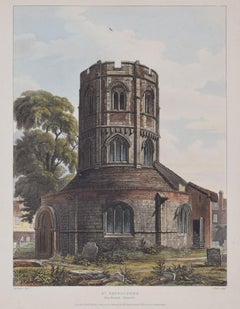
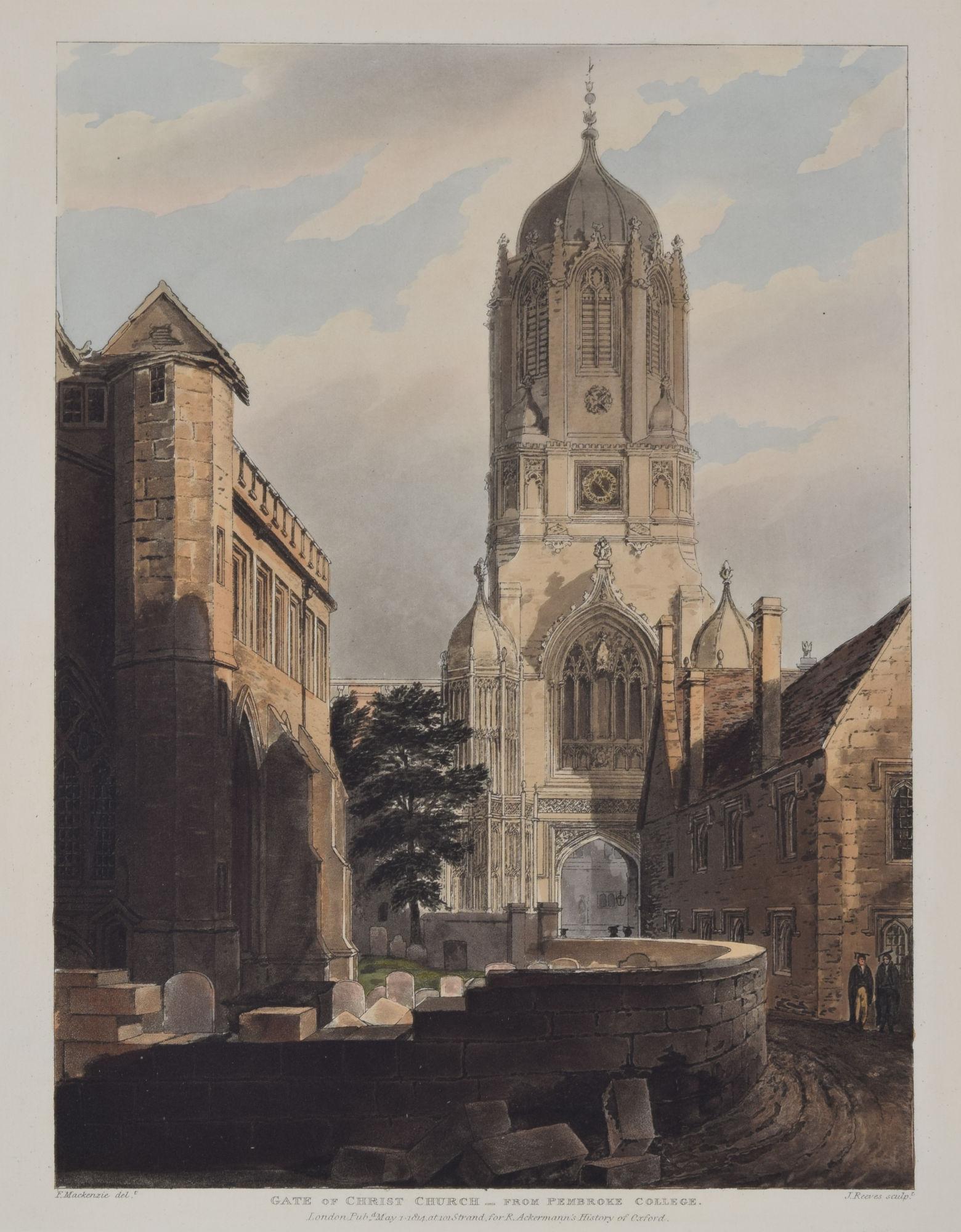
Gate of Christ Church, Oxford engraving by Reeves after Mackenzie for Ackermann
Located in London, GB
To see our other Oxford and Cambridge pictures, including an extensive collection of works by Ackermann, scroll down to "More from this Seller" and below it click on "See all from th...
Category
1810s Realist Prints and Multiples
Materials
Aquatint
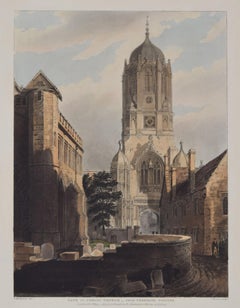
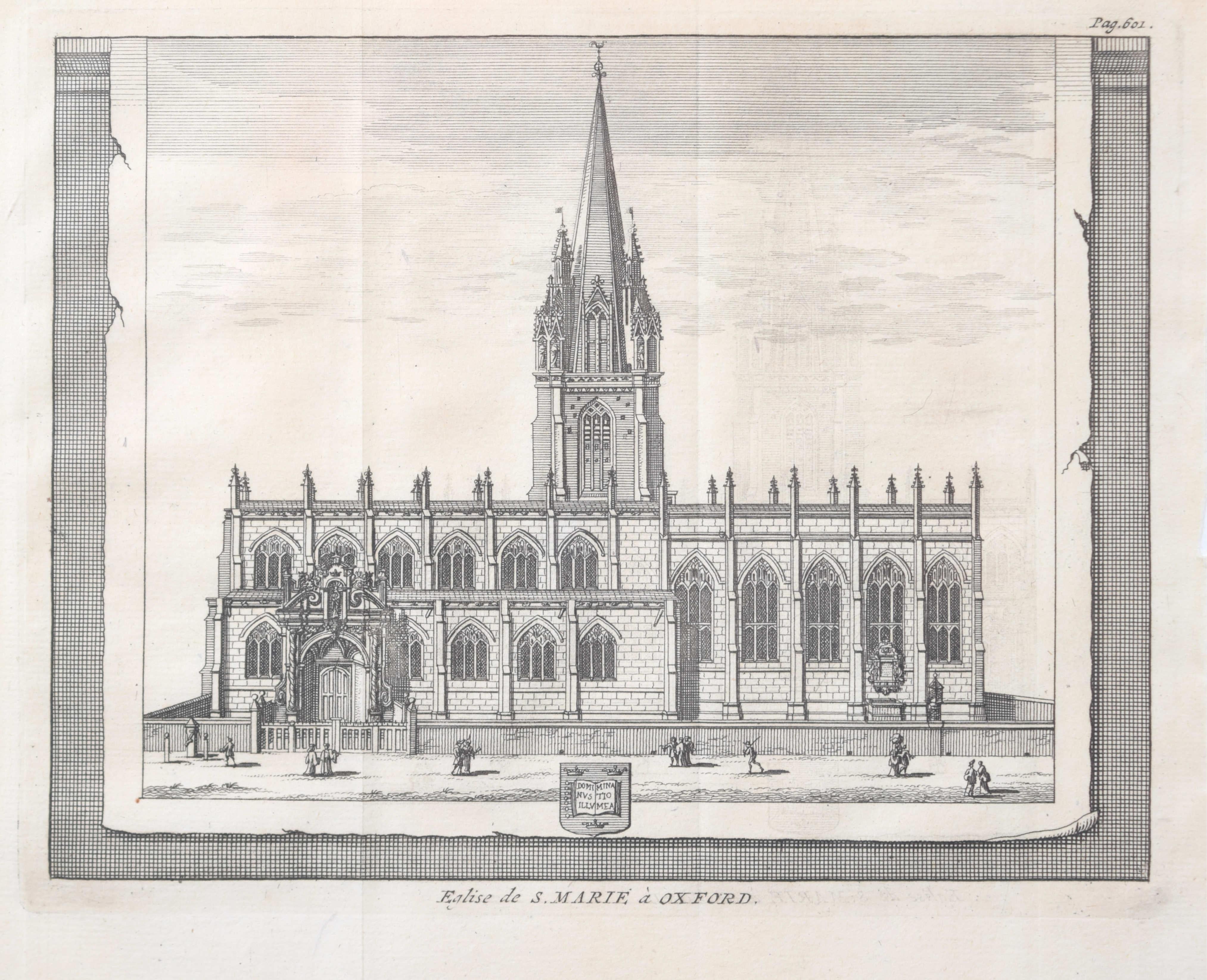
University Church of St Mary, Oxford by Pieter van der Aa after David Loggan
By Pieter Van Der Aa
Located in London, GB
Pieter van der Aa (1659-1733), after David Loggan (1634–1692)
The University Church of St Mary the Virgin, University of Oxford
Engraving
12 x 16 cm
An eighteenth-century view of the University Church, engraved by Pieter van der Aa after David Loggan, the noted engraver, draughtsman, and painter. St Mary's was the first building of the University of Oxford and its parish consists almost exclusively of university and college buildings. Its eccentric Baroque porch, designed by Nicholas Stone, faces the High Street, and it boasts a spire which is claimed by some church historians to be one of the most beautiful in England. Radcliffe Square lies to the north and to the east is Catte Street. The 13th-century tower is open to the public and provides magnificent views across the heart of the historic university city, especially Radcliffe Square, the Radcliffe Camera...
Category
Early 18th Century Realist Prints and Multiples
Materials
Engraving
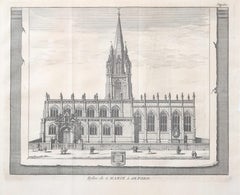
Merton College Chapel engraving by J Sutherland after Pugin for Ackermann
Located in London, GB
To see our other Oxford and Cambridge pictures, including an extensive collection of works by Ackermann, scroll down to "More from this Seller" and below it click on "See all from th...
Category
1810s Prints and Multiples
Materials
Aquatint
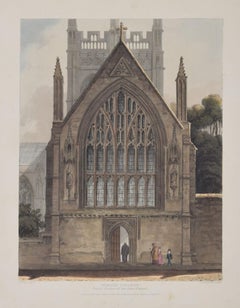
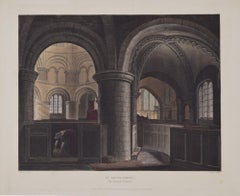
St Sepulchre, The Round Church, Cambridge interior after Pugin for Ackermann
Located in London, GB
To see our other Oxford and Cambridge pictures, including an extensive collection of works by Ackermann, scroll down to "More from this Seller" and below it click on "See all from this Seller" - or send us a message if you cannot find the view you want.
John Hill (1770 - 1850) after Augustus Charles Pugin (1762 - 1832)
St Sepulchre's - The Round Church (1814)
Aquatint with original hand colouring
24 x 29 cm
Published by Rudolph Ackermann (1764 - 1834).
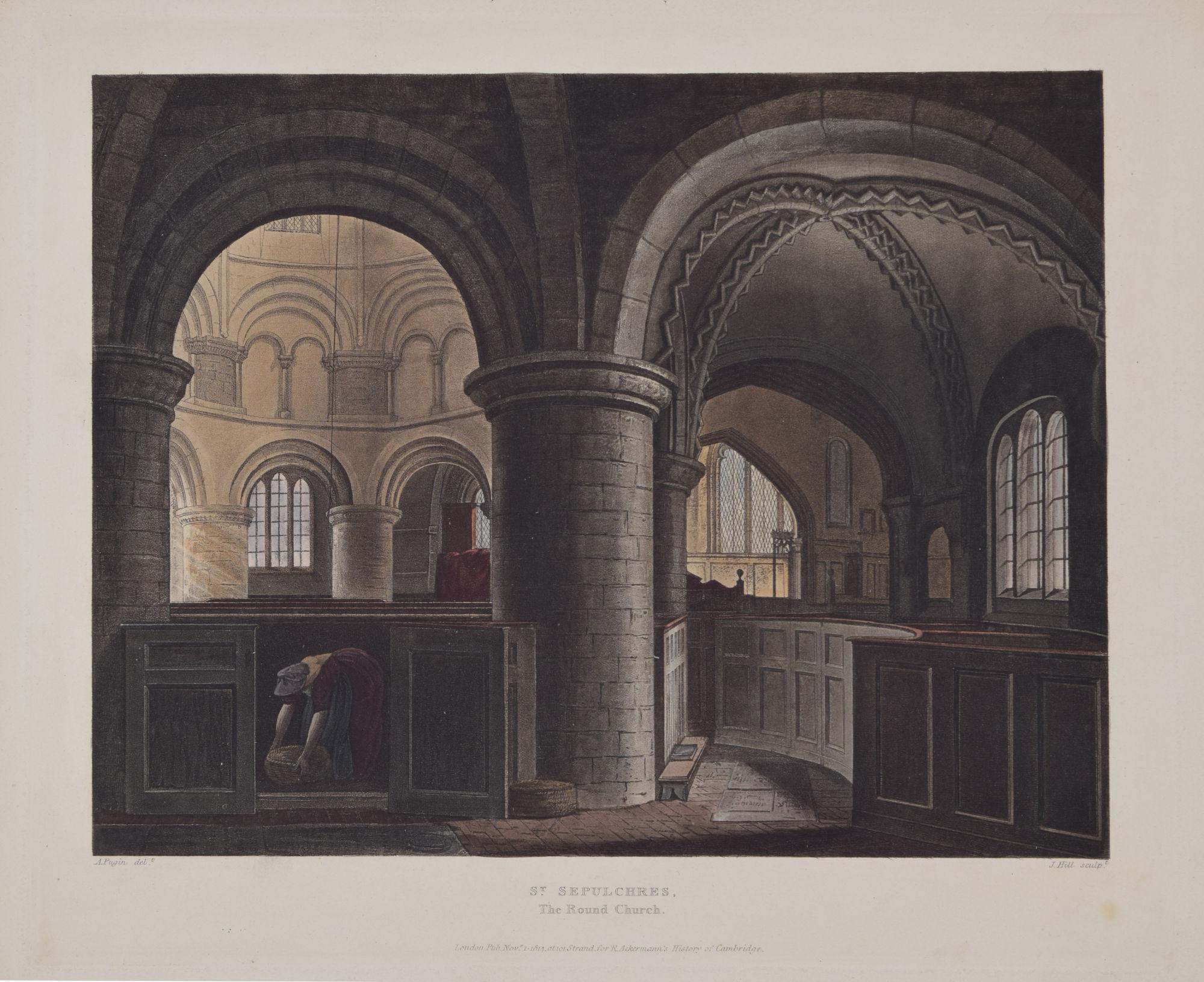
An interior engraving of the Church of the Holy Sepulchre, Cambridge, the round shape of which is inspired by the rotunda in the church of the Holy Sepulchre, Jerusalem.
John Hill was born in London in 1770, and was an engraver's apprentice. He worked in aquatint and largely produced book illustration aquatints. He went to America in 1816 and produced the notable Picturesque Views of American Scenery amongst other books of prints.
Augustus Charles Pugin was an Anglo-French artist and architectural draughtsman. Pugin produced views of London, jointly creating the illustrations for the 'Microcosm of London' published by Rudolph Ackermann in 1811, followed by plates for Ackermann's books about Westminster Abbey, Oxford and Cambridge universities, and Winchester College. His later works included illustrations for Specimens of Gothic Architecture (1821–1823), The Royal Pavilion at Brighton (1826), Architectural Antiquities of Great Britain (1826), Specimens of the Architectural Antiquities of Normandy (1827), Illustrations of the Public Buildings of London (1825 to 1828), Paris and its Environs (1829 to 1831), and Examples of Gothic Architecture (1831). He also produced a book of furniture designs called Gothic Furniture, and assisted architects with detailing for their gothic designs. He ran a drawing school at his house in Bloomsbury.
Ackermann was an Anglo-German bookseller, inventor, lithographer, publisher and businessman. He attended the Latin school in Stollberg, but his wish to study at the university was made impossible by lack of financial means, and he therefore became a saddler like his father.
He worked as a saddler and coach-builder in different German cities, moved from Dresden to Basel and Paris, and then, 23 years old, settled in London. He established himself in Long Acre, the centre of coach-making in London and close to the market at Covent Garden.
Ackermann then moved to Little Russell Street where he published Imitations of Drawings of Fashionable Carriages (1791) to promote his coach-making. Other publications followed. In 1795 he established a print-shop and drawing-school at 96 Strand. Here Ackermann set up a lithographic press and began a trade in prints. He later began to manufacture colours and thick carton paper for landscape and miniature painters. Within three years the premises had become too small and he moved to 101 Strand, in his own words "four doors nearer to Somerset House", the seat of the Royal Academy of Arts.
Between 1797 and 1800 Ackermann rapidly developed his print and book publishing business, encompassing many different genres including topography, caricature, portraits, transparencies and decorative prints.
During the Napoleonic wars, Ackermann was an energetic supporter of the Allied cause and made significant contributions to British propaganda through his publication of anti-Napoleonic prints...
Category
1810s Prints and Multiples
Materials
Aquatint
You May Also Like
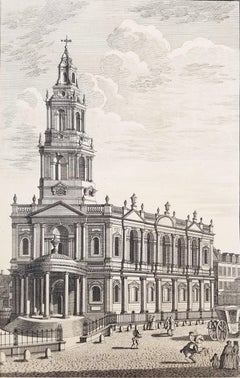
The South West Prospect of St. Mary
s Church in the Strand /// William Maitland
Located in Saint Augustine, FL
Artist: Benjamin Cole (English, c. 1697-1783)
Title: "The South West Prospect of St. Mary's Church in the Strand"
Portfolio: The History and Survey of London from its Foundation to t...
Category
1750s Old Masters Landscape Prints
Materials
Engraving, Laid Paper, Intaglio, Etching
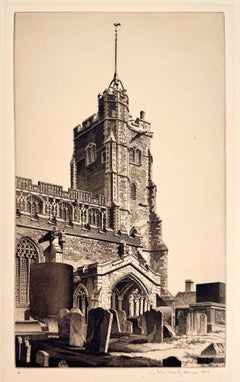
Cavendish Church
By John Taylor Arms
Located in Middletown, NY
Etching on cream laid paper with a deckle edge and with an unidentified watermark with an "AL" inside an ovoid cartouche with a garter and buckle (likely English 19th century), 9 1/2...
Category
1940s American Modern Landscape Prints
Materials
Handmade Paper, Etching
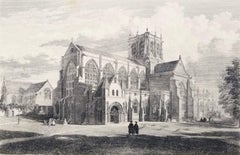
Southwest View of Sherborne Abbey Church /// History of Dorset English Engraving
Located in Saint Augustine, FL
Artist: John Hutchins (English, 1698-1773)
Title: "Southwest View of Sherborne Abbey Church" (Plate 15)
Portfolio: The History and Antiquities of the County of Dorset
Year: 1861-1870...
Category
1860s Victorian Landscape Prints
Materials
Engraving
West View of St Nicholas Chapel, Westminster Abbey, architecture aquatint
Located in Melbourne, Victoria
Colour aquatint by John Bluck (active 1791-1819) after Auguste Pugin (1762-1832).
Architectural interior with superb original colour. From 'Westminster Abbey', published by Rudolf A...
Category
Early 19th Century Naturalistic Landscape Prints
Materials
Engraving, Etching, Aquatint

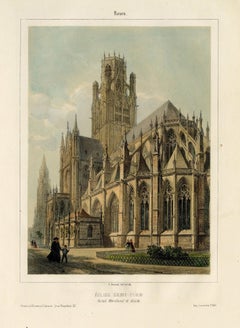
Two lithographs in color with engraving; Eglise St. Ouen
Eglise St. Maclou
Located in Middletown, NY
Each 8 x 6 inches (202 x 150 mm), full margins. Each with scattered light handling wear, surface soiling, and each with a small bookworm hole in the lower left sheet, well outside of...
Category
Early 19th Century French School Figurative Prints
Materials
Lithograph
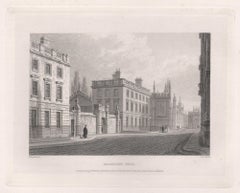
Magdalen Hall. Oxford University. Antique C19th engraving
Located in Melbourne, Victoria
'Magdalen Hall'
Engraving by John Le Keux after Frederick Mackenzie, 1837. From James Ingram's 'Memorials of Oxford'.
135mm by 175mm (platemark)
200mm ...
Category
19th Century Naturalistic Landscape Prints
Materials
Engraving
More Ways To Browse
Gothic Antique Furniture
Antique Mercantile
Royal Pavilion
Takashi Murakami Superflat
Twa Vintage Print
Vintage Political Posters
Vintage Poster Washington
Winter Scene Prints
Agostino Tofanelli
Al Hirschfeld Etching
Alex Katz Woodcut
Altman Artist
Andy Warhol Exhibition Poster
Antique Farm Prints
Antonio Saura
Astronomy Print
Banksy Poster
Bonjour Vintage