Items Similar to Albert Gleizes, The Bathers, 1929 (after)
Want more images or videos?
Request additional images or videos from the seller
1 of 7
Albert Gleizes, The Bathers, 1929 (after)1929
1929
$1,916
$2,39520% Off
£1,458.99
£1,823.7420% Off
€1,679.99
€2,099.9920% Off
CA$2,715.14
CA$3,393.9320% Off
A$2,920.52
A$3,650.6520% Off
CHF 1,560.81
CHF 1,951.0120% Off
MX$34,424.64
MX$43,030.7920% Off
NOK 19,678.18
NOK 24,597.7320% Off
SEK 17,989.59
SEK 22,486.9920% Off
DKK 12,552.38
DKK 15,690.4720% Off
About the Item
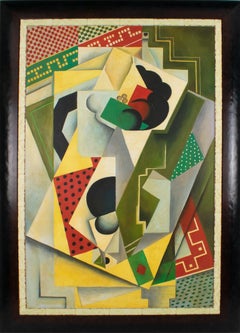
This exquisite lithograph and pochoir after Albert Gleizes (1881–1953), titled Les Baigneuses (The Bathers), from the album L'Art Cubiste, Theories et Realisations, Etude Critique (Cubist Art, Theories and Achievements, Critical Study), originates from the 1929 edition published by Editions Charles Moreau, Paris, and printed by Atelier Daniel Jacomet, Paris, May 1929. Les Baigneuses (The Bathers) embodies Gleizes’s pioneering synthesis of geometry, rhythm, and form, transforming a traditional theme into a vibrant study of structure and motion. The interlocking planes and dynamic color harmonies reveal the artist’s pursuit of “plastic dynamism,” his philosophy that geometry could express the universal laws of balance and movement underlying all natural phenomena. In this work, Gleizes transcends representation to create a vision of harmony between body, space, and rhythm—an elegant manifestation of Cubism’s intellectual and spiritual evolution.
Executed as a lithograph and pochoir on velin paper, this work measures 10.83 x 8.27 inches. Unsigned and unnumbered as issued. The edition exemplifies the exceptional craftsmanship of Atelier Daniel Jacomet, Paris, under the direction of Editions Charles Moreau, Paris.
Artwork Details:
Artist: After Albert Gleizes (1881–1953)
Title: Les Baigneuses (The Bathers), from the album L'Art Cubiste, Theories et Realisations, Etude Critique (Cubist Art, Theories and Achievements, Critical Study), 1929
Medium: Lithograph and pochoir on velin paper
Dimensions: 10.83 x 8.27 inches (27.5 x 21 cm)
Inscription: Unsigned and unnumbered as issued
Date: May 1929
Publisher: Editions Charles Moreau, Paris
Printer: Atelier Daniel Jacomet, Paris
Condition: Well preserved, consistent with age and medium
Provenance: From the album L'Art Cubiste, Theories et Realisations, Etude Critique, published by Editions Charles Moreau, Paris, and printed by Atelier Daniel Jacomet, Paris, May 1929
Notes:
Excerpted from the album (translated from French): This album was composed in Didot Characters and completed to print in May 1929 by Ducros et Colas, Maitres-Imprimeurs in Paris. Boards have been executed by D. Jacomet in an edition of D examples, numbered on the colophons.
About the Publication:
L'Art Cubiste, Theories et Realisations, Etude Critique (Cubist Art, Theories and Achievements, Critical Study), published in 1929 by Editions Charles Moreau, stands as one of the most significant and beautifully produced homages to the Cubist movement. Combining theoretical essays and color plates by its leading practitioners—including Pablo Picasso, Georges Braque, Juan Gris, Fernand Leger, Albert Gleizes, Andre Lhote, Louis Marcoussis, Auguste Herbin, and Georges Valmier—the album explored both the intellectual foundation and the visual power of Cubism. Each plate was printed in lithograph and finished in pochoir by Daniel Jacomet, whose technical precision preserved the movement’s chromatic subtleties and compositional integrity. The publication remains a landmark in the history of modern art printing—a collaboration between artist, publisher, and printer that captured the harmony of thought and form at the heart of early 20th-century abstraction.
About the Artist:
Albert Gleizes (1881–1953) was a groundbreaking French painter, theorist, and philosopher whose visionary ideas and innovations established him as one of the founding fathers of Cubism and a central figure in the evolution of modern art. Born in Paris and largely self-taught, Gleizes began his career painting lyrical scenes influenced by Symbolism and Neo-Impressionism before developing a bold geometric style that redefined visual perception in the early 20th century. As a co-founder of the Cubist movement alongside Pablo Picasso and Georges Braque, and the co-author with Jean Metzinger of the seminal treatise Du “Cubisme” (1912), Gleizes was not only one of the movement’s leading artists but also its principal theorist. His Cubist works, exhibited at the Salon d’Automne and Salon des Independants, introduced an intellectual dimension to abstraction, focusing on rhythm, proportion, and the simultaneity of multiple viewpoints. After World War I, he evolved beyond Cubism into a highly structured and spiritual abstraction he called “plastic dynamism,” expressed through interlocking arcs, balanced color harmonies, and rhythmic geometry designed to evoke the universal laws of nature. His 1924 treatise La Peinture et ses lois (Painting and Its Laws) became one of the most influential texts in 20th-century art, laying the theoretical foundations for movements such as Constructivism, Bauhaus design, and Concrete Art. Deeply spiritual and philosophical, Gleizes sought to unite science, mathematics, and mysticism through painting, believing that geometry was the key to understanding the divine order of the cosmos. His later works, created in his studio in Saint-Remy-de-Provence, embody his quest for cosmic harmony—geometric abstractions that vibrate with musical rhythm and meditative balance. A contemporary of Pablo Picasso, Alexander Calder, Alberto Giacometti, Salvador Dali, Joan Miro, Wassily Kandinsky, Marcel Duchamp, and Man Ray, Gleizes shared with them a desire to transcend representation and express the unseen forces shaping modern life. His influence extended to later generations of artists including Victor Vasarely, Serge Poliakoff, Ellsworth Kelly, Frank Stella, and Josef Albers, who carried forward his vision of art as a synthesis of reason, rhythm, and emotion. Today, Gleizes’s work is held in major museum collections such as the Centre Pompidou, the Musee d’Art Moderne de Paris, the Guggenheim Museum, and the Museum of Modern Art in New York. The highest auction record for Albert Gleizes was achieved by Composition cubiste (Cubist Composition), which sold for $2,940,000 USD at Christie’s, New York, on May 15, 2018, reaffirming his enduring significance as one of the most intellectual and spiritually profound artists of the modern era.
After Albert Gleizes Les Baigneuses, Gleizes L'Art Cubiste, Gleizes Atelier Daniel Jacomet, Gleizes Editions Charles Moreau, Gleizes pochoir lithograph, Gleizes Cubism.
- Creation Year:1929
- Dimensions:Height: 10.83 in (27.51 cm)Width: 8.27 in (21.01 cm)
- Medium:
- Movement Style:
- After:Albert Gleizes (1881-1953, French)
- Period:
- Condition:
- Gallery Location:Southampton, NY
- Reference Number:1stDibs: LU1465215469222
About the Seller
4.9
Platinum Seller
Premium sellers with a 4.7+ rating and 24-hour response times
Established in 1978
1stDibs seller since 2021
1,270 sales on 1stDibs
Typical response time: 1 hour
- ShippingRetrieving quote...Shipping from: Southampton, NY
- Return Policy
More From This Seller
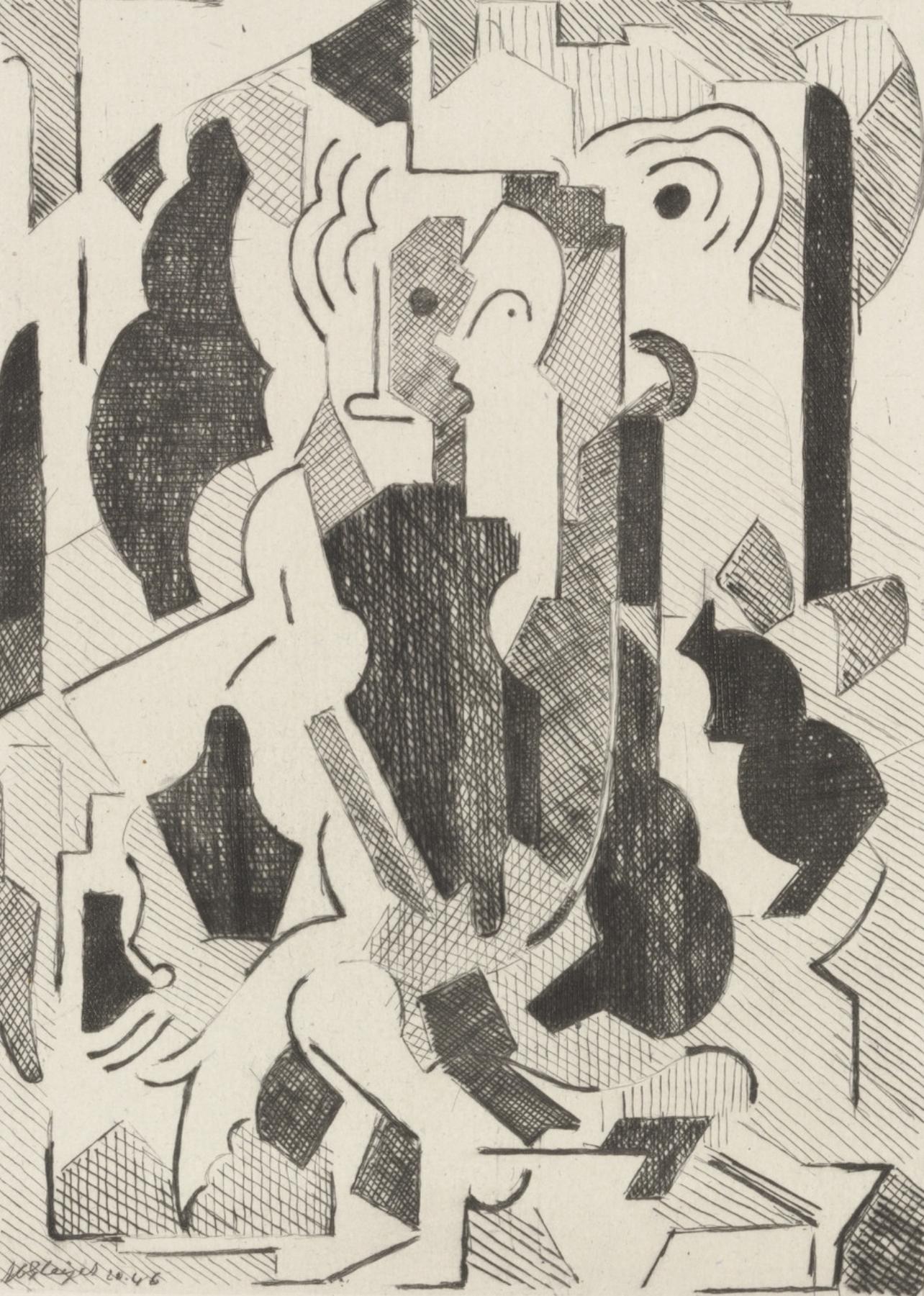
View AllGleizes, Composition, Du cubisme (after)
By Albert Gleizes
Located in Southampton, NY
Drypoint on vélin du Lana Papiers Spéciaux pure rag paper. Unsigned and unnumbered, as issued. Good Condition. Notes: From the folio, Du Cubisme, 1947. Published by Compagnie Françai...
Category
1940s Modern Landscape Prints
Materials
Drypoint
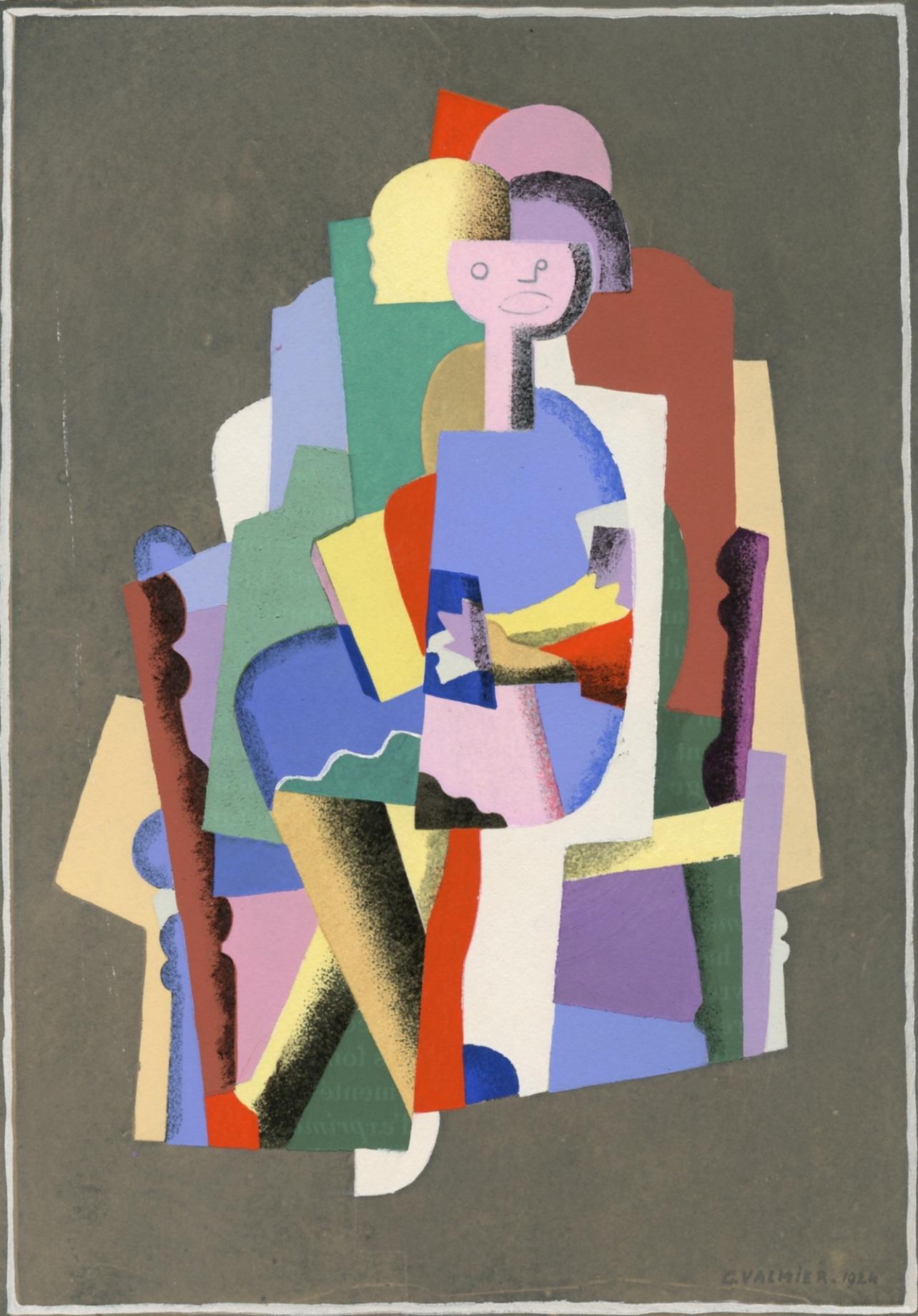
Georges Valmier, Seated Woman, 1929 (after)
By Georges Valmier
Located in Southampton, NY
This exquisite lithograph and pochoir after Georges Valmier (1885–1937), titled Femme assise (Seated Woman), from the album L'Art Cubiste, Theories et Realisations, Etude Critique (C...
Category
1920s Cubist Still-life Prints
Materials
Lithograph, Stencil
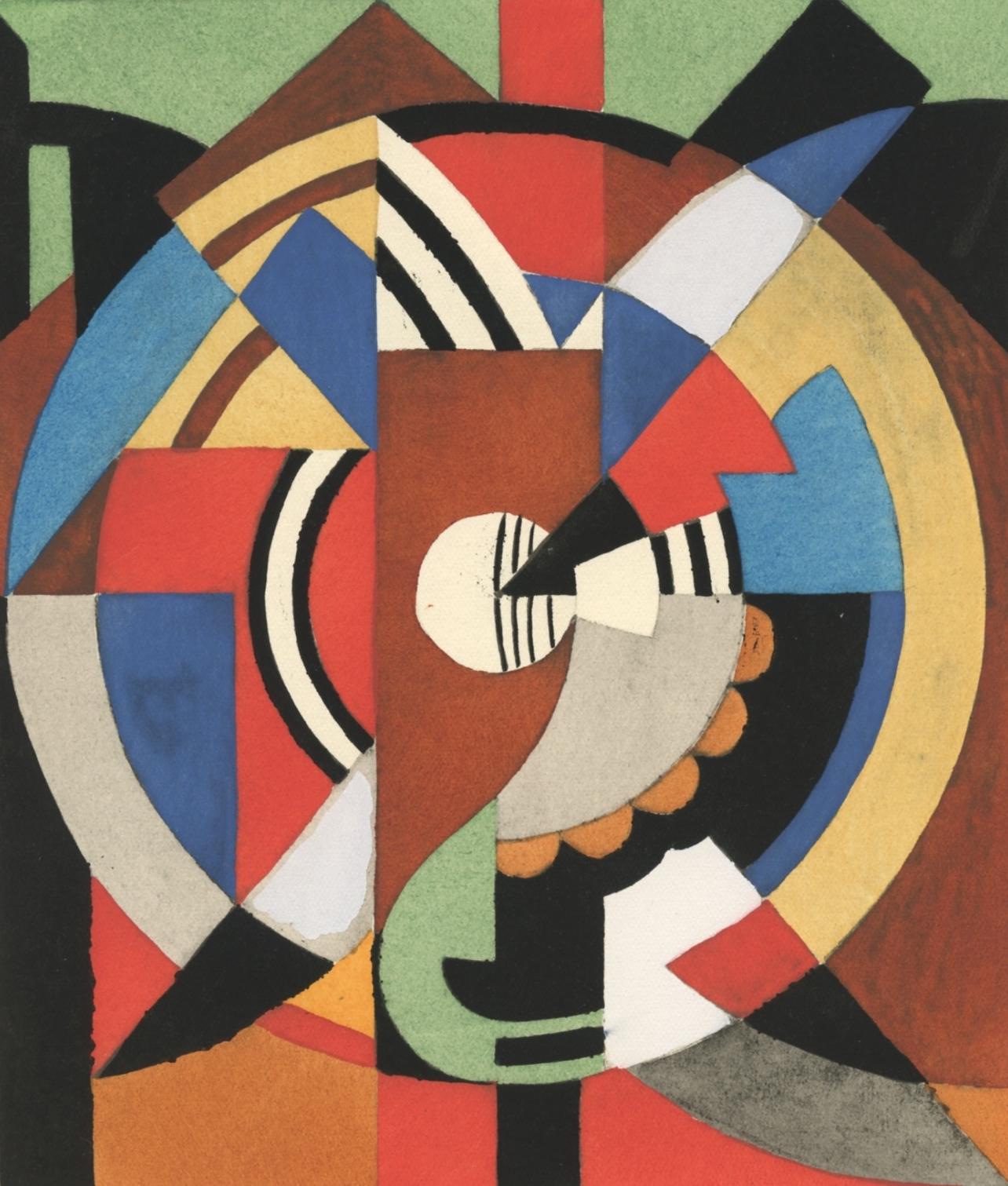
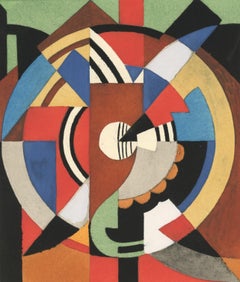
Auguste Herbin, Composition on Green Background, 1929 (after)
By Auguste Herbin
Located in Southampton, NY
This exquisite lithograph and pochoir after Auguste Herbin (1882–1960), titled Composition sur fond vert (Composition on Green Background), from the album L'Art Cubiste, Theories et ...
Category
1920s Cubist Still-life Prints
Materials
Lithograph, Stencil
$1,916 Sale Price
20% Off
Free Shipping
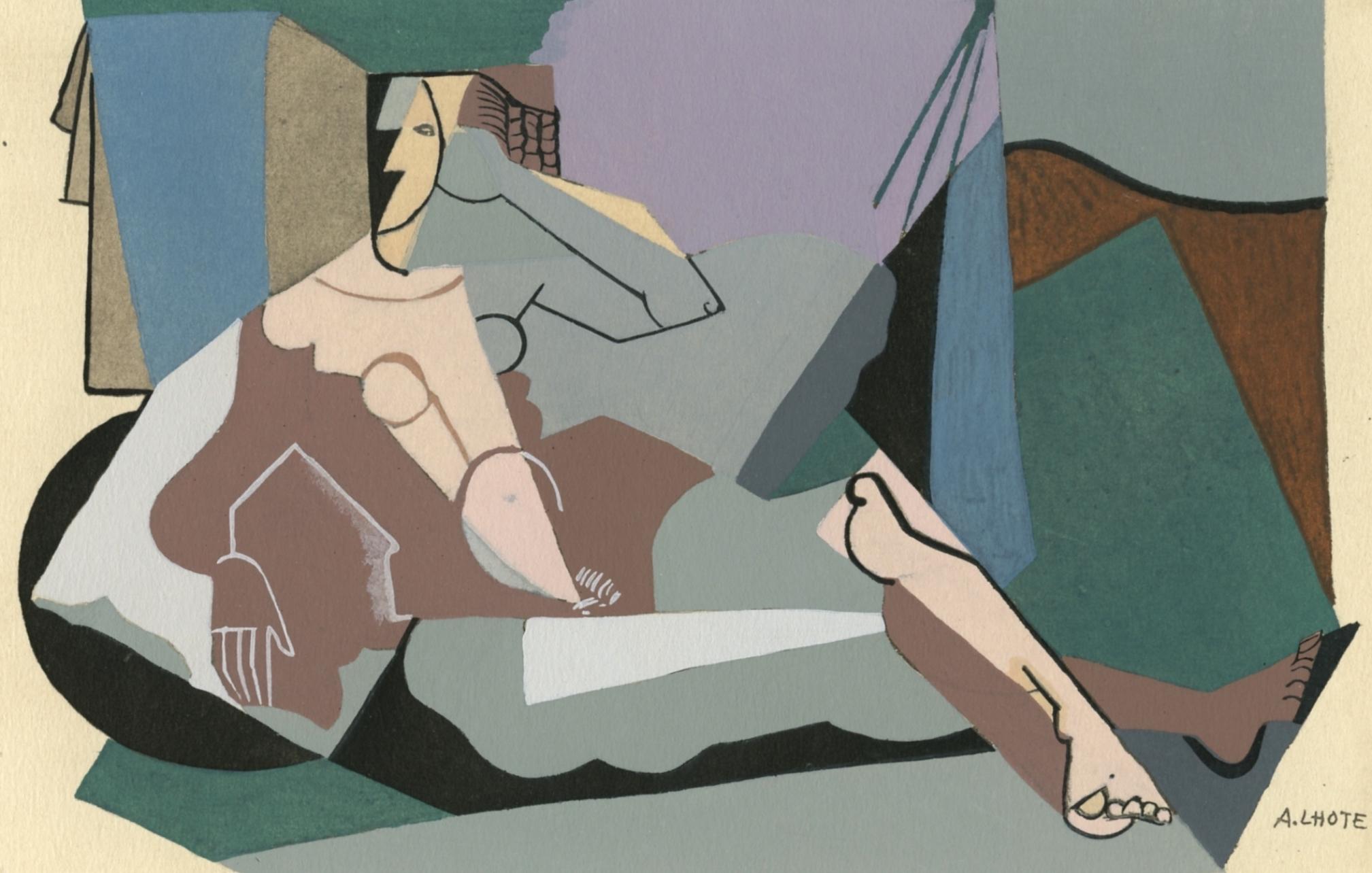
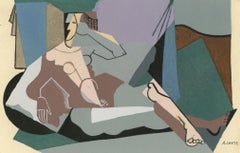
Andre Lhote, Reclining Woman, 1929 (after)
By André Lhote
Located in Southampton, NY
This exquisite lithograph and pochoir after Andre Lhote (1885–1962), titled Femme allongee (Reclining Woman), from the album L'Art Cubiste, Theories et Realisations, Etude Critique (...
Category
1920s Cubist Still-life Prints
Materials
Lithograph, Stencil
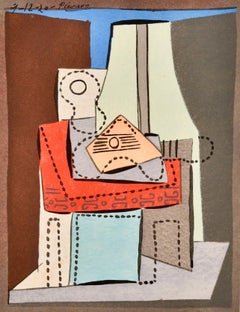
Pablo Picasso, Seated Woman in an Armchair, from Oeuvres 1920-1926 (after)
By Pablo Picasso
Located in Southampton, NY
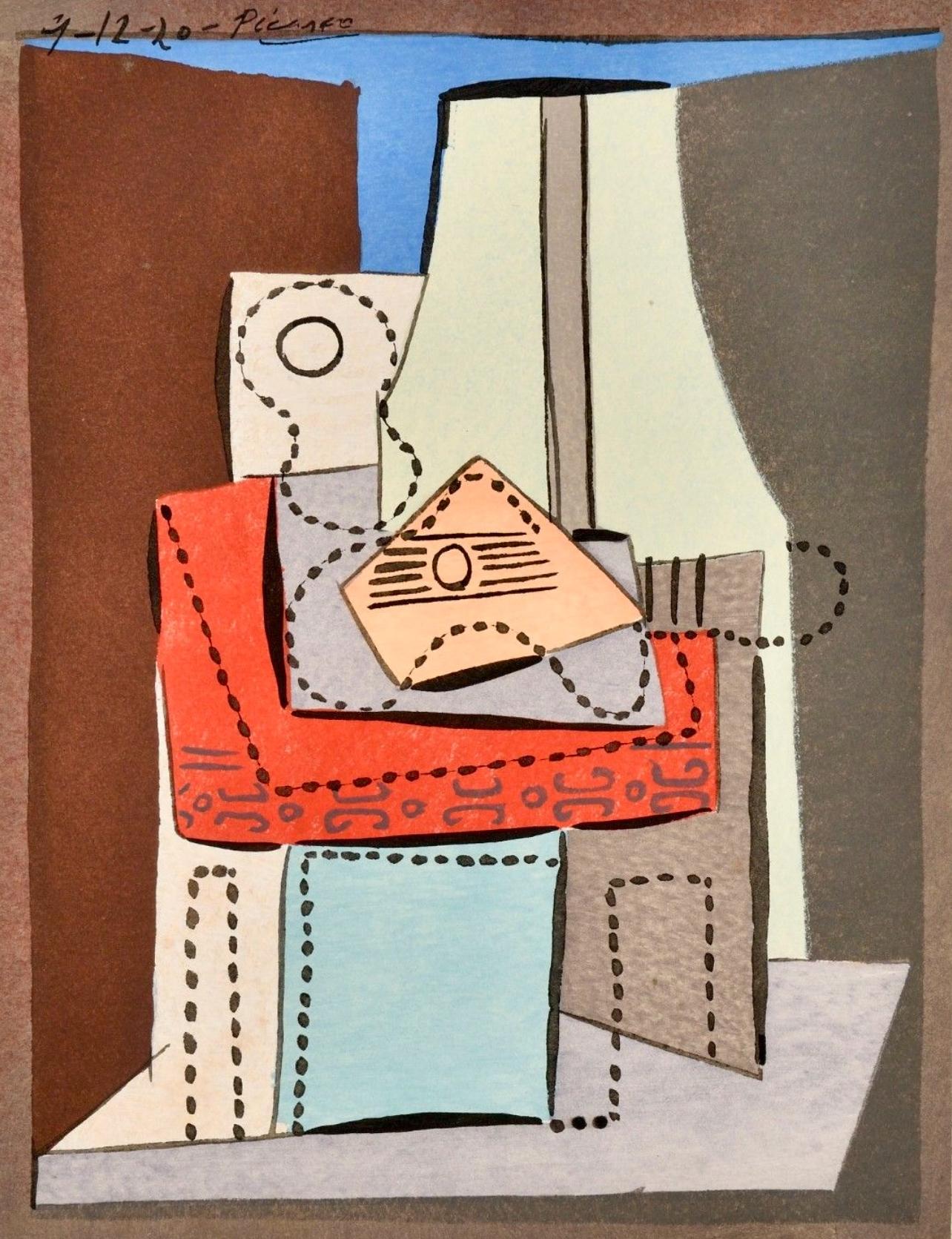
This exquisite lithograph and pochoir after Pablo Picasso (1881–1973), titled Femme Assise dans un Fauteuil (Seated Woman in an Armchair), from the album, Picasso, Oeuvres 1920-1926, 1926, originates from the 1926 edition published and printed by Editions des Cahiers d'Art, Paris, under the direction of Christian Zervos, Editeur, Paris, December 10, 1926. Femme Assise dans un Fauteuil (Seated Woman in an Armchair) captures Picasso’s evolving exploration of form, movement, and emotion during the mid-1920s—a pivotal period in which he redefined the relationship between classical representation and modern abstraction. With its bold contouring, stylized anatomy, and rhythmic color balance, the composition embodies the harmony between structural precision and sensual fluidity that characterized Picasso’s work in this era.
Executed as a lithograph and pochoir on velin paper, this work measures 11 x 8.75 inches. Signed in the plate and unnumbered as issued. The edition exemplifies the refined craftsmanship of Editions des Cahiers d'Art and the technical excellence of Parisian printmaking in the interwar period.
Artwork Details:
Artist: After Pablo Picasso (1881–1973)
Title: Femme Assise dans un Fauteuil (Seated Woman in an Armchair), from the album, Picasso, Oeuvres 1920-1926, 1926
Medium: Lithograph and pochoir on velin paper
Dimensions: 11 x 8.75 inches (27.94 x 22.23 cm)
Inscription: Signed in the plate and unnumbered as issued
Date: 1926
Publisher: Editions des Cahiers d'Art, Paris, under the direction of Christian Zervos, Editeur, Paris
Printer: Ducros & Colas, Paris
Catalogue raisonne references: Cramer, Patrick. Pablo Picasso, The Illustrated Books: Catalogue Raisonne. Patrick Cramer, 1983, illustration 15; Bloch, Georges. Pablo Picasso: Catalogue of the Printed Graphic Work 1904–1967. Kornfeld & Klipstein, 1968, illustration 56
Condition: Well preserved, consistent with age and medium
Provenance: From the album, Picasso, Oeuvres 1920-1926, published and printed by Editions des Cahiers d'Art, Paris, under the direction of Christian Zervos, Editeur, Paris, 1926
Notes:
Excerpted from the album (translated from French), This volume was completed to be printed by the Ducros & Colas printing house, 7, rue Croulebarbe in Paris, for the Editions des Cahiers d'Art, on December 10th MCMXXVI, DCC numbered examples, VI on Japon Imperial with an etching by Picasso, numbered from I to VI, L examples on paper by papier de Hollande, Van Gelder, with an etching by Picasso, numbered from VII to LVI, DCXL examples on velin, numbered from LVII to DCC, plus II examples intended for legal deposit.
About the Publication:
The album Picasso, Oeuvres 1920-1926 was issued in 1926 by Editions des Cahiers d'Art under the direction of Christian Zervos, one of the most influential editors, critics, and publishers of 20th-century modernism. Conceived as both a visual and intellectual tribute to Pablo Picasso’s mastery during a crucial transitional period, the volume presents a series of lithographs and pochoirs that chronicle his stylistic evolution from synthetic Cubism toward a renewed engagement with the human figure. Published in conjunction with the legendary Cahiers d'Art journal, the edition reflects Zervos’s vision of uniting scholarship, craftsmanship, and artistic authenticity in the modern book arts. Each composition was executed by the master printers Ducros & Colas and colored using the pochoir technique, faithfully translating the tonal subtleties and compositional balance of Picasso’s original drawings and gouaches. Completed on December 10, 1926, the edition comprised DCC examples—VI on Japon Imperial, L on Hollande Van Gelder, and DCXL on velin paper, plus II copies reserved for legal deposit—each numbered and printed to exacting standards. The volume stands as one of the earliest major Cahiers d'Art collaborations with Picasso, preceding the monumental Catalogue Raisonne des Oeuvres de Picasso that Zervos would later dedicate his life to producing. Today, Picasso, Oeuvres 1920-1926 remains a cornerstone of interwar art publishing, representing the confluence of avant-garde innovation, technical excellence, and intellectual rigor that defined the Parisian art world of the 1920s.
About the Artist:
Pablo Picasso (1881–1973) was a Spanish painter, sculptor, printmaker, and ceramicist whose extraordinary vision revolutionized modern art and defined the visual language of the 20th century. A child prodigy from Malaga, Spain, Picasso's career spanned more than seven decades and encompassed an astonishing range of styles and innovations—from the melancholic Blue and romantic Rose periods to his pioneering invention of Cubism with Georges Braque, which shattered conventional notions of perspective and form. Influenced by the bold expressiveness of El Greco, the structure of Cezanne, and the vitality of African and Iberian sculpture, Picasso became a central figure of the Paris avant-garde, working in creative dialogue with contemporaries such as Henri Matisse, Alexander Calder, Alberto Giacometti, Salvador Dali, Joan Miro, Wassily Kandinsky, Marcel Duchamp, and Man Ray. His insatiable experimentation extended across painting, drawing, printmaking, ceramics, and sculpture, forever expanding the boundaries of artistic expression. A master of reinvention, Picasso profoundly shaped generations of artists who followed—from Andy Warhol, Roy Lichtenstein, David Hockney, and Jean-Michel Basquiat to Jeff Koons and Banksy—cementing his status as a timeless cultural icon whose works remain among the most sought after worldwide. His landmark painting Les Femmes d'Alger (Version O) achieved a record-breaking sale of 179,365,000 USD at Christie's, New York, on May 11, 2015, affirming Picasso's enduring legacy as one of the most influential and valuable artists in history.
Pablo Picasso Femme Assise dans un Fauteuil (Seated Woman in an Armchair), Picasso Oeuvres 1920-1926, Picasso Zervos Cahiers d'Art, Picasso pochoir...
Category
1920s Cubist Still-life Prints
Materials
Lithograph, Stencil
$2,396 Sale Price
20% Off
Free Shipping
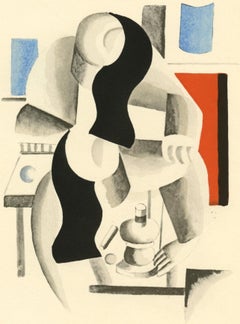
Fernand Leger, Woman with a Vase, 1929 (after)
By Fernand Léger
Located in Southampton, NY
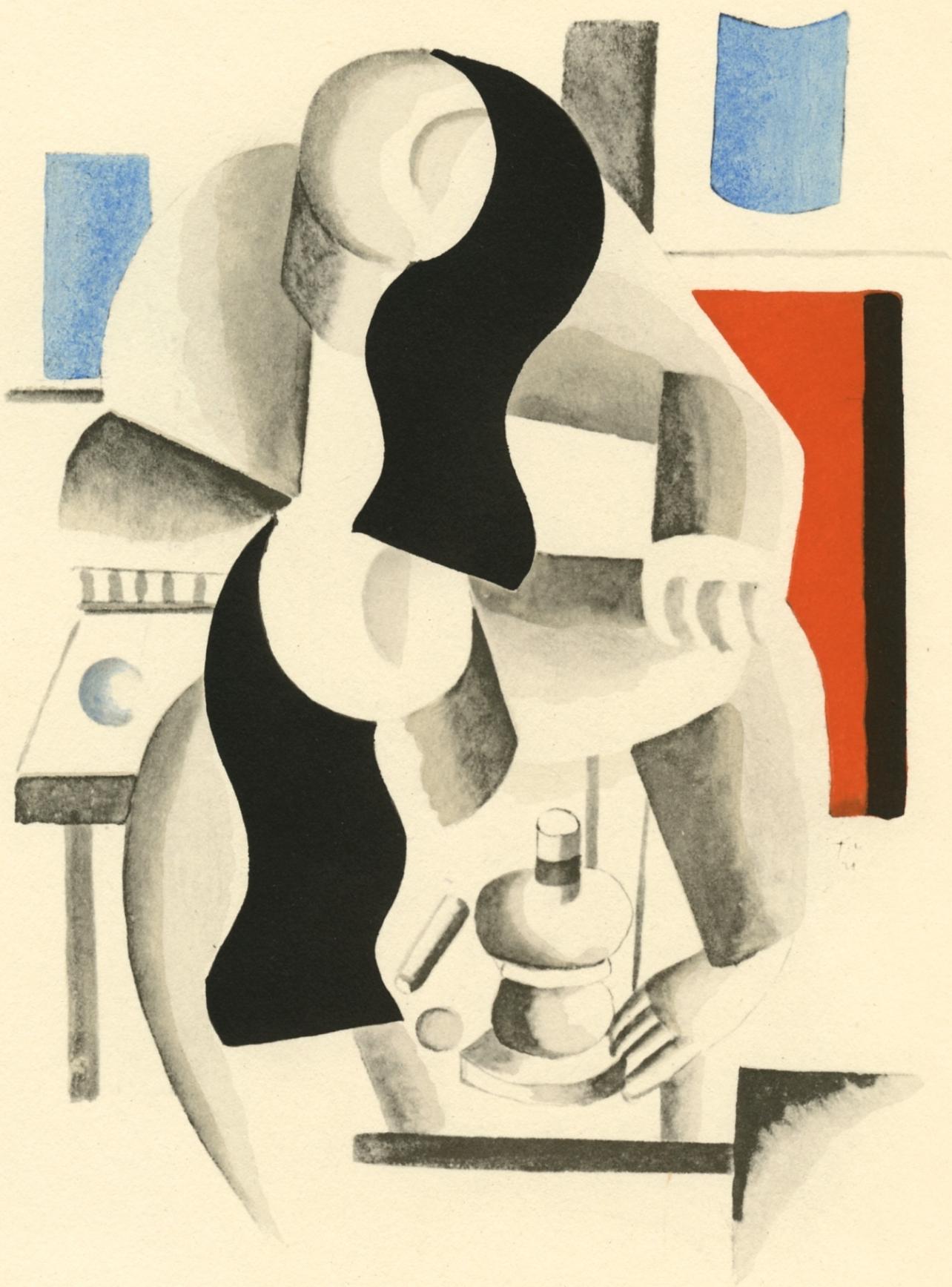
This exquisite lithograph and pochoir after Fernand Leger (1881–1955), titled La Femme au Vase (Woman with a Vase), from the album L'Art Cubiste, Theories et Realisations, Etude Crit...
Category
1920s Cubist Still-life Prints
Materials
Lithograph, Stencil
You May Also Like
Cubism - Pochoir
By (after) Pablo Picasso
Located in Collonge Bellerive, Geneve, CH
After Pablo Picasso - Cubism - Pochoir
Dimensions: 48.5 x 36 cm
1962
Edition of 260
Daniel Jacomet, LEDA, Editions d'Art
Pablo Picasso
Picasso is not just a man and his work. Picas...
Category
1960s Modern Figurative Prints
Materials
Lithograph
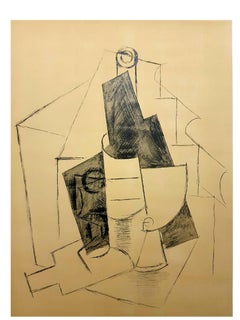
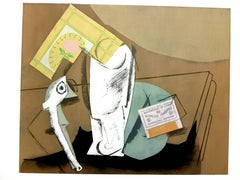
After Pablo Picasso - Cubist Still Life - Pochoir
By (after) Pablo Picasso
Located in Collonge Bellerive, Geneve, CH
After Pablo Picasso - Cubist Still Life - Pochoir
Dimensions: 48.5 x 36 cm
1962
Edition of 260
Daniel Jacomet, LEDA, Editions d'Art
Pablo Picasso
Picasso is not just a man and his ...
Category
1960s Modern Figurative Prints
Materials
Lithograph
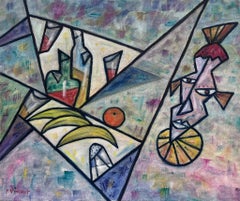
Cubist French Oil Painting Still Life Abstract Composition
Located in Cirencester, Gloucestershire
Artist/ School: Pierre Vincent, French contemporary
Title: Cubist composition
Medium: oil painting on canvas, unframed, signed and inscribed verso
canvas: 18 x 22 inches
Provenan...
Category
21st Century and Contemporary Cubist Abstract Paintings
Materials
Oil, Canvas
$896 Sale Price
20% Off
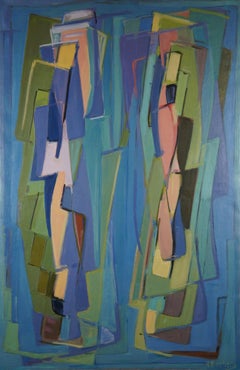
Tribute to Albert Gleizes, 1935-40 - oil paint, 146x96 cm, framed
By R. Barlerin
Located in Nice, FR
Oil on plywood, signed lower right
Barlerin was disciple of Albert Gleizes.
Category
20th Century Cubist Abstract Paintings
Materials
Oil
Russian School Art Deco Cubist Gouache on Board Painting
Located in Atlanta, GA
This is a beautiful 20th-century Russian Art Deco cubist gouache painting on cardboard. There is no obvious signature on the artwork. Although this painting is a typical example of t...
Category
20th Century Cubist Abstract Paintings
Materials
Gouache, Board, Cardboard
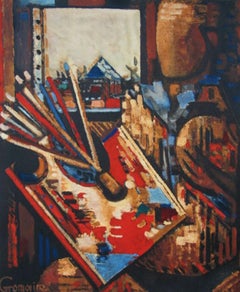
The Painter
By Marcel Gromaire
Located in London, GB
MARCEL GROMAIRE 1892-1971
Noyelles-sur-Sambre 1892-1971 Paris (French)
Title: The Painter / Le Peintre, 1943
Technique: Original Hand Signed and Numbere...
Category
1940s Cubist More Prints
Materials
Lithograph
More Ways To Browse
G Ses
Elizabeth Osborne Poster
Gary Bukovnik Posters
Geraldine Girvan
Hugh Kepets On Sale
Japanese Botanical Prints
Lichtenstein Spray Can
Michelle Stuart On Sale
Mr Brainwash Flower
Oisin Byrne
Paris Review Posters
Paul De Longpre Vintage Prints
Robert Furber Twelve Months Of Flowers
Robert Furber
Thiebaud Signed Print
William Ross Abrams
Adele Alsop
Albert Contreras