Want more images or videos?
Request additional images or videos from the seller
1 of 5
Auction endedBrowse Current Auctions
Warhol, Chanel (Yellow
Blue)1997
1997
Price:$695
$1,095List Price
About the Item
- Creation Year:1997
- Dimensions:Height: 30.75 in (78.11 cm)Width: 24 in (60.96 cm)
- Medium:
- Movement Style:
- After:Andy Warhol (1928 - 1987, American)
- Period:
- Condition:“Excellent Condition; never framed or matted”.
- Gallery Location:Southampton, NY
- Reference Number:1stDibs: LU1465213686212
About the Seller
4.9
Platinum Seller
Premium sellers with a 4.7+ rating and 24-hour response times
Established in 1978
1stDibs seller since 2021
1,237 sales on 1stDibs
Authenticity Guarantee
In the unlikely event there’s an issue with an item’s authenticity, contact us within 1 year for a full refund. DetailsMoney-Back Guarantee
If your item is not as described, is damaged in transit, or does not arrive, contact us within 7 days for a full refund. Details24-Hour Cancellation
You have a 24-hour grace period in which to reconsider your purchase, with no questions asked.Vetted Professional Sellers
Our world-class sellers must adhere to strict standards for service and quality, maintaining the integrity of our listings.Price-Match Guarantee
If you find that a seller listed the same item for a lower price elsewhere, we’ll match it.Trusted Global Delivery
Our best-in-class carrier network provides specialized shipping options worldwide, including custom delivery.You May Also Like
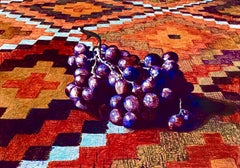
Grapes on Navajo Rug, Lowell Nesbitt
By Lowell Nesbitt
Located in Fairfield, CT
Artist: Lowell Nesbitt (1933-1993)
Title: Grapes on Navajo Rug
Year: 1977
Edition: 145/175, plus proofs.
Medium: Lithograph on Arches paper
Size: 24 x 31 inches
Condition: Good
Inscription: Signed and numbered by the artist.
LOWELL NESBITT (1933-1993) One of the most celebrated and most noted for his floral works of art. An artist with a highly personal style, Nesbitt made realistic studies of many themes throughout his career. His most well known series, and perhaps his most beautiful and poetic, are the more than four hundred works he created using the flower as theme. Since his first show in 1957, Nesbitt has had more than eighty one man shows. His painting, drawings and prints...
Category
1970s Pop Art Landscape Prints
Materials
Lithograph
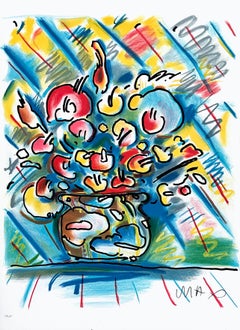
Vase of Flowers, Peter Max
By Peter Max
Located in Fairfield, CT
Artist: Peter Max (1937)
Title: Vase of Flowers
Year: 1979
Edition: 138/350, plus proofs
Medium: Lithograph on Somerset paper
Size: 30 x 22 inches
Condition: Excellent
Inscription: S...
Category
1970s Pop Art Still-life Prints
Materials
Lithograph
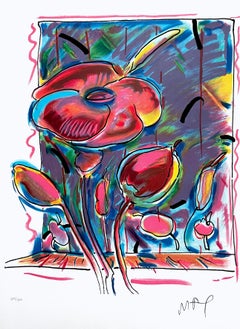
Garden Flowers, Peter Max
By Peter Max
Located in Fairfield, CT
Artist: Peter Max (1937)
Title: Garden Flowers
Year: 1979
Edition: 347/350, plus proofs
Medium: Lithograph on Somerset paper
Size: 30 x 22 inches
Condition: Excellent
Inscription: Si...
Category
1970s Pop Art Still-life Prints
Materials
Lithograph
Garden Flowers
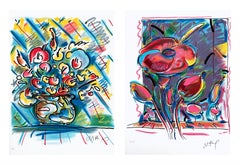
Vase of Flowers (Suite of Two Artworks), Peter Max
By Peter Max
Located in Fairfield, CT
Artist: Peter Max (1937)
Title: Garden Flowers & Vase of Flowers (Two Artworks)
Year: 1979
Edition: 347/350, plus proofs; 143/350, plus proofs
Medium: Lithograph on Somerset paper
Si...
Category
1970s Pop Art Still-life Prints
Materials
Lithograph
$1,720 Sale Price
20% Off
H 30 in W 22 in
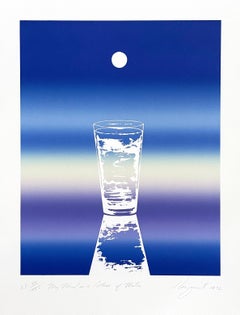
My Mind Is a Glass of Water (Glenn 58), James Rosenquist
By James Rosenquist
Located in Fairfield, CT
Artist: James Rosenquist (1933-2017)
Title: My Mind Is a Glass of Water, from Prints for Phoenix House (Glenn 58)
Year: 1972
Medium: Color lithograph on Arches paper
Edition: A.P. XX...
Category
1970s Pop Art Still-life Prints
Materials
Lithograph
$6,000 Sale Price
20% Off
H 30 in W 22.5 in
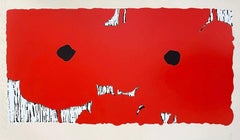
Red Poppies, Donald Sultan
By Donald Sultan
Located in Fairfield, CT
Artist: Donald Sultan (1951)
Title: Red Poppies
Year: 2012
Medium: Silkscreen with Tar & Flocking on Museum Board
Edition: 10/75, plus proofs
Size: 23 x 39 inches
Condition: Excellen...
Category
2010s Pop Art Still-life Prints
Materials
Tar, Screen
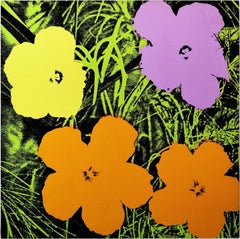
Flowers, FS II.67
By Andy Warhol
Located in Miami, FL
Technical Information:
Andy Warhol
Flowers, FS II.67
1970
Screenprint
36 x 36 in.
Edition of 250
Signed and stamped number on verso
Category
1970s Pop Art Still-life Prints
Materials
Screen
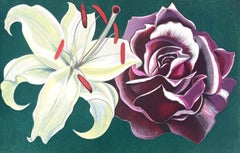
Lily
Rose, Lowell Nesbitt
By Lowell Nesbitt
Located in Fairfield, CT
Artist: Lowell Nesbitt (1933-1993)
Title: Lily & Rose
Year: 1974
Edition: 60/100, plus proofs.
Medium: Silkscreen on Arches paper
Size: 24 x 35.5 inches
Condition: Good
Inscription: ...
Category
1970s Pop Art Landscape Prints
Materials
Screen
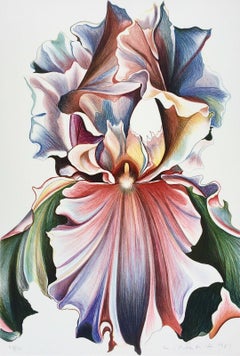
Iris, Lowell Nesbitt
By Lowell Nesbitt
Located in Fairfield, CT
Artist: Lowell Nesbitt (1933-1993)
Title: Iris
Year: 1981
Edition: 98/200, plus proofs.
Medium: Lithograph on Arches paper
Size: 36 x 24.75 inches
Condition: Good
Inscription: Signed...
Category
1980s Pop Art Landscape Prints
Materials
Screen
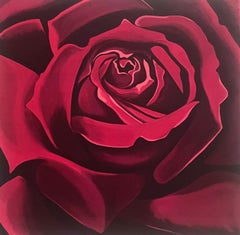
Rose, Lowell Nesbitt
By Lowell Nesbitt
Located in Fairfield, CT
Artist: Lowell Nesbitt (1933-1993)
Title: Rose
Year: 1980
Edition: 92/175, plus proofs.
Medium: Silkscreen on Arches paper
Size: 29 x 29 inches
Condition: Good
Inscription: Signed an...
Category
1980s Pop Art Landscape Prints
Materials
Screen
More From This Seller
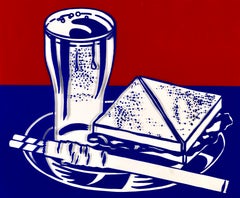
View AllRoy Lichtenstein, Sandwich and Soda, from Ten Works by Ten Painters, 1964
By Roy Lichtenstein
Located in Southampton, NY
This exquisite silkscreen by Roy Lichtenstein (1923–1997), titled Sandwich and Soda, originates from the landmark 1964 folio X + X (Ten Works by Ten Painters). Published by the Wadsworth Atheneum Museum of Art, Hartford, and printed by Sirocco Screenprints, Inc., North Haven, in Sandwich and Soda, Lichtenstein translates his signature Pop Art vocabulary—bold outlines, flat commercial color, and Ben-Day dot structure—into a crisp, iconic composition that reimagines everyday consumer imagery with graphic intensity and conceptual clarity.
Executed as a silkscreen on Mylar over Mohawk Superfine Bristol paper, this work measures 20 x 24 inches. Unsigned and unnumbered as issued. Printed by Sirocco Screenprints, Inc., North Haven, one of the most capable American screenprinting ateliers of the mid-20th century.
Artwork Details:
Artist: Roy Lichtenstein (1923–1997)
Title: Sandwich and Soda, from X + X (Ten Works by Ten Painters), 1964
Medium: Silkscreen on Mylar over Mohawk Superfine Bristol paper
Dimensions: 20 x 24 inches (50.8 x 60.96 cm)
Inscription: Unsigned and unnumbered as issued
Date: 1964
Publisher: Wadsworth Atheneum Museum of Art, Hartford
Printer: Sirocco Screenprints, Inc., North Haven
Edition: D
Catalogue raisonne reference: Corlett, Mary Lee, and Roy Lichtenstein. The Prints of Roy Lichtenstein: A Catalogue Raisonne 1948–1997. 2nd rev. ed., Hudson Hills Press in association with the National Gallery of Art, Washington, D.C.; Distributed in the U.S. by National Book Network, 2002, No. 35.
Condition: Well preserved, consistent with age and medium
Provenance: From the 1964 folio X + X (Ten Works by Ten Painters), published by the Wadsworth Atheneum Museum of Art, Hartford
Notes:
Excerpted from the folio, This portfolio was commissioned and printed in an attempt to extend as much of the visual impact as possible of ten artists to paper and to make these prints available to collectors who might not otherwise have such a vivid slice of the artist. The dry surface of screening seemed to be most apt to translate the effect of their painting, both the flatness which is the unifying bond between the ten, and the insistance of paint on the surface of canvas so like the visible heft of ink on paper here. Samuel J. Wagstaff, Jr., Curator of Printings.
About the Publication:
X + X (Ten Works by Ten Painters), published in 1964 by the Wadsworth Atheneum Museum of Art in Hartford, stands as one of the most ambitious and influential printmaking endeavors of postwar American art. Conceived under the direction of curator Samuel J. Wagstaff, Jr., the project sought to capture and translate the defining visual languages of ten leading American painters of the era—Stuart Davis, Ellsworth Kelly, Robert Indiana, Adolph Gottlieb, George Ortman, Larry Poons, Richard Anuszkiewicz, Frank Stella, Andy Warhol, and Roy Lichtenstein—into original silkscreens. Each artwork was created as an autonomous work that embodied the formal, chromatic, and conceptual principles of its respective artist. The choice of silkscreen printing, executed by Sirocco Screenprints, Inc., was central to the portfolio’s purpose: its dry, matte surface and capacity for crisp, saturated color allowed for a faithful translation of the painters’ flatness, surface tension, optical effects, and graphic precision. Organized and published by a major American museum at a moment of seismic change in contemporary art, X + X marked a turning point in institutional engagement with editioned works, representing one of the first concerted efforts by a museum to commission an ensemble of original graphics from the leading figures of its time. The portfolio captured the pulse of 1960s American painting—from Hard-Edge abstraction to Pop, Op, and Color Field—offering both a curated snapshot of artistic innovation and an accessible format that expanded the audience for contemporary art. Today, X + X is widely regarded as a landmark in American printmaking, celebrated for its curatorial vision, technical accomplishment, and its role in defining the dialogue between museum patronage and the burgeoning print culture of the 1960s.
About the Artist:
Roy Lichtenstein (1923–1997) was an American painter, printmaker, and sculptor whose revolutionary elevation of comic-book graphics, Ben-Day dots, commercial illustration, and mass-media visual language into the realm of fine art made him one of the founding giants of Pop Art, drawing on the breakthroughs of Pablo Picasso, Alexander Calder, Alberto Giacometti, Salvador Dali, Joan Miro, Wassily Kandinsky, Marcel Duchamp, and Man Ray to synthesize Cubist fragmentation, Surrealist wit, Modernist experimentation, and Duchampian conceptualism into an unmistakable style defined by bold outlines, flat industrial color, graphic reduction, and the now-iconic Ben-Day dot technique; emerging in the 1960s alongside Andy Warhol, Claes Oldenburg, James Rosenquist, Jasper Johns, and Robert Rauschenberg, Lichtenstein shifted American art away from Abstract Expressionism toward a cool, analytical investigation of consumer culture, mass reproduction, advertising, and the manufactured image, creating paintings, prints, sculptures, and monumental public works that reimagined romance comics, war scenes, cartoons, brushstroke parodies, landscapes, and art-historical citations while offering a humorous yet incisive commentary on how images shape contemporary life; his influence is immense, shaping artists such as Jeff Koons, Takashi Murakami, Damien Hirst, Julian Opie, KAWS, Banksy, and numerous contemporary painters, designers, fashion houses, and digital creators, while his works are held in major institutions including the Museum of Modern Art, the Whitney Museum of American Art, the Solomon R. Guggenheim Museum, the Art Institute of Chicago, the National Gallery of Art, Tate, Centre Pompidou, SFMOMA, the Hirshhorn Museum and Sculpture Garden, and LACMA, with his highest auction record achieved when Nurse (1964) sold for 95,365,000 USD at Christie's New York on November 9, 2015.
Roy Lichtenstein silkscreen...
Category
1960s Pop Art Still-life Prints
Materials
Screen
$31,996 Sale Price
20% Off
Free Shipping
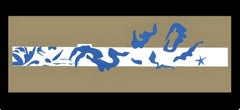
Henri Matisse, The Swimming Pool II, from Verve, Revue Artistique, 1958 (after)
By Henri Matisse
Located in Southampton, NY
This exquisite lithograph after Henri Matisse (1869–1954), titled La Piscine II (The Swimming Pool II), from Verve, Revue Artistique et Litteraire, Vol. IX, No. 35–36, originates from the 1958 issue published by Editions de la revue Verve, Paris, under the direction of Teriade, Editeur, Paris, and printed by Mourlot Freres, Paris, 1958. La Piscine II is one of the most expansive and lyrical compositions from Matisse’s late cut-out period, inspired by his deep fascination with the movement of water, light, and the human form. The work’s sweeping arrangement of floating blue shapes and rhythmic negative space evokes swimmers and sea life in motion, transforming a simple visual theme into a poetic meditation on fluidity, serenity, and the joy of life. Through its monumental simplicity and chromatic brilliance, La Piscine II exemplifies Matisse’s mastery of “painting with scissors” and his ability to translate motion into pure visual harmony.
Executed as a lithograph on velin du Marais paper, this work measures 14 x 40.5 inches, with trifold as issued. Unsigned and unnumbered as issued. The edition exemplifies the superb craftsmanship of the Mourlot Freres atelier, faithfully capturing the luminosity, rhythm, and tactile beauty of Matisse’s original gouache cut-outs.
Artwork Details:
Artist: After Henri Matisse (1869–1954)
Title: La Piscine II (The Swimming Pool II), from Verve, Revue Artistique et Litteraire, Vol. IX, No. 35–36, 1958
Medium: Lithograph on velin du Marais paper
Dimensions: 14 x 40.5 inches, with trifold as issued
Inscription: Unsigned and unnumbered as issued
Date: 1958
Publisher: Editions de la revue Verve, Paris, under the direction of Teriade, Editeur, Paris
Printer: Mourlot Freres, Paris
Catalogue raisonne reference: Duthuit, Claude. Henri Matisse: Catalogue raisonne des ouvrages illustres. Editions Claude Duthuit, Paris, 1988, illustration 139
Condition: Well preserved, consistent with age and medium
Provenance: From Verve, Revue Artistique et Litteraire, Vol. IX, No. 35–36, published by Editions de la revue Verve, Paris, 1958
Notes:
Excerpted from the publication, Verve, Revue Artistique et Litteraire, Vol. IX, No. 35–36, published under the direction of Teriade, Editeur, Paris, and printed by Mourlot Freres, Paris, 1958. This double issue of Verve was entirely devoted to the final works of Henri Matisse, composed of his celebrated gouache cut-outs, which the artist called “painting with scissors.” Completed shortly before his death, this issue represents the culmination of Matisse’s lifelong exploration of color, rhythm, and spiritual joy through the simplest means of expression.
About the Publication:
Verve, Revue Artistique et Litteraire was one of the most influential art periodicals of the 20th century, founded in Paris in 1937 by the visionary Greek-born publisher Teriade (Stratis Eleftheriades). Conceived as a synthesis of art and literature, Verve brought together the greatest modern artists and writers of its time—Henri Matisse, Pablo Picasso, Marc Chagall, Georges Braque, Joan Miro, Fernand Leger, and others—alongside poets and philosophers such as Paul Eluard, Albert Camus, and Jean-Paul Sartre. Each issue was a work of art in itself, luxuriously printed by master lithographers such as Mourlot Freres and produced in collaboration with leading typographers and designers. Verve became a platform for avant-garde creativity, publishing original lithographs and essays that reflected the evolving spirit of modernism. Matisse collaborated closely with Teriade from the magazine’s inception, producing some of its most iconic issues, including those devoted to his paper cut-outs. The final Verve issue of 1958, which featured La Tristesse du Roi, the Nu Bleu series, Poisson Chinois, and Vigne, stands as a testament to Matisse’s enduring genius and to the publication’s legacy as the definitive meeting of art, poetry, and printing craftsmanship in 20th-century France.
About the Artist:
Henri Matisse (1869–1954) was a French painter, sculptor, draughtsman, and printmaker whose revolutionary vision redefined modern art through his daring use of color, line, and form. Celebrated as one of the greatest artists of the 20th century, Matisse led the Fauvist movement and devoted his life to the pursuit of balance, beauty, and emotional expression in visual art. His early works burst with vibrant hues and liberated brushwork, while his later “cut-out” compositions achieved a poetic simplicity that transformed the relationship between color and space. Deeply influenced by the work of Paul Cezanne, Vincent van Gogh, and Georges Seurat, as well as by the rhythmic patterns of Islamic art, Byzantine mosaics, and Japanese prints, Matisse forged a new visual language that celebrated joy, movement, and serenity. He was part of an extraordinary generation of artists who shaped the evolution of modernism, maintaining lifelong dialogue and friendly rivalry with contemporaries such as Pablo Picasso, Georges Braque, Marc Chagall, Andre Derain, Albert Marquet, and Raoul Dufy—peers who, like him, sought to expand the expressive potential of color and composition. Matisse’s influence extended across generations, inspiring modern and contemporary masters including Alexander Calder, Alberto Giacometti, Salvador Dali, Joan Miro, Wassily Kandinsky, Marcel Duchamp, and Man Ray, each of whom drew upon his fearless experimentation and refined visual harmony. His paintings, sculptures, and works on paper are held in the most prestigious museums in the world, including the Museum of Modern Art, the Centre Pompidou, the Tate, and the Hermitage Museum, where his art continues to symbolize the essence of creativity and human emotion. The highest price ever paid for a Henri Matisse artwork is approximately $80.8 million USD, achieved in 2018 at Christie’s New York for Odalisque couchee aux magnolias (1923).
Henri Matisse La Piscine...
Category
1950s Modern Landscape Prints
Materials
Lithograph
$796 Sale Price
66% Off
Free Shipping
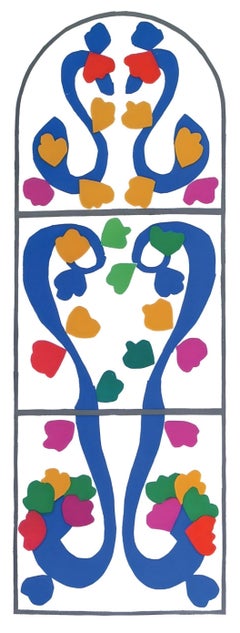
Henri Matisse, Vine, from Verve, Revue Artistique, 1958 (after)
By Henri Matisse
Located in Southampton, NY
This exquisite lithograph after Henri Matisse (1869–1954), titled Vigne (Vine), from Verve, Revue Artistique et Litteraire, Vol. IX, No. 35–36, originates from the 1958 issue publish...
Category
1950s Modern Landscape Prints
Materials
Lithograph
$956 Sale Price
20% Off
Free Shipping
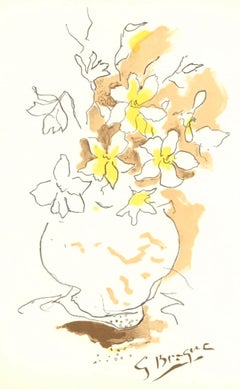
Georges Braque, The Bouquet, from Carnets intimes, 1955 (after)
By Georges Braque
Located in Southampton, NY
This exquisite lithograph after Georges Braque (1882–1963), titled Le Bouquet (The Bouquet), from Carnets intimes (Private Sketchbooks), Verve, Vol. VIII, No. 31–32, originates from ...
Category
1950s Modern Landscape Prints
Materials
Lithograph
$716 Sale Price
40% Off
Free Shipping
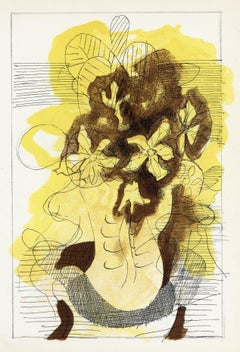
Georges Braque, Le Bouquet, from Carnets intimes, 1955 (after)
By Georges Braque
Located in Southampton, NY
This exquisite lithograph after Georges Braque (1882–1963), titled Le Bouquet (The Bouquet), from Carnets intimes (Private Sketchbooks), Verve, Vol. VIII, No. 31–32, originates from ...
Category
1950s Modern Landscape Prints
Materials
Lithograph
$716 Sale Price
40% Off
Free Shipping
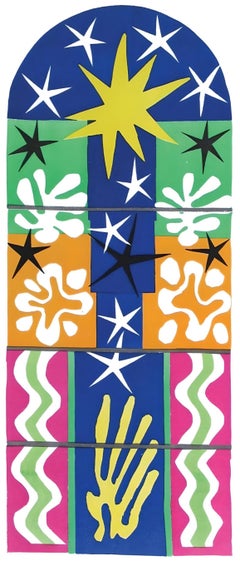
Henri Matisse, Christmas Night, from Verve, Revue Artistique, 1958 (after)
By Henri Matisse
Located in Southampton, NY
This exquisite lithograph after Henri Matisse (1869–1954), titled Nuit de Noel (Christmas Night), from Verve, Revue Artistique et Litteraire, Vol. IX, No. 35–36, originates from the 1958 issue published by Editions de la revue Verve, Paris, under the direction of Teriade, Editeur, Paris, and printed by Mourlot Freres, Paris, 1958. Created during Matisse’s final period, Nuit de Noel embodies his profound synthesis of form, color, and spirituality. The composition, evoking the calm radiance of the nativity, expresses a sense of universal harmony through luminous shapes and vibrant contrasts. This piece exemplifies Matisse’s late cut-out technique, where visual rhythm and color convey the serenity and joy of life and faith.
Executed as a lithograph on velin du Marais paper, this work measures 14 x 10.5 inches. Unsigned and unnumbered as issued. The edition exemplifies the superb craftsmanship of the Mourlot Freres atelier, faithfully capturing the coloristic richness and compositional rhythm of Matisse’s late paper cut-outs.
Artwork Details:
Artist: After Henri Matisse (1869–1954)
Title: Nuit de Noel (Christmas Night), from Verve, Revue Artistique et Litteraire, Vol. IX, No. 35–36, 1958
Medium: Lithograph on velin du Marais paper
Dimensions: 14 x 10.5 inches
Inscription: Unsigned and unnumbered as issued
Date: 1958
Publisher: Editions de la revue Verve, Paris, under the direction of Teriade, Editeur, Paris
Printer: Mourlot Freres, Paris
Catalogue raisonne reference: Duthuit, Claude. Henri Matisse: Catalogue raisonne des ouvrages illustres. Editions Claude Duthuit, Paris, 1988, illustration 139
Condition: Well preserved, consistent with age and medium
Provenance: From Verve, Revue Artistique et Litteraire, Vol. IX, No. 35–36, published by Editions de la revue Verve, Paris, 1958
Notes:
Excerpted from the publication, Verve, Revue Artistique et Litteraire, Vol. IX, No. 35–36, published under the direction of Teriade, Editeur, Paris, and printed by Mourlot Freres, Paris, 1958. This double issue of Verve was entirely devoted to the final works of Henri Matisse, composed of his celebrated gouache cut-outs, which the artist called “painting with scissors.” Completed shortly before his death, this issue represents the culmination of Matisse’s lifelong exploration of color, rhythm, and spiritual joy through the simplest means of expression.
About the Publication:
Verve, Revue Artistique et Litteraire was one of the most influential art periodicals of the 20th century, founded in Paris in 1937 by the visionary Greek-born publisher Teriade (Stratis Eleftheriades). Conceived as a synthesis of art and literature, Verve brought together the greatest modern artists and writers of its time—Henri Matisse, Pablo Picasso, Marc Chagall, Georges Braque, Joan Miro, Fernand Leger, and others—alongside poets and philosophers such as Paul Eluard, Albert Camus, and Jean-Paul Sartre. Each issue was a work of art in itself, luxuriously printed by master lithographers such as Mourlot Freres and produced in collaboration with leading typographers and designers. Verve became a platform for avant-garde creativity, publishing original lithographs and essays that reflected the evolving spirit of modernism. Matisse collaborated closely with Teriade from the magazine’s inception, producing some of its most iconic issues, including those devoted to his paper cut-outs. The final Verve issue of 1958, which featured La Tristesse du Roi, the Nu Bleu series, and Nuit de Noel, stands as a testament to Matisse’s enduring genius and to the publication’s legacy as the definitive meeting of art, poetry, and printing craftsmanship in 20th-century France.
About the Artist:
Henri Matisse (1869–1954) was a French painter, sculptor, draughtsman, and printmaker whose revolutionary vision redefined modern art through his daring use of color, line, and form. Celebrated as one of the greatest artists of the 20th century, Matisse led the Fauvist movement and devoted his life to the pursuit of balance, beauty, and emotional expression in visual art. His early works burst with vibrant hues and liberated brushwork, while his later “cut-out” compositions achieved a poetic simplicity that transformed the relationship between color and space. Deeply influenced by the work of Paul Cezanne, Vincent van Gogh, and Georges Seurat, as well as by the rhythmic patterns of Islamic art, Byzantine mosaics, and Japanese prints, Matisse forged a new visual language that celebrated joy, movement, and serenity. He was part of an extraordinary generation of artists who shaped the evolution of modernism, maintaining lifelong dialogue and friendly rivalry with contemporaries such as Pablo Picasso, Georges Braque, Marc Chagall, Andre Derain, Albert Marquet, and Raoul Dufy—peers who, like him, sought to expand the expressive potential of color and composition. Matisse’s influence extended across generations, inspiring modern and contemporary masters including Alexander Calder, Alberto Giacometti, Salvador Dali, Joan Miro, Wassily Kandinsky, Marcel Duchamp, and Man Ray, each of whom drew upon his fearless experimentation and refined visual harmony. His paintings, sculptures, and works on paper are held in the most prestigious museums in the world, including the Museum of Modern Art, the Centre Pompidou, the Tate, and the Hermitage Museum, where his art continues to symbolize the essence of creativity and human emotion. The highest price ever paid for a Henri Matisse artwork is approximately $80.8 million USD, achieved in 2018 at Christie’s New York for Odalisque couchee aux magnolias (1923).
Henri Matisse Nuit de Noel...
Category
1950s Modern Landscape Prints
Materials
Lithograph
$956 Sale Price
20% Off
Free Shipping
Recently Viewed
View AllMore Ways To Browse
Warhol Chanel
Andy Warhol Chanel
Pierre Pivet
Raoul Dufy Scarf
Reflections By Lee Teter
Richard Bernstein Ruby
Toronto Vintage Posters
Vintage Campbells Soup Sign
Warhol Fruit
Warhol Space Fruit
Wayne Thiebaud Cakes
William Todd Haile
Woody Othello
B B La Femme
Banksy Box Set
Banksy Walled Off Hotel Box Set
Bernard Buffet Le Bouquet
Carl Thiemann