Items Similar to Juan Gris, Still Life, 1929 (after)
Want more images or videos?
Request additional images or videos from the seller
1 of 8
Juan Gris, Still Life, 1929 (after)1929
1929
$1,916
$2,39520% Off
£1,454.34
£1,817.9320% Off
€1,667.77
€2,084.7120% Off
CA$2,704.42
CA$3,380.5320% Off
A$2,902.94
A$3,628.6820% Off
CHF 1,545.67
CHF 1,932.0920% Off
MX$34,382.13
MX$42,977.6620% Off
NOK 19,533.04
NOK 24,416.3020% Off
SEK 17,839.11
SEK 22,298.8920% Off
DKK 12,458.97
DKK 15,573.7120% Off
About the Item
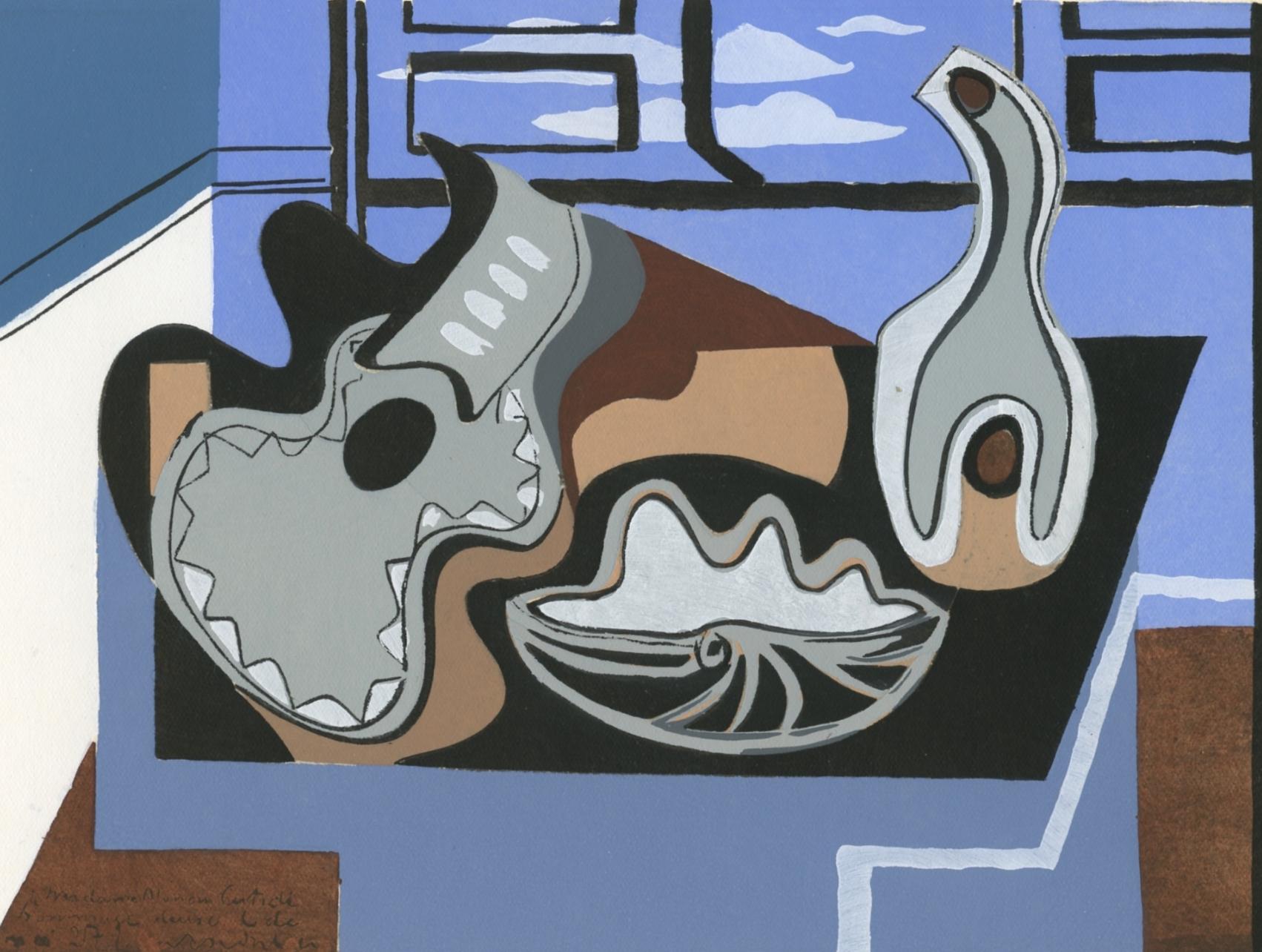
This exquisite lithograph and pochoir after Juan Gris (1887–1927), titled Nature morte (Still Life), from the album L'Art Cubiste, Theories et Realisations, Etude Critique (Cubist Art, Theories and Achievements, Critical Study), originates from the 1929 edition published by Editions Charles Moreau, Paris, and printed by Atelier Daniel Jacomet, Paris, May 1929. Nature morte (Still Life) exemplifies Gris’s refined and intellectual interpretation of Cubism, combining mathematical precision with poetic rhythm. Through the interplay of geometry, tone, and harmony, Gris transforms the still life into a crystalline composition of interlocking planes, creating a sense of luminous order and spatial equilibrium. His precise yet lyrical structure reflects his deep understanding of form and proportion, while the pochoir technique captures the subtle shifts in color and texture that define his art. The result is a visual symphony of clarity and thought, a masterful synthesis of logic and beauty.
Executed as a lithograph and pochoir on velin paper, this work measures 8.27 x 10.83 inches. Signed in the plate and unnumbered as issued. The edition exemplifies the exceptional craftsmanship of Atelier Daniel Jacomet, Paris, under the direction of Editions Charles Moreau, Paris.
Artwork Details:
Artist: After Juan Gris (1887–1927)
Title: Nature morte (Still Life), from the album L'Art Cubiste, Theories et Realisations, Etude Critique (Cubist Art, Theories and Achievements, Critical Study), 1929
Medium: Lithograph and pochoir on velin paper
Dimensions: 8.27 x 10.83 inches (21 x 27.5 cm)
Inscription: Signed in the plate and unnumbered as issued
Date: May 1929
Publisher: Editions Charles Moreau, Paris
Printer: Atelier Daniel Jacomet, Paris
Condition: Well preserved, consistent with age and medium
Provenance: From the album L'Art Cubiste, Theories et Realisations, Etude Critique, published by Editions Charles Moreau, Paris, and printed by Atelier Daniel Jacomet, Paris, May 1929
Notes:
Excerpted from the album (translated from French): This album was composed in Didot Characters and completed to print in May 1929 by Ducros et Colas, Maitres-Imprimeurs in Paris. Boards have been executed by D. Jacomet in an edition of D examples, numbered on the colophons.
About the Publication:
L'Art Cubiste, Theories et Realisations, Etude Critique (Cubist Art, Theories and Achievements, Critical Study), published in 1929 by Editions Charles Moreau, stands as one of the most significant theoretical and visual tributes to the Cubist movement. Bringing together essays and color plates by the era’s leading artists, including Pablo Picasso, Georges Braque, Juan Gris, Fernand Leger, Albert Gleizes, and Andre Lhote, the volume served as both a historical document and a visual celebration of the revolution in form and perception that defined early modern art. Each composition was printed in lithograph and finished in pochoir by master printer Daniel Jacomet, preserving the tonal balance, geometric precision, and chromatic harmony of the originals. The album captures Cubism’s intellectual and emotional depth—its fusion of structure, abstraction, and rhythm—and its lasting influence on modern aesthetics. Produced on fine velin paper in a limited edition, this publication remains one of the masterpieces of interwar French art printing, representing the perfect collaboration between artist, publisher, and printer.
About the Artist:
Juan Gris (1887–1927) was a Spanish painter, sculptor, and draughtsman whose precise geometry, crystalline compositions, and lyrical intellect made him one of the defining figures of Cubism and a pivotal force in the development of modern art. Born Jose Victoriano Gonzalez-Perez in Madrid, Gris trained as an engineer and mechanical draftsman before moving to Paris in 1906, where he immersed himself in the city’s dynamic avant-garde alongside Pablo Picasso, Georges Braque, and Fernand Leger. Combining scientific precision with poetic expression, he brought a new sense of clarity, balance, and luminosity to Cubism, transforming it from an analytical experiment into a harmonious visual language of order and emotion. Influenced by Paul Cezanne’s structural approach to form and guided by his own background in mathematics and design, Gris developed a distinctly intellectual style that united architecture, music, and painting through geometric rhythm and color. His still lifes, portraits, and collages demonstrate a meticulous synthesis of logic and lyricism, each composition constructed with architectural precision yet alive with musical resonance. Active in the fertile artistic circles of early 20th-century Paris, Gris maintained close creative dialogue with leading modernists including Alexander Calder, Alberto Giacometti, Salvador Dali, Joan Miro, Wassily Kandinsky, Marcel Duchamp, and Man Ray, all of whom shared his passion for abstraction and innovation. Though his career was tragically brief, his influence extended far beyond his lifetime, inspiring artists such as Piet Mondrian, Josef Albers, Ellsworth Kelly, Richard Diebenkorn, and generations of minimalist and color-field painters who admired his mastery of form and harmony. Gris’s work remains celebrated in major museum collections worldwide—including MoMA, the Tate Modern, and the Centre Pompidou—for its disciplined beauty and timeless clarity. His highest auction record was achieved by Nature morte a la nappe a carreaux (1915), which sold for $56.6 million at Christie’s, New York, on November 4, 2014.
After Juan Gris Nature morte, Gris L'Art Cubiste, Gris Atelier Daniel Jacomet, Gris Editions Charles Moreau, Gris pochoir lithograph, Gris Cubism.
- Creation Year:1929
- Dimensions:Height: 10.83 in (27.51 cm)Width: 8.27 in (21.01 cm)
- Medium:
- Movement Style:
- After:Juan Gris (1887 - 1927, Spanish)
- Period:
- Condition:
- Gallery Location:Southampton, NY
- Reference Number:1stDibs: LU1465215469962
About the Seller
4.9
Platinum Seller
Premium sellers with a 4.7+ rating and 24-hour response times
Established in 1978
1stDibs seller since 2021
1,271 sales on 1stDibs
Typical response time: 1 hour
- ShippingRetrieving quote...Shipping from: Southampton, NY
- Return Policy
More From This Seller
View AllLouis Marcoussis, Still Life with Guitar, 1929 (after)
By Louis Marcoussis
Located in Southampton, NY
This exquisite lithograph and pochoir after Louis Marcoussis (1878–1941), titled Nature morte avec guitare (Still Life with Guitar), from the album L'Art Cubiste, Theories et Realisa...
Category
1920s Cubist Still-life Prints
Materials
Lithograph, Stencil
Georges Braque, Movement in the Oval, 1929 (after)
By Georges Braque
Located in Southampton, NY
This exquisite lithograph and pochoir after Georges Braque (1882–1963), titled Le Mouvement dans l’Ovale (Movement in the Oval), from the album L'Art Cubiste, Theories et Realisation...
Category
1920s Cubist Still-life Prints
Materials
Lithograph, Stencil
Henri Laurens, Still Life, 1929 (after)
By Henri Laurens
Located in Southampton, NY
This exquisite lithograph and pochoir after Henri Laurens (1885–1954), titled Nature morte (Still Life), from the album L'Art Cubiste, Theories et Realisations, Etude Critique (Cubis...
Category
1920s Cubist Still-life Prints
Materials
Lithograph, Stencil
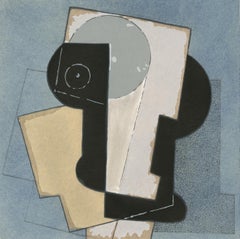
Braque, Nature morte, Dix Reproductions (after)
By Georges Braque
Located in Southampton, NY
Lithograph on vélin d'Arches paper. Unsigned and unnumbered, as issued. Good Condition; never framed or matted. Notes: From the folio, Dix Reproductions, 1933. Published by Editions ...
Category
1930s Modern Landscape Prints
Materials
Lithograph
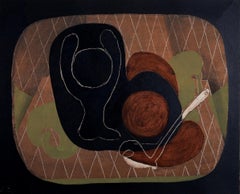
Auguste Herbin, Composition on Green Background, 1929 (after)
By Auguste Herbin
Located in Southampton, NY
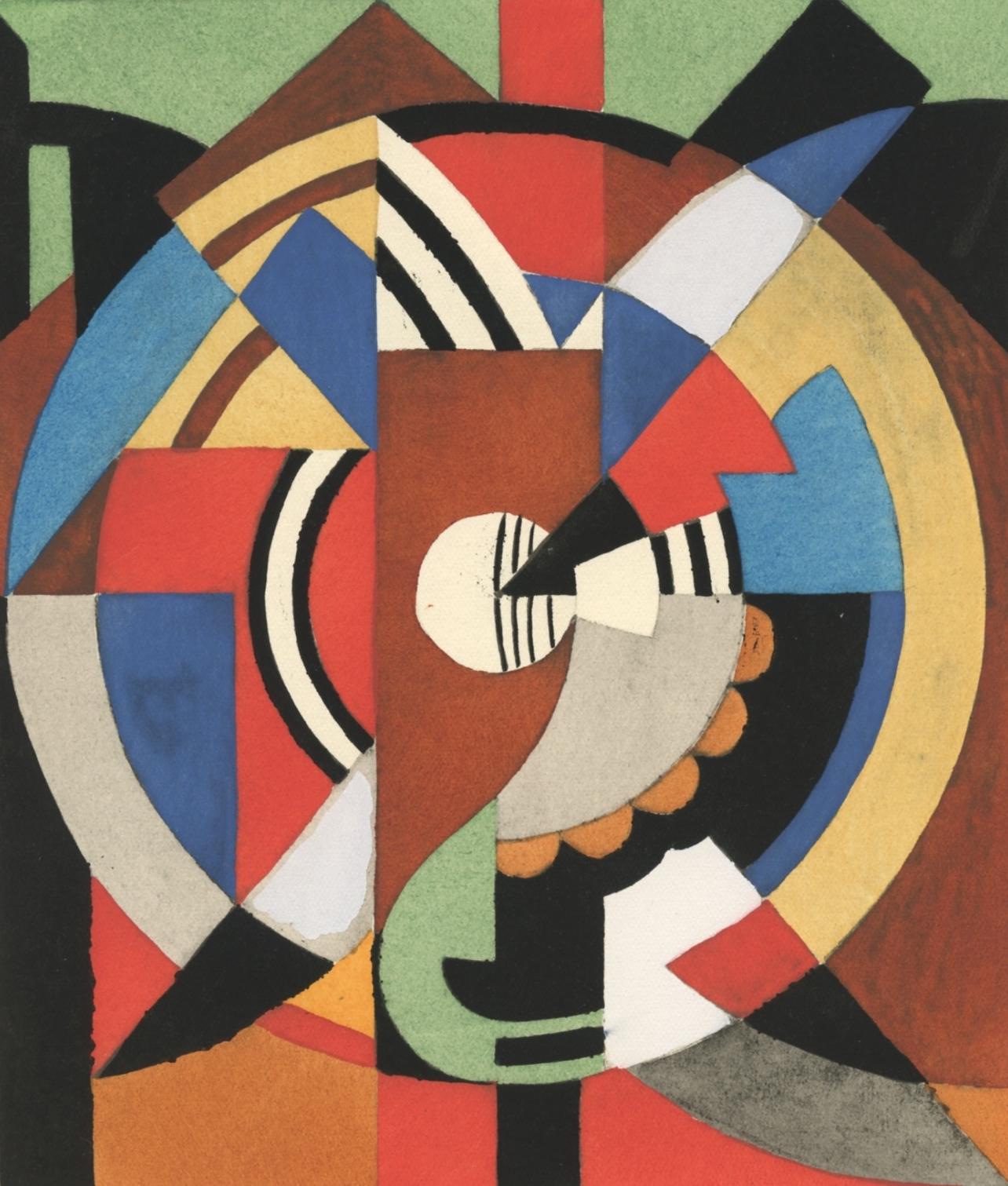
This exquisite lithograph and pochoir after Auguste Herbin (1882–1960), titled Composition sur fond vert (Composition on Green Background), from the album L'Art Cubiste, Theories et ...
Category
1920s Cubist Still-life Prints
Materials
Lithograph, Stencil
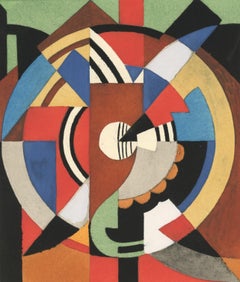
$1,916 Sale Price
20% Off
Free Shipping
Georges Valmier, Seated Woman, 1929 (after)
By Georges Valmier
Located in Southampton, NY
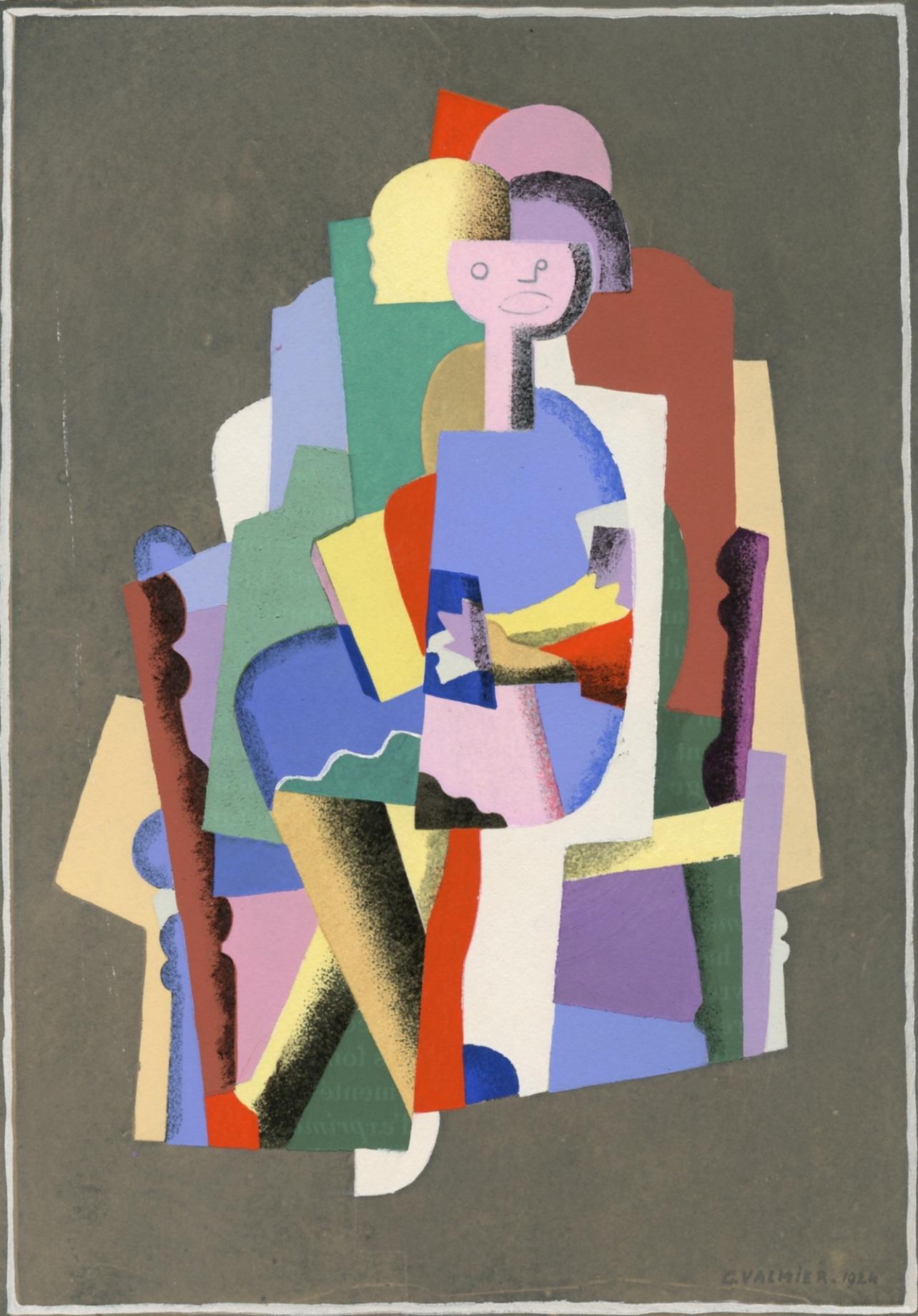
This exquisite lithograph and pochoir after Georges Valmier (1885–1937), titled Femme assise (Seated Woman), from the album L'Art Cubiste, Theories et Realisations, Etude Critique (C...
Category
1920s Cubist Still-life Prints
Materials
Lithograph, Stencil
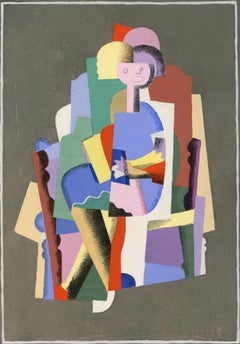
You May Also Like
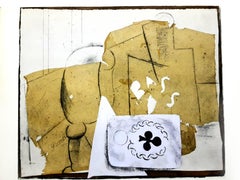
After Pablo Picasso - Cubist Still Life - Pochoir
By (after) Pablo Picasso
Located in Collonge Bellerive, Geneve, CH
After Pablo Picasso - Cubist Still Life - Pochoir
Dimensions: 48.5 x 36 cm
1962
Edition of 260
Daniel Jacomet, LEDA, Editions d'Art
Pablo Picasso
Picasso is not just a man and his ...
Category
1960s Modern Figurative Prints
Materials
Lithograph
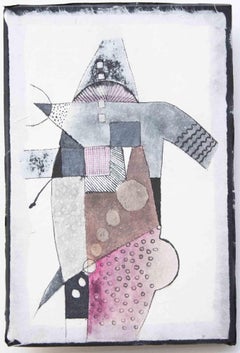
Abstract Composition - Mixed Media - Late 20th Century
Located in Roma, IT
Abstract composition is a contemporary artwork realized by Anonymous Artist of the late 20th Century.
Mixed media on paper glued on a wood panel.
Category
Late 20th Century Abstract Mixed Media
Materials
Mixed Media
$430 Sale Price
20% Off
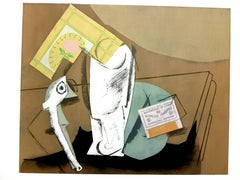
After Pablo Picasso - Cubist Still Life - Pochoir
By (after) Pablo Picasso
Located in Collonge Bellerive, Geneve, CH
After Pablo Picasso - Cubist Still Life - Pochoir
Dimensions: 48.5 x 36 cm
1962
Edition of 260
Daniel Jacomet, LEDA, Editions d'Art
Pablo Picasso
Picasso is not just a man and his ...
Category
1960s Modern Figurative Prints
Materials
Lithograph
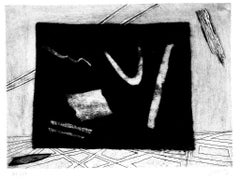
Abstract Composition
By Henri Goetz
Located in Roma, IT
This original black and white etching is hand-signed in pencil on the lower right. Numbered on the lower left. Edition of 50 prints. It's a very beautiful example of surrealist artwo...
Category
20th Century Surrealist Abstract Prints
Materials
Etching
Composition - Mixed Media after Mario Sironi - Mid-20th Century
By Mario Sironi
Located in Roma, IT
Composition is an artwork on white cardboard realized by Italian Artist Mario Sironi (1885-1961) in 1960.
Phototype print.
Signed on the low corner.
Good conditions.
Printed on ...
Category
Mid-20th Century Modern Mixed Media
Materials
Mixed Media
Still Life — Mid-century Modern
By Charles Quest
Located in Myrtle Beach, SC
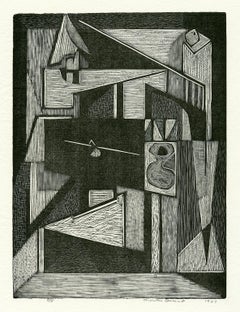
Charles Quest, 'Still Life', 1947, wood engraving, edition 8. Signed, dated, and numbered '3/8' in pencil. Titled and annotated 'wood engraving' in the bottom left margin. A fine impression, on off-white wove paper, with full margins (1 to 2 inches), in excellent condition. Scarce. Matted to museum standards, unframed.
ABOUT THE ARTIST
Charles Quest, painter, printmaker, and fine art instructor, worked in various mediums, including mosaic, stained glass, mural painting, and sculpture. Quest grew up in St. Louis, his talent evident as a teenager when he began copying the works of masters such as Michelangelo on his bedroom walls. He studied at the Washington University School of Fine Arts, where he later taught from 1944 to 1971. He traveled to Europe after his graduation in 1929 and studied at La Grande Chaumière and Academie Colarossi, Paris, continuing to draw inspiration from the works of the Old Masters.
After returning to St. Louis, Quest received several commissions to paint murals in public buildings, schools, and churches, including one from Joseph Cardinal Ritter, to paint a replica of Velasquez's Crucifixion over the main altar of the Old Cathedral in St. Louis. Quest soon became interested in the woodcut medium, which he learned through his study of J. J. Lankes' A Woodcut Manual (1932) and Paul Landacre's articles in American Artist magazine ‘since no artists in St. Louis were working in wood’ at that time. Quest also revealed that for him, wood cutting and engraving were ‘more enjoyable than any other means of expression.’
In the late 1940s, his graphic works began attracting critical attention—several of his woodcuts won prizes and were acquired by major American and European museums. His wood engraving entitled ‘Lovers’ was included in the American Federation of Art's traveling print exhibition in 1947. Two years later, Quest's two prize-winning prints, ‘Still Life with Grindstone’ and ‘Break Forth into Singing’, were exhibited in major American museums in a traveling show organized by the Philadelphia Print Club. His work was included in the Chicago Art Institute's exhibition, ‘Woodcut Through Six Centuries’, and the print ‘Still Life with Vise’ was purchased by the Museum of Modern Art in New York.
In 1951 he was invited by artist-Curator Jacob Kainen to exhibit thirty wood engravings and color woodcuts in a one-person show at the Smithsonian's National Museum (now known as the American History Museum). Kainen's press release praised the ‘technical refinement’ of Quest's work: ‘He obtains a great variety of textural effects through the use of the graver, and these dense or transparent grays are set off against whites or blacks to achieve sparkling results. His work has the handsome qualities characteristic of the craftsman and designer.’
At the time of the Smithsonian exhibition, Quest's work was represented by three New York galleries in addition to one in his home town. He had won 38 prizes, and his prints were in the collections of the Library of Congress, the Chicago Art Institute, the Metropolitan Museum, and the Philadelphia Museum of Art. In cooperation with the Art in Embassies program, his color woodcuts were displayed at the American Embassy in Paris in 1951.
Recognition at home came in 1955 with his first solo exhibition in St. Louis. Press coverage of the show heralded the ‘growth of graphic arts toward rivaling painting and sculpture as a major independent medium’.
An exhibition of his prints at the Bethesda Art Gallery in 1983 attracted Curator Emeritus Joseph A. Haller, S.J., who began purchasing his work for Georgetown University's collection. In 1990 Georgetown University Library's Special Collections Division was the recipient of a large body of Quest's work, including prints, drawings, paintings, sculpture, stained glass, and his archive of correspondence and professional memorabilia. These extensive holdings, including some 260 of his fine prints, provide a rich opportunity for further study and appreciation of this versatile and not-to-be-forgotten mid-Western American artist...
Category
1940s American Modern Abstract Prints
Materials
Woodcut
More Ways To Browse
Elizabeth Osborne Poster
Gary Bukovnik Posters
Geraldine Girvan
Hugh Kepets On Sale
Japanese Botanical Prints
Lichtenstein Spray Can
Michelle Stuart On Sale
Mr Brainwash Flower
Oisin Byrne
Paris Review Posters
Paul De Longpre Vintage Prints
Robert Furber Twelve Months Of Flowers
Robert Furber
Thiebaud Signed Print
William Ross Abrams
Adele Alsop
Albert Contreras
Andy Warhol Cantaloupes