Items Similar to Raoul Dufy, Painted Flowers, from Letter to My Painter Raoul Dufy, 1965 (after)
Want more images or videos?
Request additional images or videos from the seller
1 of 9
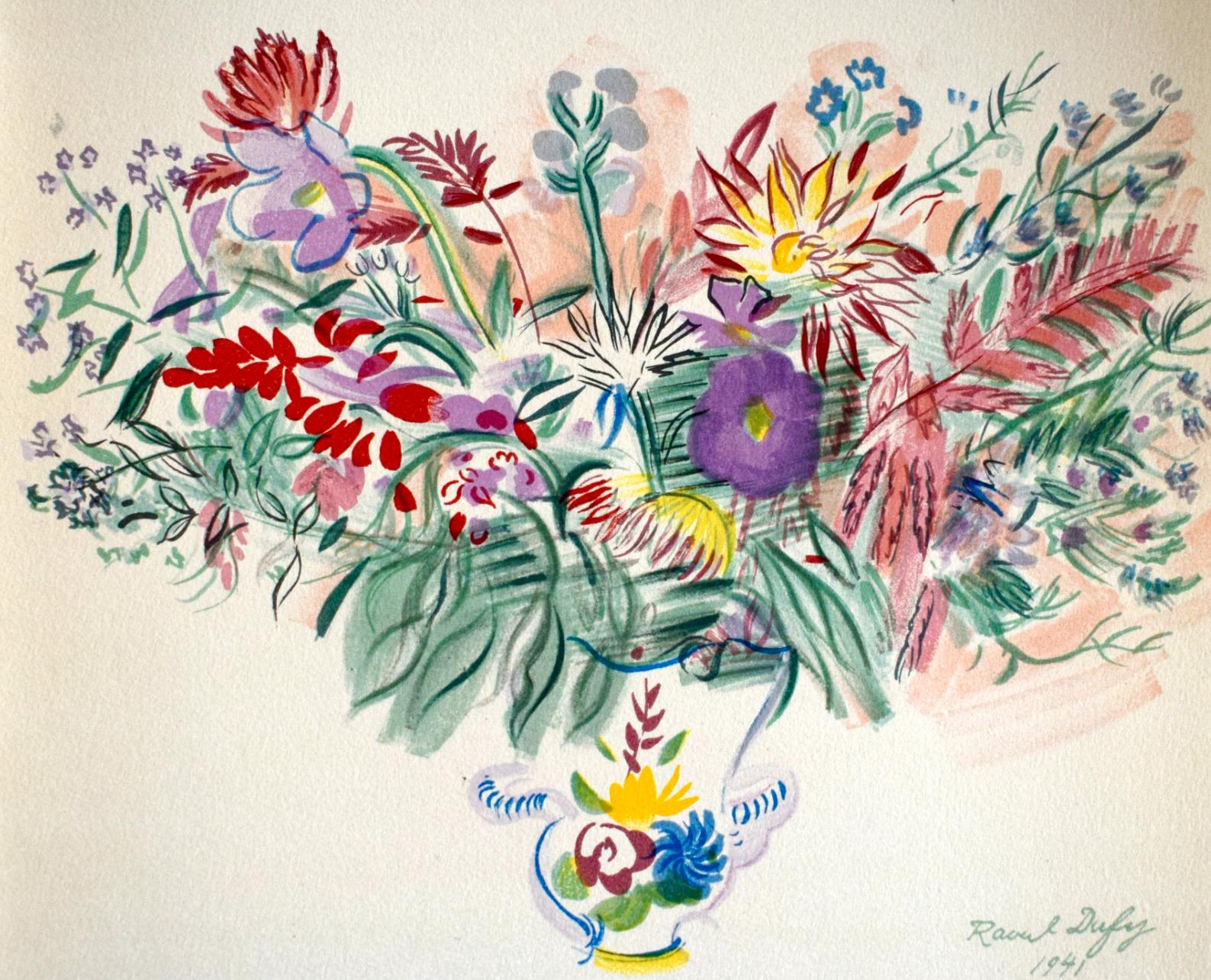
Raoul Dufy, Painted Flowers, from Letter to My Painter Raoul Dufy, 1965 (after)1965
1965
$716
$89520% Off
£542.30
£677.8820% Off
€622.82
€778.5220% Off
CA$1,003.35
CA$1,254.1920% Off
A$1,090.84
A$1,363.5520% Off
CHF 578.37
CHF 722.9620% Off
MX$13,076.45
MX$16,345.5720% Off
NOK 7,350.74
NOK 9,188.4320% Off
SEK 6,734.28
SEK 8,417.8520% Off
DKK 4,654.77
DKK 5,818.4620% Off
About the Item
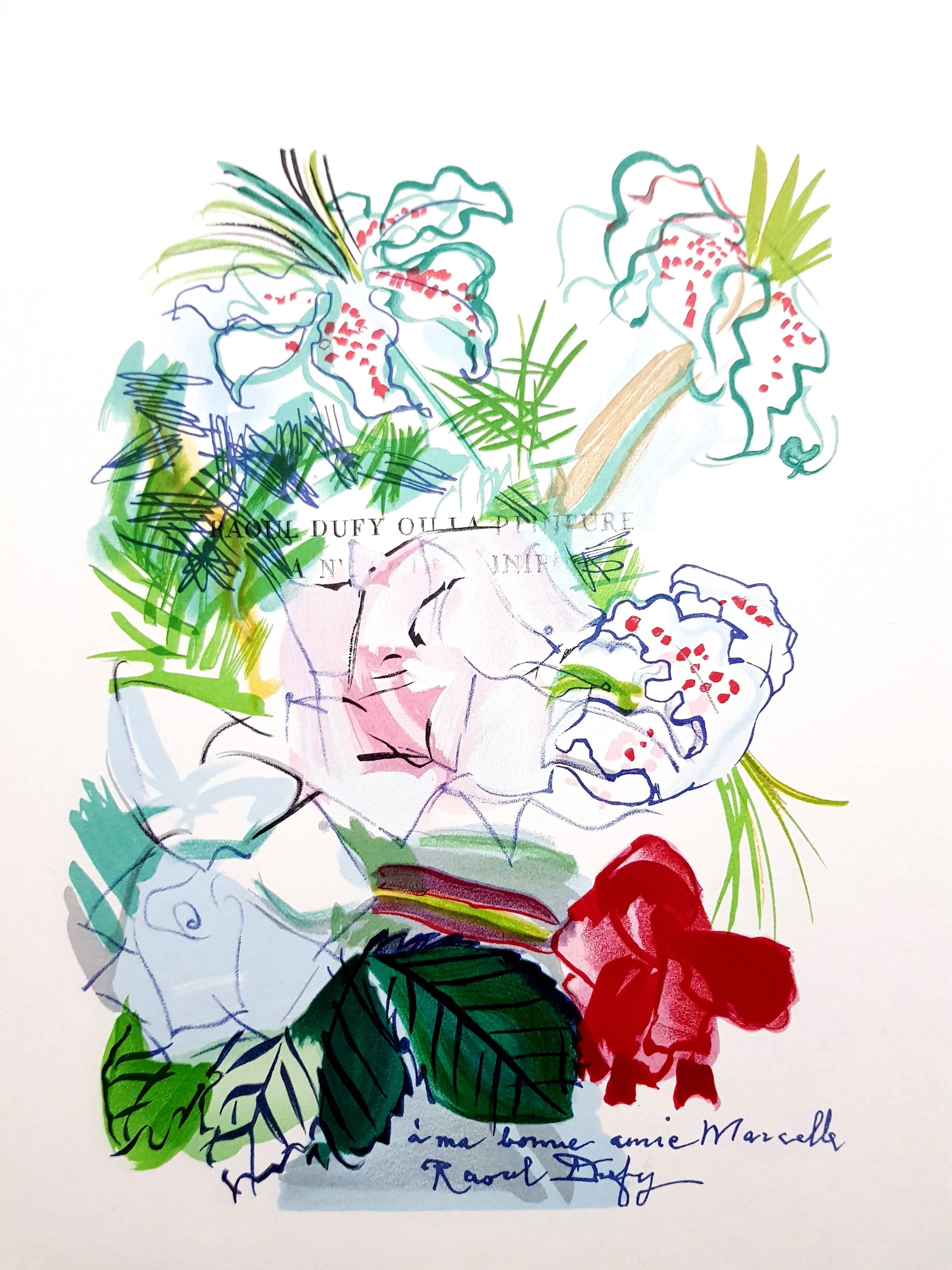
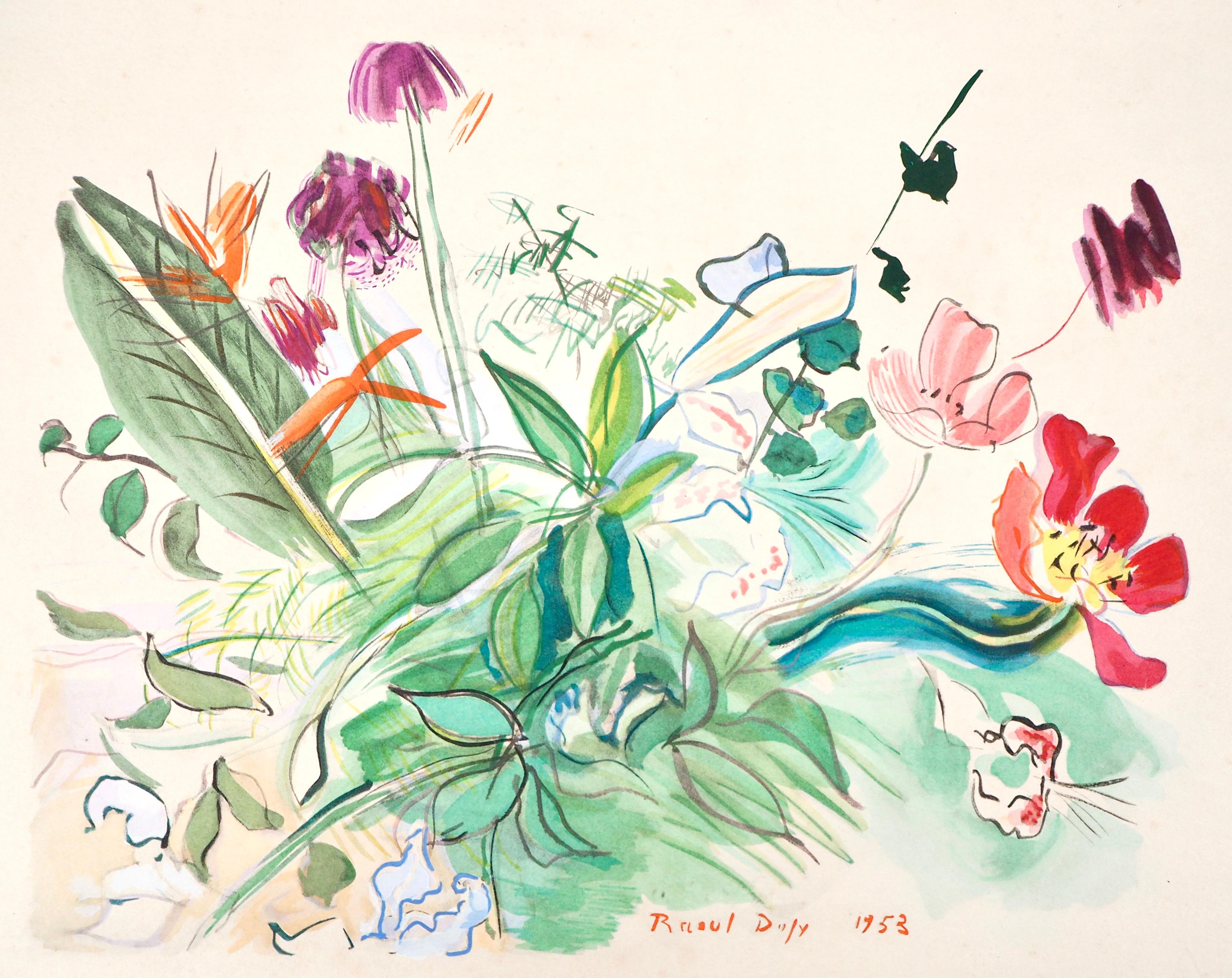
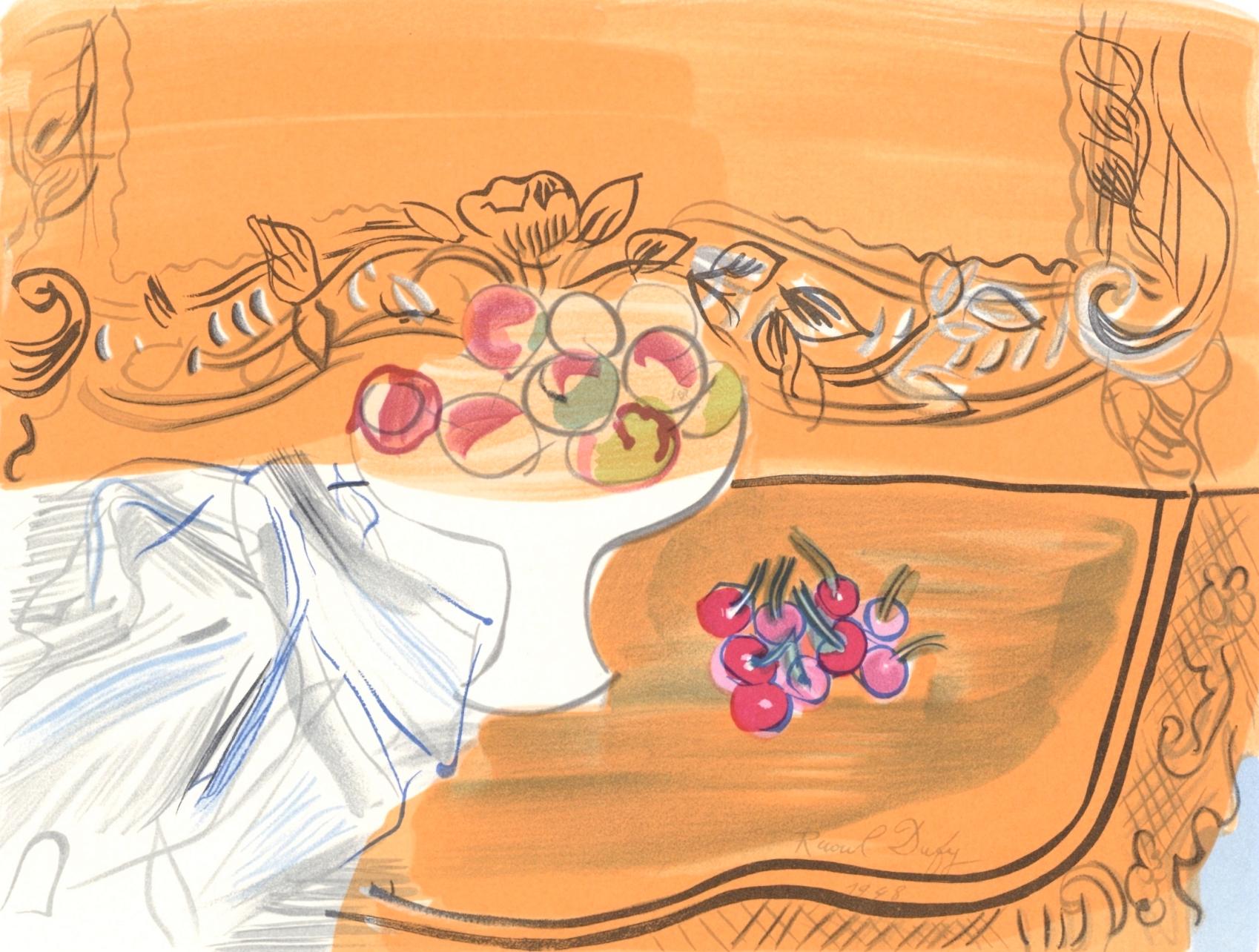
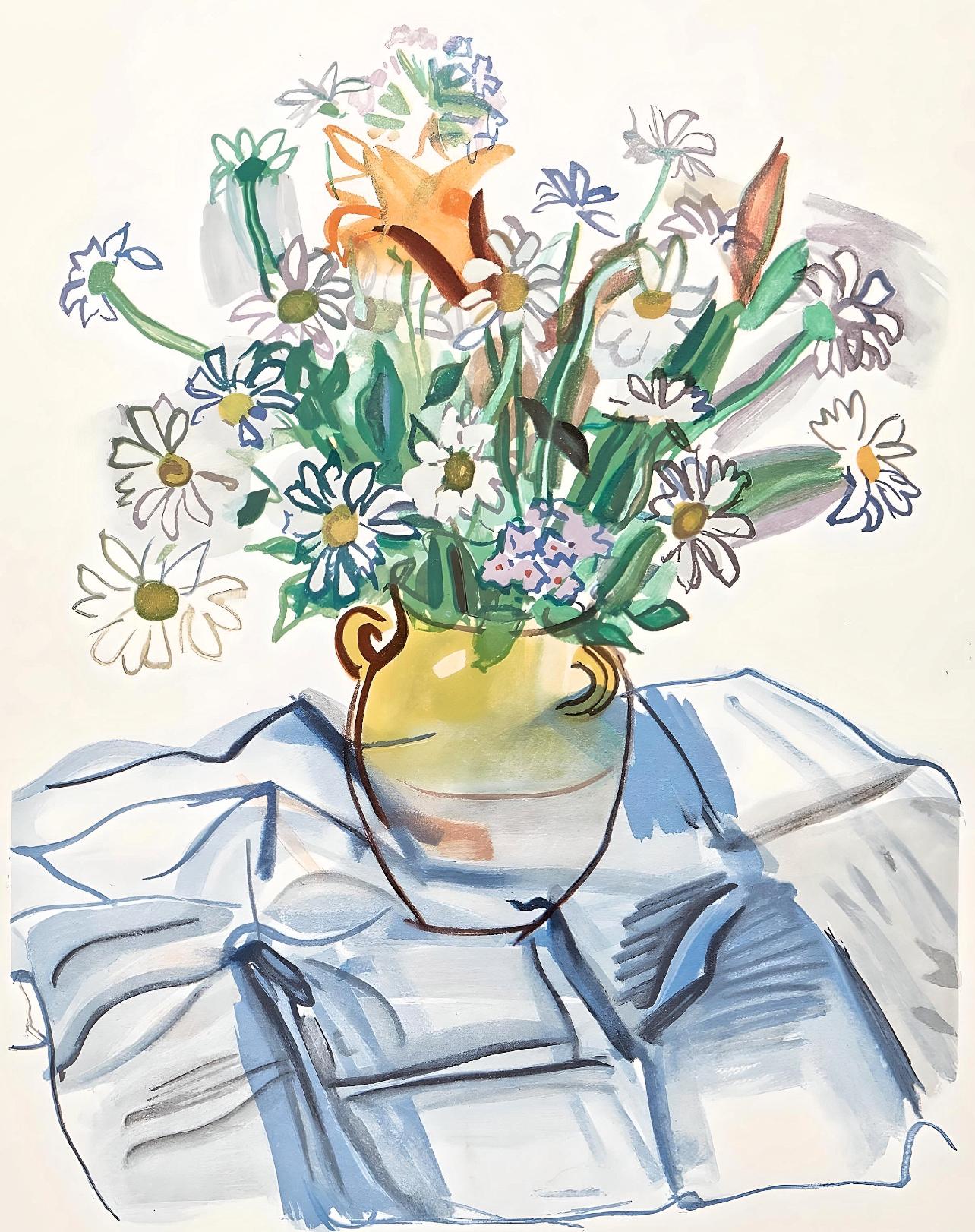
This exquisite lithograph after Raoul Dufy (1877–1953), titled Fleurs peintes (Painted Flowers), from the folio Lettre a mon peintre Raoul Dufy (Letter to My Painter Raoul Dufy), originates from the 1965 edition published by Librairie academique Perrin et Cie, Paris, and printed by Mourlot Freres, Paris, July 22, 1965. Fleurs peintes captures Dufy’s radiant celebration of color and nature, translating the spontaneous vitality of his floral compositions into a lyrical study of light, rhythm, and harmony that embodies his joyous modern sensibility.
Executed as a lithograph on velin papeteries Arjomari-Prioux paper, this work measures 11.75 x 9.375 inches. Signed in the plate and unnumbered as issued. The edition exemplifies the refined craftsmanship of Mourlot Freres and the exceptional production standards of mid-century French art publishing.
Artwork Details:
Artist: After Raoul Dufy (1877–1953)
Title: Fleurs peintes (Painted Flowers), from the folio Lettre a mon peintre Raoul Dufy (Letter to My Painter Raoul Dufy)
Medium: Lithograph on velin papeteries Arjomari-Prioux paper
Dimensions: 11.75 x 9.375 inches (29.85 x 23.81 cm)
Inscription: Signed in the plate and unnumbered as issued
Date: 1965
Publisher: Librairie academique Perrin et Cie, Paris
Printer: Mourlot Freres, Paris
Condition: Well preserved, consistent with age and medium
Provenance: From the folio Lettre a mon peintre Raoul Dufy (Letter to My Painter Raoul Dufy), published by Librairie academique Perrin et Cie, Paris, 1965
Notes:
Excerpted from the folio (translated from French), The typography of this album was completed to print at L'Imprimerie nationale, Monsieur Andre Brignole as Director and Paul Lajun as head of typography. The type-set was made with the Garamont corps 20, exclusive property of the grand Etablissement d'Etat on the presses of which the printing was completed on July 22, 1965. The color lithographs and black drawings as well as the manuscripts were shot on Fernand Mourlot's presses. Henri Jadoux was the assistant responsible for the project. It was taken from this edition, XXV examples on velin B.F.K. de Rives, numbered from I to XXV, accompanied by a suite of lithographs and an original etching signed by Jacques Villon, CMLXXV examples on velin B.F.K. de Rives, numbered from XXVI to M, accompanied by a series of lithographs, and V̅ examples on velin Arjomari, numbered from MI to V̅I̅, and finally, CC examples, hors commerce.
About the Publication:
Lettre a mon peintre Raoul Dufy (Paris: Librairie academique Perrin et Cie, 1965) is a distinguished folio honoring Raoul Dufy (1877–1953), printed on July 22, 1965, by Mourlot Freres, Paris. Conceived as a refined homage to Dufy’s lyrical modernism, the folio comprises twenty-seven lithographs on velin Arjomari paper, executed d’apres Dufy and his contemporaries—including Jacques Villon, Georges Braque, Marc Chagall, Dunoyer de Segonzac, Marcel Gromaire, Bernard Buffet, Charles Lapicque, Andre Marchand, and Jean Lurcat—thereby situating Dufy within the broader lineage of twentieth-century French art. The project reflects both the technical mastery of Mourlot’s atelier and the mid-century Parisian ideal of merging painterly tribute with fine-print craftsmanship, affirming Dufy’s enduring influence on modern visual culture.
About the Artist:
Raoul Dufy (1877–1953) was a French painter, printmaker, designer, and illustrator celebrated for his radiant use of color, lyrical brushwork, and joyous depictions of modern life that made him one of the most beloved artists of the 20th century. A central figure of Fauvism, Dufy’s exuberant compositions captured regattas, orchestras, and seaside scenes in shimmering harmonies of light and movement, translating the rhythm of everyday life into visual music. Influenced by Henri Matisse and Paul Cezanne and shaped by the revolutionary ideas of Pablo Picasso, Alexander Calder, Alberto Giacometti, Salvador Dali, Joan Miro, Wassily Kandinsky, Marcel Duchamp, and Man Ray, Dufy forged a style that balanced structure with spontaneity, joy with sophistication. Born in Le Havre, he studied at the Ecole des Beaux-Arts in Paris and, after encountering the Fauves at the 1905 Salon d’Automne, embraced pure color as his primary language. His early landscapes evolved into a radiant, rhythmic style that blended Cubist structure with the musicality of line and color. Beyond painting, Dufy was a pioneer of decorative arts, collaborating with fashion designer Paul Poiret on textile designs that revolutionized early 20th-century fashion and working in ceramics, tapestry, and stage design. His monumental 1937 mural La Fee Electricite (The Electricity Fairy), commissioned for the Paris International Exposition, remains one of the largest and most celebrated works of modern art—a 600-square-meter symphony of light and movement celebrating human progress. Dufy’s philosophy centered on “the logic of color,” which he likened to the harmony of music, and his free, transparent brushwork captured both atmosphere and emotion with unmatched vitality. Even after developing rheumatoid arthritis, Dufy continued to paint with undiminished energy, creating late works marked by gestural freedom and lyrical serenity. His art influenced later painters including Nicolas de Stael, Richard Diebenkorn, and David Hockney, who admired his balance of form and radiance. Today, Dufy’s works are housed in major museums worldwide, including the Museum of Modern Art in New York, the Centre Pompidou in Paris, and the Tate Modern in London. Standing alongside modern masters such as Pablo Picasso, Alexander Calder, Alberto Giacometti, Salvador Dali, Joan Miro, Wassily Kandinsky, Marcel Duchamp, and Man Ray, Dufy endures as a symbol of joy and beauty in modern art. The highest auction record for Raoul Dufy was achieved with La Fee Electricite, which sold for $6,767,200 USD at Christie’s, London, on June 25, 2007, reaffirming his legacy as one of the most radiant and influential colorists of the modern era.
Raoul Dufy Fleurs peintes Painted Flowers Lettre a mon peintre Raoul Dufy Letter to My Painter Raoul Dufy 1965 Librairie academique Perrin et Cie Mourlot Freres Paris lithograph modern art.
- Creation Year:1965
- Dimensions:Height: 11.75 in (29.85 cm)Width: 9.375 in (23.82 cm)
- Medium:
- Movement Style:
- After:Raoul Dufy (1877-1953, French)
- Period:
- Condition:
- Gallery Location:Southampton, NY
- Reference Number:1stDibs: LU1465216687882
About the Seller
4.9
Platinum Seller
Premium sellers with a 4.7+ rating and 24-hour response times
Established in 1978
1stDibs seller since 2021
1,253 sales on 1stDibs
Typical response time: 1 hour
- ShippingRetrieving quote...Shipping from: Southampton, NY
- Return Policy
More From This Seller
View AllRaoul Dufy, Flowers, from Esprit de la fleur et du fruit, 1954 (after)
By Raoul Dufy
Located in Southampton, NY
This exquisite lithograph after Raoul Dufy (1877–1953), titled Fleurs (Flowers), from the folio Eaux-de-vie, Esprit de la fleur et du fruit (Spirits, Essence of the Flower and the Fr...
Category
1950s Modern Landscape Prints
Materials
Lithograph, Stencil
$1,196 Sale Price
20% Off
Free Shipping
Raoul Dufy, Still Life, from Letter to My Painter Raoul Dufy, 1965 (after)
By Raoul Dufy
Located in Southampton, NY
This exquisite lithograph after Raoul Dufy (1877–1953), titled Nature morte (Still Life), from the folio Lettre a mon peintre Raoul Dufy (Letter to My Painter Raoul Dufy), originates...
Category
1960s Fauvist Figurative Prints
Materials
Lithograph
$716 Sale Price
20% Off
Free Shipping
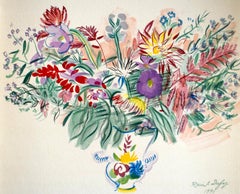
Raoul Dufy, The Bouquet, from The Painters My Friends, 1965 (after)
By Raoul Dufy
Located in Southampton, NY
This exquisite lithograph after Raoul Dufy (1877–1953), titled Le Bouquet (The Bouquet), from the folio Les Peintres mes amis (The Painters My Friends), originates from the 1965 edit...
Category
1960s Modern Landscape Prints
Materials
Lithograph
$1,916 Sale Price
20% Off
Free Shipping
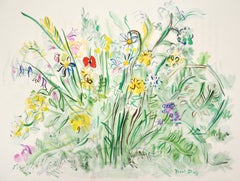
Raoul Dufy, Wildflowers, from Esprit de la fleur et du fruit, 1954 (after)
By Raoul Dufy
Located in Southampton, NY
This exquisite lithograph after Raoul Dufy (1877–1953), titled Fleurs des champs (Wildflowers), from the folio Eaux-de-vie, Esprit de la fleur et du fruit (Spirits, Essence of the Fl...
Category
1950s Modern Landscape Prints
Materials
Lithograph, Stencil
$1,196 Sale Price
20% Off
Free Shipping
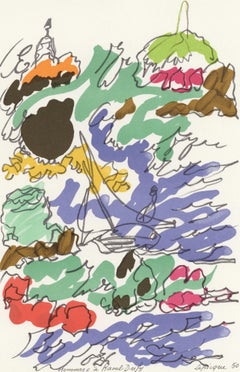
Charles Lapicque, Homage to Dufy, from Letter to My Painter Raoul Dufy, 1965
By Charles Lapicque
Located in Southampton, NY
This exquisite lithograph by Charles Lapicque (1898–1988), titled Hommage a Dufy (Homage to Dufy), from the folio Lettre a mon peintre Raoul Dufy (Letter to My Painter Raoul Dufy), o...
Category
1960s Modern Figurative Prints
Materials
Lithograph
$716 Sale Price
20% Off
Free Shipping
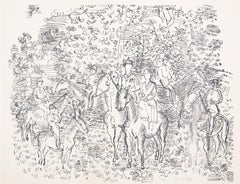
Raoul Dufy, Riders Beneath the Trees, 1965 (after)
By Raoul Dufy
Located in Southampton, NY
This exquisite lithograph after Raoul Dufy (1877–1953), titled Les Cavaliers sous les arbres (Riders Beneath the Trees), from the folio Lettre a mon peintre Raoul Dufy (Letter to My ...
Category
1960s Fauvist Figurative Prints
Materials
Lithograph
You May Also Like
Composition - Lithograph
By (after) Raoul Dufy
Located in Collonge Bellerive, Geneve, CH
(after) Raoul Dufy
Lithograph after a watercolor, published in the book "Lettre à mon peintre Raoul Dufy." Paris, Librairie Académique Perrin, 1965.
Printed signature
Di...
Category
1940s Fauvist Animal Prints
Materials
Lithograph
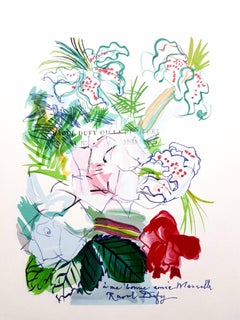
Dufy, Bouquet, Vacances forcées (after)
By Raoul Dufy
Located in Fairfield, CT
Medium: Lithograph on papier bouffant des Papeteries de Casteljoux paper
Year: 1970
Paper Size: 12 x 9.25 inches
Inscription: Unsigned and unnumbered, as issued
Notes: From the folio...
Category
1970s Modern Landscape Prints
Materials
Lithograph
$716 Sale Price
20% Off
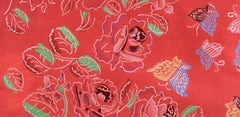
Fleurs et Papillons - Fauvist Flowers Watercolor
Gouache by Raoul Dufy
By Raoul Dufy
Located in Marlow, Buckinghamshire
Botanical watercolour and gouache on paper circa 1920 by French fauvist painter Raoul Dufy. The work depicts flowers in red and butterflies in blues, yellows, black and white. This work was executed by Dufy as a fabric design.
Dimensions:
Framed: 17"x27"
Unframed: 10"x20"
Provenance:
Private collection of works by Raoul Dufy for Bianchini Ferier
Bianchini Ferrier Collection - Christie's London - July 2001
SF Fall Show
Raoul Dufy was one of a family of nine children, including five sisters and a younger brother, Jean Dufy, also destined to become a painter. Their father was an accountant in the employ of a major company in Le Havre. The Dufy family was musically gifted: his father was an organist, as was his brother Léon, and his youngest brother Gaston was an accomplished flautist who later worked as a music critic in Paris. Raoul Dufy's studies were interrupted at the age of 14, when he had to contribute to the family income. He took a job with an importer of Brazilian coffee, but still found time from 1892 to attend evening courses in drawing and composition at the local college of fine arts under Charles Marie Lhullier, former teacher of Othon Friesz and Georges Braque. He spent his free time in museums, admiring the paintings of Eugène Boudin in Le Havre and The Justice of Trajan in Rouen. A municipal scholarship enabled him to leave for Paris in 1900, where he lodged initially with Othon Friesz. He was accepted by the École des Beaux-Arts, where he studied under Léon Bonnat, whose innate conservatism prompted Dufy to remark later that it was 'good to be at the Beaux-Arts providing one knew one could leave'.
And leave he did, four years later, embarking with friends and fellow students on the rounds of the major Paris galleries - Ambroise Vollard, Durand-Ruel, Eugène Blot and Berheim-Jeune. For Dufy and his contemporaries, Impressionism represented a rejection of sterile academism in favour of the open-air canvases of Manet, the light and bright colours of the Impressionists, and, beyond them, the daringly innovative work of Gauguin and Van Gogh, Seurat, Cézanne, Toulouse-Lautrec and others. Dufy was an out-and-out individualist, however, and was not tempted to imitate any of these artists. He produced, between 1935 and 1937, Fée Electricité (Spirit of Electricity), the emblem for the French utilities company Electricité de France (EDF).
Dufy visited the USA for the first time in 1937, as a member of the Carnegie Prize jury. In 1940, the outbreak of war (and his increasingly rheumatic condition) persuaded him to settle in Nice. When he eventually returned to Paris 10 years later, his rheumatism had become so debilitating that he immediately left for Boston to follow a course of pioneering anti-cortisone treatment. He continued working, however, spending time first in Harvard and then in New York City before moving to the drier climate of Tucson, Arizona. The cortisone treatment was by and large unsuccessful, although he did recover the use of his fingers. He returned to Paris in 1951 and decided to settle in Forcalquier, where the climate was more clement. Within a short time, however, he was wheelchair-bound. He died in Forcalquier in March 1953 and was buried in Cimiez.
Between 1895 and 1898, Raoul Dufy painted watercolours of landscapes near his native Le Havre and around Honfleur and Falaise. By the turn of the century, however, he was already painting certain subjects that were to become hallmarks of his work - flag-decked Parisian cityscapes, Normandy beaches teeming with visitors, regattas and the like, including one of his better-known early works, Landing Stage at Ste-Adresse. By 1905-1906 Friesz, Braque, Matisse, Derain, Vlaminck, Van Dongen and Rouault were described collectively as Fauves (the wild beasts). What they had in common was a desire to innovate, but they felt constrained nonetheless to meet formally to set out the guiding principles of what promised to be a new 'movement'. Dufy quickly established that those principles were acceptable; moreover, he was most impressed by one particular painting by Henri Matisse ( Luxury, Calm and Voluptuousness) which, to Dufy, embodied both novelty and a sense of artistic freedom. Dufy promptly aligned himself with the Fauves. Together with Albert Marquet in particular, he spent his time travelling the Normandy coast and painting views similar...
Category
1920s Fauvist Still-life Drawings and Watercolors
Materials
Paper, Watercolor, Gouache
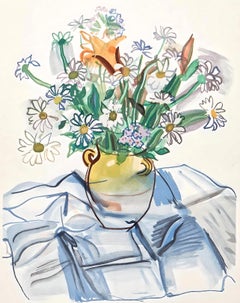
Dufy, L
opaline bleue, Vacances forcées (after)
By Raoul Dufy
Located in Fairfield, CT
Medium: Lithograph on papier bouffant des Papeteries de Casteljoux paper
Year: 1970
Paper Size: 12 x 9.25 inches
Inscription: Unsigned and unnumbered, as issued
Notes: From the folio...
Category
1970s Modern Landscape Prints
Materials
Lithograph
$716 Sale Price
20% Off
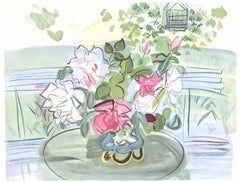
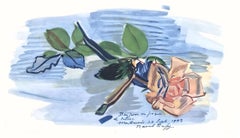
Dufy, Les roses coupées, Vacances forcées (after)
By Raoul Dufy
Located in Fairfield, CT
Medium: Lithograph on papier bouffant des Papeteries de Casteljoux paper
Year: 1970
Paper Size: 12 x 9.25 inches
Inscription: Unsigned and unnumbered, as issued
Notes: From the folio...
Category
1970s Modern Landscape Prints
Materials
Lithograph
$716 Sale Price
20% Off
Projet de Tissus - Fauvist Flowers Watercolor
Gouache by Raoul Dufy
By Raoul Dufy
Located in Marlow, Buckinghamshire
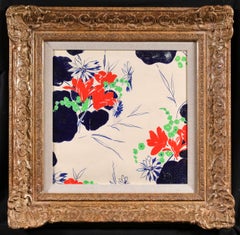
Botanical watercolour and gouache on paper circa 1920 by French fauvist painter Raoul Dufy. The work depicts flowers in red, blue and green. This work was executed by Dufy as a fabric design.
Dimensions:
Framed: 19.5"x19.5"
Unframed: 12"x12"
Provenance:
Private collection of works by Raoul Dufy for Bianchini Ferier
Bianchini Ferrier Collection - Christie's London - July 2001
SF Fall Show
Raoul Dufy was one of a family of nine children, including five sisters and a younger brother, Jean Dufy, also destined to become a painter. Their father was an accountant in the employ of a major company in Le Havre. The Dufy family was musically gifted: his father was an organist, as was his brother Léon, and his youngest brother Gaston was an accomplished flautist who later worked as a music critic in Paris. Raoul Dufy's studies were interrupted at the age of 14, when he had to contribute to the family income. He took a job with an importer of Brazilian coffee, but still found time from 1892 to attend evening courses in drawing and composition at the local college of fine arts under Charles Marie Lhullier, former teacher of Othon Friesz and Georges Braque. He spent his free time in museums, admiring the paintings of Eugène Boudin in Le Havre and The Justice of Trajan in Rouen. A municipal scholarship enabled him to leave for Paris in 1900, where he lodged initially with Othon Friesz. He was accepted by the École des Beaux-Arts, where he studied under Léon Bonnat, whose innate conservatism prompted Dufy to remark later that it was 'good to be at the Beaux-Arts providing one knew one could leave'.
And leave he did, four years later, embarking with friends and fellow students on the rounds of the major Paris galleries - Ambroise Vollard, Durand-Ruel, Eugène Blot and Berheim-Jeune. For Dufy and his contemporaries, Impressionism represented a rejection of sterile academism in favour of the open-air canvases of Manet, the light and bright colours of the Impressionists, and, beyond them, the daringly innovative work of Gauguin and Van Gogh, Seurat, Cézanne, Toulouse-Lautrec and others. Dufy was an out-and-out individualist, however, and was not tempted to imitate any of these artists. He produced, between 1935 and 1937, Fée Electricité (Spirit of Electricity), the emblem for the French utilities company Electricité de France (EDF).
Dufy visited the USA for the first time in 1937, as a member of the Carnegie Prize jury. In 1940, the outbreak of war (and his increasingly rheumatic condition) persuaded him to settle in Nice. When he eventually returned to Paris 10 years later, his rheumatism had become so debilitating that he immediately left for Boston to follow a course of pioneering anti-cortisone treatment. He continued working, however, spending time first in Harvard and then in New York City before moving to the drier climate of Tucson, Arizona. The cortisone treatment was by and large unsuccessful, although he did recover the use of his fingers. He returned to Paris in 1951 and decided to settle in Forcalquier, where the climate was more clement. Within a short time, however, he was wheelchair-bound. He died in Forcalquier in March 1953 and was buried in Cimiez.
Between 1895 and 1898, Raoul Dufy painted watercolours of landscapes near his native Le Havre and around Honfleur and Falaise. By the turn of the century, however, he was already painting certain subjects that were to become hallmarks of his work - flag-decked Parisian cityscapes, Normandy beaches teeming with visitors, regattas and the like, including one of his better-known early works, Landing Stage at Ste-Adresse. By 1905-1906 Friesz, Braque, Matisse, Derain, Vlaminck, Van Dongen and Rouault were described collectively as Fauves (the wild beasts). What they had in common was a desire to innovate, but they felt constrained nonetheless to meet formally to set out the guiding principles of what promised to be a new 'movement'. Dufy quickly established that those principles were acceptable; moreover, he was most impressed by one particular painting by Henri Matisse ( Luxury, Calm and Voluptuousness) which, to Dufy, embodied both novelty and a sense of artistic freedom. Dufy promptly aligned himself with the Fauves. Together with Albert Marquet in particular, he spent his time travelling the Normandy coast and painting views similar...
Category
1920s Fauvist Still-life Drawings and Watercolors
Materials
Paper, Watercolor, Gouache
More Ways To Browse
Kotozuka Eiichi
Lee Lerfald
Paul Rand Posters
Renaissance Shop New London Nh
Sarah Ann Drake
Some Of My Best Friends Are Pigs
Susan Noble
Terence Millington
Vegetables Matisse
Wayne Thiebaud Poster
Balloon Swan
Barber Shop Art
Bedouin Painting
Break In Case Of Emergency
Bronze Sculpture Western
Carla Gimbatti
Cartoon Sculpture
Cesar Compression